Concerns over high cost of hiring Nepalis could hit migration to Malaysia
With employers exploring options, there could be a drop in departures of Nepalis for the Southeast Asian nation.
- CHANDAN KUMAR MANDAL
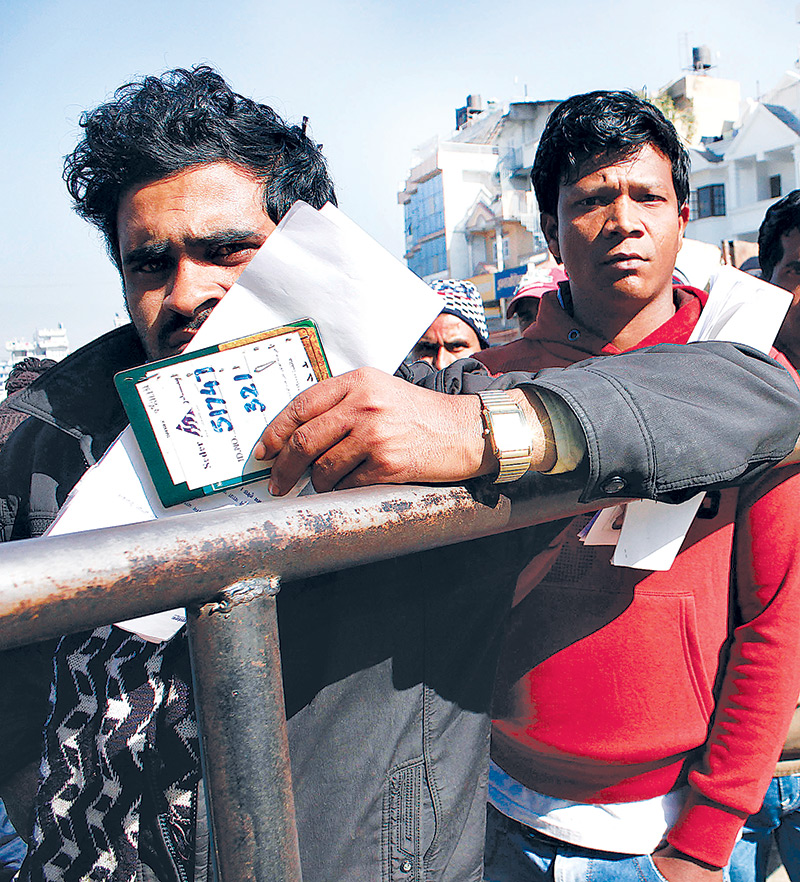
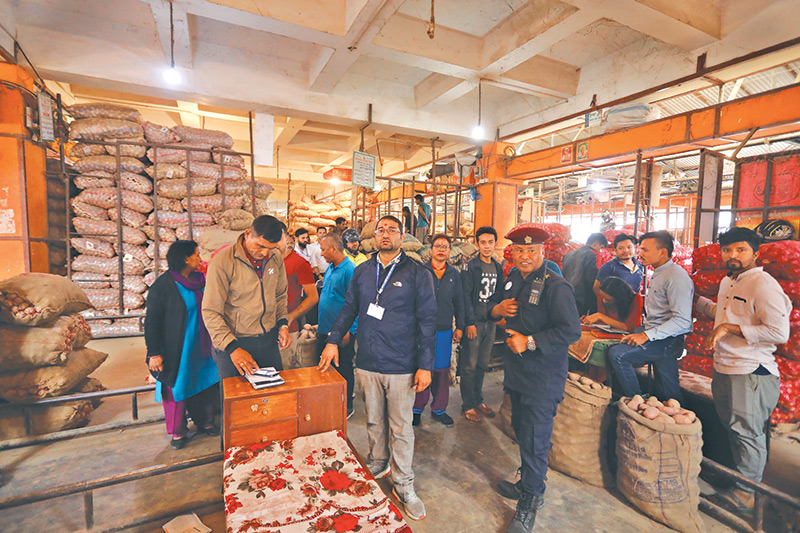
In the new model, an employer has to pay for all fees and costs of labour migration. POST FILE PHOTO
KATHMANDU, When a group of youths approached a Kathmandu-based recruiting agency for jobs in Malaysia about a month ago, they did not know they were in for a rude shock. They had read and heard that Nepal and Malaysia governments had reached a deal for zero cost recruitment in the Southeast Asian country. But the recruiter was blunt to tell them to go and find any other agency that would send them to Malaysia without charges. During job interviews, the four aspiring migrant workers from Parbat, Dhankuta, Morang and Tanahun tried to narrate the provisions under the labour agreement between Nepal and Malaysia that promised free jobs for Nepali workers. “We had thought that after labour deal between Malaysia and Nepal, we don’t have to pay,” said a person willing to work in Malaysia. But representatives from the recruiting agency—which was hiring security guards for a Malaysian company—not only said they would not provide them jobs but also explained why they had to pay for the jobs. “They told us that they have to spend money to get worker demand,” said the man, 32, from Tanahu who did not want to be identified for fear of losing the job opportunity. “They said there is tough competition among agencies to get worker demand, which requires investment. They counted other expenses also, which they said migrant workers have to pay for.” The labour agreement meant employers would be responsible for paying all the fees and costs on behalf of Malaysia-bound workers. Under the zero-cost model, also known as the ‘Employer Pay Model’, the employer is responsible for all the fees and costs of labour migration, including the service charges of recruiting agencies for facilitating the hiring process. Before the pact, workers had to pay for various pre-departure services and shell out money for other charges to recruiting agencies and their sub-agents, which would go up to Rs100,000. Despite the pact, Nepalis are still forced to cough up hefty amounts, and there are now concerns that Malaysian firms may not want to hire Nepali workers. According to the Star, an English-language newspaper in Malaysia, Malaysian firms appear reluctant to pay the cost of hiring under the Malaysian government’s fair and responsible recruitment standards. Implementation of fair and responsible recruitment standards says employers have to ensure the rights of migrant workers from possible threats, including the exorbitant fees for getting the jobs. The enforcement of fair recruitment means the cost of hiring a Nepali worker, after the agreement between Nepal and Malaysia, has reached around 6,300-7,900 Malaysian ringgit (Rs172,505-216,316), a spokesperson for the Malaysian Human Resources Ministry told the newspaper. This may have a direct implication on Nepalis aspiring to work in Malaysia. Recruiting agencies based in Malaysia have started requesting their government to reduce the cost of hiring foreign workers by allowing migrant workers from more source countries, especially after the Nepal-Malaysia agreement signed in October. Association of Employment Agencies Malaysia President Datuk Foo Yong Hooi told The Star that the government should allow more source countries for employers as well as help to improve ethical recruitment efforts. “We admit that the move [to impose fair recruitment process] have improved efforts to boost worker’s rights under the International Labour Organisation standards, but Malaysia is not a fully developed country yet,” Foo was quoted as saying to the newspaper. “At the moment, it is quite a huge financial burden for us.” Nepali workers’ migration to Malaysia had remained suspended for nearly 16 months after the Nepal government launched a crackdown on various agencies for asking hefty amounts from Malaysia-bound workers for pre-departure services. As the Nepal government wanted workers relieved of such fees, both countries agreed that Malaysian employers would bear all the costs and fees. According to Jeevan Baniya, a labour migration scholar and assistant director at the Centre for the Study of Labour and Mobility, a research centre, demand for Nepali workers might see a drop because of the increased hiring cost now. “Nepal has a level of surety for security sector jobs in Malaysia, but jobs in other sectors might be affected,” Baniya told the Post. “They can hire workers for other sectors from other countries, even if they continue hiring security guards from Nepal.” The Southeast Asian country, which is one of the most favoured destinations among Nepalis aspiring to work abroad, will soon be signing ‘new and improved’ memoranda of understanding for labour supply with Bangladesh, Indonesia and Vietnam. An official with the Labour, Employment and Social Security Ministry, however, remains optimistic about Nepalis’ migration to Malaysia for jobs. “Nepalis are still preferred in the Malaysian labour market because of their reputation, as they are considered honest and hardworking,” the official told the Post on condition of anonymity because he was not allowed to speak to the media. “Nepal’s main competition is with Bangladesh, and the Malaysian government has expressed some reservations about workers from there for some reasons.” But preference could be one thing, say experts. If Malaysian firms refuse to hire Nepalis citing the high cost of recruitment, there could be a significant drop in labour migration to Malaysia, they say. That apart, the long impasse may also have forced Malaysian employers to consider bringing workers from other countries, according to Baniya. “No country wants to rely on one country for its foreign labour force due to various reasons, though it’s not an explicit policy,” said Baniya. “Besides, the hiring of workers also depends on market dynamics.” The labour agreement between Malaysia and Nepal was seen as a landmark pact for protecting and ensuring the rights of Nepali workers. Various other labour source countries also praised the labour pact for its general provisions. But employers in Malaysia say investing nearly 6,000 Malaysian ringgit (approx. Rs 164,290) is too much for a Nepali worker. “We agree with the ethical recruitment approach, but we are not yet ready for it during this particular economic situation,” Foo told The Star. Owner of a security guard firm Datuk Seri Mustapa Ali told the paper that staff shortage was still occurring in the security services sector and hoped the government could find ways to address the issue. “The cost is quite expensive and we are adhering to all the new regulations. But the cost is, of course, higher compared to before the MoU,” he said. Malaysian employers are also raising concerns about the quality of Nepali workers after investing a huge amount for getting them to work in Malaysia. “At the moment, these countries are saying that we have to pay high salaries to employ their workers, but the quality is not as hoped,” another employer was quoted as telling the paper. “Employers end up paying a lot of money but the quality was bad and some of them cannot even converse in basic English or Malay. Some of them want to go home even before their contracts ended.” Recently, Nepal Embassy in Malaysia said it had approved the demand for over 31,000 Nepali workers for the Malaysian local market, which was seen as a major development, for it raised hopes that migration to Malaysia would start soon. However, an official at the embassy told the Post last week that the increase or decrease of Nepali workers would solely rely on Malaysian employers in the future. According to Rohan Gurung, former president of the Nepal Association of Foreign Employment Agencies, the umbrella organisation of 760 recruiting agencies supplying workers to foreign companies, the drop in demand for Nepali workers is expected in the future too. “We have heard that there has been a demand for over 31,000 workers, but only 7,000 have got the final visa so far. Where have the remaining 24,000 gone?” Gurung asked. “The trend shows Malaysian employers are asking for workers. But after knowing about the cost of hiring Nepalis, they are backtracking and telling Nepali agencies to wait.” The Labour Ministry official, however, said a visiting delegation of Malaysian security associations did not complain about the high cost of hiring when they were in Nepal recently. According to the official, the cost has not actually gone up. “The cost has just come into the public domain as part of Malaysia’s bid to make hiring transparent. Nepali recruiting agencies are also complaining because they have to receive service charges through the banking channel now and this disallows them from engaging in unfair activities,” said the official. “Eliminating unhealthy and undue competition for securing workers’ demand between Nepali agencies and other unwanted expenses by employers can reduce the charges.”
HOME PAGE
Dahal has his plate full as ruling party begins crucial meet today
Pushpa Kamal Dahal has to deal with a host of issues during the two-day standing committee meeting which is being held after almost a year.
- TIKA R PRADHAN
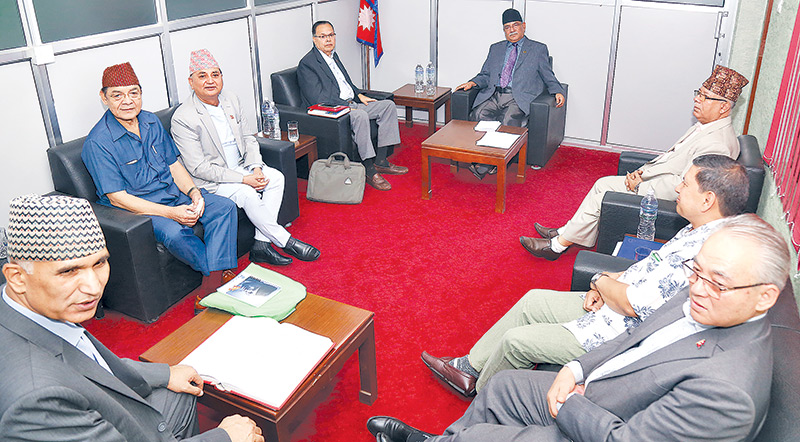
The Nepal Communist Party’s secretariat meeting on December 9 decided toconvene the Standing Committee meeting on Sunday, December 15. Post Photo: Kabin Adhikari
KATHMANDU, The ruling Nepal Communist Party is holding its standing committee meeting on Sunday, after almost a year, with leaders describing it as a crucial moment since the merger of the CPN-UML and the Maoist Centre in May last year. A secretariat meeting called for Saturday to set the agenda for the standing committee meeting, however, was postponed until Sunday morning. According to leaders, an amendment to the party statute will be high on the agenda of the meeting that is expected to continue until Monday. The leadership is amending the party statute to elevate Bamdev Gautam, a standing committee member, to the post of vice-chairman. Formation of the politburo, a crucial committee in communist parties, and party ideology are also expected to be discussed. The meeting is also likely to dwell on the government’s performance, according to insiders. Given the crucial issues awaiting discussion, leaders are anticipating a high-voltage drama. The meeting will be chaired by Pushpa Kamal Dahal, who was declared executive chairman last month. Another co-chair, KP Sharma Oli, is not likely to attend the meeting. An amendment to the party statute to elevate Gautam is already being questioned, with leaders expressing discontent at giving too much importance to one individual. A number of leaders who were vice-chairs in the former UML have already expressed their dissatisfaction. Senior leaders of the former UML are demanding that Asta Laxmi Shakya, Bhim Rawal and Yubaraj Gyawali, who were vice-chairs in the UML, should also be elevated if Gautam were to be promoted. The former UML vice-chairs have not been included even in the secretariat. According to Beduram Bhusal, a standing committee member, how the leaders will react will depend on whether the leadership is going to make a concession while elevating Gautam. “Let’s see how the proposal is floated as there are other vice-chairs from the former UML in the standing committee,” Bhusal told the Post. The party ideology is also expected to take a significant amount of time at the meeting, according to a central member. The UML followed People’s Multi-party Democracy while the Maoists’ ideology was 21st Century People’s Democracy. Former UML leaders look adamant, with Shanker Pokhrel taking the lead, about giving up on People’s Multi-party Democracy. The former Maoist leaders have been making a pitch for adopting the 21st Century People’s Democracy. Since the UML and the Maoists came from two different schools of thought, the ruling party currently has made “socialism-oriented people’s democracy” its “tactical political line”. “Neither Dahal nor Oli can explain what people’s democracy actually means,” Hemraj Bhandari, a central committee member. “Former Maoists describe it as 21st Century People’s Democracy while former UML leaders say it means People’s Multi-party Democracy.” Politburo formation will be yet another agenda, as senior leader Madhav Kumar Nepal has been making a push for it consistently. Nepal, who feels sidelined in the party, is likely to try to expand his clout in the 145-strong committee to make his faction’s presence stronger in the party. Dahal, who has started exercising his executive muscle of late, does not want to perturb Oli, while he will also try to keep Nepal happy to maintain the party dynamics. Last month’s decision to let Oli lead the government for the full term and declare Dahal executive chairman also stemmed from Oli’s concerns after Dahal and Nepal started coming closer. Yet another agenda the standing committee is likely to take up is the evaluation of government’s performance, which also can be tricky for Dahal, according to party insiders. According to a leader, discussions on government performance in the absence of Prime Minister Oli may not bode well for Dahal. Party spokesperson Narayan Kaji Shrestha, however, ruled out government performance evaluation in the meeting. “I don’t think the meeting will discuss it in the absence of another co-chair and prime minister,” Shrestha told the Post. At the meeting, Dahal will present a political paper which he has been preparing for the last few days. According to leaders, Saturday’s secretariat meeting was postponed until Sunday morning because of Dahal’s busy schedule. The meeting is also expected to discuss a meeting of the central committee, which has not convened even once since the merger. A central committee meeting is essential to endorse the proposal to amend the party statute. Leaders said they are optimistic about the party moving forward more smoothly after the standing committee meeting. “The standing committee meeting and a subsequent central committee meeting will give a new lease of life to the party,” said Bhandari. “Meetings in the coming days will also help resolve the outstanding issues related to party unification.”
HOME PAGE
Younger generation is ditching network TV for better shows on streaming services
Nepali TV needs to think outside the box and come up with quality content to bring viewers back, producers and cable operators say.
- Shashwat Pant
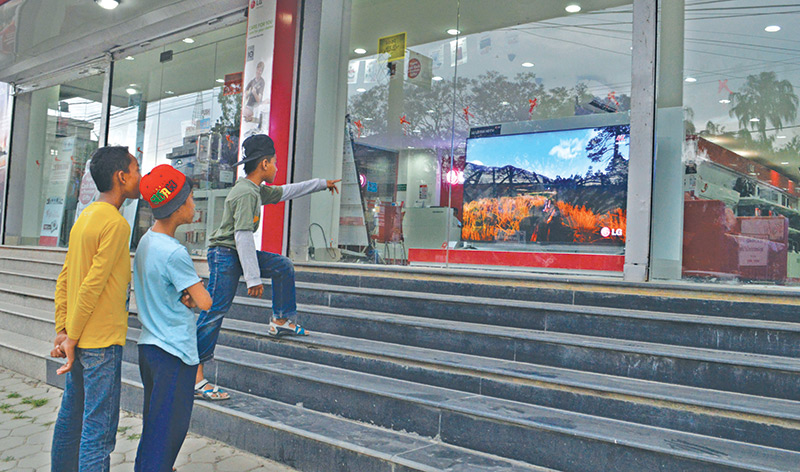
post file photo
Kathmandu, For Ramesh Prasad Aryal, the 8pm news on Nepal Television is a daily fix. The 74-year-old retired businessman has maintained the routine since the late ’80s when he got his first television set. “This is part of my life now. If I don’t watch the 8pm news, I feel like my day isn’t complete,” says Aryal. “I do watch other shows, but the news is something I cannot miss.” For many like Aryal, watching television has been an intrinsic part of life. Though television consumption did not change much over the 50 years since the medium came into being, despite the improvement in technology, today things are different. For the current generation, mobile phones or laptops have many more options. The idiot box is not their cup of tea. “In the ’90s and early 2000s, our entire family would sit in a single room and watch a few shows together before going to bed,” says Aryal. “That was because we only had one television set. But that seems to have changed now. While each room in our house has a TV set, the younger generation seems to be more interested in mobile phones and laptops.” Aryal’s 18-year-old granddaughter Kripa agrees. Kripa, a first-year college student, lives in the streaming era of television. “There’s nothing worth watching on TV,” says Kripa. “I would rather watch shows on streaming outlets like Amazon Prime and Netflix. They have far better shows to offer.” Television in Nepal has come a long way since it first made its foray into the country in the late ’70s. Until the early 2000s, there was just one channel, and now there are over 50. From having to tinker with boosters and large aluminium antennae, to having setup boxes and streaming services today, television watching habits, like elsewhere in the world, have also changed in Nepal over the years. “I do like keeping my grandfather company when he watches TV, but I just cannot handle the news,” she says. “And when it comes to shows, I don’t find them interesting. Anyway, Nepali shows are easily available on YouTube.” Much of Kripa’s generation’s major gripe about traditional channels is a lack of quality shows. That apart, they say streaming provides them the opportunity to enjoy their favourite shows whenever they want, uninterrupted. College student and graphic designer Arun Shrestha, 23, says one can get a Netflix account in Nepal through Instagram, and this streaming platform has made him completely abandon his TV. “It’s quite easy. My three friends and I have created an email for Netflix and we make online payments,” says Shrestha. One such account is Netflix Nepal, which is selling Netflix account for four screens for Rs 650 per month and Amazon Prime accounts for Rs 1,200 per year. “Some of these are cheaper than in the United States or Europe. And you can share it with friends,” says Shrestha. “Most of my friends have switched to Netflix and Amazon Prime as you can watch it on any device—they have better shows and they come without commercials.” The changing television watching habits, especially when it comes to the younger generation opting for streaming platforms, ditching the television, is a cause for concern for the channels. Bhusan Dahal, chief executive producer of Kantipur Television, however, says rather than being disappointed, channels should take this as a challenge. “Everything changes with time. I feel that now is the time to take this as an opportunity to reinvent ourselves,” says Dahal. “I know it’s not going to be easy. That’s the challenge and I am relishing it.” According to Dahal, good content will always get viewers. “If we can come up with quality content, we won’t lose television viewers,” he says. Alok Thapa, a producer and filmmaker, echoes Dahal. “In this day and age, content is king. I feel we need to invest in producing quality shows,” Thapa says. “If we do that, people will automatically return to television. And I believe television companies in Nepal are slowly realising this fact. They also need to move beyond reality shows.” Aman Pratap Adhikari, executive producer/director of Himalaya Roadies, though agrees that variety in content is a must, he says reality shows are popular worldwide and they attract more viewers. “People all over the world are watching reality shows. For now it’s doing well, which is why all TV channels have at least one reality show,” says Adhikari. “However, that isn’t going to last. This bubble will probably burst in a few years which is why we need to act now to ensure that television does not lose viewers.” Television personalities agree streaming content has taken the world by storm. But all is not lost, they say. “Now is the time to think outside the box and connect with the audience. The best content will always make its way to the TV. I think YouTube is helping TV channels because it’s creating a lot of young hungry content creators,” says Dahal, who himself hosts a weekly show in the interview format which is also available on YouTube. “If we produce quality content, TV’s viewership will be back.” While traditional broadcasters across the world are feeling the heat of streaming services, as more and more people are ditching cable, operators in Nepal don’t see an immediate threat. Sudhir Parajuli, president of Subisu Cable Net, an internet and cable TV provider, says traditional broadcasting is not going to be obsolete anytime soon in Nepal. “The rate at which our subscribers are increasing is quite encouraging,” says Parajuli who claims to have over 100,000 subscribers. “I think cable television will continue to be relevant for the next few decades. Parajuli, however, is quick to add that quality content is the key. “We need to focus on bringing content for those who say they have switched to streaming for the lack of good shows on TV.”
MEDLEY
Horoscope
- Post Report
ARIES (March 21-April 19) ** The enthusiastic people around you might drive you nuts today. You’re simply not feeling the love they are, and you’re in no mood for a pep rally. Put on a happy face—raining on their parade will not temper spirits or make them act normal. Use your imagination to figure out how to fake it—that’s your ticket out of crankiness.
TAURUS (April 20-May 20) ** Any type of communication will entertain today, from emails to chats to gestures and rolled eyes! Gossiping about the latest news with others is harmless but fun. Share what you know, and find out what your friends can add to your juicy tidbits. Just be sure you don’t go too far with it— people are involved.
GEMINI (May 21-June 21) *** Been suspicious of a person outside of your social circle for a while? Their words have not always matched their actions, and their behavior has driven you nuts. Today, new facts will arise that’ll either confirm or help put suspicions to rest. If you discover your worries were baseless, make peace.
CANCER (June 22-July 22) *** When someone reaches out today, be receptive of them. Stifle your urge to not get involved with someone you don’t know well—sometimes, getting involved is good. Plus, it can be an adventure. Reach out and be friendly. People are finding you approachable right now, so try to get used to them wanting to be your friend.
LEO (July 23-August 22) ** There are a lot of demanding people around right now—stubborn folks are going to try to tell you what to do and how. Aren’t they in for a surprise? Be bold and don’t let anyone push you around. They’re all bluster and no follow-through. Chances are, once you assert yourself, they will fade right way.
VIRGO (August 23-September 22) *** You’re not interested in what the outside world has to offer right now—you’d rather explore the ideas in your own mind. Creativity is an important part of who you are, and it is controlling you. Your urges want to take another look at those old concepts and ideas in the attic of your mind. Contemplation can be very productive.
LIBRA (September 23-October 22) ** If you have to spend time with someone who you don’t really respect today, try not to be unfriendly. Smile and treat them nicely. Kindness isn’t only more polite, it’s smart. You won’t get far ahead in life if they thought you’re always rude to them! Show them you’re respectful.
SCORPIO (October 23-November 21) *** Today, being social isn’t going to be as appealing as staying home. It’s not that you’ll be feeling antisocial, it’s just that your energy is low and making small talk is hard to comprehend. There’s no crime in that—in fact, it’s good to know your limits. If you don’t want to go to that party or event, everyone will understand.
SAGITTARIUS (November 22-December 21) **** You’ll do a wonderful time of entertaining yourself during the day’s lulls, which is a good thing—there are going to be few. This break in action isn’t something you’ve been anticipating, but you’re well-equipped to make the best use your free time. You can deal with this just like you deal with everything.
CAPRICORN (December 22-January 19) ** Children need discipline to grow up to be considerate, mature people—but grownups need order in their lives to stay considerate and mature. There’s too much disarray in life right now. A messy car, cluttered desk and closet aren’t helping you stay focused. Take time to sort your life and toss out what you don’t need.
AQUARIUS (January 20-February 18) **
Have conviction in everything you do today—no matter what. You have to commit to what you’re doing. Perpetually changing your mind is going to stress people out and it could earn you a bad reputation. You have the freedom to make up your own mind, but you don’t have the freedom to change it every other minute.
PISCES (February 19-March 20) ***** You’ll have a wonderful time watching the world go by—there is so much beauty you have never noticed before! Your creativity feeds off this type of realisation, so it’s important you appreciate beautiful words, images and people. Find time to take a walk—time it in the middle of the day, when people are out and about.
NATIONAL
Police inspector among three killed in Dhanusha blast
- SHUVAM DHUNGANA
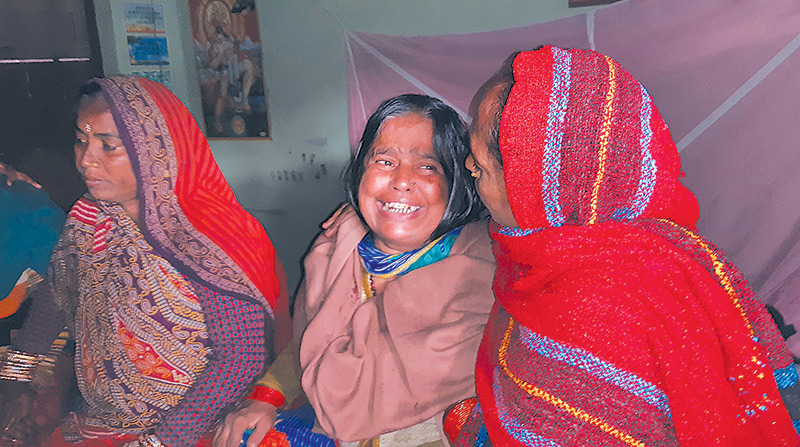
Relatives mourn after the deadly midnight blast in Dhanusha. Post Photo: Santosh singh
KATHMANDU, Three persons, including a police inspector, were killed in a powerful explosion in Dhanusha, on Friday midnight. Four others sustained injuries in the blast at a house belonging to Rajesh Sah’s in Kshireshwarnath Municipality-5. According to the District Police Office in Dhanusha, Rajesh Sah (46) and his son Ananda Sah (24) died on the spot, while Police Inspector Amir Kumar Dahal succumbed to his injuries in BP Koirala Institute of Health Sciences, Dharan. Rajesh’s another son Prakas Sah (14), daughter Anjali Sah (19), father Bhikhari Sah (73) and police constable Rijhnath Mahato were injured in the explosion. They are receiving treatment in Dharan, police said. Rajesh had informed the Area Police Office in Mahendranagar immediately after he saw the suspicious object hanging by the door. He went to the police office using another door and reported about the object. The explosive went off when Rajesh and the security personnel reached home. According to the locals who witnessed the incident, the bomb went off without anyone touching it. Investigation officers suspected that it could be a time bomb. The house was badly damaged in the blast, leaving its main door ripped apart, the wall collapsed and window panes smashed. The incident site is around 100 metres east of Mahendranagar Chowk along the Janakpur-Dhalkebar road . “Postmortems were performed on the bodies at the Dharan-based BP Koirala Institute of Health Sciences,” said Inspector Avadesh Kumar Yadav, at Dhanusa District Police Office. Meanwhile, police arrested three persons in connection with the blast. According to Deputy Superintendent of Police Rameshwor Karki, Lalita Devi Mahara and Sita Devi Mahara of Hansapur-2 and Ramsobhit Dahal of Mithila Bihari-1 were detained for investigation. It is suspected that the accused trio are members of the Netra Bikram Chand-led Communist Party of Nepal. The District Police Office formed a seven-member investigation team led by Police Inspector Uma Shankar Sah. “Investigation is underway,” said Karki. Rajesh was the owner of a pharmacy and a dairy in Mahendranagar Bazaar. It is not immediately known about the motive behind the blast, police said. No one has claimed responsibility for the blast so far. The body of Inspector Dahal, a permanent resident of Sankhuwasabha district, was bought to Kathmandu on Saturday at around 4 pm in a Nepal Army helicopter for the final rite, Yadav said.
(Shyam Sundar Shashi and Santosh Singh contributed reporting from Dhanusha)
NATIONAL
Construction process for Madan Bhandari University starts before House endorses its bill
- BINOD GHIMIRE
KATHMANDU, The process has begun to build the campus for Madan Bhandari University of Science and Technology in Chitlang, Makwanpur, even before the federal parliament has approved the bill needed to set up the institution. Infrastructure Management Committee for the new university started the construction process by setting up a signboard in Thaha Municipality-9 on Thursday. The committee is working to invite bids for the construction within a week. Rajendra Dhoj Joshi, the committee chairman, said they have started the infrastructure development process as mandated by the government. Asked what if the bill is not endorsed, he said: “The university is the government’s priority. I, therefore, don’t think it won’t be endorsed.” The government has allocated Rs 100 million for the detailed project report and infrastructure development in the current fiscal year. The government on July 29 registered the bill in the Parliament Secretariat to open a new university near the Capital that will offer a wide range of streams, from science and technology to humanities—similar to those already being offered by two leading universities in Kathmandu. The bill is under consideration at the Education Committee of Parliament. Though the new varsity has been named Madan Bhandari University of Science and Technology, its objectives are no different from those set by Tribhuvan University and Kathmandu University, which primarily cater to students within the Capital and from the surrounding regions. In its annual budget, the government has announced the plan to establish a technical university that focuses on technical education. But the proposal shows the new institution will be a general university. The government was looking for Chinese assistance to build the infrastructure and for logistical support. Nepal had proposed the project to Chinese President Xi Jinping during his visit in October. The government had sought around Rs 43 billion in grant from Beijing. The Chinese had, however, said Chitlang is not a suitable place for the university, asking the government to find another location within the Valley, according to Nepali officials.As a result, Nepal will be solely funding the university. “As the Chinese were not enthusiastic about the funding, we will ask the government to increase the budget significantly next fiscal year,” Joshi told the Post. “We will continue to add the infrastructure every year and increase our academic programmes accordingly.”The academic programmes would target research in technical fields. Thaha Municipality has transferred the entitlement of 740 ropanies of land from Swachhanda Bhairab Secondary School to the university. Mayor Lab Sher Bista said they would provide more land if necessary. “The Nepal government should allocate necessary funds if the Chinese government has turned down [the request]. However, the university should come into operation at the earliest possible,” he told the Post.
NATIONAL
Traffic Division to train over 100,000 school students and drivers on traffic rules
The division will launch a new drive from December 17, mobilising 133 traffic police personnel in all 44 units within Kathmandu Valley.
- ANUP OJHA
KATHMANDU, In a bid to curb road accidents caused by traffic rule violations, the Metropolitan Traffic Police has decided to train more than 100,000 students and public vehicle drivers on road safety under its campaign “Traffic Ujalo Abhiyan.” The division will begin its drive from Tuesday, deploying 133 traffic police personnel across all 44 units of the Kathmandu Valley. Earlier, in late October, the division had trained more than five dozen drivers of various ministries in Singha Durbar, as they were found flouting traffic rules more often. The recently appointed traffic police chief, Senior Superintendent of Police Bhim Prasad Dhakal, identified three E themes: education, engineering, and enforcement as the way forward. “We are implementing the education theme. It’s in its preliminary phase,” said Dhakal. “Many license-holding drivers do not even have a basic knowledge of traffic rules.” For traffic-related education in schools and colleges, the division has already tied up with higher institutions, Secondary Schools Association Nepal, Private and Boarding Schools’ Organisation Nepal and National Private and Boarding Schools Association Nepal. Each unit of the valley will be reaching out to every school and college and hold traffic-related classes in a batch of 50 students per session. “This is a sustainable plan to curb future accidents and traffic rule violations,” said Dhakal. “If we can make students well aware of traffic rules at the school level, these students can pass their knowledge to their parents and friends as well.” Dhakal said he was inspired by the compulsory road safety education in the National School Curriculum of Japan. “The Japanese government has made it mandatory for primary level students to learn about traffic rules and road safety. But in our case, almost all the licence holders are unfamiliar with the traffic rules and regulations,” said Dhakal. In the three-month-long drive, each unit of the traffic police will undertake to teach students lane discipline, U-turns, traffic lights, proper overtaking and parking rules. “At the same time, we will continue with our public awareness programme on road behaviour when the traffic flow is higher,” Dhakal added.
NATIONAL
Nepal seeks review of Gurkha recruitment deal with Britain
- REUTERS
Nepal now wants the tripartite deal renegotiated since the current accord does not allow Kathmandu to play any role in the recruitment process of Gurkhas by foreign armies. Photo obtained by the post
KATHMANDU, Nepal wants to review a military deal allowing its citizens to be enlisted in the British army, before a planned recruitment of Nepali women in the Brigade of Gurkhas for the first time in two centuries, the Himalayan country’s foreign minister said. It is not clear how many Gurkha women Britain plans to enlist, but the first Gurkha women could begin their training in the British army in 2020, according to British media. Britain has been enlisting Gurkhas, a tribe from Nepal’s Himalayan foothills known for their fierce combat abilities, since 1815. An agreement between New Delhi, London and Kathmandu following India’s independence from colonial rule in 1947 allowed India and Britain to share and recruit Gurkhas. In 2007, Britain announced plans to recruit Gurkha women for its elite force, adding however that issues such as recruitment and selection standards needed to be settled. Nepal now wants the 72-year-old tripartite deal renegotiated since that accord does not allow Kathmandu to play any role in the recruitment process of Gurkhas by foreign armies, the country’s Foreign Minister Pradeep Kumar Gyawali told Reuters in an interview late on Friday. “(Some) provisions of that agreement have become irrelevant now. Therefore, we have told Britain that we should review it ... make bilateral arrangements,” said Gyawali. “We should define the presence of the government of Nepal in the (recruitment) process.” A new agreement should also address Gurkha grievances such as pensions and other benefits, which retired servicemen say are not at par with their British counterparts, Gyawali added. Nepal, a natural buffer between China and India, is one of the world’s 10 poorest countries and remittances from Nepalis working abroad, including the Gurkhas, account for more than a quarter of its GDP. Currently, there are about 3,000 Nepalis in the Brigade of Gurkhas who have fought in Iraq, Afghanistan and the Balkans.
NATIONAL
Patients return untreated as health post lacks personnel
Given the remoteness of the villages in Rukum (East), health workers are reluctant to move to the health post, say locals.
- HARI GAUTAM
RUKUM (EAST), When Bir Bahadur BK of Putha Uttarganga Rural Municipality Ward No. 14 fractured one of his hands while fetching fodder for his cattle, he immediately rushed to the nearby Kol primary health post. But unfortunately, he had to return home untreated, as the health post did not have any skilled health personnel. Mangala Budha Magar of the same local unit recounted a similar experience when no one could operate the x-ray machine at the health post. The health post serves patients from at least six wards in three rural municipalities—Putha Uttarganga, Bhume and Sisne. The facility is fairly well-equipped for a primary care health centre. What it lacks is manpower, as a result of which, many patients are compelled to return home untreated or travel some distance elsewhere in the district. Locals say that even though the health post has a designated pool of human resources, they hardly show up. And when they do, they don’t stay for long. Out of the 11 designated positions at the health post, five are currently vacant. Since the former chief doctor, Topendra Karki, was transferred during the employee readjustment, the post has yet to be filled. The health post is currently operated by three Auxiliary Health Workers and Auxiliary Nurse Midwives each and one lab technician. “None of the doctors remain at the rural municipality for long, and those who do don’t show up at the health post regularly,” said Bahadur Sunar, a local of Ward No. 12. Ganga Pun, chief of ward no. 12 and chair of the health post management committee, admitted that patients are deprived of primary care due to a lack of manpower. “Health personnel posted here always want to transfer to other places,” Pun said. “It might be because of the remoteness of the rural municipality. None of the personnel at the post has served full time yet.” After the federal government ignored the rural municipality’s call to send workers to Kol health post, the local unit tried to take matters into its hand and issued a vacancy notice for the available positions. But, according to Pun, nobody has applied yet.
NATIONAL
A community forest in Bardiya attracts tourists
Every day, an average of 50 to 100 tourists arrive in the forest to catch glimpses of rhinos and tigers.
- KAMAL PANTHI
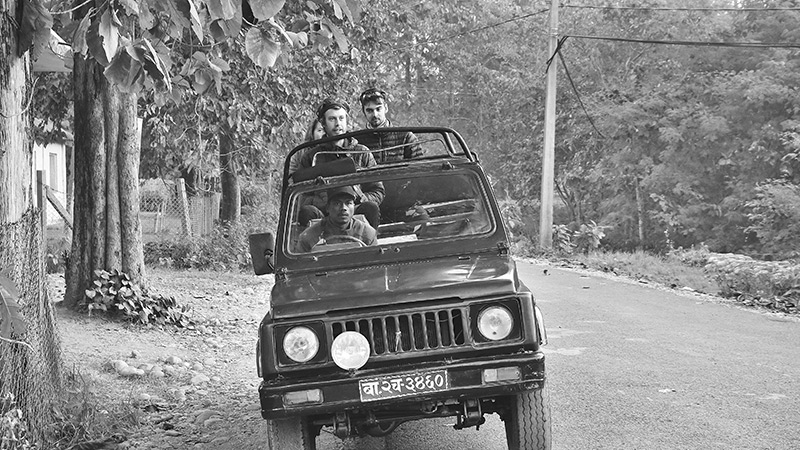
Foreigners on a jeep safari in the Shiva Community Forest, which is adjacent to Bardiya National Park. Post Photo
BARDIYA, Shiva Community Forest, which is adjacent to Bardiya National Park in Dalla, Madhuwan Municipality Ward No. 2, is slowly becoming a popular tourist attraction in Bardiya. Every day, an average of 50 to 100 domestic and international tourists arrive in the community forest to catch a glimpse of the one-horned rhino and the Royal Bengal Tiger. Parashuram Chaudhary, the ward chairman of Madhuwan Municipality Ward No. 2, said that there are nine rhinos in the forest. He said, “We have estimated that there are seven to 10 tigers in the forest.” Krishna Pariyar, former chairman of Khata Forest Coordination Committee, said that two rhinos of Bardiya National Park had entered the forest a decade ago and have since made the community forest their home. Parashu Tharu, former secretary of the community forest, said that the number of rhinos has been increased every year. He said, “Within the last three years, two rhinos have given birth. Local consumers of the forest even named a rhino calf Shiva.” The community forest covers 104 hectares of land, which is regularly patrolled by a squad of Nepal Army personnel and locals to control poaching of endangered species. Ananath Baral, chief conservation officer of Bardiya National Park, said the Nepal Army had mobilised a small squad in the Dalla area to control poaching and smuggling of endangered species. According to him, there are 37 rhinos in the national park. Because of the security, locals say the community forest is a safe habitat for the endangered rhinos and tigers. Apart from its wildlife, Shiva Community Forest’s homestay facilities are also attracting visitors, according to Mangal Tharu, chairman of Shiva Community Forest. There are 20 homestays operating in Madhuwan Municipality Ward No. 2.
Infrastructure was built months ago. Department of Railways says service will commence by mid-March.
- SHYAM SUNDAR SHASHI
JANAKPUR, Rail operation along the Janakpur-Jayanagar broad-gauge line has yet to start even as the track and other infrastructure were built around two years ago. Local people have started venting ire as the authorities failed to resume the service despite repeated assurances from the government. Then minister for physical infrastructure and transport Raghubir Mahaseth had publicly committed to relaunching the railway service by 2018. “It is still not clear when the service will begin. People question the delays though the infrastructure has already been prepared,” said Sunil Mishra, a resident of Janakpur. According to the Department of Railways, the procurement process for two rail engines and compartments started long ago. Balaram Mishra, director general of the department, said a contract was signed with Konkan Railways Corporation Limited of India. “It’s time for the delivery of the rail engine. The service will be started by mid-March 2020,” Mishra claimed. In May, the Railway Department signed the agreement with the Indian company to supply two diesel-electric multiple unit train sets for passenger service from Kurtha of Janakpur to Jaynagar of India. The 69 km Jayanagar-Janakpur-Bardibas railway has been built at a cost of around Rs10 billion, with support from the Indian government. Indian Railway Construction Company Limited built the line in three phases—Jayanagar to Kurtha, Kurtha to Bhangaha and Bhangaha to Bardibas. The stretch in India is 3 kilometres long. Construction started in 2010, with the target of operating rail service by the end of 2018. Monsoon floods this year swept away 71 metres of the railroad near Inarwa station along Khajuri-Jayanagar section. “Maintenance of the damaged line is in the final stage. It will be completed soon,” said Binod Ojha, an engineer at the Department of Railways. Preparations are going on to commence the rail service along the 35-km Jayanagar-Janakpur stretch in the first phase. Mishara estimates that it will take two to three years to operate the service up to Bardibas of Mahottari district. The Janakpur-Jayanagar track was built nearly 85 years ago during the British colonial rule in India with an objective of transporting timber from the forests of Mahottari to India. The old line spanned 52 km from Bijulpura in Mahottari, Nepal, to Jaynagar in Bihar, India.
Railway law yet to be formulated JANAKPUR: Though the railway infrastructure is ready for operation, the law to govern the service is not in place. Staff recruitment process has yet to begin. “The railway law has already been approved by the Cabinet. The upcoming winter session of Parliament will endorse the law,” said Mishra, adding that the hiring process would begin soon after the law is enacted. An estimated 200 employees are required for operating the Jayanagar-Janakpur rail service.
NATIONAL
There are roads in remote Dadeldhura, but none good enough for operation
Almost all local units have been building roads in the name of development, but vehicles cannot operate in most because they are often built without proper homework.
- DR PANT
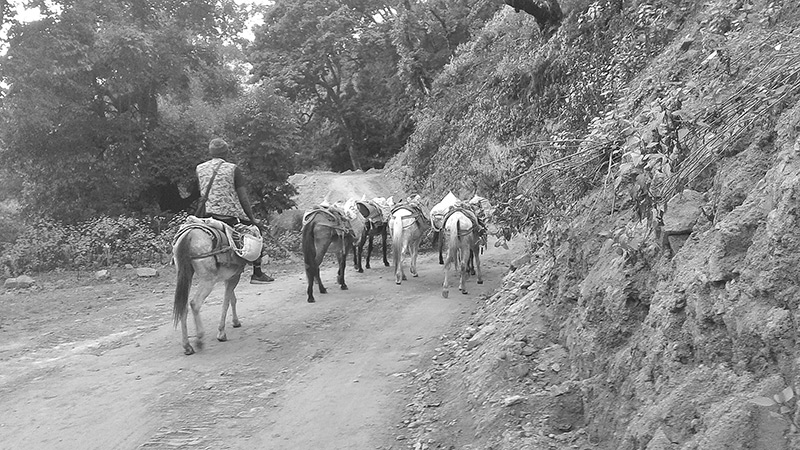
Because of the poor condition of the roads, villagers have gone back to using their mules to transport goods. Post Photo: Dr Pant
DADELDHURA, After the formation of the local government, Ganyapadhura Rural Municipality in Dadeldhura district spent more than 70 percent of its development budget in constructing 42 rural roads in the fiscal year 2017/18. In the second fiscal year (2018/19), the local unit spent 60 percent of the development budget in the construction of 17 new rural roads and upgradation of 42 old roads. In the current fiscal year (2019/20), the rural municipality has allocated more than 60 percent of the development budget for road upgradation work. But vehicles hardly operate on the rural roads. The only road that sees some traffic is the one that connects Ganyapadhura Rural Municipality with KI Singh Highway and Dadeldhura bazaar. The rest of the rural roads have been left unused; the most likely sight you see on these empty roads are mules transporting essential goods. In Navadurga Rural Municipality, only two rural roads are in operation. Here too, the rural municipal office also spent around 60 to 75 percent of its development budget in the construction of rural roads for the last three years; however, none of the roads (constructed within three fiscal years) is motorable. The construction work of around three dozen roads is ongoing in Navadurga Rural Municipality. The situation is not limited to these two local units. Almost all local units have been building road stretches in the name of performing ‘development activities’, but vehicles cannot operate in most of the road sections, as they are often built without proper homework. “We are not happy, although many rural roads networks have been opened,” said Jaya Singh Air, a local of Belpur in Nawadurga Rural Municipality, adding that they had expected the roads to be a boon for their local unit but their expectations have shattered now. Two years ago, local entrepreneurs, who were involved with operating mules for transportation, were out of jobs after the majority of local units started opening road stretches in remote areas. But this traditional mode of transportation has been almost revived in most of the areas due to the pitiable condition of the rural roads. “More than 200 mules were used to ferry food items like rice, salt, sugar, oil, and beaten rice to the remote areas before the opening of rural road networks,” said Sher Bahadur Malla, a local entrepreneur of Gangkhet. ND Prakash Highway, Ugratara-Melali road, Pokhara-Belapur-Seti road, and Budar-Jogbudha road are the few motorable roads in Dadeldhura. “We are facing a lot of problems due to the absence of proper roadways in remote areas,” said Bhojraj Bhatta, a former teacher of Koteli, blaming that people representatives have made rural roads as their begging bowls. “The construction of rural roads have become useless, as villagers in the remote areas are still compelled to walk over hills carrying sacks on their backs. Due to lack of road connectivity, farmers are unable to send their harvests to market,” he said. The roads that are being built are too far away from settlements and make little sense, according to locals. Padamraj Bohara, deputy chief of Bhageshwor Rural Municipality, however, accepted that they could not develop the rural roads into motorable roads. He said, “We are requesting the provincial government to look into the situation.”
NATIONAL
Fire destroys two houses
Briefing
TAPLEJUNG: A fire that broke out at Gumbadanda in Phalgunanada Rural Municipality Ward No. 3 destroyed two houses on Friday. Police said property worth around Rs 9.2 million was destroyed in the fire incident.
NATIONAL
IED defused in Salyan
Briefing
A bomb disposal squad from Nepal Army defused an improvised explosive device that was found at Sangitatol in Sharada Municipality Ward No. 3. The IED was found while an excavator was digging the area for the construction of a road. Police suspected that the IED could be from the insurgency days.
NATIONAL
Clothes bank set up in Gorkha
Briefing
GORKHA: A clothes bank has been set up in the district headquarters of Gorkha, on Saturday. The bank is established by Leo Club of Gorkha. Chair of the club Bidurballav Bhattarai said that the bank aims to distribute clothes for free to the needy to help them beat the cold.
NATIONAL
30 Army personnel injured in bus accident
Briefing
NAWALPARASI: Thirty Nepal Army personnel were injured when a bus crashed at Kawasoti in Nawalparasi (East) along the East-West Highway. Among them, five are critical. Police said that the bus overturned as the driver dozed off while driving the bus. The driver of the bus is at large.
NATIONAL
Province 3 government announces subsidy for farmers
Briefing
MAKWANPUR: The Province 3 government has announced it will provide a 75 percent subsidy to farmers to purchase agricultural equipment. Prior to this, the government had unveiled a lofty goal of making the province independent on food within five years. In total, the government has allocated Rs200 million to subsidise the farmers in the province.
NATIONAL
‘Suspicious’ plastic bag reveals 11kg hashish
Briefing
BARDIYA: Security personnel seized 11 kg hashish in a ‘suspicious’ plastic bag found at Bhurigaun along the East-West Highway on Saturday. The local people informed the police upon seeing the unclaimed plastic bag suspecting it as an explosive. The security personnel of Nepal Army, Nepal Police and Armed Police Force recovered the drugs from the plastic bag.
OPINION
Health systems in federal Nepal: challenges and opportunities
The coordination between the three levels of government must be seamless.
- Heem Sunder Shakya
Shutterstock
In the aftermath of the 2007 People’s Movement, the 240 years of monarchy was abolished with 5th amendment of the Interim Constitution of Nepal, 2007. The amendment was the first document to bring forward the idea, officially, that Nepal was to be a federal democratic republic. It envisioned federalism as a prominent feature for a new Nepal. Local-level elections were held in 2017, but it wasn’t until mid-2018 that the federal structure started taking shape. Yet, in many sectors, including health, the transition has been ongoing. To be sure, the entire health system has to go through major changes, and implementing these isn’t easy. The newly created 753 local governments will now oversee 4,000 plus health facilities. With the new governance structure, accountability has also been divided among the three tiers. Similarly, budgetary decisions and program implementation has been divvied up; the local level is responsible for a bulk of the responsibilities. The other major change in the new structure is an increase in procurement units for health commodities, such as drugs and equipment, which is due to the addition of local governments, and the increased layers in supply chain management (for example, in the cold storage and transportation of vaccines). But some of the changes could have been avoided if the transition was properly planned. One such issue has been the continuation of the district health offices. To focus on and promote healthcare services in local units, the district health offices were first removed from the new structure. However, after some alleged public outcry, the offices were reinstated. But the roles and responsibilities of these health offices are not very clear; all health facilities previously handled by the district health offices now report to their respective local level governments. The coordination among the three levels of government has been lacking. Programmes remain unimplemented or partially implemented due to the federal government’s failure to transfer power, with clarity, to the provincial and local governments. The transfer of staff from federal employment to other tiers continues to be contentious. In the current context, putting all the health facilities under local level governance poses a major challenge, with limited staff and skills to manage health programmes. Local-level governments themselves act as mini-ministries, with health being a component. This system lacks clear direction, capacity, and clarity to drive health programmes. The reinstated health offices in districts do not have a clear mandate of functions like before. They used to manage services in districts and manage all health facilities, but they are now sort of defunct. Staff morale has gone down. Immediate attention is required to make these offices active again. What’s worse, the addition of multiple layers, with decentralised procurement of health commodities and equipment, increases the chances of inefficient buying or corruption. While the challenges are many, the decentralisation of healthcare also has the potential to benefit all Nepalis. Specifically, the move towards federalism should provide all Nepalis, whether urban or rural, equal access to government-provided health services. But for this to work, the government at all tiers have to focus on plans and activities that aim to solve the aforementioned challenges. The coordination between the three levels of government must be seamless, for one. Further, support must be given to local governments to strengthen their capacity to manage health programmes and logistics. As long as the capacity is strengthened, the opportunity to enhance service delivery is there--local participation and accountability in the process will push healthcare forward. The district health offices can be restructured to provide technical assistance to the local governments, especially on programme monitoring, evaluation, supply chain management and performance. The roles of regulatory agencies must be expanded to monitor drug quality and procurement practises at all levels of government. Moreover, oversight is required to streamline and optimise procurement orders so that there are no unnecessary wastages and leakages occur. The only way forward in order to strengthen the health system in the federal context is to empower the local level government to manage and provide quality health services and to take ownership of the health programmes. It seems a daunting task at present; however, in the long run, it will be sustainable and beneficial to the people of the country.
Shakya is a consultant in the procurement and supply chain management of health commodities and systems.
OPINION
A divisive move riddled with pitfalls
The BJP government’s actions are in contradiction to the secular spirit of the Indian constitution.
- Tasneem Tayeb
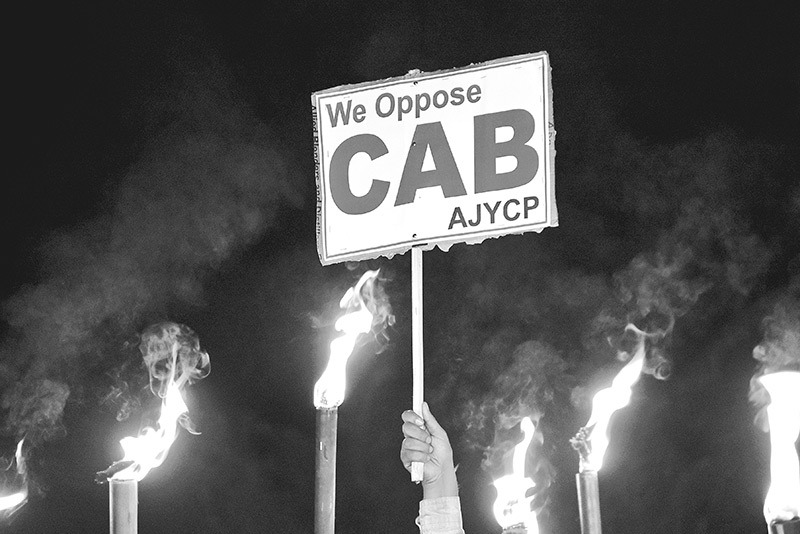
Activists take out a torch rally to protest against the Citizenship Amendment Bill in Guwahati, Assam on December 5. David Talukdar/Shutterstock.com
The upper house of the Indian parliament, the Rajya Sabha, passed the contentious Citizenship Amendment Bill (CAB) on December 11, much to the shock of the Muslims living in the country. The much-talked-about bill is now awaiting the assent of the President. So what is all the hue and cry about? While the bill is popular among many in India, even if one tries to find some virtue in it, the only one that emerges—protection of monitory communities—is tarnished by the religion factor associated with it. The BJP through the CAB wants to amend the Citizenship Amendment Act 1955 to provide citizenship to the people of certain non-Muslim religious communities from three neighbouring countries, provided that they lived in India for six years. The proposed cut-off time is December 31, 2014. Yet the bill has quite a few major drawbacks: it proposes to grant naturalised citizenship to the refugees from only six religion-based minorities—Hindu, Sikh, Buddhist, Jain, Parsi and Christian—that too only from three specific neighbouring countries: Bangladesh, Pakistan and Afghanistan. While India’s claim about the persecution of religious minority groups in Bangladesh is incorrect, let us leave this issue aside for another day. For now, let us note here the religious underpinning of the about-to-be-enacted bill and its exclusionary nature. And this creates two further problems: first, the religion-based preferential treatment of migrants is in violation of Article 14 of the Indian Constitution which says, ‘The State shall not deny to any person equality before the law or the equal protection of the laws within the territory of India.’ Segregation of refugees on the basis of religion is essentially against the pluralistic spirit of the Indian constitution—’fundamentally unconstitutional’, as Dr Shashi Tharoor, a veteran Indian politician, has termed it. While discussing the bill with the BBC, renowned historian Mukul Kesavan suggested that the bill is ‘couched in the language of refuge and seemingly directed at foreigners, but its main purpose is the delegitimisation of Muslims’ citizenship’—a fear shared by many. The second problem that the proposed amendment presents is one of human cost. In a region that is mired in religion-based violence—the genocide of the Rohingya by the Myanmar military-backed government; the persecution of Tamils in Sri Lanka; the discrimination against Shia Muslims in Pakistan; the repression of Uighur Muslims in China’s Xinxiang province, to name a few—the decision to open the doors of refuge and offer protection to only a few communities negates the ‘humanitarian’ outcomes (protection of persecuted minorities) that the BJP aims to achieve through the proposed amendment. And while some in India see the CAB in a positive light, there are others who are concerned by the potential consequences of this move. Mainly: diluting the ethnic social identity of the north-eastern states, especially those bordering Bangladesh. CAB can be seen as a tool to enable the integration of the Hindu population left out of the National Register of Citizens (NRC) in Assam, and potentially in other states in the future; solidifying the Hindu base of India and through it the BJP’s Hindu vote bank; and marginalising the Muslim population living in India. The CAB was first proposed by the BJP in 2016. But it had to be withdrawn after an ally withdrew support and protests flared up in the north-eastern states against the proposed bill. The bill, protesters feared, would allow for greater absorption of illegal migrants from neighbouring Bangladesh. Tension between those who have migrated to Assam from Bangladesh and the locals have remained high historically, especially in the Muslim Bengali-dominated Barak Valley—where many Bengali-speaking Muslims had been transported as workers during the British Raj—leading to a bloody massacre of Muslims in Nellie in 1983 in which nearly 3,000 individuals had been killed in a six-hour operation. In response to the six-year agitation by the All Assam Students’ Union (AASU) that was initiated in 1979, to weed out the illegal Bangladeshi immigrants from Assam, the Assam Accord was signed between the Indian government and the leaders of the Assam Movement on August 15, 1985, setting March 24, 1971 as the cut-off time for deportation of all illegal immigrants irrespective of their religion. And the NRC was updated recently to identify the people who had migrated to the said states after Mach 24, 1971 and declare them illegal immigrants. This resulted in the exclusion of nearly 1.9 million people in Assam from the final NRC—a majority of them reportedly from the Hindu community. And while some people in Assam welcomed the NRC result, the reintroduction of the CAB in parliament has sparked protests in the north-eastern states amidst fears that it will be used as a tool to absorb the Hindu population left out of the NRC into the country. The statement of BJP President and Home Minister Amit Shah during a visit to Assam—’I have come here to assure all my refugee brothers that there is no need to worry as the central government will not force them out of the country. Before NRC, we will bring the Citizenship Amendment Bill, which will ensure these people get Indian citizenship’—only fuelled the fears of the people of the north-eastern states. And although the BJP later announced that the CAB will not be applicable for areas under the Sixth Schedule of the Indian Constitution—which includes regions in Assam, Meghalaya, Tripura and Mizoram, as well as states that have the inner-line permit regime, namely Arunachal Pradesh, Nagaland and Mizoram—scepticism among the natives of these regions remains high about the outcome of the proposed amendment. While we cannot comment on whether the xenophobic fears of the north-eastern states are rational, what is apparent is that the CAB might potentially increase religio-ethnic tensions in the northeast of the country. It will also trigger fears that if the NRC is applied to other states, the Hindu population left out of those registers will be absorbed in India thought the amended CAB, while the Muslims will be declared illegal, thus denying them equality on the account of their religion. And because of the way the CAB has been presented, one might be pardoned for finding it similar to Israel’s ‘law of return’ which allows the Jews the right to live in Israel and to gain Israeli citizenship. While trying to justify why Muslims have not been incorporated in the list of the religions, BJP spokesperson Nalin Kohli told Al Jazeera, ‘Regarding Muslims, there are countries that were formed exclusively for them’—an unconvincing and inadequate response. A closer look at the NRC, CAB and the revocation of the special status of Jammu and Kashmir, through the abrogation of Article 370 and 35A of the Indian constitution earlier this year, suggests that all these fall into a pattern—a pattern that is essentially anti-Muslim and divisive in nature, and in contradiction to the secular spirit of the Indian constitution. The bill might be popular among a few in India, but we must understand that just because something is popular doesn’t mean it is good, or for the greater good of all. And the CAB is riddled with pitfalls that might essentially increase religious tensions in the country. The BJP has embarked on a risky journey, toeing a very thin line. As a friend of India, we are concerned about the path of divisive policy that the BJP is steering India towards. The Citizenship Amendment Bill should make India a greater nation, one that upholds the values of human rights and sympathises with all persecuted communities irrespective of religion, rather than discriminating against people on the account of their religious beliefs. Above all, it should not diminish in any way the pluralistic nature of the vast Indian democracy.
This article was previously published in The Daily Star, a part of the Asia News Network.
OPINION
Lebanon’s next government should focus on health
Reimagining the health system would go a long way toward securing strong and consistent public support.
- Fadi El-Jardali
Shutterstock
A massive protest movement has swept across Lebanon. The immediate trigger was a proposed tax on gasoline, tobacco, and some social media platforms, including WhatsApp. But the ground for unrest was fertile, owing to vast and growing economic, social, environmental, and health disparities, which the next government—led by an as-yet-unnamed prime minister—must commit to addressing. If Lebanon’s leaders are to meet protesters’ demands for greater equity and social justice, they must begin with far-reaching reforms to the public health system. To be sure, Lebanon’s leaders have failed its people in myriad ways. Through a combination of corruption and incompetence, they have steadily depleted the country’s resources—Lebanon’s debt-to-GDP ratio is among the world’s highest—and allowed a waste-management crisis to grow. Civil wars, invasions, and other crises have hastened the economy’s decline, contributing to a steady rise in unemployment and skyrocketing inequality. But health may be the most fundamental inequality; after all, public health lies at the foundation of economic prosperity and social justice. And while Lebanon’s health system has improved in terms of access and quality in recent years, existing governance, financing, and delivery arrangements leave many behind. As it stands, roughly half of Lebanon’s population has no form of health insurance coverage. This makes them eligible for secondary- and tertiary-care coverage, with the Ministry of Public Health covering -treatment at public hospitals or even private ones, where the cost of services is capped at a predetermined level. But the ministry lacks a well-delineated coverage mandate, and it struggles to control patient flows across various levels of the health-care system, with only a limited capacity to direct the uninsured to public hospitals. Moreover, the ministry’s expenditures on care are unpredictable, not least because private hospitals may petition it after the fact for treatment prices above the cap. Yet the burden on the ministry is only growing heavier, because it is responsible for the care of a large proportion of Lebanon’s growing elderly population (aged 65 and up), who are projected to account for 21 percent of the total by 2050, from 7.3 percent today. Since formal-sector workers lose their health coverage when they reach the retirement age of 64, and there is no universal pension program for the elderly, up to 50 percent of this group may have no health insurance at all. (Informal workers do even worse in terms of social security benefits.) Administrative hurdles, political clientelism, confessional/religious-based favouritism, and demands for out-of-pocket and informal payments further exacerbate health inequities. Out-of-pocket spending on health in Lebanon is high—36.5 percent of total costs—and lower-income households pay a disproportionate share. People with disabilities—some 10-15 percent of Lebanon’s population—are among the most vulnerable; their full health-care needs are only rarely met. Worse, Lebanon’s health-care system focuses mainly on treating injuries and illnesses, with less than 10 percent of public health expenditure allocated to preventive and primary care. Yet non-communicable diseases such as heart disease, cancer, and diabetes, for which many risk factors are controllable, cause some 90 percent of deaths in Lebanon. The first step toward reform is a mentality change. Health is not exclusively a medical issue; it must be viewed as part of a complex social, economic, and policy ecosystem. This means recognising how political and social power affect health outcomes. It also means addressing environmental risks to public health (such as air pollution and poor waste management) and updating social-protection schemes (such as for disability or unemployment benefits) to support health-care coverage. In order to maximise the likelihood that policies and programs will achieve their objectives, sufficient and appropriate evidence must be at the heart of decision-making processes. Such reforms will offer the next government an opportunity to reimagine the relationship between the people and the state. The protests have provided a powerful reminder that ordinary citizens are critical agents of change. Reforms must reflect that, with strong public participation helping to ensure that the health system—and public policy more generally—is responsive to citizens’ needs. At the same time, policymakers should introduce mechanisms to strengthen accountability at all levels of the health system. Lebanon is beset by corruption, and the health sector is no exception: provider absenteeism, demands for informal payments, embezzlement of public funds, tampering with medical bills, and unethical or unregulated interactions with representatives of pharmaceutical companies are rampant. Reform efforts should promote far greater transparency at the top, say, by requiring the results of regular performance and financial audits to be made public. They should also aim to strengthen social accountability, for example, through community oversight boards, civil-society watchdogs, participatory budgeting and planning, citizen scorecards, and quality media. Lebanon’s new government has an opportunity to lay the foundations for a more stable, equitable, and prosperous future. To succeed, it will need strong and consistent public support. Reimagining the health system would go a long way toward securing it.
—Project Syndicate
OPINION
Promoting pluralism
Viewing cultural expression as a threat to society sees monolithic and homogeneous cultures as the panacea for all ills.
- Aafiyat Nazar
Shutterstock
The need for mutual coexistence has never been as relevant in history as it is felt today. The quest for living harmoniously has been a continuous urge throughout history. Particularly, the spread of Islam was a rendezvous for different cultures in different Muslim states, which provided a unique experience of sharing, learning and creativity. The power of embracing different cultural expressions was witnessed in the first Islamic state of Madina, which provided an example of living peacefully with people of other cultures. Similar trends were seen later in the Umayyad, Abbasid and Fatimid states. It was the power of inclusion that turned the people from heterogeneous cultural and faith backgrounds into a community pursuing common goals in those states. Expressions of different ideas were not only encouraged but were evaluated and synthesised which resulted in the development of philosophical and scientific ideas that provided them with the tools for interpreting religious doctrine accordingly. The translation of Greek philosophies and other grand ideas into Arabic and other languages not only encouraged Muslim and other scholars to enter into dialogue with past cultures, it also enabled them to learn from the rich cultural heritage of Persia and other areas. Thus such rich experiences and learning not only boosted the Muslim states, but it also enabled them to engrave lasting imprints in history and left lessons for generations to come. Sadly, the decline of these states started when certain cultural practices and ideas got prominence and others were marginalised. This marginalisation and alienation alongside other factors resulted in discontentment among the people, which led to the weakening and eventually the downfall of these states. Today, each country on earth is confronted with unprecedented challenges due to information technology and globalisation. Perhaps to deal with the rising challenges, the experiences of past and present states embracing pluralism can be a liberating model. On the contrary, viewing cultural expression as a threat to society is another perspective, enforced in dictatorial regimes, which sees monolithic and homogeneous cultures as the panacea for all ills. However, even in strict dictatorships, the influence of pluralism cannot be totally blocked out. It is also true that cultural encounters can at times be a source of disharmony, which leads people of one culture to harbour hatred for another and may ultimately result in violence. A growing threat to world peace, besides political and economic issues, is the religious, ethnic and racial divide. The World Economic Forum has presented a report of 2018 about the rising trend of violence against different religious groups around the world. It suggests that every religious group has been the target of violence across the globe. In addition, ethnic and racial violence appears to be on the rise across the globe. Contributing to peace at the global level is indeed a gigantic task for which the international community needs to synergise its efforts. However, it is impossible for states to contribute towards peace without bringing peace within their borders. Any attempt to silence cultural and intellectual expressions can turn a country into a prison. The urge for individual and collective supremacy over others has been a driving force that has led to extremism and violence. Such urges, intents and attempts are not only violations of human rights, but they are also against the basic principles of Islam. As the Holy Quran declares: ‘...To each among you have we prescribed a law and an open way. If God had willed, He would have made you a single people, but (His plan is) to test you in what He hath given you: so strive as in a race in all virtues. …’ (5:48). There are also other verses which clearly discourage forcing people to accept faith or a particular way of thinking. In a given scenario a viable act to counter violence is to encourage intercultural dialogue and promote the notion of pluralism, instead of attempting to uproot such activities from society. Blocking art exhibitions, as was done in Karachi, and similar activities will only lead to the alienation and exclusion of people. Such acts will further add to the misery of the people and aggravate the issues Pakistan is facing. As Pakistan is a country with people of diverse cultural, linguistic, ethnic and faith backgrounds, in order to embark on a journey of progress, it needs to cultivate the seeds of pluralism in the national discourse beside its inclusion in the educational policy, curriculum etc. Sincere efforts also need to be made to constantly engage and encourage different strata of society to discuss and promote cultural expressions and dialogue which will contribute to realising the common aspiration of peace for all.
This article was previously published in Dawn, a part of the Asia News Network.
THE BLACKBOARD
Lost in oblivion
- Yubraj Parajuli
Pixabay
It’s dark. I’ve never imagined such surreal beauty in darkness. I’m pretty confident this is not reality, because I know the real world lost its beauty a long time ago. I know this is just a dream or fantasy, but I don’t want it to be over. I want to feel that beauty one more time; I want that long lost joy one more time. In this complete darkness, I’m lost, but I don’t feel any fear but excitement. I just want to explore. I just want to get lost in this fantasy rather than finding a path in reality. While getting lost in this blissful despair, I see a ray of light. I see hope. I never imagined such ugliness in hopefulness. I guess when you find beauty in complete darkness, you come to despise the light. All of a sudden, a single ray of light destroys the totality of darkness. It’s not beautiful anymore, and it’s no longer complete. It’s just fragmented. I don’t like fragments. I feel happy to get distracted, and like people in search of hope, I follow that small ray of light. It feels as if I’m running towards that dream, which was within me. But, now, I do not think that dream belongs to me anymore. It feels as if I’m trapped within an abyss, and the only option I have is to follow that small beam of light, and hope one day the ray of light will lead me to my humble abode. Gradually that darkness disappears, not entirely, but the prevalence of light increases slowly. I take a stroll, revelling in complete silence. It is a brand new experience for me. For the first time in my life, I’m able to hear it. God! It is too loud. Then, suddenly, I see something, a huge poster of Buddha. Even on a poster, Buddha looks calm, peaceful, joyous, and enlightened. Behind that poster, I see a child. He is writing something. He’s already drawn a picture of Buddha. Now, he’s writing a poem on peace. He senses my presence, and his eyes, which were completely glued on his writing, turn towards me. Shock fills me. It does not take me any time to recognise his innocent face. That face is mine. Well, it was mine. He looks at me and smiles. I have never seen such a content face in my entire life. It has no trace of despair, greed, sorrow, jealousy, or any other sort of emotion. It feels as if that smiling face is naive but incorruptible in its happiness. He keeps on smiling and says nothing. I wonder when was the last time I was as happy as this innocent boy in front of me. I try hard, but I can’t remember. After a while, that child shows me a way. I follow it. Soon, I see someone with long white hair and beard. I recognise that face. It’s the same person who’d read my poem on peace and gave me some money saying, “This is your reward.” I still remember that poem; it was about what I wanted this world to be. This world used to be black and white for me, back then. I believed people were either good or bad. And, then gradually, I saw people carrying guns. I started hearing bomb blasts and radio reports about people dying. Apart from happy and sad, I started feeling scared. Guns and bombs didn’t terrify me, death did. So, it was fear that made me write a poem on peace. Now, the same man who read and rewarded my poem years ago is in front of me in this weird reality. “So, we finally meet again!” he says with a perpetual smile. “I don’t know. Is this even real?” I reply. He doesn’t speak a word for a while, as if he is preparing to say something divine, something precious. “What do you think about our last meeting? Was it real?” he asks. “I think so!” I tell him. “What does ‘Real’ mean to you?” he asks again. “I don’t know. Maybe that what exists,” I tell him. “What about the one that does not exist?” he says. “Please do not throw these heavy questions. Unlike you, I am not a philosopher,” I reply, irritated. “Nobody is a philosopher, my friend,” he smiles. “Do you know why you are here?” his divine smile widens with a tinge of curiosity. “I have no idea how I got here. ‘Why?’ I am clueless,” I say. “Guess,” he says with a big smile. I try to think for a while, and with a bit of hesitation, I reply, “Perhaps I’m unhappy?” “That’s right. You’re unhappy. Aren’t we all?” “You do not seem unhappy?” “That’s your problem. You believe everything you see. Every morning you feel tired of your existence. Why do you think you are the only one who is unhappy and full of suffering? Do you know the meaning of existence is suffering, and the beauty of life is death? As Shakespeare said, ‘this world is a stage, and we are all actors.’ He was partially correct. Yes, all of us are actors trying to show this entire world how happy, successful, and good we are,” says the grey sage. “But, the reality is there is nothing but suffering beneath us. Everyone around you is in deep pain. You just don’t know it. Even they do not know because they don’t want to believe how wretched, futile, and frail they are. They don’t want to know that the race they are running has no finishing point. It is only filled with piercing stones, thorns, sweaty toil, and nothing more. So why are you searching meaning in this meaningless world? Why do you want to believe you have a purpose to fulfill in this purposeless world?” “You know, you’re a liar. That was definitely philosophical,” I joke. “No, that is the truth,” he replies. “So, according to you, happiness doesn’t exist?” “I never said that. Happiness does exist. It just depends on how good of an actor you are.” We both end up laughing. “If you don’t mind, Can I ask who you are?” I look at him with curious eyes. He smiles with his pale eyes: “You already know the answer, don’t you?”
Parajuli is an undergraduate student at Kathmandu Model College.
THE BLACKBOARD
The stranger’s note
- Anupa Khanal
UNSPLASH
The scorching April’s sun had made it impossible to walk without covering myself. I more or less looked like a terrorist clad in black from top to bottom, letting only my eyes see through it. I quickly got into the “Nilo micro”, which I think is the fastest means of transport to reach Ratnapark. I sat at the corner seat of this ‘little thing’. Within a few minutes, passengers filled the van. It is often said that the small journey leaves you with lots of memories. Who knew this journey too would leave me with memories which could be cherished forever? I don’t know how my eyes met with this particular boy sitting next to me. I could see his eyes gleaming with curiosity while he was reading something. Pretending to be unaware of his presence I gazed at him time and again. I was amazed by how focused he was, each moment seemed precious to him. After sometime of spying , I finally found out that he was reading one of my favourite books—Seto Dharti. There were times when he would look back at me and our eyes would meet but that wouldn’t even last a jiffy. Where were the music, the wind blowing and all? The movies showed it all wrong. It was an absurd idea; how I was just flying in my world and thinking about everything that could never possibly happen. Just a word away, that’s how far we were! To be precise, so close yet so far. “Dai yeha rok dinus na”. The bus suddenly halted at Tripureshwor. He had finally said something. That was nothing but an end to my dreams that had not even started at all. He quickly paid the driver and in a few seconds, he was nowhere to be seen. And now I was there thinking; how every ride gives you the chance to meet somebody. Some of them who are truly interesting. The van moved in its own pace and my stop was there already. While I was finding my way through that crowded van I saw a crumpled paper lying on the aisle. I quickly picked it up and walked out of it as fast as I could. The blooming jacaranda flower had given life to even this lifeless road. I paused for a while to praise the nature and maybe spring was there to remind everyone that where flowers bloom, so does hope. The road was filled with people, people with myriad dreams. They were continuously chasing something which they didn’t even know themselves. Somebody named it “success”. Maybe they were running after it. All were so lost that they didn’t even have time for themselves and to praise all the beautiful things that go unnoticed every day. Then, I felt something in my pocket. I reached the pocket and took out the piece of paper I had picked up a few minutes ago. And it read something like this “The earth is round we will surely meet someday. - Stranger” A wide smile brightened up my face and yet again I was a frivolous wanderer travelling somewhere where my destiny had destined me.
Anupa Khanal is an A Levels student at Budhanilkantha School.
THE BLACKBOARD
Life is a blackboard
- Prabin Rai
Pixabay
Life is a big blank blackboard, you being the chalk yourself. Legend says it all began with a huge dark space that was later place to millions of stars, the universe, galaxies and planets. The blackboard is a small part of that dark space, which possesses millions of stories of future stars; stories written by rubbing the white dust chalk over that empty sooty body. Life is as dense as the blackboard and it takes intense effort to carve history into it. The chalk breaks down into pieces with every fall but every single piece is strong enough to continue until the very last bit of its dust. Life treats us the same way, you fall out, break down, rise up and the struggle goes on until we ourselves turn to dust. With time you realise that white is not the only colour used on a blackboard. You may use green to highlight important things and red as alert notices. The variety in colours of chalk resembles the change in your character with the passing of time and phases of your story. It is not possible to write on a blackboard with black chalk but even life doesn’t give equal opportunity for everyone. In today’s generation, the evolution of technology has surpassed the significance of the blackboard; it has smartened the way we present and perceive things. There are now no more blackboards in a classroom, they project pixels on white-filled silver frames. Life has become a matrix and we are living upon the ones and zeros of binary. No more stories are written on a blackboard with white chalk, instead we share stories on socials with black and white filters. Does this pace indicates the extinction of blackboard? If so then maybe someday the only board people will reckon with will be the billboard.
Rai is a student at Itahari International College.
CULTURE & ARTS
Date palm, Arab region’s symbol of prosperity, listed by UNESCO
- AGENCE FRANCE-PRESSE
AFP/RSS
The date palm, which was recognised by UNESCO on Wednesday, has for centuries played an important role in the establishment and growth of civilisations in the hot and dry regions of the Arab world. Now date palm-related knowledge, traditions and practices have been inscribed on UNESCO’s list of Intangible Cultural Heritage of Humanity. The tree, whose roots penetrate deep into the soil, allowing it to grow in arid climates, has not only been a source of food but also of economic gain. “Date palms gather in oases of different densities within desert areas indicating the presence of water levels suitable for irrigation,” according to a nomination put forward by 14 countries—Bahrain, Egypt, Iraq, Jordan, Kuwait, Mauritania, Morocco, Oman, Palestinian Territories, Saudi Arabia, Sudan, Tunisia, United Arab Emirates and Yemen. “As a result, this aided mankind in settling down despite harsh conditions,” said the document. Until this day, platters of dates adorn tables in homes and businesses across the Arab world, where the symbol of the date palm tree has historically presented prosperity. The offering of the sweet fruit, coupled with a cup of coffee, is a sign of good old-fashioned Arab hospitality. According to the UN’s Food and Agriculture Organization, the date palm is probably the most ancient cultivated tree. It was grown as early as 4,000 BC and used for the construction of the moon god temple near Ur in southern Iraq—the ancient region of Mesopotamia. “The population of the submitting states has been associated with the date palm tree for centuries as it aided them in the construction of civilisation,” they said in the nomination. “Historical research and various antiquities excavations have resulted in the plant’s significant cultural and economic status in numerous regions such as Mesopotamia, ancient Egypt and the Arab Gulf.” The ancient crop also faces some modern challenges. Gulf countries have fought hard to eradicate the red palm weevil, which originally came from Asia and was first detected in the region in the 1980s. The beetle, which is barely a few centimetres (around an inch) long, produces larvae that feed off palm trunks, killing the trees. “In Gulf countries and the Middle East, $8 million is lost each year through removal of severely infested trees alone,” according to the FAO. All parts of the date palm were and are still used in some parts of the region for shelter or to produce a range of products, including handicrafts, mats, rope and furniture. To celebrate and promote their date palm heritage and palm products, some of the submitting countries hold annual date festivals, most notably the annual Liwa Date Festival in the UAE and the Dates Festival in Al-Qassim in Saudi Arabia. Both Gulf countries are among the top date exporters, according to the Geneva-based International Trade Centre.
CULTURE & ARTS
‘Rise of Skywalker’ is almost here, but a dark side looms
The more inclusive and diverse cast and a focus on a female protagonist has led to volleys of racist and sexist remarks directed at the franchise’s newest stars.
- JONATHAN LANDRUM Jr
This image released by Disney/Lucasfilm shows John Boyega as Finn in a scene from “Star Wars: The Rise of Skywalker.” AP/RSS
When Disney bought Lucasfilm for more than $4 billion in 2012, there were lofty expectations of reviving “Star Wars” in spectacular hyper-speed fashion with a new trilogy that continued the story of Luke Skywalker and other beloved characters. The space saga has been a smart investment, starting with “Star Wars: The Force Awakens,” which in 2015 became the fastest movie to reach $1 billion. Despite the financial success, there’s been a dark side—fierce criticism of the new trilogy amplified by social media. Some fans have attacked the story lines, which have shifted away from Skywalker toward a new generation of characters. The new films are more inclusive and feature a diverse cast and a focus on a female protagonist, Daisy Ridley’s Rey, leading to volleys of racist and sexist remarks directed at the franchise’s newest stars. With “Star Wars: The Rise of Skywalker” opening in theaters Dec. 20, director J.J. Abrams expects more backlash. Especially since the new film—which he calls the “aftermath of Luke Skywalker and his sister Princess Leia”—is the final installment of a nine-part movie series that began 42 years ago. “There are some people who, in this age of outrage, need to be vitriolic and hurtful, and that’s not right,” said Abrams, who returns after directing “The Force Awakens.” He co-wrote and directed “Rise of Skywalker” after handing over the reins to Rian Johnson for 2017’s “The Last Jedi,” a blockbuster that received mostly positive reviews from movie critics but remains divisive among hardcore fans. Several thousand fans signed a petition for Disney to remake “The Last Jedi,” which showed Luke Skywalker as a surly recluse disillusioned with his powers. Even Mark Hamill, who played Skywalker in five films, said it was tough for him to comprehend the story’s arc and see his character’s idealism fade. Johnson has said he received death threats from online trolls. Abrams is a longtime “Star Wars” fan and understands fans are passionate. But he draws the line when comments attempt to demoralize the film’s cast or production, which he says is a cultural issue, not a “Star Wars” one. “That in no way is a “Star Wars” phenomenon,” Abrams told The Associated Press. “That is a cultural phenomenon. If you’re not in the right political party, you’re against us. If you’re not doing exactly what they want, then you’re an abomination. It’s sort of par for the course in everything right now.” Abrams said “Rise of Skywalker” is no way an apology for the previous film. The director said he’s not worried about potential backlash or feeling any pressure heading into the release. “If you’re being crushed by a car and an elephant stands on the car, it’s irrelevant,” he said. “Like, it doesn’t matter. There’s a point at which the insanity of what it means to be working on a ‘Star Wars’ movie blinds you. Anything past that threshold is just additional light, noise and weight. I know it’s a lot. But you have to embrace and accept the responsibility that you’ve got. You want people to laugh and cry. That emotion can’t come if you’re constantly looking over your shoulder of what the studio might feel or the logistics or what the fans are saying. All you can do is the best job you can.” “Rise of Skywalker” faces galactic expectations. The filmmakers have promised it will be the conclusion of the Skywalker saga, a lineage that traces from Darth Vader through his grandson, the powerful Dark Side enforcer Kylo Ren. “The Force Awakens” marked the first time the original trilogy’s characters, Han Solo, Luke Skywalker and his sister Leia, would return to the big screen, though the focus has now shifted to new characters. Ridley said she doesn’t feel the weight of expectations mostly because she’s not on social media. However, she said she intends to shut her cellphone off when the film premieres. The actress learned when she signed on to play in “The Force Awakens” that she needed to find ways to block out the noise. Ridley said it helped that she didn’t know much about Star Wars before joining the franchise. “I wasn’t questioning all of these small things that mega fans pick up,” said Ridley, whose character was criticised for being unrealistically perfect. Some also questioned why Rey was able to obtain Jedi-like abilities much quicker than Luke Skywalker. “I think if I had, I would’ve never gotten through the day,” she said. “I had not thought about people comparing me to anyone, then suddenly they are. I guess Rey’s story is similar to Luke’s, but that part never computed. ... Social media does good things. It spreads the word. But I do think in general that people are so quick to be super cruel.” While Ridley avoided social media, her cast mate Kelly Marie Tran—who made her debut in “The Last Jedi” as Rose Tico—deleted her Instagram photos after some took aim at her performance, her physical appearance and made racial comments about her. She was the first Asian woman to play a leading role in a “Star Wars” film. After she removed her posts, Tran published an essay in The New York Times about the racism she endured online. Tran said the essay was hard to write, but one of the “best things she created.” “I don’t think you know what to expect,” said Tran, who admitted she didn’t know much about Star Wars before joining the franchise. Now, Tran is well aware and told the AP she tries not ”to read things or let things into my ether that are not positive. “What surprised me is just the depth of which people are passionate about this thing,” she said. “But I just remind myself to protect myself creatively. Do things that feel good.” Actor John Boyega said he’ll miss cashing in those “Star Wars” checks and sometimes verbally sparing with fans online. He’s known for speaking his mind on Twitter. “Sometimes you ignore, sometimes you verbally say something,” said Boyega, who plays Resistance fighter Finn and was among the first cast members to be criticized when a trailer revealed his character was a black Stormtrooper. “Things can be quite rude,” Boyega said. “But I’m from southeast London. If you give me a spike here, I’ll give you a spike back. You take what you give. That’s my rule. But apart from that, it’s normal. You want them to continue that dialogue, because that’s the original origin of their passion.”
—Associated Press
WORLD
Trump impeachment looms as US House committee approves charges
He is expected to become the third US president to be impeached when the full Democratic-led House votes on the charges.
- REUTERS
US President Donald Trump talks to reporters at the White House in Washington, on Friday. Reuters
WASHINGTON, Democrats in the US House of Representatives on Friday took Republican President Donald Trump to the brink of impeachment by approving two charges against him over his efforts to pressure Ukraine to investigate Democratic political rival Joe Biden. A divided House Judiciary Committee voted 23-17 along party lines to approve articles of impeachment charging Trump with abusing the power of his office over the Ukraine scandal and obstructing House Democrats’ attempts to investigate him for it. Trump is expected to become the third US president to be impeached when the full Democratic-led House votes on the charges, likely next week, setting up a trial in the Republican-controlled Senate. Trump’s fellow Republicans have shown no signs of wanting to remove Trump from office. In congressional hearings that have gripped Washington, Democrats accused the president of endangering the US Constitution, jeopardizing national security and undermining the integrity of the 2020 election by asking Ukrainian President Volodymyr Zelenskiy in a July phone call to investigate Biden. “Today is a solemn and sad day,” said Representative Jerrold Nadler, the judiciary committee’s Democratic chairman. “For the third time in a little over a century and a half, the House Judiciary Committee has voted articles of impeachment against the president.” Republicans have defended Trump and accused Democrats of a politically motivated farce aimed at overturning his surprise 2016 presidential election victory. “Impeachment is a hoax. It’s a sham,” Trump told reporters at the White House after the committee’s vote. “There was nothing done wrong. To use the power of impeachment for this nonsense is an embarrassment to this country.” If impeached, Trump is due to go on trial in the Senate in January just as the 2020 presidential campaign, in which he is seeking re-election, picks up speed. He said he thought Americans “are absolutely disgusted” with the process, but that it was benefiting him. “It’s a very sad thing for our country, but it seems to be good for me politically,” Trump said. Biden, a former US vice president, is a leading Democratic candidate to face Trump in the Nov. 3 election. Trump has alleged that Biden was involved in corruption in Ukraine and should be investigated there, but has offered no evidence. Biden has denied wrongdoing. The abuse of power charge also accuses Trump of freezing nearly $400 million in US security aid to Ukraine and offering a possible White House meeting to Zelenskiy to get him to publicly announce investigations of Biden and his son Hunter, who was on the board of a Ukrainian gas company. Trump also asked Ukraine to investigate a debunked theory that Ukraine, not Russia, interfered in the 2016 US election. The obstruction charge against Trump is based on his directives to current and former administration officials such as Secretary of State Mike Pompeo not to cooperate with the impeachment inquiry, even if that meant defying subpoenas. A senior Democratic aide said the tentative plans are for a debate as soon as Wednesday on the floor of the House followed by a vote that same day or Thursday on whether to approve the articles of impeachment and send Trump for trial. There must be 216 votes in favor for impeachment to go ahead. Democrats hold 233 seats, compared with 197 Republicans and one independent. Republicans say the president did nothing improper in his call with Zelenskiy, and that there is no direct evidence he withheld aid or a White House meeting in exchange for a favor. The upheaval has not seemed to concern investors. US stocks hit fresh record highs on Friday on optimism over a possible trade deal between China and the United States before paring gains. No US president has been removed as a direct result of impeachment. Republican Richard Nixon resigned before he could be impeached for the Watergate scandal, and Democrats Andrew Johnson and Bill Clinton were impeached by the House but not convicted by the Senate. Twenty Republican senators would have to join all 45 Democrats and two independents who caucus with the Democrats to vote to remove Trump from office. The trial would be presided over by US Chief Justice John Roberts. The length of the proceedings would depend on whether witnesses were called, a decision that is up to a majority vote in the chamber. Trump has signaled an interest in calling many witnesses, including Biden and Democratic House Speaker Nancy Pelosi, believing a big trial would be good for Republicans. A lengthy trial would eat up weeks of time ahead of the first Democratic presidential nominating contests in Iowa and New Hampshire in early February. Influential Republican senators have said they want to keep any trial as short as possible. “This needs to come to a quick end,” Senate Judiciary Committee Chairman Lindsey Graham, a Republican who is a staunch defender of Trump, wrote on Twitter. Trump said on Friday he was open to either a short or long process in the Senate. “I’ll do whatever I want ... So I’ll do long or short,” he said. “I wouldn’t mind a long process, because I’d like to see the whistleblower, who’s a fraud,” Trump said, referring to the anonymous intelligence official who set off the House impeachment investigation by raising a flag about Trump’s call with Zelenskiy in a whistleblower complaint.
WORLD
New Zealand divers search for volcano victims; death toll rises to 15
- REUTERS
WELLINGTON, New Zealand divers searched contaminated waters near the volcanic White Island for two remaining bodies on Saturday, as the death toll from an eruption rose to 15 people, the police said. Waters around the island were contaminated by the massive eruption of rocks, lava and chemicals on Monday, reducing visibility. “Divers have reported seeing a number of dead fish and eels washed ashore and floating in the water,” police said in a statement. “Each time they surface, the divers are decontaminated using fresh water.” The remains of six people were successfully recovered on Friday after a military team in gas masks and hazmat suits landed on the uninhabited island and removed the bodies in a high-risk operation. Police said they could not retrieve the remains of two more people, but spotted at least one body in the waters not too far from the island shoreline. Nine police dive squad members resumed their search at 7.00 a.m. local time (1800 GMT Friday) and the operation would be boosted by a navy dive team later in the day. The police said in an earlier statement they will not return to the island for a land-based search on Saturday, but will return in the future. “Today’s planning will allow us to return to the island to conduct further land-based searches for the remaining deceased, as the environment on and around the island allows,” police said. “There will be no return to the island today.” In a statement released on Saturday, geological agency GeoNet said there was a 35 percent to 50 percent risk of an eruption that would impact beyond the volcano’s vent area in the next 24 hours. A decrease from the 50 percent and 60 percent risk announced on Friday. The volcano, a popular tourist destination for day-trippers, erupted on Monday, spewing ash, steam and gases over the island.
WORLD
Ex-Sudan strongman al-Bashir gets two years for corruption
- ASSOCIATED PRESS
Omar al-Bashir. AP
KHARTOUM, A court in Sudan convicted former President Omar al-Bashir of money laundering and corruption on Saturday, sentencing him to two years in a rehabilitation facility. That’s the first verdict in a series of legal proceedings against al-Bashir, who is also wanted by the International Criminal Court on charges of war crimes and genocide linked to the Darfur conflict in the 2000s. The verdict comes a year after Sudanese protesters launched their revolt against al-Bashir’s authoritarian rule. During his three decades in power, Sudan landed on the U.S. list for sponsoring terrorism, and the country’s economy has been battered by years of mismanagement and American sanctions. Al-Bashir has been in custody since April, when Sudan’s military ousted him after months of nationwide protests. The uprising eventually forced the military into a power-sharing agreement with civilians. Under Sudanese law, al-Bashir, 75, will be sent to a state-run rehabilitation facility for elderly people who are convicted of crimes not punishable with death. Before the verdict was read, supporters of al-Bashir briefly disrupted the proceedings and were pushed out of the courtroom by security forces. The ex-president appeared in the defendant’s cage wearing a traditional white robe and turban. He had arrived in a white Land Cruiser SUV amid tight security at the Judicial and Legal Science Institute in the capital, Khartoum. The former strongman was charged earlier this year with money laundering, after millions of U.S. dollars, euros and Sudanese pounds were seized in his home shortly after his ouster. Sudan’s military has said it would not extradite him to the ICC. The country’s military-civilian transitional government has so far not indicated whether they will hand him over to the The Hague. The corruption trial is separate from charges against al-Bashir regarding the killing of protesters during the uprising. Anti-government demonstrations erupted last December over steep price rises and shortages, but soon shifted to calls for al-Bashir to step down. Security forces responded with a fierce crackdown that killed dozens of protesters in the months prior to his ouster. Saturday’s verdict, which capped monthslong trial, could be appealed before a higher court. In August, al-Bashir told the court that he received through his office manager $25 million from Saudi Arabia Crown Prince Mohammed Bin Salman. He said the crown prince did not want to reveal that he was the source of the funds, so he did not deposit the money in the country’s central bank. He said the money was being used for donations not for his own benefit. At least $2 million went to a military hospital and $3 million to a university, he said. Al-Bashir said $5 million was given to the Rapid Support Forces, a paramilitary unit that grew out of the feared Janjaweed militias unleashed during the Darfur conflict. The RSF is led by Gen. Mohammed Hamdan Dagalo, known as Hemedti, who is also a member of the newly appointed Sovereign Council that is to rule Sudan during its three-year transition.
WORLD
UN talks deadlocked, detached from climate emergency
- AGENCE FRANCE-PRESSE
Empty chairs are pictured on the last day of the UN Climate Change Conference COP25 at the ‘IFEMA—Feria de Madrid’ exhibition centre, in Madrid. AFP/RSS
MADRID, United Nations climate negotiations were deadlocked deep into overtime and through the night, with even the best-case outcome likely to fall well short of what science says is needed to avert a future ravaged by global warming. The COP25 summit in Madrid arrives on the heels of climate-related disasters across the planet, including unprecedented cyclones, deadly droughts and record-setting heatwaves. It began on December 2 and the talks were supposed to end on Friday evening, but—as is often the case at such summits—they were still under way early Saturday, with new statements expected to be released in the coming hours. Scientists have amassed a mountain of evidence pointing to even more dire impacts on the near horizon, while millions of youth activists are holding weekly strikes demanding government action. Sixteen-year-old activist Greta Thunberg led student marchers in Turin, Italy Friday, and chastised world leaders for acting “as if there is no tomorrow”. Briefing journalists as talks sailed past their provisional deadline, host Chile’s coordinator Andres Landerretche admitted “the eyes of the people are on us”. “We must show the world that we are capable of delivering the agreements that are needed to tackle the unprecedented challenge before us,” he said. As pressure inside and outside the talks mounted however, old splits between rich polluters and developing nations re-emerged over who should slash greenhouse gas emissions by how much, and how to pay the trillions needed to live in a climate-addled world.
WORLD
‘Brexit election’ raises hopes and fears in Northern Ireland
- AGENCE FRANCE-PRESSE
afp
BELFAST, Prime Minister Boris Johnson’s crushing election victory gives Britain a chance to move past years of gridlock over Brexit—especially in Northern Ireland, where social and political divides run deep. “We’re leaving limbo,” said Orlaith McKeever, preparing food for the lunchtime rush at St. George’s Market in Belfast, a redbrick rabbits’ warren of stalls and kiosks. Brexit-voting music trader Lawrence John, 69, also reflected relief that the stalled process of extricating Britain from the European Union after nearly five decades was finally moving ahead. “Like many, many people I’m sick of all this Brexit stuff. Three-and-a-half years ago there was a referendum to decide whether we were going to leave,” he told AFP. “We’re just finally getting news that it can actually happen after all this time,” he said after Johnson’s Conservatives won their biggest majority since the heyday of Margaret Thatcher in the 1980s. Thursday’s snap general became a re-run of the 2016 EU membership referendum in which Johnson championed the Brexit cause. The prime minister ran this campaign on the promise to “get Brexit done”—a simple but effective message with profound implications for Britain’s most politically volatile region. Northern Ireland voted by 56 percent to remain in the European Union in 2016. Since then, it has become central to a Brexit deal with Brussels. Unease spread about the prospect of a no-deal Brexit and the re-emergence of a hard border with EU neighbour Ireland to the south. Border checks are associated with three decades of sectarian violence over British rule of Northern Ireland that left some 3,500 people dead. The potential removal of an open border—a plank of the 1998 agreement that ended “The Troubles”—has been seen as an unwelcome return to the past. It also reopened the issue of Northern Ireland’s place in the United Kingdom with England, Scotland and Wales, and the potential of a united Ireland. For the first time, the election returned more Irish republican than British unionist lawmakers to the UK House of Commons. The largest republican party Sinn Fein even took the seat of North Belfast from unionist hands for the first time since it was drawn up in 1885. Sinn Fein leader Mary Lou McDonald called it a “historic moment”. “The discussion around constitutional change is now underway,” she told Irish broadcaster RTE Friday. “It’s safe to say that Irish unity will be firmly on the agenda in a way that it has never been before,” Queen’s University Belfast politics lecturer Jamie Pow told AFP. But he said the combined republican vote share from Thursday “still amounts to a minority”. Those describing themselves as neither republican nor unionist will be key in any vote. They would likely be swayed by changes in economic or political circumstance, including those Brexit is forecast to bring. Thursday’s results stripped Northern Ireland’s Democratic Unionist Party of its “kingmaker” role in the British parliament—the outcome many analysts believe Johnson sought. It had propped up the government of Johnson’s predecessor, Theresa May, after she failed to secure a majority in the 2017 election. Some have welcomed the DUP’s loss of influence: as hardline pro-Brexit unionists and conservatives, the DUP represented just a 36 percent vote share of the region in that vote. “They wielded power for themselves, not for the greater good of Northern Ireland,” said McKeever in St. George’s Market. Now a greater spread of parties has been elected from Northern Ireland this time, although with an 80-strong majority, Johnson will not need their votes. That likely leaves the province with a less central role in the coming government, although Pow suggested they may have an opportunity to play a key role forging relations with the EU. On a wider scale, the DUP’s loss of influence in London could help kickstart talks for the resumption of the devolved legislative assembly in Stormont, Belfast. The assembly has not functioned since January 2017 after the power-sharing executive between the DUP and Sinn Fein collapsed over a mismanaged heating scheme. With the DUP no longer allied with the Conservatives, there are hopes negotiations due to start on Monday will be given a boost. “The new arithmetic at Westminster will give the DUP much greater incentive to reach a deal with Sinn Fein,” said Pow. “If it wants to remain relevant, it will need to show voters that it can deliver.”
WORLD
France braces for holiday misery as pension strike persists
Briefing
PARIS: French commuters endured a ninth day of public transport strikes Friday, with little relief expected in coming days as unions vow to keep up their protest against a pension overhaul through the holidays unless the government backs down. Officials have said they are ready to negotiate, with Education Minister Jean-Michel Blanquer meeting teachers’ representatives on Friday to try to stave off another day of class shutdowns. “It was an intense and frank meeting... but we still need details, and maintain our call to strike on Tuesday,” Stephane Crochet of the SE-Unsa teachers’ union said. Unions are hoping for a repeat of 1995, when they forced a rightwing government to back down on pension reforms after three weeks of metro and rail strikes just before Christmas. (Agencies)
WORLD
Samoa extends measles state of emergency
Briefing
MELBOURNE: The South Pacific island nation of Samoa on Saturday extended a state of emergency due to a measles outbreak which has killed 72 people, mostly infants, as New Zealand announced NZ$1 million ($640,700) to help combat measles in the Pacific. Samoa said a state of emergency will be extended to Dec. 29 with 5,154 cases of measles now reported since the outbreak started in October. Samoa has a population of only 200,000. Measles started appearing en masse earlier this year in the New Zealand city of Auckland, a hub for travel to and from small South Pacific islands. The majority of those who have died in Samoa due to the highly infectious disease have been aged four and under. Samoa had the lowest vaccination rate in the region. (Agencies)
WORLD
Russian nuclear-powered giant icebreaker completes test run
Briefing
SAINT PETERSBURG: Russia’s nuclear-powered icebreaker Arktika, touted as the strongest of its kind and a symbol of Moscow’s ambition to tap the Arctic’s commercial potential, returned to Saint Petersburg on Saturday after a two-day test run. Destined to transport liquified natural gas from the Arctic, the giant vessel is 173 metres (570 feet) long and 15 metres high. The run served to test the vessel’s functioning and manoeuverability, said Mustafa Kashka, general director of Atomflot, the company which runs Russia’s icebreaking fleet. The nuclear-propelled ship however used diesel on its maiden voyage. According to its builders it can cut through 2.8 metres of ice. (Agencies)
ASIA
India protests spread over ‘anti-Muslim’ law
The deadly protests in the northeast, triggered by anger over a new law, prompted cancellation of India-Japan summit.
- AGENCE FRANCE-PRESSE
Protesters shout slogans during a demonstration against the Indian government’s Citizenship Amendment Bill, in New Delhi on Saturday. AFP/RSS
GUWAHATI (India), Protests in India against a new citizenship law that opponents say is anti-Muslim has spread to other regions after two people were shot dead by police in the northeast of the country, the epicentre of days of demonstrations. Police with batons and firing tear gas clashed with hundreds of students in New Delhi, television pictures showed, as Muslim protesters set fire to placards in Amritsar and other rallies were held in Kolkata, Kerala and Prime Minister Narendra Modi’s home state Gujarat. The protests in Guwahati in the northeast, where medical staff earlier confirmed two people were shot dead out of 26 who were admitted to hospital with gunshot wounds on Thursday night, prompted Modi and Japanese counterpart Shinzo Abe to postpone a summit in the area slated for Sunday. With four people still in a critical condition on Friday, the UN human rights office in Geneva called on India “to respect the right to peaceful assembly, and to abide by international norms and standards on the use of force when responding to protests.” In Guwahati, the main city in Assam state, rioters on Thursday left a trail of destruction, torching vehicles, blocking roads with bonfires and hurling stones at thousands of riot police who were backed up by the military. With the internet suspended in many areas of the city, several thousand people gathered for a sit-in protest on Friday and no major incident was reported. Many cash machines had no money, shops were shuttered and petrol stations closed. Authorities in Meghalaya, another north-eastern state, cut off mobile internet and imposed a curfew in parts of the capital Shillong. Around 20 people were hurt in clashes there on Friday, reports said. “They can’t settle anyone in our motherland. This is unacceptable. We will die but not allow outsiders to settle here,” protester Manav Das told AFP on Friday in Guwahati. “We will defeat the government with the force of the people and the government will be forced to revoke the law,” said local activist Samujal Battacharya. The Citizenship Amendment Bill (CAB)—approved this week—allows for the fast-tracking of applications from religious minorities from Pakistan, Afghanistan and Bangladesh, but not Muslims. For Islamic groups, the opposition and rights organisations, it is part of Modi’s Hindu nationalist agenda to marginalise India’s 200 million Muslims. Modi denies this and says that Muslims from the three countries are not covered by the legislation because they have no need of India’s protection. The US State Department on Thursday urged India to “protect the rights of its religious minorities”, according to Bloomberg. The UN human rights office said it was concerned the law “would appear to undermine the commitment to equality before the law enshrined in India’s constitution”. But many in the northeast object for different reasons, fearing that immigrants from Bangladesh—many of them Hindus—will become citizens, taking jobs and diluting the area’s cultural identity. The passage of the law sparked angry scenes in both houses of parliament this week, with one lawmaker likening it to anti-Jewish legislation by the Nazis in 1930s Germany. The chief ministers of several Indian states—West Bengal, Punjab, Kerala, Madhya Pradesh and Chhattisgarh—have said they will not implement the law. West Bengal’s firebrand leader Mamata Banerjee, who has called for major protests in state capital Kolkata on Monday, said Modi wanted to “divide the nation”. “It is completely unconstitutional and goes against the idea of India,” Aditya Mukherjee, a professor at Jawaharlal Nehru University, told the NDTV channel.
ASIA
Pompeo warns Iran of ‘decisive response’ if harm in Iraq
- AGENCE FRANCE-PRESSE
Mike Pompeo. Post Photo
WASHINGTON, Secretary of State Mike Pompeo has warned Iran of a “decisive” response if US interests are harmed in Iraq, after a series of rocket attacks on bases. “We must... use this opportunity to remind Iran’s leaders that any attacks by them, or their proxies of any identity, that harm Americans, our allies or our interests will be answered with a decisive US response,” Pompeo said in a statement on Friday. “Iran must respect the sovereignty of its neighbors and immediately cease its provision of lethal aid and support to third parties in Iraq and throughout the region,” he said. The United States has expressed mounting concern about the flurry of attacks on Iraqi bases used by US troops, several of which it has blamed on Iranian-backed Shiite paramilitary groups. Two rocket attacks this week targeted a compound near Baghdad International Airport, which houses US troops, with an incident Monday wounding Iraqi troops. “We hope and pray these brave Iraqis will quickly and fully recover from their injuries,” Pompeo said. Pompeo, who has repeatedly warned Tehran, pinned the blame for the latest attacks squarely on “Iran’s proxies.” Iran has gained overwhelming influence in Iraq, its neighbor with which it shares a Shiite majority, since the 2003 US invasion brought down Saddam Hussein. President Donald Trump’s administration, which is close to Iran’s adversaries Saudi Arabia and Israel, has been trying to counter Tehran’s influence around the region, including through sanctions aimed at blocking all its oil exports. The United States last week imposed sanctions on three leaders of the Shiite paramilitary force Hashed al-Shaabi, accusing them of taking part in the deadly crackdown on nationwide protests. Iraqi prime minister Adel Abdel Mahdi, a close ally of Iran who also enjoyed cordial relations with the United States, resigned after the two months of demonstrations in which around 460 people have died.
ASIA
North Korea conducts another test at long-range rocket site
- ASSOCIATED PRESS
A file photo shows people watching a TV screen showing an image of the Sohae Satellite Launching Station in Tongchang-ri, North Korea, during anews programme at the Seoul Railway Station in Seoul, South Korea. AP/RSS
SEOUL, North Korea said Saturday that it successfully performed another “crucial test” at its long-range rocket launch site that will further strengthen its nuclear deterrent. The test possibly involved technologies to improve intercontinental ballistic missiles that could potentially reach the continental United States. The announcement comes as North Korea continues to pressure the Trump administration for major concessions as it approaches an end-of-year deadline set by leader Kim Jong Un to salvage faltering nuclear negotiations. North Korea’s Academy of Defense Science did not specify what was tested on Friday. Just days earlier, the North said it conducted a “very important test” at the site on the country’s northwestern coast, prompting speculation that it involved a new engine for either an ICBM or a space launch vehicle. The announcement suggests that the country is preparing to do something to provoke the United States if Washington doesn’t back down and make concessions to ease sanctions and pressure on Pyongyang in deadlocked nuclear negotiations. An unnamed spokesman for the academy said scientists received warm congratulations from members from the ruling Workers’ Party of Korea Central Committee who attended the test that lasted from 10:41 to 10:48 p.m. Friday at the Sohae Satellite Launching Ground, where the North has conducted satellite launches and liquid-fuel missile engine tests in recent years. The spokesman said the successful outcome of the latest test, in addition to the one on Dec. 7, “will be applied to further bolster up the reliable strategic nuclear deterrent of the Democratic People’s Republic of Korea,” referring to North Korea’s formal name. Kim Dong-yub, a former South Korean military officer and currently an analyst from Seoul’s Institute for Far Eastern Studies, said the North mentioning its nuclear deterrent makes it clear it tested a new engine for an ICBM, not a satellite-launch vehicle. Kim said it was notable that North Korea announced the specific length of the test, which he said possibly signals a larger liquid-fuel ICBM engine. North Korea’s current ICBMs, including the Hwasong-15, are built with first stages that are powered by a pair of engines that experts say are modeled after Russian designs. When the North first tested the engine in 2016, it said the test lasted for 200 seconds and demonstrated a thrust of 80 tons-force. The North Korean statement came a day before Stephen Biegun, the U.S. special representative for North Korea, was to arrive in South Korea for discussions with South Korean officials over the nuclear diplomacy. It was unclear whether Biegun would attempt contact with North Korean officials at the inter-Korean border, which has often been used as a diplomatic venue, or whether such an effort would be successful. During a provocative run of weapons tests in 2017, Kim Jong Un conducted three flight tests of ICBMs that demonstrated potential range to reach deep into the U.S. mainland, raising tensions and triggering verbal warfare with President Donald Trump as they exchanged crude insults and threats of nuclear annihilation. Experts say that the North still needs to improve the missiles, such as ensuring that their warheads survive the harsh conditions of atmospheric reentry, for them to be considered a viable threat. Relations between Kim and Trump became cozier in 2018 after Kim initiated diplomacy that led to their first summit in June that year in Singapore, where they issued a vague statement on a nuclear-free Korean Peninsula, without describing when or how it would occur. But negotiations faltered after the United States rejected North Korean demands for broad sanctions relief in exchange for a partial surrender of the North’s nuclear capabilities at Kim’s second summit with Trump in Vietnam in February. Trump and Kim met for a third time in June at the border between North and South Korea and agreed to resume talks. But an October working-level meeting in Sweden broke down over what the North Koreans described as the Americans’ “old stance and attitude.” Kim, who unilaterally suspended nuclear and intercontinental ballistic missile tests last year during talks with Washington and Seoul, has said North Korea could seek a “new path” if the United States persists with sanctions and pressure against the North. North Korea has also conducted 13 rounds of ballistic missile and rocket artillery tests since May, and has hinted at lifting its moratorium on nuclear and long-range missile tests if the Trump administration fails to make substantial concessions before the new year. Some experts doubt that Kim would revive the tensions of 2017 by restarting nuclear and ICBM tests, which would cross a metaphorical “red line” and risk shattering his hard-won diplomacy with Washington. They say Kim is likely to pressure Trump with military activities that pose less of a direct threat to the U.S. and by bolstering a united front with Beijing and Moscow. Both are the North’s allies and have called for the U.N. Security Council to consider easing sanctions on Pyongyang to help nuclear negotiations move forward. Saturday’s news of the test came after U.S. Ambassador Kelly Craft criticized the North’s ballistic testing activity during a U.N. Security Council meeting on Wednesday, saying that the tests were “deeply counterproductive” and risk closing the door on prospects for negotiating peace.
ASIA
Five held over man’s death in Hong Kong protests
- AGENCE FRANCE-PRESSE
HONG KONG, Five Hong Kong teenagers have been arrested in connection with the death of a man hit on the head by a brick during clashes between pro- and anti-government protesters last month, police said Saturday. The three males and two females aged 15 to 18 were arrested on Friday on suspicion of murder, rioting and wounding and had been detained pending further investigation, police said in a statement. The incident occurred in mid-November as the pro-democracy movement was in its fifth month, with hardcore demonstrators engaged in a “blossom everywhere” campaign across the city to stretch police resources. Footage of the event showed rival groups of protesters throwing bricks at each other, during which a man was hit by a brick and fell to the ground. The 70-year-old was rushed to hospital unconscious and certified dead the following day. He was the second person in less than a week to die in protest-linked incidents. Alex Chow, a 22-year-old university student, died on November 8 from head injuries sustained during a fall in a multi-storey carpark while police and demonstrators were clashing. Although the events leading to his fall are unclear and disputed, protesters have blamed police. Allegations of police brutality are one of the movement’s rallying cries. Thousands of Hong Kongers formed long lines to attend a memorial service for Chow on Thursday ahead of his funeral. Chow’s death was followed three days later by police shooting an unarmed 21-year-old protester in the abdomen, sparking days of unrest that culminated in pitched battles on university campuses. Meanwhile, police arrested three men, aged 27 to 40, on Saturday morning in relation to a test of explosive materials and remote control device in a remote area in northwestern Hong Kong. Li Kwai-wah, senior superintendent of the organised crime and triad bureau, said they believed the men were planning to use the explosives during processions and that they were investigating who the potential target was. Hong Kong has been upended by six months of massive pro-democracy protests that have seen violent clashes between police and hardcore demonstrators, as well as regular transport disruption.
ASIA
Five held over man’s death in Hong Kong protests
Briefing
HONG KONG: Five Hong Kong teenagers have been arrested in connection with the death of a man hit on the head by a brick during clashes between pro- and anti-government protesters last month, police said Saturday. The three males and two females aged 15 to 18 were arrested on Friday on suspicion of murder, rioting and wounding and had been detained pending further investigation, police said in a statement. The incident occurred in mid-November as the pro-democracy movement was in its fifth month, with hardcore demonstrators engaged in a “blossom everywhere” campaign across the city to stretch police resources. (Agencies)
ASIA
Nine Afghan forces killed in Taliban insider attack: Official
Briefing
GHAZNI (Afghanistan): The Taliban have killed nine Afghan soldiers in an insider attack in central Afghanistan, the military said Saturday, underscoring the dangers Afghan forces face from within their own ranks. The Afghan National Army troops “were martyred by Taliban terrorists in Qarabagh district of Ghazni province” on Friday night, the Afghan defence ministry said on Twitter. Defence ministry spokesman Fawad Aman later told AFP the troops had been killed by Taliban infiltrators. Such attacks, sometimes referred to as “green on green,” are a constant threat in the war-torn country. (Agencies)
BANGKOK: Thousands rallied in Bangkok behind the popular leader of an upstart anti-establishment party on Saturday, in the first major protest since March elections returned the military junta to power. Protesters held signs calling for democracy and flashed a three-finger salute, a rallying symbol used by the Future Forward Party that got more than six million votes in the election, thanks to mostly young Thais weary of the military’s role in politics. The party’s popular billionaire leader Thanathorn Juangroongruangkit called for those who could “no longer tolerate the current social conditions” under the junta regime to come out in a flash mob demonstration. (Agencies)
MONEY
US-China trade deal gets tepid reception
American farmers and retailers welcomed the end to the dispute, but also wanted to see more information.
- AGENCE FRANCE-PRESSE
A man eats a snack while passing an ‘I love China’ decoration at a popular shopping mall in Beijing. AP/RSS
WASHINGTON, US officials announced a truce in the trade war with China with much fanfare, but economists and trade experts call it largely a victory for Beijing. After a dispute that raged for close to two years, with several fumbled efforts at a resolution, the US agreed to cancel planned tariffs and rollback others immediately, without a similar commitment from China to lift tariffs it imposed on the US. “Pardon me if I don’t pop champagne, but aside from a cessation of continued escalation, there is not much worth cheering,” leading China expert Scott Kennedy said in an analysis of the agreement. “The costs have been substantial and far reaching, the benefits narrow and ephemeral.” The US Trade Representative office said they expect to sign the phase one agreement in the first week of January, and issued a fact sheet highlighting key points, including enforcement provisions and improved protection for American technology. In addition, it includes a Chinese commitment to buy $200 billion more in US goods and services over two years, USTR said. That would be a significant increase: China imported just shy of $190 billion in goods and services in 2017, so if the target is met it would cut the US trade deficit with China by a third. President Donald Trump has long railed against the trade imbalance, citing it as proof China is using distorting policies to gain an unfair advantage. Trump tweeted that Beijing “agreed to many structural changes and massive purchases of Agricultural Product, Energy, and Manufactured Goods, plus much more.” Alliance for American Manufacturing President Scott Paul said agreeing to remove tariffs amounted to “giving away much of our leverage, while kicking the can down the road on the most meaningful trade issues with China.” And trade economist Mary Lovely said the deal could only be viewed as a “partial win” which “didn’t move the needle very much.” “We were kind of on a brink, and we saw the negotiators reach a deal that pulled us back, and I think that is important,” she said of the news Trump cancelled the 15 percent tariffs on electronics that were due to hit Sunday. But the gains in the deal do not compensate for the damage to US farmers and businesses, she told reporters. “President Trump is desperately trying to get back to where the economy was 18 months ago,” before taking this “unilateral, brute force approach,” Lovely said. But Kennedy said that in exchange for “only limited concessions, China has been able to preserve its mercantilist economic system and continue its discriminatory industrial policies at the expense of China’s trading partners and the global economy.” US farmers and retailers welcomed the end to the dispute, but also wanted to see more information. American Farm Bureau Federation President Zippy Duvall noted that prior to the eruption of hostilities China was the second-largest market for US agricultural products, but dropped to fifth. “Reopening the door to trade with China and others is key to helping farmers and ranchers get back on their feet,” Duvall said in a statement. In addition to the collapse in exports, and surge in farm bankruptcies, the US government has paid tens of billions of dollars in aid to farmers to compensate for lost sales—funds that come from tariffs paid by US consumers and businesses. The National Retail Federation, which has long opposed US tariffs, particularly the last two rounds which hit consumer products in particular, said “the trade war won’t be over until they are eliminated completely.”
MONEY
Norway’s Telenor drops Huawei for Sweden’s Ericsson in 5G contract
- ASSOCIATED PRESS
A Huawei employee talks on her cellphone as she stands next to a sign atHuawei’s campus in Shenzhen in southern China’s Guandong Province. ap/rss
LONDON, Norway’s biggest wireless carrier, Telenor, on Friday chose Sweden’s Ericsson to supply part of its new 5G network, ending its cooperation with Chinese tech giant Huawei after a decade. The company signalled it would gradually remove Huawei equipment as it upgrades radio gear for the next generation of mobile networks, in a move likely to please the US, which has been lobbying European allies to sideline the Chinese company over cyberespionage concerns. The company “carried out an extensive security evaluation” in its selection process, alongside considering factors such as technical quality, commercial terms and the ability to innovate and modernize, Telenor Group CEO Sigve Brekke said. “Based on the comprehensive and holistic evaluation, we have decided to introduce a new partner for this important technology shift in Norway,” Brekke said. Telenor, which is moving away from Huawei a decade after they started collaborating, said it will continue to use its existing equipment from the Chinese company as it transitions to the new network over the next four to five years. It has already chosen Ericsson and Finland’s Nokia to build the 5G network’s core. Telenor has mobile operations in Nordic countries but also in Pakistan, Bangladesh, Thailand, Malaysia and Myanmar. Huawei declined to comment. Ericsson did not immediately respond to a request for comment. European mobile phone companies are facing tough business decisions as they find themselves caught in the middle of a geopolitical battle over Huawei. Wireless companies often prefer Huawei because of its reputation for cheap, reliable gear but US officials are warning allies that the company can be used to facilitate spying by China’s communist leaders—allegations the company has consistently denied. Superfast 5G networks and the new innovations they promise to bring, such as telemedicine and automated factories, will run heavily on software in the network “core,” which the US says exposes them to greater security vulnerabilities. In a win for Huawei, German carrier Telefonica Deutschland said this week that it chose Huawei and Finland’s Nokia to jointly supply equipment for the less-sensitive 5G radio network, with a decision on suppliers for the core due next year. Telefonica Deutschland, Germany’s No. 2 wireless carrier, made its decision even though the government may tighten up 5G security guidelines. The company added a caveat that Huawei’s participation was “subject to the successful safety certification of the technology and the companies” in accordance with German legal provisions.
MONEY
Strike over troubled Alitalia grounds flights in Italy
- ASSOCIATED PRESS
Workers from Italian airline Alitalia, workers and unions from all sectors coming from all over Italy gather for a protest in downtown Rome, Italy. afp/rss
ROME, Hundreds of international and domestic flights in Italy were cancelled Friday as air transport workers held a nationwide strike to protest feared firings and salary cuts at troubled national carrier Alitalia. Attempts to find a buyer for the airline, run by state-appointed administrators since it declared bankruptcy in 2017, fell apart last month. Last week, the Italian government agreed to grant Alitalia a new 400 million euros ($445 million) to keep it afloat until a buyer can be found. Friday’s strike cancelled more than 350 Alitalia flights, and several flights by Air Italy, a private carrier based in Sardinia. Unions say they want a mixture of state and private investment in Alitalia. “We favour both a public investment in Alitalia, which would grant us more protection on the jobs’ side, and a private partner, which would bring the needed know-how to the company,” said Guido Barcucci, spokesman for the national Filt-Cgil union, which on Friday participated in the workers’ protests at Rome’s Fiumicino airport. “Our request is that a new industrial plan is drafted for Alitalia, excluding cuts in the labour force or the workers’ salaries,” Barcucci added. Italy’s state-controlled railway company Ferrovie dello Stato had tried to form a consortium to take over Alitalia, but the initiative fell apart last month. Possible interested buyers, including Lufthansa and Delta Air Lines, dropped out at the last minute. Alitalia has not posted a profit for 15 years. According to analysts’ estimates, it is losing 700,000 euros ($780,000) per day, as it struggles to cope with low cost competition on short-range routes and an inadequate long-range network. Nationalization recently resurfaced as a likely option for the carrier, should the new loan fail to secure a buyer by the end of spring 2020. A potential nationalization could run for up to one year to provide the government with some breathing room. Analysts, however, say this would only prolong the company’s agony. “The only way to relaunch Alitalia is to focus on an industrial strategy that enhances all the four different business: long-range flights; medium and short-range flights; handling and maintenance,” said Oliviero Baccelli, director of the master in economy and transportation at Milan’s Bocconi University. “The solution is to look for four different industrial partners, specialized in each of the different sectors,” he added. Italy has received approval from the European Union for the new loan, which follows previous government credit of 900 million euros ($1 billion). Both must be repaid or be considered unfair state subsidies.
MONEY
World Bank fund for poor countries gets record boost
Seventy-four countries are to benefit from the funding, with $53 billion of the new funds earmarked for Africa.
- AGENCE FRANCE-PRESSE
PARIS, A key World Bank fund dedicated to lifting countries out of poverty has received a record $82 billion in funding and pledges for the next three years, its president said Friday. This represented a $7 billion (6.3 billion euro) increase on the previous three-year term, and is “the largest-ever replenishment” of the International Development Association (IDA), said World Bank chief David Malpass. “Today’s commitment by our partners is a strong sign of their support for the urgent mission to end extreme poverty and promote shared prosperity in the poorest and most vulnerable countries,” Malpass said during a conference call. “It will also help countries deal with the challenges posed by climate change, gender inequality, and situations of fragility, conflict, and violence, including in the Sahel, the Lake Chad region, and the Horn of Africa,” he said. Seventy-four countries are to benefit from the funding, with $53 billion of the new funds earmarked for Africa, he added. Created in 1960, the fund has long relied solely on contributions from wealthy countries, but since 2017 it has issued bonds to investors to finance its work. The new funds came from contributions by 52 governments, supplemented by the money raised on financial markets. It makes grants or low-interest loans available to countries in need.
MONEY
New code of conduct being created for market inspectors
The Commerce Department has also formed a task force to revise the list of essential commodities.
- KRISHANA PRASAIN
Officials inspect a stall at a market in Kathmandu. Post File Photo
KATHMANDU, The Department of Commerce, Supply and Consumer Protection is preparing to establish a new code of conduct for market inspectors following concerns over their handling of cases of business misconduct. Director General Netra Prasad Subedi of the department said that consultations were being held with stakeholders and experts before preparing a preliminary draft of the code of conduct. The first draft is expected to be ready by December 31, he said. Subedi said that new rules and regulations became necessary for inspection teams to work freely and in a transparent way. The department has been carrying out daily market inspections and punishing firms found engaging in dishonest practices according to the Consumer Protection Act 2018. But the daily market inspections have had very little effect with businesses continuing to cheat consumers with regard to price and quality. Consumer rights activists have been criticising the government for not being able to conduct consumer-oriented market inspection and being money-oriented. The activists have accused the government of being weak and not taking action against dishonest large firms and only scrutinising small businesses. The department has also formed a task force to manage different market levels and determine the prices accordingly and revise the official list of essential goods. Subedi said that the department was conducting discussions to prepare a first draft of the different components of the supply chain from supplier to end customer. “We are planning to minimise the different components from production to retail so that prices can be minimised,” he said. The Department of Commerce, Supply and Consumer Protection has also formed a task force to revise the list of essential commodities. “We are reviewing the list of essential commodities as needs have changed over time, and it has become necessary to make a revision,” he said. The list of essential commodities contain 29 goods including food grain, salt, fuel, basic construction materials, medicines and spare parts for vehicles. Subedi said that discussions were underway to bring the list up to date and decide what products should be included in it. “We are at the preliminary phase, and we are carrying out discussions to prepare a draft,” he said. After finalising the first draft, the government will send it to the Cabinet for its approval. Subedi said they hoped to complete all the work by mid-January 2020. Nepal’s first consumer court is also likely to come online in the next three-four months, said officials at the Ministry of Industry, Commerce and Supplies. In the absence of a consumer court, cases are currently either filed at the District Court or district administration offices, leading to lengthy administrative procedures and bureaucratic hassles.
MONEY
NEPSE witnesses its best week since late April
The market turnover more than doubled on Thursday compared to a week ago.
- HIMENDRA MOHAN KUMAR
KATHMANDU, The Nepal Stock Exchange (NEPSE) index closed in the positive territory for a second straight week with turnover more than doubling over the past week as bargain-hunters bought into some of the attractively-priced banking and hydropower stocks. The buying momentum resulted in the market witnessing its best week since late April, brokers said. The market index closed on Thursday at 1,172.64, up from 1,131.92 a week ago. The total turnover on Thursday was worth Rs764,025,213 up from Rs358,839,860 the previous Thursday. The total traded shares stood at 2,102,061 up from 1,095,188 the same day, a week earlier. There were 10,146 transactions in all and as many as 168 scrips were traded. At the end of trading last week, the total market capitalisation stood at Rs1,489,583.02 million. “The investors last week were seen buying value stocks which are good fundamentally, but had probably plunged to their lowest levels this year, broadly in line with the overall negative market sentiments. The bargain-hunting by investors led the market turnover to more than double,” a broker said. NMB Bank and Nepal Bank shares were the star performers last week. While NMB saw shares of more than Rs139 million being traded, Nepal Bank’s total transactions amounted to 92 million. Market participants attribute the higher trading in NMB and Nepal Bank stocks to both companies not having yet closed their books, meaning that those who invest in these stocks will be entitled to the rich dividends being offered by the two companies. Also, a major catalyst driving the current market sentiment is the biggest merger in Nepal’s banking sector between Global IME and Janata Bank, which recently got formalised. Despite positive sentiments returning to the market, brokers say liquidity remains the top concern for all the participants and it’s the biggest factor behind the market’s under-performance.
MONEY
SoftBank’s China strategy wobbles as key bets falter
- REUTERS
SoftBank Group Corp Chief Executive Masayoshi Son attends a news conference in Tokyo, Japan. reuters
HONG KONG/BEIJING, For SoftBank Group Inc, financial technology firm OneConnect’s IPO should have been a vindication of an aggressive China investing strategy. Instead, embarrassed bankers had to slash the offering size and cut its price as investors baulked at a business model seen too reliant on majority owner Ping An Insurance. The IPO valued OneConnect at $3.7 billion, about half its worth last year when SoftBank’s Vision Fund invested $100 million, and its stock was down slightly in its debut on Friday. OneConnect Financial Technology is just one of many China bets placed by the Japanese investment giant or its massive Vision fund which have run into trouble. That’s added to global woes for SoftBank CEO Masayoshi Son, under fire for bad judgement and insufficient due diligence, exemplified by US office-space startup WeWork’s disastrous IPO attempt and subsequent bailout. In ZhongAn Online P&C Insurance Co Ltd’s 2017 IPO, for example, SoftBank ploughed in $550 million as a cornerstone investor. But the deal was seen by some investors as way overvalued and now trades at about half its IPO price. Its unlisted portfolio has also had problems. The Vision Fund in February invested $1.5 billion in Guazi.com, valuing the second-hand car dealing platform at more than $9 billion. But a $500 million funding round for Guazi.com in the first half of the year failed to get off the ground, people with knowledge of the fundraising said. The people, who were not authorised to speak to media and declined to be identified, said potential investors thought it was too pricey and were put off by its lack of profits in a sector where sales have been declining. Guazi.com said in a statement that talks for new funds were advanced, investors included the Vision Fund and other top international investment institutions and that it expected to be profitable in the fourth quarter. In fairness to SoftBank, many China IPOs have stumbled, hurt by a sharp slowdown in economic growth and trade tensions with the United States. But investors and some bankers looking at China-related deals say SoftBank’s involvement, once a sign of promising prospects, was now viewed as a red flag that a company was likely overvalued. “SoftBank has become a signal that the market has peaked,” said one person involved in the OneConnect IPO. SoftBank declined to comment on its investments in Chinese companies for this article. Other big bets like TikTok owner ByteDance and artificial intelligence firm Sensetime are threatened by the fallout from the US-China trade conflict. The Vision Fund has invested roughly $1 billion in both, sources have said. ByteDance is entangled in a US national security review over how it handles US customer data. Sensetime in October was added to the US “entity list” which bars it from buying US components without US government approval, over its alleged involvement in human rights abuses in China’s Xinjiang. Sensetime has countered it abides by all relevant laws of jurisdictions in which its operates and that it has been actively developing an AI code of ethics. Ride-hailing company Didi Chuxing, one of SoftBank’s biggest China bets with $11.8 billion invested, appeared to have a bright future after US rival Uber traded its China business for a stake in Didi. But the rape and a murder of a Didi passenger by her driver has dented the company’s image, and its IPO timetable remains unclear after Uber valuations slid. The Vision Fund opened a China office this year led by former Silver Lake managing director Eric Chen. Two sources familiar with the operation told Reuters that the pace of hiring for the China team has been slow, though SoftBank says the team has grown a lot since March to include about 20 investment professionals.
MONEY
Lacklustre US retail sales dim Q4 economic growth outlook
- REUTERS
WASHINGTON, US retail sales increased less than expected in November as Americans cut back on discretionary spending despite a strong labour market, raising fears the economy was slowing a bit faster than anticipated in the fourth quarter. The report from the Commerce Department on Friday bucked a recent raft of fairly upbeat data on the labour market, housing, trade and manufacturing that had suggested the economy was growing at a moderate speed in spite of headwinds from trade tensions and slowing global growth. The Federal Reserve on Wednesday kept interest rates steady and signalled that borrowing costs were likely to remain unchanged at least through next year amid expectations the economy would continue to grow modestly and the unemployment rate remain low. “Just as the Fed was in the middle of a victory dance, convinced they have returned the economy to a position of strength after just three rate cuts, the consumer waves a red flag,” said Lindsey Piegza, chief economist at Stifel in Chicago. “Any signs the consumer is waning could have sizably negative consequences for growth at year-end and into next year.” Retail sales rose 0.2 percent last month. Data for October was revised up to show retail sales increasing 0.4 percent instead of climbing 0.3 percent as previously reported. November’s sales gains were meager despite reports from retailers of brisk Black Friday business. Some economists blamed a late Thanksgiving this year compared to 2018, which pushed Cyber Monday shopping into December. The late Thanksgiving could also have thrown off the model that the government uses to strip seasonal fluctuations from the data, holding back sales. Economists polled by Reuters had forecast retail sales would accelerate 0.5 percent in November. Compared to November last year, retail sales increased 3.3 percent. Excluding automobiles, gasoline, building materials and food services, retail sales edged up 0.1 percent last month after rising by an unrevised 0.3 percent in October. These so-called core retail sales correspond most closely with the consumer spending component of gross domestic product. Consumer spending accounts for more than two-thirds of the economy.
SPORTS
Liverpool open up 11-point lead at top as Salah punishes wasteful Watford 2-0
The runaway leaders find themselves at a distance from holders Manchester City with Mohamed Salah scoring a brace.
- AGENCE FRANCE-PRESSE
Liverpool’s Mohamed Salah (left) in action with Watford’s Kiko Femenia during their English Premier League match at the Anfield on Saturday. REUTERS
LIVERPOOL, Liverpool moved 11 points clear at the top of the Premier League thanks to Mohamed Salah’s double, but had some wasteful finishing from bottom-of-the-table Watford to thank for a 2-0 victory at Anfield. The Hornets remain six points adrift of safety, but will wonder how they headed home empty handed after enjoying the vast majority of the chances against the European champions. Salah produced the two moments of real quality from Jurgen Klopp’s men by finishing off from a rapid counter-attack from a Watford corner to open the scoring before flicking home a second a minute from time. Nigel Pearson was taking charge of Watford for the first time and the impetus of a new manager showed with the 40-point difference between the sides at opposite ends of the table not in evidence in their performances. However, the big difference was obvious in both boxes as the league’s lowest scorers passed up a host of huge opportunities, whilst Salah was deadly. Only Watford’s profligacy allowed Liverpool to keep a first clean sheet at Anfield all season as Troy Deeney just failed to reach a teasing cross across the face of goal before Will Hughes dragged a shot just side. Abdoulaye Doucoure then completely miscued with the goal at his mercy from Etienne Capoue’s clever cut-back with what incredibly was only the second most embarrassing mishit of the half from Watford. After so many missed chances, the visitors were made to pay by the ruthless runaway leaders as 15 seconds after a Watford corner, the ball was in their net. All three of Liverpool’s attacking trident were involved as Roberto Firmino’s pass over his head freed Sadio Mane down the left and he fed Salah to cut inside on his weaker right foot to bend the ball brilliantly into the far corner. Watford should still have been level before the break when Ismaila Sarr somehow also failed to connect with Alisson Becker grounded after parrying Gerard Deulofeu’s cross. Sarr was wasteful again at the start to the second half as he blasted straight at Alisson with Deeney pleading for a cross. Liverpool’s extra quality in the final third was in evidence once more when Mane headed in from Xherdan Shaqiri’s cross, but the Senegalese’s celebrations were cut short when the goal was ruled out by a VAR for the most marginal of offside calls. That handed Pearson’s men a lifeline, but again they failed to take their chance to capitalise when Deulofeu broke clean through on goal only for Alisson to save once more. This was Liverpool’s seventh game in a run of 15 matches in 50 days across five competitions and the strain on Jurgen Klopp’s squad was not only shown in a jaded display but another injury blow. Georginio Wijnaldum limped off on the hour mark and could now be a doubt for the Reds’ attempt to win the Club World Cup in Qatar later this week. However, Liverpool will travel to the Middle East in buoyant mood even if Leicester manage to cut their double-digit lead back to eight points when the Foxes host Norwich later on Saturday. Salah made sure of the points late on with an imaginative finish to turn home Divock Origi’s mishit shot.
SPORTS
Nepal under-12 to play Toreros Cup in Japan next year
- Sports Bureau
Kathmandu, The All Nepal Football Association and the Nepal Youth Soccer Project signed a memorandum of understanding for the development of youth football in the country at the national football governing body’s office in Satdobato on Saturday. Speaking at the signing ceremony, coach of the Japan-based Funroots Academy and President of the Project, Basanta Gauchan, said, “This agreement has opened doors for Nepal’s under-12 team’s participation at the International Toreros Cup in Japan in the last week of March next year.” “ANFA will form a Nepal under-12 team after organising football tournaments across the nation and selecting the best. The national age-group side will then compete with teams from Spain, France, Australia and Germany, among other nations,” said Gauchan. All the arrangements for the travel and accommodation of the team will be managed by the Project. The Nepali age-group side will stay in Japan for a week and play a few friendly matches as well. The age-group tournament has been regularly contested by Paris Saint-Germain and Marseille of France, Atletico Madrid of Spain, Borussia Dortmund of Germany and Palmeiras of Brazil among other teams from Japan, Australia, South Korea and China. ANFA President Karma Tsering Sherpa said, “This arrangement between us and the Project is a joint initiative to help grow youth football in Nepal. I’m sure that this initiative will help develop football at the grassroots level in Nepal.” For three years, the Project had been selecting the team on its own without the involvement of the national football governing body. Players from Pokhara, Butwal, Kathmandu, Baglung and Myagdi had featured in the previous editions. Both Gauchan and Sherpa expressed confidence in the relationship between the two entities contributing to ANFA’s ambitions with the development and growth of football across the country.
SPORTS
Australia in strong position against New Zealand in first Test
Having led by 250 runs in the first innings, a late batting collapse saw Australia struggle at 167 for the loss of six wickets at stumps on third day.
- AGENCE FRANCE-PRESSE
Australia’s Tim Paine (left) is bowled by New Zealand’s Tim Southee during the third day of their first Test in Perth, Australia, on Saturday. AP/RSS
PERTH, Australia was in a commanding position despite a late batting collapse on the third day of the first Test against New Zealand at Perth Stadium on Saturday. Having led by 250 runs on the first innings, the home side were 167-6 at stumps, with Matthew Head on eight and Pat Cummins on one — an overall lead of 417. Cruising at 131-1 when Marnus Labuschagne (50) and Joe Burns (53) were at the crease, the Australians lost five for 29 under lights later in the day against some spirited short-pitched bowling from the Kiwis, with Tim Southee claiming 4-63. Burns said the Australians were not too concerned by losing the late wickets. “Really happy with where we are at, although it was disappointing to lose a few wickets tonight,” he said. “In grand scheme of the game we’re in a good position and in control.” New Zealand batsman Ross Taylor said the fightback late in the day could prove important, regardless of the result of this match. “There is a still a fair way to go in this Test match,” he said. “But the fight we showed bodes well for the rest of the series.” Labuschagne, dropped on four by Colin de Grandhomme from the bowling of Neil Wagner (2-40), missed the chance to join elite company when he pulled a short ball straight to Mitchell Santner at mid-wicket from the same bowler. Without a Test century only a month ago, he was on track to become just the second Australian batsman, and fifth overall, to score four Test centuries in succession. The only Australian to do so previously was Jack Fingleton in 1936. Santner couldn’t get a wicket with his spin, but he was the centre of attention in the field, colliding with Aleem Dar late in the day and leaving the umpire with a knee injury. Dar, umpiring in a record 129th Test match, spent several minutes lying on the ground and needed medical attention before returning to his post. Smith’s relatively lean summer continued when he holed out to a short ball from Wagner for 16, the first time in his entire 71-Test career he has gone three matches without a half-century. After the home side made 416 the Kiwis were dismissed for only 166 in their first innings as Australian paceman Mitchell Starc terrorised their batsmen in continued sweltering conditions. Australia didn’t enforce the follow-on given the extreme heat and the absence of front line paceman Josh Hazlewood due to injury. Starc claimed 5-52 and troubled the New Zealanders with his pace and bounce. Only Taylor offered meaningful resistance with 80, but he was caught at slip by Smith off the bowling of Nathan Lyon. Smith took three catches, including his blinder on the second day to remove Kane Williamson for 34 and end a 76-run third-wicket stand with Taylor. His third was contentious, when de Grandhomme (23) was given out caught behind by Dar to hand Starc his fifth scalp. De Grandhomme tried to fend off a rising delivery and the ball deflected off his helmet to Smith in slips, with Dar believing it also brushed the batsman’s gloves. The batsman reviewed and although replays showed no conclusive evidence of contact with his gloves, third umpire Marais Erasmus said there was insufficient grounds to overturn the dismissal and Dar’s decision stood.
SPORTS
Fourth day’s play called off in Pakistan
- AGENCE FRANCE-PRESSE
RAWALPINDI, Overnight rain and poor light continued to mar Pakistan’s first home Test in a decade on Saturday, with officials calling the fourth day off before play had begun. Groundsmen wiped water from the pitch covers and rolled out a super sopper, but overcast conditions and poor light forced umpires Richard Kettleborough and Michael Gough to call off play at 12:00 local time. Both the Pakistan and Sri Lanka teams remained in their hotel in Islamabad. Sri Lanka had won the toss and opted to bat on the first day, but play was called off after 68.1 overs due to bad light. Only 18.2 overs were possible on day two and 5.2 on the third. Sri Lanka were 282-6 in their first innings with Dhananjaya de Silva unbeaten on 87 and Dilruwan Perera not out on six. For Pakistan, 16-year-old pacer Naseem Shah (2-83) and Shaheen Shah Afridi (2-58) were the stand-out bowlers. There is a clear forecast for Sunday but with so many overs lost over the four days, there is little chance of a result in the match. The second Test is in Karachi from December 19. The Test is the first in Pakistan since a militant attack on the Sri Lankan team bus killed eight people in March 2009, leading to the suspension of international cricket in the country as foreign teams refused to visit over security fears.
SPORTS
Neymar files fresh lawsuit against Barcelona
- AGENCE FRANCE-PRESSE
Neymar. AfP/RSS
BARCELONA, Brazilian forward Neymar has filed a fresh lawsuit against Barcelona to demand some three million euros of unpaid wages from his previous stint at the Spanish club, a judicial source said Friday. The lawsuit was filed “a few weeks ago”, the source told AFP, confirming a report published in Spanish daily newspaper El Mundo which said the Paris Saint-Germain player was suing the Catalan giants to collect “3.2 million euros ($3.6 million) relating to his July 2017 salary”. According to the newspaper, Neymar alleges Barcelona withheld part of his salary when he quit the club to join the French side in 2017. Neymar’s shock transfer to PSG for a then-world record 222 million euros ($250 million at the time) came less than a year after he signed a contract that would have kept him at the Spanish club until 2021. The 27-year-old player argues Barcelona “did not pay him his final salary as a ‘reprisal’ for having claimed his extension bonus”, El Mundo reported. Neymar has already sued Barcelona to demand the paymenet of 64.4 million euros which he negotiated with the club in 2016 in exchange for the extension of his contract until 2021. A Barcelona court in September heard both sides in the dispute, but is yet to issue its ruling. Barcelona say they paid Neymar a first tranche of 20.75 million euros before he left for PSG, but did not pay him the rest. The player then sued to collect the rest of the sum. Barcelona counter-sued to demand that Neymar return the 20.75m euros he had already been paid.
SPORTS
Machhindra make a winning start to league campaign
The Janabahal-based club beat Brigade Boys 2-0.
- Prarambha Dahal
Machhindra Club’s Dipak Rai (right) and Jaya Gurung of Brigade Boys Clubvie for the ball during their Martyrs’ Memorial ‘A’ Division League match at the ANFA Complex in Satadobato, Lalitpur, on Saturday. POST PHOTO: KESHAV THAPA
Kathmandu, Machhindra Club made a winning start to their Martyrs’ Memorial ‘A’ Division League campaign, beating Brigade Boys Club 2-0 at the ANFA Complex ground in Satdobato on Saturday. Yogesh Gurung and Dipak Rai were on the scoresheet in either half for the new-look Machhindra. The inaugural match of the new league season, originally scheduled to take place at the Dashrath Stadium, had to be shifted to the ANFA Complex in Satdobato as the ground conditions at the Dashrath Stadium were deemed unfit to play due to overnight rainfall on Friday. Machhindra, studded with top recruits, including former Nepal captain Biraj Maharjan, Nepal Under-23 captain Sujal Shrestha and Nepal Under-19 captain Rejin Subba, went close to scoring in the 20th minute. But Ranjit Dhimal’s freekick from just outside the box ricocheted off the left pole. Ten minutes on, the woodwork initially denied Machhindra as Bishal Rai’s shot crashed against the post. But Yogesh Gurung, who was well positioned inside the box, made no mistake as he put the ball away for a 1-0 lead. Machhindra dominated the proceedings and Dipak Rai went close to doubling their lead on the stroke of halftime. But Brigade custodian Bishal Sunar made a good save to deny the Machhindra winger. Machhindra maintained pressure on the opposition to double their lead in the 50th minute. Dhimal’s measured cross set Dipak Rai free inside the area and the winger beat the Brigade Boys ’keeper with a tap-in. Under constant pressure from their more industrious opposition, Brigade Boys were rooted to their own half. In the 70th minute, Dhimal picked out Abhiskek Rijal with another intelligent cross inside the area but the joint-top scorer in the 13th South Asian Games failed to keep his header low. Brigade Boys then showed some urgency and won a couple of freekicks, but they could not produce anything out of them. Their Anil Gurung then had three successive attempts in the 75th minute—all inside the area. But Machhindra defenders kept them at bay. Two minutes from time, Jaya Gurung had a chance for a consolation goal for Brigade Boys. But his thumping shot from outside the box was denied by a fingertip save from Machhindra ’keeper Bishal Shrestha. “First match of the league is certainly difficult for everyone. But we are happy with the three points today,” Machhindra coach Prabesh Katuwal said, after the match. “Our ambition is to win the league, and we are pleased with the kind of start we have made today. There still are areas we have to work on,” added Katuwal. “The team will gel further as the competition progresses.” Man-of-the-match Bishal Rai, who won the league with Manang Marshyangdi Club last season, agreed with his coach. “I am happy with the way we have begun our season. But the team have a fresh look, with players joining in from different clubs. We’ve got to gel well yet and display the kind of football we want to,” Rai added. “We want to win the league, but even if we don’t lift the trophy, I am absolutely certain of a top-three place.” Despite the loss, Brigade Boys coach Khagendra Pun put up a brave face. “This is a very young side. The way the boys played against one of the title favourites gives me confidence that we will meet our objectives this season,” he said, referring to their target of finishing among the top six on the league table. “We created several chances in the match but failed to convert them. A goal would have shifted the momentum,” said Pun, adding that their new recruits, including experienced campaigners Uttam Gurung and Anil Gurung, had shown a lot of promise. “Their presence will help create balance in the squad.” Meanwhile, Sunday’s league matches between Sankata and Chyasal Youth Club, and Tribhuvan Army Club and Friends Club have been postponed by a day due to a friendly match. League champions Manang Marshyangdi Club will play the mixed team from the Japanese Football League, at the ANFA Complex in Satdobato. The match kicks off at 3pm.
SPORTS
Boucher named South Africa head coach
- REUTERS
Mark Boucher. skysports.com
CAPE TOWN, Former wicketkeeper Mark Boucher has been appointed South Africa’s head coach ahead of the four-Test home series against England that starts on Dec. 26, Cricket South Africa confirmed on Saturday. Boucher, who has been given a contract until 2023, was unveiled by new CSA director of cricket Graeme Smith, with Enoch Nkwe to act as assistant coach and former Test opener Ashwell Prince to lead the South African ‘A’ side. “I felt at this stage that the Proteas need a hardened guy with international experience, one who is very knowledgeable and tactically very sound, and we also know what qualities he has as a man,” Smith said. “We feel Enoch has a lot of qualities that will be very useful to Mark and it is a good opportunity for him to advance his own role in South African cricket going forward.” Boucher spent close on a decade with Smith in the South African Test side, and the pair are known to be close. They will now seek to engineer an upswing in fortunes for the Test side that has lost five matches in a row, against Sri Lanka and India. Boucher will scramble to put together a plan to counter England in his next assignment starting on Boxing Day. “Our confidence is a bit down, we need to get that back,” Boucher said. “There is a wealth of knowledge in this country. We need to get consultants in and get information through to the players to give them the space to do their best.” Boucher took over the domestic Titans franchise in 2016 and within a year was named Coach of the Year at the annual CSA awards. He has led the side to the country’s first-class four-day trophy, two 50-over competition wins and the Twenty20 title. He made 147 Test appearances for South Africa and took 999 dismissals in all forms of cricket, a world record. He will form part of a selection panel that also includes Nkwe, Test captain Faf du Plessis and interim selector Linda Zondi, who will be in the role until April.