You internet speed is slow. Switch to text view mode

Switch
epaper logo
ST

Last Login:
Logout
+
Page 1
HOME PAGE

Oli may have avoided Standing Committee but he can’t put it off forever, leaders say

According to insiders, Prime Minister Oli is afraid that a Standing Committee meet will lead to an assessment of his government and, subsequently, calls for his resignation.
- TIKA R PRADHAN
KP Sharma Oli. File Photo

KATHMANDU, 
Nepal Communist Party chair and Prime Minister KP Sharma Oli has once again managed to dodge the Standing Committee, despite the announcement of the date, time and venue.
On Wednesday evening, Oli suddenly walked out of the Secretariat meeting, citing health issues and exertion. The meeting ended, and the Standing Committee meeting scheduled for Thursday was called off, much to the chagrin of members who have been demanding the meet.
Though the official reason for the postponement of the Standing Committee was “a lack of preparations”, party insiders say that the conflict among the top leadership has resurfaced.
Standing Committee members from the faction led by Pushpa Kamal Dahal, the other party chair, and those close to senior leader Madhav Kumar Nepal believe that Oli is avoiding the Standing Committee for fear that he will be asked to step down.
“Oli went on the defensive after the majority of Secretariat members demanded a meeting of the Standing Committee,” said Matrika Yadav, a Standing Committee member.
Oli, who had earlier managed to win a majority in the Secretariat by coercing vice-chair Bamdev Gautam into deserting the Dahal-Nepal camp, has once again slid into the minority. According to a ruling party leader, Gautam, who appeared upbeat about Oli’s offer of a seat in Parliament, has suddenly changed his mind. Oli had also managed to win over Dahal by offering him sole authority to run the party, but this hasn’t gone down well with the Nepal camp.
A series of meetings between Dahal and Nepal infuriated Oli, as he believed they were plotting to unseat him, according to a Standing Committee member.
In the 44-member Standing Committee, Oli is in the minority, with just around 14 members on his side. With the Dahal and Nepal camps having 17 and 13 members respectively, Oli sees a Standing Committee meeting as a big threat.
But insiders say that Oli will need to eventually call a Standing Committee meeting, or there will be a big price to pay, as lawmakers could spoil his government’s policies and programmes.
“The prime minister has no alternative than to agree to the Standing Committee meeting,” said Haribol Gajurel, a Standing Committee member. “The Standing Committee is a platform for leaders to air their views. If they don’t get an opportunity in the party, they will be forced to speak in Parliament.”
The budget session of Parliament is set to start on Friday, and the President will present the policies and programmes on behalf of the government. Parliament, however, needs to pass the government’s policies and programmes to pave the way for the finance minister to present the fiscal budget on May 29.
Oli is now caught between a rock and a hard place.
If he calls the Standing Committee, he could face a call to resign. If he does not, lawmakers from his own party could sabotage his government’s policies and programmes. If the latter case comes to pass, Oli will be under moral pressure to step down anyway.
After a Thursday meeting at the party headquarters, four Standing Committee members—Haribol Gajurel, Janardan Sharma, Raghuji Pant and Bhim Rawal—met with Dahal at the latter’s residence and urged him to call the Standing Committee meeting in his capacity as the party’s ‘executive chair’.
“If the Standing Committee meeting has been postponed because of a lack of time to prepare the agenda, we have it ready,” said Sharma.
According to Standing Committee members, the agenda includes discussions over the Covid-19 pandemic, party unity, the government’s policies and programmes, the upcoming budget, Nepalis living abroad, and the government’s activities.

“But since Oli is in the minority, he’s afraid that any assessment of the government’s activities could lead to criticism and subsequently, call for his resignation,” said Asta Laxmi Shakya, a Standing Committee member. “That’s why he is not keen on facing the Standing Committee.”
During Saturday’s Secretariat meeting, Oli had made a self-confession and agreed to run the government as per the party’s instructions. He had also reached an understanding with Dahal to let the latter run the party.
But all his promises were made verbally, with no guarantee that they will be fulfilled.
According to a Standing Committee member who is close to Dahal, it did not take Oli long to backtrack. By Wednesday, it dawned upon Gautam that Oli might not be living up to his promises.
Now with Dahal and Nepal back together, Oli, who had managed to emerge victorious albeit for a short while, finds his position tenuous once again.
“Not holding the Standing Committee meeting will not send a positive message,” said Barshaman Pun, a Standing Committee member. “It is up to the two chairs to take all senior leaders into confidence and find a way out.”
HOME PAGE

Empty trails and deserted villages: The pandemic brings the mountain economy to a standstill

During the spring trekking season, mountain trails would be teeming with tourists, but Covid-19 has turned them ghostly and desolate. With no business, many are going back to agriculture to keep themselves occupied—and fed.
- TSERING NGODUP LAMA
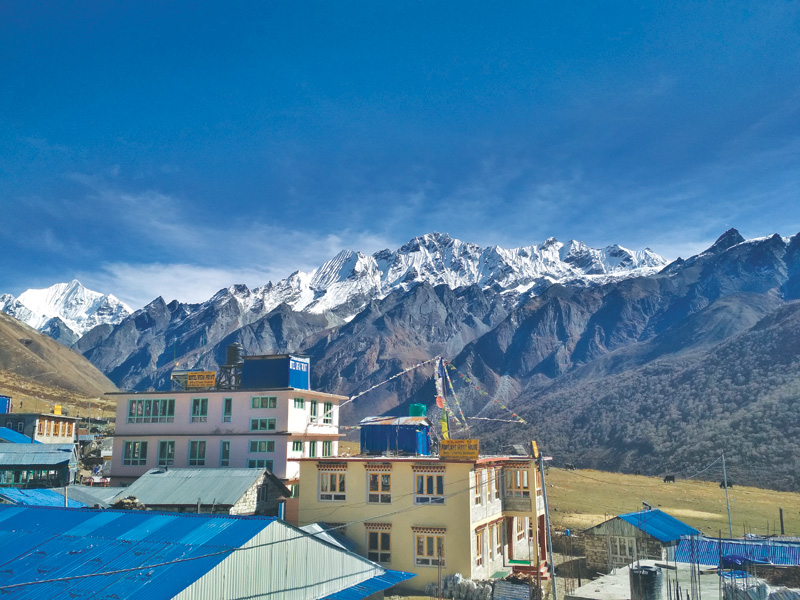
It is early May, almost the end of the Spring tourist season, but Langtang is empty. Post file Photo: Marissa Taylor

Kathmandu, 
Every year between March and May, Biswas Gurung, a trekking guide and tourism entrepreneur from Ghandruk, would hardly get time for anything else apart from work.
During these three months, hundreds of trekkers from around Nepal and across the world would visit Ghandruk, a picturesque village in Kaski district, within the Annapurna Conservation Area Project (ACAP), and guides like Gurung, specialised in organising guided treks in the region, would be in high demand.
If not guiding trekkers along trails, Gurung would be busy helping out at his family-run Shakti Guest House, a four-room lodge in the heart of Ghandruk. With hundreds of
trekkers passing through the village, the guest house would operate on almost full occupancy, and every helping hand made things easier, said Gurung.
But things are markedly different this year. It is early May, almost the end of the Spring tourist season, and Ghandruk is empty. The dozens of small hotels and lodges are empty and the narrow stone pathways that characterise this quaint Gurung village are deserted. There are no trekkers basking in the sun, drinking warm tea after a long hike. Lodge owners aren’t busy preparing meals on the kitchen fire, bedsheets aren’t laid out to dry, the chimneys aren’t billowing smoke. Instead, there is an eerie silence. In early March, when many governments began to advise their citizens against non-essential travel, villagers from Ghandruk to Langtang who rely on tourism to make a living nervously followed unfolding events.

In the final week of March, when the Nepal government announced a complete nationwide lockdown, along with a restriction on all international flights, the little hope they had held out was dashed.
On March 14, the last of Gurung’s guests left the village for Pokhara.
“The Kaski Tourism Management Committee then announced the closure of all hotels, lodges, homestays in the village from April 10 to May 14,” said Gurung. “Ever since then, there hasn’t been much to do but stay home.”
In Langtang’s famed Kyanjin Gompa, the nearly two dozen hotels and lodges have been shut for more than a month. With no trekkers, Kyipa Tamang and her family, who run the Superview Hotel, spend their days in the fields planting potatoes.
“It’s a huge blow to us,” said Tamang. “The months from March to May are some of the busiest for us. During these three months, all our 16 rooms run on full occupancy.”
Already in February, when Covid-19 wasn’t as widespread as it is today, Tamang had noticed a drop in the number of tourists visiting Langtang. The number of tourists began to drop dramatically in mid-March, she said.
With no business, Tamang’s staff asked to go on leave so that they could return to their villages.
“Crises are not new for those of us who live in the Langtang Valley,” said Tamang. “Just five years ago, the 2015 earthquakes dealt a huge blow to all of us. Many in the valley lost their lives, and the trekking trails that provide livelihood to so many of us here were badly destroyed.”
In 2015, the year of the earthquakes, the number of tourists visiting Langtang dropped significantly to just 5,016, compared to the previous year’s 12,265.
“But we are resilient people. Damaged trails were rebuilt; so were lodges and guesthouses, and the number of tourists visiting the Valley increased with each passing year,” she said.
Langtang had made a difficult but almost complete recovery, with a record 21,945 tourists visiting the valley in the 2018-19 fiscal year, according to data from the Langtang National Park.
“But I don’t think overcoming this crisis will be that straightforward. There’s so much fear and uncertainty surrounding the virus, and even if the lockdown is lifted, I don’t think things will go back to normal,” says Tamang.
With medical experts citing social distancing as the most effective tool to curb the spread of the virus until a vaccine is developed, which many experts say is unlikely to happen within the next year, tourism entrepreneurs along Nepal’s various trekking routes are faced with an uncertain future. Tourism is the mainstay for most of these villages, providing most of their incomes and employment.
“The villagers here estimate that there won’t be tourists for another year or so,” said Gurung. “For a village like Ghandruk, where tourism is the main source of income, people are beginning to worry. We have 57 hotels here in Ghandruk, and many more are under construction. Businesses might have closed but interests on business loans still need to be paid, and it is beginning to worry people.”
With no business, many in Ghandruk, says Gurung, are going back to agriculture to keep themselves occupied--and fed. The same is happening in Kyanjin Gompa.
“We have around 22 to 23 hotels here in Kyanjin, and ever since the lockdown, people have started working in the fields to keep ourselves occupied and to grow our own vegetables,” said Tamang, who has been planting potatoes, cauliflower and buckwheat--the only crops that grow high up in the Himalayas.
“People here are deeply worried about how long the current situation will go on,” she said. “But a more immediate worry for us is the lockdown. Our village relies on Syabrubesi, which is a two-day walk away, for food. If the lockdown continues, we are worried that the food we have stocked will run out and there’ll be no way for us to get more.”

Page 2
MEDLEY

Horoscope

ARIES (March 21-April 19)
****
If you can’t see the finish line in the near distance, don’t get frustrated—turn around! There you’ll see it, miles behind you. You’ve been going at such a furious clip for so long that you may very well have eclipsed your original goal. You could just keep going to the next milestone, but the stars say it’s time for you take a break.


TAURUS (April 20-May 20)
***
Your words could have more power than usual today, so take time to think before you speak. It’s one thing to get caught up in an enthusiastic conversation and say something silly, but it’s quite another to say something you’ll later regret. As you might recall from past slips of the tongue.


GEMINI (May 21-June 21)
****
Just like a traffic cop, you’ll be in the middle of all the action today. Directing folks to where they need to go and helping create a general sense of order will be challenging, but it’s a challenge you’ve been preparing yourself for, so don’t worry. You have a lot of support behind you, and a lot of people want to see you succeed.


CANCER (June 22-July 22)
***
A small drama today could be a turning point. You’re headed toward a major transition, and you need to make the most of it. If you can be more outgoing right now, you’ll be able to connect with other people more effectively. Too much introspection will make you self-conscious and shy.


LEO (July 23-August 22)
***
It’s only natural that different perspectives create different opinions, so if you’re at odds with a particularly intractable person, keep in mind that their reality is just different than yours. Not better, not worse—just different. If they aren’t judging you, then you shouldn’t judge them.


VIRGO (August 23-September 22)
*****
A new person introduced to you recently can help you make things happen. Speed is a priority, so if you understand the possible connection right now, move forward immediately. Contact this person and get things going. If your potential benefactor is unavailable right now, wait until they pop back into your life.


LIBRA (September 23-October 22)
***
Slow down today. It wouldn’t be wise to exert yourself too much now. There may be some tantalising avenues to pursue, but be judicious about the ones you choose to go down, because things may not go as you expect. You’re entering a more cautious phase, which could affect your life more than you realise at first.


SCORPIO (October 23-November 21)
***
You have quite a few tricks up your sleeve now. At this point, what you do next can really influence how high the stakes go. Everyone is ready to go for broke, and the outcome is up to you, so don’t be afraid to push things to the limit. For the first time in a long time, you can have it both ways, so why not try?


SAGITTARIUS (November 22-December 21)
***
There’s a lot of wasted energy in your life right now, and it should be dealt with as soon as possible. Why are you working so hard to get your way when giving in to what the other person wants could be in your best interests? This isn’t the time to be shortsighted or overprotective of your sense of self.


CAPRICORN (December 22-January 19)
****
If you’ve reached your limit with a particularly annoying person, today’s the day you could get a reprieve from their behavior. They aren’t going anywhere anytime soon, but things could change just enough to make this person bearable. Maybe you’ll become aware of certain facts that recast their behaviour.


AQUARIUS (January 20-February 18)
***
Having a strong vision is important for everyone, not just artists, filmmakers, or writers. In your daily life, you must have a solid philosophy to keep you grounded and help you make the right decisions for your future. To cultivate your skills in this area, look ahead and try to determine what some likely pitfalls might be.


PISCES (February 19-March 20)
****
When you aim at your target today, switch off your emotions. Doubt, fear—even confidence—must be pushed aside or you may miss your mark. Approach everything with an analytical eye. Nothing in life is totally certain, but if you put your brain to work now, you can get close enough.

Page 3
NATIONAL

Nepal Army writes to China to expedite delivery of medical equipment

It will take at least another week for the cargo to arrive if the process is not sped up.
- BINOD GHIMIRE

KATHMANDU, 
The Nepal Army has written to the Chinese government to expedite the delivery of testing kits, RNA extraction kits, masks and personal protective equipment after delays in customs clearance.
The army, which was planning to send two chartered flights to Guangdong on Tuesday to ferry the cargo, couldn’t do so as Chinese customs authorities are yet to release the cargo due the May Day public holiday. Tests for Covid-19 have slowed down Nepal due to the lack of adequate testing and extraction kits.
“We have written to the Chinese foreign ministry and the supplier to expedite the process to release the goods,” Nepal Army spokesperson Brigadier General Bigyan Dev Pandey told the Post. The military attaché at Nepali Embassy in Beijing is coordinating with the foreign ministry to import the medical equipment, he said.
Nepali officials have been told that it will take at least 72 hours more for customs to clear the cargo. That means that the equipment can be brought to Nepal only next week as Chinese government services are shut over the weekend.
It is unlikely the clearance process will begin before Monday unless authorities prioritise Nepal’s cargo.
The army recently signed a deal with Sinopharm, a state-owned company to supply 67 types of testing reagents and protective gear to combat Covid-19. The Chinese company will also supply real time polymerase chain reaction machines, testing kits, RNA extraction kits, personal protective equipment, N-95 masks and sprays among others.
The army has booked two Nepal Airlines flights to 37 tonnes of goods. Some of the items will be transported via road through the Tatopani border. The Chinese company has already received over Rs 2 billion for the supply.
The government on April 2 had authorised the army to procure the items, after an earlier
procurement deal with a private company, Omni Business Corporate International, landed in
controversy.
However, over 35 days passed after it was assigned to procure the medical goods, the army is still unsure when its cargo will arrive. The army is also importing 53 types of medicines needed to fight the disease, from India.
The decision to bring in the army ran into controversy the moment it was made with many asking if the KP Sharma Oli administration was allowing the national defence force to turn into a business firm. Critics said the army was involved in the procurement process because it does not come under the purview of the Commission for Investigation of Abuse of Authority.
Though the government assigned the army for the procurement through a government-to-government deal, it also signed agreements with three other private companies, raising questions over its intention. The department on April 17 signed three separate agreements with Om Surgical, Hamro Medi Concern and Lumbini Health Care to import medical goods.
Bhogendra Dotel, director of the Department of Health Services had said they had to sign the agreement with the private firms as they were not sure when the medical equipment under the G2G deal would arrive.

NATIONAL

Health experts warn of multiple outbreaks if contact tracing efforts are not ramped up

Lack of coordination among government agencies is said to be the major factor behind the delay.
- Arjun Poudel

KATHMANDU,  
Seventeen people, including two infants, tested positive for Covid-19 in Birgunj, Parsa, on Wednesday, 14 days after the district confirmed its first case. In Nepalgunj, Banke, the number of positive cases soared from one to 23 in a matter of one week.
Health officials suspect that in both districts a single infected person might have spread the infection.
Officials at the Ministry of Health and Population, however, say they are still working to find the index cases (first identified case in a group) in Banke and Parsa outbreaks.
“If the source is a single person, and had passed the virus to 17 others, how many more people would have been infected from the 17 people who recently tested positive for Covid-19,” a ministry official deployed told the Post over the phone from Birgunj. “Had we worked seriously after the first case was detected, it would not take 14 days for others to get diagnosed.”
The official has been deployed to Province 2 for coordination among the agencies under all three tiers of government—federal, provincial and local— in contact tracing. Failure to identify the index case even after two weeks is a serious cause for concern because there is a high chance that the disease might have spread in the community, which is the third phase of a pandemic.
“What we are seeing is a lack of coordination among the agencies under the federal, provincial and local levels,” the official said, “Separate agencies come and collect the data and do not share them with one another. Coordination is lacking even among the security agencies—Nepal Army, Nepal Police and Armed Police Force.”
The Health Ministry and Epidemiology and Disease Control Division have deployed separate teams to Province-1,2 and 5 for coordination. Provincial governments have also deployed their own teams while local governments and security agencies too have been working independently.
Moreover, the World Health Organization’s country office has also deployed its teams in the disease-hit areas.
However, these agencies do not seem to be coordinating in their efforts to contain the virus from spreading, the official told the Post.
Dr Baburam Marasini, former director at the Epidemiology and Disease Control Division, says the two infants in Parsa— two and six months old— might not have been infected had the authorities concerned initiated contact tracing in time.
“All agencies are working. But if they are not coordinating among one another, it will only amount to loss of time and resources,” Marasini, told the Post. “Chances of major outbreaks will increase if we do not learn lessons from our mistakes. It will be impossible to contain the disease in case of multiple outbreaks.”
Dr Sameer Adhikari, deputy spokesperson for the Health Ministry, admitted to the lack of coordination among the government agencies working in the Covid-19 affected areas, particularly in their contact tracing efforts.
“Yes, we could work more efficiently in contact tracing. But we should not forget that it takes time to test the people who have been located through contact tracing,” he told
the Post.
The Health Ministry has decided to collect specimens—nasal and throat swabs— of 1,000 suspects from Nepalgunj and Birgunj and 500 from Udayapur.
Lab technicians from the Nepal Army and the Epidemiology and Disease Control have been deployed for the task.
Dr Sarad Onta, a public health expert said that agencies concerned should work more efficiently and in a coordinated way to mitigate the risk before the disease is spread in larger communities.
“Until now the problems have been manageable,” said Onta. “It will be difficult for us to control and trace contacts if the disease is spread in several communities at once.”

NATIONAL

Police adopt strict measures to stop people from entering the Capital without valid reason

Security personnel seize over 2,000 vehicle permits for their alleged misuse.
- SHUVAM DHUNGANA
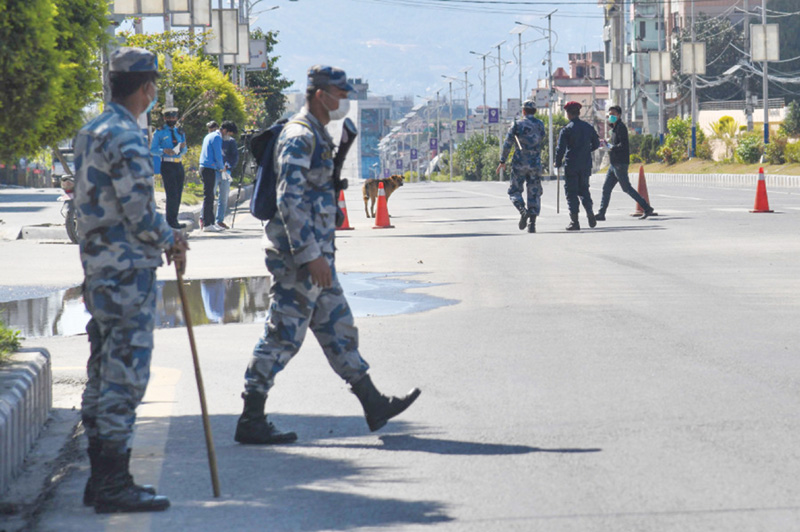
Security personnel form a checkpoint on a street in Kathmandu during the lockdown. Post file Photo

KATHMANDU, 
With the number of Covid-19 cases reported
in the country registering a sharp increase
in the last few days, police officials have put
in place stringent measures to stop members of the general public from entering the Valley.
The measures were put in place after
an inspection team from the Nepal Army,
Nepal Police and Armed Police Force visited the Valley’s entry points and ordered personnel to strictly inspect incoming vehicles and their permits.
“After we received widespread complaints that permits were being misused, we have started interrogating even those with permits,” said Ghanshyam Shrestha, chief of Metropolitan Police Circle, Thankot. “If we find anyone entering the Valley except for essential work, we send them back.”
Police mobilised at Nagdhunga, one of the entry points to Kathmandu valley, have
sent back over 300 vehicles trying to enter the Valley without a valid reason.
“On Monday, we sent back 37 vehicles.
But after we were ordered to adopt more stringent tests, the number of vehicles sent back rose to 103 on Tuesday and 200 on Wednesday,” said Deputy Superintendent Shrestha.
However, vehicles ferrying vegetables, food items, fuel and other essential goods, and ambulances have been allowed to enter Kathmandu, he said.
The government on Wednesday decided to extend the Covid-19 lockdown for the fourth time in view of new Covid-19 cases reported across the country. A total of 99 people have tested positive for the disease so far. Nineteen people have been discharged from hospital after they recovered.
According to the Metropolitan Traffic Police Division, on Wednesday 1,617 vehicles entered the Valley while 1,624 left.
“Majority of them are vehicles carrying essential goods,” said Senior Superintendent Bhim Dhakal, chief at Metropolitan Traffic Police Division. “We have even seized permits issued to 2,263 individual after they were found to have misused them.”
Dhakal, who was part of the inspection team, said,“We went to various entry points in Nagdhunga, Bhimdhunga, Kattike, Jagatee in the past few days and instructed officials to take stricter measures,” said Dhakal.
Meanwhile on Wednesday, Kathmandu Metropolitan City’s Deputy Mayor Hari Prabha Khadgi also visited Nagdhunga to take stock of the situation.
“After receiving news of people sneaking into the city on trucks, I went there to inspect,” said Khadgi.

NATIONAL

250 Nepali workers to return to South Korea next week

- CHANDAN KUMAR MANDAL

KATHMANDU, 
The first batch of workers who were in Nepal for their break but could not return to South Korea due to the lockdown is set to leave next week on a chartered flight.
When nearly 250 migrants leave on May 12, they will become the first Nepali workers
to land in South Korea in more than two
months.
“The paperwork for their departure is being ready,” said Krishna Prasad Khanal, director at the Employment Permit System (EPS) Section of the Department of Foreign Employment. “The Non-resident Nepali Association has taken care of the flights,” said Khanal. “They are also collecting the details of those who want to return to work.”
Following weeks of lockdown and travel restrictions to and from Nepal, hundreds of Nepali migrant workers remain stuck at home and are unable to resume their jobs in South Korea, one of the first countries to experience a massive outbreak of Covid-19.
Last week, the Cabinet permitted Nepali migrant workers in South Korea, which has managed to control the coronavirus outbreak, to go back.
However, the government permission is only meant for those on the verge of losing their visas after failing to report to work.
The government had also said they would have to arrange for a chartered flight.
According to the EPS, 654 Nepalis working under the system had returned to Nepal before the lockdown and could not go back due to the travel restrictions. However, the Non-resident Nepalis’ Association, in its statement last month, had said over 1,000 Nepalis were unable to return to South Korea because of the lockdown.
“They [the NRNA] must have counted others such as students who had returned to Nepal before the lockdown as well. But only migrant workers would be allowed to return,” said Khanal. “The NRNA had sought details of those in Nepal for their work break. Before their departure, the name list will be verified once again.”
All of the workers will have to go through a mandatory medical examination before boarding the Nepali Airlines flight to South Korea. Workers’ medical examinations are going on at the Sukraraj Tropical and Infectious Disease Hospital and other labs, according to Khanal.
The chartered flight will touch down at the Incheon International Airport, and the workers’ details will be collected before they are allowed to head to their place of residence, where they will have to stay in mandatory self-quarantine for 14 days.
Nepali workers’ departure for South Korea was halted in mid-February after the Southeast Asian country requested Nepal to do so.

Page 4
EDITORIAL

Shedding light

It is disturbing that pages propagating rape, misogyny, paedophilia and the invasion of privacy exist.

Over the past few days, a stomach-churning side to Nepali social media has emerged. It seems that, for some time now, some Nepali men have created, joined and contributed to pages whose sole purpose is the objectification and denigration of women. Disturbingly, as if the existence of these media was not repulsive enough, some seem to be paedophilic in nature; many more posts and comments are extremely graphic and supportive of—or fantasising about—rape. That such a subculture exists is shocking and disturbing. No society should have to deal with elements as perverse as this.
The current exposure of these disgusting Nepali platforms seems to have begun after a similar group was outed in India. The Indian group, named Bois Locker Room, was apparently made up of teenagers who talked candidly of their disturbing fantasies involving gang rape. Upon seeing this, a Nepali woman shed light on social media of her own experience of being objectified by a similar group on Reddit, comprising Nepalis. This prompted more and more to speak up about their own experiences, revealing a sinister and insidious pool of online communities. While the first one of its kind seems to have cropped up on the partially anonymous community website Reddit, the recent revelations have brought to light similar groups and pages in platforms such as Twitter, too.
Pages that objectify humans and bring them down to images for sexual gratification have existed for as long as the internet has. While some, like legitimate pornography, may act like a harmless (albeit a bit perverse or awkward) release, the kinds of pages in question here cross lines and limits that should not be accepted or allowed in any society. The issue here is manifold.
The most obvious wrong here is the propagation of rape and paedophilic fantasies. There have also allegedly been some images of violations in these platforms. In no circumstance should it be deemed appropriate for people to normalise sex without consent or the abuse of children. Further, while free expression and free speech have been defended for many reasons, surely the fantasising of harming other humans in such devastating ways should not be considered one of them.
Another major issue that has come to light from these revelations is the invasion of privacy of many women. There have been reports of hackings, blackmail and the unconsented sharing of private communication, all for the gratification of some. Some have reportedly commented about the need for women (or men) to not take ‘damaging’ images or video should they not want it publicised. This, too, is alarming.
In a free society, individuals have the right to self-express in whatever form they want, provided that it does not harm others. Choosing to be selective about this self-expression is also a right. This choice is what differentiates between legitimate and safe pornography and an unauthorised breach of privacy. By breaching that trust and privacy, the individuals who then choose to repost these images without the permission of the original owner are not only being indecent, but they are also harming the individuals who did not want these images circulated en masse. By harming those featured, this act goes outside the ambit of what is considered freedom of expression.
The propagation of misogynistic and violent ideas should not be encouraged. Rape and paedophilia must never be normalised. And, again, free expression only covers what does not harm others; respect for privacy must be ingrained as a societal norm. There have also been doubts about the willingness of Nepal Police to investigate the pages in question. If true, this is truly damaging. All concerned state agencies must coordinate and cooperate in haste, to weed out such disturbing communities.

OPINION

One man’s trash is another man’s treasure

As the virus disrupts economies further, there may be opportunities for some to drive out competition.
- PABAN RAJ PANDEY
Shutterstock

If the Covid-19 pandemic has thrown your life into disarray, you are definitely not alone. Most have been affected—not just individuals, but also businesses and governments. Globally, surgeries have been postponed and companies have shut down operations, not to mention governments have been struggling to cope with hospital capacity that is stretched thin. The medical community is yet to fully wrap its head around the true nature of the virus, let alone know where it is headed. In this time of uncertainty, companies are drawing down bank credit lines and raising cash when they can. When it is all said and done, those with healthy balance sheets with sound cash cushions probably stand to pick up assets on sale.
Already, countries are tightening the rules to protect their companies from unwanted solicitation. India just introduced new foreign direct investment rules designed to scrutinise investments from companies based in neighbouring countries. The probable objective is to stave off takeover attempts by Chinese companies. Within a couple of months between January and March, the Sensex crashed over 39 percent. As of Wednesday, it is still down 25 percent from its high. Valuation multiples have come down, which is likely to attract suitors. Australia, Germany, France, Italy and Spain have made similar moves. Australia has said it will now review all proposed foreign investments into the country. The goal is to prevent a fire sale of distressed corporate assets.


Cycle analysis key determinant of investment
The coronavirus is all set to change the competitive landscape in all kinds of industries and sectors—both within national boundaries and globally. Some companies will emerge stronger relative to their peers, while several others may not even survive the crisis. In business, cycle analysis plays an important role. No two cycles are alike. But at the same time, there is truth to the phrase ‘history doesn’t repeat itself, but it often rhymes’. It is the ability to aggressively expand when sentiment is the bleakest and lighten up when it is the brightest is what separates the wheat from the chaff. Cycle analysis helps companies identify when to build cash/pay off debt and when to take on leverage.
In more ways than one, the global economic expansion that just ended was getting long in the tooth. After the financial crisis of 2007-2008, major central banks flooded the system with liquidity. This surely served as an economic backstop, but also denied a real shakeout from happening, thereby opening the door to more risk-taking. Debt, which is what led to that crisis in the first place, kept growing. Stock markets soared, but growth was sub-par in major economies. Then came the US-China trade war that took a heavy toll on business confidence. All in all, the global economy was already fragile before the virus hit, waiting for a catalyst to tip it over. Arguably, the virus accomplished just that.
Nepal, as reliant as it is on tourism and remittances, cannot remain unscathed. This can create opportunities for healthy companies to weaken, even drive out, competition. It is not quite comparable, but what is currently transpiring in the oil market serves as an example. In the past, OPEC called the shots. The emergence of Russia and the current leading producer US has changed that. The price of Brent crude collapsed nearly 80 percent from its January high before rebounding. In April, OPEC+, made up of OPEC and non-OPEC countries including Russia, reached a deal to cut output by 9.7 million barrels/day in May and June, but demand destruction is much higher. A cynic may say the lukewarm cut is by design. At current prices, many US shale producers are likely to go bust. Saudi Arabia and Russia will cherish that.
Take the junk bond market of the eighties; the US suffered two recessions in the first three years. There had been two in the seventies. Then, in the early eighties, interest rates and inflation peaked. The economy began to grow, and junk bonds developed a new appeal. ‘Junk bond king’ Michael Milken helped popularise these bonds to finance hostile takeovers of companies, as the acquirer could raise serious capital with little or no assets. The insanity came to a full stop by the end of the eighties as defaults soared. Timing-wise, these companies were right to want to aggressively expand, but the financing vehicle they chose left much to be desired. There is good leverage and there is bad leverage.
Desperate times call for desperate measures. When governments fall on hard times, they do things that end up creating opportunities for the private sector. In Russia, the collapse of the former Soviet Union led to large-scale privatisation of state-owned assets under Boris Yeltsin in the early to mid-nineties. It was a fire sale. Massive amounts of wealth, most notably in oil and gas, went to just a few oligarchs with political connections. The UK experienced a recession in the early eighties. Margaret Thatcher came into power in 1979. By the time she left in 1990, more than 40 state-owned businesses were privatised, including British Telecom, British Airways, British Petroleum, Rolls Royce and Jaguar. This was a sweeping ownership transformation.


In virus-affected economies, cash is king
In India, the government in March had to step in and rescue Yes Bank, an aggressive private-sector lender. State-owned banks account for over two-thirds of India’s banking assets. As the economy shifted into a lower gear, the problem of bad loans has risen. Prior to consolidation in 2017, there were as many as 27 public sector banks. Now, there are 12, including the State Bank of India—by far the largest. The banking landscape in Nepal is different, as only three of the 27 commercial banks are state-owned. But the virus-caused downturn will spare no one. It does not take long before a short-term liquidity crisis morphs into a crisis of solvency. Client defaults and bankruptcies will eventually roll up into the banking sector.
Some banks in Nepal likely will handle the crisis better than the others. Managements that knew business cycles better and prepared themselves accordingly could be in a position to acquire assets on the cheap. In fact, the publicly traded ones will probably do their shareholders a favour if they raise equity capital. The new funds may just come in handy if opportunities to acquire the weakest links come along. In a worst-case scenario, opportunities likely will be waiting for the cash-rich in most industries and sectors, including in hospitality where hotels for the last several years have been on a building spree. They were building at the top of the cycle, not the bottom, and there is a difference.


Pandey worked in the securities industry in the US for two decades. He tweets at @hedgopia.

OPINION

Food and livelihood insecurity during a pandemic

As the services sector is bound to face a long and hard journey to a revival, the agro sector will be all the more important.
- Apsara Karki
shutterstock

The Covid-19 pandemic is causing widespread economic hardship and anxiety. Balancing social, economic and health security concerns during this time are also proving to be a complex governance challenge. For the past several weeks, the government has restricted travel and the movement of people except for emergencies and to access essential services. Given the nature of the disease and the poor state of Nepal’s healthcare infrastructure and service delivery, this is perhaps the best way of containing the spread of the virus at the moment. Nepal has reported very few cases. Yet, the caveat is that this is probably due to low testing rates and the number of new cases could increase in the days to come.
The effects of a complete lockdown are multidimensional. Most economic activities have been disrupted, affecting the lives and livelihoods of millions, particularly those engaged in the informal sector who need to venture out to earn their living and meet critical needs in the absence of safety nets or regular earnings. The disruption and dislocation are expected to widen the economic and social divisions and amplify existing vulnerabilities in a post-pandemic world.
In Nepal, about one in five households is poor, one in ten is extremely poor, and one in two is food insecure. The pandemic will aggravate this food insecurity further. The poverty rate is expected to climb in the coming months as those just above the poverty line are likely to slide back into poverty in the absence of safety nets and support mechanisms. In several parts of the country, people are desperately trying to go back to their villages from cities, due to the lack of earnings and support from employers after the closure of factories and construction sites. The exodus has drawn attention to the scale of disruption in economic activity and the lack of support systems for the neediest.
Any lockdown extension will not only affect economic activity within the country but also disrupt the inflow of remittances on which over one-third of households (left-behind families) in Nepal are dependent. The disruption to international migration and inflow of remittances will be particularly costly for Nepal as the remittance-GDP ratio has been close to 30 percent for the past few years.
Besides controlling the spread of the virus, the critical issue is to sustain its agriculture sector through the crisis since the service sector (the largest contributor to the GDP) will not be revived immediately, due to restrictions on travel and mobility. It is also likely that our trading partners may limit the export of essential goods including but not limited to agricultural products in the coming months, since farming activities have also been disrupted by the pandemic.
In such a scenario, the problem of food insecurity will be acute as supply disruption raises food prices, affecting the nutrition and health of the vulnerable groups. Higher prices not only result from disruptions to production systems but also from disruptions to supply chains as farmers are unable to sell their agricultural produce in the markets due to the absence of proper mechanisms. In addition to strengthening healthcare system and food support to the needy people, fixing the supply chain quickly and creating the mechanisms required for smooth flow of agricultural produce from farms to markets will not only help farmers but also assure consumers that food supply will not be an issue during or after the crisis.
Labour markets have been completely disrupted by the pandemic, leading to mass unemployment and labour shortages in the seasonal agriculture sector. Since agricultural mechanisation in Nepal is very low (only 25 percent of farm households reported the use of machinery in 2017), the availability of sufficient farm labour is critical for keeping seasonal agricultural activities on track. Even the slightest delay in planting or harvesting crops in weather-dependent agriculture can lead to lower productivity and huge losses for farming households, ultimately resulting in food shortages. Given this situation, encouraging people who lack social safety nets and regular earnings to engage in agricultural activities with proper safety measures and economic incentives, will not only create livelihood opportunities but also keep the agricultural sector going during the crisis.
This is the time for local governments to address the issue of food and livelihood security as a priority. Speaking on a spike in the success the then newly independent India had in tackling famines, Amartya Sen noted that ‘democracy gives very strong incentives to the government to work hard to prevent famines since it has to respond promptly to people’s needs because of a combination of public discussion and elections’. This is the time for all three levels of government to collaborate and work hard to keep Nepal’s agricultural sector afloat so that it not only provides employment and a safety net for people during the crisis but also reduces the impending risk of food shortages in the country.


Karki is an economist at the International Centre for Integrated Mountain Development (ICIMOD).

Page 5
NATIONAL

Hundreds of homebound Nepalis stranded in Kapilvastu no man’s land

Scores of people gathered at the border attempted to enter Nepal on Monday, but they were stopped by security force.
- MANOJ PAUDEL,SANJU PAUDEL
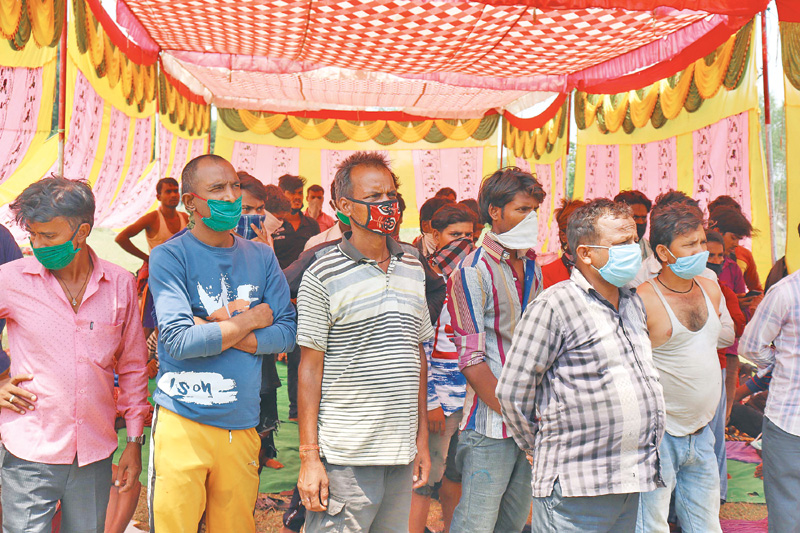
As many as 343 Nepalis stranded in India reached the no man’s land along the Nepal-India border in Kapilvastu on Wednesday. Post Photo: Manoj Paudel

KAPILVASTU / RUPANDEHI,
As many as 343 homebound Nepalis had reached the no man’s land along the Nepal-India border in Kapilvastu by Wednesday afternoon, but they were denied entry into the country. Security personnel of the Armed Police Force stopped the Nepalis from crossing the border, as the country is currently under lockdown to prevent the outbreak of Covid-19.
“It’s been more than 40 days since the lockdown and we had difficulties managing food and shelter in India. So we were compelled to return home,” said Dinesh Bhar, a resident of Kapilvastu. According to him, it took him seven days to reach the border from Mumbai in Maharashtra, India. “I walked and hitchhiked to the no-man’s land,” he said.
The returnees say they have been staying at the no-man’s land without food and water since they were stopped from entering the country.
“We decided to come home rather than starve in a foreign land. But the police stopped us at the border,” said Buddiram Raidas of Kapilvastu.
A total of 155 people spent the night in the border area on Tuesday, and they were joined by 188 others on Wednesday. Ninety-eight people are staying in the no man’s land in Maryadapur, 81 in Chakalchauda, 62 in Hardauna, 48 in Krishnanahar, 46 in Bhilmi, seven in Hathihawa and one in Bijayanagar.
Local units and some individuals, in coordination with the security personnel deployed at the border, provided tents and food to those stranded.
Meanwhile, the local administration said it was out of their jurisdiction to take a decision on whether to allow the returnees to enter Nepal or not.
“The federal Ministry of Home Affairs instructed us not to let anyone cross the border. We are following the ministry’s order,” said Dirgha Narayan Paudel, the chief district officer of Kapilvastu. According to him, efforts are underway to keep the stranded Nepalese in quarantine in India. “We are coordinating with the administration of Siddharthnagar in India,” he added.
Following the government’s decision, the Armed Police Force has sealed the 93-km-long Nepal-India border in Kapilvastu to prevent people from crossing the border. The Cabinet meeting held on Wednesday has decided to extend the nationwide lockdown until May 18 and to continue closing all border points until May 31.
However, in Rupandehi, many people are still found crossing into Nepal through porous border points at night. People’s representatives in the district complained that Sammarimai, Mayadevi and Kotahimai rural municipalities, which border with India, are at high risk of coronavirus outbreak, as people are still crossing into Nepal through these border areas.
Netra Prasad Ghimire, chief administrative officer at Kotahimai, said the entry of people from India is still going unchecked.
“People are crossing streams and walking through forests to avoid security. Some of them come to our contact while many entrants are not traced,” said Ghimire.
According to APF Inspector Anil Thapa, a total of 75 security personnel are deployed in the border outpost in Marchawar, but security in the forest areas is lax at night.

NATIONAL

Security personnel fire warning shots to disperse crowd at a border point in Bara

This past week has seen incidents of scuffle between Armed Police Force personnel deployed at various border points across the country and those attempting to cross the border.
- LAXMI SAH,KAMAL PANTHI

BARA / BARDIYA,
Armed Police Force personnel at Kabahigoth along the Nepal-India border in Bara district fired warning shots after some members of the public from the Indian side attacked the security personnel on Thursday.
Around a 100 people from a neighbouring Indian town gathered at the no-man’s-land and created a ruckus at the APF checkpoint. Earlier in the day, security personnel in the Nepali side had sent back two Indian nationals from the border who were trying to enter Nepal. According to Superintendent of Police Digbijaya Subedi, around 100 people from Hanumannagar village in India barged the security post and vandalised it after those two people were sent back to their village.
“We exercised restraint and averted any untoward incidents. We coordinated with the Indian security force and contained the situation,” said Subedi. According to Raju Aryal, the deputy inspector general of the Armed Police Force, security personnel of both countries are working in coordination to prevent people from crossing the border.
In two other areas—Basbariya and Balirampur—of the district, residents of bordering villages had also attempted to cross the sealed border for personal work. They were stopped by border police.
The Nepal-India border has been sealed for over a month to control the possible spread of Covid-19. The Cabinet meeting held on Wednesday decided to extend the nationwide lockdown until May 18 and to continue closing all border points until May 31.
Similarly, on Monday evening, a group of around 200 Indian nationals armed with batons attempted to attack the border security personnel deployed at Juligachhi settlement in Jhapa. The incident occurred as Nepal Police personnel stopped two Indian nationals on a motorcycle from entering Nepal.
On Wednesday, a scuffle broke out between four homebound Indian nationals and APF personnel deployed near Ratnapur in Gulariya Municipality, Bardiya, as the former were barred from crossing the border by the security personnel. APF Inspector Dilliram Chaudhary reached the incident site after the four men attacked the security personnel on duty.
In connection to the incident, police detained Birendra Mallaha, Ramchandra Mallaha, Raj Kumar and Indal Mallaha and later handed them over to the chairman of Gulariya Municipality Ward No. 10 Birendra Chaudhary. Police claimed the accused were involved in smuggling goods across the border during the lockdown.

NATIONAL

Karnali Province in a comfortable position on food supply

While vegetables are abundant in the market, the fruits are less so, since imports from India have stopped.
- CHANDNI KATHAYAT
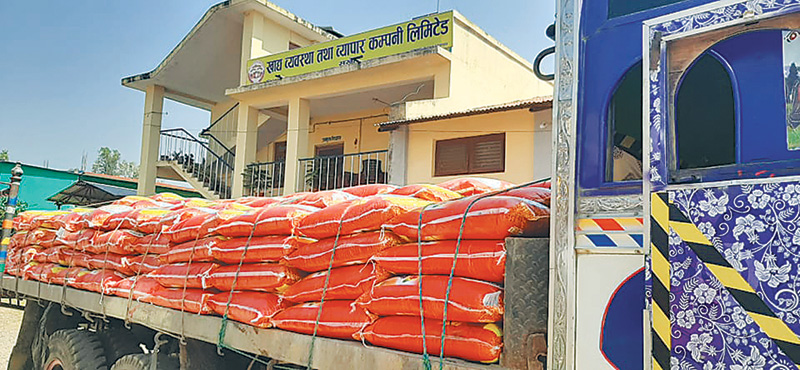
The province has a stock of about 38,000 quintals of foodstuffs in its nine warehouses. Post Photo: CHANDNI KATHAYAT

SURKHET, 
Karnali Province has been sealed for a week starting Monday following a rise in the number of Covid-19 cases in the neighbouring provinces.
The week-long shutdown orders have raised fears of food shortage among the people in the province, particularly those living in the food insecure districts. Authorities concerned, however, say the province is well-stocked in food supplies for at least another two months.
According to the Surkhet-based Food Management and Trade Company, the province has a stock of about 38,000 quintals of foodstuffs in its nine warehouses.
“The remaining stock would suffice for at least two months,” Bhim Thapa, manager of the company, said. “We are in correspondence with the provincial government to ensure a steady supply of food. There has been no trouble so far in collecting and distributing foodstuffs.” The only concern the company has is that supply could be disrupted during the rainy season.
Thapa said the company had already communicated about its concern to the provincial government.
Padam Lal Lamichhane, administrative officer and spokesperson at the District Administration Office in Surkhet, acknowledged that many people were concerned about food security, but assured that there was no reason to panic.
“By our estimates, the food stock can last for nearly three months,” he said. The province is also in a comfortable position regarding the production of vegetables, according to Prabal Shahi, chair of the Surkhet-based Agriculture Market Management Committee.
“The province has seen an abundant pre-season rainfall this year, which helps vegetables grow,” Shahi said. “The province has seen a steady rise in the production of vegetables over the years, so lockdown or sealing of the province would not affect much.”
While vegetables are abundant in the market, the fruits are less so, since imports from India have stopped, Shahi said.
However, shortage of fuel products is projected because of a lack of storage capacity. “There’s enough fuel for now but we may need a refill soon,” said Deepak Prasad Ghimire, chief of the Provincial office of Nepal Oil Corporation.
The province has only 13 petrol pumps, so they can store only a limited amount of fuel. “The government should allow the movement of trucks carrying fuel to avert a worse-case situation where fuel might be in short supply,” he said.

NATIONAL

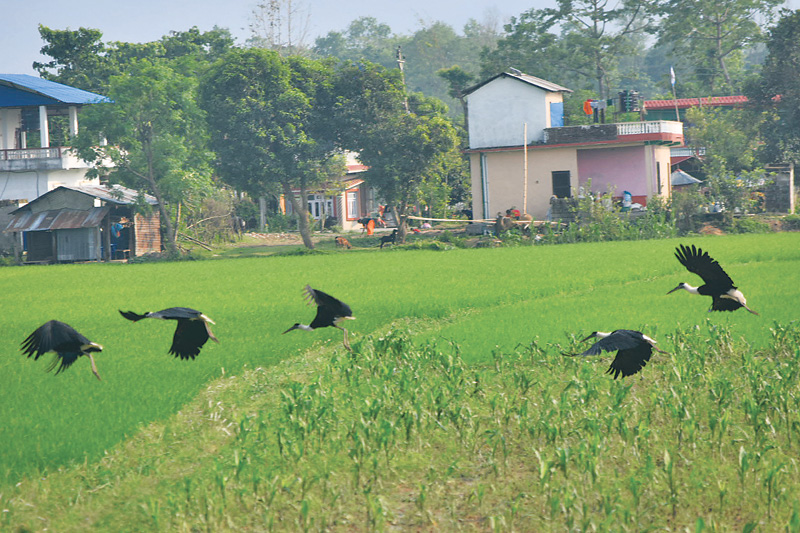
A large flock of endangered Asian woolly neck spotted in eastern Chitwan

- RAMESH KUMAR PAUDEL

This is an exciting development for birdwatchers and conservationists, say ornithologists. Photo courtesy: basu bidari

CHITWAN, 
Dukhan Chaudhary has been spending more time in his paddy field in Bachhauli, a village in the eastern part of Chitwan district, since the government-enforced nationwide lockdown started. On April 19, Chaudhary was working in his field when he saw a flock of birds that he had never seen before, and called upon Basu Bidari, an ornithologist who lives in the neighbourhood, to check them. Bidari identified the birds as Asian woolly-necked stork, locally called Lovipapi Garud.
“Asian woolly-necked stork is in the endangered list of the IUCN Red List of Threatened Species 2017,” said Bidari, who is also the former chairman of the Bird Education Society in Sauraha. “These birds are rarely seen in Chitwan. However, I counted 14 Asian woolly-necked storks in Chaudhary’s fields that day.”
According to Bidari, these birds were spotted in Bachhauli on April 19 for the first time. After word spread of the flock’s presence in Bachhauli, ornithologists started to monitor the area and observed up to 28 Asian woolly-necked storks a couple of days after the first sighting of the bird species.
“This is an exciting development for birdwatchers and conservationists. Never before has this bird species been seen in such a large number at one place,” said Hem Sagar Baral, an ornithologist.
The species is a large wetland-dependent bird of the stork group with its population distributed across South and South-East Asia.
“Sixteen years ago, nests of Asian woolly-necked stork were found near Bishajari lake. Now, there are only two nests in the Chitwan National Park area, one in Kasara and the other in Nawalpur. The recent sighting in the eastern part of Chitwan is a first,” said Bidari.
The woolly-necked stork is found in Chitwan, Kapilvastu, Rukum, Jajarkot, Rupandehi, Dhading, Pyuthan and Arghakhanchi, among other districts of Nepal. The 2015 count found only 68 Asian woolly-necked storks in 42 wetlands of the country. The estimated population of the bird species around the globe is around 35,000.
Conservationists say the number of the bird species has decreased due to wetland degradation, reduction of nesting trees, use of pesticides in farmlands and excessive hunting.
But of late, farmers like Chaudhary have begun making efforts to conserve the species. “I have reduced the use of pesticides in my field, so there are plenty of frogs and earthworms now. The birds may have come here to prey on them,” said Chaudhary.
Ornithologists also believe that the birds have begun descending to the green paddy fields in eastern Chitwan because of reduced human activity given the lockdown.
“Vehicular movement has stopped and so has people’s activities. This has created an ideal environment for these birds to come out and play in the fields,” said Baral.
The sighted flock of Asian woolly-necked stork in Bachhauli is currently nesting in the Janakauli Buffer Zone Community Forest.

Page 6
MONEY

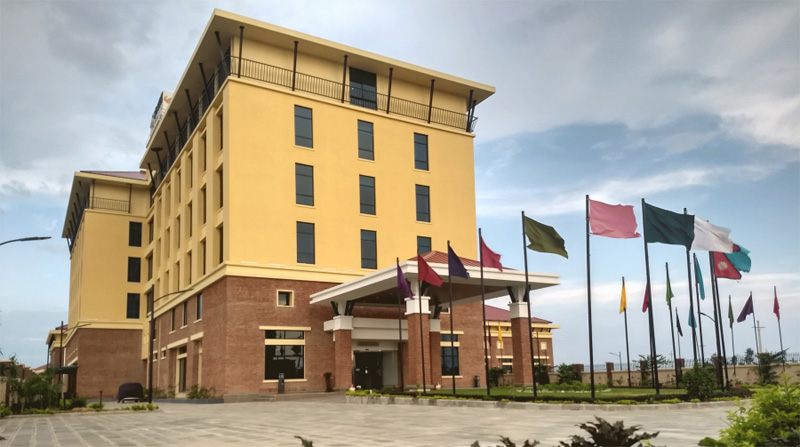
Government, hotel leaders at odds over employees’ future

Hotels have decided to send employees home and will be paying them partially amid the pandemic.
- SANGAM PRASAIN
Hotel officials say they can’t keep paying employees full salaries with no revenue coming in due to the lockdown. post file photo

KATHMANDU, 
While Tourism Minister Yogesh Bhattarai on Thursday warned leaders of the hospitality industry not to lay off workers under the pretext of crisis, the apex body of hotels said the intent has been misinterpreted as employees will continue to get paid.
But they will not be paid fully, the Hotel Association of Nepal said.
“We have asked employees to stay at home. That doesn’t mean it’s a layoff,” said Binayak Shah, senior vice-president of the Hotel Association Nepal. “We have decided to close all hotels and resorts for six months as we don’t expect tourists to visit Nepal for at least another year.”
And in spite of closing down hotels, we have decided to pay only 12.5 percent of the basic salaries to the employees, he said.
The basic salary for each employee set by the government is a little over Rs13,000. “In addition, employees will also get the service charges that have accumulated, Shah said.
“The government should contribute through its planned job retention fund,” he said. “But if the situation does not improve after six months, we will be forced to lay off workers.”
A government committee formed to ascertain the losses in the tourism industry has recommended setting up a retention fund worth Rs20 billion. It has recommended providing 12.5 percent of salaries to workers in the tourism industry through the fund.
On Thursday, minister Bhattarai told journalists that the government would support tourism workers and warned hospitality industry leaders not to lay them off. “We are also bringing some packages to the workers as the industry is one of the hardest-hit sectors.”
But Shah said that the government is not hearing the grievances of the industry despite our repeated plea. “We haven’t been invited for any discussion on how to tackle the issue.”
Pashupati Murarka, former president of Federation of Nepalese Chambers of Commerce and Industry, said that the hospitality sector has been hit the most by Covid-19 with income coming to zero and in this situation, the government should immediately address this sector. “If the lockdown prolongs, all other sectors will also be paralyzed. The government should open up the industrial sector gradually,” he said. “But the tourism industry faces a bleak immediate future and its recovery will also take some time.”
Investment in the hospitality sector is big and accordingly, losses are also expected to be big. “This industry needs an immediate response from the government so that hotels do not go bankrupt and workers become jobless,” said Murarka.
Officials said more than 3,000 hotels will send their staff home because they can’t keep paying their full salaries with no revenue coming in due to the lockdown.
But the trade unions are not happy with the association’s decision.
Madhav Pandey, president of the All Nepal Hotel Casino and Restaurant Workers’ Union, recently told the Post that the association’s decision would leave 300,000 workers in the hotel business stranded without any support.
“In addition, it will impact another 700,000 workers in non-member hotels and restaurants,” he said. “We are surprised that the hotels have given up in just one and a half months, and they want the workers to die without any income.”
There is a difference between automatic closure of hotels due to the crisis and closing hotels lawfully. Lawful closure means hoteliers can significantly slash employee salaries and apply for payment from the social security fund to which all employees contribute 1 percent of their salaries.
According to Nepal Rastra Bank, banks and financial institutions had a loan exposure of Rs138.68 billion in the hotel and restaurant sectors as of the first seven months of the current fiscal year.
According to Hotel Association Nepal, 95 percent of its 3,000 member hotels earned exactly zilch in March and April.
“We are also worried about the recovery of the loans,” Bhuvan Dahal, president of the Nepal Bankers’ Association, a grouping of the chief executive officers of commercial banks, told the Post in a recent interview.

MONEY

China exports see surprise 3.5 percent jump in April, imports fall

- AGENCE FRANCE-PRESSE

BEIJING, 
China’s exports saw a shock 3.5 percent rise in April despite the global impact of the coronavirus pandemic, official figures showed on Thursday, partly due to rising medical exports.
But analysts warned of weakness ahead as key markets suffer downturns, as well as the brewing threat of a renewed trade war with the United States.
Imports fell 14.2 percent on-year, a steeper drop than last month, according to the Customs Administration.
A forecast of analysts by Bloomberg had predicted an 11 percent dive in exports and a 10 percent plunge in imports.
Exports of medical instruments and devices rose 11 percent in the first four months from a year ago, according to customs data, while most other categories contracted.
ING chief economist for Greater China Iris Pang told AFP that China’s exports of medical supplies provided a boost as the rest of the world grappled with the pandemic.
Pang added that while exports of clothing shrank, sales of textile yarns, fabrics and other products grew, implying they were used to make medical supplies.
Beijing says it has been successful in largely curbing the spread of the virus in the country, and many businesses and factories are now back at work after months of closure.
And Louis Kuijs of Oxford Economics noted that “April shipments may have been boosted by exporters making up for shortfalls in the first quarter due to supply constraints then”.
In the January-February period, the height of China’s coronavirus outbreak, exports plummeted 17.2 percent. In spite of the bounceback—the first return to positive territory for exports this year—analysts do not expect the trend to last as China’s key trading partners fall into recession.
And although the US and China signed a phase one trade pact in their bruising trade war in January, Julian Evans-Pritchard of Capital Economics warned that “the threat of additional US tariffs on Chinese goods shouldn’t be ignored”.
Customs data showed that in April China’s trade surplus with the US widened from a year ago by 8.8 percent, to around $22.8 billion.
Over the last few months tensions have ramped up again as the two sides exchanged barbs over the pandemic and its origins, with US President Donald Trump recently threatening new trade tariffs against Beijing.
Nick Marro, global trade lead at The Economist Intelligence Unit, said that it could be hard for both sides to meet earlier commitments.
“Shipments from the US remain well below the levels needed to achieve the purchase pledges under the trade accord... with the deterioration in US-China ties, there’s a risk that the US might act brashly,” he said.
In China—already tackling weak overseas demand and a lingering trade war—virus recovery has been slow.
An independent gauge released Thursday, the Caixin PMI, showed that the services sector is still in contraction and below analyst expectations.
There are still some social distancing rules in places and fears about mounting unemployment are hitting consumer confidence.
The daily average of domestic trips over the Labour Day holiday at the beginning of May was half of last year’s total, while daily tourism revenues fell 68 percent.

MONEY

Nepal gets $214 million disbursement from IMF

- Post Report
reuters

KATHMANDU, 
The International Monetary Fund (IMF) has approved a disbursement of $214 million to Nepal under the rapid credit facility to help cover the urgent balance of payments and fiscal needs stemming from the Covid-19 pandemic.
The Covid-19 pandemic is having a severe impact on Nepal’s economy. During recent months, remittances have fallen considerably, tourist arrivals collapsed, and domestic activity has taken a hit amid social distancing measures, the IMF said in a press statement.
The authorities’ immediate priority has been to deal with the human and economic impact of the Covid-19. The authorities are increasing health spending, including by providing additional incentive pay and insurance coverage to all medical front-line personnel, importing additional medical supplies, and setting up quarantine centres and temporary hospitals.
“They are also strengthening social assistance by providing those most vulnerable with daily food rations, subsidizing utility bills for low-usage customers, and taking steps to partially compensate those who suffer job loss,” the IMF said.
“In addition, measures are being implemented to ensure adequate liquidity in the financial system and support continued access to credit.”
The IMF financial support will make a substantial contribution to filling immediate external and fiscal financing needs that have emerged due to Covid-19. It is also expected to catalyze additional support from development partners, it said.

MONEY

The magic word for Detroit automakers is trucks

- REUTERS
A file photo shows a Ford Motor assembly worker working on a Ford F150 pick-up truck at Ford’s Dearborn Truck Plant in Dearborn, Michigan US. reuters

DETROIT,  
The coronavirus pandemic brought the US auto industry to its knees, but Americans’ love affair with beefy pickup trucks is helping the Detroit automakers get on the road to
recovery.
General Motors Co, Ford Motor Co and Fiat Chrysler Automobiles NV (FCA) are expected to resume production at their North American plants on May 18. As assembly lines begin moving, the priority will be to build full-size pickups and sport utility vehicles—Detroit’s most profitable models and the ones most in demand amid the crisis.
Overall US sales of cars and light trucks crashed to the weakest pace in 50 years last month. But sales of big Detroit brand pickups, particularly in southern and western states
less affected by the coronavirus outbreak, significantly outperformed the market, industry executives and analysts said.
Truck sales during the week ended May 3 almost equaled the same week a year ago, said Tyson Jominy, vice president for data and analytics at market research firm J.D. Power.
“It’s remarkable,” Mark LaNeve, Ford vice president for US sales, marketing and service, said Wednesday.
Large pickups, including Ford’s F-series line, GM’s Chevrolet Silverado and GMC Sierra and Fiat Chrysler’s Ram, accounted for nearly 21 percent of all light vehicles sold in the United States last month, LaNeve said. Normally, the pickup segment is 13 percent to 14 percent of total sales.
Consumer demand for trucks has held up and so far commercial customers for Ford’s trucks are sticking with orders, LaNeve said.
GM Chief Executive Mary Barra and Chief Financial Officer Dhivya Suryadevara highlighted the strength of US trucks during a call with investors Wednesday.
“As we begin to replenish the pipeline, trucks and full-size SUVs will remain a very high priority,” Barra said.
Fiat Chrysler Automobiles NV Chief Executive Mike Manley told investors Tuesday that certain versions of the company’s Ram trucks are in short supply on dealer lots.
“It will be a patchwork quilt across the country because some areas are able to sell much more effectively than others,” Manley told analysts. “But what it does mean is that we bring our plants up with a much higher level of dealer orders than people maybe expect.”
The resilience of truck demand will be critical for Detroit automakers, as will how quickly the companies can restock picked-over inventories.
Overall, forecasters expect global vehicle demand, and North American car and light truck sales, will be sharply lower this year because of the coronavirus.
Forecasting firm IHS Markit last week forecast 2020 US vehicle sales will fall to 12.5 million vehicles, warning that expected government pump-priming efforts “are not enough to prevent a collapse in auto sales.”
Trucks can generate much-needed cash for the Detroit Three. Truck sales during the past month have been driven by discounts and manufacturers’ offers of no-interest loans for as long as seven years, said J.D. Power’s Jominy.
“You’re talking about unprecedented deals,” he said. But Ford’s LaNeve said discount costs were up only $400 to $500 a vehicle in March and April compared to earlier in the year.
Deals depend on the truck. The average Ford F-series Super Duty is selling for about $56,000, LaNeve said. Discounts on those models average just $2,000.

Page 7
WORLD

Fears of ‘second wave’ hang over coronavirus successes

Britain’s lockdown since March 23 allows people to leave home only for essential errands, shopping and exercise.
- ASSOCIATED PRESS
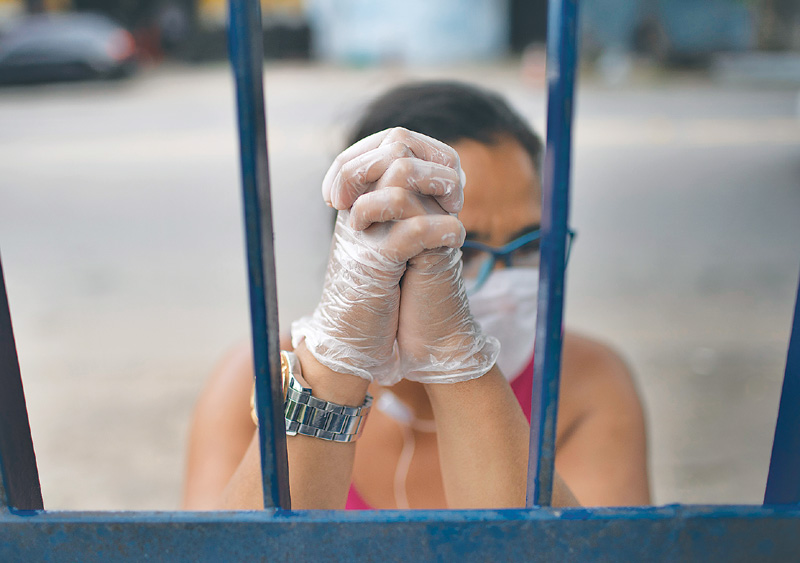
A woman waits for the results of her father’s Covid-19 test at the Marechal Hermes Urgent Care Unit, in Rio de Janeiro, Brazil. AP/RSS

London, 
Britain was expected to extend its nationwide lockdown on Thursday, but the European country hit hardest by the coronavirus plans cautiously to ease some restrictions on economic and social activity next week as it tries to reopen without sparking a devastating second wave of infections.
Authorities in many countries are drawing up plans for how to cope with a resurgence in outbreaks even as they slowly work to reopen businesses and resume other activity halted to combat the pandemic.
In Germany, which has begun to emerge from lockdown, authorities have begun drawing up plans to cope with any resurgence of the virus and experts in Italy doubled down on finding new victims and tracing their contacts. France, which hasn’t yet eased its lockdown, has already worked up a “reconfinement plan” in the event of a new wave.
The UK’s official Covid-19 death toll stands at 30,076, second only to the United States, and Prime Minister Boris Johnson said it would be a “disaster” if the UK reopened too soon and triggered a second spike in infections.
Britain’s lockdown, which allows people to leave home only for essential errands, shopping and exercise, was imposed on March 23, initially for three weeks, and later extended to Thursday. It is expected to remain in place at least until Sunday, when Johnson plans to set out a roadmap for “phase two” of the outbreak.
China, where the virus emerged late last year, declared its coronavirus risk level is now low. China’s National Health Administration reported just two new cases on Thursday, both from overseas, and said the whole country now is at low risk of further infections after confirming no new deaths from Covid-19 in more than three weeks.
The last place downgraded from high to low risk in China was a county adjacent to the Russian border where the most recent spike in cases had been reported.
Amid a bitter spat with the US administration over blame for the pandemic, Beijing touted its assistance to countries struck by the coronavirus, saying it has provided direct government aid to 150 nations, including millions of testing kits and pieces of personal protective equipment.
China has in part promoted its assistance and role as a source of personal protective equipment as a way to deflect criticism that it delayed reporting information about the outbreak first detected in the central industrial city of Wuhan late last year.
Beijing has angrily denied such accusations, saying it has been open and transparent throughout the crisis and that countries such as the US squandered the opportunity China provided them to better prepare.
Strict social distancing also appears to have vanquished the outbreak in the remote island nation of New Zealand, where Prime Minister Jacinda Ardern outlined plans for further relaxing lockdown rules, with a decision coming perhaps next week.
New Zealand would keep its borders shut, restrict gatherings to 100 people or less and hold professional sports events without spectators. Masks and other precautions would be required as restaurants and schools reopen, she said. But Ardern called for vigilance.
Worldwide, the virus has infected more than 3.6 million people and killed over a quarter-million, according to a Johns Hopkins University tally, which experts agree understates the dimensions of the pandemic because of limited testing, differences in counting the dead and concealment by some governments.
Public health officials in the US say they are worried as about half of states ease their shutdowns, with cellphone data showing that people are becoming restless and increasingly leaving home.
Many states have not put in place the robust testing that experts believe is necessary to detect and contain new outbreaks. And many governors have pressed ahead with reopening before their states have met one of the key benchmarks in the dministration’s guidelines for reopening—a 14-day downward trajectory in new infections.
Newly confirmed infections per day in the US exceed 20,000, and deaths per day are running well over 1,000.
Researchers recently doubled their projection of deaths in the US to about 134,000 through early August. So far the US has recorded over 70,000 deaths and 1.2 million confirmed infections, while Europe has reported over 140,000 dead. But experts say the US lacks the armies of public health workers required for aggressive contact tracing to stem outbreaks.
A century ago, the Spanish flu epidemic’s second wave was far deadlier than its first, in part because authorities allowed mass gatherings from Philadelphia to San Francisco.

WORLD

Gas leak at factory in India kills nine, hundreds hospitalised

- REUTERS

Chennai, 
At least 9 people were killed in southern India by a gas leak at a South Korean-owned factory making polystyrene products, with emergency services rushing over 300 people to hospitals and evacuating 1,500 from a nearby village, a police official said.
The accident occurred some 14 kilometres inland from the east coast city of Visakhapatnam, in Andhra Pradesh state, at a plant operated by LG Polymers, a unit of South Korea’s biggest petrochemical maker, LG Chem Ltd.
Srijana Gummalla, Commissioner, Greater Visakhapatnam Municipal Corporation said styrene leaked from the plant during the early hours of the morning, when families in the surrounding villages were asleep.
A spokesman for LG Chem in Seoul said the leak was discovered by a night shift maintenance worker and has been brought under control.
According to both the company spokesman and Gummalla, the plant was being reopened after India relaxed a nationwide lockdown that had been imposed on March 25 to contain the spread of the new coronavirus.
Swarupa Rani, an Assistant Commissioner of Police in Visakhapatnam told Reuters that at least 9 people had died and between 300-400 were hospitalised. Another 1,500 people had been evacuated, mostly from a neighbouring village.
“All those who have been hospitalised are currently stable,” said Dr B. K. Naik, a local health official.
Areas within an approximately 3-kilometre radius of the plant were vulnerable, the municipal corporation said in a tweet. Cross-referencing maps of the affected area, there is at least one coronavirus containment zone in the neighbourhood.
Yashwanth Saikumar Ambati, 23, who lives about 300 metres away from the plant, said he woke up around 4.30 am on Thursday because of a strong smell.
“I went back to sleep and I woke up around 6 because the smell got stronger. My eyes were itchy, and I was feeling drowsy, light-headed and slightly breathless,” he told Reuters.
Others in his neighbourhood also complained of eye irritation, Ambati said, while some said they had a stomach ache. He then called a friend living a few kilometres away and quickly moved there.
Local revenue official B V Rani said she received a call at around 4 a.m. from a police officer near the facility, who sounded panicky. “He asked me to come to the spot immediately,” Rani told Reuters. When Rani went there, she saw that people had collapsed unconscious in the village adjoining the 60-acre site of the plant.
“I personally helped more than 15 people get to an ambulance who had tried to run away from the village but dropped down within a few metres,” she said.
Video from Reuters partner ANI shot later on Thursday showed emergency workers in the area rushing to help victims, some of whom appeared to be listless and disoriented.
A number of victims lay unconscious on the streetside, as some volunteers fanned them and others rushed to carry them into ambulances.

WORLD

India’s coronavirus infections jump past 50,000

- REUTERS

New Delhi, 
Coronavirus cases in India rose past 50,000, the health ministry said on Thursday, with the pace of new infections showing no signs of abating despite a strict weeks-long lockdown in the world’s second-most populous country.
India added 3,561 cases, taking its total 52,952—behind over 82,000 in China where the virus originated— while the death toll rose by 89
to 1,783, still low compared with the United States, United Kingdom and Italy.
Officials attributed the low toll to the government’s move to impose a stay-at-home order on the nation’s 1.3 billion people early in the cycle, but noted a spurt in cases from the densely packed economic centres of Mumbai, Delhi and Ahmedabad.
Health Minister Harsh Vardhan said Maharashtra, the state where Mumbai is located, was an area of particular concern and said the federal government stood ready to help.
“The [government] is ready to help in every way possible—be it manpower increase, capacity building, technical assistance etc. or any kind of handholding that is required to manage the situation,” he said at a meeting with state health officials.
India this week allowed some economic activity to restart in less-affected parts of the hinterland to reduce the pain for hundreds of thousands of people out of work for weeks and running short of food and cash.
But the spreading contagion will increase the pressure on Prime Minister Narendra Modi to keep restrictions in place so it does not spin out of control and overwhelm the limited public health system.
India has reported an average of around 2,800 cases each day over the past week. By comparison, China has reported new cases in the single digits over the same period.
Infectious diseases experts have also expressed concern that official data in India is not capturing the full extent of the crisis.
The infection numbers in India fall far short of the United States, which has 1.2 million cases and is nearing 75,000 deaths despite a much smaller population.

WORLD

Pandemic poses special threat to indigenous health, culture

- ASSOCIATED PRESS
Indigenous peoples from the Buntao’ community in Indonesia’s North Toraja regency in South Sulawesi Province set up a wooden barrier. Indigenous peoples across the archipelago are locking down their villages in an effort to protect their communities from the coronavirus. AP/RSS

Jakarta, 
In Indonesia’s easternmost province, felled trees are stacked to block a road that leads to Papuan villages. On the Thai-Myanmar border, the Karen people have also made makeshift barricades and marked them with signs warning visitors away.
Across the globe, the coronavirus pandemic has left indigenous peoples at particular risk because so many have poorer health and less access to health care than their non-indigenous peers.
While there are, of course, vast differences among indigenous groups, including lifestyle and socioeconomic factors, the United Nations estimates that the life expectancy of indigenous people can be up to 20 years lower than that of their counterparts.
A recommendation from the Australian government underscored the disparities. A message sent in March warned: “People over aged 70, ages over 60 with pre-existing conditions, or Indigenous people aged over 50 should stay home whenever possible for their own protection.”
The more stringent recommendation for indigenous people is likely because so many have the kinds of health problems that experts say can result in more serious consequences if they contract the coronavirus.
According to UN data, more than half of indigenous adults over 35 worldwide have Type 2 diabetes. Indigenous people also experience “disproportionately high levels” of cardiovascular disease, HIV/AIDS and illnesses such as tuberculosis.
For most people, the virus causes mild or moderate symptoms. But for some, especially those with health problems and older people, it can cause more severe illness and lead
to death.
Genetics may play a part in poorer health among indigenous people, Mason Durie, a professor of Mori Studies at Massey University who is himself Mori, but social factors are generally considered more important.
Aware of the added risks, many indigenous people—especially those living near or in urban centres—are seeking isolation, said Rudolph Rÿser, an indigenous activist and executive director of the Center for World Indigenous Studies.
“Many people that are able to are simply running back into the forest, running back up the mountain, trying to get away from the urban settings to get away from potential vectors,” he said. “They simply closed down, put up obstacles, and block the roads going into their territories.”
That has raised the possibility that members who don’t typically live in traditional villages could bring the disease back with them. And some communities, like aboriginal ones in Australia, may be ill equipped to keep people safe because of poor infrastructure and crowding in homes, said Dr. Mark Wenitong, an aboriginal general practitioner and adviser to aboriginal health councils in Australia.
Some indigenous communities are practicing social distancing that closely resembles what’s happening outside them. In Indonesia, groups including Papuans and the Buntao’ in South Sulawesi province are blocking access to their villages. Elsewhere, others, like the Karen people, are also adding in traditional practices, such as performing rituals to remove bad luck or marking village entrances with culturally significant symbols.
While many marginalised groups are finding themselves at risk, the stakes may be even higher for indigenous people who were already struggling to maintain their traditions and keep the world at bay, like those in the Amazon rainforest who have long contended with encroachment on their lands by loggers, miners and farmers.
The disease poses a serious risk, but restrictions to curtail the pandemic are also threatening the way of life of some groups and disrupting important cultural practices for others.
In Uganda, the military is trying to prevent the Batwa, who are going hungry under lockdown, from slipping across the border into Rwanda to get food from relatives, said Faith Tushabe, who works with a local NGO. Long evicted from their forest homes, the Batwa usually trade labor for food—and can’t right now.
Restrictions on movement have also made it difficult for some of the Mbororo—semi-nomadic pastoralists in Cameroon—to survive, said Sali Django, a program coordinator for Mboscuda, a non-governmental group that supports the Mbororo.
“They need to look for food to eat,” he said.
The Maasai, a semi-nomadic indigenous group in Kenya and Tanzania, meanwhile, have been forced to halt important rituals that bring clans together, including the graduation of warriors into young men who can marry and own property.

WORLD

Hong Kong customs seize 38,500 endangered shark fins

Briefing
- AGENCIES

HONG KONG: Hong Kong has seized 26 tonnes of smuggled shark fins, sliced from some 38,500 endangered animals, in the largest bust of its kind in the southern Chinese city. The record haul was discovered in two containers from Ecuador, and highlights the continued demand for shark fin, which is served at wedding banquets in many Chinese communities. The city’s customs department unveiled the haul on Wednesday and said it smashed previous records. Most of the fins came from thresher and silky sharks, both endangered species. A 57-year-old man was arrested but has been released on bail pending further enquiries.

WORLD

Blacks, Pakistanis more likely to die from Covid-19

Briefing
- AGENCIES

LONDON: Black people and those of Bangladeshi and Pakistani ethnicity have a significantly higher chance of dying from Covid-19 than white people, even when adjusting for deprivation, the British statistics office said on Thursday. Using models that adjusted for a range of socio-economic factors, the statistics office said it was clear that there were significant differences in the risk of Covid-19 among different ethnic groups. “The risk of death involving the coronavirus among some ethnic groups is significantly higher than that of those of white ethnicity,” the Office for National Statistics said.

WORLD

Carnival Corp’s Ruby Princess reaches Philippines

Briefing
- AGENCIES

MANILA: A cruise ship at the heart of Australia’s biggest coronavirus cluster arrived off the Philippines on Thursday to repatriate more than 200 crew, leaving behind weeks of outrage and acrimony over why symptomatic passengers were allowed to disembark. Just under a quarter of Australia’s 97 coronavirus deaths can be traced back to Carnival Corp’s Ruby Princess, which has been a flashpoint for anger in Australia and the focus of a criminal investigation after a spike in cases followed its March 19 arrival in Sydney. 19-deck ship reached Manila Bay on Thursday, joining a cluster of about a dozen other cruise ships that will be subjected to on-board testing for Covid-19 before any Filipino crew members can disembark. 

Page 8
Food & Travel

Making Kanchemba, the Thakali buckwheat fries, at home

A much healthier option than potato fries, Kanchemba is easy to make and delicious.
- PRASHANTA KHANAL

Photo: Prashanta Khanal

I had my first taste of buckwheat fries, or ‘kanchemba’, at a Thakali restaurant in Pokhara a few years back. I went to the place for some dal bhat, rumoured to be one of the best in town. But then, I saw kanchemba on the menu. I had never heard of it before, and as new foods always excite me, I ordered the dish. Served with a timmur-chilli achaar, the fries didn’t have a pronounced flavour as such, but were delicious and kind-of addictive: crispy outside, but soft inside with a hint of buckwheat sweetness.
Buckwheat is a staple food of the Thakalis. If you visit Mustang in autumn, fields are covered with buckwheat flowering. Two varieties of buckwheat are grown in Nepal: common buckwheat (mithe phapar) and tartary buckwheat (tite phapar), with their characteristic bitter flavour. Common buckwheat is grown in all regions—the Tarai, Mid-hills, and the Himalayas, while tartary buckwheat is grown only in higher elevations because of its cold-resistant feature.
Thakalis make a variety of dishes from buckwheat flour, most commonly roti (unleavened pancake) and dhido or syangden (thick porridge). Buckwheat flour dumplings are cooked with dried mountain goat meat and vegetables to make soup known as alangkhu. Buckwheat flour batter is filled inside the mountain goat’s intestine to make a sausage-like dish known as dhong. Buckwheat greens are also consumed, usually in the winter. They are preserved for the cold by sun drying them, and are cooked with dried meat or blood sausage into soup called dhopra-khu.
Back to the kanchemba. If you love fries, then you should definitely try making them, as they are a nutritious, healthier option to regular fries. It also makes a good snack to go with beer. The only ingredients you require are buckwheat flour and vegetable oil for frying.


Ingredients:
1 cup buckwheat flour
1 cup water
1 tablespoon ghee (optional)
1 cup vegetable oil, for frying
1 tablespoon timmur chhop, as dip ping condiments


Directions:
Bring a cup of water to boil in a cooking pan or karai. Add buckwheat flour gradually in the boiling water, stirring constantly with a flat wooden spatula. Turn down the heat to lowest, add ghee (optional), and mash or knead the dough with the spatula for 4–5 minutes until a thick silky lump. It is the same process as making dhido. Let the cooked dough or dhido rest for a few minutes or until it is cool enough to touch with your bare hands.
Not traditionally done, but I add a pinch of salt and sugar while cooking the buckwheat flour--it helps in bringing out the flavours.
Grease your hands with oil to avoid sticking dough in your hand. Take a small marble-sized dough, and make small fingers with tapered ends by rolling in between your palms. You need to work with the dough when it’s still warm, as it’s difficult to mould and starts to crack when cold.
In a frying pan, add a cup of oil, preferably ghee if available. Traditionally, Thakalis uses ghee for cooking. When the oil is hot enough, fry buckwheat fingers in batches. Fry for about 3–4 minutes or until light brown. Remove from the oil using a slotted spatula draining the oil properly. Fry the buckwheat fingers as soon as you make them as they will dry out and pop up splattering the oil when frying.
Serve the crispy kanchemba with timmur chhop. To make timmur chhop, you can simply grind together lightly roasted timmur, dry red chilli and salt together. Or, simply sprinkle some salt and red chilli powder.
Some things to keep in mind: Make sure you mash or knead the buckwheat flour well while cooking. Oil should be hot enough for frying, and fry the fingers in small batches to not drop the oil temperature.