You internet speed is slow. Switch to text view mode

Switch
epaper logo
ST

Last Login:
Logout
+
Page 1
HOME PAGE

Nepal braces for a return to locked-down life as rise in Covid-19 cases rings alarm bells
Earlier date of August 17 for resumption of flights, long-distance bus travel, and start of school admissions has been pushed back by at least 15 days.
- SANGAM PRASAIN,TIKA R PRADHAN
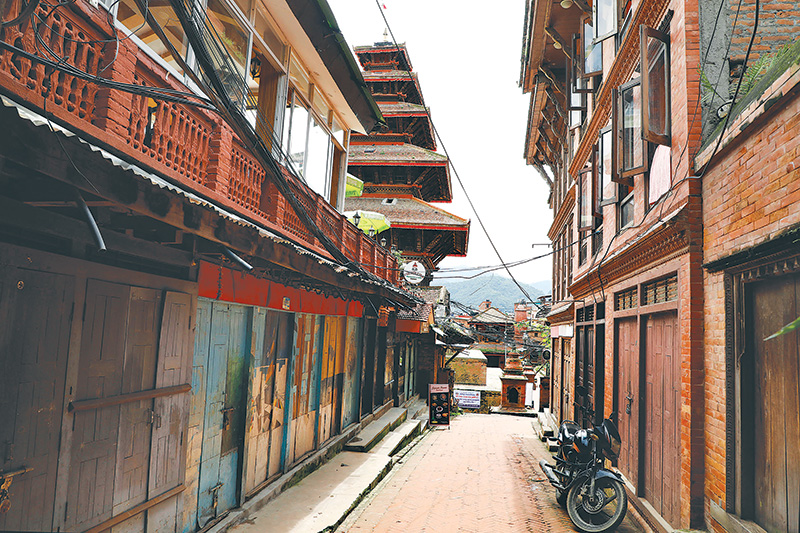
Shops closed in Bhaktapur. Increasing curbs due to rising virus cases worry businesspeople. Post Photo: Hemanta Shrestha

KATHMANDU,
Three weeks after lifting the lockdown, the federal government has given local administrations and governments the authority to decide on restrictions and lockdown measures as Covid-19 cases continue to rise.
“The districts with more than 200 active cases of coronavirus can impose necessary restrictions. We have not imposed the nationwide lockdown and the Cabinet has decided not to,” said Finance and Information and Communication Minister Yubaraj Khatiwada, making public the government’s decisions on Covid-19 containment on Tuesday.
The restriction orders, however, could lead to similar situations as lockdown at some places, according to Khatiwada.
Other containment measures include restrictions on domestic and international passenger flights until August 31.
The government had announced on July 20 that flights, both domestic and international, would be allowed from August 17.
Long distance buses will now be allowed to ply from September 1.
All educational institutions including schools, colleges, tuition centres and training centres will remain closed. No date for their opening has been announced.
The government on July 20 had said schools could take admissions from August 17 but according to the announcement on Tuesday this has been pushed back by 15 days.
Restaurants have been limited to takeaway services and all non-essential services like salons, shopping malls, theatres must remain closed, according to the new government directive.
Hotels were told to prepare for guests as international flights had been earlier scheduled to start arriving from August 17, but that too has been pushed back by 15 days.  
“After assessing the risk, the local administrations and local units can take the necessary decisions,” said Khatiwada, who is also the government spokesperson.
The government’s unplanned and abrupt decision to cover up for  its shortcomings, however, has worried many.
“We [hoteliers] are increasingly worried about the future. There are holes in the government’s Covid-19 response plan and we are becoming the long-term sufferers,” said Binayak Shah, senior vice president of the Hotel Association of Nepal.
“We were asked to resume business, and accordingly we started bookings and had started calling employees back to work. Now we are in a dilemma. Our clients will not trust us anymore.”
A senior official at the Home Ministry said that around 40 district administrations and local governments have already imposed various kinds of restrictions, lockdowns and curfews, and sealed border crossings since the lifting of the nationwide lockdown on July 21.
There were demands on Sunday from mayors of Kathmandu Valley to seal all entry points to Kathmandu Valley and a total ban on public vehicles.
But the Cabinet rejected the proposal, said an official at the Prime Minister’s Office.
As of Tuesday, Nepal has reported 23,948 Covid-19 cases with 83 deaths. The Health Ministry said on Tuesday that 638 new cases and four deaths were confirmed in the last 24 hours. A total of 10,462 polymerase chain reaction (PCR) tests were performed.
“The worry is that the numbers may increase further because several local bodies have reported that the coronavirus has spread in the community,” the official told the Post on the condition of anonymity because he was not allowed to speak to the media.
Businesses want a proper plan and have described the government decision as “haphazard”.
“We started bookings as soon as the government asked us to restart the business. Now, the situation is uncertain again,” said Shah.
Another official from one domestic airline told the Post that they had sold over 20 percent of seats on sale in most of the sectors but things are uncertain now.
“We haven’t yet decided whether to refund or tell passengers to wait for another two weeks to travel. We are not sure what another decision could be. But it’s frustrating,” the official said, requesting anonymity as he doesn’t want to openly criticise the government’s decision.
Tourism Ministry Secretary Kedar Bahadur Adhikari told the Post that it’s not the ministry that makes decisions on when to allow the resumption of flights.
“We follow the Coronavirus Crisis Management Committee’s directives,” he said.
The Tourism Ministry has been told to prepare guidelines for testing, quarantine and other measures for tourists once the country is open.
“We are working on the guidelines,” said Adhikari.  
Though Monday’s Cabinet meeting took a slew of decisions, the government stopped short of making them public the same day.
At least two ministers the Post spoke with said that the meeting decided to continue restrictions at all entry points to the country until September 16 midnight, except for goods and cargo movements and Nepalis returning home.
The meeting also decided to designate 10 entry points on the Nepal-India border for people’s movement. People were allowed to enter through 20 border points prior to the decision.
Government and private offices, banks, cooperatives, financial institutions and other organisations are allowed to mobilise only 50 percent of their employees in districts which have more than 200 coronavirus cases, as well as in Kathmandu Valley.
Offices where services through online, virtual or electronic mediums are not possible should be closed until further decision, the Cabinet has decided.
Buying and selling vegetables, fruits, clothes on footpaths and roadsides, open places, pushcarts and bicycles, and collection of scrap have been banned all over the country.
The government has said that such activities could become leading causes of virus transmission.
Factories can operate only if they set up private quarantine ensuring strict health protocols for their workers. All large construction projects and industrial areas should provide food and shelter for their workers inside their premises.
Pashupati Murarka, former president of the Federation of Nepalese Chambers of Commerce and Industry who is also the owner of Murarka Organisation, told the Post on Monday that such provision may be possible only in big factories because they have enough spaces.
“It may be an important decision considering the increase in Covid-19 cases but it’s not practical at all,” Murarka told the Post on Monday.
All religious activities except daily worship at temples have been  restricted. The government has said festivals should be observed among the family members at their homes following health protocols.
International arrivals through passenger repatriation flights have been limited to 500 people—300 based on recommendations by diplomatic missions and 200 under the Foreign Employment Welfare Fund’s repatriation programme.
The arrivals will be quarantined in Kathmandu Valley and sent home once they test negative for the coronavirus.
The Health Ministry will take the responsibility to test returnees after five-seven days of their arrival.
Travelling has been restricted to and from the districts with more than 200 infections except those with permission from respective District Covid-19 Crisis Management Centres and local governments.
Passes can be issued only for essential purposes, according to officials.
Analysing the rate of increase in the number of infections, necessary beds would be managed to keep the patients in isolation, said Khatiwada.
HOME PAGE

Problems of Nepali theatre extend beyond the pandemic

Nepali theatre has been struggling financially for a long time. If the condition before the pandemic was poor, it’s now dire.
- Timothy Aryal
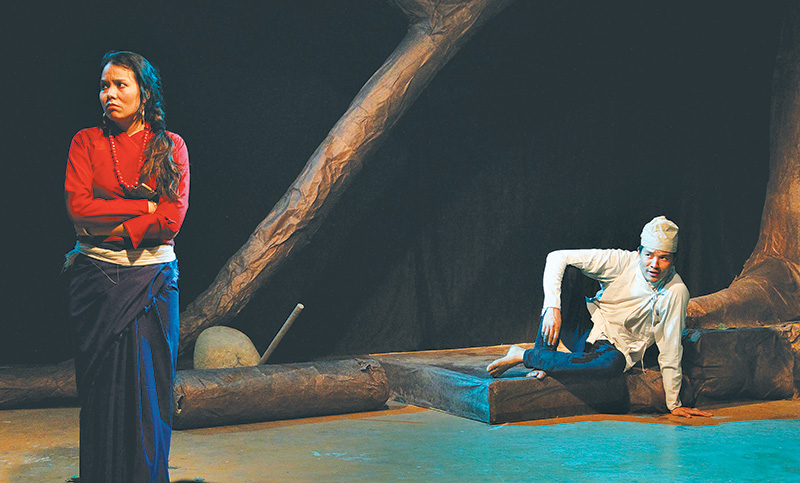
There is no possibility of a return to theatres until people are safe to gather in a place. Post file Photo

KATHMANDU,
Five years ago, Sandeep Shrestha abandoned his family to focus on theatre. His family wanted him to be a software engineer but his passion was in acting, directing and writing. He built his network in Kathmandu’s small yet robust theatre scene. Soon, he would be involved in new shows almost on a monthly basis and would earn enough to sustain himself. He could perform in both Nepali and English-medium plays (whose remuneration on an average tends to be slightly higher than the former’s). Sandeep, who is 32, would go on to appear in 27 plays, and write and direct two in his eight-year-old career. His relationship with his family had smoothened again.
“I was on a roll,” Sandeep told me recently over video chat from his one-room rental in Kalopul. “I was getting offers in plenty and was regularly doing what I loved to do.”
Then Covid-19 struck. Sandeep was in Bangalore for a workshop before the lockdown in both Nepal and India. He had to cut short his trip and, like many of his colleagues, was soon out of work. All of his savings was spent during the Bangalore tour and he didn’t want to get back to the family either, he said.
The only option then was to take loans from his circle of friends, and that’s how he has been getting by lately, sequestered in his room, smoking cigarettes and jotting down drafts of plays and film scripts.
But not many actors in Kathmandu’s theatre scene share Sandeep’s privilege, if one could call it that. Many have returned to their homes in villages, and they may never come back at all, said Raj Shah, an actor-director with Sarwanam Theatre.
Like all sectors of the society, the pandemic has brought theatre to its knees. But it’s problems, theatre insiders say, extend well beyond the pandemic.
The leisure of the pandemic has led to theatre owners and artistic directors discussing the systemic problems that plague this small Kathmandu-centric art industry of about 1,000 people.
Theatre in Kathmandu, over the past decade, has been booming--in terms of the number of theatre houses, the audience and the productions. Since the fall of the single privately-owned theatre house, Gurukul, in 2012, Kathmandu has seen as many as seven theatre houses with their own black boxes, either self-owned or rented--namely, Mandala, Shilpee, Theatre Mall, Kausi, Sarwanam, Theatre Village, Shailee, and Kunja. The expected new entrant to the scene, Purano Ghar, was under construction before the pandemic.
Meanwhile, institutions with a venerable history such as Actors’ Studio and One World Theatre had been consistently producing plays, showcased in hired spaces.
The scene, however, was not all rosy. It has had its share of hiccups, with a temporary closure of Theatre Village, and the shift of Theatre Mall from Sundhara to Kirtipur. Contributing to both of these unfortunate events were financial reasons. Moreover, in early 2019, the scene was rocked when three veteran actor-directors were implicated in sexual harassment accusations in the Nepal episode of the global #MeToo reckoning. (The accused are back to work.)
Theatre was suddenly pushed into mainstream conversation, but a deep-seated problem plaguing the scene has always been overlooked: that despite the growth of productions and audience, theatre actors couldn’t sustain themselves only by doing theatre.
If the pre-pandemic situation was poor, the pandemic has made it dire. “There was always a pandemic in the theatre,” says Kedar Shrestha, artistic director of Theatre Mall. “Theatre houses were struggling, and even if not for the coronavirus pandemic, in a few years many theatre houses would have shut down.”
Theatre in Kathmandu is something run out of sheer passion of the actors and the crew and their strong desire to remain involved, actor-director Srijana Subba has told the Post. “To meet our expenses, we need to engage in initiatives of NGOs or INGOs, which mostly consist of staging plays in far-flung villages. We usually get decent pay from that,” she said.
“And yes, we get paid from regular stagings too, but that is only nominal. There’s nothing like a fixed rate according to the stature and experience of the actors, as there are in movies.”
Shrestha says the problem lies in the lack of a government policy to regulate and assist theatre. “The state and the society doesn’t even recognise theatre,” he said. “It’s referred to under the umbrella term ‘entertainment spaces’. We don’t feel seen or identified.” The government has the Academy of Music and Drama tasked with looking after the two entertainment sectors, but it is largely out of the picture.
Despite everything, however, since the pandemic, theatre makers have engaged in creative pursuits, from holding live talk shows with actors, directors and writers to holding online workshops. Right at the beginning, Shrestha’s group hosted a Facebook live streaming of plays recorded previously. While the experiment was popular, with the streamings collectively garnering over half a million views, theatre is primarily a live medium and there’s no option to do live theatre online, Shrestha said.
“The very essence of theatre is you have to be watching the performances on the stage to really enjoy it, and that’s one of the things that distinguishes theatre from cinema.”
But with growing cases of coronavirus, hitting the stage again is a no, Shrestha added. As an aside, some theatre groups like Kausi have staged open air plays in support of the protesting Enough is Enough campaigners. “The passion for theatre among the actors is high as always. Some actors walked for three hours just to perform a little skit,” Akanchha Karki, director of Kausi, told the Post.
“But we couldn’t pay the actors, many of whom come from lower-income families. I felt quite dejected. But still, to maintain sanity, we are doing small-scale projects and private classes.”
Going open air could have been an option had the pandemic not become more pronounced, says Ghimire Yubaraj of Shilpee Theatre. Coronavirus cases continue to rise across the country and in the Capital.
“The possibility that theatre could be restarted soon, either inside the house or in open air, is thinning out,” he said. “We have to be responsible for public health today more than ever, so doing theatre is currently out of option.”
Amid an air of uncertainty, about a month ago, representatives from 57 theatre groups operating across the country came together in Shilpee to discuss how theatre can move ahead from the current stasis. The meeting decided to present a letter of demands to the state-owned Academy of Music and Drama.
Among the letter’s demands were that the academy should “assume the guardianship” of the theatre, address the financial crunch the actors and theatre officials are grappling with, and help and create platforms to revive the industry.
The academy hasn’t responded yet, according to Ghimire. Meanwhile, the state-owned Rastriya Nachghar has become a shell of its former self.
“The problems of the actors and directors are in our thoughts,” said Harihar Sharma, veteran actor and vice-chancellor of the Academy. “We have been aiming to engage them with some financial support but the Covid-19 situation is getting more serious and there’s no way the actors can spring up to action as of now. We will have to wait and watch.”
While the Academy may wait and watch, there’s much uncertainty among theatre artists. Only thing Sandeep is certain now is that merely doing theatre will no longer be attainable or sustainable. Sandeep said he is not sure whether the plays and scripts he is writing might see the light of the day. For the question is existential.
“To survive the pandemic and its aftershocks,” he said, “I will have to think of alternatives to theatre.”

Page 2
NATIONAL

Over 20,000 people booked for flouting mask and social distancing rules in Valley

- SHUVAM DHUNGANA

KATHMANDU,
The government on July 21 lifted the nationwide lockdown, almost four months after it was imposed, with certain public health guidelines like compulsory wearing of masks in public, observing social distancing and restricting large gatherings. However, many people in the Valley have been found flouting the health and safety rules.
According t0 the Metropolitan Police Office, Ranipokhari, a total of 20,302 people were caught in the Valley as of Tuesday for not following safety protocols.
“Of them, 2,127 people were fined Rs 100 each while 18, 294others were released after a warning,” said Senior Superintendent of Police Sushil Kumar Yadav, spokesperson for the Metropolitan Police Office, Ranipokhari.
In view of the growing number of Covid-19 cases, the Ministry of Home Affairs on July 6 had directed the authorities to take action against people who do not wear masks in public.
The ministry had issued a circular to the local administrations of all 77 districts and the Nepal Police Headquarters to take necessary action against the offenders.
The police took action against those who were found out in the public without wearing masks while the traffic police ensured that everyone in public vehicles were wearing masks. However, with the rising number of Covid-19 cases among police workforce, there has been a decline in the number of security personnel on duty, raising concern among many that more people will violate safety protocols.
According to the data provided by the Nepal Police, over 350 police personnel across the country have been infected with Covid-19; out of them, 119 have recovered.
According to Senior Superintendent of Police Kuber Kadayat, spokesperson for the Nepal Police, his office has directed its personnel to avoid crowds and strictly follow safety protocols after the surge in Covid-19 cases among security workforce.
“There are fewer police personnel seen on the roads now as compared to the past,” said Kadayat.
The Baggikhana office of the division was also recently sealed and all 300 officers, including the division’s chief SSP Bhim Prasad Dhakal, are currently in quarantine.
Former officials fear that if the cases among police keep on rising at this rate, it may affect
regular policing.
“Security lapses could be seen if they have to seal more offices,” said Hemanta Malla, the former deputy inspector general.
“Criminals may take advantage of such a situation and the crime rate could rise due to inadequate personnel working in the field.”  
Since the lockdown was eased on June 11, allowing private vehicles to operate on an odd-even basis and businesses to open, public movement has gradually increased. The Valley has so far recorded 980 cases of Covid-19.

NATIONAL

Laboratories in Province 1 overwhelmed with increasing number of samples

Delay in test results has not only caused distress but also risked community transmission of the disease, Covid-19 suspects and patients say.
- DEO NARAYAN SAH
The province’s labs have the combined capacity of conducting only 1,500 PCR tests a day. Post file Photo

MORANG,
A 50-year-old man from Ward 11 in Biratnagar had his swab sample collected for a Polymerase Chain Reaction test by the metropolis’ health officials on Saturday. The long wait for his test result is causing him much distress, he says.
“I am very worried about the test result and the safety of my family,” he said. “If I am carrying the virus, then I might have already infected my parents, wife, children and even my neighbours.”
According to the health unit of Biratnagar Metropolis, the city collected around 1,100 swab samples for PCR tests in the past week.
“We are yet to conduct tests on 400 specimens,” said Rajendra Kuikel, an officer at the health unit.
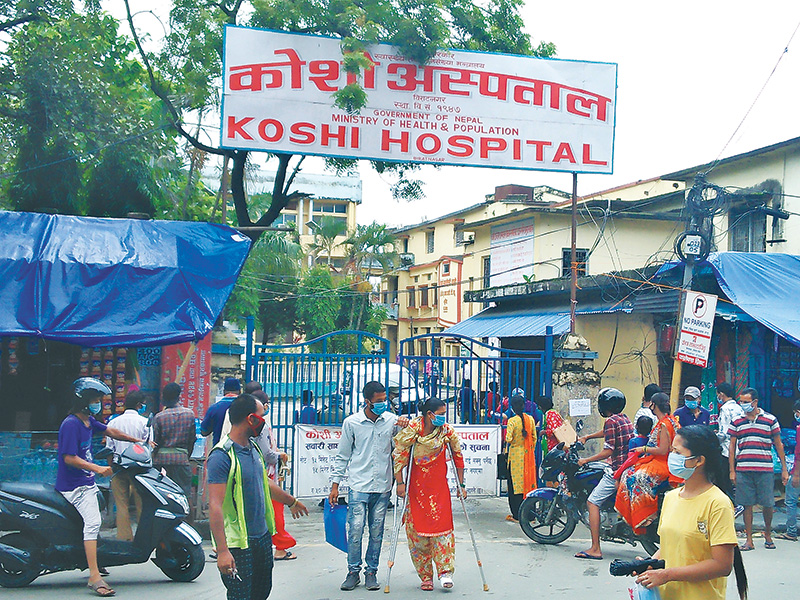
It usually takes only a day for PCR test reports to come but the PCR laboratories in Province 1 are overwhelmed with the rising number of Covid-19 cases. This has led to a delay in conducting PCR tests on the collected samples and releasing the test results. There are three PCR labs—Dharan-based BP Koirala Institute of Health Sciences, Koshi Hospital and Public Health Laboratory—currently in operation in the province.
According to Jayabendra Yadav, director at the Public Health Laboratory, each laboratory has the capacity to conduct 500 PCR tests on a daily basis.
“The three labs have a total capacity of conducting 1,500 PCR tests per day. But the local units from across the province collectively send 2,200 to 2,700 swabs every day,” said Yadav. “So there is a backlog of swab samples to be tested in the labs.”
A PCR machine installed in Mechi Hospital of Jhapa is expected to ease the burden on the three labs to some extent. The lab in Jhapa has the capacity to run 500 tests per day and has come into operation from Tuesday. According to Yadav, as many as 2,750 swab samples remain to be tested in the three laboratories as of Tuesday.
Meanwhile, coronavirus suspects who have given their swab samples for testing say the delay in receiving their reports is making their immediate family susceptible to contracting the disease from them.
“The health officials in the municipality traced me through an infected individual. It took them five days to give me my result,” said a coronavirus patient who is in his early sixties. “Five days after they took my sample, I found out that I had tested positive for the virus. I put my family and friends at risk of getting infected. Had I known about the result earlier, I would have been more careful in self-isolating.”  
Dr Suresh Mehata, chief at the Health Division of Social Development Ministry in Province 1, believes that if the local units prioritised contact tracing instead of focusing on random swab collection, then the labs would be able to release the test results sooner. “We have to prioritise PCR tests based on contact tracing and of people with Covid-19 symptoms. But the local units have been collecting swab
samples of people who are not in need of a test right away,” he said. “This has also overwhelmed the labs in the province.”
“Just because you know someone who has been infected does not mean you need to get a PCR test,” Mehata added. “Those who have maintained physical distance with the infected do not come under contact tracing. But the local units are collecting swabs of those people as well.”
According to him, the social
development ministry is preparing to draft a guideline to systematise the collection of swab samples in the local bodies.  
However, Kuikel from the Health Unit of Biratnagar Municipality says that his office has been collecting swab samples for testing based on the demand of the metropolis.
“The risk of infection has become high in the province since the easing of lockdown measures,” he said. “All local units in the province, including our municipality, have been prioritising expansion of PCR tests.”
As of Tuesday, the laboratories in Province 1 have conducted a total of 60,680 PCR tests. Among them, 1,563 samples tested positive for the virus. Morang has been a hotspot of the disease in recent days with 608 positive cases. Biratnagar alone has 342 positive cases, among them 273 are active cases.

NATIONAL

Youth leaders ask Deuba to scrap nominations

- Post Report

KATHMANDU,
Twelve youth leaders of the Nepali Congress on Tuesday urged party President Sher Bahadur Deuba to respect the party charter and scrap his decision to form various party departments.
Despite repeated warnings from rival factions led by Ram Chandra Poudel and Krishna Prasad Sitaula, Deuba has kept on forming party departments. He has nominated over 668 cadres for them as of Monday. The party has already announced to hold its general convention in February, 2021.
By Tuesday, Deuba has formed 15 departments in spite of strong opposition from party members. The party’s code of conduct bars any nomination after announcement of the date for general convention.
The youth leaders mostly belong to the Poudel and Sitaula factions of the party.
They urged Deuba to respect the party charter and withdraw the nominations made for various departments and end the culture of factional politics, according to a joint statement.
The signatories are Chandra Bhandari, Dhanraj Gurung, Gururaj Ghimire, Gagan Thapa, Badri Pandey, Ratna Serchan, Pradip Poudel, Jeevan Pariyar, Ram Krishna Yadav, Kiran Yadav, Sarita Prasai and Kamala Pant. At a time when the conventions of various party committees have been scheduled, the formation of departments has raised serious questions over the impartiality of the general convention, they said.
Since the party president is the patron of the party charter, he should respect it and make others comply with the rules, the Congress leaders said. It is the role of party President Deuba to maintain democracy within the party and to ensure that the party follows the system. They argue that Deuba should make the leadership handover process acceptable to all.
The party charter allows a maximum of 50 members in one department. Deuba is preparing to form seven more departments soon, according to Congress leaders.
If the Poudel faction does not come to a consensus, Deuba is preparing to form all 42 departments unilaterally. In the process, he’ll assign roles to over 2,200 party leaders, a central member said. Poudel can object to the delay in forming the party departments but he cannot stop the process, the leader said.
As per the party charter, all the departments should have been formed within six months of the general convention, which was held in 2016. However, Deuba never formed them on time but rushed to set them up after the term and mandate of the Central Working Committee was extended by one year for holding the party’s 14th general convention.
When Poudel and other leaders urged Deuba to stop the nominations, Deuba reportedly said that he was following the footsteps of Girija Prasad Koirala and Sushil Koirala, arguing that they had done the same.
The party president is not a person; it’s an institution, the NC youth leaders stressed. “Deuba does not have the luxury to skip and bypass the system, and the party’s legacy and tradition,” they said, asking Deuba to stop promoting factionalism in the party.

Page 3
NATIONAL

High court interim order bars investment board chief executive Bhatta from assuming his office

- PRITHVI MAN SHRESTHA

KATHMANDU, 
The Patan High Court has issued an interim order barring Sushil Bhatta, newly appointed chief executive officer of Investment Board Nepal, from assuming office for at least
five days.
On Monday, advocate Jaya Bahadur Bhujel had filed the writ petition challenging Bhatta’s appointment, saying that he was not fit for the job and that his appointment was in violation of the legal provision.
A Cabinet meeting on August 3 had decided to appoint Bhatta to the post of the CEO of the investment board.
According to a copy of order obtained by the Post,  a single bench of Chief Judge Nahakul Subedi on Tuesday issued an interim order barring Bhatta from assuming his new role as the CEO of the investment board at least until August 16, the day when the court is due to conduct a hearing on Bhatta’s qualifications.
In his writ petition, Bhujel has argued that Bhatta does not have the managerial
experience as required by Public Private Partnership and Investment Act to helm the investment board.
The petitioner has also questioned Bhatta’s reputation as an agent for various building and contracting firms, whose contracts had been terminated by the government for failing to deliver the projects.  
The government had to terminate contracts with 13 companies handled by Bhatta after poor performance in project implementation, Bhujel has stated in the petition.
The court has summoned both parties in the case for the August 16 hearing. The defendants in the case are Bhatta, Office of the Prime Minister and Council of Ministers, the Ministry of Finance and the Investment Board Nepal.  
“The court will decide whether to continue the interim order after listening to the arguments from both sides,” said Shambu Prasad Regmi, spokesperson at the high court.
The court has also ordered the defendants to come up with evidence as to why the order should not be issued as demanded by the writ petitioner within 15 days, excluding the days required for delivery of evidence.
“These details were sought to take decision on whether to annul the appointment of Bhatta,” said Regmi. The High Court has also its bar to present two senior advocates or advocates to form an amicus curiae to help settle the issue of public importance.
The government’s  decision to appoint Bhatta had invited widespread criticism from different quarters. Many have argued that Bhatta’s appointment was influenced by his brother, Deepak Bhatta, who remains the agent of many foreign companies including China Gezhouba Group, which was awarded the contract to develop the 1200 MW Budhi Gandaki Hydroelectric Project in September 2018. In his petition, Bhujel has said that Bhatta’s appointment as the board’s CEO could lead to conflict of interest as his brother is working for a major project and he himself had worked as an agent for many building and contracting companies in the past.
Bhujel has also warned that Bhatta’s appointment could discourage domestic and foreign investments.

NATIONAL

Woman arrested over man’s murder in Gongabu

Investigators, who recovered the body in a suitcase on Sunday, say the premeditated murder was an act of revenge over a relationship gone sour.
- SHUVAM DHUNGANA
Police say the alleged murderer and the deceased met on Facebook four years ago. POST PHOTO: ELITE JOSHI

KATHMANDU,
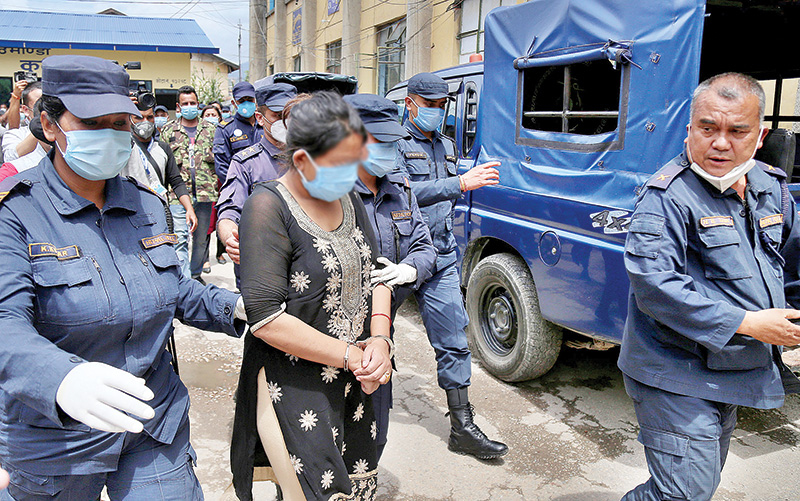
Police on Monday arrested a woman for allegedly killing the man whose body was found on Sunday morning at Gongabu in the Capital.
The dismembered body had been found inside a suitcase at the Baniyatar area in Gongabu.
Police have identified the woman as Kalpana Mudvari, 37, of Chitwan, who currently resides in a rented flat in Tokha with her 14-year-old son and 15-year-old daughter. She also has another 21-year-old daughter, who is married and does not live with her.
The deceased has been identified as Krishna Bahadur Bohara, 45, of Rolpa, who for the past eight months had been residing in a hotel at the Capital’s Gongabu area.
Police said the case seems to be a relationship gone sour and the motive behind the premeditated crime is revenge.
According to Senior Superintendent Shyamlal Gyawali, chief of Kathmandu Metropolitan Police Range, during interrogation, Mudvari said she and Bohara got acquainted some four years ago through Facebook.
“Then, over the years, their relationship grew. There could be several aspects to this relationship–from financial transactions to sexual intimacy–which are being investigated,” said Gyawali.
According to police, the two were having an affair for the past year.
“It has come to our understanding that Krishna Bahadur had also created a fake Facebook account in the name of a woman and was blackmailing the woman that he would post her nude pictures if she didn’t do what he asked for,” said Gyawali. The police believe there were financial disputes between the two and Mudvari wanted to get married which Bohara refused.
Kathmandu Metropolitan Police Range and Metropolitan Crime Branch held a joint press conference on Tuesday to make public the investigation report and the accused.
According to the investigation, the accused, Mudvari, is a housewife who occasionally plays small roles in teleserials. She told the police that she does not have a good relationship with her husband, who has been working in Dubai for over five years now.
According to the police, the murder took place in Mudvari’s rented flat in Tokha on Saturday night. In her statement to the police, Mudvari said that she invited Bohara over, made him a meal, offered him some vodka and then served him curd, in which she mixed five crushed sleeping tablets, which rendered him unconscious.
Mudvari also admitted to have killed the unconscious Bohara by first striking him
with a hammer on his nether region and then strangulating him to death with a black
shawl, said Superintendent Ishwar Karki, spokesperson for the Metropolitan Crime Division.
Police have discovered a hammer, a khukuri, the black shawl and some clothes of the victim in the flat, he said.
“It is learnt that the body was taken to the bathroom, where the head and legs were severed. They were then put in the black suitcase and a big plastic bag and disposed of on the roadside in Gongabu,” he said.
According to Karki, Mudvari had cut off the head and legs so it would be easy for her to dispose of the body. The accused then dumped the suitcase near the hotel where Bohara was staying.
The police have also arrested Mudvari’s 15-year-old daughter for allegedly assisting her mother in disposing of the body. Her son, however, was asleep in another room, according to the police.
After the body was found in the suitcase, the police started an investigation into the incident under the name of Operation Jo Jo. Jo Jo is a trained dog of Nepal Police who had found the head and legs of the man some 300 metres away from the rest of the corpse.
“After getting rid of the body, she had left Kathmandu [with her daughter and son] and gone to Chitwan in an ambulance,” said
SSP Thapa. The police made the arrest after identifying the connection between her and Bohara and contacting the Chitwan District Police Office.
Police said they have uncovered some new information on Bohara as well.
“It has recently come to light that Bohara had also duped some women on the pretext of sending them abroad,” said Senior Superintendent Dipak Thapa, chief of Metropolitan Crime Division.
Police said Bohara had two wives: the first wife is living with her son in India, while the second wife is in Dang.
However, Bohara had not been in touch with any of his family members and had been living in Kathmandu, working as a clothes dealer.
He was also involved in running Thakali Restaurant and Lodge at Sundhara.
He had returned to Nepal nearly three years ago after working abroad for over six years.

NATIONAL

With many traffic officers in quarantine, other police personnel mobilised to enforce odd-even vehicle rule

A total of 8,302 motorists have been booked for violating alternate-day driving rule in the past six days.
- ANUP OJHA

KATHMANDU,
The Metropolitan Traffic Police Division office in Baggikhana has been sealed for nearly a week now following the detection of coronavirus infection in four officers.  
Nearly 300 traffic officers at the division in Baggikhana are currently in quarantine. Thirty-three officers at the Metropolitan Traffic Police Section in Tripureshwor are also observing quarantine after two traffic policemen there tested positive for coronavirus.
Due to its reduced strength, the traffic police has asked for support from Nepal Police to manage and monitor the traffic in Kathmandu Valley.
Nepal Police has mobilised its constables all across the Valley to regulate the traffic and enforce the odd-even rule for vehicles.  
“We have been strictly monitoring the odd-even rule enforced by the government,” said a 25-year-old- police constable mobilised to monitor the traffic in the Bhadrakali area.
Earlier, only few traffic police were present on the Valley roads, resulting in poor implementation of the odd-even rules.
The mobilisation of Nepal Police constables on traffic duty is expected to discourage motorists from flouting the alternate-day driving rule that was imposed as a curb to control the spike of coronavirus cases in the Valley.
There was a noticeable presence of Nepal Police personnel on the Valley roads since Monday.
“Any motorists driving out of turn are being stopped at this checkpoint. We have already booked over two dozen motorcyclists,” said the constable. “This is my first experience doing a traffic policeman’s  job.”
Bam Dev Gautam, spokesperson at the traffic police division office, said: “With many traffic officers put under quarantine, Nepal Police has mobilised its staff to monitor the traffic movements and they are helping traffic personnel enforce the odd-even rule,”
Gautam himself is also staying in quarantine along with Superintendent of Police Bhim Prasad Dhakal, chief of the traffic division office.
Senior Superintendent of Police Sushil Kumar Yadav, spokesperson for the Metropolitan Police Office, Rani Pokhari, said most of the Nepal Police personnel deployed on traffic duty are newly recruited constables.
“Nepal Police civvies have also been deployed to monitor the movement of people and vehicles, including at six entry points of Kathmandu Valley,” said Yadav.
The government had imposed the odd-and even rule for public and private vehicles inside Kathmandu Valley for the second time last week.
Besides, the government has also been regulating the vehicles and people entering the Valley from various entry points: Thankot-Nagdhunga, Pharping, Jagati, Tinpiple-Mudkhu Bhanjyang, Jaharshing Pawa and Kattike.  
According to Yadav, the Nepal Police has mobilised 3,196 personnel in Kathmandu, 810 in Bhaktapur and 1,127 personnel in Lalitpur with the instruction to enforce the Covid-19 public health safety and rules, like odd-even vehicle rule and social distancing. “Various police units have deployed their officers on the road to nab the rule violators,” said Yadav.
Gautam, the spokesperson for the traffic division office, said a total of 1,602 odd-even rule vehicle rule violators, including 4oo four-wheelers were seized, on Tuesday alone.  
In the past six days, the division’s records show that 8,302 motorists were booked for taking out their vehicles when it was not their turn.
“With the help of Nepal Police, the traffic officers are strictly monitoring the odd-even vehicle rule,” said Gautam.

NATIONAL

Bhanu Municipality halts services to contain virus spread

Briefing
- Post Report

TANAHUN: Suspecting community transmission of Covid-19, Bhanu Municipality in Tahanun has decided to shut down all services for a week from Monday. The municipality however, said emergency services related to health and disaster management will be active. The civic body took the decision following confirmation of coronavirus infection in a man from Ward 1 with no travel history.

NATIONAL

Banke extends prohibitory order until Friday

Briefing
- Post Report

BANKE: The Banke administration on Tuesday decided to extend Covid-19 prohibitory orders in the district for three more days. With this decision, the prohibitory order will be effective till midnight on Friday.  Similarly, Triyuga, Chaudandigadhi and Belaka municipalities in Udayapur district have decided to impose a 12-day prohibitory order starting from Wednesday with an increase in Covid-19 cases.

NATIONAL

Nepal’s Covid-19 toll reaches 83

Briefing
- Post Report

KATHMANDU: Nepal on Tuesday reported four more Covid-19-related deaths—two from Dhanusha and one each from Sindhupalchok and Kavrepalanchok districts, taking the toll to 83. The ministry confirmed 638 new cases from the 10,462 polymerase chain reaction tests performed between Monday and Tuesday, taking the national case tally to 23,948.

Page 4
EDITORIAL

Table for two

Bloated egos of a handful of individuals should not hamper Indo-Nepal bilateral relations.

The news of the eighth meeting of the Indo-Nepal Oversight Mechanism being scheduled for August 17 has come as a major relief for those closely following the goings-on between the two friendly South Asian neighbours in recent months. The meeting has been a long time coming, as the current reticence between these otherwise gregarious nations following the cartographic tussle over the disputed territories of Kalapani, Lipulekh and Limpiyadhura had caused a great deal of inconvenience in other areas of bilateral cooperation.
The upcoming meet is part of a mechanism that oversees the implementation of bilateral projects. The meet, therefore, is mandated mostly to review and assess large India-funded projects in Nepal, and is not expected to make big forays into the bilateral relations vis-à-vis the border dispute. However, even the drop of a pin in an empty room serves well to break the monotony of silence. At a time when the two friendly nations are maintaining complete silence, any discussion, however small and off syllabus, carries with it big meaning and hope.
Minister for Foreign Affairs Pradeep Gyawali couldn’t have been any clearer when he said there was no alternative to talks and that ‘we can’t hold our entire ties hostage to the differences over the boundary issue’. Gyawali, speaking with the Post on Monday, sounded pretty confident, as any foreign minister should, about the beginning of formal talks after a nine-month hiatus, and after Nepal sent at least four diplomatic notes calling for talks. India had for quite some time been avoiding a table talk citing the Covid-19 pandemic.
But the pandemic was just a lame excuse considering its zeal to settle the dispute with China amicably and immediately following the skirmishes along the actual line of control on the high Himalaya in May and June. The principles of international diplomacy mandate that nations show the same zeal and honesty when it comes to settling disputes with smaller countries as well.
The absence of formal communication has hampered other areas of bilateral relations of importance. It came quite late this year, the blame on Nepal for the floods in northern India. Bihar Chief Minister Nitish Kumar on Monday complained to Prime Minister Narendra Modi that non-cooperation from Nepal had resulted in northern Bihar being flooded, and asked him to take up the matter with Nepal.
The annual blame game by northern Indian politicians—Akhilesh Yadav and Mayawati have done their bit during their rules—exposes their own political calculations than a genuine concern for solving the flood problem once and for all. After all, the major barrages that control the flow of water towards India are controlled by India itself. But the fact remains that Nepali and Indian administrators and governments need to be constantly in touch for greater cooperation and wellbeing of the citizens on either side of the border.
India and Nepal should also hold talks at the highest level to silence speculations among political pundits and the media that a third neighbour, China, is fishing in muddy waters. Nations outlive the lives, lies and egos of political leaders, pundits and journalists. The bloated egos of a handful of individuals should in no way hamper the deep cultural, economic and historical relations between the two neighbours. The only way forward, therefore, is talks, talks and talks. The meet next week, therefore, carries greater significance than just a routine meet between two development partners as it can possibly help begin a series of much-needed, meaningful dialogues between the two neighbours.   

OPINION

Yunnan in a development dilemma

It risks exposing its ethnic cultures and cultural ecology too much, and eroding the basic principles of sustainability.
- MAHENDRA P LAMA
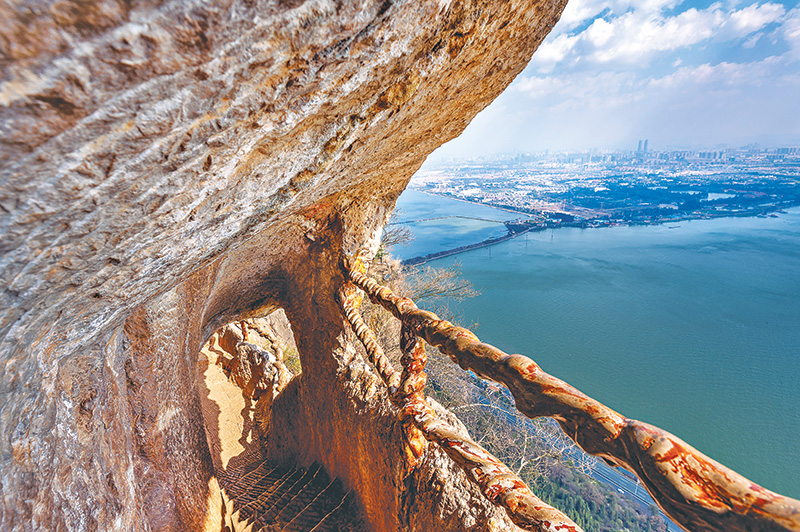
Views of the city of Kunming from a nearby mountain park. Shutterstock 

China’s western region, covering two-thirds of its territory and nearly 23 percent of the national population, comprises nine provinces and autonomous regions—Gansu, Guizhou, Ningxia, Qinghai, Shaanxi, Sichuan, Tibet, Xinjiang, Yunnan and Chongqing Municipality. After eastern China’s 14,000-km coastline brought fortunes to the country during the period 1980-2000, western China with a 3,500-km land frontier was considered to become the second golden area of reopening. During these two decades, China witnessed glaring regional disparity, and the western region emerged very vulnerable. Its seven coastal divisions handled 75 percent of national exports, more than 90 percent of all processing exports and 67 percent of imports. In 1998, Tibet and Gansu had the lowest per capita rural consumption of 710 yuan and 939 yuan respectively.
China received foreign direct investment inflows of $250.02 billion from 1985-98 in which the share of the eastern region was over 86 percent against the western region’s 3.4 percent. Beijing’s biggest concern was that this blatant development laggardness in these politically and strategically volatile provinces could trigger huge political dissent and social upheavals. Therefore, a provision of autonomy and flexibility in their cross-border interactions were considered a central point. It was at this critical juncture that Yunnan, a core province on the traditional Tea Horse Road, was projected as the torchbearer of this opening of the western region to neighbouring countries.

Kunming Initiative
China launched the Kunming Initiative in 1999. The core rationale was to gravitate the ‘backward zones of eastern South Asia and its periphery’ including Bangladesh, the north-eastern region of India, Bhutan and Nepal to the sub-regional idea of Kolkata to Kunming (K2K). This was both to subsume India’s Look East policy introduced in 1992 and facilitate China’s entry into the Indian Ocean from its unexplored western flank.
In Premier Zhu Rongji’s report on National Economic and Social Development during the 10th Five-Year Plan (2001-05), developing the western region for regionally balanced economic development and also deepening reform were major deviations. It launched the ‘develop-the-west’ campaign in 2000 with five major components—infrastructure construction, environmental protection, adjustment of the industrial structure, promotion of science, technology and education, and economic reforms. These measures brought significant development in the whole of western region. These provinces started interacting intimately with the neighbouring countries, particularly Southeast Asian countries.
Yunnan’s development status, along with Tibet and Sichuan, has undergone massive transformation. They have moved from the basics to more sophisticated interventions and to more pivotal roles within China. Just two decades ago, Yunnan—a mountainous landlocked province with Myanmar in the west and Laos and Vietnam in the south—was considered to be a slow growing poverty-stricken province majorly dependent on cattle rearing and tobacco farming. It had huge infrastructural gaps and poor connectivity with major Chinese cities and development centres. Its overwhelming ethnic population of 24 minorities kept it as a sensitive zone for any major development intervention.
Today, it is one of the most vibrant provinces and an over-bridge to Southeast Asia. During the period 1990 to 2018, the gross regional domestic product increased from $9.41 billion to $269.7 billion. Its per capita income recorded an almost 22-fold jump. Initiatives under the west-east (Shanghai-Yunnan) cooperation made huge investments, and helped alleviate poverty among various ethnic minorities. In 2011, the ‘three prefectures helping three counties’ model was adopted with a focus on aspects of production, living, education and medicine.
Yunnan’s total foreign trade increased from $548 million in 1990 to a hefty $29.90 billion in 2018. Border trade, mostly with Myanmar through the Muse-Ruili point, jumped from a mere $74 million in 1990 to $3.3 billion in 2018. Its trading partners are spread over countries in Asia, Europe, North America, Latin America and Africa. The openness was clearly reflected in the number of foreign direct investment projects that increased from 11 to 182 resulting in an investment flow of $8.28 billion in 2018 alone. More than 5.49 million foreign and 681 million domestic tourists visited Yunnan in 2018 as against 0.66 million and 38 million in 2000. Foreign exchange earnings from tourism increased from $339 million in 2000 to $4.41 billion. Domestic tourists left behind earnings of $131.21 billion.
Yunnan is already a crucial part of the Greater Mekong Subregion. Besides oil and gas pipelines originating from Myanmar and electricity transmission lines linking neighbouring countries, landlocked Yunnan has four cross-border highways connecting Kunming with Bangkok, Hanoi, Yangon, Vientiane. It has been deftly connected with other parts of China. As a major beginning in its railway connectivity with Southeast Asian countries, the ongoing $7 billion Kunming-Vientiane (Laos) 415-km railway project under the Belt and Road Initiative is likely to be completed in 2021. Besides two dozen land, air and water ports, the three cross-border waterways from Lancang to the Mekong, Red River and Irrawaddy are likely to be connected with the oceans and ports therein.

Damage to cultural ecology
With all these, Yunnan has encountered a serious development dilemma of exposing its unique ethnic cultures and fragile cultural ecology too much, and steadily eroding the basic principles of sustainability. Its dependence on Southeast Asia has grown so much that any dislocation by issues related to the South China Sea and other strategic and nationalism-based resistance could derail its entire development process. The ongoing India-China imbroglio has indefinitely grounded its sub-regional ventures, like the K2K, and entry into the Indian Ocean. How much of these development gains have inbuilt inclusiveness, and what is the extent of its percolating down to strikingly varied ethnic communities including Achang, Bai, Bulang, Buyi, Dai, Dulong, De’ang, Hani, Hui, Jingpo, Jino, Lahu, Lisu, Miao, Mongolian, Naxi, Nu, Pumi, Shui, Tibetan, Wa, Yao, Yi and Zhuang is yet to be scientifically studied. So far, propaganda has ruled the roost.

 
Lama headed the government-appointed Nathu La Trade Study Group to reopen the trade route between Sikkim and Tibet in 2005.

OPINION

The preventable trauma of childbirth during the pandemic

Governments and donors must allocate far more resources for advocacy in problematic areas such as maternal health.
- Mary Fitzgerald
Shutterstock

‘The baby is dead. We can’t assist you here’. By the time she heard these devastating words, the pregnant Yasmelis Casanova had endured a long and painful journey, passing through multiple Covid-19 checkpoints, to the hospital in Caracas, Venezuela. She bled for hours without treatment. When doctors at a second hospital finally operated on her, they removed her ovaries without her prior consent. Then, she spent 20 days there almost entirely alone; due to Covid-19 restrictions, visits were banned.
Venezuela’s health-care infrastructure was crumbling well before the pandemic, but the Covid-19 crisis has pushed it to the point of collapse. Many women experiencing obstetric emergencies now struggle to reach hospitals, let alone gain access to adequate care. Yet such failures can be seen far beyond Venezuela, in rich and poor countries alike.
Last month openDemocracy released the results of a global investigation into the treatment of women in childbirth during the Covid-19 pandemic. Across 45 countries—from Canada to Cameroon, from the United Kingdom to Ecuador—we found what doctors and lawyers describe as ‘shocking’ and ‘unnecessary’ breaches of laws and World Health Organisation guidelines intended to protect women and babies during the pandemic.
The WHO’s specific Covid-19 guidelines affirm, for example, that women should be accompanied by a person of their choice while giving birth. Yet, across Eurasia and Latin America—including in at least 15 European countries—women have been forced to give birth without companions.
Likewise, the WHO asserts that procedures like C-sections should be performed only when they are medically necessary or have the woman’s consent. Yet in 11 countries, women reported that they didn’t consent to C-sections, inductions, and episiotomies (the cutting of a woman’s vagina) that were performed on them, or said that they did not believe these procedures were medically necessary.
WHO guidelines also dictate that women receive breastfeeding support and the opportunity for skin-to-skin contact with newborns. Yet mothers have been separated from newborns in at least 15 countries—including at least six European countries—and prevented from breastfeeding in at least seven, even though there is no conclusive evidence that Covid-19 can be transmitted through breast milk.
Doctors and health experts agree: none of this is necessary to prevent the spread of Covid-19.
Likewise, there have been multiple reports of pregnancy deaths in Africa, after transport and other lockdown restrictions prevented women from reaching hospitals. Many women in developing countries have been forced to give birth in unsanitary and unsafe conditions. Experts now warn that over the course of just six months, Covid-19 restrictions and health-service disruptions could cause up to 56,700 additional maternal deaths in low- and middle-income countries.
If this is not enough to expose the flaws in current Covid-19-prevention measures, consider how unevenly they are implemented (and lifted). In some parts of England, women can now take their partners to the pub, but not to antenatal appointments.
This reflects a long history of the ‘postcode lottery’ dictating access to healthcare and other services, from in vitro fertilisation clinics to domestic violence shelters. And it fits a wider global pattern of downgrading women’s rights and needs, including during childbirth. Just last year, a WHO-led study reported that 42 percent of the women interviewed by researchers in Ghana, Guinea, Myanmar, and Nigeria said they had experienced physical or verbal abuse, stigma, or discrimination in health facilities during childbirth.
In Latin America, several countries—including Argentina, Ecuador, Mexico, Uruguay, and Venezuela—have passed laws against the performance of medical procedures, such as C-sections, without informed consent. But they are very rarely enforced, and advocates report that authorities and medical staff normalise such obstetric violence.
In fact, before the pandemic, 40 percent of babies across Latin America were already being delivered by C-section, though this method poses higher risks for mother and baby. The WHO recommends a rate of around 15 percent, emphasising that C-sections should be carried out only when medically justified.
Furthermore, most African countries were already off track to meet their targets for reducing maternal and infant deaths by 2030, part of the United Nations Sustainable Development Goals. As Jesca Nsungwa Sabiiti, Uganda’s maternal and child health commissioner, has noted, the pandemic is likely to delay achievement of the targets even further.
But just as the Covid-19 crisis can impede progress, it can also spur change, by forcing governments and civil society to rethink how our health systems, economies, and societies are organised. So far, discussions—especially among policymakers—have tended to be narrow, focused on short-term solutions. If we are to build the ‘equitable, resilient, and sustainable’ post-Covid world that many leaders advocate, we must embrace a much more ambitious vision of what public health really means.
For example, laws protecting the vulnerable need to be enacted and enforced. Health bodies and other agencies must investigate violations and hold medical providers accountable. And governments and donors must allocate far more resources for advocacy in problematic areas such as maternal health, and for implementing a rights-based approach to medical training and service provision across the board.
The issue extends far beyond direct medical care. Today, women can be imprisoned for having miscarriages (as in El Salvador) and detained for nonpayment of hospital bills after childbirth (as in Kenya). Structural inequality and discrimination based on gender, race, class, disability, and more still shapes every aspect of our lives, in rich and poor economies alike. All of these failures undermine public health.
Far too many women have felt alone, scared, and traumatised while giving birth during the pandemic. One woman in Italy expressed her hope that policymakers and medical providers would learn from her suffering, and the suffering of those like her, so that other women wouldn’t have to endure what she did. We owe it to these women to ensure that they do.

Fitzgerald is Editor in Chief of the media organisation openDemocracy.
—Project Syndicate

Page 5
MONEY

Maximum retail price set for bottled water not to apply to premium brands

Traders charging more than the maximum retail price may be fined Rs 200,000 to Rs 300,000, officials say.
- KRISHANA PRASAIN
The government maintains premium brands like Aqua 100 have a comparatively high cost of production due to the raw materials they use.PHOTO COURTESY: AQUA HUNDRED FACEBOOK PAGE

KATHMANDU,
The maximum retail price set for bottled water will not apply to premium brands, said the Department of Commerce, Supplies and Consumer Protection, which recently capped bottled water at Rs16 for a 1-litre bottle and Rs50 for a 20-litre jar.
Netra Prasad Subedi, director general of the department, said they would set the maximum retail price for premium brands too in the future.
According to the department, the new maximum retail price is for ordinary processed drinking water and not for bottled water for export or specially sealed bottled water.
Subash Bhandari, president of the Nepal Bottled Water Industries Association, said almost 90 percent of the bottled water plants in the country were producing ordinary processed drinking water and the rest produced premium processed drinking water.
“Premium brands such as Aqua 100, Bisleri, Bailley, Himalayan Spring, H2O and Rasuwa have a comparatively high cost of production due to the raw materials they use, and the consumer segment is also different for these brands,” said Bhandari.
According to Bhandari, these brands are packaged in polycarbonate jars. Ordinary bottled water is sold in 20 gram plastic bottles while premium brands come in 24 gram or 30 gram bottles which have a PCO cap and a different labelling system. The premium brands use spring source water and have a different door-to-door delivery system, he added.
The retail price of premium brand bottled water is more than Rs25 for a 1-litre bottle. A 20-litre jar costs more than Rs80. Rasuwa brand water is produced from processed water obtained in Dhunche and costs Rs200 for a 20-litre jar.  
In 2016, the government and the association agreed to set the maximum retail price of bottled water. The maximum retail price was fixed at Rs18 for a 1-litre bottle and Rs60 for a 20-litre jar. But the base price was not implemented and retailers were found charging more than Rs60 for a 20-litre jar. Subedi said the maximum retail price had been reduced, and no one can stop somebody from selling at less than the set price in a free market. “Our main aim is to provide processed drinking water at reasonable prices,” he said. Bottled water companies can reduce prices to undercut their competitors.
The department said retailers buy jar water at Rs35 wholesale from bottled water companies
and they cannot charge more than Rs50 retail. If the company or depot sells directly to consumers, they can charge Rs35 to Rs40, he said. Retailers have been charging Rs60-70, he added. Traders charging more than the maximum retail price may be fined Rs200,000 to Rs300,000, said Sagar Mishra, director at the department. Consumers were being cheated
for lack of a fixed maximum retail price, said Bhandari.
If prices are not set, the market could be flooded with imported products, he said. Premium bottled water brands like Rasuwa are exported to Korea, Japan and Europe, but in limited quantities and not on a regular basis, said Bhandari.
The National Consumer Forum has repeatedly complained about customers being overcharged for bottled water. The maximum retail price was set on the basis of a report prepared by a task force consisting of department officials, representatives from the association and consumer rights activists.
“We had said that the price of a 1-litre bottle and a 20-litre jar should be set at Rs17 and Rs55 respectively, but our recommendation was rejected,” said Bhandari.   

MONEY

Department clarifies prices

- Post Report

KATHMANDU: The department on Tuesday clarified that the maximum retail price for packaged water fixed on Monday was lower than the market rate, amid criticism that the department had hiked prices in the name of setting the maximum retail price.
“The processed jar water company’s price is Rs20, the distributor price is Rs35, the retail price is Rs40 and the maximum retail price is Rs50. The company price for processed water in 1-litre bottles is Rs110 per carton containing 12 bottles, the distributor price is Rs130 per carton, the retail price is Rs150 per carton and the maximum retail price is Rs16 per bottle,” said the department. A market inspection done by the department found that 20-litre jars were being sold for up to Rs125, and 1-litre bottles for Rs85-Rs115 per carton.
The inspection team also found bottled water companies using jars or labels belonging to other firms, not printing the maximum price on the package, disregarding hygiene standards, not using acro filter and UV machine, not obtaining water quality certificate and selling water of dubious quality cheaply to consumers. The new maximum retail price will be implemented on a trial basis in the Kathmandu Valley and Kavrepala-nchok district from August 26.

MONEY

India inflation likely edged up in July on higher food prices: Reuters poll

- REUTERS

BENGALURU, 
India’s retail inflation edged up slightly in July due to higher food prices, remaining firmly above the RBI’s medium-term target of 4 percent for a 10th straight month, a Reuters poll showed.
Food prices, which account for nearly half the inflation basket, have soared since April due to supply-side disruptions caused by a nationwide lockdown imposed to contain the spread of the coronavirus which has infected more than 2 million people and killed over 44,000 in the world’s second-most populous country.
While the central government gradually eased restrictions in June, regional lockdowns in some major agricultural producing states continued to disrupt supplies of essential perishables like fruits and vegetables.
The August 6-10 Reuters poll of over 45 economists showed Indian retail inflation rose to 6.15 percent last month from 6.09 percent in June.
Forecasts for the data, scheduled to be released on August 12 at 1200 GMT, ranged from 5.00 percent to 6.55 percent.
“We see July CPI inflation to be steady above the Reserve Bank of India’s 6 percent policy limit. Food remained a dominant inflation driver but high utility and transport costs also contributed,” said Prakash Sakpal, Asia economist at ING.
The government suspended the release of CPI inflation headline numbers for April and May due to insufficient data during the lockdown.
The RBI kept interest rates on hold last week after reducing the repo rate by a total of 115 basis points since February—despite a recent rise in retail consumer prices—but said it would ensure inflation remains within target.
According to the RBI’s latest survey, household inflation expectations for the three-month and one-year horizons rose to over 10 percent in July, suggesting Asia’s third-largest economy could enter a period of stagflation—a phase with lofty inflation, high unemployment and stagnant demand.

MONEY

Floods, coronavirus dent India’s tea output in first half of 2020

- REUTERS

MUMBAI, 
India’s tea production in the first half of 2020 fell 26.4 percent from a year ago to 348.26 million kilograms (kg) as heavy floods and coronavirus movement restrictions curbed output in the main producing region, the state-run Tea Board said in a statement.
Tea growing areas, notably Assam—which accounts for more than half the country’s production—suffered flooding in May, June and July.
Domestic prices have risen to a record high as a result, which may limit exports by the world’s second-biggest producer, potentially enabling Kenya and Sri Lanka to ship more, multiple trade sources said.
In June, India produced 138.52 million kilograms of tea, down 8 percent from a year ago as
plucking was affected by floods in north-eastern state of Assam, the Tea Board said.
Sujit Patra, secretary at Indian Tea Association said a recovery in the crop was unlikely in the second half of the year.
In July, weekly auction prices jumped to a record of 232.60 rupees ($3.12) per kg, up 57 percent from a year ago, according to the Tea Board.
India’s tea exports in the first five months of 2020 fell 26.6 percent from a year ago to 74.40 million kilograms, it said.
The country exports CTC (crush-tear-curl) grade mainly to Egypt, Pakistan and the United Kingdom, with the orthodox variety shipped to Iraq, Iran and Russia.

MONEY

Coronavirus surge makes United States weak link in global economic recovery

- ASSOCIATED PRESS
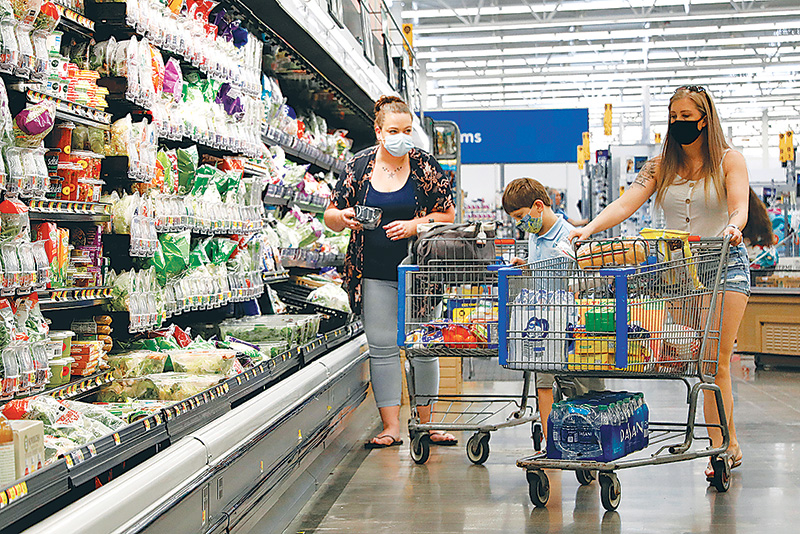
Shoppers are seen wearing masks while shopping at a store in Pennsylvania, US. REUTERS

FRANKFURT (Germany),
People in China are back to buying German luxury cars. Europe’s assembly lines are accelerating. Now the global economy is waiting for the United States to get its coronavirus outbreak under control and boost the recovery, but there’s little sign of that.
The United States’ fumbling response to the pandemic is casting doubt on its economic prospects and making it one of the chief risks to a global rebound.
After springtime restrictions, many US states prematurely declared victory over the virus and began to reopen their economies, leading to a resurgence in Covid-19 cases. Confirmed infections are rising in most states, and many businesses have had to scale back or even cancel plans to reopen. And while it does not dominate global commerce like it did 20 years ago, America is still by far the biggest economy—accounting for 22 percent of total economic output, versus 14 percent for number 2 China, according to the World Bank.
That makes its handling of the pandemic and its economy crucial for companies like Officina del Poggio, a producer of luxury handbags in Bologna, Italy, that sells 60 percent its vintage motorcycle-inspired satchels to US customers.
Company owner Allison Hoeltzel Savini said retail sales dried up during the spring. She had already suffered a blow when Barneys, her main client, went bankrupt and didn’t pay for the spring-summer collection that had shipped.
Hoeltzel Savini said she has had to hold off on new hires, and hasn’t been able to do her usual sales trip to the United States. She got some orders by trying to find consumers directly through newsletters and social media, but remains cautious about the future, as she sees the US market for her goods continuing to slow down.
“I am really concerned for the next season, if wholesale clients will be placing orders,’’ she said.
Same for of Shenzhen Aung Crown Industrial Ltd, which makes baseball hats. The company usually sells about 60 percent of its output to the United States. “We can’t afford to lose the US market,” said general manager Kailyn Weng. “It is difficult to find other markets that could digest such a great amount of high-quality hats...We have no alternative but to focus on the US market.”
The United States is unlikely to pull the world economy out of its rut as it did in past downturns such as after the Asian financial crisis of the late 1990s.
“The US won’t be the locomotive,’’ said Nariman Behravesh, chief economist at IHS Markit.
The American economy shrank at an annual pace of 32.9 percent from April through June, by far the worst quarter on record. The numbers are expected to bounce back strongly in the second half but to leave the US economy well short of where it stood at the beginning of 2020.
The European Union, which has reduced the number of contagions more effectively than the US, shrank at a similar pace but is forecast to grow more quickly next year and government support for workers has contained the rise in unemployment for now. China, meanwhile, was the first major economy to resume growth since the pandemic struck, recording a 3.2 percent expansion during the April-June period from the quarter before.

MONEY

F1Soft bags South East Asia Business award

Briefing
- Post Report

KATHMANDU: F1Soft International, a Nepal based software company, has been awarded the South East Business Award by APAC Insider, a leading business magazine in UK. This is the first time that a Nepalese company has won the coveted award, states the press release issued by the company. The award is based on the impact created by businesses in South Asia. Biswas Dhakal, President of F1Soft Group of Companies shared, “We are proud to be recognised internationally among South Asia’s prestigious companies for our efforts. The world needs more innovative companies especially during the coronavirus pandemic”. F1Soft developed popular mobile payment and mobile banking solutions such as eSewa and Fonepay.

Page 6
WORLD

Global coronavirus cases top 20m as Russia registers vaccine

Number of new cases continues to rise in India, hitting an average of 58,768 a day.
- ASSOCIATED PRESS
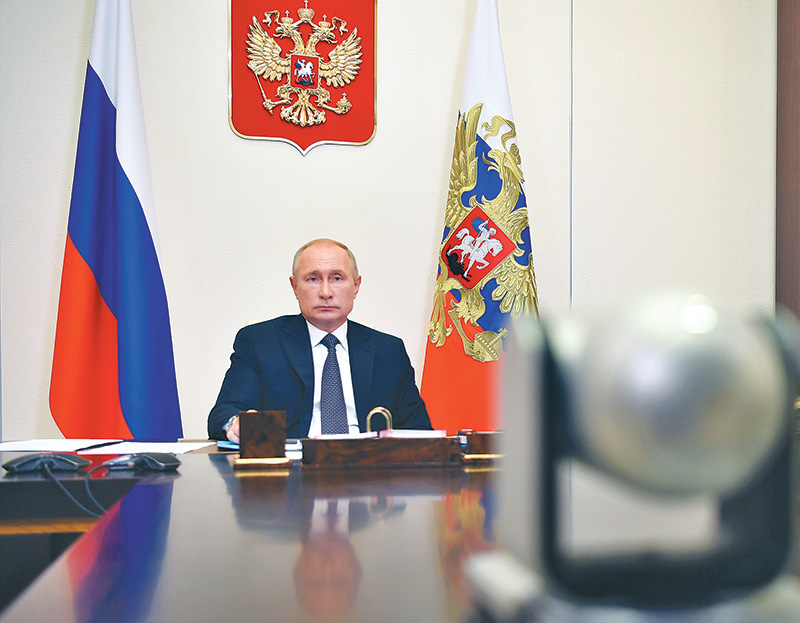
Russian President Vladimir Putin attends a cabinet meeting at the Novo-Ogaryovo residence outside Moscow, on Tuesday. AP/RSS

Rome,
The number of confirmed coronavirus cases worldwide topped 20 million, more than half of them from the United States, India and Brazil, as Russia on Tuesday became the first country to register a vaccine against the virus.
Russian President Vladimir Putin announced the registration at a government meeting and added that one of his two adult daughters had already been inoculated. “She’s feeling well and has high number of antibodies,” he said.
Russia has reported more than 890,000 cases, the fourth-most in the world, according to a Johns Hopkins University tally that also showed total confirmed cases globally surpassing 20 million.
It took six months or so to get to 10 million cases after the virus first appeared in central China late last year. It took just over six weeks for that number to double.
An AP analysis of data through Aug 9 showed the US, India and Brazil together accounted for nearly two-thirds of all reported infections since the world hit 15 million coronavirus cases on July 22.
Health officials believe the actual number of people infected with the virus is much higher than that tally kept by Johns Hopkins University, given testing limitations and that as many as 40 percent of those with the virus show no symptoms.
In Europe, countries that appeared to have gotten their outbreaks under control during nationwide lockdowns and lifted many public restrictions worked to prevent a resurgence of the virus. Finland joined France and Germany in announcing it would test travellers from at-risk countries upon arrival.
Spain, which along with Italy was hardest hit when the virus first exploded on the continent, now has the most confirmed cases in western Europe at nearly 323,000. The number of new cases have risen steadily in Spain since its strict, three-month lockdown ended on June 21, reaching 1,486 on Monday.
In Greece, which imposed strict lockdown measures early and kept its reported cases low during the height of the European epidemic, the government announced new measures Monday to prevent an outbreak. It ordered bars, restaurants and cafes in several regions to shut between midnight and 7 am
Outside Europe, infection rates are exponentially higher.
The number of new cases reported daily continues to rise in India, hitting a rolling seven-day average of 58,768. In the US, which so far has more than 5 million confirmed cases, the daily average has decreased since July 22nd, but remains high at over 53,000. South Africa has more than a half-million cases. In the country with the world’s largest number of HIV-positive people, the virus has disrupted the supply of antiretroviral drugs that a United Nations agency says could lead to 500,000 additional AIDS-related deaths.
In the 45 days it took reported coronavirus cases worldwide to double to 20 million, the number of reported virus deaths climbed to 736,191 from 499,506, according to the Johns Hopkins count, an average of more than 5,200 a day.
About one-fifth of reported deaths, or more than 163,000, have been in the US, the most in the world.
New Zealand Prime Minister Jacinda Ardern said Tuesday that authorities found four cases of the coronavirus in one Auckland household from an unknown source, the first cases of local transmission in the country in 102 days.
Caseloads are still rising quickly in many other countries, including Indonesia and Japan.
In Mexico, President Andrés Manuel López Obrador, like Brazil’s President Jair Bolsonaro and US President Donald Trump, seldom wears a mask and has resisted calls for a strict lockdown, saying Mexicans should be convinced to observe social distancing, not forced to do so by police or fines.

WORLD

Explainer: When will a Covid-19 vaccine be ready?

- REUTERS
A woman holds a small bottle labelled with a “Vaccine Covid-19” sticker and a medical syringe. Reuters

Around the world, politicians, drugmakers and regulators offer contradictory outlooks on when a Covid-19 vaccine will be ready. Much depends on what ‘ready’ means and for what group of people. Some key questions around the timeline are:

When will we know a vaccine works?
More than half a dozen drugmakers around the world are conducting advanced clinical trials, each with tens of thousands of participants, and several expect to know if their Covid-19 vaccines work and are safe by the end of this year.
The most optimistic timeline comes from AstraZeneca Plc, which is running a study in Britain that it says could be completed as early as August. Dr Anthony Fauci, the top US infectious diseases expert, told Reuters last week that a trial by Moderna Inc could produce decisive results by November or December. Others will come later, some much later.
Some experts are sceptical that the trials, which must study potential side effects on different types of people, can be completed that quickly. Peter Hotez, dean of the National School of Tropical Medicine at Baylor College of Medicine in Texas, says that collecting data to prove a vaccine is safe for the world could take until mid-2021.


When will the first shots be ready?
Several drugmakers are building manufacturing capacity so they can begin production as soon as vaccines are approved by regulators. Some efforts are backed by a US government program called ‘Operation Warp Speed’.
Fauci told Reuters he expects “tens of millions” of doses to be available in early 2021, and that by the end of the year there could be more than a billion. That contrasts with more optimistic guidance from US President Donald Trump, who said a vaccine could be ready before the Nov 3 presidential election, though he did not define ‘ready’. Several companies, including Moderna, AstraZeneca, and Pfizer Inc, say they each expect to make more than 1 billion doses next year. That could mean several billion available by the end of 2021.


When can I get it?
First supplies late this year or early next would likely go to those in rich nations who are deemed by governments to work in essential industries or who are at greatest risk from the virus. That is likely to include people with issues such as diabetes, healthcare workers, and members of the military.
Countries including Canada, Japan, Britain, and the US have locked in deals putting their citizens first in line for inoculations as they become broadly available during 2021.
Most vaccines are being tested as two shots given a month apart, giving full strength protection only after the second shot is administered.

When will the world be inoculated?
The wait time for Covid-19 vaccines will likely be longer for people in developing countries, which don’t have early supply deals. Some may struggle to pay for vaccines that could cost upwards of $40 per person.
“I am worried that Operation Warp Speed vaccines will not reach developing countries any time soon,” Hotez said. Gavi, a vaccine alliance for developing countries, aims to secure
2 billion doses of vaccine in 2021.

WORLD

Indian watchdog to check heavy rain-hit airports

- REUTERS

New Delhi,
India’s air safety regulator plans to conduct special audits of airports across the country affected by heavy rain, the watchdog’s chief told Reuters, days after an air crash killed 18 people and raised questions about safety.
An Air India Express plane with 190 people on board, overshot the rain-soaked runway at an airport near the southern city of Kozhikode on Friday. The Boeing 737 landed in tailwind, skid off the runway and broke in half.
“We will conduct additional checks at major, busy airports across India that are affected by the monsoon rains,” Arun Kumar, head of the Directorate General of Civil Aviation (DGCA) said in an interview late on Monday.
“We will review everything - the condition of the runway, its incline, the lighting as well as drainage.”
Kumar said the special audit was over and above the DGCA’s routine checks and could cover a dozen airports including those in Chennai, Kochi, Trivandrum as well as Mumbai, all of which get heavy annual rains.
Air India Express is the low cost arm of state carrier Air India. The flight was repatriating Indians stranded in Dubai due to the novel coronavirus pandemic. The black boxes have been recovered and their data is being examined.
India’s Aircraft Accident Investigation Bureau is leading the probe into the crash. Boeing and the US National Transportation Safety Board are also taking part in the effort, Kumar said.
“Once the findings are finalised, and if something is amiss we will take action to rectify it,” he said.
The crash was the worst in India in a decade, and the second fatal accident on a “table-top” runway which is typically found in high-altitude areas.
Table-top runways are built by excavating the peaks of hills and have steep drops at one or both ends, increasing the danger if pilots under- or over-shoot their approach. At Calicut airport, where the plane crashed on Friday, the pilot landed a third of the way along the runway, Kumar said on Sunday, leaving less room to bring the plane to a halt.
Airports with table-top runways are subject to the same rigorous regulatory requirements and are periodically audited for safety, Kumar said.
In 2010, an Air India Express plane overshot a similar runway in the southern city of Mangalore. It fell down a hillside and burst into flames, killing 158 people.
A government-led committee looking into that crash had suggested installing an Engineered Material Arresting System (EMAS) on table-top airports. EMAS is a special surface usually installed at the end of the runway to quickly stop an aircraft.

WORLD

Coronavirus found on frozen seafood in China

Briefing
- AGENCIES

BEIJING: Authorities in China have found the novel coronavirus on the packaging of imported frozen seafood that arrived from the port city of Dalian, which recently battled a surge of cases, a local government said on Tuesday. The virus was found on the outer packaging of frozen seafood bought by three companies in Yantai, a port city in eastern Shandong province. The Yantai city government said in a statement the seafood was from an imported shipment that landed at Dalian but did not say where it originated. In July, customs officers in Dalian, a major port in the northeastern province of Liaoning, found the coronavirus in the packaging of frozen shrimps imported from Ecuador, and China then suspended imports from three Ecuadorean shrimp producers. The novel coronavirus is believed to have emerged in a market that sold seafood and wildlife in the central Chinese city of Wuhan late last year.

WORLD

Hong Kongers rush to buy pro-democracy newspaper

Briefing
- AGENCIES

HONG KONG: Hong Kongers rushed to buy copies of pro-democracy newspaper Apple Daily on Tuesday in a show of support for its owner, who was arrested a day earlier as police rounded up critics of China. In one of the most dramatic days of the crackdown, media tycoon Jimmy Lai was among 10 people detained under the new law on Monday as around 200 police officers searched the newsroom of his tabloid, which is unapologetically critical of Beijing. In a show of solidarity for Lai, people in the city rushed to buy Tuesday’s Apple Daily, with the newspaper saying it had upped its print run to 550,000 from its normal circulation of 70,000.

WORLD

Singapore crushes ivory

Briefing
- AGENCIES

SINGAPORE: Singapore started crushing nine tonnes worth of elephant ivory on Tuesday, in what authorities said was the biggest such event globally in recent years and signalled its fight against illegal trade in wildlife. The city-state, a nautical way point in shipments of banned animal products between Africa and Asia, is destroying tusks worth an estimated $13 million, including a record 8.8 tonne seizure last year which authorities said came from nearly 300 African elephants. In the event, streamed online, workers in hard hats were seen emptying trolley-loads of tusks into a skip where they were then pulverised by an industrial rock crusher.

Page 7
MEDLEY

Horoscope

ARIES (March 21-April 19) *****
Whether you do it through the food you eat, the music you listen to, or the places you visit, immersing yourself in something new will invigorate you and fill you with an incredible sense that anything is possible.


TAURUS (April 20-May 20) ***
You don’t have to prove yourself to anyone. If someone is putting pressure on you, tell them to mind their own business. You know what is best for you right now, and you just have to keep doing it at your own pace!


GEMINI (May 21-June 21) ***
Start relying on your dreams for insight. These images hold valuable clues about what’s going on with a friend. You’ve been a bit suspicious of this person for a while, but you haven’t been able to put your finger on exactly what the problem is.


CANCER (June 22-July 22) ***
You could be in the middle of all the action today, because no one else will be up to the task like you are! You can’t wait to be the boss. Your quick mind and boundless energy impress people more than you realise.


LEO (July 23-August 22) ****
You enjoy learning just as much as the next person, but today when someone talks down to you, you’re not going to have too much patience for it. Don’t waste time humouring someone who thinks they can teach you something when they can’t.


VIRGO (August 23-September 22) ****
Avoid combative people. The last thing you need right now is to deal with negative energy. You’ve been in too good a mood for too long, and there’s no need to disrupt your positive vibe unnecessarily. It’s best that way.


LIBRA (September 23-October 22) ***
Get more aggressive with people who are dragging their feet today, especially where business is concerned. You’ve been held back by other people for far too long, and there’s no reason you should have to take it any longer!


SCORPIO (October 23-November 21) *****
Your heart is open to new beginnings, and you’re ready to toss aside old habits and old ideas. Today, moving forward has never felt so good, and it has never been more possible. It’s a good day to start anything!


SAGITTARIUS (November 22-December 21) ***
Young people may not know the ways of the world, but they do understand that anything is possible. This is the kind of optimism you should expose yourself to, so try to spend more time interacting with children or teenagers if you can.


CAPRICORN (December 22-January 19) ***
Everyone makes mistakes, so if someone you admire has let you down with their recent behavior, try not to be too tough on them. Remember the times you’ve let people down and realize that no one is perfect.


AQUARIUS (January 20-February 18) ****
If you’re feeling restricted, remember that you have control over your destiny. No one else does, no matter how influential they might be. Freedom isn’t something that someone can give to you; it’s something you have to take for yourself.


PISCES (February 19-March 20) ***
You can’t let someone else’s bad mood turn your sunny outlook cloudy today. As much as you’d like to sit with a blue friend and commiserate over life’s troubles, today you need to stay focused and on your own path.

SPORTS

Fernandes penalty fires Man United past Copenhagen

The English giants will meet Sevilla or Wolves in the semi-final on Sunday. Lukaku goal secures Inter Milan a 2-1 win over Bayer Leverkusen.
- AGENCE FRANCE-PRESSE
Manchester United’s Jesse Lingard (centre) in action against FC Copenhagen’s Robert Mudrazija (left) and Zeca during their Europa Leaguematch in Cologne, Germany, on Monday. All Europa League matches are being played behind closed doors in Germany.  AP/RSS

COLOGNE,
Bruno Fernandes scored a penalty in extra time as Manchester United scraped past FC Copenhagen 1-0 on Monday in the quarter-finals of the Europa League, reshaped into an eight-team straight knockout tournament in Germany due to the coronavirus pandemic.
The Portugal international notched his competition-best seventh goal of the season as United set up a semi-final clash against Sevilla or Wolves, joining Inter Milan in the last four following the Italian side’s 2-1 victory over Bayer Leverkusen in Dusseldorf.
“Third time this season we’ve been to the semis, every competition we’ve been in. Delighted we’ve gone through, we deserved to win tonight,” United manager Ole Gunnar Solskjaer told BT Sport. “Their keeper was fantastic, unbelievable. We hit the post a few times, there were a couple of VAR decisions against us. It could have been one of those nights that you end up with penalty shoot outs. They made it hard for us.”
All games from the quarter-finals onwards in this season’s Europa League are being played behind closed doors as one-off ties across four venues—Cologne, Duisburg, Dusseldorf and Gelsenkirchen—in a unique format following a five-month interruption.
Solskjaer recalled Fernandes, Paul Pogba, Marcus Rashford, Mason Greenwood and Anthony Martial but the 2017 competition winners struggled early, and 18-year-old Copenhagen forward Mohamed Daramy was twice involved as the Danish underdogs threatened a creaking United backline. Eric Bailly intervened just as Daramy attempted to stab home a bouncing cross, and the Ivorian defender was then played into trouble by Fred with Jens Stage’s subsequent effort blocked.
Rashford finally tested Karl-Johan Johnsson just before the interval with a long-range shot—the first of a multitude of saves for Copenhagen’s outstanding Swedish goalkeeper. Greenwood looked to have put United ahead as he drilled in via the far post moments later only for the
teenager to be ruled offside following a VAR review.
He again went close early in the second half when he slammed against the upright, with Fernandes promptly smacking the opposite post with a dipping 20-yard drive. The Portugal international, who scored five times in the group stage with Sporting, stung the palms of Johnsson with another hit from distance—shortly after Aaron Wan-Bissaka made a desperation block to thwart Bryan Oviedo after a mesmerising dribble from Rasmus Falk.
Appearing in their first European quarter-final, and the first Danish club to reach this stage since 1997, Copenhagen continued to frustrate United as they sought a repeat of their 1-0 win when the clubs last met in the Champions League group stage in 2006. Martial nearly won the game in normal time but again a sprawling Johnsson tipped away his curling attempt that appeared destined for the top corner.
The France striker was once more repelled by Johnsson at the start of extra time, but Martial won a penalty as United kept the attack alive and the striker was upended by Andreas Bjelland. Fernandes blasted home from the spot on 95 minutes but Solskjaer’s team were left to sweat until the end as Johnsson pulled off sensational stops from the Portuguese and substitute Juan Mata, with Victor Lindelof the third United player to strike the post.
United though ultimately ensured their 2019-20 campaign will extend into a second year, having started the season 365 days ago with a 4-0 Premier League win over Chelsea. Awaiting them on Sunday will be Sevilla—who have won the Europa League and its precursor, the UEFA Cup, a record five times—or domestic rivals Wolves.
Former United striker Romelu Lukaku grabbed the decisive goal for Antonio Conte’s Inter against Leverkusen as the Serie A runners-up moved a step closer to adding to their titles from 1991, 1994 and 1998. Inter struck first as Nicolo Barella guided in from the edge of the area on 15 minutes, with Lukaku bundling in a second six minutes later.
Kai Havertz reduced the deficit in possibly his final game for Leverkusen on 25 minutes after exchanging passes with fellow Germany international Kevin Volland, but Inter held on to seal their place against Shakhtar Donetsk or Basel in next week’s semi-final.
“The defence did a tremendous job again tonight. We are growing but we have to learn to kill games off when we have the chances to do it, and we didn’t tonight,” said Lukaku. “Now we have time to recover physically and prepare for another great game. We will have to be ready.”

SPORTS

Misbah adamant Pakistan can fight back

- AGENCE FRANCE-PRESSE

MANCHESTER,
Pakistan coach Misbah-ul-Haq has insisted his side can “fight back” from their agonising defeat by England in time for the second Test starting on Thursday.
The tourists, following six months on the sidelines because of the coronavirus, were on course to go 1-0 up in the three-match series after dominating the majority of the first Test at Old Trafford. But Pakistan were undone by a stand of 139 between Jos Buttler (75) and player-of-the-match Chris Woakes, who guided the hosts to a three-wicket win with 84 not out on Saturday. Having played so well in a losing cause, fears have been expressed over Pakistan’s morale.
Misbah, however, in a column published on Pakistan Cricket Board’s website, wrote. “It’s easy to curse yourself when you’ve lost. But, we should remember that we were right on top until pretty much the last session of the game. We will do our best to come back in this series, which I believe this team is capable of doing.”
Pakistan opener Shan Masood made a Test-best 156 at Old Trafford, while leg-spinner Yasir Shah took eight wickets in the match. Yet Pakistan failed to put the game completely beyond England’s reach by being dismissed for just 169 in their second innings before, by Misbah’s own admission, a degree of “panic” set in during Buttler and Woakes’ match-changing partnership.
“Sure, we need to improve 10 to 15 percent and deal with pressure situations a little better but we shouldn’t be mentally down,” said Misbah.
“There is disappointment, of course, but we must not keep that feeling in our minds otherwise it will be difficult to come back but the team believes we can fight back,” added the former captain.
Misbah paid tribute to the way Buttler and Woakes “took the game away from us,” but accepted a Pakistan side led by skipper Azhar Ali might have done more to stop them in their tracks.
“They counter-attacked well and there was a bit of inexperience—and even panic—in the team that cost us,” he said. “We still need to improve, of course, but overall we fought really well against a top team in our first international fixture for six months.”
Pakistan have not lost a Test series against England for 10 years.

SPORTS

New Zealand confirms cricket tours

- AGENCE FRANCE-PRESSE

WELLINGTON,
New Zealand Cricket said Tuesday that Pakistan, Australia, Bangladesh and the West Indies had all confirmed they will tour during the upcoming home season, despite the coronavirus pandemic.
New Zealand Cricket chief executive David White said managed isolation arrangements for the visiting teams were still being worked out with officials in Wellington, but the tours would proceed. “I was just on the phone to the West Indies, they’re confirmed, Pakistan is confirmed, Australia and Bangladesh, so (there will be) 37 days of international cricket,” he told reporters.
White declined to release schedules of the tours until details had been worked out. He said arrangements were likely to follow the model of bio-secure “bubbles” adopted in England for the recent West Indies tour—when teams’ accommodation and training facilities were located at the match venue to isolate players. “We’re working through that with the government agencies at the moment, a similar concept... the agencies have been really supportive, the government’s been fantastic,” he said.
All international arrivals into New Zealand are currently required to spend at least 14 days in quarantine. But New Zealanders domestically are enjoying a near-normal, pre-coronavirus lifestyle with no social distancing and spectators allowed at sports and cultural events. The country has recorded only 22 coronavirus deaths in a population of five million.

SPORTS

Cash-rich IPL gets government clearance for UAE edition

Briefing
- AGENCIES

NEW DELHI: The Indian Premier League has received final clearance from the country’s government to host this year’s edition in the United Arab Emirates, its chairman told AFP on Monday. Due to the rising coronavirus cases in India, the 13th edition of the Twenty20 tournament is scheduled to take place between September 19 and November 10 in Sharjah, Abu Dhabi and Dubai. The Board of Control for Cricket in India confirmed this month that the league will be shifted outside its home country, and IPL chief Brijesh Patel said he had received the official confirmation from the government. The world’s richest cricket league will be played outside India for third time after being held in South Africa in 2009 and the UAE in 2014 because it clashed with national elections. The event normally starts in March, but was repeatedly postponed this year.

SPORTS

Valencia confirm two positive tests for coronavirus

Briefing
- AGENCIES

MADRID: Valencia have been hit by two positive cases for coronavirus, the La Liga club announced on Tuesday, a day after players and staff returned for pre-season. The identities of the two individuals have been kept anonymous. They are both isolating at home while the club has notified the Spanish health authorities. It continues a rise in the number of confirmed infections among La Liga teams after Atletico Madrid’s Sime Vrsaljko and Angel Correa tested positive on Saturday. Real Madrid’s Mariano Diaz and Sevilla’s Nemanja Gudelj have also been infected in the last two weeks. La Liga completed the 2019/20 season on July 19 and the plan is for the 2020/21 campaign to begin on September 12.

SPORTS

Scottish season under threat due to quarantine breach

Briefing
- AGENCIES

GLASGOW: The Scottish government has threatened to call a halt to the new Premiership season due to ano-ther breach of the strict coronavirus quarantine rules. Celtic’s Belgian defender Boli Bolingoli said he had not observed quarantine protocols after a trip to Spain. Anyone returning to Scotland from Spain must spend two weeks in quarantine. Bolingoli played in the Scottish champions’ 1-1 draw with Kilmarnock on Sunday. He has apologised for his behaviour and Celtic have launched an investigation. The Scottish government is already furious at eight Aberdeen players who visiting a bar last week. Two of them tested positive, forcing the postponement of last Saturday’s Premiership game with St Johnstone. The government said if they felt protocol had been broken, then they could press the pause button on the season.

Page 8
CULTURE & LIFESTYLE

How, in the name of entertainment journalism, actors are still getting objectified and vilified

The latest episode of Rajatpat, hosted by Prakash Subedi, exposes how much of mainstream media still commodifies women and how female actors are still viewed as objects.
- ANKIT KHADGI
A screenshot of Prakash Subedi speaking in the episode of Rajatpat which is currently
trending on YouTube. Screengrab via YouTube

Kathmandu,
The third episode of the latest edition of Rajatpat, a programme which film journalist Prakash Subedi hosts, began with him sharing an account of a female actor’s struggle in Bollywood, and talked about how fickle fame is—particularly for the women in the entertainment industry.
But his intention of bringing up this issue at the show, which currently airs on AP1 channel, wasn’t to highlight how fragile the film business is—in India or in Nepal—nor was it to highlight how it affects the mental state of the actors.
Rather, with pride, he used a condescending Hindi allegory, “Do din ki chandni… phir andheri raat,” which he himself translated to Nepali as “Dui din ko chamak dhamak, feri aausi ko raat (or ‘Two days of good moonlit days then again night of darkness’, in English),” to say that female actors shouldn’t be boastful about their success as they can be replaceable quickly.  
However, that wasn’t the only problematic statement he made in the episode, which is trending on YouTube.
In the video, he is seen making a personal attack on an unnamed actor by making vicious body-shaming remarks.
The video, which was uploaded on August 6, has been lambasted on social media for the anchor’s use of sexist language as well as how, in the name of journalism, entertainment journalists cross the boundaries of ethics and morality when it comes to interviewing and reporting female actors from the Nepali movie industry.
Reeccha Sharma, a popular film actor, who also expressed her discontent through social media, says that the remarks which Subedi made were “disgusting and awful”.
“How could someone, who calls himself a veteran journalist, make such a generalisation that every female actor will have a dark ending?” Sharma told the Post. “Likewise, body shaming an actor that too on national television is just disgraceful.”
Although not taken as a serious beat, entertainment journalism in Nepal in recent years has seen a rise due to an increasing interest among the audience to know about the actors and makers behind their favourite movies.
However, there have been regular incidents that have raised questions regarding the integrity and ethical considerations of entertainment journalists, who in the name of journalism have been objectifying, and vilifying female actors as well using sexist and misogynistic language and words for them.
Shukrabar, a weekly tabloid, on August 7, published a condescending and sexist ‘article’ on how actor Priyanka Karki has changed into a ‘sanskari’ woman after her marriage. Titled Sanskari Priyanka, the piece states that after marriage Karki has now become a ‘cultured’ woman, as she doesn’t post pictures in short dresses like she used to do before and if  she keeps on following this path in her life, she is bound to be a daughter-in-law who can manage both her house and work.
“For a national weekly, why was such a story important? Was it even news?” says Karki, who’s one of the most popular Nepali actors of recent times. According to Karki, making ‘news’ out of something that did not have any newsworthiness was wrong. And that was not all that was wrong with the piece, she says.
“Through the news article they have promoted a stereotypical mindset that supports that one is qualified to be a good woman only when they stay at home and perform household chores,” says Karki. “Likewise, through the article, they have also propagated the problematic mindset of setting the standard of morality based on one’s clothing.”
According to Keki Adhikari, a popular actor, entertainment journalism in Nepal has been running exactly this way only—with reporters writing sensational articles about female actors, denigrating their hard work and contribution rather than taking them seriously or involving them in constructive interviews and discussions.
In 2002, actor Shrisha Karki committed suicide after Jana Astha weekly published her personal photos, breaching her privacy and questioning her morality and character. The incident raised a hullabaloo in Nepali society, with them condemning the action of the paper, which in the name of journalism had crossed ethical and moral boundaries.
And while one would think things have changed since then, actors the Post spoke to say things are more or less the same: women working in the film and entertainment business are still seen as objects whose talent have no value.
“In my career that spans for 10 years in the Nepali film industry, there have been rare instances when I have been asked insightful questions about my craft,” says Adhikari.
“Otherwise, most of the questions are sensational which often question my position in the industry as well as talk about issues which have nothing to do with her professional life in the interviews.”
In a press conference of her previous movie, Cha Maya Chapakai, Adhikari shared that a reporter had asked how she got the movie in the first place—questioning her credibility and work as an actor.
“I don’t think male actors are asked by reporters how they get their roles every time,” says Adhikari. “It was my 24th movie and I have been working for a decade now,  yet people do not consider my talent and hard work, as they believe that female actors only get opportunities because of nepotism or in exchange for favours.”
Another actor, Reecha Sharma, has also gone through something similar. In 2015, in an interview with Rishi Dhimala, she was constantly asked about her personal life. Dhamala, in his show ‘Dhamala ko Hamala’, repeatedly asked Sharma if she had been involved in any physical relationship with her previous partner. His questions were persistent, even though Sharma had taken a strong stand and had said that she would not be answering any of the questions that made her uncomfortable.
Likewise, last year, in an interview with actor Neeruta Singh, titled ‘Neeruta Singh ko prem, sex ra romance ko bhayo Khualasa’ (or Neeruta Singh’s love, sex and romance exposed), Dhamala has pestered Singh on whether she was a virgin or not. A question that has absolutely no ties with the actor’s work.
Likewise, in the print media, Sapathik and Shukrabar weekly have, for years, been publishing condescending articles on female actors, focusing more on their personal lives than talking about their careers. [Disclaimer: Saptahik used to be published by Kantipur Media Group, which also publishes this paper. The paper’s publication has been suspended for now.]
According to Lina Gurung, who works on gender sensitivity issues conducts research on gender at Kathmandu University School of Education, the male gaze and patriarchal mindset is strongly embedded, especially in the media sector, resulting in such reporting.  
“Women, especially public figures, are still objectified by men in the decision-making positions, who are mostly concerned about their beauty and appearance,” says Gurung.
However, Gurung believes that it’s also because of the fragile ego of men, especially in power positions, who get intimidated by women whenever there is a paradigm shift in power, leading them to denigrate them, so they can make them submissive to the usual hierarchical structure. “If women come forward
and are vocal as well, the fragile ego of men gets hurt, restoring them to humiliating them so they can intimidate the women, and maintain their power over them,” she says.
But according to the actors the Post spoke to the onus should not be only laid on journalists, as they strongly believe the audience are equally enjoying reading/watching such stories, encouraging and making entertainment journalists entitled to write sensational stories, they say.
“Society still can’t accept that women can be successful on their own. They will say luck is favouring a female actor or that she is there in the industry because of someone’s support,” says Adhikari. “That’s why entertainment journalists write sensational stories about us [female actors] as society enjoys reading such news.”
Sharma believes that the mushrooming of YouTube ‘journalists’ is also a prominent factor for such sensationalised news cropping up. “We are so reachable for interviews that the journalists take us and our work for granted. For views, they would put clickbait titles and think that it’s okay to ask anything,” says Sharma.
Sharma’s views echo reality, as there are indeed many videos on YouTube with sensational and clickbait titles which receive thousands of views.
In response to the backlash he faced, Subedi issued an apology video, saying that his intention of passing such remarks wasn’t to hurt the sentiments of anyone, and justified the body-shaming remark was used in a friendly manner and not meant to offend the person.
But, according to Gurung, such stereotypical and problematic coverage can lead to adverse ripple effects. “Not only does it demotivate women so that they quit their profession, but it can affect their personal life as well,” says Gurung.
For female actors, who have been working hard for years perfecting their art, such vilifying and condescending remarks is something they can’t ignore now, they say.
Although, Subedi, didn’t name the actor on whom he passed the vicious body-shaming remarks on his programme, Pooja Sharma, who earlier had given an interview to him, and also had requested to edit the final cut, said through social media that she has filed a complaint against the film journalist with the Film Artist Association of Nepal for defamation.
Likewise, Karki is also planning to file a complaint against Shukrabar, the weekly, at the Nepal Press Council.
“It is high time we raised such issues. For the past 10 years, baseless rumours have been written about me. But now we need to boycott these people who in the name of journalism are bullying us,” says Karki, who along with other actors are planning to set a proper guideline and conditions for journalists before they interview them.
For actor Ayushman Desraj Shrestha Joshi, the issue which the female actors are raising about unethical journalism shouldn’t be viewed as a ‘women’ issue only.
It’s about voicing the need to respect people and break the male chauvinistic attitude that the society is plagued with, he says.
“What the journalists are writing in the name of journalism is highly ridiculous and disgusting,” says Joshi. “The writers and editors should be taught about the power and responsibility they have as whatever is being said by them are heard and perceived by the public.”

CULTURE & LIFESTYLE

Jolie seeks removal of private judge in Pitt divorce case

The actress is asking the judge be disqualified from the case because of insufficient disclosures of his business relationships with one of Pitt’s attorneys.
- Andrew Dalton
Angelina Jolie (left) and Brad Pitt were a couple for 12 years. AP/RSS

Los Angeles,
Angelina Jolie asked Monday that the private judge overseeing her divorce from Brad Pitt be disqualified from the case because of insufficient disclosures of his business relationships with one of Pitt’s attorneys.
In a filing in Los Angeles Superior Court, Jolie argues that Judge John W. Ouderkirk should be taken off the divorce case that she filed in 2016 because he was too late and not forthcoming enough about other cases he was hired for involving Pitt attorney Anne C Kiley.
It says that during the Jolie-Pitt proceedings Ouderkirk has “failed to disclose the cases that demonstrated the current, ongoing, repeat-customer relationship between the judge and Respondent’s counsel.”
It goes on to say that Pitt’s attorney “actively advocated for Judge Ouderkirk’s financial interests in moving—over the opposing party’s opposition—to have his appointment [and his ability to continue to receive fees] extended in a high profile case.”
An email to Kiley and Pitt’s lead attorney Lance Spiegel seeking comment was not returned, nor was an email seeking comment from Ouderkirk.
Pitt and Jolie, like other high-profile couples, are paying for a private judge in their divorce case to keep many of its filings and the personal and financial details within them sealed, though some legal moves must be made within standard court procedure.
Jolie’s filing emphasizes that a private judge must follow the same rules of disclosure and conflict of interest that other judges must.
The filing says “it doesn’t matter if Judge Ouderkirk is actually biased. Under California law disqualification is required so long as a person aware of the facts ‘might reasonably entertain a doubt’ about Judge Ouderkirk’s ability to remain impartial.”
Jolie’s attorneys have sought in private proceedings to have Ouderkirk disqualify himself, but the filing says Pitt’s side has insisted on keeping him.
“As is set forth in the filing, all my client is asking for is a fair trial based on facts, with no special favors extended to either side,” Jolie’s attorney Samantha Bley DeJean said in an email to The Associated Press. “The only way litigants can trust the process is for everyone involved to ensure that there is transparency and impartiality.”
Pitt and Jolie were declared divorced, and the Pitt was dropped from her name, in April of 2019, after their lawyers asked for a bifurcated judgment, meaning that two married people can be declared single while other issues, including finances and child custody, remain.
Because most of the documents have been sealed, it is not clear what issues remain unresolved, but Jolie filed papers in 2018 saying Pitt wasn’t paying sufficient child support, which his attorneys disputed, calling the filing an effort to manipulate media coverage of the split.
Jolie, 44, and Pitt, 56, were a couple for 12 years and married for two when Jolie filed for divorce in 2016. They have six children.
—Associated Press

CULTURE & LIFESTYLE

Politically charged ‘black-ish’ episode gets belated home

- LYNN ELBER

Los Angeles,
A politically charged episode of “black-ish” from 2017 that was shelved by ABC has found a home on Hulu, a corporate sibling of the Disney-owned broadcast network.
“I cannot wait for everyone to finally see the episode for themselves,” series creator Kenya Barris posted Monday on social media.
Barris said he hopes the half-hour episode, titled “Please Baby Please,” fulfills its original intent: to inspire vital dialogue about “where we want our country to go moving forward and, most importantly, how we get there together.”
He asked producer Walt Disney Television to reconsider making the episode available and, in recognition of “the importance of this moment, they listened and agreed,” he said.
The network and a representative for Barris did not respond to requests for comment Monday.
The change of heart comes amid ongoing protests and calls for broad social change prompted by the death in May of George Floyd, a Black man, while in Minneapolis police custody.
When ABC decided to pull the episode from the 2017-18 season and put it on ice, the network lauded “black-ish” for its deft examination of “delicate social issues” in an entertaining and educational manner. But “creative differences” over the episode couldn’t be resolved, ABC said.
The Emmy-nominated series has tackled thorny social issues during its ABC run, which began in 2014.
That a streaming platform was deemed suitable for “Please Baby Please” reflects the creative freedom producers can gain outside the traditional confines of broadcasting.
Barris remains executive producer of “black-ish” (and its spin-offs, ABC’s “mixed-ish” and Freeform’s “grown-ish”). But he is making new shows, including the edgy family comedy “#BlackAF,” as part of a production deal with streamer Netflix.
“Please Baby Please” joins the “black-ish” library of past seasons on Hulu.
The episode revolves around a sleepless night in the household of Dre and Rainbow Johnson (Anthony Anderson, Tracee Ellis Ross). To calm his infant son during a storm, Dre begins by reading a children’s book—the Spike Lee-Tonya Lewis Lee work of the episode’s title—then shares his own anxieties.
As Dre offers up an improvised fable, it’s the actions of the then-fledgling Trump administration that are identified as part of his unease. His monologue includes a thinly veiled reference to “the shady king.”
The episode widens out to look at deep social divisions that Dre says followed the election of America’s first Black president, Barack Obama, and the eye-opening revelation that “not everyone’s a fan” of change, as the character puts it.
“Daddy’s scared too. ... Everything’s so crazy now,” Dre says softly to his son at one point.
Through imagery and concerns expressed by other family members, the episode touches on issues besides racism, including mass shootings, climate change and gay rights.
“Black-ish” has four nominations for next month’s Emmys on ABC, including lead actor nods for Anderson and Ross.
 —Associated Press