Karki recuses himself after lawyers question why he was on bench
Next hearing on writs against House dissolution on January 13 will focus on whether the five-member Constitutional Bench should hear them or send them to extended full bench.
- BINOD GHIMIRE
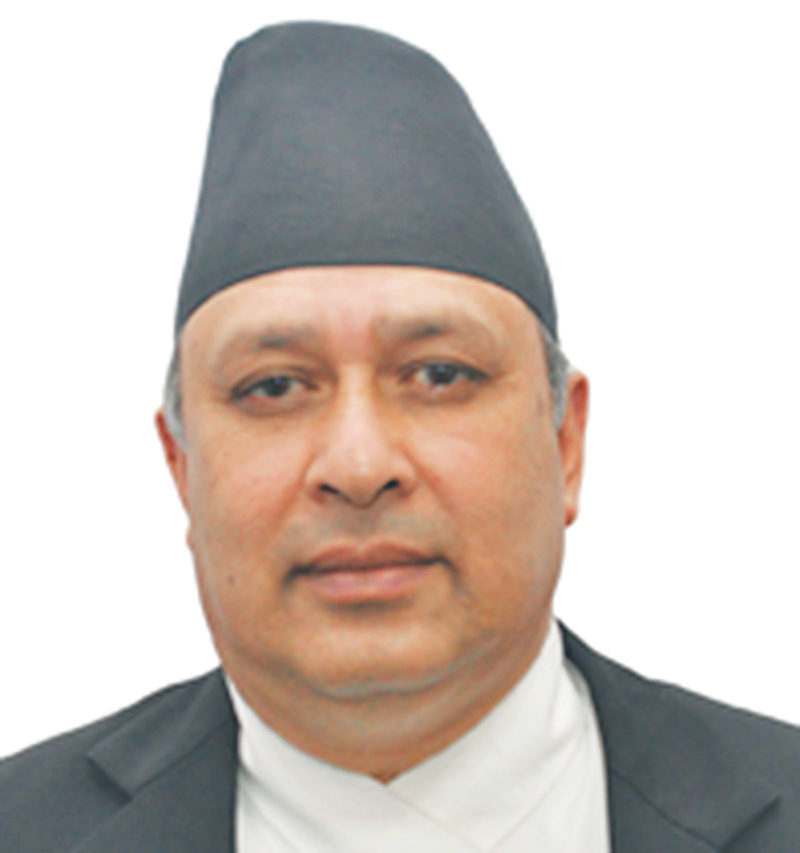
Hari Krishna Karki. Photo: Supreme Court
KATHMANDU : A hearing on writs against Prime Minister KP Sharma Oli government’s decision to dissolve the House of Representatives was adjourned on Wednesday after Justice Hari Krishna Karki recused himself from the Constitutional Bench. Karki was picked as one of the four members of the Constitutional Bench by Chief Justice Cholendra Shumsher Rana. Rana leads the bench. Rana’s decision to pick Karki had run into controversy when the Constitutional Bench started a hearing on December 25. Justices Bishowambhar Prasad Shrestha, Anil Kumar Sinha and Tej Bahadur KC are the other members of the Constitutional Bench. Rana had selected the four justices from the roster of 14. He had decided to continue with the same composition on Wednesday. “Justice Karki decided not to be part of the Constitutional Bench that is hearing the writs against dissolution of the House of Representatives,” Kishor Poudel, a communication expert at the Supreme Court, told the Post. “The chief justice will pick another justice to replace Karki.” When the hearing began on Wednesday, advocates Shambhu Thpaa, Dinesh Tripathi and Mukti Pradhan, among others, who argued on behalf of the petitioners, questioned if Karki could sit on the bench. “It’s not that we are doubting Karki’s competence,” Tripathi told the Post. “However, it is an ethical issue. It is good that he opted out of the bench.” The advocates on Wednesday had questioned Karki if he should sit on the bench if he believed in the principle of natural justice. During his first stint as prime minister in 2015, Oli had appointed Karki as the attorney general. By virtue of being the attorney general, Karki hence was the chief counsel to Oli and his government then. Since the case being heard by the court is also against Oli and his government, advocates had raised questions about Karki’s presence on the bench. Apart from questioning Karki on the bench, advocates on Wednesday also argued that the writs be sent to an extended full bench of the Supreme Court. As many as 13 writs have been filed at the Supreme Court challenging Oli’s decision to dissolve the House of Representatives on December 20. Petitioners and experts on constitutional affairs say Oli made an extra-constitutional move by dissolving the House, as the constitution does not allow him, as a majority prime minister, to do so. After a preliminary hearing on December 23, a single bench of Chief Justice Rana had decided to forward 12 writs—one had already been sent—to the Constitutional Bench. The bench on December 25 had heard opening remarks from lawyers arguing on behalf of the petitioners and issued a show-cause notice to the Oli government and the Office of the President demanding reasons for dissolving the House. As per Clause 22 of the Supreme Court Regulation, an extended full bench means a bench comprising five or more justices. Such a bench is formed to interpret complex legal or constitutional questions. Though there were debates whether there should be a separate Constitutional Court, the drafters of the constitution had agreed to have a Constitutional Bench under the Supreme Court to decide matters should a serious constitutional confusion arise. As per Article 128 (1) of the constitution, the Supreme Court has the final power to interpret the constitution and laws. Article 137 talks about the formation of the Constitutional Bench. According to Article 137 (1), the Constitutional Bench hears and takes decisions on disputes over the jurisdiction between the federation and a province, between provinces, and between a province and a local level. Article 137 (3) authorises the chief justice to allocate the cases under consideration at the Supreme Court containing questions of serious constitutional explanation to the Constitutional Bench. Advocates on Wednesday, however, argued that Oli’s House dissolution move was prima facie unconstitutional, that it did not need serious constitutional explanation and that a decision can be made by an extended full bench rather than the Constitutional Bench. Chandra Kant Gyawali, a senior advocate who is arguing on behalf of the petitioners, said the hearing next week will start with arguments whether or not to send the 13 writs filed against the dissolution of the House to the extended full bench. After Karki recused himself, the next hearing has been scheduled for January 13. If the Constitutional Bench, after the next hearing, agrees to send the writs to an extended full bench, such a bench consisting of 9 to 11 justices needs to be constituted. “The constitution says the Supreme Court—not the Constitutional Bench—is the final interpreter of the constitution,” said Gyawali. “Similarly, the court in the past has approved the House dissolution twice and rejected such a move as many times. So we don’t have a set precedent.” In 1994 and 2002, the Supreme Court had approved the moves of then prime ministers Girija Prasad Koirala and Sher Bahadur Deuba of dissolving the House of Representatives, while it had rejected Manmohan Adhikari and Surya Bahadur Thapa governments’ similar moves in 1995 and 1998, respectively. Gyawali said there has been a practice in the past to form an extended full bench on such issues. “The five-member Constitutional Bench is too small to decide on the matter,” Gyawali told the Post. Not all agree though. According to Bipin Adhikari, former dean at the Kathmandu University School of Law, the Constitutional Bench can decide on the matter. “This is a breach of the constitution,” Adhikari said. “There is no complexity in this case as the dissolution of the House doesn’t stand any constitutional ground.” Since the next hearing on January 13 will focus on whether the Constitutional Bench should continue or send the case to an extended full bench, a final decision is likely to take time.
HOME PAGE
Authorities don’t know yet whether the new variant of coronavirus has entered the country
The government is yet to set up facilities for genome sequencing while it has refused to seek support from the private sector, thereby putting more people at risk, experts say.
- Arjun Poudel
KATHMANDU : When in the third week of January last year, a man who had returned from Wuhan, China, was suspected to have been infected with the coronavirus, Nepali authorities sent swab samples collected from him to Hong Kong. Since Nepal did not have the facility to conduct tests, the swab samples had to be sent to the World Health Organization’s collaborating centre in Hong Kong. A year later, amid reports of new variants of the coronavirus being detected in various countries, Nepal finds itself in a tight spot. The National Public Health Laboratory is planning to send swab samples collected from three people who returned from the United Kingdom some two weeks ago to Hong Kong to ascertain if they are infected with the new variant of the coronavirus. Swab samples from six of eight people returning from the UK had been collected. According to officials, they have tested positive for Covid-19 but there is no way to determine whether they have contracted the new variant of SARS-CoV-2, which causes Covid-19. “The UN Health agency’s Nepal office could send the samples [to Hong Kong] by Saturday,” Dr Bikash Devkota, chief of Quality Standard and Regulation Division at the Ministry of Health and Population, told the Post. “We have also directed the National Public Health Laboratory to send the other three samples to the WHO’s collaborating centre for tests.” Officials could not provide an answer as to how long it will take to get the results back. “Due to a lack of capacity at the National Public Health Laboratory, we have to send these samples abroad,” Dr Basudev Pandey, director at the Epidemiology and Disease Control Division, told the Post. “Yes, we should be able to do this test on a regular basis within the country, as the virus keeps changing its form, and we do not know if the new variant has already entered our country.” Public health experts, however, have cautioned about the possible rapid spread of the new variant of the virus, as cases have been reported in various countries since it was first detected in the UK. Officials say since there is no facility to perform whole-genome sequencing in Nepal, there is no way to ascertain if the new variant is already here. Whole-genome sequencing is a comprehensive analysis of the entire DNA sequences of an organism’s genes. Researchers believe that the whole-genome sequencing of the coronavirus could be instrumental in tracking the severity and properties of the virus. Sameer Mani Dixit, director of research at the Centre for Molecular Dynamics- Nepal, however, says whole-genome sequencing is possible at his laboratory and that they could have provided results by now, had the authorities sought their assistance. “Had the authorities trusted us, we would have provided the results by now,” Dixit told the Post. “Performing the tests on time not only gives us knowledge about the gene of the viruses circulating in our country but also helps us take measures to contain the spread.” According to Dixit, his laboratory has the capacity and trained human resource and had already performed whole-genome sequencing tests for the government and the reports were matched with the report of the UN health agency’s collaborating centre. Public health experts say that sending three samples of people returning from the UK for whole-genome sequencing after several days does not help in containing the infection, as the new variant of the virus has already reached dozens of countries, including India, and people are entering regularly from those countries. The Nepal government has made a spectacular bungling in containing Covid-19 ever since the country reported its first case last year. As of Wednesday, 263,193 people tested positive for the coronavirus throughout the country including 1,899 deaths. In the last 24 hours, 409 people tested positive with six deaths. With almost all sectors now open, including schools, the contagion could turn more severe, and the new variant of the virus could make the situation worse. According to the Business Standard, the new variant first confirmed in the UK has been detected in at least 41 countries and territories as of Wednesday. “What are we going to do once we confirm that those people who returned from the UK have the new variant of the virus?” said Professor Jeevan Bahadur Serchand, an infectious and tropical disease research specialist at the Institute of Medicine. “Actually we do not know yet which strain of the virus is circulating in the country.” According to Serchand, the authorities’ focus has been on those returning from the UK while anyone arriving from abroad can carry the new variant into the country. “The lackadaisical approach of the authorities since the start of the pandemic is one of the reasons for the massive spread of the virus,” said Serchand. The existence of a new and highly transmissible coronavirus variant was announced by the UK’s health secretary on 14 December, after Covid-testing laboratories reported that a growing number of their positive samples were missing a signal from one of the three genes their PCR tests use to confirm the presence of the virus. On December 22, authorities in Nepal had directed all international airlines not to bring passengers from the United Kingdom or those transiting through the country from December 24 onwards. Experts say the government failed to pay attention to the fact that there should be facilities for gene sequencing. There is a tendency among the authorities in Nepal to wait for the disaster to happen, according to them. Now with the new variant causing havoc across the globe, authorities are clueless as to what their response should be. Dixit said in the times of a crisis or a pandemic, the government must pull out all the stops and should not hesitate to seek support from the private sector. “We had provided training and some reagents including personal protective equipment to the National Public Health Laboratory to perform polymerase chain reaction tests [last year],” Dixit told the Post. “I do not understand why there is a problem in seeking help from private laboratories which can perform gene sequencing.” Experts say that the coronavirus, which continues to spread throughout the country, might have mutated several times by now. Most of the people infected in the initial few months were asymptomatic and symptomatic cases started to increase later. Health Ministry officials admit that no one knows which variant of the virus is circulating in the country. The officials, however, did not have a justification as to why the authorities did not focus on setting up facilities to perform gene sequencing when new variants were expected by scientists the world over. Experts say even as the government has not been successful in containing the virus, it has spent billions of rupees so far—some of which it should have invested in setting up the facilities for performing gene sequencing. Basically there was a lack of willingness, according to them. Dr Pradip Gyawali, executive chief of the Nepal Health Research Council, admitted that the country should have set up the facilities for genome sequencing long ago. “We hope to start performing genome sequencing tests within the country very soon,” said Gyawali. “These tests will be carried out at government as well as private laboratories.” But at a time when government authorities have given up all measures—testing, tracing and treating, the chances of containing the spread of the virus—and its new variant—are slim even if the facilities are set up for genome sequencing. “The new variants of the virus have been identified in about 40 countries, possibly even more, and we have just started discussions on setting up the facilities for gene sequencing,” said Dr Sher Bahadur, Pun, chief of the Clinical Research Unit at the Sukraraj Tropical and Infectious Disease Hospital. “And then our focus has only been on those returning from the UK.” According to Pun, without facilities for gene sequencing when the new variants have emerged as a headache for many developed countries, Nepal looks set to invite yet another catastrophe, as it has yet to have a proper plan on inoculating the population.
HOME PAGE
Why is everyone talking about Subas Nembang?
Nembang, who led Constituent Assembly, is heard in a 2019 video clip saying constitution does not allow House dissolution. But he hasn’t called Oli’s move unconstitutional.
- Post Report
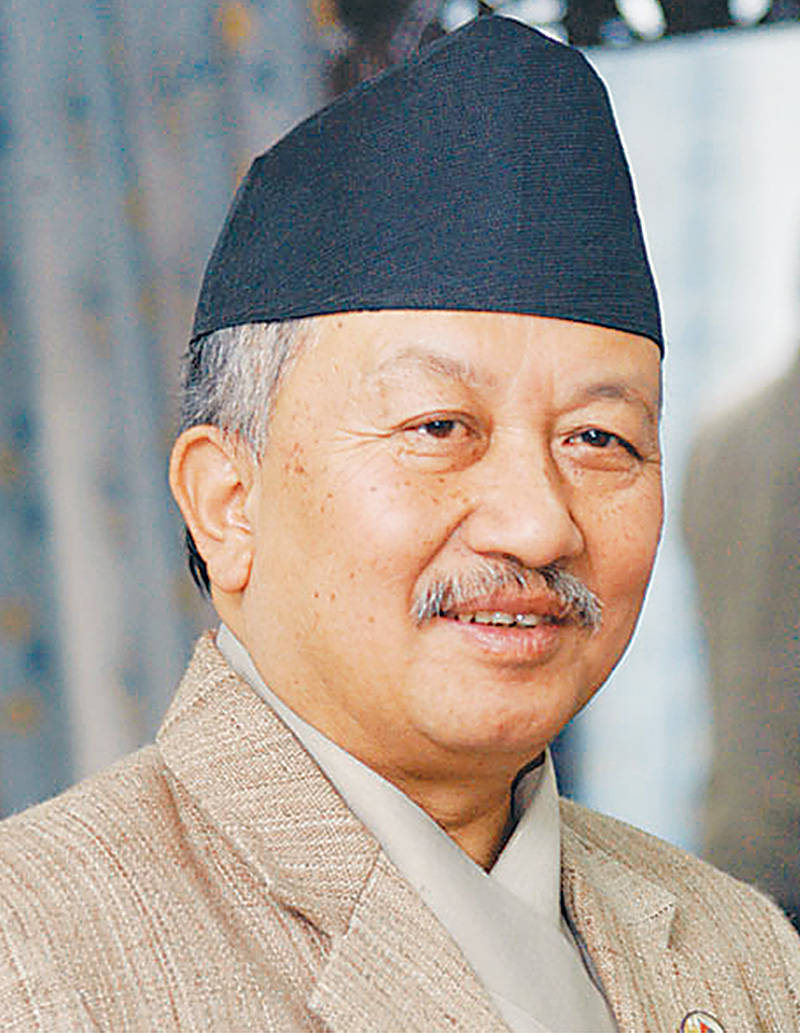
Subas Nembang. Post file Photo
KATHMANDU : Subas Nembang is a lawyer. But he has made his career in politics. Nembang, who has not lost any election since 1990, reached the pinnacle of his political career after he got the opportunity to chair the Constituent Assembly—twice—from 2008 to 2012 and then 2013 to 2015, until it delivered the constitution. Lately, Nembang has become a talking point, especially since Prime Minister KP Sharma Oli decided to dissolve the House of Representatives on December 20. On Wednesday, a video clip that went viral once again put the spotlight on Nembang. In the video clip, posted on Twitter from the handle jspanepal, which in its bio says “official twitter account of Journalists’ Society for Parliamentary Affairs”, Nembang is heard explaining why the provision of not allowing a prime minister to dissolve Parliament on a whim was inserted in the constitution. “[In the past] whenever a prime minister was angry with lawmakers, he used to dissolve the Parliament. We removed that [provision] and now the prime minister cannot dissolve as we have excluded that provision,” Nembang is heard saying while speaking at a function organised by the Parliament Secretariat at Dhulikhel in July 2019. “We wanted to include polling dates [also in the constitution] like the fixed date for the fiscal budget. But we did not [do so] because once it is written polls must be held on a certain date, and that may not be possible at times.” After dissolving the House, Oli has called snap polls for April 30 and May 10–a year and a half earlier than the scheduled general elections. Nembang, a leader of the Nepal Communist Party, these days is known as one of the key persons in Oli’s orbit, playing the role of, in effect, Oli’s legal counsel. Though Oli’s December 20 decision to dissolve the House has received widespread criticism, with political parties and experts on constitutional matters describing it as extra-constitutional, Nembang has not made any public statement on the matter yet. According to critics, the constitution does not allow Oli, as a majority prime minister, to dissolve the House, but Nembang has remained tight-lipped on the matter. On Wednesday evening, when the Post reached out to Nembang, he refused to speak on the House dissolution issue. “I cannot talk on a case sub judice [in court] as directed by the constitution,” said Nembang, hinting at Article 105 of the constitution and referring to the writs filed against the House dissolution. Article 105 under the title “Restriction on discussion” states: “No discussion shall be held in either House of the federal parliament on any matters that may cause adverse effect on the dispensation of justice on any cases which are sub judice in any courts of Nepal and on any judicial acts done by judges in the course of performance of their duties.” Nembang’s silence, however, has left many intrigued. Even when Oli is publicly making claims that the House cannot be restored, despite the case being heard by the court, Nembang, who is well-versed on constitutional and legal matters, has chosen not to talk. As many as 13 writs against Oli’s House dissolution move are currently being heard by the Constitutional Bench of the Supreme Court. On Wednesday morning, Nepali Congress leader Gagan Thapa took to Twitter to question why Nembang has refused to say a word even when Oli’s move is prima facie extra-constitutional. “I am thinking of Constituent Assembly Chairman Nembang who knows very well the letters of the constitution, the spirit they carry and the wide-ranging debates that had taken place,” Thapa wrote on Twitter. “I had assumed that in such a time of crisis, my chairman would stand before the court and argue that ‘the House dissolution by @PM_Nepal is unconstitutional. The constitution that was written under my chairmanship does not have that provision and there is no legislative intent like that’.” Thapa has charged Nembang with hiding somewhere fearing someone will ask him anything [in that regard] and running away from questions. “I pity my chairman for not speaking a word and showing this level of ‘helplessness’ when a coup has been committed on the constitution that was brought right under his leadership,” added Thapa. Since Nembang twice led the historic Constituent Assembly until it produced the constitution, he is still known as the “chairman of the Constituent Assembly”, assuming that there won’t be any similar assembly in the future, meaning he does not need to be addressed as “former chairman”. Those who were deeply involved in the whole constitution drafting process remember Nembang as a person who could conceal even some sinister motives behind a facade of smiles. Nembang, as the chairman of the Constituent Assembly, played a crucial role in getting the constitution promulgated despite opposition from Madhes-based parties. Many say despite holding a non-partisan office, Nembang played along to appease his political masters, including Oli who is known as the one who rushed the constitution with the backing of then prime minister Sushil Koirala and Pushpa Kamal Dahal, then chairman of the CPN (Maoist Centre). After the demise of the first Constituent Assembly, which also doubled up as the legislature parliament, Nembang once declared that he would return to the courts as a lawyer. But when the election to the second Constituent Assembly was declared, Nembang was quick to return to his party–the CPN-UML. He ran on the ticket of then CPN-UML and won. He became the Constituent Assembly chair again. He fought the 2017 elections again on the UML ticket. He won, but he has not held any public post. He was elected the deputy leader of the Parliamentary Party. According to insiders, Oli had tried his best to reinstate him as the House Speaker but that could not happen because there was pressure from his opponents Pushpa Kamal Dahal, Madhav Nepal and Jhala Nath Khanal. Khimlal Devkota, who worked closely with Nembang during the constitution drafting process, recalls Nembang as someone who played a “very technical role” as the chairman of the Constituent Assembly. “Actually he was never positive on issues like state restructuring and inclusiveness,” Devkota, a Central Committee member of the Nepal Communist Party close to the Dahal-Nepal faction. “In the constitution making process, Nembang’s role was more managerial.” Nembang’s dilemma is understandable, as he is close to Oli, according to Devkota who himself is a lawyer. “He knows that constitutional provisions, which were finalised with his full knowledge, do not allow the prime minister to dissolve the House,” said Devkota. “But he cannot cross his master and defy his master’s orders.” Though there are some who believe Oli took the decision to dissolve the House in close consultation with Nembang, as he is known as a master of interpreting legalese, those close to Nembang say Oli made a sudden move, catching even people from his own orbit by surprise. According to some leaders from Nembang’s circle, he had been telling Oli that the constitution does not give any space for the prime minister to dissolve the House. “I still hold my previous stance that the constitution has left no room for a majority prime minister to dissolve the House,” a leader close to Nembang quoted him as saying. According to insiders, Nembang had even advised Oli that the dissolution was not possible. Devkota believes that Nembang may have advised Oli but his advice could have been ignored by Oli. “I think none of the leaders close to Oli were aware of the House dissolution move, as Oli did not inform them, let alone seek suggestions,” Devkota told the Post. “With the video clip now surfacing on social media, it is understandable that Nembang must be under immense pressure.” To the Post’s query if he would like to say something on the House dissolution move, Nembang insisted that everyone should wait for the court to come up with a decision. “I will make my points clear,” said Nembang, “only a day after the Supreme Court issues its verdict.”
NATIONAL
Bardibas villagers grapple with drinking water shortage
Around 400 families have been facing water shortages for the last five decades.
- SUNITA BARAL
MAHOTTARI : Every day, Mina Pokharel, a resident of Bhapsi Ratmate in Ward No. 3 of Bardibas Municipality, Mahottari, spends three hours to bring home a vessel of water. According to her, 20 households in her neighbourhood rely on the communal water tap to meet their needs. “We get water in the tap every 15 days and it takes at least two hours to fill one vessel,” said Pokharel. “Some days, the tap goes dry even before we get a chance to fill our buckets.” Around 400 families in Ratmate, Bastipur and Raimandal villages in Ward No. 3 of Bardibas have been facing similar problems for the last five decades. They go to the neighbouring villages of Atappe Gaun and Bardanda, among others, in search of water. “We bring water from other villages in winter and summer. In monsoon, we use floodwaters for drinking purposes,” said Suka Bahadur Majhi, a resident of Ratmate. Bishnu Thapa, a local resident of Bastipur Tol, complained that the authorities and people’s representatives have not addressed their water shortage problem despite multiple requests. “In the dry season, we have to walk to Palla Gaun to fetch a vessel of water. It takes at least three hours to reach Palla Gaun from Bastipur Tol but we have no other source of water nearby,” said Thapa. Five years ago, the local residents had launched the Bhapsi Drinking Water Project under which a tap was installed in each house of the area. The project is nearing its deadline in the running fiscal year but there has been no progress so far, say villagers. “Water pipes were installed near the spring area only. The construction work of the project has not gained momentum for the last two years,” said Bijaya Pokharel, a resident of Ward No. 3 in Bardibas. Tara Bahadur Pulami, chairman of Bhapsi Drinking Water and Sanitation Consumers Committee, says the delay was caused because the Drinking Water and Sanitation Division Office in Mahottari has not released a budget for the continuation of the project. “We have been requesting the division office for budget allocation but nothing has been done yet,” he said. “The local residents had also put in a request with the division office but their calls went unheard.” The total cost of the project is Rs 30 million. So far, only the main supply pipes have been installed in the water spring area. According to the project officials, they have to construct a water tank and install pipes and taps in each house of the village. However, officials at the Drinking Water and Sanitation Division Office in Mahottari claim that despite the delays, the construction of the drinking water project will be completed within this current fiscal year. “The construction work has not moved forward, as the project did not receive a budget in the running fiscal year. But we plan to supply water in Ward No. 3 this year. We intend to complete the project this year,” said Surendra Sharma, chief at the office.
NATIONAL
What’s stopping joint political movement against Oli’s move?
Observers and parties say the nature of split in the Nepal Communist Party is still unclear. Should the two factions decide to unite, the movement will be a dud, they say.
- ANIL GIRI
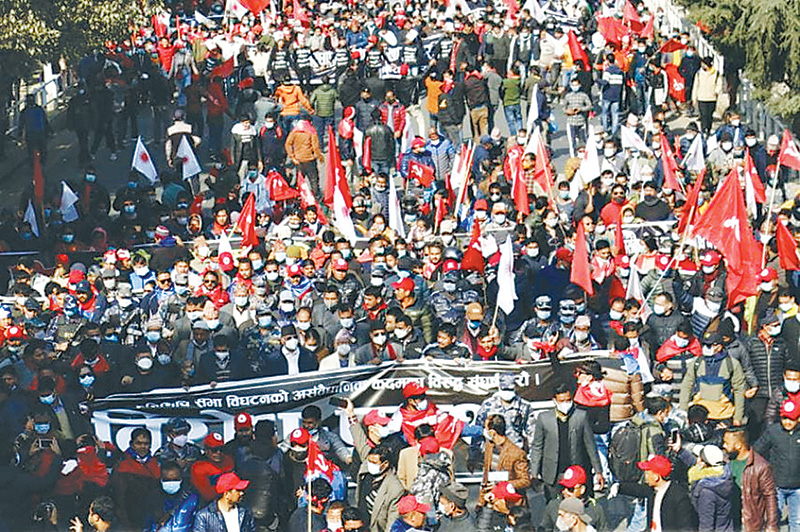
As major political parties are wary of entering into an alliance with the Dahal-Nepal faction of the Nepal Communist Party, they are organising their own protests.Postfile Photo
KATHMANDU : It has been almost two weeks since Prime Minister KP Sharma Oli dissolved the House of Representatives, a move that has prompted all political parties to hit the streets. From the Madhav Kumar Nepal and Pushpa Kamal Dahal-led faction of Nepal Communist Party, which parted ways with Oli in the wake of the House dissolution, to the Nepali Congress, Janata Samajbadi Party, Bibeksheel Sajha Party to Rastriya Prajatantra Party, all of them have raised strong objection to Oli’s action, calling it “unconstitutional and undemocratic”. But while their opinion concerning the dissolution of the lower house of Parliament remains the same, they are yet to come together on the streets to challenge Oli’s December 20 move. The big political forces, namely Nepali Congress, which was the main opposition party before the House dissolution, Janata Samajbadi Party and the Dahal-Nepal-led Nepal Communist Party, which severed ties with Oli days after he dissolved the lower house, have so far staged separate rallies and protest programmes. So what’s holding them from forming a joint front against Oli’s decision to disband the House of Representatives and call for snap polls on April 30 and May 10? Some political analysts say that these political parties must have a clear roadmap of the protest, where they want to reach and what they want to achieve, in order to form a united front. This has not happened so far, although the parties are trying to bring all political forces together to challenge Oli’s move through street protests. In order to launch a joint protest movement, the Dahal-Nepal faction of the Nepal Communist Party held two back-to-back interactions with various political parties and civil society groups on Tuesday and Wednesday. Baburam Bhattarai, former prime minister and the leader of Janata Samajbadi Party, said during Wednesday’s interaction that a joint protest movement has not kicked off because the relations between the two factions of the Nepal Communist Party is still unclear. “What if the two factions decide to patch up? Our protest movement will be meaningless then. We want to be clear which side the Nepal Communist Party is on,” Bhattarai said, demanding answers from Dahal-Nepal faction. Meanwhile, the Nepali Congress is also not comfortable joining forces with the Dahal-Nepal faction of Nepal Communist Party. The party has decided to maintain an equal distance from both the Dahal-Nepal and the Oli factions for now. This apparent lack of unity is not limited among the political parties alone, though. Even civil society groups are a scattered lot. Prof Krishna Khanal, a political commentator, believes the current agenda concerns the political parties and it is them who should decide their destination. “What do the political parties want—restoration of the House or the elections? What is their destination? What do they want to achieve? They have just been protesting so far, it is not an agitation. Agitation and protest are two different things. Parties have not gone into the agitation stage yet. I think they will do so once the Supreme Court delivers the verdict on Oli’s House dissolution move,” said Khanal. The Supreme Court has started hearing on the petitions filed against Oli’s move of dissolving the lower house. Meanwhile, three major political parties, Nepali Congress, the Dahal-Nepal faction of Nepal Communist Party and Janata Samajbadi Party, have announced their second round of protests, which they plan to hold separately. Raghuji Pant, a leader from the Dahal-Nepal faction, believes that the parties will eventually join forces against Oli’s action. “We have just completed the first phase of our protest. It will take some more time for the people and the parties to come together,” he told the Post. “There will be a series of protests once the political parties and the people arrive at the same conclusion, that Oli’s move threatens to demolish the system and undo all achievements.”. Pant also sympathised with former prime minister Bhattarai’s concern regarding the unclear relations between the two factions of Nepal Communist Party. “We are clarifying our position, but it does not seem to be enough. But I have sensed that there is a growing positive environment among the political parties, civil society members and others to hold a joint protest,” he said. A senior Nepali Congress leader told the Post that the party president, Sher Bahadur Deuba, was still unconvinced that the Nepal Communist Party had really split. “According to President Deuba’s contention, the party is still one because the Elections Commission has not acknowledged the split by registering two separate parties,” the leader told the Post. Nepali Congress Spokesperson Bishow Prakash Sharma also confirmed the position maintained by the party leadership. “Yes, we do have common views against Oli’s move, but we have decided to hold separate protest programmes, because we still see Oli, Dahal and Nepal as the leaders of the same party,” he said. “Where was Dahal and Nepal and their faction leaders who were in the Oli Cabinet when anti-democratic laws were introduced? Why didn’t they oppose those anti-constitutional and anti-democratic laws then?” Uddhab Pyakurel, assistant professor at Kathmandu University and a political columnist, says doubts are warranted against the Dahal-Nepal faction from the parties because it had done little to keep Oli in check when his government introduced a series of oppressive laws in the past. “The Dahal-Nepal faction is the first victim of Oli’s move, so they are now calling for a joint protest movement. But what did it do to make Oli responsible towards the people, the system, the parliament and the constitution when it was part of the same party?” said Pyakurel. “Dahal and Nepal cannot convince or win over the parties and the people overnight to forge an alliance to stand up against Oli’s move. It will take some more time for the people and the parties to realise the situation and come to the streets as a united force.”
NATIONAL
Kathmandu air improves but still unhealthy like most of the year
Recent spike in pollution is merely indication of how polluted Kathmandu’s air is and how authorities have failed to do anything about it, experts say.
- CHANDAN KUMAR MANDAL
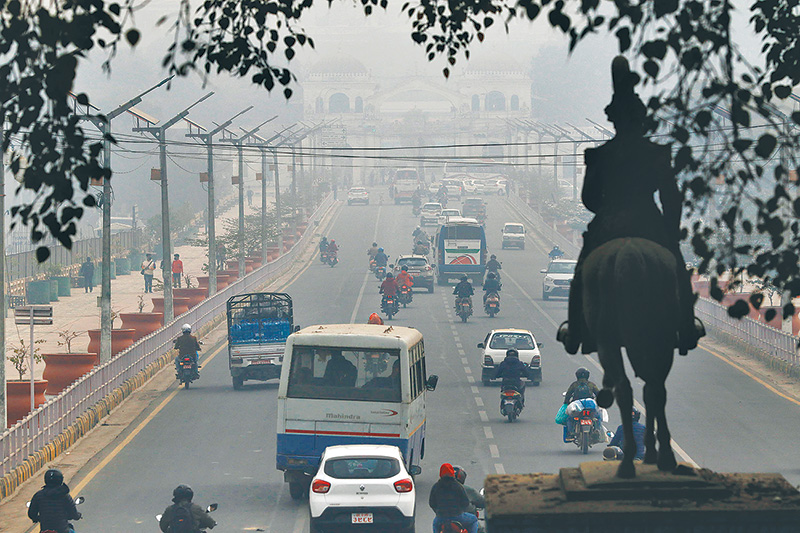
On Monday and Tuesday, the air quality index in Kathmandu soared to hazardous levels. POST PHOTO: KESHAV THAPA
KATHMANDU : After witnessing two back-to-back hazy days, residents of Kathmandu Valley woke up to a sunny morning on Wednesday hoping that warm afternoons and clear skies would return. The bright sunny day made them feel as if the polluted air from the day before had disappeared all of sudden. But their hopes were dashed as the air quality of the capital didn’t improve drastically. It was still “very unhealthy”. On Monday and Tuesday, the air quality index in Kathmandu soared to hazardous levels, creating a buzz among the members of the public and making headlines across media platforms. “The air quality seems to have improved on Wednesday afternoon. It has gotten slightly better than the last couple of days. However, it is still polluted and unhealthy,” Bhushan Tuladhar, an environmentalist who closely follows urban issues including pollution, told the Post. Following the sudden decline in air quality in the Valley, government agencies, otherwise indifferent towards the issue, had swung into action by issuing notices advising people to stay safe and avoiding outdoor activities. However, experts say what happened in the last two days was not unexpected. In reality, residents of Kathmandu Valley have been breathing unhealthy and unsafe air almost every day for the last few years. “Pollution levels soar during the winter. It happens every year and is not something new.” On Monday and Tuesday, when the overall Air Quality Index (AQI) readings hit the roof and quickly went from “unhealthy” to “very unhealthy” and then to “hazardous”, the valley’s topography and prevailing meteorological conditions also exacerbated the situation. “Pollutants remained trapped in the air as the atmosphere was stable, and we also witnessed thermal inversion,” Shanti Kandel, a senior meteorologist with the Meteorological Forecasting Division, said while explaining why pollution levels shot up on Monday and Tuesday. “The pollutants could not move up and get dispersed,” said Kandel. But things changed on Wednesday as sunshine helped in allowing the trapped pollutants to get dispersed in the atmosphere. “Although some pollutants are still trapped in the air because of the Valley’s topography, the weather came to its rescue,” Kandel added. While the improved weather condition on Wednesday provided a much-needed but temporary respite to the capital city, studies have for long been calling on authorities to take urgent actions to address the issue. IQAir, a Swiss air quality technology company that provides real-time worldwide air quality data, showed that Kathmandu became the most polluted city in the world on Monday and Tuesday. But the same company has been showing that the capital’s air is unsafe for several years. The World Air Quality Report, 2018, produced by the same group, ranked Kathmandu as the seventh most polluted capital city in the world, based on its average yearly PM2.5 level. The report, which also ranked Nepal the eighth-most polluted country, recorded the annual average PM2.5 level for Kathmandu in 2018 at 54.4 micrograms per cubic meter (μg/m3), an increase from 45.9 μg/m3 in 2017. Its latest report World Air Quality Report, 2019, once again placed Kathmandu as the sixth most polluted capital in the world with an annual PM2.5 concentration of 48 μg/m3. While the concentration level of PM2.5, the most harmful of all air pollutants, was not recorded as “hazardous” in those reports, it wasn’t found to be safe either. The WHO recommends an annual mean exposure threshold of 10 μg/m3 to minimise the risk of health effects from PM2.5. However, the UN agency cautions that no exposure level is free of health impacts. The US Air Quality Index (AQI), which converts pollutant concentrations into a colour-coded scale of 0-500 for representing the level of associated health risk, has set “good” range for PM2.5 (12μg/m3), slightly higher than the WHO Air Quality Guideline (10μg/m3). Still, the PM2.5 concentration for Kathmandu has remained unsafe for the general public for at least three years, as the PM2.5 level has been continuously hitting the “unhealthy for sensitive groups” mark. This means that the general public and sensitive individuals, in particular, are at risk of experiencing irritation and respiratory problems. That the AQI reading for Kathmandu exceeded 600, means the air quality was more than ten times worse than the US AQI standard. Likewise, with an overall concentration of 667 μg/m3 of PM2.5 on Monday at 9:45 PM, the numbers exceeded the WHO Air Quality Guideline by 66 times. “It came as a shock and as a warning call. This is also because we had been breathing clean air in the last ten months when there was not much movement due to the pandemic,” said Tuladhar. “Now, it is like we have come out of a cinema hall after watching a movie and our eyes can’t adjust to the brightness outside. The air is still polluted and unhealthy.” Bhupendra Das, an environmental specialist with expertise in clean energy and air pollution, is also not surprised by the latest spike in air pollution. “During winter, the air gets severely polluted. Things improve with the onset of the monsoon,” said Das. “But even during the summer, air pollution levels are around five times higher than the national threshold limit,” said Das, who is an air quality specialist at Nepal Energy and Environment Development Services. “While the current PM2.5 levels are more than 30 times more than the safety guidelines, it hovers around 300 from December to February.” Emission from vehicles, industries, brick kilns, waste burning, road improvement, and construction sectors are the major sources of air pollution in the Kathmandu Valley. However, nothing much has been done in the last few years to address the problem. “It is one of those days when the air is nice and clear in the afternoon before it worsens in the evening,” said Tuladhar describing Wednesday’s weather. “We are not out of the woods yet. Nothing much has been done to improve the air quality as air pollution has never been a priority. But it is not just an environmental issue, it is a public health issue.” While authorities have not come up with concrete and long-term actions, they have failed to control open waste burning, which has gone unabated in various parts of Kathmandu Valley. “The volume of coal imported by industries and brick kilns has increased. Then there are open waste burning as well as agricultural residue burning, even in areas like Bhaisepati,” said Das. “Open burning is happening in major areas like Tribhuvan University and other core areas of the Valley. We have not been able to even check such waste burning.” Das’s study on open burning of waste in the municipalities of Nepal revealed that burning waste releases a dangerous amount of pollutants into the atmosphere. His research found out that of the 319 waste piles identified during the study, 137 or 43 percent were actively burning in different routes of the valley’s urban and suburban areas. The report estimated that municipalities in the valley burn about 7,400 tonnes per year or 20 tonnes of solid waste every day, which is three percent of the total waste produced. “Likewise, pollution from agricultural residue burning, which has picked up in Tarai, also travels to Kathmandu with the wind. The cumulative effect is seen in Kathmandu,” said Das. “Despite such a dangerous level of pollution, there is no research and development in this area, which is the result of a lack of concern from responsible authorities.” With the recent air pollution of record level, experts called on the government to announce a public health emergency as envisioned in the Kathmandu Valley’s Air Pollution Management Action Plan, which says the agencies can declare a public health emergency in case of AQI level crossing 300. The action plan also comes up with several measures like imposing odd-even rules, banning open burning of waste, and cleaning of streets, among others. Government agencies such as the Department of Environment and Ministry of Health coming up with advisories for the general public are part of minuscule actions, said Tuladhar. According to experts, the government should cut down emissions in the transport sector and strictly enforce the green sticker rule while effectively implementing the existing action plan.
NATIONAL
One dead as army vehicle hits motorcycle
Briefing
- Post Report
RAJBIRAJ: An elderly man died after a Nepal Army vehicle hit a motorcycle he was on at Rupanichowk on the Saptari section of East-West Highway on Wednesday. Police identified the deceased as Ramchandra Chaudhary, 65, of Agnisair Krishnasabaran Rural Municipality-2, Saptari. Critically injured Chaudhary breathed his last while being rushed to hospital. Police have detained the driver and seized the vehicle for investigation.
NATIONAL
Sudurpaschim’s economic affairs minister resigns
Briefing
- Post Report
DHANGADHI: Jhapat Bohara, Minister for Economic Affairs and Planning of Sudurpaschim Province, has tendered his resignation amid factionalism within the ruling Nepal Communist Party. Organising a press meet in Dhangadhi on Wednesday, Bohara announced his resignation. Bohara, who is an ally of Prime Minister KP Sharma Oli, was nominated as central committee member of the Oli faction a few weeks ago. Physical Infrastructure Development Minister Pathan Singh Bohara also tendered his resignation to Chief Minister Trilochan Bhatta.
NATIONAL
Hilsa border point closed
Briefing
- Post Report
HUMLA: Hilsa border point on the Nepal-China border in Humla district has been closed due to massive snowfall. The area has been witnessing massive snowfall since Sunday. Suraj KC, police inspector stationed at the border outpost in Hilsa, said, “We are facing problems patrolling due to the snowfall.” Around a month ago, the border was partially opened. The border point had been closed since the beginning of the Covid-19 pandemic.
NATIONAL
Two held with brown heroin in Dharan
Briefing
- Post Report
SUNSARI: Police arrested two persons in possession of brown heroin in Dharan Sub-metropolis on Wednesday. According to police,, Sachin Pradhan of Dharan-13 and Sandip Rai of Kerabari-5 in Morang, both aged 24, were detained with 1.7 grams brown heroin. Detailed investigation is underway, said police.
EDITORIAL
The gas chamber
Unchecked pollution has made Kathmandu a dangerous place to live.
As if the dip in the temperature was not enough, Kathmandu on Monday felt like a gas chamber as the city dwellers found themselves suffocating, their eyes burning, with a dense fog all around. Ditto with the dwellers of two major cities in the east and the west respectively, Biratnagar and Nepalgunj. AQ AirVisual, a Swiss group that collects real-time air-quality data from around the world, said Kathmandu was the most polluted city in the world on Monday, with PM2.5 levels reaching 488 micrograms per cubic metre (μg/m3) at 5:45 pm at Ratnapark station as per the United States Environmental Protection Agency Air Quality Index. The air became slightly better on Tuesday and Wednesday, although it remains unhealthy for most of the population of the country, raising concerns among city dwellers, health professionals and government officials. While preliminary analyses have shown that the recent spike in air pollution is the result of the weather and is fairly temporary, it is not a completely natural phenomenon. Rather, it also points to a larger problem of the longstanding pollution problem in major cities in Nepal, primarily Kathmandu, where the burning of fossil fuels has gone unchecked for the longest time. As a result, the health—and life—of the citizens are at stake. The governments of all three tiers of the federal structure must come up with an immediate action plan to mitigate the problem. The federal government has said it has been mulling various actions to mitigate the risks caused by the pollution, including imposing odd-even rules for vehicles. That, however, may not be enough, as several reports from the experience in New Delhi over the years have shown that it offers only a minor respite from air pollution. The direct effect of the recent spike in air pollution level is already evident in how doctors from various hospitals have reported that the number of people suffering from respiratory complications has spiked in the past few days, some of whom are at a critical stage and are admitted in intensive care units. Air pollution causes millions of premature deaths every year, but it is especially punishing for Covid-19 patients with respiratory problems and other serious ailments as it exacerbates the symptoms, leading to increased mortality. Researchers have confirmed air pollution has a direct correlation with coronavirus infection—the higher the pollution level, the greater the risk of Covid-19 mortality. Air pollution particles are also considered to be acting as agents of coronavirus transmission. Air pollution is never a good thing. But it becomes worse when it comes coupled with the Covid-19 pandemic. As the government scrambles to find ways to mitigate the problem, the citizens are well advised to follow the Department of Environment’s request to children and the elderly suffering from respiratory problems, cough and heart ailments to stay indoors. Citizens must also become self-aware about the dangers of air pollution, and find ways to mitigate it at the community level by reducing different forms of emission, including a complete halt to the burning of firewood and straw to beat the chill, because even a small increase in PM2.5 particles has huge effects.
OPINION
Scared of regional trade
While everybody is forming blocs, South Asian countries are weirdly punishing each other.
- BIJENDRA MAN SHAKYA
The recent creation of the Regional Comprehensive Economic Partnership (RCEP) in Asia-Pacific drew much attention in the field of economic integration as it is set to become the world’s largest free trade bloc, outweighing the European Union and the North American Free Trade Agreement. Including the 10 member states of the Association of Southeast Asian Nations and its free trade partners—China, Japan, South Korea, Australia and New Zealand—RCEP makes up a third of the global economy with about one-third of the world’s population. Although the pact is perceived as an extension of China’s influence in the region and a counter to the Trans-Pacific Partnership, another mega-regional deal, it is driven by market forces, comprising the influential East Asian economies which were previously not affiliated to any specific trading bloc. If this is the latest development in economic regionalism in Asia-Pacific, South Asia has fallen behind in this respect. The progress of regionalism in South Asia has been stymied by political wrangling at the cost of its ambition to achieve the highest level of economic integration as envisioned about two decades ago. At the 18th South Asian Association for Regional Cooperation (SAARC) summit in Kathmandu in 2014, the leaders reiterated their commitment to attaining the goal of economic union through a free trade area, customs union, common market and monetary union. But no significant progress has been made in this process as reflected by the stalemate in the South Asian Free Trade Agreement which is associated with SAARC.
Lack of commitment The effort to promote South Asian intra-regional trade, plagued by inherent economic problems, lacks political commitment from the region’s big countries and effective pressure from the smaller ones to resolve the impasse. This has inhibited attempts to break the chain of intrinsic economic drawbacks responsible for sluggish intra-regional trade. First, it has slowed down the diversification of comparative advantage sectors within the region. There is a similar pattern of comparative advantage among South Asian countries. This means most countries specialise in and export identical products, like textiles and clothing or primary products. In order to have mutually beneficial trade, trading nations should have different comparative advantages. Second, the similarity in comparative advantage discourages trade complementarity among the countries in the region. South Asian countries are less divergent in terms of resource endowment. They are all labour-abundant and agro-based economies, and compete among themselves in labour-intensive products and primary commodities. Third, they are not keen on intra-industry trade or trade in similar products among themselves, fearing that it will substitute import-competing industries. This is one primary reason why most countries in South Asia, including Nepal, have a long list of import sensitive items with a protection motive. Although the sensitive list is intended to protect domestic industries, it may be irrational if its sole objective is to substitute imports without calculating the welfare effect. Hence, it is necessary for countries to depart from this protectionist sentiment to boost intra-regional commerce that accounts for just 6 percent of their total combined trade. This is a disappointing figure compared to the Association of Southeast Asian Nations where it is more than 20 percent. The expansion of intra-regional trade is central to economic integration. But trade among South Asian countries is not only restricted, it is also frustrating. Except for each country’s trade with India, bilateral trade between other pairs of countries in the region is trivial. For example, it is not worth mentioning the bilateral trade between Nepal and Bangladesh, or Sri Lanka and Pakistan, and so on. It is the provision of sensitive lists which is responsible for counteracting each other’s export potential. Some startling examples: Nepali farm products are subject to high tariffs in Bangladesh; and as retaliation, Bangladeshi garments face similar treatment in Nepal. There is a good reason for the India-concentrated trade in the region. Because India offers bilateral preferential treatment to most countries, which is greater than the concessions they get under the regional arrangement, it is natural for them to direct their trade towards India. Making the situation more complex, South Asian countries are more inclined to trade with distant countries than with their regional partners as indicated by the trade restrictiveness index. This problem has been exacerbated by a lack of connectivity and trade facilitation, diminishing the advantage of shared land borders among the countries. Considering these realities, there is no other way than to tighten the provision of import sensitive lists and loosen the persistent barriers to trade to encourage trade among themselves.
Breaking the deadlock Both political and economic considerations are involved in every regional integration movement. The movement towards Western European integration was largely motivated by political considerations and the desire to increase Europe’s interest in the international arena. Regionalism in North America reflects the natural integration of the three economies (the United States, Canada and Mexico) by market forces, and this has strengthened their position with respect to Western Europe. In Asia-Pacific, Japanese policy initiatives played an important role in addition to market forces as the most important factor in the integration. In contrast to these inspirations, South Asian countries had the core objective of eliminating poverty in the region since the inception of SAARC over three decades ago. This was supplemented by the idea of a free trade area to attain this goal. Adding greater impetus to this ambition, South Asian countries need to advance to a higher level of economic integration, such as customs union or common market. These moves liberalise not only trade in goods, but also promote the regional flow of capital, technology and human resources, including harmonisation of tariff regimes. Consequently, it forms a single regional market through economies of scale in manufacturing and investment. But this is not possible without breaking the deadlock in regionalism in South Asia which has existed for the last six years.
Shakya is an associate professor of economics at Tribhuvan University.
OPINION
Hard life for the disabled
Nepal is failing to adequately protect persons with disabilities from discrimination and marginalisation.
- DEV DATTA JOSHI
The United Nations Convention on the Rights of Persons with Disabilities says that persons with disabilities include those who have long-term physical, mental, intellectual or sensory impairments which, in interaction with various barriers, may hinder their full and effective participation in society on an equal basis with others. As per the World Health Organisation and the World Bank’s World Report on Disability, more than 1 billion of the world’s total population have disabilities. The report further argues that the population of young persons with disabilities worldwide ranges from 180 million to 220 million, mainly in developing nations. There are two main reasons undergirding the stigma of people with disabilities in developing nations like Nepal. First, there is a significant lack of information regarding the causes of disabilities and their resulting characteristics. Second, the notion of including persons with disabilities as fully participating citizens is a curse to the perceptions of many. Despite some improvements, the treatment of persons with disabilities remains discriminatory in many critical areas. For example, public education systems have consistently underserved and undereducated disabled people throughout the world, mostly in developing countries. Overall, disabled persons have received much less education than their non-disabled peers.
Triple burden In remote rural Nepal, Dalit (so-called untouchable) parents usually do not send disabled girls to school in order to protect them from discrimination and low expectations and general neglect. Schools are not equipped to give the support required. Dalit girls with intellectual disabilities, especially in rural Nepal, face a triple burden. They are often subjected to inhuman treatment such as untouchability, and, as disabled, they are perceived as objects requiring charity, with seemingly no rights. People with disabilities, especially women with severe disabilities living in remote rural areas are among the poorest segments of the population; they are highly marginalised and lack access to services. People with disabilities are more likely to experience economic and social disadvantages. In general, women with disabilities experience a higher level of discrimination than men with disabilities. Statistical studies have shown that unemployment rates among persons with disabilities are drastically higher than rates of unemployment for persons without disabilities. Even in developed countries like the United States of America, only a small percentage of disabled people are employed. Employer prejudices exclude disabled people from jobs. Prejudices operate subtly, sometimes unconsciously, to eliminate disabled job applicants in the application, screening, testing and interviewing processes. Buildings are inaccessible to many individuals with certain kinds of disabilities. The barriers take a variety of forms such as stairs, escalators, narrow doorways, revolving doors, inaccessible restroom facilities, drinking fountains and light switches that are too high, lack of raised letters and Braille signs, overly sloped or excessively long ramps, and carpeting and floor surfaces that are slippery. Public transport systems frequently deny people with disabilities access to various means of transportation. In Nepal’s context, almost all bus stations are not accessible to wheelchair users. We cannot see buses with lift mechanisms to provide access for persons in wheelchairs. False attributions that consider psychosocial impairments as the product of supernatural possession have been demonstrated to be particularly significant impediments to accessing mental health care in the Nepali context. This barrier is exacerbated by negative attitudes among health care workers and a dearth of adequate treatment options, which in combination reinforce harmful stereotypes by leaving psychosocial disabilities untreated. These are the unique challenges that persons with significant disabilities face while exercising voting rights: 1. Stereotypes about disabled peoples’ capabilities and cultural beliefs about the causes of mental disability. 2. Lack of accessible materials on how to vote, such as a guide in simple language. 3. Laws and policies that are not inclusive of persons with disabilities. Persons with communication disabilities have been experiencing many barriers in the formal court system. For example, deaf persons or persons who are hard of hearing in the criminal justice system are often unable to provide statements or provide accurate statements because of the absence of a skilled interpreter. Currently, due to the Covid-19 pandemic crisis, persons with disabilities, especially women, are experiencing decreased access to health goods and services and negative impacts on their physical and mental health. On December 13, 2006, the UN General Assembly adopted the Convention on the Rights of Persons with Disabilities and an associated Optional Protocol. The formulation of the convention has been hailed as a great landmark in the struggle to reframe the needs and concerns of persons with disabilities in terms of human rights. It is regarded as having finally empowered the world’s largest minority to claim their rights, and to participate in international and national affairs on an equal basis with others.
Right to make decisions Article 12 of the Convention on the Rights of Persons with Disabilities states that persons with disabilities, especially persons with intellectual disabilities and psychosocial disabilities long denied the right to make even basic decisions about their lives, have the same right to make decisions on their personal lives, health care and property as any other citizen. With the convention forging the entry of people with disabilities into all aspects of social, economic, cultural and political lives, the ripple effects of Article 12 will reach processes for personal decision-making, exercising citizenship, managing contracts and informed consent, and executing a myriad of economic and social transactions. The 2030 Agenda for Sustainable Development grants an opportunity for the inclusion of persons with disabilities and other under-represented groups. Also, the 2030 Agenda established the principle of ‘leaving no one behind’. In conclusion, for persons with disabilities, in particular, the Convention on the Rights of Persons with Disabilities is of paramount importance. It is foundational to realising self-empowerment and self-determination, and fundamental calls of the disability rights movement. Despite some progress, the government of Nepal is failing to adequately protect persons with disabilities from discrimination and marginalisation as required by the convention.
Joshi is a human rights lawyer and executive director of Equip for Equality Nepal.
MONEY
Fertiliser buffer stocks to be created to ensure regular supply to farmers
Each province will have a reserve of 25,000 to 30,000 tonnes which will be used in times of crisis, officials say.
- SANGAM PRASAIN
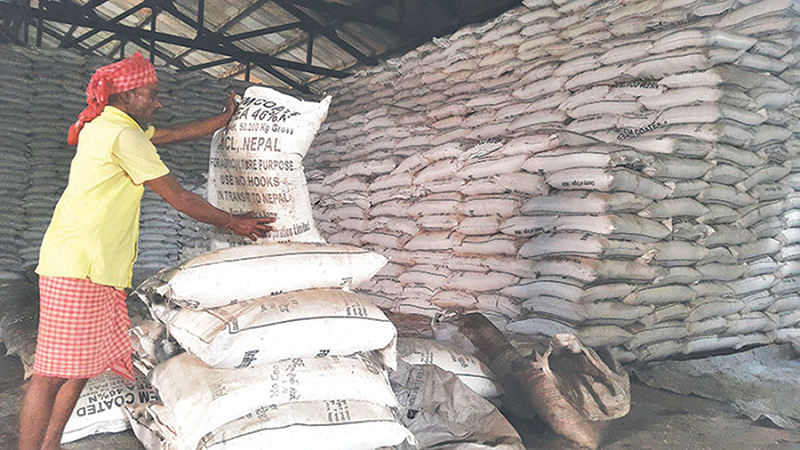
Scarcities have been recurring annually during the peak crop planting period, especially in recent years with more Nepali farmers taking up commercial farming which has pushed up demand. POST FILE PHOTO
KATHMANDU : The government is working to create buffer stocks of chemical fertilisers in each of the seven provinces to ensure that farmers have adequate supply at all times. The scheme is slated to come online this fiscal year, officials said. Chemical fertiliser has become a political commodity, and Nepali farmers have been plagued by regular shortages when they need the plant nutrients the most, severely slashing their income and hitting the country’s economic growth which largely depends on agriculture. Scarcities have been recurring annually during the peak crop planting period, especially in recent years with more Nepali farmers going into commercial farming which has pushed up demand. When the border with India was tightened due to the Covid-19 pandemic, Nepali farmers were put into a right panic as smuggled fertiliser stopped coming. They have habitually depended on the contraband to make up for the shortfall in legitimate supplies. The crippling effect of the shortage was seen in paddy production this year as Nepali farmers were prevented from performing better even when they had an abundant labour supply and the monsoon rains were the best in the past three decades. Yogendra Kumar Karki, secretary at the Ministry of Agriculture and Livestock Development, told the Post that they had planned to create a buffer stock of chemical fertiliser in all provinces to ensure the availability of the plant nutrients during critical stages. “Each province will have a buffer stock of 25,000 to 30,000 tonnes. This inventory will be used in times of crisis. We are aware that any shortage of this vital fertiliser will have any adverse impact on production,” he said. “If there had been adequate chemical fertiliser, we could have harvested 6 million tonnes of paddy this year,” said Karki. “Even though the growth in output was marginal, it’s still an all-time high.” Nepal’s paddy production reached a record level for the fourth straight year due to good monsoon rains and an abundant supply of farmhands, even though a severe shortage of chemical fertiliser during transplantation and top dressing caused distress among farmers. According to preliminary estimates of the ministry, farmers harvested 5.62 million tonnes of paddy, up by a nominal 1.28 percent compared to last year. Paddy is transplanted in June and harvested in November. The monsoon is the lifeblood of Nepal’s Rs3.76 trillion economy which is farm-dependent, as nearly two-thirds of the farmlands are rain-fed. Paddy contributes around 7 percent to the gross domestic product and is the key income source of farmers. Secretary Karki said that farmers go through the same agony of fertiliser shortages every year, and it was the state’s responsibility to ensure that they have adequate supplies. “The government plans a long-term solution to stop the endless problem.” While the possibility of constructing a chemical fertiliser plant is being discussed, Nepal has also revived talks for a chemical fertiliser offtake agreement with India under which it will buy a fixed amount of plant nourishers from the southern neighbour over a long-term period to avoid the usual scarcity during the peak growing season. The accord will be secured through a government-to-government deal, said Karki. According to ministry officials, the discussions are at a preliminary stage. It normally takes six months to procure chemical fertiliser following a global tender call under the Public Procurement Act. And in case the procurement is cancelled due to price volatility or other factors, there will be havoc in the farm sector. “The new arrangement made through a government-to-government deal is not required to go through a lengthy procurement process, and it will ensure that farmers have adequate supply during times of shortages,” said ministry officials. In 2009, in a bid to end the perennial shortages, Nepal signed an agreement with India for 100,000 tonnes of chemical fertiliser (60,000 tonnes of urea and 40,000 tonnes of DAP) annually at import parity prices. The pact allowed Nepal to purchase fertiliser directly without going through the six-month-long tendering process. Shipments came to a stop in 2015-16 due to protests in the Tarai and an Indian blockade, and the agreement too expired at the end of 2017. In 2018, Nepal had proposed to renew the agreement to procure chemical fertiliser for at least five years at import parity prices. The proposal was in line with the 10-year Prime Minister Agriculture Modernisation Project introduced in 2017 which aims to boost farm output substantially. The Agriculture Ministry had proposed importing 150,000 tonnes of fertiliser (100,000 tonnes of urea and 50,000 tonnes of potash) in the first year, that is 2018. The ministry had planned to import 170,000 tonnes in the second year under a government-to-government deal, 195,000 tonnes in the third year and 210,000 tonnes each in the fourth and fifth years. The expected government-to-government pact has been pending since December 2018, when Nepal submitted the first draft of the proposed memorandum of understanding. According to a former secretary at the Agriculture Ministry, they had sent the proposal and several rounds of discussions were held. But India refused to provide chemical fertilisers at the import parity price. According to the Agriculture Ministry, Nepal’s annual requirement of chemical fertiliser stands at more than 700,000 tonnes while imports amount to around 300,000 tonnes. Demand for chemical fertiliser has shot up following the spread of commercial agriculture.
MONEY
India’s services sector loses more steam in December, job cuts resume
- REUTERS
BENGALURU : Growth in India’s dominant services industry continued to lose momentum in December as a resurgence in coronavirus infections weighed on new business and employment, a private survey showed on Wednesday. Asia’s third-largest economy has been gradually recovering from a coronavirus-induced recession but is not expected to return to pre-pandemic levels soon, especially within the service industry - the engine of economic growth and jobs in the country. The Nikkei/IHS Markit Services Purchasing Managers’ Index fell to 52.3 in December from November’s 53.7 but held above the 50-mark separating growth from contraction for a third straight month. “A spike in Covid-19 cases was reported as a key factor restricting growth of new work intakes among service providers, which in turn curbed the rise in output and led to increased business uncertainty about the outlook,” Pollyanna De Lima, economics associate director at IHS Markit, said in a release. “It is clear that the early part of 2021 will continue to be challenging and we’re looking at a sustainable recovery and some return to normality once Covid-19 vaccines become available.” India has the second-highest number of coronavirus infections in the world. On Sunday it approved two coronavirus vaccines for emergency use but it could take years to vaccinate over 1.3 billion people with its rudimentary healthcare system. Although a sub-index monitoring overall demand ended a rough 2020 in growth territory, it declined to a three-month low as night curfews in some major cities depressed demand. Demand from abroad remained firmly in contraction territory as many countries reimposed lockdown measures to contain a fresh spike in Covid-19 cases. Weak demand forced firms to lower their prices despite an uptick in input costs, which increased at the quickest pace since February. Meanwhile, job market conditions darkened, slipping back into contraction, although the pace of job shedding remained minimal.
MONEY
Alibaba plans $5 billion bond this month amid regulatory scrutiny
- REUTERS
The Alibaba Group logo is seen at its headquarters in Hangzhou, Zhejiang province, China. REUTERS
HONG KONG : China’s Alibaba Group Holding Ltd plans to raise at least $5 billion through the sale of a US dollar-denominated bond this month, four people with knowledge of the matter said, amid regulatory scrutiny of co-founder Jack Ma’s empire. Depending on investor response, proceeds could reach $8 billion which the e-commerce leader is likely to use for general corporate expenditure, one of the people said. The fundraising will be a test of investor sentiment towards Alibaba, amid a regulatory crackdown on it and financial technology affiliate Ant Group. Chinese officials have come down hard on Ma’s business empire since he publicly criticised the country’s regulatory system in October setting off a chain of events that resulted in the halting of Ant Group’s $37 billion stock market listing. Ma’s absence from public view in the intervening time has fuelled social media speculation over his whereabouts. The bond sale plan, including timeline, is not finalised and is subject to change, the people said, declining to be identified as they were not authorised to speak to the media. Alibaba declined to comment. Since Ma’s speech, Chinese regulators have begun an antitrust probe into Alibaba and ordered fintech Ant to change its lending and other consumer finance businesses, including the creation of a holding company to meet capital requirements. US President Donald Trump has also ratcheted up tensions, moving to ban transactions with eight Chinese software applications, including Ant Group’s Alipay mobile payment app. Chinese regulators are also reviewing Ant’s equity investments in dozens of companies and considering whether to instruct the firm to divest some of those investments, Reuters has reported. “Investors will need Jack Ma to make some sort of public appearance to give them confidence for the bond to be well received,” said an Asia credit analyst with a European bank, who was not authorised to speak to the media and so declined to be identified.
MONEY
World Bank sees subdued recovery in 2021
- ASSOCIATED PRESS
WASHINGTON : The global economy will experience a subdued recovery this year from the devastating pandemic, the World Bank predicted on Tuesday, but it warned that the near-term outlook is highly uncertain and growth could be imperilled if coronavirus infections and delays in the rollout of vaccines continue. In its new Global Economic Outlook, the World Bank forecast 4 percent growth this year following a 4.3 percent decline in 2020, the biggest plunge in global output since a contraction of 9.8 percent in 1945 as nations demobilized at the end of World War II. By comparison, the global recession triggered by the Great Depression of the 1930s saw growth shrink by 4.8 percent on average from 1930 through 1932. The 2008 financial crisis triggered a 1.8 percent drop in global output in 2009. “If history is any guide, the global economy is heading for a decade of growth disappointments unless policy makers put in place comprehensive reforms,” the bank warned, citing the global pandemic layered over economic trends already in play. “While the global economy appears to have entered a subdued recovery, policymakers face formidable challenges in public health, debt management, budget policies, central banking and structural reforms,” said World Bank President David Malpass. The bank said global growth will be aided by a recovery this year to GDP growth of 3.5 percent in the United States and an even bigger 7.9 percent rebound in China, the world’s two biggest economies. For 2020, the World Bank expects GDP in the United States to fall by 4.3 percent while it predicted a modest 2 percent increase in China. Because of the uncertainty caused by the current resurgence in virus cases and initial problems in distributing vaccines, the World Bank cautioned that its forecast is highly uncertain. Under a scenario where virus cases continue to rise and the rollout of the vaccine does not accelerate, global growth could be reduced to a meagre 1.6 percent this year.
MONEY
Huawei to pack less of a punch in the new year after bruising 2020, analysts say
- REUTERS
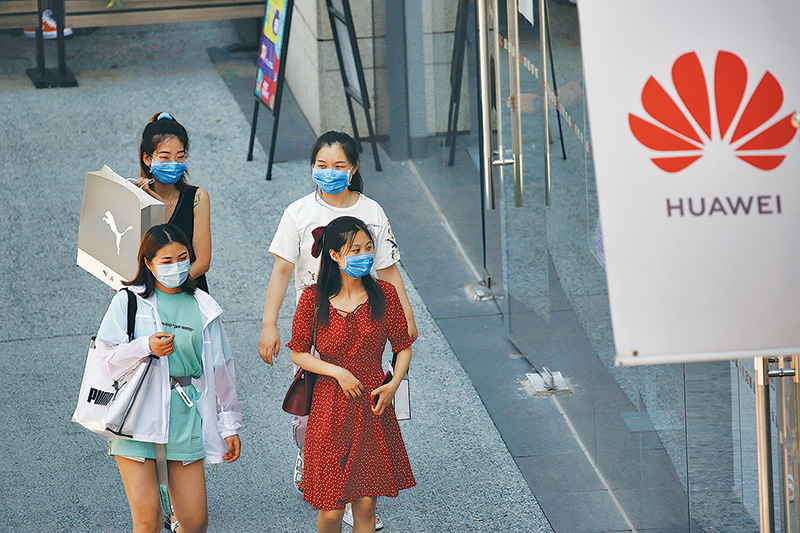
Women wearing face masks walk past a Huawei store at a shopping complex in Beijing, China. REUTERS
SHENZHEN (China) : Huawei Technologies Co Ltd this year will likely see slower 5G business and push further into software, while hoping its smartphones get a reprieve from US sanctions which last year struck the chip-reliant heart of its group, analysts said. Limited access to high-end semiconductors means rationing during China’s network upgrade, they said, while the dissection of its mobile arm will send Huawei tumbling down rankings while it continues to develop a proprietary operating system. China’s leading telecommunications equipment maker found itself on a US trade blacklist in May 2019 due to national security concerns. Huawei has repeatedly denied it is a risk. That effectively banned US-based firms from selling Huawei essential US technology. Last August, the ban was extended to foreign firms with US business, reaching chief suppliers such as Taiwan Semiconductor Manufacturing Co Ltd (TSMC). The change hit an Achilles heel as Huawei depends on TSMC to make advanced chips for its handsets, fifth-generation (5G) network base stations, servers, cloud computing and artificial intelligence products, said Paul Triolo, head of global tech policy at Eurasia Group. Stockpiles only last so long, he said. “Passage of this death sentence does not involve a swift execution,” technology analyst Dan Wang said in a client note. “Instead, the process is much more like a slow strangulation.” Huawei declined to comment. Wang said Huawei will feel the impact most acutely in its consumer business, which brought in 54 percent of revenue in 2019. In November, Huawei spun off budget smartphone line Honor in a sale founder Ren Zhengfei said would allow the brand to regain access to chips. Huawei could look to do the same with its premium lines this year, Triolo said. Huawei was the world’s biggest smartphone maker as recent as the second quarter of 2020, but the Honor sale and chip shortage will likely take it out of the top six this year, said data firm Trendforce. Its luck may change with the US presidential inauguration of Joe Biden, from whom analysts expect more leniency towards Huawei’s smartphone business. The inauguration this month comes as Chief Financial Officer Meng Wangzhou discusses a deal with US prosecutors over allegations of doing business with Iran. In the meantime, Huawei will likely focus on the Harmony operating system it is developing for its smartphones after being cut off from Alphabet Inc’s Android, said Nicole Peng, VP of Mobility at consultancy Canalys. Elsewhere in software, Huawei will likely pivot more towards services such as cloud computing and internet-of-things devices, though these are unlikely to offset slowdown in smartphones and telecommunication infrastructure, analysts said. Huawei’s network business does have bright prospects, but with major markets such as Britain and Japan banning its equipment, it will likely focus on China, analysts said. The company has enough chips to make around 500,000 5G base stations, said Jefferies analyst Edison Lee. Yet rather than use up that supply, the government will likely slow 5G introduction, taking “a middle-of-the-road approach to balance between expanding coverage and waiting for Huawei to catch up,” he said.
MONEY
Madan Krishna appointed brand ambassador for thee GO
BIZLINE
- Post Report
KATHMANDU: Madan Krishna Shrestha has been appointed brand ambassador for the entire range of electric vehicles from thee Go. Regarded as one of the most innovative and versatile Nepali artists, he fully embodies and matches the thee GO brand and values, states the press release issued by the company. The company is at a defining juncture in its evolution as it gears up to disrupt the mobility industry in Nepal with path-breaking offerings. “This is high time that we seriously start considering the modes of transportation. E-mobility has greater economic and environmental advantages and benefits. We can pave the way for an environmentally sustainable Nepal by promoting electric vehicles. The future of zero emissions and zero pollution is only possible when we are committed ourselves to leading the way towards this future. I am delighted to be partnering with thee GO whose approach is aligned with sustainable development and wellbeing of all Nepalese,” said the inspiring Nepali icon.
WORLD
Criticism mounts over India’s ‘abrupt’ approval of local coronavirus vaccine
Experts question why the regulator recommended approval one day after asking Bharat Biotech for more analysis.
- REUTERS
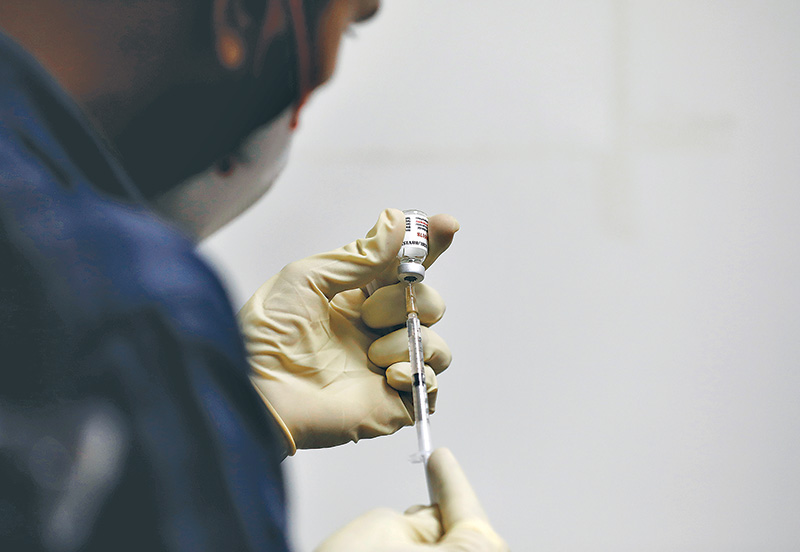
A medic fills a syringe with COVAXIN, an Indian government-backed experimental Covid-19 vaccine, before administering it to a health worker during its trials, at the Gujarat Medical Education and Research Society in Ahmedabad, on November 26, 2020. REUTERS
BENGALURU : Criticism of India’s approval of a local Covid-19 vaccine without proof of its efficacy grew on Wednesday after news that a regulatory panel approved the shot just one day after asking the vaccine maker for more evidence it would work. The recommendations of the Indian drugs regulator’s subject expert committee (SEC) released on Tuesday show that the panel asked Bharat Biotech International Ltd to present more efficacy data for its Covid-19 shot before it could consider approving the treatment. “After detailed deliberation, the committee recommended that the firm ... may perform interim efficacy analysis for further consideration of restricted emergency use approval,” the SEC’s recommendations in a Jan. 1 meeting show. The very next day, the committee recommended approving Bharat Biotech’s vaccine for “restricted use in emergency situation in public interest as an abundant precaution.” The SEC also separately recommended emergency use authorisation for the Oxford University/AstraZeneca Covid-19 vaccine, being produced by India’s Serum Institute. The greenlighting of Bharat Biotech’s COVAXIN had already faced criticism from opposition lawmakers and health experts for lack of efficacy data, typically obtained from a large, Phase III human trial - which the manufacturer is still conducting. News of the SEC’s recommendations spurred further criticism. “Was the Subject Expert Committee (SEC) approval a command performance? This is as serious as it can get,” Manish Tewari, an opposition lawmaker, said on Twitter. Health experts questioned why the SEC abruptly recommended approval one day after asking Bharat Biotech for more analysis. “The SEC ... appears to have been pressured overnight into reconsidering its decision and giving approval the next day, albeit hedged in by many conditions,” the All India People’s Science Network, a network of science advocacy groups, said in a statement. “We are perplexed at the abrupt change in thinking of the SEC from the first two meetings to the third day on which the approval was recommended while apparently discounting the need for efficacy data as the condition of the approval,” the All India Drug Action Network, a nonprofit health watchdog, said. Both Bharat Biotech and government officials have pointed to regulatory provisions that allow for quick drug approval for serious diseases even without Phase III trial data. Neither India’s drugs regulator nor Bharat Biotech responded to Reuters requests for comment on Wednesday. Regulators also granted approval to Bharat Biotech’s vaccine only “in clinical trial mode”, unusually cryptic language that left some experts baffled. “They’ve introduced terminologies that are confusing,” said Giridhar Babu, a professor of epidemiology at the Public Health Foundation of India. “The phrase ‘in clinical trial mode’ is not generally a term you will see in approvals.” Any confusion around vaccines could harm immunisation programmes by causing distrust, Babu said. “It takes decades of work to build confidence in vaccines.”
WORLD
WHO virus mission blunted as China refuses team entry
- Post Report,AGENCE FRANCE-PRESSE
BEIJING : An expert mission to China to probe the origins of the Covid-19 pandemic was in disarray on Wednesday after Beijing denied entry to the World Health Organization team at the last minute despite months of painstaking negotiations. Ten experts were due to arrive in China this week for the delicate, highly politicised task of establishing how and where the virus jumped from animals to humans. But with a number of the team already in transit, China denied them entry visas, prodding WHO chief Tedros Adhanom Ghebreyesus, to say he was “very disappointed”. China is determined to control the origin story of the virus, which has killed more than 1.8 million people around the world and laid waste to global economies. The first cases of the coronavirus were recorded in the central Chinese city of Wuhan in late 2019, prompting accusations of chaotic, secretive handling by Chinese authorities which led to its spread beyond China. Despite the hail of criticism, Beijing has so far resisted pressure for an independent probe and instead has seeded doubt as to whether the pandemic even started inside its borders.
WORLD
Warnock makes history with Senate victory as Democrats near majority
- ASSOCIATED PRESS
ATLANTA : Democrat Raphael Warnock won one of Georgia’s two Senate runoffs on Wednesday, becoming the first Black senator in his state’s history and putting the Senate majority within the party’s reach. A pastor who spent the past 15 years leading the Atlanta church where Martin Luther King Jr preached, Warnock defeated Republican incumbent Kelly Loeffler. It was a stinging rebuke of outgoing President Donald Trump, who made one of his final trips in office to Georgia to rally his loyal base behind Loeffler and the Republican running for the other seat, David Perdue. The focus now shifts to the second race between Perdue and Democrat Jon Ossoff. The candidates were locked in a tight race and it was too early to call a winner. Under Georgia law, a trailing candidate may request a recount when the margin of an election is less than or equal to 0.5 percentage points. If Ossoff wins, Democrats will have complete control of Congress, strengthening President-elect Joe Biden’s standing as he prepares to take office on January 20. Warnock’s victory is a symbol of a striking shift in Georgia’s politics as the swelling number of diverse, college-educated voters flex their power in the heart of the Deep South. It follows Biden’s victory in November, when he became the first Democratic presidential candidate to carry the state since 1992. Warnock, 51, acknowledged his improbable victory in a message to supporters early Wednesday, citing his family’s experience with poverty. His mother, he said, used to pick “somebody else’s cotton” as a teenager. “The other day, because this is America, the 82-year-old hands that used to pick somebody else’s cotton picked her youngest son to be a United States senator,” he said. “Tonight, we proved with hope, hard work and the people by our side, anything is possible.” The Associated Press declared Warnock the winner after an analysis of outstanding votes showed there was no way for Loeffler to catch up to his lead. Warnock’s edge is likely to grow as more ballots are counted, many of which were in Democratic-leaning areas. Loeffler refused to concede in a brief message to supporters shortly after midnight. “We’ve got some work to do here. This is a game of inches. We’re going to win this election,” insisted Loeffler, a 50-year-old former businesswoman who was appointed to the Senate less than a year ago by the state’s governor. Loeffler, who remains a Georgia senator until the results of Tuesday’s election are finalized, said she would return to Washington on Wednesday morning to join a small group of senators planning to challenge Congress’ vote to certify Biden’s victory. “We are going to keep fighting for you,” Loeffler said, “This is about protecting the American dream.” Georgia’s other runoff election pitted Perdue, a 71-year-old former business executive who held his Senate seat until his term expired on Sunday, against Ossoff, a former congressional aide and journalist. At just 33 years old, Ossoff would be the Senate’s youngest member. Trump’s false claims of voter fraud cast a dark shadow over the runoff elections, which were held only because no candidate hit the 50 percent threshold in the general election. He attacked the state’s election chief on the eve of the election and raised the prospect that some votes might not be counted even as votes were being cast Tuesday afternoon.
WORLD
Assange denied bail by London court over risk he might abscond again
- REUTERS
LONDON : WikiLeaks founder Julian Assange was denied bail on Wednesday by a British judge who said there was a risk he might flee justice while the United States tries again to secure his extradition. Assange, who has spent more than eight years either holed up in the Ecuadorean embassy in London or in jail, had asked to be freed on bail after the court ruled on Monday that he should not be extradited because he would be at risk of suicide. “I am satisfied that there are substantial grounds for believing that if Mr Assange is released today he would fail to surrender to court to face the appeal proceedings,” Judge Vanessa Baraitser told London’s Westminster Magistrates Court. “As far as Mr Assange is concerned this case has not yet been won ... the outcome of this appeal is not yet known.” The US Department of Justice says it will continue to seek Assange’s extradition to face 18 criminal charges of breaking an espionage law and conspiring to hack government computers. Assange’s partner, Stella Moris, said the judge’s decision to deny him bail was a huge disappointment and urged the United States to pardon him. WikiLeaks said it would appeal against the denial of bail. Admirers hail Australian-born Assange, 49, as a hero for exposing what they describe as abuses of power by the United States. But detractors cast him as a dangerous figure who has undermined the security of the West, and dispute that he is a journalist. WikiLeaks published hundreds of thousands of secret US diplomatic cables that laid bare often critical US appraisals of world leaders, from Russian President Vladimir Putin to members of the Saudi royal family. Assange made international headlines in early 2010 when WikiLeaks published a classified US military video showing a 2007 attack by Apache helicopters that killed a dozen people in Baghdad, including two Reuters news staff. Clair Dobbin, a lawyer representing the United States at the hearing, said Assange had gone to extraordinary lengths to avoid extradition and that he could try to leave the United Kingdom to flee justice.
WORLD
Rival teams race to be first for winter summit of ‘savage’ K2
- AGENCE FRANCE-PRESSE
ISLAMABAD : Dozens of mountaineers have converged on Pakistan’s mighty K2 peak, vying to conquer one of the world’s last major climbing challenges—reaching the summit in winter. Four teams with around 60 climbers and sherpas between them have begun climbing the world’s second-highest peak—known as the “savage mountain” — where winds can blow at more than 200 kilometres per hour and temperatures drop to minus 60 degrees Celsius. Since the first attempt in 1987-1988, only a handful of winter expeditions have been made on the 8,611-metre mountain in the Karakoram massif on the Chinese border. None of them have got above 7,650 metres. Even in summer, almost one in six climbers who attempt the summit die, and since the first success in 1954 only 450 people have managed it—compared to more than 6,000 who have scaled Mount Everest. Lockdowns and travel bans sparked by the coronavirus outbreak mean the summer climbing season last year was a washout in Pakistan and other popular climbing destinations in the region, such as Nepal. “People had plans for the year but they couldn’t go anywhere,” said Dutch mountaineer Arnold Coster, who is helping to lead one of the expeditions. “So we’ve been kind of jobless for a year and now lots of people want to do something,” he told AFP. Although Pakistan is still battling more than 2,000 fresh coronavirus cases a day, the country has reopened. Throughout December, the teams flew into the northern town of Skardu and trekked over the Baltoro Glacier to reach base camp, from where they will begin the ascent—an expedition that could take up to two and a half months in total depending on the weather. K2 is set amongst some of the most breathtaking landscapes the world has to offer—and some of the most dangerous. “Multiple factors must fall in line for anyone to have a chance of summiting,” said climbing coach Alan Arnette, who points to altitude sickness, avalanches and landslides—as well as egos—as potential pitfalls. Coster’s expedition, organised by Nepalese company Seven Summit Treks, stands out with its supersize team of around 20 clients of varying experience and around 30 support staff. Together, they will have to accommodate differing ambitions, including those who do not want the help of sherpas or oxygen. “We have a lot of different people with different ideas. For us, as leaders, it’s difficult to manage. But from a manpower point of view, if people work together, we have a bigger chance,” said Coster. Climbers spend days going up and down attaching ropes to the mountain to help them reach the top and also acclimatise to the thinning air—particularly tiring work for small groups. One trekker has already been airlifted from base camp because of a pre-existing health condition, the company said. Mingma Gyalje has climbed 13 of the highest peaks but failed to reach the K2 summit last winter. This year he is heading an all-Nepalese team of three experienced sherpas. Gyalje is a contender to summit this time, better prepared for the cold after his harsh lesson last year—but concerned about sharing a crowded mountainside with other teams. “I don’t feel like it’s a good sign having so many people, too many clients,” he told AFP. “It puts pressure on the staff. Because there are people in the team who don’t want to go back without reaching the summit.” Many mountaineers shared the same concerns, fearing some of the climbers are not sufficiently prepared. Of the other two expeditions, one is led by Nirmal Purja, a star Nepalese climber and former British special forces serviceman who has set his team of six apart with a plan to paraglide off the summit. In 2019, Purja scaled all fourteen of the world’s 8,000-metre mountains in six months and six days—however, that was in the summer. The fourth team is an Icelandic-Pakistani pairing of three. With so many people on K2 this winter, the chances are good that at least one person will reach the top, said Arnette, the climbing coach. “However, almost everything must go practically perfect,” he said. “And that rarely happens on an 8,000-metre peak, much less on K2.”
WORLD
Pakistani Shiites continue sit-in over killing of 11 miners
Briefing
QUETTA: Pakistan’s minority Shiites continued their sit-in for a fourth straight day on the outskirts of the southwestern city of Quetta to protest the killing of 11 coal miners by the Islamic State group, insisting they will bury their dead only when Prime Minister Imran Khan personally visits them to assure protection. Residents and relatives of the slain miners, who were members of the minority Shiite Hazara community, began the protest on Sunday after IS militants abducted and killed them in southwestern Baluchistan province.(AGENCIES)
WORLD
Four dead at India steel plant after suspected gas leak
Briefing
BHUBANESWAR: Four contract workers at the Steel Authority of India Limited’s Rourkela steel plant in eastern India died on Wednesday after a suspected gas leak, the state-owned company said in a statement. The four men were employees of private firm M/S Star Constructions and were engaged in maintenance work at the plant’s coal chemicals department, SAIL said. “A high-level committee has been formed to inquire into the cause of the incident and all emergency protocols have been immediately activated in the plant,” the company said in a statement.(AGENCIES)
WORLD
Dozens of Hong Kong opposition figures arrested under security law
Briefing
HONG KONG: As many as 50 Hong Kong opposition figures were arrested on Wednesday under a new national security law in the largest operation yet against Beijing’s critics, deepening a crackdown sweeping the financial hub. The latest police operation comes as China stamps out opposition to its rule in the semi-autonomous business hub after millions hit the streets in 2019 with huge and sometimes violent democracy protests. Opposition figures and parties took to their Facebook and Twitter accounts to confirm at least 21 arrests, most on a charge of “subversion”. (AGENCIES)
SPORTS
Jose Mourinho has chance to deliver Tottenham’s first trophy since 2008
Spurs beat Championship side Brentford 2-0 at the Tottenham Hotspur Stadium to advance into the League Cup final.
- REUTERS
Goals from Moussa Sissoko and Son Heung-min (centre) sent Tottenham to their ninth final of the League Cup, which they have won four times.AP/rss
LONDON : Tottenham Hotspur boss Jose Mourinho said he senses the desire of his players to end the club’s 13-year trophy drought after they reached the League Cup final beating Championship side Brentford 2-0 on Tuesday. Spurs have not lifted a major trophy since their League Cup triumph over Chelsea in 2008 and goals from Moussa Sissoko and Son Heung-min secured their ninth final appearance in the competition, which they have won four times. Mourinho, who is seeking his fifth League Cup crown as a manager after previous triumphs with Chelsea (2005, 2007, 2015) and Manchester United (2017), said there was a simple secret to success in the competition. “I came to England in 2004 and I remember ... I had to learn the meaning of the cups here and I always took it seriously. If there’s any secret it’s to take it seriously. To respect what English football is,” Mourinho told reporters. “What I sense in the team is exactly that desire. I’m not saying winning mentality, I’m not saying we are this or that. I just say we’re honest people. The guys since the first game against Chelsea, then Stoke City, and now ... took it seriously. That’s what I hope to do on Sunday in Crosby against Marine [in the FA Cup third round]. Try to be serious, respect the opponents and try to progress.” Fellow London side Brentford, playing in their first semi-final in a major cup competition, started brightly but fell behind in the 12th minute when unmarked French midfielder Sissoko headed in a fine Sergio Reguilon cross from the left. The visitors, who had beaten four top-flight teams on their way to the semis, thought they had drawn level after the break when striker Ivan Toney headed home but the goal was disallowed for a very tight offside, which was spotted by VAR. Toney’s grounded knee was ruled to be offside before he rose to head in from close range after Ethan Pinnock nodded a cross back across the face of goal. Jose Mourinho’s Spurs side responded to that let-off with South Korean forward Son collecting a fine pass from Tanguy Ndombele and bursting goalwards before slotting past goalkeeper David Raya to make it 2-0 after 70 minutes. Brentford’s disappointment was compounded when Josh Dasilva was sent off six minutes from time for an over-the-top challenge on Tottenham’s Denmark midfielder Pierre-Emile Hojbjerg, who was immediately substituted with blood streaming down his shin. “It’s a game that takes us to a final to, probably, but I hope not, an empty Wembley final but of course I’m very happy,” said Mourinho. “The final is now in a pocket for three months, we have to wait for the final so we have to focus on what we have coming up... so let’s forget the final for now. But when April arrives we have to be ready and to fight for the trophy,” he added. Brentford boss Thomas Frank said, “It was an open game, we had a top attitude, we were brave and an equaliser wouldn’t have been a totally unfair result against a world-class team. If you want to go to a final against a top team, you need the margins with you but then they show class to get a second and after that it was game over.” The match will be held at Wembley on April 25, after the Football League moved the date back from February.
SPORTS
Fit-again Rohit returns for third Australia Test
- REUTERS
SYDNEY : A fit-again Rohit Sharma will replace struggling opener Mayank Agarwal and fast bowler Navdeep Saini will make his Test debut for India in their third match against Australia beginning at the Sydney Cricket Ground on Thursday. Rohit returns after recovering from a hamstring injury which kept him out of the limited-overs series in Australia as well as the first two Tests in Adelaide and Melbourne. The 33-year-old from Mumbai will partner Shubman Gill at the top after Agarwal’s meagre aggregate of 31 runs in four innings made his place in the playing XI untenable. “We all are really excited to have him [Rohit] back,” said Ajinkya Rahane, who is leading India in the absence of skipper Virat Kohli who is out on paternity leave. “His experience at the highest level matters a lot. He had seven-eight [practice] sessions. He came to Melbourne and when our Test match got over, he started his practice straightaway. He’s been batting really well,” Rahane. India have also lost the services of frontline pacers Mohammed Shami and Umesh Yadav through injuries since levelling the series 1-1 in Melbourne. Saini’s debut means Jasprit Bumrah will lead an inexperienced three-pronged pace attack which also includes one-Test old Mohammed Siraj. “We’ll definitely miss Umesh and Shami but that gives opportunity to other guys to come and do well at the highest level,” Rahane said, citing Siraj’s impressive debut in Melbourne as inspiration. “It’s not about one or two individuals, it’s about the bowling unit ... As a team we want to do well. The way he bowled in the last game, especially when Umesh got injured in the second innings ... Siraj was really exceptional.”
SPORTS
New Zealand rout Pakistan in second Test to sweep series 2-0
- REUTERS
The victory sent New Zealand to the top of world rankings for the first time.AP/rss
WELLINGTON : Kyle Jamieson took his second five-wicket haul of the match as New Zealand beat Pakistan by an innings and 176 runs in the second Test on Wednesday to sweep the series 2-0 and top the world rankings for the first time. The young paceman took 6-48 to add to his 5-69 from the first innings as the Black Caps dismissed the tourists for 186 to seal an eighth straight home Test series triumph with victory inside four days at the Christchurch’s Hagley Oval. The win also pushed the Black Caps firmly into contention for one of two berths in June’s inaugural World Test Championship final at Lord’s. As much as player-of-the-match Jamieson’s fine bowling, the win was built on the magnificent 238 skipper Kane Williamson scored in New Zealand’s only innings, which enabled the hosts to declare on 659-6. “Even though the result on paper was very much in our favour, we know that when you are playing quality opposition, it’s the small margins,” Williamson, who was adjudged player-of-the-series, said after the win. We won those small margins and had a bit of luck go our way as well.” Pakistan managed 297 in the first innings and only an extraordinary rearguard action was going to prevent a heavy defeat when they resumed on 8-1 after Jamieson had removed opener Shan Masood on Tuesday night. Mohammad Abbas was caught behind off a Trent Boult delivery before Jamieson got into the swing again to send back Abid Ali and leave the tourists labouring to lunch at 69-3. Jamieson secured his fourth five-wicket haul in six Tests in the second session by dismissing Haris Sohail, Azhar Ali and stand-in skipper Mohammad Rizwan. Boult dismissed Zafar Gohar, who made 37, to seal the victory for New Zealand.
SPORTS
Arsenal’s Mesut Ozil close to securing Fenerbahce deal
Briefing
ANKARA: Arsenal’s out-of-favour German midfielder Mesut Ozil is in advanced talks to join Istanbul club Fenerbahce, Turkish media reported on Wednesday. Ozil is expected to sign a three and a half year deal with the 19-time Turkish champions, the privately-owned DHA news agency reported. The reports came after the 32-year-old, a World Cup winner with Germany in 2014, fanned speculation by tweeting a photograph of himself in Istanbul with the words: “This city ... #throwback #Istanbul.” Sports daily Fanatik reported that Fenerbahce chairman Ali Koc and team director Emre Belozoglu flew to London to persuade the player, who is of Turkish origin, to make the move. A Fenerbahce spokesman did not immediately respond to query. Other reports on Tuesday said Ozil was in talks with MLS side DC United. Ozil moved to Arsenal from Real Madrid in 2013 and is the highest paid player in the Premier League club’s history on a reported £350,000 ($480,000) a week, but he has not played all season and does not appear to be in coach Mikel Arteta’s plans. (AGENCIES)
SPORTS
Slaven Bilic back in coaching job with Beijing Guoan
Briefing
LONDON: Beijing Guoan have appointed former West Bromwich Albion manager Slaven Bilic as their new head coach on a two-year contract to replace Bruno Genesio, the Chinese Super League (CSL) club said on Wednesday. Beijing made the announcement on social media and said they had decided not to renew the contract of Frenchman Genesio, who guided them to third in the CSL and the quarter-finals of the Asian Champions League. Croatian Bilic returns to management less than a month since he was sacked by English Premier League side West Brom following a poor start to the 2020-21 season in which they claimed seven points in 13 games under the 52-year-old.(AGENCIES)
SPORTS
Juventus confirm second Covid-19 positive test this week
Briefing
TURIN: Juventus confirmed on Tuesday that Juan Cuadrado has tested positive for Covid-19, the second player from the Serie A champions to test positive this week. Brazilian defender Alex Sandro is already in isolation after testing positive on Monday, with Cuadrado confirmed as having contracted Covid-19 after the latest round of testing. “Juventus Football Club announces that, during the checks provided for by the protocol in force, Juan Cuadrado has emerged positive with Covid-19. The player has already been placed in solitary confinement and is asymptomatic.” (AGENCIES)
HOROSCOPE
HOROSCOPE
ARIES (March 21-April 19) *** One of the best ways to remind yourself that you’re the chief of your life is by rearranging your life. It’s time for some cleaning! But before you get annoyed at the prospect of organising things left untouched, stop and think about it.
TAURUS (April 20-May 20) ***** Do you know the fastest route to your happy place? If not, you’d better figure it out quick! There could be at least one difficult personality living up to their reputation today, making your life a little bit more difficult.
GEMINI (May 21-June 21) *** The person in power right now might not be the person you’d like to see in power, but so what? You can and will still achieve a lot today. Their involvement in your life is waning, and you won’t have to worry about them breathing down your neck.
CANCER (June 22-July 22) *** You might think you’re seeing double today when you come across someone who reminds you a lot of yourself at a younger age. This person is stirring up some emotions about the goals you left unconquered in your life.
LEO (July 23-August 22) *** The energy you direct at other people will always come back to you in some way, shape, or form. This is something to keep in mind the next time you feel like chatting on your phone while someone next to you is trying to read.
VIRGO (August 23-September 22) **** Just because your friend or co-worker doesn’t like to toot their own horn doesn’t mean you have to keep from singing their praises when you hear about their latest triumph. Show them how proud you are of them and organize a little celebration.
LIBRA (September 23-October 22) ***** One of your current projects feels like it will never end. If you’ve been waiting for the light at the end of the tunnel to come into view, you might be able to get a glimpse of it today if you keep calm and remain confident about it.
SCORPIO (October 23-November 21) ***** This is a very good day to get what you want, whether it’s the attention of a certain someone you have your eye on or just a better parking space. You’ve got some killer positive energy inside of you right now.
SAGITTARIUS (November 22-December 21) *** If you get paired up with someone at work or school, your first reaction might be that the two of you are mismatched. If that’s the case, stick with it anyway. Give this relationship time to bloom, and you could be nicely surprised by what it grows into.
CAPRICORN (December 22-January 19) *** A friend has been making some remarkable changes in their life, which could mean you’re thinking about making some changes of your own. They have some excellent advice on how to get started, so you should pick their brain.
AQUARIUS (January 20-February 18) **** Take a second look at recent events and you’ll finally be able to see them for what they are. A little distance plus time can give you clarity. It’s not easy to be honest with yourself about the mistakes you’ve made in the past, but it’s the best way to grow.
PISCES (February 19-March 20) **** If you’ve been dreaming about making a change in your life, today you could get the chance to start making that dream come true. This is only the beginning, though. You can’t expect any major transformations to happen overnight.
CULTURE & LIFESTYLE
A place to shine for young Nephop artists
Sabda Sangram, an upcoming virtual rap battle show, is making sure aspiring rappers have a voice.
- SRIZU BAJRACHARYA
Following its first season that aired in June, the show started its second one in October. Photo courtesy: Sabda Sangram’s Facebook page
KATHMANDU : There’s something about watching rappers battle with each other—the aggression and the swag sweeps you in immediately. It’s imposing and undaunting. And on Sabda Sangram, as rappers bash one another in a heated passion for rap, the rendition is compelling and the beats cleverly compulsive. And over the months of the pandemic, the virtual rap battle programme has been amassing a lot of attention on the internet, especially on YouTube and Facebook. “It’s been an incredible experience so far and quite different from what we expected,” says Ktm Souljah, the hip-hop artist who is one among the people behind the show. Sabda Sangram manifested over the lockdown as a group of ardent hip-hop followers decided to do something to bolster the underground hip-hop scene. The idea was to bring together rap artists from across the country and engage them in intense expressions of themselves in a rap battle. The programme seeks to help artists exercise their wordplay and understand the beats and harmony of rap. And following up its first season that started in June with its second one in October, the show has been perking up the rap culture in the country. For the organisers themselves their programme’s traction has been unexpected--and overwhelming. “When things were quiet during the lockdown, Souljah said let’s do something together for the hip-hop scene. With the initiative we hoped to provide a platform for aspiring rap artists and keep the youth productively engaged amid a distressful time,” says Nita Pradhananga, the co-founder of the show, who is also the host. “We had not even expected a lot of participation—the programme was imagined on a small scale,” she says. “It wasn’t an ambitious project to begin with. It was more like—let’s bring people together and let them experience something,” added Souljah. “But after seeing people’s expectations, we had to buckle up,” he said. To their surprise, Sabda Sangram’s open call received over 200 application videos on their first season, with Nepalis participating from different corners of the country to India, Japan, the US, the UAE, Malaysia and Australia. Their second season saw over 300 applications. Today, for the organisers, things have been moving quickly and with more significance than they had imagined. “I think the listeners of rap and people interested in being rap artists are gradually growing in the country. For us this realisation of people’s interest has been very motivating,” says Souljah. “This battle show also aims to encourage rappers to recognise rap battle as a genre they can explore themselves in. It’s not necessary that every rapper has to have a rap song, this genre too can have a scope and that has also been one of the ultimate goals of the show,” said Souljah, who has been promoting hip-hop for over a decade and he is also the vocalist of Tumbleweed Inc. The culture of rap battle originated in the 1980s in the East Coast hip-hop scene and it emphasised complex lyrical wordplay and delivery than the beats itself. “Rap battles are known for expressing aggression and are confrontational. The genre of hip-hop itself originates from revolution and rap battles, a sub-genre of it is expressive, defiant and even explicit,” says Souljah. Sabda Sangram’s format, however, discourages the use of explicit words to encourage the participants to be more creative with their confrontations in their battles. And because the battles are online, the programme has had a wide reach in terms of participation--from participants who are above 25 to people who have been closet rappers, Sabda Sangram has managed to give something different to participant’s experience. For many participants, the programme has allowed them to explore their interest in rap more deeply. For 24-year-old Ankush Adhikari, aka WLF Kush, Sabda Sangram has been a memorable experience to enhance his rap career. “Before Sabda Sangram, I had participated in cyphers and freestyle battles as well and I thought the platform would be a good exposure,” said Adhikari, who won the first season. Besides Adhikari, Sharmila Ghimire aka Everest Queen has also sweeped many people’s curiosity. The only female MC in the second season, Ghimire has cooly brushed her opponents with her feisty and frisky delivery. “Sabda Sangram for me was a platform to express my aggression, emotion and stress. I also had sought participation to connect with people with whom I could work on my skills,” said Ghimire who is also one of the current participants of season 2 and a former participant of the season one of the show. For both Adhikari and Ghimire, platforms like Sabda Sangram have been important for their exposure in the rap scene and for significant experience that contribute to their career in rap. “Programmes like these help us grow as artists, as it expands our horizons and gives an opportunity to artists like us. Moreover, it helps to foster the underground hip-hop scene,” says Adhikari. Over the years, although the hip-hop scene of the country has gained firmer foothold, many artists and young hip-hop enthusiasts believe people still don’t get what rap means and that the hype has been more around celebratory rap figures. And for much of the time, the hip-hop scene is underrated and for emerging artists the journey to making a name in the rap scene is still challenging. “But that is also why platforms like these are important to us, it helps us to explore more and break the set notions of how hip-hop is uncultured and freaky,” said Ghimire. “For me, the exposure has also helped me find an audience and people to work with.” After Raw Barz, a freestyle battle league that brought together many Nepali rap artists like Laure, Uniq Poet and Sacar, the online rap battle programme in a music industry devoid of platforms for aspiring rappers has been a silver lining to test and work on themselves. “The title I won in the first season means a lot to me and I believe it will open me to more avenues,” said Adhikari. For the organisers, however, the programme still looks challenging for they have not received the support they wished they had. Despite the popularity of the battles--they are still struggling to find sponsors. “After the success of season one, we were hopeful about getting more support but that really didn’t happen. The fault could be on our part as well, on our outreach. But while the audience reception has been overwhelming, we can’t say the same in terms of the funding we hoped we would get for the programme,” said Pradhananga. But Pradhananga, Souljah and the entire team of Mero Mazzako Karyalaya, who is behind the production of the rap battle, is hopeful that Sabda Sangram will mark a significant movement in the underrated hip-hop scene of the country. “I think it’s still very early to say we have become a platform already, but we do want to make Sabda Sangram an influential platform for aspiring rap artists,” said Souljah. “And we look forward to expanding and growing the rap scene.”
CULTURE & LIFESTYLE
Grammy Awards shift to March due to pandemic conditions
Due to the recent surge in coronavirus cases and deaths, the annual show that was supposed to be held on January 31 has been moved to March 14.
- MESFIN FEKADU
A view of the red carpet appears prior to the start of the 62nd annual Grammy Awards in Los Angeles.AP/RSS
NEW YORK : The 2021 Grammy Awards will no longer take place this month in Los Angeles and will broadcast in March due to a recent surge in coronavirus cases and deaths. The annual show would shift from its original January 31 broadcast to March 14, according to a joint statement released on Tuesday from the Recording Academy and CBS, which broadcasts the ceremony. The statement said the decision was reached “after thoughtful conversations with health experts, our host and artists scheduled to appear.” “The deteriorating Covid situation in Los Angeles, with hospital services being overwhelmed, ICUs having reached capacity, and new guidance from state and local governments have all led us to conclude that postponing our show was the right thing to do. Nothing is more important than the health and safety of those in our music community and the hundreds of people who work tirelessly on producing the show,” read the statement from Recording Academy interim CEO Harvey Mason Jr, CBS executive Jack Sussman and Grammys executive producer Ben Winston. “We want to thank all of the talented artists, the staff, our vendors and especially this year’s nominees for their understanding, patience and willingness to work with us as we navigate these unprecedented times.” The Grammys will be held in Los Angeles at the Staples Center. Los Angeles County, the epicentre of the crisis in California, has surpassed 11,000 Covid-19 deaths and has had 40 percent of the deaths in California. It is the third state to reach the 25,000 death count. An average of six people die every hour from Covid-19 in Los Angeles County, which has a quarter of the state’s 40 million residents. County health officials fear the incoming Christmas and New Year’s surge. The new Grammys date coincides with the scheduled hosting of the Screen Actors Guild Awards, which is typically held at another downtown Los Angeles venue, the Shrine Auditorium. That show honours the best performances in film and television. “The Daily Show” host and comedian Trevor Noah is set to host the 2021 Grammys, where Beyoncé is leading contender with nine nominations. She scored nominations for song and record of the year with “Black Parade,” which she released on Juneteenth, while “Savage”—her No. 1 collaboration with Megan Thee Stallion--picked up bids for record of the year, best rap song and best rap performance. Beyoncé’s “Black Is King,” which aired on Disney+, is nominated for best music film while “Brown Skin Girl,” a song dedicated to dark- and brown-skinned women, is nominated for best music video. Her daughter Blue Ivy Carter sings on “Brown Skin Girl” and also earned a Grammy nomination. Taylor Swift, Dua Lipa, Roddy Ricch, Jhené Aiko, Post Malone, Renée Zellweger, Billie Eilish and her producer-brother Finneas also scored nominations. First-time nominees include The Strokes, Megan Thee Stallion and Harry Styles. Since the pandemic, a number of awards show were postponed and later revamped due to Covid-19 restrictions. The BET Awards was the first major awards show during the pandemic and was a success thanks to its artsy, highly produced, well-crafted pre-taped performances. The MTV Video Music Awards featured Lady Gaga winning awards and performing onsite in a mask, and the Latin Grammys pre-taped several performances the week of the show, handing out some of its awards to the winners who attended the show. Performers at the upcoming Grammys will be announced at a later date. — Associated Press
CULTURE & LIFESTYLE
Neil Young becomes latest artist to sell stake in his songs
In an industry where music sales have dwindled and the concert industry is on hold, song publishing is seen as an increasingly valuable asset.
- DAVID BAUDER
In this file photo, Neil Young performs at the BottleRock Napa Valley Music Festival at Napa Valley Expo in Napa, California.AP/RSS
NEW YORK : Neil Young has become the latest musician to strike gold with his song catalogue, selling a 50 percent stake in his music to a British investment company in a deal announced on Wednesday. The Hipgnosis Songs Fund said it had acquired half of the copyright and income interests in some 1,180 songs written by the 75-year-old rock star, composer of “Heart of Gold,” “Rockin’ in the Free World” and “Cinnamon Girl.” Terms were not disclosed. The deal comes a month after Bob Dylan sold publishing rights to more than 600 songs to the Universal Music Publishing Group for a reported fortune of between $300 million and a half billion dollars. Stevie Nicks sold an 80 percent stake in her music to Primary Wave for a reported $100 million. Merck Mercuriadis, founder of Hipgnosis Songs Fund Limited, said that he bought his first Neil Young album when he was seven years old. “’Harvest’ was my companion and I know every note, every word, every pause and silence intimately,” he said. “Neil Young, or at least his music, has been my friend . . . ever since.” The businessman also said Young’s late manager, Elliot Roberts, was equally an idol to him. In an industry where music sales have dwindled and the concert industry is on hold due to the coronavirus pandemic, song publishing is seen as an increasingly valuable asset. The companies generally push for use of an artist’s songs in movies, video games and advertising. The latter use has been a sticking point for Young, whose 1988 song “This Note’s For You” sharply criticized artists who leased their music for advertising campaigns. The accompanying video parodied ads that featured Michael Jackson and Eric Clapton. In the song, Young sang: “Ain’t singin’ for Pepsi, ain’t singin’ for Coke. I don’t sing for nobody. Makes me look like a joke.” In the years since, it has become much more common for musicians to earn income through advertising campaigns. But at least through 2016, Young continued to resist having his music used this way, according to Rolling Stone magazine. It was unclear whether the Hipgnosis deal augers a change in that policy. In Wednesday’s announcement, Mercuriadis said that his company and Young “have a common integrity, ethos and passion born out of a belief in music and these important songs. There will never be a ‘Burger of Gold’ but we will work together to make sure everyone gets to hear them on Neil’s terms.” Young has released some 70 albums as a solo artist and with bands like Buffalo Springfield, Crazy Horse and Crosby, Stills, Nash & Young. — Associated Press