You internet speed is slow. Switch to text view mode

Switch
epaper logo
ST

Last Login:
Logout
+
Page 1
HOME PAGE

A TALE OF TWO NEPALS
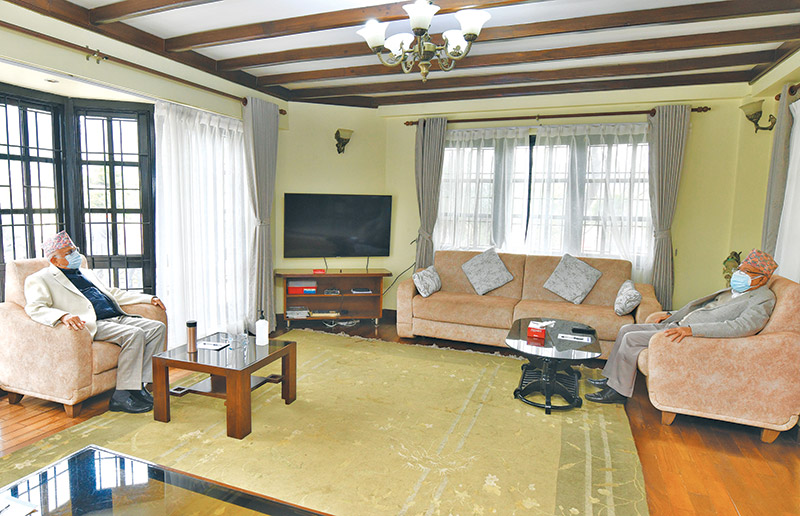
As the country reported 8,842 new Covid-19 cases and 214 deaths, Nepali politicians had but one number in mind—136, the figure that could secure them power.
Oli reappointed prime minister
- TIKA R PRADHAN,ANIL GIRI

Relatives mourn their loved one who died from Covid-19, at Pashupati crematorium in Kathmandu.Post PHOTO: SANJOG MANANDHAR

KATHMANDU : When Prime Minister KP Sharma Oli on May 2 made a sudden dash for Sheetal Niwas, the presidential palace, after holding a party meeting early in the morning, many thought he was discussing the goings on in Lumbini, where the chief minister, his close aide, had resigned. Without even returning to Baluwatar, his official residence, Oli called a meeting of his Cabinet from Sheetal Niwas itself. Oli told his Cabinet ministers that he would seek a vote of confidence, to the surprise of many. The biggest shock anyone possibly got was the Communist Party of Nepal (Maoist Centre).
President Bidya Devi Bhandari, accordingly, called a House session for May 10.
While addressing the session, Oli delivered a convoluted speech, reiterating what he has been saying all along, and counted his government’s achievements.
“There is no reason why I should not get the confidence of this House,” Oli roared.
But it looked like Oli knew very well that he would fail the confidence motion. He did. As lawmakers from the Madhav Nepal-Jhala Nath Khanal faction of his own CPN-UML party decided to abstain, Oli could secure just 93 votes. As many as 124 votes were cast against his confidence motion. Fifteen lawmakers stayed neutral. Apart from 28 lawmakers from the Nepal-Khanal faction, four others were absent. Four lawmakers are suspended.
As soon as President Bhandari called on the parties to form a new government as per Article 76 (2) by Thursday 9pm, the numbers game started.


Prime Minister KP Sharma Oli (left) and fellow CPN-UML leader Madhav Kumar Nepal meet in Kathmandu.Photo obtained by the Post

On Thursday, politics took a turn just the way Oli had wanted.
Hours before the deadline set by the President, the Nepali Congress and the Maoist Centre declared that they were not going to stake claim to the government.
“After the Mahantha Thakur-led faction of the Janata Samajbadi Party declined to support us, chances of forming a coalition government under the leadership of the Nepali Congress have come to an end,” Congress President Sher Bahadur Deuba told his party’s office bearers after a meeting.
Later on Thursday, President Bhandari appointed Oli as prime minister as per Article 76 (3) as the leader of the party having the highest number of members in Parliament. Oli’s UML has 121 seats.
The 15 lawmakers who stayed neutral during the May 10 vote were from the Thakur-led faction of the Janata Samajbadi Party. Thakur and Rajendra Mahato of the Janata Samajbadi have stood in support of Oli. The other faction led by Upendra Yadav and Baburam Bhattarai was willing to support the Congress-Maoist alliance.
“The Thakur-led group of the Janata Samajbadi wished to support Oli and Madhav Nepal also failed to take any decision. So there was no situation to lay claim to a new government,” said Prakash Sharan Mahat, joint general secretary of the Nepali Congress, after the meeting of the party’s office bearers. “Yadav was ready to support us but he could not bring in the numbers.”
The Congress and the Maoist Centre, with 61 and 49 votes, respectively, needed 26 more to claim the majority to form a coalition government. The two parties were also expecting that as many as 20 lawmakers from the Nepal faction would resign, which would have brought the House strength down to 251, thereby taking the magic number to 126.
In that case, with around 15 votes from the Upendra Yadav faction of the Janata Samajbadi and one vote from any of the three parties, which have one seat each in Parliament, the Congress-Maoist Centre alliance had a chance of forming a new government.
Oli, however, made his moves from early morning on Thursday. He decided to withdraw the action initiated against Nepal and other leaders from his group—Surendra Pandey, Bhim Rawal and Ghanashyam Bhusal. Oli had suspended them all for six months from the party’s ordinary membership. He activated some second-rung leaders to set up a meeting with Nepal.
After an hours-long meeting in Chapali, on the northern rim of Kathmandu, with Oli, Nepal declared that his faction’s leaders would not resign as lawmakers “at least for a few days”.
“The issue of resignation has been postponed for a few days as talks are headed in the positive direction,” Nepal told reporters after the meeting.
Meanwhile, Thakur and Mahato had their lawmakers lodged in a resort in Bhaktapur so as to pre-empt anyone from breaking away.
The Congress and the Maoist Centre that had been holding a series of inter- and intra-party meetings realised that they were not going to muster the number.
By Thursday evening, there were as many as 19 lawmakers from the Thakur-Mahato faction in support of Oli. With Nepal faction lawmakers stepping back, Oli now has 140 votes in his kitty, four more than needed when he has to secure a vote of confidence.
Oli now needs to secure a vote of confidence from the House within 30 days—by June 14.
“If he fails, the country would head towards elections, as by that time all available provisions would have been exhausted,” said Raju Chapagain, an advocate and chair of Constitutional Lawyers’ Forum.
Analysts say for the Congress party, there is not much to lose. The party was never keen to take the lead to form a new government even after the Supreme Court invalidated the Nepal Communist Party (NCP) and revived the UML and the Maoist Centre on March 7, two weeks after the court overturned Oli’s decision to dissolve the House.
The onus was on the Maoist Centre to withdraw the support it had lent Oli back in February 2018, three months before the UML and the Maoist Centre announced their merger to form the Nepal Communist Party (NCP).
While the Maoist Centre goaded the Congress into making a move, Deuba, the party president, refrained from taking initiative, saying a divided Janata Samajbadi Party won’t be of help. According to Congress insiders, within the party, a line of thought was dominant that if elections were held, it would be a godsend for them, as their rivals–the communists–were divided.
Analysts say after Oli lost a vote of confidence, it was but natural for the Congress to take initiatives to form a new government, but there was not much enthusiasm, as leaders knew they lacked the numbers. There was not much incentive to lead a government when the country was facing a serious Covid-19 crisis and failure to deal with it would have harmed them in elections, according to them.
“Dahal and his Maoist party are the biggest losers,” said Shreekrishna Aniruddh Gautam, a political analyst who writes regular columns for the Post’s sister paper Kantipur. “The other loser is Madhav Nepal. At least he has lost his political credibility.
The Nepal faction was “supposed” to tender resignation of its lawmakers en masse earlier this week, just a day before Oli’s trust vote. But the plan was postponed until Monday morning after Oli activated his confidants to “convince” the Nepal faction. The Nepal faction said it had given Oli until Monday morning to “correct his mistakes”. Oli did not bother. The Nepal faction decided to abstain from voting rather than resigning.
On Thursday also, the Nepal faction set a deadline of 4pm for Oli to “correct” his mistakes before they resigned to facilitate the opposition to form a new government.
Almost two hours past the deadline, the Nepali faction chickened out.
“Nepal won’t be trusted at the political level anymore,” said Gautam.
Right after the Congress meeting on Thursday evening decided that it was not going to stake claim to a new government, the Maoist Centre too called an emergency meeting of its Standing Committee. The meeting concluded that there was no possibility of proving a majority.
“We were actually expecting the Madhav Nepal group’s support but that did not happen,” Ganesh Sah, a Standing Committee member of the Maoist Centre, told the Post. “Now Oli will become more powerful and he will run the government as a dictator.”
During the Standing Committee meeting, according to leaders who were present, Dahal said that democracy as well as the left and communist movements would be in danger now under Oli. “There is a need for the opposition forces to contain him as circumstances do not allow mass protests,” a leader quoted Dahal as telling the meeting.
Ever since Oli dissolved the House on December 20, his one constant refrain has been—the country needs to seek a fresh mandate of the people. Even after the court restored the House, Oli kept on trying to justify that the House had become irrelevant. The restored House could hardly sit even once to deliberate on the pressing issues, as the Oli government would not provide any business.
While Oli eyed early elections, so did the Nepali Congress. For the Congress party, the 2017 election was a disaster, for it had not faced such a drubbing in its history. It was itching to go to polls. Leaders of the Janata Samajbadi did not have much choice, but they were convinced that they did not have anything to lose in case of early polls. The Maoist Centre,
however, was clearly not in favour of elections.
The party was once even considering changing its name, and there seems to be a deep realisation, according to insiders, among the top leadership that there is no specific agenda to sell during the elections.
By being reappointed three days after losing the House confidence, Oli has now pulled off a coup, consolidating his position to assert even loudly that if there is any leader who calls the shots then it’s him.
Hari Roka, a political economist, however, said it’s not about who lost or who won but the important question rather is how Nepal has seen an erosion of political morality in politicians. “The way Oli and Nepal settled their dispute, which had reached a tipping point, in a dramatic way is telling,” Roka told the Post. “It clearly shows the UML lacks an ideological base. Today’s development has given Oli carte blanche to do what he wants.”
Many say the way Nepali politicians indulged in dirty politics in the midst of a pandemic, which has been infecting thousands and killing hundreds of people every day, is just beyond anyone’s comprehension and sickening.
Nepal on Thursday reported 8,842 new coronavirus infections. The Health Ministry reported 214 new deaths. The country’s number of active cases stands at 105,207. Health experts have warned that the situation can go even worse.
Roka said if the opposition parties fail to keep Oli in check, the country is in for multiple serious crises.
“It’s incumbent upon the opposition parties to step up to the plate and ensure the checks and balances. Until Oli is comfortable, he will try to govern with an iron fist and close his eyes to corruption by his cliques,” Roka told the Post. “Whenever he feels his position is untenable, he will play the election card. But elections are simply impossible in the near future given the pandemic.”

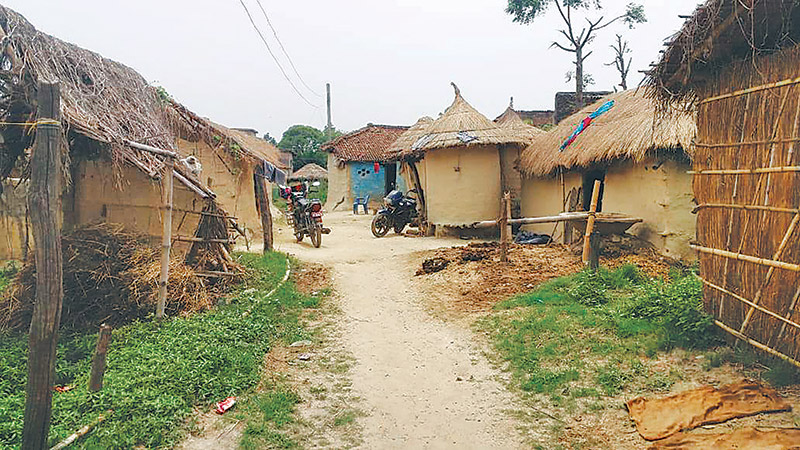
HOME PAGE

Daily infection count hovers around 9,000 mark but deaths could continue to rise

As hospitals are not admitting patients due to oxygen shortages, many infected are in home isolation. Without timely and sufficient care, they are at high risk, doctors say.
- ARJUN POUDEL

KATHMANDU : The number of daily new infections in the country crossed the 8,000 mark for the first time on May 5. Two days later it crossed the 9,000 mark. The highest one-day tally was 9,317 on May 11. On Thursday it was 8,842.
With almost the whole country under restrictions, the number of daily infections may be plateauing
but the death toll could continue to rise, according to experts.
“It generally takes one week for people to get severely ill and a few more days to die,” Dr Keshav Deuba, a public health epidemiologist, told the Post. “Even if the number of new cases do not continue to rise after a certain point, those already infected will continue to die.”
The highest toll that the Ministry of Health and Population reported on a single day was 225 on Tuesday. But that was not the toll of 24 hours as the ministry said that the number included “bodies managed by Nepal Army on different dates”.
On Thursday the ministry reported 214 more deaths
from Covid-19, the figure again includes deaths of other days. The total death toll now stands
at 4,466.
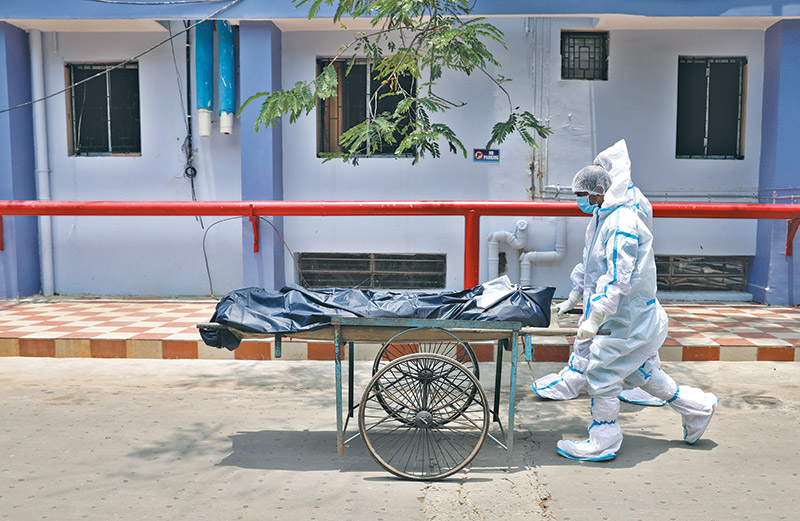
Since, according to Nepal Army sources, it has been managing more than 100 bodies a day in the Kathmandu Valley alone for the past few days, the daily death toll continues to be high even if the number of positive cases has not been rising significantly in the past one week.
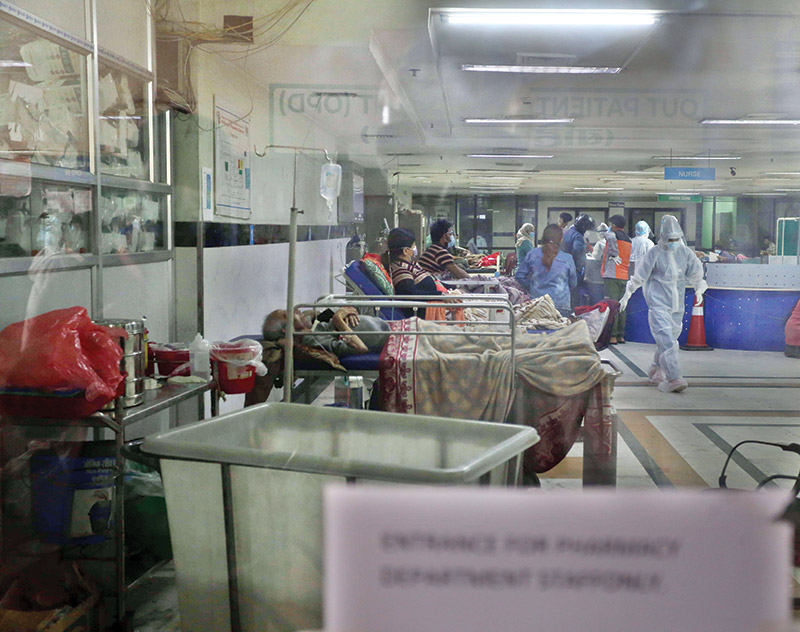
More alarming is that health facilities throughout the country have reached a tipping point mainly because they have no oxygen.
At one point on Wednesday night the National Trauma Centre of Bir Hospital, Kathmandu, a premier government hospital, had only seven oxygen cylinders.
Each cylinder holds 7 cubic metres of the gas and that is sufficient only for three to four minutes for 100 Covid-19 patients requiring high flow oxygen.
“There would have been disaster last night,” Dr Santosh Paudel, director at the Centre, told the Post.
“Most of the patients admitted in intensive care units and placed on ventilator support could have died, had we not been able to manage more oxygen cylinders.”The Centre, which had started providing care to the infected patients only from Sunday had admitted 137 patients in the beginning but has now reduced the number to 105 due to a shortage of oxygen.
The Centre needs over 350 cylinders a day but the Health Ministry set it a quota of 20 cylinders only. The hospital has its own liquid oxygen plant but in lack of supply from India it has been dependent on cylinders.
The lack of sufficient oxygen is a situation recounted again and again across the country.
And like the National Trauma Centre, hospitals have already started reducing the services due to lack of oxygen supply despite having beds and human resources to provide services.
“Despite having human resources and beds, we are not in a position to provide care to infected patients due to lack of oxygen,” Dr Biraj Karmacharya, an epidemiologist, who is also the chief of the Department of Community Programme at Dhulikhel Hospital, told the Post.
The potential of a nightmare scenario, keeps doctors and nurses awake at night.
“We have not been able to sleep properly for the last three days due to the problems in oxygen management,” said Karmacharya.
The National Trauma Centre’s Paudel said that staff at his hospital have not slept for two days.
Oxygen manufacturers have already said that demand far outstrips supply although they have been running their plants 24 hours a day.
The government has decided to fix quotas for hospitals so as to better manage the supply of oxygen but this has only led to hospitals turning away patients.
Given the oxygen crisis, the Health Ministry on Thursday issued a statement directing all hospitals with 100 beds capacity to install their own oxygen plants within 15 days.
That is impossible, private hospitals say. Prohibition orders are in place and equipment to install oxygen plants are not available in the country, according to them.
“If the government is serious about saving lives, it should have brought oxygen plants and asked the hospitals to install them,” Rajendra Bahadur Singh, executive director of Norvic Hospital, told the Post. “They could have asked hospitals to pay on an installment basis.”
The hospital, which can provide care to around 150 infected patients, has been providing treatment to only 133 and is planning to reduce the numbers further due to lack of oxygen supply.
Meanwhile, the Health Ministry is exploring the possibility of purchasing oxygen plants from wherever possible.
“We have decided to explore the possibility of purchasing oxygen plants from France and Turkey,” Dr Roshan Pokhrel, chief specialist at the Health Ministry told the Post. “But no decision has been reached yet.”
The number of active cases throughout the country surpassed 100,000 on Wednesday. According to the Health Ministry active cases stood at 105,207 on Thursday. The majority of them are in home isolation and if their conditions worsen the pressure on hospitals will continue to grow.
“All infected people placed in home isolations are not seeking care at hospitals not because they do not need it but because hospitals are not in the position to provide care,” said Deuba, a public health epidemiologist.
Generally, doctors say of the total infected patients, 20 percent need hospital care, and of them 15 percent need oxygen support and around five percent need intensive care and ventilator support.
But with the Indian variant B.1.167.2 of the coronavirus already spreading in Nepal these figures could be higher as it has been found to be more transmissible and deadlier, according to the World Health Organization.
Dr Bhagwan Koirala, chairman of Nepal Medical Council, said that the only way to save lives at present is to increase the production of oxygen, use available oxygen and other resources rationally and make the distribution system effective.
“Even if it has already been late, we should work to set up oxygen plants, buy more oxygen concentrators, make arrangements for liquid oxygen, bring dysfunctional oxygen plants into operation at the earliest,” Koirala told the Post. “Authorities should work on all fronts to save lives.”
However, with most of the hospitals running in their full capacity, chances of new patients getting care immediately are slim.
Moreover, infected people in home isolation in remote villages who do not have access to tests and treatment are at high risk and they could die due to lack of care even if the recorded infection rate slows down in coming days with restrictions in place, doctors say.
“Authorities should monitor the infected people placed in home isolation,” said Karmacharya, the epidemiologist. “Local levels should also shoulder the responsibility.”

Page 2
NATIONAL

11 Covid-19 suspects died in a rural municipality in 10 days

Jagarnathpur Rural Municipality in Parsa has urged authorities to dispatch a team of medical specialists after scores of villagers were down with coronavirus-like symptoms.
- BHUSAN YADAV

As many as 173 people are having fever at Chiljhapati settlement of the rural municipality.Post Photo: Bhusan Yadav

BIRGUNJ : The health authority, in coordination with the district administration office in Parsa, has started Covid-19 testing after 11 people died and scores of villagers were taken ill in Jagarnathpur Rural Municipality in the past 10 days.
A joint team of health workers dispatched from Birgunj and officials from the local unit visited the affected settlements and checked on the patients’ health situation on Tuesday and Wednesday.
According to Pravendra Prasad Sah, the health unit chief of Jagarnathpur Rural Municipality, health workers collected the swabs of 25 corona suspects and conducted antigen tests of 11 other patients in Jagarnathpur-5.
“Seven out of 11 fever patients who underwent antigen tests tested positive for Covid-19. The swabs have been sent to Narayani Hospital in Birgunj for Polymerase Chain Reaction test,” said Sah.
The results of the PCR tests are yet to arrive.
The health unit of Jagarnathpur Rural Municipality wrote to the District Administration Office, District Health Office and Narayani Hospital on Monday, urging them to dispatch a health team of medical specialists after scores of villagers were down with coronavirus-like symptoms.
“As many as 173 people have been suffering from fever at Chiljhapati settlement,” Sah said.
Most of the villagers were reluctant to get tested for fear of being taken to an isolation ward in Birgunj.
“Some of the patients fled to the fields and refused health check-ups. We convinced them to return home and get themselves tested,” Sah told the Post over the phone.
According to him, health workers have distributed medicines to the patients.
In Jagarnathpur, 11 people have died of Covid-19 complications in recent months. A 35-year-old Covid-19 infected man from Jagarnathpur-1 died in the course of treatment at Narayani Hospital on Tuesday morning.
According to Dr Saroj Roshan Das, the coordinator at the Covid-19 ward in Narayani Hospital, the deceased man was admitted to the hospital on May 4. “The man had no other ailments but was suffering from severe pneumonia caused by Covid-19,” said Das.
According to the rural municipal office, seven of the 11 deceased were from the same settlement and four of them had undergone PCR tests.
The local people of the municipality are now demanding mass testing but the authorities are yet to address their demands.
“The local unit has yet to conduct a mass testing of coronavirus suspects. People here still don’t know much about the coronavirus since the local body did not run any awareness campaigns,” said Shrikanta Yadav of Jagarnathpur-3. “Since there is widespread ignorance regarding the pandemic, the infected are deprived of treatment and medicines.”
Similarly, scores of people have been suffering from fever in Badhnihar and other surrounding settlements in Parsagadhi Municipality. Senior health officials are concerned, as the fever patients are taking antibiotics from the local clinics under the impression that they are suffering from typhoid.
Buddhi Raj Paudel of Badhnihar in Parsagadhi suffered from a fever last week. He took paracetamol for three days but the medicine had no effect. He went to a local private clinic and did a blood test.
“I am taking antibiotics after the blood test confirmed I had typhoid,” said Paudel, who is also a local trader. “There is hardly any house in Badhnihar and its vicinity who are not suffering from fever.”
Health workers, however, are concerned that the local people might have contracted Covid-19 and not typhoid.
“Many people in Badhnihar and other settlements are suffering from fever and cough. Typhoid, a waterborne disease, does not spread in such a way. We suggested local health workers provide medicines and follow the health security protocols of coronavirus disease,” said Chandra Bhusan Singh, the medical officer at Bageshwori Health Post in Parsagadhi-6.
According to Ramu Sharma, a local resident of Badhnihar, three villagers have died of Covid-19 since April this year and five others are in ventilators now.
“The villagers suffering from fever for the past few days think they have typhoid. But it is not clear whether they are merely suffering from typhoid or have contracted Covid-19. The authorities concerned are yet to conduct tests for Covid-19 in the area,” said Sharma.
Kameshwor Chaurasiya, chief at the District Health Office, did not want to comment on the health situation of Jagarnathpur and other settlements despite repeated requests.

Page 3
NATIONAL

Covid-19 restrictions once again worry Central Zoo officials

They fear they won’t be able to feed the animals if the lockdown continues.
- CHANDAN KUMAR MANDAL

KATHMANDU : Once again, the Central Zoo is staring at a tough time ahead as its major source of income, which comes from visitors, has dried up due to the Covid-19 restrictions. Zoo officials are worried about how to feed the hundreds of captive animals amid the paucity of funds.
With the pandemic raging and the entire country under prohibitory orders, the Central Zoo in Jawalakhel, Lalitpur, remains closed since last month.
Since April 29, the Kathmandu Valley has been under prohibitory orders with all non-essential activities and travel banned.
“The zoo remains shut since the imposition of the prohibitory orders,” said Chiranjibi Pokharel, chief of the zoo. “Also during the first wave of the pandemic last year, we suffered immensely due to the months of lockdown. Now, let’s see what happens in the coming weeks.”
The first lockdown had come as a big shock for the zoo officials as they struggled to feed the animals amid huge losses of income. Officials had approached the government for funds to sustain the zoo’s operations.
Spread over six hectares, the zoo hosts 1,160 individual animals of 110 species—mammals, birds and reptiles among others. The zoo needs Rs30 million annually for taking care of these animals and other operations of the facility. It was established as a private zoo in 1932 by Rana Prime Minister Juddha Samsher.
“Until now, we have been able to feed the animals,” said Pokharel. “However, if the prohibitory orders continue like last year, we will again face a severe shortage of funds leaving us struggling to feed the animals.”
Hit hard by the last year’s lockdown and following restrictions order, the zoo authorities had approached the government and others for financial support.
When it opened after nine months of closure in December, the zoo came up with new guidelines that placed restrictions on the number of visitors allowed every day and enforced a cap of only 800 visitors inside the zoo at any point of time.
Besides imposing safety protocols that include wearing of masks, using sanitiser and limited visitors, it also switched to online ticketing from the traditional ticket sales in a bid to avoid crowding at the entrance.
But, visitors arrival still remained lower than the pre-pandemic days when the zoo would welcome around 3,000 to 4,000 visitors every day.
“We recorded a significant drop in the number of visitors coming to the zoo. Compared to the pre-pandemic times, only around 30 to 35 percent people visited the zoo after it was reopened in December,” said Pokharel.
Besides, in an attempt to sustain itself and recover the losses caused by the lockdown, the zoo had launched a campaign called, ‘Adopt an Animal’ in March this year.
Under the year-long programme, anyone can adopt an animal from the Central zoo and make a monetary contribution for their feeding, enrichment, nourishment and medication for one full year. The zoo has kept all its animals on the adoption list, however, with a special focus on species like one-horned rhino, Asian elephant, royal Bengal tiger, hippopotamus, sloth bear, gharial crocodile and red panda among others.
“Many people have expressed commitment to adopt the animals. We have also been approaching such people. But the campaign has not been as successful as expected,” said Pokharel. “Hopefully, things will improve in the coming months. Among those who committed support, some have made the payments and others are slowly sending their support. It will take some time. Around 50 individuals and businesses have pledged support and we are in touch with them.”
When the zoo, which has been managed by the National Trust for Nature Conservation since 1995, was struggling to sustain itself last year, Lalitpur Metropolitan City had supported Rs1 million. Later, the government also allocated nearly Rs 35 million for the zoo.
But the ongoing situation and the possibility of a protracted lockdown has left the zoo officials worried.
The latest prohibitory orders imposed since April 29 have already been extended until May 27.
“When the zoo was reopened for a few months after the first wave of the pandemic, it had provided some relief financially. But again, we are worried about what will happen next,” said Pokharel, the chief of the Central Zoo. “If the [prohibitory orders] continue like last year, the troubles will return and again we might have to ask the government for support.”

NATIONAL

Ill-timed trust vote may scupper pre-budget session

Avoiding the pre-budget discussion is like barring people from participating in the budget process, a former Parliament Secretariat official says.
- BINOD GHIMIRE

KATHMANDU : The timing of Prime Minister KP Sharma Oli’s move to seek a vote of confidence in the House of Representatives has created a situation for the federal budget to be presented without holding pre-budget discussion.
Rule 142 (4) of the House of Representatives Regulations says pre-budget discussion has to be completed at least 15 days before the national budget is tabled in Parliament. The Constitution of Nepal makes it mandatory for the budget to be presented on Jestha 15 (May 29 this year). However, 16 days before the budget day, it is still uncertain when the budget session commences.
The federal parliament must have completed the pre-budget discussion by Friday as per the parliament regulations. “I don’t see any possibility for the pre-budget discussion this year,” Gopal Nath Yogi, secretary at the House of Representatives, told the Post. “It seems the budget will be presented without pre-budget discussion.”
Last year, the pre-budget discussion had begun on May 10. But this year, the Oli government called a one-day session on May 10 for the vote of confidence in the lower house. Oli lost the trust vote as only 93 among 271 lawmakers in the house stood for his continuation, opening the process for the formation of a new government.
Political parties are busy in numbers games for government formation at a time when Parliament should have been busy with pre-budget discussion. Officials at the secretariat said Oli’s timing for the vote of confidence was wrong as it obstructed the pre-budget discussion. “Parliament would have done its job had Oli decided to seek the trust vote a week earlier,” said a senior
official at the secretariat on condition of anonymity.
Experts on parliamentary affairs say there is a reason for pre-budget deliberation as it directs the government not to distract from the core budgetary principles. Preparing the budgetary plans targeting the people from the lower strata, delegating the budget and authority to the local governments to carry out smaller projects and keeping larger projects with the federal government are among the budgetary principles. Pre-budget discussion is also expected to shape the fiscal, budgetary and monetary policies of the government as recommended by the people’s representatives, according to experts.
“The pre-budget discussion was designed for the concerns of lawmakers, the representatives of the sovereign people, to be addressed in the budget,” Som Bahadur Thapa, a former secretary at the Parliament Secretariat, told the Post. “Avoiding the
pre-budget discussion is tantamount to barring people from participating in the budget process.”
Though there is no legal clarity on how long the pre-budget discussion goes, it normally continues for a week. As Oli voluntarily decided to seek the vote of confidence, Thapa says, he could have done it at any time without affecting the pre-budget discussion.
Oli on May 2 decided to seek the trust vote while he was still enjoying a majority as the CPN (Maoist Centre) hadn’t withdrawn its support extended to the government in February 2018. The Maoist Centre withdrew its support only on May 5, three days after Oli decided to call a day-long session of the lower house for May 10 for the vote.
The President on the government’s recommendation summons and prorogues the House session.
“Oli could have sought the trust vote in the budget session. The decision to schedule the vote on May 10 was wrong,” Tara Nath Ranabhat, former Speaker of the House of Representatives, told the Post. “However, it is good that the Oli government didn’t proceed with the budgetary process after losing the vote of confidence.”
He said it is good to allow the upcoming government to decide on the budgetary issues.
Budget is presented after the pre-budget discussion and endorsement of the government’s policies and programme. The president presents the policies and programmes in the joint meeting of the House of Representatives and the National Assembly. Unlike for the pre-budget discussion, there is no deadline for the presentation of the policies and programme except that it is presented before the budget.
“Presentation of the budget without the pre-budget discussion would be yet another move by the government to make arbitrary decisions ignoring the legal provisions,” said Thapa.

NATIONAL

Let down by the health system, Covid-19 patients left to their own devices

With the health care system unable to handle the increasing number of cases, doctors fear many elderly patients could die at home.
- ANUP OJHA

A scene inside the Covid-19 ward of Bir Hospital Trauma Centre in Kathmandu on Thursday.Post Photo: Elite Joshi

KATHMANDU : On Sunday, Hukum Adhikari tested positive for Covid-19 and two days later his wife also tested positive for the virus.
Hukum, 50, had fever and non-stop cough accompanied by body ache. The condition of his wife Sabitri, 45, was more serious as she had difficulty in breathing.
“Luckily, one of my relatives arranged an oxygen cylinder for us, so we didn’t have to go to the hospital,” said Hukum, a freelance researcher.
“I can’t imagine how difficult things would have been if she had to be rushed to the hospital,” said Hukum,
a father of two grown-up sons, both of whom are abroad for higher studies.
When the Adhikari couple
contracted the virus both of them decided not to go to the hospital nor inform the ward office about their infection.
Like the Adhikaris, Anuj Thapa, 35 of Mahadevsthan, Koteshwar is isolating himself at his relative’s house after testing positive last week. “Since Sunday, I have been suffering from diarrhoea and vomiting besides other Covid-19 symptoms,” said Thapa.
He says he decided not to stay at home because he has a younger brother and sister-in-law, who got married just two weeks ago. “Although we hadn’t invited many people to the wedding, I guess I contracted the virus there. I am isolating at my relative’s place to protect the new couple,” said Thapa. According to him the new couple is fine.
Thapa’s sister is a nurse by profession and she has put him on saline drip. “I felt dehydrated so she recommended this saline solution. We have decided not to go to the hospital unless it is absolutely necessary,” Thapa said.
The Adhikari couple and Thapa represent those people who are tackling Covid-19 at home and not seeking medical help. And they have a reason not to.
With hospitals overwhelmed with Covid-19 patients and the country facing an acute shortage of oxygen and other medical supplies, many private hospitals over the past few days have published notices saying they cannot take in new patients. Just last week, Kathmandu Mayor Bidya Sundar Shakya said the virus situation in Kathmandu is already out of control. The City appears awfully unprepared for the situation even though it has turned into the biggest Covid-19 hotspot in the country.
According to the Kathmandu Metropolitan City, a total of 7,626 Kathmandu residents were in home isolation as of Wednesday.
On Tuesday, the country reported its highest Covid-19 death toll of 225 and a record 9,317 cases.
The government’s data show that on Thursday 214 people died of the virus and 8,842 tested positive.
Amid the government’s inefficiency in handling the pandemic, the private sector hospitals have also let the public down when they were most needed.
On Tuesday, Nepal Medical College published a notice telling its Covid-19 patients to get discharged from the hospital, owing to an acute shortage of oxygen. Over a dozen private hospitals in the Kathmandu Valley have come up with similar notices since, causing distress to the Covid-19 patients and their families.
On Wednesday, the Dhapashi-based Grande International Hospital issued a notice saying it cannot take in new Covid-19 patients. Then a group of hospitals including Medicare Hospital, Nepal Bharat Maitri Hospital, Dirghayu Hospital and Helping Hands Hospital published a joint notice stating that they will not admit new Covid-19 patients until the government provides them oxygen.
Other private hospitals such as Karuna Hospital, Himal Hospital, Om Hospital and Everest Hospital have also published similar notices.
Over the last few months there had been reports of private hospitals charging high fees to Covid-19 patients in the name of “virus safety charges”. Private hospitals have been charging Covid-19 patients between Rs 7,000 and Rs 50,000 per day rendering them unaffordable for the people from low and middle income groups.
“It’s not possible to get beds at government hospitals while the private hospitals overcharge, and now they say they have run out of oxygen. The situation is really grim,” said Thapa, the Covid-19 patient from Koteshwor.
Meanwhile, Dr Sher Bahadur Pun, chief of the Clinical Research Unit at Sukraraj Tropical and Infectious Disease Hospital in Teku says many people with Covid-19 symptoms are so panicked by the current situation that they are not going for tests or to hospitals and relying on traditional remedies at home.
With the virus reaching almost all parts of Kathmandu Valley and the health system unable to handle the cases, Pun fears more people could die without treatment.
“Especially the elderly patients are at high risk and many could die at home,” said Pun.

NATIONAL

Two private hospitals in Saptari start Covid-19 treatment

Briefing
- Post Report

RAJBIRAJ: Two private hospitals in Saptari district have been
converted into Covid-19 hospitals to cope with the increasing number of infections. Ranjit Kumar Jha, the medical superintendent of Gajendra Narayan Singh Hospital, as the
hospital is overflowing with patients, Covid-19 treatment has been started at Unique Hospital in Rayapur and Chhinnamasta Hospital in Rajbiraj.


NATIONAL

Parsa to build holding facility for India returnees

Briefing
- Post Report

PARSA: The District Covid-19 Crisis Management Centre in Parsa has decided to construct a 1,000-bed holding facility in the district. According to Bhimkant Paudel, assistant chief district officer,
the facility will house those people returning from India
via Birgunj Customs Point.


NATIONAL

14 households at high landslide risk

Briefing
- Post Report

PARBAT: Fourteen households at Ramche settlement in Kushma Municipality-12, Parbat, are at high landslide risk. The concerned households have demanded the authorities to relocate them to a
safe location ahead of the monsoon season. The settlement was hit by a massive landslide in 2015.

Page 4
EDITORIAL

Virus in the villages

The perennially marginalised cannot be left to fend for themselves.

We have been hearing stories mostly from the cities—of private hospitals charging exorbitant fees, and of big government hospitals running out of oxygen, remdesivir and other medical supplies and failing to provide optimum care. But what has been missing in the past several months, and especially in the wake of the second wave of the pandemic, is the story of the hardships faced by people living in rural areas. As the problems facing rural people continue to remain eclipsed in the media, it might probably be safe to reason that the coronavirus count is much higher than what is reported, and that we have failed to take into account the concerns of rural people altogether.
Disparate anecdotes from people working in the media as well as various other walks of life speak of rural people
experiencing symptoms of Covid-19, but failing to get either tested or treated for want of testing centres and medical facilities in their localities. This is true of the mountains as well as the Tarai plains, where a severe lack of infrastructure means that people are left with no option but to stay at home even when their symptoms clearly point to coronavirus infection. As the Post reported on Thursday, authorities have finally begun mass testing for Covid-19 in Jagarnathpur Rural Municipality in Parsa after 11 people died and scores of villagers were taken ill in a span of 10 days.
The health unit of the rural municipality had requested authorities to immediately dispatch a team of health professionals after as many as 173 people complained of fever at Chiljhapati settlement. More than a year after the country began its campaign against the pandemic, the people in the settlement were found to be unaware about the need to get themselves tested for coronavirus. What is more alarming is that even those patients who were aware that their symptoms were possibly related to Covid-19 refrained from testing and seeking medical help for fear of being taken to isolation centres.
Sadly, the Jagarnathpur case is no exception. The lack of awareness as well as medical infrastructure in rural areas means that a large number of coronavirus infection and death cases do not make it to the government’s official count. Not only have the people failed to get their rightful access to medical care, but they have also failed to even break the statistical barrier in case of illness and death. Moreover, as the Post reported on Thursday, the fact that there is a stark difference in the number of deaths reported by the Health Ministry and the Nepal Army points to a serious issue of data discrepancy when it comes to recording Covid-19 deaths.
It is no secret that the coronavirus has infiltrated every district, even possibly every local unit, of the country. While cases of infection and death in urban areas have received considerable attention, the same cannot be said of rural areas, as they continue to remain in the periphery of national discourse as well as physical infrastructure. The government must take serious note of the disparate accounts of infections and deaths coming from the hinterlands, and make sure to expand testing and treatment facilities even in remote corners of the country. The perennially marginalised cannot be left to fend for themselves in this hour of crisis.

OPINION

Losing trust in the republic

As citizens scramble for oxygen and a hospital bed, our state has disappeared.
- Amish Raj Mulmi

To get a sense of how schizophrenically the Oli government has handled the second wave of the Covid-19 pandemic, we only need to look at the prime minister’s twin international media appearances within as many days.
On Saturday, KP Sharma Oli told CNN the situation was ‘under control’. He threw the Nepali people under the bus, claiming it was their ‘negligence’ that resulted in the second wave. Then he admitted that there were ‘some mistakes from the political side’.
On Monday, even as he lost the trust vote in Parliament, he wrote in The Guardian, ‘The number of infections is straining the healthcare system; it has become tough to provide patients with the hospital beds that they need.’
Much has already been written about Oli’s criminal neglect of the health emergency all around us, including by this commentator, so harping on it once again is an exercise in futility. Many have also noted the utter lack of regard shown by the political opposition to the second wave and their naked lust for power while citizens are gasping for oxygen and dying from the lack of it. With Monday’s trust vote, the country has fallen into further disarray. A black hole of misgovernance and instability stares us in the face, and there is a feeling of helplessness all around. If hospitals cannot be supplied oxygen, is there anything left to say?
It has been repeated several times that a pandemic of this magnitude often amplifies the schisms within a society. That stands true for Nepal as well, where the wealthy can be airlifted in helicopters while the less fortunate are turned away by hospitals before dying in the streets. Now, this political abyss our leaders have thrown us in, where citizens are pretty much left to fend for themselves, has broken that most vital element that is required to govern a state: The social contract between the citizen and the state.
Under this idea, citizens have delegated the responsibility of their lives and rights to an authority—the republic, in our instance—in exchange for the payment of taxes and the upholding of laws as laid down by the state. In Nepal, historically, this contract
has been loosely implemented. Local laws continued to be practiced even after the creation of the modern Nepali state–with the exception of laws barring cow slaughter and the consumption of beef, and upholding the socio-religious hierarchy of pani chalne and nachalne jaats.
Several Himalayan highland communities continue to practise a set of rules that bind them to the community in question while negotiating the larger legislative practices the Nepali state imposes upon them. We see this in everyday practice with the guthis, who take a call on religious practices that sometimes run corollary to the state, such as the dispute over the dates of Tihar in 2020. There was a basic equation of trust that affirmed the citizens’ belief in the state, one reason why we’ve seen relatively peaceful transitions between various versions of the Nepali state after several movements. These transitions retained the basic structure of the existing state despite the calls for inclusion and representation.
We’ve also seen local governments in Nepal respond quicker to the needs of their communities than the federal government, including during this wave. But local governments are also, in theory, part of the Nepali state. So how have some of them responded quicker, if not better, despite the budgetary constraints they face? The aforementioned loose social contract could be conjectured as one reason. Local governments know their communities better, and are able to deliver services—and show that the state exists to care for them, even if minimally—thus upholding the social contract that binds citizens to their local units.
However, the federal republic that we are, the right to expansive policy making has been co-opted by the federal unit, especially under the Oli government which eroded the rights of provincial and local units and viewed them as extensions of the federal government. Further, all the arms of the state—from the judiciary to the election commission—have been influenced to some degree by the Oli government’s autocratic tendencies. And it was at his doorstep that the ultimate responsibility for managing the pandemic fell upon. Unfortunately, he was not up to the task, and the results are now all around us.
Even during the most stable of periods, the average Nepali citizen had few expectations from the state. If it were not so, millions of Nepalis would not be surrendering their basic rights to the country they have to go find work in. Nobody expected the government to create magic during the pandemic; if the healthcare systems of more developed countries could be overwhelmed, countries like ours would feel the heat much worse. But it was about showing up, and taking firm decisions that showed an iota of planning, which would show that ordinary Nepali lives matter to this state.
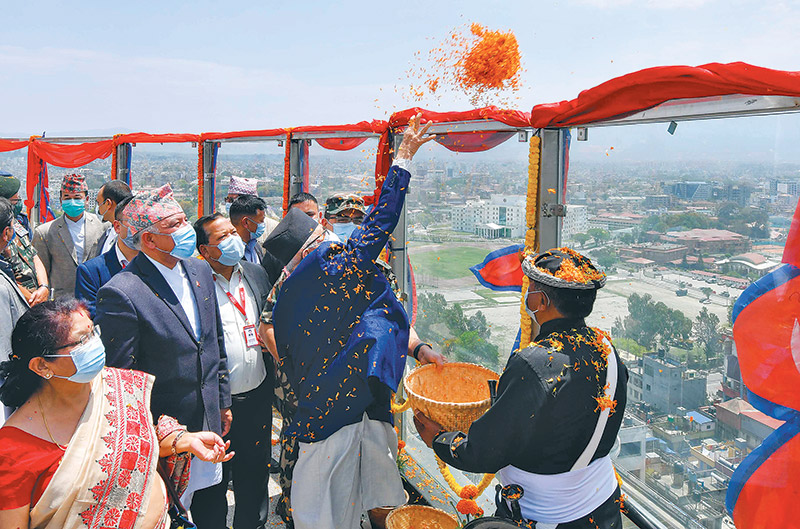
And now, in our country’s darkest hour, when citizens have no recourse to something as basic as oxygen and a hospital bed, our state has disappeared. First it was the unscientific lies of besar paani and amba ko paat; then it was the nonchalance with which leaders encouraged their followers to gather in crowds for inaugurations or new temples. Now, the state has stopped functioning altogether, because we simply do not have a government.
The deeper this political morass goes, and as more die from lack of something as basic as oxygen, the past will become more wistful. People will long for it; in any case, we love to imagine the past as a golden age. And that will bring its own share of concerns. Leadership often is not about solving a crisis immediately; it is as much about turning up and showing that you care. The current Nepali state has shown it just does not care for its citizens. By doing that, this generation of leaders is making us lose our trust in the republic.

OPINION

Democracy in the digital age

The internet has enabled misinformation to be disseminated more efficiently than ever before.
Shutterstock

For decades, the United States—and the West more broadly—stood as a shining example of liberal-democratic prosperity that much of the rest of the world sought to emulate. But the cracks in Western political systems have lately begun to show, with
Donald Trump’s presidency—which ended with the storming of the US Capitol on January 6 by a mob of his supporters—both highlighting and widening them.
The West’s decline is not inevitable. But, to safeguard their democracies and restore their global standing, Western countries must demonstrate that they possess both the awareness and political will to tackle their weaknesses head-on.
Leaders should begin by addressing some immediate and urgent challenges—beginning with lack of trust in institutions, particularly those related to governance and elections. The ‘Stop the Steal’ campaign that took root after Trump’s electoral loss last November, and fueled the Capitol insurrection, was based on no evidence. But, aided by social media, it spread rapidly among his supporters, where it found fertile ground and remains entrenched.
As post-Soviet states can attest, ignoring doubts about the integrity of electoral processes—founded or not—can have serious short- and long-term consequences. While hardcore conspiracy theorists will never be convinced, for most American skeptics of the 2020 results (but not of elections in general), the sense that the authorities are taking their concerns seriously should make a difference. Their questions about some aspects of the electoral process, mail-in voting for example, should be discussed and resolved before the next national election. Demonstrating the ability to address such issues would be an effective step in countering attempts to undermine elections’ credibility in the future.
Another challenge is to address dysfunctional political polarisation. There is a big difference between political opposition and political sabotage. Responsible politicians represent their constituents’ interests and demands. But they also work with (willing) opponents to govern effectively. Attempting to destroy those who disagree is an affront to democracy. But even trying to thwart all initiatives or legislative proposals by opponents is a recipe for democratic erosion.
Confronting polarisation will require Western countries to face a third challenge: Clarifying limits to freedom of expression. Virtually everyone recognises that some forms of expression are dangerous enough to merit imposition of some constraints. But without clear lines based on broad consensus, there will be inevitable conflicts that can weaken desired outcomes.
Western leaders must also consider more fundamental changes to their political systems to safeguard them from new or growing threats, including many related to digital technology. The recent populist wave in the West (and elsewhere) shows why such changes are needed. While populism is hardly new, the internet—especially social media—has enabled misinformation and reckless promises to be disseminated more efficiently than ever before.
Public criticism, fact-checking, and even deplatforming have consistently failed to curb populist politicians’ ability to capture the hearts and minds of voters. A commission or permanent task force on public information might be more successful. Its purpose would not be to shape narratives according to any particular interest or worldview; instead, its goal would be to uphold truth in the same way that governments safeguard public health. It could be created by politicians, but its members should be nominated by nongovernmental institutions with the highest public trust across the political spectrum.
Surely, the US is able to pick, say, five people who have stellar reputations for defending freedom of speech and for rejecting media manipulation and lies. Members could be recommended and vetted by relevant congressional committees and would serve fixed terms. Depending on the legal authority under which the body is established, it may be able to submit its conclusions and recommendations to be considered by government agencies.
Western countries may also need to rethink their systems for representing voters’ interests. For decades—even centuries—political parties, together with official and unofficial lobby groups, have performed this function. A free and trusted press, responsible broadcast media, expert groups, and professional associations have also played an important role, by translating the workings of government for the voting public.
This system no longer seems to be functioning in full capacity. Online media has undermined traditional outlets’ gatekeeping role. And new channels of association and identity formation (such as online communities) have distorted the relative strength and importance of particular interest groups, while, at times, misrepresenting their views.
How to reform political institutions of democracy so that diverse interest groups are involved in decision-making in ways that both reflect their relevance in society and ensure a voice for vulnerable minorities is a difficult question. But unless Western countries confront it outright, their systems will get transformed anyway, but unlikely in a way that benefits most.
In this context, Western democracies must guard against potential illegitimate power grabs. As we have seen in recent years, constitutional checks and balances often are more easily weakened or bypassed than previously recognised. Democratic vigilance is more important than ever: The public also has a duty to help protect democracies from leaders’ authoritarian ambitions, as many organisations of American civil society did in denouncing the January 6 storming
of the US Capitol. Taking a public stand on a political issue means defending the institutional foundations of democracy, which includes repudiating misinformation and ‘fake news’ of any kind.
Resetting the boundaries of what democracy, and every person in a democracy, should or should not allow will be even more difficult in an age when just a few companies and platforms, by dint of their ability to compile and parse massive amounts of behavioral data, wield enormous power. But only such a root-and-branch approach will mitigate the threats to democracy that the US has experienced in recent years.

Grigory Yavlinsky is Chairman of the Russian United Democratic Party Yabloko.

- GRIGORY YAVLINSKY
—Project Syndicate

Page 5
MONEY

Nepal allows ‘special flights’ to evacuate foreigners

The government also permits the evacuation of a number of Indian nationals using Kathmandu as transit to escape the flight ban in India.
- SANGAM PRASAIN

As per the Nepal Tourism Board, there are around 2,000 foreign nationals currently in Kathmandu awaiting immediate evacuation.Post file Photo

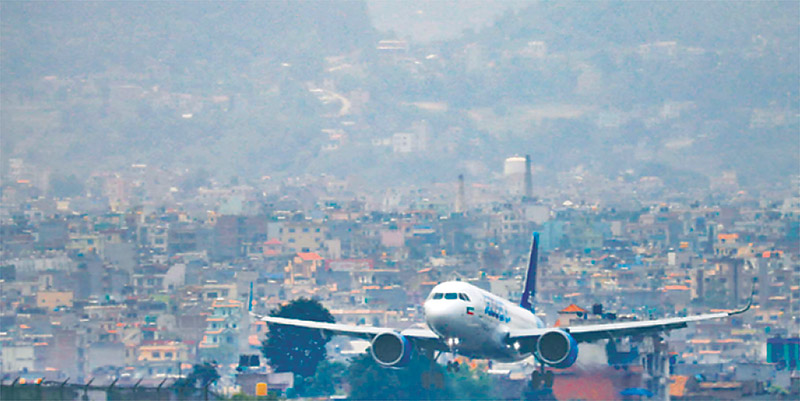
KATHMANDU : Nepal on Thursday permitted a number of “special flights” as requested by foreign embassies to evacuate their citizens, a week after it suspended all international flights, except the two weekly bubble services to India, as it fought to check the rising number of Covid-19 cases.
More than 7,000 foreigners are expected to be stranded in Nepal.
Tourists from abroad have been anxiously waiting to get out of Kathmandu after the government extended the lockdown by two
weeks, and cancelled all flights following a surge in coronavirus
infections.
Foreign embassies have stepped up efforts to repatriate stranded trekkers and mountaineers.
“We have allowed a few evacuation flights based on the request of foreign embassies in Nepal,” said Rajan Pokhrel, director general of the Civil Aviation Authority of Nepal.
The evacuation flights will begin on Friday when Nepali private carrier Shree Airlines will fly several Thai nationals and Nepali students to Bangkok.
“There are around 11 passengers, including Nepali students,” said Anil Manandhar, corporate manager of Shree Airlines. “We will return with cargo and 24 oxygen concentrator machines gifted by the Thai government and non-resident Nepalis in Thailand.”
According to Pokhrel, the United States Embassy has been permitted three special repatriation flights on May 16, 17 and 25 which will be operated by Qatar Airways and Turkish Airlines. Qatar Airways will operate flights on May 16 and 25 while Turkish Airlines will operate on May 17.
The Russian Embassy has requested a landing permit for Aeroflot Airlines, the flag carrier and largest airline of the Russian Federation. “We will approve the landing permit once it fixes the arrival date,” said Pokhrel.
The government has also allowed the Indian Embassy to evacuate its stranded citizens who were using Kathmandu as a transit point to go to Saudi Arabia for employment after a number of countries banned direct flights from India after it was overwhelmed by a second wave.
On April 28, the government had banned all foreign nationals from using Nepal to fly to third countries following criticism in the wake of revelations that a rising number of Indian travellers were using Kathmandu as a transit point.
According to Pokhrel, there are 2,000 Indian nationals stuck in Nepal. “The Civil Aviation Authority of Nepal has permitted Nepal Airlines and Himalaya Airlines to conduct seven flights to evacuate Indian nationals to Saudi Arabia.”
Many other embassies may request the government for evacuation flights, according to Nepal Tourism Board officials.
They said their mobile hotlines were ringing constantly with calls from frantic tourists asking about repatriation or charter flights.
Nepal’s tourism promotional body, which has activated its crisis management and communications unit to help tourists, said the visitors were worried they might be stuck in the country while it faces the brutal second wave of the pandemic that has left a trail of sickness and death.
Nepal has called for international assistance as it grapples with oxygen shortages and soaring infections threaten to push the healthcare system to breaking point.
Nepal on Thursday reported 8,842 new coronavirus cases in the last 24 hours taking the nationwide infection tally to 431,191.
The Health Ministry reported 214 Covid-19-related fatalities on Thursday. Nepal ordered a second lockdown on April 29 for two weeks as a public health measure to prevent the spread of Covid-19. International flights to and from Nepal were suspended from May 6 midnight.
On Tuesday, the Civil Aviation Authority of Nepal extended the restriction on scheduled international commercial passenger flights to and from Nepal until May 31 midnight.
Two weekly flights on the Kathmandu-Delhi sector--one by Nepal Airlines and another by Air India--will continue under an air bubble arrangement between Nepal and India. The prohibitory orders in the Kathmandu Valley that have been in place since April 29 have been extended until May 27.
As per the Nepal Tourism Board, there are around 2,000 foreign nationals currently in Kathmandu who are waiting for immediate evacuation.
Another 5,000 tourists are estimated to be in different trekking and mountaineering destinations, and they are likely to return in the next two weeks before the monsoon season begins in Nepal, the board said.
Nepali citizens and foreigners entering the Kathmandu Valley from any entry point are required to stay in quarantine for five days in any of the hotels approved by the Tourism Ministry.
After the five-day quarantine, a PCR test should be done. The cost of accommodation and three meals daily has been fixed as Rs3,000 nett per day.
There are currently 1,437 European nationals who arrived in Nepal between January 1 and May 5 and have not returned to their country, the board said.
According to the Department of Immigration, Nepal received 22,450 foreign tourists by air in April. Among the total arrivals, 13,202 came from India, 2,740 from the United States, 803 from China and 685 from Russia.

MONEY

Remittances to developing nations resilient in 2020

- REUTERS

LONDON : Remittances to low and middle-income countries from citizens working abroad held up unexpectedly well in 2020, outstripping combined foreign direct investments and overseas development aid, a World Bank report showed on Wednesday.
They fell just 1.6 percent to $540 billion, the report said, supported by fiscal stimulus in countries hosting migrant workers, a shift in flows from cash to digital and, with fewer people travelling due to the coronavirus pandemic, more money sent via formal instead of in-person channels.
“The resilience of ... flows is remarkable. Remittances are helping to meet families’ increased need for livelihood support,” said Dilip Ratha, lead author of the report.
By contrast, FDI to low and middle-income countries, excluding China, sank by more than 30 percent in 2020, the report said. The Bank forecast that remittances, which slid 4.8 percent during the 2009 financial crisis, would rise 2.6 percent in 2021 and 2.2 percent in 2022, buoyed by an expected rebound in global growth.

MONEY

Nepal Investment and Himalayan to merge, creating Nepal’s largest bank

- Post Report

KATHMANDU : Nepal Investment Bank and Himalayan Bank on Thursday signed a memorandum of understanding to merge, and once complete, the new entity will be the largest commercial bank in Nepal.
The memorandum of understanding was signed by Prithvi Bahadur Pandé, chairman of Nepal Investment Bank and Tulsi Prasad Gautam, chairman of Himalayan Bank.
Thursday’s development has officially paved the way to complete formalities before the process to start the joint operations between the two commercial banks.
After the merger, the banks will be known with the unifying name as Himalayan and Nepal Investment Bank.
According to a joint press statement issued by the banks, Prithvi Bahadur Pandé will be retained as chairman of the bank while Ashoke Shamsher Rana will be the chief executive officer.
Similarly, the board members post-merger will comprise three members each from both banks. There will also be one independent member thus making a total of seven members on the board.
At present, the paid up capital of Nepal Investment Bank stands at Rs16.26 billion whereas Himalayan Banks paid up capital amounts to Rs10.68 billion.
After the merger, the combined paid up capital of the banks will reach a staggering Rs26.14 billion, making it the bank with the highest paid up capital in the country.

Page 6
WORLD

Covid-19 kills more than 4,000 Indians amid clamour for vaccines

India has fully vaccinated just over 38.2 million people, or about 2.8 percent of a population of about 1.35 billion.
- REUTERS

Healthcare workers transfer the body of a person who died from Covid-19 inside a hospital premises in Kolkata, India. REUTERS

NEW DELHI : India recorded more than 4,000 Covid-19 deaths for a second straight day on Thursday, while infections stayed below 400,000 for a fourth day, although the virus has become rampant in rural areas where cases can go unreported due to a lack of testing.
Experts remain unsure when numbers will peak and concern is growing about the transmissibility of the variant that is driving infections in India and spreading worldwide.
Bhramar Mukherjee, a professor of epidemiology at the University of Michigan, said most models had predicted a peak this week and that the country could be seeing signs of that trend.
Still, the number of new cases each day is large enough to overwhelm hospitals, she said on Twitter. “The key word is cautious optimism.”
The situation is particularly bad in rural areas of Uttar Pradesh, India’s most populous state with a population of over 230 million. Television pictures have shown families weeping over the dead in rural hospitals or camping in wards to tend the sick.
Bodies have washed up in the Ganges, the river that flows through the state, as crematoriums are overwhelmed and wood for funeral pyres is in short supply.
“Official statistics give you no idea of the devastating pandemic that is raging through rural UP,” wrote well-known activist and opposition politician Yogendra Yadav in The Print.
“Widespread ignorance, lack of nearby or adequate testing facilities, official and unofficial cap on testing and inordinate delays in test reports have meant that in village after village, virtually no one has been tested, while scores of people complain of a ‘strange fever’”.
According to health ministry data, India had 362,727 new Covid-19 infections over the last 24 hours while deaths climbed by 4,120.
At least two Indian states have said they plan to dose their populations with the anti-parasitic drug ivermectin to protect against severe Covid-19 infections as their hospitals are overrun with patients in critical condition.
The moves by the coastal state of Goa and northern state of Uttarakhand come despite the World Health Organization and others warning against such measures.
The surge in infections appears to be tapering off in the capital New Delhi, which has been one of the hardest-hit areas in the country.
Manish Sisodia, the deputy chief minister of Delhi state, told reporters the ratio of infections to the number of people tested had fallen to 14 percent from 35 percent. The demand for medical oxygen, which was in short supply for weeks, had also fallen off, he said.
India’s deadly second wave of infections, which erupted in February, has been accompanied by a slowdown in vaccinations, although Prime Minister Narendra Modi announced that vaccinations would be open to all adults from May 1. Although it is the world’s largest vaccine producer, India has run low on stocks in the face of the huge demand. As of Thursday, it had fully vaccinated just over 38.2 million people, or about 2.8 percent of a population of about 1.35 billion, government data shows.
The national drugs regulator has also permitted Bharat Biotech to conduct phase II and III clinical trials of the domestically developed Covid-19 vaccine Covaxin in children aged 2 to 18 years.
Two states—Karnataka, which includes tech hub Bengaluru, and Maharashtra, which includes Mumbai—have announced they will temporarily suspend vaccination for people aged 18-44 years as they prioritise those over 45 who need their second dose.
Maharashtra also announced that curbs on movement would be extended until the end of the month in a bid to break the chain of infections. Mostly rural Bihar in the east extended curbs until May 25.
Modi has left it to state governments to impose such curbs.
The head of the Indian Council of Medical Research, the main health agency responding to the pandemic, has told Reuters that areas with high infections had to be locked down for 6-8 weeks.

WORLD

US hits China and others for repressing religious freedom

- ASSOCIATED PRESS

WASHINGTON : The Biden administration on Wednesday took aim at China and a number of other countries for repressing religious freedom as it forges ahead with its aim of restoring human rights as a primary focus of American foreign policy.
The condemnation was similar to that lodged by the Trump administration, which had been criticized for prioritizing religious freedom over other rights, and reflected continuity in the US position that China’s crackdown on Muslims and other religious minorities in western Xinjiang constitutes “genocide.” Yet, a senior official said religious freedom is just one element in the administration’s broader human rights strategy.
Much as his predecessor did, Secretary of State Antony Blinken used the release of the State Department’s annual International Religious Freedom Report to lambaste China for severe restrictions on its citizens’ ability to worship freely. He also announced a travel ban on a former senior Chinese official the US accuses of persecuting members of the Falun Gong religious sect.
“China broadly criminalizes religious expression and continues to commit crimes against humanity and genocide against Muslim Uyghurs and members of other religious and ethnic minority groups,” Blinken told reporters as he unveiled the report for the calendar year 2020.
The report itself said Christians, Muslims, Tibetan Buddhists and Falun Gong practitioners in China all suffer from “severe societal discrimination in employment, housing, and business opportunities.”
While Blinken did not spare China from criticism, his remarks were less extensive than those of former Secretary of State Mike Pompeo during previous religious freedom events. Pompeo was particularly harsh in his condemnation of China’s treatment of the Uyghurs and other religious minorities, often devoting entire speeches to the subject.
In his comments, Blinken also lashed out at abuses of religious freedom in Iran, Myanmar, Russia. Nigeria and Saudi Arabia.

WORLD

Myanmar military court gives reporter three years in prison

- ASSOCIATED PRESS

BANGKOK : A 51-year-old reporter for a now-banned online and broadcast news agency in Myanmar was sentenced Wednesday by a military court to three years in prison for his reporting, his employer said.
Min Nyo, a correspondent for the Democratic Voice of Burma is
apparently the country’s first journalist since the army’s February takeover to be convicted under a recently revised provision in the Penal Code that critics charge criminalizes free speech.
It makes punishable by up to three years in prison any attempt to “hinder, disturb, damage the motivation, discipline, health and conduct” of soldiers and civil servants and cause their hatred, disobedience or
disloyalty toward the military and the government.
Three DVB journalists who fled Myanmar were arrested earlier this week in northern Thailand for illegal entry. Rights groups and journalists’ associations are urging Thai authorities not to send them back to Myanmar, where it is feared their safety would be at risk from the authorities.
Myanmar’s junta has tried to smother all independent news media, and on March 8 revoked DVB’s TV license and banned it from broadcasting on any platform. Like many other banned media outlets, it has continued operating.
About 80 journalists have been arrested since the army seized power on February 1, ousting the elected government of Aung San Suu Kyi. Roughly half are still detained and most of them are being held under the same charge for which Min Nyo was convicted, as are many activists opposed to the military regime.
A statement issued by DVB said Min Nyo had been covering a March 3 anti-junta protest in the town of Pyay, 260 kilometres (160 miles) northwest of Yangon when he was arrested and severely beaten by police. It said he had been allowed to see a lawyer, but not his wife and two children.
Min Nyo had previously served seven years in prison under a previous military government after his arrest in 1996 for alleged ties to a militant student opposition group.

WORLD

Hamas, Israel fighting escalates even amid truce efforts

- ASSOCIATED PRESS

GAZA CITY : Hamas sent a heavy barrage of rockets deep into Israel on Thursday, and Israel pounded Gaza with more airstrikes. The relentless escalation of hostilities came even as Egyptian negotiators held in-person talks with the two sides, intensifying efforts at mediation.
Previous fighting between Israel and Gaza’s Hamas rulers, including a devastating 2014 war, was largely confined to the impoverished and blockaded Palestinian territory and Israeli communities on the frontier. But this round seems to be rippling farther and wider than at any time since the 2000 Palestinian intifada, or uprising.
While some rocket attacks have reached the Tel Aviv area, Arab and Jewish mobs have rampaged through the streets, savagely beating people and torching cars. Flights have been cancelled or diverted away from the country’s main airport.
Weary Palestinians, meanwhile, sombrely marked the end of the Muslim holy month of Ramadan on Thursday as militants fired one barrage of rockets after another and Israel carried out waves of bone-rattling airstrikes. Since the rockets began Monday, Israel has toppled three high-rise buildings that it said housed Hamas facilities after warning civilians to evacuate.
Gaza’s Health Ministry said the death toll has climbed to 87 Palestinians, including 18 children and eight women, with 530 people wounded. Islamic Jihad confirmed the deaths of seven militants, while Hamas has acknowledged 13 of its militants killed, including a senior commander. Israel says the number of militants dead is much higher.
Seven people have been killed in Israel. Among them were a soldier killed by an anti-tank missile and a 6-year-old child hit in a rocket attack.
Many world leaders have condemned the violence and urged restraint, and a visit by Egyptian security officials was a significant development in international efforts to bring about a cease-fire; such efforts have been key to ending past rounds of fighting. The officials met first with Hamas leaders in Gaza before holding talks with the Israelis in Tel Aviv, two Egyptian intelligence officials said.
Still, both Israel and Hamas seemed determined to press ahead.
Even as word came of the mediators’ presence, Gaza militants fired a volley of some 100 rockets nearly simultaneously, raising air raid sirens around southern and central Israel.
There were no immediate reports of damage or casualties—but the barrage appeared aimed at demonstrating that Hamas’ arsenal was still full even after three nights of airstrikes and the killing Wednesday of several Hamas leaders involved in the rocket programme.
“The decision to bomb Tel Aviv, Dimona and Jerusalem is easier for us than drinking water,” a spokesman for Hamas’ military wing declared in a video message. Dimona is the site of Israel’s nuclear reactor. “Our conflict will reach you whenever you turn any aggression against our people,” he said.
Israeli Prime Minister Benjamin Netanyahu visited batteries of the Iron Dome missile defence system, which the military says has intercepted 90 percent of the 1,200 rockets that have reached Israel from Gaza so far.
“It will take more time, but with great firmness ... we will achieve our goal — to restore peace to the State of Israel,” he said.
The previous evening, Israeli TV reported Netanyahu’s Security Cabinet authorised a widening of the offensive that the military says has already hit 600 targets in Gaza.
In Gaza, a pall was cast over Eid al-Fitr, the holiday at the end of Ramadan’s month of daily fasting. It is usually a festive time when families shop for new clothes and gather for large feasts.
Instead, Hamas urged the faithful to mark communal Eid prayers inside their homes or the nearest mosques instead of out in the open, as is traditional.
Hassan Abu Shaaban tried to lighten the mood by passing out candy to passers-by after prayers, but acknowledged “there is no atmosphere for Eid at all.”
“It is all airstrikes, destruction and devastation,” he said. “May God help everyone.”
In Gaza’s southern town of Khan Younis, dozens of mourners marched through the streets carrying the bodies of an 11-year-old and a 13-year-old killed when an Israeli airstrike hit near their home Wednesday.
In Israel, rocket fire brought life to a standstill in southern communities near Gaza, but also reached as far north as the Tel Aviv area for a second straight day.

WORLD

China aims to re-use 60 percent of its trash by 2025

Briefing
- Post Report

SHANGHAI: China aims to re-use 60 percent of its urban household waste by 2025, up from 50 percent last year, as it tries to improve its trash handling capacity after failing to meet some of its 2016-2020 targets, its top planning commission said on Thursday. Dealing with the growing volumes of waste has emerged as one of the biggest challenges facing China’s regulators, with rising urban populations consuming increasing amounts of consumer goods and most major cities surrounded by rings of landfill.(AGENCIES)


WORLD

Ex-Maldives president flies to Germany to treat blast wounds

Briefing

MALE: Former Maldives President Mohamed Nasheed, who was critically wounded in an explosion, was released from the hospital on Thursday and flown to Germany for further treatment, his family and the hospital said. Nasheed, 53, was wounded in the blast last week that authorities blamed on Muslim extremists. Two of his bodyguards and two apparent bystanders, including a British citizen, were also wounded. He underwent surgeries to his head, chest, abdomen and limb. On Thursday, ADK Hospital
in Male said Nasheed was released and was traveling overseas for rehabilitation and recovery. (AGENCIES)


WORLD

S Korean fishermen sue Japan over Fukushima water

Briefing

SEOUL: South Korean fisheries associations filed a lawsuit against the Japanese government at a local court on Thursday, seeking compensation for the planned release of
contaminated water from the Fukushima nuclear power plant,
the Yonhap news agency reported. The National Federation of Fisheries Cooperatives of Jeju Island and a shipowners’ association told a news conference outside the Jeju District Court they were demanding about 10 million won ($8,800) per day
from the Japanese government and Tokyo Electric Power Company Holdings, Yonhap said. Japan’s government said in April it would release more than 1 million tonnes of treated water from the Fukushima site in stages starting in about
two years. (AGENCIES)

Page 7
SPORTS

Oloumou brace sends Kathmandu Rayzrs into Nepal Super League final

Coach Bal Gopal Maharjan’s men thrash Lalitpur City 3-0 to set up title showdown against Dhangadhi FC.
- Sports Bureau

Kathmandu Rayzrs’ Messouke E Oloumou (left) is the highest scorer of the Nepal Super League with seven goals to his name so far.Post Photo: Hemanta ShresTHa

KATHMANDU : A first-half brace from Cameroonian forward Messouke E Oloumou secured Kathmandu Rayzrs a 3-0 victory over Lalitpur City in the second qualifier match on Thursday and set up the title showdown against Dhangadhi FC in the Nepal Super League football tournament.
At the Dasharath Stadium, Oloumou struck twice inside 22 minutes to give Lalitpur an advantage and take his scoring tally to the highest seven goals.
His compatriot Stephen Binong put the result beyond doubt by adding a third early in the second half against an exhausted Lalitpur side, who came into the match just a day after defeating Butwal Lumbini 1-0 in the eliminator. Coach Bal Gopal Maharjan’s Kathmandu played their last match on Tuesday.
The outcome pits Kathmandu against Dhangadhi, who have defeated them twice in the tournament
including a 3-0 victory in the league round and a 2-1 win in the playoff, in the summit clash scheduled for Saturday.
“The players were exhausted and they failed to capitalise on scoring chances in the early moments,” said Lalitpur coach Raju Tamang at the post-match conference.
“Kathmandu’s foreign recruits played very well. They were successful in converting opportunities,” he added.
Both the teams started off on an offensive and the match could have gone the other way had Lalitpur not wasted two golden chances in the first half.
Croatian forward Vilim Posinkovic wasted a sitter for Lalitpur in the eighth minute as he tapped wide from a close range before an empty net in Nurlan Novruzov Zahid cross after the latter was fed brilliantly by captain Anjan Bista.
Kathmandu responded a minute later when Cameroonian forward Binong’s tight angle shot ricocheted off Lalitpur defender Peter Segun and rattled the upright. Ashish Rai found the rebound but fired wide.
Kathmandu opened the scoring in the 13th minute through a penalty after Oloumou was brought down in the area by Kamal Shrestha, prompting referee Prajwol Chhetri to point towards the spot.
The Cameroonian forward shot the resulting penalty aiming left but goalie Arpan Karki could not stop the ball despite getting his hand on the ball.
Oloumou doubled the advantage in the 22nd when his left-footed low shot from inside the box beat the goalkeeper and found the bottom corner, despite being marked tightly by Segun.
In the 28th, Gaurav Budhathoki wasted a chance to cut the deficit when he found Bista’s perfectly placed pass just outside the box, sprinted into the penalty area but ended up shooting wide with only advancing goalie Bikesh Kuthu standing between him and the goal.
Lalitpur defender Prabesh Kunwar should have been sent off in the 35th minute when he deliberately kicked Kathmandu forward Binong. He flew into the air and threw his kick on Binong’s thigh but match referee Chhetri dismissed the offence even after consulting with assistant referee Kishan Yadav.
Cameroonian Binong got his revenge with the third goal in the 59th. He cleverly beat the off-side trap, chest-controlled a long pass from Tej Tamang and slammed past goalie Karki, leaving the Lalitpur defenders baffled.
Kathmandu coach Bal Gopal Maharjan said his side achieved the target and made it to the final. “The players performed well and executed the game plan,” said Maharjan.
“There are lots of injuries in the team and we have lost twice against Dhangadhi. We need to show that we are the best team by defeating Dhangadhi in the final.”
Ashish Gurung of Kathmandu was declared the emerging player and his teammate Oloumou won the super player award. Gurung won Rs10,000 and Oloumou received Rs25,000.

SPORTS

Atletico Madrid edge closer to La Liga title

- REUTERS

MADRID : Atletico Madrid homed in on the La Liga title with a 2-1 win over Real Sociedad at the Wanda Metropolitano on Wednesday.
Diego Simeone’s side made an aggressive start and after spurning a few early chances they deservedly went ahead with a low finish from Yannick Carrasco in the 16th minute, doubling their lead in the 28th through Argentine forward Angel Correa.
Sociedad had their moments but were denied by six saves from Atletico’s talismanic keeper Jan Oblak while forward Portu hit the post late on. They finally got a goal when defender Igor Zubeldia bundled the ball into the net in the 83rd minute, ensuring a nerve-shredding finish for the leaders.
Atletico were hemmed into their own half for most of the remaining minutes but clung on for the victory and know they will lift a first La Liga crown since 2014 if they beat Osasuna and Real Valladolid in their final two fixtures.
“If we didn’t suffer it wouldn’t be us,” said Atletico captain Koke. “We’re tired, we worked spectacularly. We got two goals then took a step back, we had some great moments in the game and some less good ones but we got there in the end.”
Atletico had earned a crucial draw away to Barcelona on Saturday but the point felt like little after a spirited, ambitious performance at the Camp Nou and the result handed the advantage in the title race to Real.
Yet the champions’ 2-2 draw against Sevilla on Sunday meant Atletico’s fate was back in their own hands and from the start they went all out for the win, ceding possession to the Basques but eating up the territory with an aggressive pressing game.
Marcos Llorente missed the first clear chance of the game with a bursting run through the middle but was thwarted by Sociedad keeper Alex Remiro after opting to shoot rather than pass to an unmarked Luis Suarez.
Llorente had a hand in the opening goal, playing a one-two into Carrasco, who slotted between the legs of Remiro.
Atletico are often happy to sit on a one-goal lead but did no such thing after going ahead and struck again when Suarez barged his way towards the area and released Correa, who slotted into the bottom far corner.
They conceded their fair share of chances but were able to count on the ever-reliable Oblak and looked to be in control until Zubeldia’s late goal caused a nervous finale.
Yet they defended resolutely in the final minutes and Simeone punched the air as he raced down the tunnel at fulltime.

SPORTS

Champions League final moved to Porto due to Covid-19

Briefing

LONDON: The Champions League final between Manchester City and Chelsea on May 29 has been moved from Istanbul to Porto to allow English fans to travel under Covid-19 restrictions, European football’s governing body UEFA said on Thursday. The final was scheduled for Istanbul’s Ataturk Olympic Stadium, but Turkey was last week put on Britain’s travel ‘red list’, meaning that no English fans would be able to attend the game. It will now be held in FC Porto’s Estadio do Dragao. UEFA said that each club would receive 6,000 tickets which are expected to go on sale from Thursday.(AGENCIES)

SPORTS

Valencia announces retirement

LONDON: Former Manchester United captain Antonio Valencia has announced his retirement from professional football at the age of 35. Ecuador international Valencia arrived at Manchester United from Wigan Athletic following Cristiano Ronaldo’s departure to Real Madrid in 2009. Valencia made an instant impact on the right flank and helped United win two Premier League titles, an FA Cup, two League Cups, three Community Shields and the Europa League. Valencia left United two years ago after scoring 25 goals in 339 appearances for the club. “Wigan was a unique experience, and then God gave me the opportunity to join Manchester United,” Valencia wrote in a statement on social media on Wednesday. “I will never forget everything I experienced at Old Trafford, I will never forget every goal, every trophy and the wonderful fans. I did not think this moment would come so soon, but my body had asked me to make this decision.” Valencia left United to move back to Ecuador, to LDU Quito, in 2019 before joining Mexican side Queretaro this year.(AGENCIES)


SPORTS

Chelsea’s top four push dented

Briefing

LONDON: Chelsea slipped up in their push for a Champions League spot when they lost 1-0 at home to Arsenal in the Premier League on Wednesday with Emile Smith Rowe’s first-half goal settling the London derby after a defensive mix-up by the hosts. The visitors capitalised on a wayward back pass by Chelsea’s Jorginho to goalkeeper Kepa Arrizabalaga who scrambled back to palm it off the line. The ball fell to Pierre-Emerick Aubameyang who cut it back for Smith Rowe to score in the 16th
minute. The rare defeat under coach Thomas Tuchel - his third in his 26th game in all competitions - left Chelsea in the last of the Premier League’s four Champions League qualifying spots with two games to play. They are six points clear of
West Ham United who have three matches left. (AGENCIES)

HOROSCOPE

HOROSCOPE

ARIES (March 21-April 19) ****
It’s hard to locate your mind under Friday’s cosmic landscape, Aries. The moon glides through thoughtful Gemini, pulling you into a variety of unfinished conversations and mental loops.

TAURUS (April 20-May 20) ***
Friday’s skies make it hard to concentrate on reality, Taurus. The moon meanders through playful Gemini, encouraging you to find productive outlets to pour your focus.

GEMINI (May 21-June 21) ****
Your body needs more attention than it’s been getting, Gemini. The moon’s presence in your sign today works to help you re-establish a healthy connection to your physical self, rather than have you carry on existing solely in your mental world!

CANCER (June 22-July 22) ***
As a Cancer, you need ample time tucked away in the safety of your shell. Let yourself remain unbothered by social demands today, as the moon roams through thoughtful Gemini.

LEO (July 23-August 22) ***
Friday’s cosmic landscape is chock full of escapist energy, Leo. The moon glides through socially adept Gemini all day, turning your attention towards group matters and the demands of your long-term goals

VIRGO (August 23-September 22) ****
In true Virgo fashion, you’re in the mood to be productive and get things out the door. The moon glides through thought-juggling Gemini all day, pushing your energy towards getting ahead with career aspirations.

LIBRA (September 23-October 22) ***
It’s hard to keep your feet planted firmly on the ground today, Libra. Deceptive, fantastical, and idealistic thinking is at play under Friday’s skies—as the heady Gemini moon square off with reality-bending Neptune.

SCORPIO (October 23-November 21) ***
It’s easy to get swept up into the undercurrent of your feelings today, Scorpio. The universe is encouraging you to sit with some side-stepped psychological material concerning your intimate partnerships today, as the moon drifts through thoughtful Gemini.

SAGITTARIUS (November 22-December 21) ***
What’s happening in the world of your relationships, Sagittarius? Spend a little extra time examining this all-important area of your life today, as the moon floats through communication-hungry Gemini.

CAPRICORN (December 22-January 19) ****
Mixed messages stir beneath Friday’s skies, Capricorn. The hyperactive Gemini moon encourages you to devote energy towards productive efforts on the job front, yet Luna’s square with disorienting Neptune can make it hard to remain focused.

AQUARIUS (January 20-February 18) ***
It’s okay to drift through Friday’s dreamy cosmic landscape, Aquarius. You’re in the mood for pleasure over productivity, and it’s fine to depart from practical things to devote time to your creative personal projects.

PISCES (February 19-March 20) ***
Don’t expect too much of yourself under Friday’s skies, Pisces. The moon’s presence in reflective Gemini points your focus towards privacy, family, and reconnecting with your home front.

Page 8
CULTURE & LIFESTYLE

Here’s how you can cultivate a consistent reading habit

When it comes to developing a reading habit, many bibliophiles recommend setting a goal to read a certain number of books within a timeframe.
- Ankit Khadgi

Kathmandu : Reading books has always proven to be a great stress-relieving activity. From making us more empathetic as humans to helping us cope in a stressful environment, the benefits of having a consistent reading habit are limitless, and in these stressful times, reading can be a great way to destress, relax and calm the mind.
But in a country like Nepal where reading is neither encouraged by the state or the society, many people do not have the habit of reading books.
With a bit of dedication, people can cultivate a reading habit. A writer, public library advocate and president of a book club shared with the Post tips on how a non-reader can develop a consistent reading habit.

Always start with easy reads
For a beginner, the best way to start their journey of reading books is by starting with easy reads, says writer Bina Theeng Tamang.
“When you are just starting out it won’t do you good if you begin with heavy and big books,” says Tamang, who writes in both Nepali and Tamang language. “A beginner should always read books that are light and are relatable to them and their age. If one starts reading books on complex subjects, they are most likely to get confused and face difficulty in keeping their reading habit consistent.” Likewise, Indira Dali, public library advocate, suggests that it would be better if one starts by reading fiction rather than non-fiction.
“I recommend starting by reading poems, stories, and novels. You should always start reading literature if you want to develop a reading habit. Not only will it make your habit consistent, it will also help you to identify your interests and prepare you mentally to read nonfiction books as well,” says Dali.

Set a goal
When it comes to developing a reading habit, many bibliophiles recommend setting a goal to read a certain number of books within a timeframe. This, they say, is a great way to push oneself to read more books.
“Setting a goal can motivate people to achieve their goals and that might help them to read consistently,” says Abinash Baral, president of What The Book Club, a Pokhara-based book club.
Dali also agrees with Baral. According to her, setting targets is the best way to stay consistent.
“For most of us, if we are unable to fulfil the targets we have set, we feel that we have wasted our time. For many, this feeling of guilt drives us to achieve our goals,” says Dali.

Prepare a schedule for reading
There’s no denying that for beginners reading a book for an extended period of time can be tough. Making the whole experience of reading a book tedious is our ever-decreasing attention span.
And it’s also true that many who lead hectic lives will find it difficult to manage time to read as well. But if you are determined to cultivate a reading habit, you will have to quit making excuses, says Tamang.
“An effective way to get yourself to read is to set a schedule for reading, be it in the mornings, afternoons or evenings. The key here is to be disciplined and stick to the schedule,” says Tamang.

Read as much as you can, daily
A key advice to becoming an avid reader is to read consistently on a daily basis. Baral suggests that making reading a part of one’s daily routine is a great way to become a voracious reader.
“If you want to develop a reading habit, you have to make sure that you are reading something daily. In the beginning, it doesn’t matter what you read. The idea is to read just about anything that you want to or have access to,” he says. Even reading just a few pages daily is a good start, says Tamang.
“You can never force anyone to read. Those who are forced to read are very less likely to enjoy reading and their chances of quitting are high. Since developing a reading habit is a gradual process, the best trick is to read at least a few pages initially and take it from there,” she says. “Once you start getting comfortable with that, you will end up wanting to read more.”

Read what interests you
Not everyone will find the same book interesting. Different people have different tastes in books. Some might find nonfiction interesting while some lean more toward fiction. And within fiction, there are multiple genres to choose from. If people read books that interest them, there’s a very high chance of them developing a reading habit, says Dali.
“Whatever book you read, you should enjoy it, and once you enjoy it, you will very likely finish the book,” says Dali, who has been advocating for public libraries for the past four decades.

Join a book club
While cinema as a form of art is enjoyed collectively, the same is not the case when it comes to reading books.
However, things are different when you are part of a book club. Members of book clubs read the same book and when they finish reading the book, they discuss with other members their interpretations of the book, things they enjoyed and things they didn’t like about the book. This aspect of being a book club member can make reading an enriching experience, says Baral.
“Reading with friends and people you know through book clubs can actually elevate your reading habit. Book clubs provide members a platform to share their opinions about books and get other people’s interpretations of the same books. This adds another interesting and interactive aspect to reading, which will very likely motivate members to read more,” says Baral.
Baral, who is a president of a book club,
says that he used to read sporadically but it is only after joining a book club, he says, that his reading habit improved.
“Many of my friends started reading consistently after joining our book club. What I have seen is most new members initially read so that they can share their opinions about books, but soon they start enjoying reading and read more,” says Baral.

Quit a book if you don’t like it
Our society has always stigmatised the idea of quitting. But quitting is not always bad. When it comes to reading, if one is unable to relate and enjoy the book, even if they have read a few pages, it’s better to quit.
“People should never force themselves into reading books that they don’t enjoy. Reading is all about deriving enjoyment and happiness from a book. If one is unable to enjoy a particular book, it’s okay to stop reading it,” says Baral.
Forcing oneself to read is something that can affect consistency, says Tamang.

Keep a record
If you are not comfortable joining a book club and sharing your thoughts and opinions about books you have read, you can instead keep a journal and write down your opinions and thoughts about the books. This will be a very rewarding experience. Books allow readers to journey into different worlds created by the authors and after finishing a book, writing one’s views, criticisms, feelings about the book actually elevates the reading experience, says Baral.
“After every book I finish, I make sure I write at least two to three lines as my review of the book. I think if people start writing a journal or whatever they feel about the book, it allows them to look back at the things they learned from the book. Retrospecting about the things you have learned is always a rewarding experience,” he says.