You internet speed is slow. Switch to text view mode

Switch
epaper logo
ST

Last Login:
Logout
+
Page 1
HOME PAGE

Two Nepal projects selected under China’s GDI

Nepal Smiling Children Project will feed 3,600 in Kathmandu. Next project will help remote schools.
- ANIL GIRI

KATHMANDU,
At a time when not a single project under the Beijing-led Belt and Road Initiatives has commenced in Nepal, two projects from the country have been chosen for another Chinese initiative—Global Development Initiative.
According to China’s Ministry of Foreign Affairs, out of the 50 projects listed as first-batch projects in the GDI pool, two projects are from Nepal.
The list of projects was released on Wednesday following the Ministerial Meeting of the Group of Friends of the Global Development Initiative (GDI) in New York. Chinese Foreign Minister Wang Yi, also the State Councillor of China, chaired the meeting where he had outlined how the Beijing-led GDI will move forward and help achieve the Sustainable Development Goals by 2030. The first project is Nepal Smiling Children Project where China Foundation for Rural Development will provide food for 3,600 children from poor communities in Kathmandu.
China’s foreign aid agency, China International Development Cooperation Agency (CIDCA), Ministry of Commerce, China and China Foundation for Rural Development, will fund the project whose details will be out soon, according to the officials.
Officials said the Nepal Smiling Children Project was inaugurated by Liu Jianchao, Director of the International Department of the CPC Central Committee, during his Nepal visit in July. China Foundation for Rural Development and the China NGO Network for International Exchange had jointly launched ‘The Global Development and South-South Cooperation Fund Nepal Smiling Children Project’ at Shanti Nikunja Secondary School in Kathmandu.
The GDI and South-South Cooperation Fund are China’s effort to build a global development partnership, comprehensively promote cooperation in poverty reduction, health education, digital connectivity and other fields, and improve people’s livelihoods, Liu had said after launching the project on July 11.
According to Xinhua, the state-owned news agency of China, Nepal Smiling Children Project launched in May 2020 now covers a total 3,600 students in Kathmandu, Dolakha, Mahottari and Saptari districts.
“The GDI is a new development concept of China that is aligned with the United Nations’ sustainable development goals that is why we supported it,” a senior Nepal government official said, adding “These two projects were selected in close coordination with the National Planning Commission and Ministry of Finance.
But the Belt and Road Initiatives that Nepal signed up to in 2017 is in limbo as not a single project under it has taken off. The idea of the GDI was first proposed by Chinese President Xi Jinping last year during his address to the United Nations General Assembly. But there is a lot of “apprehension” and “ opposition” in Kathmandu about the Global Security Initiative ; another proposal forwarded to the Chinese President April this year. As per our stated foreign policy, we are not going to be a part of the global security initiative (GSI) even if Western countries pressured us to support the GSI, the official said.
Similarly, China-led Support to Schools and Communities in Remote Areas for Pandemic Prevention and Green Recovery will assist schools and communities in remote areas for pandemic prevention and green recovery. This particular project will be executed by CIDCA, Ministry of Commerce, China and the United Nations Development Program. According to the Chinese foreign ministry, CIDCA will conduct 1000 Human Resources Training Projects covering all priority areas of the GDI and benefiting all members of the Group of Friends of the GDI, according to their needs. The government has already allowed CIDCA to work in Nepal to provide development assistance and create capitals in 15 northern districts of Nepal to meet their developmental needs. The 15 districts border China’s Tibet Autonomous Region.

HOME PAGE

Will escalating tensions hit November elections?

The President is accused of foiling the citizenship bill to muddy the waters, sensing UML’s poor poll prospects.
- TIKA R PRADHAN

KATHMANDU,
With President Bidya Devi Bhandari’s refusal to authenticate the citizenship bill and political forces polarised for and against her decision, many fear the confrontation may lead to a deferral of the November 20 elections.
As student and youth wings of political parties take to the streets, backing and opposing Bhandari’s move, speculations are swirling as to the next steps of the parties. While some said the protests since Wednesday wouldn’t spiral to the extent of foiling the polls, others think small protests could snowball into something disruptive.
Some leaders from the four-party coalition in favour of the amendment bill accused the UML of looking for disruption after realising its poor poll prospects. They accused the KP Sharma Oli-led party of trying to use President’s Office to delay the polls.
“The President’s move is a kind of coup. If you break a system of governance, the polls too will be hit ultimately,” said Dev Gurung, general secretary of CPN (Maoist Centre), the second party in the Sher Bahadur Deuba-led coalition. “We’ve decided to protest Bhandari’s decision that challenges the very sanctity of democracy.”
Gurung, who is also a member of the task force formed to work out a share of seats in the alliance for the upcoming November 20 polls, suspected the President’s decision was part of a strategy to challenge the country’s system of governance. He described it as a continuity of the activities of the Oli-led government that “had tried to create chaos in the country”.
He said the UML’s attempts to reinstate suspended Chief Justice Cholen-dra Shumsher Rana was also a part of a design to create a turmoil.
President Bhandari’s refusal to authenticate the bill to amend the Citizenship Act-2006 has become a matter of serious concern also because of her alleged duplicity. She had promptly endorsed a similar ordinance to amend the Citizenship Act on May 23 last year at the recommendation of then prime minister Oli, who also chairs the party Bhandari was affiliated to before she was elected President. She refused to authenticate the current bill, which has pretty much the same provisions, even though it was twice endorsed by both houses of the federal parliament.
As many as five writ petitions have already been registered at the Supreme Court against the President.
Deputy General Secretary of Maoist Centre Barshaman Pun, who is close to party chair Pushpa Kamal Dahal, tweeted on Wednesday that the incident is part of the ploy to disturb the polls.
“Not to authenticate the citizenship bill passed by both the Houses, with a view to providing citizenship to the children of Nepali citizens, is not only a violation of the constitution but also an inhuman act of making citizens stateless. Let’s be aware and have patience,” Pun tweeted. “This incident is also part of a ploy to disturb the polls.”
Stating that the President was intent on creating a political vacuum in the country, the leaders of the ruling coalition have also decided to exercise restraint so that “the UML’s plan to foil elections won’t succeed”.
On Thursday, the governing partners, after consulting legal experts, decided not to challenge the President’s decision in court. Leaders said these parties are not in a mood for escalation.
However, UML chair Oli’s remarks on Thursday were meaningful.
Oli, while strongly supporting the suspended chief justice, fiercely criticised the government for depriving him of official benefits and confining him to the residence. Oli also defended the President’s move.
Vijay Kumar Poudel, deputy general secretary of the CPN (Unified Socialist), however, said the UML wouldn’t be able to foil the elections.
“I don’t think the President’s move will have any effect on the elections as the ruling coalition has already sensed the intent of the President and the UML,” said Paudel.
“The leaders of the coalition know that any kind of aggression against the President could adversely affect the existing system and they have therefore maintained restraint.”
Paudel said the UML wanted to fish in the troubled waters after creating a constitutional mess, thinking that the President’s role would be pivotal after the term of the House of Representatives expired.
However, UML leaders refuted the accusations, saying it was up to the ruling parties and the government whether or not to postpone the polls.
“It’s the government that takes decisions on elections,” said Prithvi Subba Gurung, deputy general secretary and the head of the UML’s publicity department. “I don’t think the ongoing protests will last long.”
Analysts also said the President’s refusal was guided by her intention to garner some ‘nationalist’ support.
“It’s obvious that the President had made this move with the upcoming polls in mind,” said Shyam Shrestha, a civil society leader who sympathises with the Maoists. “It’s her election tactic underpinned by the fear that the UML could lose this time.”
Shrestha said the move appealed to voters from the nationalist plank but that would not work as  people are aware of the president’s intent.
“If she had also opposed the same provisions brought by the previous Oli government in the form of an ordinance, her current refusal to authenticate the bill could have been justified,” Shrestha told the Post.
“But she took a different approach to the same provisions presented by two different governments.”

HOME PAGE

A legion of safety concerns surrounds National ID scheme

In order to avoid the bitter experience of India’s controversial Aadhaar card, experts urge government to invest in data security and public awareness.
- ANUP OJHA
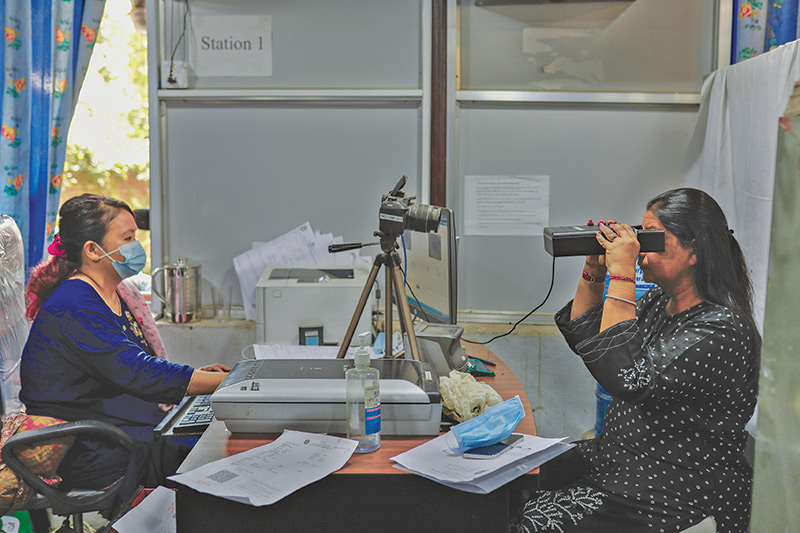
Cybersecurity experts worry about the safety of personal data obtained for the identification.  Post Photo: Elite Joshi

KATHMANDU,
It’s a tricky balance. Technology makes it easier to access services of all kinds but it also adds to our vulnerability if the devices and systems we use are not secured against data theft and leakage. The same is true in the case of the National ID card scheme.   
As a digital solution to prevent duplication of voter registration and identity theft, and to maintain proper records of internal migration of voters, Nepal in 2010 launched a pilot project to distribute to its citizens national identity cards with the bearer’s photograph and fingerprints.
The government announced that all citizens would get their national identity cards ‘very soon’ and the social security allowance would be distributed on its basis. But it officially inaugurated a National ID distribution campaign only in 2018 by presenting a card to a 101-year-old woman in Panchthar district, and to government employees at Singha Durbar, the central secretariat.
National ID is a federal-level digital identity card that holds the personal and biometric data of the cardholder including the name, birth date, sex, photo, prints of all fingers and digital signature on a computer chip.  
But amid concerns by cybersecurity experts over the security of sensitive personal data and its possible misuse, government authorities claimed that the data is foolproof.
Many others are sceptical, citing the 2018 leak of Aadhaar card data of hundreds of millions of Indians. Hackers had stolen people’s personal data and put that up for sale.
An Aadhar Card is a 12-digit unique number issued by the Unique Identification Authority of India, that holds biometric details, and demographic information like date of birth and address.
“In Nepal, too, both government and private organisations have been collecting huge amounts of sensitive private information on individuals, but nobody seems bothered about the data’s security,” said Rajib Subba, former deputy inspector general of Nepal Police who is an information and security expert.
He sees data and information as important assets of any country. “You could say it’s the ‘new oil’. If managed properly, it helps the country progress and prosper, but if not, this could bring many unwanted results,” warned Subba. He gives the example of how, in 2017, Equifax, an American multinational consumer credit reporting agency, announced a data breach that exposed the personal information of 147 million people.
According to the Department of National ID and Civil Registration under the Home Ministry, till now 120,000 cards have been distributed across Nepal, and over 700,000 have been printed.
“We have collected the biometric data of nine million people, and we are sure we can secure their identity,” said Tirtha Raj Bhattarai, director general of the Department of National ID and Civil Registration.
However, Nepal’s cybersecurity record is patchy, and based on neighbouring India’s Aadhar data breach, cybersecurity experts are concerned about the safety of Nepal’s national ID card data.
“I don’t see proper guidelines to secure the national ID data. It seems our government has not learnt from India, which is still struggling to resolve security issues with the Aadhar card data,” said Bijay Limbu, a cybersecurity expert who is also the chief executive officer at Vairav Technology.
In India, ever since the launch of the Aadhaar Card, the country has seen many cases of duping and misuse, and Aadhaar rackets are getting bigger and murkier by the day.
In the past decade, there have been numerous Aadhar-related hassles in India, especially among the disadvantaged groups—government officials allegedly demanded bribes to make the card in order “to fix technical glitches”.
Similarly, a significant minority of people, especially among the elderly and disabled, were turned away from enrolment centres, and for poor people, correction or update of Aadhar cards–even simple changes like updating an address or marriage–has been a daunting task, according to the Indian media.
In 2018, some 20,000 pension holders–mostly women in Jharkhand–were deleted from the list of beneficiaries because of ‘faulty linking,’ according to BBC news. In 2017, it was reported that a billion identities were at risk on India’s biometric database.
Limbu says such incidents are likely to occur in Nepal too, “but the government doesn’t seem concerned”.
“If we are not judicious, Nepal may face problems bigger than India is now facing. India is in trouble as its government failed to anticipate all the glitches that could arise while distributing Aadhaar cards,” said Limbu.
Several incidents of information leak of individuals through Aadhaar have been reported in India. In 2017, former Indian cricket captain MS Dhoni’s personal information was mistakenly tweeted by an enrolment service provider. Also, many have termed Aadhar a tool of state surveillance.
In a story published by BBC.com, Indian political scientist Pratap Bhanu Mehta said the Indian government was transforming the Aadhaar card from a tool of citizen empowerment into a tool for state surveillance.
In Nepal, data security is weak and hackers have found loopholes on popular websites. As many government websites are often hacked, cybersecurity experts say it won’t be easy to secure the data of National ID cards.
In 2017, a year before the government officially started distributing National ID cards, 58 government websites were hacked by a group that called itself “Paradox CyberGhost”. The web sites of the Ministry of Defence, Office of the Auditor General and the Nepal Law Commission were also hacked.
In conversation with the Post, the hacker had claimed that the act was just a “vulnerability test,” and that they had no ulterior motives. The hacker also claimed that all 58 sites were hacked in just ‘three minutes’.
In 2015, the web site of the President of Nepal was hacked. The website of the Department of Passports was breached in the same year.
On November 17 last year, the Department of Passports started issuing e-passports and made the National ID card mandatory for all passport applicants.
“National ID comes under critical infrastructure, but in our country there are no guidelines on their security and there is no system to secure it,” said Limbu.
He further said the National ID card’s information is sensitive both from the individual and national security perspectives.
“It’s unfortunate that Nepal does not consider cybersecurity a matter of national security. And if there is data theft, we don’t have any government agency to handle it except the largely ineffectual e-governance commission,” said Limbu.
He said there is a possibility of theft of identity of a citizen with a fake account. “Before such a system was introduced, the government should have adopted all possible preventive security measures,” said Limbu.
Besides, cybersecurity experts also blame the government for not running awareness programmes on data safety. Experts say, regarding the National ID, the government is focused only on collecting data from citizens, not on safeguarding them. “Sooner or later we have to face the consequences,” said Limbu.
Although the Constitution of Nepal, 2015 mentions an ‘integrated national identity management information system,’ and guarantees the ‘right to privacy’ in Article 15, experts say the provision has been largely ignored.
The National Identity Card and Registration Act, 2020 states that personal privacy would be ensured while implementing this law. However, this is not the case.
“It does not talk about data protection, and the document is riddled with loopholes,” said Prabin Subedi, a cyberlaw expert.
Although Nepal has a national cyberlaw called Electronic Transaction Act 2063 (2008), it is ill-equipped to deal with emerging cybercrimes, for lack of periodic reviews.
“The government should run campaigns to make people aware of the security vulnerabilities and ways to protect their private data,” said Subedi, who has an LLM in Information Communication Technology Law from the University of Oslo, Norway.  
He further pointed out the lack of a policy on cross-border data transfer via embassies, hospitals and driving licences.
“In our case if somebody’s data is stolen, s/he does not have a place to report, and there is no remedy for the victim, and so just about anyone can be blackmailed,” said Subedi.
Subba, the information and security expert, says the only way to tackle this problem is to introduce mandatory IT security auditing procedures and increasing government investment in data security.
“The government should come up with a policy to invest in data security and data auditing. Besides, we urgently need a clear law to tackle data theft and misuse.”

HOME PAGE

Stagnant paracetamol price contributing to its shortage

The medicine’s pricing, not revised for 14 years, seems to be a big reason for the shortfall.
- Arjun Poudel
Paracetamol is in short supply after the massive dengue outbreak.  Post File Photo

KATHMANDU,
On Wednesday, Kul Prasad Bhattarai, a resident of Kuleshwar in Kathmandu Metropolitan City-14, visited numerous pharmacies in his area looking for paracetamol, as he suffered severe body ache due to dengue infection.
He, however, could not find the medicine in any of the drug stores.
“I sent my children to different places to search for the medicine but they returned without a single tablet,” said Bhattarai, 74, who was infected with the dengue virus nine days ago.
“My wife too has been infected and has severe body ache but we can’t even get the paracetamol.”
This is a problem faced by hundreds of patients infected with dengue, a disease that has seen an alarming spread of late, infecting around 20,000 and killing around two dozen people across the country.
Paracetamol, or acetaminophen, is a drug used worldwide to relieve pain and reduce fever.
It is used to treat many conditions—including headache, muscle ache, arthritis, backache, toothache, sore throat, menstrual pain, musculoskeletal pain, cold and fever.
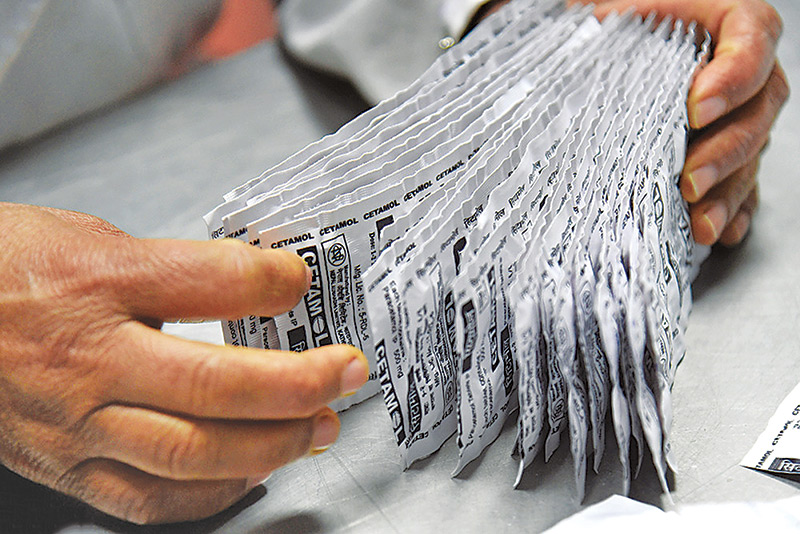
Nepal government has listed paracetamol as an essential drug and provides it free of cost from state-run health facilities across the country. The drug is available in the market under different brand names, with Cetamol, manufactured by the state-owned Nepal Drug Limited, the most commonly available brand.
Paracetamol is the only medicine prescribed by physicians as safe for dengue patients.
With the massive spread of dengue throughout the country, demand for paracetamol increased several fold. This caused a crisis in the market, forcing patients to use non-steroidal anti-inflammatory drugs (NSAIDs) to relieve pain.
Doctors warn that the use of the NSAIDs increases the risk of internal bleeding, including in the eyes, and elevates liver enzymes, damaging the organ.
“A lot of patients complain about the shortage of paracetamol in the market,” said Dr Sher Bahadur Pun, chief of the Clinical Research Unit at Sukraraj Tropical and Infectious Disease Hospital.
“Patients have been taking non-steroidal anti-inflammatory drugs—Flexon tablets, Nims, and Rynex, among others—to cure body ache caused by the dengue infection. Using such drugs is very risky in dengue infection.”
Some patients who use NSAIDs in excess also suffer internal bleeding. Such patients need to transfuse platelet-rich plasma and platelet concentrate, doctors say.
Officials at the Department of Drug Administration, the national regulatory body of pharmaceutical products, said the paracetamol crisis is a result of its high demand caused by soaring dengue cases and people’s tendency to hoard the medicine at home.
“We have deployed pharmacy inspectors to drug factories that produce paracetamol to increase the production from today [Thursday],” said Santosh KC, spokesperson for the department.
“We have also requested drug manufacturing companies to ramp up production by importing more raw materials.”
Paracetamol was also in short supply during the first and second waves of the Covid-19 pandemic.
Experts say the authorities’ indifference to increase the price of the medicine is the main reason for the crisis. Paracetamol is among the 96 medicines whose prices were determined by the department some 14 years ago.
The price of a 500mg paracetamol tablet was set at Re1, which remains unchanged. The exchange rate to the US dollar that is required to purchase raw materials from abroad was less than half at the time compared to the present. Price of a kg of raw material, which was around $2 at the time, has increased four fold. Per litre price of diesel was Rs58 at the time and labour cost has also increased, complained drug manufacturers.
“We are forced to sell the medicine at Re1 while the manufacturing cost exceeds the price,” said Deepak Dahal, former president of the Association of Pharmaceuticals Producers of Nepal.
“Dirty political games are being played over paracetamol and the authorities seem indifferent to the problem, even when patients have had to search the entire city for a single file of paracetamol.”
Nepal needs around 100 million tablets of paracetamol each year. The association said that drug manufacturers produced and supplied 30 million doses to the market in the past two months. Medicines sent to the districts outside Kathmandu are also being withdrawn to address the growing demand in the Valley but even that hasn’t solved the crisis, Dahal said.
As the government has not increased the price of paracetamol, Indian drug manufacturers are not exporting the drug to Nepal. Nepal imports over 60 percent of the drugs consumed in the country from India. Meanwhile, private pharmaceutical companies in Nepal also do not produce drugs in sufficient quantities to avoid losses, officials at the Health Ministry said.
“We have reached an understanding with drug manufacturers to increase the price of paracetamol and other essential drugs whose prices were fixed years ago and have not been revised since,” Bharat Bhattarai, director general at the Department of Drug Administration, said. “I hope the paracetamol crisis will be resolved in a couple of days.”

Page 2
NATIONAL

12 killed, at least 38 injured in two separate road accidents

Seven people died when the bus they were on fell off the road in Jurikhet, Makawanpur while five people died in another accident in Kyangsi Bagar, Rukum (East).
- SUBASH BIDARI,KASHI RAM DANGI

MAKAWANPUR / ROLPA
At least 12 people died and at least 38 were injured, some critically, in two separate road accidents in Makawanpur and Rukum (East) on Thursday.
Seven people died and 26 others sustained injuries when a passenger bus swerved off the road and plunged around 50 metres at Jurikhet along the Hetauda-Kulekhani road in Makawanpur district. According to the District Police Office, three critically injured people were referred to Chitwan while 23 others are receiving treatment at Hetauda Hospital.
Police suspect brake failure to be the cause of an accident on a sharp bend in Bhimphedi Rural Municipality-6. The bus en route to Hetauda from Kathmandu fell off the road in the Egharaghumti area.
There were 33 people on board when the accident happened, said police.
A team led by Superintendent of Police Bamdev Gautam, chief of the District Police Office, Makawanpur, reached the site for rescue. The injured were brought to Hetauda after primary treatment at a health centre in Bhimphedi.
In Rukum (East), five people died and 12 others were injured in a bus accident in Kyangsi Bagar of Bhume Rural Municipality-3 on Thursday. Four of the injured are said to be in critical condition and have been taken to Kohalpur for further treatment. The rest of the injured are receiving treatment at the district hospital in Rukumkot, said Gautam.
According to DSP Prakash Dangi, among the deceased are a two-year-old and his 40-year-old mother from Sisne Rural Municipality-6, Rukum (East).
According to Deputy Superintendent of Police Prakash Dangi, chief of the Rukum (East) Police, the bus en route to Rukumkot from Kathmandu had fallen off the road.
The bus’s rear wheel got caught in a pothole and lost balance resulting in the accident, said police.

Page 3
NATIONAL

KMC removes unauthorised pharmacies at Bir Hospital

The action inconveniences patients and the city should have waited until the dengue crisis is over, hospital chief says.
- Post Report

KATHMANDU,
A month since the Kathmandu Metropolitan City kicked off its drive to demolish illegal structures in the city, it has been relentless in its pursuit. On Thursday, which marked the drive’s 30th day, the city’s excavator reached Bir Hospital, at Kantipath, and vacated half-a-dozen pharmacies on the northern side of the hospital.
“Initially Bir Hospital had announced plans to build a park, but it later leased the space to run a pharmacy,” said Rabin Man Manandhar, spokesperson for the city office.
Manandhar added that this was not the first time the city ordered the hospital and pharmacy owners to clear the unauthorised structures. A warning in 2019, during the tenure of former mayor Bidya Sundar Shakya, had gone unheeded, he said.
“The hospital is supposed to construct a park in the area,” Manandhar said.
City officials said that of late, they had repeatedly used loudspeakers to order the owners to vacate the unauthorised structures from the area. On Wednesday, they had given them a 24-hour ultimatum to do so.
Bhupendra Kumar Basnet, director general at the hospital, however, said the city removed those pharmacies in haste without considering the fact that dengue is gripping Kathmandu at the moment.
“The number of dengue patients at the hospital has seen a rapid rise, and they need to buy medicines,” Basnet said. “Demolishing those structures will surely inconvenience them.”
Basnet added that the hospital was in the process to remove those pharmacists. “The hospital had asked them to remove their shops two months ago and they were saying they would do that soon,” he said. “The city should have waited until the dengue epidemic is over.”
The city started its drive on August 24, clearing illegal structures in some of the major business hubs—at Kathmandu Mall in Sundhara, RB Complex at Khichapokhari, and the London Pub at Durbarmarg.
On the second day of the drive, the city demolished the illegal structure at the Alfa Beta Institute, which saw a verbal altercation between Mayor Balendra Shah and managing director of the institute, Dwiraj Sharma. Since then, the municipal excavator has reached some of the major thoroughfares in the city—Koteshwar, New Baneshwar, Thapagaun, New Road, Sohrakhutte, New Bus Park, Ratnapark, and Banasthali, among others.
Shah’s actions have drawn cheers from many but also concerns. Those who have been running their businesses out of the city’s footpaths for decades have staged demonstrations against the city’s “inhuman” drive, arguing that they have been robbed of their income source ahead of Dashain.

NATIONAL

The ball is now in Supreme Court as Sheetal Niwas and Baluwatar face off

A single bench to decide whether or not to send the petitions to the Constitutional Bench.
- BINOD GHIMIRE
Around a dozen lawyers have moved the Supreme Court with petitions against President’s decision.  Post File Photo

KATHMANDU,
The constitutional confusion that has arisen after President Bidya Devi Bhandari’s refusal to authenticate the amendment bill on the Citizenship Act will now be settled by the Supreme Court.
The court will start hearing on five writ petitions that challenge the President’s refusal to authenticate the bill within the 15-day constitutional deadline. According to court officials, the hearings on all the petitions will be conducted by a single bench on Friday.
“The bench will decide on whether the petitions will be sent to the Constitutional Bench or decided from a regular bench,” Bimal Poudel, spokesperson for the apex court, told the Post.
Around a dozen lawyers moved the Supreme Court with the petitions claiming Bhandari’s refusal to authenticate the bill was a clear breach of the Constitution of Nepal. All the petitions have similar demands—the President be directed to authenticate the bill that was twice endorsed by the federal parliament, according to Poudel.
Speaker Agni Sapkota had first sent the bill to Sheetal Niwas on July 31 for authentication after the House of Representatives endorsed it on July 22, followed by the National Assembly on July 28. Bhandari on August 14 had returned the bill to the lower house citing Article 113(3) of the constitution.
However, both the House of Representatives and the National Assembly, as per the decision of the ruling alliance, endorsed the bill without a revision. On September 6, Sapkota sent the bill again to the President’s Office for authentication.
Article 113 (4) of the constitution says if the President sends back a bill along with her remarks and if both Houses reconsider the bill and send it again to the President as it was presented or with amendments, the bill shall be certified by the President within 15 days.
However, Bhandari did not authenticate the bill and let the September 20 deadline pass. The petitioners have claimed that
the President, by not authenticating the bill within the deadline, has violated the statute.
“Not authenticating the bill within the 15-day deadline is a violation of the constitution. The court needs to correct the unconstitutional move of the President,” advocate Sunil Ranjan Singh, one of the petitioners, told the Post. He has sought a mandamus order for the President to authenticate the bill.
Some of the lawyers, however, argue that the President’s move was justifiable because the federal parliament didn’t fulfil its constitutional responsibility as it barred lawmakers from filing amendments to the bill.
“Article 113 (4) states that if the bill is returned after amendment or in the original form. This means the lawmakers have the constitutional right to file amendments. However, they were deprived of that right,” Ramesh Badal, a former attorney general, told the Post. “The President would have authenticated it had the legislature endorsed the bill following the due process.”

Page 4
EDITORIAL

Democratic breakdown

The chase for power has made each individual wielding authority turn against democratic institutions.

In their book How Democracies Die, Steven Levitsky and Daniel Ziblatt write, “Democracies work best—and survive longer—where constitutions are reinforced by unwritten democratic norms.” Such norms work best where the institutions that are supposed to strengthen democracy function well. In Nepal, however, we see a continuous failure of these institutions to honour even the norms laid down in the constitution. The years after the promulgation of the new constitution in 2015, particularly the past five years after the first Parliament came into being, have been marked by a continuous assault on democratic institutions. Seemingly no state institution is free of crisis. The hope created by adopting federal democratic republicanism, especially after the promulgation of the constitution, continues to be dashed a bit every day.
President Bidya Devi Bhandari’s “inaction” on the bill to amend the Citizenship Act—leading to the lapse of the 15-day deadline by when she should have authenticated it—has brought about constitutional chaos that will for long roil the body politic. This, just a day after the President celebrated the seventh anniversary of the promulgation of the constitution and distributed awards and pardons to hundreds of individuals. The contradiction in Bhandari’s words and actions were evident in a matter of a couple of days, but it was not a one-off incident. Her opinions on similar issues have always been expedient rather than principled.
The President is only one of the many figures in Nepal’s public institutions who have betrayed the spirit of the constitution and the state institutions they represent. It is as if the debates around the constitution are nothing but a clash of interpretations, as each political entity or individual at the helm is interpreting the constitution as well as other documents as they wish. Moreover, the actions of those who have sworn to uphold the spirit of the constitution and constitutionalism instead seem aimed at subverting it. The chase for power and position has made each individual wielding even a smidgen of authority turn against democratic institutions. With Baluwatar the final destination of their rat race, major political parties have become the biggest threat to democracy today.
Another instance of the assault on constitutionalism is the recent avatar of the suspended Chief Justice of the Supreme Court, Cholendra Shumsher Rana. Having faced impeachment for his actions that were unbecoming of the chief of an institution with the final authority to interpret the constitution, Rana has been at his vindictive best during the impeachment process. Not only has he gone all-out against his detractors across the political spectrum, but also shamelessly dragged his colleagues into controversy. So much so that he made no secret of bias and political pressure in his judgements when it became increasingly clear that he had already given enough reasons for the committee to recommend impeaching him. The videos of his demeanour during the impeachment interrogation, while cringeworthy, are a sad reminder of the moral turpitude that characterises those who lead our public institutions.
However, there is no shortcut out of this crisis. Even as democratic institutions continue to backslide, the only way to get things right is to uphold the spirit of democracy and constitutionalism. As the second iteration of federal and provincial elections draws close, citizens must remember which political parties and individuals have abdicated their responsibilities, brought us where we are, and accordingly make their electoral choices

OPINION

Reintegrating returnee migrant workers

The local level is the fundamental institution to implement reintegration programmes.
- THANESHWAR BHUSAL
Post File Photo

The government of Nepal has recently promulgated a national reintegration framework with clear institutional and procedural outlines to reintegrate returnee migrant workers. The legal basis of this policy framework is the Foreign Employment Act 2007. While the law empowers the Foreign Employment Board to carry out welfare services, the reintegration policy expands the scope of welfare services across federal, provincial and local jurisdictions. In other words, federalism has been adequately captured by the policy, though there remain uncertainties with regard to financial collaboration across federal units.  
The generic layout of the policy is as such. It has three key dimensions: employment, entrepreneurial and social. The employment dimension envisions that returnee migrants acquire some form of skills which could be useful to Nepal’s employers. Employers in the national landscape are expected to hire those returnees who bring useful skills from overseas employment. The entrepreneurial dimension encourages returnee migrant workers to establish small-scale enterprises to which governments at different levels could provide motivational support such as concessional loans, discounts on the purchase of technological equipment and subsidies on taxes. The social dimension of the policy recognises that not all returnee migrants bring wealth or skills. It is evident that some migrant workers get involved in workplace or road accidents resulting in permanent disabilities, others face wage thefts, and a tiny group of migrants cannot save money before returning home.

Institutional devices
Two institutional devices could be considered instrumental in the implementation of this policy. The “direction committee” at the federal level is led by the executive director of the Foreign Employment Board which seeks to coordinate all reintegration programmes in the country with the sole hope of (i) Eliminating overlaps across programmes, (ii) Keeping real-time database of reintegration programmes, and (iii) Conducting proper monitoring and evaluation of the programmes. The “management committee” at the local level is led by the deputy mayor in urban municipalities and vice-chair in rural municipalities which aims to manage the actual implementation of reintegration programmes regardless of diverse funding sources, size,
modality and collaboration. Although there seems to be a lack of any similar committee at the provincial level in the policy, both the direction and management committees are expected to coordinate with the provincial governments to ensure proper coordination in the design and delivery of reintegration services to returnee migrant workers.
The role of the Ministry of Labour, Employment and Social Security is envisaged to be crucial in managing foreign aid, and handling mega-projects that aim to serve returnee migrant workers. Although the ministry has to follow the prevailing foreign aid policy of the government of Nepal, it has the responsibility to specify priority areas, modalities and monitoring and evaluation mechanisms to make sure the aid is effectively utilised. The constitution and relevant laws exclusively provide a basis for the Labour Ministry to lead the foreign employment regime, hence handling reintegration programmes lies, in principle, within its jurisdiction. The policy foresees that any donor agency willing to carry out reintegration programmes in the country will need to approach the ministry as the entry point. The next step is that the ministry liaisons with the concerned ministries and entities such as the Ministry of Finance to get approval for the acceptance of programme items and the budget. The approved donor-funded projects then need to coordinate with the “direction committee” at the Foreign Employment Board before they begin the implementation of their projects.
Local NGOs are also given ample opportunities to participate in the implementation of the reintegration programmes. As with other programmes, they must comply with other legislative requirements to operate in any locality. Depending upon their funding size, conditions and structure, local NGOs are assisted by the local “management committee” in designing the reintegration programmes. Moreover, the policy provides avenues for civil society organisations and the private sector to engage in supporting returnee migrant workers, given that they are recognised by their local management committee.
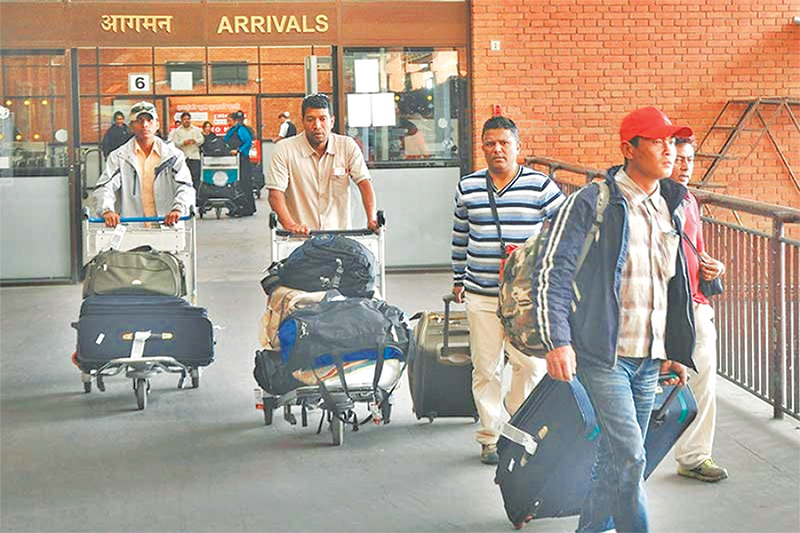
The policy alone can never be a game changer to transform the lives of returnee migrant workers because several ecological factors play instrumental roles. This indicates that local management committees must be deeply engaged in identifying returnee migrant workers, their interest and skills to be reintegrated, and the amount of money they can invest in entrepreneurial activities. In doing so, the policy requires all municipalities to keep an actual record of returnee migrant workers which is supported by the Foreign Employment Board through the deployment of volunteers at the arrival lounge of international airports. The database maintained by the Department of Foreign Employment, therefore, needs to be expanded to municipalities, at least in its readable format.

Foreign aid
While the policy is vocal in accepting foreign aid to run the reintegration programmes, there remains several ambiguities. Foremost among them is the notion of aid that is available in many labour receiving countries. The policy is inadequate in pushing the government to have a conversation with labour receiving countries to bring funds to run reintegration programmes, though evidence suggests that some countries such as Japan and Korea are willing to carry out targeted reintegration programmes in Nepal. It is, therefore, hoped that the policy will provide a benchmark in the future to help support returnee migrant workers whose contribution to Nepal’s economic development is unparalleled.
A few policy recommendations seem crucial. First, the reintegration policy should not be considered as the policy of the Labour Ministry only. It captures both horizontal and vertical institutions of the government, hence all federal units should consider the policy as their own. Second, it envisages incorporating non-governmental actors and the private sector to, particularly, engage in offering employment opportunities to returnees, entrepreneurial prerequisites to aspirant entrepreneurs, and skills and knowledge
sharing avenues for policymakers. And the third is the role of local governments. The policy is vocal in making Nepal’s local governments more responsible than any other level of government. The local level committee chaired by the deputy mayor or vice-mayor is the fundamental institution to implement returnee migrant-focused programmes. The committee enjoys the power and resources to authorise reintegration programmes in their localities. Without proper realisation of these peculiarities at the federal, provincial and local levels, the policy may not achieve its inherent objectives.

     
Bhusal is an under-secretary in the foreign employment management section at the Ministry of Labour, Employment, and Social Security.

OPINION

Nepal’s NDC on climate change

Nepal’s nationally determined contribution focuses more on adaptation than mitigation.
- SUBASH PANDEY
Shutterstock

The last three decades of the international climate regime have shown positive accomplishments. The establishment of the United Nations Framework Convention on Climate Change (UNFCCC) with the goals of mitigating and adapting to the impacts of climate change, the Kyoto Protocol with legally binding emissions targets for developed countries, the Paris Agreement with a temperature threshold of 2 degrees Celsius (and pursue best efforts to limit it to 1.5 degrees Celsius), and establishment of the net-zero target are three key milestones of past 30 years of climate change negotiation. However, the current pace of progress is not enough to achieve the ambitious target of 1.5 degrees Celsius set out in the Paris Agreement.
So far, the biggest failure of the international climate regime has been the poor implementation of treaties. Therefore, with the ambitious Paris Agreement in place and the Paris Rulebook nearly completed, the focus now should be on the practical implementation of the agreement. Although no legally binding goal is set for greenhouse gas emissions (GHGs), these gases have heat-trapping properties and are responsible for rising global temperature, primarily for political reasons. Parties to the Paris agreement agreed that the agreement would be implemented in a “facilitative, non-adversarial, non-punitive manner and an atmosphere of mutual trust”. So, the success of the Paris Agreement depends on the credibility of the pledges made in nationally determined contributions (NDCs).
NDC is a voluntary and political commitment that represents the proposed efforts by each country to achieve the goals of the Paris Agreement. NDC includes commitments to reducing emissions of GHGs, actions to adapt to impacts of climate change, and providing necessary financial and technical support to poor countries from developed countries. Nepal submitted its first NDC in 2016 and the second in December 2020. Unlike developed countries, NDC from Nepal focuses more on adaptation than mitigation.
 
Experience from the first NDC
Notable progress has been made on adaptation-related targets as Nepal developed and implemented timely adaptation policies, such as the local adaptation plan of action (LAPA). Many criticise LAPA for being donor-driven, technocratic, and oblivious to the local context and needs. Nepal’s performance on mitigation-related goals is dismal. This article will focus on targets related to the mitigation of Nepal’s NDC.
Eight of the 14 targets mentioned in Nepal’s first NDC were related to mitigation. Some key mitigation targets included increasing the share of electric vehicles up to 20 percent from the 2010 baseline by 2020, expanding Nepal’s energy mix by focusing on renewables by 20 percent, diversifying energy consumption patterns by 2020, developing an electric rail network by 2040 and maintaining 40 percent of the total area of the country under the forest cover by 2040.
However, Nepal barely accomplished what it intended to achieve by 2020. In 2020, only 0.75 percent of the total vehicles in Nepal were electric, and renewable energy accounted for only 3.2 percent of the total energy produced. One surprising goal in the first NDC was to maintain 40 percent of the total area under forest coverage by 2020, when Nepal already had 44.74 percent of the total area under forest coverage. Though progress has been made, many still question the necessity and feasibility of developing an electric rail network by 2040.

What are in Nepal’s second NDC?
Nepal submitted a more ambitious second NDC intending to reach net zero by 2050 in 2020. Many international organisations have lauded Nepal’s second NDC for its quantifiable targets and sectoral coverage compared to its first NDC, which had limited quantitative information. It has a target of mitigation for short-term (2025) and medium-term (2030) that includes multiple sectors: energy, waste, and agriculture, forestry, and other land use (AFLOU). Many mitigation targets are related to energy, transportation, residential and AFLOU sectors. Implementation of the second NDC is estimated to cost $28.4 billion, nearly 90 percent of Nepal’s GDP.
Nepal aims to expand its electricity generation from approximately 1,400 megawatts to 15,000 megawatts (only 5000 megawatts will be built using national resources) by the end of 2030 and ensure that 15 percent of total energy demand comes from clean energy sources by 2030. Similarly, Nepal intends to boost sales of e-vehicles to cover 90 percent of all private passenger vehicles and 60 percent of all four-wheeler public passenger vehicles by 2030. Additionally, in the residential sector, Nepal plans to ensure that 25 percent of households use electric stoves as their primary cooking mode by 2030 and install an additional 200,000 household biogas plants by 2025. Finally, in the AFLOU sector, Nepal aims to maintain 45 percent of the total area of the country under forest cover by 2030.
However, an important point to note here is that many mitigation-related targets of Nepal are conditional.
That said, Nepal would achieve the targets only if it received financial, technological, and capacity-building support from international actors, including global funds such as Green Climate Fund, Global Environment Facility, and other bilateral and multilateral agencies. Analysing the first NDC of Nepal, one research found that few actions have been taken in setting up institutions, including policies, programmes, and budgets to achieve those targets. Therefore, it would not be misleading to state that Nepal’s first and second NDCs were formulated to full its obligation as a party to the Paris Agreement and get international funds in the name of adaptation and mitigation without full ownership of those targets.
There are a lot of criticisms that NDC’s targets were set without much scientific evidence and rigorous analysis. For example, maintaining 44 percent of the total area of the country under forest coverage when Nepal has already achieved that target. Similarly, agriculture contributes to nearly 69 percent of total GHGs emissions, but there is no emission reduction target specific to agriculture in NDC.
 Since the 1.5 degrees Celcius goal of the Paris Agreement depends on the combined efforts of all the parties to the Paris Agreement, each party needs to be transparent about its actions and reporting of its progress. Nepal is also responsible for fulfilling this greater global goal that determines the well-being of future generations.
Nepal has a good history of ability to formulate policies but a poor record of implementation. Therefore, the government needs to develop robust implementation and monitoring mechanisms to increase the credibility of Nepal’s position in the international climate community and achieve its ambitious pledges. To achieve this, the government should clearly define the roles and responsibilities of different stakeholders and ensure efficient coordination between state and non-state actors. It is also necessary to tap the potentiality of the universities in tracking the progress of NDC and increasing the capacity of relevant national stakeholders through research and development.


Pandey is a graduate student of Climate Science and Policy at Bard College in New York. 

Page 5
MONEY

E-commerce watchers expect modest growth due to embargo, inflation

Rising cases of dengue in Kathmandu may also drive shoppers to online stores in a replay of pandemic days, sellers say.
- KRISHANA PRASAIN
E-commerce firms say that despite inadequate inventory in the market, they aim to launch bumper schemes to attract customers.   SHUTTERSTOCK

KATHMANDU,
E-commerce watchers expect only modest growth in online shopping this festive season as import restrictions on certain goods and runaway inflation keep Nepali consumers tight-fisted.
The Russia-Ukraine war has caused problems with supply chains and that has resulted in higher prices.
Sales growth may slow down, but e-commerce firms say that rising cases of dengue in Kathmandu Valley may drive shoppers to online stores in a replay of pandemic days.
The mobile and electronics category is expected to remain strong during the festive period driven by better deals and new launches, despite the embargo on these type of goods.
E-commerce firms like Sastodeal and Thulo.com said that rising
prices may hurt e-business sales to some extent.
“We are expecting a growth in festive sales even though goods have become more expensive,” said Laxman Gautam, senior category manager of Sastodeal. He said that sales trends at brick-and-mortar stores were not good either.
According to Nepal Rastra Bank, the year-on-year consumer price inflation stood at 8.26 percent in the first month of the current fiscal year, as compared to 4.35 percent a year ago.
Food and beverage inflation stood at 7.11 percent while non-food and service inflation stood at 9.18 percent in the review month.
E-commerce firms say that despite inadequate inventory in the market, they aim to launch bumper schemes to attract customers to online shopping.
“There is a shortage of goods in the market. However, we are aiming to provide the best deals and prices with the available products,” said Pranayna KC, chief marketing officer of Daraz.
“Factors such as inflation and import restrictions that impact the supply of goods hurt the offline and online markets alike,” she said.
Observing the high number of orders during festival time, online marketplaces are managing their logistics accordingly, with many hiring extra temporary staff.
Surakchya Adhikari, co-founder and chief operating officer of Thulo.com, said that the online marketplace is expecting a 30 percent sales growth this festive season.
“This is the same growth rate we had achieved during last year’s festive sales. As the number of dengue patients is rising in Kathmandu, more customers may want to buy goods online,” Adhikari said.
Although Covid-19 restrictions disrupted Nepal’s economy—tourist arrivals, for example, plunged by 81 percent in 2020—the pandemic has created new online opportunities, said the United Nations Conference on Trade and Development report. Nepal’s key online supermarket Thulo.com, for example, has seen sales surge by more than 200 percent from 2019 to 2020.
“Covid-19 has levelled the shopping experience due to the convenience of buying goods from the comfort of one’s home. It has also increased the trust level of customers,” Adhikari said. “More and more people are joining the online market.”
“Despite the rise in online shopping, customers are tightening their budgets due to inflation,” she said.Online marketplace in the valley say that the number of customers ordering food items and fast-moving consumer goods has jumped following the discount offers. With special discounts of up to 25-30 percent, customers are snapping up essential and fast-moving consumer goods. After fast-moving consumer goods, winter sales have also picked up. But sales of high-end mobile phones are slow because of the import ban, they said.
“To attract people to online shopping platforms, we are adding values like free delivery, coupon vouchers, discounts on e-wallet payments and combo offers,” Gautam said.
Besides essential food items, Thulo.com is expecting good sales of consumer electronics and kitchen products. Sastodeal has launched its Big Deal at Sastodeal scheme which offers discounts of up to 80 percent on different goods and other offers and schemes. The offers are receiving good response from customers, the firm said.  Adhikari said that they were managing their logistics part through Thulo Express, a sister logistics company of Thulo.com.
“We are hiring temporary staff too and are trying to cater to customers who want their shopping delivered the same day,” she said.
There has been a shift in the payment system as well. E-commerce entrepreneurs say that customer preference towards cash-on-delivery has been declining.
According to Nepal Rastra Bank, online transactions between mid-July and mid-August 2022 reached Rs5.68 trillion compared to Rs3.61 trillion last year. The number of transactions also swelled, reaching 70.39 million during the review period, up from 49.45 million transactions previously.
KC, chief marketing officer of Daraz, said, “From a mere 16 percent digital prepayment, we expect it to increase to 50 percent of overall transactions which includes payment via debit/credit card and e-wallet.”
Digital prepayment has seen a lot of traction recently.
E-commerce entrepreneurs say that there is no supply side strain in the products offered by online shopping platforms despite import restrictions and hurdles at the border points.
E-commerce marketplaces are observing a rise in demand from outside the valley too during this festive season.
“Online orders from outside Kathmandu Valley have more than doubled this festive season,” said Gautam. “We are expecting to maintain the growth momentum.”

MONEY

Britain lifts ban on gas fracking in push for energy independence

- REUTERS

LONDON, 
Britain on Thursday formally lifted a moratorium on fracking for shale gas that has been in place since 2019, saying strengthening the country’s energy supply was an “absolute priority”.
Energy prices have soared in Europe after Russia invaded Ukraine, and Britain is subsidising bills for households and businesses at a predicted cost of more than 100 billion pounds ($113 billion).
New Prime Minister Liz Truss said earlier this month that fracking—extracting shale gas from rocks by breaking them up—would be allowed where it was supported by communities.
Business and Energy Secretary Jacob Rees-Mogg said on Thursday all sources of energy needed to be explored to increase domestic production, “so it’s right that we’ve lifted the pause to realise any potential sources of domestic gas”.
Fracking, which has been opposed by environmental groups and some local communities, was banned after the industry regulator said it was not possible to predict the magnitude of earthquakes it might trigger.
Cuadrilla, 96% owned by Australia’s AJ Lucas, had the most advanced fracking wells in Britain and found a natural gas resource, but the rules around earth tremors meant its operations had to keep halting, meaning that neither of its two wells could be fully flow-tested.
Cuadrilla welcomed the government decision and said it was committed to returning a portion of any shale gas revenue to local communities.
“Lifting the moratorium will help the shale industry unlock UK onshore natural gas in quantities sufficient to meet the UK’s needs for decades to come,”  Cuadrilla CEO Francis Egan said.
Chemicals and energy giant INEOS, which holds several British shale gas exploration licences, said the government should treat shale gas development as “a national infrastructure priority.”
Experts say restarting the industry will do nothing to ease energy prices this winter, however, since it would take many years for an industry to develop and it remains unclear whether a significant amount of gas could be extracted.
“Even if the risks proved to be manageable and acceptable, shale gas would only make a significant impact to UK supply if, over the next decade, thousands of successful wells were to be drilled,” Andrew Aplin, Honorary Professor at Durham University said.
A report, requested by the government and published on Thursday by the British Geological Survey (BGS) said since little fracking had taken place in the country it “remains challenging” to estimate the seismic impact it could have.
The largest tremor caused by fracking took place at Cuadrilla’s site in Blackpool, northern England, in 2011, registering a magnitude of 2.3 which residents said woke them in the night.
After this, the government introduced a traffic-light system which suspended work if seismic activity of 0.5 or above on the Richter scale was detected. The BGS said that threshold was the most conservative of any region where fracking has taken place, with some states in the Unites States, where fracking is commonplace, having a magnitude 4 threshold.

MONEY

Japan intervenes in the currency market, now what?

- REUTERS
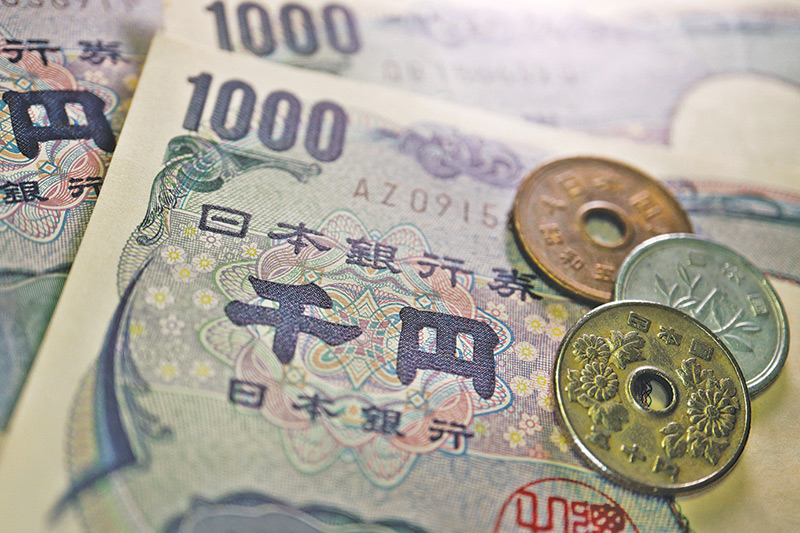
Coins and banknotes of Japanese yen are seen in this illustration picture.   REUTERS

TOKYO, 
Japan intervened in the currency market on Thursday to buy yen for the first time since 1998, in attempt to shore up the hard-hit currency after the Bank of Japan stuck with ultra-low rates.
Below are details on how yen-buying intervention typically works as well as the challenges to that effort.

When did Japan last conduct yen-buying intervention?
Given the economy’s heavy reliance on exports, Japan has historically focused on arresting sharp yen rises and taken a hands-off approach on yen falls. Yen-buying intervention has been very rare. The last time Japan intervened to support its currency was in 1998, when the Asian financial crisis triggered a yen sell-off and a rapid capital outflow from the region. Before that, Tokyo intervened to counter yen falls in 1991-1992.

Why is yen buying seen as a risk?
Currency intervention is costly and could easily fail given the difficulty of influencing its value in the huge global foreign exchange market.
That is one key reason it is considered a last-resort move, which Tokyo greenlights only when verbal intervention fails to prevent a free fall in the currency. The speed of yen declines, not just levels, are seen as crucial in authorities’ decision on whether and when to step in.
Some policymakers say intervention only becomes an option if Japan faces a “triple” threat—selling of yen, domestic stocks and bonds—in what would be similar to sharp capital outflows experienced in some emerging economies.

How does it work?
When Japan intervenes to stem yen rises, the Ministry of Finance issues short-term bills to raise yen which it can then sell in the market to weaken the Japanese currency’s value.
In cases of intervention to prop up the yen, authorities must tap Japan’s foreign reserves for dollars to sell in the market in exchange for yen.
In both cases, the finance minister will issue the final order to intervene. The Bank of Japan will act as an agent and execute the order in the market.

What are the challenges?
Yen-buying intervention is more difficult than yen-selling.
Japan’s foreign reserves stand at $1.33 trillion, the world’s largest after China’s and likely composed mostly of dollars. While abundant, reserves could quickly dwindle if huge sums are required to influence rates each time Tokyo steps in. That means there are limits to how long it can keep intervening, unlike for yen-selling intervention - where Tokyo can continue issuing bills to raise yen.
Currency intervention would also require informal consent by Japan’s G7 counterparts, notably the United States, if it were to be conducted against the dollar/yen. That is not easy with Washington traditionally opposed to the idea of currency intervention, except in cases of extreme market volatility.

MONEY

Ola Electric makes foray into Nepal with all-new S1 scooters

Briefing

KATHMANDU: Ola Electric, India’s largest electric vehicles company, announced its foray in Nepal through a partnership with CG Motors. Under the MoU, Ola Electric will launch its stunning Ola S1 scooters (S1 & S1 Pro) in Nepal. The partnership furthers the Nepal government’s goal of transforming the country to light electric vehicles by 2031. The Ola S1 scooters will be available in Nepal starting next quarter. The Ola S1 scooters have been appreciated for their premium design, superior performance, best in class features and new age connected technology in India. Both Ola S1 & and S1 Pro come with some of the most popular MoveOS features such as Music Playback, Navigation, Companion App, and Reverse Mode, with an exception of the Hyper mode only in the S1 Pro, reads the press release issued by the company. (PR)

MONEY

Ncell launches India voice packs

Briefing

KATHMANDU: Ncell customers can now enjoy calling India at affordable rates. NcellAxiata Limited, coinciding with the festive season announced the launch of 3 attractive India voice packs on Thursday. The voice packs are getting launched from Friday. All users of pre-paid and post-paid can take benefit from these volume-based voice packs. Depending upon the requirement of voice service to call India, they can choose 1-day, 7-day, or 28-day voice packs, states the press release by Ncell. 1-day pack contains 15 minutes of India calling at just Rs55 including applicable taxes. In the 7-day pack, customers get 70 minutes of India calling at just Rs249. (PR)

MONEY

5th edition of Himalayan Art Festival on Monday

Briefing

KATHMANDU: The fifth edition of Himalayan Art Festival will start on Monday. The festival was initiated by E-Arts Nepal in 2017 and has the finest collection and exhibition of Nepali artworks. The five-day long festival will be vibrant, lively and full of various art activities such as musical performance, artists talk, guided tours, silent art auction and art workshop, reads the press release issued by E-Arts Nepal. The festival embraces a comprehensive and holistic approach towards Nepali art by presenting works of more than one hundred fifty different artists that represent a multitude of genres—paintings, paubha, sculptures,  installations, photographs, print making, ceramic, as well as musical live performances. (PR)

Page 6
WORLD

Russian call-up sparks exodus of men

Prices for air tickets out of Moscow soared above $5,000 for one-way tickets to the nearest foreign locations.
- REUTERS
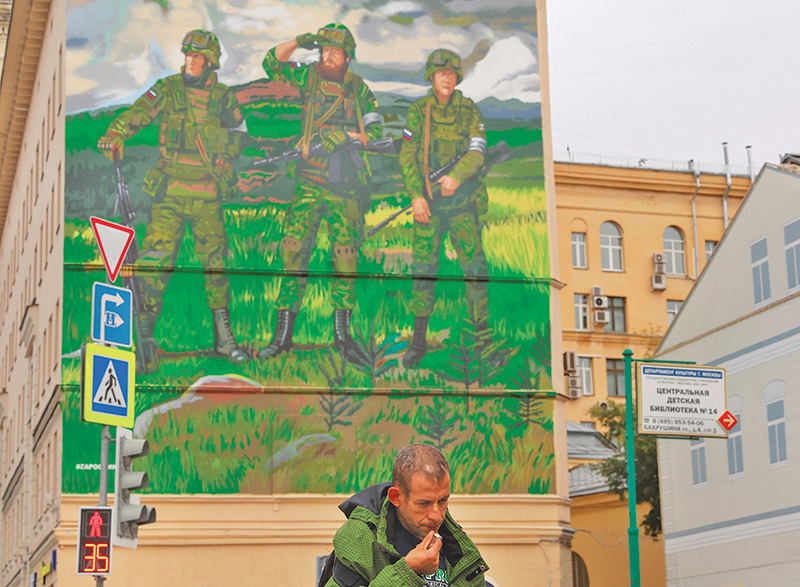
A man smokes while walking past a mural painted on a multi-storey building in support of the Russian army, in Moscow, Russia on Wednesday.   REUTERS

TBILISI/VAALIMAA,
Some Russian men rushed for the borders on Thursday after President Vladimir Putin ordered a partial mobilisation, with traffic at frontier crossings with Finland and Georgia surging and prices for air tickets from Moscow rocketing.
Putin on Wednesday ordered Russia’s first mobilisation since World War Two and backed a plan to annex swathes of Ukraine, warning the West he was not bluffing when he said he’d be ready to use nuclear weapons to defend Russia.
Prices for air tickets out of Moscow soared above $5,000 for one-way tickets to the nearest foreign locations, with most air tickets sold out completely for coming days.
Social media groups popped up with advice on how to get out of Russia while one news site in Russian gave a list of “where to run away right now from Russia.” There were long tailbacks at border crossings with Georgia.
“War is horrible,” Sergei, a Russian man who declined to give his surname, told Reuters as he arrived in Belgrade, the Serbian capital. “It’s okay to be afraid of war and of death and such things.”
One Russian man who gave his name as Alex told Reuters in Istanbul that he had left Russia partly due to the mobilisation.
“The partial mobilisation is one of the reasons why I am here,” he said. “A very poor step it seems to be, and it can lead to lots of problems to lots of Russians.”
He said he felt that not many Russians would want to be sent to fight.
Another Russian, who gave his name only as Vasily, arrived in Istanbul with his wife, teenage daughter and six suitcases.
“The mobilization was inevitable because there was a shortage of human resources. I am not worried because I’m already 59 years old and my son lives abroad,” he said.
A truck driver who crossed the Russian-Kazakh border on Thursday near the Kazakh city of Oral told Reuters he saw unusually heavy traffic from the Russian side.
He asked not to be identified, fearing that might complicate his future travel.
Kremlin spokesman Dmitry Peskov said on Thursday that reports of an exodus of draft-age men were exaggerated. Asked about reports that men detained at anti-war protests were being given draft papers, Peskov said it was not against the law.  
Russian state-owned pollsters say that more than 70 percent of Russians support what the Kremlin calls the “special military operation”, though polling leaked in July showed an even split between those who wanted to fighting to stop or continue.
The war in Ukraine has killed tens of thousands, unleashed an inflationary wave through the global economy and triggered deepening confrontation with the West.
A tourism industry source told Reuters that there was desperation as people sought to find air tickets out of Russia.
“This is panic demand from people who are afraid they won’t be able to leave the country later—people are buying tickets not caring where they fly to,” the source said.

WORLD

New regions can be defended with Nukes: Medvedev

LONDON: Former Russian president Dmitry Medvedev said on Thursday that any weapons in Moscow’s arsenal, including strategic nuclear weapons, could be used to defend territories incorporated in Russia from Ukraine.
Medvedev, deputy chairman of Russia’s Security Council, said that referendums being organised by Russian-installed and separatist authorities in large swathes of Russian-occupied Ukrainian territory will take place, and that “there is no going back”:
“The Donbas republics and other territories will be accepted into Russia.” Medvedev said the protection of all the territories would be significantly strengthened by the Russian armed forces, adding:
“Russia has announced that not only mobilisation capabilities, but also any Russian weapons, including strategic nuclear weapons and weapons based on new principles, could be used for such protection.” (REUTERS)

WORLD

Australia mourns Queen Elizabeth

- REUTERS

SYDNEY, 
Australia held a national day of mourning for Queen Elizabeth II on Thursday, with Prime Minister Anthony Albanese saying the greatest tribute the nation could offer was not a statue but “a renewed embrace of service to the community”.
With the day declared a national holiday, a memorial ceremony attended by 600 dignitaries was held at Parliament House in Canberra for Queen Elizabeth, who died on September 8 after 70 years on the throne. As Australia’s head of state she toured the country 16 times during her reign.
The ceremony was opened by a First Nations Elder, Aunty Violet Sheridan, who made a traditional Welcome to Country, and remembered Queen Elizabeth as a mother and grandmother.
The event took place before anti-monarchy protests organised by indigenous groups saw hundreds of people gather in the city centres of Sydney and Melbourne to mark the impact of Britain’s colonisation on First Nations people.
Albanese, who returned to Australia a day earlier after attending Queen Elizabeth’s funeral in London, noted her memory was being honoured “on a continent home to the world’s oldest continuous culture”.
Albanese supports Australia becoming a republic, but has previously said his centre-left Labour government would prioritise recognising First Nations people in the constitution, which, like any move to a republic, requires a national referendum. A referendum for a republic failed in 1999, and recent polls show opinion is divided. In a speech at the memorial ceremony he said Australia had undergone a transformation during Queen Elizabeth’s reign. When she had first toured, Britain was Australia’s biggest trading partner and top source of migration, he said.
“That Australia, of 1954, where seven million people—70 percent of the population—turned out to welcome the first sovereign to visit these shores was, in virtually every respect, a different nation in a different world,” he said. Queen Elizabeth had taken pride in Australia’s progress and “stood with us”, he said, and Australia’s “affection held strong”.

WORLD

Better sanctions on Myanmar needed, expert says

- ASSOCIATED PRESS

BANGKOK, 
A United Nations-appointed human rights expert called on Thursday for governments and companies to coordinate efforts to cut off the military-led government of Myanmar from its sources of revenue and weapons, saying life in the Southeastern Asian nation has become a “living hell” for many since the generals seized power last year.
Tom Andrews, in Geneva to deliver his annual report on Myanmar to the UN Human Rights Council, told reporters that while many countries have been imposing sanctions on individuals, military entities, financial institutions and energy companies, what is needed is “coordinated action.”
Russia and China continue to supply weapons to Myanmar, and with both having veto power on the UN Security Council, Andrews
suggested it was unlikely it could convene and establish an arms embargo and targeted economic sanctions, leaving it up to individual countries.
“Right now you have countries doing this, countries doing that, a whole hodgepodge of things,” he said. “But they don’t add up, they’re not focused, they’re not strategic, they’re not coordinated—and that’s what has to happen.”
The army seized power in February last year, ousting the democratically elected government of Aung San Suu Kyi.
The takeover triggered mass nonviolent protests nationwide, but when the military and police responded with deadly force, armed resistance arose in the cities and the countryside, and continues to spread.
In his report, Andrews noted that since the military takeover, about 19 million euros worth of Myanmar teak has entered the European Union despite sanctions, and smaller amounts have entered the United States, Canada, Switzerland and Britain, providing revenue for Myanmar’s military government.
The report also says that effective sanctions should target the military’s access to foreign currency, yet only Canada has sanctioned the Myanmar Foreign Trade Bank, despite it being the primary foreign exchange intermediary.
Likewise, some international companies have taken action to end relationships with military-owned businesses, but others have not, the report says.
Andrews said atrocities committed against civilians continue, citing a helicopter attack last week on a school in a Buddhist monastery, killing at least 13, including seven children, as a recent example. The government has denied the attack.

WORLD

Pakistan former prime minister Khan says sorry in contempt of court case

A convicted politician is liable to be disqualified for at least five years under Pakistani laws.
- REUTERS
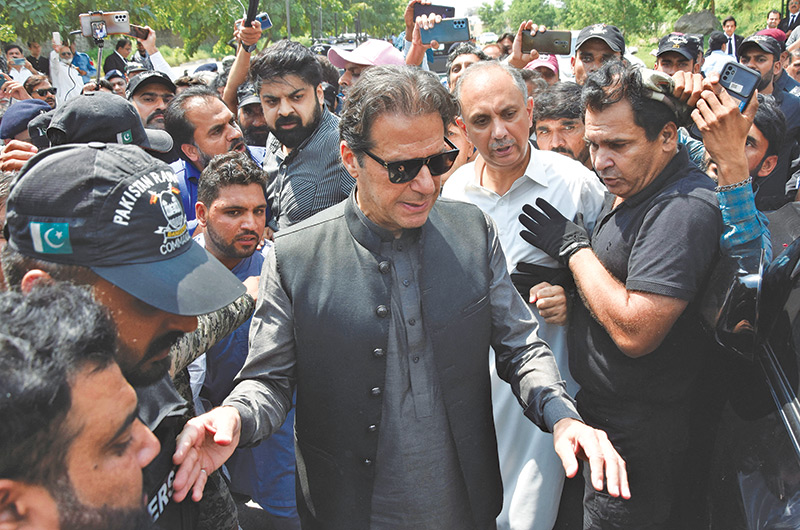
A file photo shows Pakistan’s former prime minister Imran Khan appearingin court to extend pre-arrest bail, in Islamabad, Pakistan.  REUTERS

ISLAMABAD, 
Former Pakistani Prime Minister Imran Khan on Thursday said sorry in a contempt of court case and promised not to hurt the dignity of the judiciary, the court said, a concession that could avoid his disqualification from politics.
The charges are related to a speech by Khan in which he allegedly threatened police and a female judge last month after one of his close aides was denied bail in a sedition case.
“He stated that he realised during the proceedings that he may have crossed a red line,” the court said in a short order seen by Reuters.
Kahn had previously denied being threatening.
The high court had been expected to indict Khan, a move that could have led to his exclusion from politics if convicted.
A convicted politician is liable to be disqualified for at least five years under Pakistani laws.
Local media present inside the courtroom quoted Khan, saying, “I’m sorry if I crossed any line.”
He assured he would never do anything in future that would hurt the dignity of the court or the judiciary, and he would willingly apologise to the female judge if she felt it necessary, the court order said.
“We are, prima facie, satisfied,” the order by a five-member court panel said, ordering Khan to submit an affidavit for consideration of the court before the next date of hearing, October 3.
The court deferred the decision on whether to indict Khan, said his lawyer, Faisal Chaudhry.
Chaudhry told Reuters he expected charges would now mostly be dropped.
“The court has appreciated the gesture,” he said. “We will prepare and submit in writing an unconditional apology as sought by the court.”
The cricket-star turned politician has faced a barrage of legal woes since his ouster in a confidence vote in April by a united opposition led by his successor, Prime Minister Shehbaz Sharif.
Another of the critical cases against him is related to foreign funding for his Pakistan Tehreek-e-Insaf (PTI) party, which an inquiry by an election tribunal has found unlawful.
Analysts say Khan, who won election in 2018 with the backing of Pakistan’s military, fell out of favour with the powerful generals in his last months in office.
Both Khan and military deny that version of events.  

WORLD

Iran’s Revolutionary Guards issue warning as protests over woman’s death spread

Women have played a big role in the protests, waving and burning their veils, with some cutting their hair in public.
- REUTERS
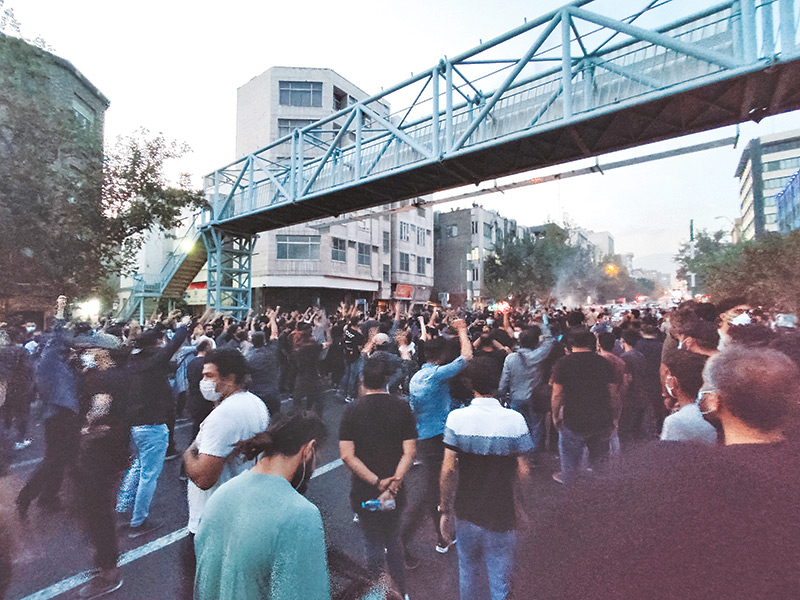
People attend a protest over the death of Mahsa Amini, a woman who died after being arrested by the Islamic republic’s ‘morality police’, in Tehran, Iran on Wednesday.  REUTERS

DUBAI, 
Iran’s powerful Revolutionary Guards called on the Islamic Republic’s judiciary on Thursday to prosecute “those who spread false news and rumours” about a young woman whose death in police custody has triggered nationwide protests.
Protesters in Tehran and other Iranian cities torched police stations and vehicles earlier on Thursday as public outrage over the death showed no signs of easing, with reports of security forces coming under attack.
Mahsa Amini, 22, died last week after being arrested in Tehran for wearing “unsuitable attire”. She fell into a coma while in detention. The authorities have said they would launch an investigation into the cause of her death.
In a statement, the Guards expressed sympathy with the family and relatives of Amini.
“We have requested the judiciary to identify those who spread false news and rumours on social media as well as on the street and who endanger the psychological safety of society and to deal with them decisively,” the Guards, who have cracked down on protests in the past, said.
Pro-government protests are planned for Friday, Iranian media said.
“The will of the Iranian people is this: do not spare the criminals,” said an editorial in the influential hardline Kayhan newspaper.
The protests over Amini’s death are the biggest in the Islamic Republic since 2019. Most have been concentrated in Iran’s Kurdish-populated northwest but have spread to the capital and at least 50 cities and towns nationwide, with police using force to disperse protesters.
A group of United Nations experts, including Javaid Rehman, special rapporteur on human rights in Iran and Mary Lawlor, special rapporteur on the situation of human rights defenders, demanded accountability for Amini’s death.
“We are shocked and deeply saddened by the death of Ms Amini. She is another victim of Iran’s sustained repression and systematic discrimination against women and the imposition of discriminatory dress codes that deprive women of bodily autonomy and the freedoms of opinion, expression and belief,” the experts said in a statement.
A member of an Iranian pro-government paramilitary organisation, the Basij, was stabbed to death in the northeastern city of Mashhad on Wednesday, two semi-official Iranian news agencies reported on Thursday.
The Tasnim and Fars news agencies reports of the stabbing appeared on Telegram as both their websites were not functioning on Thursday. There was no official confirmation of the death.
Tasnim also said another member of the Basij was killed on Wednesday in the city of Qazvin as a result of a gunshot wound inflicted by “rioters and gangs”.
Nour news, a media outlet affiliated with a top security body, shared a video of an army officer confirming the death of a soldier in the unrest, bringing the total reported number of security force members killed in the unrest to five.

WORLD

Russia confirms 55 servicemen freed in prisoner swap with Ukraine

Briefing
- AGENCIES

LONDON: Russia’s defence ministry said on Thursday that 55 of its servicemen had been returned to Russia in the largest prisoner exchange deal with Ukraine since the start of the war. In its daily briefing, the ministry said the fighters—from Russia’s armed forces and its proxies in the Russian-backed separatist regions of eastern Ukraine—had been transported to Russia by a military plane and were undergoing medical checks. The surprise swap involved almost 300 people, including 10 foreigners and Ukrainian commanders who had led a prolonged defence of the port city of Mariupol. The Russian-installed separatist head of the self-proclaimed Donetsk People’s Republic (DPR) said that pro-Kremlin Ukrainian politician Viktor Medvedchuk had been freed as part of the deal. Medvedchuk, a personal friend of Russian President Vladimir Putin, headed a banned pro-Russian party in Ukraine and was facing treason charges.

WORLD

Strong nighttime earthquake jolts sleeping Mexicans, at least one death reported

Briefing
- AGENCIES

MEXICO CITY: A magnitude 6.8 earthquake struck western Mexico early on Thursday, claiming the life of a woman in Mexico City who fell and hit her head as residents evacuated their homes during the country’s second major temblor this week. The Mexico City government said the woman stumbled on the stairs of her home in the city’s central Doctores neighbourhood as quake alarms rang out and buildings began to shake. The city also reported that a man in the south of the capital suffered a fatal heart attack after the quake. Elsewhere around the country, there were no immediate reports of serious damage, authorities said. The quake, which the US Geological Survey (USGS) first measured at magnitude 7.0, was weaker and deeper than Monday’s temblor, striking at a depth of 20.7 km. In Mexico City’s Roma Sur neighbourhood, alarmed residents ran outdoors in night dresses and pajamas, some wrapped only in blankets. Neighbours comforted each other, holding crying children and pets, as the quake alarm sounded four times.

Page 7
Page 8
SPORTS

Fitness concern worries coach Southgate

- ASSOCIATED PRESS
1) Gareth Southgate 2) Jordan Pickford 3) Kalvin Phillips 4) Harry Maguire 5) Mason Mount 6) Declan Rice 7) John Stones 8) Luke Shaw.     Ap/AFP/Rss

LONDON,
The imminent prospect of relegation from the Nations League’s elite is unlikely to worry Gareth Southgate.
What might be troubling the England coach far more is the fitness issues, poor form or fragile club status of some of his key players two months out from the World Cup.
From the team that started the European Championship final
against Italy last year, defenders Harry Maguire and Luke Shaw
have been dropped by Manchester United and central midfielder Kalvin Phillips requires shoulder surgery and could miss the World Cup.
Goalkeeper Jordan Pickford is out injured, centre back John Stones has been playing as a right back for Manchester City, and midfielders Declan Rice and Mason Mount have been in underwhelming form for West Ham and Chelsea, respectively, in the first six weeks of the Premier League.
There’s plenty for Southgate to ponder, then, heading into matches against Italy—in Milan on Friday—and Germany—at London’s Wembley Stadium on Monday—in a Nations League group where England are in last place after two draws and two losses.
Another loss in Italy will see England drop into the second tier of the UEFA tournament, which will damage the pride of Southgate’s squad, if nothing else.
It’s the bigger picture—essentially, the World Cup—that is key for Southgate, and what he will effectively be judged on, with some critics having rounded on him after a shocking 4-0 home loss to Hungary in England’s last match.
“I’m not going to speak for the manager, but I’m sure he’s got certain players who are 100% to go to the World Cup,” England midfielder Jack Grealish said. Nick Pope is likely to fill in for Pickford, who should be back soon after the international break, while Jude Bellingham might be favourite to replace Phillips after enhancing his burgeoning reputation with strong performances for Borussia Dortmund.
Maguire is set to start, while Southgate has to choose between Shaw and Chelsea’s Ben Chilwell at left back, neither of whom have seen much game time recently.
“It is not ideal,” Southgate said of some of his key players not playing for their clubs, “But we feel they have been, and can be, important players for us. It is not a perfect situation but there is still a lot of football to be played before Qatar.”
Still in shock from failing to qualify for a second consecutive World Cup, European champions Italy are looking to regain some respect. That process could begin by reaching the Nations League’s Final Four.

SPORTS

Chaudhary, Khadka named in Nepal squad

Acting head coach Humagain announces a 23-member squad for September 27 Bangladesh international friendly.
- Sports Bureau
Aashis Chaudhary’s role was influential to help Church Boys Club secure a promotion to the ‘A’ Division League last season.  Photo Courtesy: Aashis Chaudhary/Facebook

KATHMANDU,
Forwards Aashis Chaudhary and Ritik Khadka have been included in the men’s national squad for the first time as All Nepal Football Association on Thursday announced the 23-member squad for an international friendly against Bangladesh scheduled at Dasharath Stadium on Tuesday.
Chaudhary was one of the influential members of the Church Boys Club (CBC) who were promoted to the ‘A’ Division last season after securing the title. He was adjudged the best player of the league.
Khadka was the member of the ‘A’ division outfit Three Star Club in the Martyrs Memorial ‘A’ Division League last season played from November 2021 to February 2022.
“Both of them are doing well in the training and we are hopeful of good performance from them. They have shown good character in the camp,” said acting head coach Pradip Humagain at a press conference organised to declare the final squad at ANFA headquarters in Satdobato on Thursday. “Khadka was one of the talented players in the league as well.”
Chaudhary, a 22-year-old from Sundar Haraicha in Morang, became one of the few players to be picked straight at the national side from ‘B’ Division league. “I am happy and feel proud to be named in the national squad for the first time,” Chaudhary said. “I will try to give my best for the team.” The forward added that he expects a tough fight in the starting XI because there are lots of senior players in the team.

Ritik Khadka was a member of ‘A’ Division outfit Three Star Club last season. Photo Courtesy: Three Star Club/Facebook


Tribhuvan Army Club forward duos Nawayug Shrestha and Bharat Khawas were among the players to be axed from the final list out of 30 in the closed camp. Shrestha was assigned captain’s responsibility by former coach Abdullah Almutairi following a player-coach row over accommodation issues.
Altogether 10 players—Rohit Chand, Sujal Shrestha, Bishal Shrestha, Bishal Rai, Anjan Bista, Ananta Tamang, Tej Tamang, Suman Lama, Dinesh Rajbanshi and Bimal Gharti Magar—had left the closed camp under Almutairi following disagreement with the Kuwaiti coach in April ahead of the third and final round of the AFC Asian Cup Qualifiers. Regular captain Kiran Limbu was also left out by Almutairi after he supported the 10 players.
All of them except Suman Lama, who is currently in Australia, are named in the squad. Defender Ranjit Dhimal has also marked a comeback at the national squad that includes four goalkeepers.
Winger Sunil Bal was left out due to injury while forward Ayush Ghalan was not training with the team as he was on duty with the recently concluded SAFF U-20 Championship. “Ghalan did not train with us,” Humagain said. The acting head coach did not explain why Nawayug was not in the team. “There are some reasons but Nawayug is a player who deserves to be in the national side,” he said.
Humagain also said that the captain would be announced before the game.

Nepal Squad
Goalkeepers: Kiran Limbu, Bishal Shrestha, Deep Karki, Bikesh Kuthu
Defenders: Rohit Chand, Ananta Tamang, Bikash Tamang, Dinesh Rajbanshi, Bikash Khawas, Suman Aryal, Rejin Dhima
Midfielders: Sudip Gurung, Tej Tamang, Sesehang Angdembe, Bishal Rai, Sujal Shrestha, Suraj Jeu Thakuri, Arik Bista
Forwards: Bimal Gharti Magar, Anjan
Bista, Ritik Khadka, Manish Dangi,
Aashis Chaudhary

MEDLEY

Horoscope

ARIES (March 21-April 19) ****
Today’ skies pushes you to examine your habits and routines. It provides you with an opportunity to correct any errors that you may have made within your personal or professional lives. Focus on living more mindfully.

TAURUS (April 20-May 20) ***
You’ll be in a creative and outgoing mood today. These vibes are perfect for adding a little flair to your style, so don’t be afraid of dressing to impress. Any negativity sent your way is likely rooted in jealousy and insecurities.

GEMINI (May 21-June 21) ****
Your thoughts will be at home today. This cosmic climate will be a nostalgic one, making it a good time to indulge in your favorite foods, music, and hobbies. Unfortunately, painful memories could creep into your psyche today.

CANCER (June 22-July 22) ***
Try not to let yourself become overwhelmed by details or responsibilities. Luckily, you’ll have a knack for correcting mistakes and editing your work. These vibes will elevate your optimism and ability to dream for the future.

LEO (July 23-August 22) ***
Today’s vibes will ask you to reevaluate your finances. Use this energy to collect old debts or pay off your own, as the stars encourage you to nurture your monetary health while building security for the future you desire.

VIRGO (August 23-September 22) ****
Today’s planetary disposition will amplify your personal magic, as long as you’re ready for transformation and the responsibilities that comes with it. Watch out for gaslighting or manipulative behaviors within your love life.

LIBRA (September 23-October 22) ***
Though the sun is fresh in your sign, you’ll be in a solitary and introspective mood today. This cosmic climate will ask you to review any issues that have been weighing on your psyche. Find ways to stay alert and grounded.

SCORPIO (October 23-November 21) ***
Big shifts will manifest within your social sphere today. News will spread quickly amongst your connections, making it important to choose your words wisely. Under today’s cosmic skies, words from the past could resurface.

SAGITTARIUS (November 22-December 21) ***
Look for opportunities to be creative at work this morning. Though this cosmic climate will inspire you to live authentically, try to be mindful of your audience and sense of professionalism. Don’t over-work yourself throughout the day.

CAPRICORN (December 22-January 19) ****
Your psychic abilities will be amplified today. Today’s cosmic climate could feel overwhelmed by the thoughts and emotions of others this morning. Remember to maintain healthy boundaries with the people you love.

AQUARIUS (January 20-February 18) ***
You’ll be in a transactional mood today. This day will put you in a hyper-efficient headspace, galvanizing your desire to handle business, close deals, and transform your life. Issues could also arise while executing your plans.

PISCES (February 19-March 20) ***
Today’s cosmic alignment could inspire an ex to reach out of the blue, though you may also need to restrain yourself when it comes to contacting or lurking on exes. Try not to pressure yourself into making any decisions around love.

Page 9
Page 10
CULTURE & LIFESTYLE

Finding familiarity in Ghiling

The sense of community, of belongingness, is so pronounced in the people of Ghiling that you too feel like a part of them no matter how long, or short, your stay.
- Marissa Taylor
The village of Ghiling, made of mud and brick homes, blends seamlessly with Mustang’s arid landscape.  Photos Courtesy: Marissa Taylor

Ghiling, Mustang
The festival of Yarthung is one that is celebrated with much fervour across Mustang. Every summer, once work in the fields is over and the people have some free time at hand (until harvesting season comes around that is), the festival is enjoyed across the district, including in neighbouring Manang.
The festival, which means ‘the end of summer’ in Tibetan, is celebrated by the people to mark the end of the warm days and to pray for a good harvest. That is what Tsering Norbu Gurung tells me in between sips of salted butter tea as we sit in the shade of a peepal tree under a spotless blue sky in Ghiling.
“The festival has been celebrated in this region since the 15th century. It was started by Agon Sangpo, the second king of Mustang,” says Gurung, who is the village chief and is currently working on writing a book on Ghiling’s history and culture.
Over the years, he adds, the customs of the festival have changed from what they used to be. “Earlier, the festival was more of a display of warcraft and sportsmanship, of archery and horse riding. Today, it is more about merrymaking and preserving our culture,” he said.
Different villages in Mustang pick different days to celebrate the three-day festival on a full-moon week in the months of June-August. This year, Ghiling, one of the five wards of Lo-Gekar Damodar Kunda Rural Municipality, celebrated the festival in late July, together with another festival, Dhacchyang, making it a five-day-long celebration. And the excitement in the village was palpable.
Bordered by the Tibetan plateau, much of Upper Mustang’s culture is steeped in undisturbed Tibetan Buddist culture and Ghiling is no exception. I was fortunate to have been there during the festival, for it gave me a chance to not just immerse myself in Ghiling’s beauty but in the warmth of its people, its culture and traditions.
For the entirety of the festival, the whole village, which consists of only a few dozen families, got together in the community centre built in the heart of the village. All meals were made and eaten together, first served to the elderly and then to everyone else. Over seemingly endless cups of salted butter tea (or something stronger, if you prefer), young boys and girls spent the days playing cards or mahjong while the younger ones stuffed their faces with khapse or amjok in Tibetan (a traditional Tibetan biscuit-like treat) and candies.

Men, young and old, ride their horses to observe the festival of Yarthung every summer and the sight is one to behold.


In a quieter corner of the centre’s building, the elderly women and men prayed and sang songs of faith and prosperity. Outside, men contested each other in archery, which is what the festival of Dhacchyang is all about. Dhacchyang’s literal translation in Tibetan being ‘arrows’ for ‘dha’ and ‘beer’ for ‘chyang’.
The main day of the festival, however, is observed on the full moon day. On this day, the men of the village rode their horses to Chungsi cave, in Syangboche, where it is believed that Padmasambhava, or Guru Rinpoche, meditated for years in the eight century. There, the villagers prayed and meditated throughout the day, thus marking the end of the festival.
Beyond its cultural allures, Ghiling also offers much for nature lovers and hikers. Any path you take—whether it’s a light walk around the village or to the village’s monastery atop a small hill—gives you a breathtaking view, leaving hikers extremely pleased.
Sherap Tenzin has lived most of his life in Ghiling. And he wouldn’t have it any other way. A great grandfather at 72, he’s one of the two eldest people in Ghiling. There are around 50 families in Ghiling and Tenzin proudly says he knows everyone.
“When I was younger, I lived in India for work because I had to make money to feed my family. But I could never live there, or anywhere else, for that matter. Ghiling is my only home. I have everything I need here,” says Tenzin, clad in a chuba, in bits of Nepali that is laced with a thick Tibetan accent.
The sleepy village of Ghiling is located on the way to Lo Manthang, the famous walled capital city of the former kingdom of Lo. Ghiling doesn’t necessarily fall on the road to Lo Manthang, even trekkers do not drop by most of the time. The village is lesser known than other bigger villages like Ghami, Syangboche, Dhamkar, and Charang, and thus is not on most itineraries. A quick Google search too does not yield many results either. Ghiling is as secluded as a mountainous village can be. And that is its charm.
The best time to go to Ghiling, and Upper Mustang, is during Yarthung if one wants a more immersive cultural experience. But if that’s not possible, then the second best option is any time during the warm season, when the flowers and fields are in full bloom. Winters however are piercingly cold, so cold that most of the people head down to Pokhara or Kathmandu, at least the ones who have places to stay in the cities. So there won’t be much to do or see during that time of the year.
Much has been written and said about Upper Mustang, but words really do no justice to the beauty that the place is. It is only after being in the midst of the region’s raw remoteness, striking desert landscape and snow-capped peaks, do you realise how truly a marvel Upper Mustang really is. It is near impossible not to be lost in one’s sense of awe in such beauty in this isolated part of the world.
But at Ghiling, despite that otherworldly vibe, there is a sense of familiarity because of the people and the warmth with which they welcome you. Despite the region’s alienness, in terms of culture, language, and landscape, you kind of still feel at home. And that is what makes your stay so wonderful here. And you leave the place with a promise to come back.


Taylor is a Kathmandu-based journalist. She mostly writes on environment, biodiversity conservation and public health.