You internet speed is slow. Switch to text view mode

Switch
epaper logo
ST

Last Login:
Logout
+
Page 1
HOME PAGE

US Under Secretary Nuland arriving in Nepal next week
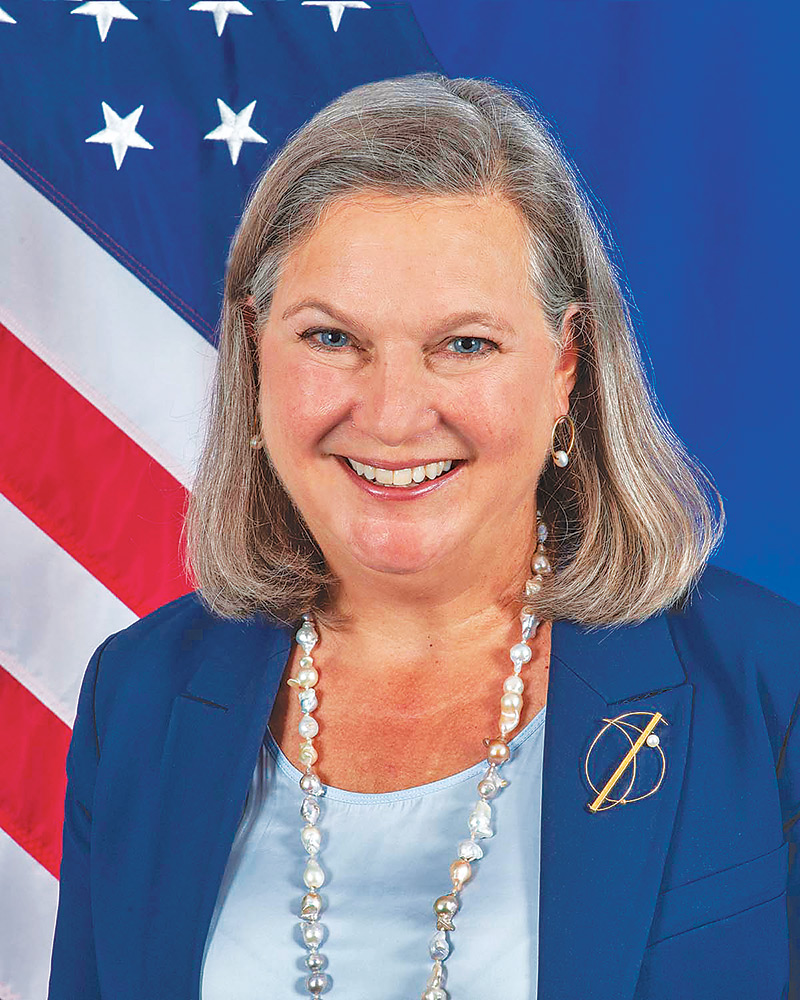
A slew of other top-ranking US officials also express their interest in coming to Kathmandu over the next one year.
- ANIL GIRI
US Under Secretary of State Victoria Nuland

KATHMANDU,
In a bid to engage and interact with the Pushpa Kamal Dahal-led government, United States Under Secretary of State for Political Affairs Victoria Nuland will be on an official visit to Nepal from January 29-30.  
Nuland will be the senior-most foreign dignitary to visit Kathmandu following Dahal’s appointment as prime minister on December 25 last year.  
Nuland will also be the senior-most US official to come to Kathmandu after the visit in May last year of US Under Secretary for Civilian Security, Democracy, and Human Rights Uzra Zeya. But a formal announcement of Nuland’s visit is yet to be made.
“Senior visits at different levels, both from our side as well as from other countries including the United States are expected,” said Sewa Lamsal, spokesperson at the Ministry of Foreign Affairs, without giving details of Nuland’s visit.
While paying a courtesy call on Foreign Minister Bimala Rai Paudyal on Tuesday, the US ambassador to Nepal Dean Thomposn had informed her of Nuland’s upcoming Kathmandu trip, a foreign ministry official who was involved in arranging the meeting told the Post.
But in an email response to the Post, the US Embassy in Kathmandu declined to confirm the visit. “I look forward to working with Foreign Minister Paudyal,” ambassador Thompson had tweeted after meeting Paudyal. “It was a pleasure to congratulate her and discuss our goals for US-Nepal relations. Our relationship is important as two sovereign, democratic nations with strong people-to-people ties.”
“As of now, Nuland has some engagements in Kathmandu on coming Monday, January 30,” a senior foreign ministry official said.
The visit is expected to focus on engaging the new government in Nepal as well as on securing American interests in the country.
These interests include various US government-led initiatives from the implementation of the Millennium Challenge Corporation Nepal Compact as well as various other US-funded projects, strengthening of the democratic process, supporting Nepal’s protracted transitional justice process, securing the rights of refugees and marginalized communities, and climate change.
“As Nuland handles political affairs, she will definitely want to know and understand the political issues in Nepal that concern the Biden administration,” a Washington DC-based Nepali diplomat said. “They perhaps want to get a feel of how much the new government values the ties with the US and to what extent it wants to engage with the American government.”
Diplomats in Kathmandu and Washington DC told the Post that more American officials are likely to visit Kathmandu in the coming days. After Nuland returns, US officials have indicated that Afreen Akhter, Deputy Assistant Secretary in the Bureau of South and Central Asian Affairs (SCA) for Nepal, Sri Lanka, Bangladesh, Bhutan, and the Maldives as well in the Office of Security and Transnational Affairs, could visit Kathmandu around mid-February.
“US officials from various bureaus and departments have expressed their interest in visiting Nepal,” said the DC-based Nepali diplomat. “Especially with the Millennium Challenge Corporation Nepal Compact coming into force in August, some high-level visits from the MCC headquarters are also expected.”
During an interaction with some journalists in Kathmandu on January 12, US ambassador to Nepal Dean Thompson had said that the US gives top priority to the implementation of the MCC Nepal compact and that he has received encouraging feedback from different sections in Nepal for its timely implementation. But US officials and officials from MCA-Nepal have also expressed concerns over hindrances created at the project sites in Ratamate in Nuwakot and Dang where road expansion and upgrade and construction of transmission lines under the compact are taking place. The $500 US project is all set to enter into force from August and the US government wants to ensure it is executed without any further hindrances.
“Hence senior officials from the MCC headquarters are also expected to visit Kathmandu ahead of the compact coming into force,” the DC-based  Nepali diplomat said. “As the US government has announced a $659 million or over Rs 85 billion USAID grant for the next five years, senior USAID officials could also visit Kathmandu later this year.”
During their interactions with Nepali officials and diplomats including Nepal’s Ambassador to the US Sridhar Khatri, US officials from the State Department, the National Security Council and the Department of Defense also expressed their interest in visiting Kathmandu.
“As there is a new government in Kathmandu, they must want to know how it intends to take forward ties with the US,” former Nepali ambassador to the US Arjun Karki said. “I think the US officials would want more clarity on Nepal’s foreign policy and geopolitics, and about how the government in Kathmandu is thinking about these issues.”
“It is natural for other countries that have an interest in Nepal to want to better understand its new government and to discuss matters of mutual interest,” said Karki.
HOME PAGE

Losing presidency will add to Deuba’s woes

Congress leaders unsure prime minister will support their presidential candidate despite Dahal’s tricky ties with Oli.
- TIKA R PRADHAN
Sher Bahadur Deuba.  Post Photo

KATHMANDU,
Former prime minister and Nepali Congress President Sher Bahadur Deuba, who managed to make his party the biggest in Parliament, is currently facing severe criticism from in and outside of the party for failing to save the electoral alliance and thus keeping the party out of power.
Party insiders and observers believe that after losing both the Speaker
and deputy Speaker posts, the upcoming national presidential elections could be a kind of litmus test for Deuba. If the Congress fails to elect a candidate of its choice as new President, Deuba’s sway in the party could gradually decline.
Though Deuba, with the help of his coalition partners, managed to win 57 first-past-the-seats last November, up from 23 seats in 2017, he could not stop CPN (Maoist Centre) chair Pushpa Kamal Dahal from deserting the coalition, thereby losing power both at the federal and provincial levels.
After failing to secure Congress’ place in government, Deuba decided to give a confidence vote to Prime Minister Dahal, which created confusion about whether the Congress could now actually be termed the main opposition.
Now, the presidential election could be a turning point for Deuba to gain power within the party and also the state power.
“Presidential polls will be a litmus test for our party president,” said Shankar Tiwari, a Congress leader and political analyst. “Losing the battle could lead to further erosion of Deuba’s authority in the party.”
This authority might be hard to regain as the party’s statute will prevent Deuba, 76, from contesting the top leadership position again.  
A fierce critic of the party’s current leadership, Tiwari said this is the first time in Congress’s history that the party had to stay out of power even after becoming the largest in Parliament.
Leaders and cadres of the party take sides in the party depending on the power equation among its top leaders. If a leader is seen as toothless, they will gradually lose their supporters as well.
“I have reports from different districts that party leaders and cadres close to Deuba are unhappy and thinking of switching sides after he failed to save the coalition,” Tiwari told the Post. “If he fails to install a Congress nominee as President, there could be even more of such switches away from the Deuba camp.”
Some other party leaders say that even though there might be a kind of tacit understanding between Deuba and Dahal, they are not confident Dahal will support the Congress candidate despite his difficult equation with Oli, who had twice before ditched Dahal.
After Oli refused to hand over prime ministership to Dahal in 2016 by going against their previous agreement, the Maoist chief joined hands with Deuba to bring down the Oli government. Something similar happened in 2021 when the UML chief denied Dahal the premiership.
“Look, Dahal very well understands the difficulty of working with Oli in the long term. But that may not be enough for him to walk away from the ruling coalition,” said Bhimsen Das Pradhan, a Congress leader and former minister. “In that case, Deuba’s bid to break the coalition through the Presidential election will fail, which in turn will lead to an erosion of his clout in the party.”
Pradhan, however, said the Congress would continue to wait and look for options to break the alliance as it knows very well Dahal is unhappy with Oli’s dominance therein.
“If we lose the presidency, we may have to wait for some more time as there could be another chance when Dahal will have to hand over the government’s helm to Oli,” Pradhan told the Post.
Some party insiders say Deuba made another mistake by giving a confidence vote to the prime minister which created confusion over the party’s main opposition status and led to a “pathetic situation” where the party had to write to the parliament secretariat seeking clarification about its status in the Parliament.
“All these activities have already weakened Deuba in the party. But he could regain his waning control if he is able to secure the post of President for the Congress,” Tiwari said.
Yet there are still those who think Debua, who has the backing of the majority in the Congress parliamentary party, is still a strong leader, and will continue to be strong in the foreseeable future.  
“It’s obvious that Deuba will gradually become weak if Congress fails to install its nominee as President,” said Pradip Paudel, an influential leader of the party.
“But it’s also true that he to this day has a strong grip on the party.”
Puranjan Acharya, a political analyst close to Congress, also reckons Deuba’s authority in the party structure may not shrink much, even though his legitimacy and moral authority could significantly erode in case he loses the presidential election.
“There is confusion in the dissident Shekhar-Gagan faction on who should lead the party after Deuba,” Acharya said. “There is also no established leader in the opposition faction to take over the party’s leadership.”

HOME PAGE

Bodies of 60 of the 72 Pokhara crash victims given to families

6 bodies have been sent to the police lab for DNA analysis.
- Post Report

KATHMANDU, JAN 24
On Monday, nine days after the Yeti Airlines plane crash, a family cremated four of its members who were killed in the accident, at Pashupati Aryaghat. Yuvraj Sharma and his three family members were among the 72 persons killed in the horrific accident.
As the bodies of Yuvraj and his son Babin were not found, the two were represented by Kusha grass effigies and cremated alongside the bodies of his mother Jamuna and daughter Aayurdi.
“We didn’t have any option other than to represent Yuvraj uncle and babu [son] in Kusha effigies as per Hindu customs when the bodies are not found,” said Roshan Tiwari, 28, nephew of Yuvraj.
“We waited for eight days, but they could not identify the bodies, so we had to use effigies for cremation,” said Tiwari, who is from Parbat district, where Yuvraj’s family originally belongs.   
As in the case of Yuvraj and his son, the bodies of eight victims of the plane crash have yet to be identified, according to the Nepal Police Headquarters, Naxal.  
Of the 72 people who died in the January 15 crash, the bodies of 60 people have already been handed over to family members, according to officials. Twenty-two bodies were handed over in Pokhara and the remaining 48 were flown to Kathmandu on January 18 by two Nepal Army helicopters to carry out further investigation and postmortem examinations.
“Along with the 48 bodies, two body bags containing different body parts of victims collected from the accident site were also sent to Kathmandu,” said Tek Bahadur KC, chief district officer (CDO) of Kaski.  
He said rescuers have continued searching for the remaining two bodies or parts at the accident sites.
“I guess, the body parts of the two missing could also be identified through DNA tests of the parts in the body bags, but we have continued our search at the accident site on the Seti River,” said KC.
According to Deputy Inspector General (DIG) Poshraj Pokharel, central spokesperson of the Nepal Police, 38 bodies—22 males, 14, female and two infants—have been handed over to family members by Tuesday.
“We have ascertained the identities of four more persons and their bodies will be handed over to the kin soon. The bodies of eight victims have yet to be identified,” said Pokharel.
Police said six bodies have been sent to the Samakhusi-based Central Police Forensic Science Laboratory for DNA testing. “It takes around 20 days to get a report,” said Senior Superintendent Rakesh K Singh, who is also the chief of the laboratory.
Singh said they compare the DNA markers of the victims’ father or mother or or children to identify the bodies.

Page 2
NATIONAL

Services at Dhaulagiri Hospital affected by lack of specialist doctors

People from several surrounding districts have been deprived of even basic maternity services at the hospital as it has been without a gynaecologist for over a month now.
- PRAKASH BARAL
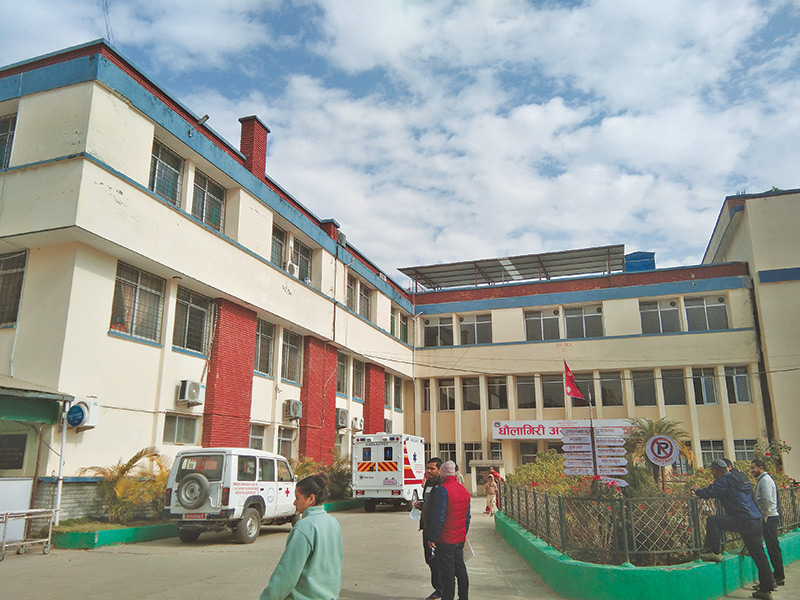
The Dhaulagiri Hospital has 200 beds but only 50 beds are being put to use owing to doctor shortage.  Post Photo

BAGLUNG,
Saru Paudel, 27, of Baglung Municipality’s ward 2, gave birth to a baby boy on January 12. Throughout her pregnancy, she had consulted a specialist doctor at Dhaulagiri Hospital, a 100-metre distance from her house. But for her delivery, she had to be rushed to Gandaki Medical College in Pokhara, 72km from her village.
Dhaulagiri Hospital, previously the district hospital, was upgraded into a ‘specialist hospital’ in 2010. There are 16 posts of specialists and at least 10 posts of medical officers at the hospital. But there are only two specialist doctors and three medical officers currently working.
There are 200 general beds in the hospital but currently, only 50 are in operation. More than 400 patients visit the facility daily, according to hospital administration.
Kalpana Kisan of Baglung ward 3 was also referred to a hospital in Pokhara for her delivery by Dhaulagiri Hospital in the absence of specialist doctors to oversee her delivery. “They said I need a C-section but doctors at the Pokhara hospital advised normal delivery. I could’ve delivered even at Dhaulagiri Hospital but the health workers referred me to Pokhara,” she said.
Local residents have been deprived of even basic maternity services at the hospital since the hospital has been without a gynaecologist for the past one and a half months. Pregnant women, therefore, have no choice but to travel to Pokhara for delivery.
The only gynaecologist who was deployed at the hospital, Dr Ngima Yanjin Sherpa, was transferred before her contract expired. Sherpa’s contract at the hospital was set to run from mid-December 2021 to mid-December 2023, but she left her post in mid-December 2022.
In the last fiscal year, 1,187 people received safe delivery services at the hospital, and among them, 536 had to go through major operations. In the current fiscal year, 535 women have taken services so far.
Since the departure of the only gynaecologist from the hospital, all surgery cases, including pregnancy cases, have completely stopped. These days the health team at the hospital refer all pregnancy cases to Pokhara hospitals even for normal delivery.
The absence of doctors has affected the Obstetrics and Gynecology services badly, says Devi Bhattarai, the hospital’s senior nurse. “Whenever patients come here for delivery, we do everything we can to help them, but most pregnancy cases are complicated and need a specialist’s treatment,” she said. “So it’s safe to refer pregnant women to well-equipped hospitals with specialists who can handle both minor and major complications.”
According to her, specialist doctors deployed to Dhaulagiri Hospital do not complete their tenure and leave mid-term. “They stay for some time after the Ministry of Health and Population sends them here but they soon start finding alternatives and loopholes in their contract and leave,” she said.
According to Medical Superintendent and Anesthesiologist Dr Amit Dhungana, there are 10 skilled maternity nurses in the hospital but they are not trained to handle complicated deliveries without a doctor’s assistance.
“We have a shortage not only of obstetricians and gynaecologists but also of paediatricians, general practitioners, consultant surgeons, consultant orthopaedics, radiologists and Ear, Nose and Throat specialists,” said Dhungana. “All services at the hospital have been affected. Even though doctors who have studied on government scholarships must complete their two-year term at their assigned hospitals, most doctors do not abide by their contracts. They prefer to work in urban areas, so they are always in a hurry to leave.”
Every year over 200 students, selected through highly competitive screening tests, get the opportunity to study for the MBBS degree on full scholarship. In return, they need to serve in rural Nepal for two years. However, many of them do not fulfil this requirement and either move abroad or work in other cities.
The poor retainment rate at Dhaulagiri Hospital can also be attributed to the government’s move to remove Baglung from the list of ‘remote districts’ last year, through an amendment in the health regulation in the province, which in effect has created a vacuum in the health sector, according to Tej Prasad Neure, information officer of the hospital.
Of the 11 districts in Gandaki Province, Mustang, Manang, Parbat, Myagdi and Lamjung are enlisted as remote districts.
The ministry has not been able to fill the posts of doctors in the hospital ever since it was upgraded to a specialist hospital, Neure added.
According to Laxmi Devi GC, member of the management committee of the hospital, Dhungana, an anesthesiologist, and Dr Abhishek Wagle, a general physician, are the only two specialist doctors currently working at the hospital.
“The Ministry of Health and Population has not been able to fill the posts of doctors here, and even the doctors they send stay only for a couple of months,” GC said. “Some have stayed for more than six months, but none have lasted a full year let alone their mandated two-year term.”

NATIONAL

Two found dead in tea garden

Briefing

JHAPA: A 25-year-old man and an 18-year-old woman were found hanging from a tree at the Everest Tea Garden in Kachanakawal Rural Municipality-4 on Tuesday. According to police, both were residents of Kachanakawal Rural Municipality who eloped and married some three months ago. Further investigation is underway regarding the incident.

NATIONAL

Woman dies after being hit by falling rock during earthquake

Briefing

BAJURA: An earthquake measuring 5.9 magnitude on the Richter scale with its epicenter in Himali Rural Municipality killed at least one person. A woman from Gaumul Rural Municipality died when a boulder fell on her while she was out collecting grass, according to Surya Bahadur Thapa, head of the District Police Office Bajura. “Several houses have been destroyed and we are still assessing the damage,” said Thapa. Lok Bijaya Adhikari, chief of National Earthquake Monitoring and Research Centre, said the earthquake was recorded at 2:43pm on Tuesday. Meanwhile, several houses in Bajhang have also suffered damages, according to police, while a 52-year-old woman from Jayaprithvi Municipality-11 was injured. She has been referred to Dhangadi for treatment, said police.

Page 3
NATIONAL

Open border with India big challenge in meeting malaria elimination goal

Nepal had pledged to reduce indigenous malaria cases to zero this year. But authorities have already reported one indigenous case and 20 imported ones so far this year.
- Arjun Poudel

KATHMANDU,
No new cases of indigenous malaria should be detected in Nepal this year to meet the elimination target of the disease by 2025 to which the country is committed.
However, at least 21 new cases of malaria, including one indigenous case, have already been reported from various districts throughout the
country since the start of 2023.
“We are still verifying the indigenous cases,” said Dr Gokarna Dahal, chief of the Vector Control Section at the Epidemiology and Disease Control Division. “But we cannot rule out the chances of their detection.”
What has alarmed the health authorities, however, is the imported cases of malaria from India that can be a roadblock to the country’s goal to eliminate the disease.
Nepal is among the UN health body’s E-2025 member countries that have the potential to eliminate the disease by 2025. In April 2021, the UN health agency launched the E-2025 initiative to halt the transmission of malaria in 25 identified countries by 2025.
India is on the list of countries that have committed to eliminating the disease by 2030—five years later than Nepal.
To earn the ‘malaria-free’ status in 2026, Nepal needs to bring down indigenous cases or local transmission of the disease to zero and zero deaths from 2023, and sustain zero cases for three consecutive years, according to the World Health Organisation.
Malaria-related deaths had stopped since 2016 but five years later, in 2021, the country recorded one death from the disease.
Officials at the Epidemiology and Disease Control Division said imported cases of malaria are the biggest challenge in achieving the target.
According to data provided by the division, 517 cases of malaria were detected in the country in 2022. Of them, 473 were imported. In 2021, the number was 491, of which 459 were imported. And in 2020, the number was 447, of which 407 were imported.
Officials say most of the imported malaria cases are from India. Some people returning from the Middle-East and the African continent (especially the security personnel) are also found to be infected with the disease.
To lessen the risks of local transmission of the disease from imported cases, health authorities carry out malaria screening at border points. The Health Ministry has supplied rapid diagnostic test kits to the health desks set up at border crossings with India.
However, the over 1,850km open and porous India-Nepal border and a high mobility of people between the countries hinder the government’s efforts to detect the disease at the entry points.
Health workers deployed at the international health desk setup at Nepalgunj’s Jamunaha entry point on the border carried out over 20,000 tests of malaria in 2022. But only three people were found to be infected with the deadly disease.
“What has alarmed us more is that 80 imported malaria cases were found in Narainapur Rural Municipality of Banke district during the review period,” said Dahal, chief of the Vector Control Section at the Epidemiology and Disease Control Division.
“People did not use Jamunaha to enter the country. The unregulated border between the two countries is the main challenge in eliminating malaria.”
Narainapur, a remote municipality in the district’s midwestern region bordering India, which has currently been witnessing a massive measles outbreak, was also one of the worst-hit areas when the Covid pandemic gripped the country in the spring of 2020.
Experts warned that imported cases, which are beyond Nepal’s control, can still cause local transmissions in the country.
Earlier, the Ministry of Health and Population had sought help from India for intervention measures to lessen imported malaria cases. Officials held meetings with Indian officials and drew their attention to the growing number of imported malaria cases in Nepal. Officials had agreed to share information on malaria cases between the two countries in order to make the measures effective.
“Despite our efforts, imported cases have been growing every year,” said Dahal.

NATIONAL

Judicial Council may nominate new judges this week

Five of the 21 justice positions including that of chief justice are vacant at the Supreme Court.
- Post Report
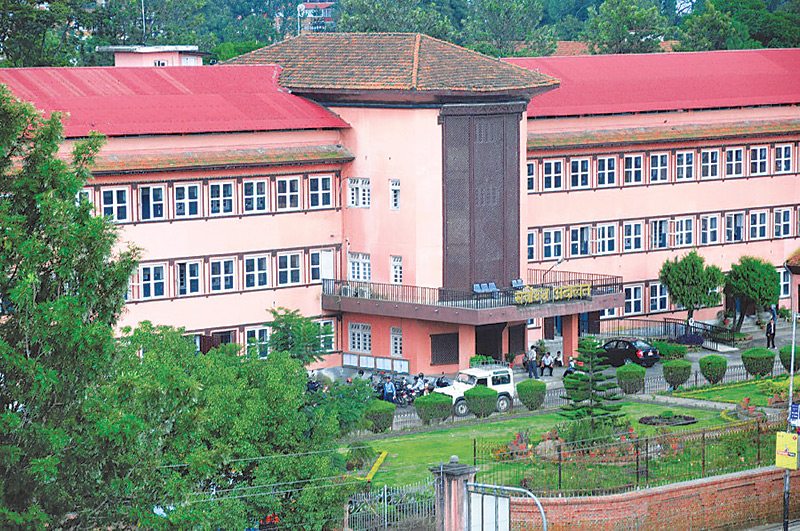
Of the total 33,466 cases, including backlog from previous years, the Supreme Court could clear just 5,689 cases in a year, which is way less than its own performance in the fiscal year 2020-21.  Post File Photo

KATHMANDU,
As the performance of different tiers of courts remains affected due to a lack of adequate number of judges, the Judicial Council is likely to make nominations this week to fill vacant seats at the Supreme Court and High Courts.
Five of the 21 justice positions including that of chief justice are vacant at the Supreme Court, which has been headed by an acting chief justice for around a year now. While it is the Constitutional Council that picks the chief justice, other justices and judges are selected by the Judicial Council.
“The Minister for Law and Justice is currently outside the Capital. It is likely that the Judicial Council’s meeting will be held once he returns,” Man Bahadur Karki, spokesperson for the Judicial Council, told the Post.
The Judicial Council, led by the chief justice, includes the minister for law and justice, the senior-most justice of the Supreme Court, a jurist appointed by the President on the government’s recommendation, and a senior advocate recommended by the Nepal Bar Association as members.
As many as six Supreme Court justices retired on different dates in 2022. However, just one justice—Til Prasad Shrestha—was appointed in March last year as a replacement for the retired justice Purusottam Bhandari. The court is yet to get replacements of former acting Chief Justice Deepak Kumar Kari and justices Meera Khadka, Tej Kumar KC and Bom Kumar Shrestha—all of whom retired last year. Similarly, the chief justice’s position has been lying vacant since the retirement of Cholendra Shumsher Rana on December 13.
Though the Judicial Council on September 6 recommended two high court chief judges, Neeta Gautam Dixit and Binod Sharma, and an advocate DN Parajuli, who also is a campus chief at the Nepal Law Campus, for appointment as Supreme Court justices, their appointments have been delayed owing to lack of parliamentary hearings. The term of the House of Representatives expired before their parliamentary hearings could take place. Article 292 of the Constitution of Nepal makes parliamentary hearings mandatory for nominees to constitutional bodies.
Laxmi Prasad Gautam, a joint secretary at the Parliament Secretariat, said the hearing process will resume when the Parliamentary Hearing Committee is constituted.
Records at the Judicial Council show that in addition to five justices at the apex court, 30 positions of High Court judges and six chief judges are lying vacant. Among the seven, only Dipayal High Court has a chief judge in Nripa Dhwaj Niraula. All other high courts are being led by the acting chief judges.
Lack of judges has affected the performance of all three tiers of the courts. As per the annual report of the judiciary for the fiscal year 2021-22, the court could reach the 60 percent clearance rate.  
The Supreme Court, which also has the responsibility of supervising subordinate courts, was the worst performer among the three tiers of courts. The high courts performed the best with a 59.33 percent case clearance rate. District courts came second with 54.56 percent, while the apex court was last, at 17 percent.
Of the total 33,466 cases, including backlog from previous years, the Supreme Court could clear just 5,689 cases in a year, which is way less than its own performance in the fiscal year 2020-21. It had as many as 35,981 cases in docket in 2020-21, including 24,180 from the previous years. The court could clear 31.2o percent of the cases, with a backlog of 24,756 for the next year.
Even if the Judicial Council picks the names this week, the placement of the justices will take a minimum of two months. The lower house is yet to form a hearing committee, which is not possible for at least the next two weeks. The hearing committee first solicits complaints from the public against those recommended for justices and then conducts hearings after studying them.

NATIONAL

Court convicts Manoj Pandey of child sexual abuse, human trafficking

Briefing

KATHMANDU: Kathmandu District Court on Tuesday convicted beauty pageant organiser Manoj Pandey of child sexual abuse and human trafficking. A single bench of Judge Deepak Dhakal sentenced Pandey to six months in jail, slapped a fine of Rs5,000 and ordered him to pay Rs50,000 in compensation to the victim in the child sexual abuse case, Deepak Dahal, information officer of at the court, told the Post. The court also convicted Pandey of human trafficking and will determine the jail term during the next hearing scheduled for February 6. The District Attorney’s Office in Kathmandu on June 15 last year had filed two separate cases against Pandey demanding a jail term of 18 years for human trafficking and child sexual abuse. Police had arrested Pandey, the owner of Model Global Visas Consultancy, after a woman shared her experience of being allegedly raped by Pandey some eight years ago on social media. She was 16 then. In the videos, she had shared how Pandey, who was the organiser of a pageant called Miss Global International 2014, had allegedly drugged and raped her in a hotel room. In the clips, the victim had also claimed that she was abused by Pandey for six months during which he invited one of his friends as well and they allegedly abused her sexually. Although it seemed like a rape case in the beginning, due to the statute of limitations, the case was instead filed under Human Trafficking and Transportation (Control) Act 2007.
In Nepal, the statute of limitations is not applicable in human trafficking-related cases.

NATIONAL

Man attempts self-immolation in Kathmandu

Briefing

KATHMANDU: A man attempted self-immolation in the middle of the road in New Baneshwar of the Capital on Tuesday. Police said a 36-year-old man, a permanent resident of Panchakanya of Ilam district, sustained burn injuries after he set himself on fire near the parliament building. According to Superintendent of Police Dinesh Mainali, the man is undergoing treatment at the burns hospital in Kirtipur. Police said they are further investigating the case.

NATIONAL

Gandaki Chief Minister Khagaraj Adhikari gives full shape to the Cabinet

Briefing

POKHARA: Gandaki Province government got full shape on Tuesday after three new ministers were inducted. Gandaki Chief Minister Khagaraj Adhikari appointed Roshan Bahadur Gaha and Bed Bahadur Gurung of the CPN-UML and Resham Bahadur Jugjali of the CPN (Maoist Centre) as new ministers in his Cabinet. Gaha has been appointed Minister for Internal Affairs and Law; Gurung as Minister for Agriculture, Energy and Water Resources; and Jugjali as Minister for Industry, Tourism, Forest and Environment. The newly appointed ministers took an oath of office and secrecy from Gandaki province head Prithvi Man Gurung. The Gandaki Province government on Monday decided to reduce the number of ministries to seven from the earlier 12. As soon as he assumed office, Adhikari had announced a reduction in the cabinet’s size.

Page 4
OUR VIEW

Rhinos still threatened

Complacency might also have crept in among the authorities after years of zero poaching.

Once, large numbers of rhinos roamed freely in the dense forests of Nepal. Over the years, sport hunting and excessive poaching drastically reduced their population, pushing them into the endangered list.
Despite the country’s recent achievements in zero poaching, there have been sporadic incidents that point to the persistent risk illegal hunters still pose. A couple of one-horned rhinos were found dead on the banks of the Narayani River last week. (The river flows through the famed Chitwan National Park.) They had been electrocuted, a method of killing commonly used by professional poachers. This suggests our forests continue to be a safe haven for them, putting the country’s years of achievements in wildlife conservation at risk.
According to reports of Chitwan National Park compiled over the past five fiscal years, a total of 165 one-horned rhinos have died, six of the deaths a result of poaching. This may not sound like many, but it is still a significant number given Nepal’s stellar success in achieving zero poaching of rhinos, first in 2011 and then in six different years since.  
Zero poaching was difficult to achieve, but several initiatives made it happen. The government established bodies like the Wildlife Crime Control Coordination Committee and the Wildlife Crime Control Bureau to stop poaching and curb wildlife crime. Similarly, more personnel from security agencies like the Nepal Army and the Nepal Police were deployed in the protected areas. They conducted night patrols and used unmanned aerial vehicles (UAVs) to improve anti-poaching operations. Moreover, several community-based anti-poaching units and intelligence networks were formed. They in turn coordinated with other organisations working in the sector. Hence, rhino poaching plunged from 157 during the Maoist insurgency (1996-2006) to zero in 2011.
One obvious reason for hunting rhinos, according to officials, is the high demand for their horns in China: They are used in traditional Chinese medicine and also as status symbols by the wealthy. A study based on poaching statistics of rhinos shows that over time, poachers get accustomed to patrolling techniques like use of UAVs or night patrolling and adapt accordingly. A touch of complacency might also have crept in among the authorities after years of zero poaching. Possibly, there is also lack of general awareness that hunting endangered species is a crime.
Without a doubt, the government’s stringent anti-poaching initiatives have helped to reduce poaching. However, the recent killings demonstrate that they are insufficient. Local communities manage community forests, which account for 38.4 percent of Nepal’s total forest area, and they help save both forests and wildlife. Several community-based anti-poaching units have been established to reduce (often successfully) tiger and rhino poaching. The focus should be on strengthening and further educating such units, emphasising the importance of wildlife preservation and biodiversity through a bottom-up approach. This should also entail taking the marginalised communities living in and around forest areas—and whose right to a dignified life has sometimes been ignored while drafting conservation strategies—into confidence. It will be hard to sustain any anti-poaching effort without the help of these communities who know the surrounding jungles inside out. Only with such a collaborative approach will the country be able to successfully preserve the one-horned rhinos as well as other precious wildlife.

OPINION

Wishy-washy parliamentary committees

Many crucial bills died because the House dawdled until the expiry of its term.
- KHIM LAL DEVKOTA

The new House of Representatives has another important task to perform after electing the speaker and deputy speaker, and that is choosing the chairpersons of the various parliamentary committees.
The committees play an active role in keeping the executive within the limits of the constitution. They also speak up on matters of public concern, monitor the government’s performance and enhance accountability and transparency. The parliamentary panels oversee the performances of different ministries and other government agencies.
There are 10 committees in the House of Representatives, and four in the National Assembly. The 10 lower house panels are 1. Finance, 2. International Relations, 3. Industry, Commerce, Labour and Consumer Rights, 4. Law, Justice and Human Rights, 5. Agriculture, Cooperative and Natural Resources, 6. Women and Social, 7. State Affairs and Good Governance, 8. Development and Technology, 9. Education and Health, and 10. Public Accounts. The four upper house panels are 1. Sustainable Development and Good Governance, 2. Legislation Management, 3. Delegated Management and Government Assurance, and 4. National Affairs and Coordination.

Inactive committees
There are also two joint committees. The Parliamentary Hearings Committee conducts hearings before ratifying the appointment of the chief justice, judges of the Supreme Court, members of the Judicial Council, heads or office bearers of the constitutional bodies and ambassadors. The State Direction, Principle Rules and Responsibility Committee monitors and evaluates the implementation of the state’s guiding principles, policies and responsibilities mentioned in the constitution.
There are many committees in both Houses of Parliament, but most of them have not been able to perform their tasks as expected. As per a report released by the Parliamentary Secretariat last February, only 15 to 25 percent of the directives given by the committees have been implemented.
Last week, the National Affairs and Coordination Committee of the National Assembly noted at its meeting that its decisions and instructions had repeatedly been disregarded. Almost all parliamentary committees have the same complaint.
A report of the Parliamentary Special Committee on the Implementation of Federalism has recommended that the government create an action plan and implement the directives of the parliamentary committees. Not only the instructions of the parliamentary committees, but the recommendations of the constitutional commissions too are being ignored.
In order to improve fiscal discipline and governance and prevent corruption, it is necessary to implement the recommendations of the constitutional commissions by forming an annual calendar.
Besides the non-implementation of the decisions of the parliamentary panels, another problem is that the committees themselves have not been able to meet regularly. Some committees have piles of pending bills that they have not discussed. Proposed legislation related to banks and financial institutions, securities and Nepal Rastra Bank have been gathering dust at the Finance Committee since 2019.
Five bills that originated in the National Assembly and were sent to the House of Representatives have become inactive as the lower house dillydallied until its term expired. The Nepal Media Council Bill, Nepal Special Service Authority Bill, Policy Research Institute Bill, Nepal Civil Aviation Authority Bill and Nepal Air Service Authority Bill died because the parliamentarians wasted time instead of working.

No time to legislate
In addition to these crucial bills, 21 other bills registered in the House of Representatives, some of them dating from 2018, have expired. The dead bills are related to maintenance of peace and security, information technology, construction and development of national priority projects, and the National Security Council.
The more active Parliament and its committees are, the more the government’s accountability increases. Service delivery to the citizens also improves.
Complaints have also surfaced that the parliamentary committees have not been able to work as actively as expected because they had weak chairpersons and the government did not implement their instructions. Therefore, special attention needs to be given to the election of committee chairpersons in the new House of Representatives.
Members of Parliament spend more time handling public complaints than discussing legislation. Due to their greed for ministerial positions and other plum appointments, and the need to placate power centres and visit their constituencies frequently, they have little time for drafting laws. In such a situation, it is necessary to make the National Assembly more responsible in the matter of law-making.


Devkota is an expert in federalism and local governments.

OPINION

Unimpressive economy

Nepal’s economic policy reform is unsustainable and unsuitable for private investment.
- KAMAL RAJ DHUNGEL
Shutterstock

Nepal initiated a liberalisation policy in the middle of the 1980s, although it gained momentum only in the 1990s. This policy can help promote and stimulate private sector investment and, in turn, create a competitive environment in the economy. It can bring a positive attitude to private sector investment, which heralds economic prosperity. For effective implementation of this policy, a number of public enterprises involved in producing basic goods like shoes, sugar, agricultural tools, clothes and paper were dismantled and transferred to the private sector during the 1990s. In the past, these industries made significant contributions to all economic activities such as production, distribution, consumption, income and employment. However, several among those industries have been closed since, creating a shortage of goods produced by such industries.
The disappearance of the old industries and the non-commissioning of new ones has made Nepal a dependent country at least in two ways. First, basic goods production in Nepal has diminished. This has led to a trade deficit as the demand for the goods produced by those industries earlier is being met by imports. It increases imports, which enlarges the trade deficit and deepens unfavourable balance of payment. Second, a large number of people employed in these industries lost employment. In the absence of alternatives, some of them migrated to foreign countries in search of livelihood. Others remained unemployed and joined the street vending businesses.

Development custodian
Economic liberalisation can play an important role in economic development. It can attract, promote and encourage private sector investment, both foreign and domestic, particularly in the manufacturing and hydropower sectors. But Nepal’s economic policy reform is clearly unsustainable, creating a gloomy environment for private investment. Private sector investment has been diverted to less risky ventures such as the social service sector, particularly in health and education. Schools, colleges and nursing homes, including private hospitals, are mushrooming through the private sector’s investment in various urban centres of Nepal. These institutions provide services to  rich people. Poor people have no access to such facilities as they are constrained by low income. They cannot admit their children to private schools (assumed to provide quality education at a high cost), so they send them to public schools. This divides people in two distinct sets, superior and inferior.
Clearly, Nepal has been producing two categories of future manpower: A superior workforce which graduates from private schools, and an inferior one which graduates from public schools. Skilled, semi-skilled and unskilled youths are migrating to foreign lands in search of livelihood. The majority of students who graduate from private schools are migrating to developed countries. This is a tragedy for Nepal. Similarly, private sector investment has been diverted to the unproductive sector. During the 1990s, many cosy dance restaurants opened in different urban centres of Nepal, particularly in Kathmandu Metropolitan City, through private sector investment. They were unproductive activities and so could not last long.
 
Growth trend
Nepal’s economic growth is sluggish and very low. It amounted to 4.4 percent on average during 1990-2021. It had stood at 4.9 percent during 1990-99, reaching a high of 8.6 percent in 1994 and a low of 3.6 percent in 1993. In the first decade of economic liberalisation, the growth rate trend was optimistic. However, this trend has been declining over the years. During 2000-2009, the average annual growth rate of GDP was 4.1 percent, reaching a high of 6.1 percent in 2001 and a low of 0.1 percent in 2002. Similarly, during 2010-2021, the annual average growth rate was 4.3 percent, a slight or marginal increase by 0.2 percentage points over the previous period, reaching a high of 9 percent in 2017 and a low of -2.4 percent in 2020. This is barely enough to feed the population, which is growing at the rate of nearly 2 percent per year. If such economic woes continue, hunger, malnutrition rife, employment insecurity, social insecurity, health crisis and loss of livelihood will become a routine occurrence.

What went wrong
The failure of economic policy, particularly after 1990, is reflected in the overall progress of the Nepali economy. In the initial decade of liberalisation and privatisation, the economic growth rate, to some extent, was optimistic. But it came down over time and turned towards pessimism. The economic growth rate is not only disappointing but also depriving. Irrespective of its size, few people have excess over the fruits of its growth. This means the distribution of the fruit of the growth has been skewed. Unemployment is endangering the livelihood of people, corruption is rampant, and anti-corruption mechanisms are ineffective. The living standard of the richest 10 percent has been increasing over the years while that of the rest is deteriorating. The monetary sector is growing, setting up a large number of financial institutions while the real sector is deteriorating.
The poor economic performance reveals  a weak association between the growth of monetary and real sectors. To achieve healthy and prosperous economic growth, there should be a strong relationship between them. Moreover, private sector investment has been pouring into the construction of a large number of big residential buildings and the opening of departmental stores for the transaction of imported goods. Banks find these sectors to advance their loans. This shows that the current trend of economic activities in which the investments are pouring is not sustainable. These activities would sustain for a longer period only when the country is able to achieve a high economic growth rate.
 

Dhungel is an economist.

OPINION

Brick kiln for hills?

Brick kilns are mostly responsible for debilitating air pollution.

We need bricks to build and trees to breathe. We need development to ensure our progress as a nation, just as we need nature to ensure our survival as a species. Can there be a way for a seamless integration of these two needs? That, for a development-hungry Bangladesh, is a question that should be addressed urgently. What is beyond question, however, is that if it comes down to a choice between development and nature, it’s not a choice, really. Nature should, and eventually will, always get the upper hand.
The reason we feel obligated to repeat this obvious truth is a front-page photo of The Daily Star that captures the pitfalls of our questionable development policy that allows for mindless destruction of nature. In the picture, you can see hills and trees being razed to make way for a brick kiln at the Lama upazila of Bandarban. You can also see rows of freshly baked bricks in the foreground, and a furnace emitting toxic fumes in the distance—a reminder that much has already been lost. These brick kilns are mostly responsible for the debilitating air pollution in the country. But more to the point, demolition of hills, be it on private land or on land owned by the government, is a punishable offence if done without the approval of the authorities concerned.
While the provision of such approvals is itself questionable, what is more worrying is that pictures of brick kilns destroying nature or polluting the environment have become quite common over the years. The drive to modernise brick kilns and make them environment-friendly is evidently not getting enough traction. Part of the reason for that is the involvement of politically connected businessmen. We have recently seen how ruthless they can be when, in late December, a journalist was brutalised after he sought to collect information on illegal brick kilns at the Rangunia upazila of Chattogram. He was held by a local UP member at gunpoint, kept hostage for over an hour, and beaten repeatedly.
This is just an example of the length to which brick kiln owners can go to protect their interests, aided in no small part by the complicity or lack of response of the officials at the department of environment. As a 2021 study by Stanford University in the USA has shown, more than three-fourths of brick kilns in Bangladesh were illegally constructed within 1 kilometre of a school. These not only pollute the air and hurt local farmers, but also reduce life expectancy in general.
We must ask, is the unusually high demand for bricks—and development—making it impossible to control the proliferation of brick kilns? The authorities must take a critical look at their present development policy to address this issue. We need strong political will and a national policy to ensure sustainable, environment-friendly development in the country. But right now, the priority is to stop all illegal brick kilns, modernise this industry, and make sure those operating legally follow environmental rules at all times. The hills must be protected at any cost.

—The Daily Star/ANN

Page 5
MONEY

Chiraito herb hits all-time high of Rs1,000 per kg

Tibet used to be the largest buyer of the medicinal plant; but after China closed the border, traders turned their attention to India.
- Aananda Gautam
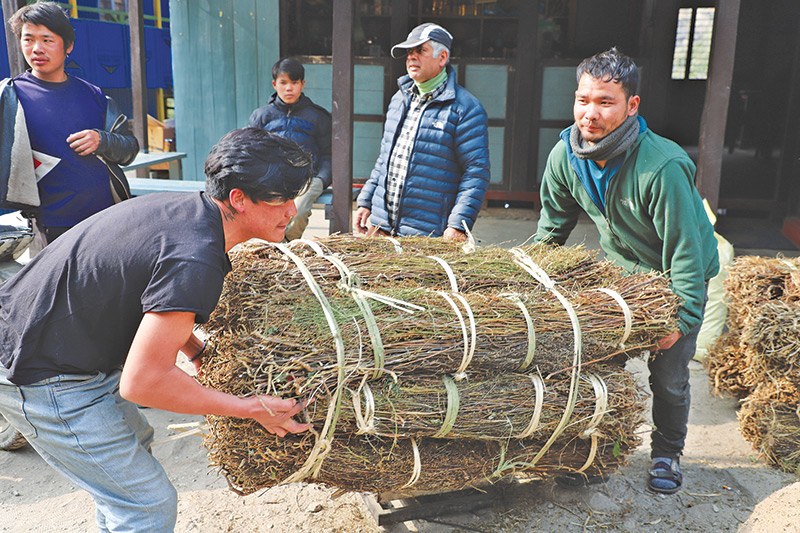
Around 35 tonnes of chiraito can be collected in a year in Taplejung, according to the statistics of the Division Forest Office.   Post Photo:ANANDA GAUTAM

TAPLEJUNG,
The price of chiraito, a medicinal herb prized by the pharmaceutical industry, has hit an all-time high of Rs1,000 per kg on soaring demand in India. The plant (Swertia chirayita) grows wild in the forests of the Himalayan foothills, and is also cultivated.
Tibet used to be the largest buyer of Nepali chiraito; but after Chinese authorities closed the border in eastern Nepal due to Covid-19, herb traders turned their attention to India.
Yak caravans used to haul pack loads of the herb through Olangchung Gola in eastern Nepal to Tibet. Exports stopped since 2020 when the pandemic broke out, and the northern border was tightly shut.
Chiraito prices have been fluctuating as per demand in China and India. Traders ship their products to whichever market offers a higher price.
Hari Mishra, a trader from Birtamod, Jhapa is busy these days as chiraito exports to India have swelled. The northern border is still closed.
Germany, Sweden, Italy, Holland and the United States also buy Nepali chiraito, but in small quantities.
Dried chiraito is packed into 1-kg bundles of about 1 metre in length. According to a report, it is used as a tonic, febrifuge and antidiarrhetic, and also as a cure for various liver problems.
The plant is used to control the blood sugar level. The plant shows antipyretic, sudorific, antiperiodic, anthelmintic, anti-inflammatory and hepatoprotective actions, and is used in urinary and liver disorders, and is reported to have a wide spectrum of pharmacological properties.
“This year the price has reached a record level,” said Mishra, who collects the plants from the eastern mountain district of Taplejung, and exports them to India.
He has been in the business for the past one and a half decades. Last year, the price of chiraito was Rs750 per kg, he said.
Another trader Govinda Baral of Hangdewa in Phungling Municipality-9 said farmers were elated by the increase in price.
The chiraito plant is 0.6-1.5 metres tall. Its stem is orange-brown or purplish in colour with a large continuous yellowish pith.
Buddhi Man Limbu of Lawajin in Phaktanglung Rural Municipality-6 said they were able to sell the medicinal herb at a good price this year.
The freight charge from Taplejung to Birtamod is Rs50,000 to Rs60,000 for a truckload, traders say. A truck can carry 2.4 tonnes of chiraito.
“As we have to collect the herb from villages in the mountains, the transportation cost is high,” said Baral. He said that traders pay an export tax of Rs5 per kg. Another tax of Rs15 per kg is imposed by the Division Forest Office.
Rudra Adhikari, from Panchthar district which adjoins Taplejung, also collects chiraito. He says transporting chiraito is more difficult than large cardamom and other crops.
“We have to start making the documents necessary to export chiraito as early as four months in advance. Vehicles carrying medicinal herbs are frequently stopped for strict security checks,” Adhikari said.
“Farmers do not want to go through such hassles, and prefer that traders come to their homes to collect the herb.”
Around 35 tonnes of chiraito can be collected in a year in Taplejung, according to the statistics of the Division Forest Office.
Only half of the pickers are issued permits. According to the forest office, it collects Rs250,000 in royalty from chiraito pickers annually.
“The medicinal herb becomes ready for collection 28 months after planting,” said Birendra Sah, division forest officer.
In two years, a well-grown chiraito plant can be as tall as 1.5 metres, according to farmers.
There are 27 species of chiraito which are divided into male and female, according to Sah. “Chiraito is a native species in the Himalayan region, and can be found at altitudes ranging from 1,700 to 3,500 metres.”
Chiraito is an integral part of Ayurved, Yunani, Chinese and Tibetan medication systems, and is also used in herbal medicine systems in the United States and the United Kingdom, according to a report. The whole plant is intensely bitter in taste.
The highest consumption of chiraito is in Mumbai and Patna of India, said trader Mishra.
The plant starts flowering in mid-July and ripens from mid-September to mid-December.
Chiraito should be stored in a properly ventilated room in stacks weighing around 1 kg,” said Suraj Ojha, district chairman of the Federation of Community Forestry Users, Nepal. “We have carried out an awareness programme to collect the herb only after it fully ripens.”
Farmers in the district have started growing chiraito commercially too.
Traders say that farmers stopped growing the plant after exports to India and China stopped following the Covid-19 pandemic.
“While the price has increased, output has decreased,” said Mishra. “As a result of the drop in production, pharmaceutical companies are facing a shortage of the herb.”
The medicinal herb is exported to India from the eastern part of the country through Kakarbhitta and Jogbani customs points. Shipments to China are yet to resume since the coronavirus pandemic brought trade to a halt.
According to the statistics of the Mechi Customs Office, 118.5 tonnes of chiraito worth Rs22.4 million was exported to India in the first five months of the current fiscal year.

MONEY

Gold sets record at Rs106,300 per tola

- Post Report
Post File Photo

KATHMANDU,
Gold prices continued to soar, reaching an all-time high of Rs106,300 per tola on Tuesday in the domestic market.
According to reports, in the international market, spot gold surged to $1,936.32 per ounce Tuesday.
The bullion has gained nearly $120 since the beginning of 2023, backed by expectations that the US Federal Reserve might increase rates by only 25 basis points at each of its first two meetings this year, after slowing its pace to 50 basis points in December 2022.
Gold prices are expected to rise towards record highs above $2,000 an ounce this year, albeit with a little turbulence, as the United States slows the pace of rate hikes and eventually stops increasing them, according to the reports.
On March 9, 2022, the price of a tola of gold (11.66 grams) set a record Rs103,500 in the domestic bullion market. The yellow metal was hovering at Rs75,000 per tola before the Covid-19 pandemic started in Nepal.
“The strength of the US dollar increased the price of gold,” said Manik Ratna Shakya, president of the Federation of Nepal Gold and Silver Dealers’ Association. “As the domestic price gets impacted with the fluctuation in international price, it is difficult to predict whether the price will go up or down.”
Shakya said that despite the wedding season, the demand for gold is not high and the price factor is the key reason. The price of yellow metal has been continuously increasing over the past few weeks.
The slowdown in the economy has also reduced the purchasing capacity of people and that is not creating demand in the domestic bullion market, Shakya said.
There is a demand of 20 to 25 kg of gold daily, currently, Shakya said.
In Nepal, gold jewellery is a traditionally and culturally essential accoutrement during wedding celebrations when women put on their best ornaments. A middle-class Nepali family usually buys 5 to 6 tolas of gold when there’s a wedding.
In April 2020, Nepal Rastra Bank slashed the daily gold import quota from 20 kg to 10 kg in a bid to stem the depletion of foreign currency reserves.
But responding to high demand, the central bank increased the quota back to 20 kg on April 3, 2021, while bullion traders urged it to raise the limit to 30 kg.
But on March 6, the central bank again slashed the daily import quota to 10 kg to stop the depleting foreign exchange reserve.
According to the Nepal Rastra Bank, gold imports jumped by 34.5 percent to Rs26.43 billion in the first five months of the current fiscal year ended in mid-December, from Rs19.65 billion in the same period last fiscal year.

MONEY

Nepal, India discuss improving access to payment systems

Though India is a close neighbour of Nepal, financial transactions between the two countries are full of hassles.
- Post Report

KATHMANDU,
Nepal Rastra Bank Governor Maha Prasad Adhikari, on Tuesday, underscored the need for a greater collaboration on fintech between India and Nepal to begin a cross-border and QR payment systems for mutual benefit.
“We expect a collaboration between the Nepali and Indian private fintech companies by sharing of the infrastructure and mitigating cyber-related risks, which could benefit both countries,” said Adhikari, addressing the India-Nepal Startup Connect, organised by the Embassy of India in Kathmandu.
Though India is a close neighbour of Nepal, financial transactions between the two countries are full of hassles.
Nepal’s central bank is positive about facilitating as well as its enabling role in the India-Nepal e-commerce and financial technology sector, Adhikari added.
He said that the central bank has allowed foreign investment in the payment business only recently.
“We are encouraging a quick response (QR) mechanism of both countries with an effective security mechanism,” Adhikari added.  
For cross-border payments from Nepal to India and other countries, several instruments are available like SWIFT, real-time gross settlement (RTGS), demand drafts, telegraphic transfer, and electronic cards, he said.
The central bank has partnered with banking and financial institutions to establish some of the payment systems institutions like the Nepal Clearing House.
The central bank has licensed 27 payment service providers and 10 payment system operators to provide effective digital banking services within the country.
Naveen Srivastava, Ambassador of India to Nepal, highlighted India’s G20 presidency and Nepal’s participation in the Finance Track of the G20 during India’s presidency.
He also mentioned the importance of digital public goods like JAM trinity (Jan Dhan Yojana, Aadhaar and Mobile Number) in enabling financial inclusion and startups.
Srivastava said that under India’s G20 chairmanship, the country has put a special emphasis on promoting digital public goods.
Anubhav Kumar Das from Startup India made a presentation on the Startup India Scheme. The Startup India scheme was launched in January 2016 and has supported more than 4,200 startups in India through its funds and seed funding.
Anand Bajaj, CEO, Paynearby, gave an overview of how the fintech sector in India has evolved with the support from the government, regulators and industry.
The day-long event also organised a panel discussion on ‘funding opportunity for Nepali Startups through India’ that focused on incentives available under the Startup India programme and the incubation ecosystem in India.

MONEY

China offers Sri Lanka debt moratorium

- REUTERS

NEW DELHI/COLOMBO,
The Export-Import Bank of China has offered Sri Lanka a two-year moratorium on its debt and said it will support the country’s efforts to secure a $2.9 billion loan from the International Monetary Fund, according to a letter reviewed by Reuters.
Regional rivals China and India are the biggest bilateral lenders to Sri Lanka, a country of 22 million people that is facing its worst economic crisis in seven decades.
India wrote to the IMF earlier this month, saying it would commit to supporting Sri Lanka with financing and debt relief, but the island nation also needs the backing of China in order to reach a final agreement with the global lender.
However, China’s January 19 letter, sent to the finance ministry, may not be enough for Sri Lanka to immediately gain the IMF’s approval for the critical loan, a Sri Lankan source with knowledge of the matter said.
According to the letter, China EximBank said it was going to provide “an extension on the debt service due in 2022 and 2023 as an immediate contingency measure” based on Sri Lanka’s request.
At the end of 2020, China EximBank had loaned Sri Lanka $2.83 billion which is 3.5 percent of the island’s debt, according to an IMF report released in March last year.
“You will not have to repay the principal and interest due of the bank’s loans during the above-mentioned period,” the letter said.
“Meanwhile, we would like to expedite the negotiation process with your side regarding medium and long-term debt treatment in this window period.” Sri Lanka owed Chinese lenders $7.4 billion, or nearly a fifth of its public external debt, by the end of last year, calculations by the China Africa Research Initiative showed.
“The bank will support Sri Lanka in your application for the IMF Extended Fund Facility (EFF) to help relieve the liquidity strain,” China’s letter said.
One Sri Lankan source, who asked not to be identified because of the sensitivity of the confidential discussions, said the island nation had hoped for a clear assurance from Beijing on the lines of what India provided to the IMF.
“China was expected to do more,” the source said, “This is much less than what is required and expected of them.”

MONEY

Banking leaders cautiously optimistic about economic recovery

- Post Report

KATHMANDU,
Nepali banking leaders on Tuesday expressed cautious optimism for a modest but continued economic recovery and investment climate.
Sunil KC, president of the Nepal Bankers’ Association, said observing the recent international trends on interest rates, inflation, and the reduction in gross domestic product (GDP) growth forecast, the world is seeing the possibility of a recession. “In such a scenario, Nepal’s tourism and remittances will be directly hit.”
The economic slowdown could result in a reduction in the number of tourist arrivals, he said.
This is not good news for Nepal, which has been seeing its tourism industry recovering after a two-year Covid-19 pandemic-induced lull.
More than 600,000 foreign visitors came to Nepal last year, as compared to 1.2 million in 2019 or before the Covid-19 pandemic. Any economic slowdown in major global economies and labour destinations might result in  lower remittance inflows to Nepal.
However, the global focus towards the usage of renewable energy can enable Nepal to capitalise on its hydropower potential, said KC.
KC claimed that the net profit of commercial banks has not increased. “The profit in the second quarter of the current fiscal year has been on the lower side as compared to the same period in the last fiscal year,” he said.
According to the association, the net profit of commercial banks in the second quarter, excluding the recently-merged Nepal Investment Bank and Mega Bank, was Rs30.19 billion.
The figure stood at Rs 34.21 billion for the same period last fiscal year.
The non-performing loans of the commercial banks increased to 2.29 percent in the second quarter of the current fiscal year from 1.09 percent in the same period last fiscal year, according to the association.
KC, however, claimed the figure was still better if it is compared with other South Asian countries.

MONEY

Ncell, Shequal Foundation to empower women in IT

Bizline

KATHMANDU:  Shequal Foundation, in collaboration with Ncell Axiata Limited, is organising the ‘Hacking for Humanity Hackathon’, an initiative to empower girls in information technology (IT). The three-day hackathon is scheduled to begin on February 10, Ncell said in a statement. “As part of our commitment to diversity, equity, and inclusion, and to support women in the field of ICT, Ncell has partnered with Shequal Foundation for this largest all-female hackathon in the country,” the statement reads. Other partners of the hackathon include Girls in Tech and Women in Big Data. Teams participating in the event will work together to create unique and impactful prototype solutions to address problems in the health, education and agriculture sectors among others. As a part of the preparation, college activation in all seven provinces will be held until the end of this month. As per Shequal Foundation, these kinds of targeted initiatives enhance women’s representation in IT-related industries.

MONEY

StanChart Bank Nepal to raise Rs2.4 billion from debentures

Bizline

KATHMANDU: Standard Chartered Bank Nepal said on Tuesday that it has obtained regulatory approvals to issue debentures amounting to Rs2.4 billion at an interest rate of 10.30 percent per annum. The debenture will have a face value of Rs1,000 (per unit) with a maturity period of five years, reads the press statement released by the bank. Individuals as well as public and private companies seeking regular fixed income can invest in this debenture. Of the total issue, 1.44 million units (Rs1.44 billion) will be sold on a private placement basis and 960,000 units (Rs 960 million) through the public issue to the general public, including mutual funds.

Page 6
WORLD

Top Ukraine officials quit amid corruption claims

- AGENCE FRANCE-PRESSE

KYIV,
Several senior Ukrainian officials announced their resignations on Tuesday as the defence ministry was shaken by accusations of food procurement fraud, in the country’s largest corruption scandal since the start of Russia’s invasion.
Ukraine has a history of endemic corruption, including among the political elite, but efforts to stamp out graft have been overshadowed by Moscow’s full-scale war that began in February.
Kyiv’s Western allies, who have allocated billions of dollars in financial and military support, have been pushing for anti-corruption reforms for years, sometimes as a precondition for aid. Ukraine’s deputy defence minister Vyacheslav Shapovalov, the deputy head of the presidential administration Kyrylo Tymoshenko and deputy prosecutor general Oleksiy Symonenko were among the officials who stood down.
The defence ministry announced the resignation of Shapovalov, who was in charge of the army’s logistical support, on the heels of accusations it was signing food contracts at inflated prices.
Local media reports last week accused the ministry of having signed a deal at prices “two to three times higher” than current rates for basic foodstuffs. In a statement, the ministry insisted the accusations were “unfounded and baseless” but said Shapovalov’s departure would “preserve the trust of society and international partners”.
Tymoshenko, who has worked with Ukraine’s President Volodymyr Zelensky since his election in 2019 and oversaw regional policy, also announced his resignation Tuesday. He posted a photo of himself holding a handwritten resignation letter, thanking the president for the “opportunity to do good deeds every day and every minute”.
Tymoshenko was implicated in several scandals during his tenure, including in October last year when he was accused of using a car donated to Ukraine for humanitarian purposes.
The departure of Symonenko, a deputy prosecutor general, comes after media reports that he spent a holiday in Spain this winter, reportedly using a car belonging to a Ukrainian businessman. In his address on Monday, Zelensky announced coming “personnel decisions” at various levels and said he was banning officials from travelling abroad for purposes not related to work.
“If they want to rest now, they will rest outside the civil service,” Zelensky said.
Transparency International ranked Ukraine 122 out of 180 in its corruption ranking for 2021. The shakeups come after a Ukrainian deputy minister of development of communities, territories and infrastructure was sacked over the weekend following his arrest on suspicion of embezzlement.
Vasyl Lozynskiy was accused of receiving a bribe to “facilitate” the purchase of generators at inflated prices as Ukraine faces electricity shortages following Russian strikes on the energy grid. The European Union has highlighted anti-corruption measures as one of the key reforms Ukraine needs to gain candidate status for the bloc.

WORLD

Poland asks Berlin to okay tanks for Kyiv’s aid

- ASSOCIATED PRESS
A Leopard 2 tank pictured in Munster near Hannover, Germany, on September 28, 2011.   Ap/Rss

KYIV,
Poland has officially requested permission from Germany to transfer its Leopard 2 battle tanks to Ukraine where they can help fight Russia’s invasion, Polish Defence Minister Mariusz Błaszczak said on Tuesday.
German officials confirmed to the dpa news agency they had received the application and said it would be assessed “with due urgency.” German Foreign Minister Annalena Baerbock said Sunday that Berlin, which builds the tanks, wouldn’t seek to stop Poland from providing the high-tech armour to Kyiv.
The development came as Ukrainian authorities moved to crack down on alleged corruption, with almost a dozen senior officials departing on Tuesday.
Błaszczak, the Polish defence minister, appealed to Germany “to join the coalition of countries supporting Ukraine with Leopard 2 tanks”—a reference to recent pressure on Berlin to send some of its own tanks. Germany has hesitated to take that step, despite Ukraine’s pleas. The tank is adaptable to many types of combat situations.
“This is our common cause, because it is about the security of the whole of Europe!” Błaszczak tweeted. NATO Secretary General Jens Stoltenberg on Tuesday called for the speedy delivery of new weapons to Ukraine, where a broad battlefield stalemate is expected to give way to new offensives in the spring.
“At this crucial moment in the war, we need to provide Ukraine with heavier and more advanced systems, and we need to do it faster,” Stoltenberg said on Tuesday after talks with German Defense Minister Boris Pistorius in Berlin.
Polish officials have indicated that Finland and Denmark are ready to join Warsaw in sending Leopards to Ukraine. Poland wants to send a company of the tanks, which means 14 of them, but they would barely make an impression in a war that involves thousands of tanks. If other countries contribute, Warsaw reckons, the tank detachment could grow to a brigade size.

WORLD

What is the Leopard 2?

Germany’s Krauss-Maffei Wegmann, the manufacturer of the Leopard 2, touts it as “the world’s leading battle tank” that for nearly a half-century has combined aspects of firepower, protection, speed and manoeuvrability, making it adaptable to many types of combat situations.
The 55-ton tank has a crew of four and a range of about 500 kilometres (310 miles), and top speeds of about 68 kilometres per hour. Now with four main variants, its earliest version first came into service in 1979. Its main weapon is a 120mm smooth bore gun, and it has a fully-digital fire-control system.

How many could be sent to ukraine?
One big appeal of the German-made tank is its sheer number: More than 2,000 have been deployed in over a dozen European countries and Canada. Overall, Krauss-Maffei Wegmann says over 3,500 units have been supplied to 19 countries.
Rheinmetall AG, a German defence contractor that makes the 120mm smoothbore gun on the Leopard 2, says the tank has been deployed by “more nations than any other”.
According to a recent analysis by the International Institute for Strategic Studies, a London-based global think tank, some 350 Leopard 2s—in different versions—have been sent to Greece, and Poland has about 250 of varying types. Finland has 200 in operation or in storage.
For Ukraine’s war against Russia, “it is believed that for the Leopard 2 tanks to have any significant effect on the fighting, around 100 tanks would be required,” the International Institute for Strategic Studies analysts wrote.
Ukraine’s defence minister wants 300 tanks, and some European Union leaders support him on that.
“We need a fleet of 300 tanks,” Luxembourg’s Foreign Minister Jean Asselborn said on Monday in Brussels, alluding to the wide deployment of Leopards across Europe and the need for “synchronous” weaponry—that can operate smoothly together.
Getting Leopards into Ukrainian hands isn’t as easy as rolling them across the border from friends
farther West in Europe. The International Institute for Strategic Studies estimates that three to six weeks of training would be needed for operating crews and support staff to reach basic proficiency.
Ralf Raths, director of the Panzer Museum in Munster, Germany, said experienced Ukrainian tank crews would likely be able to learn to use the Leopard 2 fairly quickly, and training could be shortened to focus on essential knowledge.
“Do you really have to exploit 100% of the potential or is it enough to utilise 80% in half the time? Ukrainians will certainly vote for option B,” he said.

What difference would it make to the war?
Yohann Michel, a research analyst for defence and military affairs at the International Institute for Strategic Studies, said such tanks could allow Ukraine to go onto the offensive in the 11-month-old conflict that has been stalemated for months following two key Ukrainian counteroffensives that recaptured areas occupied by Russian forces for months in the northeast and south.
“In this type of conflict, it’s just not possible to carry out large-scale offensives without the full variety of armoured combat equipment and armoured vehicles, and tanks are a part of that,” he said. In addition to Main Battle Tanks, or MBTs, like the Leopard 2, others include infantry fighting vehicles and armoured personnel carriers.
Western deliveries of Leopard 2s could help equip Ukraine with needed high-calibre munitions to replace its own dwindling Soviet-era stockpiles, opening a new avenue for supplies of Western firepower to get to Ukraine, he said.
Raths noted that the Leopard 2 and similar Western tanks are more agile than T-models used by Russia, which can’t reverse at speed, for example.
“Imagine a boxer who cannot move freely in the ring, but only in one direction,” he said. “The other boxer, who can move in all directions, has a big advantage and that it is the case with the Leopards.”
Still, even Western MBTs are vulnerable to aerial attacks, or anti-tank infantry while in forests and urban areas, highlighting the importance of anti-aircraft and reconnaissance support, said Raths.
With similar numbers of tanks on both sides, Leopards 2 and similar tanks could give Ukraine the upper hand, especially given the poor tactical performance of Russian troops during the war, he said. “The Ukrainians shine through creative, dynamic and often clean warfare,” Raths said. “So it could well be that if Ukraine’s operational offensive were to begin, the Russians would have real problems countering it.”
Niklas Masuhr, a researcher at the Center for Security Studies at Switzerland’s federal polytechnic university ETHZ, based in Zurich, cautioned that the addition of Leopards to the battlefield alone wouldn’t be “a game changer or a war-winning technology, anything like that”.
“You can’t just deploy a bunch of main battle tanks and assume they will win,” he said. (AP)

WORLD

Trouble in Himalayan town swells scrutiny of India’s hydropower push

- REUTERS
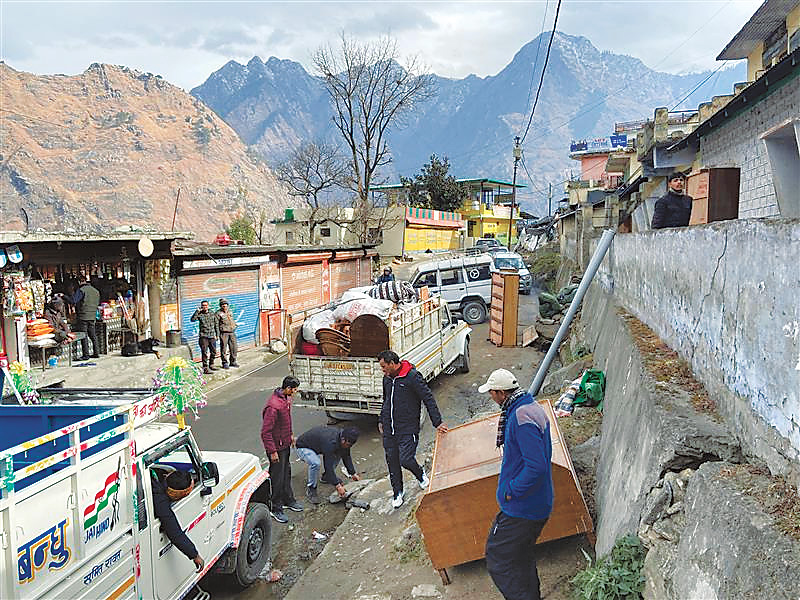
People load household belongings on a lorry as they leave their crumbling home in the Himalayan town of Joshimath, India, on January 12.   Reuters

JOSHIMATH/CHENNAI,
Posters urging “NTPC Go Back” have appeared in Joshimath, a subsiding Indian Himalayan town where roads are cracking and houses crumbling—a crisis locals blame largely on a hydropower project led by India’s biggest electricity producer NTPC.
Residents in the tourist hub of Joshimath are demanding a halt to the project, in the latest of a wave of protests across regions where hydroelectric facilities are being built, as India boosts clean energy to cut its planet-heating carbon emissions.
As Joshimath charity worker Kalawati Sah did her rounds assessing homes in areas marked as “unsafe” last week, she said the cracks were spreading to more structures.
Locals attribute the sinking of their town in northern Uttarakhand state and the damage to infrastructure to tunnel-boring for the hydropower project and lack of a drainage system.
Similar concerns have been raised over the past decade in neighbouring Himachal Pradesh, one of four key states identified by India for expanding hydropower generation.
Government estimates show that India has hydro potential of 145,320 megawatts (MW)—enough to power about 140 million households or all homes in the United States—but installed capacity had reached only about 47,000 MW by the end of 2022.
Officials regard hydropower as essential for India to meet its 2030 renewable energy target of 500 gigawatts. But the projects are cutting through mountains and forests,
forcing people from their homes and triggering calls to save sensitive ecological areas like the Himalayas—even though adopting clean energy could help curb climate change and limit the negative effects of warming temperatures on the mountains.
The crisis in Joshimath has strengthened scrutiny of India’s push for more hydropower to help balance rising energy demand while cutting planet-heating emissions to net zero by 2070. India’s power minister told journalists last week that construction of the NTPC project had not led to land subsidence or cracks in Joshimath.
But researcher Manshi Asher of the Himdhara Environment Research and Action Collective said her group had been documenting the damage caused by hydropower projects in the Himalayas for over a decade and campaigning against them.
“The sheer scale, magnitude and nature of hydropower construction has been a big contributing factor to Himalayan disasters in recent years,” she said. “It is tragic that we waited for Joshimath to pay attention.”
In a 2021 report, the International Energy Agency (IEA) described hydropower as “the backbone of low-carbon electricity generation”, saying it should be on the agenda for countries trying to meet their net-zero emissions goals.
India is the world’s fifth-largest hydropower producer, with the IEA projecting the South Asian nation will play a key role in boosting global hydropower capacity by close to a fifth this decade.
Until the 1960s, India derived almost half of its electricity from hydro—but that has since fallen to about 12 percent, as power generation from coal picked up.
The government is still expanding coal mines and opening new ones, citing the need for energy security.
But it is also promoting hydropower and announced investments in a new project barely two days after Joshimath’s land subsidence hit the headlines in early January.
In a bid to boost capacity in 2019, the government declared hydroelectric projects larger than 25 MW a renewable energy source, and made it obligatory for power utilities to use hydro for a share of their supply.
SK Singal, a professor in the hydro and renewable energy department at the Indian Institute of Technology Roorkee, said dams and reservoirs can cut the risk of flooding during the heavy cloudbursts increasingly being recorded in the Himalayas.
“Hydropower also helps maintain grid stability when solar and wind energy generation drops,” he said, emphasising that facilities must be properly constructed to avoid problems. Only two hydroelectric plants have been completed on time in the last two decades, government data shows.
As of 2020, 24 projects under construction, with combined capacity of about 11,350 MW, had overrun on time or cost, according to a parliamentary committee report.
Among the reasons for the delays, the report cited local protests, poor geological conditions such as loose rocks, flash floods, land acquisition issues and funding constraints.
One official in Arunachal Pradesh pointed to a shortage of capable contractors to build hydropower projects in the state, noting almost all are in a “precarious” financial condition.
Experts and officials told Context projects had also lost commercial viability and are being scrapped because of policy changes made to accommodate environmental and social concerns, such as locals insisting on their right to water in rivers.
“There are challenges, but there is far greater potential in hydropower” compared to other renewables, Singal said. Upcoming projects are being planned on the run-of-river model - where flowing river water is directed through channels to drive a turbine - moving away from construction of large dams. Experts point out that run-of-river hydropower projects are cheaper to build and require less land, avoiding large-scale displacement.
Some states, meanwhile, are taking measures to help meet their targets.
Arunachal Pradesh, for example, has created a local development fund and aims to reduce the risk of disasters by installing early warning systems and measuring the carrying capacity of river basins, while a complaints mechanism is also being considered, a local official said.
But communities are not convinced their best interests are at the heart of India’s clean energy push.
In pristine parts of India’s northeastern state of Arunachal Pradesh, protests against dams and hydropower projects go back two decades when the first ones were mooted.
Through sit-ins, art, music and graffiti opposing displacement, the clearing of forests and loss of ways of life, communities in the lower Dibang Valley have raised questions as Joshimath residents are doing now.

WORLD

Gene therapy delivers treatment direct to brain

Rylae-Ann, who lives with family in Bangkok, was among the first to benefit from the way of delivering gene therapy.
- ASSOCIATED PRESS

Bangkok,
When Rylae-Ann Poulin was a year old, she didn’t crawl or babble like other kids her age. A rare genetic disorder kept her from even lifting her head. Her parents took turns holding her upright at night just so she could breathe comfortably and sleep.
Then, months later. doctors delivered gene therapy directly to her brain. Now the 4-year-old is walking, running, swimming, reading and riding horses—“just doing so many amazing things that doctors once said were impossible,” said her mother, Judy Wei.
Rylae-Ann, who lives with her family in Bangkok, was among the first to benefit from a new way of delivering gene therapy—attacking diseases inside the brain—that experts believe holds great promise for treating a host of brain disorders.
Her treatment recently became the first brain-delivered gene therapy after its approval in Europe and the United Kingdom for AADC deficiency, a disorder that interferes with the way cells in the nervous system communicate. New Jersey drugmaker PTC Therapeutics plans to seek US approval this year.
Meanwhile, about 30 US studies testing gene therapy to the brain for various disorders are ongoing, according to the National Institutes of Health. One, led by Dr Krystof Bankiewicz at Ohio State University, also targets AADC deficiency.
Others test treatments for disorders such as Alzheimer’s, Parkinson’s and Huntington’s.
Challenges remain, especially with diseases caused by more than a single gene. But scientists say the evidence supporting this approach is mounting—opening a new frontier in the fight against disorders afflicting our most complex and mysterious organ.
“There’s a lot of exciting times ahead of us,” said Bankiewicz, a neurosurgeon. “We’re seeing some breakthroughs.”
The most dramatic of those breakthroughs involve Rylae-Ann’s disease, which is caused by mutations in a gene needed for an enzyme that helps make neurotransmitters like dopamine and serotonin, the body’s messengers. The one-time treatment delivers a working version of the gene. At around 3 months, Rylae-Ann began having spells her parents thought were seizures—her eyes would roll back and her muscles would tense. Fluid sometimes got into her lungs after feedings, sending her to the emergency room. Doctors thought she might have epilepsy or cerebral palsy.
Around that time, Wei’s brother sent her a Facebook post about a child in Taiwan with AADC deficiency. The extremely rare disorder afflicts about 135 children worldwide, many in that country. Wei, who was born in Taiwan, and her husband, Richard Poulin III, sought out a doctor there who correctly diagnosed Rylae-Ann. They learned she could qualify for a gene therapy clinical trial in Taiwan.
Though they were nervous about the prospect of brain surgery, they realized she likely wouldn’t live past 4 years old without it.
Rylae-Ann had the treatment at 18 months old on November 13, 2019—which her parents have dubbed her “reborn day.” Doctors delivered it during minimally invasive surgery, with a thin tube through a hole in the skull. A harmless virus carried in a functioning version of the gene.
“It gets put into the brain cells and then the brain cells make the [neurotransmitter] dopamine,” said Stuart Peltz, CEO of PTC Therapeutics.
Company officials said all patients in their clinical trials showed motor and cognitive improvements. Some of them, Peltz said, could eventually stand and walk, and continue getting better over time.
Bankiewicz said all 40 or so patients in his team’s NIH-funded study also saw significant improvements. His surgical approach is more involved and delivers the treatment to a different part of the brain.

WORLD

Grief grips Asian Americans after California mass shootings

Briefing
- AGENCIES

MONTEREY PARK, United States: Asian Americans were reeling Tuesday after two mass shootings in California targeting members of their community left 18 people dead—with the alleged gunmen in both cases being older men of Asian descent. The killings came in a span of just 48 hours—so close together that California governor Gavin Newsom was at a hospital meeting with victims of the first when he was pulled away to be briefed about the second. “Tragedy upon tragedy,” he tweeted. The carnage prompted President Joe Biden to renew calls for Congress to act quickly on an assault weapons ban. A group of senators on Monday reintroduced a federal assault weapons ban and legislation that would raise the minimum purchase age for assault weapons to 21. China’s foreign ministry called for its citizens in the United States to “pay close attention to the local security situation” and “avoid going to places where people gather” in the wake of the killings. Investigators were still probing the motives behind the two incidents, which stood out among the scourge of mass shootings in America both for the community impacted—gun violence is usually seen as rare among Asians and Asian Americans—and for the age of the suspects, 67 and 72. The nonpartisan Violence Project says 79 percent of mass shooters from 1966-2020 were under the age of 45. It says a mere 6.4 percent of mass shooters in that time are Asian.

WORLD

Protest in Afghan city against Koran burning in Sweden

Briefing
- AGENCIES

KHOST: Hundreds of Afghan men staged a protest in the eastern city of Khost on Tuesday to express anger at the burning of the Koran in the Swedish capital over the weekend. Swedish-Danish far-right politician Rasmus Paludan on Saturday set fire to a copy of the Muslim holy book in front of Turkey’s embassy in Stockholm. Protests have been held since then in some Muslim countries, and on Tuesday crowds of Afghan men condemned the incident in Khost, a city bordering Pakistan. “Death to the Swedish government, death to such politicians,” chanted protesters in the city’s main square, an AFP correspondent reported. Images posted on social media showed the protesters standing in the square, some holding the flag of the Taliban, as security personnel stood guard nearby. “The people of Khost condemned the burning of the Koran in Sweden and called on Muslim countries to raise their voices against this evil and filthy politician,” Qadeer Lakanwal, a protester and one of the organisers of the rally, said.

Page 7
SPORTS

Four Nepalis, six foreigners involved in cricket spot-fixing

The CIB claims players were offered Rs 600,000 to Rs 1 million per game for spot-fixing.
- Sports Bureau
Nepal Police SSP Dinesh Acharya briefing about Nepal T20 League’s spot-fixing.  Post Photo

KATHMANDU,
The Central Investigation Bureau (CIB) of Nepal Police on Tuesday said that 10 persons, including four Nepalis were involved in spot-fixing during Nepal T20 League held from December 24, 2022 to January 11, 2023.
Organising a press conference at its headquarters, CIB revealed that among the four Nepalis, one was a player while the three others were middlemen. “Our initial investigation shows that 10 people were involved in fixing. Among the six foreigners, four of them were from the management, while one was a player and one a middleman,” said Sanjay Singh Thapa, the CIB Superintendent of Police.
The first ever franchise cricket tournament organised by the Cricket Association of Nepal (CAN) was plunged into a crisis after revelations of match-fixing by former national cricket captain Gyanendra Malla. Suspicious activities were also reported by tournament’s television commentator Sachin Timelsena during the middle of the event.
Meanwhile, the Kathmandu District Court remanded veteran cricketer Mehboob Alam and emerging star Mohammad Aadil Alam (Aadil Ansari), both arrested on Monday, for five days for further investigations on Tuesday. The duo were remanded as per the National Sports Development Act 2077.
According to Thapa, Mehboob approached at least two players with a fixing proposal, while Aadil was involved in spot fixing in at least two matches. “Aadil bowled a no-ball and a wide- ball as per the instructions of the fixer, in two matches,” said Thapa.  
He added that three players reported to the Anti-Corruption Unit (ACU) of the International Cricket Council (ICC) from among the five players who got fixing proposals.
CIB Senior Superintendent of Police (SSP) Dinesh Acharya informed that the players were offered Rs 600,000 to Rs 1 million for spot-fixing in a game. “The fixers used whatsapp, phone, text messages and coffee shops to approach the players,” said Acharya.  
Acharya also revealed that one overseas player ( his name was not disclosed) scored the exact number of runs he was instructed to score by his team manager as part of spot-fixing. “It would be difficult for us to take action against overseas players due to cross-country law. But, he could be arrested if he visits Nepal again,” said Acharya.     
Apart from the fixing fiasco, non-payment to players and suspicious activities of India’s sports management company Seven3Sports, involved in the tournament as strategic and commercial partner after CAN leased the event to the company, brought further controversy to the event.   
The CIB had formed a probe committee to investigate the fixing allegations nearly three weeks ago, following directives by the Ministry of Home Affairs.   
Acharya further said that the role of Seven3Sports was non-transparent and they are still under investigation. “The expenses in the league do not seem clean and the role of Seven3Sports managing director Jatin Ahluwalia is also suspicious. We are not in a position to elaborate more and are still investigating the issue.”

SPORTS

Tsitsipas through to semi-final

The 24-year-old Greek pulls off a convincing 6-3, 7-6 (7/2), 6-4 win over unseeded Jiri Lehecka of Czech Republic. Sets up last-four clash againsts Karen Khachanov.
- AGENCE FRANCE-PRESSE
Stefanos Tsitsipas plays a backhand return to Jiri Lehecka during their Australian Open quarter-final match in Melbourne on Tuesday.  AP/RSS

MELBOURNE,
Stefanos Tsitsipas closed on a first Grand Slam title by reaching the Australian Open semi-finals on Tuesday in impressive fashion, as Victoria Azarenka also powered into the last four.
Tsitsipas was a convincing 6-3, 7-6 (7/2), 6-4 winner over unseeded Jiri Lehecka of the Czech Republic and faces Karen Khachanov next. The 24-year-old Tsitsipas is the highest remaining seed left at three and with Melbourne’s large Greek community roaring him on, his title charge is gathering pace.
“It felt different this time from any other match and the most important thing in the end is that I found a solution,” said Tsitsipas, after making the Australian semi-finals for a fourth time. “It was a very difficult three-setter, one of the most difficult so far in the competition,” said the Greek, who will become world number one should he win the title.
The other quarter-final at Rod Laver Arena between Russia’s Khachanov and Sebastian Korda had been warming up nicely until the American hurt his wrist. The 18th seed went through when Korda retired in the third set, down 7-6 (7/5), 6-3, 3-0. The 22-year-old Korda, who had been attempting to emulate his father Petr’s Australian Open victory in 1998, said afterwards that he could barely hold the racquet.
He said he first felt the injury while playing the Adelaide International this month, where he made the final and forced a championship point before being beaten by Novak Djokovic. But it had not bothered him in the opening four rounds at Melbourne Park until he hit a return in the second set. “Volleying was almost impossible for me, so it was a little tough.”
For Khachanov it is a second consecutive Grand Slam semi-final, having reached the last four at the 2022 US Open. Nine-time Melbourne champion Djokovic is still on the scene, with a quarter-final against Russian fifth seed Andrey Rublev on Wednesday. The other quarter-final is an all-American clash between Ben Shelton and Tommy Paul.
Azarenka is back in the last four in Melbourne for the first time since she won the tournament in 2013 and will face big-serving Elena Rybakina. The Belarusian Azarenka, who also triumphed in 2012, secured an impressive straight-sets victory over Jessica Pegula. Third seed Pegula was hotly tipped to win the title but the American simply had no answers to Azarenka’s pounding forehand groundstrokes. The 33-year-old Azarenka rolled back the years in a surprisingly one-sided quarter-final to triumph 6-4, 6-1.
“Well, it hurts to beat her because I always want her to do well,” the 24th seed said of Pegula, a close friend and practice partner. Asked how her young son Leo would receive his mum’s latest achievement, Azarenka said: “He’s more worried about his football and when we’re going to play again. He definitely wants his mum to be home.”
Leo will have to wait at least a few more days because Azarenka faces Moscow-born Kazakh Rybakina on Thursday for a place in the final.
Rybakina blasted her way into the semi-finals with a ruthless 6-2, 6-4 win over Jelena Ostapenko. Ominously, she said her serve is better now than when she won Wimbledon last year. “I gained even more power. It’s my weapon on the court,” she said.

Australian Open Results
Men’s Singles Quarter-finals
- Karen Khachanov (RUS x18) bt Sebastian Korda (USA x29) 7-6 (7/5), 6-3, 3-0 ret
- Stefanos Tsitsipas (GRE x3) bt Jiri Lehecka (CZE) 6-3, 7-6 (7/2), 6-4
-------------------------------------------------------------
Women’s Singles Quarter-finals
- Elena Rybakina (KAZ x22) bt Jelena Ostapenko (LAT x17) 6-2, 6-4
- Victoria Azarenka (BLR x24) bt Jessica Pegula (USA x3) 6-4, 6-1

SPORTS

Top seeds Rai, Nagarkoti triumph

- Sports Bureau
Sukra Bahadur Rai.   Photo Courtesy: NPGA 

KATHMANDU,
Top seeds Sukra Bahadur Rai and Bhuvan Nagarkoti registered wins on the opening day of the Surya Nepal NPGA Match Play to advance into the quarter-final at the Royal Nepal Golf Club on Tuesday.
Nepal No 1 pro Rai pulled off a convincing 5&4 victory over 20th ranked Tanka Bahadur Karki in the first round match. Rai will meet No 10 Bhuvan Kumar Rokka, who saw off the ninth-ranked Rame Magar 2&1.
Second-seeded Nagarkoti saw off the 19th ranked Sanjog Moktan 2&1. Defending champion Nagarkoti set up the last eight meeting with Dhana Bahadur Thapa who earned 3&2 victory over No. 11 Bal Bhadra Rai.
Apart from them, Jayaram Shrestha, Rabi Khadka, Dinesh Prajapati, and Ramesh Adhikari also secured quarter-final berths at the third event under the Surya Nepal Golf Tour 2022-23.
Third-ranked Shrestha edged past No. 17 Krishna Man Rajbahak on the final hole (1-up) to set up the quarter-final with No. 7 Prajapati. Prajapati toiled hard for a 1-up win against No. 12 Surya Prasad Sharma.
No. 5 Khadka edged past No. 15 Pradip Kumar Lama 2&1 in the first round. He will play against Adhikari in the next stage. Adhikari registered an upset victory over the fifth-ranked Sanjay Lama 3&1.
The quarter-final and semi-final matches will be played on Wednesday, while the third-place and final games will take place on Thursday. The final will be played over 36 holes while other matches will be played over 18 holes.
The tournament organised by PGA Nepal under the sponsorship of Surya Nepal Pvt Ltd carries a total purse of Rs250,000, with the winner walking away with Rs60,000.

MEDLEY

Horoscope

ARIES (March 21-April 19) ****
The vibe this morning is perfect for finishing up projects or making professional transitions. Your energy levels and confidence are poised to elevate bringing some extra sparkle to your aura throughout the next two days.

TAURUS (April 20-May 20) ***
Make an effort to connect with your spiritual community Feeling supported and seen by those with similar beliefs will bring healing and comfort, though a private meditation session or tarot pull can also conjure a sense of serenity.

GEMINI (May 21-June 21) ****
Don’t be afraid to throw your weight around a bit within business matters this morning. It will give you an edge where negotiations are concerned, so be sure to stand firm in what you deserve.

CANCER (June 22-July 22) ***
A spiritual, romantic, and intimate energy will fill the air this morning. Use this energy to nurture your heart and soul, gravitating toward the people you love and perhaps a bit of meditation.

LEO (July 23-August 22) ***
You can find the motivation to kick bad habits today. Work with it by prioritizing your health and moving away from behaviors that aren’t serving you. A peaceful yet stimulating energy will wash over you today.

VIRGO (August 23-September 22) ****
Superficial interactions will carry deeper meanings today. Pay close attention to your social exchanges, as doing so could reveal a secret crush, budding new friendship, or toxic dynamics you should probably move away from.

LIBRA (September 23-October 22) ***
Tidying up your space will have a strangely healing effect. You’ll also have a chance to declutter your heart as long as you accept and release any emotional weight dragging you down recently.

SCORPIO (October 23-November 21) ***
You’ll be in a unique position to express yourself thoughtfully, creatively, and profoundly today. It is all about standing in your truth and being open with your agenda, as doing so will allow you to transform your life for the better.

SAGITTARIUS (November 22-December 21) ***
Take a moment to revel in domestic bliss while appreciating your surroundings. It is all about sleeping in, lazy stretches, and small luxuries like sipping your coffee while watching the sunrise. Later you”ll be  in an outgoing and fearless mood.

CAPRICORN (December 22-January 19) ****
You’ll have a chance to clear the air and clean slates this morning. If any problems need addressing or relationships that could use mending, now is the time to diplomatically articulate your point of view.

AQUARIUS (January 20-February 18) ***
You’ll have an opportunity to stay grounded while unpacking your psyche this morning. A luxurious and cleansing energy will also come into play, marking the perfect occasion for a morning meditation or salt bath.

PISCES (February 19-March 20) ***
You’ll have a chance to connect with the people around you in meaningful ways. Though you’re used to playing the role of a wallflower, now would be a good time to open up to let others see who you are.

Page 8
CULTURE & LIFESTYLE

A conversation of enchantments

‘I want to correct the narrative that says a woman has to be submissive and obedient to be deemed good.’
Chitra Banerjee Divakaruni.  Post Photo: Mimamsha Dhungel.

Having written some of the biggest books based on Hindu mythologies, Indian-American writer Chitra Banerjee Divakaruni is a an award-winning writer, activist and teacher. Mimamsha Dhungel from The Post caught up with her at the Jaipur Literature Festival 2023 and she told us a lot about retelling epics and correcting social narratives through her characters and stories.

Who is Chitra Banerjee beyond her words?
I am a very quiet person. Writing is a big part of my life, so I keep the rest of my life uncomplicated. I love teaching. I love my family. My activist work is really important to me. I like reading good books. I also enjoy watching good movies often with my family. I like going on nature walks and I love dancing to Bollywood music.

Congratulations on your new book, ‘Independence’! Have you already started working on anything else?
I just finished Independence. But yes, I have started working on something else already. My next book is going to be a non-fiction based on the life of a woman and her family. I think it will be very inspirational and I want to show, as with the other women in my books, all the ups and downs of the lead character’s life.
I don’t believe in showing women as some kind of impossible perfectionist ideal. No one needs to be that immaculate. That’s not human at all. Why should women expect to be perfect? So, in my new book, I talk of a woman who comes from a very humble background and becomes very powerful and successful. I want to trace her story because I think a lot of people will be inspired by her.

Most of the protagonists of your books are inspired by mythology or Hindu scriptures. How do you come up with the narratives for your stories?
I think what matters the most, in this case, is intention. These women who inspire my books are figures who have been pointed out to us as role models. I feel we do not understand their lives well as they are (always) shaped up to be compliant and obedient characters. And if they are not these things, then they are portrayed as women of questionable character.
I wanted to readjust this perspective. I wanted to show these women as they really were. I researched into the Mahabharata and the Ramayana a lot before writing ‘Forest of Enchantments’ and ‘Palace of Illusions’. These epics have come down to us through several writers in different forms. I could vividly see that these women were much stronger than what we were told. They were fighters. I wanted that spirit (of powerful women) to be an inspiration for women living and growing today. I myself am constantly inspired by these women.
So, I want to correct the narrative that says a woman has to be submissive, obedient, or put up with whatever happens to her to be deemed as good by the society. That is neither our history nor our culture. We should never forget that.

What do you think is the essence of being a woman?
For me, the essence of being a woman is to stand on my own feet and live a life of dignity. This is something that I believe in myself and also for other women. This is what I fight for as an activist and what I try to create in my books as a writer.

What message do you intend to impart to your readers—especially women from the Indian subcontinent who are familiar with these texts—through your books?
If you are talking about the central message that I wish my readers would take away from my books, it comes across differently through different characters. However, the core theme is always to continue believing in yourself. If you have an ambition or a dream, go chase it. We are not born with a dream. It is an acquired pursuit. We develop it as we grow and understand ourselves. So, just be aware of the dream that is inside you and fight for it. The other thing that I always try to portray in my books is to not care when society is trying to demean your capabilities. Do not let anyone discourage you, tell you that you can not something or are not worthwhile. You are the one who will decide what you are capable of, not the society.

Among the many books and characters that you have curated, tell us about your favourites.
That’s a very difficult question because all the characters I write are very close to my heart. But if I had to pick one, my new book, ‘Independence’ would be my choice for now. It is about three sisters who are live during the time of India’s independence. They are my favourite characters because they are just ordinary girls when the story begins but in that one year when so many tumultuous things happened on the Indian subcontinent, they grow up and realize what it means to be truly independent.

Tell us about the research you do before writing your books.
Research has always been challenging for me. It was especially difficult to research for my first book, ‘Palace of Illusions’ because I didn’t know where to start. I had to learn the entire process then. By the time I wrote, ‘Forest of Enchantments’, I was familiar with the process and just had to do the work.
The process begins with reading the oldest texts available whether it is the oldest Mahabharat or the oldest Ramayana. Then, you trace the other versions of these texts and analyze how are they being written. One thing we recognize as we research is that the same Mahabharata or Ramayana is portrayed differently in different versions. They definitely follow the main story but they focus on different things.
Something I learned during my research is that there has always been a tradition of retelling epics. I am following in the footsteps of many before me. I am a part of this important tradition and it is essential to embrace the story as your own when you write.  The epic becomes yours and you become a part of the epic. You recreate the story for yourself. And that is what I have been doing.

Young girls who aspire to be writers look up to you. As a writer who has won so many hearts, what are the most difficult and the most enjoyable aspects of writing a book?
I am always very grateful and thankful to the people who read and enjoy my books. After writing a few books, I have learned that there is always a good and bad side to writing.
The difficult part about writing a book is when you get stuck. Halfway through the novel, I keep writing but I can feel that it is not coming out the way I want it to. That writing gets scrapped and I start again. This cycle of writing it, not liking it, throwing it, and starting all over again might go on for a while. Sometimes I can’t write at all.
Interestingly, the most enjoyable part is the opposite of a writer’s block. Some days you sit down to write and the words just come to you. It feels wonderful when you realize that you are just an instrument forthe words to flow through.

CULTURE & LIFESTYLE

The world of Hindu fiction

These are some noted authors writing fiction based on Hindu mythology.


Amish Tripathi

Amish Tripathi

Amish Tripathi is primarily known for his Shiva trilogy, Immortals of Meluha. He has since also published a Ram Chandra series which is just as popular. His stories incorporate Hindu mythologies while creating a new fictional world of its own and portray gods as mortal beings who lived a long time ago.


Devdutt Pattanaik

Mythologist Devdutt Pattanaik has written about almost every Hindu story you can think of. His books are known for being very thoroughly researched and he reiterates Hindu myths (and advices from them) in a way that is easy to understand and apply in the modern world.


Kavita Kané

Debuting with the bestseller Karna’s Wife, Kavita Kané is one of the new era fiction authors who primarily retell epics and old stories from a new perspective. She has a big female readership as she writes on overlooked women from some of the most well-known Hindu mythologies.

CULTURE & LIFESTYLE

My podcast picks


Dr Neil Pande

The dental surgeon from Healthy Smiles Dental Clinic helped set up Nepal’s first dental hospital. He has worked at Nepal Dental Association as General Secretary, Centre for Continuing Dental Education and Research as President, Royal College and Progressive Orthodontics USA.


The Joe Rogan Experience


Joe Rogan covers everything from current events, comedy, politics, philosophy, science, and hobbies with a variety of guests in his podcast. Started 13 years ago, The Joe Rogan Experience has been one of the most popular podcasts in the world since the mid-2010s.
I like the podcast because of the frank and interesting conversations between Rogan and his guests.


Protrusive Dental Podcast

Protrusive Dental Podcast has been airing since late 2018 and has over 136 episodes out to date. The host, dentist Jasneet Singh Gulati (Jaz) is a self-proclaimed ‘dental geek’ and describes his show as—the forward-thinking podcast for dental professionals.
Gulati is very forthright with his thoughts and the issues he covers, and I find the podcast pretty unconventional.


Face-to-face With Saunak Bhatta

Saunak Bhatta/Facebook

This is a new podcast by motivational coach, and professional and corporate trainer Saunak Bhatta. Started in October 2022, only three episodes of this podcast have been aired to date. This is also a video podcast uploaded on Knocking Mindset Nepal’s Youtube channel, you can watch the conversations between Saunak Bhatta and his guests as it happens.
I genuinely think Bhatta creates good content. His motivational talks are something everyone should listen to.


On Air With Sanjay

On Air With Sanjay is one of the most popular podcasts in Nepal. Even people who are not big podcast listeners probably listen to this one podcast. The first episode of the show aired in May 2021, and to date, Sanjay Silwal Gupta, who is also the host, has put out over 260 episodes.
I find this podcast very entertaining and would even call it Nepal’s top podcast.