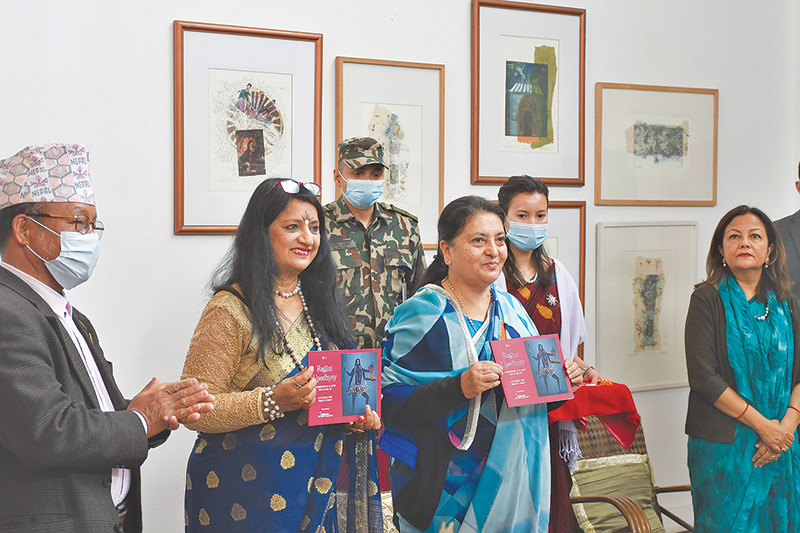
KMC signs law students for free legal help at wards
The drive is welcomed as a step towards localising the justice delivery system.
- ANUP OJHA
KATHMANDU, For the first time in its history, the Kathmandu Metropolitan City is providing free legal assistance at all of its 32 wards starting March 15. The City plans to deploy students from the Nepal Law Campus at ward offices to help service seekers with legal work. The students will help them with writing applications, lodging complaints, and furnishing replies. This is expected to especially help those who are uneducated and are unfamiliar with legal work. Basanta Acharya, information officer at the City, said the goal is to help citizens who can’t read and write. “The students will help them prepare and submit documents,” he said. On January 17, the City and Nepal Law Campus signed an agreement, deciding to deploy as many as 50 students, including 44 pursuing a BA-LLB degree and six LLM students, for the drive, which is under the judicial committee led by Deputy Mayor Sunita Dangol. At each local federal unit, the deputy mayor or deputy chair oversees all judicial affairs. Article 217 of the constitution authorises the deputy chief of a local unit to head the judicial committee and settle legal issues. Article 217 (1) says a three-member judicial committee is coordinated by the vice-chair in a village body and by the deputy mayor in a municipality, in order to settle disputes under their respective jurisdictions. According to Acharya, who is also a legal adviser to the KMC, 32 BA-LLB students will be deployed in all wards from mid-March. Three LLM students will be stationed at the City’s head office as legal advisers, while the remaining ones will be deployed alternatively. The City will pay Rs15,000 a month to each student for their services. As per the agreement, the pilot exercise will end in mid-June. Officials said senior citizens and people with disabilities will get priority for such services. All 50 law students were given a one-day orientation last week to familiarise them with local issues and ways to resolve local problems such as family disputes. Other help these law students will provide include lodging complaints of violence against women, sexual violence, and cases related to land encroachment, building map issues, and legal consultations. Speaking at the orientation last week, Deputy Mayor Dangol, head of the judicial committee, said cooperation and coordination with the Nepal Law Campus will help the City to speed up justice delivery at the grassroots level. “Justice delayed is justice denied,” Dangol said, addressing attendees. “When multiple disputes in the metropolis make it to the City office, it can’t resolve all of them even if it wants to. I believe all of you will facilitate this drive that aims to speed up justice delivery in each ward.” The Nepal Law Campus has also welcomed the drive that it believes will help train its students on the field. DN Parajuli, the campus head, said a new avenue had been opened for students to practise law at the local level, and it would enhance their practical knowledge which in turn is essential for them to be good lawyers. “I would call it localisation of the justice system,” Parajuli said. “If you look at medical students, they are sent to hospitals to practise medicine. Likewise, it is important for law students to practise law. The City’s approach is thus commendable.” Parajuli added that senior law students and professors will help on-field trainees crack complex cases. Parajuli said although localisation of the justice system is common in countries like the United States and Indonesia, this is a new practice in Nepal. After KMC’s initiative, other local bodies in the Valley are also approaching the campus for similar collaborations, Parajuli said. “We are in the trial phase, and I am sure this is going to succeed,” he said. “But we will tie up with other local units only after the trial period with the KMC ends.”
HOME PAGE
All-female crew on Dubai-Kathmandu flight
Six women script history flying the Nepal Airlines RA230 for four hours on Wednesday.
- SANGAM PRASAIN
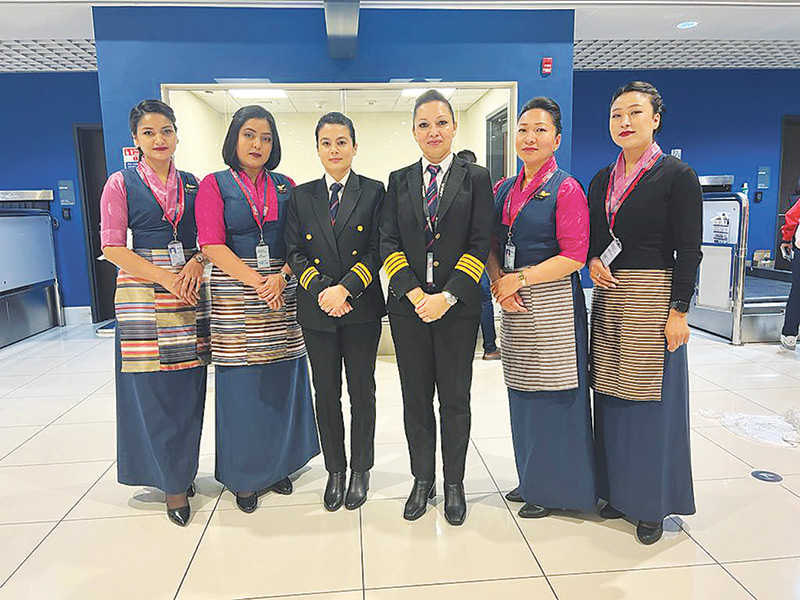
Nine female pilots are currently serving Nepal Airlines. Photo Courtesy: Nepal Airlines
KATHMANDU, In 1983, an 18th military airlift squadron crew flew a C-141B Starlifter from McGuire Air Force Base, New Jersey, to Rhein-Main Air Base in Germany, in what was the world’s first all-female flight. Four decades later, Nepal Airlines on Wednesday scripted history by taking to the skies in what is believed to be Nepal’s first all-female crew flight. Six women were at the helm of Wednesday’s RA230 flight that landed at Tribhuvan International Airport, Kathmandu from Dubai at 10:30 am—completing the four-hour journey and passing yet another milestone for Nepali women’s empowerment, said Ganesh Kumar Ghimire, deputy spokesperson for Nepal Airlines. “For the first time in Nepal’s aviation history, Nepal Airlines operated the flight with an all-female crew.” Captain Bhawana Giri Pant commanded the A320 aircraft with Shreejana Rawat acting as her deputy or co-pilot. On March 5, these two pilots flew from Kathmandu to Dubai. They returned with all-female crew flights, carrying 153 passengers on board, to celebrate International Women’s Day on Wednesday. Soon as they landed in Kathmandu, congratulatory messages started pouring in on social media platforms. “We were given a chance to make this historic flight,” Captain Pant, the flight commander, told the Post. “We were able to write a new chapter in Nepali aviation history.” “I’m extremely proud to be a part of this,” she said. Others in the crew on the flight lasting 4 hours and 8 minutes were Basna Rana, chief of the cabin crew, and her deputy Anjak Maharjan. Sangita KC and Anisha Prajapati were the flight attendants. After Sony Rana became Nepal’s first woman pilot in 1988, more and more women have opted for careers in the cockpit. In actual flight, Pant is Nepal’s second woman pilot after Rana, though Rakshya Rana was the second woman to obtain a flying licence in the country. Pant, the daughter of late captain Balram Pant, completed her flying training in Kiev, the capital city of Ukraine, in 1993. “I started flying in 1997,” said the 46-year-old captain. Pant began her career at Necon Air flying in the Nepalgunj-Jumla sector. She served Necon Air for six years. She then joined Buddha Air and flew for nine years, before joining Saurya Airlines. Pant left Saurya for Nepal Airlines in 2018. “It’s been 26 years that I have been flying. I’m happy to fly.” Nine female pilots are currently serving Nepal Airlines. Of them, Sony Rana flies Airbus A330. Pant, Rawat, Hira Thapa and Liberty Bhandari fly Airbus A320. The domestic operation has four female pilots, according to Nepal Airlines. The company has 72 pilots altogether, including 41 co-pilots. The national flag carrier has 145 cabin crews in total—96 of them women. Piloting has long been a male-dominated industry. However, the scenario is changing. “The number of female pilots is growing,” said Birendra Bahadur Basnet, managing director of Buddha Air, Nepal’s largest domestic airline. “We strive for an equitable representation of women, especially in the leadership position. We are proud to have women in key positions that have traditionally been considered male bastions in aviation,” said Basnet. A few years ago, the ratio of male to female pilots in private airlines used to be 20:1. It means that for every 20 male pilots, there was 1 female pilot. “Now, we have a 10:3 male to female ratio or for every 10 male pilots, there are 3 female pilots,” said Basnet. All cabin crew members serving Buddha Air are female. “The only constraint in the women’s pilot career is the childbearing period as there are issues of renewing licence, training, among others,” he said. “We provide a [one-time] pregnancy leave with pay for a year for the cockpit crew.” Buddha Air said it has the policy to encourage gender diversity and equal pay. “The most important thing is, we don’t tolerate sexual harassment in the workplace,” said Basnet.
HOME PAGE
Nepal all set to elect new President today
Ram Chandra Paudel of Nepali Congress or Subas Chandra Nembang of CPN-UML to be elected for a five-year term.
- ANIL GIRI
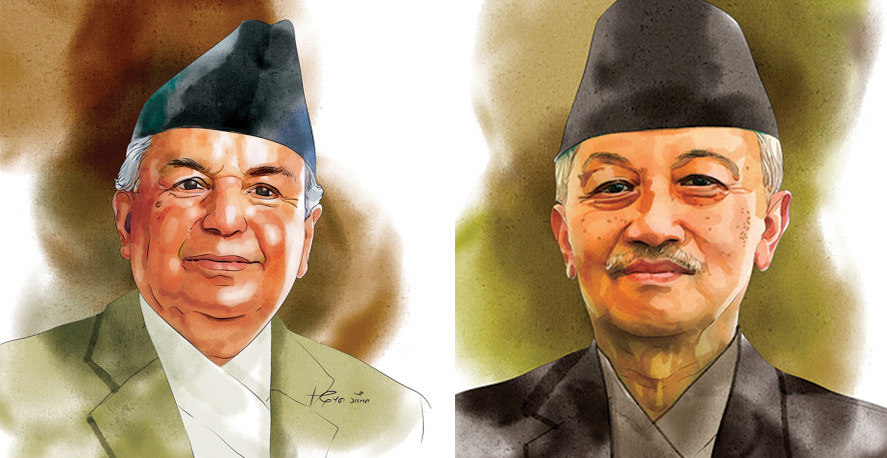
Presidential hopefuls Paudel and Nembang. Post Illustration
KATHMANDU, On Thursday, Nepal will elect its third President since the country became a republic in 2008. The election will be held at the Parliament building in New Baneshwar, Kathmandu. All the preparations have been completed, the Election Commission said on Wednesday. Two former Speakers, Ram Chandra Paudel of the Nepali Congress and Subas Chandra Nembang of the CPN-UML, are in the fray for the largely ceremonial office. Paudel has the backing of an alliance of nine political parties including the ruling CPN (Maoist Centre) while Nembang has been fielded by the UML. The term of the incumbent Bidya Devi Bhandrai is set to be completed on March 12. An aide to President Bhandari said she is also preparing to move out of Sheetal Niwas, the president’s office. “And if the government asks her to vacate the office early, she is ready for that too,” the aide said. The UML is the second largest party in Parliament and was a member of the ruling alliance until February 27. It decided to pull out of the government after its then partner, the Maoist Centre, refused to support a UML nominee for President. The UML’s request to the Maoist Centre was based on their purported December 25 agreement, which made Maoist Centre chief Pushpa Kamal Dahal prime minister for the third time. According to UML leaders, the Maoist Centre, in exchange for the former’s backing for Dahal as prime minister, had promised to help elect UML nominees as Speaker and President. But their understanding started unravelling after 17 days when, on January 10, the Congress, which had earlier refused to back Dahal’s bid for prime minister, gave him a vote of trust during a floor test in Parliament. Since then, Maoist Centre chief Dahal started toeing the Congress line—that instead of a UML nominee, the country should elect a new President via national consensus. Amid growing differences between the UML and the Maoist Centre, the latter joined hands with the Congress to form a new alliance for the presidential election. The UML pulled out of the government and withdrew its support to Dahal on February 27. The Rastriya Swatantra Party and the Nepal Majdoor Kisan Party have yet to decide which candidate they will support in Thursday’s election. The Rastriya Prajatantra Party (RPP) has decided not to participate in the President’s election. “We have decided not to take part in the voting process,” Rajendra Lingden, the RPP chairman, said after the party’s meeting on Wednesday. “We have concluded that neither Poudel nor Nembang is an ideal candidate as the guardian of the constitution.” The Rastriya Swatantra Party has, meanwhile, scheduled the party’s meeting for Thursday morning to decide who to support for the top job. Its leaders said both Poudel and Nembang have already reached out to them seeking their backing. At the provincial level, the Hamro Nepali Party and Rizwan Ansari’s Sanghiya Samajbadi Party, which have two and one seats respectively in the Bagmati and Madhesh provincial assemblies, have yet to take a call on who to vote for in Thursday’s election. “All necessary preparations for the election are over, and we will award the certificate to the winner by 7:00pm Thursday,” Chief Election Commissioner Dinesh Thapaliya told the Post. According to the commission, two separate polling booths for federal and provincial lawmakers have been set up in Lhotse Hall of the Parliament building. Voting will start at 10:00am and close at 3:00pm on Thursday. As many as 332 federal lawmakers and 550 provincial lawmakers are eligible to cast their votes in the election. Two Congress lawmakers, Chandra Bhandrai and Tek Bahadur Gurung, can’t vote as Bhandari is undergoing treatment in India for his burn injuries while Gurung has been convicted in a corruption case. Additionally, CPN (Maoist Centre) lawmaker Barsha Man Pun, who is currently in China for treatment, will not take part in the vote. Janata Samajbadi Party lawmaker Shahnaz Rahman died last month. The absence of these four lawmakers of the nine-party alliance means a loss of 326 vote weightage for presidential candidate Paudel. In the election for President, a vote cast by a member of both upper and lower houses will be considered to have the weight of 79 votes, whereas the vote cast by a member of the provincial assembly has the weight of 48 electoral votes. Paudel told the Post that his election is certain with many major parties backing him. “We are confident that we will win as all sides have promised support. As I have said repeatedly, if elected, my first and foremost duty would be to protect the constitution,” said Poudel. Although the post of President is largely ceremonial, Nepal’s political parties have lately shown growing interest in the post owing to the discretionary powers the constitution accords to the post and the occasional (mis-)use of office for vested interests. “The post of President is a ceremonial one, but the way some have started comparing it with the former monarchy has sowed doubt among the public,” said former commissioner of the National Human Rights Commission Mohna Ansari. “If we believe in egalitarian values, there is no comparison between a democratic presidential system and an authoritarian monarchy.” “Our understanding of the presidency is poor. Yes, the two previous occupants of the office made some iffy decisions, but that is also no guarantee that future Presidents will also be bad or that the position has somehow become irrelevant. Let time be the judge,” said Ansari. A total of 884 members make up the Electoral College for the presidential election, including 275 members of the House of Representatives, 59 of the National Assembly and 550 of the seven provincial assemblies. The total weightage of the Electoral College is 52,786 votes, if no seat in the federal parliament and provincial assembly is vacant. A candidate must secure majority votes to be elected. A Congress office bearer said Poudel will get over 32,000 votes, enough for him to secure victory. Nembang, who is contesting from the UML, told the Post that he too is confident of a win, even though he did not elaborate the reason for his confidence. Nembang hoped lawmakers would use their wisdom while casting their votes.
NATIONAL
Khumjung women voice climate concerns
At an interaction held on International Women’s Day, residents of the Solukhumbu village shared their grievances on the impact of climate change on their daily lives including reduced harvests owing to less rainfall and low soil fertility.
- BHANUBHAKTA NIRAULA
Participants at an interaction on climate change organised at Khumjung in Solukhumbu on Wednesday. Post Photo: BHANUBHAKTA NIRAULA
KHUMJUNG (SOLUKHUMBU), Pemba Yangji Sherpa of Khumjung in Khumbu Pasang Lhamu Rural Municipality-4, Solukhumbu laments that the local residents of this high-altitude settlement are hardest hit by climate change. “It has stopped snowing in the mountains and water springs have dried up,” Pemba Yangji says. “Harvest has slumped for the past five years as soil fertility has reduced markedly.” At a function organised to mark the International Women’s Day on Wednesday, Pemba Yangji and other local women shared their ordeals to a visiting team that comprised Deputy Speaker Indira Rana Magar, former Foreign Minister Bimala Rai Paudyal and other experts. “Tourists do not visit the place as there is no snowfall and this directly hits our hospitality businesses,” said Pasang Sherpa, president of the Khumbu Women’s Committee. “Neither rainfall or snowfall is timely.” The interaction, organised to discuss the impacts of climate change on the lives of women and local people in the high-altitude regions, took place in the mountainous village of Khumjung. Like many other mountainous settlements across the country, this village, located on the lap of Mt Everest, has been bearing the brunt of climate change. Hundreds of women of the region submitted their written concerns to the visiting team of experts on problems faced by women due to climate change. The event was jointly organised by Khumbu Women’s Committee and Sath Sathai, an NGO working towards ensuring women’s participation in climate advocacy and action. The event was supported by the United Arab Emirates Embassy in Nepal and various Nepali ministries. Addressing attendees, Deputy Speaker Rana Magar said that the state will manage climate adaptation programmes at the policy level. “I trekked from Lukla to Khumjung and I saw that the environmental balance had been lost,” she said. “The state needs to be serious about the issue as tourism and climate should move forward together.” Former minister Paudyal said the problem faced by the women of Khumbu region is a representative problem of the whole country. “You have been facing environmental issues in the Himalayas for years. Your experience and learning can be the basis of policy-making for the state,” she said. “I will strongly voice the issue of protecting the environment at the policy-making level so that a situation will not arise for women of the region for not being able to work in agriculture and tourism.” Meanwhile, climate change expert Madhav Karki said Nepal’s climate change policy has guaranteed the rights of women, adding that women now need to seek their rights from all the three tiers of government. “Women in the Himalayan region have been hit hard, from household chores to agricultural activities,” Karki said. “There is a serious issue of water supply in the region.” A team of campaigners had reached Khumjung to study the impact of climate change on the lives of women and local people in the high mountain region. The aim of the initiative was to draw global attention to the challenges of climate change in the mountain region and seek support, as well as shed light on the challenges faced by the people living in the Himalayas, especially women, organisers said.
NATIONAL
Woman killed in road accident
District Digest
SAPTARI: A woman was killed and a man got seriously injured in an auto rickshaw crash in Jamuni, Bishnu Rural Municipality-1, on Wednesday. According to police, the deceased was a 40-year-old woman of Khadak Municipality-8. The victim died on her way to Gajendra Narayan Singh Hospital in Rajbiraj, and the man, a resident of Bishnu Rural Municipality-6, is receiving treatment at the same hospital. The police immediately arrested the driver, and further investigation is underway, said police.
NATIONAL
Man dies in elephant attack
District Digest
SIRAHA: A 22-year-old man died after he was attacked by a wild elephant in Golbazar of Siraha district on Tuesday. Police identified the deceased as Dev Prasad Sadaya of Jamadaha Purandihi in Golbazar-3. A critically injured Sadaya was rescued and taken to a local health institution, where he was pronounced dead on arrival. The wild tusker attacked the victim while he went to the nearby forest with his friends to hang out.
NATIONAL
Purja gives Rs4 million to school
District Digest
MYAGDI: Nirmal Purja, a record-holding mountaineer who climbed 14 of the world’s highest peaks in the shortest period of time, has set up a revolving fund of Rs4 million at a community school of his birth village in Annapurna Rural Municipality-3, Myagdi. The fund aims to provide encouragement awards to three talented students of Gyan Prakash Secondary School in Dana every year. The fund covers the salaries of teachers hired privately by the school. According to Shanta Bahadur Nepali, the school headmaster, the amount of the fund will be deposited in a bank and its interest will be used in providing the award.
NATIONAL
Obstructions in multiple projects trip NEA’s transmission upgrade
With domestic power production rising, obstruction in transmission projects emerges as a major challenge in evacuating power.
- PRITHVI MAN SHRESTHA
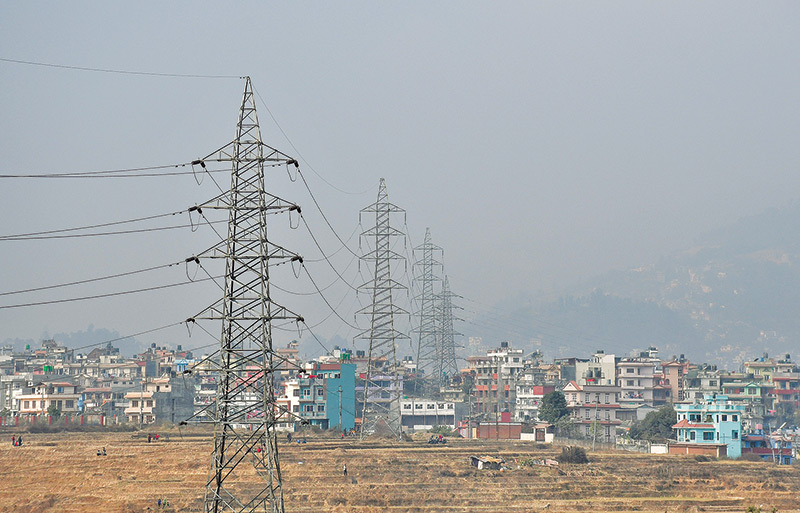
KATHMANDU, Nepal Electricity Authority has been facing one trouble after another in developing transmission line projects. It has been facing problems to construct the 220kV Kaligandaki Corridor Transmission line at Phalebas area of Parbat for the last three years. The locals have been obstructing the construction, demanding a realignment of the project. They have claimed that the power line would cause damage to a school at Devisthan in Phalebas-6 and a stadium. According to the NEA, four transmission towers could not be constructed in the Phalebas area due to the locals’ obstructions. On Tuesday, a group of electricity officials headed by Kul Man Ghising reached the Phalebas area. Chief District Officer Chitrangat Baral and Phalebas Municipality Mayor Gangadhar Tiwari also joined the team, according to the NEA. They held discussions with the locals. During the discussion, the team urged the residents not to obstruct the construction work as the facility is important for the evacuation of power from hydropower plants developed on the Kaligandaki river and its tributary rivers and streams, the NEA said in a statement. The team also urged them to help with the project as the NEA has failed to transmit electricity in the rainy season. Ghising said the NEA would conduct a survey in the next 4–5 days whether the proposed power line could be realigned. Elsewhere, people of Lapsephedi in Shankarapur Municipality-3 on the outskirts of Kathmandu have also been obstructing the construction of a substation there. The NEA and the local residents are at loggerheads over the plan to construct the substation for the 400kV Naya Khimti-Barhabise-Lapsephedi transmission line, which it says is vital for meeting the growing demand for power in Kathmandu Valley. The dispute has made the project uncertain. In January, the locals had obstructed the drilling and survey works by the NEA at the site for five days. NEA officials say that despite efforts to reach a compromise, there has been no deal yet. The power monopoly has been unable to construct two pylones at Dumikas of Nawalparasi (East of Susta) under the Bharatpur-Bardaghat transmission line for the last two years. Due to the failure to erect the pylones, the NEA has been unable to transmit power in the 220kV line despite completing the works elsewhere. A long-running obstruction in the Dumkibas area of Binaya Tribeni Rural Municipality has continued even after the Supreme Court on June 27 last year cleared the way for the project to move ahead by vacating an interim order. In order to satisfy the residents, the NEA offered an increment in compensation through fresh valuation of the land to come under the transmission line. “But locals have yet to arrive at an agreement,” said Dirghayu Kumar Shrestha, chief of the transmission directorate at the NEA. “We may be forced to take administrative measures to remove the obstructions.” The domestic production of power is set to rise steadily in the coming years. The NEA has estimated the need for $4 billion by 2030 to complete the ongoing transmission projects and the lines that are in the planning phase. Ghising said last week at an event organised by Urja Nepal, a US aided project, that an investment of $3.95 billion will be required to implement the NEA’s plan of upgrading the transmission infrastructure. According to him, $2.51 billion will be needed for the transmission lines and $1.44 billion for constructing their substations. Even though the country saw an end to power cuts in May 2018, the reliability of electricity supply has been a major concern. Shrestha said that the current transmission capacity is limited and the NEA has been developing high-voltage lines to transmit large amounts of energy.
NATIONAL
Obesity, chronic diseases are catching Nepalis young as lifestyles change
Non-communicable diseases, which would earlier be diagnosed mostly among 60-70-year-olds, are now being seen in youths as young as 25. Doctors warn the diseases could lead to a public health crisis.
- Arjun Poudel
Shutterstock
KATHMANDU, A 16-year-old boy, who is currently preparing for the Secondary Education Examination, weighs 109 kg. His parents, worried about his weight, got him admitted to a gym. That didn’t work since he leaves for school early in the morning and returns home late in the afternoon. “Since he is in a higher grade, the school has started special coaching classes in the morning,” said Dr Sudha Shree Adhikari, a nutrition scientist. “The boy did not ever get to play or do physical exercises. There is no open space in the community for the children to play. On top of that, processed and junk food worsened his health.” This is a common refrain among households in cities, at a time obesity has emerged as a major public health problem. And the issue is not only of childhood obesity but of several non-communicable diseases caused by changes in lifestyle and eating habits. Nutrition scientists as well as doctors warn that obesity and non-communicable diseases—hypertension, heart disease, stroke, and diabetes, among others—could lead to a public health crisis if not immediately addressed. They blame sedentary lifestyle, and consumption of processed foods as the main culprits. “People from all walks of life have been affected by the repercussions of our changing lifestyle and food habits,” said Dr Om Murti, an interventional cardiologist. “The entire family suffers if any of its members or the breadwinner has serious health problems.” Every doctor and nutritionist the Post talked to said cases of non-communicable diseases have been rising alarmingly of late. They reported several serious cases of non-communicable diseases. “These days, even relatively young people are not immune to these problems,” said Anil. A few months ago, a 35-year-old man from Kathmandu visited Dr Anil in his private clinic. The man, who is a bank employee, complained of a light headache. Tests show that he is hypertensive, has high cholesterol, borderline blood sugar level, and is overweight. He also used to smoke regularly and drink occasionally. He loved to eat momo, chowmein, and other processed foods at restaurants, and the family would dine out once a while. The man used to work all day at the bank, stayed up till late at night and would not do any physical exercise. He was prescribed medicines to control the blood pressure and cholesterol as he had a high risk of stroke and heart attack. “After the diagnosis, the man changed his lifestyle, stopped eating at hotels and restaurants, and started exercising,” said Anil. “I recently stopped his cholesterol medicine and reduced the doses of blood pressure medicine. This shows that use of medicines can be stopped, and risk can be lessened by changing our lifestyle and eating habits.” Studies also show that blood pressure, blood sugar and cholesterol levels are going up among Nepalis due to sedentary lifestyles. A 2019 study on the prevalence of non-communicable disease by the Nepal Health Research Council found that non-communicable diseases accounted for 71 percent of deaths in the country. The study shows that hypertension, diabetes, renal malfunction, liver problems, heart issues, and cervical cancer are responsible for the majority of morbidity and mortality in Nepal. The study was primarily focused on behavioural risk factors including tobacco and alcohol consumption, and biological risk factors—raised blood pressure, heavy weight, obesity, abnormal lipid prevalence, coronary artery disease, chronic obstructive pulmonary disease and diabetes. Change in dietary patterns and increased consumption of processed foods exacerbated the problems, the study found. The findings suggested the leading risk factor of deaths in 2019 was smoking, whose attributable death was 17.7 percent, followed by high systolic blood pressure (12.3 percent), and diabetes (8 percent), besides high cholesterol, kidney dysfunction, among others. Public health experts say the increase in the burden of non-communicable diseases is a global phenomenon but developing countries like Nepal face a double whammy. A report of the Nepal STEP survey-2019 on non-communicable disease risk factors jointly carried out by the World Health Organisation, the Ministry of Health and Population and the Nepal Health Research Council also revealed alarming signs on a number of issues—growing consumption of alcohol, tobacco, salt and junk food, and insufficient intake of vegetable and fruits—that lead to cardiovascular diseases. Experts say the rise in non-communicable diseases not only affects a particular family but entire society and also impacts national progress. A few weeks ago Dr Aruna Uprety, a public health expert, and her friends organised a get-together of college friends of their batch. Out of 200 students only 40 attended the gathering. “We found 11 of our colleagues had already died and nine of them succumbed to non-communicable diseases,” said Uprety. “I am the only one of my batch of 1976, who is not taking medicine for any non-communicable disease.” Uprety is 63 years old now. Again, it is not just people of her age who have been suffering from lifestyle-related ailments but also their children and grandchildren. A lot of young women have infertility-related problems due to obesity, diabetes and hypothyroidism, and small children suffer from both malnutrition and obesity, according to Uprety. Doctors say non-communicable diseases, which would earlier be diagnosed mostly among the 60-70 age bracket, are now being seen in people as young as 25. Youths are living with high blood pressure, fatty liver and diabetes. “Before things get worse, we as a country should take measures to cut the growing prevalence of non-communicable diseases, which are caused mainly by changing lifestyles,” said Uprety.
NATIONAL
Rastriya Prajatantra Party to abstain from presidential poll
Briefing
KATHMANDU: Rastriya Prajatantra Party lawmakers will not cast their ballots in the presidential election scheduled for Thursday. A work execution committee meeting of the party held on Wednesday took a decision to that effect, Mohan Shrestha, the party’s spokesperson, said. The decision comes after leaders of the pro-monarchy party voiced that casting votes in the presidential election will be against the party’s political course of action. Vote to elect a new President will be held at the parliament building from 10am to 3pm on Thursday.
NATIONAL
British State Minister Trevelyan in Kathmandu
Briefing
KATHMANDU: British Minister of State for Foreign, Commonwealth and Development Anne-Marie Trevelyan arrived in Kathmandu on a three-day visit on Wednesday. An official of the British Embassy in Kathmandu said the visit marks 100 years since Britain and Nepal signed the treaty of friendship in 1923 which formalised relations between the two countries. Nepal established diplomatic relations with the United Kingdom in 1816, the first country in the world with which Nepal forged such a relationship. During her Nepal stay, Trevelyan, who looks after the Indo-Pacific region, will call on Prime Minister Pushpa Kamal Dahal and other government officials.
NATIONAL
Man associated with Durga Prasai’s campaign arrested
Briefing
KATHMANDU: Police on Tuesday night arrested a man on the charge of his association with a campaign that has warned of smearing soot on chiefs of banks and financial institutions. Police Inspector Subash Bhatta of Chitwan District Police Office said Shambhu Thapa, 42, of Bharatpur Metropolis-12, was arrested for an investigation after it was found he was active in the campaign led by the controversial businessman Durga Prasai, who has been warning of smearing soot on chiefs of banks and financial institutions for increasing interest rates exorbitantly. Prasai has been staging street protests against the government, banks and financial institutions and has also been advocating for monarchy.
OPINION
Flights of desperation
Despite adopting democracy, we fail to address the most pressing but simple needs of downtrodden people.
- MADHUKAR UPADHYA
Screen grab: YouTube/Herne Katha
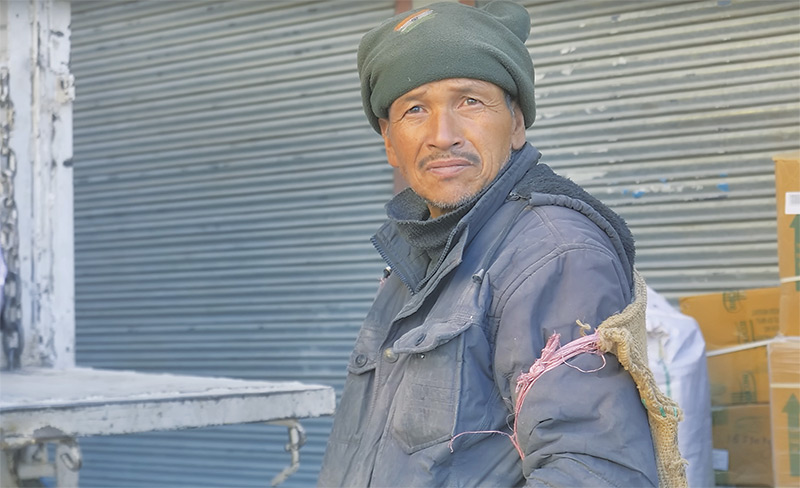
Opening with sweeping aerial shots of the pristine Mahakali Valley—a stark contrast to the lived experiences of its residents, Kumau ko Katha, from the YouTube series Herne Katha, is an exploration of the psychological and physical distress of Nepali migrant workers toiling away in India. The recent episode is a heartbreaking watch for many viewers, shining a light on the true costs of keeping our anaemic economy running. The 45-minute documentary is about the thousands of Nepali migrant workers working in the Indian city of Pithoragarh. These workers are from the adjoining mountain districts of Nepal, where seasonal migration to the Indian cities to earn some cash income has been the common practice for decades. Irrespective of their age, they do all kinds of odd jobs, from working on construction sites to carrying loads of construction materials and consumer goods for traders and retailers in the city. Women also earn as domestic workers. While watching the episode, the question that seemed to plague most viewers was: Why do fellow Nepalis feel the need to go through such hardships and endure misery?
Push factors The documentary succinctly lays out the domestic factors that compel Nepalis to migrate, their hopes of earning enough and supporting families back home, the emotional trauma they face every day and the sorry state of being a migrant worker with a dismal present and an uncertain future. Their identity is limited to being labourers from the neighbouring country’s poor mountain community. Each of those interviewed in the documentary had a similar story: They migrated to escape the grinding poverty stemming from meagre farm incomes that barely lasted six months, the lack of off-farm employment opportunities, and negligible help from the state to soothe their troubles. As migrant labourers, even if they’re compelled to keep their nose to the grindstone day in and day out and have to endure the alienation that comes with feeling disconnected from their homeland, they find some contentment. It is because they have some source of income. They can feed their families well and, importantly, ensure a better future for their children by sending them to school. Some are even able to save some money to send back home and invest in property. Incidentally, watching this documentary takes one back to what the first Agriculture Conference, held as early as 1958, had to say about the state of migration at that time. The conference had recognised that the degradation of natural resources and the deterioration of farms and farming systems had led to low farm productivity, forcing the youth to migrate from the hills for jobs in other countries, contribute to their progress, and return home only when they were old, weak, and otherwise unable to work to make a living in the poor homestead. Unfortunately, our current situation is even worse six decades after this alarming declaration. A large number of youths are compelled to join the migrant labour force for a living not only in India but in many other parts of the world as well. Undoubtedly, our efforts to improve people’s lives over the past 60 years have utterly failed. The series of political reforms that took place since the conference couldn’t inspire confidence in people; they only further frustrated them.
Sliding social mobility The problems cited by the workers in Pithoragarh were the same as we’ve heard for decades: Dismal farm yields, lack of irrigation, no industries to offer employment, and no capacity to educate their children. These issues have always been prioritised by government plans on paper, yet we haven’t made a crumb of difference for millions in more than half a century. Shouldn’t this raise questions about our ability to even recognise where we’re falling short? Even after adopting democracy, we fail to address the most pressing but simple needs of downtrodden people. We may continue to pat ourselves on the back for having an inclusive and transparent system, but what good is it if it persistently isn’t able to ignite confidence in the youth? Many of us witnessed the real pains and struggles of migrant workers during the pandemic. They had no jobs or savings to tide them over during lockdowns. They couldn’t get support and security because they were non-citizens; nor could they return because of travel restrictions. Many were stuck where they were, with minimal health care facilities, poor living conditions, devoid of work and no money or any means to survive. Those who somehow arrived at the border weren’t allowed in without quarantining properly. And yet, despite all the adversities and vulnerabilities, when the travel restrictions eased a little, people returned to work across the border because it was even harder to stay home with the absence of any income. Whether it’s those trying to escape poverty like the ones we’ve seen in Pithoragarh or the elites who migrate for better opportunities, downward social mobility is common for both. Often, even the people who have enjoyed the privileges of caste, wealth, social hierarchy and so on at home become a minority in the country to which they migrate, let alone those who are already at the lower rungs of society in the home country. The everyday pain they experience as they adapt to the new culture only deepens—from micro-aggressions to bigoted xenophobia. For some, assimilation is a painful experience.
The message There’s no denying that migration has always been a part of civilisation. People have migrated throughout history, either in the quest for better opportunities or as an escape from poverty and conflict. However, the trauma and distress associated with migration that came out so strikingly in the documentary should make us rethink why fellow Nepalis voluntarily endure such misery. Farm production isn’t going to improve overnight, nor will industrial development grow in a predictable future to engage the youth already looking to join the labour market annually. In addition, with rising economic and ecological crises, migration is going to rise exponentially, pushing more Nepalis into this cycle of hardship and suffering. There’s a clear message that migrant workers have consistently sent to decision makers. Unfortunately for all of us, but particularly for our most desperate citizens, these decision makers have failed us just as consistently. If left unaddressed, people will simply continue to look beyond our borders for a means to build a future as they have for decades.
OPINION
Behind the mask of happiness
In many Nepali households, men continue to make financial decisions, including how women’s earnings are spent.
- Mimamsha Dhungel
Shutterstock
Women outnumber men in Nepal by 2.32 million, according to the 2021 census. The labour force participation of women has risen in recent years due to increased awareness about their education and empowerment. This rise could also be credited to technological advancement and increased demand for clerical work, which women mostly undertake. However, the unemployment rate for women has consistently risen since 2014, with the data showing a staggering rise to 4.93 percent in 2021. According to the World Bank, Nepal’s female labour force participation rate in 2021 is 78.69 percent (economically active and non-economically active women aged 15 and over). This data, however, doesn’t reflect better economic standing for the nation. We can infer that many Nepali women are not employed in active income-generating sectors. While this by no means is an attempt to derail the works that do not generate income, it is crucial to understand why women are unemployed in such a large number. We, especially, need to look at the statistics of unemployed married women. The status hasn’t changed much since 2019 when only 22 percent of working-age women were employed. According to the 2011 National Census, the literacy rate for women in Nepal is 48.84 percent. This data is detrimental to a country that needs to boost its economic growth. We anticipate a demographic dividend and hope for a trained workforce and resources to contribute to the economy. Despite so many promises of women’s empowerment, we have failed to address the root cause of decades of subjugation and socioeconomic disparity: female illiteracy.
Reluctant homemakers Many Nepali married women claim to be homemakers, a predicament common to much of South Asia. Looking at the big picture, the World Bank reports that global labour force participation for women is slightly higher than 50 percent, compared to 80 percent for men. Women are less likely to work in formal jobs than men and have fewer opportunities for business expansion or career advancement. Women earn less when working, which is not limited to South Asia. According to a research analysis done by the Pew Research Centre on the enduring grip of the gender pay gap, in 2022, women in the United States earned 82 cents for every dollar earned by men. That was roughly the same as in 2002 when they received 80 cents on the dollar. A report by Nepal Jobs Diagnostics shows that almost all Nepali women work, but the majority are unpaid. A significant number of women, after marriage, stay home and involve themselves in household chores without being active earners. Given that, we also can’t just say that homemakers don’t work. They work harder than women in a 9-5 job. Women nurture a family, from caring for the elderly to raising children. Homemakers multi-task every minute of their lives with no financial incentive. They are unpaid employees who work nonstop with nothing like bonuses, vacations or promotions to look forward to. Still, there are many unanswered questions. With so much dynamism and potential to contribute as an active human resource, why do women remain homemakers? Or do they even have a choice? Even if women go out and work, there is a high chance their calibre will be limited to menial jobs that underpay and exploit them. According to a 2021 Asia Foundation study, 37 percent of companies in Nepal reduced their women employees’ salaries, with 58 percent imposing a 50 percent compensation reduction. Furthermore, 5 percent of organisations gave women employees 100 percent wage cuts. Most of the women in Nepali households are trapped in a social construct where men make financial decisions, and even women’s earnings are spent on men’s will. This might initially come off as infringing on someone’s right to spend, but the underlying layers reflect decades of systemic subjugation, rampant sexism and misogyny. The patriarchy that drives the conventional archetypes of gender discrimination becomes enormous when it comes to financial decision-making. This is how power dynamics play out inside a household as money governs authority. With the monetary reigns in the male member’s hand, women succumb to a vicious cycle of manipulation and abuse.
Perennial suffering While this might be true for unemployed women or those who earn a minimum salary, even the women in affluent families put up with domestic violence to maintain their social and financial security. Intimate Partner Violence (IPV) is a social problem that has plagued almost all strata of women. According to studies, roughly one-quarter (26 percent) of ever-married women have experienced physical, sexual, or emotional IPV, with physical IPV being the most common (23 percent). Also, women from upper-and middle-class households are more reluctant to report cases of abuse under Nepal’s culture of silence on domestic violence. Many women misunderstand that violence is always physical. Domestic violence accounts for more than 75 percent of crimes against women, children, and senior individuals. Nepal’s fiscal year 2020-21 recorded 14,232 domestic violence instances, 2,532 rape cases, and 27 cases of abortion, out of all the cases registered. Abuse, sadly, does not always manifest to physical violence. The constant stress, pressure, and judgment women face as a homemaker are enough to shred their self-esteem into pieces. In 1976, the Social Practices Reform Act criminalised the dowry system in Nepal (2033). However, the practice persisted. Nepal passed Evil Social Customs and Practices Abolition Act in 2009, making dowry illegal. However, women continue to suffer from in-laws due to a lack of dowry. There have been 148 incidences of dowry-related violence between 2017 and 2021. Violence over dowries has frequently been fatal, particularly in Tarai districts. This results in psychological abuse, behavioural torture, and much toxicity. Women constitute 51.48 percent of those killed, while 15.35 percent are homemakers. In neighbouring India, suicide is the leading cause of death among women aged 15-39, with 41,493 cases reported in 2019, the reasons being marital problems, domestic abuse, and financial and economic disparity. Marital rape is a punishable crime according to Section 219 of the 2017 National Criminal Code and subsections (1,4,5). In Kirtipur alone, a study on marital rape and related social demographic factors linked to gynaecological problems found that 194 (53.6 percent) out of 362 women suffered marital rape, either daily or occasionally. If a homemaker decides to talk about marital rape, our society dismisses the notion often without even considering the harm it does to a woman. A woman is expected to “ask” her husband to do any work. He needs to “allow” her to pursue her interests. Her decisions are often invalidated because she doesn’t deal with “the outer world”. The glass ceilings that the feminist movements are trying to break so desperately have become glass windows that enslave homemakers inside their own homes. They are expected to “take care” of the family and always “compromise” because wasn’t that the social agreement all along? One goes to earn money, and the other never gets to see it. It is unfortunate that the same people who preach decorum of a homemaker call her out on every occasion possible by moral policing. If a homemaker decides to make Tiktok because she is exhausted being an on-call housekeeper, the internet floods with rage and insults on how homemakers shouldn’t be doing that. Compared to highly developed countries, evident discrimination, abuse, and economic exploitation are common among homemakers in developing countries like Nepal. However, since socio-cultural constructs drive our society, women are compelled to be complacent homemakers; they are often perceived as contented with their familial and social responsibilities. However, with the persistence of gender norms and cultural regression, it is essential to contemplate their true happiness.
OUR VIEW
Haunted by the past
The Maoists of various stripes are betraying their lack of commitment to transitional justice.
It took a minor Supreme Court order to its administration to register petitions against Prime Minister Pushpa Kamal Dahal—not a first investigation report, or a police investigation, leave alone criminal prosecution—for brothers long lost in the Kumbh Mela of Nepali politics to suddenly remember their Maoist roots and scramble back home. The haste with which the disparate parties and individuals claiming the Maoist gene rejuvenated their bonhomie as if they had never been separated betrays the spectre of the criminal justice system in their minds. If only the comrades-turned-enemies-turned- comrades had been as vigilant about timely completion of the transitional justice process! The who’s who of leaders with Maoist backgrounds and who had been part of the insurgency have been riled up by the momentum built by the Supreme Court order. The order has, in fact, acted as a catalyst for a get together of former and current Maoists, as was evident in the hitherto unimaginable meeting of the top leaders in Baluwatar, the Prime Minister’s residence, to discuss a joint strategy on transitional justice. What is intriguing is that the Maoist leaders, despite some of them being in mainstream politics for a decade and half, harbour the same megalomania that they are unquestionable, and that their past actions are to be forgiven and forgotten en masse as an inevitable rite of passage of history. This was evident in Baburam Bhattarai’s barbs against “dollar farmers”, as if those who seek justice in insurgency-era cases of violation of human rights are all foreign agents. Given how riled up the Maoists of various shades are by the mention of transitional justice, their commitment to the process naturally comes under suspicion. Everyone from Prime Minister Dahal to Netra Bikram Chand to Renu Dahal has been ruffled by the calls for justice in the insurgency-era cases of human rights violations. Moreover, the National Human Rights Commission on Tuesday added insult to their injury by urging government and concerned parties to conclude the transitional justice process without delay. The commission has rightly pointed out that questioning petitions seeking justice may have unintentional effects on the victims’ right to seek justice. No matter how rattled they are with the most fundamental questions of justice, the Maoists, and by extension all parties to the conflict, should understand that such calls were a long time coming, an inevitable consequence of an eternal delay in the transitional justice process. Beyond the hue and cry over the slightest inconvenience, the eight parties that have taken up arms against recent calls for justice, and all parties to the conflict, must understand that completing the justice process at the earliest is the only way out. The delay has largely to do with the fact that while some parties want mass amnesty, others want mass punishment in cases of gross violation of human rights. The right way out is to move ahead with a common understanding that neither of those approaches is justified, and that each case will be solved based on individual merit, and in doing so, the perspective of the victims would be given primacy. The victims, meanwhile, should seek justice as one homogenous group rather than let petty divisions come in the way of their collective fight for justice. The more divided they are, the more elusive justice will be.
THEIR VIEW
Violence is no solution
The way to address differences of opinion is through discussion and dialogue—not violence.
In a country built upon a foundation of socialism, secularism, democracy and nationalism, no one should be subjected to violence or discrimination of any kind because of their beliefs, however “radical” that may seem. The constitutional right to speak and think differently, or to act in accordance with that belief, extends especially to the minorities. In recent decades, however, the political rise of extremist groups has resulted in growing intolerance of religious minorities as well as diversity of beliefs and thoughts, with devastating consequences so far. We witnessed the latest example of this on Friday, when the Ahmadiyya community, a minority sect of Islam, came under attack in Panchagarh following violent demonstrations by anti-Ahmadiyya protesters. Since then, panic has gripped residents of three villages of the district where members of this community live. According to media reports, the demonstrations by Islamist protesters demanding cancellation of a three-day event of the Ahmadiyya turned violent after law enforcers halted them at different points of the Panchagarh city, leading to clashes and injuries. After that, a group of assailants descended on Ahmadiyya villages. Reportedly, one person was killed in the attacks, while some 150 houses were looted and vandalised before being torched. During a visit to the area on Saturday, our correspondent talked to at least two dozen victims who spoke of the horrors of seeing their ancestral homes and properties go up in flames. Among them were some freedom fighters, whose reaction to this sad transformation of the country they had helped liberate into a cauldron of violent extremism should be a wake-up call for our leaders. Bangladesh is not the only place where the Ahmadiyya, also known as Qadiani, have faced attacks because of their beliefs. But the frequency and predictable nature of these attacks are quite worrying. In the last several years, the community has been holding their annual gathering called Jalsha Salana at Ahmednagar, Panchagarh, instead of at Dhaka’s Bakshibazar. What remained unchanged, however, is the near-routine resistance to their gatherings. Reportedly, there were also attacks during their 2019 Jalsha when their houses were vandalised, and security personnel had to be deployed to control the situation. True, the Ahmadiyya hold views that contradict that of the adherents of major denominations of Islam. But the question is, why is violence being used or provoked as a means of protesting ideological differences? Evidently, Friday’s protesters were instigated, and a vested interest group exploited the situation by launching the attacks. This is deeply disturbing. What we need to understand is that, in a democracy, the only way we can address differences of opinion, either in political issues or religious, is through discussion and dialogue—not through violence. This must be the message that the higher authorities send out strongly going forward. They must critically examine why, despite all talk of peace and communal harmony in the country, violence continues to be the preferred medium of communication in ideological issues. The local administration should also take all measures to ensure the safety of Panchagarh victims and their prompt rehabilitation. They must take firm action against the orchestrators of the attacks.
— The Daily Star/ANN
MONEY
Out of job, Nepali delivery riders in UAE await help
The migrant workers say they paid recruiting agencies in Nepal Rs250,000 to Rs315,000 each in the hopes of making over Rs100,000 a month.
- PAWAN PANDEY
A file photo shows a food delivery worker riding a motorbike to deliver meal orders in Dubai, United Arab Emirates. REUTERS
KATHMANDU, Janak Chamling Rai had never imagined he would one day become a migrant worker waiting to be rescued after being jobless for months in a faraway land. So did Sandip Dhimal, Roshan Dangal, Roshan Sitaula, Dinesh Majhi and Bishal Singh Thakuri. While Rai, Dhimal, Sitaula and Majhi were sent by Baba Human Resource Management for a delivery rider job in the United Arab Emirates, Dangal and Thakuri were recruited by Link International Placement Services, they say. The six individuals went to the UAE, one of Nepal’s major labour destinations, around a year ago. According to the workers, they paid Rs250,000 to Rs315,000 each their recruitment agencies to get the job. The amount is 30 times what the existing provision allows a recruitment agency to charge Nepali workers going to Malaysia, Qatar, Saudi Arabia, United Arab Emirates, Kuwait, Bahrain and Oman. The free-visa-free-ticket policy which the Nepal government enforced in July 2015 is supposed to obligate employers from the seven countries to bear the cost of visa processing and air ticket to hire workers from Nepal. While migrant workers, as per the policy, have to bear the cost of pre-departure orientation training, health check up and migrant workers’ welfare fund, they are required to pay Rs10,000 to recruiting agencies as a service charge if their employers refuse to bear the cost. But, almost eight years after its introduction, it has mostly remained on paper. “I paid Rs310,500, which I managed through loans at 24 to 36 percent interest rates,” said Rai who hails from Dorpachiuridada village in Diktel Rupakot Majuwagadhi Municipality-7, Khotang. “I paid Rs50,000 to a sub-agent and the remaining amount to Baba Human Resource Management at their office in Kathmandu.” The existing provision also makes it illegal for a recruiting agency to hire sub-agents. Rai claimed the agency did not allow the workers from taking photos when they paid the hefty amount, by threatening them to scrap their labour migration process. The migrants say they paid the amount hoping to make around Rs100,000 a month in the UAE. “We were promised a monthly salary of AED 3,000 (around Rs107,000), but we remained jobless for months,” they say. “They told us we would get the driving licences in two months after reaching the UAE, but it took around six months,” said Sitaula, who hails from Damak, Jhapa. “We remained jobless for six months after arriving in the UAE,” said Dhimal, who is from Urlabari in Morang district. “It took us some time to realise that the jobs we had been hired for were only commission based ones.” The offer letter which Rai signed with Uplift Delivery Services mentions that his monthly salary will be commission based or fixed AED 3,000 depending on the availability of jobs. According to the letter, his monthly salary has been broken down as AED 1,050, AED 300 and AED 200 for basic salary, housing allowance and food allowance respectively. Beside these, the letter mentions that Rai would get a fixed overtime pay of AED 500 per month, AED 650 as other allowances and AED 300 for fuel expenses. But Rai says he refused to work after realising it was a completely commission-based job. “I have remained jobless for more than a year now and have been living with friends in Abu Dhabi,” Rai added. “I could have gotten other jobs if I had my passport.” The workers say they have not been in possession of their passports after they underwent medical check ups soon after landing in the UAE. Dhimal and other workers did work for a couple of months after getting their licences, but the income was not even enough to cover their food and housing expenses. Besides, they also had to pay for fuel while on delivery jobs. According to Dhimal, they worked for the delivery app Talabat to deliver food from restaurants, before it fired them for not having insurance. “We used to get AED 7.5 in commission for every delivery,” Dhimal said. The Department of Foreign Employment, the government agency which oversees labour migration, recently decided to temporarily halt the issuance of prior approval for recruiting agencies for sending bike riders and taxi drivers to Qatar and Dubai, amid rising complaints regarding issues in getting driving licence, joblessness, unpaid salaries, traffic accidents as well as fines involving Nepali workers. Krishna Prasad Bhusal, information officer at the Department of Foreign Employment, told the Post in a recent interview that there have been more complaints from Dubai in recent days. A group of 160 migrant workers in Qatar, scores of whom have been working exclusively for the food delivery service Talabat, were subjected to wage theft, in some cases going unpaid for as long as 8 months, reported FairSquare, a non-profit human rights research and advocacy group, recently. “The parent company of Talabat is the German company Delivery Hero,” according to FairSquare. Sambhu Gautam, manager at Baba Human Resource Management, denied all the accusations made by migrant workers. “We have sent many workers, but a few have made accusations against us after losing interest in their jobs,” said Gautam. “The problem has arisen because of their inability to work effectively in delivery jobs.” Gautam claimed that some of the workers they sent have earned AED 4,200 in a month at most. “But, it is obvious that the lazy workers and those employed in areas which get less delivery orders do not earn much.” Though Gautam claims that the recruitment agency has representatives in the UAE—who are always available to listen to workers’ grievances—workers argue that they have turned a deaf ear to their concerns. “They have been ignoring our calls,” said Dhimal. The workers want to be rescued, but the representatives of the manpower agency have demanded at least AED 4,000 from each of them to get their passports back, they say. “They say it is half of the amount they spent on our visas and licences when we were hired and they have to recover it,” said Sitaula. “Some workers who could pay the amount have returned home, but how can we manage to pay such a huge amount when we have been jobless for months.” According to Gautam, AED 7,000 per worker was spent to get their driving licence. “It was to be covered from the workers’s salary in instalments,” Gautam said. “But some workers did not even show up for work.” “There have also been cases of Nepali workers fleeing to Romania or other European countries after getting a driving licence in the UAE,” Gautam added. Rajan Paudel, information officer at the Foreign Employment Board, the government agency responsible for welfare of Nepali migrant workers, said the workers will have to file an application at the Department of Foreign Employment first through their family members at home if they have not been employed as per the contract and want to be rescued. “The Department of Foreign Employment then makes the concerned recruiting agency rescue the workers and compensate them,” said Paudel. “But if a worker’s labour permit has expired and left stranded in a destination country without any support from the recruitment agency, the individual will have to visit the Nepali embassy, which has a labour attache to look into the matter.” “The individual will be then kept in a shelter in the destination country and flown back home by the Foreign Employment Board,” Paudel added. The workers, however, said they have tried seeking help from the Embassy of Nepal in Abu Dhabi, but to no avail.
MONEY
India’s oil deals with Russia dent decades-old dollar dominance
- REUTERS
A file photo shows a one Russian rouble coin inside a bulb with crude oil at a laboratory in the Yarakta Oil Field, in Irkutsk Region, Russia in this illustration. REUTERS
NEW DELHI/LONDON, US-led international sanctions on Russia have begun to erode the dollar’s decades-old dominance of international oil trade as most deals with India—Russia’s top outlet for seaborne crude—have been settled in other currencies. The dollar’s pre-eminence has periodically been called into question and yet it has continued because of the overwhelming advantages of using the most widely-accepted currency for business. India’s oil trade, in response to the turmoil of sanctions and the Ukraine war, provides the strongest evidence so far of a shift into other currencies that could prove lasting. The country is the world’s number three importer of oil and Russia became its leading supplier after Europe shunned Moscow’s supplies following its invasion of Ukraine begun in February last year. After a coalition opposed to the war imposed an oil price cap on Russia on December 5, Indian customers have paid for most Russian oil in non-dollar currencies, including the United Arab Emirates dirham and more recently the Russian rouble, multiple oil trading and banking sources said. The transactions in the last three months total the equivalent of several hundred million dollars, the sources added, in a shift that has not previously been reported. The Group of Seven economies, the European Union and Australia, agreed the price cap late last year to bar Western services and shipping from trading Russian oil unless sold at an enforced low price to deprive Moscow of funds for its war. Some Dubai-based traders, and Russian energy companies Gazprom and Rosneft are seeking non-dollar payments for certain niche grades of Russian oil that have in recent weeks been sold above the $60 a barrel price cap, three sources with direct knowledge said. The sources asked not to be named because of the sensitivity of the issue. Those sales represent a small share of Russia’s total sales to India and do not appear to violate the sanctions, which US officials and analysts predicted could be skirted by non-Western services, such as Russian shipping and insurance. Three Indian banks backed some of the transactions, as Moscow seeks to de-dollarise its economy and traders to avoid sanctions, the trade sources, as well as former Russian and US economic officials, told Reuters. But continued payment in dirhams for Russian oil could become harder after the United States and Britain last month added Moscow and Abu Dhabi-based Russian bank MTS to the Russian financial institutions on the sanctions list. MTS had facilitated some Indian oil non-dollar payments, the trade sources said. Neither MTS nor the US Treasury immediately responded to a Reuters request for comment. An Indian refining source said most Russian banks have faced sanctions since the war but Indian customers and Russian suppliers are determined to keep trading Russian oil. “Russian suppliers will find some other banks for receiving payments,” the source told Reuters. “As it is, the government is not asking us to stop buying Russian oil, so we are hopeful that an alternative payment mechanism will be found in case the current system is blocked.” Paying for oil in dollars has been the nearly universal practice for decades. By comparison, the currency’s share of overall international payments is much smaller at 40 percent, according to January figures from payment system SWIFT. Daniel Ahn, a former chief economist at the US State Department and now a global fellow at the Woodrow Wilson International Centre for Scholars, says the dollar’s strength is unmatched, but the sanctions could undermine the West’s financial systems while failing to achieve their aim. “Russia’s short-term efforts to try and sell things in return for currencies other than the dollar is not the real threat to Western sanctions,” he said. The price cap coincided with an EU embargo on imports of Russian seaborne oil, rounding off a year of bans and sanctions, including largely expelling Russia from the SWIFT global payments system. Around half of its gold and foreign exchange reserves, which stood near $640 billion, were frozen. In response, Russia said it would seek payment for its energy in the currency of “friendly” countries and last year ordered “unfriendly” EU states to pay for gas in roubles.
MONEY
Sichuan Airlines to resume flights to Tribhuvan airport
Bizline
KATHMANDU: Sichuan Airlines has announced that it will resume its scheduled flights to and from Tribhuvan International Airport from March 20. The airlines will conduct four weekly flights from Chengdu Airport on Monday, Wednesday, Friday and Sunday, it said in a statement on Tuesday. It also announced a special one-way fare for Melbourne and Narita. “Taking into account the current demand in the Nepali market for travel to Australia and Japan, Sichuan Airlines has announced a special introductory one-way fare of Rs79,999 to Melbourne and Rs65,999 to Narita from Kathmandu with 46 kg check-in baggage and 7 kg hand carry,” it said. “Passengers travelling to Melbourne will benefit with great connectivity to their onward flight from Chengdu with a minimum of 4 hours and 30 minutes. Sichuan Airlines is represented by Society International Travel Services as the General Sales Agent (GSA) in Nepal. (PR)
MONEY
US investigates Tesla for steering wheels that can fall off
Bizline
DETROIT: US auto safety regulators have opened an investigation into Tesla’s Model Y SUV after getting two complaints that the steering wheels can come off while being driven. The National Highway Traffic Safety Administration says the probe covers an estimated 120,000 vehicles from the 2023 model year. The agency says in both cases the Model Ys were delivered to customers with a missing bolt that holds the wheel to the steering column. A friction fit held the steering wheels on, but they separated when force was exerted while the SUVs were being driven. The agency says in documents posted on its website on Wednesday that both incidents happened while the SUVs had low mileage on them. (AP)
MONEY
Google to launch fund to support Taiwan’s media outlets
Bizline
TAIPEI: Alphabet Inc’s Google said on Wednesday it will launch a T$300 million ($9.8 million) fund over the next three years to help boost the Taiwanese media’s continuing operations and digital competitiveness. Google has come under pressure in some countries to negotiate commercial deals and pay news publishers for their content, though not in Taiwan. Google said it will pay local publishers through what it calls a “Taiwan News Digital Co-prosperity Fund” to strengthen their digital publishing capability. (REUTERS)
MONEY
French maintain pressure to reject pension plan
Bizline
PARIS: French train and metro drivers, refinery workers, garbage collectors and others were holding further strikes on Wednesday against President Emmanuel Macron’s plan to raise the retirement age to 64, in efforts to keep up pressure on the government amid the ongoing parliamentary debate. New protest actions focused on women—and the retirement reform’s impact on working mothers—were expected on Wednesday, to coincide with International Women’s Day. Feminist activists see the pension reform as unfair to women, especially because they say it would further deepen gender inequalities faced during their career. The continuing strikes and protest actions come after more than a million demonstrators marched in cities and towns across France on Tuesday, in what unions see as the biggest show of force against the planned changes since the beginning of the movement in January. Unions demand the withdrawal of the reform. The bill is under debate in the Senate this week. (AP)
WORLD
World marks Women’s Day but inequality still rampant
United Nations Secretary-General Antonio Guterres says gender equality will not be achieved for 300 years on the current track.
- ASSOCIATED PRESS
Participants hold signs representing International Women’s Day during a rally in Seoul, South Korea on Wednesday. AP/RSS
MADRID, Hundreds of thousands of people are set to take part in demonstrations, rallies, and colourful events around the globe on Wednesday to mark International Women´s Day, the date established to celebrate women and demand equality for half the planet´s population. While there have been major advances in dozens of countries, the situation in places such as Afghanistan and Iran and the constant crimes and violations in nearly every nation in the world are a cold reminder that there is still a long road ahead. On Monday, United Nations Secretary-General Antonio Guterres noted that women’s rights are being “abused, threatened and violated” around the world and gender equality won’t be achieved for 300 years on the current track. He said that progress won over decades is vanishing because “the patriarchy is fighting back.” The day is commemorated in different way and degrees in different countries. In Spain, more than 1 million people are expected to take the streets in raucous evening demonstrations in Madrid, Barcelona, and every Spanish city. Big rallies are also expected in many other cities around the world, while in some countries only minor events are held. Women gathered on Wednesday for rallies in Pakistan’s major cities, including the capital, Islamabad, amid tight security. Organisers said they would be peaceful and that the marches are only aimed at seeking rights guaranteed by the constitution. Some conservative groups last year threatened to stop similar marches by force. But this year Pakistani officials have beefed up security to protect the marchers. Pakistan is a conservative country where women often do not feel safe in public places because of open harassment.
In neighbouring Afghanistan, since the Taliban takeover in 2021, the country has become the most repressive in the world for women and girls, the United Nations said on Wednesday. In a statement released on Wednesday, the UN mission said that Afghanistan’s new rulers have shown an almost “singular focus on imposing rules that leave most women and girls effectively trapped in their homes.” They have banned girls’ education beyond sixth grade and barred women from public spaces such as parks and gyms. Women are also barred from working at national and international nongovernmental organisations and ordered to cover themselves from head to toe. Roza Otunbayeva, special representative of the UN secretary-general and head of the mission to Afghanistan said that “it has been distressing to witness their methodical, deliberate, and systematic efforts to push Afghan women and girls out of the public sphere.” In other regions, major advances have been made for women in the areas of equality, reproduction rights, laws to try to eliminate gender and sexual violence, and moves toward equal pay, gender parity and shared domestic chores. Spain on Tuesday passed a new Parity Law requiring that women—and men—make up at least 40 percent of the boards of directors of listed companies and private companies with more than 250 workers and 50 million euros in business. The same will also apply to Spain’s Cabinet. Leftist governments have put women’s rights in the vanguard over the past two decades with far-reaching laws on abortion, menstrual leave and improved maternity and paternity leave, among others. But Tuesday also saw the current leftist coalition—with 14 women and nine men in its Cabinet—facing its toughest test in three years in power, with the two ruling parties at loggerheads over reforming their own pioneering sexual violence law that has inadvertently led to the reduction of sentences for over 700 offenders and caused national outrage. While many countries have made similar advances, especially in Europe, other like the United States, which ended the constitutional right to abortion last year, has seen restrictions return to many states in what is a major step backward, according to many women.
WORLD
Plastic entering oceans could nearly triple by 2040 if left unchecked
- REUTERS
A file photo shows plastic and other debris on the shores of Cap Haitian beach in Haiti. REUTERS
SINGAPORE, Plastics entering the world’s oceans have surged by an “unprecedented” amount since 2005 and could nearly triple by 2040 if no further action is taken, according to research published on Wednesday. An estimated 171 trillion plastic particles were afloat in the oceans by 2019, according to peer-reviewed research led by the 5 Gyres Institute, a U.S. organisation that campaigns to reduce plastic pollution. Marine plastic pollution could rise 2.6 fold by 2040 if legally binding global policies are not introduced, it predicted. The study looked at surface-level plastic pollution data from 11,777 ocean stations in six major marine regions covering the period from 1979 to 2019. “We’ve found an alarming trend of exponential growth in microplastics in the global ocean since the millennium,” Marcus Eriksen, co-founder of the 5 Gyres Group said in a statement. “We need a strong legally binding UN global treaty on plastic pollution that stops the problem at the source,” he added. Microplastics are particularly hazardous to the oceans, not only contaminating water but also damaging the internal organs of marine animals, which mistake the plastic for food. Environmental group Greenpeace said that without a strong global treaty, plastic production could double within the next 10 to 15 years, and triple by 2050. A separate international treaty was agreed on Sunday to help protect biodiversity in the world’s high seas.
WORLD
Russians claim control over eastern Bakhmut, Ukrainians defiant
Kremlin says taking Bakhmut will be a step towards seizing the industrial Donbas region.
- REUTERS
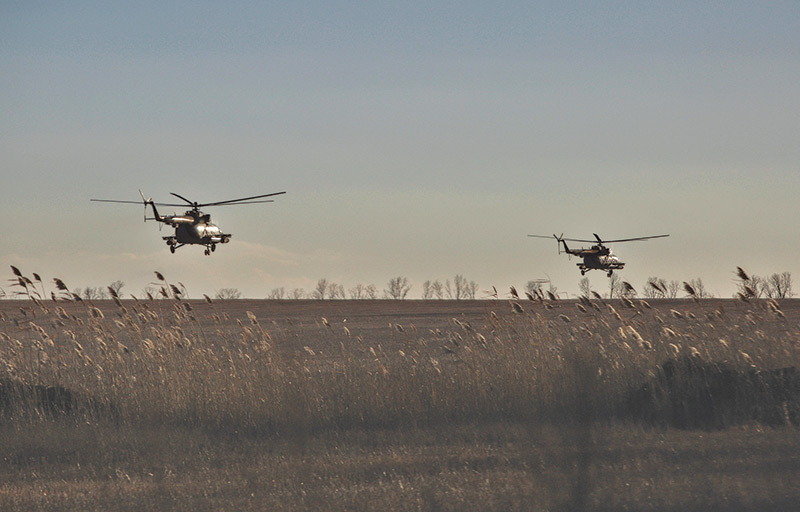
Ukrainian Armed Forces helicopters fly over a field outside the frontline town of Bakhmut, amid Russia’s attack on Ukraine, in Donetsk region, Ukraine on Sunday. REUTERS
KYIV, The head of Russia’s Wagner mercenary group said on Wednesday his forces had taken full control of the eastern part of the Ukrainian city of Bakhmut, scene of one of the bloodiest battles of the year-long war. If the claim is true, it would mean Russian forces control nearly half the city in their costly push to secure their first big victory in several months. Ukrainian defenders remained defiant, however. Last week they appeared to be preparing for a tactical retreat from Bakhmut, but military and political leaders are now speaking of hanging on to positions and inflicting as many casualties as possible on the Russian assault force. Wagner head Yevgeny Prigozhin said his fighters, who have been spearheading the Russian campaign to seize Bakhmut, had now captured the city’s east. “Everything east of the Bakhmutka River is completely under the control of Wagner,” Prigozhin said on Telegram. The river bisects Bakhmut city, which sits on the edge of a swathe of Donetsk region that is already largely under Russian occupation. Ukrainian military statements said earlier there may be “conditions” in Bakhmut for a Ukrainian offensive. The main task of our troops in Bakhmut is to grind the enemy’s fighting capability, to bleed their combat potential,” Serhiy Cherevatyi, a spokesperson for Ukraine’s eastern military command, told public television on Tuesday. The General Staff of the Ukraine’s Armed Forces said in its Wednesday morning report: “The enemy, despite significant losses, ... continues to storm the town of Bakhmut.” Russia, which claims to have annexed nearly 20 percent of Ukraine’s territory, has made progress in recent weeks around Bakhmut, but its winter offensive has yielded no significant gains in assaults further north and south. It says that taking Bakhmut would be a step towards seizing the industrial Donbas region, made up of Donetsk and Luhansk provinces. Western analysts say Bakhmut has little strategic value. But Kyiv says the losses suffered by Russia there could determine the future course of the war, with decisive battles expected later this year when the weather is better and Ukraine receives more military aid, including heavy battle tanks. The months of warfare there have been among the deadliest and most destructive since Russia invaded in February last year, adding Bakhmut’s name to a list of devastated cities such as Mariupol, Sievierodonetsk and Lysychansk. A Ukrainian military drone showed the scale of destruction in Bakhmut, filming apartment blocks on fire and smoke billowing from residential areas. Iryna Vereshchuk, a deputy Ukrainian premier, said fewer than 4,000 civilians—including 38 children—out of a pre-war population of some 70,000 remained in the city, which is now largely in ruins after months of bombardment.
WORLD
Taiwan suspects Chinese ships cut islands’ internet cables
- ASSOCIATED PRESS
An antiquated 40mm anti-air gun points towards the sea at the observation deck on Beigan, part of Matsu Islands, Taiwan on Sunday. AP/RSS
NANGAN, In the past month, bed and breakfast owner Chen Yu-lin had to tell his guests he couldn’t provide them with the internet. Others living on Matsu, one of Taiwan’s outlying islands closer to neighbouring China, had to struggle with paying electricity bills, making a doctor’s appointment or receiving a package. For connecting to the outside world, Matsu’s 14,000 residents rely on two submarine internet cables leading to Taiwan’s main island. The National Communications Commission, citing the island’s telecom service, blamed two Chinese ships for cutting the cables. It said a Chinese fishing vessel is suspected of severing the first cable some 50 kilometres out at sea. Six days later, on February 8, a Chinese cargo ship cut the second, NCC said. Taiwan’s government stopped short of calling it a deliberate act on the part of Beijing, and there was no direct evidence to show the Chinese ships were responsible. The islanders in the meantime were forced to hook up to a limited internet via microwave radio transmission, a more mature technology, as backup. It means one could wait hours to send a text. Calls would drop, and videos were unwatchable. “A lot of tourists would cancel their booking because there’s no internet. Nowadays, the internet plays a very large role in people’s lives,” said Chen, who lives in Beigan, one of Matsu’s main residential islands. Apart from disrupting lives, the loss of the internet cables, seemingly innocuous, has huge implications for national security. As the full-scale invasion of Ukraine has shown, Russia has made taking out internet infrastructure one of the key parts of its strategy. Some experts suspect China may have cut the cables deliberately as part of its harassment of the self-ruled island it considers part of its territory, to be reunited by force if necessary. China regularly sends warplanes and navy ships toward Taiwan as part of tactics to intimidate the island’s democratic government. Concerns about China’s invasion, and Taiwan’s preparedness to withstand it, have increased since the war in Ukraine. The cables had been cut a total of 27 times in the past five years, but it was unclear which country the vessels hailed from, based on data from Chunghwa Telecom. Taiwan’s coast guard gave chase to the fishing vessel that cut the first cable on February 2, but it went back to Chinese waters, according to an official who was briefed on the incident and was not authorised to discuss the matter publicly. Authorities found two Chinese ships in the area where the cables were cut, based on automated identification system data, similar to GPS, which shows a vessel’s location. “We can’t rule out that China destroyed these on purpose,” said Su Tzu-yun, a defence expert at the government think tank, Institute for National Defence and Security Research, citing a research that only China and Russia had the technical capabilities to do this. “Taiwan needs to invest more resources in repairing and protecting the cables.” Internet cables, which can be anywhere between 20 millimetres to 30 millimetres wide, are encased in steel armour in shallow waters where they’re more likely to run into ships. Despite the protection, cables can get cut quite easily by ships and their anchors, or fishing boats using steel nets. Even so, “this level of breakage is highly unusual for a cable, even in the shallow waters of the Taiwan Strait,” said Geoff Huston, chief scientist at Asia Pacific Network Information Centre, a non-profit that manages and distributes Internet resources like IP addresses for the region. Without a stable internet, coffee shop owner Chiu Sih-chi said seeing the doctor for his toddler son’s cold became a hassle because first they had to visit the hospital to just get an appointment. A breakfast shop owner said she lost thousands of dollars in the past few weeks because she usually takes online orders. Customers would come to her stall expecting the food to be ready when she hadn’t even seen their messages. Faced with unusual difficulties, Matsu residents came up with all sorts of ways to organise their lives. One couple planned to deal with the coming peak season by having one person stay in Taiwan to access their reservation system and passing the information on to the other via text messages. Wife Lin Hsian-wen extended her vacation in Taiwan during the off-season when she heard the internet back home wasn’t working and is returning to Matsu later in the week. Some enterprising residents went across to the other shore to buy SIM cards from Chinese telecoms, though those only work well in the spots closer to the Chinese coast, which is only 10 kilometres away at its closest point.
WORLD
Indian army mortar shell kills 3 in training misfire
Briefing
- AGENCIES
PATNA: An Indian army mortar shell fired during a training session fell short of its target and exploded in a village house in the country’s east on Wednesday, killing a young couple and a neighbour, a government official said. The couple was visiting Gulvared, a village in Gaya district in Bihar state, to celebrate the Hindu “Holi” festival with the woman’s parents when the incident occurred, state official Pankaj Kumar said. Two other people were injured when the shell landed in the house’s courtyard, Kumar said. The army did not immediately comment on the incident. The village is located 120 kilometres south of Patna, the state capital, near the army firing range.
WORLD
Italy extradites Nigerian female who ran prostitution ring
Briefing
- AGENCIES
ROME: A Nigerian woman who has been wanted in Italy since 2010 has been flown from Abuja back to Rome where she has been sentenced to 13 years in prison for crimes including running a prostitution ring, Italian police said on Wednesday. Joy Jeff, who is 48, was one of the few women on Italy’s most-wanted list, police said in a statement, describing her as a prominent figure in the Nigerian mafia. The extradition was facilitated by a treaty signed by Nigeria and Italy in 2020. She was arrested in Nigeria on June 4, 2022, on an international warrant issued by Italy, the statement said. Italian investigators in the eastern city of Ancona said Jeff played a leading role in trafficking women to Italy, Spain and the Netherlands, where they were forced into prostitution by violence and threats. She has been convicted in her absence.
WORLD
Australian leader plans meeting with Biden after India trip
Briefing
- AGENCIES
CANBERRA: Australian Prime Minister Anthony Albanese said on Wednesday he plans to meet with President Joe Biden in the United States following a trip to India this week, amid speculation the leaders will make an announcement about Australia’s plans to build nuclear submarines. Albanese gave few details of the US trip, saying there would be further announcements about the arrangements. Albanese is visiting India through Saturday. Some media have speculated that Britain’s Prime Minister Rishi Sunak could join Biden and Albanese in the US to make a joint announcement about the agreement among the three nations, which would see Australia build a fleet of nuclear submarines powered by US technology. Albanese on Wednesday wouldn’t say if he expected Sunak to also travel to the US.
WORLD
Two of four Americans kidnapped by gunmen in Mexico found dead
Briefing
- AGENCIES
MATAMOROS: Two of four Americans kidnapped by gunmen on Friday just after they drove into Mexico have been found dead, US and Mexican officials said on Tuesday, in a grim reminder of the lawlessness plaguing parts of the region. The survivors and the two bodies were discovered by Mexican security forces on Tuesday in a wood cabin southeast of the border city of Matamoros, said Americo Villarreal, governor of Tamaulipas. Authorities were still investigating how the two Americans died, and one Mexican official said the most likely explanation for the group’s abduction was a case of mistaken identity. One of the two surviving Americans suffered a gunshot wound to his leg that was not life-threatening, while the other, a woman, was not injured, Villarreal told a news conference. A Mexican woman, 33, also died during the kidnapping ordeal, apparently from a stray bullet, he said.(AGENCIES)
SPORTS
Nepal set sights on Zimbabwe qualifier
Rohit Paudel’s Rhinos can qualify for 2023 ICC Men’s Cricket World Cup Qualifier with four victories at TU Cricket Ground.
- Sports Bureau
Nepal head coach Monty Desai (left) and captain Rohit Paudel meet the press on Wednesday. Post Photo
KATHMANDU, Nepal will aim to secure their spot in the 2023 ICC Men’s Cricket World Cup Qualifier in Zimbabwe when they host the United Arab Emirates and Papua New Guinea in the final tri-series of the ICC Men’s Cricket World Cup League 2 which is scheduled to start on Thursday. Nepal, the UAE and PNG all have played 32 matches and will wrap up their League 2 campaign at the TU Cricket Ground in Kirtipur, Kathmandu. The Rhinos play PNG in their first match of the tri-series. PNG are at the bottom of the seven-team standings with just nine points, meaning their hopes of saving their One-Day International status is far from over. But Rohit Paudel’s Nepal are on a high. Just a month ago, they were in danger of losing even their ODI status, let alone a direct entry into World Cup Qualifiers—which is set to be held from June 18 to July 9 in Zimbabwe this year. Fast forward to March and they are now four wins away from automatic qualification, thanks to their unparalleled success in the last two tri-series. Nepal won seven of their last eight matches—including a historic home series sweep–reigniting their hopes of finishing the League 2 on top-three position. Nepal are in the fifth position with 32 points. Victory in all four matches will give Nepal 40 points and a privilege to join South Africa, Sri Lanka, Ireland, hosts Zimbabwe and the Netherlands in the World Cup qualification. But lose even a single one and they will be dropped to qualifier playoffs—a repechage event to the Global Qualifier—that will be joined by the winner of Challenge League A and B. The top two teams from the playoff will keep their hopes of participating in the Cricket World Cup in 2023. The UAE are one point adrift in the sixth position. They need to win all four matches with a large margin to secure top-three spot. “These four final matches are very important to us,” said captain Paudel, 20, who has become the most successful ODI captain of Nepal. “Both our opponents are strong. If we can continue our recent form, we can certainly win.” Coach Monty Desai, whose arrival in February has lifted the mood in the dressing room, was cautious. “We are focused on the PNG game now. We will think about other games later,” Desai said. The Indian coach has announced a 14-member squad dropping Shyam Dhakal—who made it to the national team for the first time ahead of the UAE Tri-Series—and Sundeep Jora to the reserves. Kushal Bhurtel, who missed Nepal’s last match against the UAE on Monday, has returned to the team.
SPORTS
Shrestha last-gasp goal gives Sherpa victory, Manang top Sankata
The Sherpa defender scores in the injury time for a 1-0 win. Davlatjonov nets the winner for former champions.
- Sports Bureau
Himalayan Sherpa’s Amrit Shrestha (right) celebrates after scoring against Nepal Police Club during the Martyrs Memorial A-Division League at the Dasharath Stadium on Wednesday. Post Photo: hemanta shrestha
KATHMANDU, Amrit Shrestha scored a last-gasp winner as Himalayan Sherpa defeated Nepal Police Club 1-0 in the Martyrs Memorial A-Division League at the Dasharath Stadium in Tripureshwar on Wednesday. Sherpa had missed a penalty in the 31st minute after Ajit Bhandari floored Abayomi Oluwaseun Fakunle inside the penalty area. Nisan Limbu stepped up to take the kick but Police goalkeeper Shatrudhan Kumar Chaudhary dived to his right to punch off Limbu’s effort. The danger was still not fended as Shrestha found the rebound in the six-yard box only to fire wide. But Police could not punish Sherpa for their missed opportunity. Police went close to taking the lead in the 41st minute when Rabi Paswan cut off a weak clearance from Shrestha and crossed towards the far post, but Santosh Hemran was too slow to react. The second half of the match lacked brightness. Sherpa captain and goalie Chaudhary was stretchered off after the hour mark. Chaudhary suffered injury after he clashed with Police’s Sandesh BK as he attempted to punch away the ball in an aerial challenge. But Sherpa was more determined and put Police in pressure towards the end of the play. And they were rewarded in the eighth minute of the injury time when an unmarked Shrestha sent a pass from Pistone Vunyoli Mutamba into the back of the net. The win gives Sherpa four points from two matches. Police, who lost their opener against newcomers Church Boys, remain pointless. Manang Marshyangdi Club registered their first win of the season after they beat Sankata Club 1-0 in the day’s late match at the Dasharath Stadium, thanks to a sole goal from Sayidjamol Davlatjonov. Davlatjonov brilliantly finished a long-range effort in the 54th minute. Sankata had almost gone in front in the 19th minute when double efforts from Sunil Shrestha and Manish Dangi beat Manang goalkeeper Deep Karki but Pravesh Kunwar rescued the eight-time champions with a goal line clearance. But it was Manang who took the lead instead. Sumit Shrestha linked up with Roshan Rana Magar to force a save from Sankata glovesman Tikendra Singh Thapa in the 53rd minute. But in the resulting corner, Davlatjonov surprised Thapa with a curling screamer from the outside of the box as the ball deflected off Thapa, hit the crossbar and went in. Sankata’s final chance to equalise fell to Chandan Kumar Das in the fourth minute of injury time when Nishan Khadka set him up just outside the six yard box but Das’ effort sailed off the bar. Manang has four points from two matches. Sankata has only one point. At the Chyasal Stadium, Satdobato Youth Club saw off APF Club 1-0 to maintain their winning streak. William Opoku Asiedu scored the lone goal for Satdobato in the 55th minute.
SPORTS
‘Special night’ relieves pressure on Chelsea’s Potter
The Blues overturn a 1-0 first-leg deficit by beating Dortmund 2-0 to advance into the Champions League quarters.
- AGENCE FRANCE-PRESSE
LONDON, Chelsea manager Graham Potter breathed a sigh of relief after his side finally delivered some return on a world record one-season spend in the transfer market on Tuesday by reaching the quarter-finals of the Champions League. The Blues overturned a 1-0 first-leg deficit by beating Borussia Dortmund 2-0 at Stamford Bridge thanks to goals either side of half-time from Raheem Sterling and Kai Havertz. Potter’s job appeared to be on the line had his side exited Europe following a dreadful run of form in the Premier League and early exits from both domestic cup competitions. Chelsea’s new ownership has remained loyal to the former Brighton boss despite just three wins in 16 games before Dortmund’s visit. Co-owners Todd Boehly and Behdad Eghbali were all smiles as they made their way across the pitch after full-time having witnessed the best result of their era in charge after splashing over £500 million ($600 million) on new players. “Things are never bad forever, but it felt like that sometimes,” said Potter on the pressure he has been under in recent weeks. Potter still has issues to contend with though. Chelsea’s profligacy over the two legs that left the tie in the balance all the way to the end remains to be resolved. Sterling got the crucial opening goal just before half-time but was also guilty of wasting plenty more big chances. Havertz, meanwhile, was handed a lifeline when his penalty came back off the post. The German international made the most of a second chance after a VAR review found Dortmund players had encroached on his first attempt. But there was finally some relief for the Potter, who has now worked his way up from coaching in the ninth tier of English football to the last eight of Europe’s biggest stage. “It was a special night,” added Potter. “To win a game to go into the last eight of the Champions League is up there in terms of wins and games in my career.” Chelsea’s two previous Champions League-winning campaigns in 2012 and 2021 came via unexpected runs after sacking a manager mid-season. With over a month to go until the quarter-finals there is time for lightning to strike for a third time if Potter can generate greater cohesion from his cast of expensively assembled stars. If there remains work to do up front, Potter does at least appear to be building a solid foundation at the back. Dortmund arrived in London on the back of a 10-game winning streak, but they were largely kept at arm’s length bar Marco Reus’ first-half free-kick that forced Kepa Arrizabalaga into a flying save. The return from injury of Reece James, Ben Chilwell and Wesley Fofana has made a massive difference with Chelsea claiming their fifth clean sheet in nine games against the Bundesliga title challengers. “It’s not easy,” said Dortmund coach Edin Terzic on breaking Chelsea down. “It’s not just that they spent money, they brought in some quality players. You can feel that they are always dangerous.”
MEDLEY
Horoscope
- Post Report
ARIES (March 21-April 19) You may receive a few mixed signals through the dream realms early this morning. Try not to fixate on the details of your astral realm encounters, opting instead to focus on the present and where you are now.
TAURUS (April 20-May 20) Your electronic devices could prove quite distracting this morning. Try not to fall too far from your routine, even if the news and your social media feeds are particularly alluring. Look for ways to get organized later tonight.
GEMINI (May 21-June 21) Creative blocks could trigger frustration this morning. Try not to overwhelm yourself with social stimulation, or you could begin to lose steam. Consider hiding away from the world later tonight, working on a passion project, or nurturing a special interest.
CANCER (June 22-July 22) An overwhelming sense of support from beyond the veil could cause you to get emotional this morning. Take a moment to ground and tap into your gratitude, accepting the warmth that comes with connecting to a higher energy source.
LEO (July 23-August 22) It may be difficult to shake off fatigue this morning. Look for ways to restore your focus, indulging your senses to promote grounding and mind/body connectivity. Your intuition will benefit from this a major boost.
VIRGO (August 23-September 22) Insecurities could bubble up within your romantic life early this morning. Try not to run away with any self-doubt or suspicion you may be struggling with, understanding that the energy at play suggests the root of your issue is miscommunication.
LIBRA (September 23-October 22) You may feel the pressure of high expectations from yourself and others this morning. Rather than becoming overwhelmed by the big picture, try to break your agenda down into smaller, more manageable steps. Focus on well-balanced meals, stretching, and hydration.
SCORPIO (October 23-November 21) Self-doubt could act as enemy number one to you this morning. Look for ways to boost your morale and confidence, and consider leaning on your bestie for support if you’re in need. Try not to get overwhelmed with logistics or details.
SAGITTARIUS (November 22-December 21) Tension within your community could take place, though your light-hearted spirit can help smooth over difficult situations. But don’t hold back if you feel called to play the role of peacemaker. Check in with your physical needs later in the afternoon.
CAPRICORN (December 22-January 19) Confusion could throw you off course this morning. Try to keep your agenda simple if possible, and consider consuming foods, teas, or vitamins that can improve brain function.Compassion and kindness can help you prevail when faced with tension or adversity.
AQUARIUS (January 20-February 18) Your head will be in the clouds today, an unbalanced connection could cause you to lose touch with the present, making it important to stay grounded in each moment. You may also want to invite in healing from beyond the veil.
PISCES (February 19-March 20) You may feel impatient for change this morning. However, a helping hand will illuminate new pathways, allowing you to take small yet meaningful steps. Just remember that half of the battle in life is to believe in yourself.
CULTURE & LIFESTYLE
Books you read should leave you wanting more
Literary critic and journalist Bhushita Vasistha says books are her close companions.
Photo Courtesy: Bhushita Vasistha
Bhushita Vasistha is a literary historian and journalist. She is also a publishing editor at Nepalaya Publication. A journalist with over a decade of experience, she has worked for The Kathmandu Post and Republica daily. Vasistha is the host of ‘Nepalaya Book Talk’ series on YouTube, where she interviews contemporary writers of Nepal. Some writers featured in the series include Kumar Nagarkoti, Sujeev Shakya, Sudha Sharma, and Sarada Gautam. Currently, she is pursuing a degree in creative writing in the United States at San José State Unive-rsity, California, under a Fulbright Scholarship. The Post’s Aashika Gautam virtually interviewed Vasistha to talk about her love for books.
How did you get into reading? While growing up, my house was always filled with books. As a kid, I especially enjoyed reading children’s magazines like ‘Champak’, and ‘Muna’. I never imagined that I would end up an avid reader. Because books allow you to delve into an imaginative world, it was only inevitablethat books would become my close companion. When I read ‘East of Eden’ by John Steinbeck, one of its characters called Cathie made a great impression on me. She was young, bold and free. But when I saw it as a movie, I was very disappointed because it was nothing like the book. Since then, I have preferred reading books to watching movies.
What genres of books do you enjoy reading? I started reading at a really small age. As I said before, children’s literary magazines were some of my first reads. Eventually, I started reading all kinds of books. From plays to children’s books to poems, I read them all. ‘Mahabharat’ is one book I think should be read by all thinkers. I won’t say reading books are important. If you love reading books then for you it can be termed as important. But in the end, one should do what makes them happy. If a book makes me think deeply, then that is my genre of book.
What book are you reading right now? What is it about? I am currently reading a book called ‘The Queer Art of Failure’ by Jack Halberstam. This book was introduced to me by my poetry professor at San José State University. It is written from a neo-Marxist point of view and teaches us about very eccentric ways of becoming successful in life. The book proposes discourses and analysis on capitalism and, at the same time, also teaches that failure can be resistance and critique under the pressures of capitalism. In the book, Jack Halberstam proposes the concept of ‘low theory’ as a mode of thinking and writing. Low theory urges people to not take themselves too seriously and to embrace a willingness to fail. It is a very interesting book.
Do you have any suggestions for people who want to start reading books? If someone wants to start reading, then I think it will be great if you start with something light. I say pursue your pleasure. Ask yourself, ‘what kind of genre of book do you love reading?’ It might be romance, thriller, mystery or any other genre. The books you read should deal with subjects that you’re interested in. Starting with a good book may also guide you into becoming a more frequent reader. Books like ‘The Little Prince’ by Antoine de Saint-Exupéry are simple but very enjoyable. It deals with an adventure of a little prince and is a fun read. The book that you chose to read should leave you feeling like you want to read more and more.
Who are your favourite authors? I have many favourite authors. Laxmi Prasad Devkota will forever be an inspiration to me. All the books by Devkota have deeply touched me. I grew up reading his writings. I also enjoy reading Lekhnath Paudyal, Nawaraj Parajuli, Buddhisagar, Somnath Sigdel and Kumar Nagarkoti. These are some of my favourite Nepali authors. I also like books by Oscar Wilde, Arundhati Roy, Kalidas, Izumi Shikibu, Milan Kundera, Hermann Hesse, Erich Fromm, Michel Foucault, Walt Whitman, Mahmoud Darwish, Anton Chekhov and Anais Nin. All these writers have inspired me one way or the other.
In the global sphere, where do you think Nepali literature stands today? Nepal is yet to be recognised as a global platform for storytelling. There are many interesting stories within Nepali literature that must be shown to the rest of the world. We have very little global audience. Despite having a lot of brilliant literary works, the bridge between the local literary circle to the global one was never built. It is high time to introduce Nepali literature to an international audience. Nepali literature should be pushed forward, and more international collaborations should be accepted. Student exchange programmes can be very useful in understanding the literature world.
What is one book that has significantly influenced your life? The book that changed my life is ‘1984’ by George Orwell. I read the book in 2018 while staying at an Osho Ashram in Nepal. ‘1984’ is a dystopic science fiction novel that deals with the idea of surveillance. Moreover, loyalty and obedience are also some interesting themes discussed in the book. I was touched by this particular line from the book: ‘Perhaps one did not want to be loved so much as to be understood.’ The book has the power to make you question yourself.
Any plans to write a book in the coming future? I have been working as a journalist for a long period of time. I have not seriously thought about writing a book, but it’s definitely something that I would like to do in the future. I have published some short stories, articles and journals here and there. My short stories titled ‘Lopamudra’s Wedding’, and ‘Madhesh Through Magic Mirror: History and the Quest for ‘Self’’ have been published in Mithila Review. I definitely want to write more.
CULTURE & LIFESTYLE
The feminine superpower
Deepak S Rana’s new work is a Nepali historical fiction that delves into the country’s enigmatic history, eclectic traditions, and unique socio-cultural fabrics.
- Mimamsha Dhungel
Dakini: The Himalayan Quartet Author: Deepak S Rana Publisher: Vajra Publications
Kathmandu Dakini is a tantric priestess who shows dead souls their way to the sky and called ‘the one who dwells in the skies’. A Dakini is also a skilled yogini—the female personification of enlightenment and energy. She represents the ultimate feminine powerhouse whose energy sometimes surpasses that of the Gurus. Dakini is known to aid or even initiate one’s spiritual development. This might seem like a character introduction to an upcoming series on Netflix. However, it’s actually the premise of Deepak S Rana’s new novel, ‘Dakini: The Himalayan Quartet’. ‘Dakini: The Himalayan Quartet’ is a compilation of Rana’s four novels, ‘The Bending Reed’, ‘The Silent Flute’, ‘Dakini: The Tears of the Tulku’ and ‘Mind Warriors’. If you are into historical fiction and enjoy reading about tantra, mysticism and magic, this spiritual espionage might be just the one for you. The book was launched on the occasion of International Women’s Day, March 8 at Nepali Ghar, Amrit Marg, Thamel. “My novel’s protagonist is a Dakini. The heroine is a strong woman who was briefly introduced in the first three novels. We get to see the true manifestation of her powers in this book,” says author Rana, who revealed that the book to be a mix of fact and fiction. “I call this book a ‘faction’. You will enter a realm full of allusions and references to Tibetan scriptures, folklore, and mythologies in the book. There will also be a lot of fantasy and fiction to spice up the reading,” Rana says. John Welpton, a specialist in the history of Nepal, says that the book is an interesting experiment where the author merges quasi-historical elements with fantasy writing. “Dakini is dancing between different eras,” says Welpton. According to Rana, the book is the culmination of years of writing. “The first part of the quartet was written almost 15 years ago, and it was an inner calling that made me go all the way upto the fourth part,” Rana says.
“Dakini could be Nepal’s answer to the Tolkien series or even other fiction that most of us grew up with. I am already intrigued just by looking at the book cover,” says Tarana, 44, a literature enthusiast. Tarana believes that ‘Dakini: The Himalayan Quartet’ has the potential to redefine Nepali historical fiction, and with a powerful female as the central character. “Reading has almost become a form of meditation now, you can sip coffee and read in a calm environment,” says Rana. “With so much digital influence, I’m scared that people may have abandoned the art of reading. I really hope the young people read the book and give me feedback.”
CULTURE & LIFESTYLE
An artist’s journey through the years
Most of Ragini Upadhyay’s work follows the theme of surrealism, fused with the demonstrative use of human bodies.
- Post Report
President Bhandari launches Ragini Upadhyay’s catalogue at Nepal Art Council on Wednesday. Post Photos: Anish Regmi
Kathmandu On the occasion of Intern-ational Women’s Day, Siddhartha Art Gallery organised a recollective exhibition titled ‘A Retrospective Of An Artist’ featuring works by Ragini Upadhyay Grela, a renowned artist and former chancellor of the Nepal Academy of Fine Arts. She is also the only female Chancellor to date. The retrospective showcased Upadhyay’s works from over decades, with paintings, prints, drawings and lithographs dating from 1978 to 2023. The exhibition was inaugurated by President Bidya Devi Bhandari at Nepal Art Council. President Bhandari, in her speech, congratulated Upadhyay for her four-decade-long journey in the art world. Similarly, Sangeeta Thapa, the founder and director of Siddhartha Art Gallery, said that Ragini Upadhyay is without a doubt one of the most prominent artists in Nepal. She added that Siddhartha Art Gallery has previously organised many important solo exhibitions by Upadhyay—namely, ‘Sensitive Woman’ in 1999, ‘Ragini’s Odyssey’ in 2001, ‘The Sun Never Dies’, ‘Buddha’s Light and Truth Shines’, ‘Samay Chakra’ in 2005 and ‘Love is in the Air’ in 2009. In the event, Upadhyay recited a poem titled ‘When did I become Kali?’ that reflected on the violence and oppression women have faced in Nepal. In her speech, Upadhyay said, “My life has been art, and art has been my life.” Pratima Thakali, the curator of the exhibition, said that the image of Kali has greatly influenced Upadhyay’s work. “I think Kali is a symbol for both power and pain,” she said. Thakali explained that some of the artworks had been divided into series like the ‘ashes series’ and the ‘gaijatra series’ while others are put up following a chronological timeline. She has chosen the colours red and grey for the walls in order to break the monotony and help bring the artwork to life. In the exhibition, most of Upadhyay’s work follows the theme of surrealism, fused with the demonstrative use of human bodies. Some works also had feminist and matriarchal themes. The exhibition was separated into three floors. The ground floor features artwork from when she was in high school and college. The second floor and third floors mostly featured artworks based on social and political issues. Along with President Bhandari, the event was also attended by Naradmani Hartamchhali, the current chancellor of the Nepal Academy of Fine Arts, Chiri Babu Maharjan, the mayor of Lalitpur, ambassador of Qatar to Nepal Yousuf Bin Mohamed Ahmed Al-Hail, German ambassador Thomas Prinz, Israeli ambassador Hanan Goder and Bangladeshi ambassador Muhammad Zulqar Nain.