You internet speed is slow. Switch to text view mode

Switch
epaper logo
ST

Last Login:
Logout
+
Page 1
HOME PAGE

Nepal to get 4 new air gateways
- SANGAM PRASAIN

KATHMANDU,
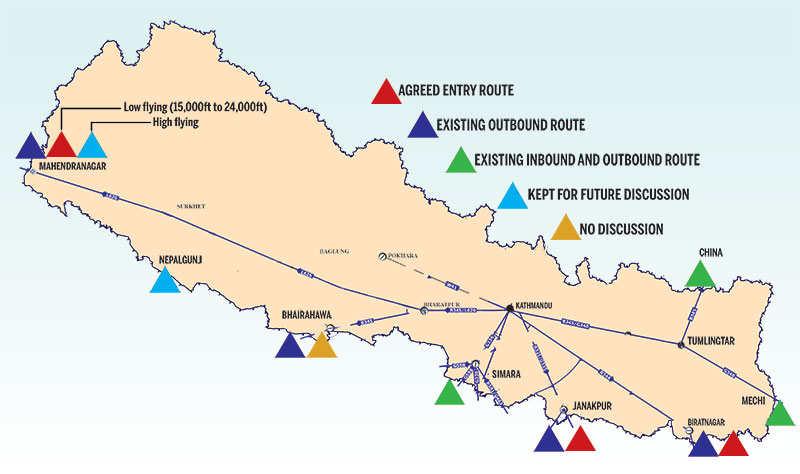
India has agreed to open four new air entry points to Nepal in the eastern and western parts of the country to facilitate movement of international traffic, but two “vital entry points” are still on hold.
The four routes that India agreed to make bidirectional or two-way are Kathmandu-Biratnagar-Dhaka, Kathmandu-Janakpur-Kolkata and Kathmandu-Janakpur-Patna in the eastern part of Nepal and Kathmandu-Mahendranagar-Delhi (L626) in the west.
However, India agreed to provide entry on the L626 route for low level flights only, or aircraft flying at the heights between 15,000ft and 24,000ft. The move is aimed at facilitating the plan of Buddha Air and other Nepali private carriers to connect New Delhi, India from Nepalgunj.
A technical team from the Civil Aviation Authority of Nepal (Caan) and the Airport Authority of India (AAI) signed an initial accord on Saturday to jointly conduct safety assessment of these agreed routes.
“Discussion on two vital entry points remained on hold, but overall the agreement is in fact a significant breakthrough,” said Rajan Pokhrel, deputy director general of Caan.
Nepal’s agenda for the technical panel discussion included bidirectional routes or entry or exit points from Janakpur in the eastern, Nepalgunj in the mid-western and Mahendranagar in the far-western regions.
“As per Nepal’s request for entry from the L626 route for high-level flights or flights above 24,000ft and another entry point from Nepalgunj, India agreed to make further examination by September 2018,” said Pokhrel. The upcoming international airports in Bhairahawa and Pokhara will not be financially and technically feasible unless India allows aircraft to enter Nepal over the Nepalgunj or Mahendranagar airspace.
According to Caan officials, discussion on the Nepalgunj airspace was purely a “defence issue”, the reason for visiting delegation’s reluctance to discuss it. The Indian side expressed reservations in the past over providing entry over Bhairahawa and Nepalgunj due to its defence establishment in Gorakhpur. A defence base is spread over huge swathes of land there, where fighter jet exercises are held regularly.
The routes that have been agreed are subject to detailed safety assessment before their use.
“After the safety assessment, the proposed routes have to be notified to the International Civil Aviation Organization (Icao) with consent from both sides. The Icao then issues the letter of agreement. A report is published in the aeronautical information publication (AIP) before the new air paths are operational,” said Pokhrel.
He said it would take at least a year for the routes to be operational. “However, for cross-border flight, it can be fast-tracked under mutual understanding.”
Cross-border airspace issues had been pending for the last five years. Nepal formally asked India to open the new cross-border air routes during Indian Prime Minister Narendra Modi’s visit to Kathmandu in 2014. Nepal had been pushing the agenda of new routes for the last nine years, as there exists a single entry point in Simara for most of the airlines flying to the country. In contrast, there are seven exit points for aircraft flying out of Nepal: Bhairahawa and Mahendranagar in the west, and Simara, Biratnagar, Tumlingtar, Kakarbhitta and Janakpur in the east.
Besides Simara, two other entry points over Mechi and Tumlingtar (over Everest) have been specifically designated for flights coming from Bhutan and Lhasa, respectively. The Simara entry point is used by a majority of aircraft flying to Nepal and is, therefore, congested most of the time.
HOME PAGE

Rajasthan dust pollutes rainfall

- Post Report

KATHMANDU,
The murky rain that occurred in several parts of the country since Friday was due to the westerly wind that carried dust along with it, according to weather experts.
Rainfall with dust was experienced in various parts of the country on Friday night and on Saturday morning, leaving people wondering about the unusual phenomenon.
According to Rishi Ram Sharma, director general of the Department of Hydrology and Meteorology, the murky rainfall was caused by the wind that entered Nepal after passing through Rajasthan desert and the surrounding areas in India.
“When the westerly wind entered Nepal, it was carrying massive amounts of dust. When the same wind also caused rainfall, the dust came down to the surface mixed with rain,” said Sharma.
Meteorologists say this phenomenon observed in recent years is not normal. According to Sharma, dust has always been in the rain but the amount was visible this time around. “Rainfall with dust does occur in the country too. But we have not seen recently noticeable amounts of dust falling with the rain,” he said.
Most of the places covering Kathmandu Valley, hill districts and Tarai areas witnessed muddy rainfall. People from different parts of the country shared pictures on social media expressing surprise at the abnormal precipitation.
Such rainfall has no severe impact other than contaminating water sources if rainwater gets mixed with them, according to meteorologists.
“This is a regular meteorological phenomenon,” said Sharma. Murky rainfall is normal when it rains first in the season, clearing atmospheric dust, he added. It happened this time after rains had already cleared the atmosphere, which makes the phenomenon unusual.
Met officials said such rains would continue only for a couple of days, until more rainfall clears dust from the atmosphere. They have warned people not to collect and use such rain as it could contain chemical elements.

HOME PAGE

Sister wing polls suggest Deuba losing grip

congress clash
- BINOD GHIMIRE
Sher Bahadur Deuba

KATHMANDU,
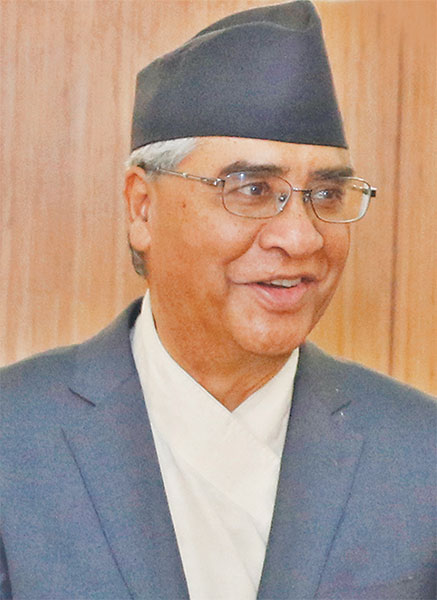
If the election results of Nepali Congress sister wings are anything to go by, party President Sher Bahadur Deuba is losing his grip on the NC with rival factions registering victory in the general conventions of the sister organisations one after another.
With Ram Chandra Poudel and Krishna Prasad Sitaula factions ganging up against Deuba, the establishment faction witnessed bitter defeat as results of the Nepal Trade Union Congress election came out on Saturday. Led by Deuba supporter Khilanath Dahal earlier, the NTUC is considered one of the strongest sister wings of the opposition party.
The entire panel led by Pushkar Acharya, close to the rival faction, was victorious in the sixth general convention held in the Capital. While Acharya got 818 votes, his contender Dhakal got only 533. This is the third back to back defeat for the establishment faction. The rivals emerged victorious recently in the polls to elect new leadership of the teachers’ union and the engineers’ association. Though the engineers’ association does not influence the party line, NTUC and the teachers’ union are considered influential sister wings of the second largest party with impact on the outcome of the general convention of the mother party.
The continuous defeat of the establishment comes at a time when the rival faction is pressing the party leadership to change its working style and to hold an early general convention. Deuba was elected the party president in February 2015 for five years.
“The NTUC result shows that the party rank and file is not satisfied with the working style of party President Deuba and his team,” Prakash Man Singh, an influential leader from the rival faction, told the Post. He claimed that the recent results of sister wing elections are just the tip of the iceberg, which would continue in the days to come. The national convention of Nepal Student Union, another important sister wing of the party, is scheduled for the second week of August.
Leaders close to Deuba, however, said it was futile to make a hue and cry over the results of sister wing elections. “I don’t see how the outcome of sister wing conventions can be linked with popularity of the party leadership,” he told the Post. Karki claimed that Deuba had allowed the conventions to be held in a democratic fashion but the rival factions were trying to make competition unhealthy.

Page 2
NEWS

Civic body vows to fight fraud and corruption

Mayor presents KMC plans for current fiscal year
Mayor Bidya Sundar Shakya

KATHMANDU,
Kathmandu Metropolitan City (KMC) on Saturday vowed to fight corruption and financial embezzlement to herald good governance and transparency in all its official transactions.
The KMC pledged this while announcing its programmes for the current fiscal year at its third Municipal Council Meeting (MCM) held on Saturday.
The civic body plans to reward honest officials who excel and punish those who fail to do their assigned duties satisfactorily. It plans to ensure this by installing Closed-Circuit Television (CCTV) cameras in its 32 ward offices to monitor all work. The planners endeavour to make the KMC a model city through new economic and financial policies. They plan transparent use of the civic body’s resources.
It plans to increase its revenue this year by taxing small and large private businesses. To this end, it plans Kathmandu Smart Tax Payer Card,’ to maintain digital records of taxpayers.
KMC plans to develop Kathmandu into a smart city with land pooling under its urban development policy. As part of urban transport policy, it would encourage residents to use public transport and reduce use of private vehicles in the city.
It plans to set up ‘Vehicle Cleaning Centres’ at various entry points in the valley. People entering the valley will mandatorily have to wash their vehicles.
The KMC will build at least one recreational centre for senior citizens in every ward as part of its Social Development and Co-operative policy.
It will promote public libraries, education management, health, heritage, culture and tourism, communications and information, environment, natural calamities management, international relation, building code and urban planning policies.
KMC Mayor Bidya Sundar Shakya presented the policies under 16 different categories in the presence of Deputy Mayor Hari Prabha Khadgi, Chief Administrative Officer Yadav Prasad Koirala, 32 ward chairs and five nominated members including other officials.

NEWS

Mahakali project in pits as crews extract stones

- BHAWANI BHATTA

KANCHANPUR,
The embankment construction under the Mahakali Irrigation Project along Khanya Khola area is at risk after the contracting company haphazardly extracted stones and pebbles from the area on the pretext of carrying out construction work in Kanchanpur.
The embankment is still being constructed in Khanya Khola under the Third Phase of the project.
Up to now, around 60 percent of work is done. “The contractor has dug many pits on the banks. Stones and pebbles are being extracted near the bridge area,” said Senior Divisional Engineer Bir Singh Dhami.
The District Forest Office (DFO) has given permission to extract construction materials from the stream area. “We restricted them to extract gravel from the forest area. However the contractor has been extracting the construction materials after performing the Environmental Assessment (EA),” said District Forest Officer Shiva Prasad Sharma.  
Villagers say the contractor transports sand and gravel to other areas.
“We have not invited any tender to extract aggregates from that area,” said Tek Bahadur Chand, an official at the District Coordination Committee (DCC).
According to the DCC, the Cabinet had granted permission the contruction company to extract construction materials for the construction of embankment in Khanya Khola and Mahakali Irrigation Project. The embankment is being constructed on the stream to conserve the base area of the Mahakali Irrigation Project.
Joshi Nirman Sewa has been transporting gravel on tippers from Khanya Khola area. Ganesh Joshi of Joshi Nirman Sewa said they would fill up the holes near the embankment. “We are unable to complete the construction works on time due to shortage of construction materials,” he said. The deadline of the embankment construction was May 24.

NEWS

Ramechhap businessmen protest heavy vehicles’ ban on BP Highway

- TIKA PRASAD BHATTA
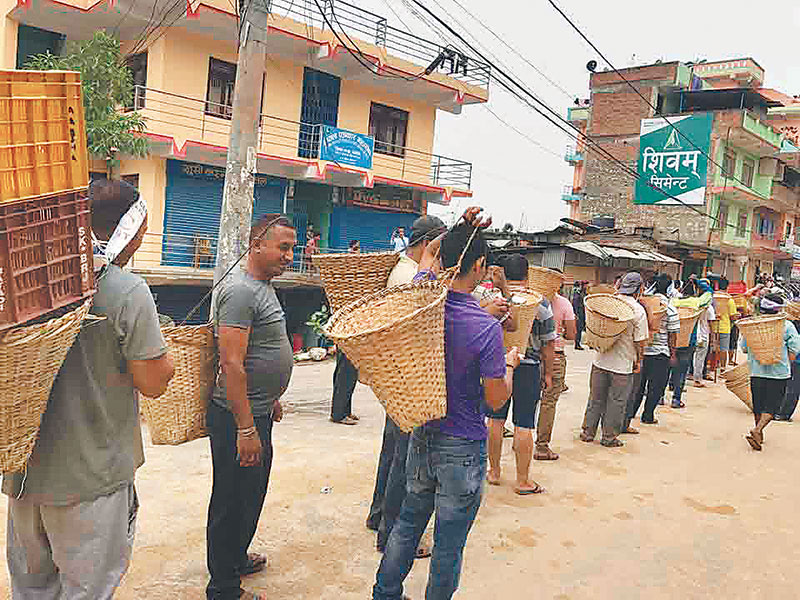
The SC order on June 4 has affected the daily life of people in Ramechhap, Dolakha, Okhaldhunga and Sindhuli. They BP Highway is the only route that links the four districts with the Tarai. post photo

RAMECHHAP,
Hundreds of businessmen took out a rally on Saturday in Manthali, the district headquarters of Ramechhap, carrying Dhakar, a bamboo basket, against the Supreme Court’s decision to ban heavy vehicles on the BP Highway.
The businessmen are in a weeklong protest programme to pressure the government to allow heavy vehicles on the highway. They protesters demanded withdrawal of the SC order.
Ramechhap Chamber of Commerce and Industry Vice Chairman Keshav Ghimire said the government overlooked their day-to-day problems and even the court did not understand their difficulties. “Twenty years ago, the situation of Ramechhap was similar. At that time, people used to carry goods on their back in bamboo baskets from Sindhuli,” said Ghimire, adding that carrying goods in light vehicles is similar to carrying goods in bamboo baskets.
The SC order on June 4 has affected the daily life of people in Ramechhap, Dolakha, Okhaldhunga and Sindhuli, the agitating group claimed. They said the BP Highway was the only route that links the four districts with the Tarai.

NEWS

4 workers killed in Arun III accident

- DIPENDRA SHAKYA

SANKHUWASABHA, 
Four workers perished when a mound of earth caved in while they worked on a tunnel of the Arun III Hydropower Project in Sankhuwasabha district on Friday.
Deputy Superintendent of Police Shyam Kumar Saru Magar said, among the victims two are Nepalis and two Indians. The incident occurred around 8:45 pm in Phaksinda, Makalu Rural Municipality.
The police identified the Nepalis as Pradeep Shahi resident of Siuna Rural Municipality-4, Kalikot, Prem Pariyar resident of Chandannath Municipality-1, Jumla and the two Indians as Budhan Munda from Jharkhand, and Nanda Kishore from Bihar.
Shahi and Pariyar worked at the project site as manual workers while Munda as operator and Nanda Kishore as an electrician.
The landslide occurred 60 metres above the tunnel around 8:45pm on Friday. The incident occurred while the workers entered the tunnel to clear the debris after carrying out explosion inside the tunnel. Rain hampered removal of the bodies from the debris.
The site is 50 km away from Khandbari, district headquarters of Sankhuwasabha. Indian government utility, Sutlej Jala Vidhyut Nigam is developing the 900MW hydropower project.

NEWS

Incest charge drives couple to suicide

News Digest

PYUTHAN: A newly-wed couple, who were charged of incestuous marriage, committed suicide in police custody in Pyuthan district on Friday night. According to the District Police Office (DPO), Shir Bahadur GC, 23, and Shristi GC, 17, of Jhimruk Rural Municipality-5 committed suicide by consuming poison. The couple came to the police post in Machchhi along with Tilak GC, the chief of Jhimruk Rural Municipality on Friday for discussion as a complaint was lodged with police on incestuous marriage charge. The accused duo were sent to the DPO as the discussion at the police post was inconclusive. According to DSP Rajendra Pokharel, Shir Bahadur and Shristi started vomiting as they reached the DPO. They were rushed to the district hospital but died during treatment, he added. The couple is suspected to have consumed poison on their way to the DPO. (PR)

NEWS

Police arrest relatives for killing man

News Digest

RAJBIRAJ: Police have arrested two persons for their alleged involvement in the killing of a man. The body of Dipendra Mandal of Trikaul in Saptari district was found in suspicious circumstances on June 12. The District Police Office arrested Dipendra’s second wife Anjana Sah and his father-in-law Ramdayal Sah on the murder charge. DSP Bhabesh Rimal said that Anjana and Ramdayal thrashed Dipendra after tying his hands and legs. DSP Rimal said Dipendra sustained serious injuries in his private parts. Police filed a case of murder against Anjana and Ramdayal. Dipendra died while undergoing treatment at Gajendra Narayan Singh Sagarmatha Zonal Hospital. (PR)

NEWS

Alleged rapist of 10-yr-old girl held

News Digest

RAJBIRAJ: Police arrested a man from Rajbiraj Municipality-3 in Saptari district on charge of raping a 10-year-old girl. The suspect allegedly raped the minor while she was going to a nearby market to buy goods on Friday. According to police, the accused lured the girl to buy chocolate, took her to a bush and committed the crime. (PR)

Page 3
NEWS

PM tells ruling party lawmakers not to criticise central budget

- POST REPORT
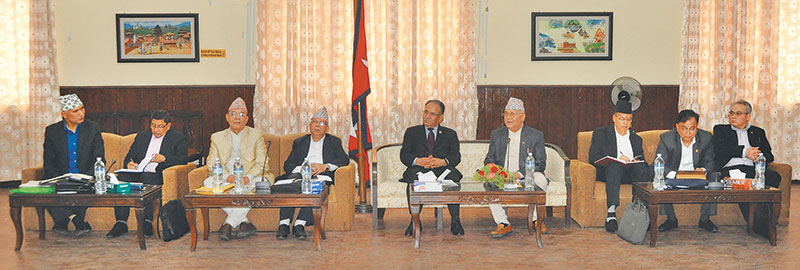
Co-chairmen of Nepal Communist Party KP Sharma Oli and Pushpa Kamal Dhahal seen with other top leaders during the party’s Standing Committeemeeting at Baluwatar in Kathmandu on Saturday. Post Photo:Shaligram Tiwari

KATHMANDU,
Prime Minister KP Sharma Oli has directed lawmakers of the ruling Nepal Communist Party (NCP) not to criticise the budget during discussions at Parliament, claiming that the country’s coffers was not strong enough.
Addressing a meeting of the NCP Parliamentary Party at Baluwatar on Saturday, PM Oli, who also the parliamentary party leader, urged the lawmakers to put forth their greivances with the party leadership instead as there could still be room to incorporate their issues.
He claimed that the budget was on right track to lead the nation towards prosperity. “Your concerns might be genuine, but we are in trouble due to economic imbalances left behind by the previous government. We are desperately working to resurrect it,” Oli said.
After a large number of lawmakers of the ruling NCP criticised the budget, PM Oli called the parliamentary party meeting to pacify them. Amid widespread criticism, the top leaders had asked House Speaker Krishna Bahadur Mahara to postpone Friday’s Parliament meeting until Sunday, according to sources.
During discussions on Thursday, NCP lawmakers including Prem Bahadur Ale, Gajendra Mahat, Naradmuni Rana, Sujita Shakya, Rajendra Kumar Rai, Metmani Chaudhary and Aman Lal Modi had vehemently criticised the budget.
All the lawmakers were targeting Finance Minister Yubaraj Khatiwada, claiming that he presented the budget without consultations in the party.
Despite PM Oli’s attempt to assuage the lawmakers at the meeting, leader Bhim Rawal came down heavily against Finance Minister Khatiwada. Rawal told the meeting that Minister Khatiwada ignored his attempts to meet him for discussion on the West Seti Hydropower project. “The finance minister declared in the budget that the government will make West Seti, but it is not included in the red book. What should we understand,” Rawal asked.
Earlier, PM Oli had urged the lawmakers not to make Finance Minister’s inability to give them time an issue. But Rawal went on saying, “I became ministers myself many times, but  I never ignored the issues of lawmakers.”
During the meeting, lawmaker Yogesh Bhattarai accused the party leadership of becoming directionless on major issues. He was referring to the issue of UNDP funding in two-day training for the lawmakers. “Although some lawmakers had boycotted the training, many attended it. But the party failed to give its opinion on that,” he said.

NEWS

Police start community security drive

- Post Report

KATHMANDU,
Nepal Police on Saturday launched a campaign called ‘Tole-Tole Ma Prahari’ (Police Patrols in local areas) with the objective of involving
citizens to create safe and secure societies.
Inspector General (IG) of Police Sarbendra Khanal launched the campaign that would serve all local communities in the country.
Speaking at the event in Kathmandu on Saturday, IG Khanal said that the campaign aims to create safe and secure societies.
“Nepal Police works for the safety of citizens round the clock so that they can have sound sleep in a society free of crime and illegal activities,” said IG Khanal.
If citizens join the campaign and help the police, it would help reduce crime.
Nepal Police and other departments like Crime Investigation Department and Community Police will be taking forward the campaign to build a strong bridge connecting citizens with the police in order to eliminate crime and illegal activities.
Police would start the campaign by targeting local bootleggers and busting drug traffickers and consumers.
For the success of the campaign, the former Additional Inspector General (AIG) of Nepal Police Govinda Prasad Thapa suggested police officers must have 3E vision - Engineering for planning; Education; and Enforcement to implement the campaign.
The campaign would raise awareness of public through smartphone apps and other social networking technologies to provide information to public. The Home Ministry has said it would support the campaign with required resources. Home Ministry Spokesperson Ram Krishna Subedi said, “The effectiveness of the scheme would increase the faith of people in the police. Further, their co-operation would help to end illegal activities.”
The campaign will hold traffic rules instruction classes for students and public.

NEWS

NCP rank and file urged to strengthen govt

KATHMANDU: The first Nepal Communist Party standing committee meeting since the merger between CPN-UML and CPN (Maoist Centre) has decided to further strengthen the government.
During the meeting, both NCP Co-chairmen KP Sharma Oli and Pushpa Kamal Dahal urged all its members to help strengthen the government.
“The leaders have appealed to all the party rank and file to be deployed in support of government’s activities, calling for introspection over some issues,” party Spokesperson Narayan Kaji Shrestha said after the meeting.
He said the chairmen also directed the party’s leaders and cadres to help further strengthen the unification bid while underlining that the unity has brought about wave of confidence among the people.
The two top leaders briefed the standing committee meeting about the parliamentary party meeting that saw vehement criticism of government activities from several lawmakers. After the vehement criticism from the lawmakers about ministers’ activities, party co-chairmen Oli and Dahal had called the Parliamentary Party meeting on Saturday to express their grievances.
Terming the unification of the two major communist parties of the country as a unique incident, the standing committee meeting also decided to conclude unifications of all the party’s lower structures and sister wings at the earliest, Shrestha said, adding that the party’s regulations will be finalised within 15 days. On the occasion, PM Oli and Foreign Minister Pradeep Gyawali briefed the meeting on their upcoming China visit.
Earlier, NCP General Secretary Bishnu Poudel had briefed the meeting on the developments in the unification process of lower committees and sister wings. (PR)

NEWS

Property details of 3 accused sought

33kg gold smuggling case
- Post Report

KATHMANDU,
The Department of Money Laundering Investigation has sought details of properties owned by three main accused in the 33kg gold smuggling case as the watchdog probes their income.
The department has been interrogating Chudamani Upreti aka Gore, Bhujung Gurung and Tsering Wangel Ghale since Monday after the Morang District Court sent them to the department for probe.
The department had initiated probe into their illegal income after the Morang District Attorney’s Office, which lodged murder, organised crime, abduction and hostage taking cases against 63 suspects including the three, had also recommended that the department probe money laundering charges against the accused other than government officials. They also face charges of murdering the alleged gold carrier, Sanam Shakya.
“We have sought details of property in cash, shares and land by writing to the Financial Information Unit of Nepal Rastra Bank, the Securities Board of Nepal, and the Department of Land Revenue Offices,” said Jiwan Prakash Sitaula, director general of the department. “We’ll tally the details provided by these agencies with the ones mentioned by the accused to see if their wealth is illegal.”
The government has already frozen the bank accounts and property of the accused. The department plans to seek details of property from the accused themselves within this week. It also plans to conclude the interrogation with the three main accused within next week.
The department is seeking to find the details of other people involved in gold smuggling including those who directed them to smuggle gold so that it could dig out their ill-gotten wealth.
“For this, we are also coordinating with the probe committee headed by Home Ministry Joint-secretary Ishwor Poudel,” said Sitaula. Department officials said the three accused had been “relatively cooperative” during the interrogation so far. They believe that the three accused could lead to those who directed them to smuggle gold and benefited from it.
On May 2, the Morang District Attorney’s Office filed a charge sheet against 63 suspects, seeking to recover Rs17 billion, on top of an additional Rs18 million in fines, from them.
In the charge sheet registered at the Morang District Court, the prosecutor said it had recommended that constitutional and government bodies study three additional charges—corruption, money laundering and foreign exchange misappropriation—by the accused.

Page 4
WORLD

NKorea stand-off largely solved: Trump

- REUTERS

WASHINGTON,
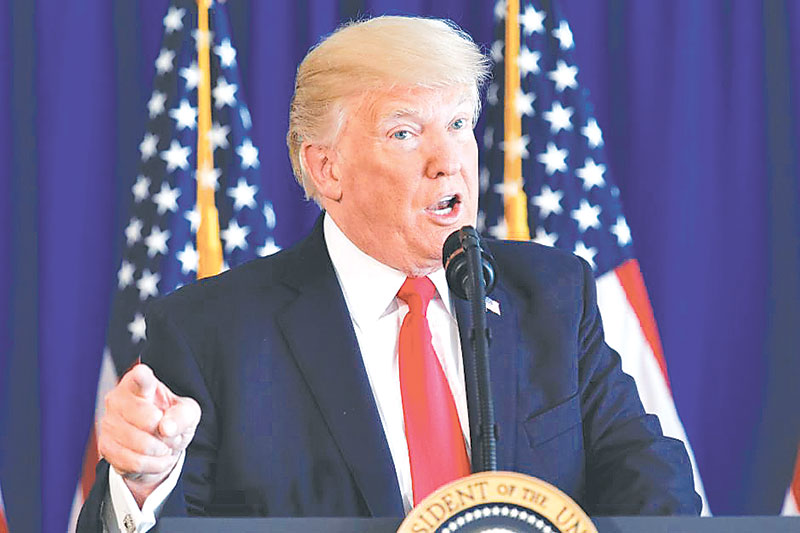
President Donald Trump has said he and North Korean leader Kim Jong-un have “great chemistry” and claimed the stand-off with the nuclear-armed Asian nation is “largely solved.”
Trump, speaking to reporters outside the White House, said he had given his “very direct” telephone number to Kim, adding: “He can now call me if he has any difficulty.”
“That’s a very important thing,” Trump said. “We have communication.”


In a video message released later by the White House, Trump said Tuesday’s summit with the young North Korean leader in Singapore was “open, direct and very, very productive.” “If there’s a chance at peace, if there’s a chance to end the horrible threat of nuclear conflict then we must pursue it at all costs,” he said. The results of the Singapore meeting, at which Kim and Trump signed a pledge “to work towards complete denuclearization of the Korean Peninsula,” have been greeted with skepticism by many observers.


Kim has not yet taken any concrete step to dismantle his nuclear programs. Trump said Secretary of State Mike Pompeo would be “working directly with North Korea” in the coming weeks and months to “implement the denuclearization deal.” “In the meantime, sanctions will remain in place,” he added.


Trump’s unilateral decision to reduce tension by cancelling joint military exercises by US and South Korean forces meanwhile appeared to catch both close ally Seoul and some Pentagon officials by surprise. But Trump recalled that when he came to office last year, his predecessor Barack Obama had warned that North Korea’s growing missile and nuclear threat was the United States’ “most dangerous problem.”


“I have solved that problem,” Trump told reporters. “Now we’re getting it memorialized and all, but that problem is largely solved.


“We signed a very good document,” he added. “But more importantly than the document, I have a good relationship with Kim Jong-un.”


Tokyo urges Pyongyang to jointly break mutual distrust
TOKYO: Japanese Prime Minister Shinzo Abe on Saturday called on North Korean leader Kim Jong-un to jointly overcome their mutual distrust, as he confirmed ongoing efforts to arrange a Japan-North Korea summit. In a television interview, Abe said his government has contacted the North Korean side “through various channels” in a bid to arrange a meeting with Kim. During historic talks with US President Donald Trump in Singapore on Tuesday, Kim reportedly said he was open to a meeting with Abe. Japan wants the talks to push the emotive issue of citizens abducted by the North decades ago, which has seen little movement despite a whirlwind of international diplomacy in recent months.

WORLD

Records: Harvard biased against Asian-Americans

- REUTERS

BOSTON, 
Harvard University killed an internal investigation in 2013 that found evidence the Ivy League school’s admissions system is biased against Asian-American applicants, a nonprofit group suing the university alleged in a court filing on Friday.


The claim by Students for Fair Admissions Inc came in a brief that sought to have a federal judge in Boston rule in its favor without a trial in a closely watched lawsuit accusing Harvard of discriminating against Asian-Americans.


The group, headed by prominent anti-affirmative action activist Edward Blum, said evidence showed that Harvard had allowed race to become a dominant consideration in considering applicants rather than just a legally allowed “plus” factor.


“Incontrovertible evidence shows that Harvard’s admissions policy has a disproportionately negative effect on Asian-Americans vis-à-vis similarly situated white applicants that cannot be explained on non-discriminatory grounds,” the group said in its brief.


Cambridge, Massachusetts-based Harvard in its own brief on Friday denied discriminating against Asian-Americans.


In court papers, Arlington, Virginia-based Students for Fair Admissions said an Asian-American male applicant with a 25 percent chance of admission would have a 35 percent chance if he was white, 75 percent if he were Hispanic and a 95 percent chance if he were black.
The brief did not provide a similar breakdown for women.


It said that in 2013, a Harvard research division found that over a decade Asian-American admission rates were lower than those for whites annually even though whites only outperformed Asian-American applicants on a subjective rating of a student’s personality.
But the group said Harvard ultimately killed the study and buried the reports from it. The group in its 2014 complaint said Harvard defines “Asian-Americans” as including individuals of Chinese, Japanese, Korean, Vietnamese, Cambodian, Hmong or Indian descent.


In Friday’s brief, Harvard said the percentage of Asian-Americans it admitted had actually grown by 29 percent over the last decade. It called the 2013 report “preliminary and incomplete” and said that it was done with limited admissions data.


The US Supreme Court has ruled universities may use affirmative action to help minority applicants get into college. Conservatives have said such programs can hurt white people and Asian-Americans.


In 2016 the nation’s highest court rejected a high-profile challenge to a University of Texas program designed to boost the enrollment of minority students, which was brought by a white woman.

WORLD

Ex-Trump campaign chief sent to jail

News Digest
- AGENCIES

WASHINGTON: A US federal judge sent Paul Manafort, President Donald Trump’s former campaign manager, to jail on Friday ahead of his trial on money laundering, tax and bank fraud charges. Judge Amy Berman Jackson revoked Manafort’s bail over claims he was tampering with witnesses in the case against him brought by special counsel Robert Mueller, who is investigating possible collusion between Trump’s 2016 election campaign and Russia. Manafort, 69, had been under house detention while awaiting trial later this year in Washington and in Virginia. Manafort is the first former member of Trump’s presidential campaign to be jailed in connection with the Mueller investigation.

WORLD

Italy bans more migrant rescue boats

News Digest
- AGENCIES

ROME: Italy’s Interior Minister Matteo Salvini on Saturday warned another migrant rescue mission off the Libyan coast that it would not be allowed to land its “human cargo” at an Italian port. The new rightwing and anti-immigrant Italian government last week banned the French NGO operated vessel the Aquarius, with more than 600 rescued migrants on board, from docking in Italy, causing uproar and a sharp spat with France. Spain subsequently offered to take the Aquarius and it is expected at the port of Valencia on Sunday.

Page 5
WORLD CUP SPECIAL

Messi misses penalty

as Iceland claim historic draw
- AGENCE FRANCE-PRESSE
(Left) Lionel Messi reacts after missing a penalty against Iceland. Alfred Finnbogason celebrates after scoring against Argentina during their World Cup Group ‘D’ match in Moscow on Saturday. REUTERS

Moscow,
Argentina were held to a draw by World Cup debutants Iceland Saturday, with Lionel Messi blowing a gilt-edged opportunity for victory when he missed a penalty.
Sergio Aguero scored an eye-catching opener for the two-time world champions in the 19th minute but it was almost immediately cancelled out by Alfred Finnbogason, whose team then held on in the face of immense pressure. It was a major embarrassment for Argentina and raises questions about their ability to claim football’s biggest prize for the first time since 1986. As Diego Maradona looked on at Moscow’s Spartak stadium, Messi also failed to respond to his rival Cristiano Ronaldo’s hat-trick for Portugal against Spain a day earlier.
Messi is yet to win a major international tournament and time is running out with his 31st birthday looming. While the result was not on the scale of that Iceland produced to eliminate England from Euro 2016, it was a major boost for the tiny nation, who retain hopes of advancing from a group that also includes Nigeria and Croatia. The island nation of 330,000 is the smallest country to ever qualify for the finals but emphatically showed they can mix it with the heavyweights.

In front of a raucous crowd at the 45,000-capacity venue, Iceland launched into some early physical challenges and rattled Argentina. They hit on the counter and gave Argentina a scare when Bjorn Sigurdarson pounced on a loose ball only to rifle his shot just wide of the post. Aguero settled Argentine nerves in the 19th minute when he latched onto Marcos Rojo’s pass in the box, turned and hammered home with his left foot.
True to form, Iceland fought back and Finnbogason netted the equaliser four minutes later, pouncing when Argentine keeper Wilfredo Caballero parried away Gylfi Sigurdsson’s shot for a classic poacher’s goal. Argentina continued to press but Messi was subdued in the face of muscular Icelandic defence and the teams went into the break on even terms.
Messi looked furious as he led his team out for the second half but the Argentines still struggled to dominate. They appeared to have secured a breakthrough when Polish referee Szymon Marciniak pointed to the spot after Rurik Gislason brought Maximiliano Meza down in the 63rd minute. Messi stepped up for the kick but Hannes Halldorsson guessed correctly and palmed away the Argentine skipper’s side-footed effort.
His free-kick in the final moments of the game was deflected off the Iceland wall and the Barcelona talisman trudged off the pitch dejected. Argentina must regroup before facing Croatia on Nizhny Novgorod on June 21, while Iceland face Nigeria in Volgograd on June 22.

WORLD CUP SPECIAL

‘No Zlatan, no problem!’ say opitimistic Swedes

- REUTERS
Zlatan Ibrahimovic

Nizhny Novgorod,
Unfazed by the absence of their greatest player Zlatan Ibrahimovic, Swedish fans believe the team may be more cohesive without him and could start the World Cup with a bang.
Ibrahimovic scored 62 goals in 116 games for Sweden, matching that dominance with a larger-than-life personality and ego but he retired from international duty before the qualifiers, and, despite speculation he could reverse his decision, there was to be no comeback for Russia. “We were second at the 1958 World Cup, third in 1994. Now we’re coming first — yes, even without Zlatan!” said ebullient fan Nicklas Haellman, 38, predicting a 5-0 win for the Sweden in their opener against South Korea on Monday. “He was the best we ever had. We all love him. But now he is too busy making commercials to play for us.”
While not sharing quite such heady expectations, compatriots at a sun-baked fan zone in Nizhny Novgorod where Monday’s game will be played, agreed there was life after Zlatan for Sweden. “Now it is more of a team effort,” said Magnus Hurtig, 35. “And of course it is Forsberg’s time now to shine,” he added of Emil Forsberg, the pacy winger who has inherited Ibrahimovic’s No. 10 shirt and is Sweden’s main attacking threat.
Proudly wearing the yellow Swedish shirt in anticipation of Monday’s game, Marcus Karlsson confessed he had some split loyalties. He recently married a South Korean woman and was just back from holiday there. “The Koreans are not very hopeful. They think their team is pretty bad!” he laughed while watching Saturday’s France v Australia game at the fan zone. The official Swedish fan club predicted between 6,000 and 8,000 fans would be arriving in Nizhny Novgorod.
“We have a good team, we are optimistic. Remember we didn’t get to Rio in 2014 with Zlatan, and yet here we are in Russia without him. We have great team spirit, and that takes you a long way,” said fan club manager Christoffer Lund, 31. “Even so, there’s no-one like Zlatan. He has great personality, even though some would say it’s not the typical Swedish manner,” added Lund, his face painted in mini-Swedish flags.

WORLD CUP SPECIAL

Ronaldo puts off-field woes behind him

- AGENCE FRANCE-PRESSE
Portugal’s Cristiano Ronaldo celebrates after scoring the equaliser against Spain during their World Cup Group ‘B’ match in Sochi on Friday.REUTERS

Sochi,
Cristiano Ronaldo’s brilliant hat-trick for Portugal that lit up the World Cup on Friday capped one of the most extraordinary days in his remarkable career.
In the afternoon, news broke in Spain that the Portuguese superstar has agreed to pay a huge, multi-million euro fine to settle a tax fraud claim, before his goals secured a 3-3 draw against the Spanish in one of the most memorable World Cup games in recent memory. It was Ronaldo’s last effort — a stunning, 88th-minute free-kick — that clinched a precious point for the European champions in their Group B opener against a Spain side whose line-up in Sochi featured three of his club colleagues at Real Madrid.
His long-running problems with the Spanish taxman relate to allegations that he used companies in low-tax foreign jurisdictions — notably the British Virgin Islands and Ireland — to avoid having to pay tax otherwise due. Ronaldo has had the case hanging over him since he appeared in court last July near Madrid to answer four counts of tax evasion. Yet it has not had any major impact on his on-field performances. In fact the effect seems to have been the opposite.
The 33-year-old came to Russia on the back of a storming finish to the club season with Madrid and he has now carried that on into the World Cup. “He is getting better every year. People were waiting for him to get old and play worse, but he is only improving. I hope he manages to keep it up,” said his Portugal teammate Bernardo Silva. Ronaldo has now scored in eight consecutive major tournaments, going back to Euro 2004. His three goals on Friday — which included a fourth-minute penalty and a first-half effort that went in thanks to a mistake by Spain goalkeeper David de Gea — mean he has now scored at four World Cups.
The only others to have done that are Pele, Uwe Seeler and Miroslav Klose. Despite his advancing age, there is no sign of him slowing down. He only scored one goal at each of the last three World Cups, but he doubled his finals tally in one humid night on Russia’s Black Sea coast.
“More than his physical shape, it’s his mental strength,” mused Portugal coach Fernando Santos. “It really is fabulous to have a player like him. I am delighted that he is Portuguese. He led the way for us.”
According to Opta, Ronaldo’s hat-trick was the 51st of his career for club and country, as well as the 51st in the history of the World Cup. It was a clear sign of intent from a player who is dreaming of adding a World Cup winners’ medal to that won at Euro 2016 and his many other honours, including four Champions Leagues in five years with Real. “There are players for some matches, there are players for every match and there are players for special matches,” was how Jose Mourinho summed up his compatriot’s performance in his role as a pundit for Russia Today television.
Ronaldo made brief remarks to a Fifa press officer after the game but left before media could ask questions about his legal problems. A legal source in Madrid said he had agreed to pay 18.8 million euros to settle the tax issue. The agreement still has to be ratified and will likely come with a two-year jail term — although sentences of up to two years are not generally served in Spain. But Ronaldo appears fully focused on the field in Russia.

Page 6
WORLD CUP SPECIAL

Germany look to make statement

- AGENCE FRANCE-PRESSE
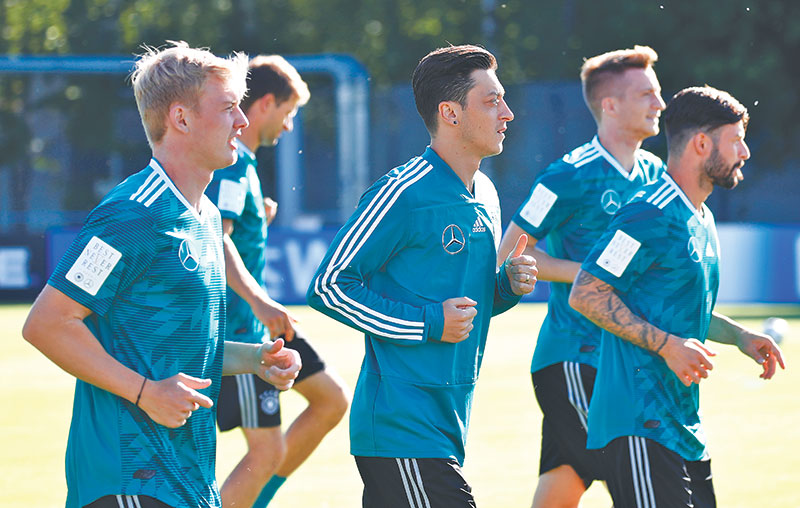
Germany players warm up during a training session ahead of their World Cup Group ‘F’ match against Mexico, in Moscow, on Friday.   REUTERS

Moscow,
Germany must shrug off a rocky World Cup build-up as they begin the defence of their title on Sunday against a vastly experienced Mexico side jolted by their own pre-tournament scandal.
While Manuel Neuer finally won his lengthy fitness battle after more than eight months out, Mesut Ozil and Ilkay Gundogan were jeered by Germany fans in recent friendlies after posing for a photograph alongside Turkish President Recep Tayyip Erdogan. Real Madrid midfielder Toni Kroos said what is discussed on talk shows should not concern the players, adding: “We are here to play football.”
The form of Joachim Loew’s side is another concern though, an unconvincing win over a Saudi Arabia outfit, thrashed 5-0 in the World Cup opener, represents Germany’s lone victory since romping through qualifying with maximum points. “We need the greed, the fire — it’s part of what makes things go off with a bang sometimes in training and on the playing pitch. We will have to fight for every inch,” said defender Jerome Boateng.
“I think we’re known as a team that starts well,” he added, saying he feels “better from day to day” after returning from a groin injury. Germany defeated Mexico 4-1 on the way to lifting last year’s Confederations Cup trophy but Kroos believes that result is of little significance now. “We shouldn’t underestimate them, even if it was a clear win at the Confederations Cup last year. We’re taking this very, very seriously and, once more for emphasis, because it’s our first game at the World Cup.”
Germany are trying to become the first team in 56 years to successfully defend their title, after Brazil in 1962, but Mexico defender Carlos Salcedo believes their Group F opponents are not invincible. “We speak a lot about them and we consider them clearly superior,” said Salcedo, who signed a four-year deal with Eintracht Frankfurt in May after spending the past season on loan with the Bundesliga club.
“But no one is unbeatable. In football, the difference between levels has decreased and there are lots of other factors. There are just two or three players who can score two or three goals per game, (Lionel) Messi, (Cristiano) Ronaldo and Neymar, who can shake things up with a stroke of individual genius,” Salcedo added. Like Germany, Mexico qualified with ease for a seventh consecutive World Cup after punching their ticket to the finals with three matches to spare.
Rafael Marquez, who will retire after the tournament, is set to become just the third player — after compatriot Antonio Carbajal and Germany’s Lothar Matthaus — to feature at five World Cups. But a number of Mexico players found themselves embroiled in controversy following a farewell party with about 30 prostitutes ahead of their departure for Europe.
Nine members of the World Cup squad reportedly partied with the women at a private compound in Mexico City following the team’s 1-0 win over Scotland earlier this month. Mexican officials ruled out sanctions against the players involved because they attended the party in their free time, but the incident echoed similar scandals in recent years.

WORLD CUP SPECIAL

Serbian coach confident on debut

- REUTERS
Mladen Krstajic

Samara,
Serbian coach Mladen Krstajic dismissed fears that his lack of experience as manager of the national team could hinder their chances against Costa Rica in their World Cup opener on Sunday.
Krstajic, who had no club coaching experience when he took over the national team in October, will be taking charge of his first competitive game against the Central Americans in Samara. However, the 44-year-old says he is confident in his side’s preparations and will be leaning on some of his more senior players to lead the way. “As far as this story about me lacking experience, I don’t have any problem because I am working with professional players who prove themselves in clubs across Europe,” Krstajic said on Saturday.
“My conscience is clear because we are working really well and have been together for three weeks. These are things that make me happy. We have to be focused, responsible. When I met my squad for the first time I said lets relax, be friends off the pitch, but when comes to matches everyone has to be responsible,” said Krstajic.
The most experienced player he can call upon is defender Branislav Ivanovic, who could become Serbia’s most capped player on Sunday with 104 international appearances. The Zenit St Petersburg player, who won the 2012 Champions League with Chelsea, will likely be joined by captain Alexander Kolarov in a mature backline. “God willing,
he is going to break the record,” said Krstajic. “He has demonstrated his qualities in different clubs around Europe and has won many titles. This provides us with extra motivation to give more and we want to make his day tomorrow better.”
“He has brought us so much,” added Kolarov, who has 76 caps for Serbia himself. “Hopefully nobody breaks his record. We are all happy for him.” With Brazil overwhelming favourites to top Group E, which also includes Switzerland, a win in the opening game would go a long way to securing qualification to the last-16. Krstajic, who is likely to field a 4-2-3-1 formation with Aleksandar Mitrovic as the lone striker, says he has been certain of his starting line-up for the past five days.

Page 7
WORLD CUP SPECIAL

France scrap to 2-1 win

- AGENCE FRANCE-PRESSE
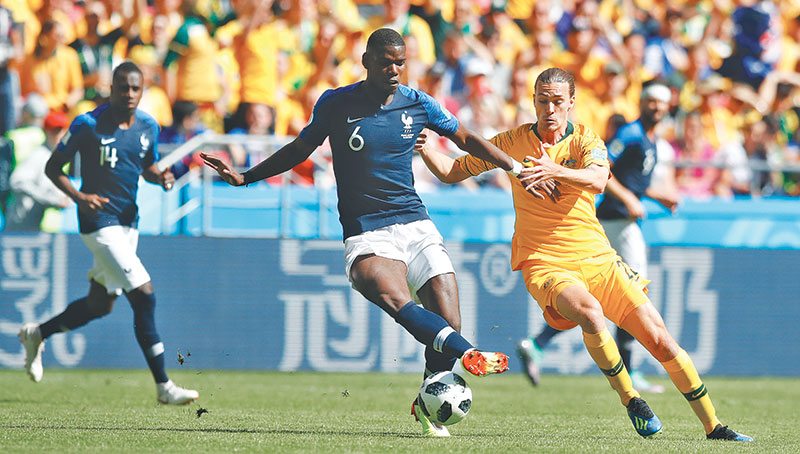
France’s Paul Pogba (left) holds off the challenge of Australia’s Jackson Irvine during their World Cup Group ‘C’ match at the Kazan Arenain Kazan on Saturday. AP/rss

Kazan,
Antoine Griezmann scored from the first VAR-assisted penalty awarded in the history of the World Cup as title hopefuls France battled to a 2-1 win over Australia on Saturday.
Griezmann, expected to make a huge impact after topping the Euro 2016 scorers with six goals, was left frustrated by a solid Socceroos defensive display in a tight first half. The Atletico Madrid star wrote his name into the history books after he went down under a tackle from Josh Rishdon in the penalty box in the second half of the Group C fixture. Referee Andres Cunha from Uruguay did not initially award a spot-kick but after viewing the VAR footage, ruled it was a penalty and Griezmann coolly slotted past Socceroos’ keeper Mathew Ryan.
But French celebrations were short-lived, Australia captain Mile Jedinak levelling only four minutes later after a clear hand ball by Barcelona defender Samuel Umtiti. In a match that saw Didier Deschamps’ men frustrated throughout by a gutsy Australian defensive display, French pride was only restored in the 81st minute.
Chelsea striker Olivier Giroud, still wearing a bandage around a recent head injury, had replaced Griezmann only minutes before playing a one-two with Paul Pogba on the edge of the area. The Manchester United midfielder’s shot took a deflection off the boot of defender Aziz Behich before creeping over the outstretched hands of Ryan and bouncing over the goalline. Deschamps, a World Cup winner with France in 1998, will be thanking his lucky stars after a performance which will give him more questions than answers about his ambitious side — the second-youngest in World Cup after Nigeria.
France are hoping to join tournament favourites Brazil, Germany and Spain in the latter stages as they look to make amends for losing the Euro 2016 final to Portugal. In a tight first half that saw Griezmann, teenager Kylian Mbappe and Ousmane Dembele fail to spark, it was the yellow-clad Aussie fans who have invaded the Tatar capital in recent days who had most to cheer about. On 17 minutes France keeper Hugo Lloris was forced to turn a dangerous deflection from Corentin Tolisso around his far post.
It was a huge sight of relief for Les Bleus, who went from making a bright start to finishing the opening half wondering how to pierce the Australia back line. Before Griezmann’s feat, Mbappe had made history at kick-off by becoming the youngest French player, at 19 and six months, to start a World Cup game. Only two minutes in, the fleet-footed Paris Saint-Germain forward cut in to meet an enticing through ball from midfield and force Ryan into action at his near post.
Mbappe won a free kick 25 yards out after a challenge from behind but Paul Pogba’s curling effort over the wall was straight to Ryan. Deschamps had warned of the improvement Australia have made under Dutch coach Bert van Marwijk, who took over from Ange Postecoglou in January. But Australia spent most of the first half defending and ultimately frustrating France, rarely creating real chances of their own. The real drama, however, unfolded after the interval with the VAR decision.

WORLD CUP SPECIAL

Neymar on spotlight

- AGENCE FRANCE-PRESSE
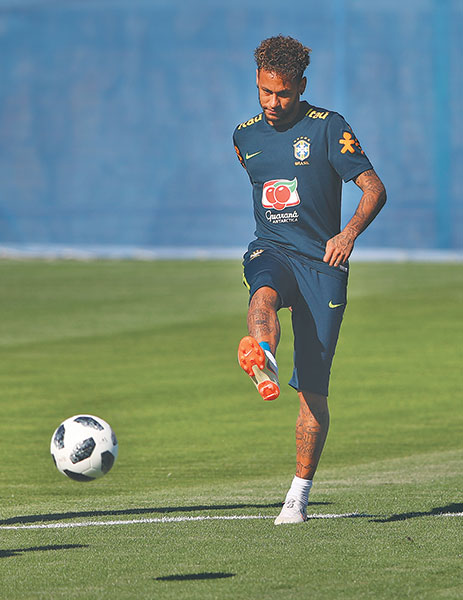
File photo of Brazil striker Neymar during a training session at the Yug Sport Stadium in Sochi on June 13. REUTERS

Sochi,
For three months, a whole nation feared it might not happen, but Neymar will take to the field with his Brazilian teammates when they kick off their World Cup campaign against Switzerland on Sunday.
The world’s most expensive player appears to have recovered fully from the fractured foot that required an operation in March, with the only slight concern being his possible lack of match
fitness. Since suffering the injury in Paris Saint-Germain’s game against Marseille in late
February, Neymar has managed just 129 minutes on the field.
But those minutes came in Brazil’s recent warm-up friendlies, with a goal from the bench against Croatia and then a brilliant strike in a win in Austria last weekend.
“After three months, and having played just a game and a half, he is already playing at a high level. Nobody expected that. Not even him,” Thiago Silva, a close friend of Neymar’s and a club teammate at PSG, said in a report on Brazilian website Globoesporte. The 26-year-old, who saw his time on the sidelines as one of the lowest points in his career so far, has looked in excellent spirits this week as Tite’s Brazil squad settle into their Russian base — the speculation about his club future, and links with Real Madrid, seem far away right now.
Neymar will be in the starting line-up in Rostov-on-Don, for what will be his first game at a World Cup since being taken off with a fractured vertebra in Brazil’s win against Colombia as hosts in the 2014 quarter-finals. And Neymar’s importance in this new-look team — he is one of only six survivors from four years ago — is clear from the comments of his teammates in Sochi.
“Neymar is great, thanks to God,” goalkeeper Alisson replied to one question about their talisman, while Gabriel Jesus spoke of his admiration for the former Barcelona man. “I got to know Neymar personally at the Olympics. He treated me very well, and not only me, also my family and friends too,” he said. “He is important off the field as well. He is always
giving advice. That is very important. I really believe that having a good relationship, considering one as a brother, lifts you on the field. You run more for your friend.”
Brazil came to Russia among the favourites as they look to put firmly behind them the 7-1 semi-final humiliation against Germany four years ago. While fellow contenders Spain have threatened to implode with the sacking of coach Julen Lopetegui on the eve of the competition, Neymar and the Brazilians are relaxed and at home in pleasant surroundings in Sochi.
The lush green coastline and sea views are reminiscent of Brazil, the Selecao have been enjoying dining with views out over the Black Sea, and they also have access to the beach. It augurs well for Tite’s side as they prepare to face a Swiss outfit ranked sixth in the world in their first Group E game before tackling Costa Rica and Serbia.

Page 8
FREE THE WORDS

Blessed to have a nationality

Amidst many ‘stateless’ people globally, one must feel grateful to have a nationality
- ILA MAINALI

I was once walking through the streets of Beirut, admiring its beauty, development, infrastructure, blue ocean, white sand and good-looking people, when my mind wandered away. Why is Nepal not able to develop infrastructures like other countries? I asked myself. Why are issues such as poverty and child-marriage still rampant in my society? Why is it that out of the many countries that I have visited--even including other least developed countries--my country is the one which looks like it has a long way for development?


It was my first evening in Beirut. I was in Lebanon on a UNICEF Executive Board Field Visit, representing the Asia-Pacific group of countries. We were a team of diplomats and secretariat members representing different regions of the world. We were there to see how UNICEF has worked for the betterment of lives of children around the world.


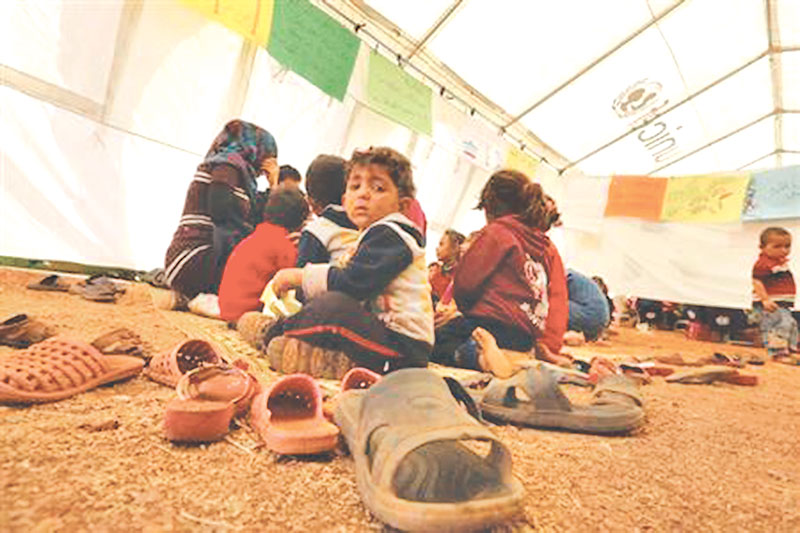
Early next morning, we headed towards the Beqaa Valley where we saw children studying in tents and makeshift structures. Although they could not get admission into schools easily like Lebanese citizens, efforts by the Lebanese government and the UNICEF, had made sure that these children went to school. Around 250,000 refugee children in Lebanon are still unable to go to school because of poverty and other factors.


Many bright children and young adults are deprived of education because they are refugees, or because they do not have a nationality. Deprived as they are of education, what kind of a future do these children have?


A similar visit to a camp for Palestinian refugees exposed us to the extremely poor living condition the refugees live in. Limited access to water, overcrowded camps—the sight was truly heartbreaking.


Many developing countries including Nepal (which has been hosting Bhutanese and Tibetan refugees despite not being a party to the 1951 Convention on Refugees and its protocol) are hosting large numbers of refugees on humanitarian grounds, although these countries are struggling to feed its own citizens. Developing regions host 84 percent of the world’s refugees.


Statelessness
These were the stories of refugees I could interact with in Lebanon. I found out during the interaction that many of these children are stateless. Not all the refugees are stateless, but the refugee crisis is set to create a huge problem of statelessness, with a wide number of children growing as “stateless generation”. Under Syrian law, only men can pass citizenship on to their children. Similar is the case in many other countries. Many among those who are resettled in other countries are women who lost their husband and are being resettled with their children or are pregnant at the time. Also, children of the couples who do not have the documents they need to prove their own legal status are stateless.


The number of stateless people globally is likely around 15 million. These persons have to focus on a day-to-day survival, poverty being the biggest problem caused by statelessness. Statelessness is as much an economic burden as a social and political one. Discriminated and dislocated from one place to another, stateless persons are made to feel like “others” and “unfit” in the society. The stateless do not enjoy the protection that people with nationality do domestically and internationally. Although any individual is entitled to enjoy basic human rights, the stateless are denied even that. Nationality should not come between any state or government and a human being when it comes to providing basic human rights, but that is unfortunately not the case as many national governments abdicate that primary responsibility.  
These few days trip have been eye opening for me. For the first time in my life, I realised how irrelevant it was of me to worry about trivial things like where my next gathering would be or when would I be getting a promotion. Greater problems like people not having access to basic necessities in life like health care, education, safe drinking water and sanitation plagued people’s lives in ways I had not imagined. More importantly, over fifteen million people in this world are dreaming about having a nationality some day.


Sitting in my hotel, I reflected upon questions like what it is like to have no home? How does it feel if one cannot travel, find a job or vote? And how does it feel to have no identity? It dawned upon me how privileged and happy I was to have all that. I decided I will never take any of these things for granted. I had a house, a car, a good job and a loving family. Above all, unlike the many people I came across in Lebanon, I had a nationality and absolute freedom.


Mainali is the Section Officer for the South Asia Division, Ministry of Foreign Affairs, Singha Durbar

FREE THE WORDS

What’s new in school

Some stakeholders argue that the government has changed the curriculum in haste
- UMESH RAJ REGMI

The Ministry of Education recently passed the National Curriculum Framework for secondary level education, changing the syllabus that has been used in Nepali schools for more than two decades. There will be a single track curriculum in Grades 11 to 12, and an integrated curriculum in Grades 1 to 3. Students awaiting the results of the Secondary Education Examination (SEE) will be the first to be taught the new curriculum in Grade 11 from this academic session.


Form and fabrication
As per the National Curriculum Framework, four subjects have been made compulsory in Grades 11 and 12. They are Nepali, English, Social Studies and skill-based or behavioural education. In addition, students will have to choose three other optional subjects out of four. There won’t be any specific faculties like in the past. The optional subjects will be from General, Science and Technology and Technical and Vocational bases.


Similarly, the new curriculum envisions three types of education for the secondary level: General, Sanskrit or Traditional, and Technical and Professional. The optional subjects and their bases in each of the types will be different. A majority of the students seem to study in the General type of education, however. The emphasis of the secondary level curriculum is on developing hard skills.


The syllabus has been designed under the credit hour system. Each period will be one hour long. The full marks in Grade 11 will be 700. In coordination with the local government, schools can pick optional subjects by considering student interest, need, teacher availability and resources. Grade 10 examinations will be conducted at the provincial level, and Grade 12 examinations will be conducted at the national level.


Some stakeholders argue that the government has changed the curriculum in haste without holding extensive consultations with them. There will be questions about school infrastructure, resources and the readiness of the students and teachers in implementing the curriculum. The little time available for printing textbooks, random preparation by schools to teach the new curriculum, uninformed guardians and exclusion of some important subjects like Mathematics and Economics are major challenges. Likewise, questions have been raised whether effective orientation has been given to the teachers and school management before the start of the new session.


How hard the Curriculum Development Centre (CDC) is working internally is a matter of great importance. The objectives and pedagogy of the newly introduced subjects are still not well known to the teachers. Hidden selfish interests of some private publications and school promoters may pose a problem to the timely implementation of the syllabus. In particular, delivering textbooks to remote schools on time and teaching guidelines to the teachers and disseminating a clear picture of the changed course will be a tall order.


Things to do
The implementation of a new curriculum in a changing scenario is often provoking. Despite some difficulties initially, all stakeholders should be supportive. As this is linked to the future of the country, institutional and personal benefits should be pushed back for the implementation of new curriculum. The genuine voices of educators, school administrators and experts have to be addressed before the new academic session starts. The need and relevance of some excluded subjects should be re-examined. A national campaign to give information and updates about the changed curriculum should be launched without delay.


The CDC should seek help and advice from different experts besides the regular ones in its register. Priority should be given to remote areas in every programme of the government. The delivery of textbooks needs to be managed completely by local authorities. There needs to be proper coordination between the central, provincial and local bodies in the implementation of the new curriculum. The government should discourage the private interest of any publication, school or association for the best utilisation of the national curriculum. Attention should also be paid to the use of social media to disseminate information about the new curriculum and its basics.


The line ministry and the CDC should not delay to issue a public appeal to welcome the curriculum. International practices, the horizon of the courses and local needs of the subjects are to be kept under consideration. So, essential changes and improvements will have to be made in the curriculum to produce qualified manpower based on social justice as enshrined in the constitution and the country’s requirement and to provide education that is applicable to real life for all students. Better to take the curriculum as a chance rather than a problem. Let’s make the national curriculum student-friendly and a strong foundation of education in the days to come.


Regmi is associated with the Nepal Youth Foundation

FREE THE WORDS

Debunking the myth

Brain tumours can be treated in Nepal with results comparable to developed countries
- DR GOPAL SEDAIN

I frequently encounter patients who come to me complaining of headache. Many times, the most important concern is not the headache but whether there is some underlying problem inside the brain, a brain tumour. With advances in diagnostics and management technology, the risks have substantially been lessened. A brain tumour may arise from the brain which is
called primary, or it may have spread from the lungs, breast or intestine which is called secondary. We seldom know why one person has a tumour and the other doesn’t. Studies have shown that ionising radiation (high dose X-rays, CT scans) can cause cell damage and lead to brain tumours. This is why we discourage people from getting unnecessary scans. Research is being done to find out whether using cell phones, having a head trauma or being exposed to chemicals or magnetic fields are risk factors.


Red flags
Manifestations of brain tumours depend upon the location, size and type. Symptoms occur when the tumour presses upon, damages or stimulates the brain or blocks the fluid pathway. The most common symptoms are: Headache (usually worse in morning); nausea and vomiting; changes in speech, vision or hearing; problems in balancing or walking; changes in mood, personality, memory or ability to concentrate; muscle jerking or twitching (seizures or convulsions) and weakness or numbness in one half of the body.


Most often, these symptoms are not due to a brain tumour, and a physician will be able to tell you if you need further tests. We often diagnose a tumour with a CT (Computerised Tomogram) or an MRI (Magnetic Resonance Imaging). A CT scan is an X-ray machine linked to a computer that takes a series of detailed pictures of your head. An MRI is a large machine with a strong magnet linked to a computer which is used to make detailed pictures of areas inside your head. An MRI is better than a CT in diagnosing most of the tumours in terms of defining the lesion, and there is no radiation hazard as there is in a CT. However, an MRI of the brain costs more than a CT.


Harbouring any tumour in the brain is dangerous, so the terms benign and malignant are often not used in brain tumours. The World Health Organisation (WHO) grades brain tumours from Grades I to IV, Grade IV being the most aggressive. Surgery is the primary treatment for brain tumours. If the tumour is in a safe part of the brain, it is less aggressive and total removal is possible, and the outcome is good. Sometimes, the tumour is in a difficult part of the brain where total removal would result in some defects to the patient, in which case we might have to remove a part of it and give additional treatment like radiation and chemotherapy.


Many patients are afraid to go under the surgeon’s knife and wonder if there are medications to get rid of the disease, but the answer is no. There are medications for seizures and steroids to control swelling of the brain, but treating tumours with medications alone is not possible. In some patients with brain tumours like meningiomas, pituitary gland tumours or low grade tumours like pilocytic astrocytoma, surgical treatment can almost cure the patient. The fear of undergoing an operation generally arises from deficits that can occur after surgery. This can be overcome in most cases with meticulous planning and skill.


With advances in brain tumour management including surgery, radiotherapy and chemotherapy, survival chances have improved. However, aggressive tumours recur. Particularly patients with high grade lesions of WHO Grade IV have limited chances of making a prolonged recovery due to the tumour appearing again. Researchers are trying hard to deal with this type of tumour using various newer modalities like immunotherapy. Brain tumour surgery is being performed in Nepal relatively safely. With advances in technology, which are now available in many centres in Nepal, and an increased number of trained neurosurgeons, almost all types of brain tumours can be treated in Nepal with results comparable to the developed countries.


Sedain is a neurosurgeon and assistant professor at the Institute of Medicine

Page 9
FREE THE WORDS

Milking strategy

Despite sufficient dairy technicians, the DDC is neither running in profit nor has stretegic vision for management
- NANU JHA

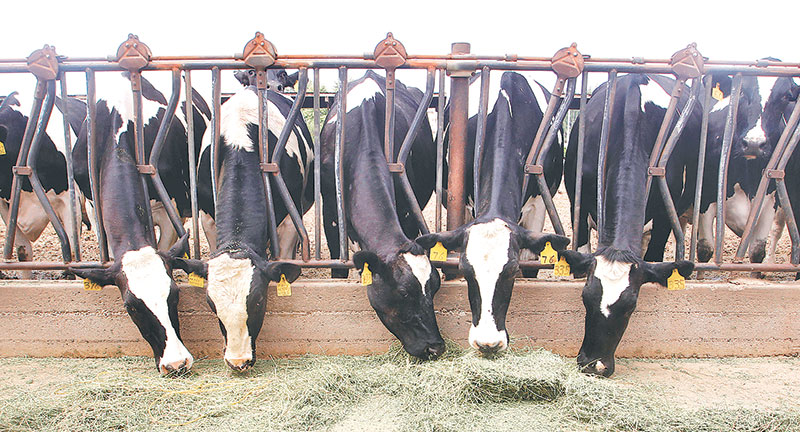
Dairy farming practice has been growing as a family business in the rural areas of Nepal for centuries. When there were no dairy enterprises, demand of milk was fulfilled by raising cows/buffalos by majority of the farming families themselves or by direct supplying milk to consumers from producers. These producers used to go door to door to deliver required quantity milk to consumers. During those periods some traditional professionals prepared curd filled in clay containers and sweets in traditional way and sold them in the hat bazars. Rapid urbanisation and massive migration of people from rural to urban in search of better opportunities has its positive impact on dairy farming as well. As a result, the demand of milk and milk products have been increasing at a faster rate in the recent years.


The DDC
Despite  high potentials for the development, this sector has not been able to meet the domestic demand of milk and milk products. Moreover, billions of rupees are going out annually in importing milk and milk based products. Dairy development activities took root when first time a cheese factory established in Langtang in Rasuwa district under the assistance of Food and Agriculture Organization (FAO) in 1953. Later a small scale milk processing plant was set up for experiment in Tusal of Kavre Palanchowk district and a dairy development section under the department of agriculture in 1954. After few years (in 1956), a milk processing plant was established in Lainchaur, Kathmandu with financial assistance from New Zealand and technical cooperation of Food and Agriculture Organization (FAO). And in 2021 B.S. the government of Nepal established Dairy Development Corporation (DDC) to guarantee market to milk producers to sell their milk at cost price to corporations and supply pasteurized milk and milk products to consumers.


The corporation has flourished nationwide with an annual collection over 60 million litres of milk from more than 75 thousand milk producers through 888 milk cooperatives spread out in 33 districts. The corporation has eight modern dairy plants, 11cheese manufacturing units, 45 milk chilling plants and sufficient dairy specialists. It is a valuable institution for the economic development of the country but currently, it is unable to meet the increasing demand of milk and milk based products owing to lack of strategic supply management within the corporation. Despite the big infrastructure, sufficient dairy technicians and also high annual turn over, the corporation is neither running in profit nor has products promotion strategic management to substitute the dairy products importation.


The government has established department of livestock services for the growth and development of livestock sector. It has strong network of extension and several organisations and programs responsible for the development and quality control of the livestock sector across the country. The public extension services including dissemination of technology, information and training for increasing livestock products production, income generation and sustainability, are conducted by all its districts office. Similarly, Dairy Development Policy 2008 is the most specialised policy document for the development of dairy enterprises in the country. The policy has given important responsibilities to National Dairy Development Board (NDDB) for its implementation and monitoring. The policy can be implemented only when the working procedure is prepared and approved by the Agriculture Ministry. According to sources, the board has already prepared the draft working procedure and submitted to the ministry for its approval. But neither has the ministry has finalised and approved nor  has the board taken any initiative to get it through. Some of its objectives are matched with other organisations like finding remedies to problems in the field of livestock development and animal health, arranging and developing fodder and pasture are similar with the roles of livestock department. There is no clear vision about creating alternative financial resources and acute shortage of competent technical manpower and weak administrative staffs’ position has acutely affected the NDDB’s capacity enhancement.


The other player
The private sector got involved in the dairy sector from late 1970s with very small-scale operation in Kathmandu. According to available information, all together 250 dairies of varying scale are operating in the country. These dairies produce pasteurized milk and other dairy products, the major are yoghurt, paneer, cheese, ice-cream, butter, ghee. The private dairy entrepreneurs have established an association so called Nepal Dairy Association (NDA) in 1998. It has 136 small, medium, and large scale member dairy industries scattered across the country. The main objectives of the association are to work for the common agenda of dairies. Its commitments are to support dairies for their professional development, explore new technologies among members. Despite impressive infrastructure, huge amount of budget allotment and qualified technicians in dairy sector, it has not lived up to the expectation.
Only when DDC begins to increase scale of quality milk production, and sell milk and milk products of consumers’ choice in the country can it  substitute the importation. However, without improvement in the quality of raw milk and milk based products’ import substitution is impossible. Imported milk and milk products available here at lower price of high quality is the real challenge for Nepalese dairy enterprises. It needs great effort to acquire the same quality and the price of Nepalese products as of imported products. In order to improve the quality of raw milk, protein premium and penalty pricing system should be introduced. The international standard for dairy products should be adopted for the domestic as well as for international market. Strict quality control measures should be followed during the raw milk production, collection, processing and distribution. The standards should be legalised and continuously monitored and legal actions should be taken against those not meeting the standards. To achieve this goal Department of Food Technology and Quality Control should also be made responsible for overall quality improvement.


Jha is an Adjunct Professor, at Himalayan College of Agricultural Sciences and Technology

FREE THE WORDS

Mindfulness at work

Meditation is to accept things as they are. Yet companies want their employees to be motivated
- KATHLEEN D. VOHS,ANDREW C. HAFENBRACK

Mindfulness meditation, a Buddhism-inspired practice in which you focus your mind entirely on the current moment, has been widely embraced for its instrumental benefits--especially in the business world. Companies like Apple, Google and Nike provide meditation rooms that encourage brief sessions during the workday. Chief executives publicly extol its benefits. And no wonder: The practical payoff of mindfulness is backed by dozens of studies linking it to job satisfaction, rational thinking and emotional resilience.


But on the face of it, mindfulness might seem counterproductive in a workplace setting. A central technique of mindfulness meditation, after all, is to accept things as they are. Yet companies want their employees to be motivated. And the very notion of motivation--striving to obtain a more desirable future--implies some degree of discontentment with the present, which seems at odds with a psychological exercise that instills equanimity and a sense of calm.
To test this hunch, we recently conducted five studies, involving hundreds of people, to see whether there was a tension between mindfulness and motivation. As we report in a forthcoming article in the journal Organisational Behavior and Human Decision Processes, we found strong evidence that meditation is demotivating.


Some of the participants in our studies were trained in a few of the most common mindfulness meditation techniques. They were instructed by a professional meditation coach to focus on their breathing or mentally scan their bodies for physical sensations, being gently reminded throughout that there was no right or wrong way to do the exercise.
Other participants were led through a different exercise. Some were encouraged to let their thoughts wander; some were instructed to read the news or write about recent activities they had done.


Then we gave everyone a task to do. The tasks were similar to everyday workplace jobs: editing business memos, entering text into a computer and so on. Before embarking on the tasks, the participants were asked about their motivation: How much effort and time would they put into the assignment? Did they feel like doing it?


Among those who had meditated, motivation levels were lower on average. Those people didn’t feel as much like working on the assignments, nor did they want to spend as much time or effort to complete them. Meditation was correlated with reduced thoughts about the future and greater feelings of calm and serenity--states seemingly not conducive to wanting to tackle a work project.


Then we tracked everyone’s actual performance on the tasks. Here we found that on average, having meditated neither benefited nor detracted from a participant’s quality of work. This was bad news for proponents of meditation in the workplace: After all, previous studies have found that meditation increases mental focus, suggesting that those in our studies who performed the mindfulness exercise should have performed better on the tasks. Their lower levels of motivation, however, seemed to cancel out that benefit.


Mindfulness is perhaps akin to a mental nap. Napping, too, is associated with feeling calm, refreshed and less harried. Then again, who wakes up from a nap eager to organise some files?


By some accounts, motivation is just as important as intelligence and personality when it comes to an individual’s success, and has the advantage of being largely under an individual’s control. Companies benefit, too, when workers are motivated: A 2013 worldwide survey by Gallup found that companies with more engaged employees outperform other companies in growth and productivity.


Management theorists and organisational leaders often think about motivation in terms of financial incentives. So as part of our research, we studied whether offering a financial bonus for outstanding performance would overcome the demotivating effect of mindfulness: It did not. While the promise of material rewards will always be a useful tool for motivating employees, it is no substitute for internal motivation.


Mindfulness might be unhelpful for dealing with difficult assignments at work, but it may be exactly what is called for in other contexts. There is no denying that mindfulness can be beneficial, bringing about calm and acceptance. Once you’ve reached a peak level of acceptance, however, you’re not going to be motivated to work harder.


—©2018 The New York Times

FREE THE WORDS

Pixar’s Bao

This moving encapsulation of the Asian-immigrant experience is the studio’s best short in years
- INKOO KANG

I have a ritual for watching Pixar shorts. I cross my arms, grit my teeth, and wait for the onslaught of emotional manipulations that now operate like clockwork to pass. Perhaps my resistance to these CGI vignettes places me in the minority—they’ve won a combined four Oscars and more than a dozen nominations, after all—but for this adult, they’ve always felt too repetitive and too unchallenging to earn my tears.


So I didn’t expect the ones that streamed down my face at the end of Bao, the short that precedes Incredibles 2. And that’s a credit not just to Pixar’s willingness to finally tell a more grown-up story, but also the eight-minute featurette’s many culturally specific details—some of which may not register with non-Asian audiences but will deepen the experience for many filmgoers of Asian descent.


Part fairy tale, part immigrant story, Bao is directed by Domee Shi, who was born in China, raised in Toronto, and also happens to be the first female helmer of a Pixar short. Like 2015’s Sanjay’s Super Team, which introduced The Good Dinosaur, Bao presents a cultural clash between a (seeming) immigrant parent and a more Americanized child. In this case, that child just happens to be a sentient steamed bun. The bun’s human mother, who spends many of her days cooking and cleaning at home, is delighted when one of her stuffed creations emerges from her bamboo steamer with eyes, a mouth, and four healthy limbs. She subsequently devotes her existence to raising her bread-child.


What follows resembles the famous “married life” montage from Up, except in place of a husband and wife, we follow a mother and her rebellious snack. (The spoilers start here.) As the dumpling grows older, he’s tempted by life beyond what his mother imagined for him: soccer instead of tai chi, beers instead of his fellow Chinese buns, hanging out with friends instead of spending time with her. When he shows up at her doorstep with a blonde fiancée, his mother finally decides enough is enough: She makes him choose between his mom and his girlfriend. When he chooses romance (of course!), the mother decides that desperate times call for desperate measures: To keep her child with her, she eats him whole.


By now, the viewer has likely begun to suspect that this Pixar short isn’t quite what it seems. And when the mother realizes what she’s done and wipes her own tears from her face, her son comes back into focus, and this time he’s a fully grown human, proffering his mom the Chinese bread he’d rejected as a teenager. They eat it together, and in the final scene, the family is intact and increased, the mother making baos alongside her son and daughter-in-law.
While I appreciate what Sanjay’s Super Team did in bridging the gap between American and Indian cultures, I’d also argue that Bao is the best Pixar short in several years because of the qualities that distinguish it from its predecessors: its relative scope and darkness, and its comparatively naturalistic look, as well as its cultural specificities.


I’m not Chinese, but I instantly felt at home in the opening scene inside the mother’s kitchen, which was adorned with pieces of my own childhood in Los Angeles’ Koreatown: an old-fashioned rice cooker, an Asian-language calendar, and the hum of a radio in the native tongue. The bao’s later rebellion was familiar too, for painful reasons. All children go through a period of distancing themselves from their parents, but that process for many children of immigrants involves rejecting aspects of the culture that they’d grown up with. And while a greater appreciation of parental dedication is pretty much a universal experience (cf. Lady Bird), that realization can be more fraught for immigrants’ children, whose parents have often sacrificed an unknowable amount of themselves for the sake of their children’s futures (cf. The Joy Luck Club, the “Parents” episode of Master of None). As film critic Alison Willmore aptly noted on Twitter, Bao is a “child-of-an-Asian-immigrant guilt bomb of … devastating effectiveness.”


There are smaller cultural details in Bao to treasure too. I loved the moles that dotted the mother’s face, which humanized her at a time when Asian women are once again exoticized, this time as alien robobeauties with plastic-perfect skin. It made me homesick to see the mother’s sun visor, the bao’s shrimp chips, even the dad’s uncontested refusal to help cook the family’s meals. The mother’s it’s-her-or-me ultimatum seemed ripped from any number of East Asian soap operas, and the genuine but somewhat condescending delight at the white daughter-in-law’s ability to get something Chinese right (in this case, making baos) was a scene I’ve seen too many times in real life. And while not every Asian person has small eyes, it was exciting to see Pixar experiment with a character design that couldn’t be reduced to “slap some giant eyes on an inanimate object” and aestheticize different types of faces.


It’s worth noting that, unlike Pixar’s other “diverse” offerings (Sanjay’s Super Team and Coco, which takes place outside of an American or immigrant context), Bao isn’t about rediscovering one’s roots. Rather, it’s about a mother and son each learning the same lesson in different ways—a lesson many Asian Americans are probably familiar with: Separation isn’t rejection, and independence can still include family.


—©2018 The New York Times

FREE THE WORDS

SERVE JUSTICE

Letter to the Editor

I am drawn to the news about the deteriorating health of Ganga Maya Adhikari, who is on a hunger strike for the past 17 days demanding arrest and trial of the Maoist leaders who had allegedly murdered her son, Krishna Prasad Adhikari, during the insurgency, is fast deteriorating (“NHRC urges PM Oli to save Ganga Maya”, 14 June, Page 3). As if the death of Nanda Prasad Adhikari, Ganga Maya’s husband, during a similar strike in 2014, was not enough, the present government’s apathy makes one believe that it is waiting to see the bereaved mother and wife meet a similar fate so that it will no longer have to deal with her once she is gone. The case of the Adhikari couple highlights the death of transitional justice in Nepal, where successive governments have failed to address serious cases of insurgency-era crimes and enforced disappearances. The snail pace of work carried by the Truth and Reconciliation Commission and the Commission of Investigation on Enforced Disappearances shows that these are just bogus institutions created to delay justice even further; these institutions have little legitimacy among the victims and family members of the victims whose grievances they are supposed to address. It is shameful that the government that recently used a thief’s way of freeing a convicted insurgency-era criminal, Balkrishna Dhungel, has given a deaf ear to a lady who has for years been fighting for justice, grieving a double death in her family. As political parties gloat over the successful transition from conflict to peace and claim to be moving towards development and prosperity, the suppressed  voices such as that of Ganga Maya and thousands of others echo in the government’s hallowed chambers. One hopes that Prime Minister KP Sharma Oli stops blabbering about a proverbial prosperous future and gives his ears to the victims’ call for justice. For, what is development and prosperity if you have blood in your hands?


- Dinesh Kafle, New Delhi

FREE THE WORDS

A BEAUTIFUL GAME

Letter to the Editor

The quadrennial football event--the World Cup has started. To me, World Cup symbolises a peaceful coexistence of different states; an event where people come together and enjoy (“Football’s showpiece event kicks off today”, June 14, TKP Online). It is the most prestigious association football tournament in the world as well as the most widely viewed and followed sporting event in the world where there is passion, happiness, sadness, and above all there is always hope. Perhaps it is also during the World Cup where the general conversation shifts from the mundane topics of politics and current affairs to sports. Sports transcends everything, breaking the barriers of colour, language, creed, and religion. On game days countrymen become family, teammates become brothers and after the final whistle opponents become respected players as they exchange handshakes, hugs. Football is a game that sure does bring out the fire, but seldom does it lose its grace. The real essence of sports is not the competition or pushing your boundaries. It is all that too, but much more than that it is learning to be humble during triumph and hopeful during defeat. So this World Cup too, even if our favourite team wins or loses, let’s enjoy ourselves regardless, because football indeed is a beautiful game.

- Saurabh Pandey, Basundhara

Page 10
HOROSCOPE

Horoscope

ARIES (March 21-April 19)
****
You may not wake up this morning expecting a surprise, but there’s definitely one on the agenda. Fortunately, surprises are right at the top of your top ten list of very favourite things, so you won’t mind one little bit.


TAURUS (April 20-May 20)
***
When someone does need you to take control, you won’t be shy about stepping up. If it’s to defend something or someone who can’t do it for themselves, you can be positively formidable. Good luck to anyone who gives you a reason.


GEMINI (May 21-June 21)
***
while you’re grinning and cheerfully looking forward to the next surprise the universe has up its sleeve, your friend is probably skulking around as far undercover as they can possibly get, worried about the unknown. Be nice.


CANCER (June 22-July 22)
***
The urge to hibernate has hit all of us, you’re not only in the mood to get away from the maddening crowd, you’re also in desperate need of some quality time alone. It’s just about time for you to start dishing out surprises.


LEO (July 23-August 22)
****
The universe has a big day planned for all of us, full of unexpected arrivals, surprise messages, and at least one last-minute turnaround. You may not be tickled but you’ll need to put on a happy face for that event.


VIRGO (August 23-September 22)
****
You’re the perfect person to share a secret with. You won’t tell anyone who hasn’t already been sworn to secrecy. So now, when it falls to you to decide what to do about either letting someone in or not, you’ll do the right thing.


LIBRA (September 23-October 22)
*****
This is one of those times when keeping very close company with the things that you hold most dear wouldn’t be a bad idea—especially if you’re traveling. This is one of those moments when carry-on luggage is to be kept close.


SCORPIO (October 23-November 21)
***
You are more likely to be caught off-guard than not. The good news is that if you can do what you already do best—that is, sit tight and refuse to be manipulated—you can hold onto that title, and add a couple more to your resume.


SAGITTARIUS (November 22-December 21)
***
You’re far more of a fan of sudden, drastic change than you are of anything even remotely resembling boredom. So now, when something you couldn’t possibly have expected comes along, you’ll be positively delighted.


CAPRICORN (December 22-January 19)
***
Surprises are fun for some folks, but for you—well, you’d rather have everything that’s been penciled into your day-timer go just as you’d planned it. Of course, that’s not always possible, and you’ve definitely learned this.


AQUARIUS (January 20-February 18)
*****
Someone you’ve been amazingly fond of for some time will suddenly let you know that the feelings are extremely mutual. What should you do about it? Well, for starters, pick up your jaw and let yourself grin.


PISCES (February 19-March 20)
***
A group of scientists recently announced that love is biologically the same as eating large quantities of chocolate. If it’s true, then why bother? Wouldn’t it save us all an awful lot of time if we forgot about relationships?

Variety

GRAFFITI

GRAFFITI

Variety

WORD GAME

WORD GAME

Variety

RIPLEY’S BELIEVE IT OR NOT

RIPLEY’S BELIEVE IT OR NOT

Variety

STRIPS

STRIPS

Variety

FILMS

Race 3
QFX Chhaya Center: 08:30/ 09:30/ 12:00/ 13:00/ 14:00/ 15:15/ 16:15/ 18:30/ 19:30
QFX Civil Mall: 08:00/ 08:30/ 12:15/ 15:00/ 16:00/ 18:45/ 19:45
QFX LABIM Mall: 08:45/ 11:45/ 12:45/ 16:15/ 18:45/ 20:15
QFX Jai Nepal: 08:30/ 12:00/ 15:30/ 19:00
QFX Kumari: 08:30/ 11:45/ 15:15/ 19:00
QFX LABIM Mall: 09:15/ 19:45
QFX Kumari: 08:00
QFX Civil Mall: 11:45


A Quiet Place
QFX Chhaya Center: 09:00/ 11:30/ 17:30
QFX Civil Mall: 12:00
QFX LABIM Mall: 17:45
QFX Kumari: 19:15


Kaala Karikaalan
QFX LABIM Mall: 15:15
QFX Kumari: 15:30
QFX Civil Mall: 18:30


Veere Di Wedding
QFX LABIM Mall: 12:15/ 15:00
QFX Kumari: 12:15
QFX Civil Mall: 15:30

Page 11
ETCETERA

Ganga Maya’s biography, Nyayako Awasan, launched

- Abijeet Pant

Kathmandu,
Nyayako Awasan, the autobiography of Ganga Maya Adhikari, mother of late Krishna Prasad Adhikari who was murdered by Maoist rebels in 2004, was released amid a function held in the Capital on Friday. Written by journalist and writer Ghanashyam Khadka, the book hits shelves at a time when Ganga Maya has been staging another fast unto death demanding that her son’s murderers are brought to justice.
The book was launched by journalist Kanak Mani Dixit, former minister Nilambar Acharya, former chief justice Kalyan Shrestha, the chairperson of the National Human Rights Commission Anup Raj Sharma, and human rights activist Subodh Pyakurel at a programme organised at the Academy Hall.
Speaking at the launch, former chief justice Shrestha said that Ganga Maya’s struggle was not her’s alone but emblematic of the entire citizenry’s right to access to justice. While NHRC chairperson Sharma pointed out that Ganga Maya’s
pleas for justice lay bare how the judicial system continues to be unduly influenced by political motives. Krishna Prasad Adhikari was killed on May 27, 2004. Ganga Maya’s husband Nanda Prasad Adhikari died in 2014 after a 11-month-long hunger strike demanding justice for their son. Nyayako Awasan is published by Book Hill.

ETCETERA

Salman continues Eid releases with Race 3

- AGENCE FRANCE-PRESSE

Mumbai,   
Salman Khan’s first movie since his conviction for shooting dead endangered wildlife opened across India on Friday, with analysts predicting box office success for his latest Eid blockbuster.
It has become a tradition in the Indian film industry for Khan, one of the world’s highest-paid actors, to star in the big release on the Muslim holiday of Eid to mark the end of Ramadan, which begins on Saturday in India.
Action movie Race 3 is Khan’s fifth straight Eid release and his eighth since 2010.
It is his first film since he was handed a five-year jail sentence in April for shooting dead two rare antelopes known as black bucks during a 1998 hunting trip.
The 52-year-old, who has repeatedly denied killing the animals, spent two days behind bars before being granted bail.
The bodybuilding actor suffered a rare commercial failure last Eid when Tubelight, a drama set during the 1962 India-China war, flopped at the box office but analysts expect Race 3 to soar.
“It’s Salman Khan, it’s Eid weekend and it’s an action franchise that plays to the galleries and has always been successful. I expect it to make great money,” film distributor Akshaye Rathi told AFP.
Rathi tipped the movie, which also stars Anil Kapoor and Bobby Deol, to make one billion Indian rupees during its opening weekend, the benchmark for a surefire blockbuster.
Khan enjoys a cult-like status in star-obsessed India and is one of Bollywood’s biggest draws, despite a host of controversies.
He was found guilty of culpable homicide for a 2002 hit-and-run which killed a homeless man sleeping on the pavement in Mumbai, and was sentenced to five years in prison.
But the verdict was overturned by a higher court in 2015. His acquittal is being challenged in the Supreme Court.
Khan was last seen in Tiger Zinda Hai (Tiger Is Alive), released in December.
His 2015 Eid release, Bajrangi Bhaijaan, sits third in the all-time list of highest-grossing Hindi language films worldwide, two places ahead of his 2016 Eid offering Sultan.

ETCETERA

Fifa downplays Williams’ gesture

- REUTERS

Moscow,
One of the directors of the World Cup opening ceremony in Russia downplayed an obscene gesture made by Robbie Williams at the event, saying he did not think the middle finger that the singer flipped to the camera was meant to offend Russia. Williams took part in a glitzy 15-minute show at Moscow’s Luzhniki stadium before the first match between Russia and Saudi Arabia.
At one point, when the camera zoomed in on him, the 44-year-old Briton raised his middle finger, a gesture regarded as obscene by many in Western culture.


“I can’t imagine what Robbie Williams meant by that gesture,” Ilya Averbukh, the show’s co-director, was quoted as saying by the RIA news agency. “As the choreographer, I didn’t put it in there.” Averbukh said he did not believe Williams’ gesture was meant to insult Russians.
“I’m sure that this gesture had nothing to do with Russia,” he was reported as saying. “Williams did not want to offend our country with this gesture.” performing at the opening ceremony was an honour.

ETCETERA

Hawking buried next to Newton and Darwin

- AGENCE FRANCE-PRESSE

London,
A message from late British astrophysics giant Stephen Hawking was beamed towards the nearest black hole on Friday as his remains were laid to rest in London’s Westminster Abbey.
With celebrities and science enthusiasts from around the world in attendance, the ashes of the theoretical physicist were interred by the graves of fellow science greats Isaac Newton and Charles Darwin.
A specially-written musical piece by Greek composer Vangelis featuring Hawking’s famous synthesised voice was beamed into space by radio waves from a European Space Agency satellite dish in Spain.
The ESA said the six-minute message, drawn from a speech Hawking gave about preserving the planet, was being transmitted towards the black hole 1A 0620-00, which was discovered in 1975 and is located 3,500 light years from Earth.
“This is a beautiful and symbolic gesture that creates a link between our father’s presence on this planet, his wish to go into space and his explorations of the universe in his mind,” said his daughter Lucy Hawking. “It is a message of peace and hope, about unity and the need for us to live together in harmony on this planet,” she said.

ETCETERA

A clenched fist

- AADESH SUBEDI

Even the creator is biased. Not everyone is bequeathed with equal beginnings into this world. Some, it seems, are naturally blessed as victors while some are their preordained victims. He was a victim, a blameless victim and he was often derided and tormented by others. Yet, he was always quiet and reserved and did not speak out in anger. This persona was his shield—a levee that held back a raging storm of emotions. Should the levee break, the whole village would drown in his indignation.  


It was a cold winter night. Mohan was born in a dark shed, the first child of Shanti. Tears poured down her eyes when she embraced her first born. Shanti loved her son; he was the living relic of her murdered husband. Everyone in the village had pretended to not know the identity of the culprit but in her heart, Shanti knew. She had frequently pleaded for justice—to officials, to elders, to anyone who would listen—but every time she had to return in despair. Alone in her small hut, she would scream silently, her muffled cries only heard by the baby growing inside her. Everyone pretended to sympathise but no one helped her seek justice. She lived in dark solitude but with a fierce light growing inside.


Mohan was coddled by his mother. She was the only one he had, and he was everything to her. Years passed and as Mohan grew, he grew aware of the strange and uncomfortable way the rest of the village treated him and his mother.


One morning, as Shanti was busy with chores, Mohan was hauling piles of firewood in one corner of the hut. Suddenly a tall man with a protruding belly, long pigtail, and a thread loom around his torso appeared in the courtyard. At the sight of Hira Bahadur, Shanti’s face glowed red with anger. “Ignorant! Low caste!” he screamed.  “Don’t ever send your son to play with mine,” he warned Shanti. “The day I see him around our home again will be the last day you two spend in this village.”


Mohan was silent for the rest of the day. His young eyes reflected fear, confusion and guilt. Guilt because he blamed himself for Shanti’s suffering. Yet he could not suppress a voice that constantly asked of him: What wrong did you do?


After a while, Shanti approached him. She tried to comfort him with a smile that she feigned to console his fear. When Mohan eventually fell asleep, convinced he would never return to Hira Bahadur’s house, Shanti longingly remembered her husband—a brawny, fighter of man who stood up to any oppression meted out to them for the surname they had inherited. That was how he lived his life and that also was why he died.


--------


On the first day of school, anyone could see the immense excitement in Mohan. When the teacher saw Mohan seated on the first bench, he suddenly became grim. His voice plummeted two octaves as he sternly said, “Mohan go sit on the last bench at the back of the class. That is to be your permanent seat.”


After school Mohan ran home and embraced his mother, silently, crying. Time passed but the taunting from his teachers and his ‘friends’ did not relent, till one day he dropped out altogether.


Pain and dejection were Mohan’s constant companions. In the temples, the market place, and during village fairs, he and his mother were treated like aliens. Sometimes Mohan’s anger grew so intense that he thought of erasing every being in the village. His mother’s smiling face had always reminded him to persevere and be patient. But that patience had finally come to an end.


One day Shanti and Mohan were working in their fields when they saw Hira Bahadur coming towards them. Mohan was incensed. The other day, he had almost lunged at Hira Bahadur for mocking his mother when Shanti had stopped him; Hira Bahadur had not noticed that by doing so, Shanti had saved his life. He would not get another chance.


Hira Bahadur came to the field, grabbed Shanti by her hair and yelled, “Talk to your son properly, if not, he will soon join his father.” He hadn’t even finished speaking when he was suddenly pushed to the ground, blood gushing from the back of his head. Beside him, Mohan was stood still, a bloody spade clenched tightly in his fist.


In minutes, though it seemed an eternity in his mind, village folk rushed to the field, wailing. What had he done? But Mohan stood unmoved. He was a boy, barely fifteen years old. He was hardly conscious but felt free for the first time in his life. He felt like a blazing dawn had swept away the black cover of night, all at once.


His feet buckled, as a hail of fists rained down on him. Shanti’s pleas for mercy tapered then faded. Mohan for the first time that day, then broke into a smile.

Page 12
SPORTS

Afghans vow to hit back after drubbing

- AGENCE FRANCE-PRESSE
Afghanistan’s Mohammad Nabi (2nd right) celebrates with his teammates after the dismissal of India’s Ravindra Jadeja during their one-off Testmatch in Bangalore, India, on Friday. AP/rss

Bangalore,
When India captain Ajinkya Rahane invited Afghanistan’s players to join his side for a team photo after inflicting the biggest ever defeat on a Test debutant, it was clear that the cricket world was feeling for the new boys.


But Afghanistan, well used to adversity in their lives, have insisted they do not want sympathy despite being thrashed by an innings and 262 runs inside two days in their first five-day Test. Afghanistan captain Asghar Stanikzai said he was surprised by the margin of defeat but insisted the team with their new glowing red Test caps would “learn lessons” from the loss. Afghanistan Cricket Board (ACB) chief executive Shafiqullah Stanikzai said the team would use the defeat as a sign of the work they still have to do.


“We are not taking it on ourselves, there was a lesson to be learned,” the board chief said after the loss in Bangalore. “It was a good thing that we faced the world number one Test side in our inaugural match. It has given us a real indicator if we are to become a top cricketing side in the world. I had a brief chat with the captain and he knows what needs to be done. We can only go higher and higher from here.”


Since gaining one day international status in 2009, the Afghans have qualified for their second 50-over World Cup in England and Wales next year. They have also been part of four Twenty20 World Cups. Virtually every member of the team has witnessed conflict at close quarters in their home country. Many of them learned their cricket in refugee camps in Pakistan.
“The kind of character that our team has shown in the past decade is that we have come back from tough situations and we have worked hard,” said the chief executive. Afghanistan’s introduction to the five-day game exposed major weaknesses in a side bundled out twice in a day for 109 and 103 while responding to India’s 474. Their bowling was also found wanting with teenage spinners Rashid Khan and Mujeeb Ur Rahman giving away 229 runs between them.


Afghanistan’s West Indian coach Phil Simmons defended the star spinners, who had impressed in the Indian Premier League but could not cope with the big day. “I think in the first part nerves got the better of them, and as they went along they showed what they are capable of,” said Simmons. “But I think they are by no means happy with how they performed,” he said.
Simmons, who has also coached Zimbabwe and Ireland, said the Afghans can learn from their mistakes. India captain Rahane encouraged Afghans to bounce back, saying “they should not be blamed” for the heavy defeat.

SPORTS

Johnson takes command as big names miss cut

us open golf
- REUTERS
Dustin Johnson

Southampton (US),
Dustin Johnson moved closer to a second US Open victory in three years, shrugging off the worst of the conditions to take a stranglehold on the US Open with a four-shot second-round lead at Shinnecock Hills on Friday.


The overnight joint leader jumped clear with an assured three-under-par 67 on a day when the tournament lost considerable star wattage as Jordan Spieth, Rory McIlroy and Tiger Woods missed the cut. “Today was really solid in some tough conditions,” Johnson said after posting a four-under 136 halfway total to head fellow Americans Charley Hoffman (69) and Scott Piercy (71).


A high-powered group of five stood next at one-over—defending champion Brooks Koepka, fellow major winners Justin Rose and Henrik Stenson, plus Englishmen Tommy Fleetwood and Ian Poulter The straight-talking Poulter got within one shot of Johnson before running up a triple-bogey at his 17th hole, the par-four eighth, where he got too aggressive with a bunker shot. He nipped his ball too cleanly, air-mailing the green before compounded his problems by fluffing his next shot from a gnarly lie.


World No 1 Johnson endured no similar drama, largely by adopting a conservative strategy and taking few risks. He capped off the day at his 16th hole, the par-three seventh, where he curled in a 45-foot birdie putt that trundled downhill before trickling in as fellow competitor Woods looked on with admiration and perhaps a tinge of envy.


After strong winds sent scores soaring on Thursday, the breeze abated slightly but still blew strongly enough in the morning to make for a difficult test, with a light mid-morning rain making playing conditions miserable for an hour or so. Sixty-seven players made the cut, which fell at eight-over 148.

SPORTS

WWBA, WSA set title clash

wheelchair basketball
- POST REPORT

KATHMANDU, 
Women Wheelchair Basketball Association (WWBA) and Wheelchair Sports Association (WSA) have set the title date of the Turkish Airlines Engage Empowering League (EEL) Wheelchair Basketball Championships finishing the league round as the winners and the runners up on Saturday.


At the St Xavier’s College in Maitighar, WWBA defeated Bodhisatwas In Action (BIA) 17-12 in their last match to maintain 100 percent winning streak in the league. Laxmi Ghimire contributed five points for the winners as they finished with maximum eight points from four matches. WSA, who registered twin victories on Saturday, finished with six points. WSA earned a comfortable 17-9 win over BIA in their penultimate match before edging Nepal Spinal Cord Injury Sports Association (NSCISA) 10-2. Jyoti Aryal stole the show for WSA in both of the matches scoring 13 points over BIA and four points over NSCISA.


NSCISA finished fourth in the league after they earned first victory with a narrow 4-2 win over Jawalakhel Wheelchair Sports Club (JWSC). Laxmi Kunwar contributed all four points for NSCISA. They will meet BIA—four points—in the third place playoff.  JWSA finished pointless.
In the men’s event, Tribhuvan Army Club and JWSC have already fixed the title clash as the winners and runners up. Army had registered victories in all eight league matches while JWSC had finished runners up with their only defeat coming against Army. BIA, who defeated WSA in their last league match on Saturday finished third with 12 points, four points behind Army and two behind JWSC. BIA thrashed WSA 24-2 on a back of 11 points of Bishnu Shrestha. They will vie
with Pokhara (10 points) in the third place playoff.


In other matches of the day, NSCISA registered twin victories. They edged Spinal Cord Injury Rehabilitation Centre (SCIRC) 19-16 and WSA 17-4. Dinesh Khatri contributed 11 points in their win over SCIRC and Laxman Magar scored six points over WSA. NSCISA (eight points), WSA (six points), SCIRC (four points), Chitwan (two points) and Nepalgunj (pointless) finished fifth to ninth respectively. The final and third place playoff match of both men’s and women section will be played on June 30.

Page 13
MONEY

Nepal Army shortlists six firms to prepare DPR

kathmandu-tarai expressway project
- Post Report
Construction works at a section of the Kathmandu-Tarai Expressway. POST PHOTO

KATHMANDU, 
Nepal Army, the government appointed developer of the Kathmandu-Tarai Expressway, has shortlisted six firms interested in preparing the detailed project report (DPR) of the road. The six companies shortlisted by the Army on Friday are: AF-Consult of Switzerland, JV of Yooshin and Pyunghwa of Korea, Louis Berger Consulting of India, Meinhard Limited and Soosung Engineering Co of China and SMEC International of Japan.
The project office will now contact the shortlisted
firms and ask them to submit the detailed technical and financial proposals. After evaluating both the technical and financial proposals of the firms, the project office will appoint a consultant to prepare the DPR of the expressway.
The Army has said that it will provide 45 days to the shortlisted firms to submit the technical and financial proposals and evaluate those proposals within 15 to 20 days. Once the consultant to prepare the DPR of the expressway is appointed, the project office will provide a time period of around four months to complete the study and present the report to the Army, according to Army Spokesperson Brigadier General Gokul Bhandari.  
More than a year since construction began, the Nepal Army is carrying out preliminary works without a DPR and a consulting agency for the mega structure—which is expected to be completed within four years.
After failing to purchase the DPR prepared by an Indian consortium allegedly for its high price, the army had called an expression of interest which saw participation of 17 firms.
The Army started the construction of the 76 km road on the basis of a feasibility study conducted by the Asian Development Bank in 2008. The Army is currently clearing trees and acquiring land in the project area.
An earlier administration led by KP Sharma Oli had entrusted the national defence force with under-taking the project by cancelling the decision of previous governments to invite Indian construction companies.
While the Nepal Army has taken charge of the project, domestic or international contractors will be tasked with most of the major construction works.
The army has no experience of doing technically challenging projects like an expressway although it has opened tracks of over a dozen crucial roads in difficult terrains. The expressway track was also opened by the Army.
While local contractors will do soil reinforcing, cutting and filling and cross drainage works, international contractors will work on high bridges and tunnels.
The Army has already selected around two dozen domestic contractors. It has signed agreements with five other contractors to supply construction equipment.
It will invite international bidders to build high bridges and tunnels once the DPR is ready.
Construction works began after then-prime minister Pushpa Kamal Dahal laid the foundation stone for the project in May 2017.


Shortlisted firms

  • AF-Consult of Switzerland
  • JV of Yooshin and Pyunghwa of Korea
  • Louis Berger Consulting of India
  • Meinhard Limited of China
  • Soosung Engineering Co of China
  • SMEC International of Japan
MONEY

Repair works at Gandak Canal delayed by India

- SHANKER ACHARYA

PARSA, 
Nepali famers that plan to utilise the Gandak Irrigation Canal during paddy plantation this season might face difficulties irrigating their fields as Indian officials have yet to complete maintenance works at the different sections of the canal that fall within the Indian territory.
According to Subodh Kushwa, acting chief of Narayani Irrigation Mangement Division, the office is not able to give an estimate of when the water will be released via the canal due to unfinished maintenance works.


“As the Indian authorities are carrying out repair works at two locations, we are not sure about the exact schedule when the water will be released at the canal,” said Kushwa. “However, the Indian side has assured us that they will release water for irrigation by the end of June. Therefore, we have to be hopeful on that date.” Kushwa added that the division office will inform about the schedule within a week.


The construction work is also going on at two locations on the Nepali territory. The Road Department is building bridges at those places. However, the division office has said that the construction sites at the two locations will be cleared if the Indian authorities release water into the canal.


The Gandak Canal, the key irrigation lifeline of Tarai region was damaged by the massive floods that struck the southern plains last August. Although, Nepali side has completed the maintenance work the Indian counterpart has yet to complete the repair works at multiple locations.


The flood had damaged the canal at nearly two dozen locations on the Indian side. Although the canal was damaged at around three dozen locations on the Nepali side, the damaged infrastructure were repaired within four months.


Due to dillydally by the Indian side, Nepali farmers were unable to irrigate their fields while planting wheat during winter. Now, they are unlikely to get irrigation facility while plating paddy, the major corp of the population residing in the southern plains. As per the bilateral Gandak Canal Agreement between Nepal and India, the latter should release water at the canal by end of June for paddy plantation and by December end for wheat plantation. India has to release 850 cusec of water in the canal towards Nepal, as per the same agreement. Around 31,400 hectares of land in Parsa, Bara and Rautahat is irrigated via the Gandak Canal.

MONEY

Electricity rationing returns to SAfrica

- AGENCE FRANCE-PRESSE

JOHANNESBURG,
South Africa’s state-owned power utility Eskom has resumed electricity rationing for the first time in several years after workers went on strike for higher pay.


Eskom, which generates more than 95 percent of
the country’s electricity, has blamed the power shortage on industrial action and “sabotage”.
It said on Friday it had commenced “load shedding”—a term for regularly-scheduled power cuts that reduce demand for energy.
“This is due to the impact of the current illegal protest action by some Eskom employees at various sites over wage increases,” it said.


On Thursday, the company announced electricity generation was being “constrained... (due to) acts of sabotage and intimidation.”


The workers have rejected any blame. “Eskom has no evidence to back up allegations that our members are responsible for sabotaging power supply,” said Phakamile Hlubi-Majola, spokeswoman for the National Union of Metalworkers of South Africa (NUMSA). Eskom’s workers are demanding a pay rise of up to 15 percent, but the company has ruled out any increase, saying it has liquidity problems. On Thursday, employees went on strike and began to picket power plants.


Eskom first introduced load-shedding in 2008, affecting commerce and industry while also plunging many neighbourhoods into darkness.

MONEY

Mushroom venture pays dividend for farmers

Tunnel technology
- PRATAP BISTA
A farmer checks her mushroom farm in Makwanpur. POST PHOTO

HETAUDA, 
Devi Maya Shrestha of Hetauda sub-metropolitan city in Makwanpur has been growing mushrooms using tunnel technology for the last eight years. She started with two tunnel farms and now owns 124 tunnel farms where she grows mushrooms. She has leased three bigas of land in Padampokhari, Naamtar and Nawalpur for mushroom farming.


“I sell 500 to 700 kg of mushrooms daily,” she said.  Traders come directly to her farm to buy her products. “I am busy at my farm from morning to evening,” said Shrestha who produces mushrooms year round using the technology.  Shrestha employs 16 people at her farm.
Last year, she earned Rs2.5 million from mushroom sales and has targeted to earn Rs3.5 million this year.


Tunnel farms made of a bamboo structure and plastic covering can be found across large swathes here where farmers mostly grow mushrooms. This year, she has registered her farm as Manakamana Mushroom Farm and has invested Rs110 million in mushroom farming. Dambar Bahadur Chapagain, Agriculture Development coordinator of Hetauda sub-metropolitan office, said that it costs Rs100,000 to build a tunnel farm 16 feet wide and 32 feet long and buy mushroom bulbs. He added that 350 bulbs could be planted in a tunnel and each bulb yields on average 2-3 kg of mushrooms.


There are 400 farmers involved in commercial mushroom farming in Makwanpur. According to Shrestha, due to competitive market, the profit from mushroom farming has dropped. “However, still we can earn 30 to 40 percent profit off our total investment.” Shrestha said that she had constructed a two-storey house in Nawalpur and purchased a vehicle and a scooter with her earnings. Her earnings from mushroom farming has allowed her to finance her son’s education, who is currently studying engineering in Chitwan.


The Agriculture Development Office has been supporting her with technical assistance. Under the Youth Self-employment Programme, she was provided Rs40,000 of grant to begin the farm. “She is the only woman in the town who has invested heavily in mushroom farming,” said Nirmal Gadal, chief of the office.


“Mushroom farming has brought big changes to her family.” Gadal said that lack of quality mushroom seeds and irregular delivery had been a problem in the district. He said that if the agriculture office manages to produce mushroom seeds in Hetauda, it would help large number of farmers who have been affected by low quality of seeds.


Makwanpur produces 2 tonnes of mushrooms daily. The products are supplied to Birgunj, Narayangadh, Butwal and Pokhara. Mushrooms can fetch up to Rs100 to Rs125 per kg at current market prices. The agriculture office said that Makwanpur has been producing organic mushroom. The office has been providing grant of Rs800,000 and helping farmers with technical know-how.


Entrepreneurs in Makwanpur district has invested more than Rs38.4 million in mushroom farming this year as it has been providing good returns. After Kathmandu, Makwanpur is the
highest mushroom producing district.


The agriculture office said that Makwanpur sells mushroom worth Rs700 million annually.

Page 14
MONEY

Boeing creates one-stop shop for jets and services

Jets, services managed under one roof
Boeing denies slashing 787 prices to sink A330neo
- REUTERS
A Boeing 787-10 Dreamliner taxis past the Final Assembly Building at Boeing South Carolina in
North Charleston, South Carolina, United States. reuters

PARIS,
Boeing has reorganised its sales operations as part of a push into services that has helped it take a lead over rival jet maker Airbus this year.
Boeing set up a standalone division in 2017 to build a $50 billion business in services for civil and defence aircraft.
These can include repairs, crew rostering, parts and even wind forecasts. It previously offered fewer, more dispersed services.
Now sales of jetliner services have been brought under the same umbrella as plane sales, headed by senior vice president Ihssane Mounir, Boeing Co’s overall commercial sales chief.
The previously unreported move, which started late last year, is designed to increase the number of deals and boost profits as it will make it easier for Boeing to sell high-margin services at the same time as it sells planes.
The change comes as airlines try to keep a lid on costs by planning jet purchases and long-term operations together.
“We approach the campaigns in a much more comprehensive way than we have ever done before,” said Mounir, whose role was expanded to include responsibility for jetliner-related services across the group.
“So the price and inherent capability of the airplane are just one thing that we are bringing to the table. I’m not going to go beyond that, or I will be divulging the secret sauce.”
Airbus and Boeing dominate the jet market, worth $5 trillion over 20 years. Airbus is also developing services but has not brought sales together yet - though it may do so in future.
Boeing officials say recent sales wins for Boeing’s 787 plane over Airbus’ A330neo have involved “multiple plays” of which coupling jets and services can be one element.
Mounir’s 600-strong sales team has won orders for 376 planes, or 70 percent of new commercial jet orders this year. Airbus has the rest of the main market with 161 planes.
Analysts say success for the 787 and a potential new mid-market Boeing jet depends in part on clipping the wings of the latest version of Airbus’ older competitor, the A330.
European industry sources say Boeing slashed 787 prices to “kill” the A330.
Mounir, 46, who was promoted to one of the industry’s most daunting jobs in October 2016, denied this.
“It has not been a price game (or) a price strategy,” Mounir said when asked about the claim, adding multiple factors including improved reliability had boosted the 787.
“I am not out to kill anything; I am out to serve our customers ... I don’t wake up one day and say I am going to go and kill that product.”
Though Mounir will oversee certain services sales, income will still be reported under the Boeing Global Services unit.
Boeing has also sharpened its sales offensive by deploying both Mounir and Commercial Airplanes CEO Kevin McAllister, a former General Electric executive steeped in analytics.
The double-act attended a Sydney airline gathering last week and held back-to back meetings with airlines and lessors. Their Airbus counterparts appeared a less comfortable tandem, several delegates said.
“Between the two of us we are at the forefront of the battle...but in the backshop we have people who are really good,” said Mounir, speaking in his first in-depth interview since taking charge of Boeing jet sales.
Born in Morocco, Mounir left for the United States at 17 and studied and taught aerospace engineering in Kansas before joining Boeing as an aerodynamicist.
Analysts say one of Mounir’s challenges is to keep the smaller single-aisle 737 thriving as a main source of profits. Airbus leads that crucial segment with the hot-selling A321neo.
Boeing launched the 737 MAX 10 at last year’s Paris Airshow to catch up. Around half the initial sales came at the expense of existing 737 variants, however.
Mounir said the 737 sales were on track and deflected questions about whether Boeing was ready to increase output.
Analysts say both companies could unveil new deals with airlines at the Farnborough Airshow in July.
“If our customers want to do something for the air show, we’ll do something special with them, have fun with them...But we are having a good year; I like where we are,” Mounir said.

MONEY

Greece needs help easing debt load

- ASSOCIATED PRESS

ATHENS,
Greece will need a “credible package” of measures to help deal with its oversize debt as it leaves its eight-year international bailout programme in August, the European Commission’s vice president said Friday.


Helping Greece manage its debt, which stands at just under 180 percent of gross domestic product, is one of the crucial elements of an agreement on the country’s bailout exit. Greece hopes to hammer out the deal with creditors at a meeting of eurozone finance ministers on June 21.


“What we are emphasizing here is that we need debt measures which alleviate the burden in the first post-programme years to ensure that Greece can return to the markets in a gradual way,” Valdis Dombrovskis said after meeting with Greek Finance Minister Euclid Tsakalotos. “Also to manage debt-servicing costs.”


Greece has depended on international emergency loans since 2010, and is to emerge from its third and final bailout programme on August 20. Once it does so, it will have to ensure it can finance itself on international bond markets.


In return for the bailout funds, mostly from other eurozone countries but also from the International Monetary Fund, Greece has had to make rounds of deep spending cuts, structural reforms and privatisations through the years. Its economy has been under strict supervision, with creditors carrying out regular reviews.


That supervision will continue even after the country’s bailout formally ends this summer, and will be more stringent than that imposed on other European countries that have emerged from bailouts. Portugal, Spain, Ireland and Cyprus all received some form of bailout help in recent years, but on a far smaller scale than Greece.


“Because Greece has received much more money than any other country, and because there has been debt relief and there may well be additional debt relief, the surveillance will be tighter than in other cases,” said Klaus Regling, the head of the European Stability Mechanism, the eurozone’s rescue fund.


The last review of Greece’s third and final bailout is expected to be concluded at next week’s eurozone finance ministers’ meeting, which is also expected to see the officials approve the final disbursement of bailout loans.


Regling said preliminary indications were that the final batch of emergency loans would be 10-12 billion euros, “but the ministers will look at that again.”

MONEY

Argentina seeks to reassure markets after peso crisis

- AGENCE FRANCE-PRESSE
Currency exchange values are seen in the buy-sell board of a bureau de change in the financial district of Buenos Aires. afp/rss

BUENOS AIRES,
Argentina sought to inject some confidence back into its beleaguered currency and calm markets on Friday after the peso plunged more than 6.0 percent against the dollar, leaving it at a record low.


Economy Minister Nicolas Dujovne, speaking a day after Argentina replaced its Central Bank governor, told reporters he understood the turbulence of the last few days concerned investors in Latin America’s third-largest economy.
The peso weakened to 28.44 pesos to the dollar on Thursday, before recovering slightly in trading Friday.


Dujovne said President Mauricio Macri’s market-friendly, center-right government would aim to restore stability on the foreign exchange markets with some of the first tranche of a $50 billion loan negotiated with the International Monetary Fund.


“The liquidity that we will be pouring into the market in the coming weeks will contribute to significantly reduce those turbulences that we have seen in the foreign exchange market,” Dujovne said.


The minister said that once the IMF board rubberstamps the loan agreement on Wednesday, Argentina will get the first $15 billion of the loan, and will immediately put it to work defending the peso.


Half will go to finance the budget and “the other $7.5 billion will go to strengthen the reserves of the Central Bank,” Dujovne said.


Macri sought to stem the damage late Thursday by replacing Central Bank governor Federico Sturzenegger, who last month hiked interest rates to 40 percent and spent billions in foreign reserves to try to revive the peso, which has lost 34 percent against the dollar since the start of the year.


The reshuffle was announced after Dujovne held a crisis meeting with Macri.
Sturzenegger’s replacement, finance minister Luis Caputo, will be tasked with laying out a path ahead amid investor complaints of an incoherent strategy.


“Pressures to change part of the economic team had been intensifying, with a lot of that pressure focused on Sturzenegger. The sense in the presidential palace is that he had no credibility left,” said Eurasia Group’s Daniel Kerner.


“With the currency weakened by 50 percent since the beginning of the year and inflationary dynamics worsening, it was hard to defend Sturzenegger.”


Dujovne told reporters that his ministry is working with Caputo to strengthen the Central Bank by replacing bills “that have very high rates and short-term maturity with longer-term treasury bills, a process that will be gradually carried out.”


The minister pointed out that external factors this year, such as rising interest rates and oil prices, had contributed to weakening the Argentine economy.


“There are internal reasons, the fiscal and trade imbalances, and there is an international context, with an appreciating dollar across the world,” said former Central Bank chief Aldo Pignanelli.


Annual inflation at more than 20 percent and a balance of trade deficit still stifle economic reform efforts in an economy whose annual growth was 2.8 percent in 2017.
But growth slowed after a crisis of confidence in May that resulted in the loss of more than $10 billion of Central Bank reserves.


“Even with the agreement with the IMF, the foreign exchange supply remains weak,” wrote economist Amilcar Collante in the daily La Nacion.


“It must be put in the context of a global market with rising interest rates that hit us because we are among the most vulnerable countries.”

MONEY

Former Theranos biotech star indicted for fraud

- AGENCE FRANCE-PRESSE
Elizabeth Holmes, Founder and CEO of Theranos

SAN FRANCISCO,
Elizabeth Holmes, the founder of blood-testing startup Theranos and a onetime Silicon Valley star, has been hit with criminal charges accusing her of defrauding investors and others, prosecutors announced on Friday.


The Justice Department said a federal grand jury in California indicted Holmes, 34, and Ramesh “Sunny” Balwani, 53, who had been president and chief operating officer.


The indictment claims that Holmes and Balwani falsely claimed that they had developed revolutionary technology that could quickly provide a range of clinical tests from a small drop of blood.


“Today’s indictment alleges that through their company, Theranos, CEO Elizabeth Holmes and COO Sunny Balwani not only defrauded investors, but also consumers who trusted and relied upon their allegedly-revolutionary blood-testing technology,” acting US Attorney Alex Tse said in a statement.


The wire fraud and conspiracy charges could lead to prison terms up to 20 years and fines up to $250,000 if they are convicted.


The indictment says the fraud caused hundreds of patients or their insurers to pay for blood tests and test results, sometimes following referrals from their defrauded doctors.
“In addition, the defendants delivered to doctors and patients blood results that were inaccurate, unreliable and improperly validated,” according to a statement from Tse’s office.
Theranos was founded in 2003 by Holmes when she was only 19. She became a media darling, attracting millions of dollars in investment based on claims of innovative technology.
But Theranos came under scrutiny after The Wall Street Journal published articles questioning its claims.


In March, US securities regulators accused the youthful entrepreneur of an “elaborate, years-long fraud.”


Theranos said separately that Holmes has been replaced as chief executive.
A statement by the board of the California startup said only that Holmes “has stepped down as chief executive officer” and that David Taylor, the company’s general counsel, has been appointed CEO.


“Ms Holmes remains with the company as founder and chair of the board,” the statement said.
Holmes was seen for a time as a rising star in Silicon Valley, appearing at events like the Women In Technology and Politics dinner hosted by Glamour and Facebook, the Vanity Fair New Establishment Summit and events hosted by the Wall Street Journal and TechCrunch.
She and Balwani pitched a tale in investor presentations, product demonstrations and media articles about the startup’s key product—a portable blood analyzer—which they claimed could revolutionise the industry by inexpensively conducting comprehensive tests from drops of blood from fingers.

MONEY

With jobs short but power cheap, Kosovars begin mining cryptocurrency

COTTAGE INDUSTRY
- REUTERS
Cryptocurrency mining facilities are seen in Pristina, Kosovo. REUTERS

PRISTINA/SARAJEVO,
What do you do in Kosovo, one of Europe’s poorest countries, if you’re unemployed but young, computer-savvy and proficient in English? If you’re also entrepreneurial, one cottage industry you might consider is ‘mining’ cryptocurrency, or digital coins.


Although the best-known cryptocurrency, bitcoin, has dropped far below the prices it hit in a speculative bubble last December, it can still provide a living in a country that has the highest internet penetration in the Balkans—and the cheapest electricity.


“Kosovars find cryptocurrencies an alluring investment,” said Ermal Sadiku, a software engineer and cryptocurrency expert. “Secondly, there was a lot of dirty money around - and cryptocurrency investment was a fast way to get rid of it.”


Nevertheless, the barriers to entry are not negligible.


Bitcoin is earned—or ‘mined’—by using your computer to help process the uncrackable “blockchains” or digital transaction records that underpin the currency.


This requires huge computing capacity, and a lot of electricity, and so is mostly done with huge machines in aircraft hangar-sized warehouses in the cooler climates of Iceland, Canada, northern China and Russia, where it costs less to disperse the heat generated.
But Kosovo has one big advantage: the third-cheapest electricity in Europe at around 7 euro cents (8 US cents) per kilowatt-hour (kWh), compared to an average of about 19 US cents in Britain.


At that price, it costs just over $3,000 in electricity to mine one bitcoin, about half the currency’s current market value.


Then there is still the hardware investment - which means Graphics Processing Units (GPUs) - computer chips designed for the large volume of simultaneous calculations needed for video games, for instance.


Kastriot Kolgeci, 26, a software developer from the capital Pristina, said he had teamed up with three others to invest 60,000 euros ($70,500) to build a computer—or “mining rig”—inside a cargo container, with 480 GPUs - roughly the computing power of 480 video game consoles.
One bitcoin trader said a rig of 100 GPUs can earn 2,700 euros a month based on the current value of bitcoin, assuming a monthly electricity bill of around 900 euros ($1,040).


“Kosovars like to copy things fast. If one teenager is making money with coins, he will tell all his friends and, before you know it, all of them are mining,” said Dite Gashi, founder of a project to allow contracts to be signed digitally using blockchain encryption.


Coin mining is especially popular in northern Kosovo, mostly populated by Serbs who do not recognise Kosovo’s authorities, and refuse to pay for power at all.


Jovan Arsic, a computer science student who has been mining since 2015, helps rigs there. He said he knew of at least three large “mining farms” in the Serb-populated areas.


The business is clearly nothing like as profitable as it was when bitcoin was at its December peak of almost $20,000, as investors worry that monetary authorities will find ways to regulate a purely digital currency that circumvents the global banking system.


To make matters worse, the price of GPUs has risen sharply, to between $100 and $1,000 each, depending on processing power, at least in part because of the demand from bitcoin miners.
One miner in Kosovo said he had been able to earn $500 a month in 2017, on a par with an average wage, but that this had now halved.


Still, the cottage industry shows no sign of abating, not least because of the lack of alternative prospects.


Half of Kosovo’s 1.8-million-people are under 25, but half a million are unemployed. And half the adult population say they want to move abroad to escape corruption and cronyism.
With such a large shadow economy, some of the money going onto mining rigs is likely to stem from people keen to launder dubious profits—in Kosovo, even apartments can be bought for bitcoin.

MONEY

Citigroup to pay $100m to settle charges

News Digest

NEW YORK: Citigroup agreed on Friday to pay $100 million to settle charges that its bankers manipulated an important interest rate used to price everything from credit cards to mortgages. It is the latest major bank to settle charges related to the manipulation of the London Interbank Offered Rate, better known as Libor. Citi will pay $100 million to the New York State Attorney General’s office and 41 other states involved with the investigation, New York Attorney General Barbara Underwood said Friday. New York has been leading the Libor investigations due to size of the banking industry and with Wall Street based here. The New York AG’s office alleged that Citi earned millions in revenue off manipulating Libor, along with other financial institutions. (AP)

MONEY

Gold prices tumble to three-week low

News Digest

LONDON: Gold prices slumped to three-week lows on Friday as disappointed speculators liquidated long positions despite fresh trade skirmishes between the United States and China. Some investors had taken long positions ahead of key central bank decisions this week, but gold only briefly surged to a one-month peak on Thursday of $1,309.30 before retreating when the dollar strengthened. “After it was clear today that gold had failed to clear the $1,300 level, people rushed to the exit,” a trader in Europe said. Spot gold was down 1.4 percent at $1,283.60 per ounce at 1400 GMT. “The dollar has been waking up to some renewed strength and that’s largely been held onto today,” said Jonathan Butler, commodities analyst at Mitsubishi in London. (REUTERS)

MONEY

Uganda okays new Chinese highway

News Digest

KAMPALA: Ugandan President Yoweri Museveni and senior Chinese official Wang Yang on Friday commissioned a new toll road linking the capital to the country’s only international airport. The four-lane, 51-kilometre (32-mile) “Kampala-Entebbe Expressway” is expected to cut the journey time on the currently congested route from several hours to around 30 minutes. Wang, a member of the seven-member Communist Party Politburo Standing Committee, joined Museveni at a ribbon-cutting inauguration ceremony at a toll booth. China’s Exim Bank lent $350 million of the $476 million cost. The work, carried out by the China Communications Construction Company, began in 2012. (AFP)

Page 15
MONEY

US farmers stressed, angry at trade wars

- AGENCE FRANCE-PRESSE
Dairy cows feed in Chino, California. REUTERS

NEW YORK,
US farmers find themselves in the crosshairs of a trade war with China and others launched by President Donald Trump, who was elected
with the support of many in rural America.


On Friday, Trump announced long-threatened trade tariffs on tens of billions of dollars worth of Chinese goods, sparking an immediate retaliation
from Beijing on an equivalent of US products including agricultural goods, notably soy. “For American farmers, this isn’t theoretical anymore, it’s downright scary,” the Farmers for Free Trade lobbying group said of the prospects for escalating tariffs.
“It’s no longer a negotiating tactic, it’s a tax on their livelihoods.”
China is the largest buyer of soy beans, buying $12 billion in 2017, about 30 percent of the US harvest.


“We were already in a depressed market. These trade uncertainties add a lot of stress to this situation,” said Jamie Beyer, a farmer in Wheaton, Minnesota who grows soybean, corn, sugar beets, wheat and alfalfa.


“We feel these tariffs are very damaging to our agricultural economy.”
Farmers are the most at risk in this trade battle, as their incomes already were falling, declining by around 50 percent since 2013, and this year expected to reach the lowest level since 2006.


The sector already was shaken up by the difficult negotiations on the North American Free Trade Agreement (Nafta) with Canada and Mexico, two major importers of agricultural products. On her family farm in Oklahoma, Hope Pjesky raises cattle and grows winter wheat, and says she is “very nervous” about recent developments. “Unfortunately, agriculture seems to be the industry that they hit back on when there is retaliation. I just wish there were a better way to go about addressing that issue,” she said.


That is according to plan, since US trading partners have singled out American products from states strongly supportive of Trump, in hopes of increasing the pressure on him to reconsider.
But Pjesky noted that “there are a lot of people who voted for him that still have faith that it is just going to end up well.”


It is difficult to quantify the precise cost of Chinese sanctions, but Missouri corn and soybean farmer Blake Hurst said he already is seeing an impact on prices.


The weather remains the main factor influencing the price of corn, wheat, soybeans and cotton, but the threat of renewed tensions between Beijing and Washington hit the market hard this week and the soybean price fell by more than six percent.


“It will affect our profitability” and cut the number of acres cultivated, he said. Roger Johnson, who leads the country’s second largest agricultural union, the National Farmers Union, said the group supports the White House goal of reducing the US trade deficit.


“But our organisation grows increasingly concerned that this administration does not have a plan to ensure family farmers and ranchers aren’t thrown under the bus for the sake of these goals,” he said. Even so, few blame Trump directly. Hurst said many in Missouri are still willing to give him the benefit of the doubt.


But, he cautioned, “if we don’t see any success, then patience will wear thin.”

MONEY

Oil slumps 3 percent on Opec supply

- REUTERS

NEW YORK: Oil prices fell more than $2 a barrel Friday after two of the world’s biggest producers indicated they might increase output at next week’s Opec meeting, while US exports were threatened by potential Chinese tariffs on crude oil and refined products.


Oil investors have been nervous ahead of the coming Opec summit in Vienna. Saudi Arabia and Russia have already boosted production modestly, and have indicated they were prepared to increase output at that meeting. Brent crude oil LCOc1 fell $2.50, or 3.29 percent to settle at $73.44 a barrel. US crude CLc1 settled $1.83 lower at $65.06 a barrel. In post-settlement trading, US crude retreated further, falling 2.25, or 3.4 percent, to $64.64 a barrel. Brent crude was on track to end the week down more than 4 percent, while US crude was heading to fall 1.7 percent. After settlement, China announced $50 billion in retaliatory tariffs, in response to a series of levies by US President Donald Trump earlier.


Some investors were surprised when crude oil and other energy products were included for tariffs at a later date, the official Xinhua news agency reported, citing the Tariff Commission of the State Council.


Over the past six months, the United States has exported an average 363,000 bpd of crude oil to China, which along with Canada is the biggest buyer of US crude.

MONEY

Wall Street builds immunity to trade war rhetoric

- REUTERS

NEW YORK, 
Fears of tariffs and a potential global trade war have jostled US stocks over the past few months, but there is a sense among investors that the market is taking the drum beat of rhetoric and statements more in stride.


In the latest salvo, US President Donald Trump announced hefty tariffs on $50 billion of Chinese imports on Friday, and Beijing threatened to respond in kind.


But even as the developments threatened to ignite a trade war between the world’s two largest economies, the equity market largely shrugged it off. The benchmark S&P 500 index  ended down only 0.1 percent on Friday.


That paled compared to losses earlier in the year that were sparked by fears of a US-China trade war that would be detrimental to economic growth.


 “The market has gotten reasonably comfortably numb to this tariff stuff,” said Chuck Carlson, chief executive officer at Horizon Investment Services in Hammond, Indiana. “They are becoming more accustomed to this being a first foray and negotiating tool.” The US Customs and Border Protection is to begin collecting tariffs on an initial tranche of 818 Chinese product categories on July 6.


“It’s kind of the cry-wolf syndrome,” said Peter Tuz, president of Chase Investment Counsel in Charlottesville, Virginia. “I think people fear the tariffs and the uncertainty about it, but think, ‘OK, this is just another negotiating point.’”


On March 1, the S&P 500 declined 1.3 percent when Trump announced plans for hefty tariffs on steel and aluminum imports to protect US producers. Later in March, the S&P 500 tumbled 2.1 percent on another day of apparent escalating US-China tensions. So far, Trump has taken little action beyond tariffs of 25 percent on steel and 10 percent on aluminum on imports from China, the European Union and other countries.


The market has grown more used to Trump’s style, especially when it comes to international affairs, investors said.


 “The market is starting to get accustomed to the president, the way the president negotiates, the way the president tries to prove his point,” Carlson said. “There is a growing awareness of
how the president tries to do business.”


To be sure, certain areas of the market remain sensitive to rhetoric about trade. The S&P 500 industrial sector, which includes multi-national companies such as plane maker Boeing and heavy machine manufacturer Caterpillar, has lagged the market since trade war concerns flared in March. Industrials dropped 0.25 percent on Friday, worse than the broader index’s decline.


Steel shares also have been jostled, as investors weigh benefits from protective measures against fears a trade war will undermine global demand.


Auto investors have also been whipsawed by trade policy. Potential higher steel costs stemming from tariffs could hurt car makers, while the Trump administration has launched a national security investigation into car and truck imports that could lead to new US tariffs.


 “The prospects of a trade war are fairly significant,” Tuz said. “It’s just an uncertainty that investors haven’t had to deal with for a long time.”

MONEY

Trump administration explores tariffs on autos, auto parts

- ASSOCIATED PRESS
US President Donald Trump

WASHINGTON,
The Trump administration launched an investigation into whether tariffs are needed on the imports of automobiles into the United States, moving swiftly as talks over the North American Free Trade Agreement have stalled. President Donald Trump predicted earlier that US automakers and auto workers would be “very happy” with the outcome of the Nafta talks.
The White House said in a statement Wednesday that the president had asked Commerce Secretary Wilbur Ross to consider whether the imports of automobiles, including trucks, and automotive parts threaten US national security. The president said in the statement that “core industries such as automobiles and automotive parts are critical to our strength as a Nation.”


The US remains far apart on the talks over rewriting the trade pact with Canada and Mexico, with the discussions at an impasse over rules for car production. The initiation of the trade investigation could be seen as an attempt to gain leverage in the talks with the two US neighbors. Treasury Secretary Steven Mnuchin has said that efforts to renegotiate the trade agreement could spill into next year. Nearly half of the vehicles sold in the US are imported, with many coming from assembly plants in Mexico and Canada. During a meeting with auto executives earlier this month, Trump said he would push for an increase in the production of vehicles built at US plants. He has also criticised European Union auto imports and tariffs and earlier this year threatened a “tax” on European imports.


A person familiar with the discussions said the president has suggested seeking new tariffs of 20 to 25 percent on automobile imports. The person spoke on condition of anonymity and was not authorised to speak about private deliberations.


Trump brought a little-used weapon to his fight to protect auto workers: Section 232 of the Trade Expansion Act of 1962. The provision authorizes the president to restrict imports and impose unlimited tariffs on national security grounds.


The Trump administration used that authority in March to slap tariffs of 25 percent on imported steel and 10 percent on aluminum imports. Until then, the United States had pursued only two such investigations since joining the World Trade Organisation in 1995. Both times—in a 1999 case involving oil imports and a 2001 case involving iron ore and steel imports—the Commerce Department refused to recommend sanctions.


Critics fear that other countries will retaliate or use national security as a pretext to impose trade sanctions of their own.


Daniel Ujczo, a trade lawyer with Dickinson Wright PLLC, said the tariff threat is likely meant to pressure Mexico into accepting US demands for Nafta changes that would shift more auto production to the US from Mexico. But he questioned whether it would work.


“I do not believe that it will have the desired effect,” Ujczo said. “Everyone knows that (the investigation) will take too long and has no chance of surviving any legal challenge.”
Trump offered a hint about the move earlier in the day on the South Lawn, telling reporters that “you’ll be seeing very soon what I’m talking about.” He noted that both Mexico and Canada have been “very difficult to deal with” during the negotiations.


“I am not happy with their requests. But I will tell you in the end we win, we will win and will win big,” Trump said before departing for New York. He said America’s neighbors have been “very spoiled because nobody’s done this but I will tell you that what they ask for is not fair. Our auto workers are going to be extremely happy.”


Mexico has so far resisted US attempts to get higher regional content rules in the auto industry and move production to higher-wage US and Canadian factories.

MONEY

China hikes tariffs on US soybeans, electric cars, fish

TRADE DISPUTE
- ASSOCIATED PRESS
A farmer loads soybeans onto a truck before taking them to a grain elevator in Dwight, Illinois, US. AFP/RSS

BEIJING,
Chdina fired back on Saturday in a spiraling trade dispute with President Donald Trump by
raising import duties on a $34 billion list of American goods including soybeans, electric cars and whiskey.


The government said it was responding in “equal scale” to Trump’s tariff hike on Chinese goods in a conflict over Beijing’s trade surplus and technology policy that companies worry could quickly escalate and chill global economic growth.


China “doesn’t want a trade war” but has to “fight back strongly,” said a Commerce Ministry statement. It said Beijing also was scrapping agreements to narrow its multibillion-dollar trade surplus with the United States by purchasing more American farm goods, natural gas and other products.


The United States and China have the world’s biggest trading relationship but official ties are increasingly strained over complaints Beijing’s industry development tactics violate its free-trade pledges and hurt American companies. Europe, Japan and other trading partners raise similar complaints, but Trump has been unusually direct about challenging Beijing and threatening to disrupt such a large volume of exports.


“In this trade war, it’s the US who is playing the role of provocateur, while China plays defense,” said the Global Times, a newspaper published by the ruling Communist Party. “China is a powerful guardian and has enough ammunition to defend existing trade rules and fairness.”


Beijing will impose an additional 25 percent tariff starting July 6 on 545 products from the United States including soybeans, electric cars, orange juice, whiskey, lobsters, salmon and cigars, according to the Ministry of Finance.


Most are food and other farm goods, hitting Trump’s rural supporters hardest. Beijing appeared to be trying to minimize the impact on its own economy by picking US products that can be replaced by imports from other suppliers such as Brazil or Australia.
Chinese regulators also are considering a tariff hike on an additional 114 products including medical equipment and energy products, the Finance Ministry said. It said a decision would be announced later.


That mirrored the Trump administration’s announcement Friday of a tariff hike on $34 billion of Chinese goods, also due to take effect July 6, and plans to consider widening it to an additional $16 billion of other products.


China’s heavily regulated economy also gives the ruling Communist Party additional options for retaliation by withholding approval for business activity.


Anti-monopoly regulators are believed to have delayed announcing a decision on US tech giant Qualcomm’s proposed acquisition of semiconductor maker NXP in part due to the tariff conflict. Other companies say the approval process for licenses has slowed down.


“China’s retaliation will remain calibrated and largely reciprocal, with President Xi Jinping ready to counter any move by Trump,” said Eurasia Group in a report. “Beijing has a freer hand for informal retaliation, which will now start to increase.”


The American Chamber of Commerce had appealed to Washington to avoid a tariff hike but said Trump’s threat has prompted Beijing to engage in more intensive negotiations than it had in recent years.


Trump is pressing Beijing to narrow its trade surplus with the United States and roll back its plans for state-led development of Chinese global competitors in technology fields including electric cars, renewable energy, artificial intelligence and biotech.


The US, Europe, Japan and other trading partners complain Beijing’s tactics including outright theft of foreign technology and subsidies and protection from competition for fledgling Chinese industries. They say those violate Chinese market-opening commitments under the World Trade Organisation.

MONEY

Poland recalls over 4 million tainted eggs

News Digest

WARSAW: Poland’s veterinary service on Friday recalled some 4.3 million eggs contaminated with an antibiotic, just days after Dutch eggs were pulled from supermarket shelves in Germany. Officials ordered the eggs, on sale in the domestic market, to be removed following an inspection. “The recall is caused by the presence of residues of the antibiotic lasalocid at a rate exceeding its maximum allowed value,” a statement said. The head of the Polish veterinary service Pawel Niemczuk said the drug was added “erroneously” to the feed given to laying hens on a farm near Poznan. “The feed for fattening chickens (which legally uses the antibiotic) was mistakenly given to laying hens,” he told the Polish news agency PAP. (AFP)

MONEY

Sterling pinned near seven month lows

News Digest

LONDON: Sterling held near seven-month lows on Friday as strong US data and a hawkish Federal Reserve prompted investors to buy the greenback, while the Bank of England is expected to strike a cautious note at a review next week after some weak data. The pound edged up to $1.3290, still near to seven-month lows of $1.3205 touched late last month. Against the euro, sterling dropped 0.2 percent to 87.43 pence but remained above the 88-pence range it had traded at before the euro’s selloff on Thursday. Focus shifts to the Bank of England’s meeting next week and Prime Minister Theresa May’s ongoing efforts to convince her colleagues about her plans for Brexit. May saw off a parliamentary rebellion this week over parliament’s role in the Brexit process and ensured her government’s all-important EU withdrawal bill passed. (REUTERS)

MONEY

Allegiant cancels flights over lack of planes

News Digest

LAS VEGAS: Allegiant is canceling more flights because, it says, new planes didn’t show up when expected. Customers are venting on social media, demanding reimbursement for things like last-minute hotel stays. Allegiant canceled 16 flights Friday after scrapping about 21 on Thursday. Allegiant spokeswoman Krysta Levy says delivery dates for some new planes were missed, leaving the airline with limited resources and the difficult choice to cancel certain flights. Levy says the airline is giving passengers options including rebooking on other Allegiant flights or refunds. Allegiant has ordered new Airbus jets to replace its aging McDonnell-Douglas planes. (AP)

Page 16
MONEY

Nepse index posts gain of 15.66pts

- POST REPORT

KATHMANDU, 
Nepal Stock Exchange (Nepse) index gained 15.66 points to close at 1,247.30 points last week, as the plan to test the Online Share Trading system gathered pace with five companies being shortlisted.


The secondary market that opened at 1,257.07 points on Sunday shed 25.43 points to close at 1,231.64 points. On Monday, the market rose 9.55 points to close at 1,241.19 points.
The market lost 1.93 points to close at 1,239.26 on Tuesday. The market, however, recovered marginally by 2.81 points to settle on 1,242.07 points on Wednesday and gained 5.23 points to close at 1,247.30 points.


On Thursday, Nepse short-listed five broker companies for testing the online share trading system. Nepse had asked the Stock Broker Association to recommend five brokers to test the online trading system. The system is likely to be implemented from the beginning of the next fiscal year, or by mid-July.


The sensitive index that measures the performance of Group ‘A’ companies rose 2.65 points to close at 261.81 points with a majority of the trading groups reporting gains.


 Despite the rise in the market index, the average value of shares listed on the stock market declined by Rs240.18 billion, with the market capitalisation reaching Rs1, 471.80 billion from Rs1, 711.98 billion over the week. Of the ten trading groups, nine witnessed upward movement in their indices except for trading.


Insurance gained the largest of 117.58 points to close at 6,353.02 points. The ‘Hotel’ group gained 83.17 points in its index and was the second largest gainer. Manufacturing gained 72.94 points. Other gainers included hydropower (40.44 points), microfinance (40.35 points), commercial banks (8.71), development banks (8.22 points), finance companies (3.01 points) and others (4.09 points). However, trading group shed 2.62 points to be the only loser last week.


Of the individual companies, Mega Bank observed transactions worth Rs99.57 million to lead
the segment.  


Nepal Life Insurance finished in second place with transactions worth Rs71.70 million. It was followed by Nabil Bank, Nepal Doorsanchar Company and Civil Bank. Mega Bank saw 465,000 unit shares exchanging hands and topped in terms of number of traded shares, according to the Nepse report.


Last week, stocks of 186 listed companies were traded. With a rise in market index, the transaction amount also increased 2.14 percent to Rs1.72 billion. The traded number of shares increased to 4,868,070 units last week from 4,026,810 units in the previous week.


Right Shares/Bonus Shares
Company                Type    Units
Rairang Hydro Development         General     5600000
Prime Life Insurance         Right    9763200
Prime Life Insurance        Bonus     1983150
Multipurpose Finance Company     Bonus     164736
Siddhartha Bank             Right     6826117
Best Finance Company         Right     1652850

MONEY

Fund managers turn to financials, tech

- REUTERS
Wall St Week Ahead

NEW YORK,
The rising tensions over global trade policy are prompting some top-performing international fund managers to look for the companies that can emerge as winners.


Fund managers from firms including AllianceBernstein, Causeway Capital Management and Janus Henderson are adding to positions in companies ranging from Italy’s largest bank to China’s largest e-commerce company, all in hopes of avoiding the fallout from a global trade war.


Chief among the corporate attributes fund managers are now looking for are either a strong domestic business that would not be significantly affected by import tariffs, or a dominant market position, or intellectual property that would prompt customers to continue to buy its goods regardless of additional taxes.


“The impact of a tariff is becoming a bigger factor in our decision-making,” said George Maris, a portfolio manager of the $2.2 billion Janus Henderson Global Select fund.


Maris, who said that he has been “tactically” trading more than usual because of the threat of tariffs, has increased his position in companies such as Chinese e-commerce giant Alibaba Group Holdings Ltd that are dominating their domestic markets.


“Secular growth stories overwhelm the threat of increased trade frictions every time,” he said.
US President Donald Trump said he was pushing ahead with hefty tariffs on $50 billion of Chinese imports on Friday, and the smoldering trade war between the world’s two largest economies showed signs of igniting.


China plans to hit back with additional tariffs of 25 percent on about $50 billion worth of United States products, the country’s Commerce Ministry said Friday.


Trump laid out a list of more than 800 strategically important imports from China that would be subject to a 25 percent tariff starting on July 6 including cars, the latest hardline stance on trade by a US president who has already been wrangling with allies.


Trump blasted Canadian Prime Minister Justin Trudeau as “very dishonest and weak” after the G7 summit in Canada last weekend and raised the prospect of tariffs on auto imports, a move that would impact the Canadian economy.


The European Union, meanwhile, has challenged aluminum and steel tariffs imposed by the Trump administration at the World Trade Organisation and has drawn up a list of goods it would hit with retaliatory measures.


The threat of tariffs, along with rising US interest rates, helped sink global stock markets in February. Since then, major stock indices have recovered most of their gains, with the US benchmark S&P 500 index up 4.91 percent for the year to date and the Stoxx 600 index of companies in the European Union up 2.51 percent over the same time.
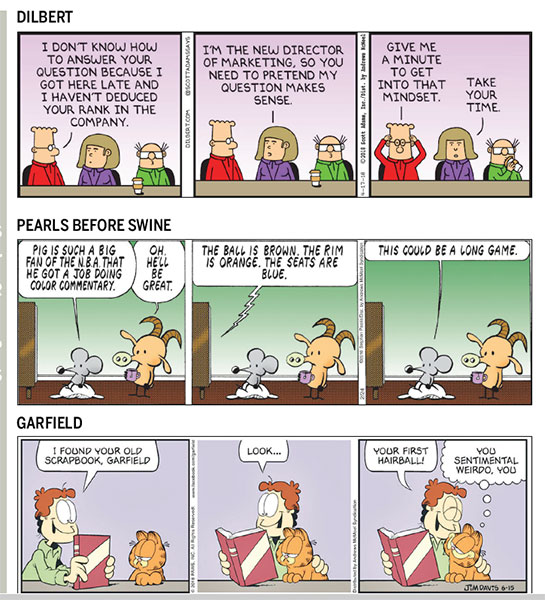

Conor Muldoon, a portfolio manager of the $8.7 billion Causeway International Value fund, said that trade and other macroeconomic concerns are “presenting short-term opportunities.” The fund has been increasing its position in Italian bank UniCredit SpA, for instance, after its shares sold off in March following elections that renewed concerns about whether the country could exit the eurozone. Muldoon’s fund is also increasing its position in pharmaceutical companies such as GlaxoSmithKline Plc and Japanese firm Takeda Pharmaceutical Co Ltd that have strong drug pipelines, he said. Shares of GlaxoSmithKline are up 19.5 percent for the year to date, while shares of Takeda are down 32 percent over the same time after it increased its $62 billion bid for London-listed Shire Plc.



Sammy Suzuki, a co-portfolio manager of the $77 million AB International Strategic Core fund, said that the threat of technological disruption in some markets was just as pressing a concern for some global companies as the impact of higher tariffs. As a result, his fund is focusing more on what he calls the “enablers”, which are back-end tech firms that do not trade at as high valuations as companies like Amazon.com Inc and Netflix.

MONEY

US industrial production fell 0.1 percent in May

Bizline

WASHINGTON: US industrial production slipped
0.1 percent in May, primarily dragged by a drop
in manufacturing caused by a major fire at a parts supplier for trucks. The Federal Reserve said on Friday that the manufacturing component of industrial production fell 0.7 percent in May largely because of this disruption in truck assemblies. A May 2 fire damaged the main plant at the Meridian Magnesium Products of America factory in Eaton Rapids, Michigan that makes motor vehicle parts. As a result, Ford had to temporarily lay off 7,600 workers as it cuts production of the F-Series pickup truck, the top-selling vehicle in America. The monthly drop should be followed by a rebound this month, said Daniel Silver, an economist at JPMorgan Chase. “Disruptions associated with the fire should be temporary, and auto production schedules point to an increase in related output in June, undoing at least a good portion of the May decline,” he said. Output at factories for metal, electrical equipment and apparel also declined, along with the 6.5 percent drop for motor vehicles and parts. Still, factory output has improved 1.7 percent over the past year and overall industrial production has increased 3.5 percent. Other reports point to continued gains for manufacturers, although the tariffs announced by the Trump administration have generated turmoil and uncertainty. (AP)

MONEY

Singapore Exchange to continue SGX Nifty trade despite India dispute

Bizline

MUMBAI: The Singapore Exchange (SGX) on Saturday said a court-appointed arbitrator had allowed it to continue listing and trading of SGX Nifty contracts beyond August 2018, during dispute resolution with India’s National Stock Exchange (NSE). The two exchanges have been locked in dispute after India’s three main bourses unexpectedly announced in February they would stop licensing their indexes to foreign bourses from August. SGX responded that it would launch successor products to its flagship Indian equity derivative products on June 4. Now NSE and SGX have been ordered “to facilitate the continued listing of SGX Nifty products for at least two successive contract month maturations beyond the arbitration’s completion date”, SGX said in a statement. The arbitrator has also asked SGX not to offer its proposed new India equity derivative products until the final decision, it said. “Arbitration proceedings are continuing and the hearings on evidence are expected to commence in early 2019,” the statement said. SGX had postponed the launch of a set of new India derivatives products after an Indian court in May referred a dispute around the proposed offerings to an arbitrator. The NSE had sought an interim injunction against the launch on grounds that the offerings infringed the intellectual property rights of its unit India Index Services and Products (IISL), which runs the Nifty index.  (REUTERS)

MONEY

Cyprus approves Hellenic Bank buyout of Cooperative Bank

Bizline

NICOSIA: Cyprus’ government on Friday approved Hellenic Bank’s multibillion-euro offer to take over troubled Cooperative Bank, an agreement the island nation’s finance minister hailed as “decisive” in overcoming past mistakes. Finance Minister Harris Georgiades said that under the in-principle deal, Hellenic Bank will manage 9.7 billion euros ($11.25 billion) worth of client deposits. Hellenic, which also is based in Cyprus, will also absorb 10.3 billion euros ($12 billion) in assets - including loans, bonds and cash - and operate 72 Cooperative Bank branches while employing 1,100 of its approximately 2,600 workers. Georgiades said another 8.3 billion euros ($9.62 billion) of Cooperative Bank’s assets will be taken over by the state. The sum includes 600 million euros ($696 million) in bank-owned real estate, but also 7 billion euros ($8.12 billion) worth of bad loans. Any revenue generated from those assets will go into public coffers, making the debt burden “manageable,” Georgiades said. (AP)