You internet speed is slow. Switch to text view mode

Switch
epaper logo
ST

Last Login:
Logout
+
Page 1
HOME PAGE

Ruling party keeps alluding to looming threats to republic. It’s not clear what they are

There are no such threats and, if any, a strong government should deal with them adequately, analysts say.
- TIKA R PRADHAN

KATHMANDU,
On August 20, two days before leaving for Singapore for medical treatment, Prime Minister KP Sharma Oli called an all-party meeting, something which had not happened in the past three years.
Oli’s co-chair in the Nepal Commu-nist Party (NCP), Pushpa Kamal Dahal, Nepali Congress President Sher Bahadur Deuba, Chairpersons of the Samajbadi Party, Nepal Baburam Bhattarai and Upendra Yadav, leaders of the Rastriya Janata Party, Nepal Mahantha Thakur and Rajkishor Yadav were all present in the meeting. Oli then urged everyone to unite to safeguard the federal democratic republican set-up, saying that large threats to the system were looming.
All the leaders present appeared to be on the same page, with most of them attesting to the fact that they should fight together against forces that are attempting to snatch away the country’s hard-won political gains.
It, however, came as a surprise as to why the head of the strongest government in decades was warning of threats against federalism, and from whom. Since then, Dahal, at different public forums, has repeatedly said the same thing, warning of imminent danger to the current political system.
“Within three-to-four years of the new constitution, some elements questioning the change are trying to come forward in different ways,” Dahal said at a function organised by the Samata Foundation on Thursday. “Therefore, it is essential for all political parties and leaders to stand together.”
Political analysts, however, are sceptical of Dahal and Oli’s warning, as they do not see any immediate threat to the current political system and that some opposition to any system or government is a common phenomenon in any democratic country.
“I don’t think there is any force active today that intends to—or that will be able to—overthrow the existing political system,” said Rajendra Maharjan, a columnist and political commentator. “If the ruling party leaders are hinting at Netra Bikram Chand’s party or pro-monarchists, they are both too weak forces.”
Ever since King Gyanendra Shah stepped down in 2008, some sections, including Kamal Thapa’s Rastriya Prajatantra Party, have been lobbying for the reinstatement of the monarchy. And Netra Bikram Chand’s Communist Party of Nepal, an offshoot of Dahal’s Maoist party, has been involved in sporadic incidents of violence. The deadliest act of violence the party perpetrated was in February, when a blast killed one person and injured two others in the Capital.
“There is no other forceful violent activity or movement that poses a danger to the existing system,” said Maharjan.
In various speeches, Dahal has issued warnings to the former king, without providing any concrete reference, that Gyanendra Shah should stop daydreaming and that he would be ousted from Nagarjun. Since leaving Narayanhiti Palace, the government has arranged the Nagarjun Palace for Shah’s residence.
On Chand, Dahal often appears optimistic that his one-time comrade will join mainstream politics sooner rather than later. The government has also said that it is open to talks with Chand, even though it has declared the party a criminal outfit and banned its activities.
Political observers and leaders say the ruling party leaders could be throwing around potential threats to divert attention away from the government’s failure to deliver on its promises. “Some of the former king’s activities and statements from his supporters could have stoked suspicion among ruling party leaders. Maybe they are concerned about whether external forces are at play,” said Jhalak Subedi, an analyst who has followed leftist politics in Nepal for decades.
According to Subedi, people’s anger, most obvious in Kathmandu’s mass protests against the Guthi Bill, could have alarmed ruling party leaders. “But, politically, I don’t see any threat to the existing system,” said Subedi.  
Bishwo Bhakta Dulal, a former Maoist leader, echoed Subedi and said that even if there was any such threat then it was the responsibility of the majority government to deal with it.
“There is no threat as such and if there is any, the ruling party leaders and the government should identify and deal with it, rather than repeating that there is a threat without identifying what it is,” said Dulal.
Some ruling party leaders, however, believe that these statements should be viewed differently.
“Some [people] are talking about Hinduism and the monarchy. Leaders might be trying to send a message to the public that there should be no confusion over the major contents of the constitution,” said Ghanshyam Bhusal, a Standing Committee
member of the ruling party. “The leaders are trying to say they are together and committed to constitutional provisions.”
Political observers, however, say that statements making oblique references to unidentified forces are not unique to Nepali leaders, and when it comes to communist parties, tilting at windmills is among their signature characteristics.
“Most rulers share a unique behaviour—instilling fear among the people when they are in trouble,” said Maharjan. “What the ruling party leaders are saying could be a strategy, as they want some sort of face-
saving after failing to deliver on their promises.”
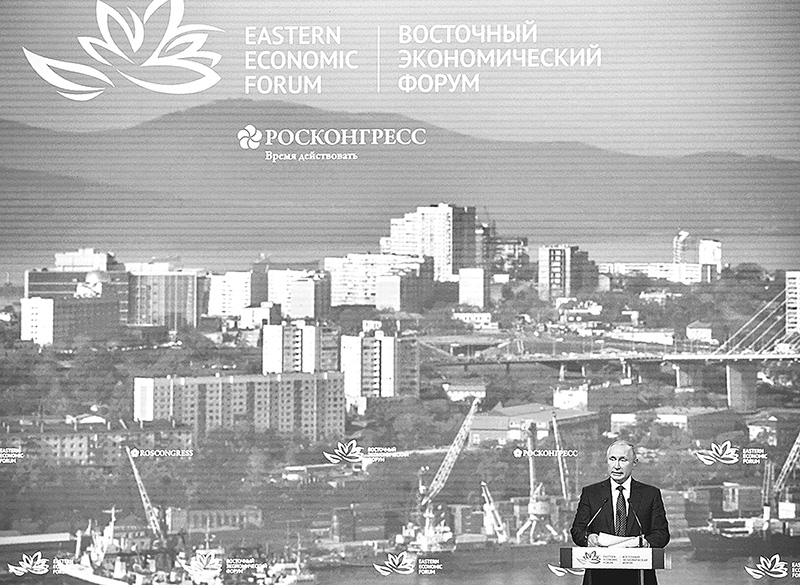
HOME PAGE

Chinese foreign minister to arrive on Sunday on a three-day visit

Wang Yi will not be signing any pacts or agreements but will instead lay the ground for Xi Jinping’s stopover in October, sources say.
- ANIL GIRI
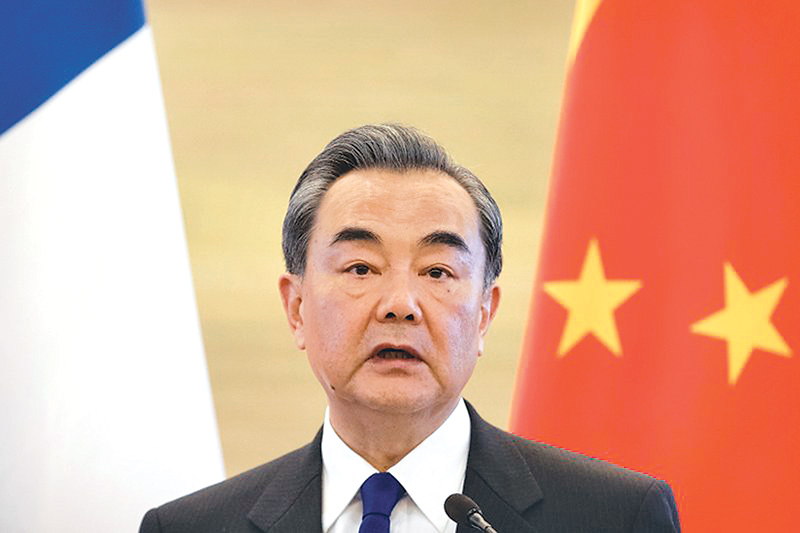
Wang Yi. AP

KATHMANDU,
Chinese Foreign Minister Wang Yi will be arriving on Sunday on a three-day official visit that many believe will set the stage for Chinese President Xi Jinping’s arrival, possibly in mid-October.
Though the Ministry of Foreign Affairs and the Chinese Embassy in Kathmandu remain tight-lipped on the visit, three different sources confirmed to the Post that Wang will be in Kathmandu for three days and will return to Beijing on Tuesday after gauging the possibility of the Chinese president’s stopover.
The Chinese side has already indicated the probability of Xi’s stop-off in Kathmandu for a few hours on his way back to Beijing after holding informal talks with Indian Prime Minister Narendra Modi, a senior security official told the Post. In preparation, renovations are underway at the Soaltee Crowne Plaza to host Xi and his retinue.
Successive Nepali governments and heads of state have time after time invited Xi to visit Nepal, but political instability and his tight schedule have long stymied any plans.
During his time in Kathmandu, Wang will prepare a blueprint for what could be achieved during Xi’s few hours, a Nepali diplomat told the Post on condition of anonymity. But no pact and agreement will be signed during the Foreign Minister’s visit, said the diplomat.
At least three Chinese advance teams have already arrived in Kathmandu to assess security, road conditions, the airport and other logistics in preparation for Xi’s visit. The teams have indicated that Xi may visit for a couple of hours, or at the most, will land in the morning and return the same evening after holding political meetings and signing agreements.
Wang, who is coming from Pakistan, will pay a courtesy call on President Bidya Devi Bhandari and Prime Minister KP Sharma Oli, and will hold talks with his counterpart, Pradeep Gyawali. He will also meet separately with a few political leaders, according to officials at the Ministry of Foreign Affairs.  
During the meeting between Gyawali and Wang, both sides will review the status of bilateral projects including those selected under the Chinese Belt and Road Initiative and will discuss other areas of cooperation that can be agreed to during Xi’s visit.
A senior official at the Prime Minister’s Office, who also requested anonymity because he was not allowed to speak to the media, told the Post that the Chinese are dissatisfied with Nepal’s inability to effectively take up projects under the Belt and Road Initiative, which Nepal signed up to more than two years ago. Nepal has decreased the number of projects under the BRI from 35 to nine, but not a single project has been taken up yet.
“We have to figure out our priorities,” said Dinesh Bhattarai, a foreign relations adviser to two Nepali Congress prime ministers. “I do not believe we have done enough homework when it comes to our engagements with China.
If we fail to produce results, such high-level visits will turn into a formality. We should have the big picture in mind, with long-term vision so that we can build a narrative that can impress the Chinese.”

HOME PAGE

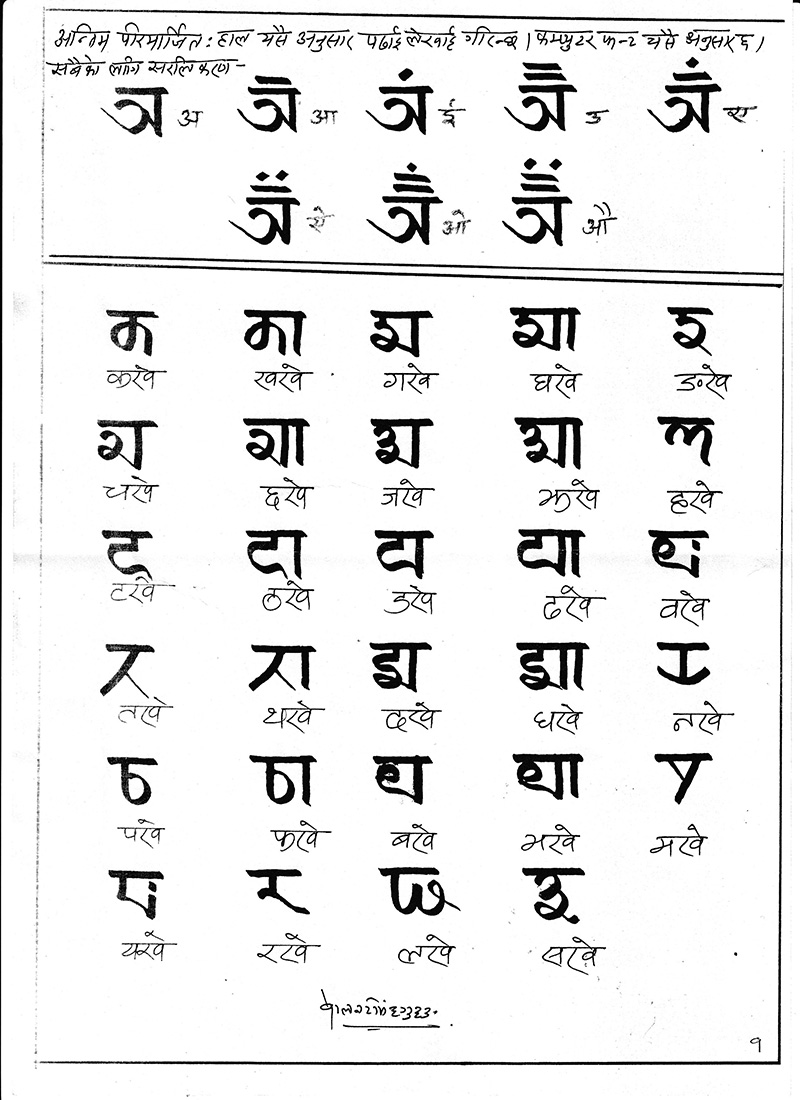
The Gurung language once had no written script. Now it has five

The Gurung community came up with its own scripts, but it is now divided over which to use.
- SACHITRA GURUNG
  he alphabets from Khema Prih. Photo courtesy: bal narsingh gurung

KATHMANDU,
In 1944, when Jagan Lal Gurung was fighting in Burma during the Second World War, he came up with an ingenious method of communication. As his battalion was composed primarily of Gurungs, Jagan Lal began to communicate in Tamu kyui, the Gurung language. When the war ended, Jagan Lal had acquired a newfound interest in his native tongue, an interest that led to him developing a script for the oral language.
Combining various signs and symbols, Jagan Lal developed a rudimentary script, which today is known as Khe Prih. When Jagan Lal returned to Nepal, he began teaching Khe Prih to the children in his village of Hyanjakot.
“It was still the Rana regime in Nepal at that time,” said Man Bahadur Gurung, president of the Tamu Language-Script and Culture Development Foundation in Lekhnath, Kaski, and a long-time advocate of Khe Prih. “Jagan solti received a lot of threats from the Ranas for teaching the children, but he didn’t budge. When he was about to be arrested and his life was at stake, he ran away from Nepal, back to his duty in the Indian Army.”
Jagan Lal only came back to Nepal in 1965, and immediately began lobbying for his beloved script. He taught many, with Man Bahadur among them. But he made little progress in his lifetime. After Jagan Lal’s death in 2011, Man Bahadur edited the Khe Prih script into its current form and began to propagate it.
“Jagan solti did a lot to teach Gurungs to write in their own script,” says Man Bahadur. “But at that time, people cared less about having a cultural identity.”
But Jagan Lal’s Khe Prih wasn’t the only script vying for the attention of the Gurung community. Quite a few others had attempted to develop a script for the language, even as some believed that a script was unnecessary, as they could easily write out the Tamu kyui using Devanagari or even Latin alphabets.
According to the 2011 Nepal census, there were 522,641 Gurungs in the country, but only 325,622 could speak the language and a majority of them live in villages. Despite this, the language has five scripts—Khema, Khe Prih, Shaman, Roman, and Ujjain.


(From top) Khe Prih, Khe Prih in Devanagari script, and its translations in Nepali and English languages. Photo Courtesy: man bahadur gurung


Khe Prih and Khema are the two most widely used scripts, and although Khe Prih is older, Khema is much more popular, used in Nepal, India and Bhutan and also listed as the official script of the Gurung language by the Nepal Language Commission.
Despite Jagan Lal’s efforts, Khe Prih was never fully adopted by the Gurung community, which was largely unaware of its existence. The Gurung began to fear that the language would disappear as more and more Gurungs started to live abroad and not speak the language. And since it couldn’t be written down, the fear was even more palpable, according to Bal Narsingh Gurung, secretary of the Gurung Samaj Sudhar Samiti.
Furthermore, for Ghyapri and Pachyu, who are Gurung priests, the pye, or religious text, isn’t in written form. The pye is passed down from guru to student orally, and if students cannot memorise it then they cannot pass it down.
In 1977, the committee decided to develop a script to help in preservation, and Bal Narsingh was tasked with the responsibility.
“Gurung language is originally just an oral language, so the committee decided to develop a script to preserve and promote the language,” said Bal Narsingh. At that time, the committee wasn’t aware about the Khe Prih, and so Bal Narsingh, under the supervision of Guru Pim Bahadur Gurung, developed the script in a year.
Since its development, the Khema script has largely been adopted by the Gurung community. At the Devdaha Mother Tongues Academy in Miteri Gaun, Rupandehi, Gurung students from class one to five study the language in Khema script.
“This school is an attempt to increase the literacy of the Gurung language among the younger generation,” said Ram Bahadur Gurung, principal of the Academy.
Bhim Gurung, managing director of the Academy and a student of Bal Narsingh, has been conducting workshops and training sessions about Khema script for the last 14 years.
“This is something that all the people from the community should be concerned about, but unfortunately that is not the case. Language and its script are a part of our identity,” said Bhim.
Last year alone, he facilitated 22 language training sessions both inside and outside Nepal.
“A few months ago, 26 young teachers from Sikkim came to learn the Khema lipi from me,” said Bhim. The government of Sikkim approved of the script and introduced it into the school curriculum in 2002, according to Bhim. The Gurung language and Khema lipi are taught as a first language for Gurung students from class one to 10.
“Previously the majority of Gurungs lived in small villages across the hilly regions of Nepal, so the dialect became different from village to village. To establish linguistic unity, it’s important for the language to be in written form,” said Bhim.
However, that hasn’t been the case. The relatively small Gurung community has been further divided by their choice of script.
“Gurungs from different regions are developing their own scripts. If everyone is going to develop their own scripts, which one do we follow? This just takes away the motive of developing a script,” said Ratna Bahadur Gurung, who writes Gurung language textbooks. “There needs to be unity. If we keep fighting among ourselves, someone else will take advantage of the situation, in this case another script.”
Ratna Bahadur wrote Tamu kyui lu le—Let’s learn Gurung language—in Devanagari in 2001, and has been involved in developing a curriculum for the Gurung language.
But not everyone shares Ratna Bahadur’s fears. Many Gurung community organisations have accepted the Khema lipi as their official script.
“Khema Prih was accepted by many Gurung organisations so we, as a national organisation of the Gurung community, also approved it. An equal amount of consideration was given to all scripts,” said Resham Gurung, president of the Tamu Hyula Choja Dhin Gurung Rastriya Parishad Nepal.
Resham acknowledges that his organisation cannot convince the entire Gurung population to accept Khema lipi as their official script, but he wishes they would.
“We are fighting for a greater cause, like preserving our language and advocating its use in government offices, so all of us need to come together,” he said.

Photo courtesy: Bhim Gurung


Resham is well aware of the fact that most of the young generation cannot speak the language and that makes it doubly important that the Gurung community rally around one script for their language.
“Our youths go to learn Japanese or Korean language because they know they will get a job after learning them. But what opportunities will they have after learning Gurung language? The significance of the language is just limited to cultural identity, which is why many youths do not bother,” he said.
Tamu Hyula Choja Dhin sends mentors to different parts of Nepal to teach Gurung language. As a part of the programme, Mamita Gurung went to teach Gurung language in Rumjatar.
“Even older adults didn’t speak Gurung language, let alone the kids. I spent three months teaching there,” said Mamita. But since the language didn’t have its official script, she taught the language using Devanagari lipi. “But even if there was a script I don’t think three months would have been enough to teach them both language and script. Since everyone is familiar with Devanagari and Roman script, it would be easier and faster to teach the language using them.”
This was the same thought process behind the development of Roman lipi by the late anthropologist Harka Gurung.
“Since many Gurungs are born abroad or spend their childhood abroad because of their parents’ work, they are more familiar with the Roman script, which was Dr Harka’s point. But people weren’t convinced,” said Resham.
But there are inherent problems with Devanagari and Roman scripts. The Gurung language is tonal, so it is difficult to capture oral nuances in Devanagari or Roman alphabets. That’s why the Khema lipi fits the language perfectly, said Resham.
But Ratna Bahadur disagrees.
“I am not a linguistic expert but I have been involved in this for a long time. These lipis either only have a short vowel sound (raswa) or long vowel sound (dirgha), but the Gurung language has both. The Khema lipi doesn’t have long vowel sounds, so I have asked them time and again to revise the script,” he said.  
Likewise, Man Bahadur too knows about the shortcomings of each script.
“I am not saying that Khe Prih is better than Khema or any other scripts. We all have shortcomings and we need to fix them,” he said. “But I cannot give up on the hard work and sacrifices of Jagan solti.”
For Man Bahadur, and for many others in the Gurung community, the tussle over the script is a far deeper issue—the community identity.
“If we take the scripts out of the equation, the language is the same,” said Man Bahadur. “And maybe that’s where we should start from.”

Page 2
MEDLEY

Horoscope

ARIES (March 21-April 19)
***
If you have an exercise routine, try to mix it up a bit today. Mundane physical exertion will hinder your energy levels than improving them. If you don’t have any sort of physical routine, today you need to start one. Even if it’s something small. It will make a big difference in your energy level and in your attitude today.


TAURUS (April 20-May 20)
****
Your day will be neatly divided into different periods: there will be a time for fun, work, and even for romance! The exact sequence is something you can determine, so take a look at the schedule to get a preview of the way your day will flow. You might end up being quite surprised by how romance works its way.


GEMINI (May 21-June 21)
**
You should think long and hard before you share any opinions today—there is a possibility that some tensions could result from what you say. Don’t assume that someone you’re speaking to shares your beliefs and attitudes. You don’t want to end up with your foot in your mouth—it’d be a very unappetizing snack.


CANCER (June 22-July 22)
***
When all else fails today, talking things out will help. From blameless fender benders to convoluted industrial-sabotage conspiracies, your communication abilities will go a long way today. You have a lot more influence over the attitudes of people than you may realize. Try flashing a smile today.


LEO (July 23-August 22)
***
Some of the spendthrifts in your life are going to be financially conservative than they usually are—and you should follow their example. Even if your current financial situation is stable, it would not do you any harm to tighten your purse strings a little bit. Brown-bagging your lunch is an easy first step.


VIRGO (August 23-September 22)
***
There’s nothing you can’t organize today, so it’s a great time to tackle any major cleaning projects that you’ve been putting off for a while. Whether you need to tame the mess in the garage, cull some outdated fashions from your closets, or just get going on preparing your taxes, today is the day to do it.


LIBRA (September 23-October 22)
***
Someone in your life who is very perceptive and sharp is suddenly oblivious to something very important—despite the conspicuous clues you’ve been providing. Try not to let this unusual behavior frustrate you. You’ll have to be very clear when communicating what you want this person to know.


SCORPIO (October 23-November 21)
***
You will be able to simplify complications today. You’ll have an ability to cut right through all the clutter and get right to the important stuff. All the dramas in your social circle are being caused by the same thing, and you should make an attempt to find out what that thing is. Try keeping the peace.


SAGITTARIUS (November 22-December 21)
**
Your day will be somewhat dictated by someone who is in authority right now. Luckily, this person is not interested in making your life difficult. So don’t jump to any conclusions about what will be asked of you—and don’t volunteer for any project. Wait and be honest about the amount of time you’ll need.


CAPRICORN (December 22-January 19)
***
Time is definitely precious, but it’s not as rare as some people would have you believe. You have all the time you want, especially right now—your schedule is under your control for a limited period of time. If you need time to get back with your people, share some laughs and catch up on a friendly gossip, you just have to make it.


AQUARIUS (January 20-February 18)
**
If you are in the middle of any business dealings, be careful today. You needn’t worry too much about anyone’s honesty or integrity, but you should be very mindful of details. Negotiations of any kind will be tricky right now. The wheelers and dealers involved have contradictory agendas.


PISCES (February 19-March 20)
****
To help yourself today, help other people—the overwhelming gratitude you’ll receive from the people you’ve aided will lift your spirits higher. Giving time to someone else will make you feel strongly connected to humanity and empowered to do more to make the world a better place. Consider a new volunteer opportunity.

Page 3
NATIONAL

Ministry directs TU to allocate 75 percent of seats in medical colleges to scholarship students

We want to see the commitments implemented, students say.
- BINOD GHIMIRE

KATHMANDU,
The government has committed to allocating 75 percent scholarship seats in the state-funded medical colleges, as envisioned in the National Medical Education Act.
Minister for Education, Science and Technology Giriraj Mani Pokharel, also the ex-officio pro-chancellor of universities, has directed the Tribhuvan University to ensure that 75 percent of the MBBS seats are set aside for scholarship students.
The directive follows continuous student demonstrations putting forth an eight-point charter of demands, including implementation of the Act.
“The government commits to implementing the provision of 75 percent scholarship in line with the Act,” reads the minister’s directive to the Tribhuvan University. The common entrance examinations for all the universities, however, will be conducted from the next academic session, according to the directive.
The entrance test for medical colleges under Tribhuvan University is starting on Saturday, while Kathmandu University is conducting the test in the third week of September. Based on the demands of the students, Pokharel has asked university authorities to regulate college fees right from the time of admission.
As per the directive, the students will submit the vouchers of the money paid to their colleges at the university, which will coordinate with the colleges.
The move, the ministry believes, will stop medical colleges from charging exorbitant fees to the students.
If the university administration follows the directive, students will not have to engage in financial dealings with colleges.
Pokharel, in the directive, has also asked the university authorities to publicise the total fee for MBBS, including the registration and examination. He also has asked the colleges to publish the hostel fee and cost of food in a national newspaper.
“It is a good initiative by Pokharel. However, we want to see that implemented,” Anit Sinha, secretary of the students’ struggle committee, told the Post.
The Act was brought to address the agreements with Dr Govinda KC, an orthopaedic surgeon at the Tribhuvan University Teaching Hospital, who has staged several hunger strikes in the past times, calling for an end to malpractices in the country’s medical education sector.
Students had resorted to protests and padlocked the Institute of Medicine under Tribhuvan University and  Kathmandu University School of Medical Science, demanding implementation of the Act, mainly the common entrance tests and the scholarship.
While the state-run medical colleges have to provide 75 percent scholarship quota, private medical colleges run with domestic resources need to reserve 10 percent scholarship quota, and those run with foreign investment must reserve 20 percent quota.
The Medical Education Commission has been constituted as per provision in the Act to deal with the issues related to medical education. The commission, however, hasn’t come into a function as the government has yet to appoint the vice-chair who is its executive head.
A recommendation committee led by Umesh Prasad Mainali, chairman of the Public Service Commission, has suggested three names for the post of vice-chair. The prime minister will appoint one of the three individuals recommended by the committee.

NATIONAL

Government to train more health workers on mental illness

The programme aims to break down barriers to mental health care in rural areas.
- Arjun Poudel
shutterstock

KATHMANDU,
A 19-year-old woman from Chinali village in Bagchaur Municipality of Salyan district recently went missing for more than 12 days. She was heavily pregnant at the time of her disappearance.
When she was found by her relatives, she was not in a bad emotional state. Her in-laws then took her to Bankhukhola Health Post for a medical check-up.  
“The woman was suffering from antepartum depression [depression during pregnancy],” Nirmala Oli, a staff nurse at the health post told the Post over the phone. “I counselled her and her in-laws regularly. Now her condition is normal and she is due to give birth sometime next week.”
The case of the young woman from Chinali village is just one illustration of mental health issues that afflict many people, particularly in rural areas where access to proper mental health care is hard to come by.
The government records show that the number of patients seeking mental health care has been rising in rural districts of the country.
Nepal simply does not have enough experts to treat and cure patients of mental health problems. There are only around 130 psychiatrists in the country, most of whom are based in urban areas; fewer than 30 of them work for the state-run hospitals. Concerned by the mental health crisis in the country, the government has  been training paramedics and staff nurses in mental health issues to bridge the gap in service delivery.
With the training, officials believe, the health workers may be able to address the needs of patients
suffering from mental illness.
This Ministry of Health and Population initiative began last year. Oli was one of over 1,000 paramedics and staff nurses from 20 districts who underwent the training. Without the training, she would not have been able to diagnose the condition of the young woman from Chinali.
Trained health workers like Oli have been helping patients of mental illness in other parts of the country
as well.  
Purnima Poudel, a staff nurse at a health facility run by Health Foundation Nepal, a non-governmental organisation, in Dang district, said that she had dealt with 29 mental health cases in the last 19 days.
“A number of people living with mental health problems come to us for counselling, and I have referred about half a dozen of them to the psychiatric doctor,” Poudel, told the Post over the phone.
Encouraged by the results, the Health Ministry is preparing to train more health workers this year.  
The new approach is complemented by the government’s continued commitment to providing free medication to mental health patients up to the health post level and keeping several medicines of mental health on the list of essential medicines which are distributed free of cost.
“We are planning to provide mental health training to over 1,000 paramedics and staff nurses of 21 districts this year,” said Dr Phanindra Baral, chief of mental health section at the Epidemiology and Disease Control Division. “The training will help screen the mental health patients in rural areas and recommend severe cases to consultant psychiatrists.”

NATIONAL

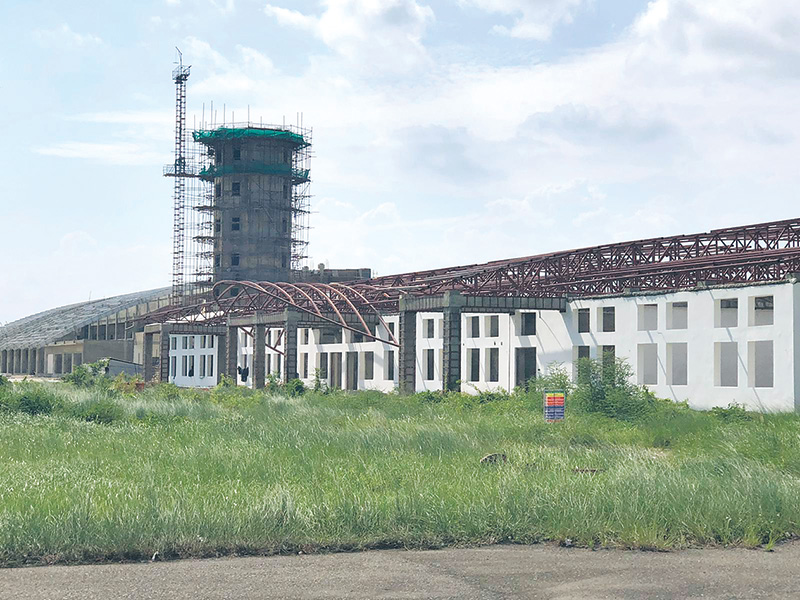
Tourism minister repeats he will build Nijgadh airport at any cost

Debate should focus on location rather than on whether Nepal needs another international airport, environmentalists say.
- CHANDAN KUMAR MANDAL
Post file photo

KATHMANDU,
Since assuming office, Minister of Culture, Tourism and Civil Aviation Minister Yogesh Bhattarai has made building Nijgadh International Airport in Bara his one-point agenda. Or at least it so appears. Not even a single public appearance of his since becoming the tourism minister on July 31 has gone without the one refrain: “we will build Nijgadh airport at any cost.”
Most of his statements, including the one in which he claimed to bring together hundreds of thousands of people in support of the airport, have been met with fierce criticism.
On Thursday, Bhattarai once again repeated his same refrain on Nijgadh airport, largely ignoring what environmentalists’ warnings.
“It’s not that the government is not aware of the environmental damage the project could do,” said Bhattarai at an event organised to release the environmental, social and economic impact of Nijgadh airport. “Although the government has not gone there for haphazardly destroying everything, we know the damages that will happen with the construction of the airport.”
Environmentalists have been raising concerns regarding the airport’s construction since the environmental impact assessment of the multi-billion project was passed last year, calling the project disastrous for the environment, wildlife and people living around the area.
But Bhattarai said the proposed airport is “something that future generations will remember for a long time.”
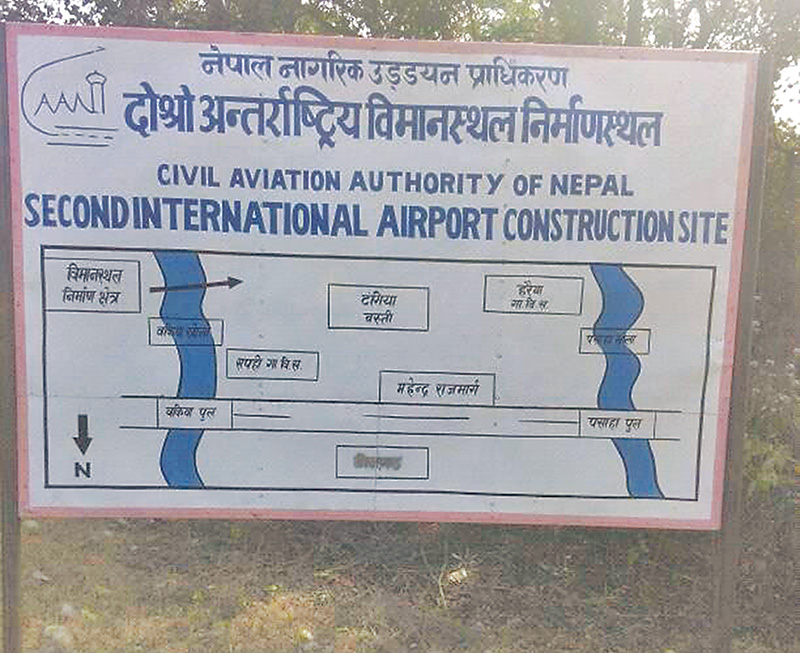
The planned airport located 175 kilometres south of Kathmandu, will be spread over 80 square kilometres and is set to be the biggest airport in South Asia in terms of areas.
“The government is not unaware of the debates going around. We will not ignore these issues,” said Bhattarai. “We will not move from the present location, which has been approved as the most appropriate site by various studies,” he said right after receiving a report which has raised various concerns about the project for its adverse impacts on the overall ecosystem and wildlife.  
The report prepared by the Nepal Forum of Environmental Journalists (NEFEJ) pointed out that the current plan has ignored significant issues related to forest cover, drinking water resources, birds and other wildlife, impact on Chure region, flooding in downstream areas, management of Tangia Basti settlement, environmental pollution, and degradation of existing ecological services.
The report further questioned the motive behind going ahead with the project without the Detailed Project Report (DPR) and also recommended reviewing the current EIA report which has been mired in controversy since it came into the public domain.  
According to Bhattarai, the country needs another international airport because the Tribhuvan International Airport, the sole international airport, will reach its maximum utilisation by 2022.
“TIA, which is serving nearly eight million passengers with an annual rise of 7.5 percent, cannot bear the pressure any longer. We need another airport,” said Bhattarai. “For a country like Nepal, which is a landlocked country and relies heavily on its tourism sector, air route is the most feasible route to bring more tourists.”
Prachanda Jung Shah, a former captain, said there were so many misconceptions among the government officials, activists as well as public regarding the Nijgadh airport project.
“Once completed, Nijgadh airport will be the primary international airport for the country. It is not an alternative airport to TIA; it will complement the TIA,” said Shah. “The government should be assertive about the project and its current location.”
Sprawling over 8045.79 hectares, the proposed Nijgadh airport would require clearing a forest area of 2.4 million trees. The planned construction site lies amid dense forests with nearly 90 per cent of the project area covered by Shorea robusta trees, also known as sal or sakhua.
The proposed site is adjacent to the Parsa Wildlife National Park, a corridor for big wildlife like tigers and elephants and a habitat of rich biodiversity. The current project site also passes between two rivers— Lalbakaiya and Pasaha river—and other small creeks.  
While the government made its intentions clear that it would move ahead with the current construction plan at any cost, environmentalist and development practitioners continue to raise concerns about the possible damage because of the mega-project.
Prabhu Budhathoki, a former National Planning Commission member and biodiversity expert, said the debate was not about whether we need an international airport or not.
“The whole debate is about its current location which is significant for the ecosystem, environmental services and wildlife,” said Budhathoki.
According to Budhathoki, the government might face trouble in the future for taking the environment for granted while constructing the airport.
“The whole world is taking environmental issues more seriously than ever, but we are moving ahead with this airport,” said Budhathoki. “Funding for the project can be a problem. Also, what if other countries and airlines companies ban us or refuse to come to this airport because of environmental concerns? We can move to other least controversial location, which is available.”
Recently, eight companies from seven countries have expressed interest to construct the airport. As per the Environment and Social Impact Assessment (ESIA) report, nearly 770,000 trees will be chopped down during the first phase of the project.
Environmentalists have also been questioning the validity of the EIA report which has been criticised for being faulty, with some saying parts of it were directly copied from elsewhere.
According to Batu Krishna Upreti, former chief of environment assessment section of the Ministry of Environment, said the current EIA of the project did not meet even the basic standards of the EIA.  
“The present EIA document is not about the construction of the airport, but about removing the settlement from Tangiya Basti and cutting down trees. Only the cover page of this report says it is an EIA report,” said Upreti. “The beauty of the EIA is giving an alternative analysis which is missing in this report. It moves ahead bulldozing with one location. If we move ahead with this EIA, then we have plenty of examples of how big projects have failed in the past.”
The government has been defending the current project site saying it was selected among eight other places which were studied for the construction of the airport. However, conservationists are not ready to buy this argument.
Anand Bhattarai, a forest and environment expert, said the feasibility study of the project on other locations was never made public.
“Chitwan was not selected because of its proximity with Chitwan National Park. Likewise, Butwal was also not chosen because of three rivers around,” said Bhattarai. “Then why the current location, which is adjacent to Parsa National Park and also two rivers, was selected.”
Due to project area’s proximity to rivers like Lalbakaiya and Pasaha and other small rivulets, environmentalists have been warning that the construction of airport could spell flooding in nearby areas like Gaur, Gadhimai, Kalaiya and Birgunj.
Bhattarai said the project would move ahead ensuring maximum benefit and minimum damages.
“The government will not work haphazardly, causing environmental damage. We will simultaneously introduce environmental management plan,” said Bhattarai. “The government will respond to international concerns on why the project site was chosen. In a few months, we will finalise all the modalities of the project.”

Page 4
NATIONAL

Cafe brews hope for Nepal’s trafficking survivors

- REUTERS
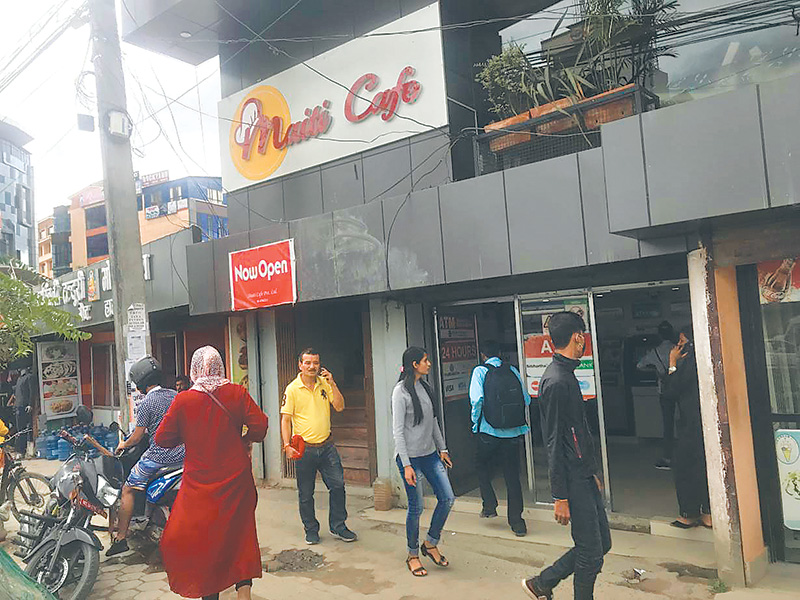
Maiti Cafe is Nepal’s first eatery largely run by female trafficking victims. Reuters

KATHMANDU,
On a busy street in Nepal’s bustling capital Kathmandu, a new cafe is seeking to change the lives of trafficking survivors—one cappuccino at a time.
The Maiti Cafe is the first to be staffed by women who are either at risk of or have been rescued from slavery in Nepal, where thousands of people are trafficked every year, many to neighbouring India.
As well as helping them rebuild their lives, it aims to end the stigma that survivors often have to deal with in Nepal’s conservative, mainly Hindu society. Among the new waitresses taking orders and serving the cafe’s signature steamed buns is Preeti—not her real name—whose family disowned her after she was rescued from a brothel in India, and who now wants to leave the past behind.
“I don’t want to look back at that dark part of my life,” Preeti, 26, told the Thomson Reuters Foundation. “I’m looking forward to building my skills and confidence in what I am doing now.”
Preeti is one of 11 women working as chefs, cashiers, baristas and waitresses and earning about 13,880 Nepali rupees ($120) a month, a modest but manageable wage in a country where one in five lives on less than $1.25 a day. More than 23,000 people were trafficked in Nepal in 2016, according to the latest available data from the National Human Rights Commission, double the figure for the previous year.
Experts have attributed the rise to an earthquake in April 2015 that killed about 9,000 people and left many more homeless. Traffickers lure victims, mostly from poor rural areas, with promises of good jobs, only to force them to work in fields or brick kilns, or as prostitutes or domestic workers.
The cafe is a social enterprise—a business that aims to do good as well as make a profit.
It was set up by local anti-trafficking charity Maiti Nepal with A’fno Nepal, an organisation that promotes social entrepreneurship, and Dutch organisation Free a Girl, which works to free victims of forced prostitution.
Many, like Preeti, are shunned by their families because daughters who left home with strangers are seen as a source of shame.
Customers seem to have no such reservations—since it opened on Aug. 3, Maiti Cafe has attracted up to 150 customers a day. With its freshly brewed coffee, chicken sizzlers and steamed dumplings, the cafe has earned a nearly four-star rating on Google reviews, with scores of comments praising the service.
“It makes no difference to us what these women did in the past,” said Sunil Bhatta, a 22-year-old college student, as he dined at the cafe.
“They are well-mannered, polite and hard working. It’s good they are running the cafe and making a living for themselves.”

The cafe plans to increase the number of staff to 15 over the next year and Maiti Nepal’s chairman Bishwa Ram Khadka said the profits would be used to provide further training in sales, accounting and cooking. “This is an example of how social and business enterprises can help underprivileged people sustain their lives financially and empower them,” he said.
Anti-trafficking activist Sunita Danuwar welcomed the initiative but said it was vital to ensure the women were protected from the risks of re-trafficking and reprisals from those who trafficked them originally.
“It is fraught with dangers ... utmost care should be given to protect their identity and ensure their safety,” she said. Despite months of training, Preeti said she and some of her new colleagues had been nervous about starting their new jobs, fearing customers might judge them.
She was the only member of staff willing to speak to the Thomson Reuters Foundation—the others declined, citing concerns for their safety. Since she was rescued in 2005, Preeti has received vocational and skills training and gone back to school to make up for what she missed out on in childhood.
She spends her mornings studying before heading out for an eight-hour shift at the cafe, and views her new job as a vital stepping stone that could put her through college.
“Maybe in the future I will be able to have a cafe of my own,” she said.

NATIONAL

ReutersGovernment to launch mobile app to deliver services digitally

IT experts say use of mobile SIM card registration data for applicant identification is problematic; raise concern over misuse of digital information by the state.
- PRITHVI MAN SHRESTHA

KATHMANDU,
The Prime Minister’s Office is currently working to develop a mobile application—Citizens App—to deliver a variety of citizen services digitally. The app intends to use the SIM card registration data to identify the applicant.
Accordingly, acting on the request of the Prime Minister’s Office, the Nepal Telecommunications Authority last week urged mobile phone users to use only those SIM cards that have been registered in their names. It also called on everyone to imme-diately register their SIM cards in their own names.
Current plans for the ‘Citizens App’ include applying for driver licence, Permanent Account Number, Public Service Commission examinations, land registration, company registration, social security and civil
registrations such as births, marriages and divorces.
“After the app is installed, we will send a verification code to determine whether the SIM card has been
registered in the name of the service seeker. We will also verify with the Nepal Telecom Authority whether the SIM card has been registered in the name of the concerned person,” said Asgar Ali, an IT consultant to the prime minister. “Once one puts the passport number or citizenship number on the app, we share the information to the concerned government office which verifies the details with the digitally shared information of service seekers from other offices and provide service digitally.”
Once the app comes into operation, according to Ali, service seekers will no longer need to visit the concerned offices with photocopies of their citizenship certificates and other personal documents to get the work done.
“We plan to launch this app in around two months,” he said.
Experts in information technology say although delivering services digitally is a good move, the government needs to ensure that the digitally provided information by the  applicant is not used for purposes other than providing the service sought by the applicant.
“Nowadays, a mobile app can also be tracked to identify personal behaviour of an individual. We still don’t have a law on data privacy. While promoting digitalisation of government services, we need to introduce laws on digital privacy first,” said Bijaya Limbu, co-founder of Bhairav Technology, a company which works on cybersecurity.
According to Limbu, the mobile app should also be audited through third party software and a robust firewall should be built to ensure that the applicant’s private data is secure from hacking attempts and misdirection.
However, Ali said the new system would not violate the privacy of any person. “There won’t be personal data in the app anyway, hence even in the event of hacking, no damage will be done,” said Ali. “The mobile number, its International Mobile Equipment Identity, or IMEI number and personal details will be on the server—not on the app.”
Security experts say that could be an issue as the servers are vulnerable too. If not adequately protected, data stored on servers can be hacked, which has happened on numerous occasions throughout the world.
“It does not matter whether you have personal information on the app or not, because that can be a gateway for hackers to reach the main server,” said Limbu. “They can also target the server directly. So, sufficient security measures should be taken in both main server and apps.”
To aid the government initiative, Nepal Telecommunications Authority is also preparing to put a cap on the number of SIM cards a person can register in their name.
Currently,  people can obtain as many SIM cards as they want.
“We plan to limit the number of SIM cards which can be registered in an individual’s name to two per telecom company,” said Purusottam Khanal, chairperson of the Nepal Telecom Authority.
Officials say by capping the number of SIM cards one person can use and requiring people to only use SIM cards registered in their own names could help reduce crimes as well.
“Even now, using SIM cards registered in other people’s names is illegal. But SIM cards are being distributed haphazardly which has made security vulnerable,” said Khanal. “So our effort is not only to support the government to provide services digitally, but also to control crimes.”
The Nepal Telecommunication Authority, the regulator of the telecom sector,  does not have exact data on how many SIM cards are in use and how many are registered in other peoples’ names. But according to Khanal, an estimated 50-60 per cent SIM cards are registered in the names of original users.
Experts point out that with such imprecise SIM card registration data, the application of the ‘Citizen App’ would be problematic. “Until you register all the SIM cards in the name of original users, questions may arise about the authenticity of the data and create problems in operation of the system to deliver government services,” said Limbu.

Page 5
NATIONAL

Officials of Paldevi Community Forest held on charge of illegal logging and timber smuggling

Around 100 green sal trees worth Rs 2.5 million were cut down in the community forest one and a half months ago.
- NARAYAN SHARMA

NAWALPARASI,
The Division Forest Office in Nawalparasi (East) has arrested Deepak GC, the chairman of Paldevi Community Forest, and Rana Bahadur Jhedi Magar, the secretary of the community forest, on the charge of illegal logging and timber smuggling.
According to Krishna Devkota, information officer at the division forest, the District Court has remanded them to judicial custody for 10 days. GC and Magar were arrested for working in cahoots with forest representatives and timber smugglers.
Around 100 green sal trees amounting to 3,000 cubic feet worth around Rs 2.5 million were cut down at the Paldevi Community Forest in Khakara, Binayi Tribeni Rural Municipality Ward No. 5 this monsoon, according to the Division Forest Office.
Kulchandra Dawadi, an investigation officer of the forest office, said the trees were felled in collusion with the representatives of Paldevi Community Forest. “We have found the involvement of GC and Magar, as they did not inform the Division Forest Office about the incident nor did they try to stop the logging,” said Dawadi.
The Division Forest Office was informed about the illegal logging 36 days after the incident. Timber smugglers had mobilised the locals of Khakara Village to chop down the sal trees.
A team led by Division Forest Officer Purneshwor Subedi had gone to Khakara for inspection. Almost all 38 families of the village have fled fearing arrest from the forest office for chopping the trees.
Jamuna Ale, a resident of Khakara Village, said she decided to stay in the village while all others were fleeing, as she had been visiting her home when the tree-cutting took place.
“I don’t know what happened. I wasn’t a part of it, so I stayed back,” Ale said. Dawadi said they are facing difficulties to conduct an investigation, as there’s no one in the village.
“Most of the houses are padlocked in Khakara,” he said.
The incident site is around 31 kilometres north from Dumkibas Bazaar.
Meanwhile, Bishnu Bahadur Karki, chief district officer, said, “We will deploy police personnel to provide security to the villagers. They needn’t fear arrest if they haven’t done anything wrong.”
Chakra Pani Timilsina, the former chairman of Paldevi Community Forest, blamed high-level officials of the Division Forest Office, representatives of the community forest and the ward chairman of being involved in illegal logging and timber smuggling.
“The incident came to light as they were fighting amongst themselves for financial reasons,” said Timilsina.
Meanwhile, Dambar GC, the chairman of Binayi Tribeni Rural Municipality, said he has been informed of the villagers fleeing their homes.
“We have sent some representatives from the rural municipal office to find the villagers and talk to them. There’s no need for them to leave their homes,” he said.

NATIONAL

Tinkar road obstructed due to multiple landslides

- MANOJ BADU
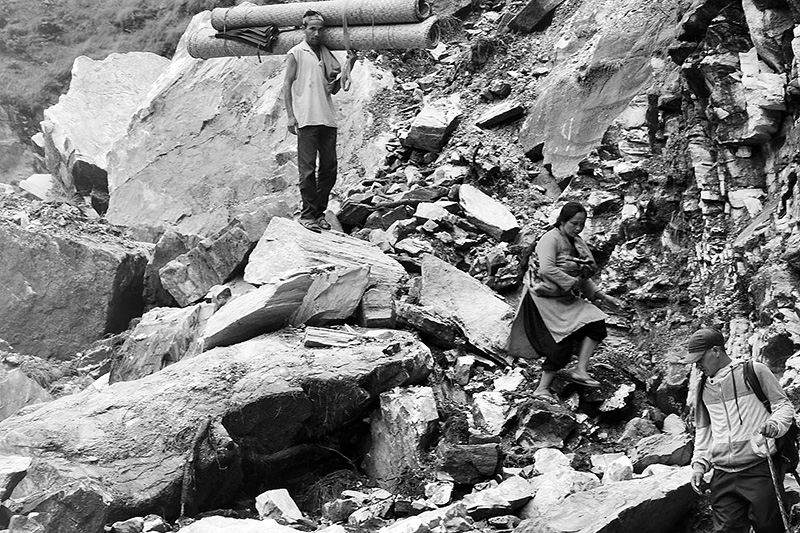
People make their way through a landslide-hit Tinkar road section. Post Photo: MANOJ BADU

GARMORA (DARCHULA),
The residents of Duhu and Byas rural municipalities make several trips in a week to Khalanga, the district headquarters of Darchula district. But the road connecting these two rural municipalities has suffered substantial damage due to multiple landslides this monsoon.
Vehicular movement along the 140km Tinkar road section has come to a halt, leaving the locals of Duhu and Byas to risk their lives by walking through the landslide-prone road. The residents of Duhu have to walk through the dangerous path for about six hours to reach Khalanga.
“We have to go to Khalanga at least twice a week to buy essentials. Since the landslide blocked the Tinkar road section, we have been compelled to make our way on foot,” said Umesh Singh Mahar, a local of Duhu.  
The foot trails are slippery, and there is a risk of loose boulders and rocks falling on the road section, said Ramesh Bahadur Bam, a resident of Duhu.
“Vehicles cannot operate on the road, so we have to carry loads on our backs and bring them uphill. It’s risky, but we have no other option,” said Bam. After the roadblock, villages in Duhu have started facing a shortage of daily essentials, including rice and cooking oil. Shivadatta Joshi, a local of Hikila--a village in Duhu, said that the prices of rice, sugar, soap and cooking oil have skyrocketed in the past few weeks.
The difficulties increase ten-fold during medical emergencies, said Chakradatta Bhatta of Pipalchauri. “We have to carry patients on stretchers and carry them down the slippery slopes to reach the District Hospital in Khalanga for treatment,” he said.
Students from Duhu and Byas rural municipalities are also facing problems to reach their schools.
Saurav Singh Bista, a 12th grader at Himalayan Secondary School in Huti, said many students have to walk through the slippery road stretch to attend classes.
“We don’t want to miss classes, so we somehow make it to school every morning,” said Bista.
Daulat Singh Mahar, ward chairman of Duhu Rural Municipality Ward No. 5, said that the local unit has discussed with the Tinkar Road Project to clear landslide debris from the road section before Dashain.

NATIONAL

Local units in Dhanusha perform poorly as they fail to exercise their powers

- SHYAM SUNDAR SHASHI

JANAKPUR,
Service seekers across all local units in Dhanusa have the same complaint: the local bodies have failed to execute their powers and authorities granted by the new constitution of the country.
The constitution promulgated in 2015 has delegated 22 different powers and authorities to the local unit. Authorities have been given the power to execute works regarding health, education, agriculture, livestock, social security, development activities, among others.
But the locals have seen little progress in any of the sectors mentioned above since the local representatives came to office. “We had hoped that they (people’s representatives) would work effectively and efficiently for the people by exercising their powers and authorities. But the local bodies have failed to live up to our expectations,” said Bishnu Kanta Mishra, a local of Aurahi in Dhanusha. “The local units are good only at
collecting tax and carrying out infrastructure development activities. They have so far ignored health,
education and agriculture sectors,” he said.
Most of the local bodies have been criticised for their failure to allocate budget to community schools for scholarships, midday meals and textbooks, despite the new academic session starting four months ago. Hansapur Municipality in Dhanusha has a notorious record when it comes to budget implementation—last fiscal year Rs 9.4 million was allocated for the midday meal programme for around 5,600 students of 30 community schools, but the entire budget was frozen.
The health sector also showed poor results in the municipality. The local bodies could not hire health officials, procure medicines and other necessary equipment, or even provide salaries to the health workers. According to the health workers of Sahidnagar Municipality, they have not received their salaries for the past five months.
Mayor Udaya Kumar Yadav said the health workers’ salaries could not be provided as the budget issued under the heading was insufficient. He said, “We will clear the health workers’ salaries within a month.”
There are 58 health workers working at nine different health facilities in the municipality.
Phulgen Mandal, in-charge of Paterwa Health Post in Sahidnagar, said that the budget meant to appoint auxiliary health workers and auxiliary nurse midwives has remained frozen in the last two fiscal years. “There is a shortage of health officials but the municipality has not hired auxiliary health workers and auxiliary nurse midwife for the past two years,” said Mandal, admitting that the health post could not provide quality service to the people due to the lack of health employees.
The locals claim that the people’s representatives prioritised only infrastructure development ignoring other important sectors. “They do not give due importance to the health and education sectors. As a result, the locals are deprived of health and education facilities,” said Sanjaya Kumar Jha of Janakpurdham.
The lack of will power and knowledge about their jurisdiction among the elected representatives, process-oriented administration and corruption are the major hurdles behind the ineffective service delivery in the local bodies, believe locals.
“The elected representatives should be provided training regarding the jurisdiction of the local body. The concerned political parties have to provide training to the representatives elected from their parties. But nobody does that,” said Ramchandra Jha, former local development minister and culture expert. “The local units that were without elected representatives for 20 years have now suddenly got more rights but they don’t know how to exercise those rights,” he said.

NATIONAL

Five people injured as protesters clash with security personnel at Melamchi Water Supply Project site

- ANISH TIWARI
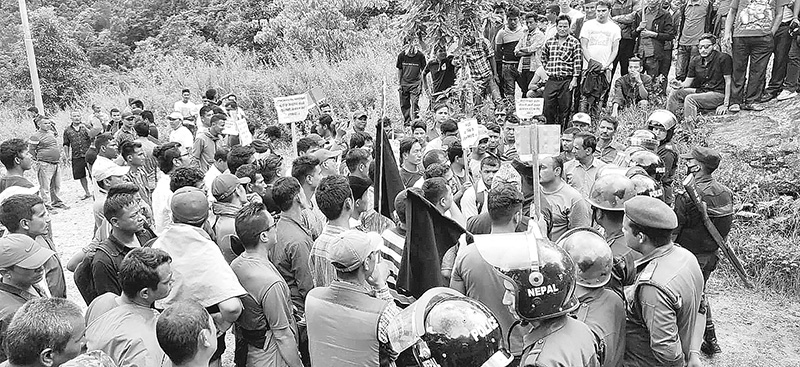
Local sub-contractors, vendors and workers of the Melamchi Water Supply Project stage a demonstration on Thursday. Post Photo: ANISH TIWARI

SINDHUPALCHOK,
At least five persons were injured when unpaid local sub-contractors, vendors and workers of the much-awaited Melamchi Water Supply Project clashed with police at Ambathan, Sindhupalchok, on Thursday.
The protesters were staging a demonstration demanding payment for their work when the clash occurred. Around 350 protesters took out a rally from Melamchi Bazaar to Ambathan, the reservoir site, to exert pressure on the concerned authorities to address their demand.
Maniram Lamichhane, inspector at the Area Police Office in Helambu, said the security personnel used force after the mob started pelting stones at the police. Police fired warning shots and lobbed some teargas canisters to disperse the protesters.
According to Lamichhane, three security personnel and two protesters sustained injuries in the clash. The injured are receiving treatment at Melamchi Hospital.  
The local sub-contractors, vendors and workers have been protesting for the past few days claiming that Cooperativa Muratorie Cementisti di Ravenna (CMC), the Italian contractor of the project, has not provided them salary.
Six months after terminating contract with the Italian contractor, the government selected Sinohydro Corporation Ltd of China to complete the remaining work of the project. The national pride project, which will supply 170millon litres of water to Kathmandu Valley from Melamchi River daily, has been in limbo since last December.
The agitating workers said the CMC had to pay around Rs 1.68 billion amount as salary and provident fund to the employees. The sub-contractors also claimed that they have yet to receive Rs 165 million from the Italian contractor.
“We have submitted a memorandum to the Prime Minister, Ministry of Water Supply, Melamchi Drinking Water Project and the local unit to address our demands. The government should investigate the issue,” said contractor Buddhi Krishna Lamichhane.
Though the government plans to expedite the project by hiring a new builder, the agitating sub-contractors, vendors and workers, who had earlier worked with the CMC, has threatened to block the project work unless their dues are paid.

NATIONAL

Villagers in remote Makwanpur benefit from improved health services

- PRATAP BISTA

Makwanpur,
Lal Bahadur Thakuri, 78, of Khairang in Raksirang Rural Municipality, Makwanpur, had to be taken to Hetauda every time he felt unwell. But now with an auxiliary health worker stationed at Khairang Health Post, Thakuri does not have to make frequent trips to Hetauda.
“Earlier there were no health workers here at the health post. They were stationed at Hetauda and we had to go there even for minor ailments,” said Thakuri.
Since the adoption of federalism, all health posts were brought under the ambit of the local units. In Makwanpurgadhi Rural Municipality, this move took off successfully with health posts established in all eight wards. Villagers in remote areas of Makwanpur have hugely benefitted from the establishment of health posts.
According to Dasarath Shrestha of Makwanpurgadhi Rural Municipality, the health post only had an office assistant and auxiliary nurse midwives providing treatment to patients in the past. But now all the health posts have sufficient staff. “Until a few years ago, Sukaura Health Post in Makwanpurgadhi Rural Municipality Ward No. 7 would open only till 2 pm, but these days the health post is open up to 5 pm,” said Shrestha.
Bidur Humagain, chairman at the Makwanpurgadhi Rural Municipality, said that the local representatives have been regularly inspecting the health facilities. “Absenteeism among health workers was a major concern earlier, but now, under constant monitoring, absenteeism is not an issue,” said Humagain.
The local units release the budget for health facilities for disbursement of salary and allowance to health workers, making the functions of the health posts directly accountable to the local units, said Humagain. “The budget for the health post is released on time making services more accessible to patients.”
Senior auxiliary health worker Bhola Chaulagain, the health coordinator of Makwanpurgadhi Rural Municipality, said that health workers are available at every health facility to attend to the sick. “We have been making efforts to improve the health care service in the municipality,” said Chaulagain.
In the fiscal year 2018/19, 183 pregnant women from Makwanpurgadhi Rural Municipality opted for institutional delivery in various health facilities. Only 113 women had visited local health facilities to give birth in the previous fiscal. This goes to show that the facilities available at the health posts in rural areas of Makwanpur have encouraged pregnant women to visit health facilities, said Chaulagain.

Page 6
EDITORIAL

An evil trade

Clear-cut laws are needed to fight human trafficking.

Human trafficking, already a major issue for decades, shows no signs of decreasing in intensity. If anything, the situation seems to have gotten worse. Earlier, most cases of human trafficking were related to women and children being smuggled into India and forced into bonded labour or sexual activity. Both of these heinous instances of trafficking continue today. But now, people are being forced or lured into being trafficked for various other exploitative reasons. Also, India is not the sole destination for trafficking victims. With traffickers sending Nepalis to countries the world over, the problem has exploded, making prevention, exposure and repatriation all the more difficult.
While various non-governmental organisations (NGOs) and even state agencies are doing their best to stop trafficking, or repatriate victims, the laws defining what constitutes human trafficking remain narrow. Human trafficking is a complex issue requiring a multi-sectoral approach. However, the government can facilitate its prevention, by redefining the parameters to reflect modern trends and by creating an integrated database of trafficking cases.
The number of cases of Nepalis being trafficked is certainly on the rise. According to a report published by the National Human Rights Commission, an estimated 35,000 Nepali citizens were trafficked in 2018, with 5,000 among them being children. In fact, according to the same report, nearly 1.5 million Nepalis are at risk of being trafficked. One of the reasons for this is that the victims are being trafficked across the world. In recent years, Nepali women have been rescued from countries such as India, Myanmar, Kenya and China.
Investigations have revealed that India and Myanmar are not only the final destinations but also transit hubs for the transfer of Nepalis to other countries, such as those in the Middle East. Also, given the loopholes in the law defining what constitutes human trafficking, many traffickers can go around it. One such ambiguity is a lack of clarity between out-migration for labour and trafficking for exploitative labour. Due to the absence of opportunities to earn a livelihood near home, it becomes easier for agents to exploit Nepalis and take them abroad. For example, when the government forbade women from going to the Middle East for employment, exploitative agents could still easily find women who were willing to be trafficked to go to work there. Since such workers are taken out of the country through illegal channels, it becomes easier for agents and employers to take advantage of them.
The problem has become so bad that the Nepal Police has set up a separate bureau to handle trafficking cases. However, due to the narrow definition of human trafficking—which does not specifically cover cases such as labour exploitation—many cases are not filed with the police. The need of the hour is a revision of the Human Trafficking and Transportation (Control) Act 2007, to cover the changing aspects of trafficking more thoroughly. Moreover, discrepancies in information exist due to the lack of an integrated database of trafficking cases. Were such a record to be formed, various stakeholders—such as law enforcement and NGOs in Nepal as well as in destination countries—would have access to accurate information.

EDITORIAL

An evil trade

Clear-cut laws are needed to fight human trafficking.

Human trafficking, already a major issue for decades, shows no signs of decreasing in intensity. If anything, the situation seems to have gotten worse. Earlier, most cases of human trafficking were related to women and children being smuggled into India and forced into bonded labour or sexual activity. Both of these heinous instances of trafficking continue today. But now, people are being forced or lured into being trafficked for various other exploitative reasons. Also, India is not the sole destination for trafficking victims. With traffickers sending Nepalis to countries the world over, the problem has exploded, making prevention, exposure and repatriation all the more difficult.
While various non-governmental organisations (NGOs) and even state agencies are doing their best to stop trafficking, or repatriate victims, the laws defining what constitutes human trafficking remain narrow. Human trafficking is a complex issue requiring a multi-sectoral approach. However, the government can facilitate its prevention, by redefining the parameters to reflect modern trends and by creating an integrated database of trafficking cases.
The number of cases of Nepalis being trafficked is certainly on the rise. According to a report published by the National Human Rights Commission, an estimated 35,000 Nepali citizens were trafficked in 2018, with 5,000 among them being children. In fact, according to the same report, nearly 1.5 million Nepalis are at risk of being trafficked. One of the reasons for this is that the victims are being trafficked across the world. In recent years, Nepali women have been rescued from countries such as India, Myanmar, Kenya and China.
Investigations have revealed that India and Myanmar are not only the final destinations but also transit hubs for the transfer of Nepalis to other countries, such as those in the Middle East. Also, given the loopholes in the law defining what constitutes human trafficking, many traffickers can go around it. One such ambiguity is a lack of clarity between out-migration for labour and trafficking for exploitative labour. Due to the absence of opportunities to earn a livelihood near home, it becomes easier for agents to exploit Nepalis and take them abroad. For example, when the government forbade women from going to the Middle East for employment, exploitative agents could still easily find women who were willing to be trafficked to go to work there. Since such workers are taken out of the country through illegal channels, it becomes easier for agents and employers to take advantage of them.
The problem has become so bad that the Nepal Police has set up a separate bureau to handle trafficking cases. However, due to the narrow definition of human trafficking—which does not specifically cover cases such as labour exploitation—many cases are not filed with the police. The need of the hour is a revision of the Human Trafficking and Transportation (Control) Act 2007, to cover the changing aspects of trafficking more thoroughly. Moreover, discrepancies in information exist due to the lack of an integrated database of trafficking cases. Were such a record to be formed, various stakeholders—such as law enforcement and NGOs in Nepal as well as in destination countries—would have access to accurate information.

OPINION

Notes from a climate change defeatist

It’s time for governments to decide ultimately whether they are for the planet or against.
- Amish Raj Mulmi
shutterstock

For the past few years, one of my constant travel companions has been the Helm Field Guide to the birds of the Indian subcontinent. I’m a prodigal (and amateur) birdwatcher; I’ve recently gone back to it after I stopped post-school. It’s an incredibly satisfying act if you prefer to walk—it requires little investment (I’m yet to pick up a pair of binoculars, and I have little expertise in high-definition photography); and there’s a certain thrill that comes from identifying a bird you haven’t seen before. ‘Birding’, as birdwatchers call the act, is equally meditative: to walk around aimlessly listening to bird songs, gazing into the canopy or the underbrush, and taking in the green as one does so.
There have been few instances where I’ve felt well-rewarded: seeing Himalayan Griffons take off from their roost in Limi valley; a barren field full of foraging Red-billed and Alpine Choughs in Lo Manthang; Great Barbets and Yellow-Billed Blue Magpies flying across a pine forest in the Kumaon mountains; and Brahminy Kites swooping down to fish in the Arabian Sea off the Kerala coast. Last week, in Goa, as monsoon clouds darkened the skies and the sun played hide and seek, I was birding once more, watching Southern Coucals glide across a lush green glade and Green Bee-eaters flit off and on their wire perches feeding on the bounty the rains bring. At the same time, on the other side of the world, the Amazon was burning.
That we are already facing the consequences of human-driven climate change and environmental destruction is not new. But as I walked in Goa, one of the constant queries in my mind was, why are our policymakers—and this is not just in Nepal, but across the world—adamant about pursuing the current paths of ‘development’ and ‘growth’ when the planet has been ravaged by these models? For, it is not just the Amazon that burns. One of Bombay’s only green patches will soon see its trees cut down for a metro carshed; in Goa, iron-ore mining has ravaged the Western Ghats; and in Kathmandu, trees are to be cut down for road expansion projects, while in Nijgadh, some hope has emerged for the 2.4 million trees after Province  2 has said an alternative airport site needs to be developed. And these are just a few examples from our neighbourhood.
No one can deny that delivering ‘development’ to its people should be one of the priorities of any government. New infrastructures create new economies, which in turn create new opportunities. But there is something fundamentally wrong with our outlook on what ‘development’ means. Of course, a new airport, a new road, a new electricity project, will alter ecosystems. But aping growth models and simply transplanting them from one country to the next has clearly not worked. Globalisation has led to a neoliberal convergence in the interests of government and big business, and an alternative policy framework is largely rejected by most nations and corporates.
A possible solution could be to tap into the human predilection for greed. If the heart of capitalism lies in profit-making, can businesses profit through production methods non-inimical to the planet’s interests? Can incentivising consumption that does not depend on traditional modes of production work, while levying heavy fees for dependence on natural resource extraction? This would necessitate eschewing products which depend on economies of scale; preferring localised producers with minimum impact; creating the infrastructure to accompany renewable energy sources; and individualised development models that prioritise ecosystems over people. At the same time, the current climate change debate puts the onus on individual consumers to ‘do something’ while big corporations pollute and devastate the planet (100 companies are responsible for 71 percent of all greenhouse gas emissions since 1988). One could argue that consumer preference can lead to corporations changing their behaviour. But as long as the notion of incremental profit through lower costs lies at the heart of the modern economic system, it is difficult to make advances on this front without warranting government action.  
The current impasse on our planet’s future has turned me into a bit of a defeatist. I do not believe the world as it currently functions has the requisite ability to defer what author Elizabeth Gilbert has termed the ‘sixth extinction’, a period of mass extinction driven by anthropocene impact on the environment and climate, despite glimpses of hope. I have sometimes pondered over whether militant action can resolve this dilemma, along the lines of the Sea Shepherd Conservation Society. This is quite unlikely; the prerogative of violence rests with the state, and in most instances, it will not hesitate to use violence against those it will term ‘eco-terrorists’. But frustration levels are climbing across the world, and it is not difficult to imagine similar scenarios in the future. Can we then depend on our governments to take necessary action when it’s clear their priorities are different? For example, we know that Nepal will face the brunt of climate change—rainfall will be erratic, landslides and flooding more common, and agriculture will be severely impacted. Does our current leadership inspire hope in policymaking which can address these issues? Forget Nepal, which lacks the resources to do much; if the leader of the world’s biggest superpower refutes climate change, what can the future hold?
This column began from birding, but it is difficult to see a diving kingfisher and not think about the inevitable rise in sea levels and the mass extinctions that are a result of our resource extraction methods. There are several heroes who’ve emerged in this dire era, not least the young Greta Thunberg, who’ve all become the voice of a generation that demands change. While they give us hope, the despair that comes from disappearing glaciers tells us it is simply not enough. Perhaps it is time to borrow lessons from unionisation; perhaps we can create a wide-ranging ideological front, distinct from conventional political ideas, which simply posits itself as being for the planet and against.


Mulmi tweets at @amish973.

OPINION

Twilight of the global geopolitical order

It is ironic that the G7 presages the future, because it is in many ways a relic of the past.
- Ana Palacio
Reuters

We live in an era of hyperbole, in which gripping accounts of monumental triumphs and devastating disasters take precedence over realistic discussions of incremental progress and gradual erosion. But in international relations, as in anything, crises and breakthroughs are only part of the story; if we fail also to notice less sensational trends, we may well find ourselves in serious trouble—potentially after it is too late to escape.
The recent G-7 Summit in Biarritz, France, is a case in point. Despite some positive developments—French President Emmanuel Macron, for example, was praised for keeping his American counterpart, Donald Trump, in check—little was achieved. And, beyond the question of substantive results, the summit’s structure portends a progressive erosion of international cooperation—a slow, steady chipping away at the global order.
It is somewhat ironic that the G-7 presages the future, because it is in many ways a relic of the past. Formed in the 1970s, at the height of the Cold War, it was supposed to serve as a forum for the major developed economies: Canada, France, Germany, Italy, Japan, the United Kingdom, and the United States.
After the fall of the Soviet Union, the G-7 continued to shape global governance on issues ranging from debt relief to peace operations and global health. In 1997, the G-7 became the G-8, with the addition of Russia. Still, the body epitomised an era of Western preeminence in an institutionalised liberal world order in full bloom.
That era is long gone. The 2008 financial crisis hobbled the body’s core members, which, together with the rise of the emerging economies, especially China, meant that the group no longer possessed the critical mass required to guide world affairs.
The larger and more diverse G-20, formed in 1999, thus gradually overtook the G-8, formally replacing the latter as the world’s permanent international economic forum a decade later. In an increasingly complex and divided global environment, the G-20’s flexible policymaking style— including a preference for non-binding commitments—was regarded as more viable than the hard-law methods of older multilateral institutions.
The G-8 drifted along as a mere caucus. When Russia’s G-8 membership was suspended in 2014—a response to its invasion of Ukraine and annexation of Crimea—it became even less weighty, though more cohesive, with its members sharing a more consistent worldview. (Some, including Trump, now call for Russia’s reintroduction to the group.)
But even that slight advantage was demolished with Trump’s election in 2016. His administration began attacking allies and rejecting shared rules, norms, and values. The situation reached a nadir at the 2018 G7 Summit in Quebec, where a petulant Trump criticised his host, Canadian Prime Minister Justin Trudeau, and publicly disavowed the summit’s final communique as soon as it was issued. Against that backdrop, this year’s summit in Biarritz elicited great trepidation. With little hope for consensus on any consequential issue, the meeting’s French hosts focused on keeping up appearances, choosing expediency over impact. Goals were kept vague. In fact, Macron announced before the event that there would be no final statement, declaring that ‘nobody reads communiques.’
But that decision represented a major loss. Final communiques are policy documents, providing important signals about significant compromises to the international community. The 2018 declaration, which Trump rejected, was 4,000 words long, identifying a set of shared priorities and common approaches to addressing them.
The Biarritz summit, by contrast, ended with a 250-word statement that was so vague and anodyne as to be all but meaningless. On Iran, for example, G-7 leaders could agree only that they ‘fully share two objectives: to ensure that Iran never acquires nuclear weapons and to foster peace and stability in the region.’ On Hong Kong, they reaffirmed ‘the existence and importance of the Sino-British Joint Declaration of 1984 on Hong Kong’ and called hollowly ‘for violence to be avoided.’ On Ukraine, France and Germany promised to organise a summit ‘to achieve tangible results.’
To be sure, some positive steps were taken in Biarritz. Iranian Foreign Minister Mohammad Javad Zarif’s surprise appearance created a potential opening for future US-Iran talks. Pressure was placed on Brazil to respond to the fires that are decimating the Amazon. And the US and France broke an impasse over a French tax on tech giants. But any high-level international gathering produces these kinds of limited actions, merely by facilitating interaction among world leaders.
Many have recognised the shortcomings of the latest G-7 summit. But, drawn to calamity as we so often are, assessments often center on the body’s possible collapse next year, when the G-7 summit will be hosted in the US by Trump, who will go nowhere near the lengths to which Macron went to hold the last one together. (On the contrary, Trump’s interest in the summit seems to revolve around his desire to hold it at his struggling golf resort in Doral, Florida.)
But this perspective fails to recognise the full implications of the Biarritz summit: it signals a broader shift in international governance away from concrete policy cooperation toward vague statements and ad hoc solutions. To some extent, the G-20 pioneered this approach, but at least it had vision and a set direction. That can no longer be expected.
Unless leaders take stock of the current trend, the conclusion of the Biarritz summit will be a marker of the world order’s future—ending not with a bang, but with a whimper.


This article was previously published in The Korea Herald, a part of the Asia News Network.

Page 7
OPINION

A chance to regain the public’s trust

There is no alternative to making appointments in social justice commissions transparent and fair.
- MOHNA ANSARI
Shutterstock

The two transitional justice commissions—the Truth and Reconciliation Commission (TRC) and the Commission of Investigation on Enforced Disappeared Persons (CIEDP)—were established with the hope that the war-era victims would get a sense of closure. But justice still eludes the victims of the violent Maoist insurgency. I make no apology for returning to these fundamental issues once again because the authorities have failed to learn from their mistakes.
Nepal is full of commissions that are yet to become fully functional. Some of these include The National Women Commission, National Dalit Commission, National Inclusion Commission, Madhesi Commission, Tharu Commission, Muslim Commission and Indigenous Nationalities Commission. The transitional justice bodies share fundamentals with the newly established commissions mentioned above; exclusion is still a significant issue since our society at large is still discriminatory.
But be it advancing transitional justice initiatives or making other commissions serviceable, at the heart of this inaction is the lack of trust between the state and its citizens. There also seem to be differences in the role of human rights and how they are perceived by broader civil society.
The effectiveness of all these commissions depends on their credibility. The public must feel assured that the contributions made by these commissions can pave the path to peacebuilding—something we have been engaged in since long but with no end in sight.
One of the main reasons for the conflict was to break the notion that the state and its politicians are benevolent. But human rights activists and civil society members can make a discernible contribution in reinstalling that trust—the belief that every citizen will be treated fairly by state bodies which have an impact on their lives.
The latest test of the government’s goodwill is the case of the new commissions. There are many crucial challenges they share with the National Human Rights Council and transitional justice bodies. They can only play their role and take their place in envisaging a new idea for Nepal if they are independent. What’s more, these institutions must be perceived as being independent by the wider public. And this can happen only when the chairpersons and officers are selected for their competence; not according to their party affiliation or loyalty.  
Various media reports have mentioned that the delays in the formation of the TRC and CIEDP are due to behind-the-scenes fights between political forces to have ‘their’ members appointed. The sad thing about this unseemly spat is that it taints even the qualified and morally decent candidates. People then assume that appointments are made on party quotas, not with regard to merit and competencies of the respective candidates. Such generalisation tends to discredit the institutions, sometimes unfairly.
But there is no alternative to making appointments in such commissions transparent and fair, which is possible only with the active participation of the concerned individuals. In other words, those sections of society who are the supposed beneficiaries of such bodies. The new bodies need to have adequate resources as well as administrative and financial autonomy so that they are not seen to be dependent on ministries and vulnerable to manipulation by them.
Besides, there are two further crucial issues. The public must know the purpose of the commissions—what they can and can’t offer to the communities they are supposed to support. People will not approach the commissions if their capacities are not clear to them. And commissions without participating stakeholders are unlikely to contribute to improving society.  
 More importantly, these multiple commissions must have inter-commission linkages and should be able to refer cases to each other as appropriate. For example, the case of a Madhesi Dalit Woman whose rights have been violated should not get stuck in either the Madhesi, Dalit or Women’s Commission but should be promptly referred, in a timely fashion, to the National Human Rights Council, which is the body that has investigative powers and capacities.
There is a lot of work to be done in terms of public education, but also in bringing all the commissions together to discuss and reconcile overlapping or conflicting mandates. These commissions also need to come together to agree on their working relations practically and efficiently.  There is no place for competition, only cooperation.
These discussions should also be taken as an opportunity to confront common problems together, problems of inadequate resources, lack of staff and budgets, interference and the difficult task of finding effective working methods.
 Sadly, yet again, the government has put resolving these urgent issues on the back burner. This leaves the public to think that the government has politicised the appointment of the TRC and CIEDP. Such thought then leaves space for open allegations that appointments to these bodies are first and foremost opportunities for patronage and political influence, as rewards for party loyalty.
 This is another missed opportunity for our political leaders to gain the confidence of the public, their electorate, by setting up these new bodies in a clear act of good faith. The critical failures of the TRC and CIEDP, the reason for four wasted years, was the combination of an inadequate mandate/legal basis and opaque appointment procedures that created doubts in public opinion.
The new constitutional commissions provide yet another opportunity to tackle the long-delayed issues of social justice for our marginal communities. To succeed, the process must start on the right foot, with transparent appointments.  
It is imperative to be clear on one thing: the creation of these inclusion commissions is just a start; they have to be given the means to succeed.  We cannot allow the commissions’ creation to be seen as declaring ongoing structural discrimination as closed, dealt with by merely setting up yet another mechanism that may or may not do anything helpful at all.


Ansari is a member of the National Human Rights Commission.

OPINION

Britain’s enemy of the people?

Stirring up the passions of aggrieved plebeians goes back to the late Roman Republic.
- IAN BURUMA
Reuters

The idea that British Prime Minister Boris Johnson is a man of the people, a tribune of the common man fighting the established elites, might seem anomalous, even outright bizarre. After all, Johnson is a perfect example of the English elite: educated at Eton and Oxford, and possessed of all the exaggerated mannerisms, in speech and demeanour, of the British upper class. As a journalist and Member of Parliament, he has been mischievous and frequently dishonest, but always a committed voice of the Conservative establishment.
And yet, here he is, pretending to represent “the voice of the people” against the voices in Parliament, which, from left to right, oppose his hardline approach to Britain’s divorce from the European Union. It has been a feature of the Brexit campaign to paint all who oppose an abrupt and complete withdrawal from the EU as enemies of the people. Since the people spoke in the 2016 referendum, any attempt to soften Brexit’s negative consequences by compromising with the EU, or postponing the break, is portrayed as an assault on the people’s will.
Johnson is facing massive opposition in Parliament, especially after his decision to suspend Parliament to deliver Brexit on October 31, deal or no deal. On Tuesday, after former minister Phillip Lee defected to the Liberal Democrats, he even lost the Tory majority of one. Making matters worse for him, Parliament voted to take away the prime minister’s control of the Brexit agenda. Tories who voted for the motion have been purged. This will almost certainly result in a general election, which Johnson will frame as a battle between ‘the people’ and ‘the politicians’ who stand in his way.
Johnson’s moves have been extraordinary, but not illegal. They are certainly not conservative in the sense of protecting traditional norms or the established order. What is more, they are very un-British. Some alarmed commentators see parallels with the rise of fascism. In fact, Johnson, as a scholar of the classical world, must be aware that the model of the upper-class demagogue gaining power by stirring up the angry passions of aggrieved plebeians goes back to the late Roman Republic, when people’s tribunes attacked the patrician Senate, often by inciting violent mobs. There was, no doubt, much wrong with the privileges of the senatorial establishment, but such demagoguery spelled the end of the Republic and the beginning of imperial dictatorship.
Referendums are hardly a British custom, either. When Winston Churchill suggested having a referendum in 1945 on prolonging his wartime government, the Labour leader Clement Attlee denounced the idea as ‘alien to all our traditions.’ Mussolini was a great proponent of referendums, as are most dictators. Plebiscites are seen in closed systems as a form of ‘direct democracy,’ when the will of the people supposedly finds its purest expression in the will of a great leader.
But the whole point of parliamentary democracy, of which Great Britain has been one of the earliest and proudest examples, is that it is indirect. The idea of the state representing the will of the people is a French Jacobin notion, which has always been rejected by British conservatives, starting with Edmund Burke. There is no such thing as ‘the people’ in a parliamentary democracy, let alone one popular will, or one single popular voice. Politicians are chosen to represent different interests, which can then be debated in parliament in the hope of arriving at solutions through compromise.
Public opinion, too, in a liberal democracy, is more a form of representation than direct expression. For the last few hundred years, public opinion was voiced in the press, written or broadcast, and mediated by journalists and editors. This has changed, of course. Thanks to the Internet, most opinions are now entirely unmediated, and the people now have hundreds of millions of voices. Professional journalists seem obsolete, and like politicians, they are widely viewed with distrust—elitist purveyors of ‘ake news,’ the ‘lamestream media.’
This is not to say that journalists or politicians are all fine people with sound opinions. Far from it. But we have already seen how much more easily, in an unfettered media landscape, people’s voices can be manipulated by demagogues and crooks in an unmediated free-for-all. By undermining Parliament in one of the most important political debates of the century, Johnson poses the same dangers to liberal democracy that populist agitators did to the Roman Republic.
There are many disreputable aspects of the Brexit campaign: stoked-up fears of immigrants, delusions of national grandeur, and so on. The more respectable argument revolved around the question of sovereignty. The EU is not a democratic state. EU membership means that certain laws are proposed and enacted by people who have not been directly chosen in national elections. There is a purist case to be made that a liberal democracy cannot delegate law-making powers to supranational institutions without watering down national sovereignty.
In fact, some of the laws that seem most irksome to Brexiteers are national, not European at all. But the point would not be whether laws are good or bad, but who has the right to make them. Certain British patriots see absolute national sovereignty as the core of their democratic system, exemplified by the Mother of Parliaments. But when they fetishise the will of the people expressed in a referendum, they become defenders of a very different political tradition, which is inimical to the British parliamentary system.If Johnson, an unelected prime minister, and his increasingly rabid supporters choose to ‘take back’ their country by setting up a conflict between the people and their political representatives, they risk destroying the greatness of Britain. Furthermore, by alienating the Scots, who might choose to make their own national way, and possibly also the Northern Irish, they literally jeopardise the United Kingdom itself.


— Project Syndicate

Page 8
CULTURE & ARTS

Chess offers Nigerian slum children new move

The strategic game of chess is finding its niche in the city of Lagos, among an unlikely group of youngsters.
- Emmanuel Akinwotu
Children sit under a canopy as they play during a chess class at Ogolonto in Ikorodu district of Lagos. AFP/rss

Crowds of children bustle around chessboards in Nigeria’s Lagos, figuring out their next moves as part of a project aimed at bringing hope in one of the city’s impoverished slums.
Dozens of matches are played simultaneously as participants as young as three master a game often considered out of reach for the masses in Africa’s most populous country. “Sometimes you win, sometimes you lose,” 24-year-old teacher Tunde Onakoya tells his young charges after getting their attention.
“But it’s how you respond that makes you a champion. Don’t get down when you lose, don’t feel like you can’t do it, just concentrate and do your best.”
Seasoned player Onakoya started the Chess in Slums project last September in the sprawling neighbourhood of Ikorodu, a place where residents often feel cut off from the bustle and business of the vibrant megacity around it.
The goal of the club is to provide a space to play and learn the game for the young inhabitants of the slum, many of whom are not in school and work to support their families.
Held beneath a makeshift tent in the courtyard of a local bar, in less than a year the programme has already drawn an enthusiastic following.
As elderly men sip beer and watch football nearby, a dozen volunteers divide the pupils into groups.
While some turn their figures into battling action heroes, most are focused and intent on winning.
The youngest children sing rhymes about chess to help them master the rules, as the older ones settle down into intense games.
They use mobile phone apps to time their moves and record the matches in notepads to review their mistakes and successes later.
“I want to be a Grandmaster,” one of the children tells AFP, laughing.


‘Food for your brain’
Chess—a board game famous for its reliance on strategy—has a tiny but avid following in Nigeria.
The West African nation ranks 88th out of 186 countries, according to the FIDE World Chess Federation’s rating of top players across the globe, but still does not have any Grandmasters.
Other board games are more popular.
Nigeria is a superpower in Scrabble, winning multiple championships and boasting 29 of the top 100 players in the world, more than any other country.
Onakoya says that chess has lagged behind in part due to an image problem.
“There’s this perception of it as being a really difficult game, not as accessible, like for people of a different class,” he says.
Onakoya took chess in primary school and works with private schools as a consultant to add it to their curricula.
“I believe in the game because it helps your cognition, your creativity, your focus. It’s like food for your brain,” he said.
Last year, he started the club in Ikorodu specifically to reach disadvantaged children.
“Ikorodu is the kind of place where there’s a lot of troubles and poverty. It is a tough place to get to, if you tell someone to come to Ikorodu they will laugh,” he says. “I felt it would be powerful to help children here because many of them are really talented.
“If they could master a game that people wouldn’t expect them to even know, it could really show them their potential and give them confidence.”


School sponsorship
The club already boasts several success stories.
Ten-year-old Odunayo Olukoya joined Chess in Slums in January. Four months later, she came first in the national chess championship for her age group.
For Jamiu Ninilowo, 14, taking part has also been transformative.
The skinny boy worked as a mechanic fixing cars at a garage in Ikorodu instead of attending school.
He had to earn money for his family after his mother’s leg was mangled in an accident as she picked scrap at a local refuse site to sell on for a meagre profit. In February, Ninilowo joined the club and is now its best player.
After he won a tournament in April, an impressed donor partnered with Chess in Slums to pay for his secondary education.
“Chess is helping me to be a mechanical engineer by sending me to school,” he tells AFP, proudly wearing the medal he won. The attention that the project has generated has helped shine a spotlight on more of these marginalised children.
Videos of the budding chess masters shared on Instagram also showcase some of their other talents that have often been overlooked in the struggle to survive. One 11-year-old boy even got a mentorship from a leading Nigerian architect after he was seen building models out of cardboard.
“At first it was about teaching the kids a game that can impact the way they think and boost their confidence, but actually it’s become much more. It’s become a gateway to other opportunities,” says Onakoya.
“It is helping us show them that their lives can go far beyond Ikorodu.”


— Agence France-Presse

Page 9
Food & Travel

Finding faces in Siddha Gufa

Apparently the largest cave in the country, this hole in the earth sits quietly below Bandipur.
- Thomas Heaton
Post photos: Thomas Heaton

Sanu stops and points his flashlight upward. A relatively nondescript rock juts from the wall, tracing a shadow against the roof of the cave. Tailing nimble Sanu, one of the assigned guides, I wearily slip and slide into the cave. Just a few metres in, light disappears. Bats flitter overhead, their squeaks and squeals echo through the damp and dark chamber. By now we’re about 100 metres into the cave, supposedly the second largest in South Asia and largest in Nepal, Sanu says the outlying rock on the roof is “baagh ko tauko”.
Pointing to the rock’s shadow on the limestone ceiling, finding the feline similarities is like cloud-spotting, so any likeness seems subjective. But, what follows is a mineral-based wild-life spotting pursuit—elephant and snakeheads formed out of icicle-like stalagmite, butterflies traced by striated rock and turtleheads formed from stalactite.
The cave sits above Bimalnagar, about halfway up the trail to Bandipur, a hill station sitting between Pokhara and Kathmandu. It’s just short of an hour’s walk up to Siddha Gufa, but it is not necessarily easy. By the time I reach the cave my legs have already betrayed me. It would be unfair to call the upward route a trek, given it follows paved staircases, but it is basically vertical.
It’s just over 300 metres above Prithvi Highway, and it’s clearly signposted, but deserted except for those who walk down from Bandipur, a more intelligent and less strenuous pursuit. Those people who come from Bandipur are few, however, as this cave seems to be a secondary option to relaxing in the village. Muscles fermenting in all the lactic acid pumping through them from the walk up, the idea of sloping down a cavernous hole does not appeal—cooler climes does, however.
Bracing air wafts from the entrance, where a sadhu and a handful of local people greet visitors, where people pay Rs 200 to be guided through. The limestone walls of the cave, and natural water sources inside, dissipate the suffocating mugginess of the outside climate. The cave looks disappointing from the outside, but the deceptive shallowness betrays its spiritual and literal depths. The safari through the cave, which is 437 metres deep and 50 high, is not just an exercise in finding shapes in stone, however. The animals, with additional faces and figures, are apparently symbols of Shiva—and are treated thusly by pilgrims and worshippers year-round.


Many people come to Bandipur, a peaceful place where clocks don’t seem to exist. While that may be the case, it’s a tourist hot-spot, where the main bazaar is lined almost exclusively with hotels. There are watering holes, and local bhattis where people can try local grog—only if they ask specifically, because it’s not on the menu—and the general mood is one of relaxation.
Most drive the road up to the main bazaar, few trek their way up. Most foreigners are back from Himalayan treks, looking to unwind and let their bodies recover. The days start early, and they finish early too. People trek to the top of the town, to the viewing point, to muse at the massifs for a final time, and they head back to the Valley. The cave, however, feels relatively untouched by tourism.
Ignorant to the realities of the cave, at the time, only knowing that it’s spiritual in some way, I expect a guide in the purest sense—someone to lead the blind ignorant tourist so he doesn’t get lost. It doesn’t take long before we turn back, coming to the cave’s eastern-most end, I expect that we are going to get to the end of the walk—a paltry five-minute walk from the cave’s front. Almost every step of the way is announced and demonstrated by Sanu before taken, with the slippery stone making for a skating experience. The mantra of all Nepali guides, it seems, is once again said: “Bistarai, bistarai”.
A litany of questions is fired at me, the ones I’ve grown used to answering in relative shotgun succession: age, nationality, marital status, salary, weight—just the particulars.
Sanu, my ‘saano’ guide through Siddha Cave, would be hardly a dollar soaking wet. A sweat-drenched sorry sight, if we were to appraise my weight, I’d be a million bucks.
By the time it seems we should be seeing light, it only gets darker. Sanu points his light downward, which disappears into the ether. He points left, at a rickety shambles of a ‘staircase’. Fashioned from two long painter’s ladders welded to rusty steel poles, the journey downward looks perilous. “Jaam Jaam,” he says, turning around and virtually sliding down. Cautiously spinning and checking every hand hold and step, the slick and muddy ladder seems a kilometre long, as I grasp in the dark.


With each flash of light on the walls one can see the walls’ layers, all subtly different shades of brown and white, while the roof sometimes seems too far away for the light to reach. Clusters of bats cling to the walls, some darting off with the flash of Sanu’s torch.
Once up to the further periphery, it’s lights out. “Meditate,” he says. Confused, I agree and let the darkness consume. It’s scary. It’s darker than night; consciousness without senses. With Sanu’s torch relit, security comes back. And, climbing back up the stairwell, and past a small shrine to Shiva and small shelter built for long-term meditators, the natural lightstings the eyes. Blinded by the light, and eager for sight, a fleeted foot leads to a fumble and slip. “Bistarai, bistarai,” Sanu says, laughing. The sadhu fairs the foreigner well, and the chilled sweats start to simmer.
Once out, and on the trail up to Bandipur, few people appear. There’s an elderly couple grazing their cattle, a small group of teenagers on their way to the cave, and the mechanical whirr of cicadas buzzes in and out of earshot. By the time I feverishly don DEET to deal with the scary prospect of dengue, I’m almost at the top. The Marsyangdi River disappears into the distant hills, and the colourful villages look like apiaries, with vehicles flying between.
Eventually, paved stairs hint at Bandipur’s proximity and the faint murmurs of men confirm I’m close. Sitting below the ears of their corn, the younger men listen to the older man’s politics. Leaving the shelter of the forest, and sauntering past through the puddles and mud, Bandipur reveals itself. There’s not a shadow in sight in the sun-drenched village.

Food & Travel

Food trucks in Kathmandu don’t move, but they’re still a big hit

For people looking for fun ways to dine, several immobile food trucks offer something a little different.
- JUNE KARKEE
Food Truck Park is one of few places around the Valley one can find themselves something to eat, in such a unique setting.  Post Photo: June Karkee

Who needs fine dining when you can step into a small unmoving bus, sit yourself down and order a tapari of momos, choila, sausage sticks, and aloo dum?
This experience may sound unusual at first, but it is being offered by several places around the city. One such place is Newari Food and Darjeeling Mo Mo, an eatery inside a bus located in Gahana Pokhari, Tangal, which is both known for its juicy Darjeeling-style momos and its unique setting and ambience.
“I think the concept is just so unique,” said 15-year-old Sabina Lama, as she ate Newari khaja set from a traditional tapari. The set consists of the normal bhatmas, aloo, choila, and chiura. “I come here to eat, of course, but I also come for the experience,” said Lama.
Although the idea of eating inside a bus is not found anywhere else in Kathmandu, the experience it offers could be compared to food trucks. The concept is becoming popular among Nepali entrepreneurs looking for ways to appeal to trend-seekers wanting different dining experiences.
Places like Food Truck Park in Naag Pokhari and Pangra Express in Bhatbhateni have also become attractions for adventurous folk to indulge in food that is not prepared and served in a traditional restaurant setting.
Breezendra Bhattarai, who describes himself as a street food enthusiast, regularly visits Food Truck Park, which opened a year-and-a-half ago, to indulge in a wide range of food options—from basic Western fast-food items like burgers and onion rings, to Japanese dishes like sushi, and Mexican favourites like tacos. He attributes the park’s popularity to the rise of social media and people’s interest in exploring different cultures.
“They’re not typical food trucks, but they’re the closest we can get to experiencing one for now,” he said.
When one passes by Newari Food and Darjeeling MoMoearly morning or late night, it appears to be an abandoned vehicle with nobody to claim it. Only between 1pm and 8pm, when the menu board is put up, and people are seen stepping in and out of the bus, does one find out that it is actually a place where you can eat.
“We only opened two months ago, but we have already attracted a lot of the locals,” said Lalit Gurung, who manages the bus on a daily basis. “At first we weren’t sure how well we would be received, but so far people have really enjoyed sitting here and eating our food.”
And it is easy to see why. Parked right next to several panipuri and chatpate stalls, and painted bright yellow, green and orange, the eye-catching bus stands out. People from all walks of life stop by the bus, order food, and either eat outside or inside the bus itself.
Food trucks are common throughout the world. Most often associated with ethnic street food, they provide affordable and filling scran. But a simpler reason that they’re so popular is because they can move from one place to another.
According to Gurung, Newari Food and Darjeeling Mo Mo was originally intended to be a mobile food truck, but limitations such as Kathmandu’s impossible traffic, pollution and lack of regulation and parking spaces made it difficult to successfully achieve the concept in its moveable originality.
“I think that driving the bus and going from one place to another would be a really big hit, but the way that our city functions makes it hard for us to do so,” said Gurung.
Tashi Palzor Sherpa, one of the owners of the Food Truck Park, faced similar obstacles when bringing the food truck concept to Kathmandu.
“We purchased all the buses ourselves with the intention of being able to operate them as normal food trucks, but many people were sceptical of the idea, and so we also began to realise that there were many factors such as hygiene, traffic and pollution that would make the concept difficult to achieve,” Sherpa told the Post.
Although there are no specifically stated legal barriers preventing Gurung and Sherpa from driving their mobile eateries around Kathmandu, the tedious bureaucratic process they faced was one they preferred not go through.
“We were told to pay a tax amount of Rs 4 million by the Kathmandu Metropolitan City, and that was just the first step. There are probably more things we would have to go through to get approval from higher level authorities,” said Sherpa.  
Nevertheless, in a place like Kathmandu, where there are plenty of local cafes, restaurants and khaaja ghars, those limitations may not be a hindrance to attracting customers.
What then draws so many people to places like Newari Food and Darjeeling Mo Mo, Food Truck Park and Pangra Express? It comes down essentially to the experience, ambience and fun of dining inside a bus (not forgetting that the aesthetics provide make for social media content.)
Sweta Subedi, a regular at Pangra Express, admits that although the food there is pretty good, she and her friends have more fun posing on the little bike made out of tires and taking photos behind the board frame painted to look like an actual food truck. “It’s all about what’s popular these days and going with the trend,” she said.
According to a Pangra Express spokesperson, the place is technically a mobile Airstream trailer, the first ever of its kind in Nepal. On its menu, one can mostly find finger foods, such as chicken strips, cheesy fries and breaded sausage sticks, but you can also find unique takes on snacks like ‘chatpatey corn’.
“Being positioned as a simple alternative to food courts and fine dining restaurants, our street food is all about going back to the basics,” said the spokesperson in an email to the Post.
At Food Truck Park, customers use a coupon system, where coupons are used as common currency at the various trucks. Sherpa believes that in addition to serving affordable food in an enjoyable atmosphere, Food Truck Park has gained popularity because it is a space where people can relax, read, even work, without being bothered.
“A person could buy just one drink, spend the entire day here, and nobody would say a thing. You wouldn’t really be able to do that in typical restaurants,” said Sherpa.
But being popular comes at a cost, especially for Gurung, whose bus does not have the same kinds of protection the Food Truck Park and Pangra Express have—at least in terms of security.
“When we first opened, ward officials would come, ordering us to move and demanding we give them money to be able to stay, but after we spoke to locals here, they negotiated on our behalf,” said Gurung. “Since then, we have not faced any problems other than complaints from other restaurants, and occasionally having dogs and people litter next to the bus.”
Nevertheless, he says he is content with the amount of customers he has been receiving. He believes the bus will continue to do well because people nowadays are looking for simpler and more exciting ways to eat.
Whether food trucks will ever be seen driving around Kathmandu is up for question, and there seems to be a long, long road ahead before that might happen. 

Page 10
WORLD

UK new vote on Monday on snap election

Minister Jacob Rees-Mogg tells MPs he would put forward a motion on an early parliamentary election to be voted.
- AGENCE FRANCE-PRESSE
British PM Boris Johnson, centre right, gestures during his first Prime Minister’s Questions, in the House of Commons in London, on Wednesday. AP/rss

LONDON,
British Prime Minister Boris Johnson’s government said on Thursday it  would make a second attempt next week to call an early general election,  to try to break the political deadlock over Brexit.
The day after MPs rejected the first attempt to call a snap  poll, senior minister Jacob Rees-Mogg told MPs he would put forward a  “motion relating to an early parliamentary election” to be voted on  Monday evening.
Rees-Mogg refused to answer questions on the exact nature of  this motion, which will only be known when it is published later on  Thurday.
The nature of the motion may affect whether it is successful or not.
On Wednesday evening, the government failed in its bid to  call an election despite winning a vote in the House of Commons, because  it was made under a 2011 law that requires the support of two-thirds of  MPs.
There is speculation that ministers could try to force an  election via an alternative route, for example by introducing a short  piece of legislation that would only require a simple majority of MPs to  pass. Johnson called the election after MPs approved a bill that  could undermine his threat to leave the European Union on October 31  without agreeing exit terms. The opposition Labour party abstained in Wednesday’s  vote, saying it would not support an election until the bill blocking a  “no deal” Brexit was approved. The bill is being debated in the House of Lords but is expected to become law by Monday.
Sources say Labour would at that point back an election. However, Labour is divided over the timing of any poll. Johnson wants a public vote before an EU summit on October  17, which could be the last chance to get a Brexit deal before Britain’s  scheduled departure on October 31.

WORLD

Johnson’s brother quits, torn between family loyalty and national interest

- REUTERS

LONDON,
British Prime Minister Boris Johnson’s younger brother, Jo, has resigned as a junior minister and said he would also step down as a lawmaker, citing a conflict between family loyalty and the national interest.
His surprise resignation comes days after the prime minister expelled 21 Conservative lawmakers from the party for failing to back his Brexit strategy, including Winston Churchill’s grandson and a former finance minister.
Since taking office in July, Boris Johnson has tried to corral the Conservative Party, which is deeply divided over Brexit, behind his strategy of leaving the European Union on October 31, with or without a deal.
That approach has shattered traditional party loyalties and caused him to lose both his parliamentary majority and control of the Brexit process, pushing Britain deeper into a national crisis ahead of the exit deadline and intensifying uncertainty over what path the country will take.
Jo Johnson, 47, who voted ‘remain’ in 2016, has previously expressed backing for a second referendum on whether Britain should leave the EU.
He nevertheless accepted a job as a junior minister in the business and education departments when his brother became prime minister, but quit that post on Thursday with what was seen as a parting shot at his brother.
“It’s been an honour to represent Orpington for 9 years & to serve as a minister under three PMs,” Jo Johnson said on Twitter. “In recent weeks I’ve been torn between family loyalty and the national interest - it’s an unresolvable tension & time for others to take on my roles as MP & Minister,” he said.
The prime minister’s spokesman issued a statement thanking Jo Johnson for his service and adding: “The PM, as both a politician and brother, understands this will not have been an easy matter for Jo.”
He had been an MP for the Orpington constituency in Kent, south east England, since 2010, serving in several ministerial roles.
Boris Johnson’s “do or die” Brexit strategy, and his hardline approach to enforcing it, is causing a realignment in the ruling party, with several senior, more pro-European members announcing they will not seek re-election.
The Johnson family itself is notoriously split over Brexit with his sister Rachel having represented different parties opposed to Brexit, and his father Stanley being a committed europhile and former European Commission official. The opposition Labour Party seized on the resignation, saying it underlined a lack of trust in the prime minister.
“Boris Johnson poses such a threat that even his own brother doesn’t trust him,” said Labour education spokeswoman Angela Rayner.

WORLD

Hurricane Dorian lashes US east coast

- AGENCE FRANCE-PRESSE

CHARLESTON, United States,
Hurricane Dorian lashed the Carolinas with driving rain and fierce  winds as it neared the US east coast on Thursday after devastating the Bahamas and killing at least 20 people.
Parts of downtown Charleston were flooded, with video footage  showing people kayaking in the dark in gushing knee-deep water in the  stately city on the coast of South Carolina. Trees bent in wind gusting  in from the sea.
Dozens of streets were reported closed as up to 20 inches of rain were forecast and forecasters warned of flash flooding.
As day broke, the Category 3 hurricane was 80 miles (130  kilometres) southeast of Charleston, moving north along the coast with  maximum sustained winds of 115 mph, the National Hurricane Center said.
Hundreds of thousands of people in the Carolinas, Georgia and  elsewhere were under evacuation orders as the US girded for its taste  of a storm that caused severe destruction in the Bahamas. Power has been knocked out to more than 80,000 customers in  South Carolina, and 22 shelters have been set up for evacuees,  the state emergency management agency said.
On Wednesday Bahamas  Prime Minister Hubert Minnis said at least 20 people were known dead so  far and he described the damage as nothing short of “generational  devastation.”
The US Coast Guard and Britain’s Royal Navy airlifted survivors and ferried in emergency supplies as floodwaters receded in the Bahamas.
The United Nations said 70,000 people on Grand Bahama and Abaco islands were in “immediate need” of aid. Minnis also warned that looters will be prosecuted “to the  fullest extent of the law,” and said additional police and defence force  officers had been deployed. Shelter, safe drinking water, food and medicine were urgently  needed for some 50,000 people on Grand Bahama.

WORLD

Australia faces opioid crisis as companies facing scrutiny push drugs abroad

- ASSOCIATED PRESS
Carmall Casey, right, is embraced by Maxine Piper, a longtime friend anda source of support through Casey’s addiction to opioids and battle with chronic pain, at her home in Black River, Tasmania, Australia, on July 23, 2019. Casey doesn’t know what she’ll do when the pain returns. AP/rss

BLACK RIVER, Australia,
Half a world away from the opioid epidemic ravaging the United States, Australia is facing a crisis of its own, with skyrocketing rates of opioid prescriptions and related deaths.
The country has failed to heed the lessons of the US, and has been slow to respond to years of warnings from worried health experts. The crisis comes as drug companies—facing scrutiny for their aggressive marketing of opioids in America—have turned their focus abroad, working around marketing regulations to push the painkillers in other countries.
In dozens of interviews, doctors, researchers and Australians whose lives have been upended by opioids described a plight that now stretches from coast to coast. Australia’s death rate from opioids has more than doubled in just over a decade. And health experts worry that without urgent action, Australia is on track for an even steeper spike in deaths like those in America, where the epidemic has left 400,000 dead.
“It’s depressing at times to see how we, as practitioners, literally messed up our communities,” said Dr Bastian Seidel, who warned that Australia’s opioid problem was a “national emergency” two years ago when he was president of the Royal Australian College of General Practitioners. “It’s our signature on the scripts.”
He sees Australia moving with willful ignorance toward a disaster.
“Unfortunately, in Australia, we’ve followed the bad example of the US,” he says. “And now we have the same problem.”
Starting in 2000, Australia began approving and subsidizing certain opioids for use in chronic, non-cancer pain. Those approvals coincided with a spike in opioid consumption, which nearly quadrupled between 1990 and 2014, says Sydney University researcher Emily Karanges.
As opioid prescriptions rose, so did fatal overdoses. Opioid-related deaths jumped from 439 in 2006 to 1,119 in 2016—a rise of 2.2 to 4.7 deaths per 100,000 people, according to the Australian Institute of Health and Welfare.
More than 3 million Australians—an eighth of the country’s population—are getting at least one opioid prescription a year.
In the US, drug companies such as OxyContin maker Purdue Pharma are facing more than 2,000 lawsuits accusing them of overstating the benefits of opioids and downplaying their addictiveness.
In Australia, pharmaceutical companies by law cannot directly advertise to consumers, but can market drugs to medical professionals. And they have done so, aggressively and effectively, by sponsoring swanky conferences, running doctors’ training seminars, funding research papers and meeting with physicians to push the drugs for chronic pain.
“If the relevant governing bodies had ensured that the way the product was being marketed to doctors especially was different, I don’t necessarily think we would see what we’re seeing now,” says Bee Mohamed, who until recently was the CEO of ScriptWise, a group devoted to reducing prescription drug deaths in Australia. “We’re trying to undo ten years of what marketing has unfortunately done.”
Mundipharma, the international arm of Purdue that Purdue’s owners have proposed selling to help pay for a settlement in the US, has received particular criticism for its marketing tactics in Australia. Mundipharma also runs “Pain Management Master Classes,” which have provided training to more than 5,000 doctors in Australia.
The classes have been praised by some as helpful and condemned by others as a conflict of interest.
Mundipharma said the classes cover non-opioid treatment options and “strongly emphasize” that opioids are only appropriate after a comprehensive assessment. In a statement, it also said it strictly adheres to the code of conduct of the pharmaceutical industry’s regulator, Medicines Australia, and has always been transparent about the risks associated with opioids.
Like in the US, the problem has hit the country’s poorest areas the hardest. One region of Tasmania—Australia’s poorest state—has the highest number of government-subsidized opioid prescriptions in the nation: more than 110,000 for every 100,000 people. In poor, rural areas, access to pain specialists can be logistically and financially difficult. Wait lists are long, and a few sessions with a physiotherapist can cost hundreds of dollars. Under the government-subsidized prescription benefit plan, a pack of opioids costs as little as AU$6.50 ($4.50.)
It’s a system that has made opioids the cheap and easy alternative for Australians, particularly the poor.
For years, Tasmanian Carmall Casey sought treatment for knee pain, only for doctors to send her away with prescriptions for opioids. When her pain returned, the doctors upped the dose. That led to a devastating addiction that took her years to overcome.
“I became an addict without knowing,” Casey says.
David Tonkin blames his son’s death from prescription opioids on a system that allowed him to see 24 doctors and get 23 different medications from 16 pharmacies — all in the space of six months. Between January and July 2014 alone, Matthew Tonkin got 27 prescriptions just for oxycodone.
Matthew’s doctors were largely oblivious to what he was doing because Australia has no national, real-time prescription tracking system. Coroners nationwide have long urged officials to create such a system. But the idea has been mired in bureaucratic delays.
Australia’s government insists it is now taking the problem seriously. The opioid codeine, once available over the counter, was restricted to prescription-only in 2018.

WORLD

Military base cuts affect schools, target ranges, more

- ASSOCIATED PRESS
In this March 11, 2019 photo, construction crews replace a section of the primary wall separating San Diego, above right, and Tijuana, Mexico,below left, seen from Tijuana, Mexico. AP/rss

WASHINGTON,
The Pentagon will cut funding from military projects like schools, target ranges and maintenance facilities to pay for the construction of 175 miles of fencing along the US-Mexico border, diverting a total $3.6 billion to President Donald Trump’s long-promised barrier.
Projects in 23 states, 19 countries and three US territories would be stalled or killed by the plan, though just $1.1 billion in cuts would strike the continental US, according to a list released Wednesday by the Pentagon. Almost $700 million would come from projects in US territories,
including Puerto Rico, with another $1.8 billion coming from projects on overseas bases.
Trump’s move would take the biggest step yet in delivering on his promise to build a wall to block immigrants from entering the country illegally. But it may come at the expense of projects that the Pentagon acknowledged may be difficult to fund anew. Capitol Hill Democrats, outraged over Trump’s use of an emergency order for the wall, promised they won’t approve money to revive them.
A senior defense official told reporters the Pentagon is having conversations with members of Congress to urge them to restore the funding. The official agreed that the department has “a lot of work ahead of us,” considering that Congress has given no guarantee it will provide money for the defunded projects. The official was not authorized to discuss the details publicly so spoke on condition of anonymity.
In addition, new stretches of fencing proposed along the Rio Grande and through a wildlife refuge in Arizona promise to ignite legal battles that could delay the wall projects as well.
The military base projects facing the chopping block tend to address less urgent needs like new parking at the US Military Academy at West Point, New York, and a variety of small arms ranges at bases in Wisconsin and Oklahoma. But a “cyber ops facility” in Hampton, Virginia, and the expansion of a missile defense field at Fort Greeley, Alaska, face the axe, too.
Trump has so far succeeded in building replacement barriers within the 654 miles of fencing built during the Obama and Bush administrations. The funding shift will allow for about 115 miles of new pedestrian fencing in areas where there isn’t any now.
“The wall is being built. It’s going up rapidly,” Trump said Wednesday. “And we think by the end of next year, which will be sometime right after the election actually, but we think we’re going to have close to 500 miles of wall, which will be complete.”
New stretches of fencing are sure to spark legal battles with angry landowners and environmentalists. The Pentagon plan also fuels the persistent controversy between the Trump administration and Congress over immigration policies and the funding of the border wall.

WORLD

Charges to be dropped against Airbus, Air France over crash

Briefing

PARIS: French magistrates investigating the 2009 crash of a flight from Rio de Janeiro to Paris in which 228 people died have ordered that the charges against Airbus and Air France be dropped, legal sources told AFP Thursday. Air France flight AF447 plunged into the Atlantic during a storm on June 1, 2009, after the plane’s Pitot tubes—which enable pilots to monitor their speed—malfunctioned. The sources said the magistrates had ordered that manslaughter charges be brought against both Airbus and Air France be dropped. The main association of victims’ families called the decision an “insult to the memory of the victims” and announced plans to appeal. (Agencies)

WORLD

Italy proposes Gentiloni as new European Commissioner

Briefing

ROME: Italy has put forward former centre-left prime minister Paolo Gentiloni as its candidate for the incoming European Commission, one of his colleagues in the Democratic Party (PD) said on Thursday. Gentiloni, 64, was premier from 2016-18, succeeding Matteo Renzi. He was considered a force of stability and became one of the most popular politicians in Italy. “Happy for Paolo Gentiloni, the perfect choice which will give Italy back its lustre. See you in Brussels,” wrote Gentiloni’s former economic development minister Carlo Calenda, currently an MEP. (Agencies)

WORLD

Putin rebuffs call by Abe to sign World War Two peace treaty

Briefing

VLADIVOSTOK: Russian President Vladimir Putin told his Japanese counterpart Shinzo Abe on Thursday that Tokyo’s military ties with the United States and other issues made it hard for Japan and Russia to sign a World War Two peace treaty. Putin made the comment at an economic forum after Abe called on him to resolve a row between the countries over a disputed chain of islands that has prevented the two countries signing a peace treaty. Tokyo claims the western Pacific islands, which were seized by Soviet troops in the final days of World War Two. They are known in Japan as the Northern Territories and as the Southern Kuriles in Russia. The Russian leader said he hoped that a peace treaty could be signed in future. (Agencies)

Page 11
ASIA

Iran poised for advanced centrifuges as 2015 nuclear deal collapses

Tehran releases seven crew members from a detained British-flagged oil tanker and the mariners have flown out of Iran.
- ASSOCIATED PRESS
In this June 13, 2019 file photo, an oil tanker is on fire in the Gulf of Oman. The US Navy is trying to put together a new coalition of nations to counter what it sees as a renewed maritime threat from Iran. AP/rss

TEHRAN,
Iran was poised on Thursday to begin work on  advanced centrifuges that will enrich uranium faster as the 2015 nuclear  deal unravels further and a last-minute French proposal offering a  $15-billion line of credit to compensate Iran for not being able to sell  its crude oil abroad because of US sanctions looked increasingly  unlikely.
Meanwhile, Iran released seven crew members from a  detained British-flagged oil tanker Stena Impero in a goodwill gesture  and the mariners flew out of Iran, the ship’s owner said.
Though  Iran has yet to say officially what exact steps it will take as a  deadline it gave Europeans to salvage the deal is to expire on Friday.  Centrifuges that speed enrichment further shorten the time Tehran would  need to have enough material available to build a nuclear weapon—if it  chose to do so. Under the deal, experts thought Iran would need about a  year to reach that point.
The US meanwhile continued its effort  to choke off Iran’s crude oil sales abroad, a crucial source of  government revenue. Iranian Foreign Minister Mohammad Javad Zarif, who  continues a whirlwind global diplomatic tour, insists his country will  do everything it can to keep those sales going, though he described US  sanctions in an angry tweet Thursday as the equivalent of a “jail  warden.”
“We will sell our oil, one way or the other,” Zarif told  Russian broadcaster RT in a recently aired interview. “The United States  will not be able to prevent that.”
Tensions between Iran and the  US have been growing since President Donald Trump unilaterally  withdrew America from the nuclear deal, which saw Tehran agree to limit  its uranium enrichment in exchange for the lifting of economic  sanctions. In the time since, Trump re-imposed old sanctions and created  new ones, going as far as targeting Iranian officials like Zarif and  Iran’s paramilitary Revolutionary Guard.
Meanwhile, mysterious oil  tanker attacks struck near the Strait of Hormuz in recent weeks,  attacks that the US blames on Iran. Tehran denies it was involved.  Iran also shot down a US military surveillance drone and seized oil  tankers as America deployed nuclear-capable B-52 bombers, advanced  fighter jets and more troops to the region.
The US has sought to  seize an Iranian oil tanker, the Adrian Darya-1, now thought by  analysts to be off the Syrian coast despite a pledge by Tehran that its  cargo wasn’t bound there. Late Wednesday, Iranian President Hassan  Rouhani said Tehran would soon begin work on research and development  of “all kinds” of centrifuges. Those devices enrich uranium by rapidly  spinning uranium hexafluoride gas.
Iran has begun break limits of  the deal, such as just creeping beyond its 3.67percent-enrichment limit and  its stockpile rules. Using advanced centrifuges speed enrichment and  Iranian officials already have raised the idea of enriching to 20percent,  which is a short technical step from weapons-grade levels of 90percent.
Iran  long has maintained its nuclear program is for peaceful purposes and  denies it seeks an atomic bomb. However, Western nations have pointed to  previous Iranian research into a weapons program that UN experts say  largely ended in 2003.
France in recent days had pushed the idea  of offering Iran a $15 billion credit to sell its oil, though details  remain unclear and it appeared the deal wouldn’t come through before  Iran’s deadline Friday.
That appears to show Iran trying to resort  to its own maximum pressure campaign through the nuclear program to get  what it wants, said Henry Rome, an analyst for the Eurasia Group. “Iran’s plan appears to be
provocative but reversible,” Rome said. “Tehran is building leverage, not a bomb.”
Israeli  Prime Minister Benjamin Netanyahu, a longtime hawk on Iran, called on  the world to increase its pressure on Tehran before flying to London for  meetings with British officials on Thursday.
While Trump  maintains he’s open for North Korea-style talks with Iran, his  administration has continually upped its pressure on the Islamic  Republic. On Wednesday, the US imposed new sanctions on an oil  shipping network it alleged had ties to the Guard and offered up to $15  million for anyone with information that disrupts the Guard’s  operations.
“There will be more sanctions coming,” Brian Hook, the  US special envoy for Iran, told reporters.  “We can’t make it any more clear that we are committed to this campaign  of maximum pressure.”
Hook also directly emailed or texted  captains of Iranian oil tankers, trying to scare them into not  delivering their cargo, according to the Financial Times.

ASIA

Hong Kong leader: China respects withdrawal of extradition bill

- REUTERS
Carrie Lam. Reuters

HONG KONG,
Hong Kong leader Carrie Lam said on Thursday that China “understands, respects and supports” her government’s move to formally withdraw an extradition bill, part of measures she hoped would help the city “move forward” from months of unrest.
In a press conference, Lam was repeatedly questioned on why it took her so long to withdraw the bill that would have allowed extraditions to mainland China despite increasingly violent protests, but she skirted the questions.
“It is not exactly correct to describe this as a change of mind,” she said.
She added that full withdrawal of the bill was a decision made by her government with Beijing’s backing.
“Throughout the whole process, the Central People’s Government took the position that they understood why we have to do it. They respect my view, and they support me all the way,” said Lam, dressed in a cream suit and looking less tense than a televised appearance the day before.
She withdrew the bill, which has plunged the Chinese territory into its worst political crisis in decades, on Wednesday. Hong Kong’s Hang Seng Index surged more than 4percent to a one-month high ahead of the announcement. On Thursday, the market was up 0.4percent by midday.
Lam also announced other measures including opening a platform for dialogue with society to try to address other deep-rooted economic, social and political problems, including housing and mobility for young people, that she said were contributing to the current impasse.
“We must find ways to address the discontent in society and look for solutions,” she said.
The withdrawal of the bill was one of the pro-democracy protesters’ five demands, although many demonstrators and lawmakers said the move was too little, too late.
The four other demands are: retraction of the word “riot” to describe rallies, release of all demonstrators, an independent inquiry into perceived police brutality and the right for Hong Kong people to choose their
own leaders. Demonstrators were still calling for all demands to be met, with many placing emphasis on the independent inquiry. Lam said on Thursday that the independent police complaints council was credible enough to address the probe.
“We have all suffered from a humanitarian disaster caused by the government and police force,” said Wong, one of around 100 medical students protesting at Hong Kong University. Clad in gas masks, they formed a human chain shouting “Five demands, indispensable.” “Liberate Hong Kong, revolution of our time.”
Further protests are planned including on Saturday another “stress test” at the airport, which was targeted by protesters on Sunday leading to clashes with police on approach roads and in the nearby new town of Tung Chung.
The official China Daily said the withdrawal of the bill was an olive branch that leaves demonstrators with no excuse to continue the violence.
The announcement came after Reuters reports on Friday and Monday revealed that Beijing had thwarted Lam’s earlier proposals to withdraw the bill and that she had said privately that she would resign if she could, according to an audio recording obtained by Reuters.
Lam leaves for China’s Guangxi province on Thursday afternoon.
Skirmishes broke out in some districts including the working class Po Lam late on Wednesday after Lam’s announcement, which came after a weekend of some of the most violent protests the city has seen in the past three months.

ASIA

Suicide bombing kills 10 near US Embassy in Kabul

Afghan intelligence director Mohammad Masoom Stanekzai quits after deadly raid.
- ASSOCIATED PRESS
Resolute Support forces remove a damaged vehicle after a car bomb explosion in Kabul, Afghanistan, on Thursday. AP/rss

KABUL,
A Taliban suicide car bomb rocked Kabul on Thursday, killing at  least 10 civilians in a busy diplomatic area that includes the US Embassy—the second such attack this week that underscored Afghan  government warnings that a preliminary US-Taliban deal on ending  America’s longest war was moving dangerously quickly.
Interior Ministry spokesman Nasrat Rahimi said another 42 people were wounded and 12 vehicles destroyed in the explosion.
The  Taliban said they targeted vehicles of “foreigners” as they tried to  enter the heavily guarded Shashdarak area where Afghan national security  authorities have offices. The NATO Resolute Support mission is nearby,  and British soldiers were at the scene, retrieving what appeared to be  the remains of a NATO vehicle. Neither the NATO mission nor the British  high commission commented on the attack.
Footage widely shared on  social media showed the suicide bomber’s vehicle turning into the  checkpoint and exploding—and a passer-by trying to sprint away just  seconds before. “We all saw on security camera who were targeted!”  presidential spokesman Sediq Seddiqi tweeted.
Once again, stunned  civilians were the victims, though US Ambassador John Bass in his  condemnation of the attack said “members of security forces” were among  the dead.
“I don’t know who brought us to the hospital and how,” said  one of the wounded, Nezamuddin Khan, who was knocked unconscious and  woke up in a local hospital.
The explosion at the checkpoint, which  has been targeted in the past, follows a Taliban attack against a  foreign compound late Monday that killed at least 16 people and wounded  more than 100, almost all of them local civilians. An Associated Press  reporter on the phone with the US Embassy when Thursday’s blast  occurred heard sirens begin blaring there.
US envoy Zalmay  Khalilzad has been in Kabul this week briefing the Afghan president and  others on the US-Taliban deal to end nearly 18 years of fighting that  he says only needs President Donald Trump’s approval to become a  reality. Khalilzad has not commented publicly on this week’s attacks.
The  Afghan government has raised serious concerns about the deal, including  in new comments on Thursday as the latest attack occurred. The  agreement was moving with “excessive speed,” presidential adviser Waheed  Omer told reporters, warning of difficult days ahead.
“Afghans have  been bitten by this snake before,” Omer said, recalling past agreements  from which, like now, the Afghan government has been sidelined. “Where  there is no feeling of ownership there is no safety,” he said, though he  emphasized that the government still sees the peace process as an  opportunity.
The Taliban, at their strongest since their 2001 defeat  by a US-led invasion, have refused to negotiate with the government,  calling it a US puppet.

ASIA

Sri Lanka looks for attack survivors to help probe

- AGENCE FRANCE-PRESSE

COLOMBO,
Sri Lanka’s police on Thursday issued an appeal to trace seven people thought to have survived the Easter bombings but who then went missing without speaking to investigators.
Police spokesman Ruwan Gunasekera said investigators interviewed 81 survivors, but were keen to speak with another seven who left hospital without providing contact details.
“The CID [the Criminal Investigations Department] is very keen to speak with them and we are issuing an appeal to trace these people in connection with the attacks,” Gunasekera told reporters in Colombo.
He did not say if they suspect them to have been involved with the April 21 suicide bombers who targeted three churches and three luxury hotels, killing at least 258 people and wounding nearly 500.
Gunasekera said police seized assets worth 6,000 million rupees ($34 million) from the Islamist extremist suicide bombers and their immediate family. A total of 293 people remained in custody as investigations continued, he added.
President Maithripala Sirisena, who is also the minister in charge of law and order, has said that all those responsible for the attacks were either killed or under arrest.
A state of emergency declared shortly after the Easter Sunday bombings was relaxed four months later in August. The mainly Buddhist nation of 21 million people was about to mark a decade since ending a 37-year-long Tamil separatist war when the Islamist extremists struck.

ASIA

China scolds Canada over ‘mistakes’ but approves new envoy

- AGENCE FRANCE-PRESSE

BEIJING,
China said on Thursday it accepted Canada’s choice for a new ambassador to Beijing but urged Ottawa to “reflect on its mistakes” amid diplomatic tensions between the countries.
  Relations nosedived in December after Canadian police arrested a top executive of Chinese tech giant Huawei in Vancouver on a US warrant over charges related to the violation of Iran sanctions.
  Beijing detained two Canadians—former diplomat Michael Kovrig and businessman Michael Spavor—days later in apparent retaliation, with both men now facing espionage-related accusations.
  Canada on Wednesday nominated Dominic Barton as its new envoy to Beijing, eight months after his predecessor, John McCallum, was sacked for contradicting Ottawa’s official position on the arrest of Huawei’s chief financial officer Meng Wanzhou.
  Barton, 56, helped shape the economic policies of Prime Minister Justin Trudeau’s government and is said to be well-known in Beijing.
  “China has already agreed the appointment of the new ambassador of Canada to China,” Chinese foreign ministry spokesman Geng Shuang said on Thursday at a regular press briefing.
  “We look forward to his active role in pushing China-Canada relations back on track,” Geng said.
  The spokesman said Canada was responsible for the current state of relations.
  “Canada is very clear about the crux of the problem in the current Sino-Canadian relationship,” he said.
  “We urge Canada to reflect on its mistakes, treat China’s solemn stance and concerns seriously, and immediately release Meng Wanzhou, so that she can return home safely,” Geng said.
  He added that Cong Peiwu—who was until July the head of the foreign ministry’s Department of North American and Oceanian Affairs—will serve as China’s new ambassador to Canada after his predecessor left to be China’s top envoy in Paris.
  Barton was based in Shanghai from 2004 to 2009 as the Asia chairman for consulting firm McKinsey. He then served nine years as global managing partner for the company.
  At a news conference on Wednesday, Canadian Foreign Minister Chrystia Freeland said Barton would have a direct line to Trudeau’s office, saying he “has that level of trust with the prime minister, and also with me.”
  “I think this is also an important message to China of the importance that Canada places, that the prime minister places, on this difficult and critical relationship,” she said.

ASIA

One dead, 30 hurt as train, truck collide near Tokyo

Briefing

YOKOHAMA: An express train travelling at around 120 kilometres per hour smashed into a truck at a crossing south of Tokyo Thursday, sparking a blaze and killing the truck’s driver with around 30 others injured. The crash derailed the train’s front carriage and pinned the truck to a wall, as it burst into flames, spewing black smoke into the air and its cargo of citrus fruit onto the tracks. The force of the impact shattered the train’s front window and bent an overhead power line, with witnesses describing an intense fire and panic among the 500 passengers on board as they sped through the crossing near Yokohama Station, south of Tokyo. “Emergency crews took 30 injured people into care. Of those, two sustained serious injuries. Of those severely injured, the hospital has confirmed the death of one person,” a fire department official told reporters at the scene. (Agencies)

ASIA

Four dead as monsoon deluge sparks Mumbai chaos

Briefing

MUMBAI: A six-year-old boy was among four people killed after severe flooding hit India’s financial hub Mumbai, resulting in dozens of cancelled or delayed flights, officials said on Thursday. Mumbai—home to 20 million people—has been hit by torrential downpours over the past two months amid the annual monsoon deluge. Non-stop rain over several hours on Wednesday paralysed traffic, halted trains and delayed airport operations at the western city. “We recovered a six-year-old boy Abubakar’s body from the drains after yesterday’s flooding,” police official Shashikant Awghade said. (Agencies)

ASIA

Indonesia police identify couple behind Philippines church blast

Briefing

JAKARTA: An Indonesian militant and his wife carried out January suicide  bombings at a Catholic cathedral in the Philippines that killed 21 people, Jakarta said on Thursday, citing DNA tests. Indonesian police said testing performed on the couple’s  remains confirmed their involvement—after announcing in July that  they believed the attackers were married couple Rullie Rian Zeke and his  wife Ulfah Handayani Saleh. “They shared DNA with their parents so it’s them,” Indonesian police spokesman Dedi Prasetyo said. The couple had earlier tried to go to Syria to join the  Islamic State and subsequently underwent an Indonesian  government deradicalisation programme. (Agencies)

Page 12
MONEY

Putin woos Asian investors in Russia’s Far East

Russia’s pivot to Asia comes after its economy was hit by sanctions imposed by the European Union and United States.
- AGENCE FRANCE-PRESSE
Russian President Vladimir Putin opens a plenary session of Eastern Economic Forum at far-eastern Russian port of Vladivostok on Thursday. Afp/rss

VLADIVOSTOK (Russia),
President Vladimir Putin sought to lure Asian investment to Russia’s Far East on Thursday as the launch was announced of a huge Arctic gas project aimed at Asian markets.
Hosting leaders including Japanese Prime Minister Shinzo Abe and Indian Prime Minister Narendra Modi in the Pacific port city of Vladivostok, Putin lauded Russia’s Far East as a destination for investment.
The region is full of “hardworking, energetic people”, “industries of the future” and “the richest reserves of natural resources”, Putin said.
“Take advantage of these opportunities,” he told a plenary session of the Eastern Economic Forum.
Moscow has hosted the forum every year since 2015 as it looks to bolster ties with Asia amid tensions with the West.
Russian gas firm Novatek at the forum announced the launch of a major liquefied natural gas project in the Arctic with Chinese, French and Japanese partners.
Novatek said a final decision had been made on financing the $21 billion Arctic LNG 2 project with partners including France’s Total, CNPC and CNOOC of China, and a Japanese consortium of Mitsui & Co and JOGMEC.
The project will see the development of a gas field and the building of a liquefaction plant on the Gydan Peninsula in Russia’s Arctic, with exports starting in 2023.
It is the second launch of a major project for Novatek in the Arctic in the last three years as Russia—already the world’s biggest gas exporter—looks to develop LNG shipments to energy-hungry Asian markets.
In his speech at the plenary, Abe hailed Japan’s growing business ties with Russia and Moscow’s development of the Arctic through new technology and ice-breaking ships.
The Arctic LNG 2 project, he said, would be the realisation of a “grand connection” between the Pacific and Arctic oceans.
“For the first time in human history these two oceans will become one, and a magnificent physical distribution highway will come into being,” he said.
He urged Putin to finally sign a peace treaty with Japan, overcoming the two countries’ differences over a chain of Far Eastern islands.
Putin and Abe have met 27 times in bids to resolve the dispute, which centres on islands—known in Russia as the Kurils and the Northern Territories in Japan—seized by Soviet troops in the dying days of World War II.
Modi told the forum that India was looking to “walk hand-in-hand with Russia on this visionary journey” to develop Far Eastern economic ties.
He said India would provide a $1 billion line of credit to promote investment in Russia’s Far East.
Modi and Putin spent much of their time together on the forum’s opening day on Wednesday, touring a naval shipyard and calling each other “close” and “great” friends.
No major new deals were announced in their talks, but a joint statement called for further cooperation including creating joint ventures in India to develop and manufacture civilian aircraft. India is a major client for Russia’s arms industry and the two countries have signed an agreement to jointly produce Kamov Ka-226 military helicopters.
Russia’s pivot to Asia comes after its economy was hit by sanctions imposed by the European Union and United States over its 2014 annexation of Crimea from Ukraine.
Putin hosted Chinese President Xi Jinping at the country’s other main business showcase, the Saint Petersburg Economic Forum, in June.

MONEY

Nissan CEO admits to receiving excess pay

- AGENCE FRANCE-PRESSE

TOKYO,
The head of crisis-hit Japanese automaker Nissan admitted on Thursday he received more pay than he was entitled to but denied wrongdoing, as the firm’s former chief faces financial misconduct charges.
Nissan is already mired in scandal over the arrest and ouster of ex-boss Carlos Ghosn, who is accused of wrongdoing including misrepresenting his compensation.
And on Thursday, current CEO Hiroto Saikawa acknowledged he had received pay to which he was not entitled.
“I left the issue to someone else so I had thought it was dealt with in an appropriate manner,” he told reporters in Tokyo.
But he denied any wrongdoing and said he would return the excess payments.
The admission came after local media reported an internal Nissan probe found that Saikawa and other executives received more equity-linked remuneration than they were entitled to.
Contacted by AFP, the automaker said “findings from Nissan’s internal investigation are scheduled to be reported to the board of directors on September 9”.
“We have heard that share appreciation rights will also be part of this report,” it added, declining to comment further.
The Nikkei business daily said Saikawa was suspected of improperly adding 47 million yen ($443,000) to his compensation by altering the terms of a bonus.
However, Nissan does not believe the overpayment was illegal, Kyodo News reported, citing unnamed sources.

MONEY

EU warns Indonesia about retaliating against palm biodiesel duties

- REUTERS

JAKARTA, 
European Union representatives to Indonesia on Thursday challenged a plan to impose duties on European dairy goods in retaliation for the bloc’s duties on palm biodiesel, warning such action would violate World Trade Organization rules.
Indonesia’s Trade Minister Enggartiasto Lukita said on Aug. 9 he was recommending to an inter-ministerial team a 20 percent-25 percent tariff on EU dairy products as the appropriate response to the EU’s plan to impose 8 percent to 18 percent countervailing duty on biodiesel from Indonesia.
The EU biodiesel market is worth an estimated 9 billion euros ($10 billion) a year, with imports from Indonesia worth about 400 million euros, the European Commission said last month.
Indonesia’s total dairy and egg imports in 2018 were worth $1 billion, trade ministry data showed, with most dairy imports coming from Australia, New Zealand, the United States and Europe.
“What the WTO does not allow, absolutely forbidden by the WTO regulation, is retaliation, which is what’s suggested in this case of dairy products,” the EU’s head of trade for Indonesia, Raffaele Quarto, told a briefing.
“In addition to that, if you see declaration of Indonesian importers that use dairy products from the EU, they pointed out it will damage the Indonesian economy to have this kind of measure,” Quarto said.
Charles-Michel Geurts, the head of the EU delegations to Indonesia, also noted problems with shipments of European spirits into Indonesia in the past six months amid suspicion this was linked to the biodiesel issue.
European spirit makers this year said they faced difficulties exporting drinks to Indonesia. An Indonesian trade ministry official said there were delays in granting import licences for spirits from Europe, but denied this was related to the dispute over palm oil.
“We are both members of WTO, we have rules of the game between partners,” said Geurts.
Indonesia’s director general of foreign trade at the trade ministry and the ministry’s spokesman declined to comment on Thursday.

MONEY

US farmers hope Trump delivers on trade deal with Japan

- ASSOCIATED PRESS

WASHINGTON, 
American farmers have not only endured retaliatory tariffs from China and other nations, they’ve watched as most of their top foreign competitors used free trade agreements to make inroads into Japan, a historically protectionist market with nearly 127 million consumers.
Now they’re wondering if the coming US-Japan trade deal that President Donald Trump is showcasing will be as strong for farmers as the Trans-Pacific Partnership, which was negotiated under President Barack Obama and ditched by Trump as soon as he took office.
When Trump bailed on TPP, competitors such as Canada, Mexico and Australia forged ahead with a revamped version of the trade deal. Not wanting to be left out, the European Union reached its own free trade agreement with Japan. Both agreements went into effect at the beginning of this year.
The result: Top foreign competitors to American farmers get a pricing advantage after taking into account the 38.5 percent import tax that is applied to American beef, the 20 percent tariff applied to American ground pork and the 40 percent duty applied to some cheeses. The changes have contributed to a new trade landscape that saw US farm exports to Japan drop 2 percent to $6.5 billion in the first six months of this year compared with the same period last year, according to the Agriculture Department.
“We’ve taken a temporary step backward because our competitors have had better access than us,” said Nick Giordano, a vice president at the National Pork Producers Council.
Giordano is hopeful that dynamic will change soon.
The president, in need of some wins on the trade front, has said the US and Japan have agreed in principle on a new trade pact that the two parties hope to make official later this month.
Trump announced the agreement a couple of days after he raised retaliatory tariffs on China and ordered American companies to consider alternatives to doing business there, moves that contributed to significant drops in the financial markets.
“We’ve agreed to every point, and now we’re papering it and we’ll be signing it at a formal ceremony,” Trump said.
Japanese officials are optimistic the two sides can reach a deal in time for the UN General Assembly later this month in New York. They are hoping for an agreement that gives Japan relief from the import taxes Trump slapped last year on foreign steel and aluminium and from the tariffs he’s threatened to impose on auto imports. In return, American farmers would get the kind of increased access to the Japanese market they would have received under TPP.
US beef has continued to enjoy strong sales in Japan this year. Kent Bacus of the National Cattlemen’s Beef Association said a drought in Australia is limiting that nation’s ability to export more beef. Still, he said the tariff paid for Australian beef, now at 26.6 percent versus 38.5 percent for US beef, is going to encourage Japanese importers to look at other sources, including Canada, New Zealand and Mexico.

MONEY

Samsung to launch foldable smartphone after major delay

- AGENCE FRANCE-PRESSE
A Samsung Electronics’ Galaxy Fold is seen on display in Seoul, South Korea, on Thursday. Reuters

SEOUL,
Tech giant Samsung has said it will launch its hotly anticipated first foldable smartphone on Friday, months after faulty screens forced an embarrassing delay of its release.
The world’s largest smartphone maker spent nearly eight years developing the Galaxy Fold, but had to hold its launch in April after reviewers reported screen problems within days of use.
It was a major setback for the firm, which was hoping to spark demand for its high-end phones with the launch of the $2,000 device, with profits plunging in recent quarters in the face of a weakened market and strong competition from Chinese rivals.
After months of “refining” the Galaxy Fold—which is ready for use on high-speed 5G networks in some markets—Samsung said it will release the smartphone in South Korea on Friday, followed by select countries including the United States, Germany and France.
The firm will also offer a programme to Galaxy Fold users under which the company would cover 70 percent of the cost of screen repair once within a year of use.
Samsung Electronics shares closed up 3.6 percent in Seoul. The Galaxy Fold has been widely promoted as the “world’s first foldable smartphone”, while rivals such as China’s Huawei have been racing to bring similar devices to market. Samsung has a history of humiliating setbacks with major products, most notably a worldwide recall of its Galaxy Note 7 devices in 2016 over exploding batteries, which hammered its reputation.

MONEY

A look at Saudi Aramco’s much anticipated IPO worth up to $2 trillion

- ASSOCIATED PRESS
Oil pipelines snake through the port area of the Aramco facility at Ras Tannura, Saudi Arabia. AP/RSS

DUBAI (United Arab Emirates),
Saudi Arabia is renewing its push to publicly sell shares of Saudi Aramco, the state-owned oil firm that’s seen as the country’s crown jewel.
Crown Prince Mohammed bin Salman is the architect of the effort to list Aramco, touting it as a way to raise capital for the kingdom’s sovereign wealth fund, which would then develop new cities and lucrative projects across Saudi Arabia.
It’s part of a high stakes economic transformation spearheaded by the prince, who as heir to the throne is racing to reduce youth unemployment and prepare the kingdom for a future that’s less reliant on oil for survival.
As Aramco moves toward a possible IPO in the coming years, a new board chairman was named this week in an effort to put distance between the company and the government.
The company also recently released its earnings figures for the first time in recent memory, showing Aramco to be the world’s most profitable company.
It also announced the acquisition of a nearly $70 billion stake in Saudi petrochemical firm SABIC, which would boost its downstream business.
Aramco gave a rare glimpse into its financials this year, revealing net profits of $111 billion and revenue close to $356 billion for 2018. By contrast, Apple booked a net profit of about $60 billion in its last full year, Royal Dutch Shell had net income of $23 billion and Exxon Mobil $21 billion.
Prince Mohammed has put Aramco’s overall valuation at more than $2 trillion, but even as analysts estimate a figure closer to $1.5 billion or less, it would still be the world’s biggest IPO.
Meanwhile, an independent audit showed Saudi Arabia has 268.5 billion barrels of proven crude oil reserves as of the end of 2017. Aramco produced about 10.3 million barrels per day of crude oil in 2018.
The crown prince first announced in 2016 that up to 5 percent of the company would be listed on the Saudi Tadawul stock exchange and an international exchange.
He initially said the IPO could happen as early as 2017. The kingdom now says the IPO could happen in 2020 or 2021.
Saudi Arabia has not said which international exchange it will list Aramco on. Several indications point to Hong Kong or Tokyo as the preferred choice, in part because there’s a huge and growing demand for Saudi oil in Asian markets.
London and New York stock exchanges have also courted an Aramco listing, but the state-owned company would face audits and be held to a level of transparency that the Saudi government, led by the royal family, may seek to avoid. It could also face lawsuits in the US, where Congress passed a bill allowing families of Sept. 11 victims to sue the kingdom for the attacks if found legally liable.
Prince Mohammed has said that ownership of Aramco will be transferred to the kingdom’s Public Investment Fund, aiding the sovereign wealth fund’s ability to raise money to reinvest in domestic projects.

Page 13
MONEY

Milk to cost Rs 38 per packet from Saturday

Dairy Development Corporation has agreed to jack up the price of milk by Rs 6 per litre.
- RAJESH KHANAL
The Kathmandu Valley consumes around 60 percent of all the milk produced in the country. Post file Photo

KATHMANDU,
Nepali consumers will have to fork out Rs38 for a packet of  milk from Saturday as the farmgate price increase kicks in. A half-litre packet of  milk currently costs Rs35.
Bowing to pressure from dairy cooperatives and private dairies, Dairy Development Corporation has agreed to jack up the price of milk by Rs6 per litre to Rs76 per litre.
Out of this increase, farmers will get Rs4.16 more per litre for a total of Rs52.46 per litre. Dairy processing companies will get Rs23.54 per litre, up Rs1.84, the state-owned company said.
The corporation had hiked the milk price by a similar amount on August 17, 2017.
Sanjeev Jha, chief of the market management department of the corporation, said they decided to revise the price after receiving the go-ahead from the Ministry of Agriculture and Livestock Development on Thursday.
“The corporation had proposed to hike the price to provide relief to milk producers who have been complaining of a sharp rise in production costs in the past two years,” said Jha.
Dairy Development Corporation holds a 40 percent market share in the country’s dairy business and acts as a market maker.
The Central Dairy Cooperative Association and private dairies have been pressuring the government to raise the price by Rs6-10 per litre for the past few months. They had even warned the government of launching a protest if the price was not increased.
According to the board, the country produces 2.25 million tonnes of milk daily. Half of the production is consumed at the local level. Of the total production, one-third is sold by farmers directly to their customers while the rest is packaged and labeled for sale through business outlets.
The Kathmandu Valley consumes around 60 percent of all the milk produced in the country. According to the board, demand for milk in the Valley stands at 500,000 litres daily.
The Valley is now seeing a shortage of milk. Babu Kaji Pant, acting executive director of the National Dairy Development Board, said demand outstrips supply by 30-40 percent.
Pant attributed the short supply to a government ban on powdered milk imports, ongoing lean season and rise in demand with the start of the festival season. The lean season in the country’s dairy industry lasts from April to September. “After that, production will go up by around 15 percent,” he said.
Dairy Development Corporation and private dairies have been importing raw milk from India to maintain supply amid the ongoing shortage. Pant said part of the reason for the scarcity was the ban on powdered milk imports.
Currently, the corporation produces powdered milk at its plant in Biratnagar while two private firms--Chitwan Milk in Bharatpur and Sujal Dairy in Pokhara--also produce dried milk. These factories produce 1,700-1,800 tonnes of powdered milk annually.
Pant said the production of dried milk this year was also hit by the fall in raw milk output. The government imposed restrictions on the import of dried milk from last year. “The government move is intended to avoid a milk holiday due to a production glut,” said Pant.
According to him, the government is now mulling to lift the restriction. “The ban will be lifted only if private dairies promise to give priority to local farmers when buying milk,” said Pant.

MONEY

Central bank slashes daily cash withdrawal limit at ATMs to Rs 60,000

- RAJESH KHANAL

KATHMANDU,
Nepal Rastra Bank has reduced the daily cash withdrawal limit at ATMs to Rs60,000, down from Rs100,000. Furthermore, ATMs will only dispense a maximum of Rs20,000 per transaction instead of Rs25,000 .  
Following the recent case of hacking by Chinese citizens who attempted to steal Rs18.9 million out of the ATMs of seven banks, the regulator has come up with the move.
It has also halted cross banking transactions at ATMs.
However, card holders can still withdraw money from ATMs installed by the card issuing bank.
Laxmi Prapanna Niroula, spokesperson of Nepal Rastra Bank said the central bank has taken the move as part of risk management. “As the investigation of the case is still ongoing, we have taken the steps as an assurance to safeguard depositors’ money,” said Niroula.

MONEY

Bhairahawa airport to conduct test flights by March-end

Workers are putting the finishing touches to the interiors and installing and testing various equipment.
- SANGAM PRASAIN
POST FILE PHOTO

KATHMANDU,
Nepal’s second international airport coming up in Bhairahawa will be ready to conduct test flights by March-end, but it is not known when the facility will begin commercial operation, the Tourism Ministry said on Thursday.
Speaking at the annual Tripartite Portfolio Review meeting of the Asian Development Bank, Tourism Secretary Kedar Bahadur Adhikari said that the construction of the airport would be completed by December-end and test flights would begin three months later.  
“We are in the process of appointing an airport operator. There are a number of foreign companies willing to manage the facility,” he said. He urged the Asian Development Bank, the financer of the project, to assist the ministry to prepare a modality for the airport’s operation.
Shreekrishna Nepal, joint secretary and chief of the International Economic Cooperation Coordination Division of the Ministry of Finance, asked why the Tourism Ministry had not set a realistic date for the airport’s launch as there was confusion over its completion and operation dates.
“There has been a series of announcements and postponements of launch dates which has created confusion,” he told the review meeting. Government officials said timely inauguration of the airport would give a boost to the Visit Nepal 2020 campaign when the country expects to host 2 million tourists.  
Naresh Pradhan, project officer (transport) at the Asian Development Bank, said 77 percent of the physical works at the airport had been completed.
He said that the runway, taxiway, terminal building and air traffic control tower were ready. Workers are putting the finishing touches to the interiors and installing and testing various equipment. “As we have only three months, the furnishing work has to be expedited.”
The Aeronautical Radio of Thailand, which has received a $4.83 million contract to install communications, navigation and surveillance and air traffic management systems, has ordered the equipment from the manufacturer and the stuff will arrive soon, Pradhan said. It will take at least 90 days to set up the equipment.
Mukhtor Khamudkhanov, country director for the Asian Development Bank in Nepal, said the overall operations in Nepal had improved as of July 31, 2019 compared with the same period last year due to continued contribution to the country’s earthquake reconstruction efforts and a number of ongoing energy projects.
“While Nepal’s portfolio performance has improved, challenges remain and further improvement is crucial to tap into the Asian Development Bank’s lending resources,” Khamudkhanov said.
The multilateral agency’s lending to Nepal has increased in recent years, reaching the highest commitment level in 2018 at $592 million. Of the net available funding amount of $2.7 billion spread over 31 investment projects, 68 percent had been contracted out and 42 percent had been disbursed as of July-end.
The bank’s support to Nepal’s reconstruction efforts after the 2015 earthquake totals $389 million. The reconstruction of 154 schools under the bank-supported Earthquake Emergency Assistance Project is nearing completion. As of August, the total disbursement for the project for this year had reached $38.75 million and is expected to meet the 2019 target of $59.53 million by the end of the year.

MONEY

Energy officials, private developers lock horns over ‘frail’ hydel schemes

The row is attributed to the government failure in delivering on lofty promises which it made during the time of power crisis to promote private investments.
- PRAHLAD RIJAL
Shutterstock

KATHMANDU,
Energy officials have stated adamantly that the developers of 20 private hydropower schemes cannot leave their projects in the lurch after asking the government to bail them out.
Private developers are citing heavy losses owing to multiple factors from fall in power projections to the high-interest rate on loans.
“The developers cannot pull out from the projects by terming the schemes as infeasible,” said Kulman Ghising, managing director of the Nepal Electricity Authority. “How can a project that went into operation a year ago after completing a feasibility study face bankruptcy now? The developers have not disclosed the entire truth.”
 A week ago, the power producers of 20 projects with a combined capacity of 69.8 megawatts urged the government to acquire their projects which are on the verge of bankruptcy, citing low power tariffs, unavailability of government declared subsidy, fall in power generation capacity and losses owing to poor transmission infrastructure.
Out of the 20 projects, eight have been in operation since the past three years while several have been operating for more than 10 years.
“The projects are witnessing a 55 percent fall in the power projections noted in the power purchase agreement and the income of the projects has declined in line with the fall in output,” said Surya Prasad Adhikari, chair of the Chronic Hydropower Project Struggle Committee.
“High-interest rates on loans, 17 percent output loss because of poor transmission infrastructure and 14 percent penalties owing to fall in energy output due to the decline in river flow have led to the situation.”
However, government officials close to the situation said that developers did not properly gauge the output of projects and inflated the cost of the projects and were now blackmailing the government to bail them out.
“Hydrological traits of the water bodies do not change in a year or two and to blame climate change for a fall in water level without conducting proper feasibility study before pouring investment in vulnerable projects is illogical on the part of private developers,” said an anonymous official.
“The power producers are after the subsidies and other benefits which the government declared during the time of power crisis in the country.”
While declaring their projects troubled, the developers have demanded that the government pay the subsidy of Rs 5 million per megawatt declared during the fiscal year 2014-15, revise the power purchase agreement based on posted rates declared for projects between 25 to 100 megawatts.
The developers have also demanded getting rid of the availability declaration system for power projects below 10 megawatts, which subjects them to penalties in case of failing to deliver the declared amount of energy.
However, officials say the government has revised the availability system and projects which churn out 80 percent of their declared capacity are not subject to penalties by the electricity authority.
The row between energy officials and power producers is largely attributed to the government failure in delivering lofty promises which it made during the time of power crisis to promote private investments in the hydropower sector.
While declaring the Energy Decade 2016-26, the government floated a concept paper on National Energy Crisis Reduction in which it promised heavy subsidies and premium rates for power purchase agreements.
But despite the action plans, no policies are in place for bailing out frail hydropower schemes, as of date.

MONEY

Yeti Airlines airlifts 45 tonnes of waste from Everest region

Briefing

KATHMANDU: Yeti Airlines has collected 45 tonnes of recyclable waste from the Everest region as part of its ambitious target of flying out 100 tonnes of waste from the region. The carrier had set the target in 2018 as part of its commitment to the Sustainable Development Goals (SDGs) and climate change (SDG13). The company plans to airlift another 30 tonnes of recyclable waste to Kathmandu in September. The carrier said that the mission has been supported by the Sagarmatha Pollution Control Committee (SPCC), Khumbu Pasang Lhamu Rural Municipality, Himalaya Club Lukla, Blue Waste to Value and the United Nations Development Programme Nepal.  Blue Waste to Value received the recyclable waste from Yeti’s sister organisation, Tara Air, at Kathmandu airport.
The rubbish is comprised mainly of empty beer and food cans, and discarded mountaineering and trekking equipment, all of which are eventually recycled into metal vessels, cooking utensils and construction materials.

MONEY

Nepal Investment Bank inks deal with CellPay

Briefing

KATHMANDU: Nepal Investment Bank has collaborated with the newly launched CellPay, a payment service provider, to further promote digital payment and funds transfer services in Nepal to all its valued customers. The agreement was signed between the bank’s CEO Jyoti Pandey and President and CEO of IMS Group Dikesh Malhotra. Customers can receive mobile top-up of Rs 100 for linking their Nepal Investment Bank accounts with CellPay account and can also avail attractive cashback offers for bill payments made through Cell Pay, as mentioned in the media statement. CellPay is a NRB licensed payment service powered by Cellcom P. Ltd that provides digital payments and fund transfer services through web and mobile channel to facilitate payments directly from the bank account.

Page 14
SPORTS

Andreescu rallies to book semi-final clash with Bencic

Nadal sets up meeting with Berrettini, who becomes the first Italian man to reach the US Open last-four in 42 years.
- AGENCE FRANCE-PRESSE
Bianca Andreescu serves against Elise Mertens during their women’s singles quarter-final match of the US Open in Queens Borough, New York, on Wednesday. AFP/RSS

New York,
Canadian Bianca Andreescu became the first teen US Open semi-finalist in a decade, rallying to defeat Belgium’s Elise Mertens on Wednesday and advance to a last-four matchup with Belinda Bencic.
Andreescu, a 19-year-old from suburban Toronto, downed 25th seed Mertens 3-6, 6-2, 6-3 to book a clash against fellow Grand Slam semi-final debutante Bencic, the Swiss 13th seed who beat Croatian 23rd seed Donna Vekic 7-6 (7/5), 6-3. “I’m honestly speechless,” Andreescu said. “I need someone to pinch me right now. Is this real life?” Serena Williams, seeking her 24th Grand Slam singles title to match Margaret Court’s all-time record, faces Ukraine’s fifth-seeded Elina Svitolina in Thursday’s other semi-final match. Either Bencic or Andreescu, who have never played each other, will reach her first Slam final on Saturday at Arthur Ashe Stadium, where first-time Slam winners have been crowned three of the past four years.
Andreescu, a winner this year at Indian Wells and Toronto, is the first teen in the US Open’s last-four since Caroline Wozniacki in 2009. She credited being tested in her wins with giving her the poise to battle back after dropping the first set against a foe who had not dropped a set in the tournament. Andreescu could become the first teen to win a Grand Slam title since Maria Sharapova captured the 2006 US Open and she would be the youngest US Open champion since Russia’s Svetlana Kuznetsova in 2004.
Mertens had lost only 16 games in four matches, but Andreescu, her first seeded foe, hit 40 winners to 22 for Mertens. Mertens broke for a 3-1 edge when Andreescu missed a backhand volley then held twice to claim the first set in 38 minutes. Andreescu broke at love for a 4-2 lead and closed the second set by taking 16 of the last 20 points. In the third, Andreescu smashed a backhand winner to break for a 5-3 lead and another match point.


Bencic knocked out top-ranked defending champion Naomi Osaka in fourth round, assuring the Japanese star will be replaced atop the rankings on Monday by Ashleigh Barty of Australia. Bencic, who reached the 2014 US Open quarter-finals, ensured a return to the world rankings top-10 for the first time since June 2016 with the victory. She sank as low as 328th after numerous injuries and 2017 left wrist surgery but the 22-year-old Swiss began the year 55th and has climbed from there.
Rafael Nadal will play Italy’s Matteo Berrettini in the semi-finals after the 18-time Grand Slam champion defeated Argentine 20th seed Diego Schwartzman 6-4, 7-5, 6-2. Second seed Nadal—a winner at Flushing Meadows in 2010, 2013 and 2017—beat a spirited Schwartzman for the eighth time in as many meetings in a nearly three-hour match that finished early Thursday morning. Schwartzman put up firm resistance against Nadal and twice fought back from double-break deficits in the first two sets, but the Spaniard found another gear at crucial moments to secure an eighth semi-final berth in New York.
“Straight sets but big challenges especially after the first two sets, having 4-0 and 5-1 and losing both breaks in a row, but I know how good he is when he’s confident,” Nadal said. “I’m so happy how I accepted the situation and challenge and kept going, point after point. Here I am in the semi-finals. I’m super happy, it means everything.” Nadal, who was forced to retire during last year’s semi-final against Juan Martin del Potro, played down concerns over his left forearm as he received treatment early in the third set. Nadal is the only former major champion left in the men’s field following the elimination of Roger Federer and Novak Djokovic, leaving him as the clear frontrunner in his pursuit of a 19th major title.  
Berrettini, the 24th seed, became the first Italian man to reach the US Open semi-finals in 42 years. He matched Corrado Barazzutti’s run to the last four in 1977 after outlasting 13th-seeded Frenchman Gael Monfils 3-6, 6-3, 6-2, 3-6, 7-6 (7/5) in three hours and 57 minutes. The 23-year-old Berrettini joined Barazzutti, 1976 Roland Garros champion Adriano Panatta and Marco Cecchinato as just fourth Italian to advance to a men’s Grand Slam semi-final in singles.

SPORTS

Shah steers Afghanistan with historic ton

Rashid became the youngest ever Test captain at the age of 20 years 350 days, overtaking the record of Zimbabwe’s Tatenda Taibu.
- AGENCE FRANCE-PRESSE
Rahmat Shah. Photo courtesy: ICC

CHITTAGONG,
Batsman Rahmat Shah Thursday became the first Afghanistan cricketer to score a Test century, helping the minnows start strongly against Bangladesh on the opening day of the one-off match.
Shah made 102 and put on a crucial 120-run fourth-wicket stand with Asghar Afghan, batting on 88, to counter the Bangladesh spin attack at the Zahur Ahmed Chowdhury Stadium in Chittagong. Afghanistan were 271-5 at stumps with Afghan and Afsar Zazai, on 35, putting together a 74-run partnership in the final session of play.
But it was Shah and Afghan who ensured that Afghanistan fought their way back in to the contest after being in trouble at 77-3 at lunch. Taijul Islam and Nayeem Hasan took two wickets each to hurt Afghanistan after the tourists elected to bat first in just their third five-day game. The war-torn nation had a bruising introduction to Test cricket after India outplayed them inside two days in 2018.
Afghanistan registered their first Test victory against Ireland early this year with Shah scoring two fifties in the game including a 98 in the first innings. The top-order batsman extended his prolific run of form as he reached his hundred with a boundary off Hasan, raising his bat to a standing ovation from the crowd and the dressing room. His celebration though was shortlived as Hasan got the batsman, who hit 10 fours and two sixes in his 187-ball knock, out on the next ball.
Hasan struck again with his off spin three balls later in the same over, rattling the stumps of Mohammad Nabi for nought as Afghanistan slipped to 197-5. Afghan, who survived a reprieve on 42 by TV umpire after being given leg before out off Mehidy Hasan, struck three fours and two sixes so far in his second Test fifty.
In the first session Taijul bowled opener Ihsanullah Janat for nine with his left-arm spin and became the fastest Bangladeshi bowler to reach 100 Test wickets. Taijul, who finished the day with 2-73, also became the third Bangladeshi bowler after Shakib Al Hasan and Mohammad Rafique to achieve such a feat in the longer format in his 25th match. Off-spinner Mahmudullah chipped in when he forced Hashmatullah Shahidi to give a catch to Soumya Sarkar at slip for 14 in his first over.
Bangladesh fielded an all-spin attack without picking a single pace bowler while Afghanistan handed a Test debut to Ibrahim, Qais Ahmed and Zahir Khan. Afghanistan skipper Rashid became the youngest ever Test captain at the age of 20 years 350 days with the toss, overtaking the record of Zimbabwe’s Tatenda Taibu, who made his debut as Test captain just eight days older than Rashid in 2004.

SPORTS

Lyles eyes double Diamond boost ahead of worlds

- AGENCE FRANCE-PRESSE
Noah Lyles. AP/RSS

Brussels, 
US sprint sensation Noah Lyles will look to bag a second Diamond League trophy when he competes in the 200 metres in the Brussels final on Friday.
The 22-year-old went to last week’s first final in Zurich and pipped American teammate and current world champion Justin Gatlin to win the 100m. A shot at a second discipline victory offers Lyles a perfect chance to notch up a psychological booster ahead of the September 27-October 6 world championships in Doha. “Two years ago I was watching the others win diamonds and this year I am trying to come away with two Diamond race wins. It is going to be something,” Lyles said.
Lyles will go into the 200m as favourite, having clocked 19.50sec in Lausanne last month, a time that made him the fourth fastest of all time over the half-lap race. The good news for the American is that the track at Brussels’ King Baudouin stadium is a rapid one. The meet record of 19.26sec was set in 2011 by Jamaican Yohan Blake. It remains the fastest time ever run over the 200m after Usain Bolt’s world record of 19.19sec set in the 2009 Berlin World Championships.
Women sprinters will also be out in force, competing for glory in the 100m. Former world and Olympic champion Shelly-Ann Fraser-Pryce, now 32 and a mother to a two-year-old son, is the fastest woman in the world this year, with a 10.73sec. The Jamaican also holds the meeting record of 10.72 set in 2013 and comes to Belgium having already claimed wins in the blue riband event in Lausanne and London this season. But the Jamaican will face pressure from Britain’s European champion Dina Asher-Smith, with the likes of Ivorian Marie-Josee Ta Lou and Nigerian Blessing Okagbareall capable of pushing for the podium.

SPORTS

Teenager Pulisic intrigued by possibility of playing in Olympic Games

- ASSOCIATED PRESS
Christian Pulisic

New Jersey,
Christian Pulisic thinks about all the talented young American players and thinks they could go far in next year’s Olympic men’s football tournament, perhaps himself included.
“I would never completely count that out because it’s a huge honour to play for your country in the Olympics,” the 20-year-old Chelsea midfielder said on Wednesday, two days before the US senior national team plays Mexico in a friendly match. Olympic men’s football qualifying is limited to players U-23, with three overage players allowed for finals tournament in Japan. Age-eligible Americans include Pulisic and midfielders Weston McKennie, Tyler Adams and Tim Weah.
Clubs, however, are not required to release players for the Olympics or for qualifying, scheduled for March 20 to April 1 in the North and Central American and Caribbean region. The Olympic football tournament runs from July 23 to August 8 in and likely would overlap a contemplated preseason tour by Chelsea and perhaps the start of the Premier League season. “A lot of factors come into play, I guess, but we’ll see,” Pulisic said.
The United States failed to qualify for the 2012 and 2016 Olympic men’s football tournaments, a stumble that preceded the senior team’s failure to reach for last year’s World Cup. Pulisic thinks the US could emulate Mexico, which won the 2012 Olympic men’s football gold. “We’re a confident young group of guys and I think there’s no reason why we couldn’t,” he said.  
Pulisic was acquired by Chelsea in January from Borussia Dortmund for a 64 million euros transfer fee, the most for an American player, then loaned back to the German club for the remainder of the season. He made his Premier League debut in the opening 4-0 loss at Manchester United and has started last three league matches under new coach Frank Lampard, who replaced Maurizio Sarri.
“It’s amazing. I mean, it’s everything I hoped it would be and more. It’s incredible,” Pulisic said. “It worked out really well, for sure. Frank’s a great guy and he’s helped me so much and he understands where I’m coming from and he’s done a really good job and helped me, teaching us, especially a lot of the younger guys on the team.”
Pulisic will be part of a rare trio of Americans this fall in Champions League Group ‘D’, joined by 18-year-old Ajax defender Sergino Dest and Weah’s Lille, who is missing Mexico friendly and Tuesday’s Uruguay friendly because of hamstring injury.

Page 15
MONEY

Nepal look to pull off unlikely win against Sri Lanka

Nepal have defeated the likes of India, Bangladesh, South Africa and New Zealand at age-group cricket but not Sri Lanka.
- Sports Bureau
Nepal U-19 cricket team coach Binod Das (centre-left) and his players listen to the former Nepal national senior team coach Roy Dias in Colombo on Thursday ahead of their ACC U-19 Asia Cup match against Sri Lanka. Photo courtesy: Raman shiwakoti via facebook

Kathmandu,
Unlikely it may appear but Nepal will be hoping to surprise hosts Sri Lanka in their opening match of ACC U-19 Asia Cup cricket tournament on Friday.
Nepal have never beaten the South Asian Test giants Sri Lanka at the U-19 level and will be harbouring hopes to register their first win against them. Apart from the host, Nepal are pitted against Bangladesh and the United Arab Emirates in Group ‘B’. India, Afghanistan, Pakistan and Kuwait are in Group ‘A’.
Nepal can expect to stun the hosts given their proud record of pulling off surprising wins over age-group teams of Test-playing nations in the past. Binod Das, the current Nepal U-19 coach, could be a big inspiration for the team considering that the former allrounder had been part of the team that beat the likes of Pakistan and Bangladesh in the U-19 World Cup in 2002 as a player. As a coach, Das also masterminded Nepal U-19 to a historcial win over India during the 2017 ACC U-19 Asia Cup in Kuala Lumpur.
“We have prepared well for the last few days and we believe that we are ready for tomorrow. We know we are playing against a team that plays round the year and have great infrastructure but we back ourselves to beat any team on our day. We just need to fight every ball,” said Das from Colombo on Thursday.
Das believes his team’s chances of stunning the hosts largely depend on taking all the chances that come their way. Batting-wise, Das says, someone has to make big runs to put pressure on Sri Lanka. “We have to be 100 percent focused on our skills as we all understand that we might not get too many opportunities to beat them. It’s all about keeping our focus on our skills and executing it to perfection,” added Das.
The teams have met four times at the U-19 level so far and Sri Lanka have emergered victorious on all the occasions. The Lankans beat Nepal by nine wickets during the 2000 U-19 World Cup and again by 67 runs in the 2008 edition in Malaysia. The Island nation then defeated Nepal by eight wickets in the U-19 World Cup in Australia in 2012. The closest Nepal came to pulling off an upset was in 2016 Asia Cup in Sri Lanka, who won by just one run.
After Sri Lanka, Nepal take on Bangladesh on September 8 and the UAE on September 10. The semi-finals will be held on September 12 while the final is slated for September 14. Nepal missed out on the 2020 U-19 World Cup qualification following their single-run loss against UAE in the Qualifiers. This tournament now remains the only one where Nepal can redeem themselves after missing out on the U-19 World Cup.
 As part of their preparations, Nepal played three warm-up matches against the local Sri Lankan teams. They lost their first practice match against Sinhalese Club by three wickets before winning the second against Baduraliya Cricket club by 84 runs. Nepal lost their third friendly against Chilaw Marians Club by 89 runs.
 Nepal qualified for the tournament after winning the ACC U-19 Eastern Region cricket tournament defeating Hong Kong in Malaysia in July. Only the winners were guaranteed a place in the ACC U-19 Asia Cup cricket tournament. Batsman Sandeep Jora, wicketkeeper-batsman Asif Sheikh and left-arm spinner Surya Tamang were recalled for the tournament after missing out for the ACC Eastern Region Qualifiers. While Bishal Bikram KC and Tilak Bhandari missed out, Rit Gautam, Kaushal Malla, Spinner Sagar Dhakal, among others, kept their place in the squad.
 Nepal’s best run in the tournament came in 2017 when they reached the semi-finals.

SPORTS

Olympic Committee election called off

- Sports Bureau

KATHMANDU, 
The elective general assembly of Nepal Olympic Committee’s, which was scheduled for Friday, has been suspended following a Supreme Court’s order on Tuesday.
The Supreme Court had issued an interim order to put the Olympic Committee election on hold, acting on the writ petition filed by Kamal Bahadur Chitrakar, one of the executive committee members of the NOC which is recognised by the court. The other NOC has the recognition of International Olympic Committee and Olympic Council of Asia. The court has called both the parties for further discussion on Sunday.
Issuing a notice on Thursday, a committee formed to hold the NOC election, has said that the election scheduled for Friday has been called off until further notice. Jeevan Ram Shrestha led-committee was deemed illegal by the Supreme Court verdict on October 4, 2010, and reinstated former President Rukma Sumsher Rana-led committee.  
The Shrestha-led committee has been coordinating for Nepali teams’ international participation abroad. It has also been receiving funds from the IOC. Even the National Sports Council—the sports’ governing body of the country—has also been coordinating with the Shrestha-led committee. “We have received the court verdict and have decided to call off the election. Further decision regarding the election will be made only after Court’s hearing,” said Shrestha who will be vying for the top post for the second time. Former vice-president Umesh Lal Shrestha is the other candidate for president. Umesh Lal is standing again having lost the Jeeven Ram four years ago.
Kumar Tandon has been re-elected treasurer unopposed and National Sports Council vice-president Pitambar Timsina deputy general secretary. Of the 27 eligible voters,  26 have filed candidacy for one or the other posts in the election that is set to pick 29-member executive committee. Eight individuals are in fray for the five available berths for vice-presidents. Purendra Bikram Lakhe and Nilendra Raj Shrestha are fighting for general secretary post. Four individuals have announced candidacy for three post of vice presidents while eight candidates have filed nominations for seven posts available for members.

SPORTS

Football Association hoping for Brexit boost for England

Players from the EU could have to satisfy much stricter requirements to be handed a work permit after Brexit.
- AGENCE FRANCE-PRESSE
Les Reed

BURTON-ON-TRENT,
The English Football Association’s (FA) new technical director Les Reed believes Brexit could give more English players opportunities to play in the Premier League.
The FA are keen to see the minimum number of ‘homegrown’ players in the 25-man squad Premier League clubs must register rise from eight to 12. These do not have to be British but must have been registered to an English or Welsh club for three years before turning 21. “My feeling is that at the moment we’re running around 32-34 percent of players playing in the Premier League (being English) so just over a third,” Reed said on Wednesday. “We want to keep that and try and improve on that. What we don’t want to do is have regulations which knock us back to where we were at times last season, down to 26-27 percent.”
Players from the European Union (EU), including many who represent South American and African nations at international level but hold EU passports, could have to satisfy much stricter requirements to be handed a work permit after Brexit. The current system for non-EU players takes into account international appearances, the transfer fee, proposed wages and recent playing history to determine whether they receive a Governing Body Endorsement from the Football Association.
Were these restrictions applied across the board, marquee signings would likely not be stopped. However, in the ever more competitive transfer market British clubs could be robbed of the opportunity to find hidden gems at the lower end of the market. “By going worldwide, it’s going to be a massive market so we need to have regulations around the endorsement that mean we can protect our pool of talent that are homegrown,” added Reed.
However, he is aware of the balancing act that must be struck to maintain the Premier League’s status as in his words “the best league in the world”. Last season all four finalists from the Champions and Europa League came from England. “I think the key thing is that we respect that we need a strong league and we want the Premier League to be a strong league because that’s good for football in this country—getting four teams to European finals can only be good for football in this country,” added Reed.
“We definitely want the Premier League to remain the best league in the world. We definitely want to make sure the Premier League is a very attractive league and proposition, but at the same time we want to be able to get exposure for young England players. It’s a combination of what’s happens with Brexit, can we change people’s mindsets, can the players showcase themselves any way and get managers thinking in a different way?”
Reed believes that progress is already being made with Premier League clubs trusting more in products from their academy. A 12-month transfer ban imposed on Chelsea has resulted in a huge change of culture at Stamford Bridge in Frank Lampard’s first season in charge with youngsters such as Mason Mount and Tammy Abraham starring. Mount was one four uncapped players included in Gareth Southgate’s squad for Euro 2020 qualifiers this week against Bulgaria and Kosovo.
Jadon Sancho, 19, has already established himself in the England team after making the bold move to join Borussia Dortmund two years ago. “We’ve got a number now kind of leading the way in actually making appearances and getting in the top-six teams and showing that they can do that, which hopefully will change a little bit of the mindset around whether young English players can do that,” added Reed. “I think the combination of interest from abroad plus one or two now making headway at the top end of the game, hopefully will then open the door for a lot more.”

SPORTS

Australia’ Smith marks Test comeback with yet another Ashes century

- AGENCE FRANCE-PRESSE
Australia’s Steve Smith celebrates after scoring a century against England during the second day of their fourth Test match in Manchester on Thursday. Reuters

MANCHESTER,
Australia star Steve Smith marked his return to international cricket with a third hundred of this Ashes series on Thursday.
Smith was 101 not out in an Australia total of 245-5 at lunch on the second day of the fourth Test against England at Old Trafford. Tim Paine, his successor as Australia captain, was unbeaten on nine after winning the toss. But it might have been a different story had fast bowler Jofra Archer held on to a Smith caught and bowled chance. Archer, whose bouncer at Lord’s concussed Smith and ruled him out of England’s dramatic one-wicket and series-levelling win in the third Test at Headingley, dropped the chance when the world’s number one-ranked Test batsman was on 65.
This was Smith’s third hundred of a series where he made 144 and 142 in Australia’s 251-run win in the opener at Edgbaston—his first Test since completing a 12-month ball-tampering ban. His lowest score of the current campaign was the 92 he posted at Lord’s after being felled by Archer. Australia resumed on 170-3 after Wednesday’s rain-marred first day in Manchester. Smith was 60 not out—his eighth successive Test 50 against England extending the 30-year-old’s Ashes record.
Australia had been in trouble at 28-2 but Smith and Marnus Labuschagne, whose 67 was his fourth successive Test 50 since replacing Smith as a concussion substitute, put on 116 for the third wicket. Play resumed on Thursday in better conditions for cricket—the sun was out while the considerably reduced crosswind made life easier for England’s fast bowlers.
Thursday’s second over saw Smith drive Archer’s second ball off the back foot through extra cover for a superb four to go to 65. The very next delivery, however, Smith hammered a full toss straight back at the bowler only for Archer to drop the chance despite getting both hands to a ball that went for a straight four after bursting through his grasp.
But Stuart Broad, whose double strike on Wednesday accounted for Australia openers David Warner and Marcus Harris, removed yet another left-hander this series when he had southpaw Travis Head leg before wicket for 19.
Following a brief stoppage for rain Smith was on 82 when he survived a possible run-out chance. He went for a single off Jack Leach only to be sent back by non-striker Matthew Wade and he might have been out had a throw from quick-moving wicketkeeper Jonny Bairstow hit the stumps. Next ball, Smith whipped left-arm spinner Leach off his pads for a four. But Leach, who had played a key supporting role at No 11 while Ben Stokes’s superb 135 not out saw England to victory at Headingley, then lured Wade (16) into a miscued drive to England captain Joe Root at mid-on, with Australia now 224-5.
Smith then clipped Craig Overton for a two through square leg that saw him to his 26th Test century in 160 balls, with 11 fours.

SPORTS

As coach I wouldn’t have Neymar back, Del Bosque says

- REUTERS
Vicente del Bosque. AP/RSS

MADRID,
Former Spain manager Vicente del Bosque has said he would not have brought Neymar back to the Spanish League had he been coach of Barcelona or Real Madrid, even though he recognises the Brazilian’s outstanding qualities as a player.
Barcelona held several meetings with Paris St Germain to bring the Brazilian back to the Nou Camp two years after he walked out on them to join the French side for a world record fee of 222 million euros. But the two clubs failed to strike a deal before the transfer window closed on Sept. 2, with PSG’s sporting director Leonardo claiming that the Spanish champions had failed to meet his side’s asking price. Leonardo also acknowledged that his club had spoken to Real Madrid about the forward.
Neymar has scored 51 goals for PSG but both of his seasons in France have been marred by serious injuries at key stages in the campaign. He also had an on-field dispute with teammate Edinson Cavani over penalty taking duties. “I think it would have been good for the Spanish league if he had come back but if I was a coach of a club I wouldn’t have brought him back,” Del Bosque said. “Whilst I’ll say he is a brilliant player, I don’t think very highly of him for other reasons.”
Del Bosque, who won the 2010 World Cup and Euro 2012 as Spain coach plus two Champions League titles as coach of Real, also criticised Neymar for the manner in which he left Barcelona in 2017. “With Barcelona he did not behave well, in fact he behaved badly, very badly,” he added. “If you surveyed Barcelona fans I’m sure that more than half of them wouldn’t want him back. There’s a reason for that.”

Page 16
TIME OUT

Now serving: Dull chicken wings, with a side of Celine Dion

The quality of The Oven’s food is exemplified by its music—loud, brash and tasteless.
- HANTAKALI

The Oven is all contemporary design—accented with wood, leather and copper, with dim lighting and dark-stained timber furniture. The mood is demure, but then there’s the music. Blink 182’s ‘Dammit’ seems a rather odd choice for a restaurant like this.
The music soon switches to a popular reggaeton ballad. Coming down from Travis Barker’s hyperactive drums, a friendly server welcomes and offers reign of the mostly empty restaurant. The A3 menu has plenty to offer. It’s painted broadly with an Asian stripe, though there is a selection of pastas and a rather heavy emphasis on peri-peri, so that must be tried, but the meat is limited to chicken or fish. It seems The Oven’s oven is not being used to its fullest potential.
By the time the reggaeton fades, and some thrash metal comes on, a half-dozen vermillion peri-peri wings arrive alongside what looks like their dredge: peri-peri sauce. The deep-fried skeletal wings are too vibrant to be naturally tinted, blemishing every surface they contact. The flavour is somewhere between sour and hot, but bears no complexity. The spice is even more overpowered than the fiery guitar solos currently blaring through the restaurant. What the wings do have, however, is a good crunch. But largely, the wings are stuck in limbo, somewhere between Buffalo and Lisbon.
Not long after the final emaciated wing is picked clean, another dish arrives: stuffed eggplant. This is a rather exciting prospect, as the menu says it is stuffed with chicken and fried, but what arrives is not what was expected.
The mind travels to a place where the eggplant is halved, cored and stuffed with sultrily spiced chicken mince, doused in panko and fried. Well, the mind plays tricks. What arrives is a plate of bungled, ochre-battered pucks, with a mound of unseasoned and undressed slaw, with a ramekin of soy. The first bite releases a geyser of chicken juices and steam, evidencing the batter’s dullness. But the flavour is pleasantly intense. The oral sauna of ginger and chicken is given additional spring thanks to the green onion, but it really needs a good dousing of the soy because it’s underseasoned. While the table was not graced by any momos, one could guess the eggplant filling is what would also go into the momo. It has a similar, if not slightly more complex, personality than Dalle’s pork momos.
With the crimson wings and ochre aubergine cleared, there’s time to reassess the restaurant. The whole fish would take about 30 minutes, the server had forewarned. With approximately four songs between the fish and the table, the thrash metal has passed. A couple more skater punk songs have played and Celine Dion has declared she’s alive. The dark walls are accented with backlit copper plates, which should be on the table given the crockery has been plastic until this point of the meal, and the walls, while new, are cracked and chipped white already.


By the time Smoke on the Water’s unmistakable introductory riff begins, a plate of kung pao chicken hits the table—something to tide the table over until the fish swims in. The server, who is more than helpful, warns that the dish is “dry”. What this means is up in the air, because no one wants dry chicken—if he means it’s not a curry, then that’s no problem. Kung pao should, in its truest form, be a little dry—not swimming in sauce—but not arid.
The meat is inconsistent and the flavours are not right. Sichuan pepper lends a mild anesthetic, dried and fried chilies try to revive the tongue, and mellow fried garlic diffuses the palate. It’s a brackish mix, and a miracle it doesn’t come with a complimentary Heimlich because it’s so sapless and spicy. It’s not necessarily the dryness that chokes the throat, rather the shock of heat-on-heat.
By now it’s apparent there’s no real emphasis on presentation here. Both the wings and eggplant came with a fistful of undressed coleslaw tossed on the child-proof plastic plate. The restaurant and its food is deceptive, because this is not what the food looks like on social media. Unlike on Instagram, there are no sliced and shuffled fresh vegetables, or any finishing at all to the meal. The food looks as though it was rushed out and the restaurant simply doesn’t care.
The meal’s aquatic coda arrives to the wailing of Iron Maiden. The carp-like fish is eviscerated and, perhaps befftingly, the plate looks like the scene of a gruesome murder. Served with an upturned bowl of plain rice, which the menu claims to be “herbed”, the fish drowns on a wooden paddle, in a lurid red sauce with green peppers, chilli and sliced garlic. By the time the crime scene is ready to be investigated, one finds the culprit of the bloody mess. The entire sauce hinges on saccharine ketchup—a failure from start to finish. While a ketchup base might work for chicken chilli, where it extinguishes excess piquancy, it’s a terrible thing to do to delicate fish. Even considering this swimmer sits somewhere on the carp family tree, and it should manage to stand up to stronger sauces, it doesn’t quite manage to escape the ketchup’s wave. Sweeping away the sauce, the flesh, when picked from the carcass, is delicate and flavourful.
The entire experience is somewhat confusing. While the Asian stripe is bold and vivid, and the focus seems to stay there, the offering of carbonara and peri-peri seems to be a secondary thought. Just as the playlist provides a level of heat and fire with its metal and punk, the ad-hoc additions of Celine Deon and reggaeton display a lazy and myopic vision for the restaurant.


The Oven Rs 300-800
Food   *   
Ambience    **
Value   ***


What we ate
Whole fish, Nepali    Rs 750
Peri-peri wings    Rs 300
Stuffed eggplant    Rs 355
Kung pao chicken    Rs 500