You internet speed is slow. Switch to text view mode

Switch
epaper logo
ST

Last Login:
Logout
+
Page 1
HOME PAGE

Nembang all but certain to become next Speaker, party insiders say
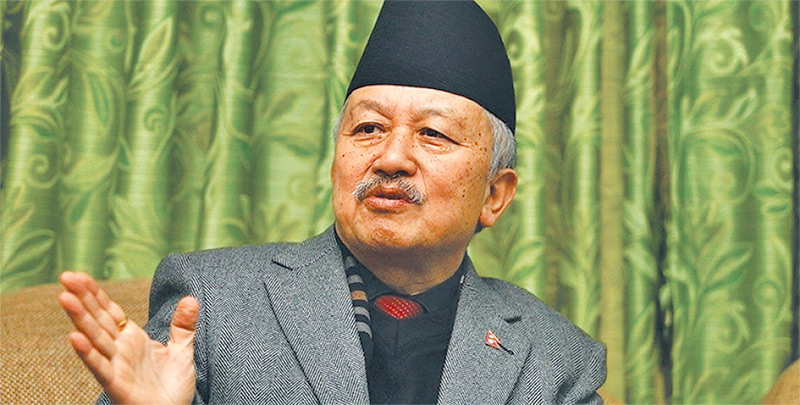
NCP leaders say Pushpa Kamal Dahal could give up his claim that the position stay with the Maoist faction.
- TIKA R PRADHAN
Subash Chandra Nembang. Post File Photo

KATHMANDU,
With the winter session of Parliament just a couple of weeks away, the ruling Nepal Communist Party has two names for the post of House Speaker—Subash Nembang and Agni Sapkota. However, given internal deliberations, party leaders say that Nembang is the clear frontrunner.
Both UML and Maoist factions of the ruling communist party have been vying for the post of Speaker, the fifth-highest position in the state. Prime Minister KP Sharma Oli has been lobbying in favour of former Speaker and chairman of both Constituent Assemblies Nembang. The Maoist faction in the party has also been demanding that the position stay with them, but Pushpa Kamal Dahal is willing to give up his claim, party leaders told the Post.
A senior party leader, who spoke on condition of anonymity, said it is not clear what deal Dahal and Oli had reached in order to elevate Dahal to ‘executive’ chairman of the unified party. But it could have involved Dahal giving up the post of Speaker.
“Dahal has lately been calling on the party to not bring up factional issues, saying party unification is almost complete,” said Devendra Poudel, a standing committee member. “But I don’t think leaders [of the Maoist faction] are going to give up on the Speaker’s post so easily.”
Despite the misgivings of lower-rung Maoist leaders, Dahal appears willing to compromise, say party insiders, particularly since the Maoist choice—Sapkota—does not seem to have much support.
Sapkota’s name for the Speaker’s post could draw unnecessary attention from various quarters, including the human rights community. Sapkota faces a murder charge, for which a case is pending at the Supreme Court. With former Speaker Krishna Bahadur Mahara having stepped down after allegations of attempted rape, it will not look good to have another murder-accused as Speaker, according to party insiders.
Nepal’s peace process has been dragging on for more than a decade now and the international community has long been pressing the government to conclude the transitional justice process, the most crucial component of the deal. Sapkota’s pending case is from the insurgency years and is thus part of the transitional justice process.
Party leaders, particularly from the UML faction, are also uncertain whether Sapkota will be an appropriate candidate for the position, as it requires ‘diplomatic skills’.
“I don’t think a leader who turns aggressive even during interviews with the media can handle the position properly,” said a central committee member from the UML faction. “A person like Nembang can skillfully handle the House.”
According to Poudel, Oli has been saying that the Speaker should be selected on the basis of capability. This argument clearly favours Nembang, who led the Constituent Assembly for almost eight years, from 2006 to the promulgation of the constitution in 2015.
The post of Speaker has remained vacant since early October after Mahara stepped down. Since Mahara represented the Maoist faction, Dahal was initially lobbying for a former Maoist leader as Speaker.
Deputy Speaker Shiva Maya Tumbahangphe, who is from the UML faction, has been staking claim to the post. But with the two parties’ merger, the ruling Nepal Communist Party cannot appoint its leader from either faction as Speaker unless Tumbahangphe steps down.
Article 91(2) of the constitution stipulates that the Speaker and Deputy Speaker should be from different parties and a different gender.
Discussions on Speaker’s appointment were put on the back burner after Oli’s health suddenly deteriorated. After an appendectomy on November 26, Oli currently is convalescing at the hospital.
Surya Thapa, the press advisor to Oli, said the party will sit and finalise the name after proper discussion. “The prime minister will remain in the hospital for a week. The party’s secretariat meeting to be held after his discharge will decide the name,” Thapa told the Post.
The first Cabinet meeting to be held after the by-elections is likely to recommend that President Bhandari
call the winter session for mid-December. By then, according to standing committee member Poudel, the party’s secretariat meeting will take a formal decision regarding the role of Speaker.
HOME PAGE

On day one, gold rush and records for Nepal

Emotions ran high on Monday as the host nation reestablished itself as a martial arts powerhouse.
- ARPAN SHRESTHA

KATHMANDU,
The first day of the 13th South Asian Games saw gold medals rain as Nepali karatekas and taekwondoins outsmarted their opponents to prove, once again, that Nepal is the powerhouse of martial arts in South Asia. The athletes did so in style and grit that reminded many of Nepal’s early years of absolute dominance in the region.
All this despite the government’s lackadaisical support for Nepali athletes, who often find themselves undertrained and underequipped in the final weeks leading to big tournaments where they represent the country and are expected to strike gold.
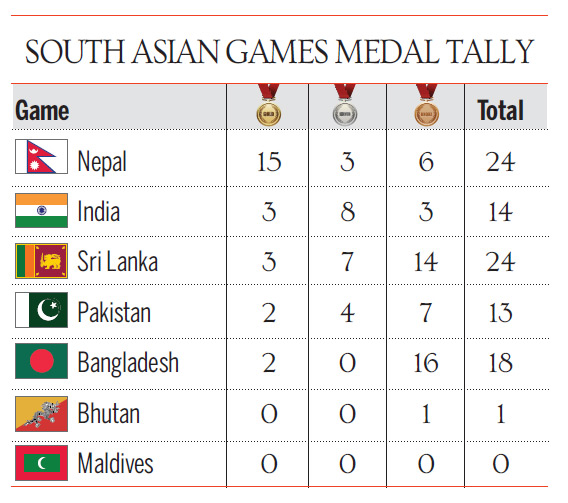
Nepal claimed a total of 26 medals on home ground on the first day of the biggest sporting event in the region—15 gold, 3 silver and 8 bronze. Compared to the last edition of the Games hosted in India, when Nepal came in sixth with only 60 medals—3 gold, 23 silver and 34 bronze, this is a huge moment for the country’s sports, especially for karate, which was not included as a discipline then.
“Martial arts are disciplines that have fetched the highest number of medals in international tournaments but we feel our sport, especially karate, has never received government attention,” said Manday Kaji Shrestha, who clinched a double gold on the first day of the 13th South Asian Games and became the first Nepali to do so. “We can emerge as one of the top teams in Asia if the government invests on us.”
Out of the nine gold medals up for grabs in karate on the first day of the tournament, Nepali karatekas secured seven, including the double gold by Shrestha in men’s individual and team kata event with Mahasus Tamang and Prabin Manandhar.
“We are hopeful of winning five to six gold medals in the next two days,” said Shrestha.
Similarly, Sangita Malla, Nirmala Tamang and Saru Karki also claimed gold in the women’s team kata category.
In the men’s kumite event, Laxman Tamang (U-55kg) and Biplav Lal Shrestha clinched gold for Nepal, while Kusum Khadka (U-45kg) and Anu Adhikari (U-50kg) finished on top spots. Adhikari, who won both her bouts in technical knockouts of 8-0, had no match.
Chanchala Dunuwar and Diwas Shrestha had to settle for silver medals in women’s individual kata and U-84kg kumite events respectively, cutting short Nepal’s clean sweep on gold medals by two.
Nepal will be competing for 10 more gold medals in karate in the next two days.
Emotions also ran high in Nepal’s taekwondo camp with Nepal’s senior taekwondoins striking seven gold medals and creating history while breaking the dry spell of gold medals since the 1999 edition of the Games, when Nepal finished second with a record haul of 14 gold medals out of the total 32 gold medals in the discipline.
“The outcome is a result of our tireless players and coaches. We will be competing for 16 more gold medals in the next three days. Today’s success will inspire other players to do better,” said chief coach Nabin Shrestha.
“We had the home ground advantage, no doubt, but the government needs to come up with plans and back it up financially if we want to retain our success.”
On the first day of the tournament, Nepali taekwondoins pocketed seven gold medals out of 13, including a double gold by Ayasha Shakya, who became the second Nepali and the first Nepali woman athlete to set the record for two golds in the Games.
Shakya first won gold for women’s individual poomsae (29 years above). No sooner, she struck another gold in pair poomsae (29 years above) with Sanjib Kumar Ojha. Similarly, Ashmin Raut and Sina Limbu Maden (17-23 years) and Jit Bahadur Bot and Parbati Gurung (23-29 years) settled for bronze.

Both Maden and Gurung also claimed a gold medal in women’s individual poomsae under respective weight categories.
Nepal’s women team (17-23 years) comprising of Nisha Darnal, Swastika Tamang and Sanjila Timalsina also added one gold in the women’s team poomsae. Another team, of Nita Gurung, Prashansa Chhetri and Shushila Rai (23 years above), pocketed one more gold for Nepal in the women’s team poomsae.
Similarly, teams of Shishir Shrestha, Ashmin Raut and Dipendra Gurung (17-23 years) and Kamal Shrestha, Jit Bahadur Bot and Prem Bahadur Limbu (23 years above) settled for two bronze medals in the men’s team poomsae.
In the men’s individual poomsae, Kamal Shrestha (23-29 years) bagged gold, while Krishna Bahadur Tamang (17-23 years) and Rejin Rimal (29 years above) settled for silver and bronze medals.
In the triathlon event held in Pokhara, Soni Gurung secured a gold medal in the women’s category, while Basanta Tharu won bronze for Nepal in the men’s category.
Nepal’s medal haul could see bigger results on Tuesday when its judokas and wushukas enter the arena to compete for 15 and 22 gold medals, respectively.
Judo and wushu are two disciplines besides football in which Nepal secured a gold medal each in the last edition of the Games. Since then, both squads have demonstrated immense progress in international tournaments and Nepal bets on their performance to better its position as it hosts the tournament on home ground.
“Judging by the performance of our judokas, we are hopeful that they will deliver good results,” Devu Thapa, a former Olympian and coach, told the Post. “We don’t consider the Indian team a competition anymore. We’ve accomplished a lot and won gold medals in various categories.”
Judo contributed two silver and six bronze medals while wushokas bagged 10 silver medals and one bronze medal in the last edition. “We have the home ground advantage and our wushokas have recently improved their world rankings,” said Coach Mohan Bahadur Pandey Magar. “We will be a force to be reckoned with.”

HOME PAGE

Tens of thousands of animals are being slaughtered in Gadhimai despite protests

In line with court’s order to work towards eliminating animal sacrifice, the temple will stop sacrificing pigeons.
- LAXMI SAH
Post File Photo

BARA,
On the premises of the Gadhimai Temple, a massive slaughterhouse sprawls across 26 ropanis of land. On Tuesday, within this structure, over 30,000 animals will be sacrificed, its floors running red with blood.
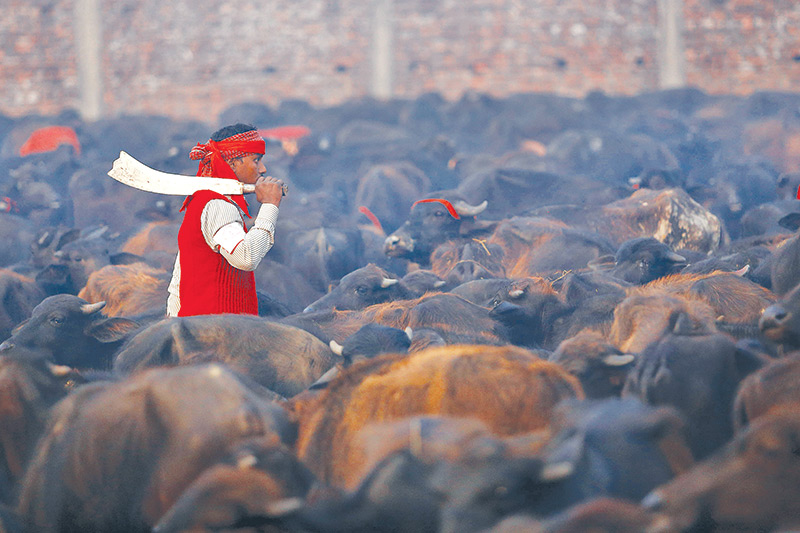
The slaughterhouse currently houses 3,000 buffaloes, guarded by police and a wire fence. Half-a-dozen of the animals that were left out in the open have already died due to the cold while many others are sick and have been plied with medicine. Journalists and the public are not allowed to enter or take photos.
Five years ago, after vocal protests from animal rights activists, numerous reports in the media had said that the Gadhimai Temple had banned all animal sacrifice. But the herd of buffaloes awaiting sacrifice at the slaughterhouse says otherwise.
“We didn’t ask people to bring their animals to slaughter,” said Ramchandra Sah Teli, chair of Gadhimai Temple Management Committee. “They came on their own. After all, it’s a tradition that they have adhered to and it is what makes the festival so popular. We do not support the mass slaughter nor do we oppose it.”
The festival, which takes place every five years in honour of the goddess of power Gadhimai, is attended by millions of people from across Nepal and India. As of Monday, thousands had already arrived at the temple premises with their sacrificial animals.
“I have a great respect for goddess Gadhimai,” said Bishwanath Kalawar from Motihari in India. “We provide our offering happily. It is our choice.”
Sacrificing animals, including buffaloes, goats, chickens, ducks and pigeons, has been a longstanding feature of the festival. According to Mangal Chaudhary, main priest at the temple, the auspicious date to sacrifice buffaloes is Tuesday, and Wednesday for other animals.
“Despite campaigns by animal rights activists, the number of visitors have not declined,” 67-year-old Chaudhary, who expects about five million pilgrims this year. The committee expects over 30,000 animals will be sacrificed this year.
Gadhimai is located in Bariyapur, six kilometres north of Bara’s headquarters Kalaiya. The site has two small, nondescript temples sitting by the banks of the Pasaha River.
There’s a pond on the temple premises, flanked by paddy fields, and there are two dharmashalas.
But every five years, this quiet space comes alive with pilgrims and animals. Food stalls and entertainers spring up overnight. There are even mini-circuses. For many, the mass slaughter is what gives the festival its ‘glory’. But since 2009, there has been increasing pressure on the temple authorities to ban the wanton animal sacrifice.
In anticipation of protests, security has been intensified, with a total of 1,500 security personnel deployed to the area. There are 70 closed-circuit cameras and security along the Nepal-India border has also been tightened.
“We are being especially careful about the security of pilgrims,” said Superintendent Bikash Raj Khanal.
In August 2016, the Supreme Court, responding to a petition filed against the mass slaughter, had issued an order to the government to stop animal sacrifices at Gadhimai fair. The Gadhimai Five-yearly Festival Main Committee has said that it will follow the court’s orders and has decided not to kill any pigeons.
“We have decided not to sacrifice pigeons since they are believed to be signs of peace,” said Naresh Shah, committee coordinator. There’s also an age criteria for sacrificial buffaloes—younger animals will not be sacrificed, according to the committee.
The District Animal Office and Animal Quarantine Office, which works towards safeguarding the country from infectious animal diseases, have jointly launched a campaign to spread awareness about the communicable diseases that animals carry. There are also no proper roads, electricity, parking, drinking water, dumping site and latrine facilities, increasing the chances of diseases spreading.

In this photo taken in 2014, buffaloes are corralled on the premises of Gadhimai Temple for sacrifce. More than 4,000 buffaloes and other animals were sacrificed that year, according to the officials. post file photo


“These campaigns have inspired us to protect animals. We are starting with pigeons,” said coordinator Sah.
But despite protests, the mass slaughter is slated for Tuesday and Wednesday. The slaughter will proceed after sacrificing seven animals—mice, pigeons, chickens, ducks, pigs, and buffaloes. In the last iteration of the festival, an estimated 10,000 buffaloes were slaughtered, along with thousands of other animals.
In the past, Chamar communities from the Gadhimai area consumed the sacrificed animals and traded their meat. Unlike other Hindu rituals, the slaughtered animals are not taken home by their sacrificers. This year, however, a section of Chamars has planned to boycott the festival.
“Firstly, carcasses are not good for health. They have made many of us sick previously,” said Raj Narayan Mahara Chamar, secretary of the boycott committee. “It’s also a subject associated with the prestige of our community. Many look down upon us because we trade the sacrificed meat. The Festival Committee can manage the carcass.”
According to Chamar, they will only be accepting vegetables, coconut, sweets and tika as the festival’s prasad this year, not the meat.
Meanwhile, the Animal Welfare Foundation, an animal rights organisation, has also launched a campaign against sacrifice at the festival. But the campaign has not really taken off, said Sneha Shrestha, chair of the foundation.
“In Nepal, we don’t have an act about animal welfare. We demand that the government introduce laws towards animal welfare,” Shrestha said. “Sacrificing animals is superstitious. Where in the religious text is it written that gods and goddesses want dead animals?”
Legend has it that in the 17th century, one Bhagvandas Tharu was jailed in Makwanpur for murder. Tharu prayed to Gadhimai goddess, who promised to free him if he would take her to Bariyapur, the site of the festival. The festival, according to priest Chaudhary, then started by Tharu in honour of the goddess.
But according to Shrestha, sacrificing animals cannot always be defended as being a part of tradition.
“There once was a sati system, which has now been abolished,” she said. “Animal slaughter should also
be abolished, like the sati. The gods won’t be happy if innocent animals are killed.”

Page 2
MEDLEY

Horoscope

ARIES (March 21-April 19)
***
Someone from a different culture is piquing your curiosity right now, and you’ve got the time you need to explore their world today. Taste the food of their culture, and visit a few websites to learn a little more about this culture’s history—you will find that there are some interesting facts that you never knew before.


TAURUS (April 20-May 20)
**
Be sure to take copious mental notes when you encounter other people today, because one of them has something to show you. Someone you thought you knew will act in an unusual or confusing way, and you should figure out how to emulate them! The people you know the best can often be the best inspiration.


GEMINI (May 21-June 21)
**
Working with more than one person could create tense or angry feelings today, so if you are in a group situation, see if you can divvy up the workload and divide everybody down into partnerships. The politics of a big group are much too complicated to enable anything to get done—two heads can come up with better ideas faster.


CANCER (June 22-July 22)
****
After a few days of doing everything for everyone else, why not do something for yourself today? You could do something as major as book a day at the spa, but you don’t have to go to quite that level of expense to get the recharge you need. Simply finding an hour to spend on your own in a quiet corner might be good.


LEO (July 23-August 22)
***
While you might not exactly have boundless energy today, you will have plenty of the juice you need to keep yourself going throughout all the day’s events and challenges. Climbing even the tallest mountain merely requires you to put one foot in front of the other a lot more often than you usually do—and that’s it.


VIRGO (August 23-September 22)
**
It’s tempting to just check out when a drama begins to unfold between your friends or family members, but you need to make sure that throwing up your hands and saying ‘forget it’ is the right answer. Usually, it isn’t. Maybe you can help more than you think—maybe you can point out the obvious to people.


LIBRA (September 23-October 22)
****
Some very good news is coming your way early on today, and it’s so good that you should spend the rest of the day sharing it with the people who will get a real rush out of it. Each time you do, your energy level will rise higher and higher, and you’ll get happier and happier! Ride this wave with everything you’ve got today.


SCORPIO (October 23-November 21)
***
There are some larger challenges coming up for you in the future, but today’s docket is full of small, fun and easy stuff! If you can get extra time off from work or school today, you should. Blowing off a bit of your daily routine won’t do anyone any harm, but it will probably do you a lot of good.


SAGITTARIUS (November 22-December 21)
****
Put on your best professional outfit and your best game face today, because chances are you’ll be put in front of the public. There’s been an unexpected change in the lineup of a meeting or event, and your role will be upgraded quite a bit. This is the big opportunity you have been waiting for.


CAPRICORN (December 22-January 19)
***
The heavy issues in your life are not going to get any lighter any time soon, but fortunately you will find a great deal of relief in the form of a new friend today. Accept any and all invitations they offer you, and let yourself focus on something other than deadlines, budgets or difficult authority figures.


AQUARIUS (January 20-February 18)
**
A new member of your family or social group has a lot to teach you. They’ve been through what you are going through, and have some interesting advice for you. They’re not going to come up to you, tap you on the shoulder and say ‘let’s talk’—so if you want to get some clarity on things, you need to approach them about it.


PISCES (February 19-March 20)
***
This will be a surprising day—it will start off smooth and easy, but don’t let yourself get too comfortable! As the day moves forward, there will be a lot of noise coming from people who are relatively new to the scene. You’ll need to pay close attention to what is being said and take note of who is saying it.

Page 3
NATIONAL

State fails to allocate adequate budget to rebuild quake-ravaged public schools

The current delay means students will have to wait a few more years to shift from makeshift structures.
- BINOD GHIMIRE

KATHMANDU,
Students from hundreds of public schools studying in makeshift structures after the twin earthquakes four years ago will have to wait at least a few more years to sit inside permanent buildings because the government won’t allocate the necessary budget for the reconstruction of earthquake-ravaged school buildings.
The Central Level Project Implementation Unit (Education), an entity under the National Reconstruction Authority, had sought Rs 11 billion to reconstruct 1,806 public school buildings in the current fiscal year. The Ministry of Finance allocated Rs 9.23, and even that includes Rs 8 billion in loans pledged by the Indian government through Exim Bank.
Officials at the unit say there are so many conditions imposed to spend the Rs 8 billion, making it impossible to use it for the construction of school buildings. Ensuring 70 percent of the materials used in the construction come from India and granting the contracts only to the Indian construction companies are some of the preconditions required for using the loan amount.
Dilip Shekhar Shrestha, deputy chief at the unit, said as the reconstruction of the school buildings is done by the communities, awarding contracts to Indian companies is impossible. Shrestha said it was also not possible to ensure that a majority of the construction materials come from India.
“We are simply not in a position to use the loaned amount, which means we can only spend Rs 1.23 billion and that is hardly 12 percent of what we require,” he told the Post.
Officials at the unit say the government’s fund for the current fiscal year is hardly enough to finish 200 school buildings. There are still 2,700 public schools damaged by the devastating earthquakes that are waiting for reconstruction. “If we are to calculate the cost to reconstruct all the schools, we are short of Rs 27 billion,” Shrestha said.
Though the government, while starting the reconstruction project in 2016, had announced that it will complete the rebuilding of all damaged schools by 2020, the sluggish progress shows there is no way the rebuilding work will be completed in time.
Parents of local students say it is an example of the sheer incompetence of the government that hundreds of schools await reconstruction though it has already been more than four years since the disaster.
“The government hasn’t realised how difficult it is for the students to study inside makeshift structures during monsoon and winter,” said Suprabhat Bhandari, president of the Nepal Federation of Guardians. “The reconstruction of the school buildings must be a priority project for the government.”
Government records show over 33,000 classrooms from 7,923 public schools in 32 districts were destroyed in the earthquakes. After 370 such schools were merged due to the lack of enough students, 7,553 school buildings had to be rebuilt.
The Post-Disaster Recovery Framework prepared by the National Reconstruction Authority in 2016 had estimated that Rs 180 billion would be required for the construction of the quake-destroyed academic institutions and that Rs 167 billion would be needed to rebuild schools and classrooms.
The budget was later revised to Rs 119 billion, out of which Rs 50 billion has been pledged by donors in form of loans and grants.

NATIONAL

Social Welfare Council tightens noose on local NGOs

Officials say provisions have been proposed to discourage religious conversion and social disharmony.
- PRITHVI MAN SHRESTHA

KATHMANDU,
The Social Welfare Council has tightened the noose on the local non-governmental organisations by putting a number of conditions before getting their project proposals approved.
In a recently revised project proposal format, the council has made the provision that the non-governmental organisations should not propose any activities that have been barred by the country’s laws. Although the provision has not specified any law, officials told the Post it was made to discourage the NGOs from engaging in any activities that are related to religious conversion and can create social disharmony.
“Civil Code has clearly made provision of penalty for the activities related to religious conversion,” said Rajendra Poudel, member secretary at the council. “The new provision will help the authority to check if any project proposal has a provision that is contrary to this provision.”
According to another official at the council, who only agreed to speak on condition of anonymity, it will be also vigilant on NGOs that are focussed on advocacy-related works that contradict promotion of social harmony.
“As Development Cooperation Policy is also known as foreign aid policy, has prioritised infrastructure development, we also want local NGOs which receive funding from international agencies, to follow the policy,” the official said.
Such strict provision was earlier made only for the international non-governmental organisations. But Office of Auditor General, in its latest report, had named a number of local NGOs which were accused of acts to promote Christianity in the country.
Himalaya Bible Study Academy and Nepal Christian Bal Sishkya Sangati are among the NGOs named by
the Auditor General’s Office that carried out activities to promote Christianity.
The Auditor General’s office has also recommended that while approving foreign aid, the government agency should discourage activities that affect religious and cultural unity of the country.
The council had not attached any condition for approving the project proposals as per the earlier version. But the official said that strict provision was made to discourage the tendency of some NGOs who carried out different activities than what they were approved for.
In a new format, the council has not allowed non-partner NGOs to receive fund from international NGOs. During the programme approval, the international groups also mention the local NGOs through which they would be mobilising their fund.
“But we have evidence to show that occasionally some international NGOs provided the fund to the NGOs which were not partner NGOs while getting programme approval from the council,” said Shiva Kumar Basnet, spokesperson at the council.
The council has also told the NGOs that they should not get a foreign fund going against the Money Laundering Prevention Act.
It has already signed a memorandum of understanding with the Department of Money Laundering Investigation to discourage such acts in the social service sector.

NATIONAL

Government to conduct free skill tests for returnee migrant workers

- CHANDAN KUMAR MANDAL

KATHMANDU,
The government is planning to conduct free skill tests for returnee migrant workers to certify the skills they have gained while working on foreign employment.
The Foreign Employment Board will be conducting the tests targeting returnee migrant workers, who often scramble for jobs upon returning home even when they possess specific skills.
“Migrant workers return home with a certain set of skills but without certification, they end up jobless. The objective of skill tests is to validate and rate their occupational skills,” Din Bandhu Subedi, spokesperson for the board, told the Post.   
“The tests are open to all migrant workers who are back home now,” he added.
Applications for the tests, which will be conducted by the National Skill Testing Board under the Council for Technical Education and Vocational Training, will be collected from all seven provinces before December 27.
Providing skills verification is one of the measures the government agencies try to reverse the outflow of Nepali workers to Arab-Gulf countries and Malaysia where they work under unsafe working environment for meagre remunerations.
Even when they return with skills, lack of proper verification of their skills makes it harder for them to get a job in the country.
“When their skills are certified, they become trained and qualified human resources for the country,” Subedi said.  “Once they have the certificate, they can easily apply for similar jobs here and earn decent money. This way, we can also retain migrant workers.” Similar skill tests and verification programme were organised in all provinces last year. However, the response was not very encouraging.
According to Subedi, 584 youths had applied for the tests and little over 400 of them actually took the tests. Among those who took the tests, 126 passed and got their skill certificates.
The board has also announced free skill training to unskilled and unemployed youths.
As per the plan unveiled by the board in October, the month-long training would be provided in as many as 19 different fields.
To retain returnee migrant workers and create opportunities for them at home, the government had recently made some crucial revisions in the policy that offers, among others, interest-subsidised loans to returnee migrant workers.
The lack of job opportunities and financial resources required to start any enterprise at home has forced returnee migrant workers to go back on foreign employment, giving continuity to circular migration—a trend in which migrant workers continue migrating abroad.
The government plans to stem circular migration through policy changes.
“Policies are becoming flexible and helpful to assist migrant workers to start their own enterprises and get skills certified,” Subedi
said. “Now there is Labour Information Centre in all 753 local levels. Their job is not merely collecting information but also generating jobs for unemployed youths at the local level.”

Page 4
NATIONAL

Staff adjustment affects health services across the country

Health workers have refused their postings in remote areas, according to officials.
- Arjun Poudel

KATHMANDU,
Cesarean delivery service at Gorkha District Hospital has been halted ever since Dr Jyoti Agrawal, a gynaecologist, left in October.
Dr Agrawal, whose posting is at Patan Hospital in Lalitpur, was sent to Gorkha for three months at the request of the Ministry of Health and Population, as the District Hospital suffers from a perennial shortage of doctors.
“Consultant doctors do not want to serve outside Kathmandu Valley for long, so the Patan Hospital has been rotating its doctors every three months to serve the people in Gorkha,” Krishna Dhakal, spokesperson
for the District Hospital, told the Post over the phone. “Dr Agrawal left
after completing her three months term. Patan Hospital has not sent
her replacement after she left. The lack of doctors has forced the patients to seek service in Kathmandu and Chitwan.”
Besides the post of gynaecologist, the other positions of consultant doctors—orthopaedic doctor, psychiatrist, gynaecologist, anesthesiologist, general surgeon, general physician and ENT doctor—are also vacant at the District Hospital.
Although the responsibility of appointing doctors in district hospitals is on the concerned provincial government, the government of Gandaki Province has not taken any steps to fill the vacancies in Gorkha.    
Now that the federal Ministry of Health and Population has also stopped sending doctors, people in Gorkha have been travelling outside the district in times of medical emergency.  
“We are referring almost all cases to Kathmandu or Chitwan due to the lack of doctors in our hospital,” Dhakal said.
Gorkha District Hospital is not the only health facility grappling with the lack of doctors and other medical staff. Officials say several health facilities across the country are dealing with the problem of human resource shortage as a result of staff adjustment.   
In Seti Zonal Hospital (now provincial hospital of Sudurpaschim) in Dhangadhi, of the 15 consultant doctors serving there, three doctors retired and 11 were transferred as part of the staff adjustment programme.
The government had allowed the doctors to choose their duty stations and most of the doctors picked the health facilities in their respective provinces.
“Of the 11 doctors transferred to various hospitals, five refused to return to their previous posts,” Dr Hem Raj Pandey, the hospital superintendent, told the Post over the phone. “The Health Ministry has sent back the remaining six doctors to the provincial hospital for three months deputation.”
Dr Hem Raj said the hospital’s request to the Social Development Ministry of Sudurpaschim Province as well as the federal Ministry of Health and Population has gone unheard.
“The officials at the Health Ministry are responsible for the shortage of doctors in state-run hospitals across the country,” Dr Dipendra Pandey, president of the Government Doctors’ Association of Nepal, said. “We had forewarned the authorities of the negative impact the staff adjustment would have on health facilities in Sudurpaschim and Karnali provinces, but they did not pay heed to our warning.”
According to Dr Dipendra, the government decided to keep all medical doctors under the Health Ministry’s jurisdiction and create “pool postings” under which doctors would be mobilised to different locations, but the agreement did not come to fruition, leading to a barrage of problems in the health sector. Doctors serving in state-run health facilities had launched series-wise protest programme against the employee adjustment process.
“Some doctors, who had accepted their transfer letters some six months ago, can be found serving at their old stations,” said Dr Dipendra. “They haven’t been designated their new locations yet.”
Khaga Raj Baral, secretary at the Health Ministry, concedes that Province 1, 2, and 3 have more doctors than required.
“We gave the health workers the liberty to choose their duty stations,” said Baral. “But all of them chose locations suitable to them ignoring far-flung rural areas. This is why Sudurpaschim and Karnali lack doctors and other health workers today.”

Page 5
NATIONAL

As assault reports rise, Nepal Medical Council urges doctors to practice as per protocol

According to Nepal Medical Association, around a dozen such incidents take place across the country every month.
- Arjun Poudel

KATHMANDU,
A medical intern serving at the teaching hospital of Chitwan Medical College was severely thrashed some six weeks ago by a mob gathered at the hospital following the death of a patient.
The mob alleged that sheer negligence from the part of doctors was responsible for the death of the patient, who had undergone sinus surgery. Following the mob picketing the hospital, health services were hampered for two days.
In another incident two months ago, a professor, Bhola Raj Joshi, was manhandled following the death of a patient at Om Hospital and Research Center. Relatives of the deceased alleged that negligence from the doctor was the sole cause for the death. “Doctors are not gods nor are we killers,” Joshi told the Post. “We tried our best, but we could not succeed.”
Similarly, a few months ago, a man pretending to be a journalist arranged time to meet with Professor Jagdish Prasad Agrawal, dean of the Institute of Medicine at his office. Because he claimed to be a journalist, the man easily got entry into the dean’s office and upon entering the office, threw black ink on Dr Agrawal and fled the scene.
Aforementioned are just representative cases of assaults, manhandling and violence against doctors and health care facilities. According to the Nepal Medical Association, an umbrella organisation of medical doctors, every month about a dozen such incidents take place throughout the country, and such incidents are on the rise.
In just the last eight months, the Association has issued dozens of press releases condemning incidents of violence against doctors involved in the treatment and health facilities.
As the frequency of such incidents rises, the Nepal Medical Council has cautioned doctors to fulfil all minimum standards for the safety of patients during treatment. The national regulatory body of medical doctors has also urged doctors to use surgical checklist mandatorily and practice as per the established scientific protocols.
Likewise, the council has also appealed to the general public in an effort to ensure such incidents are not repeated in the future. “We would like to request all to not resort to violence and seek legal remedy,” reads the press statement issued by the Council. “One can also file a case at the council if he/she has a serious complaint over the treatment.”
Meanwhile, Dr Lochan Karki, general secretary of the Association, has asked the government to ensure the safety of doctors and health facilities. “We have been drawing the attention of the government time and again to the growing number of violence cases but to no avail,” said Karki. “Had the government maintained law and order, such incidents would not have repeated.”

NATIONAL

City officials to clear hoarding boards in a week

City planners—sceptical of the metropolitan office’s new announcement—say the new move is just a gimmick.
- ANUP OJHA

KATHMANDU,
After the contempt of court was filed last Friday against government ministers and top officials at Kathmandu Metropolitan City over their failure to implement a Supreme Court ruling to clear hoarding boards from across Kathmandu, city officials published a notice on Monday, ordering the clearance of all advertising boards within a week.
The city has directed all businesses and ad agencies to remove billboards, pamphlets, wall paintings and
posters from buildings and utility poles within a week.
The city office on August 18 had also made a public announcement, asking to remove visually polluting factors as a campaign targeting Visit Nepal 2020. The effort never worked.
But city planners are sceptical of the metropolitan office’s new announcement and say it won’t be implemented at all. “Many businesses have spent a big chunk of money for these forms of advertisements,” said Suman Maher Shrestha, an urban planner. “These cannot be removed easily because this is not the first time the city’s published such public notices.”  
Padam Bahadur Shrestha, the senior advocate who had filed a writ petition at the Supreme Court four years ago, had filed a contempt of court case last week after the government agencies didn’t follow the apex court’s decision. Although the city’s Advertising Board Promotional Material Regulation Policy states that it is illegal to install commercial hoarding boards and advertising materials on addition frames on rooftops and balconies of private homes, the law has not been followed.
“Such pollutants not only ruin the beauty of the historic city, but they also are risky to the earthquake-prone city like Kathmandu,” said Shrestha.   
One city official, also a former city police, claimed that those who are in charge of enforcing the removal orders are working with businesses by taking money and ignoring illegal hoarding boards. The official asked to remain anonymous because he feared he’d lose his job.
“Since the arrival of the new chief of city police, monitoring has gone down, and advertising boards continue to hang across the city,” the official said.
When the Post contacted the city office, its spokesperson, Ishwar Man Dangol, denied the allegations and said it was working proactively in removing all illegal hoarding boards.
“Our office will strictly stick to removing all illegal advertising boards if the deadline is not met,” Dangol said.

NATIONAL

Fall Armyworm ruin hundreds of bighas of corn fields across Sarlahi

Individual pest control efforts failing for lack of intervention from the state; farmers worry this will affect district’s overall crop output.
- OM PRAKASH THAKUR
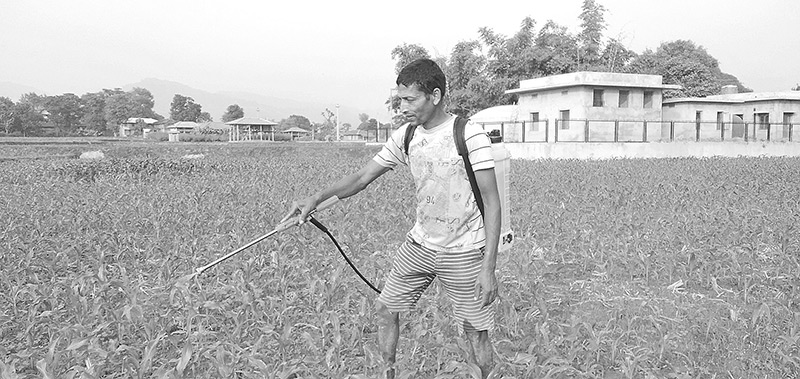
A farmer sprays pesticide in his field in Sarlahi. Post Photo: om prakash thakur

SARLAHI,
Every year after paddy harvest, Ram Bahadur Khatri, a corn farmer in Bagmati, Sarlahi, grows corn in a bigha of land. This year, Khatri expanded his cornfield to 1.5 bighas for he had generated good profit with his corn harvest last year.
However, this year he has little hopes of breaking even. His field is riddled with Fall Armyworm, a type of agricultural pest.
According to Khatri, his corn plants were healthy enough to grow well. But, within a week, the plants have started to dry up after swarms of the Fall Armyworm took over his crops. “I purchased some pesticides from the market and sprayed it but that did not have any effect. The pests keep growing in number,” said Khatri.
A majority of farmers who sow corn after harvesting paddy in the western and northern part of the district are facing similar problems.
This harvest season Fall Armyworm has taken over more than a hundred bighas of land in the district, according to local farmers. Bal Kishor Thapa, a resident of Lalbandi, said that pest infestation has already spread to most parts of the district. “I have already sprayed pesticides in corn plants thrice this year but they have failed to work on the pests. The pest is spreading at an alarming rate,” said Thapa. He has cultivated corn plants in two bighas of land this season but is harbouring no hope of a good harvest.
According to agriculture experts, Fall Armyworm (which was first found in America)  has been spreading through Africa and Asia since 2016, flying up to 100 km (60 miles) a night. Usually, Fall Armyworm become active at night and feed on crops.
Farmers in Sarlahi say that this is the first time that they have encountered such a problem on such a large scale. Surendra Mahato, a local farmer, said that he has been preparing his field to sow wheat in the hope of recovering from the losses he made with his corn yield this year. He said, “I spent Rs 40,000 while cultivating corn in two bighas of land this season, and now the pests have taken over my field. I’ll try to grow wheat. Hopefully, I’ll grow enough to cover my losses.”
Farmers have been commercially cultivating corn in Shankarpur, Rajghat, Janakinagar Pattharkot, Karmaiya, Hajariya, Barhathawa and Murtiya, among other areas.
Farmers bemoaned that the Fall Armyworm also affected paddy plants during the harvesting season this year. Ram Chandra Pandit, a local of Basbariya, said that the pests completely destroyed his stalks of paddy. “Last year, we harvested five to six mann (240kg) of paddy in one Kattha of land. But this season we harvested only three mann (120kg) on the same land. Fall Armyworm had destroyed 40 percent of our paddy stalks.”
Although farmers are making individual efforts to control the spread of Fall Armyworm by using pesticides in their fields, it’s far from sufficient. The first case of Fall Armyworm was reported in Ramechhap in August but lack of state intervention even after five months has led to unstoppable damage. “The government has not taken any initiatives against the menace of the Fall Armyworm.” Pandit said, “The outbreak has threatened the overall corn production from the district this year. The government authorities should immediately start “search and destroy” campaigns in the affected areas to control the pest.”
Farmers across the district have been requesting the concerned authority to adopt pest control measures to prevent further destruction of crops. However, the only form of support they have received is from the Agriculture Knowledge Centre in Sarlahi. “We are trying our best to mitigate the damage done by the Fall Armyworm in the district,” said Devananda Raya, chief at the centre. “These insects are most active at night so we have advised the farmers to spray pesticides in the evening for better results,” he said.
Although the farmers are taking preventive measures to control these destructive pests, it is a difficult feat, as the pests carry the ability to multiply and spread at a quick pace, he said. “The state must take this issue seriously. We need to find a permanent solution to this growing problem because this is not just about farmers, it will also reflect on the overall crop output of the district,” said Thapa.

NATIONAL

Despite traffic police’s assurances, pedestrians are dying on the city’s streets

Every year, the number of pedestrian deaths in accidents is rising, with over 300 people killed in the past five years.
- SHUVAM DHUNGANA

KATHMANDU,
On November 24, Prabhu Joshi went out for a regular morning walk in his New Baneshwor neighbourhood. For the 74-year-old doctor, who worked at the ICU of the Ishan Children and Women’s Hospital in Basundhara, the walk was a daily routine to clear his head before he started his hectic day. Joshi was crossing the road in front of the Federal Parliament building at 6 am when he was struck by a speeding bus. He died almost immediately, while the bus fled.
What happened to Joshi is not an anomaly. Every year, there are hundreds of cases where pedestrians are struck down by speeding vehicles. In the past five years, 321 people have died in the Valley after being hit. Every year, there are numerous news reports and articles stating how Kathmandu is no city for pedestrians, prompting the traffic police to make assurances of changes. And yet, pedestrians continue to suffer at the hands of motorists, with fatality rates rising steadily over the years.
“The main reasons behind the number of accidents rising are an increase in human and vehicle population,
violation of traffic rules, a tendency among youths to drive recklessly and speeding,” said Senior Superintendent Bhim Dhakal, chief of the Metropolitan Traffic Police Division.
Of the total 855 deaths on the road in the past five years, 467, or 54.6 percent, involved young people between the ages of 17 and 35, according to traffic police data.
“We are very strict towards those who violate traffic rules,” said Dhakal. “Every day, we book over 2,000 people for violating traffic rules.”
According to Dhakal, it is a willful disregard for traffic rules that is leading to 90 percent of these accidents.
“That’s why in the past four months alone, we have provided road safety classes to over 30,000 people,” said Dhakal.  But according to traffic engineers, it is not just a lack of etiquette on the roads that is leading to accidents but also a lack of proper road infrastructure. There are not enough pedestrian bridges, zebra crossings and traffic lights, said Ashish Gajurel, a transportation and traffic engineer.
“As a result, valley roads have turned into accident-prone zones for people looking to cross the road,” he said. “Mobilising more traffic police will not decrease the accident rate; road infrastructure needs to be constructed.”
According to police, the accidents are taking place due to a combination of factors. Because infrastructure is few and far between, pedestrians are often forced to cross the road wherever they can. This has been a consistent criticism of the newly expanded sections of the Ring Road. But even where there are zebra crossings, motorists do not respect the rules of the road. On October 10, Krishna Dhungana, a journalist, was struck by a motorcycle while on a zebra crossing at Tripureshwor, sending him into a coma.
“I feel scared every time I have to cross the road as vehicles do not slow down even when we are on a zebra crossing,” said Puja Dangal, a 19-year-old college student. “But there aren’t even enough zebra crossings and neither are there any traffic lights to stop vehicles.”
The traffic police is not solely responsible for road safety, said Dhakal, as other departments like the road department and the department of transport management also need to show concern.
“Construction of pedestrian bridges and zebra crossings is not our work,” said Dhakal. “However,  we have been coordinating with the concerned authorities for their construction at select places.”
According to Dhakal, the police has identified 23 black spots where accidents take place most frequently and adopted different measures to minimise accidents, such as placing hoarding boards, constructing speed breakers and increasing traffic checks. Those 23 accident-prone places in the Valley are Kalanki, Babarmahal, Airport, Minbhawan, Maitighar,  Gatthaghar, Bhaktapur, Satdobato, Gwarko, Thankot, Sitapaila, Gongabu, Maharajgunj, Sukedhara, Chabahil, Jawalakhel, Boudha, Kalimati, Singha Durbar, Gaushala, Budhanilkantha, Sanepa, and Sallaghari.

NATIONAL

Bharatpur Airport closed for repair works

Briefing

CHITWAN: Bharatpur Airport in the district has been closed for 10 days for repair work. The airport administration closed its services starting from Sunday. “We will resume the airport service from December 10 if the works get completed as expected,” said information officer Keshav Lamsal.

NATIONAL

Water shortage hits villagers in Dangbang

Briefing

PYUTHAN: The residents of Thum Malarani village in Dangbang, Pyuthan, have been reeling under water shortage.
Locals lament that the problem has persisted for years because concerned authorities have not taken initiatives to construct a drinking water project. Villagers have to rely on a water source in Sugakhola, which is a one-hour walk away.

NATIONAL

Looter arrested in Makwanpur

Briefing

MAKWANPUR: Police arrested Suraj Oli of Phimphedi on the charge of looting around four tolas of gold from a Hetauda-based jewellery shop on Monday. The suspect was held while he attempted to flee on his motorcycle after looting the gold. Oli entered the shop in the guise of a customer and looted the precious metal.

NATIONAL

Rs 200,000 to control monkey menace in Khandbari Municipality

Briefing

SANKHUWASABHA: Khandbari Municipality has allocated Rs
200,000 to control monkeys inside the municipality. The municipal office has provided a budget to control monkey menace because of rampant destruction caused by monkeys in almost all wards.

NATIONAL

Woman dies in Chhaupadi shed in Sanphebagar Municipality

Briefing

ACHHAM: Parbati Budha Rawat, 21, was found dead in a Chhaupadi shed in Sanphebagar Municipality Ward No. 3 in Achham district on Monday morning. The victim’s brother in-law found her dead inside the congested Chhaupadi room. Police suspected that she died of smoke suffocation as she had started a fire inside the shed to beat the cold. As per the data available at the district police office, 14 women have died in Chhaupadi shed in the past 10 years in Achham.

Page 6
EDITORIAL

Counting everything

Question design and execution will determine the usefulness of the next census.

The Central Bureau of Statistics has announced that the next census, to be completed by 2021, will be the most comprehensive one yet, surveying not just households but also livestock, household amenities and community infrastructure. Moreover, instead of using a sampling method to infer larger trends in the population, the bureau plans to reach out to every household and collect data directly, thereby creating a clearer picture.
This is great news. A comprehensive survey will provide a snapshot of the country—how it looks and what its needs are—which is especially necessary as Nepal has just transitioned into a federal model. A census containing accurate microdata, data collected at the individual level, will help development agencies, the government at all levels, and the private sector cater to the needs of every region in a targeted manner. However, how the bureau carries out the census—from the designing of questions to the training of data collectors—will determine the data’s accuracy and usability.
Nepal is constitutionally obligated to conduct a census every 10 years. But due to cost constraints, and perhaps not understanding the need for microdata, the country in the past few censuses has been using the sample survey method. In the 2011 census, the bureau only surveyed 12 percent of the households in Nepal, and extrapolated trends and proportions regarding the population from the data. A national outlook at policy development, made by a centralised governance structure, meant that this method was adequate in the past. However, with provincial and local governments shouldering more responsibility and power in the federal system, the need for detailed microdata cannot be overstated.
The bureau’s plans to include questions about access to public and private goods, besides recording the physical and social infrastructure available, is a significant and positive decision. Such detailed statistics can help governments implement targeted policies and strategies. Not all localities and regions benefit from a similar policy approach. Such data can also help keep electoral constituency delimitation relevant. Nepal’s electoral constituencies are determined by taking into consideration population and geography, to be reviewed every 20 years. Moreover, this will help the government, as well as development agencies and non-governmental organisations, take a better approach to tackle issues such as education and health. Even budgetary allocations could become more efficient. Businesses, too, can design and develop products and services according to the needs of the local population.
The Central Bureau of Statistics has estimated the cost of the next census to be over Rs4.5 billion. This is a whopping figure, considering the last one only cost Rs1.5 billion. While the benefits of such a comprehensive collection of data, for the first time in Nepal’s history and coinciding with the establishment of federal Nepal, would ideally far outweigh the costs, questions regarding survey design and implementation remain. The people hired to conduct the census need to be properly trained.
The questions themselves need to be designed thoughtfully and scientifically. The bureau says it wants to accurately take into account minute details, such as the differentiation of residential and non-residential households. But in a country full of multi-use buildings, many with undeclared income sources, capturing factual data will be challenging. Moreover, while the bureau wants to be thorough, it has not even been able to decide whether to include more than two gender options—something that the constitution itself has guaranteed. The bureau must not waste this opportunity to capture Nepal accurately.

OPINION

The government’s year-old social security scheme is a mess

Confusing policies and opaque management will throttle investments and economic growth.
- SUJEEV SHAKYA
post file photo

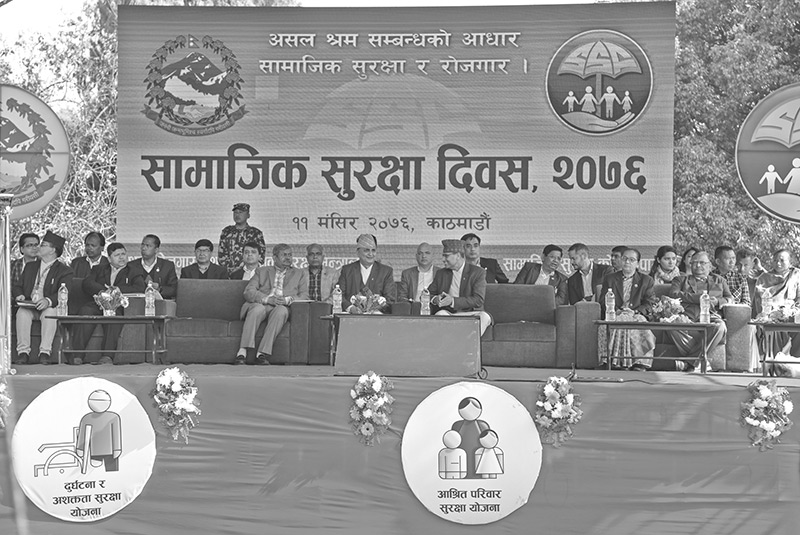
Last year, the KP Oli-led government undertook a multi-million rupee media blitz throughout the country to launch its contribution-based social security scheme. The scheme and its accompanying Social Security Fund were launched with the slogan ‘Naya Yug Ko Suruwat’, which translates to ‘the beginning of a new era’. The International Labour Organisation (ILO) lauded the move on its website, considering the scheme ‘one of the milestones of the ILO’s on-going interventions in Nepal’. A year has passed and on November 30, the deadline for organisations to register with Social Security Fund ended. Till the cut-off date, 10,477 enterprises and 115,606 individuals had registered, a dismal number compared to the number of enterprises and people working in Nepal. Investors, foreign and domestic alike, are waiting to see how the scheme moves forward, given the weak reception. Consultants have been bombarded with questions; there is uncertainty on policy directives moving. Real estate prices are taking a hit and the stock market will not recover any time soon due to the confusing policies. As it is, the Indian economic slowdown has been impacting business and tourism in Nepal already.
Nepal has a history of making a mockery of every good intent. The opacity of the Prime Minister’s Disaster Relief Fund showed how the management, systems and processes of government funds lack transparency. When the Bonus Act led to banks paying out large bonuses, the government mandated that the excess amount must be deposited to a National Level Welfare Fund whose scope of activity is unknown. Therefore, the government does not have the credibility to be able to win the confidence of employers and employees that it will not siphon off money from the Social Security Fund.


Twentieth-century mindset
The basic idea of the social security scheme is that an employee will put in 11 percent of their gross salary into this fund, and their employer will contribute an additional 20 percent. This savings is locked-in until the person turns 60, after which they will be eligible for pensions. The government has already made it impossible for organisations to legally hire interns and fellows. They have also done away with probation periods, which means that an employee is eligible for all benefits from day one and there are no linkages between wages and productivity. In an age where people are known to hold partake in multiple income-generating activities simultaneously, the shift from a focus on careers and jobs to income is clear.
Any social security scheme should be able to explain how healthcare expenses will be defrayed through such a large contribution to a fund and how the pension scheme will work. In Japan, there is a strong push for doing away with the concept of retirement. In Nepal, there is no clear understanding of what the government is trying to do. The employees and employers have for years been contributing to the Employee Provident Fund (EPF) and Citizen Investment Trust (CIT)—both are government bodies mandated by acts of Parliament. Now, it is unclear what will happen to these funds. There are rumours swirling about how the government is planning to dissolve the EPF and the CIT and transfer the accounts to the new Social Security Fund. Many people, therefore, are attempting to withdraw their money from the two old funds owing to the uncertainty that jeopardises their savings.
In Nepal, the employer-employee discourse has been monopolised by the cartels and political unions, who negotiate with the government on acts, laws, regulations and policies. Those who speak against them are either silenced through smear campaigns in media or verbal/physical threats. The contribution-based social security scheme was a result of the negotiation reached between employee unions (that this government has to keep happy) and the employer council of cartels, facilitated by experts from concerned international organisations. I remember how, during my days working at Soaltee Hotel, heavyweight pseudo-militant union leaders from different parties would come to negotiate on behalf of the employees, who were working diligently. The irony here is that some members of the business houses making up these cartels have been boasting openly about how they hire Indian workers in their factories to circumvent labour laws and social security schemes aimed at Nepali workers.


Nepal may regress
Business ventures are fluid, they will always find a way to work as long as the product or service has enough demand. But recently, through better access to finance and easier way to pay taxes, businesses had started to move away from the informal sector to formal ones. The recent confusion threatens this progress; businesses will be tempted to embrace the informal sector again. This is detrimental to Nepal’s growth. In Unleashing Nepal, I advocated for Nepal being a capitalist welfare state, where free enterprises will be responsible for welfare payments along with the state. The private sector has to see it as something that they are encouraged to do for it to work.
Nepal’s growth prospects are dependent on attracting investments—both domestic and foreign. The government needs to reach out beyond their political base, of cartels that fund them and the unions that give them muscle and electoral power, to examine how to make social security a reality for Nepalis in a manner that is credible, gradual and acceptable.

OPINION

The case for old-fashioned tariff cuts

Deep integration may be a challenge, but the world should understand trade barriers aren’t beneficial.
- Jeffrey Frankel
Shutterstock

The ‘bicycle theory’ used to be a metaphor for international trade policy. Just as standing still on a bicycle is not an option—one must keep moving forward or else fall over—so it was said that trade negotiators must engage in successive rounds of liberalisation. Otherwise, global openness would gradually succumb to protectionist interests.
I don’t know whether the theory was right. In fact, had governments stood still on trade policy over the last three years, the world would be a lot better off than it is now. Trade is faltering—global volumes are down a remarkable 1.1 percent over the last 12 months—as inept bikers collide chaotically with one another.
Once competent riders are again in charge, they could do worse than return to the post-World War II formula of negotiating the reciprocal elimination of tariffs. The suggestion sounds old-fashioned. After all, another familiar truism is that ‘shallow integration’—removing obvious trade barriers such as tariffs and quotas—is largely complete, and that further progress now requires ‘deep integration,’ or mutually agreed on rules for regulating the business environment. But that agenda, despite its potential merits, now appears too ambitious.
A classic example of deep integration was the decision by the member states of the European Common Market to go beyond free trade and pursue a full European Union and even a common currency. That was evidently an over-reach politically, at least for the Brexit-plagued UK. A current attempt at deep integration is the United States government’s demand that China stop requiring American companies to share their proprietary technology as a condition for entering joint ventures with local firms.
Many American economists support this demand, but argue that US President Donald Trump has gone about it all wrong. The sensible strategy would have been for the US to make common cause with other major governments to put pressure on China, preferably via multilateral institutions such as the World Trade Organisation. German carmakers, of course, have as much at stake in China as American firms do.
But, regulating technology transfer would be very tricky in the best of worlds. Typically, there is no explicit quid pro quo initiated by the Chinese firm, much less by the Chinese government. Often, the foreign corporation is the one that offers to share technology, to make itself attractive to a local firm as a joint-venture partner. How could a government regulate such a subtle process?
The answer may be for the Chinese government to eliminate the requirement that foreign firms doing business in China must have a local partner. In fact, the authorities have recently taken steps in this direction in the financial and automotive \sectors.
Simpler yet would have been for China to remove its long-standing tariffs on automobile imports, so that US and German carmakers could have exported directly to the Chinese market as an alternative to setting up production facilities there.
So, let’s go back to good old tariff negotiations. The US should remove all the tariffs it has imposed over the last few years on washing machines, solar panels, and myriad other products. In return, China should, of course, rescind its own retaliatory measures, for example, against US exports of soybeans, pork, and other farm products.
Turning the clock back to January 2017 would be a big improvement. But we should not stop there. The earlier conventional wisdom always overestimated the extent of shallow integration. Governments should move toward free trade in motor vehicles and as many other sectors as possible. A sector especially suited for liberalisation is solar panels, turbines, and other renewable-energy inputs. Ironically, many governments that purport to care about the environment maintain trade barriers that increase the cost of protecting it.
A damaging Trump policy that will need to be reversed is his abuse of the national-security exception to justify protectionist trade measures. The international trade system had previously allowed each government to interpret this exception as they saw fit. Most applied it judiciously, knowing that abuse would encourage others to behave similarly. New international negotiations should clarify exactly what qualifies.
None of this addresses the problem that trade creates losers as well as winners. Let’s hope that now, three years later, we have learned that tariffs also create losers as well as winners (and many more of the former in the case of Trump’s trade war). ‘Get tough’ trade policies are not a solution to the problem of inequality.
Moreover, trade is only one of many factors that contribute to inequality. And regardless of the relative importance of each cause, the list of practical remedies is pretty much the same. In the US, it includes expansion of health insurance, pre-school for all children, infrastructure investment, competition policy, restoration of post-2008 financial regulations, and more progressive taxation.
Some say that the US should raise trade barriers until it is ready to enact such policies. But that is a non sequitur. We should implement as many of these share-the-gains measures as we can, while also ending the trade war. And in the future, we free traders may need to be satisfied with an agenda of eliminating tariffs and quotas. Deep integration, it turns out, is perhaps a bridge too far.


This article was previously published in The Korea Herald, a part of the Asia News Network.

Page 7
OPINION

The China ‘model’

It is worth clarifying some important features of China’s political economy before embracing it as an ideal.
- UMAIR JAVED
Shutterstock

Every few months or so, the demand for a ‘presidential system’ of government in Pakistan makes an appearance on various social media sites. This happens most prominently on Twitter, where a number of users share similarly worded tweets, all using the same hashtag.
On its own, there’s nothing wrong with the demand for a constitutional redesign. Political systems are, theoretically, not set in stone, and neither are constitutions. Parties in a number of countries have contested for power on platforms that seek to change electoral systems, voting formulae, power-sharing arrangements between different social groups, and relations between the executive, legislature, and the judiciary. If anything, initiating a public conversation on institutional redesign is certainly more practical and preferable than cheerleading for ad hoc interventions by a particular organ of the state.
The most recent chorus of presidential fetishism is also slightly different from previous iterations on at least two counts. One is its frequency, which seems to be picking up pace since this government took office in July 2018. It appears an ever-increasing number of people from one side of the partisan divide believe that the lack of executive authority with the Prime Minister’s Office, the reliance on largely incompetent ministers, and the cumbersome legislative procedures required to push through ‘change’, are holding the country back.
The second change is the citation of two countries as case studies worthy of emulation—China and Turkey. While the infatuation with Erdogan has been around for a while, the systemic embrace of Turkey is relatively new. What’s also interesting is that believers in the ‘China model’ seem to be increasing in proportion to the country’s enhanced footprint on Pakistan’s economic and strategic decision-making. The drawing room logic is some variant of ‘if their system allows them to build a motorway at lightning speed, it’s surely worth importing’. Less facetiously, high growth rates, ‘strict rule of law’, zero-tolerance for corruption, and the overall welfare success of this developmental model are usually cited as reasons for systemic emulation.
This is curious because China’s actually existing political system is considerably under-discussed in mainstream political conversations across Pakistan. The print and electronic media doesn’t report on China’s domestic politics, and it rarely reveals any insight into what drives economic growth. There’s a recurring caricature
of strong leadership, mythical levels of anti-corruption, and decisiveness, in drawing rooms, WhatsApp groups, and TV studios alike, but that’s where the depth of it ends.
Leaving aside the moral and functional desirability of parliamentary democracy in ethnically fractured societies, and China’s own authoritarian behaviour with minority groups, it is worth clarifying some important features of China’s political economy before embracing it as an ideal.
In an excellent new book on the past, present, and future of economic systems, titled Capitalism, Alone, Branko Milanovic draws a sharp contrast between two ideal types of capitalism that have shown relative durability. Liberal meritocratic capitalism, exemplified by the US, and increasingly characterised by plutocratic levels of inequality and disparity. And political capitalism, exemplified by China, which stands as the only present-day alternative to organising politics and economics in a particular configuration, since the implosion of
communism (or state socialism).
China’s political capitalism, according to Milanovic, rests ironically on certain pillars some of which seem to be at odds with its popular caricature in the Pakistani imagination. Tracing the current system back to Deng’s reform period, Milanovic argues that political capitalism exhibits two main features: The first is a highly-skilled, technocratically efficient, and meritocratically recruited bureaucracy. This bureaucracy (which is clearly the primary beneficiary of the system) has as its main duty to realise high economic growth and implement policies that allow this goal to be achieved. Growth is ultimately needed for the legitimisation of continued bureaucratic and party rule.
The second feature is the absence of rule of law, rather than its unequivocal application. This, Milanovic argues, is necessary to ensure that the interests of businessmen (and the private sector in general) are never in a position to become primary drivers of government behaviour, which they would if a stable and consistent application of the law was undertaken. Instead, the state retains authority and autonomy precisely because it can choose to apply the law to whomever and wherever it wishes.
To even semi-informed observers, it should be apparent that these two main features produce an inherent contradiction. How can you have a technocratic and meritocratic bureaucracy at the same time as the transient absence of rule of law?
In Milanovic’s account, this is precisely what leads to another defining trait of the Chinese system—rampant corruption. This is because any system that requires discretionary decision-making opens the door to malpractice. The problem with corruption, from the point of view of the leadership, is that, taken too far, it tends to undermine the integrity of bureaucracy and the ability to conduct economic policies that produce high growth.
Therefore, the system is always in a precarious equilibrium. On one hand, it needs discretion to punish opponents and favour certain actors (businessmen, bureaucrats) over others to ensure high growth rates. On the other, discretion can result in the usage of public resources for personal enrichment, as it has demonstrated time and time again. The only way this balance is held is periodic interventions that ensure that corruption doesn’t destabilise growth completely.
The bit about a technocratic and efficient bureaucracy is certainly worth emulating. States that seek to improve the welfare of millions need dedicated and talented human resources to administer major development programmes.
Ironically, though, the other—and arguably equally crucial—bit that drives China’s growth miracle is exactly the type of behaviour that many supporters of Pakistan’s current ruling party wholeheartedly stand against—discretionary applications of law and the ‘right’ amount of corruption. This, unfortunately, is a contradiction some may need to work out before the next hashtag campaign for the China model is initiated.


This article was previously published in Dawn, a part of Asia News Network.

OPINION

The limits of Lagarde

The powerlessness of the role of the president of the European Central Bank remains unacknowledged.
- YANIS VAROUFAKIS
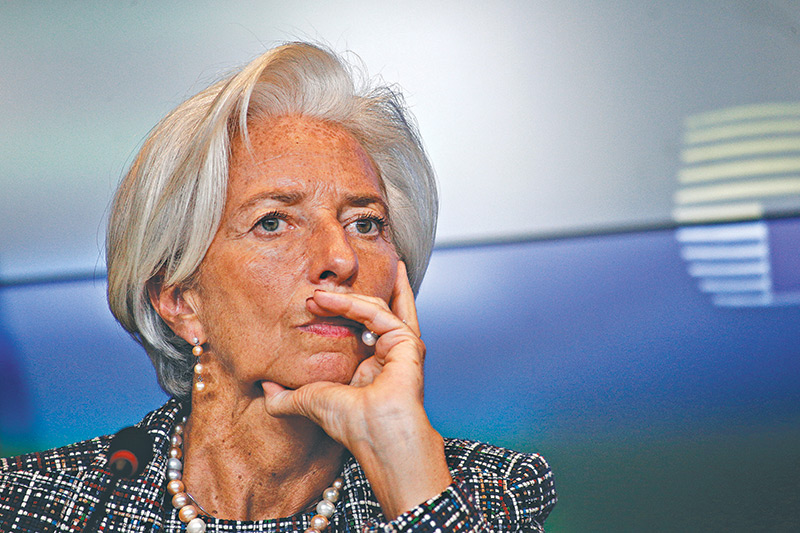
President of the European Central Bank Christine Lagarde during a press conference in 2017. Shutterstock

Shortly after the Eurogroup meeting of Eurozone finance ministers on June 27, 2015, I bumped into a worried-looking Mario Draghi, the president of the European Central Bank. ‘What on earth is Jeroen doing?’ he asked me, referring to Jeroen Dijsselbloem, the Eurogroup’s then-president. ‘Damaging Europe, Mario. Damaging Europe,’ I replied. He nodded, looking concerned. We took the elevator to the ground floor and parted silently.
Journalists find it natural to assume that Draghi and I had a hostile relationship during the 2015 standoff between Greece, which I represented, and the ECB. But the impasse at which we had become stuck was not caused by a clash of characters, and it involved no mutual recrimination. Rather, it reflected an institutional failure for which I never held Draghi personally responsible. Hostility between us, being unnecessary, was absent.
My fleeting exchange with him came to mind as he recently vacated the electric chair amid much speculation about the ECB’s future direction under his successor, Christine Lagarde. It reminded me of the unacknowledged powerlessness of the ECB president, who leads a mighty institution that is far less independent in practice than it is in theory. Lagarde will now have to reckon with that powerlessness as she steers the ECB in a sea of deflationary hazards.
During 2015, Draghi sometimes made decisions detrimental both to the Greek people and to Europe’s common interest. One came on February 4. On that morning, following a meeting I had in London the previous day with financiers to whom I presented my plans for a moderate debt restructuring, the Athens stock exchange index shot up by 13 percent, led by a gain of more than 20 percent for Greek bank shares.
With that wind in my sails, I flew to Frankfurt to meet Draghi for the first time. One might think that a freshly appointed eurozone finance minister who had just managed to boost his country’s financial assets significantly would be helped by his central banker. Instead, the ECB’s governing board decided the same day to sever Greek banks’ access to euro liquidity. Unsurprisingly, Greek corporate and banking shares crashed, wiping out the previous day’s gains.

In any other country, the position of the central banker would be untenable. The remit of a central bank is to aid the government’s efforts to stabilise finance and support the economy. In the eurozone, however, political constraints force the central bank to inflict the kind of damage Draghi’s ECB visited upon our stock exchange that February afternoon.
Under Draghi’s leadership, the ECB violated the raison d’être of a central bank on other occasions. Between February and late June 2015, Draghi fueled repeated bank runs in Greece. Whereas any central banker
anywhere else would have pledged full support for the banking system in such circumstances, Draghi did the opposite: He intimated his fear of bank closures and amplified speculation of imminent capital controls by regularly announcing tiny increases in liquidity provided to Greece’s national central bank. It was akin to a fire captain yelling in a crowded hall: ‘You are about to burn. I am gradually reducing the water cannon’s supply to a trickle. Run for your life!’
Given such calculated attempts by our central banker to engineer a run on bank deposits and stocks, it was easy to feel resentment toward him. I resisted that temptation because I appreciated Draghi’s constraints. I knew that, contrary to official propaganda, he was the least independent central banker in the developed world. He needed the Eurogroup’s approval—essentially that of the German finance ministry—to lend to failing banks in Italy, Spain, and indeed France and Germany against collateral that the euro crisis had rendered worthless. To get that permission, he had to do as he was told regarding Greece. And that meant choking into submission a Greek government that insisted on discussing what the German government did not want discussed: a sensible debt restructuring.
Seen in this light, Draghi’s decision to cut liquidity to Greece’s banks appeared almost logical. It was the same with his stance a few months later, when he sat silently in the Eurogroup meeting, listening to the German finance minister dictate to the rest that expulsion from the euro was the price of refusing levels of austerity that, ultimately, would put the ECB’s inflation target out of reach. It also explains why, on that Saturday in June, when Dijsselbloem violated every EU protocol, Draghi said nothing and expressed his anger to me only in private.
Going beyond Greece, under Draghi’s leadership, the ECB adopted instruments that intentionally misdirected enormous sums of public money. Consider the quantitative easing (QE) that he launched in March 2015. Without QE, which involved creating approximately €2.7 trillion ($3 trillion) to help countries like Italy roll over their public debt and stay in the eurozone, the euro would not exist today.
Nonetheless, it is absurd that for every euro that Draghi’s ECB printed to buy Italian public debt, it created two euros to buy German public debt. There was no economic rationale for buying bunds once Germany’s budget surplus rendered them scarce. By continuing to buy them in huge numbers, the ECB created a bund shortage, pushed interest rates into negative territory, and, in the process, inflicted a great deal of damage on German pension funds and insurance companies, not to mention on Chancellor Angela Merkel’s standing with conservative savers.
Was Draghi remiss? Of course not. He laboured within absurd political constraints imposed by institutions designed to make it impossible for the central bank to do its job properly. The sole purpose of the ‘capital key’ rule, which forced him to buy German and Italian debt at a two-to-one ratio, was to allow politicians in Berlin to pretend that the ECB was not really financing the roll-over of stressed Italian debt—exactly what was needed to save the euro.
Draghi deserves neither hostility nor adulation for his stewardship of the ECB. He proved adept at working within ridiculous constraints that forced him to do things that no central banker should ever do—and not just against Greece. Maybe a more courageous man would have refused to do those things. But no one can feel anger toward another for not being a hero.
What matters today is that Lagarde will have to labour within exactly the same ridiculous constraints. Sensible Europeans should be very hostile to that reality.


—Project Syndicate

Page 8
TECHNOPOLIS

Here are five indie games you need to play

If you’re looking to spend your weekends warm and cosy this winter, these games can help you pass time.
- PRAJESH SJB RANA

Kathmandu,
AAA gaming has become surprisingly formulaic over the years. Many different games produced by vastly different creative teams and developers feel more and more similar to each other than ever before. Big gaming companies also seem to be more comfortable rehashing established franchises like Call of Duty and Battlefield rather than experimenting and focusing more on creating unique gaming experiences.
Smaller independent gaming companies, however, have been producing games that come as a breath of fresh air. While these smaller gaming companies might not be able to compete with big gaming studios in terms of budget, they have managed to, in many ways, surpass many mainstream games in terms of quality, inventiveness and gameplay. Here are a few indie games you may want to try.


Whispers of a Machine
Microsoft Windows, macOS, Android, iOS

We have seen many adventure games in the indie gaming scene, with games like Yesterday, all of Wadjet Eye’s games and Kathy Rain. Whispers of a Machine is the second point-and-click game from the very developers of Kathy Rain, Clifftop Games.
The game begins in a post-AI world where everything with a CPU is considered illegal. The player is an augmented detective Vera Englund, who arrives in the small town of Nordsund to investigate a murder. The game plays like any other point-and-click game with the addition of unique investigative tools that come as part of Vera’s augmentations. But in classic AI fashion, during the first few hours of the game, it learns about the player and uniquely models the game to the player’s style—branching into various different narrative streams accordingly. This adds to the game’s replayability since each instance with the game is bound to yield different results.


Interrogation: You will be Deceived
Microsoft Windows, macOS, Linux

We have seen many games that revolve around dialogue and critical thinking in the indie space. Games like Papers Please and Orwell: Ignorance is Strength revolved around reading reams of text to construct a story. In a similar vein, Interrogation puts you in the shoes of a police officer, who as part of a team, undertakes the dismantling of a terrorist organisation.
Where Interrogation is different from other detective games is that the player’s interaction  primarily revolve around people, and as part of the interrogation team, players have to use their wits to figure out if they are being lied to or even how to squeeze information out of difficult people.
With its noir-based setting and realistic conversation system, it makes a compelling mystery and an enticing game.


Katana Zero
Microsoft Windows, macOS, Nintendo Switch

If you like extremely fast-paced games like Hotline Maimi, this game is for you. Katana Zero takes place in a neo-noir future, where you play as a samurai with time-manipulation abilities. All enemies go down in one hit but the fluidity of your actions as a samurai is where the game feels fun.
The game is also extremely difficult, which is why the time-manipulation mechanics helps you rewind until you go past a level in one continuous swoop, killing enemies one after the other. The game replays after you complete a level, making you feel like a badass samurai when you see how you’ve slashed, dodged and slowed time to your advantage.
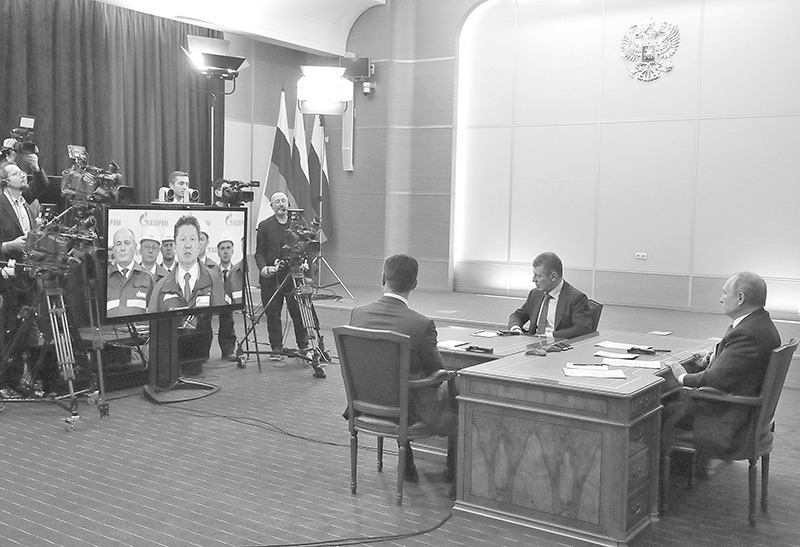
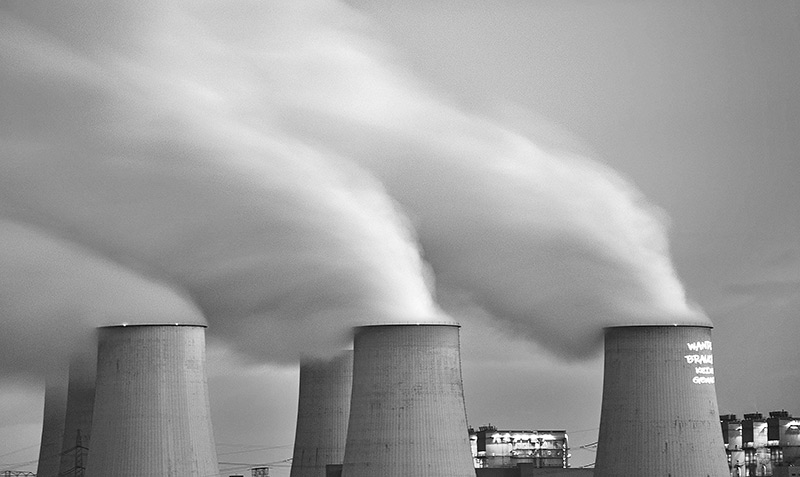
Katana Zero builds on the success of other fast-paced games and it’s not shy about its influences, taking visual cues from similar games to drive its brilliant story and gameplay.


Heaven’s Vault
Microsoft Windows, macOS, PlayStation 4

Typically, games are built around death and destruction. Even games like Tomb Raider push players to destroy ancient relics and sites. Heaven’s Vault, however, has a different take on virtual ruins and ancient languages. In the game, you play as archaeologist Aliya Elarsa, who, instead of going on an adventure of death and destruction, works to uncover ancient relics and objects to decipher a language long lost.
It is up to you to understand ancient symbols and piece together stories of ancient people and places. Heaven’s Vault is meticulous, thoughtful and pushes you to think of ancient relics through a restorative mindset rather than destroying everything in your path.


Cuphead
Microsoft Windows, macOS, Xbox One, Nintendo Switch

There wouldn’t be an indie gaming list without this wonderful gem. Cuphead is an action platformer based around aesthetics of Disney, Fleischer Studios and 1930’s cartoons. Playing the game inspires a sense of nostalgia in those players who grew up with these cartoons but also helps it look completely different from games that have been pushing for ultra-realistic graphics. Cuphead, in essence, is a series of gruelling boss battles. Players have infinite lives with minimal consequences on death because each boss battle ends with the game awarding you a score. The better you play, the better you score. The score aggregates everything from the amount of time you’ve played, the number of times you’ve died and even the number of hits you’ve received. This harkens back to the time of arcade games, where rather than beating a game, your score was of utmost importance.


Rana is a writer based in Kathmandu.

TECHNOPOLIS

Technology to keep lights on could help prevent wildfires

The tool detects variations in electrical currents caused by deteriorating conditions or equipment and notifies utility operators.
- BRIAN MELLEY
A new technology being tested by California utilities is aimed at diagnosing problems before they could cause power outages or spark wildfires. AP/rss

B Don Russell wasn’t thinking about preventing a wildfire when he developed a tool to detect power line problems before blackouts and bigger disasters.
The electrical engineering professor at Texas A&M University figured he might save a life if his creation could prevent someone from being electrocuted by a downed live wire.
But fire prevention may be his product’s biggest selling point in California and other places that have experienced devastating wildland blazes blamed on electrical equipment.
“If we can find things when they start to fail, if we can find things that are in the process of degrading before a catastrophic event occurs, such as a downed line that might electrocute someone or a fire starting or even an outage for their customers, that’s kind of the Holy Grail,” Russell said.
The technology he bills as a one-of-a-kind diagnostic tool called Distribution Fault Anticipation is now in use in Texas and being tested in California by Pacific Gas & Electric Co. and Southern California Edison. The utilities have been blamed for some of the most destructive and deadliest fires in California.
Texas A&M said the technology will also be tested in New Zealand and Australia, which is currently reeling from destructive wildfires.
The tool detects variations in electrical currents caused by deteriorating conditions or equipment and notifies utility operators so they can send a crew to fix the problems, Russell said.
It can anticipate many problems in their early stages—sometimes years before they cause an outage or present a greater hazard during high winds when utilities are now pre-emptively shutting off power to prevent sparking wildfires.
Before the technology was developed, electric companies often didn’t know they had a problem until there was a failure or a customer called to report sparks on power lines or a loss of electricity.
“The assumption the utility has to make today is it’s healthy until we get a call that says somebody’s lights (are) out,” Russell said. “By then the fire’s started or the outage has happened or the person’s electrocuted.” Pedernales Electric Cooperative Inc. that serves about 330,000 customers outside San Antonio and Austin, Texas, began implementing the system after successful tests that began in 2015. The utility serves areas so rural that before the technology was installed, electricity powering a pump on a well could have been off for days before being detected by a farmer.
The devices installed at substations are now trouble-shooting all kinds of problems, said Robert Peterson, principal engineer for the utility.
“We’ve found tree branches on the line. Failing arrestors. Failing capacitors. Failing connections,” Peterson said. “It’s pretty amazing.”
In California, the testing process has just begun and there are no results yet, according to PG&E and SoCal Edison.
In Southern California, the software is running on just 60 of Edison’s 1,100 circuits in the utility’s high-risk fire zone, which accounts for about a quarter of its total circuits.
It’s just one of several tools the utility is testing to continue to modernise its system.
“There is no silver bullet,” said Bill Chiu, managing director of grid modernisation and resiliency at SoCal Edison. “This is really more of a preventive measure. ... The important point is this will be one of the suites of technology that will help us better assess the condition of the grid.”
Chiu said the technology was not at the point where it could be used to determine where to shut off power when dangerous winds are forecast during dry conditions. He also said it won’t pinpoint problems but can help dispatch crews closer to the source of equipment that needs to be fixed, saving time that would be wasted patrolling miles of power lines.
One question is whether the technology is economically feasible to deploy across tens of thousands of miles of power lines, Chiu said.
At an expense estimated between $15,000 to $20,000 per circuit, it could cost the utility $22 million in its high-risk fire area and that doesn’t include installation, operation and maintenance costs.
That’s a fraction of what a moderate wildfire sparked by a utility could cost, Russell said.
PG&E, which is testing the technology on nine circuits, was driven into bankruptcy protection this year while facing at least $20 billion in losses from a series of deadly and destructive wildfires in 2017 and 2018.
SoCal Edison recently agreed to pay $360 million to local governments to settle lawsuits over deadly wildfires sparked by its equipment during the last two years. That figure doesn’t include lawsuits by thousands who lost their homes in those fires or family members of 21 people killed when a mudslide tore down a fire-scarred mountain. Two other people were never found.
Bluebonnet Electric Cooperative found the cost was feasible and has installed it on about a sixth of its circuits for the utility that has about 100,000 customers in Central Texas, said Eric Kocian, chief engineer, and system operations officer.
While the system has helped pro-actively diagnose problems and detect the cause of outages, the university team that developed it can often find problems the utility’s control room operators don’t detect.
Pedernales Coop is working with an analytics company to streamline the analysis of the myriad information the software evaluates to find and fix problems in a day, Peterson said.
Russell said he never had a hint the device his research team created 15 years ago would have fire prevention applications until a series of bad wildfires in Texas in 2011. They were focused on keeping power systems safe and the lights on.
“It’s obvious now in today’s context of the drought that we’ve had in California and other places,” Russell said. “Serendipitously, that’s where we find ourselves today.”


—Associated Press

Page 9
CULTURE & ARTS

They’ve got jokes. But who’s laughing?

Nepali stand-up comedians say their jokes reflect society, but the audiences’ reactions in the past have not always matched the comedians’ intentions. This is making many of them to rethink their content.
- ANKIT KHADGI
Sisnu Pani Nepal performs on the stage during this year’s annual ‘Deusi Bhailo’ programme at Nepal Academy in Kathmandu. (Below left) Yoznaa Thapa and (below right) Pranesh Gautam during their open mic sessions. screengrabs via youtube

Kathmandu,
Pranesh Gautam is no stranger to open mics. As a stand-up comedian, he is accustomed to the stage life, speaking in front of a live audience, cracking jokes—which are both politically correct and incorrect. He is also accustomed to the criticism, even some audience members cringing at his jokes. What he had not anticipated was getting slapped across his face by an audience member during one such open mic event.
But that wasn’t the worst experience Gautam has had to face as a comedian. A few months after that incident, in June, he was taken into police custody for his video review of Nepali film Bir Bikram 2 on Meme Nepal, a popular Facebook page. His arrest made national headlines, with many taking to the streets protesting the arrest, for they believed the move tightened the government’s grip on the freedom of speech.
Reflecting on both the incidences, Gautam says he has very different reactions. “It’s sad that I got arrested just for making a video,” says Gautam. “But at the same time, the open mic incident has made me more sensitive towards gauging the audience’s reaction.”
Social media, television shows and a growing culture of open mics have contributed to the recent popularity of stand-up comedy in the country, but Nepal has had a long history of comedians poking fun at social and political aberrations. The festival of Gai Jatra can be considered one such event, where malpractices are called out enveloped in humour and satire.


But with the advent of social media, where the audience is instantly and constantly expressing their reaction and the state increasingly trying to control free speech, creating content has become dicey, comedians say.
“It is human nature for people to laugh when the joke is on others, and get upset when its on them,” says Laxman Gamnange, chairperson of Sisnu Pani Nepal, a comedy club, which has been organising ‘Deusi Bhailo’ comedy programme during Tihar festival for the last 22 years.
This year too, in their event organised at Nepal Academy, many parliamentarians, top political leaders and even Prime Minister KP Sharma Oli were amongst the audience. But the comedians didn’t mince their words. From issues ranging from wide-body controversy to nepotism in Nepali politics, Sisnu Pani Nepal left no stone unturned to criticise the government’s unsatisfactory performance.
While the jam-packed hall echoed with the audiences’ laughter, and some politicians even biting their tongue in disbelief, Prime Minister Oli mostly carried a stoic face.
Gamnange, however, said that he was impressed by how well the politicians took their jokes. “I think the political leaders took it sportingly,” he says.
But the same fate wasn’t reserved for some other artistes. Only a few months ago, rapper Vten was arrested for “promoting similar anti-social values” in his songs; singer Pashupati Sharma was forced to remove his viral song “Lutna sake lut kanchha” from YouTube after NCP youth wing issued a strong statement against the singer and the song.
“Arresting artistes in the name of moral policing is definitely not right,” says Gamnange. “When it comes to art, it should be left to the artistes’ discretion.”
But it is not just the government that has taken issue with artistes’ content, many on social media and otherwise have criticised comedians for cracking sexist and racist jokes. Sometimes, especially during open mics, rather than taking the comedy set as lighthearted, the audience are seen taking offence to the joke, say comedians. Gautam getting slapped during one such performance was also the result of a misunderstanding between his satire and the audience, he says.
Another young stand-up comedian, Yoznaa Thapa, says she invests more time in open mic performances so that she can understand audiences’ reactions to her jokes, and avoid any unfortunate events.  
“I might find something funny, but the audiences may not,” says Thapa. “Open mics can help me improve my performance.”


Thapa shares that sometimes it’s important to know what the audience prefers and work on common things that people can find funny. “Jokes can be about everything. But, yes, we must work on material that can make more people laugh,” she says. “If I make a Star Wars reference, a few people will understand. But if I make a joke about former prince Paras, many people will understand it and there will be more laughs.”
Manoj Gajurel, another veteran stand-up comedian, agrees with Thapa. He believes that art should respect the values of society, and thus comedians should also analyse their content well before putting it out in the public.
“I like the current generation of stand-up comics; they are trying something new,” says Gajurel, who is teaming up with Gautam for a new television show. “But sometimes, self-censorship is important, as every society has a different set of values.”
But Thapa believes that comedy is the mirror of any society, and it is important for artistes to push the boundaries with their content—to shift the mindset of people and society.  
“Society can be in denial sometimes,” she says. “That’s why they may not like our jokes because we are showing them a reflection of themselves in the form of comedy.”
While she is open to taking constructive criticism from the audience, she is also aware of the purpose of her jokes, which is—as it is with all forms of art—to question socio-political malpractices.
“Anything against the current structure can be deemed controversial,” she says, who is against the mistreatment faced by the comedians, by the mass or by the state, in the form of so-called reaction to a joke.
Gautam says he has been continuously refining his jokes and refraining from making offensive ones but the arrest has left a lasting impact on his psyche, he says. “It made me more conscious about what contents featuring me will go in social media platform as the authorities have access to it,” he says. “I don’t want to get into trouble again.”

CULTURE & ARTS

From armchairs to iPhones, India’s millennials rent it all

Tens of thousands of young Indians are switching from buying to renting so they can live life with few strings attached.
- Vishal Manve
Vandita Morarka, 25, interacts with her colleagues as they sit around rented furnitures in Mumbai, India.  AFP/rss

At 29, Spandan Sharma doesn’t own a flat, a car, or even a chair — one of a growing number of Indian millennials bucking traditional norms and instead opting to rent everything from furniture to iPhones.
“Millennials in my age bracket want freedom and earlier what was seen as stability is now seen as a sign of being tied down,” Sharma told AFP.
“My parents don’t understand the concept of renting furniture at all. They have never been completely on-board with the idea,” he said.
“They said it would be much better to buy rather than rent furniture in the long term.”
For 4,247 rupees ($60) a month, the Mumbai-based executive furnished his entire home, sourcing furniture for his bedroom, living room and dining area as well as a refrigerator and microwave.
Sharma isn’t alone. Tens of thousands of young Indians are switching from buying to renting so they can live life with few strings attached. Even businesses are renting their office furnishings, said budding entrepreneur Vandita Morarka.
When Morarka set up her feminist non-profit One Future Collective in 2017, she rented nearly everything she needed and funnelled the savings from not having a one-off outlay into paying salaries to her staff of 25.
“From study tables and chairs to even a laptop, I have rented them all as the prices are reasonable,” the 25-year-old told AFP.
“This system allows me to take more risks... And in case things go south, we can wrap up without losing a large tranche of investments and begin elsewhere.”


‘Investing in experiences’
From ride-hailing apps to communal office spaces, the sharing economy is a global phenomenon that is expected to generate annual revenues of $335 billion by 2025, according to PricewaterhouseCoopers.
In the US, websites such as Rent the Runway and Nuuly offer fashion-conscious customers the option to try rather than buy clothing, while in China, consumers can rent BMWs via a tap on their smartphone.
In India, the boom has fuelled the rise of new furniture and appliance-renting businesses such as Furlenco, RentoMojo and GrabOnRent—and even jewellery rental apps—in recent years.
The sector is a bright spot amid a severe slowdown as weakening consumer demand has led to tumbling sales including in the bellwether auto sector.
The country’s furniture rental market alone is expected to be worth $1.89 billion by 2025, according to consulting firm Research Nester.
“We expect to grow by a million orders in under 30 months,” RentoMojo founder Geetansh Bamania told AFP.
The Bangalore-based firm rents out furniture as well as appliances, gym equipment, iPhones and smart home devices such as Google Home and Amazon Echo.
“Renting smartphones works out well for the youngsters as they can keep upgrading to the latest launch at a cheaper price without burning through their finances,” Bamania added.
Launched in 2012 by former investment banker Ajith Karimpana, Furlenco has catered to more than 100,000 customers and expects revenues to cross $300 million by 2023.
“Overall consumer behaviour is shifting from owning to renting among millennials due to the flexibility and non-commitment it offers,” Karimpana told AFP.
In an indication of the trend’s staying power, Swedish furniture giant Ikea has said it plans to test a subscription-based model in 30 markets in 2020.
For many millennials, choosing the rental option is as much about taking a road less travelled as it is about saving money.
When Sharma’s father was 29, he was married, working in a public sector bank and setting aside funds to purchase a flat and buy a car.
Sharma envisions a different life for himself, one focused on “investing in experiences”.
“Living in five different cities in two countries over a span of seven years would be unthinkable for my father... but it is my reality,” Sharma said, adding that some furniture rental apps offered free relocation services.
“It is a badge of pride for millennials that we can pack up and move within weeks.”


—Agence France-Presse

Page 10
WORLD

US House Judiciary Committee to meet on Trump impeachment charges

Trump’s attorney, however, has signaled that the White House won’t send anyone to the hearings.
- AGENCE FRANCE-PRESSE
Chairman of the House Judiciary Committee Jerry Nadler (left) and US President Donald Trump. AFP/RSS

WASHINGTON,
A Congressional panel will begin drawing up charges against President Donald Trump on Wednesday as the likelihood grows of his becoming only the third US leader ever impeached.
However, Trump’s attorney signaled on Sunday night that the White House won’t send anyone to the hearings, at least not right away.
“We cannot fairly be expected to participate in a hearing while the witnesses are yet to be named and while it remains unclear whether the Judiciary Committee will afford the President a fair process through additional hearings,” White House counsel Pat Cipollone wrote in a letter to Jerry Nadler, the Democratic chairman of the House Judiciary Committee.
But Cipollone also did not rule out White House participation in the hearings entirely, instead requesting further details from Nadler on how the inquiry will be conducted and saying he will give him an answer by next Friday.
Trump has been unable to quash allegations in the House of Representatives investigation that he illegally sought help from Ukraine to obtain dirt on his domestic political rivals, including possible 2020 challenger Joe Biden.
Nadler’s committee meets on Wednesday to begin determining whether the evidence compiled in the investigative phase of the process meets the constitutional impeachment standard of “treason, bribery, or other high crimes and misdemeanors.”
The committee is expected to consider at least four counts, or articles of impeachment, including abuse of power, bribery, contempt of Congress and obstruction of justice.
“The president has accepted or enlisted foreign nations to interfere in our upcoming elections,” said House impeachment leader Adam Schiff, a Democrat, in a November 25 statement.
“This is an urgent matter that cannot wait if we are to protect the nation’s security and the integrity of our elections.”
Trump and Republicans continue to brand the accusations and process as a political “witch hunt.”
“This is a complete American waste of time,” said Doug Collins, who as the leading Republican on the Judiciary Committee will lead that party’s counterattack. He appeared on “Fox News Sunday.”
The inquiry could go fast—Democrats reportedly want to have the entire House vote on impeachment before the end of the year.
They are confident that they have strong evidence that Trump committed impeachable offenses, despite the White House blocking the testimony of top presidential aides and refusing to hand over subpoenaed documents.
That refusal has angered Democrats.
“We’re not going to play games with them,” Val Demings, a Democratic member of the Judiciary Committee, told ABC on Sunday. “They need to respond to the request for documents and obey those lawful subpoenas.”
Trump is alleged to have withheld military aid for Ukraine—desperately sought by Kiev amid the ongoing border conflict against pro-Russian separatists—as well as a desired high-profile summit with President Volodymyr Zelensky.
In exchange, Trump wanted Kiev to open investigations into Biden and a widely discredited theory that Ukraine interfered in the 2016 US elections on Democrats’s behalf.
If the articles of impeachment are passed by the Democratic-controlled House as expected, Trump would go on trial in January in the Senate for removal from office.
Given Republican control of that chamber and the high hurdle of a two-thirds majority needed to convict, the president would very likely be cleared.
Still, Democrats see the process as important in reinforcing the rule of law and pushing back against a powerful president seen as showing little respect for Congress’s powers.
Nadler had last week invited Trump and his attorneys to take part in the first hearing on Wednesday, an invitation which Cipollone declined.
“It is too late to cure the profound procedural deficiencies that have tainted this entire inquiry,” Cipollone wrote in reply.
“Nevertheless, if you are serious about conducting a fair process going forward, and in order to protect the rights and privileges of the President, we may consider participating in future Judiciary Committee proceedings if you afford the Administration the ability to do so meaningfully,” he added.
But Nadler has said that Trump’s ability to participate could depend on whether he continues to refuse to make witnesses and documents available.
One Republican on the committee, Tom McClintock, told Fox that he believed top Trump aides “absolutely” should testify.
Democrats want to hear from former national security adviser John Bolton, acting White House chief of staff Mick Mulvaney and Secretary of State Mike Pompeo. All three should have direct knowledge of Trump’s actions toward Ukraine.
So far they have refused to testify, claiming “absolute immunity” as confidants of the president.
Collins tried to turn the tables on Democrats, saying Republicans want Schiff, the House impeachment manager, to testify. “If he chooses not to,” he added, “then I really question his veracity.”
Led by Nadler, Trump’s longtime nemesis, the televised hearings—set to open at 10:00 am (1500 GMT) Wednesday—are expected to be fiery.
With national elections less than one year away, Democrats need to convince Americans that impeaching Trump is justified and necessary.
Presidential candidate Amy Klobuchar, appearing Sunday on NBC, described the Ukraine affair in dramatic terms as “a global Watergate”—going beyond the scope of the scandal that brought down President Richard Nixon.
Republicans, for their part, aim to show the exercise as a political attack on Trump.
“He did nothing improper,” Collins said. “There is nothing here that the president did wrong.”

WORLD

Australia launching anti-espionage task force after China spy claims

- AGENCE FRANCE-PRESSE
Scott Morrison. Reuters

SYDNEY,
Australia on Monday launched a high-level intelligence task force to combat what officials say is rampant foreign interference in the country and after claims of bold Chinese spying operations Down Under.
Prime Minister Scott Morrison said the new force would involve all the country’s top intelligence agencies “to disrupt and deter anyone attempting to undermine our national interests”.
One novelty of the force would see intelligence agencies, normally tasked with overseas threats, coordinate with federal police to identify and prosecute or expel foreign agents.
“We will be developing new specialist capabilities both from an investigatory capacity as well as being able to pursue investigations and bring them to either disrupt activity or, indeed, follow through and prosecute,” Morrison said during a press conference in Canberra.
“This task force to counter foreign interference is about identifying it, disrupting and prosecuting.”
Morrison did not explicitly mention China, saying “foreign interference comes from many, many different sources” and is “an evolving threat”.
But Monday’s announcement followed revelations that authorities were investigating a raft of explosive claims by Wang Liqiang, a would-be Chinese defector, about Chinese espionage and covert influence operations in Australia.
In response to Australia’s task force, however, China—which has called Wang an “unemployed” fugitive—pointed at his case as evidence of how “Chinese interference” has been over-hyped.
“Different media and organisations in Australia are fond of hyping up so-called Chinese spy cases... no matter how bizarre their plots,” said Chinese foreign ministry spokeswoman Hua Chunying.
“We hope the relevant sides can... abandon their prejudices (and) respect the facts,” she told reporters at a press briefing.
Australia’s announcement also came after the recently retired head of the Australian Security Intelligence Organisation, Duncan Lewis, said China wanted to “take over” Australia’s political system with an “insidious” and systematic campaign of espionage and influence peddling”.
Australian authorities are also looking into a claim that China tried to recruit a Melbourne businessman and get him elected to parliament.
Bo “Nick” Zhao—a 32-year-old luxury car dealer who was a member of Morrison’s Liberal Party—apparently rebuffed the offer and was found dead in a motel room in March.

WORLD

UN nuclear watchdog gets new head as Iran tensions rise

- AGENCE FRANCE-PRESSE
Rafael Grossi. AFP/RSS

VIENNA,
Veteran Argentine diplomat Rafael Grossi was sworn in on Monday as the new director general of the UN’s nuclear watchdog the International Atomic Energy Agency (IAEA),
with the growing crisis over Iran’s nuclear programme at the top of his in-tray.
Grossi had been serving as Argentina’s ambassador to the IAEA and is the agency’s first leader from Latin America.
He previously held high-level posts at the agency between 2010 and 2013, bringing him into contact with Iranian officials at a time when international negotiations over Iran’s nuclear activities were intensifying.
According to the former French ambassador to Iran Francois Nicoullaud, Grossi will able to draw on “solid experience in proliferation matters”.
“He is someone of a very high calibre who comes from an important country in the nuclear field,” says Nicoullaud.
A current Vienna-based diplomat said Grossi was expected to bring “a lot of energy and innovation” to the post, with a particular focus on pushing gender parity within the agency and promoting the role of nuclear energy in fighting climate change.
Grossi will be taking over from Yukiya Amano, who died in July at the age of 72 having been in post since 2009.
While the US is thought to have lobbied in his favour, diplomats say Grossi has stressed his belief in the importance of the agency’s impartiality.
Grossi begins his tenure amid a growing crisis over Iran’s nuclear programme.
The IAEA is charged with monitoring the implementation of the 2015 Iran nuclear deal, which seems in danger of imminent collapse.
Without mentioning Iran by name, in his first speech to IAEA member states on Monday Grossi praised the agency’s “impartial, accurate system of inspections”.
“No one else can do what we can do, no one else can provide this credible assurance that nobody is diverting nuclear material to make nuclear weapons,” he said.
Diplomats from Iran and the other remaining parties to the deal—the UK, France, Germany, China and Russia—will gather in Vienna on Friday to discuss ways forward for the crumbling deal.
Since May, Iran has taken a series of measures breaking limits on its nuclear activities laid down in the deal, with another one likely in early January.
Iran insists it has the right to do this in retaliation for the US withdrawal from the deal in 2018 and reimposition of crippling sanctions.
Ali Vaez from the International Crisis Group says the deal could collapse in a matter of weeks.
“The Iranians are simply running out of measures that are easy to reverse and non-controversial,” he says.
Vaez adds that a fresh Iranian move to breach the deal could finally push the European signatories to trigger the “dispute resolution mechanism” foreseen in the 2015 accord—which in turn could lead to the automatic resumption of UN sanctions on Iran.
The return of those sanctions would mark the “death blow” of the agreement, according to Kelsey Davenport of the Arms Control Association.
In such a scenario, says Vaez, “we will have a major non-proliferation crisis on our hands in the sense that the Russians and the Chinese have already declared they would not recognise the return of (sanctions)”.
Some expect that in this scenario Iran would leave the Treaty on the Non-Proliferation of Nuclear Weapons (NPT).
There have been other points of friction between Iran and the IAEA in recent months.

WORLD

Zero-hour on climate, but UN talks in another time zone

- AGENCE FRANCE-PRESSE
People walk in front of the logo of the UN Climate Change Conference COP25 at the ‘IFEMA—Feria de Madrid’ exhibition centre, in Madrid, on Monday. AFP/RSS

MADRID,
Global talks tasked with neutralising the threat of global warming get underway in Madrid Monday, but their narrow focus on rules and procedures remains out of sync with the world’s climate-addled future.
Mindful of this gap, UN chief Antonio Guterres warned on Sunday that a “point-of-no-return” in the climate crisis is “in sight and hurtling towards us.”
Indeed, three decades after NASA scientist James Hansen made headlines by telling the US Congress global warming had begun, evidence of its dire impacts is so overwhelming that “climate denier” is synonymous with insisting the Earth is flat.
Guterres lambasted the world’s major economies, describing their efforts to reduce greenhouse gas emissions overheating the planet as “utterly inadequate”.
He didn’t name names, but he didn’t have to.
“Some countries like China and Japan are signalling their unwillingness to increase ambition,” said Laurence Tubiana, CEO of the European Climate Foundation and, as a former negotiator for France, a main architect of the Paris Agreement.
Nor have India, Russia or Brazil expressed any enthusiasm for ratcheting up carbon-cutting pledges submitted under the 2015 treaty.
Donald Trump has taken things a step further by yanking the US out of the Paris deal entirely.
But even if all the world’s nations honoured their pledges, the planet would still heat up at least three degrees Celsius above preindustrial levels, a sure-fire recipe for calamity, scientists say.
Nations have agreed to cap warming—already up by one degree Celsius—at “well below” 2C.
Beyond the 2C threshold, “we are at risk of unleashing self-reinforced warming,” Johan Rockstrom, director of the Potsdam Institute for Climate Impact Research, told AFP.
“This is what Earth system scientists fear most.”
The talks in Madrid—the 25th “COP”, or conference of the parties, in as many years—will focus on finalising rules for global carbon markets, and setting up a fund to help countries already reeling from climate-enhanced heatwaves, droughts, floods and storms made worse by rising seas.


- Elephant in the room -
Poor and vulnerable nations are set to receive $100 billion annually from next year to prepare for future impacts, but no concrete provisions exist yet for “loss and damage” already incurred.
Frontline negotiators here describe COP25 as “technical talks” setting the stage for next year’s meeting in Glasgow, where countries must confront the yawning gap between the Paris targets and current emissions.
But events outside the conference hall in Madrid may change the agenda.
“A key question will be to what extent the growing social movements throughout the world will be factored into decisions of the COP 25,” said Tubiana.
Alden Meyer, director of strategy and policy at the Union of Concerned Scientists, agreed.
“How to address the inadequate political response is the elephant in the room,” he told AFP.
Under the European Commission’s new president Ursula von der Leyen, Europe has emerged as a key player in pushing for a more rapid drawdown of carbon pollution.
Nearly a decade ago, the European Union engineered 2015 as the deadline for a climate deal. But the bloc ceded much of its leadership after that role to China and the United States under Barack Obama.
Today it may once again finds itself thrust onto the centre stage.
“The EU Commission is the new political element,” Tubiana said. “The EU will clearly signal its intention to increase ambition by 2030 and achieve net-zero by 2050.”
For the world’s most vulnerable nations, that kind of action can’t come soon enough.

WORLD

Ukraine president denies quid pro quo with Trump

Briefing

BERLIN: Ukraine’s president on Monday renewed his denial of a quid pro quo with Donald Trump over military aid, despite a growing case against the US president in impeachment proceedings in Washington. “I did not speak with US President Trump in those terms: you give me this, I give you that,” Volodymyr Zelensky said in an interview with European publications including Germany’s Der Spiegel magazine. In remarks published in German, Zelensky said he “did not understand at all” the accusations heard at the hearings and did not “want to give an impression that we are beggars” in Ukraine. (Agencies)

WORLD

White rhino born in Belgian zoo

Briefing

BRUSSELS: A rare southern white rhino was born at a zoo in Belgium, boosting efforts to save the endangered species, the park said on Monday. “An adorable little male was born in the early morning of Monday... Madiba, the mother, and her baby are doing well,” Pairi Daiza zoo said in a statement. There are roughly 18,000 southern white rhinos in the wild but the subspecies is being exterminated by poachers at a rate of one every eight hours. Another species of rhino, the world’s second-largest land mammal, the northern white, is in even more danger with only two left in existence. (Agencies)

WORLD

France cancels boat offer to Libya under NGO pressure

Briefing

PARIS: Rights groups hailed on Monday a French decision to drop plans to offer six boats to Libya’s coast guard. French officials confirmed they had cancelled the delivery after eight NGOs filed a lawsuit against the move, criticising Libya’s treatment of migrants. Lola Schulmann of Amnesty France—one of the NGOs involved in the case—told AFP she hoped the decision would mark “a turning point in relations between France and Libya in terms of migration policy”. Defence Minister Florence Parly had announced in February that France would provide semi-rigid inflatable Sillinger crafts to help Libya’s unity government consolidate its control of the war-torn country.  (Agencies)

Page 11
ASIA

Iraq parties in talks over new prime minister

- AGENCE FRANCE-PRESSE

BAGHDAD,
Iraq’s rival parties were negotiating the contours of a new government on Monday, after the previous cabinet was brought down by a two-month protest movement demanding more deep-rooted change.
After just over a year in power, premier Adel Abdel Mahdi stepped down last week after a dramatic intervention by top Shiite cleric Grand Ayatollah Ali Sistani.
That followed a wave of violence that pushed the protest toll to over 420 dead—the vast majority demonstrators.
Parliament on Sunday formally tasked President Barham Saleh with naming a new candidate, as prescribed by the constitution.
But Iraq’s competing factions typically engage in drawn-out discussions and horsetrading before any official decisions are made.
Talks over a new premier began even before Abdel Mahdi’s formal resignation, a senior political source and a government official told AFP.
“The meetings are ongoing now,” the political source added.
Such discussions produced Abdel Mahdi as a candidate in 2018, but agreeing on a single name is expected to be more difficult this time around.
“They understand it has to be a figure who is widely accepted by the diverse centres of power, not objected to by the marjaiyah (Shiite religious establishment), and not hated by the street,” said Harith Hasan, a fellow at the Carnegie Middle East Center.
The candidate would also have to be acceptable to Iraq’s two main allies, arch-rivals Washington and Tehran.
“The Iranians invested a lot in the political equation in last few years and won’t be willing to give up easily,” said Hasan.
For the first time in Iraq’s recent political history, factions have to take public anger into consideration in their talks over candidates.
Protesters hit the streets in early October in Iraq’s capital and Shiite-majority south to denounce a ruling system as corrupt, inept and under the sway of foreign powers.
Iraq is the 12th most corrupt country in the world, according to Transparency International.
Despite the oil wealth of OPEC’s second-biggest crude producer, one in five people lives below the poverty line and youth unemployment stands at a quarter, the World Bank says.
Demonstrators say the problem is systemic, so instead of packing up their protest camps after Abdel Mahdi’s resignation, they doubled down.
They insist they want “none of the same faces” that have dominated Iraq’s political scene for years, a demand that has complicated the search for a new premier.
Two political heavyweights have already said they were not taking part in talks on a new PM: former premier Haider al-Abadi and unpredictable cleric Moqtada Sadr, who had backed the previous government until protests erupted.

ASIA

China slaps sanctions on US over Hong Kong unrest

US President Donald Trump last week signed the Hong Kong Human Rights and Democracy Act.
- AGENCE FRANCE-PRESSE
A file photo shows US Navy personnel on board the USS Makin Island looking towards the ICC building during a port-of-call visit to Hong Kong. AFP/RSS

BEIJING,
China suspended US warship visits and sanctioned American NGOs on Monday in retaliation for the passage of a bill backing pro-democracy protesters in Hong Kong.
The financial hub has been rocked by nearly six months of increasingly violent unrest demanding greater autonomy, which Beijing has frequently blamed on foreign influence.
Last week US President Donald Trump signed the Hong Kong Human Rights and Democracy Act, which requires the president to annually review the city’s favourable trade status and threatens to revoke it if the semi-autonomous territory’s freedoms are quashed.
The move came as the world’s two biggest economies have been striving to finalise a “phase one” deal in their protracted trade war.
“In response to the unreasonable behaviour of the US side, the Chinese government has decided to suspend reviewing the applications for US warships to go to Hong Kong for (rest and) recuperation as of today,” foreign ministry spokeswoman Hua Chunying said at a regular press briefing.
China had already denied requests for two US Navy ships to dock in Hong Kong in August, without specifying a reason why.
“Operationally, from a military point of view, it doesn’t really make a difference for the US, as they can use many naval bases in the region,” Michael Raska, a security researcher at Singapore’s Nanyang Technological University, told AFP.
However, it “sends a signal that US-China tensions will continue to deepen,” Raska said.
The last US navy ship to visit Hong Kong was the USS Blue Ridge in April.
J. Michael Cole, a Taipei-based senior fellow with the Global Taiwan Institute, said the move was “mostly symbolic” but yet another sign of the “tit-for-tat escalation which is poisoning the bilateral relationship.”
Hua said they would also apply sanctions to a number of US-based NGOs, although failed to give any specifics over the form the measures would take.
Sanctions will apply to NGOs that had acted “badly” over the recent unrest in Hong Kong, she said, including the National Endowment for Democracy, Human Rights Watch and Freedom House.
There was “already a large amount of facts and evidence that make it clear that these non-governmental organisations support anti-China” forces and “incite separatist activities for Hong Kong independence”, Hua said.
She accused them of having “great responsibility for the chaotic situation in Hong Kong”.
Protesters in Hong Kong are pushing for greater democratic freedoms and police accountability, but the city’s pro-Beijing leadership has refused any major political concessions.
The increasingly violent rallies have hammered the retail and tourism sectors, with mainland Chinese visitors abandoning the city in droves.
The city’s finance chief warned Monday that Hong Kong is set to record its first budget deficit in 15 years.

ASIA

Regime air strikes kill 10 civilians in northwest Syria, monitor says

- AGENCE FRANCE-PRESSE

BEIRUT,
Regime air strikes on Monday killed 10 civilians in Syria’s last major opposition bastion, where deadly clashes between regime forces and armed groups have escalated in the past two days, a monitor said.
The raids also wounded 15 civilians in a market in the town of Maaret al-Numan in the jihadist-run province of Idlib, the Britain-based Syrian Observatory for Human Rights added.
That came as regime forces and armed groups were locked in heavy clashes on the southeastern edge of the region, with almost 100 fighters killed in two days, the Britain-based monitor said.
The battles on the edge of Idlib since Saturday are the most deadly since a Russia-brokered ceasefire went into effect in late August, it said.
“Fighting raged at dawn Monday on several axes in the southeastern Idlib countryside,” the monitoring group said.
Fifty-one regime fighters had been killed over 48 hours, while 45 of their opponents including 31 jihadists
had also lost their lives, the Observatory said.
The Syrian government does not usually divulge casualty figures.
The Idlib region, home to around three million people including many displaced by Syria’s eight-year civil war, is largely under the control of a group dominated by a former Al-Qaeda affiliate.
It is one of the last holdouts of opposition to forces backing Syrian President Bashar al-Assad.
The president has long maintained that his government will eventually reimpose its control over the
northwestern region on the border with Turkey.
The late August ceasefire came months into a devastating Russia-backed regime offensive that killed around 1,000 civilians and ousted hundreds of thousands from their homes.
But sporadic clashes and deadly Russian and regime bombardment on the jihadist-held bastion have however persisted, with 160 civilians including 45 children killed during that time.
The war in Syria has killed more than 370,000 people and displaced millions since it erupted in 2011 with the brutal repression of anti-government protests.

ASIA

Thousands flee as Typhoon Kammuri churns towards Philippines

- AGENCE FRANCE-PRESSE
Residents carry a wooden boat to safety in Legaspi City, Albay province,south of Manila on Monday as they prepare for Typhoon Kammuri. AFP/RSS

MANILA,
Tens of thousands of people sheltered in evacuation centres as powerful Typhoon Kammuri barreled towards the Philippines on Monday, disrupting plans for the Southeast Asian Games events near the capital Manila.
Kammuri is forecast to make landfall late Monday or early Tuesday in the nation’s east with intense rains and potent wind gusts of up to 185 kilometres (115 miles) per hour, forecasters said.
The storm is on track to then pass close to Manila, which is home to some 13 million people and the site for many of the SEA Games events.
Nearly 70,000 people have already fled their homes in the Bicol region, which is where the typhoon is expected to strike first.
“We hope there won’t be any damage, but given its (Kammuri’s) strength, we can’t avoid it,” Mark Timbal, spokesman for the national disaster agency, told AFP.
“We have preemptively evacuated people in areas that are in the storm’s direct path.”
The weather bureau also warned of rain-induced landslides and possible storm surges of up to three meters (10 feet) which could hit coastal areas in the nation’s east.
The Philippines is hit by an average of 20 storms and typhoons each year, killing hundreds and putting people in disaster-prone areas in a state of constant poverty.
The country’s deadliest cyclone on record was Super Typhoon Haiyan, which left more than 7,300 people dead or missing in 2013.
Kammuri is already snarling plans for the SEA Games, which opened Saturday for thousands of athletes from the region and is set to run through to December 11 in and around Manila.
Windsurfing was halted as a precaution and triathlon events were held earlier than scheduled.
Organisers told reporters Monday that each sport is overseen by delegates and ultimately they would make the call on any possible cancellations or rescheduling.
Ramon Suzara, the chief operating officer of the organising committee, said contingency plans were in place for bad weather, but the duration of the Games would not be extended.
“For example, basketball or volleyball, normally if there are typhoons, which has been done, the competition continues if necessary but without spectators,” he said.
The storm is the latest trouble for the Games, which saw a series of transport snafus and a rush of last-minute construction ahead of the opening.
This year’s Games in Clark, Manila and Subic are already particularly complex, with a record 56 sports across dozens of venues that are in some cases hours apart by car.
Around 8,750 athletes and team officials are expected at this year’s 30th edition—the biggest ever—along with another 12,000 volunteers. Organisers hope more than 500 million viewers will tune in on TV by the end of the competition on December 11.
The Philippines have made a strong start to the Games, rising to the top of the medal table with over 50 in total, ahead of Vietnam in second and Thailand in third.
The host nation added to their haul of gold medals on Monday with wins in downhill mountain biking and stick-wielding martial art arnis, while claiming a silver in the rescheduled men’s duathlon event in Subic.
A glitzy dancesport competition in Clark on Sunday saw the Philippines pick up 10 golds.

ASIA

Toxic bubbles cause pollution hazard on Indian beach

Briefing

CHENNAI: A menacing white foam covered one of India’s most famous beaches in Chennai for the fourth straight day on Monday creating a new pollution hazard for the country. Children have been playing and taking selfies in the clouds of white suds on Marina Beach, even though they give off an acrid smell and fishermen have been told not to go into the sea nearby. Doctors have warned that skin problems could be caused by the foam, which forms every monsoon season but has been particularly bad this year. Word has not got through to the hundreds of families who throng India’s longest urban beach, letting children happily skip in the toxin-filled froth.  (Agencies)

ASIA

Iran official points to more open elections

Briefing

TEHRAN: A senior Iranian official has suggested in an interview with AFP that authorities may be more open than in the past in approving candidates for a looming parliamentary election. “We don’t consider ourselves immune from criticism. We may also accept that mistakes have been made in the past,” said Guardian Council spokesman Abbas Ali Kadkhodaee. “But for the next legislative elections we are trying to reduce our mistakes and respect the rights of candidates.” Kadkhodaee was speaking to AFP on the eve of the opening on Sunday of the registration of candidates for the parliamentary election to be held on February 21. The Guardian Council, which is under the control of ultra-conservatives, is responsible for organising and monitoring elections in Iran, including vetting candidates. (Agencies)

ASIA

Wall collapse kills 17 in India

Briefing

NEW DELHI: At least 17 people from four families in India were buried alive as they were sleeping on Monday when heavy rains caused a large wall to collapse on their homes, police said. The dead included two children in the village in the southern state of Tamil Nadu, which was being pounded by torrential rain, a police official told AFP. The 20-foot (six-metre) high wall crumbled at around 5:30 am some 50 kilometres (30 miles) north of Coimbatore, the Times of India daily reported. Building collapses are tragically common in India during wet periods with rickety and poorly maintained structures buckling under the weight of continuous rain. In July a collapsing wall killed 30 people in Mumbai. (Agencies)

Page 12
MONEY

Putin, Xi launch $400 billion ‘historic’ Russian gas pipeline to China

The 3,000-km pipeline will supply China with 38 billion cubic metres of gas annually when it is fully operational in 2025.
- AGENCE FRANCE-PRESSE
Russian President Vladimir Putin, accompanied by Energy Minister Alexander Novak and Deputy Prime Minister of Russia Dmitry Kozak, takes part in a ceremony inaugurating the ‘Power of Siberia’ pipeline via a video link in Sochi on Monday. AFP

MOSCOW,
Russia and China on Monday launched a giant gas pipeline linking the countries for the first time, one of three major projects aimed at cementing Moscow’s role as the world’s top gas exporter.
Presiding by video link-up over an elaborate televised ceremony, Russian leader Vladimir Putin and Chinese counterpart Xi Jinping hailed the “Power of Siberia” pipeline as a symbol of cooperation.
“Today is remarkable, a truly historic event not only for the global energy market, but first of all for us and for you, for Russia and China,” Putin said.
Xi said the project served as a model of cooperation and that “the development of Sino-Russian ties is and will be a foreign policy priority for both our nations”.
The ceremony featured hard-hatted gas workers and videos showing the pipeline’s difficult path from remote areas of eastern Siberia to Blagoveshchensk on the Chinese border. Workers burst into applause and celebratory music played as the CEO of Russian gas giant Gazprom, Alexei Miller, ordered a valve opened for the gas to pass across the border.
The 3,000-kilometre pipeline—which Putin has called “the world’s biggest construction project”—will supply China with 38 billion cubic metres of gas annually when it is fully operational in 2025.
Russia and China signed a 30-year, $400 billion deal for its development in 2014, in the biggest ever contract for Gazprom.
Gazprom stressed that the pipeline ran through “swampy, mountainous, seismically active, permafrost and rocky areas with extreme environmental conditions”.
Temperatures along the route plunge to below minus 60 degrees Celsius in Yakutia and below minus 40 C in the Russian Far East’s Amur Region.
The pipeline is part of Russia’s efforts to develop ties with Asia—in particular top energy importer China—amid longstanding tensions with the West.
But Moscow remains a key gas provider to Europe and is also planning to soon launch two more pipelines that will ramp up supplies to the continent while bypassing Ukraine.
TurkStream, which Putin and Turkish leader Recep Tayyip Erdogan hope to launch in January, is to transport Russian gas to Turkey.
Running under the Black Sea, the pipeline consists of two lines—the first intended for Turkish consumers, while the second will send gas to southern and southeastern Europe.
Nord Stream-2, which would double Russian gas volumes to Germany, is expected to go online in mid-2020, though it has faced opposition from the United States and countries in central and eastern Europe, particularly Ukraine.
They fear it will increase Europe’s reliance on Russian energy supplies which Moscow could then use to exert political pressure.
Analysts said the three projects have long-term economic and political benefits for Russia, which has inserted itself between European markets to the west and the rapidly growing Chinese market to the east.
“Russia is not only creating new income streams, but hedging its bets and bolstering its position strategically,” said energy analyst Andrew Hill.
“The ability to play one off against the other will not have been lost on either Gazprom or the Kremlin,” Hill, who leads the S&P Global Platts EMEA gas and power analytics team, wrote in a blog post.
He said the three projects were a sign that the Russian gas industry—“this kingpin of the global gas sector”—was becoming more mature.

MONEY

Policy shift: Leading insurers blacklist coal

- AGENCE FRANCE-PRESSE
Smoke and vapor rising from the cooling towers and chimneys of the lignite-fired Jaenschwalde power plant in eastern Germany.  AFP

PARIS,
The number of insurers turning their backs on coal more than doubled in 2019, activist groups said on Monday, sapping the viability of projects using the highly-polluting fuel.
Coal exit policies have been announced by 17 of the world’s biggest insurers controlling 46 percent of the reinsurance market and 9.5 percent of the primary insurance market,
said the Unfriend Coal campaign, a coalition of environmental groups, as it released its third scorecard on the sector.
“This action is having a tangible impact,” it said, citing brokers as saying that costs are increasing to insure coal facilities with certain projects already being unable to obtain any coverage.
Increasing operating costs put coal—the dirtiest fossil fuel and biggest single contributor to human-made climate change—at a commercial disadvantage. An inability to buy coverage makes it impossible to raise finance for new projects.
The report pointed to the struggle the Indian group Adani has had to find insurance to develop the huge Carmichael coal mine in Australia, noting that at least 16 international insurers have ruled out underwriting the project.
“The industry’s retreat from coal is gathering pace as public pressure on the fossil fuel industry and its
supporters grows,” said Peter Bosshard, coordinator of the Unfriend Coal campaign.
However, he noted that major US and Asian insurers continue to insure and invest in coal projects.
“All responsible companies must make coal uninsurable by ending support for both new and existing mines and power plants,” added Bosshard.
France’s AXA was the latest to announce plans to exit coal, pledging last week to make a complete pullout from coal investments by 2040.
Reinsurance firm Swiss Re was the top-ranked firm for both its coal insurance and divestment policies.

MONEY

Hong Kong stares at first budget deficit in 15 years

- AGENCE FRANCE-PRESSE

HONGKONG,             
Hong Kong is set to record its first budget deficit in 15 years, the city’s finance chief warned on Monday, as the business hub reels from the twin shocks of the trade war and seething democracy protests.
In the latest grim assessment for the city, financial secretary Paul Chan told lawmakers that the economy was set to contract 1.3 percent in 2019, hitting the city’s usually bulging coffers.
Chan blamed the 2019-2020 deficits on decreased tax revenues, a slowdown in land sales and recent economic sweeteners he unveiled in a bid to win over the public during a tumultuous year of unrest.
“At the end of the financial year, the SAR government will be in the red,” Chan said, using an abbreviation for the Hong Kong government. “Hong Kong’s economy is now in extremely difficult times,” he added, as he called for political violence to cease.
The city has been battered by nearly six months of protests triggered by rising public anger over China’s rule and the police’s response to protests.
Crowds are pushing for greater democratic freedoms and police accountability but the city’s pro-Beijing leadership has refused any major political concessions.
The increasingly violent rallies have hammered the retail and tourism sectors, with mainland Chinese visitors abandoning the city in droves.
Figures released Monday showed retail sales fell by a record 24 percent in October, the fourth consecutive month of double-digit declines.
October is a crucial holiday period in China known as “Golden Week” when visitors from the mainland to Hong Kong usually spike and spend heavily. But this year, as violence escalated, the crowds fell a record 46 percent that month. Protests are not the sole cause of Hong Kong’s woes.
The economy has also taken a pummelling from the US-China trade war in a city that serves as a crucial link between the authoritarian mainland and global markets.
The last time Hong Kong recorded a budget deficit was in the aftermath of a deadly 2003 outbreak of the Sars virus that killed some 300 people.
The city’s budget usually ends the year in an enviable position and successive fat years have built up an impressive cushion.
In March the government said its reserves stood at HK$1.17 trillion ($150 billion) with some critics saying successive leaders have not done enough to alleviate endemic inequality.

MONEY

How Argentina’s youth learned to worry about the peso and love the dollar

- REUTERS
A woman counts US dollar bills at her home in Buenos Aires, Argentina. REUTERS

BUENOS AIRES, 
Nicolas Videla, like millions of his fellow Argentines, buys US dollars whenever he scrapes enough pesos together and keeps a close eye on the country’s volatile foreign exchange rate, galloping inflation and murky political outlook.
Videla is 12 years old.
The grade school student’s anxiety about the peso is telling in a country where generations have seen their savings wiped out by shock devaluations and rising prices that have forced them to seek shelter in the greenback.
Peso aversion is at the heart of the challenge facing Argentina’s incoming government as it looks to douse the inflation that has walloped purchasing power and driven up the cost of its overseas debt.
“We talk about the dollar at school. I always ask how it’s doing. When my friends tell me it has gotten stronger against the peso they complain because prices go up when that happens,” Videla said, seated beside his favorite money changer: his mom.
“When he has pesos he asks me to buy dollars with them. When we talk about finances, he never asks how many pesos he has. He wants to know in dollars,” added his mother, Sol Videla.
The lack of faith many Argentines have in their currency is understandable. The peso has lost about 37% of its value against the dollar this year after tumbling even faster in 2018. One dollar is worth 60 pesos, versus around 10 pesos at the end of 2015 when now outgoing President Mauricio Macri came to power.
His successor, leftist Alberto Fernandez, will take office on Dec. 10 with annual inflation running at above 50% and knife-edge talks with creditors and the International Monetary Fund (IMF) on the horizon over $100 billion in sovereign debt.
Fernandez has said he will roll out a “social pact” to strike agreements with businesses, employers, consumers and service providers to help control prices. It won’t be easy. Lack of confidence in the currency has almost become part of people’s DNA after decades of cyclical crises with a weakening peso in turn stoking inflation.
“Argentines simply do not trust their currency. They have been burned too many times,” said Alberto Bernal, chief emerging markets strategist at XP Investments in New York.
In response to a plunge in the currency earlier this year, Argentina’s central bank was forced to roll out tough controls to preserve dollar reserves, including a $200 per month cap on dollar purchases through banks. Many Argentines use the pesos they earn to pay daily expenses and buy dollars with what is left at the
end of the month, turning the greenback into a de facto benchmark currency used for major purchases such as real estate.
Every time that political turbulence or a sovereign default scare hits business confidence, the peso’s value falls. Sellers of goods and services charge more in anticipation of higher business costs and to keep buying dollars. This is inflation Argentina-style and shows no sign of abating.
“Parents are telling their kids that keeping pesos in their pocket means being able to buy less tomorrow than they can today,” said Argentine economist Roberto Cachanosky. “So there’s an idea being reinforced that if you need a currency that will keep its value, the peso doesn’t work.”
Ask 13-year-old Gadiel Goldestein, who has already seen enough to put him off the local currency.
“Everybody thinks in dollars. Nobody has confidence in the peso,” Goldestein said in an interview joined by his parents, brother and grandfather, the family patriarch who moved to Mexico after Argentina’s 2001 economic meltdown and now only comes back to visit.
A fan of storied Buenos Aires soccer club Boca Juniors, Goldestein absent-mindedly rolled a ball between his feet as he spoke with a reporter in the family’s backyard. His 15-year-old brother, Ian, meanwhile lamented his dwindling purchasing power.
“Last year I spent 100 pesos to eat lunch at school everyday and there was money left over. This year I have to take 250 pesos for the same lunch,” he said. Since the mid-1900s, when President Juan Peron and his wife Evita became icons of free-spending Argentine populism, governments have spent more than they collected, undermining the peso, which has lost around 85% of its value against the dollar since the end of 2015.

Page 13
MONEY

Tourism industry seeks incentive package for Visit Nepal 2020

Cheaper aviation fuel, cash grants for high performers, tax discounts and removal of entry fees among major demands.
- SANGAM PRASAIN
Chinese tourists are seen taking photos on the route of Annapurna Base Camp. Post file Photo

KATHMANDU,
The tourism industry has asked the government for a slew of incentives including policy reforms instead of a standalone proposal to make Visit Nepal 2020 a winner, according to people familiar with the matter.
The government is slated to launch the much-awaited tourism marketing campaign on January 1 with an aim to bring 2 million tourists during the year, and inject at least Rs200 billion into the national economy.
Two months ago, travel traders had submitted a charter of demands to the Tourism Ministry through the Visit Nepal 2020 programme implementation sub-committee. Their requests include implementation of an auto pricing mechanism for aviation fuel sold to international airlines, and opening up some restricted areas adjoining the northern border which have huge tourism allure.
A copy of the tourism industry’s wish list obtained by the Post doesn’t include any suggestions for removing connectivity bottlenecks and improving roads which are in a very bad state. One senior government official said the travel traders had presented a long wish list, but they didn’t have any plans to open their wallets for tourism promotion and marketing.
Aviation fuel prices at Tribhuvan International Airport are among the highest in the world at $1,000 per kilolitre. This is a constant complaint among foreign airlines as fuel accounts for 35-40 percent of their operating costs.
According to the website of Indian Oil, aviation fuel costs $667.25 per kilolitre in Delhi and $723.97 per kilolitre in Kolkata.
Nepal Oil Corporation has been charging a high price for aviation fuel and subsidising cooking gas. “The steep cost of jet fuel is one of the biggest concerns of the private sector which has made air travel expensive in Nepal. In the context of Visit Nepal 2020, we have asked the government to consider this issue seriously,” said Krishna Hari Khatri, coordinator of the Visit Nepal 2020 programme implementation sub-committee.
Khatri, who represents the private sector, said they were hoping for a full package of government incentives that would encourage the industry as a whole.
In a recent interview with the Post, Birendra Bahadur Basnet, managing director of Buddha Air, said that fuel prices are worrisome for all international airlines and domestic airlines that wish to spread their wings to the global market. “We have also asked the government to open up some restricted areas in view of the national campaign,” said Khatri.
Most villages in Taplejung, Sankhuwasabha, Solukhumbu, Dolakha, Rasuwa, Gorkha, Mustang, Manang, Dolpa, Mugu and Humla districts that adjoin the Chinese border were declared out of bounds to foreign visitors in the 1970s.
Foreigners are required to get special permits from the Department of Immigration to travel to these areas. Also, permits are not given to individual trekkers. Only trekkers travelling in a group through a government authorised trekking agency can apply for permission. Permit fees range from $10 per week to $500 for 10 days depending on where you go.
Trekking agencies and tour operators have been lobbying with the government to open up such areas that have an immense potential to contribute to the country’s tourism and the local economy.
In the 1970s, the government imposed restrictions on the movement of foreigners in a number of northern villages bordering China’s Tibet region as Khampa rebels were found using Nepali territory to mount cross-border raids. In 1974, the Nepal Army succeeded in completely disarming the Khampa rebels, but the travel restrictions remained.
“We are also in favour of opening up some restricted areas which have easy transportation access,” said Rudra Singh Tamang, spokesperson for the Tourism Ministry. “We have to first ensure there is access before opening these places.”
Tamang said the ministry was studying the proposal submitted by the private sector, and would come up with detailed packages containing incentives, promotional activities and some policy reforms, including fuel price adjustment.
“The government will lead Visit Nepal 2020, but the private sector should chip in money to support the national campaign. They also have to open their wallets wider,” he said. “In fact, the private sector is a driver of the economy; and in tourism, they lead in almost all areas. We want them to spend more on promotional activities.”  The private sector has also requested the government to waive visa fees to increase tourist arrivals during the June-August period which is considered as the off season in Nepal’s tourism. Some travel trade entrepreneurs said that the period can be promoted as monsoon tourism by offering heavy discounts on hotel charges.
Another proposal is to provide an income tax discount for travel trade entrepreneurs who bring in more than 5,000 tourists in 2020. To encourage sports tourism, they have suggested providing special cash grants for firms organising international sports events in Nepal. In order to promote meetings, incentives, conferences and exhibitions (MICE) tourism, the tourism industry has suggested providing special cash grants to firms bringing 500 tourists at a time into the Kathmandu valley and 300 tourists elsewhere in the country.
During Nepal Tourism Year 2011, the government had provided a grant of Rs500,000 to any organiser holding MICE or interaction programmes involving more than 100 foreign passport holders entering Nepal by air at a time. Likewise, the travel trade entrepreneurs have suggested granting visa fee discounts for at least three days for tourists arriving overland to visit Lumbini.
In order to encourage mountaineering, they have suggested waiving royalty to climb peaks like Gyalzen in Sindhupalchok and Api Saipal in far western Nepal. They have also urged the government to remove entrance fees entirely at national parks and places of historical and religious sites across the country.


Private Sector Wish List

-    Implement auto pricing mechanism for aviation fuel.
-    Open up restricted areas in northern border regions.
-    Waive visa fees to encourage arrivals during the June-August period.
-    Income tax discount for operators bringing 5,000 tourists in 2020.
-    Provide special cash grants for firms organising international sports events.
-    Provide special cash grants for firms bringing 500 tourists at a time inside the Kathmandu Valley and 300 tourists elsewhere in the country.
-    Visa fee discounts for at least three days for tourists arriving overland to visit Lumbini.
-    Waive royalty to climb peaks like Gyalzen and Api Saipal.
-    Remove entrance fees entirely at national parks and places of historical and religious sites across the country.

MONEY

British town Walsall pays dearly for UK retail crisis

- AGENCE FRANCE-PRESSE

WALSALL,
With its deserted streets and closed shops, the centre of Walsall bears witness to Britain’s retail crisis that political parties campaigning for election have vowed to fix.
It’s difficult not to be struck by the multitude of “to let” signs on unoccupied shop fronts in the town in central England, near Britain’s second-largest city Birmingham.
One of the few to resist the slew of closures is Poundland, a UK-wide chain selling items mostly for £1 or less. “All the big stores have gone and have been replaced by rubbish stores to be honest,” said passer-by Susan Humphreys on a freezing day in November. “I do go online a lot more now,” the 70-year-old told AFP.
The retail crisis hitting Walsall and its 270,000 inhabitants is mirrored across the UK.
No sector has been spared as independent shops and department stores struggle to survive faced with fierce online competition, notably from Amazon.
Shops are also suffering from higher business taxes and wider political uncertainties caused by Britain’s stalled departure from the EU that the December 12 vote could resolve.
“Areas like Walsall which have suffered from decades of industrial decline, the impact of the change in retail has had a disproportionate impact,” noted Simon Tranter, head of regeneration and development at Walsall Council.
The result is that many locals struggle to make ends meet, with child poverty and child mortality rates well above the national average.
Walsall’s two parliamentary constituencies have historically both been represented by Labour but Prime Minister Boris Johnson’s Conservatives narrowly won Walsall North in 2017.
The area meanwhile voted 68 percent in favour of Brexit.
Johnson has said part of the reason for the “leave” vote in 2016 was that struggling towns up and down the country felt they been “overlooked and left behind”.
Both the Tories and Labour have pledged to lessen taxes for businesses should they win the upcoming election.
But for Corin Crane, chief executive of the local Black Country Chamber of Commerce, the damage is done.
“The downtown business will never come back as before,” he told AFP.
Even if Walsall’s Primark store selling cheap clothes is busy, the closure of food-to-clothing retailer Marks and Spencer 18 months ago has been a major loss.
The huge brown brick building it occupied lies empty, adding to the downbeat atmosphere enveloping the streets.

MONEY

Lufthansa says not open to Qatar investment

- REUTERS

FRANKFURT,
Lufthansa responded coldly on Monday to a report that rival Qatar Airways was interested in taking a stake in or collaborating with the German airline.
The Gulf carrier, which holds minority stakes in airlines including IAG, Cathay Pacific, and China Southern Airlines, has been seeking to boost collaborations.
Its chief executive Akbar al-Baker was quoted by German news agency dpa on Sunday as saying he was interested in investing in Lufthansa to seize business opportunities in Europe’s biggest economy.
“We did not have Lufthansa privatised in Germany to have it nationalised in Qatar,” a Lufthansa spokesman said.
Initially, Qatar Airways would also look into a partnership with Lufthansa to ramp up air transport services and tourism in Germany, Al-Baker told dpa in Doha on the sidelines of a visit of the premier of regional state Lower Saxony to Qatar.
State-owned Qatar Airways declined to comment.
Lufthansa needs to limit ownership by shareholders from non-European Union member states to 49% to preserve its aviation licences.
Its CEO Carsten Spohr has repeatedly criticised Gulf rivals such as Qatar, Emirates and Etihad Airways of receiving what he describes as unfair state subsidies.
Dpa also quoted the Qatar Airways CEO as saying the carrier’s membership of the Oneworld airline alliance would not stand in the way of a pact with Lufthansa, which is part of rival Star Alliance.
“We have said several time that we will leave OneWorld,” he told dpa.
Al-Baker said in October that while considering a withdrawal a final decision had not been made.
He also said then his airline would consider lifting its 10% stake in Chilean carrier LATAM Airlines Group SA if the opportunity came up.
Last month Qatar signed a codeshare agreement with top Indian airline IndiGo, winning more access to the fast-growing Indian market.

MONEY

Land compensation amount fixed for Budhi Gandaki project

Landowners will receive payment ranging from Rs 50,000 to Rs 700,000 per anna, according to an official.
- HARIHAR SINGH RATHORE,PRAHLAD RIJAL

DHADING / KATHMANDU,
A compensation fixation committee has fixed the compensation amount that will be paid to landowners whose property will be inundated when the reservoir-type Budhi Gandaki Hydroelectric Project gets built.
A dam will be constructed on the Budhi Gandaki River that will create a lake behind it to store water to turn the turbines of the 1200-megawatt plant. The project straddles Gorkha and Dhading districts, and the chief district officers of the two district head the compensation fixation committee. Last week, the government extended the tenure of the project’s compensation distribution unit as it was running late. If the compensation amount fixed by the panel is approved by the Energy Ministry and the Cabinet, officials can go ahead with the process of publishing the details of the land that will be taken over for the construction of the project.
“Depending upon the land condition, the owners will receive compensation ranging from Rs50,000 to Rs700,000 per anna,” said Krishna Karki, coordinator of the Budhi Gandaki Environment, Compensation Distribution, Resettlement and Rehabilitation Unit.
The government is yet to distribute compensation for 1,770 ropanis of land in Dhading and Gorkha which will be flooded after the reservoir scheme is built. The decision has come four years after the government froze the land in question, irking locals who have been demanding a quick settlement of the issue and fair value for their land.
The denizens of Arughat and Arkhet in Gorkha and Khahare in Dhading have been demanding Rs2.5 million per anna. They had organised multiple protest programmes against the delays in fixing the compensation amount.
The compensation fixation committee fixed the payment amount after classifying the land needed for the project. The land in Arughat has been divided into nine categories, and the land in Arkhet has been classified into two groups.
According to Asman Tamang, chief district officer of Dhading, the rates have been recommended depending on whether the land adjoins highways or support roads, and whether it is linked by branch roads or narrow lanes. The landowners in Arughat and Khahare market areas will receive up to Rs700,000 per anna.
The government has allocated around Rs15 billion in the current fiscal’s budget for compensation payouts. So far, it has spent around Rs20 billion to acquire land in 27 settlements in Gorkha and Dhading districts. According to the unit, payments totalling Rs26.84 billion have been issued to acquire 44,658 ropanis of land till date.
Tamang said paperwork to provide 100 percent compensation for guthi land and land occupied by squatters had been sent to the Energy Ministry. The cabinet will set the compensation amount for such land after deducting depreciation, he added.
Budhi Gandaki is one of the most talked-about projects, and the first feasibility study was conducted in 1984 as it was viewed as a mutual benefit project with India.
The project never came out of the drawing board until the second feasibility study was completed in 2014. Now the authorities have fixed the compensation rates for around 30,000 ropanis of land in Gorkha and 28,000 ropanis in Dhading.
The government has estimated that around Rs60 billion will be required to complete land acquisition in the project-affected areas, and the Energy Ministry has targeted completing the property acquisition process within the current fiscal year.
The government has collected Rs37 billion from the public through Nepal Oil Corporation as infrastructure tax to pay land compensation. It has accorded top priority to the project’s development, but it remains undecided over the development modality.
In September last year, the cabinet had directed the Energy Ministry to initiate the process to prepare a proposal, hold talks and strike a deal with Chinese contractor Gezhouba Group Corporation for the execution of the national pride project. But the plan fell apart.
The project landed in controversy after the then Pushpa Kamal Dahal led-government awarded the contract to the Chinese firm under an engineering, procurement, construction and financing model without competitive bidding. In November 2017, the decision to award the contract to the Chinese firm was reversed by the subsequent Deuba-led government citing procedural flaws.

Page 14
SPORTS

Team Nepal left with inadequate break between matches as organisers rejig football fixtures again

Karma Tsering Sherpa, president of the country’s football governing body, points out time constraint as the cause.
- Prarambha Dahal
People catch glimpses of the South Asian Games football match between Sri Lanka and Maldives from the sidewalk in Tripureshwor on Monday. Post Photo: PRAKASH CHANDRA TIMILSENA

Kathmandu,
The All Nepal Football Association revised the fixtures for men’s football competition under the 13th South Asian Games yet again on Monday after the previous tie-sheet came under fire from coaches of the participating teams over lack of rest for the players.
This is the third time that the association has released the tie-sheet in the last five days. ANFA, which is responsible for holding the football competition in the Games, had initially come out with a fixture involving India.
In that schedule, six participating nations were divided into two groups with the top two teams making it to the semi-finals.
“The latest revision in the tie-sheet was made following consultations with the managers and coaches of the participating teams,” said Arjun Bahadur BK, secretary of the technical committee of the 13th South Asian Games on Monday.
“We understand that playing a match every other day is not appropriate for the fitness of the players and even for the success of the event. But we had no other options because of the time constraints,” he said.
The coordinator of the committee, Ganga Bahadur Thapa, was not immediately available for comment.
Maldives’ head coach Petar Segrt, who had complained about the tight schedule on Sunday, expressed his gratitude to the organising committee for their consideration.
“I’d like to thank the hosts for listening to our concerns and addressing them. The health and fitness of our players should be of major concern to everyone,” Segrt said. “The tournament will be devoid of the expected high standard if we were to follow the previous schedule.”
Based on the previous schedule, the Maldives were set to play back-to-back matches on Monday and Tuesday followed by clashes on Thursday and Friday.
The tie-sheet was initially amended after India pulled out from the football competition. The organising committee then came up with another revised format for the tournament based on which hosts Nepal, Sri Lanka, Bangladesh, Bhutan and the Maldives were to contest in the round-robin format. While the organisers have stuck with the same format with the top two sides competing for the gold medal and the third and fourth-placed teams playing a bronze medal play-off.
Acknowledging the concerns of the coaches, ANFA President Karma Tsering Sherpa said, “As per the international practice and regulations of FIFA and AFC, a team is entitled to a minimum break of 48 hours between two matches. However, we were under pressure to conclude the football tournament by December 10. That left us with no choice.”
“When we have only five participating nations, the tournament has to be played in a round-robin format. The delay in registrations and the withdrawal of a team has led to this situation,” Sherpa said.  
But he continued to insist: “This is not the first time the nations are playing without a 48-hour gap, Nepal had played the semi-final and final matches in Guwahati during the 12th edition of the Games with a shorter break than what was stipulated in the FIFA regulations.”
“We have already informed FIFA and the AFC about this issue. The participating South Asian nations are happy about the fact that the Games are being held, so this should not be a big issue. As hosts, we are trying to make it comfortable for our guests,” the ANFA chief added.
The latest change means Nepal will have to play two matches without proper rest on two occasions. They take on Bhutan on Tuesday and face Sri Lanka the following day.
As per the previous fixture, the home team were to play the Maldives on Friday, December 6 with a 48-hour break. However, the new tie-sheet has marked December 6 as a rest day with the fixture rescheduled for December 7. Previously only one match between Sri Lanka and Bhutan had been scheduled for December 7. On December 8 will see Nepal again taking to the field, against Bangladesh.
On Nepal’s tight schedule, head coach Bal Gopal Maharjan said, “The tie-sheet does not follow international practice. But this is a consequence of the lack of stadiums with international standards in the country. There might have been some loopholes in planning.”
But after complaints from other participating coaches, Maharjan said, Nepal cannot seek all advantages as the hosts. “We have the home crowd behind us. They are waiting for our matches to begin,” he said.

SPORTS

T20 records galore as Nepal make short work of Maldives

- DEEPAK PARIYAR

POKHARA,
Nepal’s Anjali Chand has set a new record in Twenty20 internationals as she took six wickets, including a hattrick, without conceding a run in her team’s 10-wicket victory in the match against the Maldives in South Asian Games on Monday.
The 24-year-old debutant returned the best figures in men’s or women’s Twenty20 internationals with 6-0 as Nepal bowled out the Maldives for a paltry 16 runs in 10.1 overs after they elected to bat first in the match played at Pokhara Stadium.
Hamza Niyaz and Hafsaa Abdhulla were only Maldivian batters to open their account. Nine batters returned to the pavilion without scoring any run. Niyaz scored nine runs and Abdhulla made four.
Nepal chased down the target in just five balls without loss. Opener Kajal Shrestha made 13 runs with four boundaries. Maldives conceded four extra runs.
Chand was declared the player of the match for her outstanding feat.
Nepal have created four world records in the match, claimed Jagat Bahadur Tamata, head coach of the Nepali women’s team.
“Anjali’s bowling figures, Nepal chasing down the target in just five balls without losing a wicket, bowling Maldives out for 16 runs and removing nine Maldives batters without scoring are the world records in T20 match,” Tamata said.
The previous Twenty20 women’s bowling record was held by Malaysia’s Mas Elysa following her figures of 6-3 against China in January. In the men’s category, record for the best bowling figures in a T20 international is held by India’s Deepak Chahar, who took 6-7 against Bangladesh in November.
Nepal’s captain Rubina Chhetri expressed delight at her team’s performance.
“We have prepared for the Asian Games for a long period,” Chhetri said. “We take it as an opportunity to prove the credentials of Nepali women’s cricket.”
Maldives captain Zoona Mariyam was sad with her team’s “disappointing” performance, but said, “It was our first international match and the loss against a strong side like Nepal is a learning curve.”

SPORTS

Nepal shuttlers confined to bronze medals in men, women team events

Sri Lanka and India will now be playing against each other in the finals.
- DEEPAK PARIYAR
Prince Dahal of Nepal returns to Sri Lanka’s Ranthuska in the badminton men’s singles match under team event at the South Asian Games, in Pokhara on Monday. Post Photo

POKHARA,
Nepal has been confined to a bronze medal in both men’s and women’s team events in badminton as Sri Lankan shuttlers got the better of them. The Nepali men’s team lost 3-1 in four sets, while the women’s team lost in straight sets of 3-0 in Pokhara on Monday.
With their victories, the two Sri Lankan teams have secured their berths in the badminton finals. In the men’s singles team event, Nepal’s Ratnajit Tamang lost to Nishan Per Karunaratne of Sri Lanka 20-22, 9-21. Likewise, Dipesh Dhami was defeated by Sachin Premasan Angoda Vidanez in three sets 24-22, 18-21, 16-21.
In the men’s doubles, Tharindu Dumbukola Gunathilake and Sachin Angoda Vidanez outclassed Ratnajit Tamang and Dipesh Dhami 21-11, 21-15. Nepal’s Prince Dahal, however, secured a consolation win as he beat Sri Lanka’s Ranthuska Sasindu Karunathilake 21-18, 19-21, 21-19. But the victory was not enough to lead Nepal to the final.
The Nepali women’s team also failed to produce good results. In the women’s singles team event, Nangsal Devi Tamang was smashed by Thilini Promadika 2-21, 16-21. Similarly, Anumaya Rai lost to Dilmi Premsikas 8-21, 8-21, while Sima Rajbamshi lost to Achini Nimaleshika 12-21, 8-21.
In another pool, India smashed Pakistani shuttlers in straight sets to secure its berth in the final against Sri Lanka, in both men’s and women’s team events. India’s Shree Sai Siril Verma Alluri led a comfortable 21-7, 21-7 victory against Pakistan’s Abeis Jahid in the men’s singles. In another match, Indian shuttler Krishna Prasad Garanga defeated Ali Murad 21-19 and 21-18. In the third match, Arun George of India beat Pakistan’s Raja Mohammad Hussein 21-12, 21-12.  
In the women’s singles, Sai Uttejitha Rao beat Mahur Shahajada 21-12, 21-18, and Gayatri Gopichand defeated Palwasha Basir 21-14, 21-11 and Shriyanshi Pradeshi beat Gajala Siddiki 21-14, 21-12.

SPORTS

Age is just a number; married women should pursue their interests: Shakya

- Sports Bureau
Taekwondo player Ayasha Shakya celebrates her gold medal win with her son. Post Photo: Elite Joshi

Kathmandu,
Ayasha Shakya won two gold medals in both the individual and pair poomsae category of taekwondo on the opening day of the competition at the 13th South Asian Games on Monday.
Prior to her latest achievements, Shakya had two silver and one gold at the regional sporting spectacle under her belt. Having changed her discipline from kyorugi to poomsae, Shakya competed in the above 29 age category.
Having won three gold and two silver medals at the regional sporting spectacle in her career so far, Shakya has emerged as the most decorated Nepali woman athlete.
Ayasha had previously claimed a gold at the 11th South Asian Games held in Bangladesh in 2010. She had also won silver at the 2006 Games in Sri Lanka and the 2016 Games in India.
Shakya, who was the first to perform, scored 9.940 points out of 10—more than anyone in the fray. Prajakta Prakash Ankolkar finished second with 7.640, while Gayathri Sandamali Parawahera Mehenchi Arachchigey of Sri Lanka and Mehru Nisha of Pakistan finished third.
Less than an hour after winning gold in the individual category, Shakya returned to the ring. She partnered with Sanjiv Kumar Ojha in the pair poomsae category to outperform their rivals from four nations, garnering 8.270 points. Pakistan took silver while Bangladesh and Sri Lanka clinched bronze.
The 32-year-old, who stands at five feet four inches, expressed her gratitude to everyone who supported her. “I have no words to thank everyone who supported me throughout my career. I want to remember all of my coaches, family members and those who believed in me,” she said.
Shakya added, “It was not easy to change from Kyorugi.” She credited her success to the support from her husband and taekwondo ace Dipak Bista and the input of her coaches.
“I wanted to set an example for others, and I believe that today was the day that dream was realised,” said Shakya. “I urge the women who quit their career after marriage or after having children to pursue what they love. Age or physical condition should not be a hindrance.”
After Shakya’s match, her husband and coach, Olympian Dipak Bista said, “In my long career, I won four gold medals at the South Asian Games, but watching her play today was the most nervous moment of my life. She has done all of us proud.”

Page 15
13th South Asian Games

Karateka Shrestha clinches twin golds

The 35-year-old becomes the first Nepali player to win double gold in a single day at the South Asian Games.
- PRAJWAL OLI
Manday Kaji Shrestha responds to the spectators after winning gold medal in karate at Satodobato, Lalitpur, on Monday. Post Photo: Hemanta Shrestha

KATHMANDU,
Karateka Manday Kaji Shrestha clinched two gold medals as Nepal made a flying start in the martial arts disciple, winning seven out of nine gold medals on offer at the ongoing South Asian Games at the Karate hall in Satdobato on Monday.
The 35-year-old secured top finish in men’s individual kata and team kata becoming the first Nepali athlete to win double gold in the Games. Though athlete Rajendra Bhandari had secured two gold medals in 2006 Colombo Games, his medals were scrapped after he failed a doping test.
Shrestha scored 25.72 points against Pakistan’s Niamatuliah’s 24.92 in the individual kata final. Shrestha’s kata team consisting of Mahasus Tamang and Prabin Manandhar scored 25.54 to edge Sri Lanka who scored 25.28 points.
“I am lost for words to explain my happiness,” Shrestha said. “Winning gold for the country is a matter of pride and becoming the first Nepali player to win two golds have added to my happiness. I want to dedicate my success to my coaches, family members, Nepal Police and all supporters.”
Shrestha, who hails from Madhyapur Thimi in Bhaktapur, has been playing karate for the past 25 years. He said his family and coaches have always backed him.
They urged me to focus on my games,” he said adding that he was confident on winning gold.
He said that the agony of missing the last edition of the Games had fuelled him to work even harder.
“I was selected for the last edition of the Games, and we had trained for nearly four months in the country and attended a month-long training in Thailand. But we were informed that the Games were scrapped three days prior to the kick-off.
We returned to Nepal in tears. That incident inspired me to work hard and prove my worth,” Shrestha said.
 India, one of the karate powerhouse of the region, did not compete in the region owing to disputes in their federation.
“My coaches have told me that my performance was much better than in the past. We have not won because India have not played. We have recently defeated India in the final of South Asian Championships.”
The women’s kata team studded with Sangita Malla, Nirmala Tamang and Saru karki claimed gold defeating Pakistan. They scored 24.88 against 23.3 of Nepal. Chanchala Dunwar lost women’s singles kata going down to Shahida 25.28- 24.62
In the men’s kumite event, Laxman Tamang (U-55kg) and Biplav Lal Shrestha clinched gold for Nepal, while Kusum Khadka (U-45kg) and Anu Adhikari (U-50kg) finished on top spots.
 Adhikari put up an impressive show to overcome her Sri Lankan opponent Dan Pawulu in a technical knockout. Adhikari was declared the winner after she scored 8-0 with still 1 minute 16 second remaining on the clock.
Khadka overcame Bangladesh’s Mounjera Borna 3-2 in the final. She turned 3-1 semi-final deficit against Sri Lanka’s Senarath Arachchige to win 7-6.
Tamang clinched men’s kumite gold defeating Bangladesh’s Muhammad Mustafa Kumal 1-0 in final. Biplav defeated Pakistan’s Muhammad Baz 6-5 in the final overturning early deficit of 2-0.   

13th South Asian Games

Nepal’s Soni Gurung secures first South Asian Games gold in triathlon

Basanta Tharu wins bronze in men’s event for Nepal while the gold and silver medals were claimed by Indian athletes
- DEEPAK PARIYAR
Soni Gurung crosses the finish line as she secured a triathlon gold in Pokhara on Monday. Post Photo

Pokhara,
Soni Gurung became the first Nepali athlete to secure a triathlon gold as she won the women’s sprint event at the ongoing 13 South Asian Games in Pokhara on Monday.
Gurung completed the 750 metre swim, 20km cycling and 5km sprint in 1 hour 13 minutes and 45 seconds to finish ahead of India’s Sarojini Devi Thaudam who took silver with the timing of 1:14:00. Another Indian athlete Pragyanya Mohan secured bronze medal clocking 1:14:57.
India claimed the top two places in the men’s event, with Adarsh MS coming home in 1:02:31 to take the gold medal, and Bishwa Rajit Saikhom (1:02:59) to win silver. Nepal’s Basanta Tharu, who finished the race in 1:03:06 to complete the podium.
Nepal’s triathlon head coach Yuvaraj Silwal is gunning for another gold medal in the event. “Our main opponent is India. A lot of hard work has gone into our training. We are expecting gold medals in women’s event and mixed relay,” said Silwal. “Our men’s team seemed a little tardy but we are hoping to claim the gold in duathlon.”
The duathlon events will take place on Tuesday, while mixed relay is scheduled for Wednesday. Athletes will have to complete a 5km sprint, 20km cycling and 2.5km sprint for the duathlon event, while for the mixed relay comprises a 300 metre swimming, 6km cycling and 2.5 km sprint.
This is the second time that the Nepali athletes have participated in this sprint event at the South Asian Games. Nepal won a silver medal in the mixed relay and a bronze in the women’s sprint at the 12th Games in Guwahati/Assam, India in 2016.
Nilendra Raj Shrestha, chairman of the Nepal Triathlon Association and general secretary of the Nepal Olympic Committee, announced Rs100,000 cash prize to gold medal winner Gurung. Likewise, Gandaki Province lawmaker Dipak Koirala also announced Rs25,000 cash prize for the winners.

13th South Asian Games

Bhutan stun Bangladesh; 10-man Sri Lanka hold Maldives

Winning captain Chencho Gyeltshen urges Nepali supporters also to cheer on Bhutan who play hosts Nepal on Tuesday.
- Prarambha Dahal
Bangladesh’s Md Saad Uddin (left) and Bhutan’s Nima Tshering vie for theball during their match at the Dashrath Stadium in Kathmandu on Monday.POST PHOTO: KESHAV THAPA

Kathmandu,
Underdogs Bhutan recorded their first victory over Bangladesh in the South Asian Games, earning all three points with a 1-0 scoreline in the men’s football competition which kicked off at the Dashrath Stadium on Monday.
Incidentally, it was the first international match played at the stadium since the devastating earthquakes in 2015.
Bhutan captain Chencho Gyeltshen scored the solitary goal of the match in the 65th minute.
“We are delighted to have scored three points against a strong Bangladesh side,” Nepali-speaking Gyeltshen reacted to the result after the match.
Bhutan looked tentative at the start but settled as the match wore on and created several chances on either half.   
“The first ten minutes were difficult for us, but our boys gradually adapted to the conditions. The team played very well today,” team’s head coach Pema Dorji said.
Bhutan will face the biggest test of their character when they play Nepal on Tuesday. The fact that they are playing Nepal after less than a day’s rest might cause them trouble. The match kicks off at 1pm.
“Playing against the home side will be very tough. However, we would be very glad if the home fans also cheer for us,” Gyeltshen said. Bangladesh had won both the friendlies against Bhutan: 4-1 on September 29 and 2-0 and three days later.
But having flown into cooler climes of Kathmandu shortly after the end of their league season with hardly a week to train together, the Bangladeshis struggled in the match. And they paid the price against Bhutan who were sharper on the day.
Disappointment was visible on the face of Bangladesh head coach Jamie Day. “It was our worst performance since I took charge. The boys will now have to look in the mirror and make a strong comeback in the tournament.”
In the day’s second match, the Maldives were held to a goalless draw by 10-men Sri Lanka. Despite creating several chances, Maldives failed to make them count.
Sri Lanka were reduced to 10 men nine minutes from time after midfielder Sundararaj Niresh was sent off following his second bookable offence. But the Maldives failed to exploit their numerical advantage.
“Despite dominating proceedings, we failed to convert chances,” said Maldives head-coach Peter Segrt. “First match of the tournament is difficult for all participating nations.”
Segrt added, “Having seen Bhutan beat Bangladesh, we cannot underestimate any side. Anyone can beat anyone.”
But Sri Lanka’s head coach NM Packeerali is content with the result. “A draw against the Maldives is a good result considering that we played the last 10 minutes with 10 men.”
“But there is still room for improvement. We will try to play more enterprising football as the tournament progresses,” said Packeerali.

Page 16
INTERVIEW

Chiribabu Maharjan: Lalitpur means the city of fine art, and we aim to preserve that

The Mayor of Lalitpur Metropolitan City on his promises and bold visions to right the wrongs since he took office.
POST PHOTO:Prakash Chandra Timilsena

In the two years since he was elected mayor for Lalitpur Metropolitan City, Chiribabu Maharjan has been taking some commendable decisions. Lalitpur City also unveiled Nepal’s first seed vending machine and has shown commitment to encourage the adoption of electric vehicles. Most recently, he inaugurated a 4.7 km cycle lane in Lalitpur riding his 33-year-old bicycle. The decision to establish the first cycle lane in the Valley has been hailed by cyclists and environmentalists. With exciting things happening on Maharjan’s watch, the Post’s Anup Ojha sat with the mayor to know about his vision for Lalitpur City.

This interview has been condensed for clarity.

It has been a little more than two years since you took office. How have things gone so far?
As the position of mayor had been lying vacant for 20 years, people have great expectations. Soon after assuming office, there were no acts in place for us to provide a blueprint as to how the local government is supposed to work. But the Local Governance Operation Act 2074, which came into effect in October 2017, provided a strong legal foundation to institutionalise the legislative, executive and quasi-judiciary powers of the newly-formed local government. That helped us move forward with our plans.
In my election manifesto, I had assured to install 600 smart street lamps in Lalitpur and build a 1.4 km fly-over between Pulchowk and Thapathali. I have been working to deliver on those promises. On Saturday, we inaugurated the building of a 4.7 km cycle lane in the Valley in Lalitpur. This will be expanded to other neighbouring municipalities up till Godavari Municipality. We are also working on formulating a Cycle Act to assure our citizens that cycling in Lalitpur is safe.


What about reconstruction efforts? What is the progress so far?
The first year was not satisfactory. In my second year, we were able to expedite the reconstruction of cultural heritage sites destroyed during the 2015 Gorkha Earthquake.
Over 85 percent of reconstruction work has been completed so far, but the progress of reconstruction projects awarded before the election has not been satisfactory. None of those projects have been successful. The reconstruction of the Bungamati Rato Machhendranath Temple, for example, was supposed to happen before the local election. But so far, only 36 percent work has been completed. Quality has been compromised, too. None of the four other temples awarded by the Department of Archaeology in accordance with the Procurement Act 2063 (2007) are doing well.
Learning our lesson, we have started reconstruction of the Bhimsen Temple in Patan at our own expense with the direct participation of locals. It’s going well. We are not going to take money from the government because if we seek the federal government’s help, we will have to follow the Procurement Act. This hampers our speed as well as the quality of the work.


Let’s talk about infrastructure projects in the city and the noticeable changes you have made so far.
The reconstruction of public rest houses is going smoothly. Chyasal, for example, now has many beautiful public shades. The renovation of Pimbahal Pokhari is completed too. The city has allocated Rs25 million this fiscal year to preserve and revive historic ponds. We have completed stone paving in Patan Dhoka and its surroundings. Allocating Rs30 million, we are planning to construct six parks so that Lalitpur looks greener and has open spaces at regular intervals.


Lalitpur is known as a cultural city. How do you plan to preserve its unique culture and heritage for the next generation?
This year, Lalitpur became a member of Craft City under the World Craft Council. Lalitpur means the city of ‘fine art’, and we aim to preserve that. This city has both tangible and intangible heritage. It is a maze of narrow alleys interspersed with open spaces. Its architecture and sculpture is integrated into the lives of the locals. To preserve it, we started by reintroducing the Payo Jatra (sword festival) that was halted for over two decades. Lalitpur has also allocated Rs10 million for different types of training programmes so that traditional practices can be preserved for future generations.


Patan is also identified with many water spouts and natural wells. But most of them have already gone dry and are on the verge of extinction. Are there any plans to revive these water sources?
Since I am a native here, I grew up bathing in those water spouts. It saddens me when I see them go dry. There are 67 water spouts in Lalitpur, out of which only seven of them run water in small amounts. So, to revive them, the city has hired Prayag Raj, a water expert, as a consultant. The city is exploring options to revive them. If we are unable to restore the water spouts naturally, we will use an electric motor to recycle the gushing water.
Regarding wells, we have started giving Rs100,000 annually as an incentive to each ward on the day of Sithi Nakha—a Newar festival dedicated to cleaning water bodies. We are taking one step at a time and focusing on making plans that can be implemented.


How has the Lalitpur Metropolitan City worked to improve urban transportation?
To improve urban transportation, our city has acquired shares in Sajha Yatayat worth Rs10 million, which will help them purchase semi-low floor buses. Sajha is already operating bus service from Bungamati in Lalitpur till Budhanilkantha in Kathmandu at the request of Lalitpur Metropolitan City. Now the route has been extended up to Godawari. Furthermore, Lalitpur Metropolitan City has also provided over Rs25 million to Sajha Yatayat to purchase electric vehicles.


Of the total 10.5 km of the Kalanki-Koteshwor road section, 7.9km falls under Lalitpur Metropolitan City. Police reports show over 1,000 accidents have taken place and over 27 people have already died on this stretch. As the mayor of the city, don’t you think you are obliged to take action to address this problem?
I am apprehensive about accidents in the area because it even lacks basic infrastructures such as zebra crossings, over-head bridges, dividers and street lamps. I even invited the Chinese Ambassador to Nepal, Hou Yanqi, to my office to request if anything can be done before the project was handed to the Nepal government. But she said it’s too late.
I have raised this issue in many meetings with higher officials at the central government and the Department of Roads. I am equally responsible for it because I don’t want anyone to die there. But the federal government does not let us work as we don’t have the authority to operate more than eight-metre-wide roads.


Sewage backflow is a significant problem in Patan. Recently, in May, four motorcycles parked in the Kwalkhu area were swept away. How will this problem be addressed?   
This problem has endured for over a decade. We need experts to settle this permanently so we are currently coordinating with the Asian Development Bank (ADB) to open up international competitive bidding to lay drainage pipes along the 2.8-km stretch from Lagankhel, Kumaripati to Patan Durbar Square. ADB has granted us Rs540 million for the project. The work has been initiated, and next year onwards, people will not have to suffer.   


Lalitpur is home to many Guthis, both private and public. But the government introduced a controversial Guthi Bill earlier this year which was heavily opposed by many, especially the Newar community. What are your thoughts?
This is a serious matter, and I object to the government proposed Guthi Bill. When the bill was first introduced in June, I had undergone surgery. Yet, despite the medical condition, I participated in the mass protest in Maitighar Mandala to support the local people. I belong to the Jyapu community; its population is around 32,000 in core city in Lalitpur. We have our own Jyapu Samaj. I represent them as well.
All of the indigenous people have their Guthis regardless of their size and the property they hold. In that case, if the ordinance had been passed, all the assets would have converted into government assets. For example, Pashupatinath has the largest asset and the Machindranath has the second largest. All the guthi have their land, houses, temples, images, sculptures. Had the faulty Guthi Bill been passed, all tangible and intangible heritage would have gone. We would have lost everything.