You internet speed is slow. Switch to text view mode

Switch
epaper logo
ST

Last Login:
Logout
+
Page 1
HOME PAGE

Faced with factional feud, a beleaguered Congress still can’t get its house in order

At a time when the party should be acting as a check on the Oli administration, it is too busy dealing with factionalism.
- ANIL GIRI
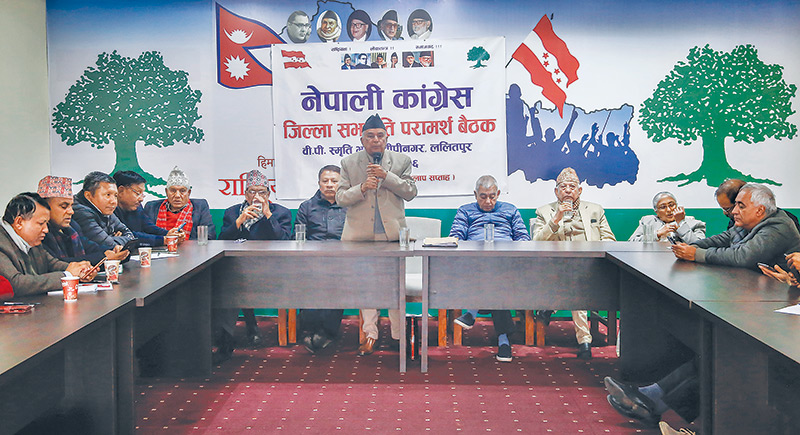
Nepali Congress leader Ramchandra Paudel addresses the party’s district-level leaders at the party headquarters in Sanepa, Lalitpur. POST PHOTO: PRAKASH CHANDRA TIMILSENA

KATHMANDU,
Even as criticism mounts against the Nepali Congress’ failure to act as an effective opposition, the party itself is mired in a factional squabble that threatens to derail any further efforts at maintaining a check on the KP Sharma Oli administration.  
A party faction led by Ram Chandra Poudel has boycotted the Congress’ Central Working Committee meetings and called a separate meeting of the district party presidents on Monday to put pressure on party President Sher Bahadur Deuba. The Poudel faction has taken issue with Deuba’s decision to decide on a date for the party’s 14th General Assembly on a majority vote.
A Central Working Committee meeting, on which the Poudel faction had boycotted, had decided to hold the convention on February 19-21, 2021.
“We cannot defend wrong decisions at a time when the party is facing an internal crisis,” said Minendra Rijal, a Central Working Committee member. “To fight against opponents inside and outside the party, we first have to put our house in order.” Rijal warned that unilateral Deuba decisions, or decisions based solely on a majority, could undermine the party’s democratic credentials and lead the Congress to losing credibility. “No one can take undue advantage in the name of a majority vote. We are demanding that the decision of December 28 be annulled and the party leadership provide a credible timeline to hold the 14th General Convention within the extended mandate,” said Rijal.
Poudel is supported by party Secretary-General Shashank Koirala, Krishna Prasad Sitaula, Shekhar Koirala, and Prakash Man Singh.
The Deuba faction, after criticism from the Poudel faction, is looking to mend fences, say party leaders.
“The factional fighting is not doing any good to the party,” said Joint Secretary-General Prakash Sharan Mahat. “It [the infighting] is aimed at cornering party President Deuba. This is not an issue to debate and call a separate meeting of the district presidents.”
At the meeting of the district party presidents, almost everyone said that the majority decision by the Central Working Committee was not acceptable and that Deuba has contravened the party charter. With Deuba and Poudel at loggerheads, it is becoming increasingly apparent that the Congress is more focused on its internal wrangling rather than acting as an effective opposition to a ruling party that is pushing bill after bill that infringes on citizens’ rights.
Uddhav Pyakurel, a commentator on current affairs, said that a time when state actors are squeezing democratic space, the role played by Nepal’s grand old party is questionable.
“The Nepali Congress has been outside the government for the last two years but what has stopped Deuba from federating the party as per the new constitution? Why haven’t the federal units of the party been constituted?” said Pyakurel. “After the worst election defeat in its history, it would’ve been better for Deuba to test his leadership and look for a fresh mandate, which he did not do.”
Despite numerous issues of national and international import taking place in recent times, the Congress has failed to present coherent stances of its own, said political columnist Shreekrishna Aniruddh Gautam. But neither the leadership nor the faction in opposition has any real plans as to a way forward, he said.
“If the opposition faction of the party has a serious reservation about Deuba then why do they not resign and leave the Central Working Committee? It just looks like they are bargaining,” said Gautam. “What is the national agenda of the Nepali Congress? What are its political, cultural, economic and foreign policy agendas?”

HOME PAGE

IFC required to invest capital from local currency bonds in Nepal for at least three years

The subscription rate of Nepali currency bonds in international markets will test the trust of external investors in Nepal’s economy.
- PRITHVI MAN SHRESTHA

KATHMANDU,
The International Finance Corporation has received permission from the government to issue Nepali currency bonds in international markets but will have to reinvest the capital collected back in Nepal for at least three years.
The private sector lending arm of the World Bank Group got approval from the Cabinet to issue Nepali currency bonds worth $20 million outside Nepal in November last year. This is the first time an international agency has been granted approval to issue Nepali currency bonds in international markets.
A bond is an instrument that represents a loan made by an investor to a borrower, promising to repay the borrowed money at a fixed rate of interest at a specified time.
Since approval, the Cabinet has amended the existing guidelines on Nepali currency bonds to be issued by international agencies and introduced a number of conditions.
“One of the conditions is that the IFC cannot return the invested money before three years,” said Yagya Dhungel, joint secretary at the Finance Ministry. “The second condition is that the IFC will be responsible for any foreign currency risk.”
The IFC will hedge the foreign exchange risks through the private sector window of the International Development Association, also an arm of the World Bank Group.
The IFC is also required to deposit the capital within three months from the date the bonds are issued, according to another condition put forward by the ministry.
The IFC, however, has not made it clear yet where the bonds will be issued.
A Nepal Rastra Bank official said that major prospective buyers of such bonds would be Non-Resident Nepalis and institutional investors in Nepal. The IFC plans to invest the capital collected through the issuance of the bonds through two micro-finance institutions—Nirdhan Utthan Bank and RMDC Laghubitta Bittiya Sanstha—in the form of debts.
“As per conditions put forth by the Finance Ministry in the guidelines, the amount should be invested in the productive sector, such as industry, infrastructure and tourism, among others,” said Dhungel.
The IFC has yet to state the interest rate at which the bonds will be issued. But the central bank has suggested that the Finance Ministry decide the interest on investment through microfinance institutions at not more than 8 percent.
However, the Finance Ministry has, in turn, asked the central bank to do so.
“I think that the interest rate the IFC could charge to micro-finance institutions could be in the range of 8 percent, which we had earlier suggested to the Finance Ministry,” said Guru Prasad Poudel, officiating chief at foreign exchange department of the central bank.  
The IFC’s plan to issue Nepali currency bonds in foreign countries comes at a time when the government is trying to attract as much as foreign capital as it can in whatever form possible to increase the availability of financial resources in the country.
As Nepali banks are facing a shortage of loanable funds, the central bank has also allowed Nepali banks to borrow from foreign banks and financial institutions.
“The significance of the IFC issuing Nepali currency bonds has more to do with testing Nepal’s attractiveness as an investment destination,” said Poudel. “It will also help us gauge what investors think about the credibility of Nepal’s economic strength. Bonds worth $20 million are not that big; it’s just a test case for Nepal.”
Political stability after a drawn-out transition was expected to boost investors’ confidence in Nepal, with the availability of round-the-clock electricity as another positive. But red tape, corruption and poor transport infrastructure continue to act as impediments to foreign investment in Nepal.
If there is a positive response to the IFC issuance, it could prompt the government to also issue sovereign bonds in the international market and receive investments in the future, according to Poudel. A sovereign bond is a debt security issued by a national government.
Although the government in 2015 had allowed the IFC and Asian Development Bank to each issue local currency bonds worth $500 million inside Nepal, no bonds were issued due to a lack of adequate loanable funds with Nepali banks.

HOME PAGE

Children left behind are the hidden costs of labour migration

Labour migration leads to transnational families which are often dysfunctional, causing adverse psychological impacts on children and adolescents at home.
- ELISHA SHRESTHA
With thousands of Nepalis leaving the country for overseas jobs every year, countless children are left behind to grow up without their fathers and mothers. Post file Photo

KATHMANDU,
Prabesh Jha was only 10 years old when his father left for Kuwait to work in a factory. Jha has not seen his father for eight years and he feels a disconnect.
“When we talk on the phone, all we say is how we are,” said Jha, who is now 18. “We are more like acquaintances than father and son.”
In the eight years that Jha’s father has been away, he hasn’t visited home even once.
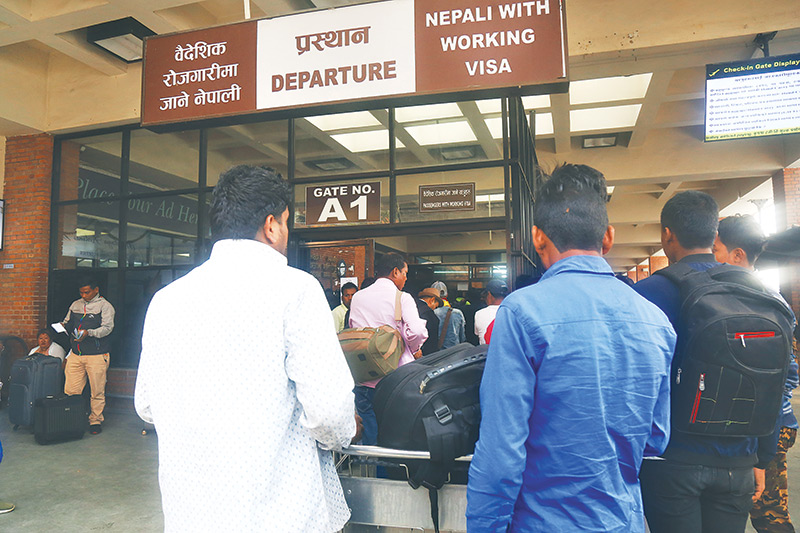
With thousands of migrant workers leaving the country for work abroad every year, countless children like Jha are left behind to grow up without their fathers and mothers. From 2008 to 2017, Nepal issued a total of 3.5 million labour permits, according to the Asia Foundation. Among them, 85 percent have migrated to Malaysia and the Gulf countries.
Studies show that parent-child separation has a direct impact on the mental and emotional well-being of children. Adverse childhood events correlate positively with worse educational outcomes, feelings of abandonment, adoption of risky behaviour and mental illness.
A 2019 report by the Centre for Mental Health and Counselling Nepal found that children who are left behind were more vulnerable to psychological problems.
“My nephew who is 11 years old and lives with his uncle and aunt addresses his mother as ‘madam’ while she is in South Africa, working to provide her son with a better education and lifestyle,” said Basnet.
Parents go to work abroad with the hope of earning enough money to support their children’s futures but children, on the other hand, are deprived of the love and affection that they need from families for psychological development.
Garima recalls how difficult it was for her to be a guardian to her 12-year-old younger brother and nine-year-old sister when she herself was just 14, after her mother went to Israel to work as a caregiver for the elderly.
“My dad worked at a shop all day while I had to take care of myself and my siblings,” said Garima, who is now 20. She asked that she only be identified by her first name.
Garima tried to be a role model for her siblings but as an adolescent herself, she was unable to provide the kind of guidance young children require. So she doesn’t quite know when or how her brother started taking drugs.
“I felt shattered when I found him unconscious. I felt that I had failed as a sister,” she said. She believes that her brother, who was 17 at the time, was depressed because their mother had left them to go work abroad.
“When my mother returned home after eight years to visit us, we didn’t feel attached to her,” said Garima. “I remember my mother complaining about how her children weren’t giving her any time when my brother snapped at her saying that she had never been there when he needed her and now it was too late.”
According to researchers and psychologists, the effects of migration on the families left require more research. Although there is global evidence of the impact of migration on children and adolescents, there is little local data and research in order to develop targeted responses. A paper in the South-East Asia Journal for Public Health advocates “population-wide awareness programmes, psychoeducation, skills training, psychosocial rehabilitation, and psychological treatment, along with community-based interventions among Nepali children and adolescents”.
But for most parents, migration is a compulsion, and if they had a choice, they would not leave their children behind.
Binod Kunwar, who worked in a factory in Malaysia for seven years, feels that migrant workers like him shouldn’t dwell too much on emotions.
“I didn’t get to see my son for seven years. When I left for Malaysia, he was just seven years old and when I returned, he was all grown up,” said Binod. “I don’t regret being absent from his life. I was busy working to support my family.”
Binod, who had returned home after seven years, will be migrating again.
“My wife is pregnant with our second child,” said Binod. “I have to provide for them.”

Page 2
MEDLEY

Horoscope

ARIES (March 21-April 19)
**
Today’s going to start off as a very calm day, with nary a ripple on the proverbial water’s surface. But as the day goes on, there will be lots of activity right under that surface. Sharks are swimming down there, and while they don’t have specific designs on taking a chunk out of your flesh, they do have some ulterior motives.


TAURUS (April 20-May 20)
**
Why pressure yourself into taking it all in when grabbing one small detail can be so rewarding? Right now, you need to focus on one aspect of your life. How can you improve it? Instead of your overall health, just focus on your teeth. Instead of making more money, just focus on saving one dollar a day.


GEMINI (May 21-June 21)
***
If people are putting restrictions on what you want out of life, tell them to get lost. Your goals, and your hopes are your own! Sometimes people try to view you under the same lens they use to see the world. It’s tough not to blame them for judging you, but they’re just doing their best to understand you.


CANCER (June 22-July 22)
**
You should think long and hard before you share any opinions today. There is a possibility that some tension could result from what you say. You might not realise who you’re talking to, and they may not share the same attitudes that you do. You don’t want to end up with your foot in your mouth. It’s a very unappetising snack.


LEO (July 23-August 22)
***
The best lesson you learn today won’t be found in the same old place. You’re going to have to move as far outside your comfort zone as you can stand to go in order to get the nutritious input that your brain is hungry for. Experimentation is the key to keeping yourself sharp, so try out a few new things.


VIRGO (August 23-September 22)
***
Skip the short-cuts and stick to the straight-away today. This applies to all aspects of your life: romance, health, work, school, family. Your conversations should all be as direct as possible, your actions should be unambiguous, and your routine should be as efficient as can be. Your extra efforts will pay off handsomely today.


LIBRA (September 23-October 22)
***
You can feel free to turn a deaf ear to anyone who is telling you to introduce more discipline and structure into your life. They’re projecting their own life choices onto you, and they really don’t have any right to do so. Don’t let their status or powerful position intimidate you into adopting a style of living that isn’t comfortable.


SCORPIO (October 23-November 21)
****
If a blur of social obligations is working on your last nerve, get some alone time today. Treat yourself to a quiet dinner out. It’s not selfish to want to be by yourself. It’s healthy. Social-hound friends may not understand this inward phase you’re going through, but they will accept it.


SAGITTARIUS (November 22-December 21)
***
A powerful person could come into your life bearing gifts today, and there may be some big strings attached, so don’t let your gratitude fog your scepticism. Ask a few questions and get to the bottom of their new found generosity. But the responsibilities laid out in front of you are ones you could really sink your teeth into.


CAPRICORN (December 22-January 19)
****
You are making some positive impressions on some powerful people, and today your perseverance could pay off handsomely. Get ready to be invited into the inner circle, either through a social or work-related invitation. The nature of your time with these people isn’t as important as the length of time you will have with them.


AQUARIUS (January 20-February 18)
***
Your trademark modesty may prevent you from bragging to the world about your latest success, but it won’t prevent friends from singing your praises! Everyone is so proud of you, and while you might not be privy to everything they’ve been saying about you, it’s definitely all good stuff!


PISCES (February 19-March 20)
**
Put social obligations and romantic endeavours on hold for a little while. They aren’t going anywhere any time soon! Today, your brain is wired for wheeling and dealing! With this magical combination of charm and intelligence that’s come over you, you could sell anything to anyone, and get them to pay you double.

Page 3
NATIONAL

Leadership deferred Central Committee meet to avoid criticism: Ruling party members

The crucial meeting decided for Wednesday has been postponed to January 23.
- TIKA R PRADHAN
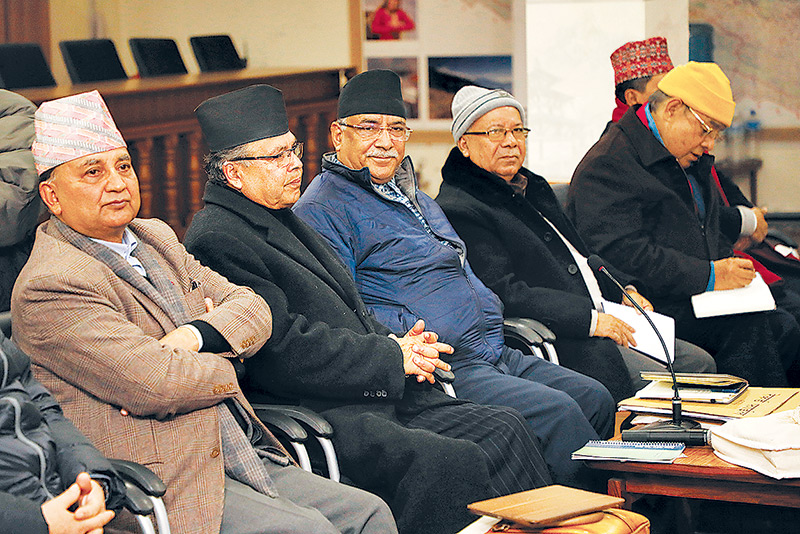
In this photo taken on December 15, Nepal Communist Party leaders attendthe Standing Committee meeting at the party office in Dhumbarahi, Kathmandu. POST PHOTO: SANJOG MANANDHAR

KATHMANDU,
Even more than a year and a half after its formation, the ruling Nepal Communist Party has not held a meeting of its Central Committee, a crucial and most powerful body of the party.
During the Standing Committee meeting, which was also held for the first time in one year, members while censuring the leadership over various issues had also demanded regular meetings of party committees. The Standing Committee meeting, which concluded on December 22, had then decided to call the Central Committee meeting for January 8.
But Sunday’s secretariat meeting decided to postpone the meeting to January 29.
As per the party statute, the Central Committee must meet every six months.
According to leaders, both Co-chairs KP Sharma Oli and Pushpa Kamal Dahal are concerned over facing tough questions. The scheduled Central Committee meeting was postponed to avoid criticism, they say.
Despite Dahal apologising for failures on various fronts, including the party and the government, in the political document presented on behalf of him and Oli at the secretariat meeting, members refused to spare the leadership. They were critical of the leadership’s approach to run the party.
A leader said the leadership is not yet ready to absorb criticism at the Central Committee which is 445-member strong.
The leadership, however, postponed the meeting on the pretext of the National Assembly election which is scheduled for January 23.
“The leadership seems to have lost interest in holding meetings, which are very crucial for the proper functioning of the party,” said Ram Karki, a central member. “Nonetheless, meetings in our party have turned into the platform for a handful of leaders to deliver their speeches and impose their decisions.”
After the week-long Standing Committee meeting last month, leaders were hopeful that the party would now catch the momentum with regular meetings of the party committees.
However, the party has been hamstrung by indecision on the Speaker’s candidate and infighting over parliamentary ratification of the United States Millennium Challenge Corporation Nepal Compact.
Central members said they doubt the leadership will hold the Central Committee meeting on the rescheduled date of January 29.
“The only reason for the meeting deferral is fear of criticism,” said Yubaraj Chaulagain, also a central member. “But the leadership should not shy away from criticism. The leadership must face the leaders and listen to their grievances. It only helps in making the party organisation better.”

NATIONAL

Chinese Embassy issues travel documents for the 122 Chinese nationals arrested last month

The documents have been sent to the Department of Immigration for verification.
- Post Report

KATHMANDU,
The Chinese Embassy on Monday issued travel documents for the 122 Chinese nationals who are due to be deported after they were arrested from different parts of Kathmandu a few weeks ago.
According to Ishwor Raj Poudel, director general at the Department of Immigration,  the department has received necessary legal documents from the Chinese Embassy to deport the arrested Chinese nationals.
On Sunday, the District Administration Office had ordered
a fine of Rs1,000 to all the arrested Chinese nationals for indecent behaviour.
Nepal and China have not signed an extradition treaty, but during the visit of Chinese President Xi Jinping to Nepal in October, the two countries signed Mutual Legal Assistance on Criminal Matters.
As per the pact, Nepal will hand over Chinese nationals to the Chinese authorities if they have breached Nepali laws—like overstaying or doing business while on a tourist visa—but have not committed any crime in Nepali land.
The Chinese nationals were arrested on December 23 in a joint Nepal-China operation.
A team comprising the Central Investigation Bureau, Metropolitan Police Range and Metropolitan Crime Division had conducted raids on different houses in the Manamaiju, Bansbari and Budhanilakantha areas after tip-offs that some Chinese nationals were involved in some suspicious activities.
Following the arrests, the CIB had recovered as many as 67 passports, along with 747 mobile phones, 331 laptops, 18 CPUs, 19 monitors, 22 pen drives and 327 SIM cards from the arrestees.
Of late, concerns have grown over Chinese nationals’ involvement in financial crimes.
In September, five Chinese nationals were arrested for using cloned debit cards to withdraw millions of rupees from different cash dispensers in Kathmandu. At the time, police had confiscated 132 forged VISA debit cards, 17 authentic VISA cards, six mobile phones, a laptop and a data card from them.

Page 5
NATIONAL

Despite stringent measures, no let up in gold smuggling via Kathmandu airport

In the past one week alone, police have arrested five people at the Tribhuvan International Airport.
- SHUVAM DHUNGANA
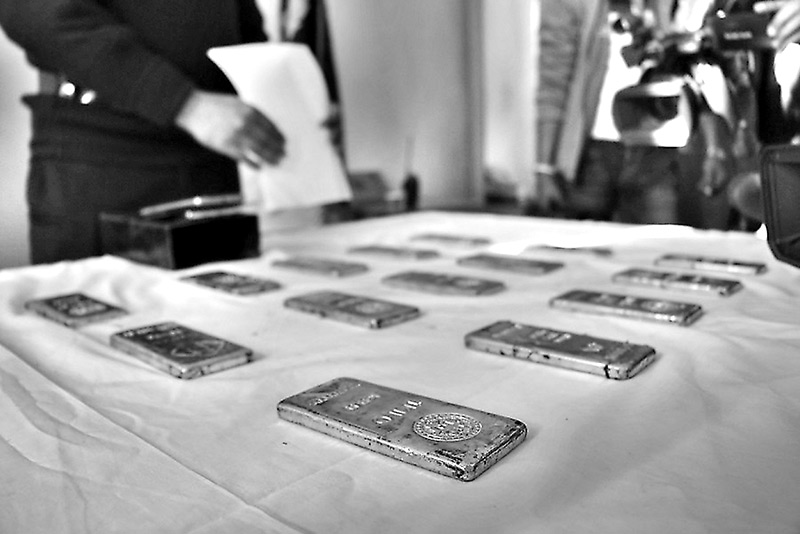
Nepal Police have seized over 180 kg gold in the past two fiscal years 2017/18 and 2018/19. Post file Photo

Kathmandu,
Frequent seizures of contraband gold and rising number of arrests at the Tribhuvan International Airport in recent days has shown that despite stringent measures by police officials, smuggling of the precious yellow metal continues.
On January 5, police arrested Kijakethil Naushad, an Indian national, during security at the arrival terminal. Naushad had flown into Kathmandu from Dubai, carrying half a kg of gold. “He had disguised the gold in the form of small capsules to get it past security,” said Senior Superintendent of Police, Sahakul Thapa, chief at the Metropolitan Crime Division. “Naushad was sent to the customs office at the airport for further action.”
Similarly, on January 3, the Airport Security Police, in coordination with Metropolitan Crime Division, arrested two Indian nationals for smuggling 2 kgm of gold hidden in their rectums. The arrestees were Bharat Suresh Lal, 31, and Navin Gopi Chand, 39. Both of them were coming into Nepal from Dubai on an Air Arabia flight.
Lal’s and Chand’s behaviour at the arrival gate aroused suspicion, which led to their arrest, said police. “They were walking strangely and upon interrogation, we found out that they had hidden semi-liquid gold in their rectums,” said Senior Superintendent of Police, Ram Tripal Shah, chief of Airport Security Police. “They were using some chemical in the gold so that they could get past the metal detector in the arrival area. They were later handed to Airport Custom Department for further action.”
In yet another smuggling case, Airport Security Police on January 2, arrested two Indian nationals with 1.6 kg gold. The arrestees were identified as Mohammad Kashif, 39, and Mohd Mushrafeen, 40. Kashif had arrived to Kathmandu via Nepal Airlines from Dubai, while Mushrafeen was here from Delhi on an Indigo Air flight. During security check, Kashif was arrested with 738-gm gold, and Mushrafree with  268-gram.
“The arrestees were sent to the customs office for further investigation,” SSP Shah.
In the past one week alone, police have arrested five people at the Tribhuvan International Airport. “The arrests were possible because of our tightened security. As many as 300 police officials have been mobilised in the airport for security reasons,” said Shah to the Post.
According to data provided by Nepal Police, they have seized over 180 kg gold in the past two fiscal years 2017/18 and 2018/19. “Most of the arrestees were found to be from impoverished backgrounds. The suppliers entice these people to smuggle their gold by paying them a small fee, which is anywhere between Rs5,000 to 15,000. The pay normally depends upon the weight of the gold,” said a police official at the airport on the condition of anonymity.
“The gold, however, is not sold here. Nepal is just a transit point. The gold is later sent to India through the border via road, as the security area is not as tight,” he added.
“Upon interrogation, we found out that most of the smugglers are not professionals,” said another investigative officer at the airport, on the condition of anonymity, as investigating officers are not allowed to talk to the media. “The smugglers did not have any idea about the whole plan. They were just ordered to deliver the item to a specific person.”hat.”

NATIONAL

In a Salyan public school, there are no teachers

The only teacher at Bhanubhakta Jagrit Basic School was transferred, citing low enrolment numbers.
- BIPLAB MAHARJAN

SALYAN,
The Bhanubhakta Jagrit Basic School in Bagchaur Municipality is running without teachers. After the only
teacher, who was also the headmaster, of the school got
transferred to another school, the school is currently being run only by its Early Childhood Development staff and an office assistant.
The school runs classes from grade one to three, and currently, there are 15 students studying in the school. As there are no teachers in the school, five students have already been transferred to other schools.
Krishna KC, a staff of the Early Childhood Development Centre, said that this lack of teachers is affecting the education of the students. “Headmaster Amar Bahadur KC has been deputed to Rastriya Basic School in Shivarath,” said KC, adding that she has been teaching all students in the same class.
According to her, the municipal office deputed headmaster to another school citing a low number of students in the school.  
Prem Bahadur DC, chairman of the school management committee, too shared the same sentiments.
“The municipality had made the decision in a unilateral way.
Locals have started to admit their children to other schools citing teachers’ shortage,” said DC, informing that he had requested the municipal office to return the headmaster, but to no avail.
With an absence of teacher, the school, which was established 12 years ago, is most likely going to be closed. “If the municipality provides
necessary infrastructure and manages at least two teachers in the school, the number of students could be increased,” said KC, citing that many children have already moved to private boarding schools.   
Meanwhile, Ram Bahadur Hamal, chief at the Education Section of the municipality, said the municipality has a plan to merge schools that have few students. He said, “We can only appoint teachers if the school management committee ensures it can increase the number of students.”

NATIONAL

Teacher held on charge of beating up student

- SANJU PAUDEL

RUPANDEHI,
Police have arrested a school teacher who allegedly beat and injured a student at Pokharhawa in Rupandehi district.  Area Police Office in Marchawar detained Shailendra Barai, a teacher at a Pokharhawa-based private school, four days after the incident on Sunday. Barai harshly beat 13-year-old Mohammad Tauphik Dewan. The fifth-grader sustained serious injuries on his left eye and across his face.
The victim’s family lodged a complaint with the police on Sunday and urged authorities to take
strong against the guilty. “We detained the accused and initiated an investigation. We will soon present him to the court after completing the investigation,” said Police Inspector Poshan Raj Dhakal. According to him, a case has been registered against Barai under the Act Relating to Children 2018.
Barai severely beat the boy with a baton on Wednesday as the latter did not furnish homework. After the
incident, Barai took the injured boy to Bhairahawa Medical College for the treatment.  
The traumatised child has not gone to school after the incident. During a press meet on Sunday, the victim said that Barai indiscriminately thrashed him with a stick. As per the existing legal provision, any kinds of physical and mental tortures on children are punishable.

NATIONAL

New drinking water projects to benefit Surkhet locals

- CHANDANI KATHAYAT
The recently inaugurated Subhaghat Drinking Water Project, with a budgetof Rs620million, will be completed in two years and benefit 17,000 people. Post Photo

SURKHET,
Residents of Sahare village in Gurbhakot Municipality have to walk for hours to fetch water every day, as there are no drinking water sources near the settlement.
Over the years, the locals have repeatedly notified the authorities of the problem, but they have not received any response, according to Dev Bahadur BK, a local.
“Even though budgets were allocated to build drinking water projects in the settlement, they never materialised because of the dishonesty of the consumers’ committee,” BK said.
But that is likely to change soon, as the municipality recently inaugurated a new water project—Subhaghat Drinking Water Project—with a budget of Rs620 million.
According to project chief Purna Prasad Upadhyay, the project will pump water upstream from Bheri River. Even though the project was recently inaugurated, its contract was signed in July 2019. Upadhyay added that the project will be completed in two years and will benefit about 17,000 people from the four wards in Gurbhakot Municipality.
Meanwhile, another project is afoot in Birendranagar, Surkhet’s headquarters, which also reels under a drinking water shortage.
The Surkhet Valley Drinking Water Consumers’ Committee is overseeing the project. Balaram Tiwari, an engineer involved with the project, said the project would kick off in March.
The department of drinking water, which is under the federal government, has allocated a total of Rs40million budget for the project. The project aims to ‘pump’ water from the Bheri River at a speed of 390litre per second to the Surkhet Valley.
Birendranagar, which is also the capital of Karnali Province, currently lacks an average of 20litres of water per person during the rainy season and 69litres in winter.

NATIONAL

Paragliding yet to go commercial in Ilam despite several successful tests

Lack of investors, skilled manpower and legal hurdles are behind Ilam’s failure to hold a commercial flight, stakeholders say.
- BIPLAB BHATTARAI
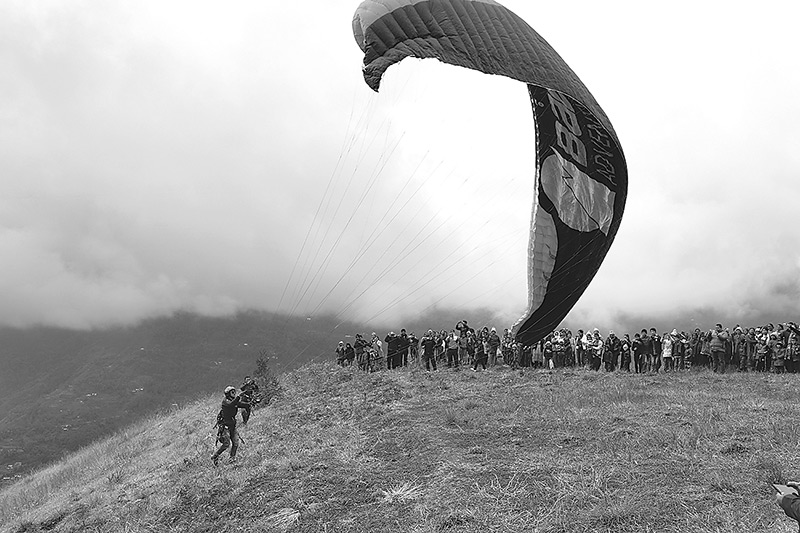
Sunday’s test flight in Puwamajhuwa took off from the 200m-high cliff ofChhelethumki and landed safely at the Thalthale sports ground. Post Photo: biplav bhattarai

ILAM,
On Sunday, Puwamajhuwa in Ilam Municipality saw its first paragliding test flight. The test flight took off
from the 2,000m high cliff of Chhelethumki and landed safely at the Thalthale sports ground—to the excitement of hundreds of locals who were at the spot. The observers the Post talked to said they hope the adventure sports would be instrumental in unleashing Puwamajhuwa’s tourism potential.
Puwamajhuwa, located 20km north from the district headquarters of Ilam, is the latest among a series of the district’s destinations to have a successful paragliding test flight. So far, Antu, Gufathumki, Kanyam and Siddhithumka have seen successful test flights. But none of these destinations has a commercial flight up and running yet.
“If Ilam is to be developed as a model paragliding hub, the focus should be on developing infrastructure and producing and training the manpower,” Sanobabu Sunuwar, operator of the Babu Adventures and the pilot of Sunday’s test flight, told the Post. “Ilam has enough potential.”
If the adventure sports were to be developed, many believe it could play as a springboard to direct tourists to the noted destinations in Ilam.
“If the adventure sports service were to take shape along with the promotion of culture, agriculture and natural beauty, Ilam can reap considerable benefits from tourism,” said Tirtha Gurung, chief of Ward No. 3 of Ilam Municipality.
The potential of adventure sports tourism was bolstered by the news of the under-construction Pokhara International Airport displacing the paragliding service there. Moreover, deputy mayor, Sushila Nembang, has promised to support to turn Ilam into a paragliding hotspot.
The test flights are bound to continue across Ilam, given its suitable geography. But the fact that not a single commercial flight has taken off yet has many doubting if such an enterprise would ever come to fruition.
Lack of finance, skilled manpower and legal hurdles are the factors behind Ilam’s failure to hold a commercial flight yet, stakeholders say.
“We haven’t been able to hold a commercial flight because there is a lack of licenced pilots,” said Ishwari Baral, a member of the operations committee of Kanyam Mountain View Paragliding, noting that his enterprise has already spent over Rs20million in acquiring the land and other logistics. “Lack of skilled manpower and increasing cost is what is keeping us from starting commercial paragliding but we are on it.”

NATIONAL

Tilottama Municipality to become plastic free

Briefing

RUPANDEHI: Various programmes have been launched to make Tilottama Municipality a plastic-free municipality in Rupandehi district. The municipal office has been organising awareness campaigns urging locals to use bags made from clothes as an alternative to plastic bags. Basudev Ghimire, mayor of the municipality, said they have banned plastic cups, plates and spoons along with plastic bags. He said, “The municipality had launched a plastic bag prohibition campaign from April 2018.”

NATIONAL

Foundation stone laid for Charchare-Koldanda bridge

Briefing

PALPA: Baijanath Chaudhary, the minister for Physical Infrastructures Development, on Monday laid the foundation stone of a permanent bridge at Charchare that will connect Koldanda in Palpa. According to Chaudhary, the provincial government had surveyed dozens of bridges in various
streams in Palpa.

NATIONAL

Local unit in Nawalparasi (West) provides free WiFi

Briefing

PARASI: Pratappur Rural Municipality in Nawalparasi (West) has provided free WiFi facility in major thoroughfares of all nine wards to provide locals access to the internet, especially for the poor people.

NATIONAL

Fugitive captured after 22 years on the run

Briefing

KASKI: A man, who was on the run for the last 22 years after being convicted of vehicular homicide, was arrested on Sunday. According to police, the District Court Rupandehi had issued a verdict against Tek Bahadur Gurung of Syangja 22 years ago, upholding the vehicular homicide charge and sentenced him to one year and 11 months in prison. Police had sent Gurung to the District Prison.

NATIONAL

Forest official held on graft charge in Bardiya

Briefing

BARDIYA: Commission for the Investigation of Abuse of Authority (CIAA) arrested a forest official on corruption charge from Jayanagar in the district on Monday. The CIAA team from its Nepalgunj office detained assistant forest officer Aananda Prasad Sah with Rs 10,000 bribe.

Page 6
EDITORIAL

The right direction

Sudurpaschim's plans to install teleultrasound at health posts in each local unit is laudable.

Nepal had made significant strides in attempting to curb infant and maternal mortality rates in the past. By reducing the maternal mortality rate in the decade between 1996 and 2006 by 50 percent, it won the country for its progress towards Millenium Development Goal 5, Reducing Maternal Mortality. However, as things stand currently, it is unlikely to repeat its performance in meeting the Sustainable Development Goals that relate to these issues by 2030. Over 2,000 newborns and 208 new mothers died due to childbirth-related issues in the fiscal year 2018-19 alone—and these only account for the registered deaths in state-run health facilities.
So, any attempt by provincial bodies to improve healthcare, in this case specifically increase access to quality healthcare for the rural populace, should be commended. The Sudurpaschim Provincial Health Directorate’s plans to install teleultrasound machines at health posts in each local unit is laudable. However, as always, such news should be taken with a grain of salt. It remains to be seen whether the training given to technicians at the local level and the budget allocated to keep the telemedicine features active will be effective.
When Nepal adopted federalism, all essential state-provided services—of which healthcare and education are arguably the most important—should have reached the people near where they live. Yet, many challenges have stopped the needed transformation in the sector. One has been the lack of an adequate budget to run essential programmes, such as the provision of subsidised services for the disadvantaged and the safe motherhood programme, even in a centralised fashion. Another has been the inability of the stakeholders to delegate responsibilities and divvy up the budget to support decentralisation. Qualified personnel continue to pile up in Kathmandu, with staff transfers to the provincial and local levels not happening in an efficient manner.
Even as other provinces face major hurdles—such as Province 3 failing to implement its health budget for the first 10 months of the last fiscal year, and Province 2 channelling its health budget towards non-health related infrastructure projects, the development in Sudurpaschim is exemplary—at least in this aspect. The province has one of the highest infant-mortality numbers in the country—316 newborns died in the last fiscal year. At the same time, the province also charts a high number of maternal deaths, even as it ranks fifth out of seven provinces in terms of the total population. Given this, the province’s attempt at such a bold feature is definitely a major step in the right direction.
Yet, there are many reservations. In the first phase, the health directorate has handed over the teleultrasound machines to health posts in nine districts. But to truly fulfil its aim of complete coverage, the province has to provide such machines to all 88 local units—a significant budgetary and planning jump. Moreover, it seems that the technicians have not received training yet. But the effectiveness of this service will always depend first on its implementation.
The benefits of telemedicine cannot be overstated; Nepal successfully had implemented it in the past. But the reason it did not work out, in the long run, was the lack of an adequate budget and proper planning to run it consistently and effectively. Should Sudurpaschim be able to jump the hurdles to bring back effective telemedicine, even only in this one diagnostic aspect, it will definitely be a step worthy of emulation by other provinces. Hope remains that the province is successful in this endeavour.

OPINION

The elected undemocracy

Parliament has become a mere rubber stamp for all government bills—they get sanctioned without debate.
- ACHYUT WAGLE
Shutterstock

The idea that Nepal is a federal democratic republic is rapidly disintegrating. The federal polity is effectively dysfunctional, and the concept of the separation of powers between the legislative, executive and judicial branches of the state has been trampled upon. Crucial political organisations—the pillars of any multi-party pluralistic democracy—are not being held accountable to democratic norms, values and practices, or to the constitution.

Orders from above
Last week, the standing committee of the ruling Nepal Communist Party decided to ‘direct’ the government and legislature of Province 3 to adopt Bagmati as the name of the province and fix the town of Hetauda as the provincial capital. This is a clear example how the very essence of federalism is being systematically truncated by the double-edged sword of the centre’s inherent intent not to devolve power to the subnational levels coupled with the alleged inability of the provincial and local levels to exercise the power given to them by the federal constitution. This comes as the latest in a series of flagrant anti-federal tractions and jolts against the letter and spirit of the 2015 Constitution.
On the one hand, the federal government has been continuously expending its political capital to formulate laws that are clearly detrimental to the power-sharing arrangement under the federally restructured three tiers of government. Recent amendments to the forest and water resources legislation, and several other laws, clearly exhibit the deep-rooted intent to centralise power instead of releasing state authority to the lower levels. The federal government’s unwillingness to fully functionalise the constitutional, legal and institutional arrangements made for a smooth and balanced operation of the federal system is extensively evident in multiple fields by now.
This, for example, includes the imperviousness of the federal government to complete even the appointments of professional members to constitutional commissions like the National Natural Resource and Fiscal Commission and to provide it true operational autonomy, and to carry out the provincial extension of the operation of the Public Service Commission, among several others. The government has been reluctant to formulate the required bylaws in public procurement, perks and remuneration of elected local executives, and the rule of procedure for them to avoid conflict of interest in the public decision-making process.
On the other hand, both provincial and local governments are failing to assert their authority as enshrined in the constitution, and instead are succumbing to extra-constitutional infringement of the same by the central entities, both political and administrative. Even at the mid-point of their five-year tenure, four out of the seven provinces are yet to decide on their names and provincial capitals, which exclusively is the domain of the provincial assemblies. The ruling party standing committee, going far beyond its jurisdiction, is meddling in such constitutional matters and overriding the authority of the subnational units. This phenomenon known as ‘tragic brilliance’ in federalism literature will eventually lead to centralisation of almost the entire decision-making authority in the federal government, retaining only the ‘skeleton’ of a federal structure. Nepal now seems to be heading towards that end.

The parties are failing
Democracy is a rules-based interplay of a multitude of institutions and processes. Institutionalised internal democratic practices in the political parties is a sine qua non of democracy. But all major political parties of Nepal suffer from severe democratic deficit, factionalism, ideological dilemma, disgusting level of avarice, petty vested interests, and absolute lack of moral integrity in the top leadership.
The ruling Nepal Communist Party has been a hostage to its own indecision over picking a candidate for speaker of the House of Representatives, which has impacted regular House business. In the absence of a binding and practically relevant ideology, the power struggle in the party is centred on ‘distribution of lucrative opportunities’ to influential leaders. Leaders defeated in the first-past-the-post elections have again been fielded as candidates for the Upper House election. The federal parliament has become a mere rubber stamp; all government bills get sanctioned without any debate.
Nepali Congress, the main opposition party, is in no way different. Its role as an effective opposition has been nondescript, mainly due to its small number of parliamentarians coupled with lack of a political strategy to censure the government’s excesses. Infighting between the establishment and anti-establishment factions in the party is at its height. Small and regional parties have also failed to register their presence with a creative political agenda for the future.
There are a few common tendencies in all the parties that have made them essentially undemocratic, both in form and function. The leadership, mainly in the ruling and main opposition parties, is still in the grip of the same people who led the popular pro-democracy movement in 1990. The pervasive gerontocracy in the entire political spectrum has been the source of an effective dictatorship within and without the parties. Despite rampant public apathy, the old hawks are not prepared to give way to fresh faces to assume responsibility in the party or government. In fact, these parties have failed to groom the younger generation of leaders that are better versed in contemporary political priorities and globally-accepted practices. This has resulted in utter disinterest in politics among the younger and educated segment of the population. Due to this indifference, the government is not worried about potential retribution even if it curtails democratic freedoms like the ones now being introduced through an amendment to the legislation pertaining to Information Technology.

Like an empress
The republic, in essence, is more ‘rule by the citizens or public’ than the form represented by an elected president as head of state. These days, more often than not, the demeanour of President Bidya Devi Bhandari is being seen as pompous, like that of an empress. Her quest for luxury, as shown by the expansion of the presidential palace by ejecting the adjoining National Police Training Academy, and her love for elaborate motorcades during her outings, is antithetic to the official national goal identified by the constitution as orienting Nepal towards socialism.
In a nutshell, before bringing the three political fundamentals—federalism, democracy and republicanism—back on track, Nepal’s desire for durable peace, rapid progress and equitable prosperity cannot be realised. The course correction must start at the highest level of the political leadership of at least the ruling and main opposition parties of the country.

OPINION

Trump’s blind march to war

It is likely that the US president has stumbled, one flawed assumption at a time, into starting a war.
- Djavad Salehi-Isfahani
egorkeon-Shutterstock.com

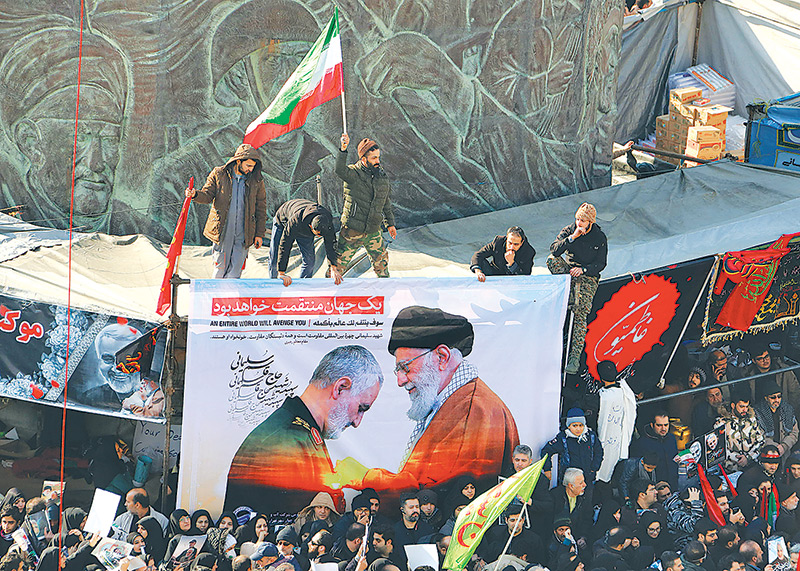
Before US President Donald Trump decided to withdraw his country from the Joint Comprehensive Plan of Action (JCPOA) in May 2018, Javad Zarif, Iran’s foreign minister and the nuclear agreement’s chief Iranian architect, was the most popular public figure in his country. A year after the withdrawal, a University of Maryland poll shows, Zarif’s popularity was far surpassed by that of General Qassem Suleimani, the hardline Revolutionary Guard commander who was just assassinated in Baghdad on Trump’s order.
No leader can be expected to anticipate precisely the effects of their foreign-policy decisions. But their expectations should be realistic, which means that they should be based on credible intelligence and a comprehensive understanding of the economic, political, historical, and cultural dynamics at work. When expectations are not realistic, the results are often disastrous.
This was the case with US President George W. Bush’s 2003 invasion of Iraq, which, among other things, resulted in hundreds of thousands of Iraqi civilian deaths. And it has been so with virtually all of Trump’s foreign-policy decisions, particularly with regard to Iran.
Trump’s first major mistake was withdrawing from the JCPOA. Iran had not violated the terms of the 2015 nuclear deal, and the other signatories remained committed to it as well. But Trump wanted more concessions from Iran’s leaders, so he disregarded his country’s commitments, re-imposed sanctions, and pushed US partners and allies to follow his lead.
A ‘maximum pressure’ campaign was supposed to lead either to Iran’s quick capitulation to exorbitant US demands, as spelled out by Secretary of State Mike Pompeo, or to economic collapse. In the latter case, Trump’s hawkish advisers assured him, the restless and poverty-stricken Iranian public would reject hardliners like Suleimani and support the rise of a new leadership cadre that would bring peace and stability to the region. In 2018, John Bolton, then Trump’s national security adviser, told a group of Iranian exiles that they would be celebrating regime change ‘before 2019.’
So confident was the Trump administration in its assessment that it seems never to have considered an alternative outcome. For example, it did not account for the possibility that Iran would respond to plummeting oil exports by increasing production. True, this is not the most obvious response, because it could dilute Iran’s remaining export revenues. But Iranians need oil, too, and could not afford the skyrocketing prices of comparable imports; in November, protests against rising gas prices swept the country.
The Trump administration surely did not anticipate that two years after the resumption of sanctions, Iran’s economy would be showing signs of recovery. And yet, during the third quarter of 2019, employment rose by 3.3 percent year-on-year, and unemployment declined to a seven-year low.
Clearly, the Trump administration badly misjudged Iran. But false beliefs about the country’s circumstances extend far beyond the White House. A 2018 New York Times op-ed exemplifies the low standard of evidence for reports depicting Iran’s economic and political fragility.
The commentary claimed that, according to ‘official sources,’ 40 percent of Iranians lived below the poverty line in 2015. But the source to which that claim was hyperlinked led to an obscure Persian-language website that made no mention of any official report. Meanwhile, World Bank data show that the internationally comparable poverty rate in Iran for 2015 was 11 percent, around the same as in neighboring Turkey.
To be sure, when that article was published, Iranians were protesting economic hardship. But protest does not equal revolution, let alone successful regime change, especially in a country with security forces willing and able to use extreme brutality to crush dissent, as they did to halt November’s gas-price protests.
Yet observers should beware of the assumption that Iran’s hardliners are holding onto power by sheer force. The University of Maryland poll showed widespread support not only for Suleimani, but also for another hardliner: Ebrahim Raisi, who heads Iran’s judiciary.
This is not difficult to understand. In the 2013 and 2017 elections, Iranians threw their support behind the moderate Zarif and President Hassan Rouhani, because they believed that a nuclear agreement would usher in a new era of peace and economic security. But even though those leaders managed to deliver the JCPOA, they were powerless to stop the US from reneging on it.
Iranians wanted stability and prosperity. Instead, they got more economic hardship and unpredictability, including US calls for regime change. Given how poorly US-sponsored regime change has gone for other countries in their neighborhood, many embraced Suleimani, who had successfully defended Iran’s borders against Saddam Hussein in the 1980s, and, more recently, against the Islamic State.
George Orwell famously warned that a false belief ultimately ‘bumps up against solid reality, usually on a battlefield.’ Unfortunately, that seems increasingly likely to happen to the US in Iran—and soon.


—Project Syndicate

Page 7
OPINION

Gender insensitivity and Nepali Congress

The party elite, and Nepali Congress itself, think that women cannot be effective political actors.
- PRABHA POUDYAL
Shutterstock

What constitutes the meaning of politics for women and girls? What are the specific needs and demands of women and girls within the political parties? Are the electoral manifestos and activities of political parties sufficiently addressing those needs? What is the status of women politicians within a political party? And most importantly, have political parties acknowledged the importance of gender sensitivity in politics?
To get authentic answers to these questions, a study was conducted by the Centre for Social Inclusion and Federalism Nepal, specifically aiming to find out the status of women politicians and the perception of young female citizens regarding Nepali Congress. The young females were aged from 15-20 years. The study was conducted in the Morang district in south-eastern Nepal. The researchers interviewed female party members and high school going females of the district. The research subjectivity over objectivity and provided a critical analysis and observation of the lives of women.

Sources of knowledge
All respondents (female party members), despite their position and status within the party, were authentic sources of knowledge. They were very enthusiastic and excited about the interviews as they felt that they were someone who could be informants or sources of knowledge. So it can be said that the ultimate desire of human beings is to achieve self-esteem and public identity, which was noticeable in them at that time.
The research shows that women members have been facing greater inequality and discrimination even within the provision of inclusion in a democratic party. The party’s agenda has never been women-centric. Women’s issues have always been considered as ‘only women’s issues’. The party elite and the party itself consider women as unequal, and they think that women cannot be effective political actors. Women members have felt discriminated in every structure of the party, from both the party elite and the party itself. Even in the distribution of active membership of the party, misogyny manifested itself at all levels.
The respondents mentioned that the party hesitated to give active roles to women. Women party members have lots of grievances against the party because their input and contribution were never fully acknowledged, and that limited them to secondary roles. This statement can be proven by the ratio of mayoral candidacies in the local election. The party gave mayoral candidacies only to men, limiting women to deputy mayoral posts in all local bodies of the district. This shows how male domination is deeply rooted in the mindset of the political elite.
Similarly, this research also provides insights into gender-specific concerns of women politicians and the problems they have been facing in their daily lives. The patriarchal ideology of the family, society and even the party has hugely hindered their meaningful participation. Likewise, gender roles like household chores and child-rearing also created obstacles for them. The restrictions imposed upon their mobility and lack of time due to a disproportionate work burden confined women to the household. Likewise, because of less access and control over economic resources, women lack financial strength which has become the most essential aspect to get involved in politics. But having said that, they want to be liberated from this situation, and they have the aspiration to achieve decision-making power, equal status and public identity.
Not only women members, but the young females of the district were also found to be disappointed with the party. The major concerns of these young females were unemployment, increasing violence against women and girls, and problems due to the patriarchal mindset of society. These concerns were also under-represented; the party doesn’t conduct any activities to interact with the women and address their problems.
Almost 52 percent of the population of Morang is female. Likewise, 49 percent of the voter base is female. Ironically, the concerns of half the citizens remained unaddressed by the political parties from the very beginning. After the introduction of identity politics, the political parties started to address the concerns of women; but they are still treating them more as service seekers and welfare receivers. When it comes to being an effective agent with a specific agenda, women are always given less priority. Likewise, women’s participation is also taken as fulfilling the requirement of the quota system. A democratic political party like the Nepali Congress is also yet to understand the importance of gender mainstreaming within itself.

Gender sensitivity
Why should a political party incorporate gender sensitivity in its structure and activities? The answer is very simple: Women are still facing problems due to their socio-economic and political status which was initially shaped by a patriarchal society. Hence, political participation helps to achieve both individual and collective goals. By providing decision-making power and ensuring the rights of women, political participation creates a foundation to establish women as citizens with equal rights. Similarly, the gap between the needs of voters and the actions of the party may create an ideological distance between it and the electorate. This situation leads to a de-alignment of the electorate from the party, and the party may face electoral instability.
In essence, the patriarchal convictions in Nepali Congress need to be changed to reconstruct an equitable and inclusive power structure within. They have to acknowledge that having equal rights for women doesn’t mean fewer rights for men. To become the real decision-makers and reach the citizens, the party should look at politics as more than a means to gain power. This will, without doubt, lead Nepali Congress to better electoral results.

 
Poudyal is a researcher at the Centre for Social Inclusion and Federalism Nepal.

OPINION

Political change and courts

The judiciary, by the very nature of its role, is limited in its ability to bring about political change.
- SARA MALKANI
Shutterstock

The expectation that the judiciary should use its role as a neutral arbiter not only to interpret and apply the law but also to determine the political course of the state is heightened when political institutions seem to be incapable of resolving serious crises.
In Pakistan, courts are often expected to resolve fundamental questions concerning the identity of the state. Certain recent decisions of the Supreme Court have been perceived to mark a shift in the status quo. The Supreme Court’s decision to take up the challenge to the extension of the army chief’s tenure and then direct parliament to legislate on this issue was widely viewed as an attempt to challenge existing state power structures. The conviction of a military dictator for high treason by a special court was termed by a Dawn editorial to be a ‘seismic shift in Pakistan’s history’. The reactions to these decisions reveal how the judiciary is often viewed as a driver of significant change.
Pakistan is not alone in its reliance on the judiciary to resolve apparent deadlocks. We see this tendency in other states experiencing political instability. In India, for example, several petitions have been filed in the supreme court challenging the Citizenship Amendment Act, which denies Muslims a pathway to citizenship that is made available to similarly situated individuals belonging to other religions. The very identity of India as a secular state seems to be at stake in the outcome of these cases.
The tendency to turn to courts to resolve political deadlocks exists even in Western democracies where one may expect state institutions to function more smoothly. In September 2019, the United Kingdom’s supreme court declared Prime Minister Boris Johnson’s decision to suspend parliament unlawful for the reason that it would preclude debate on an issue of fundamental importance to the future of Britain—the terms of its exit from the European Union.
The United States supreme court has intervened in times of social resistance to settle crucial issues over which society seems too divided and state institutions too indecisive. The US supreme court decided to end racial segregation in public schools—a demand of the civil rights movement—and to decriminalise abortion—a demand of the women’s movement.
Just as these examples illustrate the important role of the judiciary in shaping state and society, they also show that in the absence of social and political change taking place outside the courts, the impact of the judicial pronouncements will be severely limited.
The judiciary, by the very nature of its role, is limited in its ability to bring about political change. Unlike the executive branch, the judiciary does not have a monopoly over brute power and unlike the legislature, its power is not derived from the people. In a democracy, the power of the judiciary lies in the legitimacy—the social, moral and legal credibility—of its decisions. To maintain this credibility, the judiciary must, more often than not, be perceived to be neutral rather than political. In authoritarian contexts, the power of the judiciary ultimately depends on the oligarchs that run the state, which means that the judiciary must compromise with the oligarchs for its institutional survival.
If we look beyond the rhetoric and sometimes overarching personalities of individual judges in Pakistan, we see that ultimately it is pragmatism, compromise with political realities and institutional preservation that have guided the work of the judiciary as an institution. We see this in the absence of effective accountability in our courts for enforced disappearances and the targeting of civilian political leadership in corruption cases.
In a context where the suo motu powers of the Supreme Court are invoked frequently, it is instructive to observe which issues the highest court does not take up suo motu: for example, the constitutionality of the law on blasphemy, systemic suppression of media freedom and widespread militarisation.
There have certainly been times when the judiciary has hastened political change in Pakistan, sometimes by directly challenging brute power. The resistance of the judiciary to Gen Pervez Musharraf’s purge fuelled the movement to depose the military dictator. But even though the face of the dictatorship was removed, the judiciary was unable to stem the erosion of fundamental rights in subsequent years (by, for example, upholding the establishment of military courts), and the continued weakening of elected governments (through, for example, the disqualification of former prime minister Nawaz Sharif). The judiciary could not stall the recent backsliding of Pakistan towards authoritarianism.
The truth is that constitutional morality is not determined by judicial decisions—nor should it be. It is determined by political power. Ultimately, the courts and the judiciary cannot and should not be expected to disrupt the status quo in any sustainable way, unless there is continued political momentum and a broader movement for change. Indian political theorist Pratab Bhanu Mehta summed it up when cautioning against an overreliance on courts to resolve the current moral and philosophical crisis facing the Indian state: ‘[T]his direction is not going to be set through the nice formalisms of the law, or the contrived conventions we can adhere to in normal times. The direction is going to be set by the mob, by brute power, by mobilisation.’
Let us not place the burden of our political expectations on the judiciary. Not only is it unfair on our superior courts, but it will also distract us from where the work really must be done: in our university campuses, workplaces, factories, parliament and our streets. We should rely on courts only when we are doing a lot of work outside of them, in those spaces where democracy really happens.


This article was previously published in Dawn, a part of the Asia News Network.

Page 8
TECHNOPOLIS

When science and art meet to create designs

Kushal Pokharel is looking to redefine art and its medium with the help of the software he has built.
- Shashwat Pant
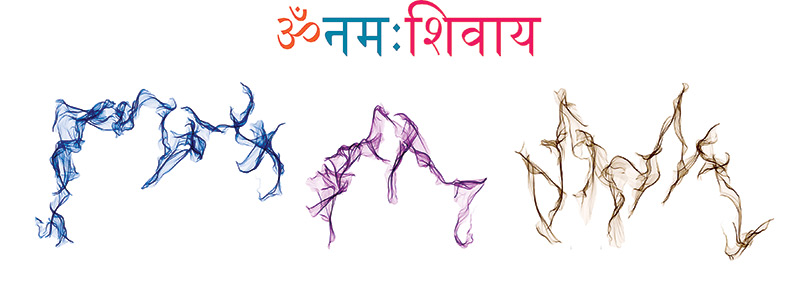
The sound art of Hindu mantra ‘Om Namah Shivaya’ created through EclipseApp. (Below) Different patterns on a dress and a rug designed through asoftware Symbiosis. Both the software is created by Kushal Pokharel. Photos Courtesy: eclipse LAbs

Kathmandu,
When we think about art, we usually envision the paint and canvas. But Kushal Pokharel uses technology to make art. With the help of software he created, which he has named Symbiosis, he generates patterns from a number of references he curates. He then customises and creates hundreds of different patterns or artforms.
“The designs are created by the software. It’s basic programming. But I use different apps and software to create the design,” says Pokharel. “I like to call it example based installation art.”
In order to train the software to create a design, he has curated over 100,000 designs and patterns, which has given him a general idea of whether the design is good or bad.
Take the example of two colours—red and yellow. The software creates a structure where the colours are mixed with one another to create abstract art. Some make sense, some don’t. Pokharel says he has made around 1,500 designs manually in the past year and is working on his software to do the same.
“I want to have at least 100,000 designs so that when a design opportunity comes, I can sell it and the buyer will have plenty of options to choose from,” he says.
But like his software, the idea for pursuing this has also evolved from his previous attempts. In 2015, he was a part of a team that pitched the idea of creating art by using sound through a mobile application. His team had named it Eclipse App, but it didn’t get to the next round at Ncell App Camp Season 2. The rejection hit the team hard. Many of his team members decided to stop pursuing it further.
But that didn’t deter the 25-year-old from continuing. Five years on, Pokharel has completed his Electronics and Communication Engineering from Tribhuvan University, and has gone ahead with the project on his own. He has established Eclipse Labs, a company which visualises sound and creates art.
“The prototype has come a long way. I still feel it isn’t the finished product, but the headway I’ve been able to make in the past few years has been incredible,” says Pokharel.
After graduating in early 2018, Pokharel formed his company with one vision—to transform sounds into artistic images. The concept was simple—create art using sound through a systematic application of computer-based algorithms. He says the initial plan was to convert sound wavelengths into visual images by applying specific methods.


The first thing he did was record names of people, process it into art, frame it and give it to the interested customers. But that didn’t work out well, he says. While Pokharel did sell a few designs for as much as $20, many wanted the application for free.
“Many Nepalis are used to free mobile applications,” he says. “So, I get why they wanted it for free. But it wasn’t practical for us.”
After failing to sustain through just one design idea, Pokharel then started thinking about what he could do differently.
“The idea of exploring visual art where I use linear patterns to create art and designs is what created Symbiosis,” he says. While these things are also being tested abroad, the software he is designing is very new to Nepal.
Pokharel says there are two ways to create art via software. One is by hardcore programming using math, and the other is by creating patterns via data. He chose the latter.
“I use technology, but I try to figure out the process because if I don’t, my software and my AI will not be able to figure out how to recreate it,” he says.
He is also planning to do an exhibition to showcase his art and call it ‘1502’, which he says is inspired by Leonardo Da Vinci’s Ichnographic Plan for the City of Imola in 1502. He says Da Vinci’s ichnographic drawing technique provides a unique perspective on the landscape and beauty in the natural design. The painting exhibition series will delve into reviving this perspective to inspire future creative endeavours from fashion design, rug design to architectural or interior design.
“There is a pattern of copying and modifying the source in a repeated pattern. In other words, given we have a source system that has enough variety—creative outputs can be generated through it,” he says. “1502 follows similar philosophy—if professionals copy and take reference from a source, 1502 takes one of those sources to present the creative potential in copying. On the broader view, this process of taking a simple reference from a source and modifying them to generate creative outputs implies the future of automated creativity.”
He says he is still working on designs and plans to showcase the artwork around April.
According to Pokharel, 1502 also showcases the true impact of form and new media to enable understanding of design from the automated creation process.
When you ask Pokharel why he is focusing on this form of art he says that it is because it will last for a long time.
“When we see human history, we know that people used to draw on walls and stones. But that didn’t last. Papers last but we need to preserve it,” says Pokharel. “But this can be stored anywhere. It’s easy. It’s still art but the medium is changing.”

TECHNOPOLIS

How watching TV will change in the 2020s

Some companies at CES gadget show also promise a big new push into ‘bite-sized’ video designed to draw mobile viewers from YouTube.
- MAE ANDERSON
unsplash

What will watching TV be like in the 2020s? Amid new gadgets and glitz, the CES tech show in Las Vegas aims to offer some answers, many of which boil down to more streaming and more efforts to glue you to your phone.
The show’s keynote addresses, once dominated by computer and chip makers, will this year feature executives from TV networks NBC and CBS and upstart video services like mobile-focused Quibi and free streamer Tubi. Topic one will be the streaming wars—not to mention mounting costs for consumers who want access to everything—as giants NBC Universal and WarnerMedia prepare to join the clash with Netflix later this year.
Some companies also promise a big new push into “bite-sized” video designed to draw mobile viewers from YouTube, despite the fact that a similar effort several years ago foundered.
CES, formerly known as the Consumer Electronics Show, starts Sunday in Las Vegas with two days of media previews. The show floor opens Tuesday through Friday. More than 170,000 people are expected, with 4,500 companies exhibiting, according to its organizers. The show takes place across a sprawling set of hotels and convention centers equivalent to more than 50 football fields.
Beyond streaming, expect to see artificial intelligence-infused home appliances, security cameras and cars, new gadgets that show what faster 5G cellular service can offer and, as always, the newest in robots and souped-up TVs. Speakers this week include Ivanka Trump, the president’s daughter and senior adviser, and Hyunsuk Kim, Samsung’s head of consumer electronics.
As technology increasingly infuses our lives, more traditional companies are showing up for the Las Vegas
event. There’s a new travel section, for example, with Delta Air Lines its largest exhibitor.
CES has hosted previous attempts to set out a road map for TV. At the 2015 show, satellite TV company Dish announced a cheaper, cable-like package of TV channels delivered over the internet and intended for cord-cutters. Offerings from Sony, DirecTV, Google, Hulu and others soon joined Dish’s Sling TV.
But five years later, these online alternatives have been struggling, raising prices and in the case of Sony’s PlayStation Vue, shutting down altogether.
So it’s on to Plan B: Owners of television channels and producers of their shows are selling Netflix-like subscription services directly to consumers. Disney Plus launched in November, while WarnerMedia’s HBO Max and NBCUniversal’s Peacock are coming in a few months. If people would rather pay for subscriptions such as Netflix instead of traditional television channels through cable packages, Disney and other media companies figure they might as well try to get some of that money directly.
But they face competition from tech companies also seeking to replicate and encroach on Netflix’s success. Apple launched its own streaming service in November, while Quibi promises phone-friendly viewing, with former Disney studios chief Jeffrey Katzenberg behind the effort.
“Bets have been made and billions of dollars have been spent on content,” said Peter Csathy , founder and chairman of digital media consulting firm CreaTV Media. “Those numbers will only go up as all these Goliaths and then the new guys coming on board are all looking for ways to break out.”
Katzenberg and Quibi CEO Meg Whitman, the former CEO of Hewlett Packard Enterprise, will use a Wednesday keynote to provide details on Quibi, which is investing $1 billion on new shows with backing from all the major movie studios.
Short for “quick bites,” the mobile-first service is designed to be watched for a just a few minutes at a time. Video programs are broken into 10 minute “chapters”—about the same length as broadcast TV segments between commercial breaks—intended for on-the-go viewers with limited attention spans.
“We want to take a phone, a device that was not actually designed to watch video on, and make it into a great watching device,” Whitman said in an interview.
But previous short-video efforts have flopped. In 2018, Verizon pulled the plug on its Go90 service in 2018, roughly three years after it launched; it featured short-form original programs along with live sports and older TV shows. Several concurrent efforts have also shut down. Meanwhile, Netflix, Amazon and Hulu have all been experimenting with short-form offerings, many of them in comedy.
Quibi will also preview some of its 20 new shows, including “Chrissy’s Court,” a Judge Judy-style show from Chrissy Teigen. It is also debuting with movies and other content like news and weather. Quibi launches April 6 for $5 a month with ads and $8 without.
NBC executives won’t offer more details on its upcoming Peacock service until Jan. 16. Instead, they will trot out “America’s Got Talent” host Terry Crews, “This is Us” star Mandy Moore and other NBC luminaries at CES to talk more generally about the future of TV and entertainment.
“Audiences don’t differentiate by screen anymore,” said Linda Yaccarino, chairman of advertising and partnerships at NBCUniversal. “They want and expect an on-demand, always-on world.”
As television companies experiment with making more shows available in more ways, they’ll also accumulate data on viewing habits far beyond what they got with over-the-air and cable channels. That will help them target advertising to viewers’ interests and make recommendations for other shows to keep viewers glued.
Companies will also test different pricing models in 2020, as they try to figure out how and how much consumers will be willing to pay. Is there a limit to how many services consumers will pay for? Will they adapt to separate prices with and without ads? Or will they flock to free services like Tubi, even if they lack original movies and TV shows?
Kevin Westcott, who heads Deloitte’s US telecommunication, media and entertainment consulting business, notes that consumers are getting more choices and shows than ever, just as new technologies such as high-quality TV displays and faster 5G cellular networks come along. The downside? “Too much choice and too much technological change” at once, he said, which could make viewers wary of new options, he said.


—Associated Press

Page 9
CULTURE & ARTS

Interpretations infused in confident strokes

Sagar Manandhar’s ‘Asta Roopa’ is a visual treat—if one is willing to observe and engage.
- ANKIT KHADGI
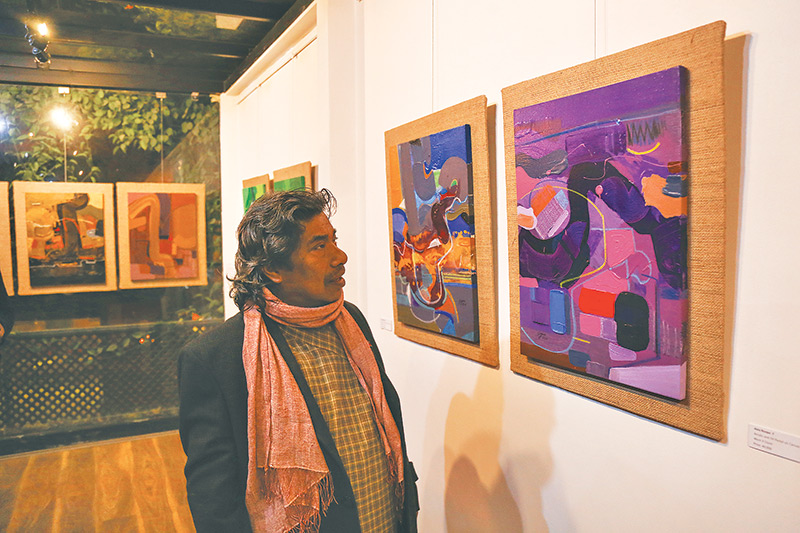
Veteran Nepali artist Kiran Manandhar scours through ‘Asta Roopa’ exhibition by Sagar Manandhar at Dalai La Art Space in Thamel, Kathmandu. Post Photos: kabin adhikari

Kathmandu,
The visual language of shape, colours and patterns in abstract art is what stimulates the eyes and the mind. Although there is an absence of objective representation, it is regarded as one of the purest forms of expression. This holds true for Sagar Manandhar’s art exhibition titled ‘Asta Roopa’.
At Dalai La Art Space, Thamel, the artist showcases a series of abstract paintings influenced by Asta Matrika. Through the 13 paintings, Manandhar exhibits the eight matrikas, a group of eight goddesses. Also known as the eight ajimas in Nepal Bhasa, they are regarded as the protectors of the city and have a huge significance in Newar culture.
The composition for each painting is unique in terms of the usage of colours and shapes.
The artist also uses religious and cultural motifs like vahana (vehicles) of the goddesses to represent eight different deities. It is almost like the artist has left breadcrumbs for the audience to interpret his artworks as closely as his vision.
For instance, the painting which depicts Brahmani (Paskiwah Ajima) has a slightly identified figure of hamsa (swan) at the bottom of the painting. Swan is the vahana of Brahmani. Similarly, a fiery bull, a graceful peacock, a magnificent elephant, a fierce lion, a wandering spirit like figure and the legendary garuda, which are the vahanas of Goddess Maheshvari (Mhayepi Ajima), Kaumari (Lunmari Ajima), Indrani (Luti Ajima), Varahi (Fibwa Ajima), Chamunda (Kanga Ajima) and Vaishnavi (Nai Ajima) respectively can also be identified if one keenly views the paintings.


Another thing that was strikingly similar in all of the paintings is the movement of colours, which looks free-flowing yet concocting into a certain shape. Even the vahanas were covered with cylindrical shapes. Only a keen observer will be able to decode their presence.
These almost seem like a Nepali version of Where’s Wally?, a British series of children’s puzzle books where one is supposed to spot Wally, among many characters in a cluttered illustration. Except, in Manandhar’s artworks, the audience needs to look for motifs to identify which goddess has been represented in a particular painting.
The paintings of Astamatrika, however, isn’t just about spotting the deities’ representation. The cylindrical shapes that flowed through each painting spread on the canvas like a fog. It even covered the vahanas. This may symbolise the obstruction of the goddesses’ movements. The goddesses seem to have been restrained from using their vehicles—their means of travel.
This could be a subtle way of representing the current situation of women in our society. Although people have been worshipping goddesses from time immemorial, the space for women has been very limited throughout history. Even in the present day, toxic masculinity and patriarchy have created such an environment for women that they are bound by societal expectations. They are restrained from doing what they want to do and are forced to take a certain direction rather than following one’s own.
Manandhar uses acrylic paint and oil pastel in all 13 paintings. Although they are significantly different from one another, the theme is what binds them together. The paintings look neat as well as ambiguous in its own way, reflecting the artist’s rhythmic talent in brush strokes. The interpretation of these paintings, therefore, can be as free-flowing as the artist’s strokes.  
But it is difficult to comprehend Manandhar’s choice in the number of paintings. If the exhibition represents eight ajimas, then what purpose do 13 paintings serve? As the artist does not want to give any input to the audience’s interpretations, it is unclear whether he has repeated certain ajima’s representations, or are the rest of the five paintings about the five Newar patron deities (Ganesh, Kumar Bhairav, Simhini and Vyagrihi), who dance along the eight matrikas at Patan every Dashain? This is yet another puzzle for the onlookers.
In abstract art, artists usually rely heavily on shapes, textures, lines, forms and even colours. This can be often overwhelming to the audience. It is like an outsider looking in, trying to understand an inherently personal journey. But in Manandhar’s paintings, the audience can interpret according to their own experience—the artworks open up to everyone who is keen to observe and engage.


The exhibition will be on display until January 31 at Dalai La Boutique, Thamel.

CULTURE & ARTS

From ‘Allahu Akbar’ to Australia fires—best Golden Globe moments

‘Once Upon a Time … in Hollywood’ and ‘1917’ win top awards at the ceremony.
- AGENCE FRANCE-PRESSE
photos: afp/RSS

Hollywood’s Golden Globes ceremony lived up to its reputation on Sunday, with plenty of memorable moments served up to its A-list audience as they guzzled champagne at the Beverly Hilton.

Here are some of the key moments:

Gervais strikes out
British comic Ricky Gervais used his fifth and final stint as host to fire off one-liners on a slew of topics haunting the entertainment sector including #MeToo, lack of diversity and the streaming wars.
“Look, talking of all you perverts, it was a big year—Surviving R. Kelly, Leaving Neverland, Two Popes,” Gervais joked, referring to two documentaries about sexual abuse and one of this year’s best drama contenders.
Nominee Leonardo DiCaprio—and his string of young model girlfriends—was another target for Gervais.
“Once upon a Time... In Hollywood—nearly three hours long. Leonardo DiCaprio attended the preview and by the end, his date was too old for him,” said the host.
And he poked fun at tech giant Apple, noting: “Apple roared into the TV game with ‘The Morning Show,’ a superb drama about the importance of dignity and doing the right thing made by a company that runs sweatshops in China.”
But his performance drew criticism, with Deadline calling him “weakly cheeky” and Variety labelling it a “a tame, mildly political outing.”


‘We need to act’
Russell Crowe used his win at the Golden Globes to send a powerful message about the devastating fires in Australia and climate change—despite not being in the room.
Crowe stayed in his home country “protecting his family from the devastating bushfires,” presenter Jennifer Aniston explained, before reading his message.
“Make no mistake, the tragedy unfolding in Australia is climate change-based,” wrote the actor, who won for Showtime’s “The Loudest Voice” about Fox News founder Roger Ailes.
“We need to act based on science, move our global workforce to renewable energy and respect our planet... That way, we all have a future.”
Pierce Brosnan, Laura Dern and Patricia Arquette also addressed climate change, at a gala when organizers chose to serve only vegan food.

‘Allahu Akbar’
Egyptian-American actor Ramy Youssef doubtlessly raised a few eyebrows as he took to the stage after winning the first Golden Globe of the night for best actor in a comedy series for Ramy.
“I would like to thank my God. Allahu akbar. Thank you, God,” the Muslim actor said.
The phrase, which means “God is greatest,” is an everyday expression in the Muslim world, but for some in the West, it has been twisted and is associated with extremist attacks.


‘Go out and vote’
Michelle Williams urged women to go out and vote in this year’s US presidential election as she accepted a Golden Globe for best actress in a limited series or television movie.
“As women and as girls, things can happen to our bodies that are not our choice,” the Fosse/Verdon star told the audience.
“So women, 18 to 118, when it is time to vote, please do so in your own self-interest... It is what men have been doing for years, which is why the world looks so much like them,” she added.
“Don’t forget we are the largest voting body in this country. Let’s make it look more like us.”


‘On the brink of war’
Arquette also used her moment in the spotlight to decry heightened tensions between the United States and Iran, after the US strike that killed a top Iranian military commander.
When future generations “look back on this night in the history books, we will see a country on the brink of war,” Arquette said, accepting her award for “The Act.” “The United States of America, a president tweeting out a threat of 52 bombs including cultural sites... People not knowing if bombs are going to drop on their kids’ heads—and the continent of Australia on fire.”
She also ended her speech appealing to viewers to vote in the upcoming November election.


‘52-year-old marriage’ Bernie Taupin described his
songwriting career with legendary singer Elton John as a “52-year-old marriage,” as the duo won a Golden Globe for best original song for “(I’m Gonna) Love Me Again” from the biopic Rocketman.
“This is a song we wrote for a movie which deals with our relationship and it’s a relationship that doesn’t happen very much in this town—it’s a 52-year-old marriage,” Taupin said to applause.
John added that winning with Taupin was “one of the most emotional moments of my life.”

Page 10
WORLD

France may strip pension from underage rape probe writer

- AGENCE FRANCE-PRESSE

PARIS,
France’s culture minister will decide this week whether to strip a writer accused of raping and seducing children of a state pension.
Award-winning essayist Gabriel Matzneff is being investigated by French police after the publication of a book detailing his sexual relationship with a girl of 14 over three decades ago.
Matzneff, 83, who won the prestigious Renaudot prize in 2013, has never made any secret of his sexual preference for adolescent girls and boys.
In the mid-1970s, he published a notorious essay called “Les Moins de Seize Ans” (“Those Less than 16”) in which he recounted his “conquests”.
The French culture minister Franck Riester is considering depriving Matzneff of cash from a hardship fund from its National Books Centre (CNL) for elderly writers in financial straits, his officials told AFP.
Matzneff received around 8,000 euros ($8,900) from the fund last year, the centre told AFP, and up to 160,000 euros since 2002, according to a French Sunday newspaper, Journal du Dimanche.
The case has again shone a light on what many see as an overly permissive attitude towards sexual harassment and assaults in France.
The French film establishment has been rocked by rape accusations against directors Roman Polanski
and Luc Besson, while star Adele Haenel said she was sexually harassed by the director of her first film when she was 12.
All three men deny the claims.
The head of the CNL, Vincent Monade, said it had resisted Matzneff being awarded the allowance when he first applied for it, but bowed to the request under pressure from politicians and other famous authors who lobbied for him.
He said they had recommended to the minister that the grant now be withdrawn.
Police opened a formal investigation into Matzneff last week after leading publisher Vanessa Springora described her tortured relationship with writer in a book called “Consent”.
In it she described how Matzneff, then in his fifties, would wait for her outside her school and then take her back to his home for sex.
Prosecutors said their inquiry would focus on “rapes committed against a minor” aged under 15.
Matzneff has denied any wrongdoing and said that there had been an “exceptional love” between him and Springora.
He claimed her book tried to portray him as “a pervert, a manipulator and a predator”.
Ahead of the book’s publication, Riester turned on Matzneff, saying “having a literary aura is not a guarantee of impunity”.

WORLD

Trump warns Iran of retaliation, threatens sanctions on Iraq

The twin threats came as Tehran announced it was further reducing compliance with a tattered international nuclear accord.
- AGENCE FRANCE-PRESSE

WASHINGTON,
US President Donald Trump threatened “major retaliation” Sunday if Iran avenges the killing of a key military commander and he warned of massive economic sanctions against ally Iraq if the country expels US troops based there.
The twin threats came as Iran announced it was further reducing compliance with a tattered international nuclear accord, ending limitations on numbers of centrifuges used to enrich uranium.
The latest blow to the accord, which was meant to ensure Iran did not develop a nuclear weapon under cover of its nuclear industry, deepened the regional crisis set off by Friday’s killing of Iranian general Qasem Soleimani in Baghdad.
Trump ordered a US drone to fire a missile at Soleimani, one of the most influential people in Iran’s government, when he was near the Iraqi capital’s international airport.
Angry, black-clad mourners thronged the streets of Iran’s second city Mashhad on Sunday to pay last respects to the remains of Soleimani and chant “death to America.”
Trump bluntly warned Iran against taking vengeance, repeating his insistence that US bombing targets could include Iran’s cultural heritage sites. Critics say that would qualify as a war crime under international law.
“If they do anything there will be major retaliation,” Trump told reporters on Air Force One, as he flew back to Washington—and a looming Senate impeachment trial—from vacation in Florida.
Trump had already threatened bombing of 52 unspecified targets in Iran if Tehran attacks US troops and interests in the region.
In his latest comments, he was adamant that targets could include places of cultural significance in a country boasting an ancient heritage and two dozen UNESCO-listed sites.
“They’re allowed to kill our people,” a defiant Trump said. “They’re allowed to torture and maim our people. They’re allowed to use roadside bombs and blow up our people. And we’re not allowed to touch their cultural site? It doesn’t work that way.”
The situation in neighboring Iraq, a US ally, also deteriorated, with the future of some 5,200 American soldiers there in doubt.
Many Iraqis have expressed outrage over the killing of Soleimani, who masterminded deep Iranian influence in the country. A top Iraqi military figure Abu Mahdi al-Muhandis was killed in the same US strike.
In Baghdad, unidentified attackers launched a pair of rockets Sunday, hitting near the US embassy in the high-security Green Zone for the second night in a row. That was just hours after Iraq’s foreign ministry summoned the American ambassador over the drone strike.
And Iraq’s parliament voted to request the government end an agreement with a US-led international coalition to fight the hardline Islamist group IS in the region.
If the government agreed, that would effectively require the departure of US soldiers supporting the local troops in the anti-IS fight.
Caretaker prime minister Adel Abdel Mahdi, who called the US drone strike a “political assassination,”
indicated he would back the troops’ ouster. He said the choices were immediate expulsion or withdrawal under a timeframe.
Trump told reporters that a forced departure of US troops would prompt sanctions even worse than those already imposed, to devastating effect, on Iran’s economy.
“If they do ask us to leave—if we don’t do it in a very friendly basis—we will charge them sanctions like they’ve never seen before,” Trump said.
“It’ll make Iranian sanctions look somewhat tame.”
Trump said the main US base in Iraq was “very extraordinarily expensive.”
“We’re not leaving unless they pay us back for it,” he said.
Earlier, US Secretary of State Mike Pompeo sounded a softer note, saying “the Iraqi people want the United States to continue to be there to fight the counterterror campaign.”
Soleimani was one of Iran’s most popular public figures, seen as a hero of the 1980-88 Iran-Iraq war.
He was also the key figure behind Iran’s effective network of proxy militias and alliances across a region where Iran is in often deadly rivalry with US allies Israel and Saudi Arabia.
Iran’s supreme leader Ayatollah Ali Khamenei has vowed “severe revenge.”
What that will look like is the subject of heated speculation in the Pentagon and the White House. Analysts say Iran may be limited in its room for maneuver if it wants to avoid full war with the far more powerful United States.
But a former head of Iran’s Revolutionary Guards threatened on Sunday to turn the Israeli cities of Haifa and Tel Aviv “to dust” if the US attacks targets in Iran.
And Khamenei’s military adviser, Brigadier General Hossein Dehghan, told CNN that Iran’s response to the assassination “for sure will be military and against military sites.”
The crisis comes as Trump is embroiled in his own domestic political turmoil. He was impeached by the House of Representatives for abuse of office and obstruction of Congress.

WORLD

NATO to review Iraq mission after Iran general slain

- AGENCE FRANCE-PRESSE
Iranian mourners carry a picture of Iran’s Supreme Leader Ayatollah Ali Khamenei (right) granting the Order of Zolfaghar, the highest military honour of Iran, to General Qasem Soleimani, during the latter’s funeral procession in the capital Tehran on Monday.  AFP/RSS

BRUSSELS,
NATO’s ruling committee will meet Monday to discuss the future of the alliance’s training mission in Iraq as Middle East tensions mount after US forces killed a top Iranian general.
Ambassadors from the 29 allies will gather at their Brussels headquarters at 3.00 pm (1400 GMT) with Secretary General Jens Stoltenberg expected to brief journalists afterwards.
US officials are due to give an update on the situation after Washington killed Qasem Soleimani, head of Iran’s Middle East operations as commander of the Revolutionary Guards’ Quds Force, in a US drone strike at Baghdad airport.
“The North Atlantic Council will address the situation in the region,” a NATO official said.
“The secretary general decided to convene the meeting of NATO ambassadors following consultations with allies.”
Stoltenberg had spoken by telephone with US Secretary of Defence Mark Esper since Friday’s strike, but the killing of Soleimani surprised many of Washington’s allies and triggered calls for de-escalation.
The situation has also deteriorated in Iraq, where lawmakers have called for the 5,200 US soldiers deployed there to leave.
NATO maintains a 500-strong training mission in Iraq, preparing local forces to take on Islamic State group extremists, but this would be in doubt if coalition forces pull out.
“The big issue is the future of the NATO mission in Iraq after the demand of the Iraqi parliament yesterday to remove US-led coalition and foreign forces. We have to see what we will do now,” a NATO diplomat told AFP.
On Saturday, a NATO spokesman said the mission, which involves several hundred allied personnel, was continuing “but training activities are currently suspended”.
Another diplomat said the alliance would have to “wait and see” how Baghdad responds in the coming days.
“From our point of view the parliament resolution is not binding. We take note of it, but have to wait what the government is going to do,” the diplomat said.
“We still think that the presence of international troops in Iraq should be continued in order to prevent a resurgence of Islamic State. But we have to respect what the Iraqi government will eventually decide.”
Tehran has vowed to avenge the commander, and US President Donald Trump has threatened “major retaliation” if any American targets are hit.

WORLD

Fire-hit Australia gets $1.4b recovery fund as troops deployed

- AGENCE FRANCE-PRESSE
Smoke from a burnt tree rises next to a gutted house in Quaama in Australia’s New South Wales state on Monday. AFP/RSS

SYDNEY,
Reserve troops fanned out across fire-ravaged regions in three Australian states on Monday after a horror weekend, as the government pledged $1.4 billion over two years to help recover from the devastating months-long crisis.
Catastrophic bushfires have turned swathes of land into smouldering, blackened hellscapes and destroyed an area about the size of the island of Ireland, according to official figures, with authorities warning the disaster still has weeks or months to run.
Prime Minister Scott Morrison, whose government has been criticised for its slow response to the emergency, pledged Aus$2 billion ($1.4 billion) of taxpayer money for a national recovery fund.
“It’s a long road ahead and we will be with these communities every step of the way as they rebuild,” Morrison said.
Firefighters joined by fresh teams from the US and Canada were taking advantage of rainy and cooler conditions to tackle out-of-control blazes ahead of rising temperatures forecast later this week.
In the biggest-ever call up of reserves, military teams were deployed across eastern Australia to help emergency services assess the damage, restore power and deliver supplies of food, water and fuel to cut-off communities.
For the first time in Australian history the government also deployed its medical assistance team—normally sent to other nations to lend support in the aftermath of their disasters—to help evacuees.
“There is no room for complacency, especially as we have over 130 fires burning across (New South Wales) state still,” Premier of New South Wales state Gladys Berejiklian said on Monday.
Almost five million hectares (50,000 square kilometres) have been razed across New South Wales and more than 1.2 million hectares in Victoria since late September, officials said.
That took the total amount of land burnt close to eight million hectares—around the size of the island of Ireland or South Carolina.
Twenty-four people have lost their lives so far, with over 1,800 homes damaged.
Two people are missing in New South Wales, the nation’s most populous state. In Victoria, Premier Daniel Andrews established a bushfire recovery agency to help devastated towns. It will be a permanent body, he said,
as intense fires will become commonplace.
“We should just be honest about the fact that we’re going to see more and more fires, more and more damage as each fire season comes... this is the new normal,” Andrews told reporters.
The chair of the newly established Victoria state’s bushfire appeal fund, Pat McNamara, added that this year’s summer bushfire season was a “creeping disaster”.
“We’re still not even into what we would regard as the peak of the fire season,” McNamara told national broadcaster ABC.
In the usually picturesque southeastern town of Eden, Holly Spence said she spent more than 12 hours defending her family’s farm on Saturday, less than a week after saving it on New Year’s Eve.
“We don’t want to go through this for a third time,” the 28-year-old told AFP.
Fiona Kennelly, 50, who evacuated with 24 members of her extended family to a motel outside Eden, said she was relieved the easing conditions allowed them to get some respite from the crisis.
“It’s good to see daylight at the right time again,” she told AFP, adding that the skies had been turning pitch-black in the afternoons.
The impact of the bushfires has spread beyond affected communities, with heavy smoke engulfing the country’s second-largest city Melbourne and the national capital Canberra.
Some government departments were shut in Canberra as the city’s air quality was once-again ranked the world’s poorest, according to independent online air-quality index monitor Air Visual.
The disaster has sparked growing public anger with Morrison. Rallies are planned on Friday to call on his government to step up efforts to tackle climate change, which experts say have helped fuel the fires.
In Los Angeles, Hollywood superstar Russell Crowe said he was back home fighting the fires and that the disaster was “climate change-based”.
“We need to act on science, move our global workforce to renewable energy and respect our planet for the unique and amazing place it is. That way, we all have a future,” he said in a message read out by Jennifer Aniston.
Australian actress Cate Blanchett praised the volunteer firefighters battling the blazes, adding: “When one country faces a climate disaster, we all face a climate disaster. We’re in it together.”

WORLD

Rivals claim post of Venezuela speaker

- AGENCE FRANCE-PRESSE

CARACAS,
Opposition leader Juan Guaido and a rival lawmaker, Luis Parra, both claimed to be Venezuela’s parliament speaker on Sunday following two separate votes and accusations of a “parliamentary coup.”
Guaido was re-elected speaker by opposition lawmakers in a session held at a newspaper office after police blocked him from entering the National Assembly legislature.
In his absence, corruption-tainted Parra proclaimed himself speaker after claiming to have been elected with 81 votes in the 167-member chamber.
Guaido, who a year ago declared himself acting president in a challenge to socialist leader Nicolas Maduro, received the votes of around 100 lawmakers, including several forced last year into exile or to take shelter in foreign diplomatic missions due to a regime crackdown.
Guaido vowed to “enforce” the constitution in his dual role as parliament speaker and “acting president.”

WORLD

Egypt to meet four European countries on Libya crisis

Briefing

CAIRO: Egypt announced Monday that it will hold a meeting with four European Mediterranean countries about developments in neighbouring Libya after Turkey began deploying troops in the war-torn North African nation. The talks—to be held in Cairo on Wednesday—will bring together foreign ministers from France, Italy, Greece and Cyprus, Egypt’s foreign ministry said. The ministers will tackle the “rapid developments” in Libya and “ways to push efforts to reach a comprehensive settlement” between rival administrations there. Libya has seen an escalation of the turmoil that has gripped the oil-rich country since a NATO-backed uprising that toppled and killed dictator Moamer Kadhafi in 2011. (AGENCIES)

WORLD

US military says three killed in Kenya jihadist attack

Briefing

WASHINGTON: A jihadist attack on a military base in Kenya killed three people Sunday, including a US service member and two civilian defense contractors, the American military said. “Our thoughts and prayers are with the families and friends of our teammates who lost their lives today,” General Stephen Townsend, the head of US Africa Command (Africom), said after jihadists from Somalia’s Al-Shabaab group stormed a base in the Lamu region. Two other Department of Defense personnel were wounded in the attack on Camp Simba, Africom added in a statement which gave no details on the identity of those killed. (AGENCIES)

WORLD

Three held for trying to enter British army camp: Kenyan police

Briefing

NAIROBI: Kenyan police have arrested three men who tried to force their way into a British military camp in central Kenya, according to an internal police report seen by AFP on Monday. The men were arrested at 5pm on Sunday, just hours after Al-Shabaab Islamists stormed onto a US-Kenyan military base in the coastal Lamu region, near the border with Somalia, killing three Americans. The report said officers “managed to arrest three terrorist suspects who had earlier in the day tried to force their way into British Army Camp but in vain.” (AGENCIES)

Page 11
ASIA

Delhi police, facing criticism, probe attack on students at elite university

More than 30 injured were admitted to the All-India Institute of Medical Science in the capital, a hospital official said.
- REUTERS
A woman stands behind the damaged belongings of students of Jawaharlal Nehru University (JNU) at a hostel room after Sunday’s mob attack, in New Delhi, India, on Monday. REUTERS

NEW DELHI,
Delhi police are investigating how masked men burst into a premier university and attacked a student protest with sticks and rods, an officer said on Monday, the latest incident to ignite criticism of India’s ruling Hindu nationalists.
Sunday’s attack at a university long seen as a bastion of left-wing politics comes as students nationwide lead a campaign against a citizenship law introduced last month by Prime Minister Narendra Modi that is seen as targeting Muslims.
“Social media and CCTV footage will be part of the investigation,” said police official Devendra Arya, adding that the violence at the university had prompted police to start a case.
Students and some faculty of the Jawaharlal Nehru University have blamed the incident that injured at least 30 people on a students’ union tied to Modi’s Bharatiya Janata Party, which has increasingly targeted the institution.
Students put out pictures of mobs entering university residential halls, their faces covered with cloth, carrying sticks and even sledgehammers. Some shouted slogans, threatening death for traitors.
More than 30 injured were admitted to the All-India Institute of Medical Science in the capital, a hospital official said, most of them with lacerations, cuts and bruises.
The protests have persisted despite government efforts to quell them, with more protests planned across India on Monday, prompted by the university attack. The Akhil Bharatiya Vidyarthi Parishad, the students’ wing of the BJP, denied accusations that it was behind the attack, which it blamed instead on rival leftist unions.
Authorities faced criticism for failing to rein in the violence on a campus viewed a centre of resistance to Modi’s policies, including the abolition last year of special status for Muslim-majority Kashmir.
Rahul Mehra, a lawyer for the Delhi police, said he was astounded there were no police officials to stop Sunday’s attack.
“I.hang my head in shame after witnessing video clips of goons merrily entering JNU campus, creating mayhem and grievously injuring innocent students, damaging public property and then exiting the campus,” he said on Twitter.
Critics accuse Modi of pushing a Hindu-first agenda that undermines India’s foundations as a secular democracy. The citizenship law lays out a path for Indian nationality for minorities from six religious groups in neighbouring countries but excludes Muslims.
The government says the law is meant to tackle the grievances of minorities, such as Christians, Hindus and Sikhs, who face persecution in Afghanistan, Bangladesh and Pakistan.

ASIA

‘Return to right path’, Beijing’s new envoy tells Hong Kong

- AGENCE FRANCE-PRESSE
Newly appointed head of Hong Kong Liaison Office Luo Huining speaks to media to mark his first day at office in Hong Kong, China, on Monday. REUTERS

HONG KONG,
Beijing’s new top envoy to Hong Kong said he hoped the protest ravaged city would “return to the right path” as he took up his post on Monday.
Luo Huining replaced Wang Zhimin as head of Beijing’s Liaison Office in Hong Kong—the most significant personnel change by China since violent pro-democracy protests erupted in the city nearly seven months ago.
The 65-year-old Luo delivered a short statement to reporters in Mandarin—not the city’s lingua franca Cantonese.
He gave little clue as to whether Beijing’s approach towards the city would change as it convulses with popular anger against mainland rule.
“In the past six months, Hong Kong’s situation has made everybody’s heart wrench. Everyone earnestly hopes that Hong Kong can return to the right path,” Luo said, declining to take questions from reporters.
Millions have come out on the streets since June last year in a wave of protests sparked by opposition to a now-abandoned proposal to allow extraditions to mainland China.
But they soon morphed into wider demands for greater democratic freedoms and police accountability in the starkest challenge to Beijing since the former British colony was returned to Chinese rule in 1997.
While the huge protest marches have been largely peaceful, smaller groups of hardline protesters have repeatedly battled riot police with more than 6,500 arrested.
Luo struck a conciliatory tone in saying Hong Kong had made an “important contribution to (China’s) opening up and modernisation”.
And in a brief reference to the political violence he quoted President Xi Jinping’s New Year speech saying “without a harmonious and stable environment, how can there be a home where people can live and work happily”.
The Liaison Office, whose director is the highest-ranking Chinese political official in Hong Kong, was targeted in July by protesters throwing eggs and graffitiing the building.
Luo previously served as governor of Qinghai province, and was also appointed to senior Communist Party positions in Qinghai and Shanxi provinces, according to state-run China Daily.
State broadcaster CCTV announced on Saturday that former director Wang Zhimin had been dismissed from his post.

ASIA

Hard-fought Delhi election set for February 8

- AGENCE FRANCE-PRESSE

NEW DELHI,
New Delhi will hold elections next month, officials said Monday, in a key popularity test for Prime Minister Narendra Modi’s party as it reels from nationwide protests over a new citizenship law.
Modi’s Bharatiya Janata Party swept to a second term last year in national elections but the Indian capital has been governed since 2013 by the left-wing grassroots Common Man Party (AAP).
Under pressure from a weak economy, the BJP has also fared badly in a string of recent regional elections, most recently in Maharashtra, home to Mumbai, and in Jharkhand in the east.
New legislation loosening citizenship rules for persecuted minorities, but not if they are Muslim, has sparked almost a month of protests and violence that has killed more than 25 people.
Islamic groups and critics at home and abroad charge that this forms part of Modi’s aim to remould India as a Hindu nation and render its 200 million Muslims second-class citizens, something he denies.
More than 14 million voters in the sprawling, polluted city state of New Delhi will be eligible to cast ballots in the February 8 polls, with results expected three days later, the election cmmission said.
The AAP, led by Arvind Kejriwal, a former tax inspector who has modelled himself as a crusader for the underprivileged, won 67 out of 70 seats on offer in Delhi’s last election in 2015.
In the run-up to the election Kejriwal, 51, has backed the protests and doled out free bus rides for women and cheaper utilities, while promising safe drinking water and a “shining Delhi”.
The once-dominant Congress party led by the Gandhi dynasty and which ruled Delhi for 15 years until 2013 has been pushed on the sidelines and is likely to struggle to make a comeback.

ASIA

Ghosn ‘fled by bullet train’, Japan vows to bolster borders

- AGENCE FRANCE-PRESSE
Citing people involved in the investigation, Nippon Television Network said on Monday that Ghosn boarded a ‘shinkansen’ bullet train from Tokyo’s Shinagawa station. AFP/rss

TOKYO,
New reports emerged Monday on how fugitive former Nissan boss Carlos Ghosn jumped bail in Japan, as the country’s justice minister said border controls would be bolstered after the escape.
The 65-year-old executive skipped bail nearly a week ago, fleeing Japan where he was awaiting trial on multiple counts of financial misconduct that he denies.
The details of his escape remain spotty, with Japan saying it is still investigating how he slipped past strict security measures imposed as part of his bail conditions.
Citing people involved in the investigation, Nippon Television Network (NTV) said Monday that Ghosn boarded a “shinkansen” bullet train from Tokyo’s Shinagawa station on December 29.
He got off at a station in western Osaka, arriving around 7:30pm and taking a taxi to a hotel near Kansai Airport, NTV said.
He is thought to have taken a private jet the same day from the airport, bound for Istanbul, where he switched planes and continued to Beirut.
Last week, local media reported Ghosn was caught on security camera leaving his Tokyo home by himself around noon on December 29.
But the exact circumstances of his departure from Japan are still shrouded in mystery.
The justice ministry said it did not have records of Ghosn departing Japan.
“It is believed that he used some wrongful methods to illegally leave the country,” Justice Minister Masako Mori said at a press conference on Monday.
“I have instructed the immigration agency to further tighten the departure process,” she added.
The Wall Street Journal has reported that Ghosn was loaded onto the flight from Osaka in a large case for audio equipment, which was later found at the back of the cabin.
The newspaper cited unnamed sources close to the investigation in Turkey as saying that holes had been drilled into the bottom of the container to ensure the businessman could breathe.
Japan’s transport ministry told AFP that luggage checks are not mandatory for private jets.
“Operators of private jets decide if luggage checks are necessary or not while airline operators are obliged to conduct security checks under Japan’s aviation law,” a ministry official told AFP.
“The security checks are carried out to prevent danger such as bombs, and to prevent hijacks,” he said, adding such risks are considered less likely for private jets.
Ghosn, who has French, Brazilian and Lebanese nationalities, was able to enter Lebanon on a French passport, according to airport documents seen by AFP.
A court in Tokyo had allowed Ghosn to keep a second French passport as he needed one to travel inside
Japan, a source close to the matter has told AFP.
Japan has launched a probe into the humiliating security lapse and prosecutors said they would “coordinate with the relevant agencies to swiftly and appropriately investigate the matter.” Ghosn has vowed to give his own account at a hotly awaited press conference in Beirut this week.

ASIA

Indonesian arrested selling Sumatran tiger skin

Briefing

BANDA ACEH (Indonesia): An Indonesian caught trying to sell the skin of a critically endangered Sumatran tiger has been arrested, police said Monday, highlighting the problem of animal trafficking in the Southeast Asian country. Authorities in Aceh, at the northern tip of Sumatra island, arrested the man last week after he offered to sell the skin to an undercover officer, posing as a buyer, for 90 million rupiah ($6,500). Police, who confiscated the tiger’s skull as well as some bones and teeth, said they were also hunting another man who allegedly supplied the animal’s parts to the suspect. “We estimated that the tiger had been dead for about three months,” Taing Lubis, a veterinarian at Aceh’s conservation agency, told AFP, adding the male tiger was about. (AGENCIES)

ASIA

Malaysian financier denies masterminding graft scandal

Briefing

KUALA LUMPUR: The fugitive Malaysian financier at the centre of a multi-billion-dollar corruption scandal
insisted he had not led the plundering of the 1MDB fund, a report said Monday. Low Taek Jho—commonly known as Jho Low—has been charged in Malaysia and the US for allegedly playing a major role in the theft of billions of dollars from sovereign wealth fund 1Malaysia Development Berhad. Looted money was used to buy everything from a super-yacht to art, in a fraud that allegedly involved former leader Najib Razak and contributed to his government’s downfall in 2018. (AGENCIES)

ASIA

China rules out SARS in viral pneumonia outbreak

Briefing

BEIJING: China on Sunday said a mysterious viral pneumonia outbreak that has affected 59 people was not the flu-like virus SARS that killed hundreds more than a decade ago. The infection was first reported last week in Wuhan, a central Chinese city with a population of over 11 million—leading to online speculation about a resurgence of the highly contagious SARS virus. “We have excluded several hypotheses, in particular the fact that it is a flu, an avian flu, an adenovirus, respiratory syndrome severe acute (SARS) or Middle East Respiratory Syndrome (MERS),” the Wuhan health commission said. Wuhan police on Wednesday said they had punished eight people for “publishing or forwarding false information on the internet without verification.” (AGENCIES)

Page 12
MONEY

France urges US to ‘come to its senses’ on digital tax

- AGENCE FRANCE-PRESSE

PARIS,
Finance Minister Bruno Le Maire urged the United States on Monday to renounce threatened sanctions on France in a dispute over taxation of tech giants, and warned of possible EU retaliation.
“This trade war is in no one’s interest and I call on our American friends to display wisdom, to return to their senses,” Le Maire told France Inter radio as the US government moves towards imposing sanctions.
President Donald Trump last month threatened to punish Paris for a new tax on tech giants such as Netflix and Amazon, unveiling sky-high retaliatory duties on $2.4 billion of French wines, makeup and leather handbags.
US trade officials are accepting written comments until Monday and on Tuesday are to hold a public hearing to allow individuals and companies to comment on the punitive measures.
Le Maire issued a warning that it would respond if the tariffs are put into place.
“If the Americans decide to go through with it, to put into place sanctions against the tech tax when they are for such a tax... in that case we will retaliate,” he said, adding he plans to speak with his US counterpart Steven Mnuchin later in the day.
Le Maire said that he would also meet with EU Trade Commissioner Phil Hogan on Tuesday and “we’ll study the possibility of commercial retaliation”.
Finally, Le Maire wrote to US Trade Representative Robert Lighthizer to urge him to not impose sanctions on France.
“I insist that our tax is not discriminatory against US companies,” said the letter, a copy of which was obtained by AFP.
France last year approved a new levy on tech firms as international efforts dragged on to find a new model to tax their revenues earned via online sales and advertising.
Tech companies often pay little in many countries owing to their lack of physical presence.
The levy will see such firms paying up to three percent of their revenues earned in France.
Washington says that US companies such as Google, Apple, Facebook and Amazon have been singled out by the French tax. In August, France agreed to refund any taxes collected in excess of the yet-to-be-decided international formula.
But as proposals for digital services taxation gain popularity around the world, Washington has been left to pound the table ever harder.
The Trump administration could impose duties of up to 100 percent of the value of French imports including such emblematic goods as champagne and camembert.
Le Maire called on the United States to seek a global solution to the problem of firms generating massive revenue with online sales and paying little in taxes via negotiations underway at the Organisation for Economic Co-operation and Development.

MONEY

Top UK bosses earn annual average wage in days: Research

- AGENCE FRANCE-PRESSE

LONDON,
By the end of Monday Britain’s highest-paid bosses will have already pocketed the amount of money the nation’s average worker will earn over the entire year, according to new research.
Chief executives of FTSE-100-listed companies earn 117 times the average annual salary, the High Pay Centre and the Chartered Institute of Personnel and Development estimate.
The latest available figures reveal the average worker earns £29,559 ($38,905, 34,749 euros) a year, which an average chief executive earning £3.46 million earns in just three days.
There has been longstanding concern in Britain about wage discrepancies and the effects of a decade of harsh austerity measures.
But researchers said high pay will be one of the key issues of this year as new measures are introduced to increase transparency over wages.
Publicly listed firms with more than 250 British employees now have to disclose and justify the difference between how much their chief executive is paid and their average worker.
The chief executive of the CIPD, Peter Cheese, said businesses were now going to be held to account on bosses’ salaries but reporting numbers was only a start.
“We need businesses to step up and justify very high levels of pay for top executives, particularly in relation to how the rest of the workforce is being rewarded,” he added.
The director of the High Pay Centre, Luke Hildyard, said the gulf in salaries had made Britain “one of the most unequal countries in Europe”.
Rising social inequality and how to tackle it were central to last month’s general election, which saw Prime Minister Boris Johnson’s Conservatives win a comfortable majority. The main opposition Labour party in particular attacked the Tories for failing to halt a growing divide between rich and poor, which was also highlighted by the United Nations.
Since the global financial crisis, the government has implemented across-the-board cuts and spending freezes.
Johnson has been urged to increase spending in disadvantaged areas of central and north England, which helped his election win because of their support for Brexit.
The Treasury last week announced a 6.2-percent increase in the minimum wage for workers aged 25 and above from April 1, taking it from £8.21 an hour to £8.72.

MONEY

Oil price continues to soar as industry frets over Iran-US conflict

Brent contract for oil touched a high of $70.74 a barrel, the highest since mid-September.
- ASSOCIATED PRESS
 Saudi Aramco shares hit the lowest level since their market debut on Monday, as Gulf bourses were hit by a panicky sell-off amid Iranian vowsof retaliation over the US killing of a top general. AFP

PROVIDENCE, RHODE ISLAND,
The global benchmark for crude oil rose above $70 a barrel on Monday for the first time in over three months, with jitters rising over the escalating military tensions between Iran and the United States.
The Brent contract for oil touched a high of $70.74 a barrel, the highest since mid-September, when it briefly spiked over an attack on Saudi crude processing facilities. Stock markets were down as well amid fears of how Iran would fulfill a vow of “harsh retaliation.”
“The market is concerned about the potential for retaliation, and specifically on energy and oil infrastructure in the region,” said Antoine Halff, a Columbia University researcher and former chief oil analyst for the International Energy Agency.
“If Iran chose to incapacitate a major facility in the region, it has the technical capacity to do so.”
The US killed Iranian Gen. Qassem Soleimani in Iraq on Friday. Early Sunday, as Iran threatened to retaliate, President Donald Trump tweeted the US was prepared to strike 52 sites in the Islamic Republic if any Americans are harmed.
Fears that Iran could strike back at oil and gas facilities important to the US and its Persian Gulf allies stem from earlier attacks widely attributed to Iran.
The US has blamed Iran for a wave of provocative attacks in the region, including the sabotage of oil tankers and an attack on Saudi Arabia’s oil infrastructure in September that temporarily halved its production. Iran has denied involvement in those attacks.
“Targeting oil infrastructure could raise prices and bring worldwide economic pain and put Iran on the front burner,” which might be exactly the kind of message its leaders are looking to send, said Jim Krane, an energy and geopolitics researcher at Rice University.
Compared to other methods of attack, targeting energy sites also “doesn’t kill a lot of people,” Krane said. “It’s capital-intensive, it’s not people-intensive. It’s a safer option in terms of the virulence of reprisal.”
It would still wreak havoc on the global economy, he said, because of the way that oil markets affect other energy-intensive industries such as airlines, shipping and petro-chemicals.
Global stock markets have been sliding since Friday. European indexes were down over 1 percent on Monday after Asia closed lower. Wall Street was expected to slide again on the open, with futures down 0.6 percent.
Brent crude was up $1.02 at $69.62 a barrel, having rise almost 6 percent since before the Iranian general’s
killing.
At the same time, some experts say the effect of a Middle Eastern geopolitical crisis on oil prices may not be as great as it once was.

MONEY

Superfast 5G on the slow road at gadget gala

- AGENCE FRANCE-PRESSE
Jennifer Zarate of Massachusetts uses a virtual reality headset at the Orbi booth during a press event at the Mandalay Bay Convention Center inLas Vegas, Nevada. AFP

LAS VEGAS,
It will be revolutionary when superfast 5G mobile networks come to our gadgets, cars and digital lives.
But the road to 5G remains agonizingly slow at the massive Consumer Electronics Show opening this week in Las Vegas, where ultrafast products are expected to be few and far between.
Backers of 5G tout a cornucopia of potential applications, but networks are still nascent, as are the devices capable of accessing them.
“5G networks are still in their infancy around the world,” said Steven Koenig, vice president of market research at the Consumer Technology Association, which organizes the show.
“There are 50 different carriers running 5G over the world but it’s still pretty limited in scope and coverage.”
The annual Las Vegas gathering opens Tuesday with more than 4,500 exhibitors brings out about 175,000 attendees searching for innovations of the future.
Since smartphones are on the front line when it comes to mobile data networks, consumer electronics firms competing in that market are taking their time rolling out the devices.
“The smartphone will still be a prime-time device for 5G,” said Accenture global communications industry analyst Jefferson Wang.
With 5G, backers say, self-driving vehicles will think and react faster than human drivers, with the added benefit of knowing what cars or trucks around them have in mind. People will interact with insightful holograms. Jewelry will track a wearer’s health.
About 20 countries have deployed 5G networks, according to Qualcomm.
The US mobile chip giant estimates that 2.4 billion people could now theoretically use 5G, depending on where they are and whether they have a suitable phone.
“Many 5G smartphones will be unveiled at CES, as well as laptops and tablets,” said Gartner analyst Mikako Kitagawa.
“But people may have to wait until spring or summer for them to be available.”
Video game and television streaming fans are expected to be among the first to reap the bounty of 5G, accessing seamless rich virtual worlds to play in or downloading ultra-high definition films in second.
“In the long-term 5G can create holograms that are more interactive,” Wang said.
“Use cases like in South Korea, where you can go on a virtual date with a K-pop star, for example.”
5G network technology is entering
a commercial phase, with compatability being built into devices such as augmented reality eyeglasses,
according to Steve Koenig of the Consumer Technology Association, which runs CES.
Augmented reality overlays virtual images on real surroundings viewed through smartphone cameras or special eyewear. Like virtual reality, in which headgear immerses wearers completely in faux environments, AR is data bandwidth hungry.
VR is slowing gaining traction, with Facebook-owned Oculus leading the way, but has yet to offer an irresistible wires-free experiences.
Lags in VR graphics that are so slight people don’t consciously notice can make some users nauseous. Superfast 5G networks could eliminate data lag woes, and let VR headsets be used anywhere mobile connections are available.
5G could help usher in the long-promised era of “ambient computing,” in which machine smarts are ever waiting to be beckoned, perhaps with a word or a gesture, or even anticipate desires.
City streets, buildings, traffic signals and even parking meters could be made smart, communicating with vehicles that collaborate with each other for efficiency.
SK Telecom of South Korea plans to show off at CES a mapping service that analyzes traffic in real time, gathering information from car sensors.
The company is working on an infrastructure or autonomous cars in Seoul.
5G will take health-oriented devices far beyond counting steps to enabling surgeons to operate on patients remotely, according to Qualcomm vice president John Smee.
The promise is that the internet of things in which video doorbells talk to smart speakers that link to smartphones, appliances and more will soar to dizzying new heights.
“There will be this proliferation of connected devices well beyond smartphone, but at the same time smartphone user experience will keep evolving as well,” Smee said.
South Korean startup Linkflow will demonstrate a “camera collar” that lets wearers film outings in 360-degree panoramic video or even broadcast live using 5G networks.
“There are going to be devices that are going to lead to a post-smartphone world,” Wang said.
“Ultimately you want devices that you can be hands free with, be able to look out to the world, touch and feel at the right time.”

Page 13
MONEY

Construction of New Butwal substation nears completion

Butwal in south-central Nepal is strategically located for cross-border energy trade with India.
- PRAHLAD RIJAL
Nepal Electricity Authority and project officials at the site of under-construction substation in Nawalparasi. Photo courtesy: NEA

KATHMANDU,
Construction work on the 220/132 kV New Butwal substation at Sunwal in Nawalparasi has reached the final stage, and it is expected to become operational by March.
According to the Nepal Electricity Authority, the substation is part of the move to reinforce the transmission system to facilitate bilateral and regional power trade, and enhance the national grid for domestic energy distribution.
“A majority of time-consuming civil works have been executed, and if the project does not come up against any obstruction, the project will be completed in the stipulated time,” said Kulman Ghising, managing director of the Nepal Electricity Authority. “The foundation work has been executed, equipment has been hauled to the project site, and some equipment is being shipped. Only the installation work remains to be initiated.”
The Indian contractor, Tata Project, which has mobilised more than 100 workers at the construction site, has also expressed its commitment to give final shape to the crucial transmission infrastructure by March.
As per a report issued by the National Renewable Energy Laboratory’s Strategic Energy Analysis Centre of the US, Butwal in south-central Nepal is strategically located for cross-border energy trade between India and Nepal because of its proximity and ability to connect with India’s Uttar Pradesh state and the Northern Regional Load Dispatch Centre via Gorakhpur where power demand is high during the monsoon.
The state-owned power utility plans to evacuate electricity generated by schemes in the Kali Gandaki River basin through the 220 kV Kali Gandaki corridor to New Butwal substation and to the national grid.
New Butwal substation is also the starting point of the second high capacity transmission link between Nepal and India for bulk movement of hydroelectricity.  Another 400 kV substation has also been planned at the site for cross-border energy exchange.
In October, the two South Asian neighbours agreed to fund the transmission line connecting Butwal to Gorakhpur in India through a commercial entity with both countries pledging equal entity in the funding of the project.
The proposed transmission line is also a major component of the $630 million Nepal Compact--an agreement between the government of Nepal and Millennium Challenge Corporation of the US, which has stirred political controversy in Nepal of late.
Millennium Challenge Account-Nepal, the implementing agency of the transmission and road projects under the US grant, plans to set up a 400 kV transmission line from Damauli in Tanahu and connect it to New Butwal substation. Also, the Nepal Electricity Authority is building a 220 kV Bardaghat-Butwal transmission line financed by the World Bank.Another 400 kV link to western Nepal, from Butwal to Kohalpur and to Upper Karnali via Surkhet, has been proposed to be built with preparatory studies ongoing under a $21 million grant from the Asian Development Bank.
“In addition to building greater generation capacity, Nepal must also upgrade and expand its limited transmission and distribution networks. A major obstacle to exploiting Nepal’s hydropower export potential is the shortage of adequate infrastructure to transmit electricity to neighbouring India,” said the multilateral lending agency. “Developing Nepal’s hydropower generation, transmission, and export infrastructure would benefit both countries.”
New Butwal substation, once built, will be the second largest electricity hub and transmission infrastructure after Dhalkebar substation in Dhanusha.
Nepal is currently trading up to 250 megawatts of electricity with India through the Dhalkebar-Muzaffarpur setup, and work is underway to upgrade Dhalkebar substation to 400 kV capacity in a bid to relay a larger amount of power. The move is also expected to allow the two countries to run their electricity grid in synchronous mode, and facilitate a smooth and reliable flow of electricity.
In line with the power trade commitment, Nepal and India have agreed to enforce technical reforms to strengthen and protect the existing and under-construction cross-border transmission lines, and operate their grids in synchronous mode within six months.

MONEY

UK economy being helped by ‘greater Brexit clarity’

- ASSOCIATED PRESS

LONDON,
The British economy appears to set to pick up in
the early months of 2020 as more clarity over Brexit
emerged in the wake of the convincing election win by
Boris Johnson’s Conservatives, a closely watched survey showed Monday.
In their monthly gauge of business conditions, financial information firm IHS Markit and the Chartered Institute of Procurement & Supply found that the services sector
stabilized in December as order books picked up and optimism rose to its highest level in 15 months. The services sector is particularly important as it accounts for around 80 percent of the British economy.
The survey’s headline purchasing managers’ index - a broad measure of activity in the sector - rose to 50.0 points in December from 49.3 during November. Though the index is not showing any growth - the 50 mark separates growth from contraction - the rise in optimism augurs well for the immediate future.
“The modest rebound in new work provides another signal that business conditions should begin to improve
in the coming months, helped by a boost to business sentiment from greater Brexit clarity and a more predictable political landscape,” said Tim Moore, Economics Associate Director at IHS Markit.
Greater Brexit clarity emerged after the election of Dec. 12, which saw the Conservatives win an 80-seat majority in the House of Commons. That means Johnson has the numbers to drive through his Brexit withdrawal deal with the European Union so the country leaves the bloc as scheduled on Jan. 31. Britain will remain within the EU’s economic arrangements, including the tariff-free single market and the customs union, until the end of 2020, during which time Johnson hopes to conclude a wide-ranging trade agreement for the EU.
Though that ambition is considered by many experts to be optimistic, the election result at least provided
clarity about the immediate future. There had been concerns that Brexit uncertainty would persist or worsen if the election was inconclusive.
Brexit uncertainty has weighed on the British economy since the country voted to leave the EU in June 2016. Business investment has taken a particularly big hit as executives voiced concerns over a potential no-deal Brexit that would have seen Britain crash out of the EU without a withdrawal agreement and would have seen tariffs and other impediments imposed on trade.
Further signs of economic improvement emerged in new car sales figures, which showed a 3.4 percent year-on-year improvement in December. The lingering effect of the Brexit uncertainty was evident in the overall 2019 figures, which showed a 2.4 percent decline to 2.31 million. That was the weakest level since 2013 and 14.2 percent below the 2016 peak, the year the country voted to leave the EU.
“The car sector will be hoping that in 2020 the uncertainties surrounding the economy will be diminished,” said
Howard Archer, chief economic advisor to the EY ITEM Club. “However, car manufacturers may be concerned about exactly what form the U.K.’s longer-term relationship with the EU will take and the possibility that a transition arrangement could expire at the end of 2020 without the U.K. and EU coming to agreement on the way forward.”

MONEY

Record tech spending expected in US, show organisers say

- AGENCE FRANCE-PRESSE

LAS VEGAS,
Consumer technology spending is getting a boost from wearables, smart devices and streaming media services and should hit record levels in the United States this year, organizers of a major tech gathering said Sunday.
Kicking off the 2020 Consumer Electronics Show (CES) in Las Vegas, organizers said they expect $422 billion in sales of some 300 kinds of consumer tech products and services in the US market, a gain of four percent from last year.
The Consumer Technology Association (CTA), which organizes the annual gathering, said popularity of streaming services and wireless earbuds and the promise of new devices using superfast 5G connectivity and artificial intelligence is driving consumer interest.
“More and more consumers are embracing the faster connectivity, advanced intelligence and seemingly infinite content that technology offers today—pushing consumer technology industry revenues toward another record-setting year in 2020,” said Gary Shapiro, the association’s president and chief executive.

MONEY

German auto output hits 22-year low in 2019: Industry

- AGENCE FRANCE-PRESSE
A production line at German car maker Volkswagen’s headquarters in Wolfsburg, northern Germany.  AFP

FRANKFURT AM MAIN, 
Carmakers built just 4.7 million cars in Germany in 2019, industry data showed Monday, squeezing production to its lowest level since 1997 as US-China trade tensions sapped vital foreign markets.
The powerful VDA carmakers’ club said output had tumbled nine percent year-on-year, blaming “weaker international demand” for the fall.
The lower appetite from abroad comes on top of demanding technological change and tighter emissions restrictions complicating life for carmakers—long a pillar of Europe’s largest economy. With consumer spending buttressing the domestic market even as economic growth slowed, new registrations of cars on German roads booked an increase of five percent, at 3.6 million.
But auto exports from Germany to the rest of the world fell even more sharply than production, tumbling 13 percent to 3.5 million. “The fall in car production means Germany continues to lose significance in the global auto industry,” said Ferdinand Dudenhoeffer of the Center Automotive Research.
Around the world, car markets have been battered by the effects of the American trade conflict with China.
Last year saw carmakers complain that falling global demand is eating into their business just as massive investments are needed in research and development.
Companies are pumping cash into high-tech projects like automated driving, and switching focus to hybrid or all-electric vehicles from internal combustion engines as they race to meet new emissions limits.
And structural factors threatening the auto firms’ pride of place in the German economy are also at work. Where in 1998 close to 12 percent of all cars sold worldwide were produced in Europe’s powerhouse, the share has shrunk to below six percent in 2019, Dudenhoeffer said.

Page 14
SPORTS

Lyon spins Australia to big win as hosts sweep series

The off-spinner claimed five wickets to finish with 10 wickets in the match. The hosts crush New Zealand by 279 runs to take the series 3-0.
- AGENCE FRANCE-PRESSE
Australian players watch the replay screen for umpire Decision Review System on the fourth day of their third Test match against New Zealand at the Sydney Cricket Ground on Monday. AP/RSS

SYDNEY, 
Nathan Lyon captured 5-50 and 10 match wickets as Australia crushed New Zealand by 279 runs on Monday, capping a golden domestic summer as they swept the three-Test series.
The off-spinner led the powerful Australian bowling attack to dismiss the Kiwis for 136 and seal another heavy win over the Black Caps after similar victories in Perth and Melbourne. Australia have been unbeatable this season, winning all five Tests at home — two against Pakistan and three against New Zealand — after retaining the Ashes by drawing the series 2-2 in England.
“It’s been a great summer for the Australian Test side,” Lyon said. “It’s pretty special to be part of it, we have been impressive, pretty clinical, the batters have done well and given us bowlers plenty of time.”
Australia declared their second innings at 217-2 with David Warner scoring an unbeaten century, leaving the Black Caps with a revised 416-run target in the fourth innings on a wearing Sydney Cricket Ground pitch. But the Kiwis buckled under the pressure of Australia’s superior bowling attack with Mitchell Starc taking 3-25 to support the wiles of spinner Lyon.
“They were clinical in all areas and after the first match they put us under pressure session after session,” said skipper Kane Williamson, who missed the Test with a virus. New Zealand were reeling early at 27-4 and never recovered after Starc and Lyon took two wickets each in the middle session to put the skids under the tourists. Starc removed both openers, Tom Latham and Tom Blundell, in the first five overs.
Blundell fell to a stunning catch by a diving Lyon at point for two and stand-in skipper Latham lost a review for leg before wicket. Jeet Raval was out in a review to the faintest of edges on ‘Snicko’ in Lyon’s first over for 12. First-innings top-scorer Glenn Phillips went for a duck after technology detected a faint outside edge to wicketkeeper Paine off Lyon.
Ross Taylor became the leading all-time Kiwi batsman, going past Stephen Fleming (7,172) before he was bowled by Pat Cummins for 22 to take his Test aggregate to 7,174. Big-hitting Colin de Grandhomme smacked Lyon for six to bring up his fifty but went next ball hoicking to Joe Burns at deep mid-wicket for 52. Todd Astle was out to a superb diving catch by James Pattinson in the outfield for 17. Starc yorked William Somerville’s middle stump for seven and BJ Watling was the last to fall, caught at backward square leg by Pat Cummins for 19.
Earlier, Warner completed his 24th Test century and remained unbeaten when skipper Paine declared upon the dismissal of Marnus Labuschagne. “You know you’re capable of doing so,” Warner said, when asked about how he had bounced back from his disastrous Ashes campaign in England last year. I was in the nets hitting the ball well and had the skipper backing me. To be able to play with freedom helped me. It’s all paying off.”
Labuschagne, who was dropped on four in a regulation caught-and-bowled chance by leg-spinner Astle, was caught at long on off Matt Henry for 59 — his seventh score over 50 in eight innings this domestic summer. Labuschagne finished the home five-Test season with a stunning aggregate of 896 runs, made up of his 215 in first innings, three other centuries and three half-centuries in eight innings.
There was drama late in the Australian innings when Warner was given an official warning by umpire Aleem Dar for running down the middle of the pitch in scampering a single. It resulted in five penalty runs being added to New Zealand’s first innings total meaning their target was revised down from 421 to 416.
The Test was played against the backdrop of one of Australia’s most devastating bushfire seasons with at least 24 people losing their lives in blazes raging across the country, including on the outskirts of Sydney.

SPORTS

Svitolina, Kerber stumble at first round

- REUTERS
Samantha Stosur of Australia plays a shot against Angelique Kerber of Germany at the Brisbane International tennis tournament in Australia on Monday. AP/RSS

BRISBANE, 
American Danielle Collins stunned former champion Elina Svitolina 6-1, 6-1, in the opening round of the Brisbane International on Monday as Germany’s Angelique Kerber also bowed out.
World number five Svitolina entered the match as heavy favourite to progress but looked far from her best and failed to convert any of her four break points in the opening game. Collins took her chances with aggressive hitting to grab an early break and went on to claim five consecutive games and clinch the opening set. Fourth seed Svitolina struggled with her first serve throughout the match and Collins targeted her soft second serves to dominate the second set.
After losing the first game, Collins powered through six straight games to seal victory in 56 minutes. It was a significant result for Collins, who has struggled for form since being diagnosed with rheumatoid arthritis in October. The victory was Collins’s third against a top-10 opponent and will lift her confidence ahead of the Australian Open, where she reached maiden Grand Slam semi-final last year.
Earlier, home favourite Samantha Stosur upset former world number one Kerber 7-6(5), 7-6(4) in a tight clash between former Grand Slam champions. Stosur, who has not progressed beyond the second round in nine Brisbane appearances, dazzled in the decisive tiebreaks to clinch her first win over Kerber since 2015.
“This is sort of the way I want to be all the time on court,” Stosur said. “I put more pressure on myself than anyone could ever do, because I really know what I’m capable of. So sometimes I probably want it all too bad - and then that’s when you kind of get hamstrung and don’t perform as you want to. But today I certainly feel like I did stay relaxed and composed.”

SPORTS

Liverpool young guns edge Everton, Lucas rescues Spurs

The 18-year-old Curtis Jones scores winner for the Reds in Merseyside derby. Moura equalises for Tottenham in 1-1 draw at Middlesbrough.
- AGENCE FRANCE-PRESSE
Liverpool’s Curtis Jones (left) shoots to score a goal against Everton during their FA Cup match at the Anfield in Liverpool on Sunday.  Post Photo

LONDON,
Liverpool inflicted fresh misery on Merseyside rivals Everton as a superb strike from teenager Curtis Jones sealed a 1-0 win in the FA Cup third round on Sunday.
Jones’ second half curler sent Anfield into ecstasy as the club’s youth academy graduates handed Everton an embarrassing derby defeat. The 18-year-old Liverpool-born midfielder was making only his fifth appearance and his memorable matchwinner was his first senior goal. Jones is the youngest goalscorer for Liverpool in a Merseyside derby since Robbie Fowler in 1994.
“They played brave football. Unbelievable individual performances from the kids and the adults as well,” Liverpool boss Jurgen Klopp said. “I’m so happy they all showed up tonight. Sensational game and a sensational goal from a Scouser. Who could ask for more?”
Without a win over their rivals in any competition since 2010 and thrashed 5-2 at Anfield in the Premier League earlier this season, Everton will feel the pain from this defeat against their under-strength neighbours for some while. Hit by injuries that left him with 12 fit senior outfield players, Klopp had made nine changes, selecting Nat Phillips, 22, and teenage trio Neco Williams, Harvey Elliott and Jones. In contrast, Everton manager Carlo Ancelotti made just two changes, fielding a strong team as the visitors chased a first win at Anfield since 1999.
Liverpool’s youngsters had been thrashed by Aston Villa while the senior stars were away at the Club World Cup in December. But they acquitted themselves much better this time and Japan striker Takumi Minamino, making his debut after joining from Salzburg, glanced a header narrowly off-target before Divock Origi’s low drive was brilliantly saved by Jordan Pickford. Jones’ moment of magic came in the 71st minute when he played a chipped pass to Origi, took the return ball and curled a stunning effort into the top corner.
Elsewhere on Sunday, Lucas Moura kept Tottenham’s FA Cup hopes alive with the equaliser in their 1-1 draw at second tier Middlesbrough, while Callum Hudson-Odoi got back in the groove as Chelsea cruised to a 2-0 win over Nottingham Forest. Ashley Fletcher put Middlesbrough ahead in the second half at the Riverside Stadium. But Lucas headed the equaliser to send the tie to a replay.
At Stamford Bridge, there were signs that Hudson-Odoi might be emerging from his sophomore slump. He opened the scoring against the second tier side in the sixth minute, just his second goal of the season and his first since September.
Blues boss Frank Lampard had made nine changes, but Chelsea doubled their lead in the 33rd minute when Hudson-Odoi’s shot was parried straight to Ross Barkley and the midfielder poked home at the back post.
Crystal Palace became the third Premier League club to be knocked out this weekend as second tier Derby won 1-0 at Selhurst Park.

Page 15
SPORTS

Manang and Machhindra share points after a 2-2 draw

The keenly awaited clash between the holders and contenders was marred by chaos between rival players after the final whistle.
- Prarambha Dahal
Machhindra’s Somide Oluwawunmi (left) heads to score a goal against Manang Marshyangdi Club during their Martyrs Memorial ‘A’ Division League match at the Dashrath Stadium on Monday. Post Photo: Hemanta Shrestha

Kathmandu,
Defending champions Manang Marshyangdi Club and Machhindra Club played out a 2-2 draw after a see-saw battle in their Martyrs Memorial ‘A’ Division League match at the Dashrath Stadium on Monday. The match, however, ended on a sour note with a clash between rival players and officials.
Manang’s Nigerian forward Femi Joshua Adewumi headed in an accurate cross from Anjan Bista in the second minute. Bista was playing his first match after serving a 45-day ANFA ban for players’ code violation. The league leaders hardly had anything promising in the first half as they indulged in a physical game.
Machhindra responded to the goal, going close to finding an equaliser in the first half itself. But a couple of freekicks from Ranjit Dhimal could not produce anything substantial, while Abhishek Rijal’s header was off target three minutes before halftime.
Machhindra showed more attacking intent when the match resumed after the break. Their sustained effort produced an equaliser in the 46th minute. Somide Oluwawunmi set up a nice ball for Sujal Shrestha and the Nepal Under-23 captain calmly slotted home. The former Manang player did not celebrate the goal, though.
After wasting a few chances for a lead, Machhindra went ahead for the first time in the 81st minute after a Manang defensive error. And Somide put it away to put Machhindra 2-1 ahead.
But Machhindra failed to close down the match for three points. A poor communication between their defenders and goalkeeper resulted in a corner two minutes before the regulation time. After a poor clearance of Jagjeet Shrestha’s initial corner, the forward centred another cross which was converted by Bimal Rana to ignite loud cheers from Manang fans.
The draw means both the teams remain unbeaten with Manang leading the table on 11 points, a point above Machhindra in the league standings. The match, however, had an ugly closure as security guards and even policemen had to intervene to separate the fighting players and club officials.
“It was a clear lack of professionalism by the players,” said Machhindra coach Prabesh Katuwal, reacting to the incident after the game. “Only Dipak Rai and Jagjeet Shrestha know about what happened between them which led to scenes that football does not deserve.”
“Players should be aggressive in football, but it should be technical and not physical. Players of both the clubs seemed to be lacking it,” he said. “It could be because of the fact that we have several players who previously played for Manang.”
“I am not happy with the result as a win today would have made the difference of six points,” said Katuwal, adding, “We played well in the second half but the defensive blunder let Manang score an equaliser.”
“The result makes it a bit difficult for us, but we are still in the title race. We will continue with our ambitions and spirit,” Katuwal said.
Manang coach Dhaneswor Prajapati conceded that things got the better of players on the spur of the moment. “We try to control our players but there are some instances when things go out of control,” he said. Manang’s substitute goalkeeper Ashok Baral was issued a red card after the match for his involvement in the fracas.
On having to share the points Prajapati said, “We knew that their strength lay in their wings and were good in controlling them.”
Earlier in the day, Jawalakhel Youth Club and New Road Team also shared points after their match ended in a goalless stalemate.
The result meant Jawalakhel remain unbeaten alongside Manang and Machhindra in the league. They are fourth in the standings with nine points, while NRT are eighth with five points.
Friends Club play Himalayan Sherpa Club in the only league match scheduled for a 3 pm kick-off at the Dashrath Stadium on Tuesday.

SPORTS

Balotelli lashes out in new Italy racism storm

- AGENCE FRANCE-PRESSE
Mario Balotelli. REUTERS

MILAN,
Mario Balotelli lashed out on Sunday after again being targeted by racist insults, this time from Lazio fans after he scored for Brescia in a 2-1 Serie A defeat, telling his tormentors: “Shame on you”.
“A defeat that hurts but we will come back stronger and we are on the right track,” the 29-year-old Italy international wrote on Instagram. “Lazio fans that were today at the stadium SHAME ON YOU! #saynotoracism.” Balotelli struck the first goal after 18 minutes at Brescia’s Stadio Mario Rigamonti before title-chasers Lazio hit back with a Ciro Immobile double. But the game was overshadowed by insulting chants aimed at the former Manchester City and Liverpool player.
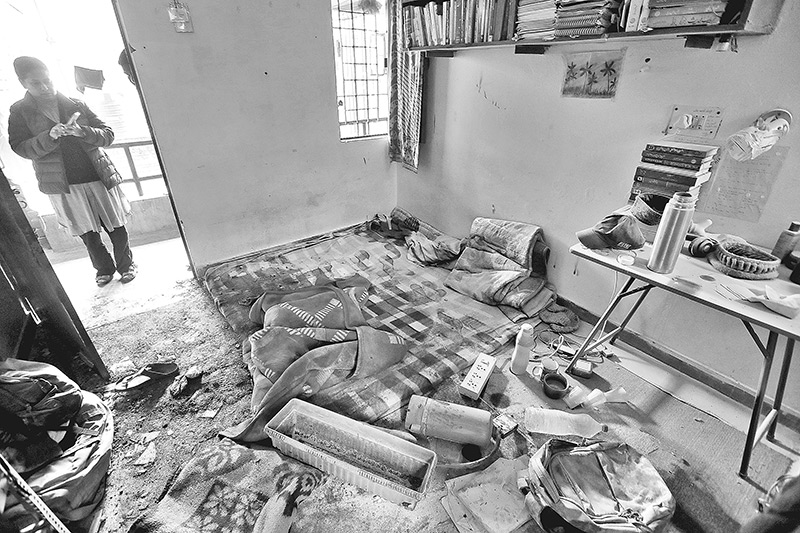
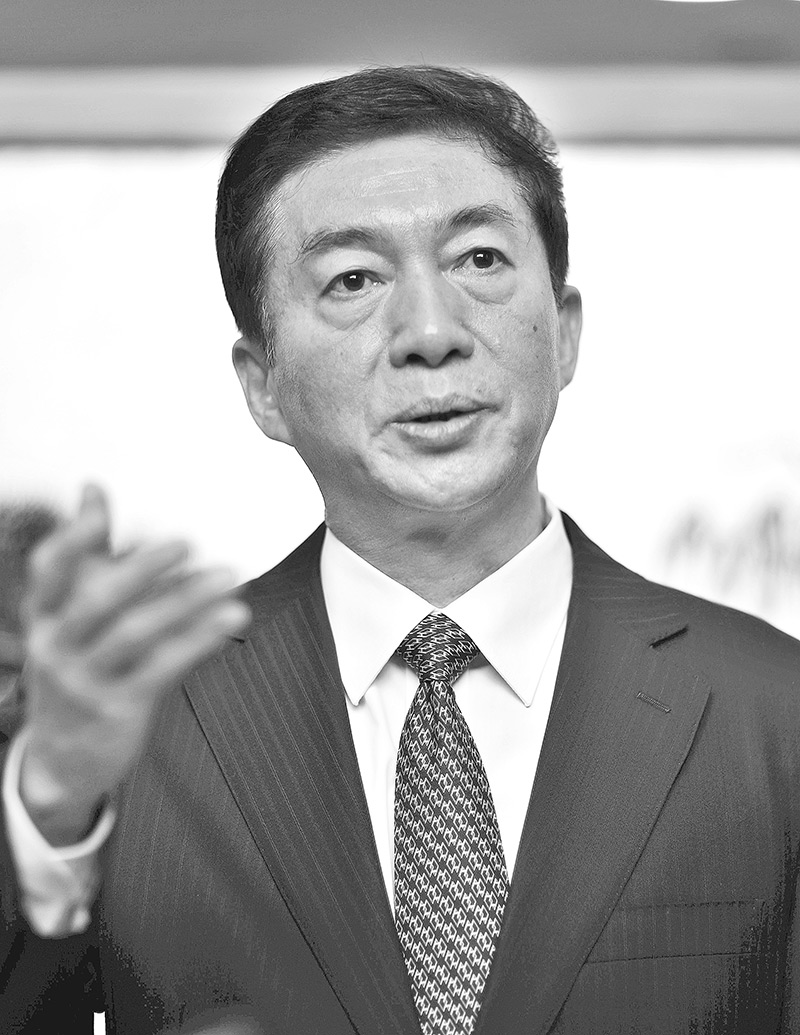
“It’s already the second time,” Balotelli told referee Gianluca Manganiello after half an hour, with the latter replying: “Now I’ll take care of it”. Lazio coach Simone Inzaghi gestured in front of the visiting fans to stop the chanting, as an announcement was read over the stadium speakers reminding spectators play would be suspended and their club penalised if they continued.
Brescia fans tried to drown out the insults with whistles and cheering which Balotelli applauded. Lazio later issued a statement condemning the behaviour of “a very small minority of fans”. “The club confirms once again that it condemns these unjustified excesses and it intends to prosecute those who betray their own sporting passion and cause serious damage to the image of the club and the Biancoceleste team,” Lazio said.
In November, Balotelli threatened to walk off the pitch after being the target of monkey chants at Verona, with Inter Milan’s Romelu Lukaku, AC Milan’s Franck Kessie and Fiorentina’s Dalbert also victims of abuse this season. An anti-racism campaign launched by Serie A featuring three monkeys last month drew widespread criticism and ridicule.
Balotelli picked up where he left off before the winter break pulling clear of Luiz Felipe to volley in his first home goal for Brescia and first of the decade. He also scored the first goal of the previous decade in January 2010 with Inter Milan. However, Lazio still stretched their winning streak to nine consecutive league games to consolidate third place, three points behind leaders Inter Milan and Juventus who play on Monday. Immobile struck the winner after 91 minutes, having also converted from the penalty spot before the break.
Relegation-threatened Brescia were reduced to 10 men when Andrea Cistana was sent off for a second yellow card after bringing down Felipe Caicedo after 39 minutes. Serie A top scorer Immobile pulled Lazio back on level terms from the penalty spot three minutes later. Immobile brought his league tally to 19 goals connecting with a Caicedo cross to fire in the injury time winner. Inzaghi, meanwhile, equals Sven Goran Eriksson’s record of nine consecutive league wins set in the 1998-99 season.
The Swedish coach led Lazio to their last Serie A title in 2000. “We absolutely want the Champions League,” said Inzaghi, whose side beat Juventus to lift the Italian SuperCup trophy last month. City rivals Roma, four points behind in fourth, lost ground with an Andrea Belotti brace giving Torino a 2-0 win in the Stadio Olimpico.
Belotti broke through just before the break and converted a penalty four minutes from time after Roma’s Chris Smalling handled the ball. Goalkeeper Salvatore Sirigu pulled off big saves as the ninth-placed northerners back winning. Verona are just behind in tenth with Giampaolo Pazzini and Mariusz Stepinski scoring in either half in a 2-0 win over ten-man SPAL, who drop to bottom place after their 12th defeat this season.
New Genoa coach Davide Nicola got off to a winning start with a 2-1 victory over Sassuolo, the port side’s first since October. Inter Milan restart the title battle with Juve on Monday, with both sides level on 42 points after 17 games. Antonio Conte’s side travel to Napoli with the champions at home against Cagliari.

SPORTS

Rafael Nadal secures Spain’s victory at ATP Cup; Croatia, Japan win

- ASSOCIATED PRESS
Rafael Nadal of Spain in action against Pablo Cuevas of Uruguay during their ATP Cup match in Perth on Monday. AP/RSS

BRISBANE,
Weeks after leading Spain to a Davis Cup title, Rafael Nadal is doing his best to do it again at the the ATP Cup, the newest of the men’s international team competitions. The top-ranked Nadal beat Pablo Cuevas 6-2, 6-1 in Perth on Monday to secure Spain’s win in the best-of-three encounter against Uruguay ahead of the doubles. Spain now have two wins from two starts in Group B and next face unbeaten Japan to determine first place and automatic qualification for the playoffs in Sydney.
Roberto Bautista Agut was equally ruthless in getting Spain started when he beat unranked 19-year-old Franco Roncadelli 6-1, 6-2. Nadal won his fourth title in the Davis Cup, the traditional men’s team competition, in November. He said he thrives in the team environment. The six group winners and the two best second-place teams qualify for the quarterfinals.
Second-ranked Novak Djokovic gave Serbia a shot at a second victory when he extended his tour-level unbeaten streak against Gael Monfils to 16 wins with a 6-3, 6-2 victory in Brisbane. Benoit Paire had given France the lead with a 6-2, 5-7 (6), 6-4 win in his singles against Dusan Lajovic. The Group A match will now be decided by doubles.
In Sydney, Austria clinched victory over Argentina with wins in both singles matches. Fourth-ranked Dominic Thiem beat Diego Schwartzman 6-3, 7-6 (3) after Dennis Novak rallied from a slow start to beat Guido Pella 0-6, 6-4, 6-4. Both countries are 1-1 in the Group E standings, which are led by unbeaten Croatia.
Novak, ranked No. 101, said a few pointers from Austria captain Thomas Muster helped calm him down after the first set. “After the first set I went to a break with Thomas, and I came out and changed a little bit my game and fought back,” Novak said. “I think at the end I played really good tennis.”
Former U.S. Open champion Marin Cilic had too much experience for No. 448-ranked Kacper Zuk, setting up Croatia’s victory over Poland with a 7-6 (8), 6-4 win. Cilic, who has a career-high ranking of No. 3 but slipped to 38 after an injury-shortened 2019 season, was only able to convert one of his 13 break-point chances against Zuk, who was making his tour-level debut.
Hubert Hurkacz beat Borna Coric 6-2, 6-2 to split the singles results, but Croatia pair Ivan Dodig and Nikola Mektic clinched the encounter with a 6-2, 6-1 win in the doubles over Hurkacz and Lukasz Kubot. “If I have to pick some things that I need to do better, it’s just converting break points. I had a lot of them,” Cilic said. “Otherwise, I felt that the level was quite good.”
Two-time Grand Slam finalist Kevin Anderson led South Africa to victory over Chile in Group A in Brisbane, keeping his team in contention for the playoffs despite an opening loss to Serbia, and Japan clinched their second straight win with victory in both singles matches against Georgia in Perth.
Anderson, who is coming off a six-month injury layoff and pushed Djokovic in two tight sets over the weekend, outclassed Cristian Garin 6-0, 6-3 after Lloyd Harris beat Nicolas Jarry 6-4, 6-4. The South African doubles combination made it a 3-0 sweep.
Anderson said the goal was now to win the last round of the group stage to have a chance of reaching the quarterfinals, which start Thursday in Sydney. “We had to get a win today, so we were able to do that,” Anderson said. “Some of it is out of our hands as well, already having, well, taking the loss against Serbia.”
Japan followed up its 3-0 sweep against Uruguay with its win over Georgia. Go Soeda beat Aleksandre Metreveli 4-6, 6-3, 6-2 and Yoshihito Nishioka upset No. 26-ranked Nikoloz Basilashvili 6-2, 6-3. Georgia won the doubles to make the final result 2-1.

SPORTS

Justin Thomas clinches Tournament of Champions

- AGENCE FRANCE-PRESSE

LOS ANGELES,
Justin Thomas said he “got very lucky” after botching the last hole in regulation but holding on to win the Tournament of Champions in a playoff on Sunday, edging Patrick Reed and Xander Schauffele for his 12th US PGA Tour title.
The 26-year-old American birdied the third extra hole to beat Reed after defending champion Schauffele had been eliminated with a three-putt par on the first playoff green. World number four Thomas stuck his third shot three feet from the pin at the par-five 18th on the Plantation Course in Kapalua, Hawaii, to set up an easy birdie and watched as Reed missed his seven-foot putt to extend the playoff.
All three had finished 72 holes with 14-under par totals of 278 after Thomas, who enjoyed a two-shot lead with three to play, bogeyed two of the last three holes. He fell back to 15-under at the 16th before his three-wood second shot at 18 found the thigh-high grass in a penalty area on his way to a bogey in a four-under-par final round of 69.
Playing partner Schauffele, the world number eight, reached the green in two, but missed a seven-foot birdie putt for victory, carding a three-under par 70. Reed, ranked 11, was already in the clubhouse on 14-under after capping a bogey-free seven-under 66 with a 20-foot birdie putt at the 72nd hole. Reed, the 2018 US Masters champion, had putts to win on each of the first two playoff holes but was unable to get efforts from 30 feet and 12 feet to drop.
“For some reason I was supposed to win this week,” Thomas said. “I got very, very lucky to have that putt,” said Thomas, who like the entire field in the winners-only event dealt with challenging, gusty winds for a fourth straight day. I truly felt like through 15 holes it was one of the best rounds I ever played,” said Thomas who started the day one stroke off Schauffele’s lead and pulled level with a birdie at the eighth where Schauffele bogeyed.
He kept the accelerator down with birdies at nine, 10 and 11, and added two more at 14 and 15 — where his putt through the fringe circled the cup before rattling in. “I was in such control tee to green, I was putting it beautifully, my irons were awesome,” Thomas said. “I hit a really good drive on 16, just the wind took it more. “Eighteen,” he admitted, “was just a disaster. But it worked out, so I guess I can’t complain,” Thomas concluded.

SPORTS

APF thump hosts MMCC Inaruwa by 83 runs

Briefing

KATHMANDU: Armed Police Force secured an 83 run win against Manmohan Memorial Cricket Centre Inaruwa in their Manmohan Memorial One-Day cricket tournament in Inaruwa on Monday. APF won the toss and decided to bat first where they were bowled out for 204 runs in 43.4 overs. Sumit Maharjan was the standout batsman for the departmental side, scoring 83 runs from 107 balls, including seven fours. Chasing 205 runs for a win, MMCC Inaruwa were restricted to 121 in 36.2 overs as none of their batsmen could stay at the crease for long. Surya Tamang was the pick of the APF bowlers with four wickets. Skipper Basant Regmi had three scalps to his name, Yagyaman Kumal grabbed two wickets while Amar Routela claimed one wicket. (SB)

SPORTS

Warne to auction baggy green cap for bushfire appeal

Briefing

SYDNEY: Spin legend Shane Warne Monday announced plans to auction the “beloved” baggy green cap he wore throughout his 145-Test cricket career to raise money for victims of bushfires raging in Australia. The “baggy green” is awarded to Australian players when they make their debut and is worn as a badge of pride when they are on the field. Given Warne’s exploits on the field and his high profile off it, local media predicted it could fetch up to Aus$500,000. Warne, who took more than 700 Test wickets, said he wanted to help those who have suffered in the catastrophic fires that have devastated parts of the country. (AFP)

SPORTS

Nigerian champions Enyimba sack coach Abdallah

Briefing

ABUJA: Nigerian title holders Enyimba sacked coach Usman Abdallah on Monday ahead of this weekend’s crucial CAF Confederation Cup Group ‘D’ match against Paradou from Algeria. Enyimba announced Abdallah was dismissed following a run of poor results that saw them slip to 13th in the league after a 4-0 thrashing by leaders Plateau United on Sunday. “This is not a decision we have taken lightly, nor in haste,” chairman Felix Anyansi-Agwu said. Assistant coach Fatai Osho has taken charge of the club for the time being, Enyimba announced. (AFP)

Page 16
INTERVIEW

Satya Mohan Joshi: Where lies our identity?

Celebrated centenarian talks about life, his works and the significance of cultural identity and diversity in a global world.
POST PHOTO: Sanjog  manandhar

On a sunny winter morning, veteran writer and historian Satya Mohan Joshi looks at ease as he basks in the sun. In his hundredth year, Joshi looks healthy. “I took a peg of aila  [grain alcohol] this morning as well; it’s like a medicine for me,” he says.
In his retired life, Joshi finds himself busy attending cultural events and meeting historians, writers and cultural enthusiasts. On ordinary days, he is at home, sometimes reading or preparing for a speech, and other times just sitting idly with his wife at the patio of his house.
Last year, the whole of Lalitpur celebrated his birthday with him and venerated him as a cultural institution. Joshi who has contributed immensely to the Nepali culture, history and literature has authored more than 60 books on music, history, culture, and drama. The Post’s Srizu Bajracharya sat with Joshi to know about his routine and his views on the importance of culture for a community. Excerpts:


How do you spend your day?
I am old, and because of that, it’s hard to write and read. But many organisations have been inviting me for their cultural events, sometimes as a chief guest or a special guest where I am asked to speak a few words. And according to the central issue of the programme, I share my thoughts.
At home, it’s challenging for me to study. The font size in the newspapers are too small for me. Plus, the contents of the papers are not really suitable for my age, sometimes they are about love. I only read articles that really get me thinking; otherwise, I just read the titles.


Do you still write and revise your works?
I rarely write these days. But sometimes people visit me with their books to write preambles for them, and that is when I sit to read and write. I am currently writing an introduction to a book about life and death for a friend’s book.
But, in the past, I used to write a lot of articles. I used to write and run around looking for people to publish my work. Today, people come to me to ask for my writings. But sadly, I am unable to write and share my work with people. I am 100 years old, and with time my writing has slowed down.
I have never practised writing through dictation either, and so it’s too difficult for me to get someone to listen to my story and write for me. Because that is not my process of writing. If I have to write, it has to be me. Also, when I write by myself, I can work on my style, and go back to places where I think I need to rework and fix loopholes.


What is your writing process?
I take my time to write, I usually think a lot before I start writing. I also do rigorous research. The idea has always been to publish works that can be helpful to others.
My writings have never been flavourless, at least that is what I believe. All of my work required a lot of research. The books that I won awards for were books that I really worked hard on. They weren’t books that I wrote impulsively. For Arniko, and The Coinage of Nepal, I went to many places to find information. I also had to find people to talk about the history of the coins and had to look into history itself.
Research is difficult, and a book needs its time to evolve. You have to collect your information correctly and then analyse them. Every writer has their own methodology, and you can’t just copy what other writers have written. But I have never found writing difficult in itself, as we don’t really need any kind of apparatus for it.
Even for my plays and the characters I used to conjure, I used to research a lot so to be able to exude the reality of life on stage. You have to understand that it’s not always about writing perfectly; you also need to be able to share important information when you write. It needs to be meaningful to have depth; otherwise, people are going to ask questions. Also, for any drama to have originality and identity, it needs to be well researched.


You have explored various genres of writings, but what works do you want people to remember you for?
I think I would want people to read Mrityu Ek Prasna and Maharshi Yagyabalkya. These works are close to my heart.
Mrityu Ek Prasna tries to answer the question of what  death is. Every living being is born to die; every life is carrying the possibility of death. There needs to be a destination for every experience, and while writing it, I was thinking if death was that destination. And I came to understand that life is about trying to understand who you are. It is a journey about understanding your purpose in life.
Maharshi Yagyabalkya is about a Hindu vedic sage’s philosophies and the journey he undertakes to understand the universe. One of his fundamental principles was that the whole world functions through self-interest. In the story, when the sage says he wants to abandon the worldly life, his first wife tells him she wants to accompany him on the journey. But Yagyabalkya refuses to take her and tells her that she has been taking care of him for her own selfishness, “You have loved me for the sake of seeking love.”
I think both these books delve very deeply on human life, and that is why I still hold on to them. They remain as true, even today.


What do your works mean to you? And why do you think many haven’t explored the topics that you have pursued ?
My writing is really important for me. I had a lot of aspirations in my early days as a writer. I once remember sweating myself to win the title of Gorkha Dakshin Bahu, but now I don’t have anything on my bucket list. I am really content with what I have achieved.
But of my written works, I think my work Mrityu Ek Prasna now applies to me as well, because I am waiting for my death. It is what remains the most true at this point of time for me. I am on a queue for death; sooner or later, I will die. It is something I came into the world with.
I remember going with a team to Sinja Valley, in the Karnali region, to holistically study the Karnali region and its culture. The books later received the Madan Puraskar, and I consider them as one of my biggest contributions towards our society, but I don’t think anyone at present has considered researching the various diverse cultures of Nepal seriously.
Although there’s a lot we still need to research and write about, the universities we have have not yet prioritised research in culture. And that might be one of the reasons why such works are still missing. During my time in Nepal Academy, I had tried to nurture such a culture, but I think, there has been no continuity in conducting detailed research works.


Last year, the whole of Patan celebrated your birthday. How did that feel?
I think I am fortunate that people want to celebrate my life, it wasn’t something that I asked for, but I am grateful for it. But I see this in a different light. They were not celebrating Satya Mohan Joshi, but the work that he did for Nepali culture and language. They did it to regard the works of Nepali literature. And I believe there will be more work to celebrate in the future.


You have always talked about the importance of culture. But why is it important to talk about cultural diversity, even today, and that too more by the younger generation?
When you talk about cultural diversity, you are making room for inclusiveness. You have to understand that our ethnic diversity is what makes us more charming. And if we learn to address our diversity, we will be able to work
cohesively. And this is what will make us identify as Nepalis.
I also think it’s important to know your culture so that you can make it a stepping stone to build on your knowledge and evolve that understanding. You can do whatever you want as an individual, use your ingenious creativity, but one shouldn’t forget their culture.
You also have to understand that creativity is the genesis of humankind. In the old days, people were not educated, but if you go and look at the monuments in Patan, you cannot deny the creativity and the skills that people had during the time. Their skills and knowledge were the foundation of our culture. And if you are to
destroy the culture that existed in the country, consider how today people don’t even know how to make a needle.


What is the significance of learning your mother tongue and the view that education should be given in one’s native language?
According to the statistical census of 2011, 34 out of 100 Newars had forgotten how to speak in their mother tongue: Nepal Bhasa. This number is likely to increase in the upcoming census.
But one of the reasons for this is that in the process of prioritising the Nepali and the English language for education, we have failed to contribute works of literature in various languages. Today, there aren’t any schools that teach in indigenous languages.
The right to education through one’s mother tongue is enshrined in the constitution of Nepal. Language shouldn’t be a barrier to education, but the government has done nothing to facilitate the process to exercise this fundamental right. It hasn’t initiated operations such as opening schools or publishing books in various ethnic languages either. And so, every indigenous language is suffering, and naturally, Nepali has become the primary language. But that isn’t exactly a problem.
The problem is that by promoting one language, we are making it easier for the next generation to lose their identity and diversity. And that is why movements around language are still happening. Also, it is easier to learn and understand in our native language than in any other languages.
But over time, if people don’t speak in their mother tongue, even when works of literature in their language are being produced, the language will be as good as dead, just like Sanskrit or Pali. You can find rich literature in Sanskrit and Pali, but who is going to read it?


Why are our cultural identities important in a global world?
Times are changing, even our lifestyle. We wear a suit and then a dhaka topi. We eat differently, and we are exploring things like never before. There is no way of knowing what our identity is when we live in a mixed milieu. So, you have to ask yourself: where lies our identity?
But if we can speak in our mother tongue, we can distinctly identify ourselves and our culture. We are tied to our roots through our first language, and if we don’t have a language at all, there’s no difference between animals and us. Language makes us civilised and cultured, and it is through language that our art and architecture have evolved. It is what makes us unique.