You internet speed is slow. Switch to text view mode

Switch
epaper logo
ST

Last Login:
Logout
+
Page 1
HOME PAGE

Two more coronavirus cases suspected but agencies unprepared to combat its spread

A man and a woman, who returned from Shanghai and Nanjing recently, are under observation at Teku hospital.
- Arjun Poudel
shutterstock

KATHMANDU,
A day after first coronavirus case was confirmed in Nepal, the first country to report the deadly disease in South Asia, officials on Saturday said two more Nepalis—a man and a woman—have been suspected to have been infected with the virus.
“Both of them have been kept in isolation at Teku hospital,” said Mahendra Prasad Shrestha, spokesman for Ministry of Health and Popu-lation. “Both came back from China.”
The man, said to be in his late 20s, had returned from Shanghai on January 19. He had gone to Pokhara the following day but returned to visit Grande Hospital in Kathmandu on January 21 for respiratory problems.
Doctors at the hospital then referred him to Sukraraj Tropical and Infectious Disease Hospital in Teku two days ago, according to an official, who spoke on condition of anonymity, at the Teku hospital. The official said the woman, who had visited a private hospital in Kathmandu, has also been brought to the Teku hospital.
“Health condition of both the patients is stable,” Shrestha told the Post. “They are under observation in isolation. Doctors are trying to ascertain if they have indeed been infected with the deadly virus.”
Preparations are afoot to send specimens—throat swabs and blood samples—collected from both patients to the World Health Organization’s collaborating centre in Hong Kong to confirm if they have been infected with the “novel coronavirus”.
Earlier, throat swab and blood samples of a 31-year-old Nepali student, who had returned from Wuhan, the capital of Hubei province, the epicentre of the new epidemic, were also sent to the WHO laboratory in Hong Kong, which on Friday confirmed he was infected with the virus. Even as the UN health agency has yet to declare the outbreak a public health emergency of international concern, the virus, which causes symptoms akin to pneumonia and Severe Acute Respiratory Syndrome, has been spreading fast since it was first detected in December last year.
According to the BBC, the death toll from the virus in China has risen to 41, with another 15 deaths in Hubei province, where the outbreak began, on Saturday alone. The number of confirmed cases in China stands at 1,287.
The virus, which has already been detected in Thailand, Vietnam, Singapore, Japan, South Korea, Taiwan, Macao, and the United States, has also made its way to Europe, with three confirmed cases in France. Australia also reported four cases on Saturday, while the United Kingdom is said, according to the BBC, to be investigating a number of suspected cases. Officials there are trying to trace around 2,000 people who have recently flown to the UK from Hubei province, said the BBC.
The new strain of coronavirus has created alarm across the world because scientists still do not know much about it. Neither have scientists been able to ascertain how dangerous it is and how easily it can spread between people.


While the countries across the world are scrambling to keep the virus at bay or curb its entry and spread, Nepali authorities appeared largely unprepared.
A health desk set up at Tribhuvan International Airport, the country’s only international airport, is ill-equipped—in terms of human resource and technology.
Officials were clueless about the status of the man whose samples tested positive for the virus.
According to an official at the Sukraraj hospital, the man who returned from Wuhan was called again for a check-up a few days ago, but he was allowed to return home.
Dr Basudev Pandey, director at the Teku hospital, said that none of the health workers including doctors at his hospital who had attended to the 31-year-old man or came in his contact has taken ill or applied for leave.
“It’s already three weeks since the man returned and no other person who came to his contact has been infected,” said Pandey. “We can say that he might not have passed the virus to others.”
According to Pandey, officials at the Epidemiology and Disease Control Division have started contact tracing (tracing of people who come to close contact with patients).
Since the hospital does not have a dedicated isolation ward, it has allocated six cabins for the treatment of patients suspected to have contracted the virus. Pandey said the hospital management is mulling over vacating the entire ward so that it could treat people with influenza-like illnesses in some isolation.
There has been no progress in improving the isolation facility at the hospital, four days after the World Health Organization’s Nepal office furnished a draft report on the status of the facility built 10 years ago.
“Nothing has been done so far,” said Pandey. “We have first come up with an estimate. Only after it’s approved can we call a tender. It’s a lengthy process, but time is running out.”
Officials at the Epidemiology and Disease Control Division on Saturday, however, chose not to speak, saying the Health Ministry has barred them from talking to the media.
An official with whom the Post had scheduled an interview agreed to meet but refused to share details on measures being taken to tackle the virus, the person who has tested positive for the virus and how his office is planning to put him under observation.
Another official said the division on Saturday held a meeting with all private hospitals in Kathmandu Valley and directed them to “strictly follow the guidelines while treating suspected cases of the new strain of coronavirus”.
“The division has made its own treatment protocol based on the protocol developed by the UN health agency,” said the official.
On Saturday, almost all doctors and officials, both at the Teku hospital and the Epidemiology and Disease Control Division, refused to speak—a majority of them had their mobile phones switched off.
With information hard to come by and officials shying away from sharing details, there was confusion among the general public. Apart from issuing a public notice on the do’s and don’ts and on ways to avoid contracting the virus, the government has failed to apprise the public of the measures it is taking to protect the members of the general public.
Dr Baburam Marasini, a public health expert, said the authorities showed utter negligence while handling the first suspected case, which was confirmed later.
“They are still taking a lackadaisical approach and groping in the dark,” Marasini told the Post. “The hospital should not discharge anyone suspected of any deadly disease without confirmation.” According to Marasini, all those people who came in his contact need to be kept under observation, as the virus can spread between humans.
Experts said with the authorities not making airport screenings mandatory, they are just turning a blind eye to imminent danger.
A thermal scanner has been installed, but the health desk is not air-conditioned. According to experts, a thermal scanner can show accurate body temperature only when it is used in an air-conditioned room.
Dr Anup Subedee, a consultant infectious disease physician at Hams Hospital, said the authorities’ delayed approach could have severe consequences.
“It’s high time the government agencies acted in a proactive manner. It will be very tough to contain the disease if the virus spreads to the masses,” Subedee told the Post. “All possible precautionary measures should have been in place to stop the virus from spreading.”
HOME PAGE

Impunity in war-era cases will force victims to seek foreign support, rights groups warn

Watchdogs say appointments to transitional justice commissions and nomination of a murder accused as Speaker undermine transitional justice.
- BINOD GHIMIRE
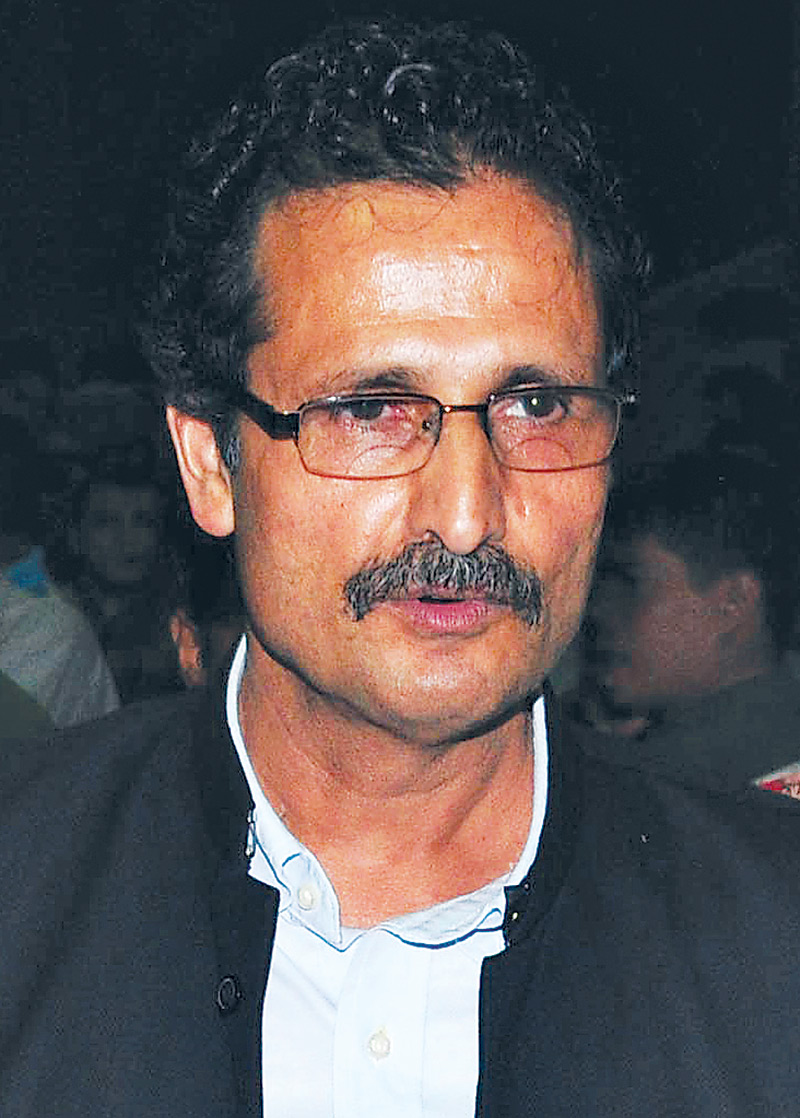
Agni Sapkota. post file photo

KATHMANDU,
Four international human rights organisations said on Saturday that recent decisions by the Nepali government and political parties to appoint officials to the transitional justice commissions without proper consultations and to nominate a murder accused as House Speaker undermine the transitional justice process.
The tendency to promote impunity will compel the victims and human rights activists to seek justice internationally under the universal jurisdiction, they have warned.
In a statement on Saturday, International Commission of Jurists, Amnesty International, Human Rights Watch and TRIAL International said the recent steps taken by the Nepal government and the parties are a serious setback for the transitional justice process. The government in March last year formed a committee led by Om Prakash Mishra, a former chief justice, to recommend officials for the Truth and Reconciliation Commission and the Commission of Investigation on Enforced Disappeared Persons.
But the ruling and opposition parties rendered it toothless, and 10 months after its formation, they decided officials for the two commissions.
On January 18, the recommendation committee picked two chairpersons and eight members as per the parties’ wish.
The following day, the ruling Nepal Communist Party (NCP) selected Agni Sapkota, who is accused of the abduction and murder of Arjun Lama from Kavrepalanchok in 2005.
With no candidate from the opposition Nepali Congress, Sapkota is all but certain to become the next Speaker of the House of Representatives by Sunday’s voting, unless the Supreme Court intervenes.
“The government and the political parties in Nepal are increasingly showing that they are unwilling and incapable to deliver truth, justice and reparations to the conflict victims domestically,” the statement quoted Biraj Patnaik, South Asia director at Amnesty International, as saying.
“Their signal of impunity will further push the victims and activists to seek justice internationally under universal jurisdiction.”

Instead of putting those suspected of criminal responsibility into positions of power, the government should bring them to justice in fair trials, said Patnaik.
The four international human rights watchdogs for long have asked Nepal government to have constructive and meaningful consultations with the conflict victims and the concerned parties before making any decisions regarding transitional justice.
They are also for amendments to the Enforced Disappearance Enquiry and the Truth and Reconciliation Commission Act-2014, to make it consistent with international human rights law and the rulings by the Supreme Court before the appointment.
But the government is yet to amend the Act. Recent consultations held by the government in the seven provinces were described by the conflict victims as farce and a mere formality rather than a genuine effort to collect their feedback.
“The government’s decision to carry out another rushed and secretive set of consultations fails to give due respect to the long-standing demands of victims and civil society,” the statement quoted Frederick Rawski, ICJ’s Asia-Pacific director, as saying. “It also makes it very difficult to take seriously the statements of political leaders that they are committed to supporting a victim-centred and human rights compliant process.”

Despite repeated calls by the international community and rights defenders, Nepal’s political parties and successive governments over the last decade have done precious little to ensure justice to conflict victims, except making promises at home and abroad.
In March last year, Foreign Minister Pradeep Gyawali said that Nepal was committed to concluding the transitional justice process by holding wider consultations and amending the Transitional Justice Act. Addressing the 40th session of the Human Rights Council in Geneva, he said there would be no blanket amnesty in the cases of serious human rights violations committed during the decade-long Maoist insurgency.
But a lack of political will has been evident.
The appointments to the two commissions and recommendation of Sapkota for Speaker came days after Pushpa Kamal Dahal, now executive chairman of the ruling party who led the decade-long war, publicly said that he would take the responsibility for only 5,000 conflict deaths. Addressing the Maghi festival of the Tharu people in the Capital on January 15, Dahal said that the state had killed 12,000 of the total 17,000 dead.
There has been no concrete statement from Dahal, who has become the prime minister twice, on how he wishes to make the transitional justice process credible and how he is going to ensure justice to the conflict victims.
Instead, the appointments to the commissions were made at the behest of political parties, much to the chagrin of conflict victims and rights defenders.
Of the five officials in the truth commission, two including chairman Ganesh Datta Bhatta were appointed on Nepali Congress quota and three on the ruling Nepal Communist Party’s quota. Chairman Yubraj Subedi and a member in the disappearance commission are from the ruling party while three were picked from the Congress quota. International rights defenders have said Nepali political parties have ignored the conflict victims while trying to protect those responsible for abuses.
“Nepal’s political leaders know that a transparent process is essential to ensure justice and accountability for egregious rights violations during the conflict, but they keep trying to protect those responsible for the abuses,” the Saturday statement quotes Meenakshi Ganguly, South Asia director at Human Rights Watch, as saying. “If the political leadership continues to evade responsibility, they leave little choice but for victims to approach courts outside the country.”
Human rights defenders say the international community makes perceptions about Nepal based on the observations of credible human rights organisations, like the ones that issued the statement on Saturday. The recent acts of the government and the political parties have eroded the country’s image in the international arena, according to them.
“The world will now question Nepal’s position on human rights,” Kapil Shrestha, a former member of the National Human Rights Commission, told the Post.
Shrestha described the statement by four international rights bodies as a wake-up call for the government and the parties.
According to Shrestha, if Sapkota is appointed Speaker, ignoring reservations from human rights bodies, they could lobby internationally to restrict travel visa to him, which would mean he could be barred from going abroad to participate in meetings, including the International Parliamentary Union.
In 2010, Australia and the United States had rejected Sapkota’s visa applications in light of the allegations of serious human rights violations. When Sapkota was appointed information and communication minister in May 2011, the United Nations’ Office of the High Commissioner for Human Rights had issued a statement, saying that the state has a responsibility “to ensure that the name of a person is fully cleared following a thorough investigation before any appointment to a high public office is announced”.
Sapkota was denied a visa to the US by its embassy in Kathmandu on June 26, 2010, citing “serious and specific human rights allegations associated with his conduct during the insurgency”.  A few days after the US embassy’s decision, the Human Rights Watch on July 1 said governments of India, China, the United Kingdom, the European Union and Japan, among others, should follow the example set by the United States and deny visas to persons charged with serious crimes and for which there has been no investigation.
Raju Chapagain, a human rights lawyer, said the statement from the four international rights bodies clearly suggests that the world is not going to ignore the wrongdoings of Nepali parties and government.
“This could lead to a legitimacy crisis for the Speaker,” said Chapagain, “and the entire transitional justice process.”

HOME PAGE

Who will save Nepalis awaiting execution in foreign lands?

As a country that has done away with the death penalty, it is up to the Nepal government to make all efforts to rescue its citizens from being executed abroad, rights activists say.
- CHANDAN KUMAR MANDAL
Umesh Yadav. post Photo: Deepak KC

KATHMANDU,
Umesh Yadav was working on a water pipeline in Saudi Arabia in 2006 when Mohammad Latif Wasir, a Pakistani colleague, asked him for a torch. Yadav says that as he passed the torch, Wasir fell off a ladder and injured his nose. An angry Wasir then started to pummel Yadav, who retaliated by hitting him back with whatever he could find—a small scaffolding pipe.
“It was a small dispute,” Yadav recounted to the Post. “When he started punching my face, I got angry so I hit him back a few times.”
Wasir ended up in hospital with a head wound and after 15 days, he died.
Yadav, who had only just arrived in Jubail, a city in the eastern province of Saudi Arabia half a month ago, was charged with murder and handed the death penalty.
Like thousands of Nepali migrant workers, Yadav had gone to Saudi Arabia in the hopes of earning a living for his family members back home in Dhanusha. After working in the Indian state of Gujarat for five years, Yadav, who was 25 at that time, had chosen Saudi Arabia after seeing his friends and neighbours migrate there. He paid Rs 140,000 to a local agent and got a job as a pipefitter in a local company in Jubail.
“When I left home, my younger son was only 18 days old. I thought I could work hard and build a future for my family,” said Yadav. “But that one incident changed my life forever.”
Ever since Nepali workers began to migrate for work, there have been incidents where they have committed crimes and been jailed in the host countries. But most countries in the Middle East have the death penalty for serious crimes like murder whereas Nepal has done away with capital punishment for any crime. When cases like Yadav’s arise, Nepal faces an ethical dilemma—whether to allow the local laws to take their course or to intervene and try to prevent the execution of a Nepali citizen.
In Yadav’s case, it was not the government that intervened but an individual. After learning about Yadav, Saroj Ray started a campaign to collect blood money to get him released. In many countries in the Middle East, blood money can be paid to the families of the victims in order to ask for clemency.
Ray collected the money, mostly from fellow migrant worker, and brought a pardon letter from Wasir’s family in Pakistan—the only way to bring Yadav home alive. In April 2018, the Pakistani family finally agreed to give clemency to Yadav after receiving Rs3 million.
“It was not about the money,” said Ray. “They agreed to forgive Yadav on humanitarian grounds.”  
There are many others like Yadav who continue to languish in prison in various Gulf countries, sometimes awaiting execution. In Saudi Arabia, execution is particularly brutal—public beheading with a sword. Sometimes, the body is crucified after the beheading.
According to the Foreign Ministry statistics, 528 Nepalis were in jails in various countries as of April 2018. Many are languishing in jails for minor offences as they cannot afford legal services.
According to Yadav, there were five other Nepalis in Jubail jail alone. Three had minor cases whereas two—Bibek Dahal and Damodar Chhetri—face the death penalty. Yadav has vowed to do everything he can to get them home alive too.
In June 2018, the government passed a directive which allows the state to bear the legal expenses of Nepalis jailed in foreign countries. The government will provide a maximum of Rs1.5 million, which
will be borne by the Foreign Employment Board’s relief fund. There are also public campaigns to save Nepali workers who are either serving time
in prison or are counting out their remaining days before they are executed.  
But there are no separate funds to provide as blood money for those who have been jailed or given life imprisonment, said Rajan Prasad Shrestha, the Foreign Employment Board’s executive director.
“There have been a few cases where family members approach us for blood money,” said Shrestha. “In such cases, the board can link them with other organisations which can help collect such funds.”
However, if there are cases where Nepali citizens have been given the death penalty and paying blood money can save their lives, the board can help such persons.
“If the embassy in that particular country writes to the board seeking blood money, we can act as facilitators to save our citizens’ lives,” said Shrestha. “Personally, I have also requested Nepal’s National Human Rights Commission to cooperate with the human rights commissions of those countries to stop the execution of our citizens.”
Nepal completely abolished the death penalty in the 1990 constitution, standing out in a region where most other countries like India, Bangladesh, Pakistan, Afghanistan and the Maldives, still exercise capital punishment. Article 16 of the 2015 constitution states that all citizens have the right to live with dignity and prohibits any law that prescribes the death penalty. Nepal is also a signatory to the UN’s Second Optional Protocol to International Covenant on Civil and Political Rights, which aims to abolish the death penalty.
Given that the country has collectively decided to do away with the death penalty, it is incumbent on the government to ensure that Nepali citizens are not executed elsewhere, say human rights activists.
“As Nepal has shown international commitments, including fundamental guarantees under the Constitution of Nepal, against capital punishment, the government must protect the life and liberty of all its citizens,” said Anurag Devkota, a programme coordinator with the Law and Policy Forum for Social Justice, an organisation that works for rights of migrant workers. “As such, the government needs to sign a mutual legal agreement against death penalties with destination countries and secure legal protection through bilateral and multilateral agreements. If a little effort could save a life, then why not do so?”
But like in Yadav’s case, it is generally individuals and non-governmental organisations that have collected blood money and campaigned to save the lives of Nepalis jailed overseas. Dolma Sherpa, who was on death row for murdering a co-worker in Kuwait in 2007, was able to return home alive because of a massive campaign to save her life.
But rescues largely depend on the human rights record of the destination country and bilateral negotiations between both countries, says Mohna Ansari, a member of the National Human Rights Commission.
“It depends on the context of the crime. If the crime is severe, we do not have much say as it also attracts local law and remains a country-specific matter,” said Ansari. “We can raise the matter at international platforms and issue a call to save our citizens’ lives, but diplomatic negotiations matter and are more effective.”
But for Devkota, the human rights lawyer, the government needs to make all efforts, including paying blood money, to rescue Nepalis and prevent them from being executed.
“You could easily save the lives of at least two Nepalis with the budget for the president’s entourage,” said Devkota. “It is not a question of money; it is rather a question of commitment to your beliefs.”

Page 2
MEDLEY

Horoscope

ARIES (March 21-April 19)
***
You’re getting busier and busier, and there simply isn’t time to do everything you need to do right now. You need to prioritise. Take stock of your activities in order to figure out what responsibilities you can toss. Tasks that require the most action should rise to the top of your to-do list.

TAURUS (April 20-May 20)
**
You’re intelligent enough to know that all that glitters is not gold, but today it will be easier than ever to see the truth behind people’s false fronts. People might lie to make themselves look better in your eyes. Some are baseless lies. Don’t let them get away with it. Call them out. If you don’t, they’ll keep on doing the same thing.

GEMINI (May 21-June 21)
**
You have come to your opinions through your own life experiences, and you have every right to stand firmly behind them. However, you also have to realise that other people have come to their conclusions through their own legitimate ways. You can’t disqualify an opinion just because it doesn’t match yours. Be a bit open.

CANCER (June 22-July 22)
***
You’ll have to do your darndest to keep a private problem from spilling out into a public forum. The only thing worse than airing dirty laundry in public is having to listen to every Tom, Dick, and Harry give you advice on what to do about it. If you want to avoid being lectured, you need to avoid sharing your latest drama.

LEO (July 23-August 22)
***
Prioritising having fun over taking on a new responsibility may seem like a big no-no right now, but who says? You need balance in your life. Add some sweet to all the bitter you’ve been dealing with lately! Move away from the grown-up stuff and get silly instead of serious today. Go out, have fun.

VIRGO (August 23-September 22)
**
You want to get out and go today, but you should be mindful of how other people feel about that idea. The people you usually go on your adventures with could be stressed, and they could be having a hard time stepping out. Don’t force them to join you. There is always another time.

LIBRA (September 23-October 22)
***
There is a balance due to you, and it has been due to you for a while. Polite requests haven’t worked, and now you might be getting a bit antsy. Before you get really angry with this person, wait a little while longer. The final payment will be made soon, and their apologies for the tardiness will be heartfelt.

SCORPIO (October 23-November 21)
****
Taking a chance today could yield some interesting results. Risk isn’t something you should be at all wary of. In fact, adding a dash of insecurity to your life will also add a bit more excitement. Sitting on the edge of your seat might not be terribly comfortable, but it certainly affords you a better view, doesn’t it?

SAGITTARIUS (November 22-December 21)
***
In order to be happy and healthy right now, you need to get a little more discipline going in your life. Letting yourself do whatever you want to do, have whatever you want to have, and say whatever you feel like saying is holding you back. You’ll be much better off if you give yourself guidelines. Challenge yourself.

CAPRICORN (December 22-January 19)
***
The rat race isn’t very much fun right now, so why do you choose to participate? Free yourself from the expectations and step out of the mainstream. You have the discipline you need to go off on your own and try to build up your ideas without input from anyone else. You should be your first priority.

AQUARIUS (January 20-February 18)
**
You need to treat the new members of your group with extra respect, because they need to know that they’re joining a positive culture. Hazing, intimidating, or initiating new people is a waste of energy and counterproductive. It will only make things difficult. Become a team player is not as hard as you think.

PISCES (February 19-March 20)
**
Unexpected eruptions from annoying people could cause some stress in your day, but if you prepare yourself physically and mentally, you can avoid the brunt of the drama. Just assume that others are going to have different opinions. Then, when it happens, you won’t get all riled up. It’s about being prepared for the worst.

Page 4
NATIONAL

Teachers demand private schools be converted into trusts

An education commission has recommended that the government convert all private schools from companies to trusts in order to prevent commercialisation.
- BINOD GHIMIRE

KATHMANDU,
An association of private school teachers has demanded that all private schools convert themselves into trusts, as envisioned by the High-level National Education Commission.
A report by the commission, submitted to Prime Minister KP Sharma Oli in mid-January last year, had recommended that the government convert all private schools into trusts from companies over the next 10 years.
The report, which was supposed to set a base for the education policy and a Federal Education Act, has not yet been published, as private schools have opposed it. The education policy endorsed by the Cabinet in November doesn’t mention converting private schools from companies to trusts either. Currently, most privately operated schools are registered as companies. The commission had concluded that changing the ownership model from company to trust could stop commercialisation of private schools.
However, the government, neither in the education policy nor the draft Federal Education Bill, has made the conversion compulsory. The Institutional School Teachers’ Association, an association of teachers working with the private schools, has warned of protests if its demands are not met.
“We want the government to follow the recommendations of the commission,” Hom Kumar Thapa, chairperson of the association, told the Post. “It is high time the over-commercialisation of education is stopped, and converting schools into trusts is the only way forward.”
Owners of educational institutions registered as companies can make personal use of the profits. But this is not the case if they are registered as trusts.
The association has said that allowing private schools to operate in the way they are currently operating is against the spirit of free and compulsory school education as envisioned by the Constitution of Nepal. Article 31(2) of the constitution holds the state responsible for ensuring compulsory basic education and free secondary education for all.
Thapa said they will begin protests from mid-February if their concerns are not addressed. The association has also threatened to shut down schools as a last resort. There are over 7,000 private schools across the country with nearly 20 percent of total students. Private school operators, however, say it is not the teachers’ place to say how schools should be run.
“Teachers can raise the issue of their welfare but it is not their business to determine how private schools should be running,” Ritu Raj Sapkota, chairperson of the National Private and Boarding Schools Association Nepal, told the Post.
Sapkota said that it is a fallacy to think all the problems in private schools will end once they are converted into trusts.
“I don’t want the teachers to play politics by raising non-issues,” he said.

Page 5
NATIONAL

Speeding drivers causing road accidents in Mahendranagar

Thirteen people have died in 31 road accidents in the first six months of the current fiscal year, according to the data of the District Traffic Police Office in Kanchanpur.
- BHAWANI BHATTA
Police gather at a site in Mahendranagar where a woman was killed by a speeding truck.  Post Photo: bhawani bhatta

KANCHANPUR,
On Thursday evening, Ramita Bhatta, a woman of Baitai, was killed by a tipper truck in a busy road at Mahendranagar. The situation along the East-West Highway remained tense after Bhatta died on the spot. A large group of irate locals pelted stones towards the tipper truck.
According to eyewitness Urmila Bhat, a local of Gobariya, the truck was cruising at a high speed when the accident occurred. Police are yet to declare the cause of the accident.
On the second week of June 2019, four people died when an excavator and an auto-rickshaw collided head-on at Bangaun along Mahendranagar-Gaddachauki road. These are not only isolated incidents. Almost every day, the highway area witnesses minor accidents due to the heavy traffic barreling through junctions at high speeds. “Speeding tipper trucks and auto-rickshaws are the main cause of the accident in Mahendranagar,” says Bhat.
According to the data of the District Traffic Police Office in Kanchanpur, 13 people have died in 31 road accidents in the first six months of the current fiscal year. In those accidents, 33 people were injured. In the last fiscal year, 45 people were killed and 22 were injured in 68 accidents.
Stretches like the Gaddachauki-Daiji section and the Jholunge Pul-Mahendranagar road section are busy throughout the day because of tipper trucks and tractors (which carry riverbed materials from Mahakali river). Prakash KC, police inspector of the District Traffic Police Office in Kanchanpur, said there’s huge traffic flow along the highway, but the road condition is still pitiable.
This is why minor accidents occur here almost every day. According to him, accidents also occur because of the driver’s negligence and lack of awareness in pedestrians.
Locals are demanding the concerned authority to impose a ban on plying goods carriers carrying construction materials during office hours. Janga Bahadur Malla, chairman of Kanchanpur Chamber of Commerce and Industry, said traffic police should take initiatives to limit the speed of auto-rickshaws and tipper trucks along the bazaar area. “It is essential to manage the flow of vehicles during peak hours. For that, tipper trucks and tractors should be stopped or sent through an alternative way,” said Malla.
Dipak Joshi, a local of Gaddachauki, said fatal accidents can happen on the highway area anytime. He said, “The traffic should be anyhow managed in the Gaddachauki-Daiji stretch and Jholunge Pul-Mahendranagar road section.”
The District Traffic Police Office in Kanchanpur, however, has been discussing with concerned stakeholders to manage the traffic flow. KC said, “We have been talking with the local administration and concerned
entrepreneurs to divert goods carriers carrying construction materials through an alternative route during peak hours.”

NATIONAL

Agriculture Knowledge Centre in Baitadi faces human resource crunch

Darchula locals also have to travel to Baitadi to seek government services.
- MANOJ BADU

DARCHULA,
With the adoption of federalism two years ago, many in Darchula were excited that they could now avail of all government services from their own villages. But things haven’t gone as planned, and many locals say they still have to travel to another district to even open a bank account.
Manoj Kunwar of Chandakot in Byas Rural Municipality said he recently travelled to Baitadi to acquire a reference letter to open a bank account. As the procedure goes, one needs to acquire a signed letter from the chief of Agriculture Knowledge Centre, which is located in Baitadi.
Many locals are signing up for the Prime Minister Agriculture Modernisation Project (PMAMP), a programme that aims to make the country self-reliant in agricultural production, for which it’s mandatory to have a bank account, said Kunwar. “We have founded a group to implement the programmes under Potato Pocket Area,” Kunwar said. “It’s a Rs 500,000 project but we need to move back and forth to Baitadi many times.”
To reach Baitadi and return, locals of Byas have to allocate at least three days. “We can return home on the third day, if things operate smoothly,” said Mansingh Bohara, a local of Duhu in Darchula.
Darchula itself does have an office of Agriculture Knowledge Centre, but the office is currently empty, with the officials extending their leaves. The office space is shared by Apple Zone Programme, another programme under PMAMP.
“Many people come to our office daily to enquire about the Agriculture Knowledge Centre but we are not in contact with officials of the centre,” said Bishnu Prasad Ojha, chief of the Apple Zone Programme. “It’s been about two months since I haven’t seen any officials from the centre here.”
Karna Bahadur Chand, chief of the Centre based in Baitadi, said that his office couldn’t deploy officials in Darchula because of a shortage of manpower. “An office assistant is taking care of the office there, but the official is currently on leave, so it’s vacant,” Chand said.
Further, the locals of Darchula have also had to travel to Baitadi to seek other services related to animal
husbandry and drinking water, among others.
Karib Bahadur Karki, chief of District Coordination Committee, said that the offices in Baitadi need to send representatives to Darchula. “In the Agriculture Knowledge Centre, three technical assistants have to oversee both the districts,” he said. The centre has a vacancy for 16 employees but currently, only seven are employed. Officials at the Centre said that they are having trouble overseeing the projects in villages across Baitadi, let alone Darchula, because of manpower shortage.
The centre has launched 43 programmes in Darchula and 52 in Baitadi, with a budget of 180 million. “The programmes are plenty but there’s a shortage of manpower,” Chand, the chief of the centre, said. “These districts are itself geographically remote so it’s difficult to properly monitor the projects. On top of that, we have only a few people at the office.”

NATIONAL

Schools in Rupandehi local unit are not ready for mandatory English teaching

- Amrita Anmol
Omsatiya Rural Municipality has 15 public schools, all of which adopted English medium teaching from the fiscal year 2018/19. Post Photo: amrita anmol

RUPANDEHI,
Farhan Ansari is a second-grader at Sirjana Basic School in Omsatiya Rural Municipality. The school incorporated English medium teaching a year ago. But Ansari cannot speak English, bar a few words.
“He can’t read his English textbooks and is getting weaker at studies by the day,” said Mohammed Ansari, Farhan’s father.
Bhojpuri is the mother tongue of a majority of students in the basic school. The students were just learning Nepali after they got enrolled in the school. But with the incorporation of regular English medium teaching, students have found themselves trapped in between three languages.
But the problem is not faced by students alone. The teachers at the school, habituated in teaching in Nepali for years, are finding it hard to teach their pupils properly. “For many of the teachers, English is an uncomfortable language,” said Rama Chaudhary, a teacher at the school. “And when that is the condition of the teachers, what could one ask from the students?”
Chaudhary said that the locals prefer sending their children to English medium schools. “For them, English language is a symbol of class,” said Chaudhary. “The school complied and this is where we are now.”
Omsatiya Rural Municipality has 15 public schools, all of which adopted English medium teaching from the fiscal year 2018/19. Currently, the schools provide English medium teaching to students up to grade two.
Hariprasad Pokhrel, education officer at the rural municipality, admitted that the teachings at the local unit’s public schools have not been up to the mark.
“The new step was taken without making provisions for trained English medium teachers,” he said, referring to it as the root of the problem. “The teachers themselves have a hard time teaching in English. The move has been counterproductive: we thought it would enhance the quality of education but what happened is just the opposite.”
The rural municipality provides free course books to students up to grade two and has hired 20 teachers to teach English. And the local unit has spent over Rs6 million to train the teachers.
Heera Kebat, chair of the local unit, said that his office started English medium teaching since English is an international language and learning it would help students in the long run.
“We will now find ways to improve the quality of English education,” Kebat said.
But not everybody is convinced by Kebat’s reasoning.
“People need to let go of the mentality that English medium teaching would produce talented students,” said Haribahadur Bista, education officer at the provincial directive of education and social development. “Primary level education should be provided in one’s mother tongue. If not, there’s Nepali, the country’s most-spoken language. It’s not necessary to force English down the students’ throats.”

NATIONAL

Locals face hardship as road project in Janakpur keeps missing deadline

The Postal Highway Directorate is once again set to extend the project deadline by a year.
- SANTOSH SINGH

DHANUSHA,
The construction of the Kadamchowk-Kamala section of the Postal Highway in Janakpur started in 2016, but it is far from complete. The road that connects Janakpur to Kamala Municipality has turned muddy because of rainfall last week.
Locals are facing problems in their daily commute because of the delay in the construction.
Jaya Prakash Mahato, a resident of Kamala who travels to Janakpur daily, is at his wit’s end trying to make his way through the road section.
“I teach at a boarding school in Janakpur. Travelling through that road every day is a nightmare,” said Mahato.
According to the project office of the Postal Highway Directorate in Janakpur, the total length of the Kadamchowk-Kamala road section is 30.58 kilometres.
The contractor company, Lama/Raman Construction Company JV, on July 15, 2016, had agreed to blacktop
25 kilometres of the road by the end of the last fiscal year. Meanwhile, Dhukuchu Construction Pvt. Ltd, another contractor company, in July 2017 had agreed to construct the remaining 5.58 kilometres of the road by mid-January 2019. But the construction work is far from complete.
Rajendra Das, chief at the Janakpur Postal Highway Project Office, said only 55 percent of the construction work has been completed so far.
“The project office extended the deadline time and again, but the construction work has not gained momentum,” said Das. “The contractor companies cite locals’ obstruction and lack of construction materials for the delay.”
According to the project office of the Postal Highway Directorate, the office is going to extend the deadline for the construction work by a year again.
“Only 11 kilometres of the road has been blacktopped so far. We have no choice but to extend the deadline,” Das said. The total cost of the project is Rs700 million, according to the project office of the Postal Highway Directorate. The Post tried to contact the representatives of the contractor companies, but they were not available for comment.
The Kadamchowk-Kamala section of the Postal Highway is the shortest way to connect the eastern villages of Dhanusha district with Siraha district’s headquarters.
“During monsoons, we have no other option but to use the Jayanagar-Jatahi route on the Indian side to reach Janakpur, as the road gets muddy during rainfall,” said Mahato.

NATIONAL

Rape convict arrested after four years on the run

- SHUVAM DHUNGANA

KATHMANDU,
The Central Investigation Bureau on Thursday arrested a rape convict who had been on the run for the past four years from Suryabinayak, Bhaktapur.
A special team of the Central Investigation Bureau arrested Purna Bahadur Khadka, 56, of Singha Devi in Okhaldhunga from Sipadol-6 in Bhaktapur and took him to the Bhaktapur District Court. Khadka had been convicted in a rape charge by the Patan High Court on November 12, 2018.
“Khadka had raped a mentally ill 15-year-old minor in March 2016,” said Superintendent of Police Bel Bahadur Pandey, the spokesperson for the Bureau.
“The Patan High Court had convicted Khadka in absentia and sentenced him to 2.5 years in jail,” said Pandey.
Khadka has been sent to Dillibazar Prison, said Pandey.
In the fiscal year 2018/19, a total of 1,873 rape cases were registered across the country, police data show.
The data shows that despite having strict laws, the number of rape cases has seen a sharp rise in recent years. There were altogether 1,093 cases of rape in 2015/16, which rose to 1,137 in the following fiscal year 2016/17.
In the fiscal year 2017/18, the number of rape cases registered by Nepal Police across the country reached 1,480. The Nepal Police data shows that there has been a 70 percent increase in the number of rape cases since 2015/16.
“The Nepal Police has been taking strict actions to curb such crimes,” said Deputy Inspector General Shailesh Thapa Kshetri, the spokesperson for the Nepal Police.

NATIONAL

Dengue downs Myagdi woman

Briefing
- Post Report

MYAGDI: A 45-year-old woman of Beni Municipality Ward No. 7 was found suffering from dengue recently. She was diagnosed with the mosquito-borne disease in the Myagdi District Hospital on January 16. According to health workers, she had arrived in the hospital with a complaint of high fever.

NATIONAL

Blind students receive education materials

Briefing
- Post Report

PARBAT: The Kushma branch of Rastriya Banijya Bank distributed education materials to the blind students of Shibalaya Secondary School in Kushma, the district headquarters of Parbat district. According to Nawaraj Dhungana, branch manager, the bank distributed stationery materials to 18 blind students.

NATIONAL

Land donated for police post

Briefing
- Post Report

BAGLUNG: Dadiram Sharma, a local of Sudal, in Bareng Rural Municipality has donated five ropanies of land to construct a building for the local police office. Construction of the police post will begin soon, said Superintendent of Police Nabaraj Bhatta.

NATIONAL

Dadeldhura local units start mobile app services

Briefing
- Post Report

DADELDHURA: Two local units in Dadeldhura have started to provide services through mobile apps. Amargadhi Municipality and Nawadurga Rural Municipality in the district have started to provide services of judicial management, agriculture, infrastructure management system and e-recommendation through mobile apps.

NATIONAL

Campaign to replace thatched roofs in Letang

Briefing

MORANG: Letang Municipality has started a campaign to replace thatched roofs of impoverished household with galvanized zinc sheets. Shankar Rai, mayor of the municipality, said his office has started to distribute four bundles of zinc sheets to each of the households in the current fiscal year. The municipality is going to make itself
a ‘thatched roof-free’ municipality, said Rai.

Page 6
OPINION

Rethinking remittance and reform

Targeted policies are needed to break the cycle of remittance coming in and going out to pay for imports.
- BHOJ RAJ POUDEL
Shutterstock

Last week, South Asia Watch on Trade, Environment & Economics (SAWTEE), a Kathmandu-based regional think tank, organised an interaction programme to share the findings of a study entitled Can Remittances Support Development in Nepal? A few days later, there was a news story about Tribhuvan University launching a master’s level course in labour studies. These are some indications that our efforts are in the process of being recalibrated in order to understand the future course of the country’s economy that is highly sensitive to external factors. Migrant workers sent home $8.1 billion in 2018, making the country the 19th biggest beneficiary of remittance. But that money was spent mainly for consumption purposes in the absence of a right set of policy frameworks.
In 2013, economist Chandan Sapkota recommended living with the remittance money and gradually channelling it into productive usages with the goal of boosting productivity in his paper entitled Remittances in Nepal: Boon or Bane? Going further, Sapkota also warned of Dutch disease effects and policy laxity to improve the investment climate in Nepal. Looking at the foreign direct investment inflow in the country and enterprise growth in the last seven years, one can say that Sapkota’s warning regarding policy laxity has turned out to be true. However, the flip side of the coin is that the discourse is ongoing, and institutions have started to concentrate on understanding various facets of high migration and remittances.

Remittance for transformation
Coming to the findings of the study undertaken by SAWTEE, there are several issues that need to be carefully weighed to redesign our policy framework. The paper emphasised that there could be higher remittances leading to lower revenues for household (non-farm) businesses due to the reduced labour supply. The study further highlights that there might be other (unidentified) obstacles to enterprise growth. Against the case, the paper recommends adopting policy measures that help develop a conducive entrepreneurial ecosystem—including capacity building and market intelligence which may encourage and nurture entrepreneurs.
The government, in its approach paper of the 15th Periodic Plan (2019-20 to 2023-24), has envisioned a policy framework that facilitates direct remittance in productive sectors. This is going to be challenging as studies have shown that domestic job creation is being hampered by remittance. The Industrial Policy 2010 also talks about creating jobs in the domestic market. But almost a decade down the line, the policy has shown little results.
The private sector’s perception of little job creation seems to be quite close to reality. An unfavourable regulatory environment, lack of infrastructure support and lack of credit facility are the key factors that are hindering non-farm enterprises from growing. The ‘second generation of entrepreneurs’ in Nepal needs to be supported with the right policy environment and other necessary assistance so that a bridge can be established between returnee migrant workers and entrepreneurship.
Nepal’s broader macroeconomic picture also indicates that there is not much contribution from remittance in productive sectors. In order to break the cycle of remittance coming in and going out to pay for imports of consumer goods, the government should introduce targeted policies that accommodate the objectives of migrant workers with national goals. The reason many youths flee for overseas jobs is to provide basic facilities to their families live a decent life. Against this backdrop, the government should introduce programmes to establish planned urban housing and provide basic facilities such as health insurance and education.
There might be a possibility that migrant workers will use their money to buy bonds or save it for future investment. There is a reason why Nepal Rastra Bank’s Foreign Employment Bonds flopped. Migrant workers have their own immediate priorities instead of fulfilling the government’s need by buying financial instruments isolated from the daily lives of the people. Remittance has both positive and negative impacts on the economy. Returnee migrant workers have been catalysts in the domestic market. The government should provide support so that the country’s goal of becoming a mid-income country can be realised by the end of this decade.


Fiscal federalism
Provincial and local governments should issue bonds that migrant workers can buy in their respective areas. The Ministry of Finance might have to even consider amending the Inter-Governmental Fiscal Arrangement Act 2017, especially clause 14, to allow local governments to issue bonds for specific purposes. This will serve the twin purposes of truly institutionalising federalism from the fiscal point of view and channelling remittance money into productive sectors to develop infrastructure that will eventually support economic transformation.
The federal government alone cannot bring in $15 billion in investments annually for infrastructure development. There should be cooperation between local, provincial and federal governments to develop critical infrastructure. There cou ld be a multi-purpose policy package that can unlock the path of growth which also supports the broader goal of functional fiscal federalism in the country. Let’s hope graduates completing a master’s level course in labour studies from the country’s most prestigious university will not be standing in a queue to get their passports to flee for temporary overseas jobs.

 
Poudel is a political economist.

OPINION

Power asymmetry has been disrupting cooperation

Unless the region resolves its internal disputes, the idea of regionalism will always be a failure in South Asia.
- Hindu Karki
Shutterstock

South Asia has always been full of contradictions. It is intensely convoluted within its geopolitical and sociopolitical complexities. The process of ‘nation-building’ since the postcolonial period is still evolving, and it often pushes the region in an anomaly. The growing power asymmetry between India and the secondary states in the region has led India to act as a custodian leader. Meanwhile, the secondary states are pursuing a ‘power balancing strategy,’ meant to mitigate the unknown assertiveness of India’s foreign policy. Since the inauguration of the ‘Gujral Doctrine’, which emphasised the importance of neighbourhood-first policy, Prime Minister Modi accentuated that the new Indian foreign policy will be oriented towards strengthening its policies in the vicinity. The statement comes at the time when the region is experiencing the wrath of the international actors, particularly the US and China.
India and Pakistan too are not at the best of terms. Rather than opting for cooperative security, both countries practised deterrence by escalating conventional and non-conventional military to counterbalance each other. After the Soviets invaded Afghanistan in 1978, the US-supported Pakistan and showered the country with arms in exchange for military base facilities. The military growth of Pakistan eventually forced India to become reliant on the Soviet Union and increase its arms imports. Nehru’s non-alignment policy was a nuisance to the US, which failed after several attempts to gain India’s support in its war against the Soviet Union.
Concurrently, India’s relations with China was fraught after the conflict in 1962, in the high mountains of Akshai Chin. The warming relationship between India and the Soviet Union and the US-Pakistan-China axis had left both South Asian countries swinging their policies in line with the international actors. This complements political scientist Glenn Snyder’s argument that when tension exists between the two great powers, the demand for axis or alliance is high. Unfortunately, South Asia breeds the best opportunity for such alliances, given the dominant regional and domestic complexities.
The tension between the elements of the state and the governments’ failure to find a consolidated approach to negotiating has exaggerated the ethnoreligious political problems in the region at par. Although the India-Pakistan conflict steals the show in the region, the skirmishes between India and the rest of the secondary states should not go unnoticed. Moreover, there are other complementing issues overriding the relationship between the secondary countries too. Amidst many, the wide existence of border, resource, migration, secessionist, terrorism and communal matters display weak cooperative interstate norms. This regional discord has attracted outside influence and interference, and leveraged inter-regional tensions into a global scale.
At present, the international system is experiencing a new wave of power distribution. The US and China are at loggerheads over trade, and the domino effect of this is widespread in South Asia. India and the rest of the secondary states are gradually slipping into this new geopolitics, confused and misguided. The secondary states are revising their economic and military policies in line with the extra-regional power, China. In contrast, for India, greater alliance with the US allows it to monitor China’s growing engagement. Simultaneously, the Modi’s government can refocus its foreign policy beyond regional concerns to the global level, and seek to secure its interest in the global economic world.
These internal security dilemmas amongst the weak states in South Asia offer fertile grounds for external powers, especially the major powers, to approach as a coalition partner, or as partisans to hostile internal groups. This shows that whenever mutual interest converges, it promotes cooperation between the states. In the case of secondary states, the interest lies in collaborating with an extra-regional power, either equal or greater than India, and where exists some level of managed competition between the two. Driven by their insecurity towards India, these states conceive the global race between the great powers as an opportunity to secure their political, economic and military interest.
Although India has sought to play the role of protector by exerting a significant amount of energy to prevent external intrusion of external powers into regional affairs, it has not been entirely effective. The great external powers have been efficaciously filling the security and economic vacuum questioning the legitimacy of the Indian hegemony in the region. Further, this argument can be supported with the government of each country in South Asia labelled as a pro or anti-India, China or the US. Hence, the challenge to prevent the region from becoming the playground of the great powers is great.
The power asymmetry naturally positions India as the leader of the region. Hence, its domestic and foreign policies become of profound interest to the secondary states in the area. Will India’s new neighbourhood policy prioritise mitigating the security dilemma among the secondary states and seeking multilateral engagements to strengthen the bargaining power of the region as a whole? It is evident from the argument that unless the region resolves its internal disputes and conflicts, the idea of regionalism will always be a failure in South Asia.


Karki is a doctoral candidate at Fudan University, Shanghai, China.

Page 7
OPINION

Engagement is key

If there are no opportunities for the youth of today, how can they become the leaders of tomorrow?
- Faisal Bari
Shutterstock

One of the key findings of the UNDP Pakistan’s National Human Development Report 2017 was that Pakistani youth are deeply concerned about their futures. Education opportunities, especially the ability to have second chances to complete their education, employment opportunities, avenues for career growth, and having the opportunity to make a good life for themselves and their families were key concerns.
But it was also clear (from both the surveys we did for the report and from the many focus group discussions we had with youth from across Pakistan) that they were not particularly hopeful that they would get the opportunities they needed and wanted. They did not think that state and society were geared to provide such opportunities to them. They did not have a high level of trust in most state institutions, and did not feel very connected to the institutions and society.
One of the major sections of the report was on youth ‘engagement’: how to think about youth involvement in the socioeconomic and political life of the country. It was clear, from the empirical data, that the bulk of the youth, across the country and across socioeconomic and political divides, was not ‘engaged’ with state and society and did not feel that they had the opportunities to be so engaged. In fact, many felt that attempts at creating engagement would be futile as state and society would not be open to such an intrusion.
There was apathy too. But the issue, on the whole, was not about apathy. It had more to do with the fact that the young people did not feel that state and society were creating enough opportunities for young people to get engaged; they were not welcoming youth engagement; and institutions, by and large, were simply not designed to allow for or encourage youth engagement.
We saw striking examples of lack of opportunities for engagement. An overwhelming number of the youth surveyed had no social and/or other engagements beyond the family; very few of the youth were members of any groups, clubs and/or societies; most of them did not have access to any means of entertainment (cinemas, playing fields, music concerts, etc); and most did not have access to libraries.
At the same time, a part of our narrative for the future is built on how we expect the youth of today to take Pakistan to new heights: the ‘demographic dividend’. How do we square this circle? If the young people of today are not given opportunities for engagement with the institutions of state and society, how do we expect them to be the leaders of tomorrow?
Young people can drive, vote, marry and have children at 18, but if they happen to be in college and/or university, they cannot have unions of their own. They cannot have any political engagement while in university. But as soon as they come out of university, we expect them to be great critical thinkers who will easily take up the reins of administration, governance, politics and economy.
The case of unions and university students is quite important to explore further. Only five to seven per cent of all children enrolled in schools in Pakistan make it to university level. So, we are really talking only of a fairly select group of students—young people who will most likely go on to take over a lot of the more important administrative, political and economic positions in the country over the next couple of decades.
They are the next generation of our doctors, lawyers, engineers, academics and administrators. But we do not want them to be involved in governance and other issues while they are in universities. We do not think they can run their own clubs, manage their own debates and conversations, think on their own, and question what they are being taught and how they are being taught.
I have been teaching economics and education courses for a long time now. One of the struggles in every course I have taught over two decades has been to figure out ways in which to engage students. I have probably failed more often than I have succeeded, but that remains the main struggle.
Our school system teaches students to do well in examinations, but it does not teach them to engage with the material they read, understand it and grapple with its meaning in their lives. It does not ask students to internalise what they read so that they can then use it to make sense of the world we live in. This is the struggle. What is the point of reading economics or philosophy if it is not going to change the way an individual understands the world and/or engages with it? What is the point of education if it does not equip individuals with the ability to question the status quo—to make them own it if they understand and agree with it, or make them want to change it if they do not?
In higher education, we have an opportunity to allow students the time to learn things while they are still in protected institutional settings. But, as a society and polity, we are scared of allowing even this much space to young Pakistanis. It is hard to see how we are going to do so with youth in spaces other than the university.
Why are we so scared of the youth of the country? If they are to make good decisions for how the country is to move forward, they need to be given opportunities, early on, to be involved in thinking about the country’s future. They need to be ‘engaged’ in all decisions about the country in general and about them and their lives in particular.
But we do not give them these opportunities, and this denial is by design. We shut them out. The fear is so high that even in institutions designed to engage young people ie universities we ensure that they are not involved in any decision-making process. How are the youth expected to lead if we do not let them?


This article was previously published in Dawn, a part of the Asai News Network.

OPINION

The case for consumption equality

More equal patterns of global consumption will change the mix of goods and services.
- Sarita Nayyar
Shutterstock

Discussions about economic development often focus on how to increase income equality. More recently, however, thoughtful observers have begun to regard consumption equality—the equal use of goods and services—as a more robust indicator of parity in human wellbeing. After all, it more accurately captures inequality as people experience it when they consume, and consumption can be affected by borrowing and saving, as well as by social safety-net programs.
But consumption equality is a double-edged sword. Although increased consumption by citizens of less-developed countries will improve the lives of millions, it will likely have negative consequences for the planet’s already stressed environment. Furthermore, reducing the high levels of individual consumption in richer countries may result in short-term economic pain until new long-term sustainable production and consumption practices are in place.
One recent study of the interaction between the 17 United Nations Sustainable Development Goals found trade-offs between SDG 12—Responsible Consumption and Production—and ten of the other goals. The stewards of the factors of production— mainly businesses and governments—must therefore carefully manage these trade-offs in pursuing the SDGs.
Demographics will likely play an essential role in driving greater consumption equality. This year, Generation Z, born between 1995 and 2010, will become the world’s largest cohort, overtaking millennials (born between 1980 and 1994). Together, these two groups will likely be the world’s most tech-savvy, sustainability-conscious consumers.
These generations have grown up with the so-called sharing economy. In general, they are not interested in buying things or owning assets like houses or cars; instead, they value experiences like new media, tourism, entertainment, and esports. And the resulting shift from conspicuous to conscious consumption is changing the face of consumerism.
Moreover, 80 percent of the world’s middle class will live outside the United States and the European Union by 2030. These citizens will likely seek to improve their lives by consuming more—but not simply by copying developed-world consumption patterns. Rather, they will probably follow their own path, driven by an acute awareness and concern about the planet’s sustainability.
In fact, global consumption is already rapidly becoming more equal. For example, the astonishing growth in smartphones and subsidised broadband in India allows all social and economic groups to enjoy television shows and other entertainment, and more generally enables both producers and consumers to participate more in the global digital economy. Indian farmers can now decide what to plant and where to sell their produce on the basis of market information and weather forecasts. And children in far-flung villages can be taught languages, mathematics, and science via television shows instead of having to learn by rote in near-empty classrooms, where teachers are often absent, undertrained, or both.
A similar equalization trend is evident in health care, particularly in Africa, as widely available vaccines are administered for a small fraction of the cost in developed economies. Better health outcomes, in turn, lead to opportunities for self-development and improved wellbeing, and, eventually, to increased productivity and more robust economic development.
Even parts of the developed world are taking significant steps to boost consumption equality by increasing access. In New York City, for example, government-funded preschool is now free, dramatically leveling the playing field for all children aged four— the most crucial stage in their development.
More equal patterns of global consumption will change the mix of goods and services, as well as how and where they are produced and consumed. And companies can help to lead this transformation.
For starters, firms should focus on developing innovative new products and processes that actually improve the environment, rather than merely doing no harm. Businesses also should reconfigure their strategy to encourage less consumption, not more. By eliminating fixed costs wherever possible and lowering marginal costs, they could make themselves less reliant on economies of scale and become profitable at lower volumes of output.
Rather than push product ownership, companies need to offer more services that deliver the utility consumers seek. Furthermore, their product planning should include end-of-life strategies, actions, and costs from the start. The aim should be to reuse, repurpose, refurbish, redistribute, and reclaim.
Finally, firms should seek to increase access to their goods and services in less-developed countries. They could consider sharply lowering their prices, for example, or even ask themselves whether they could succeed if their product was free.
The world, to borrow a metaphor, is becoming ‘flat’ with respect to consumption. By supporting this shift, government and private sector leaders can help to create a more cohesive, sustainable, and inclusive future.


This article was previously published in The Korea Herald, a part of the Asia News Network.

Page 8
THE BLACKBOARD

I have a pen

UNSPLASH

I have a pen
It is my friend
It is dark blue
It portrays things that are true.
Pain and joy, it writes both
Making my heart light and bright
Inking thoughts and feelings
It helps make books and billings.
The good people use it right,
To tear darkness and make the world bright
It helps people write their wishes
Helps us get rid of our backwardness and anguish.
Without it, writers and poets become toothless
Without it philosophy becomes useless
Passing knowledge and history to the future,
It has indeed made the world a bright structure.


- Pranisha Phuyal
Phuyal is a 4th grade student at Rainbow English Secondary School, Bhaktapur

THE BLACKBOARD

There’s a man

UNSPLASH

There’s a man who cares for me
He is the one who always pays my fare
There’s a man who fights for what is right
He never hesitates to help people, even at midnight
There’s a man whose smile seems like a rising sun
He is inspiring and fun
There’s a man whose behaviour is not rough
He is soft from the inside but with a physique that is tough
There’s a man who is always cheerful
His heart is always full with love and care
There’s a man who cries never
He is my father, love you always and ever.


- Harsha Thakur
Thakur is a 9th grade student at Om National Academy, Birgunj.

THE BLACKBOARD

The real me

UNSPLASH

Sometimes,
I try to look beautiful
Just like all those pretty girls
I comb my hair,
I wash my face
I keep myself clean and fresh
I clip my hair on a new place
And then I pick a fancy dress to wear
Some more fancy things
Many of these I didn’t even know existed
I get ready to leave my house
Then I think,
Why not take a look in the mirror
I dash to where the mirror is
And I’m not happy with what I see
I see a completely different girl!
The girl is not me
All those things I wear
Looks perfectly fake on me
I remove all of them
Then I choose a simple dress
And just clip my hair
At its usual place
Then I’m happy
With what I see
Oh! It’s the real me


- Nityodita Bista
Bitsa is a 9th grade student at SOS Hermann Gmeiner School, Itahari

THE BLACKBOARD

Fear of the unknown

- LB THAPA
UNSPLASH

When Sweta’s condition turned from bad to worse, Ravi decided to follow his friend’s advice. He decided to take Sweta to a renowned psychiatrist in Varanasi, India. This was the last resort to get his wife’s life back to normal. For the last one year, Ravi had taken his wife to several hospitals and consulted different doctors but her condition haden’t improved. In fact, Sweta’s health had started deteriorating rapidly in recent days. This had taken a severe toll on her and her family.
It was not that easy to get Dr. Subodh Narayan Jha’s appointment. Dr Jha had returned to India after years of psychiatric practice in Europe. During his practice, he had cured many chronic cases, which were left uncured by other doctors. He was considered a leading authority in psychiatry in the world. He had it all going for him, but all of a sudden Dr Jha decided to return to India, where he started running his own clinic at his ancestral property in Adampur, Varanasi.
After months of emails and telephone communications, Ravi managed to get an appointment with Dr Jha. One-day Ravi, his wife Sweta and their daughter Roshna boarded an aeroplane to Varanasi.
They landed at Lal Bahadur Shastry International Airport, Varanasi and took a tempo to Adampur village. The natural surroundings of Adampur village was beautiful. The clinic was spread across five acres of land.
There was a garden, a pond and different types of trees. The entire area was rich in natural beauty where deer, birds and rabbits frequently visited.
Walking through a beautiful garden, Ravi and his family reached the reception of the clinic. Ravi showed the receptionist the printout of the appointment letter. The receptionist checked on her computer and asked Ravi to follow some official formalities. In less than half an hour, a small apartment was allotted to them. The apartment was well furnished with all the modern amenities.
Sweta’s cheerful face was an indication that she liked the place very much. Her illness had left her physically weak and depressed. It had sucked all the joy out of her life. Now her face had grown stern and carried no emotions. A sense of fear, anxiety and uncertainty could always be seen on her face.
 In the meantime, a nurse entered the room and said that the doctor would see Sweta the following morning at 7 am.
Ravi woke up by the rooster’s raucous alarm tune. At 7 am when Ravi and Sweta reached the clinic, Dr Jha was already in his cabin.
They greeted the doctor, and he reciprocated in a friendly manner. The doctor looked very gentle and spoke in an amicable manner. After some casual talk, the doctor asked Ravi to show Sweta’s medical history. The doctor went through all the reports for about 10 minutes, and then he put the file on his table.
“Having gone through these reports, I have understood a few things. But before I reach any conclusion, I want you to tell me everything about the case. Especially from when the real problem began,” asked the doctor.
“Our marriage was a love marriage. Sweta had come to Kathmandu to study in a college where I was also a student. We were classmates, and we did not know when our friendship blossomed into love. Though our parents were not in favour of our marriage, they later agreed to our marriage, which was solemnised in a grand manner,” said Ravi.
“After completing my master’s degree in physics, I became a lecturer, and my wife started working as a lecturer at an all-girls college. But she resigned from teaching when she was 5 months pregnant. Finally, that big moment also came in our life when we were blessed with a princess. Both of us had asked God to bless us with a daughter, but our parents weren’t particularly elated because they wanted a son.”
Ravi went on. “Life was full of joy, and everything was going very well. When our daughter turned three and a half years old, we admitted our daughter at a kindergarten near our house. Sweta and I went to a shop and purchased clothes for our daughter. Sweta’s face radiated with happiness. On the first day of our daughter’s school, Sweta woke up early. It was Sunday, and by 8 am, she had gotten our daughter ready for her school. Our daughter was excited as she clinched a big bar of chocolate between her tiny fingers. In her new dress, our daughter looked like a little angel. Sweta took a few photos of our daughter. Just after she had done that, something strange happened to Sweta. She kept staring at our daughter. I thought she was trying to be funny. In the meantime, the school van arrived, and the driver blew the horn. I carried my daughter and started walking towards the van, and I asked my wife to follow us. But, to my surprise, she just stood and kept staring at the school van. When my daughter had left for school, I asked Sweta what had happened. She did not speak, and instead, started crying. I was stunned by her unexpected behaviour. She turned violent and asked me to go to school and bring our daughter back home. When all my best efforts to calm her failed, I went to the school and brought our daughter home. Sweta began treating our daughter as if she had just been rescued from kidnappers. From that day onwards, she didn’t allow our daughter to go to school. If she does not see our daughter in front of her eyes, even for a single minute, she would get worried and start behaving wildly. She would keep asking me to protect our daughter.”
Ravi also told Dr Jha that he took Sweta to many doctors, and all of them diagnosed her with depression. “When there was no improvement in her health, I turned to ayurvedic medicines. Even that didn’t work. I even took her to shamans. Nobody could cure her. I am so worried,” said Ravi.
Dr Jha listened to everything very intently and said, “Well, I think I have understood the problem”.
He asked Ravi and Sweta to follow him to a room. The room was very dimly lit.
“Mr Ravi, I have to hypnotise your wife. I think something very terrible has happened to her in the past, and I think something has triggered that memory. I think it’s traumatising her. We will try to unearth what is it by hypnotising her,” said the doctor.
The doctor asked Sweta to lie on the bed, but she flatly refused. When Ravi told her that she should do what the doctor says for the sake of their daughter, Sweta complied. Dr Jha began hypnotising her, and within a few minutes, Sweta was in a state of hypnosis. Dr Jha started asking her questions about life and the answers left Ravi dumbstruck.
Sweta named a schoolteacher who she said used to molest her. She went on to say that one day the teacher raped her and dumped her in a canal in a semi-conscious state.
Villagers from a nearby village found her lying in the canal and took her to a hospital, and she survived. The teacher was never punished for his crime.
“Mr Ravi, we now know the root cause of your wife’s problem. There is only one treatment that can make your wife normal again. For this, you have to do as I say. You should prepare your daughter for school in front of your wife. Your wife will try to stop you. Let your wife cry and be aggressive. You should force her to come with you to the school. You should hire a few actors to play the role of police officers and a teacher. When you two reach the school, the actors should enact a scene of the teacher getting arrested on charges of rape. Make sure Sweta sees the teacher handcuffed and escorted by police officers. You must also make sure that the teacher apologises to Sweta for his mistake and promises to her that he will never commit such a crime again. After this, I am very sure your wife will recover.”
Ravi’s family returned to Nepal and did exactly the same thing Dr Jha had suggested. The incident convinced Sweta that the culprit was arrested.
To Ravi’s surprise, within three months of the incident, Sweta was back to who she used to be before the terrible day. She started working as a lecturer, and their daughter also started attending school.

Page 10
WORLD

34 US troops suffered brain injuries in Iran strike

US President Donald Trump had initially claimed that no Americans were harmed in the incident.
- ASSOCIATED PRESS
This December 29, 2019 photo taken from a helicopter shows Ain al-Asad air base in the western Anbar desert, Iraq.  AP/rss

WASHINGTON,
The Pentagon disclosed on Friday that 34 US service members suffered traumatic brain injuries in Iran’s missile strike this month on an Iraqi air base, and although half have returned to work, the casualty total belies President Donald Trump’s initial claim that no Americans were harmed. He later characterised the injuries as “not very serious.”
Eight of the injured arrived in the United States on Friday from Germany, where they and nine others had been flown days after the January 8 missile strike on Iraq’s Ain al-Asad air base. The nine still in Germany are receiving treatment and evaluation at Landstuhl Regional Medical Center, the largest US military hospital outside the continental United States.
Jonathan Hoffman, the chief Pentagon spokesman, said the eight in the US will be treated at Walter Reed National Military Medical Center in Bethesda, Maryland, or at their home bases. The exact nature of their injuries and their service and unit affiliations were not disclosed.
Trump had initially said he was told that no troops had been injured in the strike, which Iran carried out as retaliation for a US drone strike in Baghdad that killed Iran’s most powerful general, Qassem Soleimani, on January 3. The military said symptoms of concussion or traumatic brain injury were not immediately reported after the strike and in some cases became known days later. Many were in bunkers before nearly a dozen Iranian ballistic missiles exploded.
The question of American casualties took on added importance at the time of the Iranian strike because the degree of damage was seen as influencing a US decision on whether to counterattack and risk a broader war with Iran. Trump chose not to retaliate, and the Iranians then indicated their strike was sufficient for the time being. Tensions have since eased.
After the Pentagon reported on January 17 that 11 service members had been evacuated from Iraq with concussion-like symptoms, Trump said, “I heard they had headaches and a couple of other things ... and I can report it is not very serious.” He said he did not consider the injuries to be as severe as those suffered by troops who were hit by roadside bombs in Iraq.
Senator Jack Reed, a Rhode Island Democrat and former Army Ranger, called on Trump to apologise.
“TBI is a serious matter,” Reed said in a statement. “It is not a ‘headache,’ and it’s plain wrong for President Trump to diminish their wounds. He may not have meant to disrespect them, but President Trump’s comments were an insult to our troops. He owes them an apology.”
Traumatic brain injury, or TBI, has become a bigger concern for the military in recent years as medical science improves its understanding of its causes and effects on brain function. The severity and duration of the injury can vary widely.
The Defense Department has said more than 375,000 incidents of TBI occurred in the military between the years 2000 and 2018.
Jefferson Kinney, a neuroscience researcher at the University of Nevada at Las Vegas, where he is chair of the department of brain health, said on Friday that much remains to be learned about TBI, including its effects on behaviour.
“It depends a lot on how severe the damage is and where the damage is,” among other factors, he said. “There is huge variability across individuals. Some people will undergo a trauma that they seem to recover from very quickly, and others seem to be much more impacted by it for a longer duration.”
The Centers for Disease Control and Prevention says a severe TBI may lead to death or result in an extended period of coma or amnesia.
Hoffman’s disclosure that 34 had been diagnosed with TBI was the first official update of the number injured since the Pentagon announced the evacuation of the first 11. On January 21, officials said more had been sent out of Iraq for further diagnosis and treatment, but the Pentagon declined to provide firm figures or say whether any had been returned to duty.
Hoffman said that of the 34 with TBI, 18 were evacuated from Iraq to US medical facilities in Germany and Kuwait, and 16 stayed in Iraq. The one American sent to Kuwait has since returned to duty in Iraq. All 16 who stayed in Iraq have since returned to duty there, Hoffman said.
No one was killed in the attack on Ain al-Asad, even though the US had no missile defence systems there to protect from potential attack. Hoffman said on Friday that deploying one or more Patriot anti-missile systems to Iraq is among options now being weighed by military commanders. The US had deployed numerous Patriot systems to other countries in the region as protection against Iranian missile attack, including in Saudi Arabia, but a strike on Iraq was seen as less likely.

WORLD

Trump’s legal team to begin defence arguments at US Senate impeachment trial

- REUTERS

WASHINGTON,
Lawyers for US President Donald Trump will begin his defence at the Senate impeachment trial on Saturday, offering a rebuttal to Democratic charges that he abused his power and previewing more detailed arguments planned for next week.
In a shortened session, Trump’s lawyers will begin three days of arguments to counter Democratic assertions that he should be removed from office for pressuring Ukraine to dig up dirt on former Vice President Joe Biden, a 2020 Democratic presidential contender, and then trying to cover it up by impeding a congressional investigation. Trump has denied wrongdoing.
Given that the defence presentation will open on a Saturday, what the Republican president in a tweet called “Death Valley on TV,” the bulk of the arguments will be saved for early next week, Trump’s lawyers said.
The US television audience for Democrats’ arguments declined on Thursday to roughly 7.8 million viewers during live daytime coverage, according to data from the Nielsen ratings agency—a 29 percent drop from Tuesday afternoon.
The Trump legal team said it would bring up Biden’s efforts to get Ukraine’s former top prosecutor dismissed on corruption concerns. Trump, without providing evidence, has charged that Biden acted to head off an investigation into a Ukrainian energy company on whose board his son Hunter Biden served.
Government witnesses told the impeachment inquiry last year that Biden was carrying out official US policy.
“Why they opened up the door as wide as a double door on the Hunter Biden, Joe Biden, Burisma issue. I guess they figured that was their way of getting ahead of it. We will address it,” Jay Sekulow, one of Trump’s defense attorneys, told reporters.
The Senate session will convene at 1500 GMT and run for several hours, Senate Majority Leader Mitch McConnell said. The Trump legal team will have up to 24 hours over three days to make its case.
In an interview with Fox News, Trump said his defence team should “just tell the truth” and accused Democrats of “telling so many lies, so many fabrications, so much exaggeration. And this is not impeachable.”
The Democratic-led House of Representatives impeached Trump last month on charges of abuse of power and obstruction of Congress, setting the stage for the trial in the Republican-led Senate on whether to remove him from office before he seeks re-election in November.
It is the third Senate presidential impeachment trial in US history.
The president is expected to be acquitted in the Senate, where a two-thirds vote is required to convict and remove a president from office. No Republican senator has voiced any support for his ouster.

WORLD

A year after Brazil dam breach, the mud has dried but not the tears

- AGENCE FRANCE-PRESSE
In this January 25, 2019 photo, a structure lies in ruins after a dam collapsed near Brumadinho, Brazil. AP/rss

BRUMADINHO,
Before saying a prayer for her older sister, Natalia de Oliveira lights a candle and places it next to rosary beads and a photo of her sibling killed in a massive dam collapse in Brazil.
A year after the disaster that unleashed millions of tons of mining waste in the southeastern state of Minas Gerais, de Oliveira still hopes Lecilda’s body will be found beneath the mud.
Her sister was among 270 people killed in the huge avalanche of toxic sludge that buried houses and swaths of countryside  on January 25.
The official death toll is 259, but scores of firefighters are still picking through the dried mud for the bodies of 11 people listed as missing.
Lecilda’s is one of them.
“On top of all this tragedy, we were stripped of the dignity of a funeral,” says de Oliveira of her sister, who worked in the human resources office of Vale, the Brazilian mining company that owns the dam.
“We do not accept anyone saying that she is one of the missing. We know she was in the dining hall of Vale that Friday at 12:28 pm.”
Since the tragedy, de Oliveira has listened to the audio messages that her sister sent her on WhatsApp every morning.
“I feel like she’s still saying ‘hello’ to me. These messages are the only thing that help me get out of bed,” she says, weeping.
The two sisters were only a year apart—48 and 49—and had always lived near each other in Brumadinho, where Vale is the biggest employer.
As she passes their old primary school, Natalia again loses her composure.
“The whole city has been hit. We lost so many childhood friends, it makes us sick,” she says.
Malvina Firmino Nunes is also struggling to come to terms with the loss her son Peterson.
One of her other children called her on that eventful day to tell her that the 35-year-old had been swept away by the mudslide.
The sturdy 62-year-old woman cannot even utter her son’s name without crying. She needs medication to sleep.
Nunes is among 4,000 people to have received compensation from Vale for the loss of family members.
With her 700,000 reais (about $170,000), Nunes was able to buy a small house. But it is not a property that she wants.
“I only want justice to be done; these white-collar workers are not where they should be, in prison,” she says.
State prosecutors on Tuesday charged Vale’s ex-president Fabio Schvartsman and 15 others with intentional homicide and environmental offenses over the disaster.
Vale and its German auditor TUV SUD also face environmental charges.
A judge must accept the charges before the cases can go to trial.
Nunes and de Oliveira say they plan to take Vale to court.
“We think that to honor our dead we have to do our part: not accepting that mining kills people,” says de Oliveira.
“Vale must learn the lesson.”
Talita Oliveira, 16, still bears the scars of one of Brazil’s worst industrial accidents.
Trapped in the mud, she owes her survival to firefighters who hauled her aboard a helicopter.
Her legs are disfigured by large scars and she relies on crutches to walk.
“I stayed in the hospital for six months. The pain was very intense, I was taking a lot of morphine,” Oliveira recalls.
Despite the 20 drugs she takes every day and the painful physiotherapy sessions, the teenager says she has “recovered well.”
“Sometimes I still have nightmares, the images of the moment when they tried to get me out of the mud come back to me,” Oliveira says.
“But there are days when I manage to be happy, I sing. I hope to have a future without as much medication, being able to walk normally. Just that would be a perfect life.”
Brumadinho is preparing for an influx of people from across the state to mark the first anniversary of the tragedy.
It will not be the first tribute: on the 25th day of every month, relatives of the victims gather at the entrance to the town to pay their respects.

WORLD

Bodies of US firefighters retrieved from crash site in Australia

- REUTERS

MELBOURNE,
The bodies of three US firefighters who died in a plane crash earlier this week in Australia’s remote bushland while battling a fierce wildfire have been recovered, the police said on Saturday.
“I can confirm that the bodies have been recovered,” a New South Wales Police spokesperson told Reuters in an e-mail. “They have been taken for a post mortem examination to confirm ID.”
Coulson Aviation, the private Canadian firm that employed the trio, named them as U.S. military veterans Captain Ian H. McBeth, 44, of Great Falls, Montana, First Officer Paul Clyde Hudson, 42, of Buckeye, Arizona, and Flight Engineer Rick DeMorgan Jr, 43, of Navarre, Florida.
The crash of the C-130 tanker plane on Thursday added to national grief in Australia over bushfires that have since October killed 33 people and millions of animals as well as charred vast swaths of land. Officials said it was too early to speculate on the cause of the crash of the plane that went down just after it dumped a large load of retardant on a huge wildfire in a national park in the mountains south of Canberra, the Australian capital.
The Americans were a part of a multi-national contingency that has been helping Australia to combat the devastating bushfires that have in three months scorched a land area about one-third the size of Germany, razing thousands of homes.
There were 57 bush and grass fires burning in New South Wales, 23 of which were yet to be contained as of early Saturday, New South Wales Rural Fire Service said on Twitter.
Fire conditions have eased in Queensland, Victoria and New South Wales, three of the states burned badly in the blazes, with severe storms expected to bring heavy rainfall.

WORLD

Poland accuses Brussels of double standards

Briefing

WARSAW: Poland accused the EU on Saturday of double standards for questioning the country’s Constitu-tional Tribunal, intensifying a spat between Warsaw and Brussels ahead of a visit by the bloc’s top rule of law official. Poland’s legal system has been thrown into chaos, with cases being postponed, since its top court decreed that rulings made
by judges appointed under new government rules could be
challenged. At the same time, parliament passed a law that
critics say aims to muzzle judges.
The European Commission said on Friday it was “very concerned” about the situation, warning that the legitimacy and independence of the Constitutional Tribunal had been seriously undermined.  (AGENCIES)

WORLD

Moscow admits building highway via radioactive site

Briefing

MOSCOW: Moscow’s powerful mayor on Friday acknowledged that a planned highway project would pass a radioactive waste site, but pledged to clean it up after months of protests by residents. In his first comments on the environmental dispute, Sergei Sobyanin said officials will continue to build a highway and bridge over the Moscow river, but would “ship out the radioactive soil”. Moscow has invested heavily in highway links between outlying districts as part of a push to modernise one of Europe’s biggest cities.  (AGENCIES)

WORLD

Trump, Johnson talk ahead of Huawei decision

Briefing

LONDON: Prime Minister Boris Johnson discussed telecoms
security with US President Donald Trump as he prepares to announce if Britain will use China’s Huawei in its 5G networks. In a phone call on Friday evening, the two leaders “discussed a range of issues, including cooperation to ensure the security of our telecommunications networks”, a Downing Street spokeswoman said. The White House also confirmed they discussed “working together to ensure the security of telecommunications networks”. The US has banned Huawei from the rollout of its 5G mobile networks because of concerns that the firm could be under Beijing’s control. (AGENCIES)

Page 11
ASIA

Death toll from Turkey earthquake climbs to 22

Television footage showed workers removing two people from the wreckage of a collapsed building in Gezin.
- ASSOCIATED PRESS

ANKARA,
The death toll from a strong earthquake that rocked eastern Turkey climbed to 22 on Saturday, with more than 1,000 people injured, emergency officials said.
Rescue workers were continuing to search for some 30 people buried under the rubble of collapsed buildings in Elazig province and neighbouring Malatya, said Health Minister Fahrettin Koca. He warned that the death toll could rise.
Emergency workers and security forces distributed tents, beds and blankets as overnight temperatures dropped below freezing in the affected areas. Mosques, schools, sports halls and student dormitories were opened for hundreds who left their homes after the quake.
“The earthquake was very severe, we desperately ran out [of our home],” Emre Gocer told the state-run Anadolu news agency as he sheltered with his family at a sports hall in the town of Sivrice in Elazig. “We don’t have a safe place to stay right now.”
The quake hit on Friday at 8:55 pm local time (1755 GMT) at a depth of 6.7 kilometres (around 4 miles) near Sivrice, the Disaster and Emergency Management Presidency, or AFAD, said. Various earthquake monitoring centres gave magnitudes ranging from 6.5 to 6.8.
AFAD said it was followed by 228 aftershocks, the strongest with magnitudes 5.4 and 5.1.
At least five buildings in Sivrice and 25 in Malatya province were destroyed, said Environment and Urbanization Minister Murat Kurum. Hundreds of other structures were damaged and made unsafe.
AFAD said in a statement that 17 people were killed in Elazig and four in Malatya. Some 1,030 people were hurt.
Television footage showed emergency workers removing two people from the wreckage of a collapsed building in the town of Gezin. Another person was saved in the city of Elazig, the provincial capital, and two more from a house in Doganyol, Malatya.
AFAD said 28 rescue teams were working around the clock. More than 1,300 personnel from 39 of Turkey’s 81 provinces were sent to the disaster site. “Our biggest hope is that the death toll does not rise,” Parliament Speaker Mustafa Sentop said.
Communication companies announced free telephone and internet services for residents in the quake-hit region, while Turkish Airlines announced extra flights.
Interior Minister Suleyman Soylu said emergency work was proceeding under the threat of aftershocks.
Turkish President Recep Tayyip Erdogan said on Twitter overnight that all measures were being taken to “ensure that the earthquake that occurred in Elazig and was felt in many provinces is overcome with the least amount of loss.”
Neighboring Greece, which is at odds with Turkey over maritime boundaries and gas exploitation rights, offered to send rescue crews should they be needed.
Elazig is some 565 kilometres east of the Turkish capital, Ankara.
Turkey sits on top of two major fault lines and earthquakes are frequent. Two strong earthquakes struck northwest Turkey in 1999, killing around 18,000 people.
A magnitude 6 earthquake killed 51 people in Elazig in 2010.

ASIA

Wuhan bans cars, Hong Kong closes schools as virus spreads

The vast majority of the infections and all the deaths have been in mainland China.
- ASSOCIATED PRESS
A medical worker attends to a patient in the intensive care unit at Zhongnan Hospital of Wuhan University in Wuhan, China, on Friday. AP/RSS

BEIJING,
The virus-hit Chinese city of Wuhan, already on lockdown, banned most vehicle use downtown and Hong Kong said it would close schools for two weeks as authorities scrambled on Saturday to stop the spread of an illness that has infected more than 1,200 people and killed 41.
Hong Kong leader Carrie Lam said her government has declared the outbreak an emergency and will close primary and secondary schools for two more weeks on top of next week’s Lunar New Year holiday. They will re-open on February 17.
She said that direct flights and trains from Wuhan would be blocked. The outbreak began in the city in central China and has spread nationwide and overseas, fuelled by millions of people traveling during the country’s biggest holiday.
The vast majority of the infections and all the deaths have been in mainland China, but fresh cases are popping up. Australia and Malaysia reported their first cases on Saturday and Japan, its third. France confirmed three cases on Friday, the first in Europe, and the US identified its second, a woman in Chicago who had returned from China.
The new virus comes from a large family of what are known as coronaviruses, some causing nothing worse than a cold. It causes cold- and flu-like symptoms, including cough and fever and, in more severe case, shortness of breath. It can worsen to pneumonia, which can be fatal.
China cut off trains, planes and other links to Wuhan on Wednesday, as well as public transportation within the city, and has steadily expanded a lockdown to 16 surrounding cities with a combined population of more than 50 million, greater than that of New York, London, Paris and Moscow combined.
The cities of Yichang, Suizhou and Jingzhou were the latest added to the list on Friday evening and Saturday.
Wuhan went one step further on Saturday, announcing vehicle use including private cars would be banned in downtown areas starting after midnight, state media reported. Only authorised vehicles to carry supplies and for other needs would be permitted after that, the reports said.
Wuhan will assign 6,000 taxis to different neighbourhoods, under the management of local resident committees, to help people get around if they need to, the state-owned English-language China Daily newspaper said.
China’s biggest holiday, the Lunar New Year, unfolded on Saturday in the shadow of the worrying new virus. Authorities cancelled a host of Lunar New Year events, and closed major tourist sites and movie theaters.
The National Health Commission reported a jump in the number of infected people to 1,287. The latest tally, from 29 provinces and cities across China, included 237 patients in serious condition. Of the 41 deaths, 39 have been in Hubei province, where Wuhan is the capital city, and one each in Hebei and Heilongjiang provinces.
Most of the deaths have been older patients, though a 36-year-old man in Hubei died earlier this week.
Health authorities in the city of Hechi in Guangxi province said that a 2-year-old girl from Wuhan had been diagnosed with the illness after arriving in the city.
The Australian state of Victoria announced its first case on Saturday, a Chinese man in his 50s who returned from China last week, and the state of New South Wales confirmed three more cases later in the day.
Malaysia said three people tested positive on Friday, all relatives of a father and son from Wuhan who had been diagnosed with the virus earlier in neighbouring Singapore. Japan confirmed a third case, a Chinese tourist in her 30s who had arrived from Wuhan on January 18.
The National Health Commission said it is bringing in medical teams from outside Hubei to help handle the outbreak, a day after videos circulating online showed throngs of frantic people in masks lined up for examinations and complaints that family members had been turned away at hospitals that were at capacity.
The Chinese military dispatched 450 medical staff, some with experience in past outbreaks including SARS and Ebola, who arrived in Wuhan late Friday night to help treat the many patients hospitalized with viral pneumonia, the official Xinhua News Agency reported.
The Ministry of Commerce is coordinating an effort to supply more than 2 million masks and other products from elsewhere in the country, Xinhua said.
Wuhan is throwing up a 1,000-bed prefabricated hospital to deal with the crisis, to be completed February 3. It will be modeled on a hospital built in Beijing for SARS in just six days during the 2002-2003 outbreak.

ASIA

Limited internet to be restored in Kashmir, no access to social media

- REUTERS
A woman cries as she walks past Indian soldiers near the site of a gun battle between suspected militants and Indian security forces at Bathen village in south Kashmir. REUTERS

Srinagar,
Limited mobile data services and internet will be temporarily restored in Jammu and Kashmir from Saturday, ending nearly a six month communications lockdown after Prime Minister Narendra Modi withdrew the Muslim majority region’s autonomy.
Access will be limited to about 300 “whitelisted” websites and internet speed would remain low, the local Jammu and Kashmir government said in a notice late on Friday.
However, social media applications that allow “peer to peer” communication will continue to be banned, it said.
The decision will be reviewed on January 31, the notice added.
The move to restore the services comes days after India’s top court ordered the curbs to be reversed, saying that freedom of internet access is a fundamental right and that its indefinite suspension is illegal.
Modi’s Hindu-nationalist government has frequently used internet shutdowns as a tool to quell dissent in troubled parts of the country.
It has argued that the blackout was needed to maintain order in the Himalayan region where security forces have been fighting a long-running separatist insurgency encouraged by neighbouring Pakistan.
The internet lockdown in Kashmir region since August 5 has severely disrupted the lives of millions, impacting everything from college admissions to bank payments and businesses filing tax returns.
Access will temporarily be allowed to websites of banks like State Bank of India and HDFC, education institutions, news, entertainment sites including Amazon Prime, travel, utilities and food delivery apps like Swiggy and Zomato as well as email and search engines including Google and Yahoo.
While the local government restored limited internet in some parts of the region earlier in January, some people are still struggling to get online.
Nasir Nabi, a student from north Kashmir’s Kupwara district, where some services were restored, is pursuing a masters degree through a distance learning course and has been unable to access the university’s website.
Because of the slow internet speed, the 23-year-old has not been able to download the study material or get information about any examinations. Shameem Ahmad, a shopkeeper from the same region, said he has found it difficult to complete bank transactions as the internet speed is very low and most of the times it fails to process the request.
The internet shutdown in Kashmir, which has been on for more than 150 days, is the longest such outage in any democracy, according to digital rights group Access Now.

ASIA

Iran condemns ‘inhuman’ treatment of its nationals by US border security officers

- AGENCE FRANCE-PRESSE

TEHRAN,
Iran condemned on Saturday what it called the “illegal and inhuman” treatment of its nationals by US border security officers, after reports a student was deported despite having a valid visa.
“Such absolutely discriminatory measures that only happen over people’s race, nationality or religion are against international human rights laws and principles,” foreign ministry spokesman Abbas Mousavi said.
“These individuals were questioned by America’s border security over their political views and beliefs, and their social media accounts were forcefully entered,” he said in a statement.
US media reported on Monday that an Iranian student headed to a Boston university had his visa cancelled at the airport and was deported by immigration officials.
Tensions have soared between Tehran and Washington since a US drone strike killed Iranian general Qasem Soleimani in Baghdad on January 3. Iran retaliated five days later by launching a wave of missiles at US troops stationed in Iraq.
Tehran was still on high alert hours later when its air defences mistakenly shot down a Ukraine International Airlines passenger jet, killing all 176 people on board.
“These actions against Iranians are in line with the American regime’s hostile and hateful policy against Iran... now manifested in harassing Iranians at America’s borders,” Mousavi said.
The spokesman warned the United States could face action “through human rights bodies”, without elaborating.

ASIA

Two Rohingya women killed as Myanmar army shells village: MP

- REUTERS

YANGON,
Two women, one pregnant, were killed and seven other people injured after Myanmar troops shelled a Rohingya village on Saturday, according to a lawmaker and a villager, two days after the UN’s highest court ordered the country to protect the minority.
Maung Kyaw Zan, a national member of parliament for Buthidaung township in northern Rakhine state, said shells fired from a nearby battalion hit Kin Taung village in the middle of the night. Government troops have been battling ethnic rebels in the state for more than a year.
“There was no fighting, they just shot artillery to a village without a battle,” he told Reuters by phone, adding it was the second time this year that civilians had been killed.
The military denied responsibility, blaming the rebels who they said attacked a bridge in the early hours of the morning.
More than 730,000 Rohingya Muslims were forced to flee northern Rakhine state in 2017 after a military crackdown that the UN has said was executed with genocidal intent.
More recently, the region was plunged into further chaos by fresh fighting between the military and the Arakan Army, a rebel group that recruits from the mostly Buddhist majority in the state. That conflict has displaced tens of thousands and killed dozens. Of the several hundred thousand Rohingya still in Rakhine, many are confined to apartheid-like conditions, unable to travel freely or access healthcare and education. They are caught in the middle of the fighting, and travel restrictions mean they are less able to flee than Buddhist neighbours.
In early January, four Rohingya children died in a blast the military and rebels blamed on each other.
Two military spokesmen did not answer phone calls from Reuters seeking comment on Saturday’s deaths. In a statement posted on the Russian social media network VK, the army confirmed the deaths but blamed the Arakan Army, saying its artillery had hit the village during clashes.
Accounts belonging to the Myanmar military were removed from Facebook and other social media networks in 2018 over spreading “hate and misinformation”.
Soe Tun Oo, a Rohingya villager living a mile from the village, told Reuters by phone two houses were destroyed in the explosion.
“The military always shoots heavy weapons… They shoot heavy weapons around the area they suspect. It is impossible to flee to other places, even though we are scared.”
The Hague-based International Court of Justice ordered Myanmar on Thursday to protect the Rohingya against further atrocities and preserve evidence of alleged crimes, after west African nation the Gambia launched a lawsuit in November accusing the country of genocide.
A spokesman for the ruling party told Reuters the country was already protecting Rohingya, but the civilian government had limited power over the military. Civilian authorities govern jointly with the military in an awkward constitutional arrangement that reserves great powers for the commander-in-chief.

Page 12
MONEY

US pushing India to buy $5-6 billion more farm goods to seal trade deal

Both governments had hoped to work out a limited trade deal last year, but struggled to reach an agreement.
- REUTERS
A file photo shows US President Donald Trump (right) shaking hands with India’s Prime Minister Narendra Modi during a bilateral meeting in Manila, Philippines. REUTERS

NEW DELHI, 
The United States wants India to buy at least another $5-6 billion worth of American farm goods if New Delhi wants to win reinstatement of a key US trade concession and seal a wider pact, four sources familiar with the talks told Reuters.
US President Donald Trump cited trade barriers last year when removing India from its Generalized System of Preferences (GSP) programme that allowed zero tariffs on $5.6 billion of exports to the United States. In retaliation, India slapped higher tariffs on more than two dozens US products.
Ahead of a Trump visit to New Delhi to meet Prime Minister Narendra Modi next month, negotiators on both sides are hammering out terms for a trade deal that would include New Delhi rolling back higher tariffs on some farm goods such as almonds, walnuts and apples, one of the sources said.
Both governments had hoped to work out a limited trade deal last year, but struggled to reach an agreement.             
India’s commerce ministry and the US Embassy in New Delhi did not respond to a request for comment. The office of the US Trade Representative did not immediately respond outside regular business hours.
While India has offered partial relief on medical device price caps that have hurt American pharma giants and a roll-back in tariffs on some US goods, Trump’s team wants a sweetener of $5-6 billion in additional trade for US goods to restore GSP privileges, three of the sources said.
That demand was conveyed by the United States to India in late December, said two sources.     
As part of the negotiation, the US wants India to increase imports of frozen poultry products, the first source said. The US has already been pushing India to cut the high import taxes on poultry products.
“The deal has to be agriculture focused, the US is putting a number on everything (if India wants GSP back),” said one of the sources.
The sources asked not to be named due to the sensitivity of the discussions.  Other than the agriculture sector, the United States could be swayed if some of that additional revenue goes to its energy sector, said one of the sources.
Indian oil minister Dharmendra Pradhan this week said India was looking forward to extending its energy cooperation with the United States and other countries, but didn’t disclose any planned deals.
Trump is likely to visit India in late February, in what would be his first visit to the South Asian nation since he took office three years ago.              
India and the United States have built close political and security ties, but in recent years trade frictions have come to the fore. Trump has often named India as one of the countries with the highest tariffs in the world.
Trump’s administration has also been upset with India’s decision to force foreign card networks to store more data locally and imposition of stringent e-commerce investment rules that impacted operations of Amazon.com Inc and Walmart’s Flipkart.
A fifth Washington-based source with knowledge of the US administration’s thinking said a US-India trade deal would be far smaller than one the United States struck with China this month, but will “look basically the same”.
China this month agreed to increase purchases of US products and services by at least $200 billion over the next two years in exchange for the rolling back of some tariffs, defusing an 18-month row that had hit global growth.             
“It will be challenging for the US to see a reasonable agreement with India ... without concessions on the trade gap. Given the recent deal with China, India has to follow suit,” said Samir Kapadia of Washington-based lobbying and advisory firm, The Vogel Group.
Trade between United States and India stood at $142.6 billion in 2018, but Trump wants to reduce its $25.2 billion deficit with India.
India has also offered the United States a commitment to increase purchases of almonds and apples and scrap an import tariff of 50 percent levied on Harley-Davidson motorcycles, the first source said. Trump has publicly said India’s high tariffs on such bikes was unacceptable.
India initially also offered to relax some tariffs on high-end US technology products, but that is now off the table, said one of the sources.

MONEY

Bombardier scrambles to craft rail merger with Alstom, Hitachi

- REUTERS

LONDON/MONTREAL/PARIS, 
Bombardier has approached France’s Alstom and Japan’s Hitachi to find a merger partner for its rail business as it struggles to contain costs that have eaten into margins, sources told Reuters.
The Canadian manufacturer of planes and trains is working with Citigroup and UBS to strike a deal that could help create a rail champion to better compete with China’s state-backed operator, CRRC.
Rail companies are eyeing consolidation to reduce costs through scale in a market dominated by CRRC, the world’s largest train maker.
Bombardier has seen its share price plunge 37 percent since the start of the year after it flagged a 2019 profit warning on Jan.16.
It has been reviewing several rail merger scenarios in recent months which also involved a possible deal with Germany’s Siemens and a Chinese counterpart, but these options failed to gain traction, one of the sources said.
It remains in active talks with Alstom, one of its closest rivals in Europe, while also looking at Hitachi as another merger option, the sources said, requesting anonymity as the matter is confidential.
Discussions with French industrial group Alstom began in July and became serious in September, one of the sources said. The French government is open to a rail deal for Alstom but no final decision has been made on the terms of a potential transaction, another source said.

MONEY

Wind forces Boeing to again delay first flight of 777X

- AGENCE FRANCE-PRESSE
A Boeing 777X airplane taxis during an attempted first test flight from the company’s plant in Everett, Washington, US, on Friday. reuters

EVERETT (United States),
High wind forced Boeing to again delay the inaugural flight of its long-haul 777X aircraft on Friday.
“We’ll try again tomorrow,” Boeing said on Twitter, aiming for a 10:00 am (1800 GMT) flight from the airfield in Everett, Washington near the company’s headquarters.
“Wind levels prevented us from flying today. We will continue to provide updates on our website and through social media.”
The new aircraft in its blue and white company colors, remained on the tarmac of Boeing Field, in the suburbs of Seattle where the wind was blowing hard enough to shake the camera in place to document the flight live on social media.
This first flight—the start of a whole battery of flight tests—had been scheduled for Thursday but was pushed back due to poor weather, common in this region in winter.
The 777X originally was due to take to the skies for the first time in mid-2019, but was postponed due to problems with the new engine, manufactured by General Electric, and difficulties with the wings and software.
If the test flights go well, Boeing will officially file for approval of from the Federal Aviation Administration (FAA).
As Boeing faces the crisis
over its top-selling 737 MAX, following two deadly crashes, the 777X is supposed to compete in the market for long-haul aircraft with the A350 made by rival European aircraft manufacturer Airbus.
The 777X, which can carry 384 to 426 passengers, has orders for 340, mainly from seven major airlines, including Emirates, Lufthansa, Cathay Pacific, Singapore Airlines and Qatar Airways.
The first deliveries of the new model are not expected before early 2021, instead of mid-2020 as initially planned, because the period of test flights should be extended and the approval procedure deepened.
This aircraft encountered significant problems during pressurisation tests in September.
Boeing’s position in this segment has been weakened the lack of firm orders from China for its 787 “Dreamliner,” which is expected to see production cuts.

MONEY

Danish authorities struggling with surge in suspicious money flows

- REUTERS

COPENHAGEN,
Reports of suspicious transactions submitted by banks and betting firms in Denmark have increased tenfold in recent years, straining anti-money laundering authorities which drew heavy criticism on Friday from a state auditor.
Banks across the Nordic region are facing increasing scrutiny by regulators after a string of money laundering scandals, including at Danske Bank, Denmark’s biggest
lender.
Since 2013 the number of suspicious transaction reports submitted to Denmark’s Financial Intelligence Unit (FIU), which investigates reports of suspected criminal behaviour, has risen tenfold to 53,454 in 2019, according to an FIU paper reviewed by Reuters.
According to the paper, a quarter of all reports last year were passed along to police or tax authorities for further investigation.
The arms and narcotics trades, human trafficking, cyber crime and forgery are known to be the primary types of criminal activities which use money-laundering to blur the origin of money, according to Europol.
Separately on Friday, Denmark’s national auditing agency said efforts to combat money laundering and terrorism financing by Danish ministries and authorities had not been effective or adequate.
The agency said the FIU’s electronic screening model was “too simple” and had a “range of weaknesses”, and that it had failed to process all relevant reports and forward these to authorities. “Generally, we agree with the agency’s criticisms,” Jorgen Andersen, head of the FIU, told Reuters. He said the unit had improved its IT resources throughout last year and had more capacity after it was allocated further funds.
Nordic financial firms are on a hiring spree to beef up their compliance and anti-money laundering departments. Danske Bank said last year it would spend an additional 2 billion Danish crowns ($300 million) to improve IT systems and hire an additional 600 compliance workers.
Banks have invested heavily in regulatory technology, known as “regtech”, to automate the process of identifying new customers and teach computers to detect suspicious patterns in money flows.
According to the FIU’s Andersen, the submissions from the financial sector, of which banks account for the majority, are generally “well-founded” and “informative”.
“There are no cover-my-ass reports. They send reports, because it is relevant,” he said. The Danish Justice ministry, which drew the heaviest criticism from the auditor, warned of reform in response to the report.

MONEY

In Davos, Hong Kong battles to regain lost investor glitter

- AGENCE FRANCE-PRESSE
Hong Kong Chief Executive Carrie Lam in Davos, Switzerland. reuters

DAVOS (Switzerland),
Bruised by months of street protests and calls to resign, Hong Kong’s pro-Beijing leader Carrie Lam came to Davos with a tricky pitch to sell—that the Chinese territory is still a safe destination for investment and she is not going anywhere.
Her stay at the four-day event in the Swiss Alps, which wraps up Friday, was shadowed by a downgrade from Moody’s a day before World Economic Forum (WEF) even began on the grounds of a lack of government response to the protests.
Lam must also now deal with the health, social and economic consequences of the coronavirus in China, openly admitting Hong Kong is extremely vulnerable due to the flows of people from the mainland.
“I feel that we have gone through some very tough times. I personally have gone through and am still going through some very tough times,” she said in candid remarks at a dinner late Thursday.
Lam has come under huge pressure as she struggled to end more than seven months of huge and often violent pro-democracy protests in Hong Kong, the most severe challenge to Beijing’s rule since the former British colony’s 1997 handover to China.
She expressed disappointment with the downgrade from Moody’s and acknowledged that negative growth was possible in 2019 and 2020.
But she insisted that the key financial services sector was “as robust as ever” and insisted that it was Hong Kong’s special status within China that meant it was still attractive for investment.
“It’s a wonderful gateway between the mainland of China as well as the rest of world. It is still a wonderful financial centre,” she sad in a keynote speech to Davos on Wednesday.
With Hong Kong also hit by the fallout from US-China trade tensions and now by the outbreak of the coronavirus in China as well, the economy has tipped into recession.
“We don’t need a crystal ball to know that there are more changes and uncertainties ahead,” acknowledged Laura Cha, the chair of Hong Kong’s bourse operator HKEX. But she added: “We do believe that Hong Kong is resilient. One message tonight is clear: Hong Kong is open to business.”
The downgrade by Moody’s reflected growing concern within the business community that the institutional features that give Hong Kong more political and economic autonomy are weakening under pressure from Beijing under President Xi Jinping.
David Chiu, head of the Far East Consortium conglomerate, said it was Hong Kong’s status within China that would help it out of the crisis.
“In the long run, I think faithfully Hong Kong will come back, there are many, many reasons that I think as a businessman that Hong Kong will come back,” he said.
“One of the main reasons is that China is still the best manufacturer of the world.”
But according to reactions quoted by Bloomberg News, not everyone was buying what Lam was selling.
Yuan Ding, vice president of China Europe International Business School, said it was unclear what power Lam had to make critical decisions to end the protests. “They are merely putting on a show,” he said. “Foreign investors also don’t buy this.”
Moody’s in its downgrade said Lam’s administration had no “tangible plan” to address the economic and political concerns of Hong Kongers, and also voiced concerns that Beijing’s increased control was threatening the city’s much vaunted institutional autonomy. But Lam also emphasised that Hong Kong was an integral part of China with its own constitutional red lines that should not be overstepped.
“Hong Kong is not a state. It is the Hong Kong Special Administrative Region within the People’s Republic of China. “We have a basic law,
which on the one hand gives us the freedoms and the independence of judiciary. On the other hand, it has certain safeguards to make sure that constitutional development is something that is acceptable.”
And she argued that stepping down as chief executive would do nothing to help the situation in Hong Kong.
“Leaving that position vacant will only create more uncertainty and confusion.” Listing the numerous troubles besetting Hong Kong, she said: “Hong Kong has several crises to handle, to manage, the economic recession, the continued protests, and political discontent, and lately a public health crisis.”

Page 13
MONEY

Private sector borrowing falls by Rs 24 billion

The private sector has been complaining about the growing tendency of the government to control them.
- PRITHVI MAN SHRESTHA
A general view of the Hongshi-Shivam Cement Factory in Nawalparasi. POST FILE PHOTO

KATHMANDU,
Commercial banks extended Rs24 billion less in loans during the first half of the current fiscal year compared to the same period last fiscal year, as demand for loans from the private sector went down.
The total loans extended by commercial banks during the first half of this fiscal year was Rs205 billion against Rs229 billion during the same period last fiscal year, according to Nepal Bankers’ Association, a grouping of the chief executive officers of commercial banks.
The decline has come at a time when the government’s policy has been to make more resources available to the private sector to achieve the targeted growth rate of 8.5 percent.
The monetary policy for the current fiscal year is also aimed at supporting the government’s target of high growth, allowing commercial banks to borrow from foreign banks and financial institutions, mobilising foreign currency fixed deposits with at least 2-year maturity from institutional foreign depositors and Non-Resident Nepalis.
And with the demand for loans cooling, banks are in a comfortable position in terms of availability of loanable funds.
According to the central bank, credit to core capital and deposit ratio has been hovering around 78 percent currently against over 80 percent, the regulatory limit, at the same time last fiscal year.
“There is no strain in liquidity at the moment, an issue that had plagued banks for the past few years,” said Sunil Sharma, chief executive officer of NMB Bank.
He said that the demand for loans has decreased due to a decline in imports— particularly that of vehicles, iron and steel among others. During the first five months of the current fiscal, imports declined by 4.2 percent, according to the Trade and Export Promotion Centre.
However, the private sector said that the lack of business confidence also eroded the demand for loans.
Lately, the private sector has been complaining about the growing tendency of the government to control them. Several legislations have been brought which have sought to imprison businessmen for wrongdoings.
The new bill on revenue leakage control and consumer protection law have made the provision of imprisoning businessmen for a longer period.
The Office of the Company Registrar has also issued new directives on anti-money laundering with stringent provisions such as maintaining details about customers. This, according to the private sector is problematic as it adds more red-tape to doing business.
The government has also introduced a policy where enterprises are required to submit the same balance sheet to both tax authority and banks to get loans.
“I didn’t say these are bad reform measures. But, the laws and rules which are mostly control-oriented have been introduced at the same time, creating an environment of fear,” said Shekhar Golchha, senior vice-president of Federation of Nepalese Chambers of Commerce and Industry, the apex private sector body.
Satish Kumar More, president of Confederation of Nepalese Industries, a grouping of large and medium enterprises, said that businessmen were in wait and watch mode after the government introduced legislation that seeks to imprison people from the private sector. “The provision of fines would have been a better option instead,” he said.
As the private sector’s distrust of the government grows, central bank officials say the decline in the private sector’s borrowing should be considered as course corrections from previous years of aggressive borrowing.
‘This helps to stabilise the financial sector,” said Gunakar Bhatta, spokesperson at the Nepal Rastra Bank.
He said that Nepal’s average credit to Gross Domestic Product (GDP) ratio is relatively higher than many South Asian countries and should be controlled to achieve financial stability. As of mid-December, Nepal’s credit to GDP ratio stands at around 90 percent, according to the central bank.
However, the private sector said that the government’s reform measures have contributed to a slowdown in the market and many industries including the construction sector have witnessed sluggish growth.
“The automotive sector, in particular, has declined drastically since the central bank made a provision requiring customers to make a down payment of 50 percent to purchase a vehicle,” said Golchha.
The imports of vehicles, petroleum products, machineries among others have declined in the first five
months of the current fiscal year, according to the Trade and Export Promotion Centre. A fall in imports along with a slowdown in the domestic market have affected revenue collection as well.
According to the Department of Customs and Inland Revenue Department, revenue collection in the first half of the current fiscal year fell short of the target by Rs90 billion.
The private sector has also been complaining about the high cost of electricity despite an increase in power generation. Earlier, industrialists had taken the Nepal Electricity Authority to court, claiming that the state utility had charged them wrongly for using electricity during load shedding.
The court ruled in favour of the Nepal Electricity Authority. Now, they are also complaining that the charges incurred from electricity served through the dedicated truck line much higher than what is delivered through the normal line.
“It is 67 percent higher and this affects the competitiveness of Nepali industries. With electricity now being more accessible, the pricing should be revised,” said More.

MONEY

NEPSE off 2020 highs on profit-booking by investors

- HIMENDRA MOHAN KUMAR

KATHMANDU,
Nepal Stock Exchange (NEPSE) index fell 13 points week-on-week as investors booked profits after the previous week’s rally.
‘All major sub-indices fell, which dragged the market index lower. However, the fundamentals remain strong and the market is expected to rise again in the coming weeks,” a broker said.
Market participants say the sentiments became stronger ever since the market breached the critical 1,300 level during the third week of the year. In the second and third weeks of January, the NEPSE index had shot up 144 points. The focus of investors since the beginning of the year seems to have shifted to stocks that can be held over the long-term and can generate good dividends.
The NEPSE index closed on Thursday at 1,297.47, down from 1,310.23 the previous week. The total turnover on Thursday fell to Rs1,384,209,412 from Rs1,699,995,107 seen the previous Thursday.
The total number of shares traded on the market on Thursday stood at 3,754,521 compared to 3,849,722 the same day, a week earlier. There were 15,316 transactions in all and as many as 172 company stocks were traded. At the end of trading last week, the total market capitalisation stood at Rs1,654,735.03 million.
On Thursday, NLIC was the top traded stock in terms of value, while the Global IME Bank’s shares were the top traded in terms of volume.Market participants cite lack of liquidity for the domestic stock market’s underperformance.

MONEY

Greece expects tourism growth this year

- REUTERS

ATHENS,
Tourism, which accounts for about a quarter of Greece’s gross domestic product, will grow in 2020 despite the blow dealt to the sector last year by the collapse of British travel giant Thomas Cook, Tourism Minister Harry Theocharis said on Thursday.
Greece is emerging from a decade-long debt crisis and relying on its resorts, beaches and ancient monuments to attract strong visitor numbers if it is to fully recover. Tourism employs roughly one in five people.
Revenues in 2019 grew an estimated 12-15 percent from about 16 billion euros in 2018 on the back of a 4 percent to 5 percent rise in arrivals, Theocharis told Reuters in an interview.
About 33 million tourists visited Greece in 2018, the year the country exited its third international bailout.
The collapse of Thomas Cook in September left thousands of holidaymakers stranded at island resorts and dealt a significant blow to Greek hoteliers and businesses.
The impact was initially estimated at 500 million euros ($555 million) and was seen spilling over to 2020, an immediate worry for the conservative government that took office in July.
But the sector has found new contracts and replaced the lost slots, Theocharis said, adding, “Despite the ups and downs, the surprises and the hurdles, 2019 rewarded us with a positive result”.
“We are in a position to envision a new year with optimism that Thomas Cook has not left its mark,” he said. “We expect 2020 will be better than 2019.”
Greece’s target for 2020 and the years to come is an annual one-digit rise in arrivals and a two-digit increase in revenue, said Theocharis, who headed revenue collection at the country’s finance ministry at the peak of the crisis in 2013-14.
The government has been mulling changes to the sector ranging from further regulating the homesharing market to opening up the industry to sea diving tourism, which is currently restricted because of the many archaeological ruins in Greek waters.
The sector is still vulnerable to risks outside the government’s control such as a recession in Europe or turmoil in the Middle East, Theocharis said. Climate change is a long-term challenge, he said.

MONEY

UK finance sector ready to wave Brexit white flag amid ‘fish for finance’ talk

- REUTERS

LONDON,
Britain’s finance sector is losing hope of securing even basic access to European Union markets from Dec. 31, as talk that the EU wants UK fishing rights in exchange draws the industry into a political struggle between the bloc and its departing member.
Hopes were high that Prime Minister Boris Johnson would
prioritise the financial sector—Britain’s largest export industry and biggest corporate tax generator—in trade talks.
But bank sources say a push by the EU for fishing access to UK waters and London’s stance that it will diverge from EU rules are prompting them to review hard-Brexit plans that could see more jobs than anticipated move to Europe.
Until now, financial firms running EU operations from Britain believed that technical assessments by EU banking, insurance and markets regulators would be enough judge UK rules ‘equivalent’ to those governing EU-based firms, granting them market access after December.
But banking sources say the EU’s executive now sees things differently.
Sources from three international banks fear that access will depend on a broader trade-off such as Britain allowing fishing in its waters—a concession they feel the government is reluctant to make.
“We’re now hearing very explicitly—it’s not even the rumour mill—the European Commission has said these are politically linked to progress in phase-two negotiations,” one banking source told Reuters.

MONEY

For businesses, virus in China fans fear and uncertainty

- ASSOCIATED PRESS
A customer shops at a supermarket in Handan, Hebei province, China. REUTERS

WUHAN,
China’s worst health crisis in years has sparked fear and uncertainty for businesses from North America to Asia that depend on trade in the affected region.
Experts say it’s too soon to know how disruptive the crisis will prove. But it’s already having an impact.
McDonald’s has shuttered restaurants in five Chinese cities, including the inland port city of Wuhan where the crisis is centred. Shanghai Disneyland has temporarily closed as a precaution. Restrictions on travel and fears of flying to the region are threatening to depress demand for oil and jet fuel just as China’s Lunar New Year is beginning.
In a sign of China’s vast economic reach, even niche companies in America have begun feeling squeezed. In Houston, Rockstar Wigs worries that production delays in China will hold up shipments. Omaha, Nebraska-based Home Instead Health Care has stopped sending caregivers to the homes of elderly clients in Wuhan.
So far, there are 830 confirmed cases of the virus and 26 deaths. Wuhan and 12 other Chinese cities are on lockdown, isolating a combined population of more than 36 million.
“Personally, I now cannot go to Wuhan to negotiate new orders, meet with new vendors, take foreign companies for supplier visits, and visit trade shows,” said Stanley Chao, a consultant in Rancho Palos Verdes, California, who helps foreign companies do business in China. “I may lose three to five trips to China, which is my bread and butter. In turn, my team in China cannot work, and I may have to temporarily lay them off for a while.”
The growing fears over the virus rattled financial markets Friday. The Standard & Poor’s 500 stock index endured its worst day since early October and snapped a two-week winning streak.
So far at least, the virus appears to be less lethal than the SARS outbreak of 2003, which killed hundreds, though it is too soon to say for sure. And Beijing has apparently been more forthcoming about the health risks this time, leaving less room for panic-inducing rumours to take hold.

Page 14
SPORTS

League heads towards a thrilling climax after NRT hold Army to a goalless draw

Prajapati’s brilliant saves deny the departmental side a chance to go three points clear; Sankata edge Friends 1-0.
- Prarambha Dahal
Tribhuvan Army’s Bharat Khawas (left) in action with NRT’s Jordan Jr Ndemba Owona in their Martyrs Memorial ‘A’ Division League match at the Dashrath Stadium on Saturday. PHOTO COURTESY: ANFA

Kathmandu,
Tribhuvan Army Club wasted their opportunity to gain a three-point lead in the Martyrs Memorial ‘A’ Division League table after being held to a goalless draw by the New Road Team, who had been reduced to 10 men, late into the match on Saturday.
NRT custodian Ajit Prajapati was instrumental in forcing a draw even as he was kept busy throughout the match by the Army team. Man of the match, Prajapati, was behind several brilliant saves that befuddled and frustrated the Army. At the end of Saturday’s game, the Army team is ahead of other teams in the tournament only by a point leaving the league wide open and heading towards a thrilling climax.
The New Road team were reduced to 10 men in the second minute of the second half additional time as Junior Onguene was issued his marching orders with a second yellow card for a foul on Army defender, Youddha Shahi. The Cameroonian midfielder had previously been booked four minutes earlier. But the Army failed to reap benefits from the advantage at the fag end of the game and the match ended in a goalless draw.
The Army coach, Nabin Neupane, appreciated NRT goalkeeper Prajapati’s performance. “We had several opportunities, but Ajit was simply fabulous in denying us the three points.”
“Three points would have been valuable in our title quest. However, we still remain at the top,” Neupane said. “We are creating many chances, more than our opponents, but somehow are lacking in terms of finishing. Despite working on it at the training ground, we have yet to produce the results in matches.”
“NRT played defensive football and we failed to unlock them. However, I am certain that we will improve from here. We still have five matches to play and we are optimistic about bagging the title,” he added.
Raju Kaji Shakya, the NRT coach, was content with his team’s performance, “Our camp is very happy as the boys worked hard to absorb the pressure of playing against Army and held them, which ensured they earned just a point.”
“We wanted to earn all three points, but the one point is very important for us to finish among the top six,” the former Nepal captain and coach added.
The Saturday stalemate kept the Army team at the top of the domestic tournament with 17 points, one point ahead of second-placed contenders, Machhindra and the third-ranked defending champions, Manang Marshyangdi Club. The last two teams are tied at 16 points, but are separated by a goal’s difference.
With 12 points, NRT find themselves fifth, two points behind four-time champions, Three Star Club, who have 14 points. In another match played on Saturday, Sankata brushed aside Friends 1-0 with a solitary second-half goal from Ajaya Martins.


Fixtures
Nepal Police vs APF (1200 NST on Monday)
Machhindra vs Three Star (1500 NST on Monday)
Venue: Dashrath Stadium

SPORTS

West Indies allrounder Dwayne Smith to play in Everest Premier League

The veteran Barbadian’s inclusion will benefit Nepali cricket in numerous ways, says Akhtar, the EPL founder.
- Prarambha Dahal
Dwayne Smith. Twitter

Kathmandu,
Former West Indies international Dwayne Smith will turn out for Bhairahawa Gladiators in the upcoming Twenty20 Everest Premier League, the tournament’s organisers said in a statement on Saturday.
The veteran allrounder has represented West Indies in all three formats of the game and is known for his aggressive batting, medium pace and athleticism in the field.
Smith played for Mumbai Indians during the inaugural season of the Indian Premier League in 2008 before representing Deccan Chargers in the following edition. He rejoined Mumbai Indians in 2012 before being bought by the Chennai Super Kings in 2014. The allrounder played for Islamabad United in the 2016 season of the Pakistan Super League and was retained the following season.
The Barbadian, who plied his trade with the New South Wales for the 2009-10 Twenty20 Big Bash in Australia, has also played three seasons for the English county, Sussex.
Gladiators’ owner, Saket Sanghai, was elated over the addition of Smith in his squad. “Smith is a tailor-made batsman for Twenty20 cricket and is an extremely humble and giving personality. There is a lot to learn from him and I’m sure his inclusion in the side will do wonders for Nepali cricket as a whole.”
The skipper of Bhairahawa Gladiators, Sharad Vesawkar sees the inclusion of Smith as a great step for Nepali cricket, going forward. “He being here will do a world of good for the team and is an exciting opportunity for all the players, especially the younger ones to observe how the greats go about their game,” said Vesawkar.
Founder and Managing Director of the Everest Premier League, Aamir Akhtar said that it was the right time to bring in world-class players and veterans to Nepal, “Global household names in cricket will certainly help benefit Nepali cricket, especially the young players.”
“Kids who will play in the tournament will get to share the field with players like Smith. It will not just be a dream come true for them, but also help raise their standards,” Akhtar added. “We are working on bringing in other bigger names as well...this would contribute to our tourism year as well.”
“I’m thrilled visiting Nepal in 2020 to be a part of Nepal’s biggest sporting event: the Everest Premier League! So come support my team Bhairahawa Gladiators and be a part of this magnificent global cricket fiesta! I’ve heard so much about Nepal and its beautiful geography! I can’t wait to be there! See you guys in the ground,” the statement quoted Smith as saying.
The Everest Premier League begins on the 14th of March in Kathmandu.

SPORTS

Rebic goal secures third successive win for AC Milan

- AGENCE FRANCE-PRESSE

MILAN,
Zlatan Ibrahimovic set up Ante Rebic to score the only goal as AC Milan beat Brescia 1-0 to claim a third consecutive Serie A win for the first time this season on Friday.
Ibrahimovic missed a chance in front of goal before the break but provided the cross after 71 minutes that allowed substitute Rebic to finish off his third goal in two games. Milan have taken ten points in four games since Ibrhimovic’s return to the club this month. Stefano Pioli’s side move up to sixth position into the Europa League berths and seven points adrift of the Champions League places.
“It wasn’t a beautiful Milan, but a winner,” said Pioli. “We can play better, but we had a great attitude, now we know how to suffer. We must continue like this.” Milan are on a run of four consecutive wins including the Italian Cup, and next play Torino on Tuesday for a place in the semi-finals. “We’re recovering,” continued Pioli. “We’re a completely different team now both on the pitch and in attitude. Ibra is an added value, both on and off the field. But the whole team has been good at turning things around after the violent fall in Bergamo (5-0 defeat to Atalanta).”
Italy forward Mario Balotelli was suspended for hosts Brescia against his former club. Brescia had their chances with Sandro Tonali and Ernesto Torregrossa threatening Gianluigi Donnarumma in the Milan goal. Ibrahimovic missed a chance five minutes before the break sending a Theo Hernandez cross wide on front of goal. But the 38-year-old controlled a Hakan Calhanoglu pass sending through at an angle with Rebic, who came on 13 minutes earlier, pouncing to finish off amid confusion in front of goal.
The Croatian forward had already scored his first two goals for Milan last weekend against Udinese.
Samu Castillejo had a goal ruled out with seven minutes to go because of Ibrahimovic’s offside position in the build-up with Hernandez clipping the crossbar.

SPORTS

Pakistan thump Bangladesh for Twenty20 series win

- AGENCE FRANCE-PRESSE

LAHORE,
Skipper Babar Azam and senior batsman Mohammad Hafeez stroked masterful half-centuries to steer Pakistan to a convincing nine-wicket win over a hapless Bangladesh in the second Twenty20 international in Lahore on Saturday.
Babar scored a 44-ball 66 not out for his 13th half-century and Hafeez made an undefeated 49-ball 67 to guide Pakistan to a modest 137-run target in 16.4 overs at Gaddafi stadium, taking an unbeatable 2-0 lead in the three-match series. Bangladesh again failed to put up a challenging total despite opener Tamim Iqbal’s 53-ball 65, managing 136-6 in their 20 overs after winning the toss and batting for a second consecutive match.
Pakistan won the first match, also in Lahore on Friday, by five wickets. The final match is at the same venue on Monday.
Pakistan were never in trouble despite losing opener Ahsan Ali in the second over, caught by Mahmudullah Riyad off paceman Shafiul Islam in the second over. World number one Twenty20 batsman Babar, who was out without scoring on Friday, was in a punishing mood right from the outset, hitting seven boundaries and a six in his knock. Hafeez, recalled after 14 months in the Twenty20 side, stroked nine boundaries and a six in his 11th T20 fifty as the two added 131 for the unbroken second wickets stand.
Earlier, Bangladesh failed to better their unimpressive total of 141-5 on Friday as they found Pakistan bowling led by paceman Mohammad Hasnain’s 2-20 hard to get off. Opener Mohammad Naim fell off the very first ball he faced, caught behind by wicketkeeper Mohammad Rizwan off lanky left-arm paceman Shaheen Shah Afridi who finished with 1-22.
It could have been worse had Rizwan hang on to an inside edge off Iqbal’s bat off a luckless Hasnan when the batsman was 16. Iqbal took full advantage of the lapse, hitting seven boundaries and a six during his laborious knock. Bangladesh’s highest partnership was 31 for the fourth wicket as Afif Hossain knocked a six and a boundary in his 20-ball 21 before he holed out off Hasnain. Skipper Mahmudullah scored run-a-ball 12 as Bangladesh managed 48 in the last five overs.

SPORTS

Nadal, Halep roll on at Australian Open

- AGENCE FRANCE-PRESSE
Romania’s Simona Halep returns to Kazakhstan’s Yulia Putintseva during their third round singles match at the Australian Open in Melbourne on Saturday. AP/RSS

MELBOURNE,
World number one Rafael Nadal and Wimbledon champion Simona Halep dodged an exodus of seeded players as the shocks kept rolling at the Australian Open on Saturday. After Serena Williams and title-holder Naomi Osaka fell by the wayside on Friday, second seed Karolina Pliskova crashed out on a day of carnage in the women’s draw.
Switzerland’s Belinda Bencic, the sixth seed, won only one game against Estonia’s Anett Kontaveit, the world number 31, as she bombed 6-0, 6-1. And a resurgent Garbine Muguruza, a two-time Major-winner, thrashed fifth seed Elina Svitolina 6-1, 6-2 as six of the top 10 women’s seeds exited in round three. Tenth seed Madison Keys lost to Maria Sakkari on Friday. “I was very concentrated and focused on what I wanted to do, it all went fast my way,” said Muguruza, who raced through the first set in just 23 minutes.
Croatian 19th seed Donna Vekic also crumbled to lower-ranked opposition when she lost 7-5, 6-3 to Poland’s Iga Swiatek, who is returning from a stress fracture in her foot.
While the women’s seeds fell, Nadal had few problems against fellow Spaniard Pablo Carreno Busta — despite staying up to watch Roger Federer’s thrilling late-night win over John Millman, which went to a fifth-set tie-breaker. “I watched it until one o’clock — it was impossible to sleep watching this match,” Nadal said.
But he showed no signs of tiredness, racing through 6-1, 6-2, 6-4 in just 1hr 38mins.
“I’m improving every day, so super-happy. I did well on my serve and hit good forehands down the line, which is a key shot for me,” he said.
Nadal, 33, who can equal Federer’s record 20 Grand Slam titles with victory in Melbourne, will now meet either Nick Kyrgios — the outspoken Australian with whom he has a running feud. Kyrgios, who labelled Nadal “super salty” last year, and mimicked his serving routine during his second-round win. He secured a hard fought five set victory against Karen Kachanov winning the intense battle 6-2, 7-6 (7/5), 6-7 (6/8), 6-7  (7/9), 7-6 (10/8). Germany’s Alexander Zverev dismissed Fernando Verdasco 6-2, 6-2, 6-4 to set up a last-16 clash with Russia’s Andrey Rublev, who remained unbeaten this year with his win over David Goffin.
Halep put away Kazakhstan’s Yulia Putintseva 6-1, 6-4 to reach the last 16, where she will play Belgium’s Elise Mertens, who won in three sets against CiCi Bellis — ending the American’s Grand Slam return from long-term injury. Halep, the reigning Wimbledon champion, shrugged off the departure of some of the tournament favourites, saying defeats can happen to anyone. “It’s just a tournament, and I’m sure that for you guys (media) it’s a little bit of shock when the top-10 players are losing, but it’s life and we cannot be 100 percent every day,” said the Romanian.
Angelique Kerber, the 2016 champion, beat Camila Giorgi 6-2, 6-7 (4/7), 6-3 to set up a meeting with Russia’s 30th seed Anastasia Pavlyuchenkova, who knocked out Pliskova 7-6 (7/4), 7-6 (7/3). “I was about 40 percent today of my game,” said Pliskova, who was at a loss to explain her lack of form. “I don’t know. I was just down.”
In other results, Austrian fifth seed Dominic Thiem came through 6-2, 6-4, 6-7 (5/7), 6-4 against Taylor Fritz, and Russia’s Rublev beat Goffin 2-6, 7-6 (7/3), 6-4, 7-6 (7/4). Stanislas Wawrinka, the 2014 champion, progressed to the last 16 when John Isner retired in the second set, and Gael Monfils beat Ernests Gulbis 7-6 (7/2), 6-4, 6-3.
World number four Daniil Medvedev eased past Alexei Popyrin in straight sets Saturday to set up a last-16 clash with former Australian Open champion Stan Wawrinka. The tall Russian had few problems dispatching the unseeded Australian 6-4, 6-3, 6-2 on Rod Laver Arena.


Results
Women’s singles
Anett Kontaveit bt Belinda Bencic 6-0, 6-1
Iga Swiatek bt Donna Vekic 7-5, 6-3
Elise Mertens bt Catherine Bellis 6-1, 6-7 (5/7), 6-0
Simona Halep bt Yulia Putintseva 6-1, 6-4
Garbine Muguruza bt Elina Svitolina 6-1, 6-2
Angelique Kerber bt Camila Giorgi 6-2, 6-7 (4/7), 6-3
Anastasia Pavlyuchenkova bt Karolina Pliskova 7-6 (7/4), 7-6 (7/3)
-----------------------
Men’s singles
Nick Kyrgios bt Karen Khachanov 6-2, 7-6 (7/5), 6-7 (6/8), 6-7 (7/9), 7-6 (10/8)
Alexander Zverev bt Fernando Verdasco 6-2, 6-2, 6-4
Daniil Medvedev bt Alexei Popyrin 6-4, 6-3, 6-2
Rafael Nadal bt Pablo Carreno Busta 6-1, 6-2, 6-4
Gael Monfils bt Ernests Gulbis 7-6 (7/2), 6-4, 6-3
Dominic Thiem bt Taylor Fritz 6-2, 6-4, 6-7 (5/7), 6-4
Stanislas Wawrinka bt John Isner 6-4, 4-1 (Retired hurt)
Andrey Rublev bt David Goffin 2-6, 7-6 (7/3), 6-4, 7-6 (7/4)

Page 16
BRUNCH WITH THE POST

Shyam Nepali: The sarangi has no limitations

The musician talks about the gandarbha tradition and his work to preserve the musical legacy of the sarangi.
- PRANAYA SJB RANA
Post illustration: RABINDRA manandhar

To an untrained ear, the strains of the sarangi are plaintive. Every note sounds like a cry and no matter how joyful the song, the sarangi appears to add a hint of melancholy, as if to compensate.
Shyam Nepali disagrees with the assessment.    
“The sarangi in Man Magan is not sad,” he says. “It is not just a sad instrument. The sarangi has no limitation, it has no genre. It can merge with any musical style and any other instrument.”
Nepali knows what he is talking about. After all, he has been playing the sarangi for over 30 years now, raised in the gandarbha tradition. In addition to the traditional ‘gaine geet’ that the sarangi is most closely identified with, he has played pop, rock, blues and jazz. He’s even played alongside a DJ.
Nepali is one of the country’s most well-known sarangi maestros. He’s played in a number of bands, including the fusion outfit Trikaal and the classical troupe Sukarma. He’s travelled the world, playing cultural shows and showcasing what is perhaps Nepal’s most iconic instrument, whose sound has come to become synonymous with the country.
When we meet at the Mauri restaurant in Lainchaur, he arrives carrying the sarangi on his back. It’s almost as if he never leaves home without it.
“I come from a family of musicians so I always had the privilege of being surrounded by music while growing up,” he says, as we sit down to talk over pizza.
Nepali’s father is Ramsharan Nepali, a celebrated musician in his own right, and his grandfather is Magar Gaine Gandarbha, who often played for the royal family. Coming from a family of gandarbhas, it was only natural that Nepali too would pick up the instrument. And he did, at the age of 5.
“Gandarbhas are not just musicians; we are storytellers,” he says. “My grandfather would go around from place to place, collecting news and turning them into songs.”
Gandarbhas were itinerant musicians, providing both information and entertainment across Nepal’s difficult terrain. When reading and information was the province of the wealthy and privileged, gandarbhas provided an equalising service. But with the changing times, the role of gandarbhas has changed too, and Nepali fears that Nepal might be losing something intangible.
“Everyone has a speaker in their house these days,” he says. “Anyone can make music in their own room.”
Music has become commercialised, according to Nepali. Musical concerts, he says, pay more for the sound system than they do to the artists.
“We need to take ownership of our folk music,” says Nepali. “If we play the same sarangi in a jazz song, then people celebrate it but if we play it in its original format, people say, ‘oh that’s just gandarbha music’. But folk music tells us a lot about our history, our culture and our traditions.”
But there is a small renaissance of sorts happening with Nepali folk music and traditional instruments. Bands like Kutumba and Night have carved out a niche for themselves with music that harkens back to traditional Nepali melodies using traditional Nepali instruments. There is also more of an interest among young Nepalis to pick up instruments like the sarangi, as is evident in the number of new bands that have a sarangi player and the proliferation of sarangi covers on YouTube.    
“There is interest among young people,” admits Nepali, “but it’s also about sensibility.
I don’t think we have confidence in our own arts and culture.”
And Nepali blames the government for that.
“The government has never attempted to promote our arts and culture as something we should be proud of,” he says. “Despite having Nepali music in every programme, music has never been treated as something to protect and preserve.”
And so, it has largely been Nepali individuals, along with foreign governments, institutions and academics, who’ve filled the void. Nepali relates an instance when he went to play a concert in Paris in the 90s.
“We were playing traditional Nepali music at the Louvre,” he recalls. “After the performance, a man came up to me and told me he had some recordings of traditional Nepali music that he wanted to play for me. When I agreed, he played a song and I recognised it—it was my grandfather playing the sarangi.”
Nepali now plans to bring those recordings back and archive them because they don’t exist in Nepal.
He has been doing his part too. He’s played all over the world, from France and the United States to Switzerland and Japan. Currently based in Boston, he’s also part of a musical course at Harvard University that teaches Nepali music and the gandarbha lifestyle.
“The city of Boston conducts musical programmes with immigrants,” he says. “They understand that immigrants don’t just bring themselves to America but also traditions and cultures. It is exciting to see people realise the value of different kinds of cultures.”
In Boston, Nepali has started a school called the Himalayan Culture Academy that teaches young Nepali-Americans about their culture through music and dance. In Nepal, he’s opened up the Sarangi Gharana in Kirtipur for research and preservation works. But he believes that teaching music should become more institutionalised, and in a way in which musicians too can benefit.
“There are some efforts aimed at teaching folk music, like Project Sarangi and a few music courses in universities,” he says. “But I think it should happen more aggressively. Old masters should be employed by these universities so that students can learn from them but they can also make a living for themselves.”
Sarangi Gharana also makes sarangis, one of which Nepali plays himself. He thinks that the sarangi could become a premier musical instrument, like the violin or piano.
“It’s a unique musical instrument that has a lot of appeal to people around the world,” he says. “It could be marketed and sold as a special instrument from Nepal that can either be played or put up as a decorative piece. That would not just help our culture but also our economy.”
But like with most people I’ve spoken to for this column, he doesn’t expect much from the government.
“I don’t think that they understand the value of Nepali music,” he says. “Nepali music is more than just lok-dohori.”
Music is like an ocean, Nepali tells me. You can go as deep as you want into it and you might never reach the bottom.
“Music is not just for the ear,” he says. “It’s also for the soul.” n