You internet speed is slow. Switch to text view mode

Switch
epaper logo
ST

Last Login:
Logout
+
Page 1
HOME PAGE

Oli and Deuba both want MCC ratified but Sapkota stands in their way

The newly elected Speaker of the House has said that there is no hurry to ratify the compact, despite Oli’s assurances that it will be passed immediately.
- BINOD GHIMIRE

KATHMANDU,
While Prime Minister KP Sharma Oli and leader of the opposition Sher Bahadur Deuba appear to be on the same page regarding endorsement of the United States’ Millenium Challenge Corporation Nepal Compact, newly elected Speaker Agni Sapkota could be a fly in the ointment.
Sapkota was elected on the basis of a broader understanding between the ruling Nepal Communist Party and the opposition Nepali Congress but if Sapkota’s words are anything to go by, the MCC Nepal Compact could face the same lethargy it did during Krishna Bahadur Mahara’s tenure as Speaker.
Oli had accused Mahara of holding up the MCC Nepal Compact and Sapkota’s election was supposed to ease its ratification by Parliament, despite vocal opposition from within the ruling party.
In his first address to the winter session of Parliament on Tuesday, Oli said that the MCC Nepal Compact, which has been with the House for months now, needed to be endorsed without delay.
“We don’t have any time to waste. The MCC has to be endorsed by Parliament,” he said at the House of Representatives.
Oli went on to say that he is expecting Sapkota’s “successful leadership” in accomplishing tasks that are pending at the Lower House.
Nepali Congress President Deuba, who addressed the House after Oli, also said that the MCC pact needed to be endorsed immediately by Parliament. Stating that it was his government that had signed the MCC agreement, Deuba said it was wrong to drag the compact into controversy.
“There is no military component to the MCC, which the Americans have made clear,” Deuba said. “We are free to say no to any provisions that are not in our interest.”
But Sapkota, speaking to the media after assuming office on Monday, had said that there was no hurry to endorse the MCC.
“The discussion over the MCC compact is ongoing. I believe these discussions will result in some conclusions,” he said. “We will also study it. There’s no hurry.”
Political analysts say that the debate over the MCC is definitely not over as Oli and Sapkota’s conflicting remarks attest.
Political analyst Hari Roka said that the issue has become more complex than during Krishna Bahadur Mahara’s tenure as a public debate is now taking place over the MCC, which was not the case earlier.
“I am sure the differences among the ruling party leaders will be seen in Parliament as well,” Roka told the Post.
Had the governments of the past made public all of the compact’s provisions from the very beginning, the MCC would not have been controversial, he said.
“The tendency of successive governments to keep the MCC secret has only increased suspicions,” said Roka.
Within the ruling party, leaders say that they are attempting to work out an amicable solution. And although the debate might continue, the MCC will ultimately be endorsed, as Oli himself has given that assurance.
“The prime minister making an assurance in Parliament has some meaning. I believe the pact will ultimately be endorsed,” Mani Thapa, a standing committee member of the party, told the Post.
Leaders from the Maoist faction of the ruling party have been opposing the compact on the grounds that it is tied to the US’ Indo-Pacific Strategy, which includes military components that are aimed at China, a friendly neighbour. But the UML faction, united behind Oli, and the Nepali Congress has been insistent that the compact be endorsed immediately and any rejection would greatly impact Nepal’s relations with the US.
The US Embassy in Nepal and a number of US government officials have reiterated that there is no military component attached to the compact. Minister for Foreign Affairs Pradeep Gyawali, in his address to party lawmakers from the National Assembly last week, also said that the MCC is an economic agreement with no military component.
The MCC Nepal Compact was signed in September 2017 during the Sher Bahadur Deuba administration. Under the MCC, the US offers a grant of $500 million, the largest grant Nepal has ever received, which will be supplemented by $130 million from the Nepal government. The funds will go towards setting up a 400kV transmission line on the Lapsiphedi-Galchhi-Damauli-Sunawal power corridor, and towards the maintenance of around 300 kilometres of roads on the East-West Highway.

HOME PAGE

Supreme Court refrains from squashing Sapkota’s election as Speaker

Judge Sapana Pradhan Malla refused to issue an interim order but instructed the Home Ministry and police to present a progress report on the case within 30 days.
- TIKA R PRADHAN
Agni Sapkota. Post file Photo

KATHMANDU, 
The Supreme Court on Tuesday refused to issue an interim order on a writ against Agni Sapkota, but recognised that questions raised over the appointment of a person facing a murder charge to the legislature’s highest post were justified.
Sapkota faces charges of the abduction and murder of Arjun Lama in 2005 and a case, filed on March 3, 2008, is pending at the Constitutional Bench of the Supreme Court.
Sapkota, a Maoist leader since 1995 and a two-time minister, was nominated for the Speaker’s post on January 19.
A week later, on January 24, senior advocate Dinesh Tripathi filed a petition at the Supreme Court demanding Sapkota’s immediate arrest and an investigation into the charges he is facing, dismissal of his nomination as House Speaker, and a halt to the Speaker election process.
A hearing was scheduled for January 26, but the case could not be heard, as the judge, Hari Phuyal, who was assigned the case had earlier argued against Sapkota back in 2011 when he was a practising lawyer. That same day, the House of Representatives elected Sapkota as Speaker.
The case was then assigned to Judge Sapana Pradhan Malla, who after hearing arguments on Monday and Tuesday, observed that there was no point in issuing an interim order as Sapkota had already assumed office after his election and oath.
The single bench, however, asked the Ministry of Home Affairs and the Kavrepalanchok District Police Office to furnish a progress report within 30 days regarding the status of earlier interim orders and the investigation into Sapkota’s case, which has been pending for the last 11 years.
Lama’s wife Purnimaya had moved the Supreme Court after the Kavrepalanchok District Police Office refused to register a case against Sapkota. A group of human rights activists had filed a separate petition in 2011 against the Jhala Nath Khanal administration’s decision to make Sapkota a minister.
“Investigation had started after a case was registered at Kavrepalanchok District Police Office against Sapkota, but as of now, the charges have yet to be proven in any competent authority or court of law,” the bench observed. “So there is no need to issue an interim order at this point in time.”
The bench, however, said its attention has been drawn to a number of issues raised by the petitioner.
“A woman whose husband was killed in 2005 is still demanding justice,” the bench observed. “It’s obvious for questions to be raised about the obstruction of justice when a man facing murder charges reaches the legislature’s highest post.”
Earlier, while responding to Purnimaya’s case, the Supreme Court had asked the concerned authorities to furnish a progress report on the investigation every 15 days.
The court had also refused to issue an interim order in the writ filed by human rights activists in 2011, which had asked that the Khanal government’s decision to appoint Sapkota as minister be annulled. The court had then said that it could not annul Sapkota’s appointment as he had not been convicted by a court of law and it was a question of the morality of the person in question to resign.
On Tuesday too, the bench said that it expects Sapkota to use his conscience while discharging his duties as questions have been asked over his appointment as House Speaker and a member of the Constitutional Council.
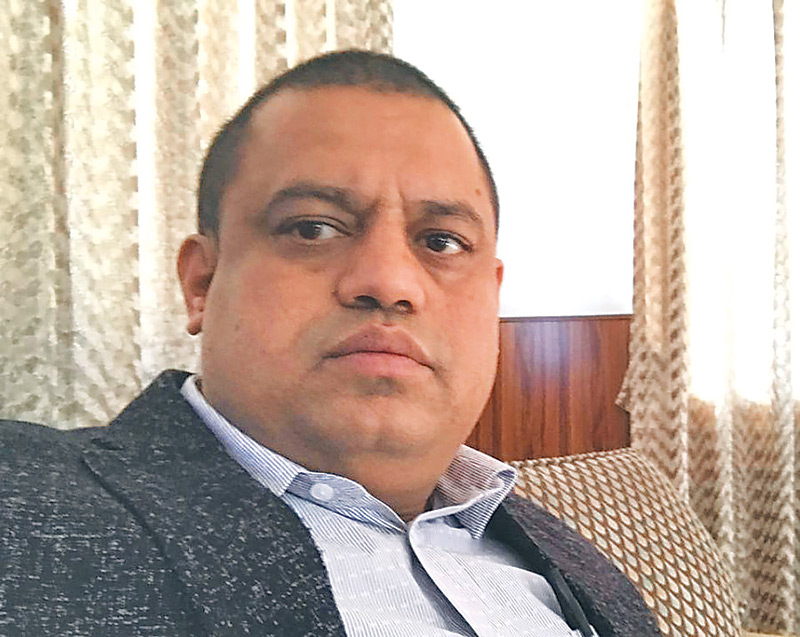
Advocate Om Prakash Aryal, who pleaded on behalf of Friday’s petition, described the court’s Tuesday observations as meaningful.
According to Aryal, the court order authorises the Kavre District Police Office to move its investigation forward, as the onus to present the status report of the case is on the police.
Since Sapkota’s nomination as Speaker, conflict victims and national and international rights activists have expressed concern, asking for the Nepal government and parties’ position on the transitional justice process. Describing Sapkota’s nomination as Speaker as a setback for the transitional justice process, four international rights organisations—Amnesty International, Human Rights Watch, International Commission of Jurists and TRIAL—on Saturday had even warned that conflict victims could seek justice internationally under universal jurisdiction.
Senior advocate Baburam Giri said that even though the court stopped short of issuing an interim order, its ruling will help expedite the investigation into Purnimaya’s first information report filed with the police.
“Earlier, the police had been saying that they had failed to trace Sapkota. But since the court has asked the police to furnish a progress report, there is a legal compulsion to follow up,” Giri told the Post. “No interim order today means that the Supreme Court has left the case up to the Constitutional Bench to deal with.”
The Constitutional Bench is scheduled to hear the case against Sapkota on February 5.
Petitioner Tripathi said that if the police fail to apprise the court of progress in the investigation, the department risks facing a contempt of court charge.
“But the larger issue here is moral standing,” Tripathi told the Post. “The Speaker leads the state’s law-making body, the hallowed parliament, which also elects the prime minister. That apart, the Speaker also has a crucial role in the appointment of officials in constitutional bodies as a member of the Constitutional Council.”

HOME PAGE

As other airports institute stringent screening, TIA installs thermal scanners and a health desk

All mandatory screening instructions for airlines flying to China have come from Chinese authorities, while the Kathmandu airport has only circulated a manual.
- SANGAM PRASAIN
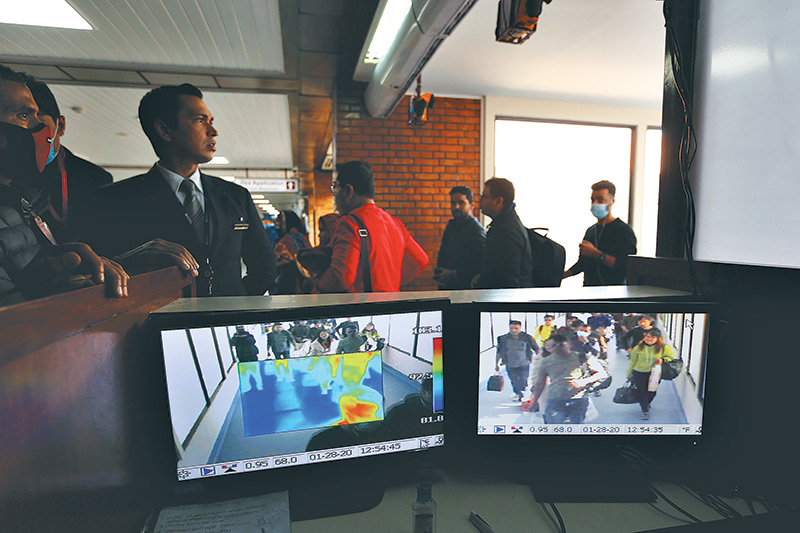
A thermal scanner has been installed at the Tribhuvan International Airport after the health authorities confirmed the first case of coronavirus in the country. POST PHOTO:KIRAN PANDAY

KATHMANDU,
Kathmandu’s Tribhuvan International Airport has activated an ‘airport emergency plan’ as part of its preparations to respond to the coronavirus outbreak, even as airlines cancel flights and adopt increasingly stringent screening measures.
Airports and airlines in many countries are taking drastic steps to protect staff and passengers amid heightened concerns over the outbreak of a new virus originating from the Chinese city of Wuhan. Many airports have instituted mandatory health screenings of passengers from China while Chinese airlines are checking the temperature of every passenger before flying in and out.
Thousands of Chinese tourists visit Nepal every year but so do Chinese businesspeople and Nepalis who work and study in China. Despite this large influx of passengers from China, Tribhuvan International Airport has been slow to react.
“We’ve now started thermal screening of passengers arriving from all countries, not only China,” said Deo Chandra Lal Karna, spokesperson for the Kathmandu airport.
Thermal scanners will scan the temperature of passengers arriving at the airport and if the temperatures are abnormal—above 98.6 degrees Fahrenheit or 37 degrees Celsius—the passenger will be isolated and sent to the government-authorised hospital via ambulance, said Karna.
Thermal scanners were only installed late last week, despite concerns about their efficacy. Public health experts had told the Post last week that thermal scanners only work well in airconditioned environments. Tribhuvan International Airport is not airconditioned.
Gopal Pandey, in-charge of the airport health desk, told the Post that the airport authorities have started to install an air conditioner in the health desk area.
“In cold temperatures, like it is in Kathmandu, the screening machine should work,” said Pandey. “If any passenger suffers from high fever, the pilot has to communicate the issue with air traffic controllers in the destination airport.”
If a passenger takes medicine before boarding or disembarking, the thermal scanners will not show a high temperature, say doctors, who also point out that the virus is transmissible in its incubation period of 14 days, and during this time, patients do not show any outward symptoms.  
According to Karna, there will also be an announcement on every arrival flight, asking passengers if they are suffering from a fever or a cough and if so, to report to the health desk. Passengers will also have to present themselves to the health desk if they have travelled to Wuhan in the past two weeks, Karna said.
So far, all reporting will be voluntary and if passengers decide not to report themselves, there is little that the airport can do.
Currently, six Chinese carriers—Air China, China Southern, China Eastern, Sichuan Airlines, Cathay Dragon and Tibet Airlines—operate flights to Nepal while Himalaya Airlines flies to Chongqing, Beijing, Changsha, Guiyang and Shenzhen.

Passengers wearing masks walk out of the Tribhuvan International Airport in Kathmandu on Tuesday. POST PHOTO: KIRAN PANDAY


All airlines flying to and from China have instituted mandatory screenings for all passengers on the Chinese authorities’ instructions, said Karna.
Dhiraj Chandra Shrestha, deputy sales manager of China Southern which flies between Kathmandu and Guangzhou, said that all passengers are quarantined in Guangzhou before they are issued boarding passes.
“There is a sensor at the quarantine gate, which will not open if the passenger has a temperature that is above the permissible limit,” he said. “But in Kathmandu, we are screening each passenger with an infrared thermometer—a temperature gun that measures the temperature when pointed to the forehead.”
Boarding passes are only issued once the traveller is confirmed to not have a high temperature, said Shrestha.
China Southern has not cancelled any flights as of Tuesday but said that passengers were dropping fast.
“We are refunding passengers without any charges if they wish to cancel their trip,” said Shrestha. Transit passengers are also cancelling their flights due to fears of contracting the virus at Chinese airports, he said.
The Lhasa-based Tibet Airlines was the first airline to announce a temporary suspension of its flights from Xi’an, the capital of Shaanxi Province in central China, to Kathmandu on Tuesday due to the rapid spread of the coronavirus. The airline has issued a notice to all travel agencies that from February 2 onwards, it will stop flights to-and-from Kathmandu.
Vijay Shrestha, vice-president of administration at Himalaya Airlines, told the Post that flights to Changsha, Guiyang and Shenzhen will be temporarily suspended from February 1 while Beijing and Chongqing flights would be continued.
“We decided to continue flights to Beijing as Nepali students’ movement may rise,” he said. Other Chinese airlines are likely to follow suit as travellers’ movement—inbound and outbound—has started to drop rapidly, airlines officials said on Tuesday.
So far, all of the instructions for screenings have come from the Chinese government, say airline officials. Beyond providing them with a manual outlining of its emergency plans, Tribhuvan International Airport has not communicated any specific measures that the airlines need to adopt, said Vijay Shrestha.
The novel coronavirus has so far killed 82 people in China and infected thousands across the world, including Taiwan, Singapore, South Korea and the United States. On Monday, Germany announced its first case of the virus. Experts warn that the outbreak could last several months, but also say that the virus could die out as the seasons change. 

Page 2
MEDLEY

Horoscope

ARIES (March 21-April 19)
***
Someone needs you to slow down. You’re going full-steam ahead, and this person is feeling a little left behind! It will take everything you’ve got to quit working on what you’re obsessed about, but you need to take a break, at least long enough to give someone in your life the attention they deserve.


TAURUS (April 20-May 20)
**
Today, when your deep understanding of someone else’s pain catches you by surprise, don’t be afraid. These sudden, empathetic emotions might take you off guard, but they’re wonderful evidence of the amount of love that you have in your heart. Give some of that love away today. Hug someone who’s going through a hard time.


GEMINI (May 21-June 21)
****
You can have a lot of influence over a lot of people today if you want to. Are you ready to step away from the crowd and champion that big issue that no one else wants to deal with? Things need to be brought up in order to be aired out. Discussion is key. Don’t feel bad for pushing for what you want.


CANCER (June 22-July 22)
**  
If you’ve been going out a lot lately, consider staying in tonight. Read a book or watch a movie that will transport you to another world. Conversely, if you’ve been starring in the role of homebody for weeks, it’s time to get out and paint the town red. How you relax has got to change.


LEO (July 23-August 22)
*  
Don’t be too alarmed if some problems you’re having at home start to spill over into your social life. No harm will come of it. It’s only natural that things that are important to you take center stage, especially when they aren’t going quite right. You will be distracted. But don’t let that bug you down. Relax.


VIRGO (August 23-September 22)
***  
Get bolder when it comes to your goals. If you err on the side of brash, you will transform your ambition from its current, 90-pound-weakling state to a healthy, strong, muscle-bound jock of an emotion. Explore things that intimidate you. If you need a kick in the pants to get you going, consult someone.


LIBRA (September 23-October 22)
****  
By defending someone one in public, you did more than become their biggest hero. You made quite a big impression on the onlookers, and people are starting to see you in a brand-new light. Therefore, you can expect to be given extra authority in an upcoming situation. Get ready.


SCORPIO (October 23-November 21)
***  
Try to expose yourself to new ideas today by interacting with people who don’t always agree with you. Meeting up with someone who comes from a different background, culture, or religion will also result in a good learning experience. You need to find out different perspectives about things.


SAGITTARIUS (November 22-December 21)
 **
 Listen to the conservative voice inside of you. This is a day to play it safe and hold on tight to the things that are yours. As much as you would like to give your time to others, you need to let them fend for themselves. If you help them too much, you will spoil them. Be a supportive person, but do not be an enabler.


CAPRICORN (December 22-January 19)
***  
Today is a good day to get in some cleaning, whether that means tidying up a room or clearing up a misunderstanding. You have the positive feelings and high energy that the task requires, so you’ll enjoy every minute of the effort, especially since you already known how wonderful the results of your efforts will be.


AQUARIUS (January 20-February 18)
***
You must be incredibly disciplined today, so keep your eye on the ball! There will distractions. These could range from some sort of spontaneous party to a nagging sensation that you’re forgetting to do something. In order to get things done, you need to stay focused on the task at hand.


PISCES (February 19-March 20)
**  
A friend may be experiencing some relationship problems right now, but helping them out is not your obligation. Even if you think you know exactly what they need to do to get out of this mess, bite your tongue and just let them deal with it on their own. There is a lesson here that they need to learn.

Page 3
NATIONAL

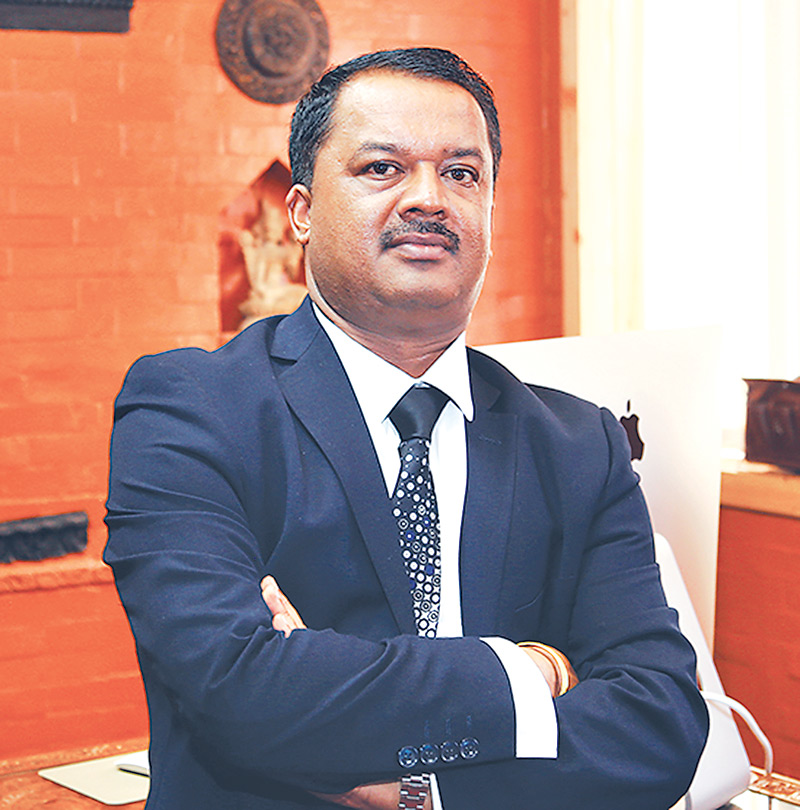
Regmi appointed CEO of Nepal Tourism Board

- SANGAM PRASAIN
Dhananjay Regmi. Photo via Facebook

KATHMANDU,
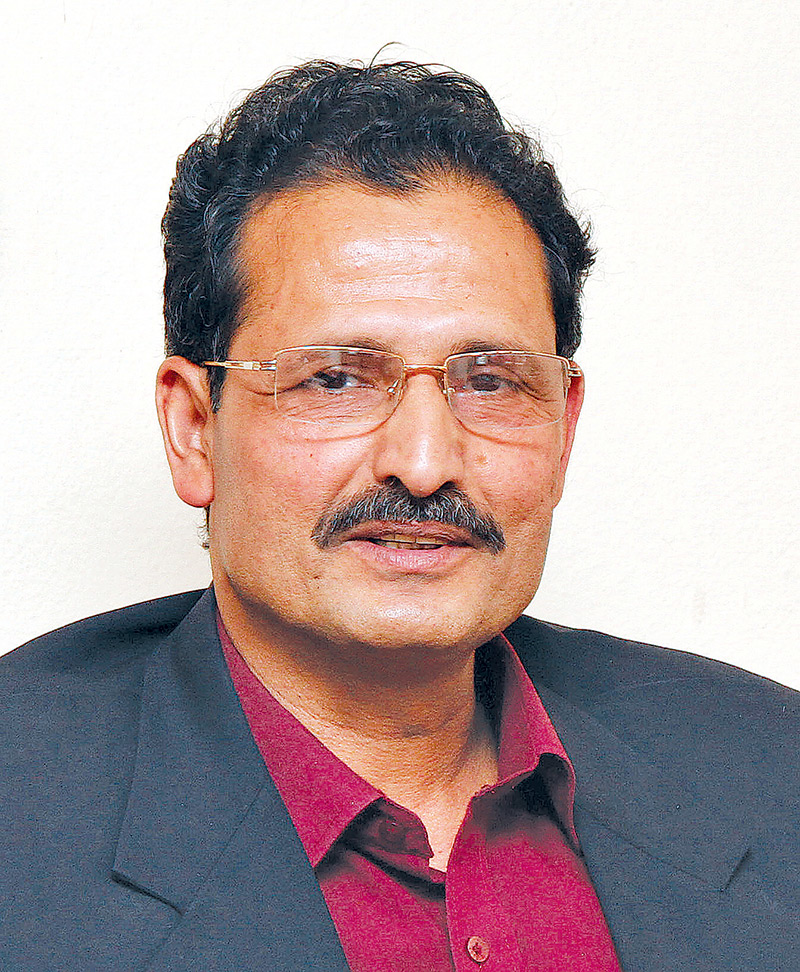
A board meeting of the Nepal Tourism Board on Tuesday appointed Dhananjay Regmi as the head of the country’s tourism promotional body for a four-year term following a week of behind-the-scenes political manoeuvring.
The board meeting, chaired by Tourism Secretary Kedar Bahadur Adhikari, picked Regmi from among three candidates on the shortlist that included Hikmat Singh Ayer and Deepak Bastakoti.
There were 17 applicants for the top post at the Tourism Board. Nine candidates made it past the first round, and three finalists were on the shortlist drawn up by the CEO selection sub-committee.
Regmi was the top choice for the position, with a score of 34 points to Bastakoti’s 26.3 and Ayer’s 26.1. But his nomination had become uncertain after both the Prime Minister’s Office and the Tourism Ministry jockeyed to place their own man in the top spot. Regmi is not a member of the ruling Nepal Communist Party.
Attempts to reach Regmi for comment via telephone were unsuccessful.
Krishna Bahadur Mahara, a board member representing the private sector, said that Regmi was appointed by a unanimous decision of the board’s quorum. Mahara, who was also a member of the CEO selection sub-committee, said Regmi was given the highest scores based on his outstanding performance on the business plan, presentation and interview.
Nepal Tourism Board’s 11-member board consists of five representatives each from the government and the private sector besides the CEO. The tourism secretary chairs the board.
“Now, Regmi has to submit another four-year plan to run the organisation and sign a performance contract before assuming office,” said Mahara.
Regmi is an environmental activist with a doctorate in environmental earth science from the Graduate School of Environmental Earth Science at Hokkaido University in Sapporo, Japan. Previously a geography teacher at Budhanilkantha Higher Secondary School, he is the chairperson of Himalayan Research Expedition Nepal, a tourism company that focuses on eco-friendly tours and treks for mountain researchers and scholars. Regmi also owns the Himalayan North-Face Resort in Lukla.
The Nepal Tourism Board had been headless since Deepak Raj Joshi’s term ended in the third week of December. The board had extended Joshi’s term by three months in an attempt to retain him as the country launched the Visit Nepal 2020 campaign. He turned down the offer in order to apply for a full second term. Joshi did not make it to the shortlist.

NATIONAL

Security printing press proposals from Germany and France were immature: House committee

Parliamentary Accounts Committee wants the government to either invite a fresh global bidding or revisit the proposals.
- ANIL GIRI
Post illustration

KATHMANDU,
The Parliamentary Accounts Committee has concluded that the proposals forwarded to set up a security printing press by German and French firms are immature and incomplete.
The committee is planning to instruct the Ministry of Communication and Information Technology to either go for a fresh global bidding process or revisit the proposals before holding final negotiations with the two firms.
The House panel has already held one round of discussion earlier this month and sought all documents and communications made between the Ministry of Communication and Information Technology and German and French firms since the negotiations of security printing press began with German first and later with French governments.
The House committee’s conclusion, with the stock of passports and excise duty stickers depleting fast, means the Ministry of Foreign Affairs and the Ministry of Finance will have to take independent calls on printing passports and excise duty stickers.
The Parliamentary Accounts Committee is going to hold a meeting with Communication and Information Secretary Deepak Subedi and Executive Director of the Department of Security Printing Press Bikal Poudel very soon, officials at the House committee told the Post.
The security printing project had landed in controversy since the government decided to procure the facility on a soft loan from France under a government-to-government deal last year. But the government later accepted a proposal from Germany.
A complaint was registered at the House committee, alleging that both proposals had quoted high interest rates on soft loan offers which the country could not afford.
“We have concluded that both proposals are not mature and they need to be revisited, said Rojnath Pandey, secretary at the House committee. “We have doubts over machines, capacity, pricing and capability of the firms.”
The German and French firms have offered soft loans of 185 and 175 million euros, respectively, to the government of Nepal to set up a security printing press that will be able to print all sensitive documents like passports and official stickers, but not currency notes. Printing notes requires a high-end facility in a bullet-proof housing, which will only add to the cost.
If the House committee hands over the decision to cancel the further negotiations process with French and German firms or revisit them, the government will have a narrow window for supply for passports and excise duty sticker.
“We went through both proposals. The entire evaluation process was wrong. It didn’t follow the competitive bidding process, which should be open for all. When the Cabinet opted for the second option of government-to- government deal, it killed the basic component of fair competitiveness. And we have noticed that one proposal was twisted later, which was a grave mistake on the side of the ministry,” said Pandey.
Earlier, the government had cancelled global bidding for the passport printing, saying that it will be printed and supplied after installation of security printing facilities.
While the Parliamentary Accounts Committee and the Finance Committee, another House panel studying the proposals, are yet to formally communicate their decisions to the government, a meeting of government secretaries have already agreed to take an independent call on printing passports and excise duty stickers.
The meeting last week decided that since security printing project is getting delayed with a lot of uncertainties, the ministries of foreign affairs and finance were to be urged to take an independent call and manage their requirements, Communication and Information Secretary Subedi told the Post.
“Since the proposal to set up a security printing facility is under discussion at two House panels, we have already agreed to resolve the anticipated crisis of passports and excise duty sticker,” said Subedi.
A senior official at the Ministry of Foreign Affairs said the ministry has three options. The first one is holding
negotiations with the French firm, IN Groupe, by going against the Public Procurement Act, because there has been a government-to-government.
The second option, the official said, is negotiating with both German and French firms and striking a deal with the one that is ready to provide the service at a competitive price.
The third option is once again inviting global bids, a process that the government abruptly cancelled on November 8 last year.
The Department of Passports currently has a stock of around 4,7000 ordinary passports and a few hundred official passports. The numbers of diplomatic passports can sustain for another one year.
Oberthur Technologies, the French company that has been providing machine-readable passports since 2010, has completed the supplies of over 2 million passports. An official at Oberthur Technologies had earlier told the Post that it won’t be easy to continue with the present contract due to technological constraints and the small timeframe.
If the government did not act quickly, there could soon be a passport crisis in the country.

NATIONAL

Country witnessed higher than normal rainfall this winter season

International scientists have linked aberrant rain patterns with climate change, but Nepal lacks homegrown studies to confirm the cause.
- CHANDAN KUMAR MANDAL
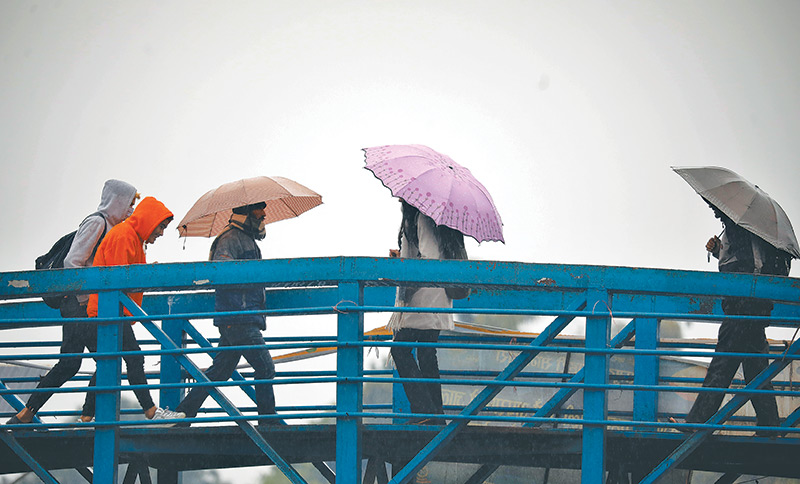
Winter rainfall, which occurs because of the westerly disturbance, contributes nearly 3.5 percent of the country’s annual rainfall. Post Photo: Hemanta Shrestha

KATHMANDU,
Amid growing scientific evidence of climate change altering rainfall patterns, the country has been experiencing a very active rainfall this winter season, according to the Department of Hydrology and Meteorology.
The department has said that all the weather stations, which regularly keep track of rainfall, have recorded higher than normal rainfall this winter.
The normal rainfall of any place for any particular month is calculated as the average of the total rainfall received during a given month between 1981 and 2010. The rainfall data of the ongoing winter season have shown that most of the stations have crossed the normal rainfall mark.
Except for the weather stations in Dharan and Biratnagar, all other stations have recorded significantly more precipitation than their normal this winter season, which is not over yet.
According to Indira Kadel, a senior divisional meteorologist at the department, some stations have recorded twice the normal rainfall, which is the average of precipitation over 30 years period from 1981 to 2010.
“The winter rainfall has been noticeably active this season. Almost all the stations have received more rainfall,” Kadel told the Post. “But this is not something that has happened for the first time in the last few years. For linking it with climate change, we need to analyse its intensity and frequency.”
The amount of rainfall a place receives is called ‘normal’ when the received amount of rain remains somewhere between 90 to 110 percent of the average rainfall.  
The internal prediction of the department had also predicted that the winter rainfall would be above the normal this year. While there is still a month left of the winter season, many parts of the country have already received rainfall above the normal range and there are chances of a few more wet spells in the days ahead.
Winter rainfall, which occurs because of the westerly disturbance, contributes nearly 3.5 percent of the country’s annual rainfall. Despite the lower amount of rainfall, winter precipitation is considered valuable for winter crops, especially in high mountains where snow provides much-needed moisture to the crops for a longer period of time.
The country has received frequent rainfall spell this season, leaving the country cold and wet. The country had a dry winter last year.
“Some stations received 60 percent of the normal rainfall and a few others received as low as 30 percent last winter,” said Kadel, who is the chief of the Climate Analysis Section under the department. “This year, it is above the normal range. But this is not something that has happened for the first time.”
The years 2006 and 2009 were dry years. In those years, even monsoon remained mostly dry across the country.
Even this year, when monsoon was expected to be normal, the country’s western and far-western regions received ‘below normal’ rainfall.
Meanwhile, high altitude places in Nepal have also seen a significant rise in maximum temperature than low-lying districts, causing excessive melting of snow in the Himalayas.
Although meteorologists shy away from linking these changes with climate change due to lack of detailed study in the country, the changes in the precipitation pattern are evident which is because of annual variability in rainfall which in turn can be linked with climate change.
 “Inter-annual variability or inconsistency has definitely gone up because of climate change as suggested by various studies,” said Kadel.
“Such unpredictability increases the climate risk and uncertainty about our farming and development planning and increases the cost,” he added.
Uncertain amount of rain causes confusion among planners and public from selecting crops for cultivation to roofing houses to infrastructure development.
“Besides affecting the development planning and general life, unpredictable weather phenomenon also adds to the challenge of forecasting,” said Kadel.

Page 4
MEDLEY

Government is unsure whether it should recover fine from Shailung Construction

Shailung is being fined Rs 150,000 per day since October for the delay of upgradation and expansion of the Kamalbinayak-Nagarkot road.
- PRITHVI MAN SHRESTHA
Shailung Construction Chairman Sharada Prasad Adhikari. Photo via shailung.com

KATHMANDU,
Shailung Construction, owned by Sharada Prasad Adhikari, is being fined every day since October for the delay of Kamalbinayak-Nagarkot road.
Adhikari had got an extension of the contract deadline after he agreed his company would pay the fine for the delay.
According to officials at the Department of Roads, Shailung is being fined Rs150,000 per day, which according to the original public procurement regulation could be up to 10 percent of the total contract value. The road being upgraded and expanded by Shailung is with the Indian assistance.
However, Road Improvement and Development Project Directorate, which handles the projects aided by Export-Import Bank of India (Exim Bank of India), is now in a dilemma whether to recover the fine from Shailung after it applied for an extension of its contract deadline as per the newly amended Public Procurement Regulation.
The ninth amendment to the regulation issued on December 30 last year states that a contractor should not pay a fine to get the contract deadline extended for a maximum of one year.
Despite being forced to pay a fine, the company sought an extension of the contract deadline as per the terms mentioned in the ninth amendment.
“We have not deducted the fine from its bills, which amounts to around Rs30 million so far. We are not sure whether to recover that amount since their contract extension should be treated as per the amended regulation,” said Jagat Prajapati, an official at the Road Improvement Project under the Department of Roads.
Shailung is owned by Sharada Prasad Adhikari, the landlord of Nepal Communist Party Co-Chairman Pushpa Kamal Dahal.
The contract for the road project was awarded in June 2014 to the joint venture of Shailung and AIPL Construction (India). The widening of the 16-km road has not yet been completed.
Officials said even though the roads department was considering terminating Shailung’s contract, it was allowed to continue work due to the political clout that Adhikari wielded as Dahal’s landlord.
“There is some truth in the claim that political influence played a role in Shailung’s contract extension,” a senior official at the Department of Roads told Post, hinting at Adhikari’s political influence.
A few weeks after the deadline of the project was extended, local people had started plastering the images of Adhikari on public vehicles, trees and poles, asking him to blacktop the road at the earliest.
As matters stand, private contractors wield so much power that the government often makes regulations to suit their interests. The government, over a span of two and a half months earlier this year—on May 13, June 6 and August 1-- amended the Public Procurement Regulation after some contractors complained that some provisions were not in their favour.
Contractors argue that they should not be subjected to fines for project delays.
“As long as the government has not collected the fine and the money is not yet a part of the government’s revenue stream, the contractors should not be fined,” said Rabi Singh, president of the Federation of Contractors’ Association, a representative body of the contractors.
“The regulation was amended as a win-win modality for both the government and the contractors where the government would not fine the contractors and the contractors would not demand compensation for delays caused by the government agencies in making payments,” Singh added.

NATIONAL

Government is unsure whether it should recover fine from Shailung Construction

Shailung is being fined Rs 150,000 per day since October for the delay of upgradation and expansion of the Kamalbinayak-Nagarkot road.
- PRITHVI MAN SHRESTHA
Shailung Construction Chairman Sharada Prasad Adhikari. Photo via shailung.com

KATHMANDU,
Shailung Construction, owned by Sharada Prasad Adhikari, is being fined every day since October for the delay of Kamalbinayak-Nagarkot road.
Adhikari had got an extension of the contract deadline after he agreed his company would pay the fine for the delay.
According to officials at the Department of Roads, Shailung is being fined Rs150,000 per day, which according to the original public procurement regulation could be up to 10 percent of the total contract value. The road being upgraded and expanded by Shailung is with the Indian assistance.
However, Road Improvement and Development Project Directorate, which handles the projects aided by Export-Import Bank of India (Exim Bank of India), is now in a dilemma whether to recover the fine from Shailung after it applied for an extension of its contract deadline as per the newly amended Public Procurement Regulation.
The ninth amendment to the regulation issued on December 30 last year states that a contractor should not pay a fine to get the contract deadline extended for a maximum of one year.
Despite being forced to pay a fine, the company sought an extension of the contract deadline as per the terms mentioned in the ninth amendment.
“We have not deducted the fine from its bills, which amounts to around Rs30 million so far. We are not sure whether to recover that amount since their contract extension should be treated as per the amended regulation,” said Jagat Prajapati, an official at the Road Improvement Project under the Department of Roads.
Shailung is owned by Sharada Prasad Adhikari, the landlord of Nepal Communist Party Co-Chairman Pushpa Kamal Dahal.
The contract for the road project was awarded in June 2014 to the joint venture of Shailung and AIPL Construction (India). The widening of the 16-km road has not yet been completed.
Officials said even though the roads department was considering terminating Shailung’s contract, it was allowed to continue work due to the political clout that Adhikari wielded as Dahal’s landlord.
“There is some truth in the claim that political influence played a role in Shailung’s contract extension,” a senior official at the Department of Roads told Post, hinting at Adhikari’s political influence.
A few weeks after the deadline of the project was extended, local people had started plastering the images of Adhikari on public vehicles, trees and poles, asking him to blacktop the road at the earliest.
As matters stand, private contractors wield so much power that the government often makes regulations to suit their interests. The government, over a span of two and a half months earlier this year—on May 13, June 6 and August 1-- amended the Public Procurement Regulation after some contractors complained that some provisions were not in their favour.
Contractors argue that they should not be subjected to fines for project delays.
“As long as the government has not collected the fine and the money is not yet a part of the government’s revenue stream, the contractors should not be fined,” said Rabi Singh, president of the Federation of Contractors’ Association, a representative body of the contractors.
“The regulation was amended as a win-win modality for both the government and the contractors where the government would not fine the contractors and the contractors would not demand compensation for delays caused by the government agencies in making payments,” Singh added.

Page 5
NATIONAL

Chand-led cadres allegedly destroyed construction motors over donations

Contractors say excavators were torched following their refusal to donate money to the party.
- PRITHVI MAN SHRESTHA

KATHMANDU,
Over the last one and a half weeks, half a dozen construction equipment, including excavators, deployed by
contractors in Morang, Jhapa and Bara were torched, allegedly, by the cadres of Netra Bikram Chand-led Communist Party of Nepal.
Contractors said the torching happened following Chand’s party’s demand for donations and builders’ refusal to comply. Three excavators deployed by Bhimeshwor Drilling Tatha Nirman Sewa at  Ramite area of Miklajung Rural Municipality were torched last week. Bhimeshwor, in partnership with Sharma and Company Private Limited, has been building a road there.
According to Ramesh Sharma, owner of Sharma and Company, Chand’s Party was demanding one percent of the contract value as donation. “After we refused to donate the amount, they planted the bombs in six excavators deployed at Ramite and the bombs planted in three excavators exploded, damaging the equipment,” said Sharma.
After the incident, contractors took the issue to the District Administration Office, Morang. However, the Chief District Officer, Madan Bhujel, told the Post that there was nothing they could do, as the incident took place when the construction equipment was left with no security. He also said that he had advised the contractors to coordinate with the security agencies and give timely information to the administration to tackle any threats they faced.
However, this is not a lone incident of vandalism. In the last one and a half weeks, two equipment—an excavator and a loader—deployed by Sharma and Company were also torched in Jhapa. “These equipment were deployed to build a bridge over Ratuwa Khola at Damak,” Sharma said. Likewise, an excavator deployed by United Builders at Pathalaiya, Bara, to widen the Birgunj-Pathlaiya Road was also torched last week. The road is being widened to six lanes.
In November last year, a group had torched four excavators deployed by Golden Good Sherpa Construction to blacktop the Diktel-Chakhewa road of the Mid-Hill highway in Khotang.
The frequency with which the party, despite its activities being banned by the government, has been torching the construction equipment has alarmed contractors. But trouble for the contractors do not end there.
Contractors say that they are facing warnings from the security agencies too, who threaten them they will take action if they give donations to the Chand-led party.
“Our security is our biggest concern for us at the moment,” said Rabi Singh, president of the Federation of Contractors’ Association of Nepal.
Shirking responsibility, Kedarnath Sharma, spokesperson for the Home Ministry, said, “In the recent incidents, it was found that the contractors had not coordinated with the security agencies at the concerned district after they received threats. The safety of their equipment could have been ensured, had they notified the security agencies about where their equipment were.”
The ministry’s spokesperson also said that a people should take more precautions for the safety of his/her property. “Security cannot be deployed at every house. So, it is better for the companies to take necessary measures to protect their property, which includes installation of CCTV cameras,” said Sharma.

NATIONAL

Victims prefer police to judicial committee for justice

- TRIPTI SHAHI

BAITADI,
An inebriated neighbour had verbally abused Kastura Airi of Sunarya Rural Municipality in Baitadi district five months ago. Airi knows well about the provision of the local unit’s judicial council to settle disputes. However, instead of filing a complaint at the judicial committee, she visited a temporary police post in Satbanjh and lodged a complaint against her neighbour.  
“I decided to complain to the police because the judicial committee is not effective at providing justice,” said Airi.
According to her, Kamala Mahara from the same village had soughthelp from the committee when her husband started abusing her. But the committee did not do anything to stop the abuse, so Mahara had to file a complaint with the police.
Saraswati Kunwar of Dogadakedar Rural Municipality Ward No. 3 went through a similar ordeal. She had filed a complaint at the judicial committee against her husband Prakash and father-in-law Nabaraj on domestic violence charge a few months ago. The committee settled the dispute after the accused signed an agreement paper of not repeating such acts in the future. But the violence continued, and Kunwar had to seek the help of the police.
Like Airi, Mahara and Kunwar, many villagers—mainly victims of domestic violence—prefer police to the local judicial committee to get justice. “It takes months to get justice if we depend on the judicial committee. Police take immediate action and resolve the problems,” said Kaushila Chand of Sunarya Rural Municipality Ward No 2.
The Constitution of Nepal 2015 has envisaged the creation of the judicial committees in each of the 753 local level units in the country. The committee is headed by the deputy mayor in municipalities and vice-chairperson in rural municipalities to deliver justice on specific disputes. However, it has been reported that the committees are not effective in doing their works even after two years of the local body elections.
In Baitadi, the judicial committee has been formed in all 10 local bodies after the elections in 2017. The committees have been looking after various cases of local disputes and domestic violence. But the victims have little faith on the committees to get timely justice. As per the information available at the local units, only a few cases have been filed with the committees. In the judicial committee of Signas Rural Municipality, only a single case has been filed so far.
The people’s representatives admit that the committees are ineffective. “We have been suffering from various problems like shortage of resources, legal advisers, and separate bench. As a result, we are unable to provide prompt justice,” said Parbati Rana, the judicial committee coordinator of Dilashaini Rural Municipality.  
Most of the people’s representatives in the judicial committee do not have the legal knowledge to settle
disputes. And most of the local bodies in the district are yet to appoint legal advisors.
“The victims want immediate justice but we are unable to do so due to a lack of resources. Meanwhile, police have a good mechanism to look after cases and they are fast,” said Parbati Airi Karki, the vice-chairperson of Dogadakedar Rural Municipality.

NATIONAL

Issues over administrative centre makes life hard for Junichande locals

- BHIM BAHADUR SINGH
Bureaucratic hurdles in selecting the administrative centre has put a lid on the development and day-to-day administrative works in the area. Post file Photo

JAJARKOT,
Day-to-day administrative, as well as development, work have been greatly affected due to the dispute over the administrative centre in Junichande Rural Municipality, Jajarkot.
When the country switched to federalism, most political parties and their local leaders rode on the populism of transfer of power from Singha Durbar, the country’s administrative centre, to the local bodies. It’s been three years since the local governments have been formed, but locals of Junichande say they haven’t felt the impact of local governance yet.
The villagers still have to travel to Khalanga, the district headquarters of Jajarkot, to receive government services. Khalanga is around 70km from Junichande. “During the local level election, our leaders had assured us of door-to-door to services to make life easier for us. Those days ‘Gaun Gaun Ma Singha Durbar’ (Singha Durbar in Every Village) was a popular slogan, but look at us now, we have to go to the district headquarters for even minor services, such as receiving a recommendation letter,” said Laxmi Shahi, a local of Junichande.
“The government services could be prompt and development activities might gain momentum if there are offices in the villages. But we are yet to see local governance take off,” said Shahi, stating that villagers have to spend around Rs 8,000 to Rs 10,000 for one-time travel to Khalanga.
The bureaucratic hurdles in selecting the administrative centre in Junichande has put a lid on the development and day-to-day administrative works in the area. The federal government had declared Parale as the temporary administrative centre for Junichande but the assigned government employees could not assume their posts in Parale because of the dispute among the people’s representatives. The people’s representatives of
Parale and Luhadaha are engrossed in a tug-of-war, hoping to make their local unit the administrative centre of the rural municipality. Therefore, the administrative office is currently operating out of the district headquarters, said  Sarbadal Shahi, administrative officer of the rural municipality. “Although the Ministry of Federal Affairs and General Administration asked us to move to Parale, the environment there is not welcoming,” said Shahi.
In Rukum (West) too, a lack of consensus among the people’s representatives over the administrative centre has the locals travelling frequently between the Tribeni Rural Municipality’s head office and its thematic offices.
Ramesh Pun, chief at Agriculture Section of the rural municipality, said Education, Youth and Sports, and Agriculture among other thematic offices are in Simratu. “Simratu is around seven kilometres from Kharanetar, Tribeni Rural Municipality Ward No. 3 office. Service seekers have to frequent two separate places to get one job done,” said Pun.
Jhakku Prasad Gharti Magar, chairman of the rural municipality, said they have been providing services from Kharanetar for the time being. “We are going to settle this dispute soon,” said Magar.
Hari Gautam contributed reporting.

NATIONAL

Women in Kalikot aim to make district literate

- Tularam Pandey

PALANTA (KALIKOT),
Sunatara Shahi, a resident of Khin in Kalikot, had never received formal education until a year ago. In all her 27 years of life, she had never learnt to read and write but now she can write her name and carry out simple calculations.
“In the past, I had to use my thumbprint in official documents, but now I can write my name,” said Shahi.
Many women like Shahi who share a common goal of being literate have come out in droves to join the women literacy class run by Palanta Rural Municipality. Within a year, around 500 women have become literate, according to the data of the rural municipality.
“Earlier, we would hesitate to attend meetings and seminars in the village. But these days, we eagerly attend programmes and the first thing we do is sign our names in,” said Shahi.
Janakala Bishwokarma, 42, of Dhaulagoha is known to have spearheaded the literacy movement in the local unit. She is regarded as a hero in the villages. Bishwokarma, who learnt to read and write three years ago, said, “I learnt to read and write when I hit middle age. But it’s never too late. Learning to read and write also provided me with an opportunity to make an income.”
Bishwokarma runs a general store which she started with a loan from Laigurans Sabal Samuha, a local saving group in her village.
Women who took the literacy class have started to learn self-employment skills in the villages. Asha Budha, 29, of Ukhadi said she has started her own tailoring business in her own village after learning to read and write.
The rural municipality has been conducting women literacy classes for the past two years to improve the
literacy rate in rural areas. The classes are being conducted in all nine wards, including Thirpu, Khin, Ukhadi and Dhaulagoha villages. The total population of the rural municipality is 15,300 with a literacy rate of 48 percent. “Only 37 percent of women are literate in Palanta,” said Dana Neupane, vice-chairperson of the rural municipality, citing that literacy classes have empowered women in the local unit.
Laxman Bahadur Bam, chairman of the rural municipality, said that Rs 15.5 million has been invested for the women literacy campaign.
“We have started a social transformation campaign by providing education to women,” said Bam. In the last fiscal year, the rural municipality had allocated Rs 4.5 million to make Palanta a literate rural municipality.

NATIONAL

Three killed, nine injured in truck crash

Briefing
- Post Report

BHAIRAHAWA: Three people died and nine others were injured when three trucks collided at Chhipagad in Rohini Rural Municipality on Tuesday. According to the District Traffic Police, the trucks were on their way to Maechawar in Rupandehi from Bhairahawa when the accident took place.

NATIONAL

Woman held with drugs

Briefing
- Post Report

SARLAHI: A woman has been arrested in possession of controlled pharmaceutical drugs from Malangawa in Sarlahi. Sita Devi, 35, of India was arrested with 295 sets of controlled drugs and syringes, said police.

NATIONAL

Three excavators used in illegal sand mining seized

Briefing
- Post Report

KANCHANPUR: Police seized three excavators used for illegally extracting riverbed materials from the Mahakali river in the past two days. According to the District Police Office, one of the seized excavators belongs to Bhimdutta Municipality.

NATIONAL

Taskforce formed to investigate death of eight Indian tourists

Briefing
- Post Report

HETAUDA: The Provincial Ministry of Industry, Tourism, Forest and Environment has formed a task force to investigate the death of eight Indian tourists in a Daman-based resort. The cabinet meeting of the Bagmati provincial government formed the five-member task force under the chairmanship of Nabin Giri on Tuesday.

NATIONAL

Curfew imposed in Birendranagar

Briefing
- Post Report

BIRENDRANAGAR: The local administration clamped a curfew order in the Birendranagar Bazaar area from 6:30 pm on Tuesday to 6 am on Wednesday following a violent protest. Locals and relatives of Keshar Bahadur Singh, who was killed in a truck hit on Tuesday morning, staged demonstrations following Singh’s death. Security personnel fired warning shots and tear gas canisters to contain the situation.

Page 6
EDITORIAL

Respect the press

The media played a vital role in Nepal’s transition to a republic.

In May 2019, bypassing the important deliberation phase with the concerned parties, the government quietly presented the Media Council Bill to Parliament. It quickly met with criticism over the proposed legislation, which aims to replace the existing Press Council Act, as some of its provisions were aimed at stifling the press. One of them mandated a fine of up to Rs 1 million against journalists for violating the ‘media code of ethics’.
The problematic provisions raised fears of more sanctions on press freedom. Despite criticism, the government appeared adamant, arguing that there was a need to ‘regulate the Nepali media’. Organisations representing the media and rights activists held several rounds of talks and managed to extract a promise that the bill and its provisions would be reviewed. On Monday, cross-party representatives in the Legislation Management Committee of the National Assembly agreed to remove the provisions.
Although late, the decision means some semblance of sanity. But the battle has only been half won. While the committee has agreed to not fine journalists for doing their job, it continued with another provision which makes it mandatory for new journalists to obtain a licence before they can start practicing journalism.
Ever since Oli’s ascension to power in 2018, attacking the press and muzzling dissent has been his administration’s common features. From introducing the draconian IT Management Bill, which threatened to curtail freedom of speech online along with increased surveillance of personal data, to shrouding the Media Council Bill in secrecy before presenting it in Parliament, the government seemed hell-bent on clamping down on the media.
The environment for free and safe journalism considerably shrank in 2018. The Federation of Nepali Journalists reported that there have been 42 incidents of abuse against journalists since May 4, 2018. Nepal’s ranking in the World Press Freedom Index did not improve either. It was ranked 106th out of 180 countries in both 2018 and 2019. Journalism is of utmost importance to democracy and human rights. For democracy to be healthy, the importance of a free press cannot be overstated. And to maintain that, journalists need not give exams to prove their competency.
The government must not impose conditions where its citizens who serve in various capacities have to choose one thing over another. Instead, it must create a conducive environment where the ruler and the ruled are on the same page. That is what makes for a thriving, participative democracy. The Media Council Bill was against democratic norms and the freedom of expression that is ensured by the Constitution of Nepal.
It is commendable that the government has corrected its actions, but it still needs to do more and get rid of the condition that forces journalists to obtain a licence. The media played a cardinal role in Nepal’s transition from a monarchy to a republic, championing the voices of the people, and clamouring for rights. The constant tussle between the authorities and the press is a sign of a healthy democracy, where praise, disagreement, criticism and satire all go hand in hand. The government must respect that.

OPINION

National actions and local shocks

Nothing can symbolically represent India-Pakistan relations better than the snake and ladder game.
- MAHENDRA P LAMA
Shutterstock

In South Asia, any action by a national government tends to both trickle down to the local level and transcend national boundaries. The ‘hijacking’ of Indian Airlines Flight 814 from Kathmandu to Kandahar in Afghanistan in 1999 and subsequent security clampdown by India hugely impacted bilateral tourist movement that affected even the smallest stakeholder in this prolific industry. ‘Demonetisation’ in India in 2016 has had a visibly severe impact at the most local level, and also across neighbourhoods in Bangladesh, Bhutan, Nepal and even Sri Lanka. The ‘economic blockade’ by India against Nepal in 2015 led to gruelling hardships at a very local level and also a massive confidence slide down and trust gap at the national level in both countries. However, such hardships at the bottom most peripheries and dislocation of local inhabitants are seldom systematically documented, narrated and accounted for.
Against these regional trends of short memories, Afaq Hussain and Nikita Singla of the Delhi-based Bureau of Research on Industry and Economic Fundamentals have made a wholesome attempt to put together the impact of India-Pakistan bilateral governmental actions at the very local level in the two opposite borderlands of Amritsar and Lahore.


Militant attack in Pulwama
It started with the condemnable militant attack in Pulwama in Jammu and Kashmir on February 14, 2019. A chain of unprecedented actions and reactions then grounded the already deteriorated India-Pakistan relations to zero. India withdrew the most favoured nation treatment extended to Pakistan and imposed a 200 percent customs duty on all Pakistani goods. They barred each other from their respective airspaces. India suspended trade across the line of control in Jammu and Kashmir and created two union territories of Jammu and Kashmir and Ladakh. Pakistan, in turn, expelled the Indian envoy and suspended trade and postal services.  
The bureau’s report brings forth stakeholders who bore the brunt of these bilateral imbroglios. Their recollection of how the well-built edifice of Amritsar-Lahore trade at the Wagah-Attari border with backward and forward linkages collapsed beyond recognition moved the audience. The effects and the affected list in landlocked Amritsar included traders and their families, customs house agents, truck drivers and helpers, labourers, dhabas and vendors, fuel stations, mechanic shops, weighbridges, parking points and stakeholders in the vicinity. This is besides the forfeiture of Rs300 million in income that accrued every month to Amritsar alone.
Beyond Amritsar and Lahore, the story of collateral damage remains untold. The rock salt, dry dates, cement and gypsum that were brought from Pakistan through this route catered to several Indian and Nepali industries and cities. The ‘Pulwana jolt’ led to illegal imports of dates from Pakistan through ports in Maharashtra. Similar upswings in surreptitious activity could be witnessed in cement and rock salt.  A leading rock salt importer in Amritsar revealed the cost of Pulwama: ‘Shri Pathmeda Godham Mahatirth, the world’s largest cowshed located in Rajasthan, was sourcing about 25 trucks of rock salt per year from us at a heavily discounted rate of Rs60,000 for a 20-tonne truck, now the same truck costs Rs400,000.’
Key stakeholders like Saigal and Sandhu made cryptic expressions of hopelessness and uncertainty. A weighbridge contractor exclaimed, ‘One of my staff was getting married on February 18, 2019. Post-Pulwama, when the trade stopped, the bride’s family called off the marriage, mentioning that the groom does not have any source of livelihood now. My boy--he neither has a job nor a family today.’ A truck owner spoke with sharp despondency, ‘Seeing the spiked potential of India-Pakistan trade, I brought three trucks for Rs2.4 million each in 2016, already sold off two at Rs626,000 each. In cases where bank instalments are pending, we are surrendering trucks to the banks, the situation is such that even banks are refusing to take them back. Some of us got rid of them for the price of trash.’
Nothing can symbolically represent India-Pakistan relations better than the orthodox snake and ladder game. Change parameters like cricket, cinema, music, leadership, hospitals, food, Kartarpur and Taxila act like fragile ladders, but snakeheads like Kashmir, line of control, communalism, fundamentalism and terrorism are sharp precipitators. No scenario building and forecast techniques could ever project the friendship curve as the variables that determine this non-linearity are deeply characterised by negative stakeholders, spoiler institutions and typical South Asian prejudices. Post-Partition India-Pakistan trade started off well with India constituting 56 percent of Pakistan’s exports and 32 percent of imports in 1948-49. Total trade steadily increased from $251 million in 2000-01 to $2,561 million. However, as compared to their global trade and as well with China, these figures are just minuscule enough to indicate a protractedly nascent stage of economic exchange.


Durable alternatives
Internally and locally displaced persons in the Wagah-Attari cross-border trade look more realistic when they state that ‘trade is not a switch-on or switch-off phenomenon. While it can be switched off overnight like in February 2019. Switching on will depend on the willingness of traders to engage again’. They believe that expediting rail link projects like Patti-Makhu in Punjab, direct air links from Amritsar to Afghanistan, the Middle East and Central Asia, and market links to these newer destinations could provide durable alternatives to these traders in the borderlands.
The complex and painful nexus between national actions and local shocks, if explored on the Pakistani side also, could generate a new narrative on India-Pakistan relations. Aman ki Aasha (hope for peace) based ‘Nirvana’ is something common folks on both sides of the border are ultimately aspiring to attain. Apparently, there is a gap in vocabulary transmission as immediately after most of the bilaterally ‘warm and friendly’ table talks, India implies Baatein nahi suni gayi (our voices were not heard), and Pakistan gives the impression that Baatein nahi kahi gayi (we were not told anything).


Lama is presently engaged with Pakistani think tanks in developing energy exchange models between India and Pakistan.

OPINION

Satanic times, as Josh warned

For now, there is sudden optimism in the air with people looking determined to thwart Modi’s divisive agenda.
- Javed Naqvi
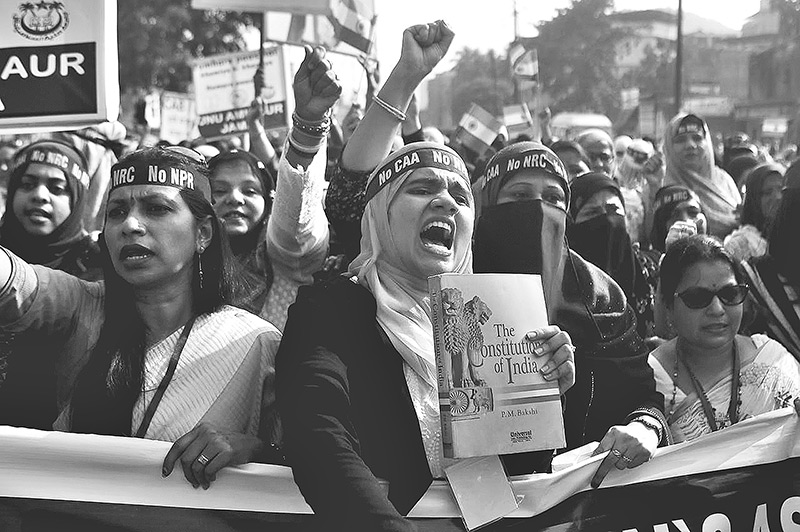
Demonstrators shout slogans during a protest against a new citizenship law on the outskirts of Mumbai, India. Reuters 

‘Shaitan ek raat mein insaan ban gae/ Jitney namak haraam thay kaptaan ban gae.’ Josh Malihabadi, regarded as one of the finest Urdu poets of British India, in his plain-speaking verse was describing what he saw as a satanic subversion of India’s democracy by a system that short-changed the promise of truer freedom. That was decades ago but the lines are relevant today.
It was a long hard-hitting poem on the grand betrayal of the Indian people, an acerbic version of Faiz’s plaint about the mottled dawn in Pakistan. To affirm their suspicion, Zia did bare his fangs in Pakistan. And then, decades later in India, it seems to be Narendra Modi’s turn to ambush the struggling democracy. Pakistan was never able to recover from Zia’s institutional subversion led by his pack of religious bigots. It could be a longer haul to weed out the toxins in a culturally more complex India. Or perhaps its greater diversity will stall the march of Hindutva. For now, street-fighting women across the country, a priceless asset for the struggle, have formed a protective ring around a threatened democracy. For now, there is sudden optimism in the air with people looking determined to thwart Modi’s divisive agenda.
But India was already getting to this point on a slow simmer, paving the way for a more openly communal ruler. In a departure from his predecessors, who kept up the pretence of diplomacy that was tethered to India’s secular ideals, Modi is blending his foreign policy with his right-wing agenda at home. In doing so, he has stitched up an astonishing range of alliances with foul-mouthed dictators and demagogues, unthinkable at any point in the past. Today, there is a discernible club of kindred spirits, who are expanding steadily elsewhere too. Its platinum members are the US president, the Israeli prime minister, the Brazilian president and the Indian prime minister. The common thread between them is the language they use to target vulnerable minorities. (Friends are desperately hoping that Bernie Sanders is elected—a tall order by recent accounts—to shut down the runaway racist club.)
The invitation to far-right EU MPs to visit the besieged Kashmiris, an option denied to India’s own MPs, was an unmistakable example of the new resolve. The presence of the notoriously racist and misogynistic Brazilian president as chief guest at India’s Republic Day celebrations on Sunday offered a clearer picture of Modi’s larger
diplomatic intent.
Jair Bolsonaro’s visit became a mockery of the day in September 1983 when Fidel Castro handed the gavel to Indira Gandhi at the summit of the non-aligned countries in Delhi.  The fanfare is etched deep in memory as African, Asian and Latin American leaders resolved to fight American bullying at Delhi’s Vigyan Bhavan. The resolve included a declaration for the Indian Ocean to be made a nuclear-weapons-free zone, coupled with a call to the US to vacate its military base in Diego Garcia.
Right when the non-aligned leaders were assembling, India Today published a stark cover picture with the chilling story of a massacre of Muslim women and children in Nellie in central Assam. The killings had followed an Enoch Powell-like ‘rivers of blood’ speech by the fiery Hindutva leader Atal Behari Vajpayee. He used an old fault line between a culturally swamped Assamese people and the state’s mostly poor Bengali immigrants to turn it into a Hindu-Muslim flare-up. Vajpayee targeted Muslims pretty much the way Narendra Modi has done. An embarrassed Mrs Gandhi removed all copies of India Today from the press enclosure, but the ghost of the Nellie massacre, captured for posterity by intrepid photojournalist Raghu Rai, continues to haunt India. When it was recently concluded by a supreme court-monitored survey—the national register of citizens in Assam—that a majority of alleged Bengali immigrants were Hindus, the Citizenship Amendment Act was passed by parliament as a corrective measure, at the behest of the Rashtriya Swayamsevak Sangh, to bring back Hindus caught in the Assam citizenship net, while pointedly keeping out the Muslims.
There’s always a foreign trigger in the sharp bends and about-turns in India’s domestic policies, and Modi is no exception. Nehru led the newly independent India into the Commonwealth, an undercover anti-Moscow club of former colonies. Leftist poet Majrooh Sultanpuri was jailed for protesting this in a poem: ‘Commonwealth ka daas hai Nehru, maar le saathi jaane na pai.’ (Nehru is a bootlicker of the Commonwealth, pin him down right there.) Subsequently, it was the East-West rivalry hovering over South Asia that led Mrs Gandhi to the defence treaty with Moscow in 1971, without which it would be difficult to imagine India wading into East Pakistan within four short months.
The foreign trigger that spurred the rise of Modi came with the vanishing of the Soviet Union, and the first US assault on Iraq. The loss of a captive market and an unwieldy oil bill became the ruse to bring in Manmohan Singh with his neo-liberal prescriptions. Mercantile buccaneers feathered their nests with IMF-advised policies, acquiring enormous wealth and unwieldy clout that breached democratic checks and balances. Finished with exploiting Manmohan Singh’s free-market policies with corruption and influence peddling, (which was wire-tapped on one occasion, revealing the depth of the sleaze), the buccaneers turned to Modi to widen the field for plunder. Obliging them faithfully, he ran the economy aground, thus needing to invent a trick a day to keep everyone distracted. Ordinary Indians, discovering a new fighting spirit, can see through the game now, nearly as clearly as Josh would have liked them to see it.


This article was previously published in Dawn, a part of the Asia News Network.

Page 7
OPINION

Will the World Economic Forum help us find climate solutions?

Megacorporations fueled climate change; there is no reason to believe that they are reversing this trend.
- SNEHA PANDEY
Young people at the climate change protest during during the World Economic Forum in Davos, Switzerland. Rumir/Shutterstock

The idea of free-market has gone too far in some parts of the world. While there are benefits to having a market separate from national interests that is fueled by creativity and competition, removing all forms of government oversight and regulation is extreme. Yet, this is exactly what has happened in many democracies around the planet: governments have created a policy environment that fuels profit in the name of development but does little to ensure that corporations do no harm in the process. Such unrestrained capitalism has led to massive socioenvironmental impacts around the world.
Corporations have routinely engaged in destructive resource extraction, goods production, and waste disposal techniques that have fueled climate change and ozone depletion, land and water pollution, biodiversity loss and ecosystem collapse. Today, environmental degradation, in the hands of these companies, is off the charts. So much so that environmental issues were identified as among the top five risk concerns over the next decade for the first time by the World Economic Forum’s 2020 Global Risks Report. Additionally, in its annual meeting in Davos, Switzerland last week, the Forum called on its government and business participants to set a 2050 net-zero emission target.
Now, as a powerful international organisation that is committed to zero-emissions and that aims to promote public-private cooperation to solve global issues, the World Economic Forum may seem like an ideal place to discuss how governments and corporations can work together to decrease the socioenvironmental impact of development. But this has rarely been the case. As the name suggests, the activities within the Forum’s halls have usually prioritised the economy over the people and the planet. Additionally, the organisation is far from inclusive: Attendance is either invitation only or costs a membership fee of a couple of hundred thousand dollars, and a majority of the members in attendance are white, male and affiliated to big businesses.
So, given their demonstrated priorities and their exclusivity, can we depend on the Forum to help us find solutions for the climate challenges we are facing today?
A Carbon Majors report from 2017 finds that 100 companies alone—most of whom were present in Davos this year—are responsible for 71 percent of the global emissions since 1998. It comes as no surprise that the world’s biggest oil companies such as ExxonMobil, BP, Shell, and Chevron make this cut. However, it is not just this corporate contribution to climate change that is troubling, it is also the companies’ history of hiding evidence, greenwashing their image and covertly subverting climate action.
In 2015, news broke that despite ExxonMobil scientists and executives knowing about climate change as early as the 1980s, they engaged in an extensive multi-decade campaign to spread doubt about the issue. Exxon was accused of deliberately misleading the public to serve its own interests. A 2017 research by two Harvard professors, examining the company’s internal research documents and public statements, confirmed this accusation. The research found that the company’s internal studies yielded the same conclusions that outside scientists did on global warming. Despite this, however, 80 percent of Exxon’s communication to the public, expressed doubt about climate change.
Their deception did not stop here though. Exxon did not only deny climate change themselves but paid other organisations to do so as well: Up until the 2000s, Exxon funded thinktanks to push climate denial. While this eventually stopped due to rising public criticism, the company still supports groups that oppose climate action and often lobbies politicians to do the same. A 2019 report by Influence Map found that oil companies like Exxon, BP and Chevron spend nearly $200 million annually—lobbying to delay or block climate change mitigation policies.
Despite having done little to address climate change, Exxon and other polluting megacorporations like it paint themselves as climate champions to the public. Companies achieve this greenwashing through public announcements and advertisements that deliberately oversell their climate contributions or by sponsoring the United Nations’ annual global climate talks.
Greenwashing not only keeps polluting corporations from losing their environmentally-conscious customer base but also allows them access to the halls of global climate negotiations, where they use their presence to water-down climate policies and actions. For example, like every other year, present among the participants of COP25 last month were hundreds of fossil fuel lobbyists. This conflicting presence of the fossil industry has subverted climate action for decades. After all, even the most ambitious global climate change agreement, the Paris Agreement, makes no mention of coal, oil, natural gas or fossil fuels.
These examples of climate inaction and deliberate policy subversion more or less characterise the behaviour of most big businesses that are members of the World Economic Forum. Using their deep pockets, at the most extreme, they lobby for favourable climate policies and, in the least, they engage in greenwashing. They have given us no reason to believe this will change in the future. So, can we depend on the World Economic Forum—essentially run by the profits of these corporations—to help change the climate status quo?
Definitely not.


Pandey tweets at @SnehaPandey92.

OPINION

When economics prevails over genocide

Despite the ICJ’s order, Myanmar—it seems—remains defiant with its genocidal intent against the Rohingya.
- Tasneem Tayeb
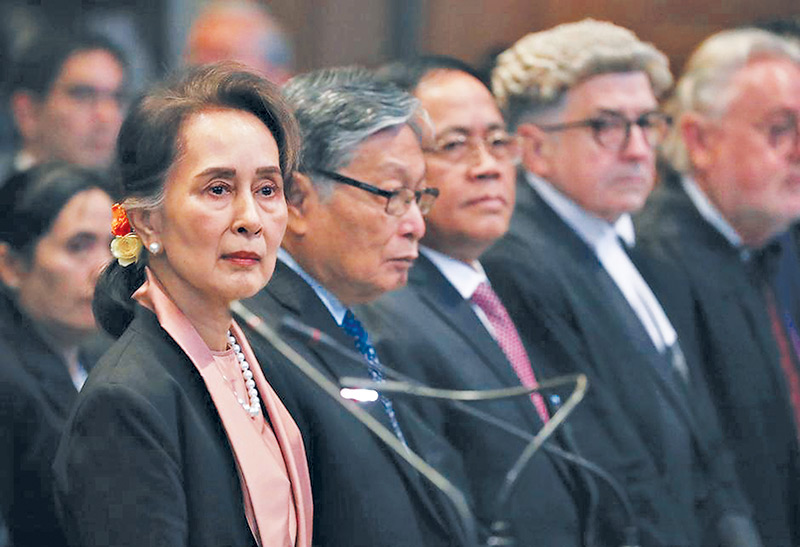
Myanmar’s leader Aung San Suu Kyi attends a hearing in a case filed by Gambia against Myanmar alleging genocide against the minority Muslim Rohingya population at the International Court of Justice in Netherlandson January 23, 2019. Reuters

Two days after the International Court of Justice (ICJ) approved emergency ‘provisional measures’ asking Myanmar to stop the persecution of the Rohingya in all forms—including killing, raping, and destroying homes and villages—two Rohingya women died in Rakhine State when the Myanmar army shelled a village. One of them was pregnant.
While many celebrated the ICJ’s order of provisional measures, some—especially those who have witnessed the ineffectiveness of the ICJ’s repeated ‘provisional measures’ to protect Bosnian Muslims in 1993—had been cynical about the ultimate outcome of such a measure. Their scepticism is yet to be proven wrong.
Despite the ICJ’s order, Myanmar—it seems—remains defiant with its genocidal intent against the Rohingya. And Myanmar has good reason for its intransigence.
First of all, while the ICJ’s order is binding, it is not enforceable; and in the face of Myanmar’s non-compliance, The Gambia (the country that brought the case against Myanmar at the ICJ) at best can approach the United Nations Security Council (UNSC) for it to decide whether it will use its powers to force Myanmar to comply with the ICJ’s order. And here lies the advantage of Myanmar.
China and Russia—two of Myanmar’s major allies—are two of the five permanent members of the UNSC, which also includes the United States, France and the United Kingdom. Both these countries have in the past resisted the United Nations’ attempts to address the Rohingya issue. To refresh the memory: in March 2017, China and Russia blocked a UN Security Council statement that would have ‘noted with concern renewed fighting in some parts of the country and stressed the importance of humanitarian access to all affected areas’, as reported by news agency Reuters.
With deep economic and military ties with China and Russia, it is no wonder that Myanmar is safe and strong in the knowledge that the UNSC will not be able to induce it to comply with the ICJ’s verdict in the months and years to come.
Chinese President Xi Jinping’s visit to Myanmar earlier this month and the signing of 33 memorandums of understanding (MOUs), agreements, exchange letters and protocols send a strong signal to Bangladesh and to the wider world about its strategic ties with the country. According to Myanmar’s Directorate of Investment and Company Administration data, in 2019 China was the second biggest foreign investor in Myanmar, accounting for 25.21 percent of investment in the country; Singapore was the biggest, making up 26.86 percent of the foreign direct investment Myanmar received in the same year.
On the occasion of Xi’s visit, a joint statement in Chinese state media said that China ‘firmly supports Myanmar’s efforts to safeguard its legitimate rights and interests and national dignity in the international arena’ and hopes for it to advance ‘peace, stability and development in Rakhine State.’ Even if one does not read too much into these two lines, it would be difficult to misread China’s stance on the Rohingya issue.
During the visit, China and Myanmar also signed an agreement for the Kyaukphyu Special Economic Zone (SEZ) deep seaport project, a major town in the volatile Rakhine State that is at the centre of the Rohingya genocide.
China is not the only actor investing in Rakhine. The World Bank in 2019 came under heavy fire from international human rights bodies and non-government organisations (NGO) for its proposed $100 million development project in the conflict-riven Rakhine State titled, ‘Rakhine Recovery and Development Support Project’.
In a letter to the World Bank dated April 9, 2019, obtained by Reuters, more than a dozen Myanmar-based NGOs said, ‘It is difficult to imagine how meaningful recovery and development are possible in Rakhine without addressing the underlying human rights issues that currently impact every aspect of life for communities.’ Despite World Bank’s assurance that, ‘The project is being carefully prepared so that it does not reinforce or perpetuate movement restrictions or other forms of segregation, and that it creates new openings for social cohesion and positive exchanges between communities,’ how it is going to make sure of this remains to be seen.
Meanwhile, Myanmar’s military ties with Russia have only strengthened over the years. In January 2018, Russia agreed to sell six Sukhoi Su-30 fighter jets to Myanmar costing at least $204 million. The deal was announced during the official visit of Russian Defence Minister Sergey Shoygu to Myanmar in January 2018.
As late as August 2019, Myanmar military chief Senior General Min Aung Hlaing paid a visit to Russia and during his stay, he visited the Irkutsk Aviation Plant Corporation that is assembling the six Sukhoi Su-30SM multi-role advanced fighter jets for Myanmar. Photos of him sitting in a cockpit next to a test pilot made quite a show of his trip to the plant.
Of course, warplanes are not enough; military personnel require training as well. Here too Russia comes to their aid—more than 600 members of the Tatmadaw (Myanmar’s military) were studying at higher military educational institutions in Russia in January 2018, as suggested by Russia’s Deputy Defence Minister Lieutenant-General Alexander Fomin.
Apart from these economic transactions, around 60 foreign companies from around the world have ties with businesses controlled by the Union of Myanmar Economic Holdings Limited and the Myanmar Economic Corporation—two military-governed businesses in Myanmar. It is these two conglomerates that dominate the economic and commercial landscape of the country. To address this, the UN fact-finding mission in 2019 urged imposing targeted financial sanctions on companies linked with Myanmar’s military and suggested that foreign companies doing business with Tatmadaw-controlled corporations could be complicit in international crimes.
During the Rakhine State Investment Fair in 2019, Suu Kyi said, ‘Myanmar has opened up its economy to the world. We have been constantly adjusting our policies, rules and regulations to be in line with international best practices and to make the investment climate more favourable, predictable, facilitative and friendly. We want to establish a welcoming economic environment for all.’ Unfortunately, it seems the welcoming environment is not inclusive of the Rohingya.
Given the scenario, it is not surprising that the world, including international bodies like the UN, has miserably failed to address, let alone stop, the genocide unleashed by Myanmar against the helpless Rohingya. Thousands of adults and children have been killed; millions forced to flee; and an unaccountable number of women and girls have been systemically sexually violated, impregnated and exposed to various sexually transmitted diseases by the Myanmar military. And the world watched the spectre unfold before their very eyes like an audience at a macabre movie screening.
While the world is busy exploring potential economic tie-ups with Myanmar, thanks to its vast untapped resources and strategic geopolitical importance, it is the Rohingya and Bangladesh that are bearing the brunt of Myanmar’s economic possibilities. While the ICJ’s verdict is a welcome move, without the political will to hold Myanmar to account it will not yield any positive outcome for the Rohingya. Expecting much from it would be a folly. The 1995 Srebrenica massacre should serve as a reality check.


This article was previously published in The Daily Star, a part of the Asia News Network.

Page 8
LIFE & STYLE

A day in the life of music videos’ unsung heroes

Extras face long days, sporadic work and a whole lot of waiting too—but they do it for the love of it.
- ANKIT KHADGI
Chorus dancers applying their own makeup before their scene (Clockwise from top). Pushpa Gurung takes a selfie with her fellow chorus dancer friends during a break in filming. Ganesh ‘Jerry’ Bhandari makes a TikTok video with fellow chorus members.  Post Photos: Ankit Khadgi

Kathmandu,
Seeing Pushpa Gurung in her costume, a mini skirt and shirt, I’m wondering how she’s going to fare on this wintery morning. It’s 7:30am, and I’m longing for the warmth of my bed.
“Won’t you feel cold in this outfit?” I ask.
Gurung has been a chorus dancer for two years, so replies matter of factly: “Well, this is how I am supposed to look for my role today.”
At Baneshwor Multiple Campus in Shantinagar, 19-year-old Gurung is part of a troupe of back-up dancers playing students for a music video. Put together by Hari Adhikari, the group has performed in several music videos and movie songs.
As her outfit is ready, she says it’s time for the group to apply makeup. Just opposite them, the female lead is also getting ready with a separate makeup artist, who carefully adorns her face. Gurung starts swiftly applying a light touch up to her face—she understands they need to look subtle, as they are playing college students.
When she’s almost done with her makeup, a helper offers tea to her and others. She offers me tea before she helps herself to some. It’s perfect for the cold weather.
“I like this group because we are constantly provided with food and snacks,” says Gurung.
Having worked with her current troupe for a year, Gurung’s call times for shoots depend on how many assignments manager Adhikari can secure. Sometimes they shoot on a daily basis, sometimes every three or four days. At times, the shoots can last for 36 hours. Despite the sporadicity and intensity of the shoots, Gurung finds her job rewarding.
“I always loved dancing, so I joined this industry to follow my passion,” she says.
Just as we are starting our conversation, Adhikari kicks the troupe into gear—everyone needs to be ready. Gurung promises to catch up with me later, and rushes to change her costume.
The surroundings are an unfamiliar sight for most, behind the scenes of glitzy music videos. In the distance is a group of men, who would be the male dance troupe for the day. One of them, as boisterous as his dyed hair, is filming himself—it looks like it could be for a TikTok video.
Then there’s the director, who seems to be rushing to complete the shoot by day’s end. When he sees the boy filming, he starts saying ‘Jerry!’ rather sternly.
“I am making a TikTok video. Wait a minute,” Jerry yells back. “I will do their makeup after I am done with my video.”
TikToking over, he catches me staring at him. The embarrassment of being caught leaves me awkward. He smiles.
“I am Ganesh Bhandari. But you can call me Jerry,” he says.
He is a fascinating personality, and doesn’t take long to reveal why he’s in the business. “I always wanted to become an actor. I decided to work as a chorus dancer so I can be on the movie set and learn,” replies the Butwal native.
However the journey hasn’t been easy for the 20-year-old, who says it was initially difficult to land a proper job. But for him all of the struggles are life-lessons, and he’s since been in the business for two years. “My struggles are worth it because it is making me a stronger person,” he says.
The male chorus dancers are also told to wear makeup, and Jerry’s in charge. He quickly goes away and tends to the line of men awaiting their facial touch-ups. He applies a layer of foundation, like a painter with his canvas, then does his own before unabashedly staring at himself in the mirror. He does so for a while, a clear sign of vanity which most actors have, before being called to set along with the other dancers.
One by one, the chorus dancers fill the room—it looks exactly like what we expect a government school classroom to look like—before the leads turn up. While the female lead seems confident, her counterpart’s nervous face is rather alarming.

Gurung is sitting on the first bench just next to the female lead; Jerry is placed behind the male lead.
The first scene seems a Bollywood cliche: two love-struck teens exchange letters in class, while the chorus dancers are told to be rambunctious in the background. While it seems to be an easy shoot, it takes forever to film. The chorus dancers are fine but the male lead can’t catch the beat.
Gurung is sitting next to the female lead on the first bench, and remains ‘studious’ amongst the rabble. She starts writing in her book like there’s no tomorrow. Even without direction, Gurung knows what to do.
Jerry, on the other hand, embodies what the back benchers are expected to do—make noise and disturb others. His performance seems both raw and real even though the spotlight is on the actor in front of him.
The director finally gets what he wants and moves on to the dance scene. He is also the choreographer for the video, and shows the steps. While most catch on quickly, the male lead continues to struggle. Both Gurung and Jerry dance pretty well.
The female lead’s mother is sitting next to me as I watch. We exchange smiles and she asks what I’m doing on set. When I tell her I’m writing an article, she opens her phone and shows the pictures of her daughter’s achievements and experiences. It’s nice seeing a mother promoting her daughter, but I can’t muster the courage to say the story’s not about her daughter. It’s about the people supporting her.
The male actor nails it after a few takes, just in time for breakfast, and the chorus runs outside for the first meal of the day. While cold noodles aren’t the most appealing meal in cold weather, Gurung and Jerry make a tepid plate of WaiWai feel warm.
I ask them how it feels to meet popular actors in real life.
“Most of them are friendly. They make us feel comfortable and are respectful,”says Gurung, adding that Barsha Raut and Aanchal Sharma were two of her favourites to work with.
However for Jerry, it’s all about Najir Hussain. Hussain, unlike his contemporaries, hails from a small town and made his name in Nepal’s industry on his own. Jerry finds Hussain so inspiring, the man is his phone’s wallpaper. Ranveer Singh is another inspiration for Jerry, both personality- and acting-wise, he says.
The set is like school in more ways than one—breakfast is brief and the chorus is called back to class rather quickly, for the next scene. Chorus dancers take centre stage, and make quick work of it—just a few takes and they’re done. Scene over, with breakfast still digesting, it’s apparently time for lunch. One by one crew members, including the dancers and leads, stand in line for food. With the costumes they are wearing it feels like they are like the real students of the school where we are filming. Dal-bhat and masu is on the menu, and I join my breakfast buddies once more, who reveal what they want their future to look like.
Gurung seems unsure whether she wants to be in the spotlight as a lead performer, but Jerry is certain he wants the limelight.

“I feel I was born to act. It will take time, but I think I will make it,” he says, with a not-yet-seen seriousness. He’s even planning to join theatre soon, to learn and improve his acting.
But he knows there’s one hurdle he’ll have to deal within the Nepali movie industry.
“I have been told if I don’t have contacts or a strong network I won’t make it,” says Jerry, who believes talent can take a backseat to good connections. “Someone’s son or daughter easily gets the opportunity to dance as a lead for music videos. But directors, even the producers, don’t keep an eye on us.”
While the chorus is trustworthy and efficient, the leads are always given priority—but do they, as chorus members, get treated any differently?
“We aren’t treated with disrespect, but sometimes directors yell at us when they can’t release their anger on the leads who aren’t performing to expectations,” says Gurung.
The one thing keeping Gurung and Jerry continuing their careers as chorus dancers is hope for the future.
“The journey is difficult. But hopefully one day I will be getting good opportunities,” says Jerry.
Lunch is soon over and the chorus is called to set once more. I resume my meal, which was ignored during conversation, and catch up with them an hour later. They say they have to change outfits for the next scene—a basketball match, where they aren’t dancing at all. They’re just standing behind their leads, hands on hips. The director asks the female lead if she can spin the basketball on one finger, but she can’t, just before technical issues halt production. As the crew fixes the problem, in the distance I see Gurung. She’s effortlessly spinning the ball on her finger—I think to myself, was she the lead the director was looking for?
It’s almost six, and I ready myself to leave. For Gurung and Jerry, and the rest of the crew and cast, the day is far from over. They could be here until midnight.
As I say my goodbyes and walk to the bus station admiring their energy, they don’t look tired, despite having been shooting all day. A few minutes later, my bus arrives, and I sit behind a woman watching a famous Nepali song on her phone.
Rather than noticing the lead, my eyes goes in search of the chorus dancers. I wonder if I can find a familiar face, one that the lady probably won’t notice. I wonder whether I might see Gurung or Jerry out front one day.

LIFE & STYLE

African style makes debut at Paris Haute Couture week

It’s the first time a designer from Saharan Africa has been featured.
- REUTERS

Cameroonian designer Imane Ayissi blended European style with African flair for a catwalk collection that marked the first time a designer from sub-Saharan Africa had joined the Paris haute couture fashion week.
“It’s an honour”, Ayissi, 51, told Reuters backstage before the show, referring to the decision, after many years of knocking him back, to finally admit him to the select club of haute couture fashion houses showing in Paris.
“I have been fighting for 28 years, dedicated all my life to the work. The French Federation of Haute Couture and Fashion opened its door to me after it rejected my application many times, because it was not the right time or my work did not match with expectations. But this time, it worked”, he said.
Ayissi started young, making outfits for his mother who was a winner of the Miss Cameroon beauty pageant in the 1960s.
Drifting into modelling, he moved to Paris thirty years ago, and walked the runway for high-end stylists including Yves Saint-Laurent, Pierre Cardin, Givenchy and Lanvin. He later decided to devote himself fully to working as a designer, defining a style he described as minimal, sleek and elegant “with a certain mastery of fabric and form”.
For his show late on Thursday, which was chosen to close this year’s edition of the Paris Haute Couture fashion week, models walked down the catwalk in a Paris hotel to a soundtrack of African music.
Models showed off gowns in the style of contemporary Western fashion but with a twist: they were made of organic Faso Dan Fani, a cotton cloth from Burkina Faso woven in strips.
Another outfit, a silk dress, was adorned with stained tree bark cut out into the shape of flowers.
“I do what I can - to show real African fabrics, tell stories,” Ayissi said of his collection.

Page 9
CULTURE & ARTS

When time is a lesson in itself

Krishna Lama’s exhibition ‘Passage of Time’ is personal and evocative, and subtly states how painting remains one of the most powerful artistic mediums.
- SRIZU BAJRACHARYA
Krishna Lama’s exhibition at Nepal Art Council explores his various thoughts over the past three years, including themes of parenthood and the future of children.  Post Photo: Beeju Maharjan

Kathmandu,
Our minds are always cluttered with thoughts. We are continually processing thoughts to make sense of life, work and everything in between. Most thoughts are fleeting. They weave in and out, creating their own vines and becoming the base of our understanding. They are what make our human mind ingenious and unique.
At Nepal Art Council, Babarmahal, Krishna Lama’s ‘Passage of Time’ enwraps us in this very idea, of our fleeting and powerful thoughts, as we go through various phases in our lives. Through his experience Lama tells us about our fleeting emotions and the grayness of experiences: our anxiety, apprehension, uncertainty.
Lama’s work is personal, but the ideas he paints resembles our own stories. However, one needs to take time to understand them, as his work is full of metaphors and his art style quite unique.
In his paintings, the human bodies protrude in odd angles, like they are made of elastic. And their shadows follow everything, reflecting sometimes the polar opposite of portrayed reality and other times in support to the main character, his wife, during her pregnancy. The human figures are the central idea of Lama’s works: they are him and his thoughts, and the visuals of his mind. And in them, motifs like sunflowers, fish (even dead ones), toilet systems, fish bowls are recurring objects and his metaphors for light, train of thoughts, escapism and boundaries.
According to Lama, motifs have always been a part of his storytelling in his artworks. “The fish represents our constant mulling, the sunflowers represent positivity, toilet systems represent loopholes and escape from the world, dead fish represent the idea of decadence,” says Lama.
But what’s interesting in Lama’s work is although he jumps from one idea to another in his paintings, because his main intention is latched to the way our mind works, they all come together. After all, our thoughts can’t be trained, they just flow. And Lama shows us just that.

Lama explores many ideas like parenthood, climate change, even themes like escapism, intolerance, materialism. But at the heart of Lama’s work is his personal experience that makes his work penetrating. And although he is describing joyful experiences of parenthood, there is a melancholic aftertaste to his works. And that bitterness maybe his fear, insecurity and uncertainty.
For example, in his acrylic painting titled ‘Infant Crawling,’ Lama shares his experience of fatherhood, where his baby is learning to crawl. However, unlike his childhood, his baby’s surrounding is limited: there are no open fields for them to play and run around. The baby’s childhood is sure to be surrounded by technology and mere objects as toys. There are multiple layers to his works, on the backdrop, there is a field of sunflowers, while the sky reflects towering concrete buildings; there is also a trace of a wall, which shows confinement. There’s again fish following the central human figure, the mother.
The experience of parenthood is supposed to be a happy one, but Lama beautifully depicts his concerns about how he and his wife are going to raise a child. All of his paintings have a dark sensibility, and dormant colours such as red, purple, blue, dark grey and brown imbue more to the infectious feeling. The figures also look dreamy.
Lama’s work tells us why painting as a medium is compelling and for an artist, the most honest way to touch people’s hearts.
Lama’s work is different from paintings that are used for aesthetic appeal. They are not pleasing. Instead, they implore our thoughts on our own frustrations. They are reflections of our reality. His series also emphasises the process of time’s revelation: how it changes our views and teaches us valuable lessons in life; how fatherhood has changed him as a person. These in the paintings are seen in the juxtaposition of tight tall buildings that have limited the view of the open sky, and in the many material objects placed in the paintings.
Some of his works also suggest how we have been exploiting our environment and contributing to climate change. One particular painting stands out the most, which is titled ‘Close to extinction’. The painting uses a dark blue hue, with popping colours like red, orange and yellow. In it there is a small boat, while a person swims underwater with a large net, the fish outside the net are dead, while the live ones that have been caught on the net seem to be dying. The painting is striking but in a horrifying way. Lama had also won the National Fine Arts Award for the portrayal in 2017.


The artist also seems to dwell in the most ordinary realities of life where all humans are no different than the other. Take for instance his work that shows figures taking a dump. Besides showing a person  relieving oneself, the work shows, ever so subtly, the idea of this reclusive space into which people go to enjoy their solemness.
It’s interesting to understand how Lama’s mind works to make meaning of his experiences. Lama immersed in this experience for three years, and perhaps that’s why his work feels pensive.
The series, however, might take time to register with people, as his works are not as straightforward as paintings usually are. And although his work is powerful, certain things probably would have intensified his storytelling. Given that artists are creating a world in their exhibitions--Lama could have experimented a little with the idea of background music and personal photographs to give more life to his presentation. To give his series a more human flavour, Lama could have benefitted from revealing his own life a bit more, as he already makes bare his personal experience. Lama’s works are beautiful and poetic but fall short of creating an experience. Nevertheless, the exhibition organised by the artist himself is worth your time and pondering. It’s also an inkling of Lama’s sweet fatherhood.


‘Passage of Time’ will be displayed until 31st January, at Nepal Art Council.

CULTURE & ARTS

Rohingya refugee writers dial into Myanmar poetry slam

Poets from the country’s Muslim minority joined Buddhist bards for the event.
- AGENCE FRANCE-PRESSE
AFP

Divided by hatred but united over the written word, Rohingya Muslim poets in Bangladeshi refugee camps joined Buddhist bards in Myanmar by video link as part of a groundbreaking poetry festival in a country reeling from genocide allegations.
Five Rohingya writers took part in the three-day “Poetry for Humanity” event in Yangon, with three speaking live by video link to a packed room while two had sent pre-recorded readings, fearing their stuttering connection would not hold up.
They drew applause for verses on the bloodshed that forced hundreds of thousands of Rohingya to flee their homes in northern Rakhine state—and also for their resilience.
“My words are taller than the walls put between Buddhists and Muslims. My words are stronger than the hatred designed for me,” reads one verse from writer Mayyu Ali’s poem “My Words”.
He fled with his family to the Bangladeshi camps where he has helped bring together a group of around 150 refugees sharing a passion for poetry.
“I want to show Burmese people that the Rohingya are also Burmese. We also love Myanmar,” the 27-year-old told AFP.
Poets once vexed Myanmar’s censorship-obsessed former military junta.
Now younger writers are keeping the art form alive as a form of dissent under the civilian government of Aung San Suu Kyi, which has defended the crackdown against the Rohingya.

Embracing the ‘R’ word -
The festival came in a week of heightened sensitivity over the crisis. The International Court of Justice ruled Thursday there was enough evidence to pursue allegations that Myanmar committed genocide against the Rohingya, and ordered the country to comply with urgent measures to protect the minority.
Some 740,000 fled over the border to escape a bloody military crackdown in 2017 that is thought to have killed thousands.
Yet the minority evoke little sympathy in Buddhist-majority Myanmar, where even the word “Rohingya” is taboo.
Many instead refer to them pejoratively as “Bengali”, suggesting they are illegal interlopers from Bangladesh.
Festival organiser Maung Saungkha, who was jailed for six months in 2016 for writing a poem deemed defamatory to the former president, says acknowledging the word “Rohingya” is a first step towards preventing more human rights abuses. “We hope people will learn about equal rights and about treating different people in a humane way.”
Forty poets from across Myanmar recite works in various languages including Burmese, but the focus is on re-connecting the estranged Muslim minority.
Ethnic Rakhine writer Won Roe travelled especially from his home state, where deep divisions prevail between the mainly Buddhist Rakhine and remaining Rohingya Muslim communities.
Rakhine mobs stand accused of committing atrocities against the Rohingya alongside security forces.
But Won Roe is convinced poetry can act as a “bridge between communities” and worked closely, if virtually, with Mayyu Ali ahead of the event.
“I see him as a poet, a friend.”

Page 10
WORLD

UK approves restricted 5G role for China’s Huawei

- AGENCE FRANCE-PRESSE

LONDON,
Britain on Tuesday greenlighted a limited role for Chinese telecoms giant Huawei in the country’s 5G network, insisting that “high risk vendors” would be excluded from “sensitive” core infrastructure.
London’s decision—following a meeting of the National Security Council chaired by Prime Minister Boris Johnson—came shortly after Brussels said it would allow Huawei a limited 5G role in the European Union.
“We want world-class connectivity as soon as possible but this must not be at the expense of our national security,” Britain’s Digital Secretary Nicky Morgan said in reference to high-speed fifth generation networks that offer almost instantaneous data transfer. “High risk vendors never have been and never will be in our most sensitive networks,” she stressed.
Such vendors will be excluded from sensitive UK locations, such as nuclear sites and military bases, while their market share is to be capped.
Both Brussels and London, while never explicitly naming the Chinese giant, are grappling to find a middle way to balance Huawei’s huge dominance in the 5G sector with security concerns.
Huawei welcomed news that it would have at least a limited role in building Britain’s 5G networks, after Washington lobbied hard for the company to be sidelined completely on security concerns.
“Huawei is reassured by the UK government’s confirmation that we can continue working with our customers to keep the 5G roll-out on track,” said Huawei Vice-President Victor Zhang.
Washington has banned Huawei from the rollout of the next generation mobile networks because of concerns—strongly denied—that the firm could be under the control of Beijing.
Unlike the United States, Britain has been using Huawei technology in its systems for the past 15 years.
- All eyes on Washington -
The US had threatened to limit intelligence sharing with London in the event of Huawei winning a UK role. All eyes will now be on Washington’s response to Tuesday’s announcements, while analysis group Fitch warned that the US could indeed look to retaliate.
“The US has been putting a lot of pressure on its allies to ban Huawei, and failure to do so will raise questions about its strategy, as we expect it will look to retaliate, with threats to stop intelligence-sharing already made,” Fitch said Tuesday.
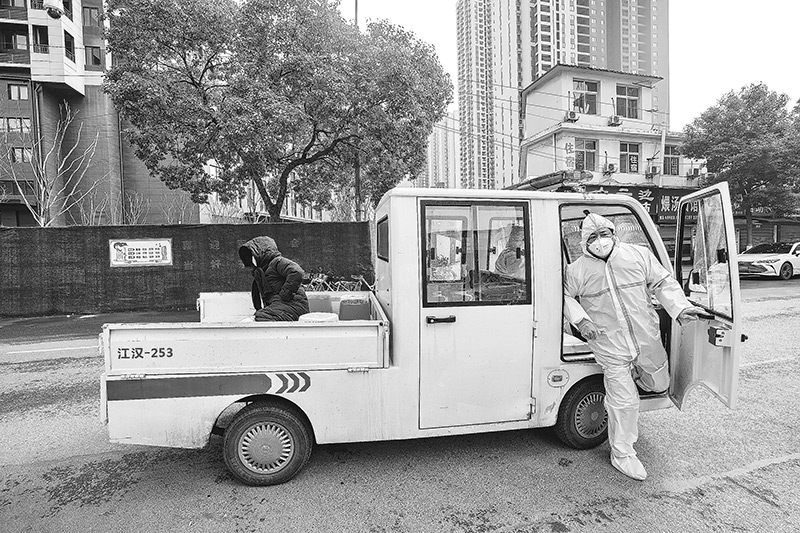
The matter could also meanwhile hinder the chances of a favourable Britain-US trade deal after Brexit, according to analysts.
While there has been intense debate in Europe and the US about whether or not to exclude Huawei from developing 5G, Johnson on Monday insisted that the UK can have “technological progress” while preserving national security.
In Brussels on Tuesday, the European Union ruled out banning the company. “It is not a question of discrimination, it is a question of laying down rules. They will be strict, they will be demanding and of course we will welcome in Europe all operators who are willing to apply them,” a top EU official said.

WORLD

Donald Trump to unveil his Middle East peace plan amid skepticism

A key element will be whether the proposal includes an American approval to any Israeli annexation of the West Bank.
- ASSOCIATED PRESS
A file photo shows President Donald Trump welcoming visiting Israeli Prime Minister Benjamin Netanyahu to the White House in Washington. AP/RSS

WASHINGTON, 
President Donald Trump is set to unveil his administration’s much-anticipated Middle East peace plan in the latest American venture to resolve the Israeli-Palestinian conflict.
Odds of it taking shape, though, appear long, given the Palestinians’ preemptive rejection of the plan and Israeli Prime Minister Benjamin Netanyahu’s shaky political standing.
For both men, the White House summit looks to be a welcome diversion.
Trump is expected to present the proposal alongside Netanyahu at noon on Tuesday. The event comes the day Trump’s impeachment trial continues in the Senate and the Israeli parliament had planned a hearing to discuss Netanyahu’s request for immunity from criminal corruption charges.

Netanyahu withdrew that request hours before the parliamentary proceedings were set to begin, saying in a statement he had “decided not to let this dirty game continue.” But Israel’s parliament, the Knesset, is still expected to meet even after the withdrawal. The body had been set to likely vote against immunity, dealing Netanyahu a blow.
The Mideast peace proposal is expected to be very favourable to Israel, and Netanyahu has hailed it as a chance to “make history” and define Israel’s final borders. Netanyahu’s political challenger Benny Gantz has spoken in glowing terms about Trump and his initiative. Trump insists it has a chance despite skepticism.
“It’s been worked on by everybody, and we’ll see whether or not it catches hold. If it does, that would be great, and if it doesn’t, we can live with it, too. But I think it might have a chance,” Trump said alongside Netanyahu on Monday, when he also hosted Gantz at the White House.
A key element will be whether the proposal includes an American approval to any Israeli annexation of the West Bank.
In the run-up to Israel’s March 2 election, Netanyahu has called for annexing parts of the West Bank and imposing Israeli sovereignty on all its settlements there. Israel captured the West Bank in the 1967 Mideast war, and the Jordan Valley in particular is considered a vital security asset.
Reports in Israeli media have speculated Trump’s plan could include the possible annexation of large pieces of territory that the Palestinians seek for a future independent state. American approval could give Netanyahu the type of cover to go ahead with a move that he’s resisted taking for more than a decade in power.
But Netanyahu leads a caretaker government ahead of the country’s third election in less than a year, and such a far-reaching move, under the cloud of criminal corruption indictment no less, could lack public legitimacy.
Such a policy shift would appeal to Netanyahu’s hard-line nationalist supporters but would almost certainly torpedo the viability of an independent Palestinian state and likely infuriate neighboring Jordan. In 1994, Israel and Jordan signed a peace treaty, the second between Israel and its Arab neighbors after Egypt.
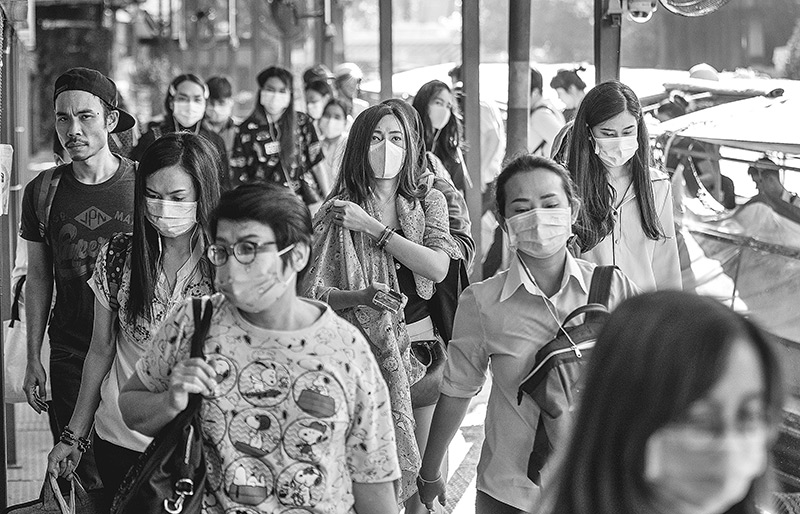
The Palestinians seek the West Bank as the heartland of a future independent state and east Jerusalem as their capital. Most of the international community supports their position, but Trump has reversed decades of US foreign policy by siding more blatantly with Israel. The centerpiece of his strategy was recognizing Jerusalem as Israel’s capital and moving the American Embassy there. He’s also closed Palestinian diplomatic offices in Washington and cut funding to Palestinian aid programs.
Those policies have proven popular among Trump’s evangelical and pro-Israel supporters and could give him a much-needed boost from his base as the Senate weighs whether to remove him from office and as he gears up for a reelection battle this year.
Jared Kushner, a Trump adviser and the Republican president’s son-in-law, has been the architect for the plan for nearly three years. He’s tried to persuade academics, lawmakers, former Mideast negotiators, Arab governments and special-interest groups not to reject his fresh approach outright.
But the Palestinians refuse to even speak to Trump, calling him biased in favor of Israel, and they are calling on Arab representatives to reject the Tuesday event at the White House. The Palestinian leadership has also encouraged protests in the West Bank, raising fears that the announcement in Washington could spark a new round of violence.

WORLD

As primaries near, Buttigieg struggles to make headway with black voters

- REUTERS
Democratic presidential candidate Pete Buttigieg speaks during a campaign event in North Liberty, Iowa, on Monday. AP/RSS

ORANGEBURG (South Carolina),
Pete Buttigieg is betting big on Iowa and New Hampshire, hoping success in the largely white states will help him overcome dismal support from black voters by the time more diverse states weigh in on his bid for the presidency.
Buttigieg’s most recent swing through South Carolina, the first state with a large black population to hold a primary, underscored the depth of his challenge with the critical Democratic voting bloc.
Amid campaign stops designed to put Buttigieg before black audiences, the white, openly gay, former mayor of South Bend, Indiana, faced continued questions about his record on race, his ability to earn black voters’ trust and his sexuality. “It’s South Carolina. We are gas, sweet tea and religion,” said Mattie Thomas, who co-chairs the state’s Democratic Black Women Caucus. “For many people, they believe their God won’t let them support him.”
Buttigieg, 38, has spent the last year successfully courting Democratic donors and voters in the predominantly white states of Iowa and New Hampshire, where polls show the Harvard-educated, military veteran in the top tier of candidates a week before Iowa’s Feb. 3 caucuses.
But a lack of black voter support could doom his White House chances.
A national Washington Post-Ipsos poll this month showed Buttigieg with just 2% support from Democratic black voters nationally, far behind former Vice President Joe Biden’s 48% and US Senator Bernie Sanders’ 20%. In South Carolina, where roughly 30% of the population is black, Buttigieg has remained in the single digits.
Buttigieg lacks the national profile and long-standing relationships with the black community that have boosted Biden. His recently ended tenure as mayor has come under scrutiny, including a lack of diversity on the local police force and a fatal shooting of a black resident by a police officer.
He has tried to confront those concerns head-on. Buttigieg named black employees to key positions on the campaign and released a detailed policy proposal – dubbed the Frederick Douglass Plan, named after the 19th-century abolitionist leader who was born into slavery – that would send more federal money to black colleges and black-owned businesses, said Hasoni Pratts, the campaign’s national engagement director.
On Monday, the campaign announced endorsements from three state officials, including the first black mayor of the small town of Anderson.
Yet at an event last week at Claflin University, a historically black college in Orangeburg, South Carolina, Buttigieg said most of his campaign events in the state still lacked diversity. “I’ll be honest, it’s mostly white people showing up,” Buttigieg said. “In order to win, in order to deserve to win, I need to be speaking to everyone,” he added.
Larry McCutcheon, a 69-year-old black pastor, said he was open to voting for Buttigieg and gets angry at the portrayal of blacks as homophobic. Looking at some empty seats in the university hall, McCutcheon said the bigger issue was that Buttigieg’s message had not resonated with enough black voters in the state. “You can see just from this event that he has a problem,” McCutcheon said.
Buttigieg’s campaign blames his sluggish poll numbers on black voters’ lack of familiarity with the candidate, who did not have a national profile before entering the race. As that changes, so will his poll numbers, the campaign says. In a phone interview, Pratts said the campaign had been the victim of a “false” narrative that had “spiraled out control” about Buttigieg’s handling of race issues during his tenure as mayor.
She said Buttigieg would keep showing up at events with black voters and answering tough questions.
“I get this is an ongoing process of earning trust,” Buttigieg said in Orangeburg. “I get that, as a new guy, I don’t have decades worth of experience with folks around the country. We have our story of our city, which is good, bad and indifferent.”

WORLD

Australia battles new bushfire threat as smoke cloaks capital

- REUTERS

SYDNEY,
Australian officials warned communities in bushfire-ravaged eastern states to strengthen fire defences on Tuesday amid forecasts of soaring temperatures and strong winds, as one approaching blaze cloaked the capital in thick smoke.
Bushfires have killed 33 people and about 1 billion animals since September, while 2,500 homes and an area the size of Greece have been destroyed.
Firefighters have used several days of cooler, damper weather across much of the continent to try to gain control of more than 100 blazes still burning before temperatures rise again from mid-week.
One blaze in a national park south of Canberra was upgraded to the emergency warning level, as the emergency services chief told residents to stay on alert, given rising winds could spark spot fires in the suburbs.
People in some areas near in Namadgi National Park were told it was too late to leave.
“Helicopters and large air tankers are water-bombing, establishing containment lines and undertaking aerial surveillance,” Canberra’s emergency services said in a notice.
“The fire may pose threats to all lives directly in its path,” Emergency Services Agency Commissioner Georgeina Whelan told reporters. “...Firefighters may be unable to prevent a fire from reaching your property. You should not expect a firefighter on your door.”
Winds of 5 kph had reached gusts as high as 40 kph (3.1-25 mph), she said, fanning the blaze and worsening conditions.
Australia’s Bureau of Meteorology and firefighting services were predicting temperatures to top 40 Celsius (104 Fahrenheit) over the weekend. “Worsening conditions are forecast for later the week so prepare now,” the New South Wales Rural Fire Service said on Twitter.
People should clear their properties of any flammable vegetation, while any broken roof tiles should be repaired to protect houses from airborne embers, it said.

WORLD

French police clear out migrants again from Paris site

Briefing

PARIS: French police said they had started to move migrants out again from an illegal camp site in north Paris on Tuesday, as the government faces continued pressure to show it is taking a tough stance on illegal immigration. Police said in a statement they had started to move migrants from a makeshift camp site in northern Paris’ Porte d’Aubervilliers. Since the closure of a huge migrant camp in Calais in 2016, many refugees have moved to Paris. Authorities have repeatedly dismantled illegal campsites only to see them pop up again in different areas a few months later. (Agencies)

WORLD

New Zealand PM Ardern calls Sept 19 election, faces tight race

Briefing

WELLINGTON: New Zealanders will go to polls on September 19 to decide on a second term for Prime Minister Jacinda Ardern, and also to vote in referendums on the divisive issues of legalising cannabis and euthanasia. Ardern is hugely popular among liberal voters overseas thanks to her compassionate but decisive response to a mass shooting, her focus on climate change action and multilateralism, and her ability to combine motherhood and leadership. But her popularity at home has been affected by slowing economic growth and low business confidence, a failed state housing project and scandals within her coalition government. (Agencies)

WORLD

Hundreds of rescued migrants allowed to dock in Italy: Charity

Briefing

ROME: More than 400 migrants pulled from the sea in recent days will be allowed to disembark in Italy, a rescue charity said on Tuesday. “Forced to risk their lives to flee across the Mediterranean, 216 men, 38 women and 149 children will soon finally reach safety,” SOS Mediterranee said on Twitter, adding that they would disembark at the southern port of Taranto. The Ocean Viking ship, which is run by SOS Mediterranee and Doctors Without Borders, picked up the migrants in five separate operations over the past four days. Other charities have rescued around 250 migrants from the Mediterranean over the same period -- and they are now waiting for a port of entry.  (Agencies)

Page 11
ASIA

Death toll from viral disease crosses 100 in China as US, others move to evacuate

There were 1,771 new cases confirmed in China on Monday, raising the national total to 4,515, according to the National Health Commission.
- ASSOCIATED PRESS
A government worker in a protective suit takes a suspected ill person toa hospital in Wuhan in central China’s Hubei Province, on Tuesday. AP/RSS

BEIJING,
China’s death toll from a new viral disease that is causing mounting global concern rose by 25 to at least 106 on Tuesday as the United States and other governments prepared to fly their citizens out of the locked-down city at center of the outbreak.
The total includes the first death in Beijing, the Chinese capital, and 24 more fatalities in Hubei province, where the first illnesses from the newly identified coronavirus occurred in December.
Asian stock markets tumbled for a second day, dragged down by worries about the virus’s global economic impact.
The US Consulate in the central Chinese city of Wuhan, where authorities cut off most access Jan. 22 in an effort to contain the disease, was preparing to fly its diplomats and some other Americans out of the city on Wednesday. Japan and South Korea said they would send planes to Wuhan this week to evacuate their citizens. France, Mongolia and other governments also planned evacuations.
China’s increasingly drastic containment efforts began with the suspension of plane, train and bus links to Wuhan, a city of 11 million people. That lockdown has expanded to 17 cities with more than 50 million people in the most far-reaching disease-control measures ever imposed.
China extended the Lunar New Year holiday by three days to Sunday to reduce the risk of infection by keeping offices and factories nationwide closed and the public at home. Authorities in Shanghai, a global business center and home to 25 million people, extended the holiday in that city by an additional week to Feb. 9.
US health officials expanded their recommendation for people to avoid non-essential travel to any part of China, rather than just Wuhan and other areas most affected by the outbreak.
Mongolia closed its vast border with China and North Korea said it was strengthening quarantine measures. Hong Kong and Malaysia are barring visitors from Hubei. Chinese travel agencies were ordered to cancel group tours nationwide.
There were 1,771 new cases confirmed in China on Monday, raising the national total to 4,515, according to the National Health Commission. It said 976 people were in serious condition.
The government has sent 6,000 extra medical workers to Wuhan from across China, including 1,800 who were due to arrive Tuesday, a commission official, Jiao Yahui, said at a news conference.
A baby boy was delivered by surgery in Wuhan after his 27-year-old mother was hospitalized as a “highly suspected” virus case, state TV reported. The mother, who has a fever and cough, was 37 weeks pregnant, or two weeks less than a standard full term.
Doctors wore protective masks and clothing for the delivery Friday at Union Hospital.
“It was unlikely for her to be able to give natural birth,” said the hospital’s deputy director of obstetrics, Zhao Yin. “After the baby was born, the mother would suffer less pressure in her lungs and she could get better treatment.”
Also Tuesday, the Education Ministry canceled English proficiency and other tests for students to apply to foreign universities. The ministry said the new semester for public schools and universities following Lunar New Year was postponed until further notice.
The Hong Kong government announced some government offices would remain closed until at least Monday and non-essential public employees were allowed to work from home.
Chinese financial markets were closed for the holiday, but stock indexes in Tokyo, Seoul and Sydney all declined.

ASIA

WHO chief says confident in China’s ability to contain virus, urges calm

- REUTERS

BEIJING,
The World Health Organization’s director-general said on Tuesday he is confident in China’s ability to control and contain the spread of a new coronavirus, China’s Ministry of Foreign Affairs said.
At a meeting with authorities in Beijing, Tedros Adhanom Ghebreyesus said he approved of the Chinese government’s measures to curb the outbreak so far, according to a statement posted on the foreign affairs ministry’s website.
The death toll from the virus has climbed to 106 in China and cases are being reported in a growing number of other countries.
The WHO called the epidemic “an emergency in China” on Jan. 23, but stopped short of declaring it a global public health emergency.
Tedros said he does not advocate the evacuation of foreign nationals currently in China, and urged people to stay calm.

ASIA

IS group trying to stage comeback amid rising US-Iran tensions

- ASSOCIATED PRESS

BEIRUT, 
The Islamic State group’s self-styled “caliphate” across parts of Iraq and Syria seemed largely defeated last year, with the loss of its territory, the killing of its founder in a US raid and an unprecedented crackdown on its social media propaganda machine.
But tensions between the United States and Iran and the resulting clash over the US military presence in the region provide a comeback opportunity for the extremist group, whose remnants have been gradually building up a guerrilla campaign over the past year, experts say.
American troops in Iraq had to pause their operations against IS for nearly two weeks amid the tensions. From the other side, Iranian-backed Iraqi militiamen who once focused on fighting the militants have turned their attention to evicting US troops from the Middle East.
In the meantime, Islamic State group sleeper cells intensified ambushes in Iraq and Syria in the past few weeks, killing and wounding dozens of their opponents in both countries. Activists and residents say the attacks have intensified since the US killed top Iranian general Qassem Soleimani in a Jan. 3 drone strike at Baghdad’s airport.
It is not clear whether the uptick is related to the repercussions that followed from the strike, and it is possible some of the attacks had been planned before Soleimani’s killing. US officials deny seeing any particular increase in IS activities. “They haven’t taken advantage of it, as far as we can see,” said James Jeffrey, the State Department envoy to the international coalition fighting the Islamic State.
Mervan Qamishlo, a spokesman for Syria’s US-backed Kurdish-led force, said the intensification of IS attacks began even earlier, since October, when Turkey began a military operation against Kurdish fighters in northern Syria.
Still, the militants clearly gained at least temporary breathing room as the killing of Soleimani, along with a senior Iraqi militia leader, brought Iran and the US to the brink of all-out war and outraged Iraqis, who considered the strike a flagrant breach of sovereignty.
On Jan 5, Iraq’s parliament called for the expulsion of the 5,200 US troops from the country who have been there since 2014 on a mission to train Iraqi forces and assist in the fight against IS. The US-led coalition then put the fight against IS on hold to focus on protecting its troops and bases. It said last week that it had resumed those operations after a 10-day halt.
The group is also trying to restore its presence on social media and the Internet—a key component to its ability to raise financial support from abroad and recruit new fighters.
IS members and supporters have for years sown fear and projected power with the grisly videos they released on social media showing beheadings, amputations and victims burned to death or thrown from buildings.
In recent weeks, European authorities, coordinated by Europol, have shut down thousands of IS propaganda platforms and communication channels in an unprecedented crackdown. In particular, the crackdown forced IS’s news agency and other channels off the Telegram text messaging system, the group’s primary outlet since 2015.

ASIA

Netanyahu pulls request for immunity on corruption charges

- ASSOCIATED PRESS

JERUSALEM, 
Israeli Prime Minister Benjamin Netanyahu withdrew his request for immunity from prosecution on Tuesday, hours before parliamentary proceedings on the subject were set to begin.
Netanyahu, who was visiting Washington ahead of the launch of President Donald Trump’s long-anticipated peace plan, said he “decided not to let this dirty game continue,” in a statement issued on his official Facebook page.
Israel’s parliament, the Knesset, was set to convene to discuss the formation of a committee to debate the prime minister’s immunity request. It’s still expected to meet even after the withdrawal.
The Knesset was widely expected to reject Netanyahu’s immunity request, which would have dealt a massive blow to the prime minister ahead of the March 2 parliamentary elections—the third in less than a year. Netanyahu’s Likud party was planning to boycott Tuesday’s Knesset session. Netanyahu’s retraction paves the way for legal proceedings against him to go forward. He was indicted on counts of fraud, breach of trust and bribery in November in three separate cases. He has denied any wrongdoing.
“In this fateful hour for the people of Israel, when I am in the United States on a historic mission to design the permanent borders of Israel and ensure our security for decades to come, the Knesset is expected to start another spectacle in the circus of removing immunity,” Netanyahu wrote.
Trump, himself under the cloud of his impeachment trial in the Senate, appears poised to offer Netanyahu some needed help in the form of the most generous American peace proposal ever. The prime minister has sought to portray himself as a global statesman uniquely qualified to lead Israel through difficult times. He has tried to use his close friendship with Trump as a strategic asset to stay in power.

ASIA

Indian schoolgirl wins bravery award for thwarting trafficker

- REUTERS
Carolyn Malsawmtluangi

CHENNAI (India),
An Indian schoolgirl who won a bravery award after she helped a child escape a trafficker, is to become the inspiration for a new anti-slavery campaign, officials said on Tuesday.
Carolyn Malsawmtluangi, from the northeastern state of Mizoram, was honoured by the government on India’s Republic Day last week for “showing exemplary courage” after she stopped a human trafficker who had kidnapped a seven-year-old girl from a neighbouring village.
Malsawmtluangi, 11, first spotted the trafficker when playing volleyball with friends in June last year but assumed they were a mother and daughter, and even asked if the young girl wanted to join their game.
But after police raised the alarm over a trafficker the next day, Malsawmtluangi soon spotted the woman again and began talking to her before agreeing to take care of the girl while the woman ran an errand.
It was then that both girls escaped—Malsawmtluangi carrying the child on her shoulders and running home while avoiding stones hurled by the angry trafficker.
“If Carolyn had not stopped them, the trafficker would have disappeared with the little girl,” said Khawlhrinj Lalhlupuii, a secretary at the Mizoram State Council for Child Welfare that recommended her for the annual award.
“She was very brave to understand the danger to the little girl and save her,” she said. “We plan to share her story in all schools and create awareness on trafficking and safety.”
Of the nearly 6,000 victims of human trafficking in India each year, about half were children, according to the latest data from the National Crime Records Bureau.
Most are women and children from rural areas looking to escape poverty—lured to cities each year by traffickers who promise good jobs, but sell them into modern day slavery.
More than 60,000 children were kidnapped in 2018, the crime bureau added, with the majority trafficked for marriage, forced labour or into domestic servitude, and rarely reunited with their families.
In Mizoram, anti-trafficking efforts have been increased in recent years in a bid to stem a rise in reported cases.
“We are stepping up our efforts because young people are increasingly getting duped by fake agents promising jobs,” said Vanlalruata, president of the Central Young Mizo Association, a charity that works on anti-trafficking programmes.
“This young girl will now inspire others and bring attention to the problem,” he told Reuters.
The National Bravery Awards are given to around 25 children between the ages of six and 18 every year.
The recipients, selected from across India, are given a medal, a certificate, a cash prize, and also receive
financial assistance to complete their schooling.
In the past, children have won awards for foiling robberies, fighting off armed intruders, rescuing people from drowning, saving lives in a stampede and putting out fires.
“We are very proud and happy,” said Lalsangzeli, Malsawmtluangi’s mother. “The entire village will celebrate my brave daughter.”

ASIA

Motion for Iran to quit nuclear proliferation treaty enters parliament

Briefing

DUBAI: A motion for Iran to quit the nuclear Non-Proliferation Treaty (NPT) was introduced in parliament on Tuesday, the assembly’s news site ICANA reported, in a move that appears to raise the stakes in Tehran’s confrontation with the West. The report did not say when parliament might vote on the motion. Iran’s Supreme Leader Ayatollah Ali Khamenei, the highest authority in the Islamic Republic, makes the final decisions regarding the country’s nuclear policy. Iranian Foreign Minister Mohammad Javad Zarif said last week that Iran could withdraw from the NPT if European countries refer it to the UN Security Council over a nuclear agreement, a move that would overturn diplomacy in Tehran’s turbulent relations with Western powers. (Agencies)

ASIA

Taliban assault on Afghan police base kills 11

Briefing

KABUL: Taliban militants attacked a police base in northern Afghanistan, killing 11, possibly with help from at least one of the policemen inside, local government officials said Tuesday. The insurgents first overran a checkpoint near the base late Monday, and were apparently able to breach the compound with ease because a sympathetic policeman opened a door for them. These details were provided by Mabobullah Ghafari, a provincial councilman in Baghlan province where the attack took place. A local police official, speaking on condition of anonymity because he was not allowed to brief reporters about the attack, also gave the same account. (Agencies)

ASIA

Qatari emir names new prime minister

Briefing

DOHA: Qatar’s emir has appointed via decree a new prime minister, according to state media. Qatar News Agency reported on Tuesday that Emir Sheikh Tamim bin Hamad al-Thani had accepted the resignation of Prime Minister Sheikh Abdullah bin Nasser bin Khalifa al- Thani. The emir named Sheikh Khalid bin Khalifa bin Abdulaziz al-Thani as the Gulf state’s new prime minister and interior minister. Sheikh Khalid took the oath of office before the emir, in a ceremony also attended by Deputy Emir Sheikh Abdullah bin Hamad al-Thani. The new prime minister had been the head of the Amiri Diwan, the emir’s office. (Agencies)

Page 12
MONEY

Asian demand for face masks soars on fears of Chinese virus

In some parts of Asia, wearing of surgical masks has become mandatory, for now.
- ASSOCIATED PRESS
Boat passengers on a jetty wear face masks in Bangkok, Thailand, on Tuesday. ap/rss

TOKYO, 
Panic and pollution drive the market for protective face masks, so business is booming in Asia, where fear of the virus from China is straining supplies and helping make mask-wearing the new normal.
Demand for face masks and hand sanitizing liquid has soared, as both local residents and visitors from China stock up on such products as a reassuring precaution.
Factories are rushing to boost production as the number of infections and deaths from the new virus first found in the central Chinese city of Wuhan climbs. In some parts of Asia, wearing of surgical masks has become mandatory, for now.
“Sales of disinfectant products and hygiene masks have been rising since last week. First Chinese tourists came to our store to buy these products to bring back with them. They bought in bulk, like two or three boxes per person,” said Varumporn Krataitohg, an employee of the NanBhesaj drugstore in central Bangkok.
The outbreak began before the Chinese Lunar New Year, when tens of thousands of Chinese tourists visit Thailand, Japan and other parts of Asia. Demand has risen by 80 percent starting with this past weekend’s Chinese New Year, said Varumporn.
“Now we are out of disinfectant gel for hands. The maker just sent just new lots this morning and by noon we were sold out,” she said. “People keep coming and asking for these products.”
Japanese often wear surgical masks to protect against colds, flu or hay fever. Shelves of some stores were scooped bare as Japanese health officials confirmed four cases of the virus.
Christine Yuuki, a 25-year-old tourist from Hefei, west of Nanjing, was shopping in Tokyo for masks for friends and family back in China.
“In China, masks are very expensive,” she said, adding that one little pack of masks costs more than 100 yuan ($14). “They are cheaper here and easier to buy.”
Iris Ohyama, a major maker of household goods and home appliances, said Monday its mask sales last week had tripled from week before. It has asked some workers at one of its two factories in China to cut short their 10-day Lunar New Year holiday and get back to work, it said.
Stocks of masks ran out quickly at outlets of South Korea’s biggest 24-hour convenience store, CU, at airports, bus terminals and other transportation hubs.
Sales of soap, hand sanitizers and mouthwash more than doubled, said CU’s parent company, BGF Retail. Overall, though, there were no immediate signs of major shortages in South Korea, which has reported four cases of the illness.
In Taiwan, likewise, the government said that there were enough masks and that current daily production capacity of 1.88 million face masks could be boosted to 2.44 million to meet any spike in demand.
Seven cases of the virus have been confirmed on the island, which has imposed a month-long ban on exports of two types of surgical masks to ensure they’ll be available.
Everyday use of surgical masks, once mainly confined to Japan and parts of China affected by major dust storms or smog, has expanded in recent years, mainly because of worsening air pollution. In the Philippines, which has reported no cases of the virus, the recent eruptions of the Taal volcano have prompted many to wear masks to protect against ash.
Cambodia registered its first new virus case on Monday and launched a campaign to give away 1 million masks to people entering the country at Poipet, on its border with Thailand.
Indonesia, Asia’s third most populous country after China and India, has not confirmed any cases of the virus. At the request of its embassy, it’s sending 10,000 masks to China for distribution to Indonesians living there, said Agus Wibowo, a spokesman for the Health Ministry.
In Bangkok, consumers are faced with choosing between N95 masks, which many residents have worn during recent weeks of heavy air pollution, or plain surgical masks that can help block transmission of the virus and are more breathable.
Thailand, a favorite Chinese vacation destination, has 14 confirmed cases of the illness, the highest national total outside China.
While some stores were temporarily sold out, especially in places frequented by Chinese tourists, there’s no absolute shortage of masks, said Prayote Pensut, the deputy director general of the Thai Commerce Ministry’s Internal Trade Department.

MONEY

Renault set to name ex-Seat chief as CEO

- AGENCE FRANCE-PRESSE
De Meo, a 52-year-old Italian who began his career at Renault in the 1990s. afp/rss

PARIS,
French auto giant Renault will on Tuesday name Luca de Meo, a former top-ranking Volkswagen director, as its new chief executive as it seeks to regain its footing after a year of turmoil sparked by the arrest of Carlos Ghosn, a source close to the company said.
Renault’s board is set to meet at 2:00 pm (1300 GMT) to ratify the nomination, having already backed the choice at a meeting in December.
It would be a homecoming of sorts for De Meo, a 52-year-old Italian who began his career at Renault in the 1990s before taking up posts at Toyota, Fiat and eventually VW in 2009, where he was put in charge of marketing at Audi.
He later was named head of VW’s Spanish brand Seat, which last year posted its highest annual sales ever, a stunning revival of the brand’s fortunes after just a few years.
De Meo will replace Thierry Bollore, a former close associate of Ghosn’s who was ousted in October by Renault’s president Jean-Dominique Senard, who said a “fresh start” was needed to restore trust with Japanese partner Nissan.
The alliance was pushed to the brink following Ghosn’s shock arrest in Tokyo in November 2018 on charges of financial misconduct, including under-reporting millions of dollars in salary.
Since then Renault has seen sales slump amid increasing headwinds for European carmakers and its share price has dropped by more than half over the past year.
Ghosn was eventually stripped of his management roles, though he is now demanding millions of euros in retirement pay and other compensation from Renault in the wake of a brazen escape from Japan to Lebanon.
De Meo may not be able to immediately take up his new role because of contractual obligations with Seat, which he quit earlier this month, two sources close to Renault told AFP.
He would be the first foreigner to lead Renault in its more than 120-year history—the Lebanon-born Ghosn obtained French citizenship before taking control of the group in 2005.
De Meo attended French schools and speaks five languages fluently, including German and English.

MONEY

Carney swansong may see Bank of England cut rate

- AGENCE FRANCE-PRESSE
Mark Carney, the governor of the Bank of England, in London. reuters

LONDON,
Bank of England governor Mark Carney steers his final interest-rate meeting this week that could end with a cut on the eve of Brexit to boost Britain’s stalled economy.
The BoE announces its rate decision on Thursday after a meeting of the Monetary Policy Committee (MPC), whose nine policymakers including Carney each have a vote on where borrowing costs should stand.
If, as some analysts forecast and the BoE does cut its main rate by a quarter-point to 0.50 percent, it is expected that it would be a result of Carney—soon to become UN special envoy on climate action and finance—joining forces with other doves in delivering a change.
Britain departs the European Union on Friday ahead of an 11-month transition period during which time Prime Minister Boris Johnson’s Conservative government will seek to strike new trade deals with the EU and countries worldwide.
Carney earlier this month stressed that Britain’s economic recovery was “not assured” despite Brexit finally happening.
“The (UK) economy has been sluggish, slack has been growing and inflation is below target,” said the Canada-born central banker.
“As is entirely appropriate, there is a debate at the MPC over the relative merits of near-term stimulus to reinforce the expected recovery in UK growth and inflation,” Carney added.
Analysts said his comments increased the likelihood of the BoE cutting borrowing costs this week, although there remains a chance that the MPC does nothing after some recent positive British economic data offset weaker figures at the end of 2019.
“January’s interest rate decision is shaping up to be one of the closest for some time,” noted Ruth Gregory, senior UK economist at Capital Economics research group.
“It is possible that governor Carney’s imminent departure will sway January’s rate decision. It is not difficult to imagine Carney voting to cut rates in a move reminiscent of ECB President Mario Draghi’s decision last September to loosen policy only a few months before Christine Lagarde took over,” Gregory added.
Carney took up the post in July 2013.

MONEY

Swiss watch exports to Hong Kong plunge in 2019

- AGENCE FRANCE-PRESSE

ZURICH,
Swiss watch exports to Hong Kong, the sector’s biggest market, plunged 11.4 percent in 2019 due to a wave of pro-democracy protests there, the Swiss watch industry federation said on Tuesday.
Overall, however, watch exports were up by 2.4 percent to
21.7 billion Swiss francs (20.3 billion euros, $22.4 billion) because of growth in other Asian markets and the United States, the industry’s second biggest market.
“Hong Kong weighed on the 2019 numbers... and as long as the turbulence continues, the situation will be difficult,” federation head Jean-Daniel Pasche told AFP.
Hong Kong has been shaken by months of huge and often violent pro-democracy protests, the most severe challenge to Beijing’s rule since the former British colony’s 1997 handover to China.
Pasche said the sector was also watching closely for any impact from the deadly virus outbreak in China but “for the moment we still cannot evaluate the situation”.
Ahead of the Chinese Lunar New Year holiday, December figures showed exports to China went up 49.4 percent over the month.

MONEY

Airlines scour the world for scarce 737 MAX simulators

- REUTERS
An inside view of the Icelandair Boeing 737 MAX training simulator in the TRU Flight Training Iceland in Reykjavik, Iceland. reuters

MONTREAL/SYDNEY/WASHINGTON,
Airlines are scrambling to book time in 737 MAX training facilities as far afield as Fiji, Iceland and Panama, operators said, after Boeing Co recommended pilots be trained in one of the few simulators replicating the latest model.
That means thousands of pilots from more than 54 airlines need to squeeze into about three dozen 737 MAX simulators around the world before they can fly the plane.
“Boeing is recommending that all 737 MAX pilots undergo training in a 737 MAX simulator prior to flying the aircraft in commercial service,” the company told Reuters on Tuesday evening, the first confirmation of its new policy.
On Jan. 7, the company had recommended using a simulator but did not specify what type.
The 737 MAX has been grounded since March 2019 after two fatal crashes and cannot return to service until regulators approve software changes and training plans.
The estimated 34 737 MAX simulators in service, produced separately by CAE Inc and Textron Inc’s simulator and training division TRU, are less than a quarter of the number of older 737 NG simulators certified by US and European regulators.
“I think that what a shortage of simulators will mean is the fleet of MAXes will start flying more slowly than what the airlines would like,” said Gudmundur Orn Gunnarsson, managing director of TRU Flight Training Iceland, a joint venture between Icelandair and Textron’s simulator and training division.
“In the beginning it was said that simulator training would not be needed,” he said. “This changes it totally.”
Gunnarsson said TRU Flight Training Iceland had more inquiries than usual from potential airline customers about the use of its 737 MAX simulator since Boeing’s Jan. 7 announcement.
Boeing said on Tuesday it did not expect to win approval for returning the 737 MAX to service until mid-year, longer than previous estimates, in part because regulators are working on new pilot training requirements.
Many airlines did not order 737 MAX simulators, assuming they could rely on the older 737 NG simulators because the types were so similar.
Simulators can cost C$10 million ($7.64 million) to C$20 million each, with the 737 MAX at the upper end, CAE said. Hourly rates for simulator training can cost $500 to $1,000, it said.
High demand for 737 MAX simulators has led the Montreal-company and its rival TRU to produce simulators for customers they have yet to line up.
“Customers are making increasing inquiries from all over the globe,” a TRU spokeswoman said.
South Korean low-cost carrier Eastar Jet, which does not have a 737 MAX simulator, said it had already contacted Boeing, other airlines and training centres.
“With limited MAX simulators available, we expect carriers will likely face challenges to book slots for MAX simulators,” said an Eastar official, who was not authorised to publicly discuss the matter and spoke on condition of anonymity.
Fiji Airways spent more than $10 million to buy a 737 MAX simulator to help save on the costs and lost productivity of sending pilots to Singapore, Australia and the United States for training, said its chief operating officer, Paul Doherty.
The carrier uses its simulator 35 percent to 42 percent of the available hours to train its 70 737 pilots and had plans to sell the additional time. Now it is getting calls from airlines thousands of miles away.
“We have got interest ... particularly from Asia,” Doherty said. “We are expecting some from the US Our focus is to really develop our own pilots and to provide the best for Fiji Airways, but we are also very happy to help other airlines that need some time. That could be a real choke point, I think, for a lot of airlines.”
Panamanian carrier Copa Holdings SA, one of the few Latin American airlines with a 737 MAX simulator, said it was seeing a lot of demand, although it was not authorised to disclose the interested carriers. Copa said its top priority was to train its own 245 pilots that will fly the 737 MAX.
US airlines have more simulators than many of their counterparts abroad, but they also have more 737 pilots to train, which could be done in stages.
Before Boeing’s recommendations for simulator training, Southwest Airlines Co, the world’s largest 737 operator, had estimated it would take about 30 days to train all of its roughly 10,000 737 pilots on the MAX.
On Tuesday, the Dallas-based carrier said it would be premature to make cost and timing estimates before regulators approved a training package.
The airline said it has three simulators in various stages of FAA certification and expects to receive an additional three in late 2020.

MONEY

Airbus nears deals with US, UK and French investigators

- ASSOCIATED PRESS

PARIS, 
Airbus said on Tuesday it has reached potential settlement deals with authorities in the US, Britain and France investigating alleged fraud and bribery.
If the plea deals are approved by courts in all three countries, that would end four years of investigations that have damaged the European plane maker’s reputation and bottom line.
The settlements would also mean executives wouldn’t have to face trial.
Airbus did not disclose details of how much it could pay to settle the cases, but it could reach billions of euros.
British and French authorities are investigating alleged fraud and bribery related to Airbus’ use of outside consultants to sell planes. US authorities are also investigating Airbus’ compliance with American arms trafficking regulations.
Airbus said in a statement Tuesday it has “reached agreement in principle” with the investigating bodies, but released no details. It said the potential settlement agreements must be approved by courts in the three countries.

Page 13
MONEY

Nepali tea manufacturers hold their stocks as prices crash

The price of CTC tea has plunged by 50 percent to IRs 65 per kilo over the year.
- Arjun Rajbanshi
Workers spray pesticide at a tea garden in Jhapa. post file photo

BIRTAMOD,
Tea manufacturers in Nepal’s tea-growing heartland in the east have filled their warehouses with their products because selling at the prevailing price will not allow them to break even, they said.
The price of CTC (crush, tear, curl) tea has been in continuous free fall in the Indian market where most of the Nepali production is shipped.
Over the year, the price of CTC tea has plunged by 50 percent to IRs65 per kg.
Entrepreneurs said they are not even able to get their investment back by selling at that rate, so they would rather hold their stocks.
There is no auction system to sell tea leaves in Nepal, and the price is determined by Indian traders who are the largest buyers.
Around 70,000 kg of CTC tea is stored in various warehouses because producers cannot get its value, said Harka Bahadur Tamang, president of the Small Farmer Tea Producer Cooperative, Haldibari.
“How can we sell the tea when we cannot even recover our investment?” he asked. The tea factory operated by the cooperative produced 500,000 kg of tea this year, said Tamang.
“The tea factory operated by Parakhopi Tea Producer Cooperative of Haldibari has 30,000 kg of tea in stock,” said Parbat Dagi, secretary of the cooperative. He gave a similar reason for keeping their products in the warehouse.
“We have been waiting for the price to increase, but there isn’t any sign of that happening,” he said. It costs Rs140 to produce 1 kg of tea. Dagi said the factory produced 500,000 kg CTC tea this year. After not getting good prices for their tea, they sold 70 percent of the production in the Nepali market, he said.
“We have been selling tea at Rs200 per kg. But only a few traders purchase tea in the country,” he said. “Nepali traders are trying to buy tea at the same price as Indian traders, and this has created a problem for us,” he said. CTC tea was sold for a minimum of IRs110 per kg in India last year, said Dagi.
According to the statistics of the Nepal Tea and Coffee Development Board, around 20 million kg of CTC tea is produced in Jhapa annually. Five tea factories in the district produce orthodox tea too.
“The price of orthodox has also fallen by 50 percent in the Indian market,” said Kumar Bhandari, operator of Tulsibari Tea Factory. He said that 35,000 kg tea packaged after a sample lab test was also stored in a warehouse.
Orthodox tea was sold at Rs240 per kg in the Indian market last year.
But this year, Indian traders are not offering more than IRs70 per kg, he said.  
As there is no market for Nepali tea within the country, farmers and entrepreneurs are having a hard time selling their products, said Satendra Kumar Karna, a tea farmer and facilitator.
According to him, 95 percent of the orthodox tea produced in the country is exported to India. “The government is not taking the tea sector seriously, and this has been creating market problems every year,” he complained.

MONEY

Lagos to ban motorbikes from most of Nigerian metropolis

- REUTERS
Motorcycle taxi drivers sit on their bikes in Obalende, Lagos Island, Nigeria. REUTERS

LAGOS, 
Nigeria’s business capital Lagos will ban commercial motorcycles from many areas of the city, citing overcrowding and safety, authorities said on Monday, a move that could change the commute for thousands and threaten ride-hailing startups.
The Lagos state government announced on Twitter that it would ban motorcycles, commonly known as okadas, from operating in most of Lagos because of what it described as their “chaos and disorderliness” and “scary figures” of fatal accidents.
Companies such as Max.ng, Oride and Gokada have been aiming to capitalise on the congested Lagos roads and the city’s teeming population to expand their operations.
The ban cites a 2018 law to bar okadas and small three-wheeled vehicles known as kekes from Feb. 1. It would bar them from 40 bridges and flyovers and areas covering the business districts of Victoria Island and Lagos Island, Apapa, where the primary port is located and Ikeja, which is home to the international airport.
Chinedu Azodoh, cofounder of Max.ng, is hopeful that the ban would not apply to them since their bikes are above the 200 cubic centimetre engine size banned specifically by the law.
“From what we’ve seen today, we don’t think the ban affects our business,” Azodoh said.
But Gbenga Omotoso, Lagos state commissioner of information and strategy, said the ban would affect all passenger companies and only courier service companies would be exempt.
“They have been found to have become part of the problem they set out to resolve,” he said of commercial motorcycle companies.
Max.ng, which also operates in Kano, Ibadan and Akure in Nigeria, had an investment round last year that raised more than $5 million.
Startup Gokada also raised $5 million last year for its Lagos operations. Founder Fahim Saleh said that while their bikes are also above 200cc, he was not sure about the impact of the ban on them.
“It’s disappointing,” he said, adding they would seek to expand its operations in courier and logistics services. “We don’t know how it’s going to be enforced.”
ORide, part of OPay in which Norwegian software firm Opera Ltd has an equity interest, also offers ride-hailing motorcycles in Lagos. Reuters could not immediately reach the company for comment.
In June, Gokada told Reuters that there are an estimated 8 million okada drivers operating across Nigeria.

MONEY

EU tells UK it will never compromise on single market

- REUTERS
View of the hemicycle inside the European Parliament in Brussels, Belgium, on Tuesday. REUTERS

BELFAST/DUBLIN,
The European Union will “never, never, never” compromise on the integrity of its single market, its chief Brexit negotiator warned Britain on Monday, saying London must now face reality after underestimating the costs of leaving.
Some British politicians have suggested Brussels might be flexible on its rules in order to protect trade flows in talks due to begin in the coming weeks after Britain’s formal exit from the bloc on Friday.
But Michel Barnier, speaking in the British region of Northern Ireland widely seen as most at risk from Brexit, warned negative consequences were unavoidable.
“There will be no compromise on the single market. Never, never, never,” Barnier told an audience at Queen’s University Belfast, describing the single market as the foundation of EU’s international influence.
“Leaving the single market, leaving the customs union will have consequences. And what I saw ... in the last year, is that many of these consequences have been underestimated in the UK,” he said. “Now we have to face the reality.”
Barnier said that while Brussels was willing to be flexible and pragmatic in trade talks, Britain’s choices have made frictionless trade with the EU impossible.
If no trade agreement is reached, Britain still faces the risk of a cliff-edge Brexit in 2021 when an 11-month status quote transition ends, he added.
“If we have no agreement, it will not be business as usual and the status quo, we have to face the risk of a cliff edge, in particular for trade,” Barnier said.
The EU has repeatedly said the level of access UK products can continue to enjoy will be proportionate to the commitments London makes on EU rules, particularly in relation to state aid.
“It is not clear to me whether, when the UK leaves the EU and the Single Market, it will also choose to leave Europe’s societal and regulatory model. That is the key question, and we are waiting for an answer.” Barnier said.
Irish Prime Minister Leo Varadkar earlier on Tuesday said there would have to be some checks on goods going from Britain into Northern Ireland, despite British Prime Minister Boris Johnson’s repeated insistence that these will not be needed.
Johnson’s willingness to allow some EU regulations to apply in Northern Ireland to prevent the need for a border on the island was the crucial concession he offered last year to obtain a withdrawal deal with the bloc.
Barnier was asked repeatedly by journalists in Belfast whether trade talks could avoid the need to have checks, but he would only say the text of the withdrawal agreement that governs it was binding and could not be revisited.
“The Withdrawal Agreement must be applied with rigour and discipline by all sides. It cannot be re-opened under the guise of implementation,” Barnier said. Implementation will be crucial in building trust for the trade talks, he added.
Varadkar earlier on Monday told Britain’s BBC the European Union would have the upper hand in trade talks, having the “stronger team” due to its larger population and market.

MONEY

Coronavirus outbreak may disrupt Apple’s iPhone production ramp up plans

- REUTERS

CALIFORNIA,
Apple Inc’s plan to ramp up iPhone production by 10 percent in the first half of this year may hit a roadblock as the coronavirus outbreak spreads across China, the Nikkei Asian Review reported on Tuesday.
The company has asked its suppliers, many of whom have manufacturing centres in China, to make up to 80 million iPhones in the first half of 2020, the Nikkei reported, citing people familiar with the company’s plans.
Apple has booked orders for up to 65 million of its older iPhones and up to 15 million units of a new cut-price model that it plans to unveil in March, according to the report.
However, the mass production which is due to start in the third week of February might be delayed due to the virus outbreak, the Nikkei reported. The coronavirus outbreak has so far killed more than 100 people and infected over 4,500 in China, stranded tens of millions during the Lunar New Year holiday and rattled global markets.
Apple’s shares rose about 86 percent in 2019, outperforming a 29 percent rise in the S&P 500 index. The stock closed down nearly 3 percent at $308.95 on Monday as coronavirus fears dragged down high-flying US chip and technology stocks.
Cupertino, California-based Apple, which raked in more than $142 billion in iPhone sales in fiscal 2019, has introduced lower priced smartphone variants to woo budget conscious shoppers and check declining sales of its biggest product category.
Last October, Nikkei reported that Apple asked its suppliers to increase production of iPhone 11 models by up to 8 million units, or about 10 percent, hinting that demand for the recently launched versions of its flagship phone was picking up.

MONEY

Apollo opens first office in Kathmandu

Briefing
- Post Report

Kathmandu: Apollo tyres, a leading tyre maker with annual revenues of $2.5 billion, recently inaugurated their first office in Nepal. The new office, a first for the company in the SAARC region, outside of India was inaugurated by Rajesh Dahiya, vice president, Marketing, Sales and Service (India, SAARC & Oceania), according to the press release issued by the firm. Since its introduction in the Nepalese market, Apollo’s products have been well accepted across the country and the company has garnered a sizeable market share in the commercial vehicle and passenger vehicle tyre segments, states the release. “Over the past few years, we have been making steady inroads into the Nepalese market. Our product range fits well with the Nepalese consumer requirements and with the support of our key distribution and retail partners here, we have been able to penetrate most of the replacement tyre market segments,” said Dahiya.

MONEY

All-new Renault Triber launched in Nepal

Briefing
- Post Report

Kathmandu: Renault, the number one European brand in Nepal, has launched the all-new Triber in Nepal at an attractive starting price of Rs2,820,000. According to the company, the Renault Triber offers an unmatched value proposition to customers. It is a spacious, ultra-modular, fuel-efficient vehicle with attractive interiors which boasts many modern and practical features in less than 4 metres, states the press release. The launch was overseen by Venkatram Mamillapalle, country CEO and managing director, Renault India Operations. He said, “We are very happy to launch our newest game-changer, Renault Triber in Nepal. As in other markets, we are hopeful that this super spacious, ultra-modular car will appeal to a wide set of customers, across segments. With its attractive pricing, Renault Triber is the perfect fit for customers who place a high premium on value proposition in a car purchase decision.”

Page 14
SPORTS

Tribhuvan Army back atop of league standings

A half-volley from forward Khawas in the second half helps Army restore their one-point lead in the top division; Saraswoti score their first win.
- Prarambha Dahal
Tribhuvan Army’s Bharat Khawas (2nd right) celebrates after scoring against Jawalakhel Youth during their Martyrs Memorial ‘A’ Division League match at the ANFA Complex on Tuesday. Post Photo: Keshav Thapa

Kathmandu,
A spectacular second-half half volley from captain Bharat Khawas gave Tribhuvan Army Club a 1-0 win over Jawalakhel Youth Club as they reclaimed the top spot in the Martyrs Memorial ‘A’ Division League on Tuesday.
Both teams had their chances throughout the match, but the solitary goal came in the 75th minute from the sheer brilliance of Khawas. His splendid effort from a tight angle at the right edge of the area went past the Jawalakhel custodian, Arun Blon, sending the Army team up in
jubilation.
Jawalakhel coach, Naresh Thapa, said that his team failed to execute their counter-attacking strategy. “We played for much of the game as planned, but still conceded a goal,” Thapa said. “We were aiming to steal a point. Bygones are bygones, we still have not given up on our top six aspirations.”
Despite the win, Nabin Neupane, the Army coach said that his players were under pressure during the match. “Our players were slightly uncomfortable today. Midfielders could not supply well to the forwards and we had to struggle.”
Neupane added: “The brilliant goal from Bharat helped us win a difficult match. We are inching closer to the title, four more steps remain for us.”
The win means the Army continue to lead the league standings with a point. Machhindra, who had secured a 2-0 win over Three Star on Monday, find themselves second with 19 points. Manang Marshyangdi, who have a game in hand, are third with 16 points. Jawalakhel, meanwhile, are seventh, with 12 points.
Earlier, Kazeem Adegoke Busari starred for Saraswoti Youth Club as they registered their first win of the season in an intense battle against Himalayan Sherpa Club. In the match which witnessed seven goals, Saraswoti edged past Sherpa, 4-3.
Nigerian forward Busari put the struggling Saraswoti ahead in the 5th minute as he headed the brilliant cross served in by defender Purna Bahadur Shrestha. However, Ashish Gurung equalised for Sherpa five minutes later. Gurung made no mistake as his header in the cross provided by Ravi Thapa Magar through a freekick went into the Saraswoti post.
Saraswoti regained their lead 10 minutes from half-time, as Binod KC converted from a close range in a wonderful assist provided by Busari. Yet again, Sherpa found themselves at level terms in the 45th minute as Bijay Shrestha’s right footed shot from inside the area rippled the net.
After the first half ended in a 2-2 stalemate, both sides had their chances, but the match saw some delightful late action. It was Busari yet again in the limelight, as he headed in Nishan Majhi’s corner in the 34th minute to put Saraswoti ahead for a third time in the match. Midfielder Manish Thapa then doubled their lead in the 89th minute through a solo effort.
Five minutes of additional time was not adequate for Sherpas to salvage a point. However, they found some consolation in the third minute of injury time as Rabi Thapa Magar made no mistake in converting his free-kick and the match ended in a 4-3 win for Saraswoti.
The Sherpa coach, Sanjib Budhathoki accepted the fact that his team are in the relegation zone. “Our aim now is to avoid the drop rather than finishing in the top half,” said Budhathoki.
The Himalayan Sherpa Club now are only two places and three points above Saraswoti, who despite the
win are still at the bottom of the table. A single point separates them from the departmental side, Armed Police Force.
Saraswoti coach, Pradip Nepal, acknowledged the fact that a defeat against Sherpa would have almost meant curtains for his team. “The three points were very crucial for us, we want to avoid relegation at all cost,” said Nepal.

SPORTS

Kathmandu to host International Open Table Tennis

- Sports Bureau

Kathmandu,
The third iteration of the Samjhana Cup International Open Table Tennis Tournament is set to be organised from February 1 to 8 at the National Table Tennis Training Centre in Lainchaur, Kathmandu.
“A total of 524 paddlers will compete in 14 different categories at the event, which is the biggest of its kind in Nepal’s history,” said Urdip Shrestha, president of the organisers Lalitpur Table Tennis Club. “A total of 15 Indian paddlers along with a South Korean and two Pakistani players will compete at the tournament,” Shrestha said.
Winners of the singles categories will receive a purse of Rs60,000 while the runners up bag Rs30,000 and the second runners up receive Rs10,000. Meanwhile, winners in the veteran’s categories will be awarded with Rs10,000
while the runners up and second runners up walk away with Rs5,000 and Rs2,500 respectively.
According to Shrestha, the total cost of organising the event stands at Rs1.05 million. “Paddlers who won medals for Nepal at the 13th South Asian Games, their coaches and officials will be felicitated after the completion of the tournament,” he said.
“We will also honour a paddler with the lifetime achievement award for their contribution to the sport in Nepal.”
“Nepal is currently ranked second in the South Asian region, and this tournament will help us gain valuable points to help improve our standard,” said Chaturananda Rajvaidya, president of the Nepal Table Tennis Association. “Our paddlers who won medals for the country at the regional sporting spectacle are currently training in India.”
Of the total 58 competitors in men’s singles, 58 Nepalis will vie for the title while among the 23 women’s singles participants, 19 Nepali women will be contesting for the top prize. The tournament will be played in a league cum knockout format. Nepal Table Tennis Association general secretary Shankar Gautam has been assigned with the responsibility of competition manager.

SPORTS

Young guns fire Arsenal into FA Cup fifth round

- AGENCE FRANCE-PRESSE
Arsenal’s Bukayo Saka (left) in action with Bournemouth’s Harry Wilson during their FA Cup fourth round match at the Vitality Stadium on Monday. Post Photo: REUTERS

BOURNEMOUTH,
Mikel Arteta hailed Arsenal’s “hungry” youngsters after Bukayo Saka and Eddie Nketiah fired their side into the FA Cup fifth round with a 2-1 win against Bournemouth on Monday.
Arteta turned to youth at Dean Court and Saka, Nketiah and Joe Willock repaid the Arsenal manager’s faith with influential displays that secured a trip to third-tier Portsmouth. Saka gave Arsenal an early lead as the 18-year-old full-back bagged his third goal of the season with a superb strike. Nketiah got the second before the interval to ensure Arteta took another step towards emulating his FA Cups triumph as an Arsenal player in 2014 and 2015. Sam Surridge got one back for Bournemouth in the closing minutes, but it was too late to salvage a replay.
“I’m very pleased. Always tough to come here and win, we’ve done it with a young team as well,” Arteta said. “I have a lot of faith in them. I think they are developing really well. They are willing and hungry and will only get better.”
Languishing in 10th place in the Premier League after failing to win any of their last three games, this was a welcome boost for Arteta as Arsenal built on their hard-fought draw at Chelsea last week. It was Arsenal’s third win in eight matches under Arteta in all competitions, with just one defeat in that run. It was not all plain sailing by the seaside for Arteta, who added: “We scored two fantastic goals, but after that we became a little bit sloppy and I didn’t like that very much.”
Arteta’s first match in charge of Arsenal was a 1-1 Premier League draw at Bournemouth in December, but his team looked far more accomplished this time, even without several key players.
With Pierre-Emerick Aubameyang still suspended, 18-year-old striker Gabriel Martinelli started for Arsenal. Martinelli had scored in Arsenal’s past two Premier League games to reach 10 goals for the season. But the Brazilian isn’t just a poacher and he showed his creative vision as Arsenal made a perfect start in the fifth minute.
As a 22-pass Arsenal move approached an eye-catching crescendo, Willock’s surge opened up the Bournemouth defence. Willock picked out Martinelli, who deftly moved the ball onto Saka when a more selfish player would
have shot and he smashed a thunderous drive into the roof of the net from an acute angle.
Arteta had made five changes from the Chelsea match, with Nketiah making his first Arsenal start since January last year against Blackpool in the FA Cup.
Nketiah was recently recalled from a loan spell at second-tier Leeds over concerns he wasn’t playing enough, but the 20-year-old showed his potential in the 26th minute as he doubled Arsenal’s lead.

SPORTS

Federer saves seven match points; sets up Djokovic semi-final clash

- ASSOCIATED PRESS
Switzerland’s Roger Federer returns to Tennys Sandgren of the US during their quarter-final match at the Australian Open in Melbourne on Tuesday. AP/RSS

MELBOURNE,
Roger Federer was not going to go gently, of course, no matter how daunting the number of match points—his opponent accumulated seven!—no matter how achy his 38-year-old legs, no matter how slow his serves, no matter how off-target his groundstrokes.
  Federer still plays for the love of these stages and circumstances. Still yearns for more trophies, too. Down to his very last gasp, time and again, against someone a decade younger, 100th-ranked Tennys Sandgren of the United States, Federer somehow pulled off a memorable comeback to reach the Australian Open semifinals for the 15th time.
  Despite all sorts of signs he was not quite himself for much of the match, Federer beat the biceps-baring, hard-hitting, court-covering Sandgren 6-3, 2-6, 2-6, 7-6 (8), 6-3 on Tuesday in a rollicking quarterfinal that appeared to be over long before it truly was.
  “For the most time there, I thought that was it. Of course, there’s little sparkles where maybe not. Then you’re like, ‘No, it IS over,’” said Federer, who only once before had won after facing as many as seven match points, equaling his personal best from all the way back in 2003. “Only maybe when I won that fourth set did I really think that, maybe, this whole thing could turn around.”
  He said afterward that it had been his groin muscle that was the problem and he couldn’t be certain whether he would be fully recovered for his next match. That will come against defending champion Novak Djokovic, who overwhelmed No. 32 Milos Raonic 6-4, 6-3, 7-6 (1) to improve to 10-0 against the 2016 Wimbledon runner-up.
  It’ll be the 50th meeting between No. 3 seed Federer, who has won 20 Grand Slam titles, and No. 2 Djokovic, who owns 16. Djokovic leads head-to-head 26-23.
  “Tremendous respect for Roger, everything he has achieved in this sport,” Djokovic said, then joked about Federer’s escape against Sandgren, saying: “hope I get to at least one match point.”
  About the only thing that slowed Djokovic’s progression to a 37th career Grand Slam semifinal—Federer earned his 46th—was the medical timeout the Serb asked for at 4-all in the third set so he could put in new contact lenses. Djokovic later complained about his eyes and was visited a couple of other times by a trainer and doctor. “It was just something I had to do,” Djokovic said, “because those few games, I really couldn’t see much.”
    The last two men’s quarterfinals are Wednesday: Rafael Nadal vs. Dominic Thiem, and Alexander Zverev vs. Stan Wawrinka.
  One women’s semifinal was set Tuesday: No. 1 Ash Barty, trying to become the first Australian Open singles champion from the host country since the 1970s, against No. 14 Sofia Kenin, a 21-year-old American never before this far at any major tournament. Wednesday’s quarterfinals are Simona Halep vs. Anett Kontaveit, and Garbiñe Muguruza vs. Anastasia Pavlyuchenkova.


Quarter-final Results
Men’s singles
Federer bt Sandgren 6-3, 2-6, 2-6, 7-6 (10/8), 6-3
Djokovic bt Raonic 6-4, 6-3, 7-6 (7/1)

Women’s singles
Kenin bt Jabeur 6-4, 6-4
Barty bt Kvitova 7-6 (8/6), 6-2

SPORTS

Del Potro undergoes second operation on injured knee

Briefing

PARIS: Former US Open champion Juan Martin Del Potro, out of action since June 2019, underwent surgery on his right knee in Miami on Monday. The Argentine posted a photo on social media showing him on crutches with his right leg in a brace and the caption in Spanish and English that said “time to go home to rest” and said thank you “for all the love and support you give me in these difficult times.” It was a second operation after Del Potro fractured his right kneecap at Queens in June. The 31-year-old former world No 3 underwent his first operation later that month in Barcelona. He planned to return to the ATP circuit in October but continued discomfort forced him to undergo another operation. (AGENCIES)

SPORTS

Drogba, Heskey to headline bushfire charity match

Briefing

SYDNEY: Football greats Didier Drogba, Emile Heskey and Park Ji-sung will headline a charity match in Australia to raise money for bushfire relief, organisers said Tuesday. Fires have ravaged large tracts of the country, leaving 33 people dead and thousands of homes destroyed, and sports stars around the world have been rallying to support recovery efforts. Football Federation Australia said the match is set for May 23 in Sydney and the funds raised will be used to restore soccer facilities damaged by the blazes. Joining Drogba, Heskey and Park will be a who’s who of football, including former Juventus star David Trezeguet, Manchester United icon Dwight Yorke and ex-Chelsea striker Tore Andre Flo. (AGENCIES)

SPORTS

Roma sign Brazilian defender Roger Ibanez da Silva

Briefing

MILAN: Brazilian defender Roger Ibanez da Silva has joined Roma from Serie A rivals Atalanta on an 18-month loan deal which includes an obligation to buy, both Italian clubs said on Monday. Roma confirmed the transfer was worth 10 million euros including bonuses, with the final purchase depending on the 21-year-old meeting certain targets after the loan period which runs until June 30, 2024. “Roma has everything I want in a club - it’s a huge side,” said Ibanez who joined Atalanta in January 2019 from Fluminense. Roma and Atalanta are fighting for top-tier European football next season and are fourth and fifth respectively in the Serie A table. (AGENCIES)

Page 16
WHEELS

Big on safety, small in size

Polo 1.0 is one of the best hatchbacks you can get for your money.
- Post Report
autolife

Does your little brother get more attention than you? Are your relatives more interested in him? And though you wouldn’t say it out loud, do you secretly think he is more charismatic than you?
That is how the bigger VW Golf feels when compared to its smaller sibling, the Volkswagen Polo.
Since its launch, the Polo has established itself as one of the most loved hatchbacks and it is the most famous and best-selling Volkswagen in the Nepali automotive market. In the latest iteration of the Polo, owing to the stricter emission norms, the German Automotive giants have ditched the much loved and popular 1.2-litre engine in favour of a newly developed 1.0-litre engine. With the downsize, VW promises improvement on performance, but does the new engine deliver what Volkswagen promises? Intrigued, we seek to find out.


Exteriors
The new Polo 1.0 has little to differentiate itself from past versions of the Polo. As with the previous iterations, the front of the car looks chunky with the classic Volkswagen grille carrying the logo flanked by headlights on either side. The bonnet still carries the classic chiselled lines that provide the car with a classy look.
At the back there have been no changes; the rear end of the car looks stout with the same tail-light as well as the tailgate as we have seen on the previous models and the Volkswagen logo also serves as a boot-latch.


Interiors and features
As with the exterior, the interior too has little to set it aside from the Polo lineup. But the quality of the materials used is top-notch. The seats are plush and covered with artificial leather units. On the front, the instrument cluster is housed in front of the steering wheel and is loaded with a speedometer, tachometer, low fuel indicator, range to empty, gear shift indicator, among a plethora of other features.
The updated car gets modern features like an infotainment system with Bluetooth connectivity that is very intuitive and Volkswagen have been generous enough to provide the car with a reverse parking camera.
The car is also loaded on the safety front with dual airbags (one for the passenger and one for the driver), electronic engine immobilizer with floating code, interior rear-view mirror with anti-glare adjustment, and an anti-lock braking system, making the car one of the few to get a safety rating of Global NCAP 4 stars.


Engine and performance
Germans are known for their efficiency and engineering, and the German automaker Volkswagen has done just that with their new Polo 1.0. VW has replaced their older, bigger and less efficient 1.2-litre engine with a smaller and more efficient 1.0-litre engine.
The new and downsized engine produces a peak power of 76 BHP at 6200 RPM, similar to the bigger 1.2L engine but it loses out on torque producing only 95Nm at 3000 to 4300 RPM compared to the 1.2’s 110Nm. The downsizing has its benefits though; VW claims the fuel economy has improved by 2.3 kmpl providing a mileage of 18.78 kmpl.  
The 1.0-litre engine is mated with a 5-speed manual gearbox that requires a bit of effort to shift. New on the Polo is the placement of reverse gear which is now in a more conventional position under the fifth gear rather than up and away from first.
The newly developed 1.0-litre engine is incredibly smooth and the power delivery is linear but leaves one begging for more torque. The accelerator is not as responsive as one would like and the vehicle takes an astounding 16.5 seconds to reach a tonne from stationary.
But the Polo was never a vehicle for outright performance. Ask anyone who has driven a Polo 1.2 and they will agree that the car is not the one to quench the thirst of performance seekers, it is more of a city car that is a popular first choice and an efficient commuter. And with a downsize in engine capacity, the Polo 1.0 further serves its purpose of a perfect first car and a capable city slicker.

 
Comfort and handling
The Polo is more of a vehicle to drive rather than to be driven in. Bluntly speaking, it isn’t the most comfortable vehicle if you are a passenger sitting at the back as lack of leg-room is an issue as with other hatchbacks in this segment. Other than that, the seats are comfortable and the steering wheel is adjustable, making it a comfortable vehicle to drive.
As with every Polo, Volkswagen has done a brilliant job on the handling front. The ride quality, as well as handling, is exceptional leaving us with no room for complaints.

 
Braking and suspension
The Polo has been provided with disc brakes at the front while conventional drum brakes take its place at the rear. The brakes offer a good amount of feedback and outstanding stopping power and bringing the car to a halt is not a problem.
On the suspension department, the updated car retains the MacPherson Strut with a stabiliser bar at the front and semi-independent trailing arm at the rear. The ride quality is good and the suspension setup does a great job of soaking up the anomalies of the road.  

 
Verdict
All in all, the Polo is undoubtedly one of the best hatchbacks you can get for your money. But its position as a family hatchback is blemished by its lack of rear passenger seat space. Still, it is a popular vehicle with great looks and an array of features. While the car is perfect for the city, the car lags on the open roads. So if you’re someone who takes your car out on the highways and have been driving for some time, we recommend you to pay the extra premium and go for the 1.6 variant.