You internet speed is slow. Switch to text view mode

Switch
epaper logo
ST

Last Login:
Logout
+
Page 1
HOME PAGE

Government plans to hold census in Kalapani but doesn’t know how
Sending enumerators there looks impossible, local leaders say. Authorities are mulling over counting residents on the basis of past Indian census data or satellite imagery.
- PRITHVI MAN SHRESTHA
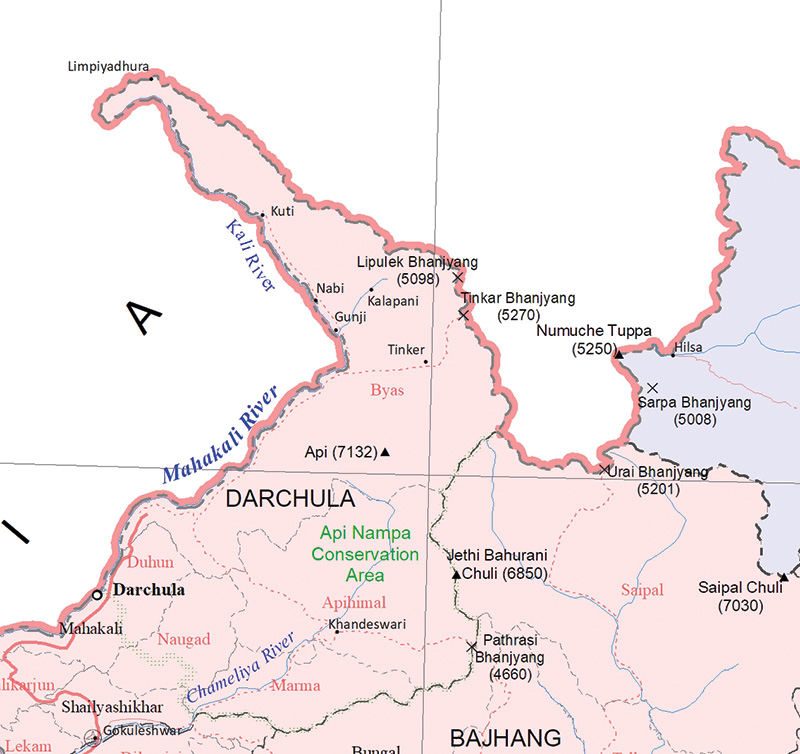
Kuti, Nabi and Gunji are villages that officials have to find a way to count the populations of. Map section: Department of Survey

KATHMANDU,
During the decennial census every household in the country is visited and a headcount of those living in the country taken.
That means in the 2021 census, which begins in June, authorities will also have to count the people living in the Kalapani area that has been incorporated as part of Nepal, as per a new constitutionally adopted map published last year.
But there is a catch.
India continues to maintain its claim over the Kalapani area in Darchula district on the northwestern edge of Nepal.
While officials of the Central Bureau of Statistics, the government authority responsible for conducting the census, are intent on covering that area, they are concerned if they could send enumerators there, as the move might invite bilateral tensions.
“Indian authorities have prohibited Nepalis from going to the Kalapani area for the last several decades,” said Dilip Budhathoki, chair of Byas Rural Municipality in which the Kalapani area falls.
Given the situation, Nepali authorities are mulling two options to conduct the census in the area.  
Hem Raj Regmi, deputy director general of the Central Bureau of Statistics, said: “One option is using satellite imagery of the houses in the area and estimating the number of people based on that. Another option is estimating the current population based on India’s census report of 2011 and estimated growth rate of population in the area.”
Officials say the bureau has already collected the data on the population there based on India’s 2011 census, according to which, there are 363 people in Kuti, 78 in Nabi and 335 in Gunji, the three villages in the region.
“However, no final decision has been taken regarding using any of the options,” Regmi said.
Nepal had last conducted the census in Lipulekh six decades ago by sending enumerators door to door.
Chief district officers of Darchula dispatched reports to the Home Ministry about the activities in these villages until around 1990.
But after the Sino-India war of 1962, the area has been under Indian control as it is a strategic point on the Nepal-India-China trijunction.
A row between Nepal and India flared up in November 2019 when New Delhi published a new political map of India placing Kalapani, Lipulekh and Limpiyadhura within its territory.
Delhi cold-shouldered Kathmandu’s request for diplomatic dialogue to resolve the issue.
Then in May last year India built a link road via Lipulekh to Kailash Mansarovar in the Tibet Autonomous Region of China.
Taking umbrage at the Indian move, the KP Sharma Oli government  published a new map incorporating the area as part of Nepal and in June last year endorsed the map through Parliament amending the constitution.
Nepal-India relations, which had hit a low, have shown signs of improvement lately but the two countries have yet to find an amicable solution to the row over the Kalapani region.
In the given context, politicians and officials say that it is virtually impossible to hold a census by sending enumerators to the area which is in complete administrative control of India, without India allowing Nepal to do so.
According to Budhathoki, chair of Byas Rural Municipality, even Indian nationals need to produce their identity cards and they are interrogated when they enter the area. “Nepalis who have family relations with people in Kalapani are allowed to go occasionally and only during deaths or similar situations,” Budhathoki told the Post over phone from Byas.
In an article in the Post last June, Buddhi Narayan Shrestha, former director general of the Department of Survey, wrote that Nepal had conducted population census in Kuti, Nabi and Gunji informally in 1991, and had recorded the numbers of households and population.
According to Shrestha, during the 1991 census, 150 houses and a population of 723 had been recorded in the three villages.  Dilendra Prasad Badu, a Nepali Congress lawmaker from Darchula, said he does not think it is possible to conduct a census in the Kalapani area given the heavy restrictions on Nepalis to go there.
“Until we settle boundary disputes with India in the region, I don’t think there is any chance for us to conduct a census there,” Badu told the Post.
According to Badu, even if India agrees that the land belongs to Nepal, people residing in the area may need to be asked whether they want to become Nepali citizens.  
A majority of the people living in the area depend completely on India and they say even reclaiming Kalapani by Nepal won’t make much of a difference until the Nepali state pays adequate attention to them.
Despite the government saying it will conduct a census in the disputed Kalapani area, it has not issued any specific instructions to the local administration of Darchula where the Kalapani area falls.
“We have not received any instructions from higher authorities regarding conducting census in the Kalapani area. We will act accordingly once we receive instructions,” said Siddharaj Joshi, chief district officer of Darchula. “As we have no administrative presence in the Kalapani area, we cannot go there to conduct a census.”
Budhathoki, the chair of Byas Rural Municipality, is even more blunt. “Given the conditions, conducting a census in the area is just a pipe dream,” Budhathoki told the Post.
The 2021 census will be conducted from June 8 to June 22.  
The Central Bureau of Statistics has already appointed 39,000 enumerators and 8,000 supervisors to conduct the 2021 census across the nation.
Officials say they are prepared to carry out their work and when it comes to the Kalapani area, they need a concrete decision and clear instructions from the government. According to them, even though they have discussed the alternatives to going to the field [Kalapani area], the government has not yet taken any decision.
“Irrespective of modality, the government is in favour of conducting population census in the Kalapani area,” said Min Bahadur Shahi, a member of National Planning Commission under which the Central Bureau of Statistics works.

HOME PAGE

Are Nepal’s parties taking the country towards early polls?

Oli is for elections, and Congress, the main opposition, Maoist Centre, Oli’s former ally, and Samajbadi Party, the fourth but a key force, appear to give their tacit consent.
- TIKA R PRADHAN

KATHMANDU,
When Prime Minister KP Sharma Oli dissolved the Parliament on December 20 and declared polls for April 30 and May 10, every other party—the Nepali Congress, the Janata Samajbadi Party and a faction of his own Nepal Communist Party (NCP) decried the move. Their argument was that the dissolution decision was unconstitutional and it threatened the very political stability that parties had tried to achieve through the 2017 elections held under the constitution adopted in 2015.
The House, however, was restored by the Supreme Court on February 23, calling the dissolution unconstitutional. By extension, the polls were automatically scrapped. It was largely expected that the political process would return to Parliament.
The Supreme Court then on March 7, the day the first meeting of the reinstated House was summoned, passed a dramatic verdict, scrapping the Nepal Communist Party (NCP) and reviving the CPN-UML and the Communist Party of Nepal (Maoist Centre).
Over a month since the House was resurrected, Nepal’s political parties are behaving in such a way that the country would head towards an early election.
“It looks like all this drama is being orchestrated for early polls,” said Surendra Pandey, a Standing Committee member of the UML, who is currently with the Madhav Nepal-Jhala Nath Khanal faction. “Attempts are being made so that Oli’s early polls plan could be justified.”
As per the schedule, the general elections need to be held in November-December next year. But many say the likelihood of elections a year early—by November-December this year cannot be ruled out.
After the Supreme Court overturned his House dissolution decision, Oli was expected to resign on moral grounds. He, however, did not. And Pushpa Kamal Dahal, the Maoist Centre chair, who was at the forefront of demanding Oil’s resignation after the latter dissolved the House could simply have withdrawn the support his party lent the government back in February 2018. But he did not.
The Nepali Congress, the main opposition whose duty is to hold the government to account, could have moved a no-confidence motion against Oli for taking an unconstitutional move, which was corrected by the top court. The Congress did not.
On its part, the Janata Samajbadi Party, the fourth largest force in Parliament, could have taken initiative to form an alliance with the Congress and the Maoist Centre to topple the Oli government.
It rather decided to remain engaged with Oli in a bid to achieve a power-sharing deal.
Multiple leaders the Post spoke to over the past few days say the one way the Oli government may continue till the election time next year is if he manages to cultivate the Janata Samajbadi Party, which itself is a divided house.
Two top leaders of the Samajbadi Party, Mahantha Thakur and Rajendra Mahato, are ready to join hands with Oli, while as many, Upendra Yadav and Baburam Bhattarai are opposed to the idea.
The Maoist Centre has hesitated to withdraw support to Oli, fearing he could dissolve the House again. The Nepali Congress does not seem to have any qualms over early polls. A section of the Janata Samajbadi Party has made it clear that it does not mind joining hands with Oli or participating in the polls if held early.
Analysts say the ball is in the Maoist Centre’s court.
“If the Maoist Centre withdraws its support to Oli, there are chances that neither Oli nor his opponents could garner a majority,” said Jhalak Subedi. “In that case, parties could agree for early polls.”
After the Congress party on April 2 decided to make a move against Oli, the Maoist Centre was planning to withdraw support to Oli. However, it suddenly postponed the meeting of its Standing Committee scheduled for April 4.
“There has been no concrete development when it comes to our discussions with the Nepali Congress and the Samajbadi Party,” said Pampha Bhusal, a Standing Committee member of the Maoist Centre.
The Congress (61 seats), the Maoist Centre (49 seats as four have defected to Oli), and Janata Samajbadi Party (32) together make 142 seats in the lower house, enough to form the government.
But the process to form a new government could begin only after toppling Oli for which either the Maoist Centre has to withdraw support to initiate the process or any other party has to file a no-confidence motion against him.
“We tried to garner a majority to topple Oli, but the Nepali Congress and Janata Samajbadi Party were reluctant,” said Dev Prasad Gurung, a Standing Committee member of the Maoist Party. “By not speaking against Oli’s attack on the constitution, the opposition parties seem to be making way for early polls by letting Oli dissolve Parliament again.”
According to Gurung, his party alone won’t be able to save the House if the Nepali Congress and Janata Samajbadi Party want early elections.
According to Maoist leaders, Deuba has been reluctant despite Dahal proposing him as the prime minister.
“Deuba seems to be in favour of early polls,” said Devendra Poudel, a Standing Committee member of the Maoist Centre. “But we want the Nepali Congress to decide what to do after toppling Oli. The Janata Samajbadi Party holds the key, but it too has remained undecided.”
Rajendra Mahato, a senior leader of the Janata Samajbadi Party, however, says his party’s focus currently is on getting their demands fulfilled.
“We have nothing to do with the government [formation] until there is a commitment on our demands for releasing hundreds of our imprisoned leaders and cadres, withdrawing fake cases and amending the constitution,” Mahato told the Post.
Oli on his part has been challenging his opponents to file a no-confidence motion if they can. Last week, Oli asked his opponents to file a no-confidence motion instead of demanding his resignation.
A no-confidence motion may not just mean toppling Oli, as there are chances of House dissolution, if a new government cannot be formed. And such a dissolution would be constitutional this time.
“If we continue to remain undecided, Oli could take the country towards polls again by dissolving the House. And if that does not happen, the country could go to polls under the leadership of Deuba or any other leader in consensus,” Poudel, the Standing Committee member of the Maoist Centre, told the Post. “Whether we want or not, the nation seems to be heading towards early elections.”
Deuba, however, appears to have set sights on party presidency rather than the government leadership.
According to Pradip Poudel, a central member of the Congress party, Deuba is pressing for holding the party’s general convention.
“I think Deuba believes that the Congress could win the polls even if Oli leads the election government,” said Poudel. But some political analysts say there is more to Nepali politics than meets the eye.
According to Hari Roka, a political economist, Kathmandu politics has become much more complicated than it appears and things are not limited to just Nepali political actors.   
“Recent political developments in the country also have something to do with geopolitics, some super powers’ interest and the rivalry between our two giant neighbours,” Roka told the Post.
“Even if the parties agree on early polls, complications could arise due to various factors and some could be attributed to the fight over who leads the election government.”

Page 2
NATIONAL

Early marriage and teen pregnancy rampant in Karnali Province

According to the Ministry of Social Development, 41,000 teenage girls got married in Karnali in the last three years.
- CHANDANI KATHAYAT
A total of 40,961 teenage pregnancies were reported from several districts of Karnali in the last three years. Post file Photo

BIRENDRANAGAR, 
Saraswati Damai, a resident of Sarkegad Rural Municipality Ward No. 3 in Humla, got married to Daljit Pariyar nine years ago. She was 14 years old and a fifth grader at the time of her marriage.
Damai bore her first child at the age of 15 and by 20, she was a mother to three children. Three years ago, she died of excessive bleeding while giving birth to her fourth child.
Most teenage girls in Karnali Province meet the same fate as Damai. Married at a young age, these girls lead the life of young mothers who face complications in their reproductive health that sometimes prove fatal.
According to the data of the Ministry of Social Development, 41,000 teenage girls got married in Karnali Province in the last three years. Out of them, 19 percent went through teen pregnancy.
Manisha Nepali, a teenager in Jumla, says most teenage girls in the region are putting their lives at risk by marrying young.
“Society pressurises girls to marry early and bear children even when they are not prepared, physically and emotionally, to take such responsibilities,” Nepali said.
One of the most pressing reasons for marrying young, besides societal pressure, is poverty, says Nepali.
“Most of the girls get married at a young age owing to the poor economic background of their family. The family and the girls themselves look at marriage as a means to escape from poverty,” she said.
Four years ago, Danta Oda, a pregnant teenager in Jumla, died while giving birth to her third child. She was a mother of two children at the age of 18.
Her father Manu Oda says he regrets marrying off his daughter at a tender age.
“My daughter could never enjoy life due to the burden of household chores. I think she would have survived if we had taken her to a hospital on time,” he said. “We don’t have proper access to health care due to the remoteness of our villages.”
Sunita Singh, a local resident of Junichande Rural Municipality in Jajarkot, became a mother at the age of 16. She was only 14 years old when her family married her off. Her husband left her soon after and remarried. Singh now is a single parent to her daughter and lives a life of hardship.
“I regret giving in to the family pressure of marrying early. I would have had a much easier life if I had chosen to stay unmarried,” said Singh.
In the last three fiscal years, the provincial government has launched various plans, programmes and policies to mitigate the risks of child marriage and teen pregnancy. But the result so far has been dismal.
Highlighting some of the programmes aimed at addressing the issue of child marriage in Karnali, Social Development Minister Dal Rawal said, “We have started ‘bank account of daughters, for secured life’ and ‘daughters and daughter-in-law’s scholarship’ programmes with an aim to make girls economically independent so that they can live a life of dignity.”
With these initiatives, the provincial government aims to eradicate child marriage that plagues the province and its girls.
“The government has decided to open a bank account in the name of girls and deposit money in their accounts until they turn 20. They can withdraw money only if they marry after 20 years of age,” said Rawal.
According to the data available at the Ministry of Social Development, Rukum (West) is at the top of the list for child marriage in Karnali Province.
Within the last three years, the district reported 71.6 percent of child marriage cases while the figure stands at 70.66 in Dailekh, 69.88 in Salyan, 69.76 in Jumla, 68.82 in Surkhet, 65.86 in Jajarkot, 59.17 in Kalikot, 57.39 in Mugu, 52.38 in Humla and 49.95 in Dolpa.
According to the ministry, most children are married between 15 to 19 years of age. A total of 40,961 girls became pregnant in several districts of Karnali in the past three years.
Although Nepal abolished child marriage in 1963, the practice is still rampant in rural areas of the country. According to the Civil Code, the minimum age for marriage in Nepal for both women and men is 20. As per Article 173 of the Criminal Code, a person found guilty of either committing or arranging a child marriage is subject to a jail term of up to three years and a fine of Rs 30,000. However, in many cases, these legal provisions, aimed at protecting children from child marriage, have ended up being used to penalise them instead.
Rawal says that the provincial government is going to coordinate with local governments to formulate new laws to address child marriage in Karnali.
“The prevalent laws, plans and campaigns haven’t been effective. We plan to raise awareness on the issue in the entire region through awareness programmes in coordination with police administration, children clubs and local people,” Rawal said.

NATIONAL

Bagmati provincial assembly meeting postponed again

- SUBASH BADARI

MAKWANPUR,
The Bagmati provincial assembly meeting was postponed soon after it convened on Tuesday.
Speaker Sanu Kumar Shrestha postponed the assembly meeting after the CPN (Maoist Centre) announced to disrupt the meeting, demanding resignation of Chief Minister Dormani Paudel.
The assembly meeting was supposed to decide the no-confidence motion tabled against Paudel. The speaker has postponed the assembly meeting several times ever since a no-trust motion against Paudel was filed at the assembly secretariat on December 25, 2020.
Speaking at the special hour, the Maoist Centre’s parliamentary party leader Salikram Jamarkattel demanded that Paudel resign from the post of chief minister as a no-confidence motion has been filed against him. He said the government should answer the assembly why it issued Rs 5 million budget to Madan Bhandari Foundation and allocated budget on the basis of factional politics. Jamarkattel claimed the government is a failure and in minority now with the tabulation of the no-confidence proposal.
“The government has been unsuccessful in every sector. It is ignoring the directions of various parliamentary committees. We won’t let the assembly meet unless we get answers from the government,” said Jamarkattel. He also formally announced the withdrawal of Maoist Centre’s support to the Bagmati provincial government.   
Nepali Congress has also criticised the speaker for taking the provincial assembly hostage.
“The speaker should urge the government to answer questions and proceed with the assembly meeting. But it did not happen,” said  Congress provincial assembly member Chhiring Dorje Lama.
The assembly meeting has been postponed to Wednesday.

Page 3
NATIONAL

Essential workers to be immunised with Chinese vaccine from today

The jabs will be administered from 23 hospitals—19 in Kathmandu Valley and four in districts bordering China. Around 400,000 people have been targeted in this latest phase.
- Arjun Poudel
Over 1.8 million people have received the first dose of Covid-19 vaccine so far.  Post File Photo

KATHMANDU, 
Essential workers will be immunised  from Wednesday with the Covid-19 vaccine provided by China under a grant assistance.
The Ministry of Health and Population said that all necessary preparations including the supply of the vaccine and orientation for health workers have been completed for the vaccination programme.
Dr Jhalak Gautam, chief of the National Immunisation Programme, told the Post that those who provide essential services defined by the government can take the jabs from designated hospitals.
Essential workers include postal and telephone service providers, public transportation workers, water supply and distribution staff, tourism sector—hotels and restaurants—employees, and workers engaged in production, sales and distribution of medicines, electricity supply, storage and transportation of consumer goods. Health workers who missed out in the first phase of vaccination that began on January 27 can also get the Chinese jabs.
Apart from those working in essential sectors defined by the government, the vaccine will be administered to businessmen and truck drivers who need to travel to China frequently.
Nepali students pursuing higher degrees in China but stuck in Nepal due to the pandemic will also get the jabs, according to Gautam.
China recently introduced vaccination passports for travellers to prove that they are free from the coronavirus infection. It has been reported that China is resuming visa processing for foreigners if they have been inoculated against the coronavirus with Chinese vaccines.
“Vaccines will be administered from 23 hospitals, 19 of them from Kathmandu Valley—14 in Kathmandu, three in Lalitpur and two in Bhaktapur,” added Gautam. “People of the targeted groups can take the jabs from the Dhulikhel and Trishuli Hospital, Barhabise Hospital and District Hospital Rasuwa.”
Earlier, the Health Ministry had said that those in the target group would be vaccinated from 12 hospitals in Kathmandu Valley.
The Chinese vaccine will be administered at Bir Hospital, Paropakar Maternity and Women’s Hospital, Sukraraj Tropical and Infectious Disease Hospital, Civil Hospital, National Ayurveda Research and Training Centre, Nepal Medical College, Kathmandu Medical College, Tribhuvan University Teaching Hospital, Shahid Gangalal National Heart Centre, Birendra Hospital (Army Hospital), APF Hospital, Nepal Police Hospital, Om Hospital and Research Centre and Chhetrapati Free Clinic in Kathmandu.
Patan Hospital, KIST Medical College and Anandaban Hospital in Lalitpur; Bhaktapur Hospital and Nepal-Korea Friendship Municipality Hospital of Bhaktapur, Dhulikhel Hospital of Kavrepalanchok, Trishuli Hospital of Nuwakot, District Hospital Rasuwa and Barhabise Hospital of Sindhupalchok will provide the immunisation service.
The Health Ministry plans to extend the immunisation programmes to Barhabise of Sindhupalchok and Dhunche of Rasuwa later.
China had given 800,000 doses of coronavirus vaccine, the BBIBP-CorV developed by Sinopharm, an affiliate of the state-backed pharmaceutical giant Sinopharm, in grant. The vaccines arrived in Kathmandu last Monday.
According to a report published in The Lancet, inactivated BBIBP-CorV Covid-19 vaccine is safe and well tolerated.
On December 30 last year, Sinopharm announced the vaccine’s efficacy at 79 percent, which was lower than the 86 percent efficacy announced by the United Arab Emirates on December 9.
According to recent reports in The Washington Post , the United Arab Emirates, which was among the first countries to adopt Sinopharm vaccines, BBIBP-CorV is not adequately generating antibody response after two doses.
According to the paper, Walid Zaher, chief researcher for G42 Healthcare, which distributes the Sinopharm vaccine in the United Arab Emirates, told Dubai Eye Radio that a study was underway to give some people their
third doses.
G42 Healthcare also coordinated Sinopharm’s Phase 3 clinical trials in the UAE and elsewhere in the Middle East.
Gautam said that essential workers between 18 and 59 years can get the vaccine in the drive.
Earlier, the Health Ministry had decided to provide the vaccine only to people between 40 and 59 years.
Unlike in the first and second phases of Nepal’s immunisation campaign against the coronavirus, the Chinese vaccine will not be administered from the district hospitals and the primary health centres.
Earlier, the ministry had planned to provide the jabs from the provincial hospitals, but Gautam said that for now there is no such plan.
In the first phase of the campaign, frontline health workers and others had been given the jabs from district hospitals and in the second phase, during which those above the age of 65 had been given the jabs, the campaign was expanded to primary health centres.
Nepal has so far been using Covishield, the vaccine developed by University of Oxford and the pharmaceutical giant AstraZeneca, manufactured by the Serum Institute of India.
After inoculating a little over 1.8 million people in two phases until March 15, Nepal’s vaccination drive remains suspended due to supply constraints.
Nepal launched its vaccination drive with the one million doses of Covishield that India had provided under a grant assistance.
Nepal then paid for 2 million doses, but the Serum Institute has supplied only a half of the ordered amount, with no clarity on when the remaining half will arrive. Nepal’s plan to buy an additional 5 million doses from the Serum Institute is currently in limbo.
Nepal has also received 348,000 doses of Covishield under the World Health Organisation-backed COVAX programme.
The Health Ministry said that the second dose will be given to those who got the first dose in the first phase of the immunisation campaign, from around 500,000 doses of Covishield vaccines in stock, from April 20 to 24.
Nepal has so far reported 278,470 cases of coronavirus infections and a death toll of 3,036.
The Health Ministry said that 260 people have been infected in the last 24 hours. Active cases stand at 1,979 throughout the country.

NATIONAL

Oman amnesty offers undocumented Nepalis chance to return home

The amnesty programme, which was introduced in October last year, has been extended till June 30.
- CHANDAN KUMAR MANDAL

KATHMANDU, 
Omani government’s general amnesty for undocumented foreigners has once again come as a boon for many Nepalis who have been living and working in the country illegally.
Under the amnesty scheme, undocumented  Nepali migrant workers can return home without facing any legal consequences, including fine payment and ban from entering the Gulf country for jobs in the future.
According to Sharmila Parajuli Dhakal, Nepali ambassador to Oman, the embassy has been actively sharing information and encouraging Nepalis living in the country without visas and other documents to take advantage of the amnesty scheme.
“The ongoing amnesty is a good chance for undocumented Nepali workers,” Dhakal told the Post over the phone from Muscat on Sunday. “We have been reaching out to potential workers so that they can go home without facing any legal consequences.”
Earlier, the Omani government had announced its general amnesty scheme for undocumented migrants in October last year. The reprieve programme, whose deadline was to expire in December of that year, was extended till March 31 of this year.  
Now, the Omani authorities have once again extended the deadline till June 30, considering the Covid-19 pandemic.
“The general amnesty and its deadline extension can be a big relief for Nepali workers who still have undocumented status,” said DB Chhetri, a spokesperson for the Non-Resident Nepali Association. “Normally, those undocumented or absconding people, if found by the local authorities, are arrested and kept at deportation centres and they have to pay hefty fines. If they chose to voluntarily go back to their respective countries under the amnesty scheme, they can skip such legal issues.”
According to Chhetri, who is based in Muscat, what makes the ongoing scheme attractive is that it also provides undocumented foreigners to legalise their status and stay in Oman and they will not be prohibited from future entry.
By mid-December last year, nearly 41,000 foreigners had applied to avail of the general amnesty.
According to Oman News Agency (ONA), the Ministry of Labour announced 65,173 foreign workers had applied to leave the country under the scheme and 46,355 of them actually left before the last deadline of March 31.
The Nepal Embassy data shows that 57 Nepali migrant workers benefited under the general amnesty scheme.
According to Dhakal and Chhetri, the number may look small because Nepali workers turning undocumented in Oman is not a bigger issue than it is in other labour destination countries.
“Other countries have a larger number of undocumented workers. Our number is also small because the embassy keeps repatriating stranded and undocumented Nepali workers regularly,” said Dhakal. “The embassy keeps rescuing and repatriating especially women migrant workers, who come to work as domestic help in the country through third countries. This time, we are not receiving applications in bulk, but workers are still approaching and the embassy is helping them through the process.”
The reason behind fewer number of undocumented Nepalis in Oman is also because the Sultanate hosts a relatively smaller number of Nepali migrants than other countries in the Persian Gulf region.
According to the Labour Migration Report, 2020, Oman hosts nearly 20,000 Nepali migrants.
“By 2012-13, undocumented status used to be a major concern. The problem doesn’t look big now because we kept rescuing the workers and sending them home,” said Chhetri. “People also returned during the pandemic. However, it doesn’t mean there are no undocumented Nepalis at all. There must be some people who willingly stayed back with the hope of earning money.”
Local media has said that the amnesty scheme was launched by the Omani government in a bid to minimise the negative repercussions of the Covid-19 pandemic on various sectors.
Nepal government data has shown that more than 3,253 Nepalis have returned home since the repatriation and the resumption of regular flights in the aftermath of Covid-19 pandemic.
Meanwhile, Nepal and Oman governments are expected to sign a labour agreement soon, giving hope to the rising demands of Nepali workers in the country.
However, the migration of Nepalis to Oman, which had resumed after a long Covid-19 hiatus, has been affected due to a surge in infections in the country.
“Nepali workers’ entry to Oman has gone back to normal days of the pre-pandemic phase. Now, the feared second wave of Covid-19 and the ongoing curfew has affected their arrival,” said Chhetri. “With the signing of understanding between both countries, more job opportunities will emerge for Nepali workers.”

NATIONAL

Health conclave panellists shed light on ways to build healthier society

Health Minister Hridayesh Tripathi says suggestions from the country’s eminent health experts will help government develop better health policies in the future.
- Post Report

KATHMANDU,
The one-day Nepal Health Conclave 2021, with the theme ‘Aarogyada: Living healthier together’, was held in Kathmandu on Tuesday.
The daylong event, a joint effort of Trikal Production and young health professionals from the US embassy Youth Council, Saptaha Aajiwan, resonated with this year’s World Health Day theme of “Building a Fairer, Healthier World”.
Minister for Health and Population Hridayesh Tripathi, who attended the inaugural session, said organising such an event after the country went through the coronavirus pandemic was ‘meaningful’.  
 “The decision that comes from the conclave will be helpful for the ministry to develop better health policies in the days to come and the government will surely accept all the positive recommendations,” Tripathi said.
The conclave offered four sessions on different topics—Health Literacy, Agenda for All; Covid-19 and Sustainable Development Goals, Deconstructing Health Policies and Role of Mainstream Media for a Healthier Nepal—and brought together the most eminent minds in the country’s health and other sectors.
Speaking before the session, US Ambassador to Nepal Randy W Berry said he was pleased to attend the meaningful event.
“Today’s health conclave will help create better understanding among stakeholders about this important conversation,” he said.
He also informed that the US was spending over $32 million to fight the Covid-19 pandemic in Nepal.  
In the first session of the conclave, panellists Dr Bhagawan Koirala, cardiac surgeon; Dr Rajendra Koju, dean of School Of Medicine Kathmandu University; Dr Aruna Upreti, public health specialist; and Dr Bidya Nath Koirala, head of the department of Central Department of Education at Tribhuvan University talked about the importance of indigenous knowledge to cure public health. The session was moderated by Bonita Sharma.
“The modern medicine should go along the indigenous knowledge, mobilising the local resources making them public understand at ground level, what kind of medicines our ancestors took,” said Dr Aruna Upreti.  
Dr Koirala, meanwhile, emphasised on breaking the false information and  delusion created by the internet.
In the second session, panellists discussed in depth the social and health fallout from the Covid-19 pandemic. The discussion also touched on the themes of clinical and local engagement, public health, interventions and policies.  
“Because of the Covid-19 pandemic, all the health system and infrastructure was diverted for curing the disease, and it was a very stressful situation when our hospital had got the first case. To get a PCR report we had to send samples to Hong Kong,” said Koirala.
Mahendra Prasad Shrestha, a health coordinator at the Covid-19 Crisis Management Centre, Dr Kiran Regmi, a former Health Secretary, Dr Dilip Sharma, the director at Standards and Accreditation at Medical Education Commission, and Professor Dr Sharad Onta, country coordinator for the People’s Health Movement, featured in the third panel discussion, Decentralising Health Policy. They discussed the government’s strategy to stem the current rise of Covid-19 cases, and the need to bring reforms in government’s health policies.
The panellists emphasised that the country’s health policies should be changed every five to ten years and it should be public centric .  
“It’s time to question whether our health policy is going in the welfare model or market model?” questioned Onta.    
Dr Dilip Sharma talked about the upcoming challenges in the country’s tourism industry.
“Besides the infrastructure, the country also should focus on quality and effective health facilities to promote tourism,” said Sharma.  
The last session of the conclave had a discourse on the role of the media in creating a healthier society.
Dr Jageshwor Gautam, spokesperson for the Ministry of Health and Population; Rajendra Dahal, former chairman of Nepal Press Council; Ani Choing Drolma, a Buddhist nun and a social activist; and Sandip Chhetri, a comedian and TV presenter, shared their experiences of the pandemic and the impression it left in them.   
Dahal, the former chair of council, said more than the mainstream media, other social media such as Facebook, Twitter, Tik-Tok were more responsible for disseminating false information during the Covid-19 pandemic.
“Basically, mainstream media such as print and broadcast has its editor who does fact check, but in those social media there is no one to monitor,” said Dahal.

NATIONAL

Ministers representing CPN-UML resign

Briefing

BIRENDRANAGAR: Three ministers representing CPN-UML in the Karnali provincial government resigned on Tuesday. Minister for Financial Affairs and Planning Prakash Jwala, Minister for Social Development Dal Rawal and Minister for Industry, Tourism, Forest and Environment Nanda Singh Budha tendered their resignations to Chief Minister Mahendra Bahadur Shahi. The UML parliamentary party meeting held on Sunday instructed the ministers representing the party to resign immediately. Shahi, the parliamentary party leader of CPN (Maoist Centre), was elected as the chief minister in 2017.

NATIONAL

Three people die in Okhaldhunga jeep accident

Briefing

OKHALDHUNGA: Three people died in a jeep accident at Manebhanjyang Rural Municipality Ward No. 4, Okhaldhunga on Tuesday. According to the District Police Office, the jeep heading towards Dhuseni from Ketuke bazaar plunged around 300 metres down the road. Police Inspector Shiva Kattel said, “The passengers were rescued with the help of security personnel from Nepal Army and Nepal Police.” The cause of the accident is not known yet.

NATIONAL

Mid-day meal introduced to improve students’ attendance

Briefing
Post File Photo

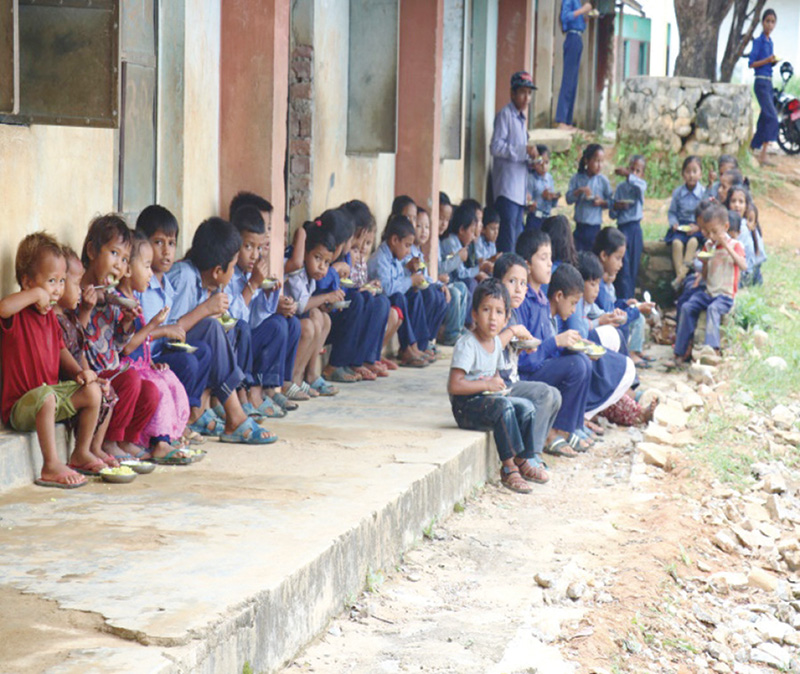
KASKI: A community school at Rupa Rural Municipality-6 in Kaski district has introduced a mid-day meal programme to increase the attendance rate of students. Chandra Prabha Secondary School has been providing mid-day meals for the past one month, as irregular attendance of students was a serious problem in the school. “The mid-day meal programme has been successful in controlling irregular attendance rate of students, especially in the primary level,” said Bholanath Paudel, the school headmaster.

Page 4
EDITORIAL

Break the deadlock

The political parties have squandered the opportunity given by the Supreme Court.

When the then Nepal Communist Party leaders Pushpa Kumar Dahal and Madhav Kumar Nepal fed laddoos to each other after the lower house was reinstated by the Supreme Court, it was hoped that they would help bring the parliamentary process back on track. The restoration of the House, the leaders had said, was exactly what was needed to save democracy. They had given hope that they would fight tooth and nail to save the parliamentary process. But Prime Minister KP Sharma Oli came back with sweet revenge as the top court effectively bifurcated the Nepal Communist Party, sending the squabbling trio to their respective old parties. By the time the lower house had finally reopened, it was already clear that the parliamentary process was going to become a zero-sum game.
And that is exactly what has happened in the past month since the lower house came back to business. The parliamentary process has resumed in principle, but it has failed to yield any substantial result towards propelling the country out of the current stalemate. A plethora of vested interests, rather than a genuine will to enhance the democratic process, has, thus, brought the democratic process to a grinding halt. The House has seen several meetings after it resumed its business, but it has little work to show as of today as the government is not keen on providing it with any business whatsoever. They have missed the opportunity given by the Supreme Court to undo the wrongs committed by Prime Minister Oli, and give a new lease of life to the democratic process in Parliament.
In fact, the government, having shed its primary responsibilities towards the people, is just keen on prolonging its life or going for an early election, and cannot think of letting others occupy centre stage. Prime Minister Oli is his browbeating self, as usual, challenging the Maoist Centre to withdraw its support to the government, all too aware that his former comrades are not in a position to do so. The opposition is its disoriented self as always, scrambling to make a sense of where exactly it should claim its space. One day it says it is willing to go for elections, and on the next day, it says it is ready to begin the process to form a new government. Notwithstanding its grandiloquence on the democratic process, the grand old party is as befuddled as ever when it comes to untangling the gridlock in the House.
In effect, the lower house has been rendered useless as the political parties have focused more on securing their petty political gains than bringing the parliamentary process back on track. The gridlock in the lower house has several severe consequences, ranging from a hamper in the passing of laws to the daily lives of the people. It is a different matter altogether that our governance system has always been so sluggish that a few glitches do not become apparent all the time. The government failed to present as many as eight bills in the lower house even as the Maoist Centre, the Nepali Congress, and the speaker of the House turned their eyes away from the parliamentary process.
The stalemate in the House of Representatives has already caused serious damage to the functioning of the very democratic process. The political parties have squandered the opportunity given by the Supreme Court by invalidating Prime Minister Oli’s unconstitutional dissolution of the lower house. This deadlock must be broken and the political process provided with a definitive way out so that citizens get to feel the essence of democracy once again.

OPINION

Politics of fear and international influence

Political processes in Nepal are now increasingly being influenced by networks of greed.
- AJAYA BHADRA KHANAL
Shutterstock/Rupad Bajracharya

We have witnessed dramatic political developments in the past few months. At the most simplistic level, we can see current politics as being driven by the conflict between Prime Minister KP Oli and his detractors within the former Nepal Communist Party. The Supreme Court’s decisions have aided and abetted political dynamics. Who were once close allies are diverging; who were once hated enemies are converging.
Nepal’s political parties, including Nepali Congress and Janata Samajwadi Party, are politically opposed to Oli. However, these parties appeared indecisive after the restoration of Parliament by the Supreme Court. Several factors were responsible for the indecision. The first was the fear that if they didn’t control the process, then Oli would hold the next elections under his leadership.
However, the incidents also reveal far more significant trends and patterns, which indicate that we are entering a new phase of political dynamics. This new phase is remarkable for geostrategic rivalry, the growing power of the Nepali state, and the transition from the politics of greed and impunity to the politics of conflict and fear.

Fear and retribution
That politics is about greed for power and money has become a commonplace idea. Parties and politicians have been too willing to sacrifice the people at the altar of political power, their object of absolute faith.
Nepali politics has facilitated the rise of a kleptocratic network that cuts across all parties, the private sector and state institutions. To protect the network and its members, and to ensure impunity, the network has co-opted the state’s core legal institutions, including the judiciary. The recent incidences of political conflict have revealed yet another dynamic to this feature. What happens when one group or individual is unwilling to share the spoils with other less powerful modules within the network?
Prime Minister KP Oli has single-handedly curtailed the influence of other political actors and asserted near-complete control over all institutions. In addition to preventing the access of other political actors to the machinery of extraction, he is also wielding the power of core state legal institutions like the Commission for the Investigation of Abuse of Authority (CIAA).
What makes these dynamics even more significant is the growing powers of the state. Since the promulgation of a new constitution in 2015, the Nepali state has become much more powerful in terms of collecting taxes and in terms of security apparatuses. There have been significant upgrades in recent years regarding mechanisms of surveillance and policing. Part of this is due to Nepal’s international obligations to the Asia Pacific Group on money laundering.
As a result, the state has much more control over individuals and institutions in Nepal. The case of the Netra Bikram Chand group’s surrender to the government reveals the absence of space for extra-constitutional and illegal activities—unless such activities are supported by the state.
Since very few politicians in Nepal are clean, almost every politician, and a significant number of private sector actors, have suddenly become vulnerable to prosecution, especially in corruption cases. So what was once a feeling of impunity has now been replaced by fear. Because of what is at stake, most of the members of the kleptocratic network have no other option than to conform to the wishes of the ruling regime.
When the powers of the state are wielded by a person like the current prime minister, the fear of retribution becomes real. However, such fear also forces those excluded from power-sharing to come together and look for opportunities to topple the ruling regime. It makes them more desperate and willing to engage in conflict.


International actors
What remains missing from analyses is the role of international actors, because it is largely hidden. According to informed sources with direct knowledge of events, the parties and leaders wanted India’s support in making moves against Oli. Such tacit encouragement did not come, and the parties were reluctant to act against Oli.
The series of events support at least two arguments. First, the government can influence electoral results—hence the desire to hold elections while in power. Second, political parties and leaders have a habit of relying on the support of foreign powers while making important political moves.
Foreign powers can provide many types of services. They can provide finance and others forms of support during elections. And, they can use their leverage, both within and outside Nepal, to enhance the status of leaders, facilitate benefits, or provide political protection in case of political or legal prosecution.
Another shift in strategy among the foreign powers is the realisation that they can no longer depend on the idea of permanent political allies and they have to work with whoever is in power. Such a shift in strategy is especially visible in the way foreign powers like China, India, and the US are conducting their diplomacy.
In the last 3-4 years, China made significant political investments in the sustainability and stability of the Nepal Communist Party, the ‘nationalist’ Nepali forces and Nepal’s government, so that Nepal could become independent of India’s influence. The strategy has failed because of the three-way splinter of the NCP that has made matters worse than before.
The three forces are now forced to contend with each others’ manoeuvres, happy to extract small victories rather than go for an ambitious end game.
Interestingly, the most significant areas of contention, at present, are pushing forward infrastructures of connectivity, extending reach in political parties, obliging and streamlining security apparatuses, and protecting operating space in the civil society.
What is missing from current trends in political analysis is the dynamics of fear and vulnerability as well as the hidden role of international actors. While analysing Nepali politics, we must now be able to account for the transition from politics of greed to politics of greed-based networks, the transition from politics of impunity
to politics of fear, the transition from a weak state to a powerful state, and the evolving strategies of external forces.
This is an issue of significant concern for all political parties because being in government allows parties and leaders to extract money from the state, abuse authority, and prevail psychologically over voter interests.
Given the significance of international actors, the conflicts over access to mechanisms of corruption, and the unequal control of a state that is growing more powerful, we are likely to see growing conflict in the future. These factors are also going to fundamentally alter the way in which parties practice politics in Nepal.

OPINION

Destination branding of pilgrimage tourism

Nepal has not worked enough to make destination marketing a viable proposition.
- ROSHEE LAMICHHANE
Shutterstock

Tourism contributes about 3 percent to Nepal’s gross domestic product. Computed on the basis of backward-forward linkages and the ecosystem, tourism is estimated to account for around 15 percent of economic activities and employment. Pilgrimage tourism is undoubtedly an attractive proposition for Nepal, and policymakers have given it a priority for promotion. But arrival levels depend not on how good the policies are. They depend on how well we disseminate information about the destination and products to the source markets.
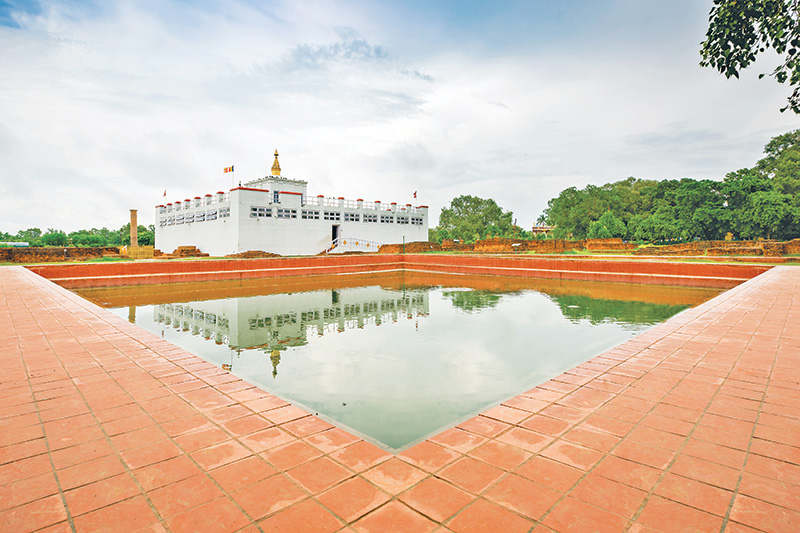
The Nepal Tourism Board has made an endeavour to brand Lumbini as a prime tourist destination. The promotional materials, mostly in digital form, communicate the brand image of the birthplace of Lord Buddha. Nevertheless, from the standpoint of the branding principle, a visible gap between branding strategy and brand communication exists. Another important point is that a branding exercise that is done in isolation without incorporating information about the peripheral and supplementary sites barely yields the desired economic benefits. It is important that branding in the contemporary context be tech-savvy. But at the same time, it must be ensured that the message reaches the potential buyers of the product. This is exactly where the overall strategy of branding has to involve a 360-degree perspective. This involves an integrated approach of crafting, developing and nurturing the unique selling proposition.


Integrated promotion
The primary consideration when branding tourism products that involve religion, heritage, adventure, sports, medicine and ecology should be a combination of product differentiation and integrated promotion of the products at the same time. Of course, these criteria need to be customised and the right infrastructure and connectivity must be provided. The importance of reputation, identity and perception as the three fundamental factors remains critical in any kind of destination branding.
The reputation of Lumbini, which is perhaps the most attractive pilgrimage brand in itself, can be enhanced only by making available modern tourism infrastructure and providing real value commensurate with the money spent by the visitors. Additionally, providing quality goods and services along with connectivity remains the chief consideration. More importantly, identifying the places of origin of the tourists becomes a crucial component.
Despite the huge potential for increasing footfall in Lumbini, various factors such as the non-availability of sufficient accommodation, especially during the peak season, has been an obstacle. Besides, connectivity has remained a challenge pending the completion of the international airport currently under construction. Filling aircraft seats will be equally challenging in the days to come without a concerted marketing strategy. In making branding efforts successful, the four As in tourism, namely attraction, accommodation, accessibilities and amenities along with other factors continue to hold the key.
That most of the pilgrimage sites in Nepal have huge tourism potential is an indisputable fact. For instance, the Halesi Mahadev Temple in Khotang, located approximately 221 km from Kathmandu, is a promising site for both Hindus and Buddhists. But the deplorable condition of the roads and perennial water woes along with lack of basic connectivity continue to plague this destination. For instance, tourist resorts operating in the area have to fetch water from Diktel, some 35 km away. Thus, the mere reputation of being a religious site will not suffice for branding the destination as long as it doesn’t conjure up positive perceptions in the minds of visitors.
The case of Chardham as a formidable brand in India exemplifies joint destinations as an alternative strategy and an ideal mechanism for branding religious sites, like the Buddhist Circuit, Ramayana Circuit and Hindu Pilgrimage Circuit, namely Kedarnath, Badrinath, Jagannath, Rishikesh, Haridwar, Prayag and Rameswaram. Despite efforts by India for the identification and formation of pathways for the Hindu Pilgrimage circuit, it has not materialised. Branding initiatives need to be done in tandem for similar or related pilgrimage sites. Promoting all naths, namely Jagannath, Pashupatinath and Doleswar (head of Kedarnath) is a case in point. Similarly, a national initiative in branding can be organised for the Buddhist Circuit from Tilaurakot in Kapilvastu to Sarnath and Kushinagar in India.
Barahkshetra and Janakpur can be branded as a single destination package. One can promote interconnectedness even for lesser-known or modest places by considering such circuits as powerful dimensions in branding. Lumbini, Bauddha, Namobuddha and Swayambhu can be interconnected and branded. The rationale behind this is to present all possibilities and facets of the products and communicate the specific importance of several components of the pilgrimage that tourists may embark upon. Likewise, Lumbini and Muktinath could be an ideal combination.
Branding and promoting these sites jointly makes much business sense as it results in cost-effectiveness. Isolated and sporadic branding exercises carried out in an uncoordinated fashion would be futile. In the current scenario, most of the visitors to these pilgrimage sites are domestic tourists rather than those coming from overseas. It is here that the kind of marketing communication used to promote the product has to keep in mind the intended target audience. Nepal has not worked enough to make destination marketing a viable proposition and a distinct possibility. A focused and expeditious exploration of high-end destination marketing is the need of the hour.


Tourism ambassadors
Every effort has to be made to retain the devotees on a religious pilgrimage for a longer and comfortable stay for recreational purpose as well. After all, it can’t be concluded that only pious and staunch devotees visit religious sites. Information seeking and exploration could also be motives for such travellers, and even their needs have to be served well. It is not an exaggeration to state that Nepal has a huge potential for tourism promotion through destination marketing by leveraging a pragmatic strategy. Unfortunately, she hasn’t been able to exploit the potential fully nor has she been successful in attracting high-end tourists or ensuring their longer stay. At the moment, the website of the Ministry of Culture, Tourism, and Civil Aviation hardly features the niche areas for destination marketing. The content is incomplete and not updated, to say the least.
Nepal should be able to fully harness the unique partnership of tourism entrepreneurs and public policymakers that it has successfully put in place to promote the sector. However, the new focus should be on attracting more foreign quality tourists and developing a diversity of attendant infrastructure to extend their stay here. It is also time to review the effectiveness of some of the strategies such as the appointment of ‘tourism ambassadors’ in foreign countries.


Lamichhane is an assistant professor at the Kathmandu University School of Management, Lalitpur.

Page 5
MONEY

Manufacturing encounters energy problems just as industries were recovering from pandemic blow

Factories in Bhairahawa have again been forced to slash production due to insufficient electricity supply.
- MADHAV DHUNGANA
Factory owners say power cuts have not only pushed up their cost of production but also caused losses to daily wage labourers. Post file Photo

BHAIRAHAWA,
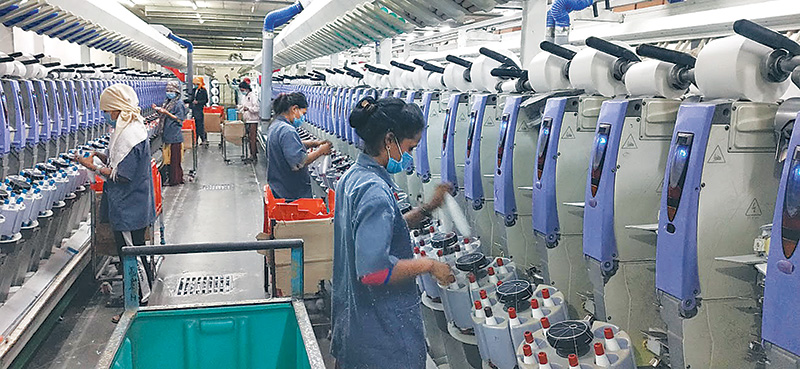
Nepal’s manufacturing sector was severely hit last year by subdued demand and supply disruptions caused by the Covid-19 pandemic. When factories eventually started increasing their output, they encountered another problem—load-shedding and circuit breaker tripping due to overloaded systems.
Medium and large factories in Bhairahawa have again been forced to slash production for the last few weeks as they are not getting sufficient electricity.
Factory owners say that power cuts have not only pushed up their cost of production but also caused losses to daily wage labourers whose incomes were badly hit last year due to Covid-19. They said that frequent circuit breaker tripping due to unreliable distribution and weak local transmission system had led to frustration. Circuit breaker tripping is particularly observed by large factories including cement, iron, steel and grain milling plants.
According to industrialists, the problem of circuit breaker tripping increased particularly from the third week of February, although such problems have existed for a long time.
“It is difficult to run a factory without regular electricity supply. And even if there is power supply, it keeps fluctuating, causing problems,” said Ravi Ranjan Kumar, general manager of Brij Cement in the Bhairahawa-Lumbini Industrial Corridor.
“Circuit breaker tripping, which leads to power fluctuations and damages electrical equipment, has resulted in losses in the millions,” he said.
He said that the Rs1.8 million stabiliser in his factory was damaged due to power fluctuation. “We have brought technicians from Pune, India to repair it.”
Kumar said that due to alternating high and low voltage, the feeder of the main plant producing Portland slag cement (PSC) was also burnt. “We were forced to bring technicians from Noida, India to repair it.”
According to him, production of PSC cement had to be stopped after the equipment broke down. “We have incurred losses. Where should we claim compensation?” The production of cement has declined to 20,000 bags daily from 30,000 bags.
The factory is also using diesel plants for cement production due to non-reliability of the electricity supply from the national grid.
The production cost of cement when using diesel fuel increases by Rs30 per bag of cement.
The factory said that when production goes down by 10,000 bags of cement daily, the government sees revenue losses of Rs600,000 in taxes.
Kumar is not the only one with a tale of woe.
Load-shedding and circuit breaker tripping has impacted nearly four dozen large-scale factories, including one and a half dozen factories in the Bhairahawa-Lumbini Industrial Corridor and a similar number of plants in the Bhairahawa-Parasi Industrial Corridor.
There are 11 cement factories operating in Bhairahawa and 11 steel factories in the Bhairahawa-Parasi area. These plants have been operating at only 60 percent of capacity due to a slowdown in development activities.
The state-owned Nepal Electricity Authority has issued a circular requesting factories to halt production for at least one day a week so that others would get to use the electricity.
According to factory operators, the letter from the Nepal Electricity Authority has no signature. Factory operators say it is ‘undeclared load-shedding’. On May 14, 2018, the Nepal Electricity Authority officially announced elimination of load-shedding for the industrial sector, a year after relieving residential customers who had suffered never-ending power cuts for decades. The announcement marked the end of load-shedding all over the country.
Anjani Kumar Yadav, engineer of the Nepal Electricity Authority in Bhairahawa, said that demand for electricity could not be met in Bhairahawa and surrounding industrial areas. The electricity imported from India is not enough to fulfil demand, he said.
“As we have to import electricity from India and bring it over long distances, it has caused problems like circuit breaker tripping,” he said. “Besides, the transmission lines in the Bhairahawa area are too old to handle the load.”
According to Yadav, they have issued a notice to shut down one factory for a day to manage the load. “The closure of one factory will enable others to run smoothly, and there will not be problems of circuit breaker tripping too.”
Yadav said that the existing transformer capacity in the Bhairahawa-Lumbini Industrial Corridor is 20 MVA while a 23 MVA power transformer is needed.
According to entrepreneurs, circuit breaker tripping has been occurring three to 11 times daily since March 9. Most of the factories in Bhairahawa have a capacity to run 24/7 but they barely operate for 11 hours a day.
Suraj Uprety, managing director of the SR Industrial Group and operator of SR Steels, said that there was a problem of uneven distribution of power supply even after shutting down one factory for one day a week.
“Power fluctuation is dangerous for factories. If the temperature fluctuates, the goods that have reached the final stage normally turn into scrap,” he said.  
Umesh Jha, chief of the Nepal Electricity Authority’s power grid division in Butwal, said that factories were facing a problem of load-shedding because the planned import of 150 megawatts from India has been halted due to station maintenance work in India.
“Imports will be resumed soon,” Jha said. “But even if the import is resumed, the old transmission infrastructure in Bhairahawa will keep creating problems of circuit breaker tripping,” he said.
“The problem will be resolved once the under-construction Manhaiya substation comes into operation.”

MONEY

IMF projects stronger 2021 growth amid Covid-19 rebound

- AGENCE FRANCE-PRESSE

WASHINGTON,
Accelerated vaccinations and a flood of government spending, especially in the United States, have boosted the outlook for the global economy, but more must be done to prevent permanent scars, the IMF said on Tuesday.
The International Monetary Fund’s World Economic Outlook now sees world growth of 6.0 percent this year after the contraction of 3.3 percent in 2020 amid the Covid-19 pandemic—the worst peacetime downturn since the Great Depression a century before.
Rapid government responses prevented a much worse outcome, a collapse that could have been “at least three times as large,” IMF chief economist Gita Gopinath said.
The United States, which deployed another $1.9 trillion last month, is expected to grow by 6.4 percent, among the fastest expansions in the world and 1.3 points higher than the January forecast.
Meanwhile, China’s economy, one of few that grew last year, will expand 8.4 percent in 2021, the IMF said. The Euro Area too will see GDP expand 4.4 percent, slightly better than the prior forecast.
Gopinath said that “even with high uncertainty about the path of the pandemic, a way out of this health and economic crisis is increasingly visible”. However, she stressed that the health crisis remains the critical factor in the economic recovery, and the slow rollout of vaccinations to many developing countries fuel risks not just of a worsening Covid-19 outbreak, but also a more troubling future for those nations and a widening gap with rich countries.
“The outlook presents daunting challenges related to divergences in the speed of recovery both across and within countries and the potential for persistent economic damage from the crisis,” she wrote in the report.

Page 6
WORLD

Global Covid-19 toll surpasses 3 million amid new infections resurgence

It took over a year for the global death toll to reach two million. The next million deaths were added in three months.
- REUTERS
A medical worker attends to a patient suffering from Covid-19 at a hospital in Poland. Ap/rss

BENGALURU,
Coronavirus-related deaths worldwide crossed 3 million on Tuesday, according to a Reuters tally, as the latest global resurgence of Covid-19 infections is challenging vaccination efforts across the globe.
Worldwide Covid-19 deaths are rising once again, especially in Brazil and India. Health officials blame more infectious variants that were first detected in the United Kingdom and South Africa, along with public fatigue with lockdowns and other restrictions.
According to a Reuters tally, it took more than a year for the global coronavirus death toll to reach 2 million. The next 1 million deaths were added in about three months.
Brazil is leading the world in the daily average number of new deaths reported and accounts for one in every four deaths worldwide each day, according to a Reuters analysis.
The World Health Organization acknowledged the nation’s dire condition due to coronavirus, saying the country is in a very critical condition with an overwhelmed healthcare system.
“Indeed there is a very serious situation going on in Brazil right now, where we have a number of states in critical condition,” WHO epidemiologist Maria Van Kerkhove told a briefing on last Thursday, adding that many hospital intensive care units are more than 90 percent full.
India reported a record rise in Covid-19 infections on Monday, becoming the second nation after the United States to post more than 100,000 new cases in a day.
India’s worst-affected state, Maharashtra on Monday began shutting shopping malls, cinemas, bars, restaurants, and places of worship.
The European region, which includes 51 countries, has the highest total number of deaths at nearly 1.1 million.
Five European countries including the United Kingdom, Russia, France, Italy and Germany constitute about 60 percent of Europe’s total deaths.
The United States has the highest number of deaths of any country at the world at 555,000 and accounts for about 19 percent of all deaths due to Covid-19 in the world. Cases have risen for the last three weeks but health officials believe the nation’s rapid vaccination campaign may prevent a rise in deaths. A third of the population has received at least one dose of a vaccine.
At least 370.3 million people or nearly 4.75 percent of the global population have received a single dose of Covid-19 vaccine by Sunday, according to latest figures from research and data provider firm Our World in Data.
However, the World Health Organization is urging countries to donate more doses of approved vaccines to help meet vaccination targets in poorer countries.

WORLD

Clear link between AstraZeneca jab and blood clots: EMA

- REUTERS

ROME,
There is a link between AstraZeneca’s Covid-19 vaccine and very rare blood clots in the brain but the possible causes are still unknown, a senior official for the European Medicines Agency (EMA) said in an interview published on Tuesday.
“In my opinion we can now say it, it is clear that there is an association with the vaccine. However, we still do not know what causes this reaction,” Marco Cavaleri, chair of the vaccine evaluation team at the EMA, told Italian daily Il Messaggero when asked about the possible relation between the AstraZeneca shot and cases of brain blood clots.
Cavaleri added that the EMA would say there is a link although the regulator would not likely be in a position this week to give an indication regarding the age of individuals to whom the AstraZeneca shot should be given.
He did not provide evidence to support his comments.
AstraZeneca was not immediately available for comment. It has said previously its studies have found no higher risk of clots because of the vaccine.

WORLD

Indonesian rescuers dig for people buried in landslides

- ASSOCIATED PRESS

LEMBATA,
Rescuers in remote eastern Indonesia dug through the debris of a landslide Tuesday in search of as many as 21 people believed to be buried in one of several disasters brought on by severe weather in the Southeast Asian nation and neighbouring East Timor.
More than a dozen villages were affected by Sunday’s landslide on Lembata island, which was triggered when torrential rains caused solidified lava from an eruption in November to tumble down the slopes of the Ili Lewotolok volcano. At least 16 people have been confirmed dead, according to Indonesia’s National Disaster Mitigation Agency.
Hundreds of police, soldiers and residents dug through the debris with their bare hands, shovels and hoes searching for those buried, with their efforts hindered by heavy rain. Relatives wailed as they watched rescuers pull out a mud-caked body, place it on a bamboo stretcher and take it away for burial.
Landslides and flooding from heavy rains from a tropical cyclone have killed at least 86 people across several islands in Indonesia and 27 people in East Timor. Thousands of homes have been damaged and thousands of people displaced by the disasters, which could worsen because the storm is expected to continue affecting the region for several days as it moves south toward Australia.
Rescue efforts were being hampered by the weather and the remoteness of the areas affected. Roads and bridges were damaged in many places.
The National Disaster Mitigation Agency lowered the death toll Tuesday to 86 — down from 128 — after search and rescue teams reverified victims’ data and found that some who were reported dead by local officials were still missing.
In addition to the dead, Indonesian disaster officials said at least 98 people were missing. President Joko Widodo held a Cabinet meeting on Tuesday to speed up search and rescue efforts and aid distribution.

WORLD

Myanmar activists splash red paint to protest junta bloodshed

- AGENCE FRANCE-PRESSE
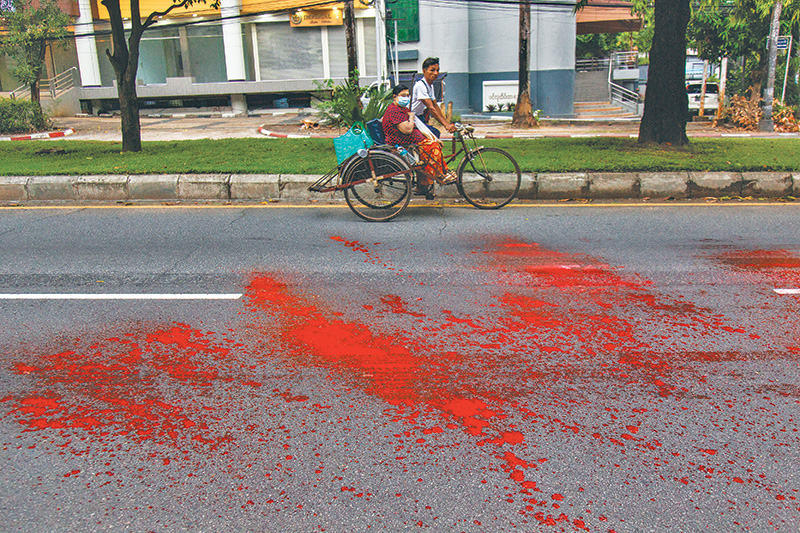
A woman riding a rickshaw passes by a street with splashes of red paint from anti-coup protesters during a demonstration in Yangon, Myanmar. Ap/rss

YANGON,
Myanmar activists daubed roadways with red paint on Tuesday to protest against the junta’s bloody crackdown on protests, as an online fundraising drive to support the movement neared the $10 million mark.
The country has been in turmoil since the military ousted civilian leader Aung San Suu Kyi on February 1, rocked by daily clashes between protesters and authorities that have left at least 570 people dead.
Ten of Myanmar’s ethnic rebel armies voiced support for the protest movement at the weekend, stoking fears that the country could slide into broader civil conflict, while the United Nations has warned of a looming “bloodbath”.
On Tuesday, in the commercial capital Yangon, people smeared red paint and handprints on bus stops and pavements in protest at the military’s violence.
The so-called “bleeding dye strike” is the latest creative method thought up by protesters to voice opposition without risking being shot or arrested by demonstrating in person.
One slogan painted on a bus stop said the military was being misused to protect junta chief Min Aung Hlaing, and urged soldiers not to shoot civilians.
In the city of Hpa-an in eastern Karen state, youths sprayed red paint on the road.
Tuesday also saw rallies in the second biggest city Mandalay, as well as in Karen, and Kachin state in the north.
In the southern city of Dawei, hundreds of people marched peacefully carrying yellow padauk flowers, normally associated with Myanmar’s new year water festival which starts next week.
In one part of Yangon, locals organised a food sharing drive to help poor families struggling to make ends meet, encouraging people who could afford it to donate spare ingredients.
Meanwhile an online fundraising push by a group of ousted MPs from Suu Kyi’s National League for Democracy (NLD) is nearing $10 million.
The Committee for Representing Pyidaungsu Hluttaw (CRPH)—the Burmese word for parliament—says the money will be used to “uproot the military dictatorship” and restore democracy. More than 2,700 people have been arrested since the coup, according to local monitoring group Assistance Association for Political Prisoners, which says at least 570 people have been confirmed killed, including 47 children.
The authorities have issued arrest warrants for 80 celebrities including singers, models and social media influencers—most of whom are in hiding—accusing them of spreading information that could cause mutiny in the armed forces.
Local media and the BBC’s Burmese service reported that famed satirist and activist Zarganar, jailed four times under previous military regimes, had been arrested.
The coup and crackdown have drawn outrage and sanctions from world powers, as well as prompting several international companies to suspend business in Myanmar.
But the pressure has yet to tell on the generals, who have shown little sign of stepping back from their efforts to suppress protests.
And on Tuesday Russia, which has sought to build ties with the junta, joined China in publicly rejecting sanctions against Myanmar.
News agency Interfax quoted a Russian foreign ministry spokes-person as warning “threats and pressure” could push Myanmar closer to “full-blown civil conflict”.
Chinese foreign ministry spokesman Zhao Lijian restated Beijing’s opposition to “inappropriate interference” in Myanmar.
But he said China backed a summit of regional bloc ASEAN to discuss the crisis—mooted by Malaysia and Brunei’s leaders after talks on Monday.
The Myanmar military has defended seizing power, pointing to fraud allegations around last November’s general election, won by the NLD.

WORLD

Kosovo’s 38-year-old president takes office

Briefing
- AGENCIES

PRISTINA: Kosovo’s new president took office on Tuesday, becoming the country’s youngest head of state and one of the youngest in the world. Vjosa Osmani-Sadriu, 38, was elected to a five-year term on Sunday by Kosovo’s Assembly, or Parliament, making her the Balkan nation’s second female leader in the post-war period. Osmani-Sadriu took office Tuesday in a ceremony with a guard of honour. Acting President Glauk Konjufca handed over the country’s constitution, avoiding a more formal ceremony due to the pandemic. Osmani-Sadriu was formerly acting president from November until late March. She replaced Hashim Thaci, who resigned after facing charges for war crimes and crimes against humanity at a special court based in The Hague.

WORLD

Death toll from Bangladesh ferry capsize rises to 34

Briefing
- AGENCIES

DHAKA: The death toll from a weekend ferry capsize in Bangladesh rose to 34 on Tuesday after rescuers and villagers recovered nine more bodies from waters outside the nation’s capital, an official said. Local chief government administrator Nahida Barik said the additional bodies were found from Sunday’s capsize of the passenger ferry ML Rabit Al Hasan. It was unclear whether any more people remained missing because ferry owners do not always keep formal passenger lists. The ferry sank after being hit by a cargo vessel in the Shitalakkhya River in Narayanganj district, just outside Dhaka.

WORLD

UAE begins commercial operation of nuclear plant

Briefing
- AGENCIES

ABU DHABI: The United Arab Emirates announced Tuesday that its Barakah nuclear power plant started commercial operations in a first for the Arab world. “The UAE has entered a landmark phase today,” tweeted Sheikh Mohammed bin Rashid Al-Maktoum, the Emirates’ vice
president and prime minister. “The first megawatt from the first Arab nuclear plant has entered the national power grid,” said Sheikh Mohammed, who is also the ruler of Dubai. Abu Dhabi Crown Prince Sheikh Mohammed bin Zayed Al-Nahyan too lauded the “historic milestone”.

Page 7
SPORTS

Army Club set sights on second round

The departmental team need to pass three hurdles to qualify for the group stage of the AFC Cup 2021.
- Sports Bureau
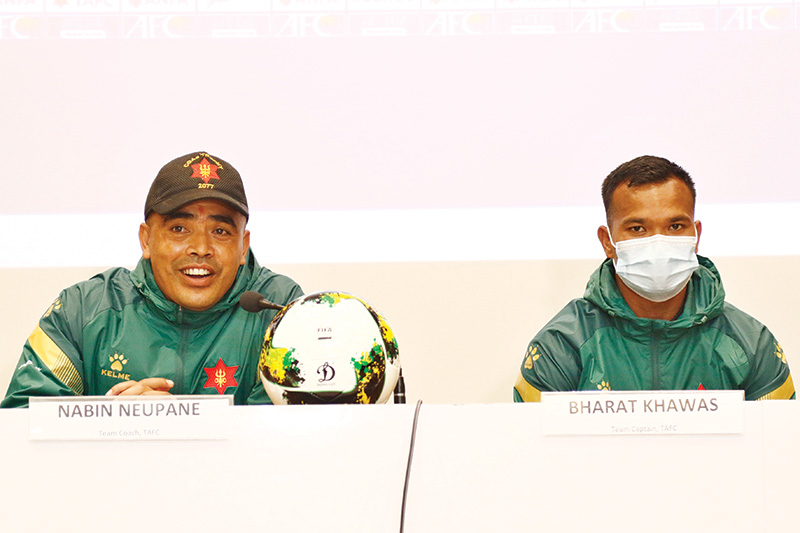
Tribhuvan Army Club head coach Nabin Neupane and captain Bharat Khawas (right) attend a pre-match conference on Tuesday. Army host Sri Lanka Police SC at the Dasharath Stadium in Tripureshwor in their preliminary first round of the AFC Cup 2021 on Wednesday. Post Photo: Keshav Thapa

KATHMANDU,
Tribhuvan Army Club will eye second rounds of the preliminary stage of the AFC Cup 2021 when they host Sri Lankan league champions Sri Lanka Police SC at the Dasharath Stadium in Kathmandu on Tuesday.
Army, the runners-up of the Martyrs Memorial ‘A’ Division League, are representing Nepal instead of the champions Machhindra Club in the inter-country club competition as the latter failed to obtain AFC Club licence.
The departmental team, the only ‘A’ Division outfit to obtain a club licence from the Asian Football Confederation (AFC), however, need to pass three hurdles before making into the group stage of the second-tier official club football tournament of the AFC.
This is the first occasion that both premier division sides of the country will be competing in the official event of the AFC Cup.
“As we have set the target of making into the group stage, we don’t have any other option than to win the first match to stake claim to the group stage. We will play modern football,” said Army coach Nabin Neupane, also the former Nepali international.
“We also have made good preparations for the tournament and the camp began promptly after we were granted the AFC Club licence,” said Neupane, whose side started to prepare for the tournament from December 23 last year.
“So we are very much hopeful of getting past the first hurdle,” said Neupane, adding that they expected the upcoming rounds to be much tougher than the first round.
If Army win the preliminary first round, they will travel to India to face Bengaluru FC, the Indian Super League side, on April 14. The winners between them will compete in the play off final on April 21. The opponents will be one among Club Eagles (Maldives), Thimphu City (Bhutan) and Abahani Limited Dhaka (Bangladesh).
“As part of preparations for the match, we have played against Kyrgyzstan U-23 and also against the African player-studded African Root Association recently. We have discovered what our weaknesses were and worked on that,” said Neupane.
Army captain Bharat Khawas, also Nepali international who did not start in a single match of the Three Nations Cup held last week, said that the match was an opportunity for him and his side to showcase their talent.
“As it is the first international game for the club, we all are super excited for the game. We have been playing together as a team for a long time and we have made good preparations,” said Khawas.
“I had to be benched in the Three Nations Cup and it is a good opportunity for me personally to show my strengths and I have worked very hard.”
Unlike Army, Sri Lanka Police SC will be boosted by the presence of three foreign recruits in Ghana players including one each in forward, midfield and defence. The team arrived in Nepal on Sunday on the back of more than two months of training.
“We are very happy to be participating in the AFC tournament for the first time,” said Sri Lanka Police coach Jhilau Alpensau.
“We started training two months ago and we are ready to face our opponents,” he said.
Pointing to the four major challenges his side would face, Alpensau said: “Nepal are ranked higher than us in the FIFA rankings. While they are third among the South Asian countries we are at the bottom. But the national ranking and the club football are different things.”
“The weather condition in Nepal is different than ours and we don’t have national players like that of Nepal. Home condition and Nepali crowd would also be a plus point for the hosts,” he added.
Nepali international strikers Khawas and Nawayug Shrestha will take charge of the attacking department in addition to George Prince Karki. Santosh Tamang, Sesehang Angdamgbe and Dinesh Henjan are likely to be deputed to midfield while Bikash Khawas, Bikash Tamang, Suman Aryal and Deepak Gurung are expected to play in the defence line-up.  Bikesh Kuthu will take charge of the post.

SPORTS

APF storm into final after 10-wicket victory

- Sports Bureau

KATHMANDU,
Armed Police Force (APF) Club clinched a thumping 10-wicket victory over Lalitpur Mayor’s XI to register third victory and book a place for the final of the Lalitpur Mayor Women’s Championship T20 cricket at the TU grounds in Kirtipur on Tuesday.
With third victory from as many matches, APF are assured of a place in the final with a match in hand. They are on top of the standings with six points. APF had defeated Province 1 and Sudurpaschim Province in their previous matches. Mayor’s XI have earned two points after the third match.
Electing to bat first, Mayor’s XI were restricted to a paltry total of 66-9 after Binu Budha grabbed four wickets. Chasing the target, APF openers Rajmati Airee and Indu Barma remained unbeaten to surpass the target in 9.1 overs.
Airee contributed 33 runs off 31 balls while Barma scored 28 runs off 24 balls. Airee hit four boundaries and Barma three fences.
Mayor XI batters Kanchan Shrestha, Saraswati Chaudhary and Santoshi Chaudhary were the only players in the innings to touch double digit figures. Shresth scored 17 runs, Saraswati 12 runs and Santoshi was not out on 13 runs.
APF bowler Budha, also the player-of-the-match, gave away 11 runs in her four-over spell to claim four wickets.
In another fixture, Sudurpaschim Province edged Province 1 by 40 runs to register their second victory and inflict the latter second defeat after three matches.
Sudurpaschim had defeated Mayor’s XI before losing to APF in their previous matches. Province 1 had lost to APF in their first match and defeated Lumbini in the second fixture.
Choosing to bat first, Sudurpaschim scored 129-4 on the back of a half-century from Bindu Rawal. In bowling, Laxmi Saud pocketed four wickets as they bowled out the national team captain Rubina Chhetri-led Province 1 for 89 runs in 18.5 overs.
After losing opener Manju Bokati for a golden duck, Rewati Dhami and Rawal played a 74-run partnership for the second inning creating the base for a moderate target. Dhami scored 30 runs off 32 balls that included three fours.
The player-of-the-match Rawal cracked 52 runs off 58 balls before she was run out. She hit four boundaries. Kabita Joshi was the other major contributor for Sudurpaschim with 21 runs under her kitty.
Province 1 bowler Sabnam Rai grabbed two wickets.
In the run chase, Province 1 kept losing wickets in a regular interval as they lost openers Kajal Shrestha for four runs and captain Chhetri for 27 runs. Chhetri, the highest scorer of the innings, hit five boundaries in her 20-ball knock.
Apsari Begam contributed 22 runs while Sangita Rai and Ngima Tamang were other players to touch double digit figures with 13 runs and 10 runs respectively.
Saud gave away 19 runs in her 3.5 overs bowling to return with four wickets. Kabita Kunwar and Kabita Joshi grabbed two wickets each.

SPORTS

New Diamond inflict Police first defeat

- Sports Bureau

KATHMANDU,
Hongwanji New Diamond Club climbed to the top of women’s standings with straight sets win over Nepal Police Club in the fifth National NVA Club League Women’s and Men’s Volleyball Championship on Tuesday.
They defeated Police, the departmental side, 25-22, 25-22, 25-16 at the NSC covered hall to notch up third win in four matches, the victory making them one of the top favourites to advance into the final. The top two teams in the six-team league will vie for the title.
Armed Police Force (APF) Club also joined New Diamond on top of the table after they thumped Bharatpur Metro Khelkud in straight sets of 25-13, 25-7, 25-9 later in the day.
Both New Diamond and APF have 10 points and at least one of them is guaranteed a spot in the final with the leaders scheduled to face each other in the final round on Wednesday.
Police were the only unbeaten team in the league until Monday but the defeat means they lie square with Tribhuvan Army Club on eight points. But Army are third on set difference rule. The two sides will meet early on Wednesday with all eyes on the final berth. However, to secure an easy path to the final the winning team will require straight sets win.
Bharatpur exited the tournament with three points after managing only one win. Dhorpatan departed on Monday winless.


Help Nepal secure final berth
Tip Top Help Nepal Sports Club reached the final of men’s volleyball with a game in hand defeating Army 25-17, 25-19, 26 as they maintained their perfect record.
The fifth straight win gave Help Nepal 15 points and will meet APF in their final league match on Wednesday.
APF lie second, five points behind the leaders, despite losing to Police earlier on Tuesday.
APF lost the first two sets 25-21, 25-23 but fought back to win the other two sets 20-25, 17-25 to push the match to the fifth set, before eventually surrendering the decider 15-13 to their departmental rivals.
Police have nine points after five matches.
In the late match, Bulbule RaRa Club beat Manimukunda Volleyball Club 25-21, 25-19, 25-16. Bulbule have nine points after five matches.
Manimukunda leave the tournament collecting only two points. Their only win came against Nayabazar Samajik Yuwa Club on Monday, which they won 25-21, 25-15, 24-26, 25-22, 15-10.

SPORTS

Police reach Aaha-Rara semis

- Sports Bureau

POKHARA,
Buddha Bal Tamang scored a brace as Nepal Police Club crushed Three Star Club 4-0 to advance into the semi-finals of the Aaha-Rara Gold Cup football tournament on Tuesday.
Tej Tamang and Saujan Rai Yakkha were also on the scoresheet as the six-time winners set a last-four clash with African Root Association at the Pokhara Stadium.
Buddha put Police in front at the half-hour mark with a one-touch finish when Tej’s long free kick found the unmarked striker inside the box.
Man-of-the-match Tej doubled the lead in the 67th minute converting a pass from Nir Kumar Rai.
Buddha stretched in the lead six minutes later, tapping a cross from Suman Lama.
Saujan then wrapped up the victory in the 85th volleying from the penalty area, also assisted by Suman.
“Our team could not play their best in the first 25 minutes. But after the first goal, they found their form,” said Police coach Ananta Raj Thapa. “But we need even better performance in the semi-final against a physically stronger African side.”
Three Star Coach Urjan Shrestha said the players could not play well due to fatigue.
“We did not even have time to rest,” said Shrestha, whose side had reached Pokhara after lifting the Bagmati Gold Cup in Makwanpur on Monday.
“But I am happy with their performance,” he added.
Sankata Club will meet Armed Police Force Club in the first semi-final on Wednesday while Police’s last-four match against the Africans is set for Thursday.
The final will take place on Saturday.

SPORTS

Lama, Rai share lead

- Sports Bureau

KATHMANDU,
Sanjay Lama and Sukra Bahadur Rai came jointly on top after the first round in the Surya Nepal Western Open at the Par-69 Himalayan Golf Course on Tuesday.
The duo carded one-under 68 each.Sanjay carded one-under 33 on the front nine with birdies on the first and seventh holes against bogey on the fifth hole. After taking the turn, he saved all pars for even-par 35.
Sukra scored even-par 34 on the front nine with birdies on first and third against bogeys on second and fourth. On the back nine, he carded birdies on 13th and 18th against bogey on the 12th hole for one-under 34.
Bal Bhadra Rai played an even-par 69. Bhuwan Nagarkoti and Amateur Subash Tamang are jointly in fourth position with one-over 70. 

MEDLEY

Horoscope

ARIES (March 21-April 19) ****
As an Aries, you’re here to learn how to invest in yourself. It takes courage and tireless faith to get to that point, but you’re already well on your way. Today you will be in a withdrawn, emotional headspace.

TAURUS (April 20-May 20) ***
Wednesday’s skies help you restore faith around your potential, Taurus. While it’s important for you to stay realistic, it’s imperative that you don’t let fear block the way forward. Today you will be able to step back and grasp a refreshed sense of belief in yourself.

TAURUS (April 20-May 20) ***
Wednesday’s skies help you restore faith around your potential, Taurus. While it’s important for you to stay realistic, it’s imperative that you don’t let fear block the way forward. Today you will be able to step back and grasp a refreshed sense of belief in yourself.

CANCER (June 22-July 22) ***
It’s been important for you to explore your approach to intimacy, Cancer. It hasn’t been easy work, as you’ve had to dismantle old fears that block your path forward in love—but you’re doing it. Later, the moon dips into dreamy Pisces, helping you see the big picture.

LEO (July 23-August 22) ***
It’s no surprise to you that your close relationships have required more attention and work than ever before, Leo. Wednesday’s skies work to show you the pay-off of the time you’ve been devoting to deepening your understanding of love.

VIRGO (August 23-September 22) ****
Your inner and outer worlds have been under reconstruction, Virgo. It’s easy to feel defeated by critical thinking when it comes to building the new vision you have for yourself. Your attention turns toward partnership matters when Luna dives into sensitive Pisces.

LIBRA (September 23-October 22) ***
You’ve been doing some powerful inner work, Libra. Bit by bit, you’ve been stripping away any falsehoods that obscure your needs in your love life. Wednesday’s skies work to brighten the mood.

SCORPIO (October 23-November 21) ***
The universe has been summoning you down into your roots, Scorpio. It’s been important for you to explore the changing stories taking place around home and family matters. But it hasn’t been easy work.

SAGITTARIUS (November 22-December 21) ***
Your mind has been busier than ever before, Sagittarius. In recent times, it’s been imperative that you deal with nagging mental health issues and experiment with telling your story through different outlets.

CAPRICORN (December 22-January 19) ****
You’ve only just begun to embrace some of your underutilized talents, Capricorn. It’s easy to fall into a trap of negative thinking, assuming that your skills aren’t up to par. Wednesday’s skies arrive to uplift your spirits and reassure your confidence.

AQUARIUS (January 20-February 18) ***
Wednesday’s cosmic landscape looks to boost moods and increase your confidence, Aquarius. The moon moves through your sign, merging with faith-instilling Jupiter in the early hours.

PISCES (February 19-March 20) ***
The universe has been encouraging you to deal with your own self-sabotaging habits, Pisces. It’s far from easy work, but you’ve begun making progress. You will be able to offer the opportunity to see the big picture and embrace a confident attitude towards your progress.

Page 8
CULTURE & LIFESTYLE

In Nepal’s growing queer movement, here’s how asexuals are trying to amplify their voice

Formed in August, a group of Nepali asexuals has started using various platforms with the motive of increasing their visibility in Nepal and the rising queer.
- ANKIT KHADGI
On the occasion of International Asexuality Day, on April 6, the group organised a meet up to celebrate the day.  Photos Courtesy: Nepali Asexuals।

Kathmandu,
It was January 24, 2020.
Manita Newa Khadgi, 29, clearly remembers this day, because it was on this day she found two words--panromantic and asexuality--that could describe her feelings and emotions.
“I knew about asexuality during my medical school days. However I didn’t have any clue that it was a legit sexual orientation,” says Khadgi.
After coming across the term ‘asexuality’ on a video on YouTube, it was as though all her life’s pieces came together and the jigsaw puzzle finally made sense, she says.
“That day I realised who I am and what my orientation is. It wasn’t a ‘eureka!’ moment; it was quiet as everything made sense and fit into these two words,” says Khadgi, an asexual individual, who’s working as a medical officer.
Also known as aces, according to the Asexual Visibility and Education Network, which is the largest platform for asexual people, an asexual person is someone who does not experience sexual attraction meaning they are not drawn towards people sexually.
“Asexuality as an umbrella term is the lack of sexual attraction towards any person. It doesn’t mean action, preference, choice, medical condition or gender identity,” says Khadgi.
Although asexuality also falls under the queer spectrum, their voices at large have always been invisible in Nepal as well as the world. According to an article published by the Guardian, it can be estimated that almost one percent of the global population identifies as asexual. But the number can be more, as there’s a wide gap of information and knowledge regarding sexual orientation, say asexual people.
“Lack of awareness and education discourages many people to acknowledge that they are asexual. Some people live in denial and some fear not being accepted by their loved ones or the society,” says Prichha Giri, a 22-year old asexual student. “Our society’s definition of normal is too narrow, too exclusionary. So many aces may not even recognise and fail to acknowledge a part of themselves because of lack of information in our society”.
But things are slowly changing for asexual people. As the internet’s access to a larger group of the population has vastly improved, many asexual people are finding more space, where they can connect and bond with each other as well as share one’s feelings and emotions, without any fear.
But in Nepal, since a safe and secure space for the whole queer community itself is lacking, as our society still is highly driven by amatonormative cisgender heterosexual norms and values, there’s a wide gap especially for the asexual people to connect and find a space where they can raise their voices.
“After I came to discover my orientation, I started looking for virtual space through which I could also connect to other Nepali peers. While I was sure that there would be some platform for aces like me, it broke my heart when I found none,” says Khadgi.
She then started joining other groups of aces that belonged to different parts of other countries, but at the back of her head, Khadgi always wanted to connect and talk to other aces, who belonged to the same cultural background. And that’s why last year to fill the gap of a space specifically for asexual people, in August, Khadgi started a virtual platform on Instagram called Nepali Asexuals, making it one of the first spaces dedicated for Nepali aces.

Shutterstock


“I created the space with a motive of sharing correct information about asexuality in the Nepali internet sphere as well as to create a platform for a possible community bonding,” she says.
In the beginning, she started disseminating information about asexuality anonymously, debunking many myths attached to sexual orientation. However, even after a month of posting, she didn’t receive any response. This demotivated her, she says.
“It was very scary at the beginning, as it was something that I started without knowing how it would pan out and if it would make any difference to anyone at all. After a month of posting there without much to show I sometimes would feel hopeless that I would ever even meet another asexual,” says Khadgi.
But once she uploaded a video revealing her real identity, where she also talked about her platform briefly, aces started reaching out, giving a boost to the platform as well as helping it to achieve its mission of connecting Nepali aces.
“I was so happy when I found out that such a platform existed for people like me. Finding another Nepali asexual was one of the greatest joys, as I could talk to someone with whom I could relate to in so many ways,” says Giri, who became one of the first members, of the group.
After Giri joined the group, according to Khadgi, almost a dozen Nepali aces living in different corners of the country and the world have joined in, helping the space grow further. While there are many aces in the group who knew about their sexual orientation, for many members, the platform has been a medium through which they have discovered their identity, they say.
“It was through the platform of Nepali Asexuals that I came to know that I was asexual. Although I was in the phase of exploring, questioning my sexuality, it was through the page that I discovered that the term asexual existed and since it perfectly encapsulated my feelings and emotions, I came to know that I was asexual,” says Brainey, a 17-year-old asexual student.
But living in a society where sex has paramount value, it can be daunting for aces, especially when they are in their growing years, where every conversation turns sexual.
“I was always forced into conversations or into talking to people who I was not attracted to or to participate in games where we had these conversations because I was so different from my peers,” says Nirdhistha Raj Sapkota, 24, a member of the group, who’s currently in the United States.
“All the girls in my batch were getting into relationships and talking about how they felt but I wasn’t even attracted to anyone, even platonically, for a very very long time. It took me a really long time to even start getting genuinely attracted to people but having my peers tell me I had to feel or act a certain way or dress a certain way was difficult,” says Sapkota, a queer asexual individual.
Likewise, since the visibility of asexual people is low in comparison to other queer people, as they don’t find any space in media or any other platform, many asexual people are often subjected to a variety of misconceptions and myths regarding their sexual orientation, they say.
“Since there is little to no representation and discourse about us, there are many misconceptions among general people like being asexual is abnormal, asexuals need to get fixed, aces haven’t met the right one yet or they have a hormonal problem or psychological issues,” says Khadgi.
But according to members of the group, the major misconception most people have towards asexuality is that it is often viewed with the same lens of perceiving celibacy, as society completely disregards the fact that not all people are sexually attracted to each other, they say.
“Often asexuality is linked with celibacy, which is wrong. Celibate people can feel sexual attraction. It’s just they are refraining from sexual relations. Likewise, it’s not necessary that all asexual people dislike sexual intimacy. That’s why they are two different things. However the society always ignores the perspectives of the aces and tries to enforce their understanding by comparing these two as the same,” says Giri.
Generally, in common understanding, asexual people are considered sex-negative. But not all asexual people stop engaging in sexual intimacy. As asexuality itself is a spectrum rather than an orientation that can be boxed, the meaning of asexuality can differ from person to person, ranging from sex-repulsed to sex favourable.
“I feel like a lot of people act like asexual people can’t still be sexual beings, which I feel is incorrect. Not all aces are sex-repulsed and asexuality in itself is a spectrum so everyone has a different way of defining what they’re okay with and what they’re not,” says Sapkota.
Currently, the group consists of only eleven members, but all of them belong to diverse orientations and identities. While Khadgi herself is panromantic (meaning romantically attracted to people regardless of gender) and asexual, Sapkota likes to call herself a queer asexual. Meanwhile, both Brainey and Giri are asexual, discovering their romantic interests. Similarly, the group also includes non-binary individuals, aromantic individuals, and cisgender men, making it inclusive to people of different orientations and gender identities.
However since many people are completely unaware of asexuality in regards to other queer communities in Nepal, for the members of the group, to make their voices heard, is a big challenge, they believe.
“It has been more than seventeen years of queer activism in Nepal. But the proper way of addressing asexuality was lacking in the queer movement and also within the queer community most activists didn’t understand asexuality. And due to this, there was the dissemination of the wrong message which directly or indirectly impacted a lot of asexuals,” says Safal Lama, a non-binary queer rights activist, who’s also a member of the group.
And that’s why the group of Nepali Asexuals is aiming to redefine the asexual movement in Nepal through their platform, by giving priority to the visibility to voices of aces like them which are largely missing in the queer movement in Nepal, they say.
“Nepali society lacks the basic awareness about asexuality and that is the reason visibility is of utmost importance. Aces are invisible because they don’t even know it themselves that it’s okay to be who they are and that it’s valid to feel the way that they do,” says Khadgi. “Awareness is the first step. Acceptance and equality should follow through.”
On the occasion of International Asexuality Day, on April 6, the group along with many international countries also organised many activities from virtual meetups to advocacy programs both online and offline.
Likewise, through their Instagram page, the group also spread awareness about asexuality by sharing stories of different aces in various forms of art and even participated in international programs organised by groups of aces in many countries including Germany, France, the UK, and Italy.
While the efforts shown by the group are laying the foundation for the inclusion of voices of asexuals within the queer movement in Nepal, for many aces, the existence of the group itself has been instrumental in helping them feel validated about their orientation and identities, they say.
“To be honest, I have always felt kind of like a black sheep in each and every one friend circles of mine to date. Now to be a part of the Nepali Asexuals group it feels like I am genuinely a part of something where I am accepted for who and what I am, rather than being the odd one out,” says an 18-year-old asexual and aromantic cis man who wants to remain anonymous.