You internet speed is slow. Switch to text view mode

Switch
epaper logo
ST

Last Login:
Logout
+
Page 1
HOME PAGE

Rising cost of living is impacting people’s health

Cases of waterborne diseases result of inflation that is driving people into poverty, forcing many to scrimp on essentials.
- Arjun Poudel

KATHMANDU,
When two girls were brought to the Sukraraj Tropical and Infectious Disease Hospital last week, their condition was serious. They were diagnosed with cholera, a highly contagious bacterial disease.
The disease causes severe diarrhoea and vomiting, which causes dehydration and can lead to death within a few hours if left untreated.
The Health Department under the Kathmandu Metropolitan City has deployed officials to collect water samples from suspected contaminated sources for testing.
Officials and doctors treating the patients, who are sisters aged 18 and 23, found out that they were using tap water for drinking, switching from jar water, apparently because bottled water had become expensive.
“When they were admitted to our hospital, their condition was serious,” Dr Manisha Rawal, director at the hospital, told the Post. “They are recuperating at the intensive care unit.”
On Tuesday, two more cases of cholera were detected in Kathmandu.
Since the onset of the monsoon, sporadic cases of cholera have been reported in different parts of Kathmandu Valley raising the risk of an outbreak, warn health officials.
Hospitals treating diarrhoeal patients said there has been a rise in the number of suspected cases of cholera.
Experts say rising living costs in cities like Kathmandu have forced many people from low economic backgrounds to cut down on various consumable items, including water. At times, they have been forced to do so at the cost of their health, according to them.
“The patients infected with cholera were found to have been drinking water directly from household taps,” said Balaram Tripathi, chief of the Health Department. “Despite knowing the risks, they are forced to drink water supplied from public taps.”
Kathmandu has always been notorious when it comes to drinking water, with tap water or water supplied by tankers remaining unfit for drinking without proper treatment or boiling. Although questions have also arisen regarding the quality of bottled water, it is considered comparatively safe to drink directly without boiling.
With the rise in prices of almost every other item due to increasing prices of petroleum products, the urban poor are struggling to manage their budgets. Some people have stopped boiling the water to save energy bills.
Officials say drinking water supplied to households directly has risks. A study, carried out by the Ministry of Health and Population last year, found that around 60 percent water samples from various sources in Kathmandu Valley—including bottled water sold in the market—were found contaminated with E. coli and coliform, the microbes found in human faeces that cause diarrhoeal infection.
“It is believed that bottled war is comparatively safe but people stopped using it due to rising costs,” said Dr Sher Bahadur Pun, the chief of the Clinical research Unit at the Sukraraj Hospital. “When we ask diarrhoeal patients why they do not boil water before drinking, most of them say, because of rising costs. Daily wage workers complain that they do not have time to boil water, hence they tend to drink whatever they get at their work sites.”
Raj Kumar Nepali, 31, who lives in a squatter settlement at Sinamangal, Kathmandu said he stopped buying jar water after the prices went up recently.
“I earn around Rs12,000 per month. How can I afford bottled water?” said Nepali, who works as a labourer. “Boiling water also comes at a cost and I have been trying hard to cut costs.”
Mathura Khanal, 47, a grocer who also sells jar water at Dhobichaur, said some of her regular customers have stopped buying water after the price increased recently.
“The price has gone up by Rs10, and for working class people, this amount matters also because the cost of other household items from edible oil to milk and sugar too has risen,” said Khanal.
For urban consumers who make up 66 percent of the country’s population, back-to-back price hikes in petroleum products have come as a cruel blow. Food prices, transport fares, room rents and school fees have all soared to record highs.
Constantly rising inflation is wreaking havoc on household budgets and causing anguish to the provider of the family, say experts.
According to the Nepal Rastra Bank, the year-on-year consumer price inflation jumped to a staggering 7.87 percent in May, hitting a 69-month high. It was 3.65 percent in May last year.
Further price hikes in all sectors—from retail to wholesale—are likely soon, according to insiders, and this has led mainly low income people worrying about arranging two square meals.
Namuna Rai, who resides in a rented room at Balaju, said that she has stopped buying milk for her two children after the price went up.
“I buy milk and biscuits only when my younger son cries,” said Rai, a mother of two. “My elder son understands that we do not have money, but the younger one is too young to understand such things.”
Consumer rights activists say the government has failed to intervene and take initiatives to control inflation even as people have been bitten hard by inflation.
“Doesn’t this government know about the rising prices of commodities and the plight of the consumers?” said Jyoti Baniya, chairman of the Forum for Protection of Consumer Rights-Nepal. “When the government doesn’t tame market prices, people suffer.”
In a country like Nepal where government action to address the cost-of-living crisis has been minimal, there are concerns this could drive more people into poverty which will have serious consequences for public health.
Experts say the rise in cases of cholera and other waterborne diseases is just an example of how a worsening cost of living can have a devastating impact on public health. Ensuring clean drinking water to the public is the state’s basic responsibility, they say. While describing cholera as a threat to global health, the World Health Organization says it is also an indicator of inequality and a lack of social development.
“Many people, especially the urban poor, have been forced to drink tap water which is contaminated with pathogens,” said Dr Rajiv Shakya, an infectious disease expert at the Dhulikhel Hospital. “But what we should not forget is that those drinking jar water are also not safe, as no one knows the quality of the water.”
Meanwhile, E. coli has been found in the water used by the infected patients of Bagbazar area.
According to Basanta Adhikari, chief of the Kathmandu Health Office, all three water samples collected from the houses of the infected patients were found contaminated with pathogens.
Three water samples—two from water taps and one from tube well—were collected for testing.
“Presence of E. coli in water means it is contaminated with microbes found in human faeces,” Adhikari said. “It causes diarrhoeal problems including cholera.”


(Anup Ojha contributed reporting.)

HOME PAGE

Leaked audio clip of judge, lawyer talking kickbacks exposes rot in the judiciary

Judge Koirala and lawyer Pokhrel are heard discussing taking a cut totalling Rs20 million to secure release of Ichchha Raj Tamang on a bail of Rs100 million.
- BINOD GHIMIRE

KATHMANDU,
An audio clip of a district court judge and a lawyer discussing kickbacks to secure the release of a businessman accused of embezzling public money has once again put the spotlight on the country’s judiciary, which has already been facing a credibility crisis.
That corruption is rife in Nepal’s courts and that judges can be “bought” are something that are reported in the media once in a while, but this is probably for the first time such a damning audio recording has made it to the public domain.
In the audio, Kathmandu District Court Judge Raj Kumar Koirala and Rudra Pokhrel, a lawyer, are heard discussing at what price Ichchha Raj Tamang can be released.
News24 TV on Tuesday evening aired the 10-minute audio recording involving the judge and the lawyer.
After the conversation between the duo was widely reported by several media outlets, the Judicial Council on Wednesday formed a three-member panel led by Judicial Council member Ram Prasad Shrestha to probe the audio.
“A three-member investigation team has been formed. It will dig out the reality,” Law Minister Govinda Sharma Bandi, who is also a member of the Council, told the Post. “The accused [judge] won’t be assigned any cases until the probe report is out.”
The committee has been given 45 days to complete the investigation.
He said the audio recording seems to be from the time when the court hearing of Tamang and other accused was being conducted last year.
In October last year, the Central Investigation Bureau of the Nepal Police had arrested Tamang, the founding chairperson of Civil Cooperatives, after several complaints about embezzlement of deposits at the cooperatives were registered with the police.
After an investigation for 60 days, the Bureau, in December last year, filed a case at the Kathmandu District Court against Tamang, who is also a former lawmaker, along with 41 others associated with the cooperative, on charges of embezzling public money totalling Rs5.59 billion.
After the audio was leaked, Acting Chief Justice Deepak Kumar Karki had called a meeting of the Judicial Council for Wednesday afternoon. Karki heads the Judicial Council. Ram Prasad Shrestha represents the Nepal Bar Association in the Council as member while two other members are law minister Bandi and Ram Prasad Bhandari, who was appointed by President Bidya Devi Bhandari on the government’s recommendation in June last year.
In the audio, the lawyer and the judge are heard discussing taking a cut totalling Rs20 million if Tamang can be released on a bail of Rs100 million.
Judge Koirala appears to be giving his consent, while he seeks assurance from lawyer Pokhrel if there would be a green signal for the deal from “higher-ups.”
Pokhrel then assures that he would “fix” everything up from the chief justice to the “No. 1” judge of Kathmandu District Court.
Cholendra Shumsher Rana, who remains suspended since February this year after an impeachment motion was filed against him, was the chief justice at that time. The “No. 1” judge who Koirala and Pokhrel are referring to is Raju Kumar Khatiwada. Former judges say the audio comes as yet another blot on Nepal’s judicial system at a time when people’s faith in courts and judges has been on the wane.
The suspended chief justice Rana also faced charges of corruption.
An impeachment motion filed by 98 lawmakers of three ruling parties—Nepali Congress, CPN (Maoist Centre) and CPN (Unified Socialist)—accuses Rana of using his relatives and people in his close circle to commit corruption.
Even Supreme Court justices last year had launched a crusade against Rana, demanding that benches be assigned to judges through a lucky draw. Their demand for a random system to assign cases was an indication that Rana, as the master of the roster, was picking cases and assigning them to ensure a favourable order.
In the audio also, the lawyer, who pleaded on behalf of the accused, is heard saying that he would make sure that the chief justice and the No. 1 judge would inform Koirala regarding the judgement he was supposed to pass.
It appears that Koirala decided not to release Tamang. In December last year, Judge Koirala sent Tamang to custody until the final investigation on the fraud charges. Keshav Lal Shrestha, chairperson of the Civil Cooperative who was arrested along with him, was also sent to custody.
Pokhrel, a lawyer for over two and a half decades, runs a law firm called RP Pokhrel and Associates in Kathmandu. He was a treasurer of the Nepal Bar Association until a new leadership was elected about two months ago. He is considered close to the CPN-UML and had won the bar elections from the ‘progressive panel.’
He is considered close to UML chair KP Sharma Oli. He had argued on behalf of the government when Oli had dissolved the House of Representatives.
Pokhrel had also denounced the protests by justices and lawyers against Rana.
The Post’s repeated attempts to reach Pokhrel for comments were not successful, as his mobile phone was switched off. The Bar Council has sought a written clarification from Pokhrel.
Late on Wednesday afternoon, Judge Koirala posted a message on Facebook saying despite different influences and pressure he had performed his job fairly. “I seek an investigation from the Judicial Council. I commit to full cooperation in the investigation,” he has written.
Koirala entered the judicial service as a section officer and later got promoted to district judge. He was posted in the Kathmandu District Court around two years back, according to an official at the court.
Former Supreme Court justices say the audio clip that has surfaced is just the tip of the iceberg and that corruption is deep-rooted in Nepal’s judiciary.
“This case has come out in the public, but there are so many such cases that never make it to the public domain,” Prakash Osti, a former justice at the Supreme Court, told the Post. He said corruption is rampant because of impunity as there are no proper investigations and actions.”
“There is protection from the top level, therefore, corruption is not going to end unless those holding top positions are clean,” he said.
Osti also questioned the judges appointment process, calling it faulty and one of the reasons for incidents like the current one.
“You won’t get to hear about such incidents if competent and people with high integrity are appointed as judges,” he said. “We cannot expect good results from those who are appointed through a faulty process. You reap what you sow.”
Experts say the audio tape clearly indicates Rana had some sort of involvement in the case.
They say the audio tape comes as a blow to the judiciary which was expected to regain its lost credibility after Rana’s suspension.
“The Judicial Council must take strong action against the judge while the Bar Council should do the same to advocate Pokhrel,” Balram KC, a former justice at the Supreme Court, told the Post. “The Judicial Council must also introspect the judges appointment process.”
Bandi, the law minister, said they are serious about appointing right persons as judges.
The Judicial Council, according to him, is drafting a directive to guide the appointment process.
“The faulty process of judges appointment is a major problem in the judiciary. We at the Judicial Council agreed that political interference in the appointments must end and only those competent and with high integrity should get a place in the judiciary,” Bandi had told the Post in a recent interview.

Page 2
NATIONAL

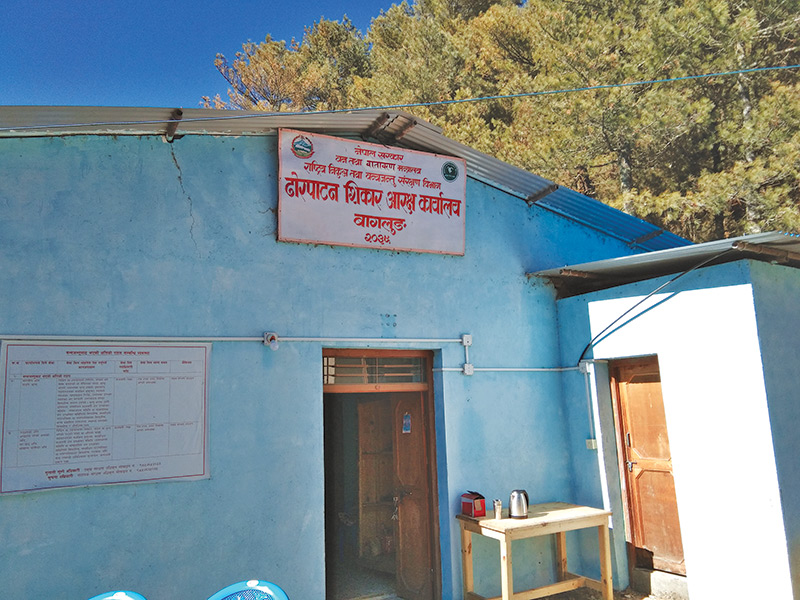
Dhorpatan Hunting Reserve sees decline in blue sheep population

Census conducted two months ago put the animal’s number at 1,290, a dip from 2,202 five years ago.
- PRAKASH BARAL
Reserve officials say poaching and illegal hunting are the main factors behind the decrease in population.   Post Photo: Prakash baral

BAGLUNG,
The number of Himalayan blue sheep has decreased at Dhorpatan Hunting Reserve. According to the census carried out two months ago, there are 1,290 Himalayan blue sheep in the reserve, a drastic decrease from 2,202 five years ago.
The reserve carries out a census of Himalayan blue sheep every five years. This year’s census, which was conducted under the leadership of the Department of National Parks and Wildlife Conservation, took place from mid-March to mid-May when some herds had moved to the highlands seeking cooler clime. This could have affected the total calculation, says Birendra Kandel, chief conservation officer of the Reserve.
However, the difference in number is too high to be attributed to the migration of sheep to the upper regions, he says.
“We usually attribute a slight decrease in numbers to technical issues while conducting the census,” said Kandel. “But to have the number go down by almost half in five years is shocking and can only be explained as a consequence of illegal activities inside the reserve.”
According to him, incidents of poaching and illegal hunting have increased inside the reserve in the last few years.
“Some calculations are based on speculation as there are areas where enumerators cannot reach,” said Kandel. “The weather was also unfavourable two months ago with the region witnessing plenty of avalanches. We may have lost some herds to avalanches in the mountainous region of Dhorpatan.”
According to the Reserve office, the census team observed that a lot of sheep looked frail and suspected they may have caught some disease which could have led to the death of some sheep from the herds.
“We don’t have the exact data on the number of sheep we lost to diseases and avalanches. But during the census, we found more than 20 sheep buried in the snow,” said Assistant Conservation Officer Surya Khadka.
Khadka too believes that the main factor behind the sharp decline in the sheep’s population in the reserve is illegal hunting and poaching.
“Several local people have been arrested with illegal weapons during house searches by the reserve and the army. Most of the weapons recovered were of armed forces standards specially used by the army so it is likely that the local hunt,” said Khadka
The Dhorpatan Hunting Reserve sprawls over 1,325 sq km in the Dhaulagiri Himal range of Baglung, Myagdi and Rukum (East) districts. Established in 1983 and gazetted four years later, the reserve is home to 32 species of mammals and 130 bird species.
The Nepal Army is responsible for providing security in the hunting reserve area but Reserve officials say that the number of army personnel deployed in the area for security is not enough to keep poachers and illegal hunters away. According to the Reserve, there is security presence only at Patan, Phagune, Togadi and Gurja, where the reserve offices are located.
“We asked for an entire battalion for security but to no avail. If we had proper security in place, we could do more to conserve wildlife in the reserve,” said Kandel. “The reserve office is also facing a shortage of employees. It has a total of 72 posts in various levels, out of which 47 are currently vacant,” said Kandel.
In Dhorpatan, after the census in 2016, permission was given to hunt 19 to 24 Himalayan blue sheep annually. The Department of National Parks and Wildlife Conservation determines the quota for hunting the blue sheep on the basis of their number after the census.
“Hunting quota is determined after studying the animal’s numbers and fertility. This time the number of Himalayan blue sheep is low so the hunting quota has also been reduced,” said Khadka. “Permission has been given to hunt only 19 sheep per annum.”

NATIONAL

Armed police seize truck loaded with marijuana

Briefing

RAJBIRAJ: A mini truck disguised as a vegetable truck loaded with 175 kilograms of marijuana was seized by the Armed Police Force at the Koshi Barrage in Hanumannagar Kankalini Municipality of Saptari on Tuesday. The driver and co-driver of the truck have absconded after deceiving a team of seven armed police. According to Tamang, police are in search of the driver and co-driver of the truck. The vehicle along with the marijuana seized by the armed forces have been handed over to the District Police Office, Saptari for further investigation, said Tamang.

NATIONAL

Ultrasound service halted at Damauli Hospital

Briefing

TANAHUN: Ultrasound service has come to a halt at Damauli Hospital in Tanahun district for the past one-and-a-half months. In the absence of ultrasound service at the hospital, service seekers have to visit private health institutions. “A doctor working at the outpatient department was trained in providing ultrasound service. The hospital is unable to provide the service as the only trained human resource was transferred to another facility one-and-a-half months ago,” said Dr Diwas Dhakal, acting medical superintendent at the hospital.

NATIONAL

Salt warehouse empty in Jumla

Briefing

JUMLA: For the first time since the Karnali Highway came into operation, salt warehouses in Jumla are empty. Khagendra Malla, head of the Jumla office of the Salt Trading Corporation, said that all three depots of the salt warehouse in Jumla have run empty. The Khalanga-based depot has only 179 quintals of salt in stock which may not last till mid-July. In the current fiscal year, a quota of 3,000 quintals of salt was fixed for Jumla. The state office has allotted an additional 2,300 quintals owing to the salt shortage. But the contractor in charge of transporting the salt is refusing to do so due to the price hike in petroleum products.

Page 3
Page 4
EDITORIAL

Rising prices, falling morale

Constantly increasing fuel prices have a direct effect on the cost of essentials.

The rising cost of fuel has become part and parcel of everyday life, but the price jump that occurred on Monday, June 20 left Nepalis dumbfounded. The oil monopoly raised the prices of petrol and diesel by Rs21 per litre each and kerosene by Rs27, which was by far the steepest increase in living memory. Stagnant wages and increasing price rises have been a recurring feature for all and sundry ever since the easing of the pandemic. This has had a debilitating effect on economies expecting to bounce back after months of uncertainty.
With the recent hike, the price of petrol has reached Rs199 per litre, and diesel and kerosene now cost Rs192 per litre each. At a time when the government’s focus should be on increasing economic output, the recent hike will undoubtedly dampen economic activity. The steep rise in fuel prices could be attributed to the government’s desperation to raise internal revenue, which would otherwise be sourced from duty levied on imports. But the avenue of raising revenue from import duty has virtually come to a standstill. Therefore, the quickest and surest way to avail of the much-desired income lies in trying to squeeze every little penny from the unsuspecting public.
Constantly increasing fuel prices have a direct effect on the cost of essentials. And this fluctuation tends to jeopardise household budgets causing anguish to scores of people sustaining themselves from one paycheque to another. It is undoubtedly worse for people working on a daily wage basis. The current global crisis may be part of the problem, but the major reason is the pitiful state of our foreign exchange reserves, near negligible focus on exports over the years preceding the pandemic, and the rife unemployment resulting from the callous approach of successive governments to handling the economy.
The country has suddenly found itself in the middle of an economic meltdown, and policymakers have the nerve to shift the blame to the burgeoning global mess which reflects their ineptitude and indifference more than anything else. Knee-jerk measures to stem the outflow of foreign exchange have resulted in myriad internal problems for a country that has become so reliant on the fluid flow of imports. The pressure has since been mounting on the retailers and the feeble output sector, who have no other recourse than to meet the expected targets by relying on imports. But with other countries tightening exports of essentials, productivity can be expected to take a hit in the ensuing months adding to the existing anguish.   
With national and provincial elections looming, one would think that the government would bring measures that would uplift the battered public morale by easing the financial burden. But the current steps initiated by our policymakers show astute political acumen and understanding of general psychology. It shouldn’t come as a surprise if the price hike is dialled down to more acceptable levels as we get closer to the elections slated for the end of November. The means to hold on to power by manipulating various instruments at their disposal is an old trick mastered over the years. What is necessary is sound economic policies with a medium- to long-term timeframe. Economic success does not happen on a whim; it requires utmost dedication, mainly from those at the helm of affairs.

OPINION

Nepal after LDC graduation

The preferential market access facility will no longer be available to Nepali exporters.
- SHIV RAJ BHATT
Shutterstock

The European Union (EU) is an important trade and investment partner of Nepal. It is the third largest export destination and among the top 10 investment inflows in Nepal. As a least developed country (LDC), Nepal enjoys many necessary international support measures, including preferential market access and special and differential treatment. Nepal has duty-free market access in European markets under the EU’s Everything but Arms provisions.
The EU’s Everything but Arms (preferential market access) remains a vital market access tool for Nepal. In 2019, Nepal’s exports to EU markets were ¤61.1 million, and Nepal has a very high utilisation rate of the Everything but Arms Generalised System of Preferences (GSP) facility. Approximately 90 percent of Nepal’s exports to EU markets use this facility.

Graduation and implications
Of the three indices that the United Nations Committee for Development Policy considers critical—Gross National Income per capita, Human Assets Index and Economic and Environmental Vulnerability Index, Nepal met the thresholds for the latter two in the last three consecutive triennial reviews (2015, 2018 and 2021) thus becoming eligible for graduation. In February 2021, the Committee for Development Policy recommended Nepal’s graduation from the LDC category with a five-year preparatory period, making it effective from 2026.
In light of the criteria, it is evident that Nepal’s LDC graduation will have implications for the country’s trade and investment sectors. In general, the resultant repercussions might not be profound partly because Nepal has not been able to use the trade preferences linked to its LDC status. However, post-graduation, Nepal’s exports will face a substantial loss in EU markets. The preferential market access facility under the Everything but Arms scheme will no longer be available to Nepali exporters after graduation and completion of the transition phase.
The International Trade Centre estimates that Nepal would stand to lose $59 million in exports upon graduation from LDC status in 2026 (4.3 percent of the total exports projected for that year), and a substantial part of this loss will be in the EU markets.
Foreign direct investment is generally not attached to LDC status. It mainly depends on the availability of resources (factor of production), ease of doing business, political stability, tax regime, infrastructure, labour productivity, repatriation facility and other essential factors.
However, while foreign direct investment is not attached to LDC status, graduation from LDC should lift the collective self-confidence of leaders, policymakers, the business community and citizens of Nepal. Plus, factors like availability of resources, ease of doing business, political stability, tax regime, infrastructure, labour productivity and repatriation facility are associated with a better business environment. They will have a positive impact on influencing private sector growth, including attraction for foreign investors.
Moreover, attracting foreign direct investment can be an effective means for investment stimulation and ensuring export success. Foreign direct investment has a prominent role in expanding exports and export diversification. This was the experience of many Asian countries, including Cambodia, China, Malaysia and Vietnam. With a higher income and improved human assets and economic structure, foreign investors will have a more positive attitude towards investing in Nepal, which may result in an increased inflow of foreign investment (both public and private) and a better trading environment. The spill-over effects can also benefit local firms by facilitating industrial upgrading and enhancing participation in global value chains.
In this context, Nepal needs to work on appropriate measures to harness the opportunities created and overcome challenges that will result from the country’s LDC graduation. Opting for a GSP+ facility is one of the options for sustaining exports in EU markets. However, to become a beneficiary of the GSP+ facility, Nepal needs to apply for the GSP+ scheme. It must fulfil the standard GSP conditions for eligibility and meet two additional criteria.
The first is the vulnerability criteria, which comprises (a) The import share criterion, requiring that the country’s share of GSP-covered imports must remain below 6.5 percent of GSP-covered imports of all GSP countries; and (b) The diversification criterion, stipulating that the seven most significant sections of GSP-covered imports must constitute 75 percent of imports from the beneficiary country over three years. The second is the sustainable development criterion which requires the applicant country to have ratified and effectively implemented certain international conventions on labour rights, human rights, environmental protection and good governance, among others.
Nepal clearly satisfies the first criteria, including the vulnerability and diversification provisions. The sustainable development criterion requires the applicant country to have ratified and effectively implemented 27 international conventions listed in the EU’s GSP regulation and six new international instruments recently added to the list.
Unfortunately, Nepal fails the sustainable development criterion, as it has not ratified all the core international conventions listed in the GSP regulation. Notably, Nepal will have to ratify and implement the Freedom of Association and Protection of the Right to Organise Convention and the Cartagena Protocol on Biosafety (2000) to become eligible for the EU’s GSP+ scheme, among others. The ongoing EU-supported Investment Support Programme can support further assessment and consultations with the relevant government agencies on the status and continued efforts towards ratifying those international conventions, which will help Nepal meet sustainable development criteria and qualify for the GSP+ scheme.

Ratify the conventions
Further, to become a beneficiary of the GSP+ scheme, Nepal must ratify the said conventions without reservations. In addition, the most recent conclusions of the monitoring bodies under those conventions must not identify any severe failure in the implementation. Therefore, proper and timely planning and dialogue between the EU and the government of Nepal are needed to strengthen EU-Nepal trade and investment cooperation, especially considering the upcoming LDC graduation of Nepal.
The possibility of signing a comprehensive Economic Partnership Agreement is another option that may help Nepal sustain and enhance exports to the EU market and play an instrumental role in investment promotion and other economic cooperation between Nepal and the EU as the pact is more comprehensive in coverage. However, opting for an Economic Partnership Agreement will need thoughtful preparations, dialogue, and negotiations with the EU. The resulting agreement will also need to be ratified by Nepal’s Parliament.


Bhatt is a trade and investment expert.

OPINION

Helping the 222 million dreams

By making a commitment to help children with education, we can contribute to human rights.
- Yasmine Sherif
Shutterstock

The United Nations recently estimated that the number of crisis-affected children in need of urgent educational support has skyrocketed from 75 million in 2016 to 222 million today. That’s 222 million dreams dashed—and 222 million attacks on our collective humanity.
This growing crisis will have far-reaching effects on our economies and societies. But only 2-4 percent of global humanitarian funding is dedicated to education. As world leaders decide how to allocate resources in response to Covid-19, climate change, and conflict, they must make spending on education a much higher priority. This means rethinking international development policy with a view to achieving a world in which respect for equality and human rights starts with education for all.
Education requires money, but it is an investment that empowers people, creates more resilient economies, and ends poverty traps that perpetuate negative cycles of hunger, displacement, conflict, and chaos. A space flight with Jeff Bezos was recently auctioned for $28 million—a sum that could provide close to 200,000 crisis-affected children with the safety, power, and opportunity for an education.
Every $1 spent on girls’ education generates approximately $2.80 in return. And ensuring that all girls complete their secondary education could boost developing countries’ GDP by an average of 10 percent over the next decade.
But we can’t just throw money at the problem. We need to think about the quality of our investments in education. Of the 222 million children currently affected by crises and emergencies, 78.2 million are out of school. And nearly 120 million are in school but not achieving minimum proficiency in math or reading.
Yes, these children need classrooms, teachers, books, pencils, and more. But, to benefit from the kind of learning that has the power to transform societies, they also need a broad spectrum of additional educational supports.
For example, according to the UN, only 56 percent of schools in least-developed countries have access to safe drinking water, and 350 million children worldwide are hungry. How can a child who rarely eats a nourishing meal be expected to learn algebra?
Through the School Meals Coalition and other broad partnerships, we can ensure that children in places like Haiti and Somalia are able to eat at least one nutritious school meal a day. That can make all the difference. So can protecting children from violence. The recent deadly shooting at an elementary school in Uvalde, Texas, was a tragic reminder of the need to keep schools safe. The challenge is particularly daunting for children who face the prospect of living their entire life in a war zone.
According to the recent Education Under Attack 2022 report, attacks on education and the use of schools by military forces increased by one-third from 2019 to 2020. The war in Ukraine, in which over 1,800 educational institutions have so far been damaged and 170 completely destroyed, has made the situation even worse. Upholding international humanitarian law and the Safe Schools Declaration is another investment countries must make.
Additional supporting measures will help to achieve quality learning outcomes. These include counselling and other psychosocial services, which are vital to ensuring continuity of education for young people.
Donors should also follow the lead of organisations like The LEGO Foundation by investing in early childhood education. Teaching girls science, technology, engineering, and math should be a high priority. And we must provide the specialised education services that children with disabilities and other severely marginalised groups need.
Without education, no other Sustainable Development Goals can be achieved. To avoid inefficiencies and further disruptions to efforts to deliver on the SDGs, we need to focus on achieving universal and equitable education (SDG4).
That is a distant dream for the 84 percent of the crisis-affected out-of-school children who are living in areas with protracted crises. The vast majority are in Afghanistan, the Democratic Republic of the Congo, Ethiopia, Mali, Nigeria, Pakistan, Somalia, South Sudan, Sudan, and Yemen. The war in Ukraine is exacerbating the problem, with recent estimates indicating that the conflict is threatening the lives and well-being of 5.7 million school-aged children.
There is hope. For example, the Ecuadorian government has recently responded to the crisis in Venezuela by allowing refugees to access public education. In Uganda, which hosts the largest refugee population in Africa, the government is implementing
an Education Response Plan to provide safe learning environments for refugee children. In Ethiopia, accelerated school programmes are helping refugee girls to make up for years of lost learning.
Responding to the urgent educational needs of children affected by crises is not the job only of national governments or the UN. By making a global commitment to help every child and adolescent—including those enduring wars, forced displacement, and climate-induced disasters—to reach their potential, we can contribute to human rights, peace and security, and economic prosperity for all. First, we have 222 million dreams to save.


Sherif is Director of Education Cannot Wait, the United Nations global fund for education in emergencies and protracted crises.
 — Project Syndicate

Page 5
NATIONAL

Seventh Kantipur HISSAN Education Fair begins tomorrow

This year’s festival, themed ‘Excellent Education in Nepal’, will feature over 75 educational institutions from across the country.
- Post Report

KATHMANDU,
The seventh edition of Kantipur-Higher Institutions and Secondary Schools’ Association Nepal (HISSAN) Education Fair is set to be held on June 24–27 at Bhrikuti Mandap Exhibition Hall, in Kathmandu.    
The motto of the four-day fair this year will be ‘Excellent Education in Nepal.’ The fair will provide information on colleges and courses targeted for students who appeared in the Secondary Education Examination and class 12 exams and are awaiting results.
The fair, which started six years ago, couldn’t take place after its 2019 iteration, due to the Covid-19 pandemic, and subsequent lockdown in the country.
“The education fair is set to bring all stakeholders, parents and students under an umbrella to give detailed information about quality education within the country,” reads the press statement issued by the organisers.
The motive of the festival is to provide factual information about the best education institutions within the country and courses available.
“Without a basic idea about which stream of education to pursue and why, many students flock to foreign countries and this takes large sums of money abroad,” said Ramesh Kumar Silwal, the president of HISSAN, at a press meet held on Wednesday in Kathmandu.
“This festival attempts to stop students from flocking abroad for higher studies and clear up their misunderstandings, if any,” he added.
The festival will see the participation of professionals from over 75 educational institutions affiliated to various universities including Tribhuvan University, Pokhara University, Purbanchal University, Mid-West University, and the Council for Technical Education and Vocational Training (CTEVT).
The organisers estimate around 200,000 people including students, parents and stakeholders related to education will visit the fair.
The title sponsor of the event is ‘My Second Teacher,’ an online education platform which provides digital learning experience, and the main sponsor is the Golden Gate International College.  
The fair will start at 11am on Friday and will be inaugurated by Devendra Paudel, Minister for Education, Science and Technology. The entry is free for all.

NATIONAL

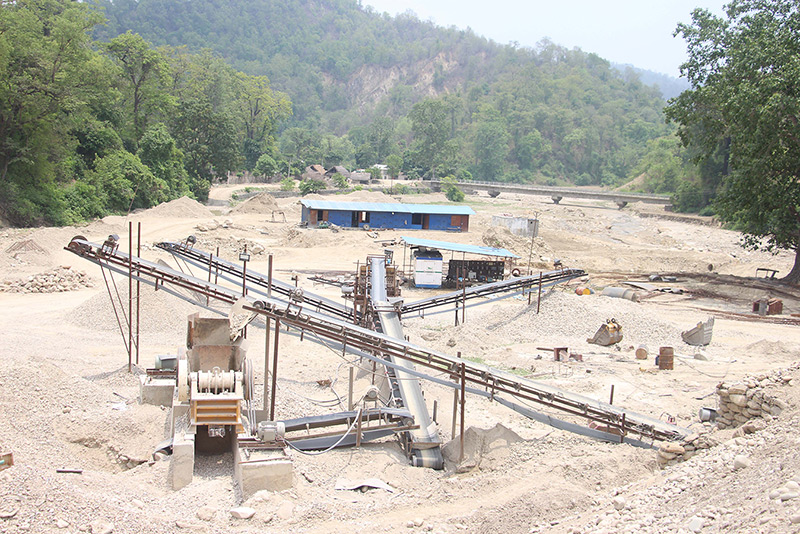
Court halts enforcement of new rules on extraction of stones, sands and pebbles

A government move to ease extraction rules has drawn criticism for allowing crusher plants to come closer to forests, villages and rivers inviting environmental, health and landslides concerns.
- PRITHVI MAN SHRESTHA
The government’s new set of standards on crusher plants has come under fire.  Post file Photo

KATHMANDU,
The Supreme Court on Wednesday issued an interim order to prevent the enforcement of new rules on the extraction, sale and management of stones, pebbles and sands that allow crusher plants to be set up closer to forests, villages and rivers.
A writ petition was registered at the Supreme Court on Monday, demanding scrapping of the new rules arguing they would contribute to environmental degradation, cause landslides and flooding, and affect the wildlife.
A single bench of justice Tanka Bahadur Moktan issued a short-term interim order issuing show cause notice to the government as well, according to the notice posted on the Supreme Court’s website.
“After issuing an interim order, the court has invited both sides for a hearing on June 29,” said  Padam Bahadur Shrestha, an advocate and one of the three petitioners.
The new rule or “set of standards” has caused controversy because it reduced the distance between the crusher plants and forests, rivers, villages, high tension lines, archaeological and and cultural sites, particularly in the hilly region.
For example, the distance between a crusher plant and highways and river banks has been reduced to 200 metres in hill districts from 500 metres earlier for the entire country.  The distance of 500 metres has been kept intact in the case of Tarai in the new set of standards.
Likewise, as per the new set of standards, crusher plants can be set up just 500 metres away from the forests, densely populated settlements, and religious, cultural and archaeological sites in hill districts.  Such distance for crusher plants in the Tarai has been reduced to 500 metres from forests but one kilometre in the case of human settlements, religious, cultural and archaeological sites, as per the new set of standards.
The writ petitioners claimed that the immediate reduction in distance poses risk to these structures, human health, wildlife and their habitats. “There has been discrimination between people of the Tarai and hills in terms of envirnmental justice,” the writ petitions state.
Experts said that reduced distances would encourage mining and extraction of stones, pebbles and sands inviting risk of landslides and floods. They said that bringing crusher plants closer to human settlements could cause landslides putting entire settlements into risk zones.
Ram Bahadur Kunwar, spokesperson for the Department of Archaeology told the Post on Monday that reducing the distance between crusher plants and archaeological sites could affect archaeological structures.
“If excavators need to be used for mining, the distance should at least be more than one or one-and-a-half kilometres between archaeological sites and construction sites. If the soil is not compact enough in the area, even a bigger distance should be maintained,” he said.
Talking to the Post earlier this week, stakeholders blamed the government for introducing the standards with relaxed provisions to serve the interests of certain groups. The  government has, however, claimed that the move was taken to implement the standards more practical so that it could be implemented within a year.

NATIONAL

President’s Office ordered to provide documents related to constitutional appointments

Constitutional Council had recommended 52 individuals for appointment to constitutional bodies.

KATHMANDU,
The Supreme Court has directed the Office of the President and the Secretariat of the Constitutional Council to produce the original documents related to the appointments of the chairpersons and members in various constitutional commissions and the judicial council.
Responding to petitions filed by advocates Dinesh Tripathi and Om Prakash Aryal among others, the Constitutional Bench ordered the two offices to produce the documents within seven days. Hearings on the petitions could not take place on Wednesday for lack of documents.
The Constitutional Bench, on March 23, had ordered the Office of the President to submit original documents related to the appointment of the officials.
“The court has directed the two offices to produce the original copies of the decision regarding the appointments to the constitutional commissions and the Judicial Council,” Bimal Poudel, spokesperson at the Supreme Court, told the Post.
The Constitutional Council had recommended 52 individuals for appointment to various constitutional bodies on December 15, 2020 and May 9, 2021 when CPN-UML chair KP Sharma Oli was prime minister. Oli at that time was also the chair of the Nepal Communist Party (NCP), which was invalidated by the Supreme Court on March 7 last year. Similarly, senior advocate Ram Prasad Bhandari was appointed as a member of the council on June 21 last year without a parliamentary hearing.
The appointments, however, had run into controversy as the then Oli government had amended the Constitutional Council (Functions, duties, powers and procedures) Act-2010 through an ordinance to make it easier for convening the meeting of the Constitutional Council in the absence of the Speaker and the leader of the main opposition, the Nepali Congress at that time.
The officials were appointed without holding parliamentary hearings as the House was not in existence as it had been dissolved. A writ petition was filed at the Constitutional Bench regarding the appointments.

Page 6
WORLD

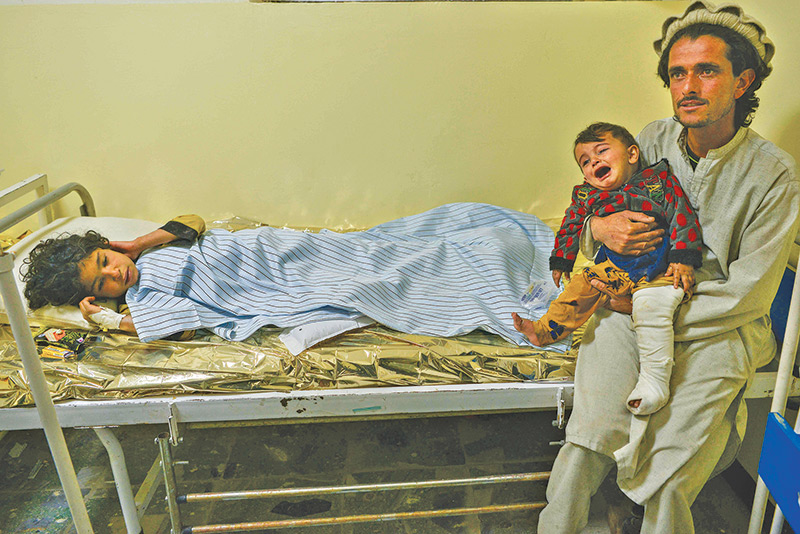
At least 1,000 killed as quake rattles Afghanistan

- AGENCE FRANCE-PRESSE
An Afghan man holds a child injured in an earthquake in a hospital in the city of Sharan in Gayan district, Paktika Province on Wednesday. Afp/Rss

SHARAN,
A powerful earthquake struck a remote border region of Afghanistan overnight killing at least 1,000 people and injuring hundreds more, officials said on Wednesday, with the toll expected to rise as desperate rescuers dig through collapsed dwellings.
The 5.9-magnitude quake struck hardest in the rugged east, where people already lead hardscrabble lives in a country in the grip of a humanitarian disaster made worse by the Taliban takeover in August.
“People are digging grave after grave,” said Mohammad Amin Huzaifa, head of the Information and Culture Department in hard-hit Paktika, adding that at least 1,000 people had died in that province alone.
He said at least 1,500 people were injured, some critically.
“People are still trapped under the rubble,” he told journalists.
The death toll climbed steadily all day as news of casualties filtered in from hard-to-reach areas in the mountains, and the country’s supreme leader, Hibatullah Akhundzada, warned it would likely rise further.
The earthquake struck areas that were already suffering the effects of heavy rain, causing rockfalls and mudslides that hampered rescue efforts. “It was a horrible situation,” said Arup Khan, 22, recovering at a hospital in the Paktika provincial capital of Sharan.
“There were cries everywhere. The children and my family were under the mud.”
He told AFP that rescuers pulled him out of the wreckage of a guesthouse, but two relatives were killed at his nearby home. Photographs and video clips posted on social media showed scores of badly damaged houses in remote rural areas.
Footage released by the Taliban showed local residents digging a long slit trench to bury the dead, who by Islamic tradition should be laid to rest facing Mecca.
Even before the Taliban takeover, Afghanistan’s emergency response teams were stretched to deal with the natural disasters that frequently strike the country.
But with only a handful of airworthy planes and helicopters left since the hardline Islamists returned to power, any immediate response to the latest catastrophe is further limited.
“The government is working within its capabilities,” tweeted Anas Haqqani, a senior Taliban official.
“We hope that the International Community & aid agencies will also help our people in this dire situation.”
The United Nations and European Union were quick to offer assistance.
“Inter-agency assessment teams have already been deployed to a number of affected areas,” the UN Office for the Coordination of Humanitarian Affairs in Afghanistan tweeted.
Tomas Niklasson, EU special envoy for Afghanistan, tweeted: “The EU is monitoring the situation and stands ready to coordinate and provide EU emergency assistance to people and communities affected.”
Afghanistan is frequently hit by earthquakes—especially in the Hindu Kush mountain range, which lies near the junction of the Eurasian and Indian tectonic plates.
Scores of people were killed and injured in January when two quakes struck rural areas in the western province of Badghis, damaging hundreds of buildings.
In 2015, more than 380 people were killed in Pakistan and Afghanistan when a 7.5-magnitude earthquake ripped across the two countries, with the bulk of the deaths in Pakistan.
Afghanistan’s deadliest recent earthquake killed 5,000 in May 1998 in the northeastern provinces of Takhar and Badakhshan.
From the Vatican City, Pope Francis offered prayers for the victims of the latest quake.
“I express my closeness with the injured and those who were affected,” the 85-year-old pontiff said at the end of his weekly audience.
Aid agencies and the United Nations say Afghanistan needs billions of dollars this year to tackle its ongoing humanitarian crisis.
The agencies have particularly stressed the need for greater disaster preparedness in Afghanistan.
The quake occurred at around 1:30 am at a depth of 10 kilometres, according to the United States Geological Survey (USGS).  It was felt as far away as Lahore in Pakistan, 480 kilometres from the epicentre, according to responses posted on the USGS and European Mediterranean Seismo-logical Centre (EMSC) websites.

WORLD

Lanka PM says economy ‘has collapsed,’ unable to buy oil

The foreign currency crisis has crimped imports, creating severe shortages of food, fuel and other essentials such as medicines.
- ASSOCIATED PRESS

COLOMBO,
Sri Lanka’s debt-laden economy has “collapsed” after months of shortages of food, fuel and electricity, its prime minister told lawmakers on Wednesday, in comments underscoring the country’s dire situation as it seeks help from international lenders.
Prime Minister Ranil Wickremesinghe told Parliament the South Asian country is “facing a far more serious situation beyond the mere shortages of fuel, gas, electricity and food. Our economy has completely collapsed.”
While Sri Lanka’s crisis is considered its worst in recent memory, Wickremesinghe’s assertion that the economy has collapsed did not cite any specific new developments.
It appeared intended to emphasise to his critics and opposition lawmakers that he has inherited a difficult task that can’t be fixed quickly, as the economy founders under the weight of heavy debts, lost tourism revenue and other impacts from the pandemic, as well as surging costs for commodities.
Lawmakers of the country’s two main opposition parties are boycotting Parliament this week to protest against Wickremesinghe, who became prime minister just over a month ago and is also finance minister, for not having delivered on his pledges to turn the economy around.
Wickremesinghe said Sri Lanka is unable to purchase imported fuel, even for cash, due to heavy debt owed by its petroleum corporation.
“Currently, the Ceylon Petroleum Corporation is $700 million in debt,” he told lawmakers. “As a result, no country or organisation in the world is willing to provide fuel to us. They are even reluctant to provide fuel for cash.”
Wickremesinghe took office after days of violent protests over the country’s economic crisis forced his predecessor to step down. In his comments Wednesday, he blamed the previous government for failing to act in time as Sri Lanka’s foreign reserves dwindled.
The foreign currency crisis has crimped imports, creating severe shortages of food, fuel, electricity and other essentials such as medicines, forcing people to stand in long lines to obtain basic needs.
“If steps had at least been taken to slow down the collapse of the economy at the beginning, we would not be facing this difficult situation today. But we lost out on this opportunity. We are now seeing signs of a possible fall to rock bottom,” he said.
So far, Sri Lanka has been muddling through, mainly supported by $4 billion in credit lines from neighbouring India. But Wickremesinghe said India would not be able to keep Sri Lanka afloat for long.
It also has received pledges of $300 million-$600 million from the World Bank to buy medicine and other essential items.
Sri Lanka has already announced that it is suspending repayment of $7 billion in foreign debt due this year, pending the outcome of negotiations with the International Monetary Fund on a rescue package. It must pay $5 billion on average annually until 2026.
Wickremesinghe said IMF assistance seems to be the country’s only option now. Officials from the agency are visiting Sri Lanka to discuss a rescue package. A staff-level agreement is likely to be reached by the end of July.
“We have concluded the initial discussions and we have exchanged ideas on various sectors such as public finance, finance, debt sustainability, stability of the banking sector and the social security network,” Wickremesighe said.
Representatives of financial and legal advisers to the government on debt restructuring, Lazard and Clifford Chance, are also visiting the island and a team from the US Treasury will arrive next week, he said.

WORLD

Saudi prince visits Turkey for talks clouded by Khashoggi murder

- AGENCE FRANCE-PRESSE

ANKARA,
Saudi Arabia’s de facto ruler took a big step out of international isolation on Wednesday, paying his first visit to Sunni rival Turkey since the 2018 murder of journalist Jamal Khashoggi in the kingdom’s Istanbul consulate.
The talks in Ankara between Crown Prince Mohammed bin Salman and Turkey’s Recep Tayyip Erdogan come one month before US President Joe Biden visits Riyadh for a regional summit. Those talks will focus on the energy crunch caused by Russia’s invasion of Ukraine.
President Erdogan’s decision to revive ties with one of his biggest rivals is driven in large part by economics and trade.
Turks’ living standards are imploding a year before a general election that poses one of the biggest challenges of Erdogan’s mercurial two-decade rule.
It was his Islamic-rooted government that released gruesome details of the Khashoggi murder, including allegations that his body had been dismembered and dissolved in acid.
But it is now drumming up investment and central bank assistance from the very countries it opposed on ideological grounds in the wake of the Arab Spring revolts.
“I think this is probably one of the most significant visits to Ankara by a foreign leader in almost a decade,” said The Washington Institute’s Turkey specialist Soner Cagaptay.
“Erdogan is all about Erdogan. He’s all about winning elections and I think he has decided to kind of swallow his pride.”
The Turkish leader personally welcomed the crown prince at his presidential palace at a grand ceremony featuring parade horses and a military honour guard.
They are scheduled to hold a private dinner but no joint press conference.
Analysts believe Prince Mohammed will be looking to see if he can win broader backing ahead of a possible new nuclear agreement between world powers and the Saudis’ arch-enemy Iran. “There is increased confidence [in Riyadh] that Ankara could be more useful in the current geopolitical environment,” the Eurasia Group said in a research note.
Turkey’s rapprochement with the Saudis began with an Istanbul court decision in April to break off the trial in absentia of 26 suspects accused of links to Khashoggi’s killing and to transfer the case to Riyadh.
US intelligence officials have determined that Prince Mohammed approved the plot against Khashoggi—which Riyadh denies.
The court’s decision drew protests from Khashoggi’s Turkish fiancee Hatice Cengiz.

WORLD

Twenty killed as Russia rains rockets on Kharkiv

Russian forces are hitting Kharkiv in the same way they previously were hitting Mariupol, Ukrainian presidential adviser says.
- REUTERS

KYIV/KHARKIV,
Russian forces pounded Ukraine’s second largest city Kharkiv and surrounding countryside with rockets, killing at least 20 people in what Kyiv called a bid to force it to pull resources from the main battlefield to protect civilians from attack.
Inside Russia, a fire tore through an oil refinery just 8 km from the Ukrainian border, after what the refinery described as a cross border attack by two drones.
In the main battlefield city of Sievierodonetsk, where Russia has claimed to have Ukrainian forces surrounded since last week, scenes filmed by a freelance journalist made clear the battle was not over, with Ukrainian troops able to resupply their garrison by crossing a river in inflatable rafts.
The Russian strikes on Kharkiv, throughout Tuesday and continuing on Wednesday morning, were the worst for weeks in the area where normal life had been returning since Ukraine pushed Russian forces back in a major counter-offensive last month.
“It was shelling by Russian troops. It was probably multiple rocket launchers. And it’s the missile impact, it’s all the missile impact,” Kharkiv prosecutor Mikhailo Martosh told Reuters amid the ruins of cottages struck on Tuesday in a rural area on the city’s outskirts.
Medical workers carried the body of an elderly woman out of the rubble of a burnt-out garage and into a nearby van.
“She was 85 years old. A child of the war [World War Two]. She survived one war, but didn’t make it through this one,” said her grandson Mykyta. “There is nowhere to flee to. Especially grandmother herself, she didn’t want to go anywhere from here.”
Ukrainian authorities said 15 people were killed and 16 wounded on Tuesday in the Kharkiv region, and regional governor Oleh Sinegubov described shelling incidents on Wednesday morning that had killed at least another five.
“Russian forces are now hitting the city of Kharkiv in the same way that they previously were hitting Mariupol—with the aim of terrorising the population,” Ukrainian presidential adviser Oleksiy Arestovych said in a video address.
“And if they keep doing that we will have to react—and that is one way to make us move our artillery,” he said. “The idea is to create one big problem to distract us and force us to divert troops. I think there will be an escalation.”
The main battlefield is now to the south of Kharkiv in the Donbas region, which Moscow has been trying to seize on behalf of its separatist proxies, with the worst fighting concentrated in the devastated city of Sievierodonetsk.
Russian forces have made only slow progress using overwhelming artillery in some of the heaviest ground fighting in Europe since World War Two.
Moscow says Ukrainian forces in Sievierodonetsk are trapped and ordered them to surrender or die last week after the last bridge over the Siverskyi Donets river was destroyed.
But Oleksandr Ratushniak, a freelance photographer who reached Sievierodonetsk with Ukrainian forces in recent days, filmed reinforcements crossing in an inflatable raft.
Inside the ruins of the frontline industrial zone, the Ukrainian troops fired from a tank’s main gun. They smoked cigarettes as they hid from Russian artillery exploding outside. An abandoned dachshund the troops nicknamed “Bullet” scampered with them through the rubble.
A regular day’s work, said one soldier: “For us, this like digging up potatoes.”
There was no immediate Ukrainian comment about the apparent drone strike which suspended production at Russia’s Novoshakhtinsk oil refinery, on the Russian side of the frontier with Donbas territory controlled by pro-Russian separatists.
Video footage posted on social media appeared to show a drone flying towards the refinery, before a large ball of flame billowed up into the summer sky. The local emergency service, cited by Interfax, said no one was hurt and the blaze was put out.
Ukraine generally does not comment on reports of attacks on Russian infrastructure near the border, which in the past it has called “karma” for Russian attacks on Ukraine.
In a separate incident, Russian authorities said four people were killed after a shell exploded at an ammunition depot deep inside Russia.

WORLD

China: Ukraine crisis sounds humanity alarm

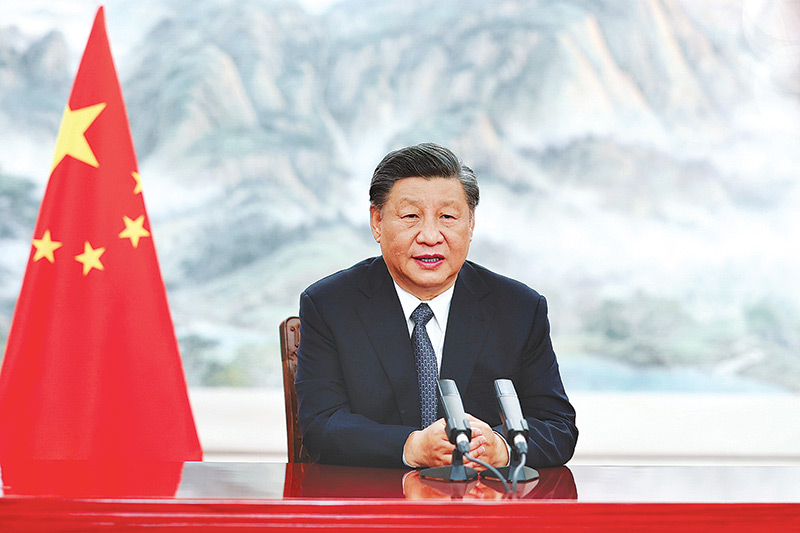
Xi Jinping.  Ap/Rss

BEIJING: The conflict in Ukraine has “sounded an alarm for humanity,” Chinese leader Xi Jinping said Wednesday, as China continues to assume a position of neutrality while backing its ally Russia.
China has refused to criticise Russia’s war in Ukraine or even to refer to it as an invasion in deference to Moscow, while also condemning US-led sanctions against Russia and accusing the West of provoking Moscow.
“The Ukraine crisis has again sounded the alarm for humanity. Countries will surely end up in security hardships if they place blind faith in their positions of strength, expand military alliances, and seek their own safety at the expense of others,” the official Xinhua News Agency quoted Xi as saying.
Xi, who did not propose any solutions, was speaking at the opening of a virtual business forum of the “BRICS” countries — Brazil, Russia, India, China, and South Africa. In other comments, Xi said imposing sanctions could act as a “boomerang” and a “double-edged sword”. (AP)

WORLD

Israeli Knesset votes to dissolve in step towards snap election

Briefing
- AGENCIES

JERUSALEM: Israel moved closer on Wednesday to its fifth election in less than four years after lawmakers gave an initial nod to dissolve parliament, with a possible comeback by former prime minister Benjamin Netanyahu already dominating the campaign. The Knesset voted unanimously for a snap election in a preliminary reading of a bill expected to be finalised next week, after which the centrist Foreign Minister Yair Lapid, 58, will take over from Prime Minister Naftali Bennett at the head of a caretaker government. Lapid and Bennett ended Netanyahu’s record reign a year ago by forming a rare alliance of rightists, liberals and Arab parties, which faltered in past months amid infighting. The designated interim premier has cast the upcoming election as a battle between moderates and Netanyahu-embraced extremists.

WORLD

EU parliament backs carbon market reform

Briefing
- AGENCIES

BRUSSELS: The European Parliament on Wednesday voted to adopt reforms to the EU’s carbon market, reversing its surprise rejection two weeks ago of an initial draft of a key part of the bloc’s climate plan. The vote this time saw 439 MEPs in favour—with 157 against and 32 abstentions—of a parliamentary position to negotiate with EU member states for an enlargement of Europe’s Emissions Trading System to include carbon from transport and construction. The compromise also calls for a phase-out of exemptions for industry over five years to 2032 in exchange for a carbon tax on imports at the EU’s borders from 2027. The first vote was narrowly defeated on June 8 when socialists and extremists in parliament cast 339 ballots against it.

Page 7
MONEY

Students relieved as court lifts collateral restrictions

A recent government decision barred land from being used as collateral to get a bank loan until it had been classified as agricultural or non-agricultural.
- PAWAN PANDEY
Around 12,000 to 15,000 students obtain NOCs monthly, according to the Ministry of Education, Science  and Technology.  Post photo: Pawan Pandey

KATHMANDU,
Australia-bound student Monika Gurung was delighted when the Supreme Court struck down a recent government decision preventing borrowers from putting up land as collateral pending land use classification.
On Monday, the country’s highest court issued an interim order telling the government not to apply this provision in the land use regulations.
For Gurung from Lamjung and hundreds of other students aspiring to go abroad, the stipulation was a letdown, as it meant they couldn’t get a bank loan without which they would not be able to pay for their studies.
Last Thursday, Monika’s father Amar Gurung had gone to the Land Revenue Office in Lamjung to complete the paperwork needed to get a bank loan, but he was sent back because of the latest government decision.
The decree stated that land could not be used as collateral until it had been classified as agricultural or non-agricultural land. Accordingly, banks started turning away borrowers wishing to take a loan against their land as security.
“I was deeply worried as we could not get a loan last week,” said Gurung. “I hope there won’t be any complications after the court’s interim order.”
In a bid to stop haphazard use of land, the Ministry of Land Management issued a 12-point decision to facilitate the enforcement of the Land Use Act 2019 and Land Use Regulations 2022.
As land could not be used as collateral until it had been categorised, students seeking loans were dejected. Most countries require students to have an education loan to be permitted to study there.
Australia is the most sought-after destination for Nepali students. According to the Department of Home Affairs of Australia, 131,830 Nepalis were living in the country as of June 2020, almost five times the figure in June 2010.
Australia reopened its borders to international visitors in February after nearly two years due to the Covid-19 related restrictions. Hundreds Nepali students who had obtained visas and who were aspiring to study there were affected by the border closure.
“Definitely, many people could not secure loans by using their land as collateral after the government decision,” said Kiran Kumar Shrestha, chief executive officer of Rastriya Banijya Bank.
“Banks were obviously in a difficult situation. We had even raised concern through the Nepal Bankers’ Association,” he said.
The court order stated, “It looks like the categorisation of land as per the Land Use Regulations 2022, which is said to be the basis for the categorisation, has not been completed so far.”
The court said that since the provision violated the fundamental rights of citizens, the interim order has been issued not to implement the government decision. Justice Ishwor Prasad Khatiwada issued the interim order in response to a writ filed by Vishnu Bahadur Sunuwar.
“We hope the court’s order will remove the difficulties to obtain loans,” said Shrestha. “We have no issue regarding the categorisation of land, but it should be done with proper planning, in such a way that businesses won’t be affected.”
Most Nepalis who go abroad for further education or jobs manage their finances through bank loans, educational consultancies told
the Post.
“The government should have considered the immediate impacts before deciding to implement the laws and regulations,” said Prakash Pandey, president of the Educational Consultancy Association of Nepal.
“It looks like the government made decisions without considering whether they would badly hit certain sectors,” Pandey said. “Around 1,000 to 1,500 students who had completed all the paperwork and were in the last stage of securing bank loans were immediately affected. The court’s interim order gave them a respite.”
Around 5,000 students aspiring to study abroad have recently applied for bank loans, Pandey added.
“We expect the Supreme Court’s final verdict will be practical. Around 40 percent of those who get the No Objection Certificate (NOC) from the Ministry of Education, Science and Technology go abroad,” Pandey added.
Around 12,000 to 15,000 students obtain NOCs monthly, according to chief of the NOC section Education Under-Secretary Hari Prasad Niraula.
“Our data shows that 102,873 individuals got the NOC in the first 11 months of the current fiscal year ended mid-June for different countries,” said Niraula.
“The number of students getting NOCs from April 14 to June 19 was 30,473.”  
Yubraj Katwal, immediate past president of the Free Educational Consultancies Organisation of Nepal, said, “The government decision was impractical. It has affected students, investors, bankers as well as general people.”
Katwal, who is also the chief executive officer of Ashford International, an educational consultancy at Putalisadak, added, “Instead of enforcing such a provision on an ad-hoc basis, the government should have finished categorising the lands first. We welcome the court’s interim order.”
Responding to the complaints from students and consultancies, government officials insist that the issue is not as immense as it was been made out to be.
“One can easily get a recommendation letter stating if the land is agricultural or non-agricultural from the Local Land Use Council and complete the paperwork at the Land Revenue Office to get a bank loan. The local executive itself functions as the Local Land Use Council,” said Janak Raj Joshi, joint secretary at the Ministry of Land Management.
“The purpose of the land related acts and regulations, besides the recent decision, is to prevent the rapid loss of agricultural lands and check unmanaged urbanisation. We need to consider the long-term impact of these decisions in light of food security, environmental protection and better land usage in the coming days,” Joshi said.
“We act in haste and repent at leisure,” said Bhuvan Dahal, former chief executive officer of Sanima Bank.
“While I don’t doubt the spirit of the recent decision related to land categorisation, I think it was made without proper homework and
preparation,” Dahal said.
“The classification of land should have been done before implementing such a decision.”

MONEY

Flight tickets set to keep climbing, experts say

- AGENCE FRANCE-PRESSE

DOHA,
Propelled by inflation, the price of air tickets has begun to take off again after tumbling during the pandemic, a reversal that looks set to intensify due to environmental pressures, experts say.
For members of the International Air Transport Association, gathered in Doha for their annual meeting this week, minds are focused on how far such increases risk undermining passenger growth targets.
The IATA is also pleading for government support in reconciling
the long-term commitment to net zero carbon emissions with those ambitious targets.
The aviation industry has just gone through two years where planes flew with rows of empty seats, even as they offered fares much lower than before the Covid-19 pandemic. But with the sector still mired in the red despite movement restrictions being largely lifted, the bargain bonanza for passengers is very much over.
In the United States, the average price of an internal flight has shot up, from $202 in October 2021 to $336 in May this year, according to the Federal Reserve Bank of Saint Louis.
In the European Union, the price of a return ticket before tax in April returned to that seen in the same month of 2019, after a near-20 percent fall in 2020, according to aviation research specialists Cirium.
The oil price shock stoked by Russia’s invasion of Ukraine is the most obvious factor in these price rises. Airlines estimate that fuel prices will account for 24 percent of their total costs this year, up five percentage points from last year.
Ticket prices are also being stoked by wider inflation—now at 40-year-highs in developed markets—as well as stronger-than-expected demand for tickets and labour shortages.
But Scott Kirby, chief executive of United Airlines, said despite the trend clearly rising, prices had yet to shoot beyond historical norms.
“In real terms, pricing is back to 2014 levels... and it’s lower than it was essentially every year before” then, he said. “So... I don’t think we’re going to see demand destruction.”
But Vik Krishnan, a partner at McKinsey & Co, is cautious about how long the current high demand will last. “Some of the travel that we’re seeing right now is a function of all the stimulus that governments” pumped into economies during the pandemic, boosting citizens’ spare income, he said.

MONEY

In clean energy push, Spain bets on green hydrogen

- AGENCE FRANCE-PRESSE

MADRID,
As Europe seeks to move way from fossil fuels, Spain is racing ahead
in developing green hydrogen, aided by a growing wind and solar power complex in efforts to decarbonise its economy.
Spain accounted for 20 percent of the world’s green hydrogen projects in the first quarter, second only to the United States, home to more than half of them, according to Wood Mackenzie consulting firm.
“A lot of countries are interested in green hydrogen, but in Spain the sector has rapidly accelerated” in recent months, said Rafael Cossent, research associate professor in energy economics at Comillas Pontifical University in Madrid. The sector is still in its infancy, but the war in Ukraine has prompted the European Union to double its production goal for 2030 as part of efforts to reduce its dependence on Russian energy supplies.
“Spain has become a very attractive country for green hydrogen,” EU chief Ursula von der Leyen said during a visit to the country in May. “A shift is happening ... to mass-scale competitive hydrogen”.
Green hydrogen is produced by passing an electric current through water to split it between hydrogen and oxygen, a process called electrolysis. It is considered green because the electricity comes from renewable sources of energy that don’t create any harmful emissions. And while fossil fuels emit harmful greenhouse gases when they burn, hydrogen only emits harmless water vapour.
The technology is part of EU efforts to become climate neutral by 2050.

MONEY

ADB appoints Warren Evans as special senior adviser for climate change

Briefing

KATHMANDU: The Asian Development Bank (ADB) on Wednesday announced the appointment of Warren Evans as Special Senior Adviser (Climate Change), Office of the President. Evans will function as a climate envoy and provide broad oversight and guidance for ADB’s climate operations, including optimising climate finance scale
and impact, mobilising new and additional technical and financial resources, strengthening ADB’s external climate partnerships and engagement with international climate agreements and initiatives, and
reinforcing capacity development for climate change operations.
“ADB is in a particularly unique position to support bold, decisive action driven by close partnerships with, and tailored to meet the near- and long-term needs of, our developing member countries (DMCs). It is critical that we act together and act now, with speed, innovation, and scale, to respond to the central development issue facing our region,” Evans said. (PR)

MONEY

NICCI welcomes Bharat Gaurav Tourists Train

Briefing

KATHMANDU: Nepal-India Chamber of Commerce & Industry (NICCI) has welcomed the start of ‘Bharat Gaurav Tourists Train’ connecting Safdarjung, New Delhi along with other religious sites related to Ramayan circuit of India to Janakpur Dham, Nepal, a place of goddess Sita. For the promotion of Nepal-India Religious Tourism, NICCI had proposed the agenda for the development of religious circuits connecting both the countries during the Joint Working Group meeting for the promotion of Bilateral Tourism held in Kathmandu in July 2018 which was endorsed by both Nepal and India. (PR)

MONEY

Oil prices plunge more than 5 percent on recession fears

Briefing

HONG KONG: Oil prices plunged more than five percent Wednesday as traders grow increasingly worried that demand for the commodity will take a hit from a possible recession caused by a sharp hike in interest rates aimed at reining in inflation. West Texas Intermediate lost 5.6 percent to $103.31 a barrel, while Brent was off 5.2 percent at $108.62. Crude has soared in recent months to multi-year highs on concerns that tight supplies caused by the Ukraine war will not be enough to meet demand from reopening world economies, particularly China as it emerges from months-long lockdowns. (AFP)

Page 8
SPORTS

Nepal face tough UAE in semis

Chaya Mughal’s team demolish Qatar by 153 runs in their last group match to finish as Group ‘A’ winners and set up a last four battle against Group ‘B’ runners-up Nepal.
- Sports Bureau
Esha Oza cracked 115 runs off 67 balls that featured 18 boundaries and three sixes to record the tournament’s first century at the Kinrara Academy Oval in Kuala Lumpur on Wednesday.  Photo Courtesy: ACC  

KATHMANDU,
Nepal national women’s cricket team will face the United Arab Emirates in Friday’s semi-finals of the ACC Women’s Twenty20 Championship after the UAE thrashed Qatar women by 153 runs to top the Group ‘A’.
The UAE needed a victory in their final group match to win the group and they deservedly did so after Esha Oza cracked 115 runs off 67 balls that featured 18 boundaries and three sixes at the Kinrara Academy Oval in Kuala Lumpur, Malaysia. It was her second career ton and the tournament’s first century in Malaysia.
Oza was bowled by Saachi Dhadwal in the first ball of the 17th over but she had already done her part right off bat, sharing a 174-run partnership with Theertha Satish, who smacked 55 off 42 deliveries that included five fours.
Kavisha Egodage then hit five fours in her 13-ball knock as the UAE posted a huge total of 214-1.
In reply, Qatar, sent to field first after losing the toss, set out for an unlikely chase at the crease but lost wickets at regular intervals as an unstoppable UAE skittled them out for 61-7.
Suraksha Kotte returned the match figures of 11-4. Saachi Dhadwal and Angeline Mare contributed 11 runs each for a helpless Qatar. Shrutiben Rana scored 10 runs.
Nepal had dropped to second, behind Hong Kong, after succumbing to a seven-wicket defeat—their first loss in Group ‘B’ match—against the Group ‘B’ leaders on Tuesday.
The loss against Hong Kong could prove a great setback to Rubina Chhetry’s team, who are struggling with batting inconsistencies on the pitch in Malaysia.
Nepal’s highest total in the tournament was 109, against Hong Kong. Chhetry and Indu Barma have remained more stable with the
bat compared to other Nepali batters but Nepal’s highest scorer in the championship, Chhetry, has managed just 87 in four matches, with her highest total (34 not out) coming against Kuwait women.
On the contrary, three UAE top order batters have combined for a total of 353 runs in just three innings. Oza ton took her individual tally to 170 runs on Wednesday.
With only two finalists qualifying for the ACC Women’s T20 Asia Cup in Bangladesh, Nepal will need to pull off a big upset if they are to secure their place in the October finals.
Hong Kong accumulated eight points to advance as group winners after defeating Kuwait by 30 runs, also on Tuesday.
Hong set up a last four battle against hosts Malaysia women, who secured their spot in the semi-finals as runners-up with a 53-run win over Oman in the Malaysian capital.ore than 5 percent on recession fears

SPORTS

Sri Lanka seal series in last ball thriller

Needing 19 off the final over, number 10 batsman Matthew Kuhnemann smashed three fours before Shanaka kept his nerve on the final ball to have him caught in the covers.
- AGENCE FRANCE-PRESSE
Sri Lanka had not beaten Australia in an ODI series since 2010, and hadn’t won a bilateral series at home against the Australians since 1992.  Reuters

COLOMBO,
Skipper Dasun Shanaka dedicated Sri Lanka’s sensational series victory over Australia to the country’s people as the island nation suffers its worst-ever economic crisis.
Australia needed 19 off the final over in Colombo but Sri Lanka held their nerve despite David Warner’s 99 and some last-minute heroics from Matthew Kuhnemann to win on the last ball of the match by four runs.
The victory in front of an ecstatic crowd at the R Premadasa Stadium gave Sri Lanka an unassailable 3-1 lead in the five-match contest, and their first bilateral series win against Australia since 2010.
It was a rare moment of joy for Sri Lanka’s 22 million people who are in the midst of a painful economic crisis with severe shortages of food, fuel and medicines.
“Not only for me, my teammates, Sri Lanka cricket, the whole country, this is much needed at the moment,” Shanaka said afterwards. “I think this should be celebrated by the whole of Sri Lanka.” “Thank you Sri Lanka, Thank you my PEOPLE!,” he tweeted on Wednesday.
Put into bat, Charith Asalanka made 110 to guide Sri Lanka to 258 all out.
Asalanka rescued Sri Lanka from a precarious 34-3 as he put on 101 runs with Dhananjaya de Silva, who made 60.
Australian bowlers kept coming back with crucial wickets but Asalanka reached his century to the cheers of a raucous home crowd.
Wanindu Hasaranga played a useful cameo of 21 not out as he put together 34 runs for the eighth wicket with Asalanka.
Asalanka finally fell to Pat Cummins and Australia wrapped up the innings in 49 overs with two run-outs.
In reply, Australia lost skipper Aaron Finch for nought with Chamika Karunaratne trapping the opener lbw.
Warner kept his cool and put on 63 runs with Mitchell Marsh who looked good for his 26 before he fell to Dunith Wellalage’s left-arm spin.
Australia lost Marnus Labuschagne and wicketkeeper-batsman Alex Carey after they got starts but fell to the Sri Lankan spinners.
The usually attacking Warner tried to grind down the opposition attack as he and Travis Head stitched together 58 runs for the fifth wicket.
Dhananjaya de Silva bowled the left-handed Head for 27 and Maheesh Theekshana got danger man Glenn Maxwell trapped lbw for one with a successful review after the on-field umpire denied the appeal.
But the big moment came when the left-handed Warner missed out on his ton, stumped off de Silva.
Cameron Green and Cummins attempted to turn the chase on in a 31-run stand but Jeffrey Vandersay bowled Green.
Cummins departed in the 49th over but Kuhnemann fought till the end before getting out on the final ball.
The final match is on Friday at the same venue.

Page 9
SPORTS

Can world number 1,204 win? Serena eyes greatest triumph

The American great, who is also chasing down a record equaling 24th Grand Slam title, can become the first unseeded women to win Wimbledon, whick kick off on Monday.
- AGENCE FRANCE-PRESSE
Serena Williams has not played a singles tie since limping out of Wimbledon in tears in the first round against Aliaksandra Sasnovich in 2021.  Afp/Rss

LONDON,
Ranked a lowly 1,204 in the world and without a competitive singles match in 12 months, Serena Williams will sweep into Wimbledon targeting what would be her greatest triumph.
The seven-time champion at the All England Club will also be chasing down a record-equalling 24th Grand Slam title.
The odds have rarely been so stacked against the great American who can become the first unseeded woman to win Wimbledon.
With her 41st birthday just three months away, Williams hasn’t played a singles tie on tour since limping out of Wimbledon in tears in the first round against Aliaksandra Sasnovich in 2021.
“I hope I don’t become the last player to have beaten her at Wimbledon,” Sasnovich told AFP at the French Open last month. “She is a great champion and I want to see her back.”
Sasnovich may not be at the All England Club due to the ban on Russian and Belarusian players, but at least she has got her wish for the return of Williams.
The American star has been frustratingly marooned on 23 Slams since winning a seventh Australian Open in 2017 while pregnant. She was runner-up at Wimbledon and the US Open in 2018 and 2019 as Margaret Court’s all-time record of 24 majors remained out of touch.
“Did I ever doubt I would return? Absolutely, for sure. I would be dishonest if I said it wasn’t and now my body feels great,” Williams said on Tuesday after a winning return to the courts in doubles at Eastbourne. “It felt good but I always try to stay semi-fit because you never know when you are going to play Wimbledon.”
Williams remains the last woman to successfully defend a Wimbledon title in 2016. When she played her first Wimbledon in 1998, current world number one Iga Swiatek was still three years away from being born.
The 21-year-old Pole arrives at the tournament with a second French Open title secured and on a 35-match win streak. That equalled Venus Williams’ 35 straight victories in 2000 for the longest winning run by a woman in the 21st century. It also bettered Serena’s mark of 34.
“Having that 35th win and kind of doing something more than Serena did, it’s something special,” said Swiatek.
Wimbledon will test her ability to keep the run going where last year’s fourth round was her best performance even though she was junior champion in 2018.
“Grass is always tricky. I actually like the part that I have no expectations there. It’s something kind of refreshing,” she said.
The women’s draw remains open with defending champion Ashleigh Barty having retired earlier this year.
Four-time major winner Naomi Osaka, rarely a serious threat on grass, has withdrawn with an Achilles injury.
The Japanese star, the world’s highest-earning sportswoman, had already expressed reservations over taking part. She feared the status of Wimbledon had been reduced to that of an exhibition tournament after the ATP and WTA stripped it of ranking points. That was in response to the ban imposed on Russian and Belarusian players in the aftermath of the invasion of Ukraine.
Three of the top 20 women will therefore miss Wimbledon—Aryna Sabalenka, a semi-finalist last year, 2018 quarter-finalist Daria Kasatkina and Victoria Azarenka, a 2011 and 2012 semi-finalist.
None of the top five have ever made it to the semi-finals.
Ons Jabeur reached the last-eight in 2021, Paula Badosa, like Swiatek, has yet to progress beyond the fourth round. Second-ranked Anett Kontaveit and world number five Maria Sakkari have still to get past the last 32.

SPORTS

Milak shines in Hungary

The Hungarian won 200m butterfly in world record time.
- AGENCE FRANCE-PRESSE
Kristof Milak of Hungary timed 1min 50.34sec to shave 0.39sec off the world record he set winning the last world title in 2019. He beat France’s Leon Marchand by a huge 3.03sec.  Afp/Rss

BUDAPEST,
A capacity crowd at the World Swimming Championships was deprived of one star on Tuesday night as Caeleb Dressel scratched but saw the one they wanted, roaring local hero Kristof Milak to a world record.
Milak won the event he dominates, the 200m butterfly while Dressel, the defending champion, pulled out of the 100m freestyle semi-finals and mixed medley relay just before the session.
That called into question the much anticipated showdown between the two in the 100m butterfly, where Dressel holds the world record and edged Milak in the Olympic final last year.
“Whether Dressel is there or not I will stand there and do everything I can in the 100 fly for a gold or a silver or a world record, this is all my focus,” Milak said after winning the 200m butterfly in a world record. “Of course it would be better if my big opponent was here, at home as it were, for a head to head fight.”
Dressel had swum in Tuesday morning’s heats in the 100 free, finishing second fastest to Romanian teenage sensation David Popovici. Dressel won the event at the last two world championships and at last year’s Olympics.
“A decision has been made by Team USA in consultation with Caeleb, his coach and the team’s medical staff for him to withdraw from the 100-metre freestyle event on medical grounds. The team will determine his participation in the events later in the week,” said a US team statement.
They refused to give any more details.
For Milak’s final, a close-to-capacity crowd produced the famed Duna roar for the first time this week.
Milak, the reigning Olympic champion, racing in lane four which goes to the fastest qualifier, responded with 1min 50.34sec to shave 0.39sec off the world record he set winning the last world title in 2019.
It was Hungary’s first gold of the competition.
“It’s a completely different experience to go out there to the pool in front of so many people who are rooting for you and who you are swimming for, it’s a mutual thing,” Milak told Hungarian television.
“This is my home, my pool. I train here, I race four, lane four belongs to me. I really wanted to show something big for these fantastic people.”
Milak beat France’s Leon Marchand by a huge 3.03sec.
Without Dressel, who swam the butterfly leg as they finished fifth in Tokyo, the United States ended the evening by taking gold in the 4x100m mixed medley relay ahead of Australia and the Netherlands.
Olympic champion Bobby Finke made another late surge to grab gold in the men’s 800m freestyle.
Ukrainian Mykhailo Romanchuk led for half the race and went into the final turn first with Finke back in fourth. As he did in Tokyo, the American’s last lap sprint carried him to victory. His time of 7min 39.36sec was an American record.
German Olympic open-water champion Florian Wellbrock also slipped past his training partner Romanchuk at the end to grab silver.
Wellbrock invited Romanchuk to join him in Magdeburg following the Russian invasion of Ukraine in February.
Another American, Nic Fink, won the men’s breaststroke 50m sprint. He edged 100m gold medallist Nicolo Martinenghi by a microscopic 0.03sec.
Yang Junxuan won the women’s 200m freestyle to take China’s first gold of the week.

SPORTS

Fiorentina boss extends deal

Briefing
- AGENCIES

MILAN: Vincenzo Italiano has signed a one-year extension to his contract with Fiorentina which will keep him in Florence until 2024, the Serie A club announced on Wednesday. “Italiano and his coaching staff have renewed their contracts until the end of the 2023/24 season, with the club then able to take up the option of extending the deal into 2024/25,” said Fiorentina in a statement. Italian media report the new deal gives Italiano a salary of 1.7 million euros ($1.05 million).
The 44-year-old took over at Fiorentina last summer and led
the Tuscan club to seventh in Serie A, qualifying them for European football for the first time since 2016. Italiano, who was born in Germany but raised in Sicily, managed to get the Viola into the Conference League despite losing star striker Dusan Vlahovic to Juventus midway through the season.

SPORTS

Tevez to coach Rosario Central

Briefing
- AGENCIES

BUENOS AIRES: Former Manchester United and Manchester City striker Carlos Tevez was named as the new manager of Argentine club Rosario Central on Tuesday, a fortnight after confirming his retirement as a player. The 38-year-old former Argentina international, who announced he was hanging up his boots on June 4, will take over the club on a one-year contract. Rosario are mired in the lower half of of Argentina’s 28-team Primera Division in 22nd place. Tevez’s playing career included successful stints in the Premier League with both Manchester clubs, as well as a spell with Juventus in Italy before his third and final playing contract with Boca Juniors

SPORTS

Inzaghi to stay at Inter Milan

Briefing
- AGENCIES

MILAN: Simone Inzaghi has signed an extension to his contract with Inter Milan which will keep him at the San Siro until 2024, the Serie A club announced on Tuesday. In a video released by Inter on social media, chairman Steven Zhang said that Inzaghi would stay for “two more years” after extending his current deal with the club by a year. Italian media report that the 46-year-old has also received a one million euro salary increase to five million euros. Inter are showing faith in Inzaghi despite the former Lazio and Italy forward failing to retain their Serie A crown, won by local rivals AC Milan after a thrilling title race which went down to the final day of the season. He joined Inter last summer from Lazio when Antonio Conte jumped ship shortly after winning the Milan giants’ first league title since 2010. Inter are hotly tipped to sign back Lukaku on loan from Chelsea and free agent Paulo Dybala, significantly bolstering an attack which topped the Serie A scoring charts last season.

MEDLEY

Horoscope

ARIES (March 21-April 19) ***
Give yourself permission to move slowly today, dear Aries, as the moon enters Taurus, bringing a stabilising and grounded energy to the table. This luminary placement is all about appreciating your surroundings, beauty, and luxury.

TAURUS (April 20-May 20) *****
Don’t feel guilty about standing tall today, dear Taurus. You’ll notice a spike in your popularity right now as well. Be sure to check in with your family and friends since the people who love you will be eager to get a bit of attention from their favourite Bull.

GEMINI (May 21-June 21) ****
Grounding and tapping into your gratitude will bring you major rewards and inner-peace today, sweet Gemini. Use this energy to tap into your body and mind with deep meditation and stretching, working toward a healthy connection between the two.

CANCER (June 22-July 22) **
You’ll need to monitor your internet usage and social interactions today, dear Cancer, as the Moon enters Taurus and your solar eleventh house. This luminary placement will ask that you embrace only the people and content that helps you feel grounded.

LEO (July 23-August 22) ****
You’ll have an opportunity to make small yet steady strides within your career path today, dear Leo. Today use your energy to showcase reliability and your sensible nature to your superiors and colleagues, laying down the foundation for your next great raise.

VIRGO (August 23-September 22) ****
Take a moment for deep breathing, sunbathing, and meditation this morning, dear Virgo. Today, plan on taking some time for solitude or self-care this evening so that you may open yourself up to messages from beyond the veil.

LIBRA (September 23-October 22) ***
You’ll be in an uncharacteristically stubborn mood today, dear Libra. Though you’ll be open to negotiations, you won’t be willing to settle for less than you’re worth, making it a great time to advocate for yourself within your business relationships.

SCORPIO (October 23-November 21) *****
Your surroundings will feel alive with romance today, dear Scorpio. Whether you’re single, broken-hearted, or in a relationship, the day’s vibes are all about leaning into beauty as the universe pushes you to find depth and harmony in the world around you.

SAGITTARIUS (November 22-December 21) ***
Take some time to ground and tap into your surroundings today, dear Archer. The day’s cosmic climate will highlight the connections that exist between the cleanliness of your space and stress, making it a good time to tidy up.

CAPRICORN (December 22-January 19) ***
A desire for admiration and respect will manifest in your psyche today, dear Capricorn, as the Taurus moon activates your solar fifth house. This cosmic climate will have you looking for the praise you deserve on a professional and personal level.

AQUARIUS (January 20-February 18) ***
Look for ways to beautify your home today, dear Aquarius. It’s a great time to host your favourite people for dinner, offering home-cooked meals and a cosy ambience at the end of the workday. Just remember to schedule a time to pamper yourself.

PISCES (February 19-March 20) *****
Your words will be as thick as molasses today, dear Pisces, as the Taurus moon brings a grounded and profound energy to the sector of your chart that governs communication. This cosmic climate will also trigger your curious side.

Page 10
CULTURE & LIFESTYLE

Does Beyonce’s new summer song channel the ‘Great Resignation’?

Some commentators said the song’s lyrics channelled the post-pandemic ‘Great Resignation’ in which businesses are struggling to find enough employees.
- Sharon Kimathi
Singer Beyonce at the 2016 MTV Video Music Awards in New York, in 2016.  REUTERS

LONDON
American pop star Beyonce Knowles-Carter has surprised fans with an early release of her single ‘Break My Soul’ from her upcoming album ‘Renaissance’, setting social media ablaze with song lyrics that some say tap into rising worker anger at conditions.
“I’m gonna find new drive/damn, they work me so damn hard/Work by nine, then off past five/And they work my nerves, that’s why I cannot sleep at night,” sings the artist, adding “I just quit my job.”
Some commentators said the words channelled the post-pandemic “Great Resignation” in which businesses are struggling to find enough employees.
“Beyoncé saw that it was the summer of late-millennial burnout, the labour movement, ‘90s revival, and queer pride and was like, ‘Yeah, I can make a song about that’,” wrote Patu Patel, editor-in-chief of music magazine Pitchfork on social media platform Twitter.
Knowles-Carter has not commented on the meaning of the lyrics.
The single was co-written by her husband Sean Carter (Jay-Z) and samples singer Robin S’s 1990s dance classic ‘Show Me Love’ as well as featuring gay American rapper Big Freedia’s song ‘Explode’.
The song debuted on Tidal, the streaming service co-owned by Jay-Z.
Knowles-Carter, 40, released ‘Be Alive’, her Oscar-nominated contribution to the soundtrack of the movie ‘King Richard’, in November 2021.  She also launched the soundtrack album ‘The Lion King: The Gift’, with the songs appearing in both the ‘Black is King’ and ‘Lion King’ movies in July 2019. However, Renaissance (Act 1) is the artist’s first solo studio album since Lemonade was released in April 2016. The record will include 16 tracks and is set to launch on July 29.
She is the most nominated woman and the most awarded singer in Grammy Award history, winning a total of 28 awards and 79 nominations for her music, including her work in the music group Destiny’s Child and ‘The Carters,’ an album co-released with her husband.
She is also the eighth-most awarded artist at the Billboard Music Awards.

— Reuters

CULTURE & LIFESTYLE

Entrapped in their beauty

Artist Sushma Shakya’s latest solo exhibition, ‘Chen: Overlooked Reality,’ attempts to emphasise the relationship between nature’s five elements, humans, and their houses.
- SRIZU BAJRACHARYA

Kathmandu
For the last few weeks, Thamel’s art galleries have seen a flurry of art exhibitions. One such gallery in Thamel that has an ongoing art exhibition is Dalai-La Art Space. Titled ‘Chen: Overlooked Reality’, this exhibition by Sushma Shakya, a visual artist from Patan, features 23 artworks and covers four series, all of which emphasise the old architecture of the Valley that integrated the philosophy of the five elements of nature: earth, fire, water, air and space (ether), and how harmful human activities damage the natural environment.  
Her series titled ‘Reverence for Newari Architecture’ features three miniature paintings—of a temple, a house, and a communal living set-up. The artwork’s canvas paper is embossed inconspicuously with an emblem of a close-knit Newa settlement with mountains in the background.
In each of her artworks dating from 2017 to 2022, Shakya focuses on telling viewers how the old homes and temples of Kathmandu Valley were built by balancing the ecosystem. And by maintaining a balance with nature, the architecture also sought to give people contentedness. The thesis of her idea is that when chhen (home/house in Nepalbhasa) is built by maintaining the harmony of the five elements, it provides humans with an ideal environment to live in.
In her series ‘Pancha Tattva’ (five elements), Shakya tries to illustrate how human activities disrupt the balance of nature’s five elements and exacerbated global warming and climate change. In her work titled ‘Mandala of Nature’, Shakya shows a plant—which is symbolic of life—at the centre of a mandala. The imagery perhaps is to remark the idea that the kind of life we lead determines the balance of nature.
The artworks in the exhibition make it apparent that Shakya is influenced by Buddhism and has a particular fondness for the Valley’s old architecture. In many of her artworks, she tries to stress the design of bahas and bahis to highlight how they emphasise human relationships and the functionality of space.
Shakya’s works featured in the exhibition are aesthetically pleasing. Her prints are beautiful, especially her work ‘Reverence of Newari Architecture’. Her mixed media series ‘Overlooked Reality’ features three artworks, and they suitably highlight the fine craft of Newa architecture.
However, grasping the meaning of all the artworks in the exhibition isn’t an easy task. Viewers will find it difficult to comprehend the concepts and logics Shakya’s artworks explore. It’s hard to follow the concept of the mandala and the five elements and imagine the balance of the five elements (the harmony she wants to emphasise with her works).
And it is possibly because her works diverge time and again into different directions instead of converging to one particular idea. It’s difficult to see the five elements of nature embedded in her structures. When admiring the architecture of structures and settlements in her works, we are hardly thinking of the law of nature—which shouldn’t be the case as that is what the exhibition’s idea sits on.
Unless we read the artist’s statement (written on a postcard), we cannot pinpoint the overlooked reality (which could be the five elements or just the old sustainable techniques of building houses) the exhibition is trying to explore. It does make sense to reminisce about old architecture in a world that is increasingly becoming concrete and replacing the nature of things. But we cannot overlook that five elements still continue to exist in the new architecture that surrounds us. The five elements are the law of existence itself, so the comparison of what we are missing in the architecture that surrounds us today and why the artist emphasises in five elements isn’t clear.
The title of the exhibition itself, ‘Chen: Overlooked Reality’ misguides us to think of emotions and human/communal relations in reference to the word house. But it will be a surprise that ‘Chhen’ in the title doesn’t adhere to ‘home or house’ but simply architecture. What is missing in the exhibition is also humans and their interactions. And so, we keep looking at Shakya’s work from a distance as though we are only looking at photographs of house structures.
Had the artist and the exhibition’s curator provided additional supporting information to make it easier for viewers to understand the artworks, the exhibition would have become more impactful. At this moment in the art scene, there is a dire need for artists and curators to work together to make it easier for viewers to enter their works and understand them, thereby inspiring them to explore more art.
And it is not just detailed information about artworks that provides support to viewers to enter an exhibition’s experience; sometimes, it’s also about artists and curators rechecking, revising, and monitoring if they have enough artworks to say what they want to say with the exhibition.
Perhaps, Shakya should have added more artworks to establish people’s relation with the architecture she presents and the interaction of the five elements.
Shakya’s ‘Chen: Overlooked Reality’ felt like it needed more artwork to say why the five elements matter and how humans, houses and the elements are interconnected. While the exhibition’s overall theme is interesting, it fails to pull it off.

‘Chen: Overlooked Reality’ is on display until June 30 at Dalai-La Art Space, Dalai-La Boutique Hotel, Thamel.

CULTURE & LIFESTYLE

A big heart and one googly eye in ‘Marcel the Shell’

The experience of being small, and cute, is much at the heart of the movie.
- JAKE COYLE

It’s boom times for googly eyes.
Within months of “Everything Everywhere All at Once,” the metaphysical sci-fi comedy whose panoply of metaverses memorably included one that made magic out of a pair of stones and some plastic eyeballs, arrives “Marcel the Shell With Shoes On.”
Marcel is an inch-tale seashell with a single googly eye, a pair of Polly Pocket shoes and a very big heart. He introduces himself as a shell, “but I also have shoes and a face.”
“I like that about myself,” says Marcel.
“Marcel the Shell With Shoes On,” which opens Friday in theatres, is a feature-length, stop-motion animation film based on the YouTube shorts made by Jenny Slate, who voices Marcel with a snuggly high pitch, and director Dean Fleischer Camp. It’s a leap in scale that Marcel, who sleeps on a slice of bread and plays “Taps” through a macaroni, would probably appreciate, himself.
The experience of being small, and knee-weakeningly cute, is much at the heart of “Marcel the Shell,” very possibly the sweetest movie ever made about a mollusk. To Marcel, there’s great joy and pride in getting around as a little guy, and only occasional trepidation. The sight of the housecleaner—”the harbinger of the vacuum”—is one example of concern. But mostly Marcel does just fine. He uses a mixer tied to a branch to shake fruit from a tree outside the window. When he wants to get around quicker, he uses his “rover,” a tennis ball with a hole to climb into.
In the film, which takes the same sunny spirit and loose mockumentary style of the shorts, Marcel lives largely out of sight in a California home with his gardening grandmother, Connie (Isabella Rossellini, an all-time great bit of voice casting). They have passed unnoticed until a documentary filmmaker, Dean (Camp) moves in and begins filming Marcel. And, like an imaginative child, Marcel likes the attention, constantly showing Dean little tricks of being small and eagerly sharing a steady stream of non-sequitur thoughts and motivational slogans. One comes from the athlete Marcel calls “Whale Jetski”: “You miss 100 percent of the shots you don’t take.”
Marcel’s unpredictable references and tastes are part of his charm. He and Connie, for example, are huge fans of Lesley Stahl on “60 Minutes,” and watch regularly. “She blows cases wide open,” explains Marcel. After Dean posts clips of Marcel on YouTube that garner millions of views, fame comes a little uncomfortably for Marcel. TikTokers turn up outside the house. Even Stahl comes calling.
How much sensation a shell can handle is part of the story of “Marcel the Shell.” But it’s more about preserving, in the face of heartache and self-doubt, a childlike appreciation for the littlest things in life.
Melancholy surrounds the film. It takes place almost entirely within and around the house, giving it a homebody’s loneliness. Something uncertain has happened that has uprooted Marcel’s larger community, leaving only him and Connie, whose health is slipping. Dean, too, is nursing heartbreak. We don’t learn much about his life, or even often see him, but we know he’s just gone through a divorce. (Slate and Camp were themselves divorced in 2016. Their handmade movie is, in part, the tender product of a relationship that receded.)
“Marcel the Shell” may verge, or even tip, into cloying territory—such is the ever-present danger of googly eyes. But it may be the only movie that can pull off a line like, “Guess why I smile a lot? Uh, cause it’s worth it.” There’s something unexpectedly tough about Marcel, a resilient soul who faces the ups and downs of life with pluck and playfulness. “Marcel the Shell With Shoes On” could be considered a kids movie or an art-house indie (A24 is releasing).
But its proper audience might be anyone who’s ever felt sanded down by life, and could use a roll in Marcel’s rover.

— Associated Press