You internet speed is slow. Switch to text view mode

Switch
epaper logo
ST

Last Login:
Logout
+
Page 1
HOME PAGE

Oli reaches out to Dahal as jockeying begins to cobble together a coalition

Some Maoist leaders say their alliance with Congress was counterproductive, and the party should have a rethink.
- ANIL GIRI

KATHMANDU : CPN-UML chair and former prime minister KP Sharma Oli on Thursday telephoned CPN (Maoist Centre) chief Pushpa Kamal Dahal and proposed that they work together.
Oli, who is in Jhapa, called up Dahal on Thursday and they talked for over 15 minutes, said an aide to Dahal.
Dahal reportedly told Oli to wait until the final election results are out. Oli also rang up Prime Minister and Nepali Congress President Sher Bahadur Deuba and congratulated him on the latter’s win.
Dahal’s personal assistant Ramesh Malla confirmed the phone conversation between Oli and Dahal.
Malla said Dahal spoke to Prime Minister Sher Bahadur Deuba as well. Oli also spoke with Deuba.
Oli and Dahal congratulated each other on their election victories and briefly discussed emerging
election results, according to two leaders familiar with the talks between Oli and Dahal.
According to Malla, Oli suggested that the two top leaders forget their past bitterness and forge a new partnership to lead the country.
“As we are key members of the ruling coalition, we will discuss the election results and future course among ourselves first and only then decide which way to go,” a Maoist leader said.
A UML leader, who is in regular communication with the second-rung leaders of the Maoist Centre, said his party is open to negotiations with everyone.
“But our first priority would be to form a government without the Nepali Congress,” the UML leader said.
“The second-rung leaders of the Maoist Centre are shocked by the election results, especially as their electoral partnership with the Nepali Congress did not favour them.”
The Maoist Centre that had won the 36 parliamentary seats under the first-past-the-post elections in 2017 is this time set to win only around half the tally.
“Their partnership with the Nepali Congress did not work as planned. On the other hand, Madhav Kumar Nepal is in crisis as his party struggles for a national-party status,” said Bishnu Rijal, deputy chief of the UML’s publicity department.
“So the UML will take the lead to form the next government, preferably without the Nepali Congress.”
Speaking in his hometown of Rautahat on Thursday, Nepal reiterated that a collaboration between leftist political parties is possible if the parties worked on the basis of principles.
“But we won’t partner with those who promote wrong tendencies under the cover of communism,” said Nepal. Nepal, who rebelled against UML chair Oli and launched the new party last year, said he was not happy with the election results thus far.
He said the party would review its poor performance and chart out a future strategy.
A leader of the Unified Socialist said that his party prefers unity with the Maoist Centre instead of working with the UML. “Now the process for a merger between the two parties will begin,” the leader added.
While the ongoing results of the federal and provincial elections have left the major political parties perplexed, the new Rastriya Swatantra Party (RSP) is in a celebratory mood.
Ahead of the elections, the UML had made a tall claim that it would win around 150 seats from the first-past-the-post and proportional representation elections. But as election results come in from around the country, the UML has won just 20 FPTP seats in the federal parliament, and is leading in 25 constituencies as of Thursday evening. But the party is dominating the vote count under the proportional representation system.
UML chair Oli on Thursday expressed his dismay over the results and warned that the country appears to be headed for political instability.
“Earlier we had hoped that the elections would bring stability including a majority government, but the results show that no party will win a clear majority,” Oli said.
“Horse trading will now begin,” said Oli.
The magic number required to form a new government is 138 at the center, and the numbers vary for each provincial assembly. But as of now, the ruling alliance of the Nepali Congress, the CPN (Maoist Center), the CPN (Unified Socialist), the Rastriya Janamorcha, and the Loktantrik Samajbadi Party is certain to get a simple majority.
Although the RSP so far has won just seven FPTP seats of federal parliament, in terms of PR votes, it ranks third, only behind the UML and the Nepali Congress, and has done far better than the Maoist Centre or the Unified Socialist.
The Congress, the UML, the Maoist Center and the Unified Socialist all think large chunks of their PR votes have been diverted to the RSP, which has emerged as a dark horse.
According to a senior Maoist Center leader, there was little vote transfer among alliance members. “Nepali Congress supporters did not vote for candidates of other alliance members. This is clear from the election results,” he said.
But Congress leaders have their own gripe with voters. “Our supporters appear to have given their votes to the RSP, especially under the PR category, without clearly understanding the motives and objectives of the new party,” said Prakash Sharan Mahat, spokesperson of the Nepali Congress, adding, “The party has registered unexpected success.”
Although Mahat said his party and the ruling alliance have yet to discuss the election results, he claimed the ruling alliance member parties will continue their partnership.
But the mood in the Maoist Centre is not the same. Some Maoist leaders have started saying that their alliance with the Nepali Congress has proven counterproductive, and the party should rethink the partnership.
“When we allied with the CPN-UML in 2017, we had won 36 FPTP seats, but this time we are unlikely to win even half that number,” the Maoist leader said, adding, “We will definitely review and revisit the alliance with the Congress.”
Maoist Centre’s Deputy General Secretary Haribol Gajurel said people have punished his party for its failure to come up with a clear statement against Oli’s move to dissolve parliament. “Our failure to promptly react to Oli’s wrongdoings, especially his decision to dissolve parliament twice, cost us dearly.”
“The election results point at emerging new threats to the traditional parties, and the need for the parties to introspect,” said Gajurel. “In the case of our party, the alliance with the Nepali Congress was a clear mistake.”
HOME PAGE

Lingden lifts RPP’s status in the House

On Thursday evening, the party’s share of proportional representation votes was 7 percent.
- BINOD GHIMIRE

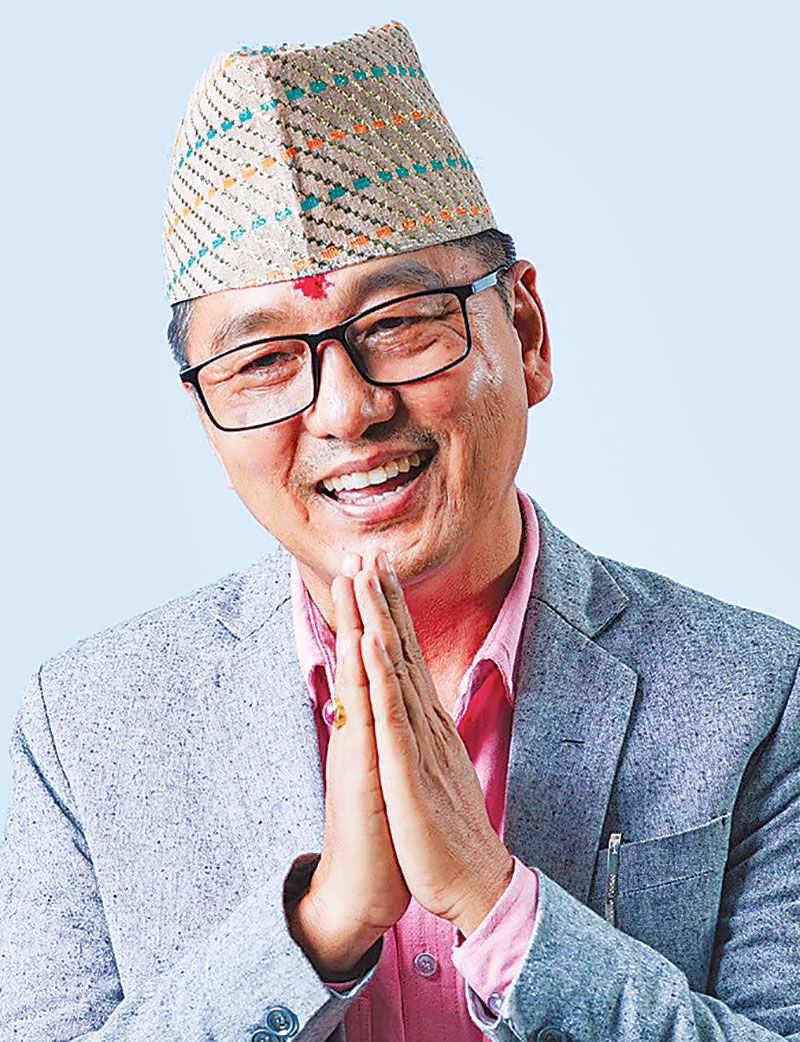
RPP chief Rajendra Lingden.photo: lingden’s twitter

KATHMANDU : The Rastriya Prajatantra Party-Nepal led by Kamal Thapa emerged as the fourth largest party from the second Constituent Assembly in 2013, winning 24 seats.
The party cashed in on pro-Hindu and pro-monarchy sentiments to secure a significant number of votes, mainly under the proportional representation (PR) category. Thapa used his party’s strength to bargain for power. The party first joined the KP Sharma Oli government in 2015, and then, the government of Pushpa Kamal Dahal in 2017.
His party again became part of the Sher Bahadur Deuba government the same year, which only added to Thapa’s image as an opportunist. As a result, his party suffered a drubbing in the 2017 elections.
Among the party’s then candidates, only Rajendra Lingden, the current chairperson of the Rastriya Praja-tantra Party, won the elections, from Jhapa-3. The party couldn’t cross the three percent threshold to qualify for PR seats. The party’s poor show in 2017 prompted different pro-monarchy parties to eventually merge, in 2020, to form a unified Rastriya Prajatantra Party. Then, the party’s general convention in December last year elected Lingden as party chair over Thapa.
Stung by his defeat in the chairman race, Thapa quit the party, and revived his old Rastriya Prajatantra Party-Nepal.
While Thapa’s party faced a debacle in the local polls, Lingden’s performed better. Though his RPP won only in four units—three municipalities and one rural municipality—it won top posts in 63 wards. It was the first time the party had won the mayoral post in a municipality in Kathmandu Valley. It stood second in around a dozen local units, including in Siddharthanagar Municipality, and Kachanakawal and Ruby Valley rural municipalities.
The party couldn’t meet the three percent vote threshold to qualify for PR seats in 2017, however, it secured around 3.16 percent popular votes in the local elections this May.
Six months later, the party has done even better. As vote count crosses mid-way mark, Lingden’s party has won four seats and is leading in two constituencies. It is in the fifth position after the UML, Congress, Rastriya Swatantra Party and the Maoist Centre in PR votes. “The party has been rejuvenated under the new leadership [of Lingden],” RPP leader Mohan Shrestha said.
Lingden’s party has managed to get more than seven percent votes under the proportional category, as of Thursday evening. If the party wins the seats it is leading in so far, it will have six FPTP lawmakers in parliament. The seven percent PR votes would bring in an additional eight seats. It would then have around 14 seats in the lower house, making it far bigger in strength compared to 2017.
The RPP had contested the election alone across the country except in select constituencies, including Jhapa-3, where Lingden won with the help of an alliance with the CPN-UML. Similarly, Banke-2 and Rupandehi-3 were other two constituencies where it had partnered with the UML. It won in Banke and was locked in a tight fight against Home Minister and Nepali Congress leader Bal Krishna Khand in Rupandehi, suggesting that its partnership with the UML had borne fruit.
In the view of political experts, Lingden’s leadership is definitely one factor boosting the party’s electoral prospects. “The new leadership created a synergic effect. Though he is untested as party chief, Lingden has succeeded in projecting his clean image to the electorate,” Sanjeev Humagain, a faculty member of the political science and international relations department at the Tribhuvan University, told the Post.
While Thapa, a long-time leader of the party, became a minister multiple times, holding powerful portfolios including the home ministry, Lingden is yet to hold any executive post, except as a directly elected lawmaker from his home constituency.
Having found a new champion for their pro-Hindu and pro-monarchy ideology in the form of Lingden, say experts, many voters who were unhappy with post-2006 political changes this time plumped for the new RPP avatar.
In the words of Humagain, “Lingden’s projection as a charismatic leader on social media also helped the party’s electoral cause”.

HOME PAGE

Nepal still red-flagged due to aviation body’s rigidity

European Commission says no grounds for revising the list of carriers, including Nepal’s, barred from serving the EU.
- SANGAM PRASAIN

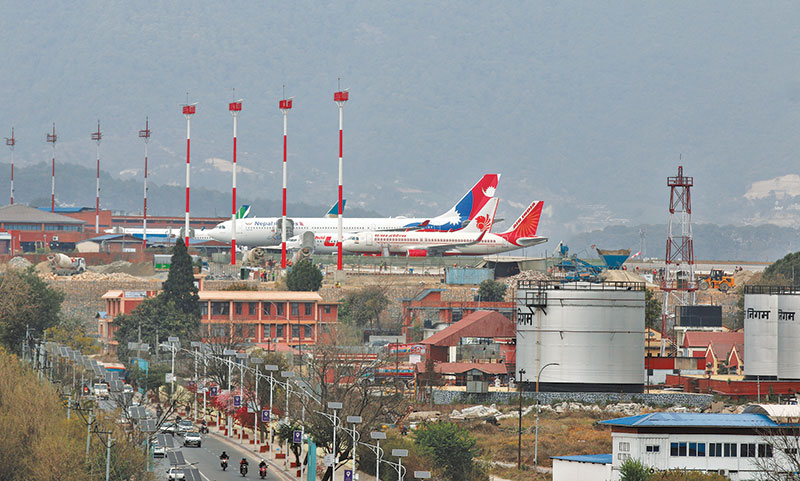
Global aviation watchdogs have questioned the civil aviation body’s dual role and urged Nepal to split the organisation into two entities—service provider and regulator.Post file Photo

KATHMANDU : Nepal Airlines found out the hard way what the Civil Aviation Authority of Nepal could do if you caused it displeasure. On October 30, the regulator cancelled its scheduled flight to Delhi as punishment for defying instructions to move some of its international services to Bhairahawa’s empty airport.
Nepal Airlines’ jet remained on the ground, and more than 500 passengers suffered as a result of the last-minute cancellation.
The incident raised questions about whether the regulator had the authority to tell airlines what to do so it could promote another airport.
Industry experts and Tourism Ministry officials said it was “illegal” to force airlines to serve particular airports, and that it was a display of the regulator’s hegemony.
The Civil Aviation Authority performs dual functions as regulator and service provider. As service provider, it runs two international airports—Tribhuvan International Airport in Kathmandu and the newly opened Gautam Buddha International Airport in Bhairahawa.
“If the regulator tells airlines they have to operate flights from its other airports, it is a total conflict of interest to promote business, not safety,” said Sanjiv Gautam, former director general of the Civil Aviation Authority. “The October 30 incident is really serious.”
Several unnamed experts told the Post that the civil aviation body has been misusing its authority but no one wants to speak against it for fear of retaliation.
“How can a regulator force airlines to ‘go here and there’ to fulfil its interest to promote business?”
International airlines have been given a mid-December deadline to move some of their flights to Bhairahawa.
Global aviation watchdogs have questioned the civil aviation body’s dual role and urged Nepal to split the organisation into two entities—service provider and regulator—to enhance the safety of flyers. But the government has shown no interest in doing so, and Nepal’s aviation industry is suffering the consequences.
On Thursday, the European Commission continued its ban on Nepali airlines for not meeting international safety standards. They remain on the updated EU Air Safety List which means they are still barred from EU skies even after nearly 10 years.
According to the Official Journal of the European Union published on Thursday, the European Commission has said, “As part of its continuous monitoring activities, on September 14, 2022, the commission met with the representatives of the Civil Aviation Authority of Nepal (CAAN). On that occasion, the CAAN provided the commission with information regarding the safety oversight in Nepal and notably their revised considerations about the functional separation of the regulatory and service provider roles which is a longstanding issue identified during the commission consultations with Nepal, as well as by the International Civil Aviation Organisation (ICAO) Universal Safety Oversight Audit Programme.”
This means the Civil Aviation Authority of Nepal has communicated it will not be fragmented into regulator and service provider.
Nepali experts say the civil aviation body has offered no strong logic why it doesn’t want this functional separation.
The European Commission added in its report, “As a follow-up to that meeting, on November 10, 2022, the CAAN submitted to the commission the information and documentary evidence about the adoption of a new CAAN regulation, which in CAAN’s view ensures the functional separation of CAAN’s regulatory and service provider roles, namely by preventing the transfer of staff between regulatory and service provider sections of the CAAN.”
The report states, “The implementation of this new regulation and progress in aligning the CAAN’s safety oversight with the relevant international safety standards would allow the commission to consider whether a European Union on-site assessment visit to Nepal should be organised in 2023. On the basis of evidence gathered during such a visit, the commission could assess if a removal of air carriers certified in Nepal would be justified.”
Following the September 2012 crash of Sita Air Flight 601 at the Manohara River which killed 19 people, including seven British citizens, the European Commission imposed a blanket ban on Nepali airlines from flying into the 27-nation bloc in December 2013.
The European Commission has said at this time there are no grounds for amending the list of air carriers which are subject to an operating ban within the Union with respect to air carriers from Nepal.
“Member states should continue verifying the effective compliance of air carriers certified in Nepal with the relevant international safety standards through prioritisation of ramp inspections of those air carriers.”
The chief of the civil aviation body Pradip Adhikari has been repeatedly saying to Nepali media that they will work from two offices instead of splitting the organisation.
Insiders say there is larger politics to prevent the organisation from being separated. They say that once it is broken up, some top position holders will lose the dual benefits they have been enjoying. The existing system allows the director general of the Civil Aviation Authority to issue tenders for multi-billion-dollar projects. The same person also has the plum job of overseeing compliance with the project and the aviation regulations governing the issuance of licences to airlines and crews.
“No one wants to lose this scope and power. That’s why, despite intense pressure, it has become hard to separate the civil aviation body for a long time,” insiders say.
“It’s a shame that Nepal is still on the air safety list even after nearly 10 years,” said aviation analyst Hemant Arjyal. “It may impact Nepal’s tourism industry and the economy in the long run.”
The Civil Aviation Authority has been repeatedly issuing assurances that the European Commission will remove Nepal from the air safety list, citing ICAO’s audit report which shows that the country’s safety standard has improved some.
There are eight critical elements that ICAO considers essential for a state to establish, implement and maintain in order to have an effective safety oversight system.
But ICAO’s final audit report, a copy of which the Post has obtained, shows that Nepal’s performance on organisation, which defines the organisational structure needed to meet safety standards, remains poor.
The effective implementation score on organisation, one of the eight critical elements, has been reduced to 45.45 percent from the earlier 50 percent. The global average is 71.1 percent.
In its final audit report, United Nations aviation watchdog ICAO formally asked Nepal to split the civil aviation body into two entities—service provider and regulator.
“The request has come in written form after Nepal showed no eagerness to separate the organisation and ensure that there is no conflict of interest even after 10 years,” said Gautam, former chief of the aviation body. Splitting the organisation is a crucial organisational reform agenda which has been a work in progress for the last one and a half decades.
“The reluctance to listen to the aviation watchdogs will cost Nepal in the long run. Although Nepali airlines don’t fly directly to the EU, tourists, particularly in the high-end segment, are reluctant to travel to countries that have been flagged by the aviation watchdog,” said Arjyal.
“Nepal has been receiving backpackers, the low-end segment of tourists, who usually don’t care much whether it’s safe to fly in Nepal or not; but for the luxury segment, safety matters very much,” said Arjyal.
Travel and tour operators say that the travel insurance premium of tourists visiting Nepal increases every time the European Commission updates its air safety lists. They fear that other countries may impose stricter travel advisories as Nepal has remained on the air safety list even after 10 years.
Nepal remains red-flagged in international aviation because of its poor safety record. Passing legislation to split the Civil Aviation Authority of Nepal into two entities will fulfil a key requirement of the European Commission.
This will hasten Nepal’s removal from its air safety list, allowing Nepali airlines to fly to Europe and bring more tourists, but the government is unwilling to break up the aviation agency and loosen its grip on it, insiders say.
Nepal’s tourism and aviation sectors lamented that Parliament’s five-year term ended on September 18 without passing long-pending civil aviation bills to separate the civil
aviation body, which could severely impede their growth and do long-term damage.
Insiders say the hospitality industry has been pouring billions into new properties amid post-Covid optimism that tourist arrivals would take off, but failure to pass the bills could stop recovery in its tracks.
Successive tourism ministers and political leaders have been constantly pledging to the diplomatic community that Nepal will pass the bills and start the process to have the country removed from the bad books of the European Commission.
The Post unsuccessfully made repeated attempts to contact officials at the Civil Aviation Authority of Nepal for their reaction.


Several unnamed experts told the Post that the civil aviation body has been misusing its authority but no one wants to speak against it.POST FILE PHOTO

Page 2
NATIONAL

Government inaction makes life miserable in two flood-prone Banke villages

Residents of Chaupheri and Ramnagar of Duduwa Rural Municipality face inundation and floods every monsoon.
- J PANDEY

Residents of Ramnagar (pictured) in Banke say their village and adjoining Chaupheri were inundated by floods 55 times in the past 25 years.Post Photo: J PAndey

BANKE : On October 7, Anita Kewat saw no escape and climbed onto the roof of her hut clutching her infant daughter. The floodwaters from the Rapti river had started entering her village Chaupheri in Duduwa Rural Municipality-2. The water was already waist-high and would soon sweep away her hut.
“Soon after, the water reached the roof. I jumped into the water and swam to my neighbour’s roof with my daughter in tow. The next four days were miserable for us. We stayed put on our neighbour’s roof, hungry and scared,” said Kewat. “I saw my whole settlement getting swallowed that night.”
The floodwaters from the river had completely submerged Chaupheri and its neighbouring villages in October. The villagers spent a week trying to find safe spaces, says Kewat. “Our houses were submerged in water. We had lost our livestock and every single grain in the house.”
According to Nakke Chai, a local of Ramnagar, another village affected by the October floods, all the villagers climbed onto trees, roofs, or other high places in order to save their lives. “There was no food or clean drinking water for a week. It’s a wonder we all survived,” said Chai.
According to the municipal office, around 500 households in the settlements of Chaupheri and Ramnagar, in ward 2 of Duduwa Rural Municipality were affected by the October floods.
These two villages have been facing inundation and floods every year during the monsoon season for more than two decades now. “We have been living with the same problems since 1998-99. Inundation affects every aspect of our lives—from losing fertile fields to our livestock,” said Chai.
The two villages suffer power cuts and a shortage of drinking water every monsoon. But even during the dry season, they don’t live comfortably, say locals. “Our children remain out of school as there is none nearby and we succumb to minor ailments and injuries without access to a hospital,” said Chai.
“In the last 25 years, Chaupheri and Ramnagar have been inundated more than 55 times. Several people have also lost their loved ones,” said Aagyaram Godiya, a 55-year-old man from Ramnagar. “In the monsoon of 2014, I saved myself by climbing a tree. I stayed on that tree—hungry—for three days. But it wasn’t easy even after the water drained out because all our winter harvest was washed away.”
Residents say the local authorities are aware of the difficulties faced by the two villages but they are yet to extend help.
Sundarlal Loniya of Ramnagar says flooding is becoming worse every year with erratic monsoon. “Earlier we tackled flooding only during the monsoon season but in the last few years, even pre- and post-monsoon seasons have become dangerous for those living here,” said Loniya.
An embankment built by India near Holiya town in Banke district controls the flow of Rapti River and most residents blame this embankment for the worsening flood situation in the area.
According to the report of the World Commission on Dams, the Lakshmanpur dam was built in violation of international law. However, as the political parties and leadership are not committed to solving the problem, local people have had to suffer, says Loniya.
Like Duduwa Rural Municipality, several other places and towns get inundated by floods in the Rapti river every year. Bethani, Holiya, Matehiya, Fatehpur, and Gangapur have been facing inundation every year for the past 29 years.
India’s Department of Water Resources and River Development and Nepal’s Department of Water Resources and Irrigation signed an agreement for the construction of an embankment along the Rapti river last June.
A concrete embankment 35 km long and a mud embankment 6 km long were to be built on both sides of the Rapti but work is yet to begin.
According to Chief District Officer Surya Bahadur Karki, the agreement states that India would cover Rs10.44 billion of the total cost, including technical monitoring, and Nepal would bear Rs1 billion. “However, after four months of the deal, construction of the embankment is delayed in the absence of a final survey of the inundation situation,” said Khatri. “The dams in the Rapti river have become a geopolitical issue. It must be sorted at the highest level between the two countries. Until such a time, the sufferings of the locals will continue.”
“There is no way for us to prevent such a disaster on our own. The higher authorities and related bodies have not paid enough attention to this issue,” said Narendra Chaudhary, chairman of Duduwa Rural Municipality.
“Even the District Disaster Management Committee’s assistance is not enough to prevent flooding in the area. The municipal office does everything within its power to mitigate the disasters every year but unless the higher authorities intervene, there is not much we can do.”

NATIONAL

Three children die in fire

- Post Report

RAUTAHAT: Three children died after a fire broke out at a clothing and accessories shop at Maisthan Chowk in Gaur Municipality-1 in the district at midnight on Wednesday. The fire started after an electrical short circuit, said police. The shop’s owner Islam Mia lost his two daughters, aged five and seven, and a son, aged seven, in the inferno. The fire was brought under control with the help of Nepal Police, Armed Police Force, Nepali Army and locals. “Besides Islam’s house and shop,
the fire also gutted an adjoining motorcycle workshop,” said District Police Chief SP Bir Bahadur Budhamgar.


NATIONAL

UML wins Dhankuta in a clean sweep

- Post Report

DHANKUTA: CPN-UML has swept Dhankuta by winning all seats in the House of Representatives and the Provincial Assembly. This district has one constituency in the House of Representatives and two in the Provincial Assembly. According to the Chief Election Office, UML’s Rajendra Kumar Rai won by defeating Sunil Bahadur Thapa, the Congress candidate from the ruling alliance, by a margin of 1,397 votes. Rai secured 30,100 votes.

NATIONAL

Independent candidate elected from Morang-5

- Post Report

BIRATNAGAR: Yogendra Mandal, an independent candidate, has been elected for the House of Representatives from Morang-5 by defeating the candidates of two electoral alliances—the ruling alliance and the alliance of the CPN-UML and Janata Samjbadi Party (JSP). Mandal secured 21,820 votes. The CPN (Maoist Centre) leader and candidate of the five-party alliance obtained 17,486 votes while the JSP candidate bagged 17,390 votes. Mandal is a UML rebel candidate who quit the party and filed his independent candidacy after the party decided to support the JSP candidate in the constituency.

Page 3
NATIONAL

Expat push key to Swatantra Party’s electoral success

Migrant workers and students studying abroad had urged their family members back in Nepal to cast their votes in favour of RSP this election.
- PURUSHOTTAM POUDEL

Rabi Lamichhane has a huge fan following due to the TV show he hosted for a couple of years.RSS

NATIONAL

Problem persists in three districts as Election Commission fails to resolve issues

The body is studying the disputes and has announced re-polls at a centre in Bajura.
- POST REPORT

An election official empties a ballot box at International Conference Centre, Baneshwar in Kathmandu on Monday.Post Photo: Hemant Shrestha

KATHMANDU : While the vote counting of the federal and provincial polls held on November 20 is in full swing, three constituencies—Dolakha, Syangja-2 and Bajura—are yet to crunch the numbers as the Election Commission has yet to resolve the disputes there.
Kamal Bhattarai, assistant spokesperson for the Election Commission, said his office is studying the disputes at the constituencies in question and has instructed re-polling at one centre in Bajura.
Despite the disturbances, Election Commission officials have said counting will be completed by November 28 in all three constituencies.
Chairman of the CPN-UML KP Sharma Oli has also demanded re-election in the three constituencies, accusing the ruling coalition of rigging the votes there.
“Using state power, booths were captured in Dolakha, Syangja and Bajura,” Oli told reporters in his home district Jhapa. “The Election Commission should conduct re-election at those places.”
On the evening of November 20, Chief Election Commissioner Dinesh Thapaliya had told the media that elections were disrupted at 15 different polling stations. But later, disturbances were found only at four places—Nawalparasi West, Gulmi, Surkhet and Bajura.
Later, the commission conducted voting in Nawalparasi West on November 21 and in Gulmi and Surkhet on November 22.
Chief Election Officer in Syangja-2 Ram Chandra Sharma said a report has been forwarded to the commission about the controversy.
“We have answered the Election Commission’s questions, detailing the situation of the constituency,” Sharma told the Post. According to Sharma, both sides—the
UML and Nepali Congress-led alliance—have filed complaints claiming vote rigging at 11 polling centres of the constituency.
“We are waiting for the commission’s decision whether to start counting or conduct re-polling,” Sharma said.
The Nepali Congress and the parties in the ruling alliance have demanded the commission start counting the votes immediately while the UML has been demanding re-polling, accusing that the Nepali Congress captured booths at different places.
The commission has already instructed the Chief Election Officer of Bajura to conduct re-polling at Budhinanda Municipality-5 by Saturday.
“We have made all the necessary preparations for the re-polling at Budhinanda Municipality-5 for Saturday,” said Dhakaram Poudel, chief election officer of Bajura district. “We have also forged an agreement among all the parties concerned.”
According to Poudel, besides Budhinanda-5, the Congress has demanded re-polling at eight centres and the UML has demanded re-polling at 16 centres, accusing their opponents of rigging the vote.
“We have informed the commission about their demands but we have not yet received any decision regarding those 24 polling centres,” Poudel said. “If the commission decides to go for a re-polling at those places as well, we will need reprinting of ballot papers.”

NATIONAL

Two arrested with homemade pistol from Lalitpur

Briefing
- Post Report

KATHMANDU: Police have arrested two persons with a homemade pistol from Lalitpur metropolis-25 on Wednesday night. According to police, the arrested are Prashant Tamang, 19, and 30-year-old Ramesh Tamang. A police team deployed
from Metropolitan Police Sector Bungamati arrested them with a scooter after they tried to flee upon seeing the police personnel. According to police, the duo had hidden the pistol in the boot of the scooter. Police also seized 13 bundles of wire, ten water pumps and one jackhammer, among others, from them. Police said further investigation into the case is underway. (PR)

NATIONAL

Art exhibit to honour late cultural historian Joshi

KATHMANDU: An art exhibition honouring the late cultural historian Satya Mohan Joshi is taking place at Nepal Art Council starting on November 27. Titled Deities of Nepal, the exhibit marks the council’s 60th anniversary and the golden jubilee of the Federation of Handicraft Associations of Nepal. The council’s Acting President Sagar
SJB Rana said the exhibit aims to promote Nepal’s art, cultural heritages and handicrafts. “It further aims to educate visitors about our culture’s basic tenets, diverse forms, and rich heritage,” Rana said. (RSS)

Page 4
EDITORIAL

Young hope

Do the young leaders have it in them to defeat Deuba in the race for parliamentary party leader?
- Post Report

If established political parties had any doubt that the political space they long occupied could one day be forcefully claimed by new political forces, the results pouring in from all over the country should make the message loud and clear. The rise of new political forces that seemed far-fetched until recently is becoming a reality—first with the victory of independent candidates in local elections, and now with the wins of candidates representing the newly formed Rastriya Swatantra Party. That the old parties are losing touch with the contemporary Nepali society is no news; but the continuing dominance of the same parties (except for the recent dent) means their demise will be painfully slow, if not impossible. This also means the established parties have time to reimagine their politics and be relevant all over again.
Even as several septuagenarians like Sher Bahadur Deuba, Ram Chandra Paudel and Shekhar Koirala continue their run in politics, the young ones now have a stronger narrative to build about the need for younger leadership. An obvious reference for them now could, again, be the rise of the Rastriya Swatantra Party primarily because of people’s frustration with the functioning of established parties. The narrative that they need is that of change—among the established parties themselves.
The first question that comes to mind when thinking about the regeneration of political parties is who will take the lead in this crusade. The old guard has for too long been reluctant to reimagine the way their parties function. The young guns have hitherto been unable to bring substantial changes in this functioning. If the emerging electoral results are anything to go by, the CPN-UML is going to be bereft of second-tier leaders except for a few including KP Sharma Oli, as many of his acolytes have lost. The Maoist Centre, which is again doing poorly in election results, has hardly ever shown an inclination to change party dynamics as Pushpa Kamal Dahal continues to rule the roost.
The Nepali Congress is doing pretty well with the re-election of Gagan Thapa and the election of Bishwa Prakash Sharma and Pradip Paudel. The narrative built by Thapa as a claimant to the post of next prime minister seems to have resonated with voters not only in his constituency but also in other places of the country. A well-calibrated campaign by taking into confidence second- and third-generation leaders could help shake the power positions of those like Deuba who continue to cling on.
The performance of Sagar Dhakal in Dadeldhura suggests even a den as secure as Deuba’s can be broken with sustained political intervention. But do the young leaders have it in them to launch a sustained campaign to defeat Deuba in the race for the leader of the parliamentary party? If they help re-imagine the way the party functions, both in parliamentary politics and in the exercise of internal democracy, remains to be seen. If they do not dare do so in the upcoming parliament, they will end up ceding more political space to newer outfits.

OPINION

The underdogs have won. Now what?

The next five years will be crucial, not just for the newer parties, but also for the older lot.
- Amish Raj Mulmi

The voters have spoken. They have rejected the status quo and put their trust in a new generation of representatives far removed from the current state of affairs. The despair that was the result of misgovernance has given way to a new optimism. The difficult part lies ahead: To represent their constituencies in a way that satisfies not just voter aspirations, but also the nation at large. In this, our new parliamentarians must not falter.
Candidates from three newer parties have left their imprint on the elections this time, even as the final votes are still being counted. Among them, the Rastriya Swatantra Party (RSP) has received the most attention. They had a superstar candidate in Rabi Lamichhane; but more importantly, it was the door-to-door campaigning by their younger candidates, and prevalent voter dissatisfaction, that must be credited for their excellent performance. As things stand, they may emerge as the fourth largest party in Parliament, a commendable performance for a party that didn’t exist a few months ago. They may well determine who is in power and who isn’t, despite Lamichhane’s desire to create a “strong opposition” and not align with the existing forces.
Lamichhane has declared his party is middle-right of the political spectrum. The RSP’s manifesto and ideologies are vague on details, but it is clear its performance is the result of the discontent against traditional parties. Their candidates cannot be slotted under an ideological umbrella either. But ideology has long seemed to be dead in Nepal; and as the election coalitions suggested, has been relegated to party names only. As Pranaya Rana, former editor of The Record, wrote in his newsletter before the polls, “This election exemplifies the death of ideology in Nepal not just because of the ideological bankruptcy of the political parties, but also because of the relative lack of ideological baggage among the young turks who’re challenging them.”
In Nepal, ideology died a quiet death at the hands of our leaders themselves. Nowhere is this clearer than in the decline of the Maoists and Madhesh-based parties such as the Janata Samajwadi Party and the Loktantrik Samajwadi Party. All three forces had a role in ushering in a federal, republican and secular Nepal. None of the three can claim to uphold its ideals today, despite whatever its leaders say.
And that is the existential question the republic faces today, in the aftermath of Lamichhane and Kathmandu Mayor Balen Shah’s open contempt towards the provincial structure.

The death of provinces?
It would be correct to argue that the provincial system is yet to show why it matters in the national polity, especially when local governments have been strengthened to a great degree. But is that the fault of the provinces, especially when concerted efforts have been made over the past five years to weaken their very existence? The chief ministers have been relegated to the sidelines, provincial demands for greater powers have been rejected, and instead of devolution of power—as was the goal of the 2015 Constitution—state authority continues to be centralised in Kathmandu’s corridors. If the chief district officer continues to hold more power than the chief minister, how are the provinces to blame?
There is widespread belief that the provinces are a fiscal burden on our state. This rejection of provinces stems from the belief that the restructuring of the Nepali state into a federal unit itself is the problem. Whether such rejection comes from a monarchist affiliation or a personal disgruntlement inflated into a societal argument is not important. What is important is that it conjoins the dissatisfaction against traditional parties into a rant against federalism—on social media or in public forums. The results are now clear for all to see. The rejection of federalism has reached a critical mass with Lamichhane’s victory, and he will soon have to clearly tell the masses whether his party rejects the provincial system altogether, or whether he has plans to devolve power to the provinces as imagined by the constitution.

The mofussil and Kathmandu
Whatever Lamichhane and Balen Shah’s beliefs may be, these elections have made clear that even if Kathmandu’s urban class may reject the provinces, they matter to its denizens. The commendable performance of the Nagarik Unmukti Party and the CK Raut-led Janmat Party in their regional strongholds certainly lead one to believe that the provincial parties can still be a gamechanger in Nepali politics. Frustrated with traditional parties, regional parties such as the Nagarik Unmukti Party can embolden citizens marginalised by the centralised state structure, and can emerge as platforms where injustices against their communities or regions can be given a national voice. In effect, the Nagarik Unmukti Party is a subaltern political force whose voters are unwilling to place their trust in those parties who have long treated them as footnotes. If such parties can reject the LJP and the Janata Samajbadi Party’s brand of seeking power at the centre and instead become a voice for devolution of power, Nepal’s provinces will still have hope.
Raut’s victory against Upendra Yadav suggests a political scenario similar to that of the RSP, both a statement against Yadav’s opportunism and for Raut’s promises (as well as for the possibilities democratic politics offers, in contrast to his previous secessionist ideals). Traditional parties have been winning not just because they have a support base, but also because voters rarely have an alternative. What these polls have shown is that if Nepali voters are given a choice, they will make their preferences clear. Whether such alternatives emerge in the form of conservatism which seeks to uphold old hierarchies and state structures, or as progressivist forces that will strengthen the federal republic, is a question that will continue to haunt the nation unless our leaders correct their ways. But the writing is clear on the wall: If alternatives exist, Nepali voters will choose them.
These polls have sent out a clear message to Messrs Deuba, Oli and Prachanda: Perform or perish. The next five years will be crucial, not just for the newer parties who’ve made a mark, but also for the older lot. Unless they cede space to younger voices and reform existing party and state mechanisms, the newer parties will eat into their voter base. As for the new parties now enjoying a share of success, the next five years will be crucial. A focus on grassroots organisation building, and a clear divergence from traditional parties’ operating structures, will allow them to build support in non-urban areas. If not, the citizen is known to have a fickle mind, and is not afraid of changing allegiances if their leaders do not perform.

Mulmi is a columnist for the Post, and the author of ‘All Roads Lead to North: Nepal’s Turn to China’.

OPINION

Acting together to end gender-based violence

Crimes against women have increased, with 21,568 cases reported between July 2021 and July 2022.
- Post Report
Post File Photo:  Keshav thapa

Gender-based violence (GBV) is a violation of human rights worldwide. In Nepal, GBV affects more than one in four women and girls. It is one of the most extreme forms of gender inequality, and it severely undermines Nepal’s ability to achieve sustainable development for all.
GBV takes multiple forms—physical, sexual, emotional, psychological, and financial. It occurs in both private and public, including online, and happens throughout the lives of women, girls, and those who are gender non-conforming. However, many victims suffer in silence. The true scale of GBV in Nepal is underreported and underestimated since only one-third of women who experience physical or sexual violence seek help. Experiences of violence are also exacerbated for those who already face discrimination based on their disability, caste, or ethnicity, limiting their access to protection, treatment, and justice.

The scale of GBV in Nepal
According to estimates of Nepal Police, crimes against women and girls have increased at an alarming rate, with 21,568 cases reported between July 2021 to July 2022. In Nepal, as in other countries, the Covid-19 pandemic and natural disasters have led to more incidents of GBV, with rural and low-income women and girls at higher risk, as well as those who lack formal education. Age and marital status matter as well. Women married before age 19 are more likely to experience violence by their husbands than those who marry later, according to the 2016 Nepal Demographic and Health Survey.
Despite the scale of GBV in Nepal, survivors have limited access to help and the organisations that do exist operate with very limited resources. One of the most critical services in the country—the One Stop Crisis Management Centres—offer health care, psychosocial counselling, legal protection and rehabilitation to survivors. But there are still only 88 of these centres across Nepal, and many of them face challenges, like poor infrastructure and a lack of training for staff members.

Engaging men and boys
Rigid social norms around masculinity are one of the driving causes of GBV. Deep-rooted ideas about what it means to “be a man” are formed early in boys’ lives, especially within their families and peer groups. Young boys are often discouraged from crying, and as they grow older, their capacity for violence is often celebrated, with inappropriate behaviour being reinforced through phrases like “boys will be boys.”
Men’s use of violence as adults remains a common, socially accepted way to assert their masculinity. Research suggests that childhood exposure to violence increases a person’s likelihood of experiencing or perpetrating violence later in life and that men and boys are the main perpetrators of violence. Too often, women victims are blamed instead of men perpetrators, with mainstream media reinforcing this idea.
The lives of boys and men are also damaged by rigid ideas of masculinity. The societal expectation that boys and men must be the “breadwinners” of their families often places intense pressure on them, causing them distress, especially during bad economic times or when men face poor labour conditions, such as low wages or abuse from employers. With more options and freedom to fully express themselves, boys and men will lead happier and fuller lives. There is a lot boys and men can gain from gender equality—and the fight to eradicate GBV must include them.

Ways you can help
Gender equality is key to development. Without eradicating gender-based violence, gender equality cannot be achieved. As we go into the 16 Days of Activism against GBV, an annual international campaign that kicks off today, the International Day for the Elimination of Violence against Women, and runs until 10 December, Human Rights Day, we must speak out against all forms of GBV and urgently push for changes at personal, family, community, and institutional levels. GBV is not inevitable. It can and must be prevented. The International Development Partners and agencies are committed to enhancing gender equality in Nepal, together with all stakeholders. Here are some ways to make a difference:
Remember that change begins with you. Examine your own behaviours and biases that permit a culture of GBV to continue.
Speak up to prevent GBV. Take a stand by calling it out when you see it. “Eve teasing,” inappropriate sexual comments and sexist jokes are often warning signs of acceptance of more serious sexual discrimination and harassment.
Adopt gender-responsive parenting. Challenge gender stereotypes at home and let your family
know it’s okay to be different. Promote an equal sharing of household chores. Teach about enthusiastic consent, bodily autonomy, and accountability.
Engage men and boys. Transform masculinity into something positive by emphasising values like equality, respect, and dignity.
Believe survivors. Learn about signs of abuse and ways you can help yourself or other victims of GBV find safety and support.
Support services for survivors, including girls, as well as GBV prevention programmes for children, that can help break intergenerational abuse.
Amplify the voices of women leaders. Support the work of women and girls from diverse backgrounds, like women who come from ethnic and religious minorities, women from traditionally disadvantaged caste groups, women with disabilities, and LGBTQIA+ communities.
Enable an environment where women’s rights activists can speak without fear. Advocate for laws and services to protect women’s rights activists from harassment, discrimination, and retaliation.
Increase women’s representation. Promote the leadership of women and girls in all decision-making spaces, particularly women who face multiple forms of oppression.
Support women and youth-led organisations. Increase long-term, sustainable, and flexible funding for women’s rights organisations and feminist movements.
One individual experiencing GBV is one too many. We must unite so that we can end GBV once and for all.

OPINION

Freeing our footpaths

The small businesses which thrive on footpaths need to be integrated through conscious planning.
- Post Report

An obvious symptom which tells us that our cities, especially the capital, have been unsustainably urbanised is our footpaths—and often the lack thereof. As such, we welcome the High Court’s directive towards relevant government authorities to stop “leasing” footpaths in Dhaka within seven days and to take legal action against offenders, as reported by this daily on Monday. The HC ordered the government to constitute a five-member high-powered committee to identify those leasing out footpaths and submit a list of their names to the court in 60 days. We also appreciate the HC’s issuing of a rule asking the officials concerned to explain in four weeks why their inaction to stop “selling and leasing” footpaths should not be declared illegal.
Footpaths being occupied by vendors and other structures has been a longstanding issue in the capital, with corrupt groups (often politically influential locals) making a business out of renting out these public spaces. To be able to identify the culprits and bring them to book will set a much-needed example of accountability for all city authorities. Certainly, the small businesses which thrive thanks to these footpaths also need to be integrated into our city through conscious planning (as many citizens rely on them for their necessary purchases, too), but taking up walkways is not the way to go.
However, it is not only informal businesses that our footpaths need to be freed of in order for pedestrians to actually be able to use them. Just a week ago, we wrote in this column about how the roads and walkways of our major cities are littered with open manholes and drains. Some of these have been marked with bamboo fences, while others remain open for weeks, while citizens often sustain injuries slipping a limb or few into these traps. And this is not due to the greed of any anonymous influentials. It is the respective city corporations of each area and their ward councillors who fail to ensure that manholes and drains in the middle of our streets and footpaths are properly covered.
We hope that the HC stepping in and demanding accountability from city authorities will jolt the latter into action and fix every issue ailing our footpaths, which makes them nearly unusable for citizens in many areas. Urbanism experts have long told us how, in addition to other areas of our cities being improved, authorities must focus on making footpaths more walkable. And as much as we appreciate the development of better roads and more flyovers to make the generally terrible commute within Dhaka city easier for citizens, all this means nothing if our capital is also not walkable.
In a city that is becoming increasingly expensive, and where the average vehicle speed is less than 7 km/h, walking remains the most feasible option for many people. And as public servants, the least our city fathers can do is ensure that walkways are not illegally occupied by powerful influentials or do not have gaping holes in them that pedestrians could easily fall into.
— The Daily Star/ANN

Page 5
MONEY

Foxconn apologises for pay dispute at China factory

Company says it is working with staff to resolve disputes.
- ASSOCIATED PRESS

In this photo provided on Wednesday, security personnel in protective clothing were seen taking away a person during a protest at a Foxconn factory in Zhengzhoum China.AP/RSS

BEIJING : The company that assembles Apple Inc’s iPhones apologised on Thursday for a pay dispute that triggered employee protests at a factory
where anti-virus controls have slowed production.
Employees complained Foxconn Technology Group changed the terms of wages offered to attract them to the factory in the central city of Zhengzhou. Foxconn is trying to rebuild the workforce after employees walked out last month over complaints about unsafe conditions.
Videos on social media showed police in white protective suits kicking and clubbing workers during the protest that erupted Tuesday and lasted into the next day.
Foxconn, the biggest contract assembler of smartphones and other electronics for Apple and other global brands, blamed a “technical error” in the process of adding new employees and said they would be paid what they were promised.
“We apologise for an input error in the computer system and guarantee that the actual pay is the same as agreed and the official recruitment posters,” said a company statement. It promised to “try its best to actively solve the concerns and reasonable demands of employees.”
The dispute comes as the ruling Communist Party tries to contain a surge in coronavirus cases without shutting down factories, as it did in 2020 at the start of the pandemic.
Its tactics include “closed-loop management,” or having employees live at their workplaces without outside contact.
Authorities promised last month to reduce economic disruption by cutting quarantine times and making other changes to China’s “zero-Covid” strategy, which aims to isolate every case. Despite that, the infection surge has prompted authorities to suspend access to neighbourhoods and factories and to close office buildings, shops and restaurants in parts of many cities.
Apple earlier warned iPhone 14 deliveries would be delayed after employees walked out of the Zhengzhou factory and access to the industrial zone around the facility was suspended following outbreaks.
To attract new workers, Foxconn offered 25,000 yuan ($3,500) for two months of work, according to employees, or almost 50 percent more than news reports say its highest wages usually are.
Employees complained that after they arrived, they were told they had to work an additional two months at lower pay to receive the higher wage, according to an employee, Li Sanshan.
Foxconn offered up to 10,000 yuan ($1,400) to new hires who choose to leave, the finance news outlet Cailianshe reported, citing unidentified recruiting agents.
Foxconn’s statement on Thursday said employees who leave will receive unspecified “care subsidies” but gave no details. It promised “comprehensive support” for those who stay.
The protests in Zhengzhou come amid public frustration over restrictions that have confined millions of people to their homes.

MONEY

48-hour hackathon concludes with a bang

- Post Report

KATHMANDU: Ace Institute of Management, one of the leading management colleges in Nepal, organised Ace Ignite—a 48-hour hackathon with a rationale to unleash the potential of aspiring innovators in Nepal. Over 100 participants from more than 45 colleges took part in the event, according to the press release issued by the school. The event was supported by national and international sponsors such as Github, Devfolio, Taskade, Microsoft Student Learn Ambassador, Polygon, Worldlink, Makuse and Saral Lagani. (PR)

MONEY

UK lecturers, teacherts join postal workers in strikes

LONDON: Thousands of postal workers, university lecturers and schoolteachers in the U.K. were going on strike on Thursday to demand better pay and working conditions amid the country’s cost-of-living crisis. Picket lines will be set up outside postal offices, universities and schools in one of the biggest co-ordinated walkouts this year. Britons have faced travel misery and overflowing garbage bins in recent months as unions representing multiple industries launched successive strikes. Lawyers, nurses, posties and many others have walked out of their jobs to seek pay rises that match soaring inflation. Domestic energy bills and food costs have skyrocketed this year, driving inflation to a 41-year high of 11.1 percent in October. (AP)

MONEY

Pakistan flood recovery plan key to continued financial support, IMF says

ISLAMABAD: Pakistan’s timely finalisation of a recovery plan from devastating floods is essential to support discussions and continued financial support from multilateral and bilateral partners, the International Monetary Fund (IMF) said on Wednesday. Pakistan was already battling a full-blown economic crisis, with decades-high inflation and dwindling foreign exchange reserves, when it was hit by floods earlier this year. It had entered a $6 billion IMF bailout programme in 2019, and the ninth review is currently pending. (REUTERS)

Page 6
SPORTS

Province 1, Sudurpaschim win opening matches in U-19 cricket

Gandaki lose by 21 runs. Sudurpaschim defeat Karnali by 5 wickets.
- Post Report

Milan Bohara of Sudurpaschim bats during the U-19 National Cricket Tournament 50-over cricket match against Karnali on Thursday.post Photo: Hemanta Shrestha

KATHMANDU : Province 1 launched their U-19 National Cricket Tournament with a 21-run win over Gandaki Province after Dipesh Kandel starred with both the ball and the bat at the Mulpani cricket ground on Thursday.
Electing to bat first after winning the toss, opener Sonu Ansari top scored for Province 1 smashing 64 runs off 94 balls but after their top order failed captain Kandel partnered with Ansari with his 75-ball 36 to lift the innings and guide his team to 183 total.
Kandel then returned 3-21 in his 10-over spell that also featured three maiden overs, helping Province 1 restrict Gandaki to 162.
Gandaki’s bowlers Shishir Bhusal (4-28) and Nirtesh Giri (3-24) combined first to wreak havoc to the Province 1 batting line up, with Bhusal striking first when he had Ansari’s opening partner Suvan Gahatraj for 12.
Giri then sent back Estain Rijal for a nought and Bhupal Dangal for 7 to put Province 1 in trouble at 51-3.
But the captain held his nerve and put on a 63-run stand with Ansari to steady the ship before Giri removed Ansari, caught by Shrestha.
Faijal Rahaman then impressed with a 41-ball 26 to keep up the progress but Subash Bhandari hit back hard next with two consecutive wickets—trapping Rahaman and Nikhil Yadav in front.
Bhusal then polished off the tail to limit Province 1 to a low total.
Gandaki were looking for a first victory after losing their opener to Bagmati by 74 runs but faltered in the run chase instead.
Opener Sohail Kunwar departed cheaply for 9, caught by wicket keeper Gahatraj off Kandel.
Arjun Kumal—Wednesday’s stand-out batter and sole fighter who fell just two runs shy of a maiden century—was out for 22, with Aswin Mahato (3-32) claiming the prized wicket when he had Kumal caught by Nikhil Yadav.
Aswin next removed Cibrin Shrestha for 5 as Province 1 were reeling at 56-3.
Dipak Dumre added 25 and Karan Pangeni hit 48 to stage a fight back but Aswin and Kandel removed both in the space of five balls to ensure Gandaki fail to make further progress.
Captain Bhandari made 18 before falling victim to Kandel and Bipin Mahato made sure of the victory with the wickets of Sujan Gautam (1) and Sudip Aryal (5).
At the TU cricket ground, Milan Bohara’s all-round performance helped Sudurpaschim Province defeat Karnali by 5 wickets.
After sending Karnali to bat first, Milan Bohara took 3-21 to restrict the opponents to a low total of 127.
Dinesh Adhikari top scored for Karnali with an unbeaten 35 that came off 32 balls. Opener Suwash Ayer made 30 facing 35 deliveries.
Naren Saud also picked two wickets.
In reply, Milan smashed 42 off 47 balls that featured seven fours and one six to guide Sudurpaschim to 128-5 in just 26.2 overs after openers Deepak Bohara (20) and Bishal Ayer (9), and captain Anurag Singh failed to make any significant contributions.
Dipak Bohara, another batter who came at number 5, made 20 to help the cause.
Karnali’s Anuj Chanara took three wickets giving away 42 runs in his 10-over spell.
Province 1 will lock horns with Bagmati and Sudurpaschim will meet Lumbini Province on Friday.

SPORTS

Nepal lose first practice match in India

The Rhinos crash to a two-wicket defeat against DDCA despite Paudel and Airee tons.
- Post Report

KATHMANDU : Nepal failed to cash in on centuries by captain Rohit Paudel and Dipendra Singh Airee as they succumbed to a two-wicket defeat at the hands of Delhi District Cricket Association (DDCA) in their first 50-over practice match at the Jamia Millia Islamia University Ground on Thursday.
Opener Arjun Saud’s poor form
continued in India as well. He departed for a nought after Nepal won the toss and elected to bat first.
Saud’s opening mate Aasif Sheikh and former captain Gyanendra Malla also returned to the pavilion without making a run as Nepal were reeling at 2-3.
But Paudel steadied the innings, slamming 113 off 135 balls that included 11 fours and one six. Airee also put on a valiant display, hitting 109 in an aggressive 62-ball knock that featured eight boundaries and six sixes. The duo inspired Nepal to a huge total of 303 total.
Paudel and Airee put together a 120-run stand for the sixth wicket before Arjun Raparia removed the former in the 45.5 overs. Paudel also shared a 64-run partnership with Kushal Bhurtel who also failed to make any impression, returning to the pavilion scoring 21 runs.
Airee then shared a 59-run partnership with Aarif Sheikh, who made 18 not out.
Harishankhar Sah contributed 25 runs. Gulsan Jha and Sompal Kami could not even open the scoring.
Prince Yadav returned 3-42 and Manish Sherawat took 2-52 for DDCA.
In reply, DDCA chased the target in 49.3 overs at the loss of 8 wickets after Nepali bowlers failed to make an impact. Opener Salil Malhotra top scored for DDCA hitting 53 runs in 60 deliveries. Vaibhav Sharma (44), Dhruv Kaushik (41) and Yash Vardhan Oberio (42 not out) helped DDCA reach 305.
Opener Tilak Thakur made 15 runs and Saksham Sharma scored 33.
Bhurtel took three wickets giving away 36 runs in his six-over spell. Nandav Yadav pocketed two while Kami, Lalit Rajbanshi and Sah grabbed a wicket each.
Nepal play their second practice match against the same team on Friday before leaving for Namibia on Sunday.
Nepal are currently on a India tour as part of their preparation for the upcoming Namibia-Nepal-Scotland Tri-series of the ICC Men’s Cricket World Cup League 2, which is set to take place from December 1 to 8 in Windhoek, Namibia.
Nepal will open their campaign against the hosts on December 2.
Nepal are sixth in the seven-team standings with 17 points from 20 matches. Namibia are fourth with 28 points from 23 matches. Scotland are second with 40 points after playing 28 matches.
Oman lead the standings with 44 points after playing all 36 games.
The top three sides at the end of the League 2 cycle, in which each team will play 36 games, will qualify for the ICC World Cup Qualifiers in Zimbabwe next year while the bottom four sides will enter the Qualifier playoffs.

HOROSCOPE

HOROSCOPE

- Post Report

ARIES (March 21-April 19) ***
Though you’ll feel inspired by this cosmic climate, try not to get too carried away with your fantasies, or you might disconnect from your surroundings. Luckily, you’ll reclaim a pragmatic disposition this afternoon.

TAURUS (April 20-May 20) ****
You’ll be in the mood to connect on a deep level, but you won’t have patience for phoney acquaintances or colleagues. This luminary placement is poised to elevate your confidence, helping you step into the limelight.

GEMINI (May 21-June 21) ***
You may feel as though your heart is overflowing with love today. However, it may be wise to keep a cool demeanour when it comes to new love interests. The universe will push you toward personal self-improvement.

CANCER (June 22-July 22) ****
While this celestial exchange will be a fairly easy one to navigate, the universe will ask that you be mindful of your health and wellness. Use this luminary placement as an excuse to treat your sweetie to a nice gesture.

LEO (July 23-August 22) ***
This cosmic climate is perfect for embracing the holiday spirit, though you won’t be in the mood for small talk. You’ll feel inspired to get organized within your personal and professional goals.

VIRGO (August 23-September 22) ***
You’ll feel highly emotional and extra sensitive to your surroundings today. Remember to invest your time and energy into the relationships that lift you up, as your social exchanges will become magnified by this cosmic climate.

LIBRA (September 23-October 22) ***
Don’t be afraid to express what’s in your heart today. Though this celestial exchange will bring supportive energy to your love life, you should avoid over-the-top presentations of love, lest you overwhelm your counterpart.

SCORPIO (October 23-November 21) ***
The world around you will light up with beauty and grace today, making it a great time to spend time with your close companions, though you should be mindful not to overindulge. It is a good time to make smart plans for future.

SAGITTARIUS (November 22-December 21) ****
You’ll feel energized and excited throughout most of the day. The vibe will shift later in the afternoon and ask you to take a look at your financial goals. Be sure to get outside to enjoy some sunshine and nature today.

CAPRICORN (December 22-January 19) ***
You’ll be in a quiet and laid-back mood. You’ll also get a chance to process your thoughts and feelings, helping you find healing through introspection. Take some time out to catch up with your family and friends.

AQUARIUS (January 20-February 18) ***
This cosmic climate will bless you with a warm and inviting aura, helping you make conversation with almost anyone you encounter. You’ll also find healing through a trusted friend, as long as you’re willing to open up.

PISCES (February 19-March 20) ****
This cosmic climate will give you permission to reward yourself for your hard work, especially if you’ve made headway within your career recently. There will be a shift in the evening, bringing rise to your popularity.

Page 7
SPORTS

Ronaldo makes history in Portugal’s win

The forward becomes the first man to score at five World Cups as he nets a penalty in the 65th minute. Ghana lost 3-2.
- AGENCE FRANCE-PRESSE

Cristiano Ronaldo overtakes Pele and Germans Uwe Seeler and Miroslav Klose, who all scored in four World Cups. Ronaldo also extended his own world record tally of international goals to 118.AFP/RSS

DOHA : Cristiano Ronaldo claimed a piece of World Cup goalscoring history on Thursday as mighty Brazil prepared for their first game of the finals.
The 37-year-old became the first man to score in five different editions of the World Cup as he slotted home a penalty in the 65th minute at the 974 Stadium in Doha to help Portugal down Ghana 3-2 in their Group H clash.
He overtakes Pele and Germans Uwe Seeler and Miroslav Klose, who all scored in four World Cups. Ronaldo also extended his own world record tally of international goals to 118.
He won the spot-kick himself when he was brought down by a clumsy challenge from Mohammed Salisu.
The typically ice-cold spot-kick was Ronaldo’s eighth career goal at the World Cup and comes after a tumultuous week which saw the star forward make a sensational exit from Manchester United after weeks of tensions with the club.
But there was controversy surrounding the penalty, which was awarded after Ronaldo crashed theatrically to the turf following minimal contact with the Ghana defender.
Andre Ayew raised hopes for Ghana with a 73rd minute equaliser but goals from Joao Felix and Rafael Leao ensured a winning start for the Euro 2016 champions. Osman Bukari scored a late consolation for Ghana.

Son and Suarez subdued
The returning Son Heung-min could not inspire South Korea as the Tigers of Asia started their World Cup Group H campaign with a 0-0 draw against Uruguay.
Uruguay captain Diego Godin and Real Madrid midfielder Federico Valverde came closest to breaking the deadlock when hitting the woodwork in each half, while Hwang Ui-jo wasted Korea’s best chance, skying a shot from 10 yards out with only the goalkeeper to beat.
It was a game of few chances as neither Son on one side nor Uruguay’s fearsome strikers Luis Suarez, Darwin Nunez and Edinson Cavani could find a clear opening.
The early part of the match settled into a predictable pattern as Korea made a fast start and Uruguay sat deep, soaking up the pressure without giving anything away.
In particular, the South Americans kept Korean danger man Son quiet.
Uruguay created the first clear chances as two raking crossfield balls from centre-back Jose Maria Gimenez picked out runners coming in at an angle.
Valverde clipped the first over the bar, while Nunez failed to make proper contact on the second from just eight yards out with the goal at his mercy.
Just past the hour mark, Korea should have been in front after a slick passing move opened up the Uruguay defence but unmarked 10 yards out, Hwang fired the ball high over the bar.
Godin then went closest to scoring when he hit the inside of the post with a header from Valverde’s outswinging corner.
Neither side could get their game changers into the match, with Son clearly not fully fit, playing his first match since surgery on a broken bone around his eye suffered at the beginning of the month against Marseille in the Champions League.
On the other side, Suarez, Uruguay’s all-time record goalscorer, was a peripheral figure and was replaced by fellow veteran Cavani midway through the second period.

Win for Switzerland
Switzerland and Cameroon kicked off Thursday’s action in Qatar, with the Swiss winning 1-0 courtesy of a goal from Cameroon-born Breel Embolo.
The forward struck three minutes into the second half at Al Janoub Stadium as Switzerland secured a vital three points.
Granit Xhaka and Remo Freuler worked the ball out wide on the right to Xherdan Shaqiri, whose low cross into the area was swept home by an unmarked Embolo, who chose not to celebrate against his birth country.
Defeat condemned Cameroon to their eighth straight loss at World Cups—a miserable run stretching all the way back to 2002.

Batshuayi winner
Michy Batshuayi’s first-half goal proved enough for a below-par Belgium to squeeze to a 1-0 win over a Canada side playing their first World Cup match for 36 years on Wednesday.
Belgium goalkeeper Thibaut Courtois saved Alphonso Davies’ early penalty and Batshuayi opened the scoring against the run of play in the 44th minute.
John Herdman’s Canada, roared on by their vocal support, also had another strong penalty appeal turned down and dominated the second half to no avail.
Belgium were without injured record goalscorer Romelu Lukaku and struggled throughout with the pace of Canada’s forwards.
But the 2018 semi-finalists clung on to move top of what could prove a hotly-contested Group F after Croatia and Morocco’s goalless draw earlier on Wednesday.
Canada will head into their game against Croatia on Sunday still full of confidence after more than matching the team ranked second in the world, who next face Morocco.

SPORTS

England wary of World Cup upset against US

England hit six against Iran in their opening game but coach Southgate is concerned about the two they conceded.
- ASSOCIATED PRESS

England’s Harry Kane (left) trains at the Al Wakrah Sports Complex in Qatar on Thursday. Ap/Rss

DOHA : England scored six goals in their opening World Cup game against Iran, but it was the two they conceded that concern coach Gareth Southgate and provide hope for the United States.
“By the end we looked sloppy,” said Southgate of the 6-2 win over Iran on Monday. He also warned the US would be coming “full-throttle” in Friday’s Group B match.
The tournament has already produced some shocking results, including Saudi Arabia’s win against Argentina and Japan’s upset over Germany.
A win for the US over England would not be on the scale of Saudi Arabia’s win—but Gregg Berhalter’s team are undoubtedly the underdog against one of the tournament favourites. The two goals conceded against Iran gave Southgate something to focus on in an otherwise encouraging performance.
His message to the players has been clear: They will need to be better against the US team who tied 1-1 with Wales in their opening group game.
“They’re a top nation with a lot of top players who have played in the Premier League and who we’ve come up against,” said England goalkeeper Jordan Pickford. “But it’s about us as a squad being 100%. It’s about us taking the result from Iran and going into the US game positive.”
One of those Premier League plays is Chelsea winger Christian Pulisic, a point of focus for England’s defence.
“He’s good with both feet, very clinical,” Pickford said. “We’ve got to be wary of him.”
A win for England would see them qualify for the round of the 16 with a game still to play—but the fate of Lionel Messi and Argentina is proof nothing can be taken for granted.
“It’s what World Cup football is all about,” said Pickford. “There are going to be surprises.” US goalkeeper Matt Turner is predicting more of them at the World Cup.
“You see that the world of football is levelling out in a lot of ways,” he said. “Teams have game plans. Teams have been investing in their youth academies over a number of years.”
“I think the message is when you have one team that’s bought into the same message, you can beat anyone on any given day.”
If US are to produce the latest surprise of the competition, they will have to contain an England attack that was ruthless in the match against Iran, which featured two goals by Bukayo Saka.
“I think it’s pretty clear he’s one of the young stars of world football,” said his Arsenal teammate Turner. “He’s a top, top player and you don’t need me to tell anybody on our team how much of a threat that he poses in the game. He’s scoring goals in a variety of ways. He’s really developed, matured.”

Page 8
CULTURE & LIFESTYLE

Chow Bella’s sumptuous treats for Nepali diners

Akama Hotel’s signature restaurant offers gourmet food of Chinese and Italian origin, paying attention to their ‘hard-to-maintain’ authenticity.
- Isha Das
Post Photos: Anish Regmi

KATHMANDU : H otel Akama, a Tibetan-Nepali style edifice spread over 11 ropanis, lies to the west of Kapan and Bauddhanath Stupa. When investors realised that more could be done with the lavish building, originally built as a residential apartment, they decided to turn it into a four-star hotel.
Inaugurated on 19 February 2019, the hotel is promoted by The Sanima Group with a somewhat vague goal of “Developing Nepal as a Tourist Destination in the World.”
The hotel, they claim, is a fusion of local Newa and Himalayan culture. Small gestures, they say, make a big difference to the guests.
Aiming to infuse Himalayan culture to its cuisine, the hotel opted to go with Chinese delicacies, especially Szechuan cuisine which has bold flavours of Szechuan pepper, garlic, and chilli.
“We chose to go with the Szechuan cuisine among a variety of Chinese cuisine because it contains Szechuan pepper, which is familiar to the Nepali palate,” says Surya Raj Adhikari, the hotel’s food and beverages director.


The hotel wanted to give something extra and unique to the guests, which is why Chow Bella, their Chinese-Italian restaurant, was built, five months after the hotel’s opening.
“Everyone already knows about Chinese food, Chinese-Thai food. We wanted to try something new,” says Sajjan Chandra Khanal, Akama’s executive chef. “So we came up with the Chinese-Italian Chow Bella.”
Chow means fried noodles in Chinese and Bella means beautiful in Italian; together, they reflect the fusion of Chinese and Italian customs.
The restaurant’s menu includes the Smoked Ginger Prawn, Roast Duck Chili & Garlic, Involtini Di Pollo, and Salmon Norvegese, delicacies the guests are recommended to try.
The prices of the food items range from Rs600 to Rs2,550, while the beverages too are competitively priced, priced between Rs250 and Rs2,000.
Their best-selling item, however, is the Smoked Ginger Prawn, a Chinese dish that uses prawns from the Arabian Sea, brought to Nepal via India. The prawns are deep-fried and garnished with ginger and chilli flakes.
Another Chinese dish, Roast Duck Chilli and Garlic, comes with a potion of whole duck roasted in an aromatic herbs pot and tossed with garlic, chilli sauce, oyster sauce and honey, blended with a perfect balance of spice and sweetness.
With their dedication toward serving Italian taste to the guests, Hotel Akama imports exclusive Norwegian salmon all the way from Norway, to prepare Salmon Norvegese, an Italian dish. The item comes with a pan-grilled salmon along with garlic-flavoured spinach and warm hummus. Tulie, a type of baked wafer, accompanies the dish.
The fancy-looking Involtini Di Pollo, another Italian item, is a go-to for those who want to avoid seafood. Stuffed with spinach and cheese, the chicken breast-based dish is bedded with mashed potato and gives a light yet noticeable aroma of rosemary, thyme, and oregano.
Chow Bella’s Mushroom Cappuccino Shitake Dust Soup is another highlight. This creamy shiitake-flavoured soup is cooked with garlic, onion, and thyme and is served with parsley pesto bread. Milk foam and herb oil are distinctly seen on the top as the thick soup is served.
In the end, to bring sweetness to the table, the restaurant has Fried Ice Cream on the menu. Coated with the chefs’ secret recipe, the ice cream is quickly deep-fried and topped up with warm chocolate or caramel, as per the choice of guests.


The “hard-to-maintain” Chinese and Italian authenticity is checked by Jitendra Raj Basnet, the Chinese Chef who has around 23 years of experience. In his absence, Ganesh Gautam, Junior sous chef, looks after the kitchen as he is trained by Chef Basnet.
“We always aim to provide our guests with the authentic taste of Chinese and Italian cuisine, for which we import salmon and prawn from Norway and India, respectively,” Gautam says. “We also use Five Spices, a special Chinese spice that is a mixture of Szechuan peppercorns, ground cloves, fennel, cinnamon, and star anise, to highlight the authentic Chinese flavour in the dishes.”
The hotel not only provides Chinese-Italian food, it also boasts of a Tibetan-Nepali interior decor and ambience. The Souvenir Shop near the lobby showcases the traditional Nepali and Tibetan clothing items and statuettes.
According to Adhikari, the name of the hotel is inspired by lake Akama of Tibet, the lake near the origin place of the 14 Dalai Lamas. “It’s a tribute to Tibet, which is now governed by China,” Adhikari says.
The hotel gives options of five categories of rooms, namely superior, deluxe, deluxe suite, family suite, and presidential suite, with the prices ranging from $70 to $248 for a night for international guests. For Nepali guests, the hotel charges Rs8,000 and Rs9,000 for a room per night. The lavish place doesn’t miss a chance to flaunt its Pool Bar and Sauna and Jacuzzi. The swimming pool and gymnasium are the other facilities it offers to its guests.

CULTURE & LIFESTYLE

Aditya Narayan Jha to serenade Kathmandu

It will be the Thamel-based club’s biggest event this month.
- Post Report
Photo courtesy: Unsplash

Kathmandu : Aditya Narayan Jha, the Indian singer, television host, and actor, is performing live at Thamel’s Club Fahrenheit this Saturday. The club says that Jha’s performance is their biggest event this November.
Popular for hosting singing reality shows Indian Idol and Sa Re Ga Ma Pa, Jha has been the voice behind popular songs like ‘Ishqyaun Dhishqyaun’, ‘Tadad Tadad’, and ‘Mujhe Maaf Karna’, among others. He has also acted in Bollywood movies like ‘Rangeela’, ‘Pardes’, ‘22 Days’, among others. Besides acting, singing, and hosting TV shows, Jha has also directed music videos.
In 1992, Jha also lent his voice to the song ‘Yo Gaun Ko Thito Ma’, a Nepali song, for the film ‘Mohani’.
Apart from Jha, the event at Club Fahrenheit will also see performances by the band Earhead, and DJs Kabin, Loop, Criminal, Elvis, and Sammy.