Four years after deal, Nepal Airlines prepping to operate flights to Australia
The state-owned carrier plans to fly to Sydney on Tuesdays and Fridays with a stopover in Singapore. Over 100,000 Nepalis travel between the city and Kathmandu every year.
- SANGAM PRASAIN
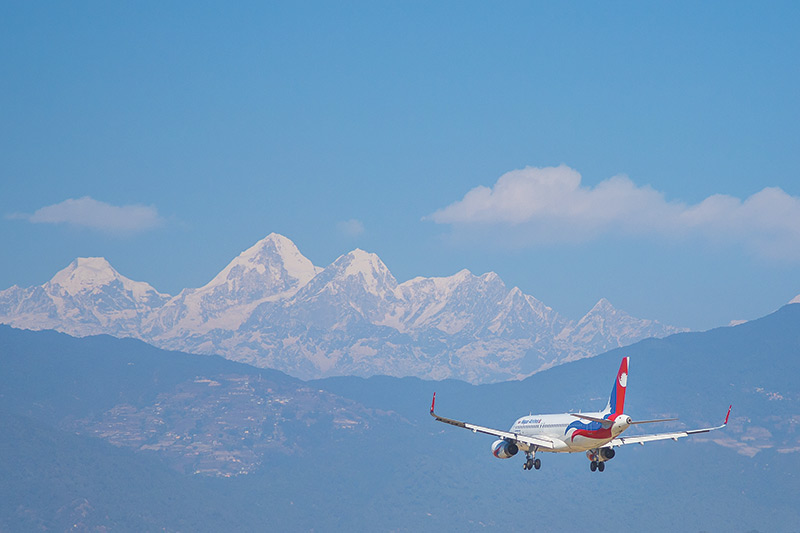
Kathmandu is Sydney’s largest unserved market, with over 100,000 people travelling between Nepal’s capital and Australia’s largest city annually. SHUTTERSTOCK
KATHMANDU, Nepal Airlines has begun preparations to operate services to Australia, four years after signing an air service agreement. The national flag carrier plans to fly twice weekly to Sydney using Airbus A330 aircraft following approval from the Australian government. “We are currently busy making the necessary preparations to fly to Sydney,” said Ganesh Kumar Ghimire, deputy spokesperson for Nepal Airlines. On April 20, the state-owned carrier invited quotations to provide ground handling and associated services at Sydney Kingsford Smith Airport. Interested firms have until May 4 to submit their proposals. Nepal Airlines will fly to Sydney on Tuesdays and Fridays with a stopover in Singapore. A fifth freedom right allows the airline to pick up or drop off passengers in Singapore when flying either way. Sydney is the largest city in Australia and has a large Nepali population. “We are currently working on the documents dealing with ground handling, appointment of general sales agents, safety assessment and other matters required to obtain operating authorisation from Australian authorities,” said Ghimire. “There is no deadline for the operation or proposed agreement with Australian authorities, but we are at an advanced stage.” Mukesh Dangol, an official at the Civil Aviation Ministry, said that they had designated two weekly flights for Nepal Airlines to Sydney and sent the information to the Australian government through the Foreign Ministry last month. “The Nepali Embassy in Australia designated Nepal Airlines for Kathmandu-Sydney flight to the Australian government,” Nepali Ambassador to Australia Kailash Raj Pokharel tweeted on March 25. “Now, Nepal Airlines will begin the technical process with the Australian authority.” In October 2019, Nepal and Australia signed an air service agreement in Montreal, Canada opening the way for the operation of commercial air services between the two countries. The Australian government has permitted seven weekly flights from Nepal to key cities like Sydney, Melbourne, Canberra and Perth, and unlimited flights to other destinations in Australia. The agreement allows Australian carriers to operate seven flights weekly to Kathmandu’s Tribhuvan International Airport, and another 28 weekly services to Bhairahawa and Pokhara. The pact permits unrestricted cargo movement between the two countries besides third-country code share with a provision for domestic code share. The agreement has also allowed fifth freedom traffic rights. Under this arrangement, the designated airlines of Nepal may exercise fifth freedom traffic rights at any two intermediate points in Southeast Asia, South Asia and the Middle East; and beyond Australia to any two points in New Zealand. Similarly, the designated airlines of Australia may exercise fifth freedom traffic rights at any two intermediate points in Southeast Asia, South Asia and the Middle East; and any two points beyond Nepal except New Delhi in India. According to the Australian Bureau of Statistics, 129,870 Nepalese-born people were living in Australia at the end of June 2021, almost five times the number (27,810) in June 2011. Australia is the most favoured destination for Nepali students. According to the Ministry of Education, over 60 percent of the 121,000 students who acquired No Objection Certificates in 2022 were headed down under. In 2019 before the Covid-19 pandemic, Nepal received 38,972 Australian tourists. Nepali officials say that Kathmandu is currently Sydney’s largest unserved market, with over 100,000 people travelling between Nepal’s capital and Australia’s largest city annually. The distance between Sydney and Kathmandu is 5,253 nautical miles or 9,728 kilometres. Six years ago, Nepal Airlines purchased two 274-seater Airbus A330 aircraft from United States-based AAR Corp for $209.6 million, the largest-ever aircraft purchase deal in Nepal’s aviation history. The first of the two wide-body aircraft—Annapurna—arrived at Tribhuvan International Airport in June 2018. The second named, Makalu, arrived a month later. After purchasing the two wide-body planes, the national flag carrier announced resuming flights to Japan and London, besides launching services to Sydney, Seoul and Guangzhou, China. On August 29, 2019, the airline resumed flights to Osaka, Japan after 12 years. The service was later switched to Narita. The carrier then applied for landing permission at Guangzhou Baiyun International Airport and Seoul, but it never got approval. During its heyday, Nepal Airlines used to fly to Amsterdam, Colombo, Dhaka, Frankfurt, Karachi, London, Osaka, Shanghai and Singapore besides five Indian cities—Bangalore, Delhi, Kolkata, Mumbai and Patna. It presently connects Kathmandu with Doha, Kuala Lumpur, Hong Kong, Bangkok, Dubai, Riyadh, Narita and three cities in India—Delhi, Bangalore and Mumbai.
HOME PAGE
Gandaki and Lumbini get new chief ministers
Koshi, the only remaining UML-led province, is yet to start the process for the formation of a new government.
- TIKA R PRADHAN
KATHMANDU, More than a month after a change in the ruling coalition ahead of the presidential elections, the CPN-UML has lost power in two provinces, resulting in the appointment of new chief ministers on Thursday. Nepali Congress provincial assembly leader Surendra Raj Pandey has been appointed the new chief minister of Gandaki Province while another Congress assembly leader Dilli Bahadur Chaudhary was appointed the chief minister of Lumbini Province. “Province chief Amik Sherchan has appointed provincial assembly member Dilli Bahadur Chaudhary as the new chief minister of the province as per Article 168(2) of the constitution,” the Lumbini province chief’s office said in a statement on Thursday evening. Chaudhary had claimed the post with the backing of 53 members of eight parties and one independent member. The newly appointed chief ministers—Pandey and Chaudhary, who replaced Khagaraj Adhikari and Lila Giri, respectively—are scheduled to be sworn in on Friday. Leaders of the two provinces have claimed that federal coalition partners Congress and the CPN (Maoist Centre) have agreed to govern the two provinces by turns. In January, Pandey was poised to be the chief minister after having previously agreed to run for the provincial assembly, allowing Prime Minister Pushpa Kamal Dahal to contest the Gorkha-2 House seat. But with Congress refusing to hand over the prime ministership to Dahal after polls, he clinched it with UML’s support, thus changing the political dynamics of the provinces as well. Now more than a month after Dahal joined hands with the Congress by ditching the UML, the UML-led provincial governments have been collapsing one after another with the Maoist Centre withdrawing its support. Gandaki Province chief Prithvi Man Gurung appointed Surendra Raj Pandey, who had laid claim to the post with the signatures of 35 assembly members including those from the Congress, the Maoist Centre and the CPN (Unified Socialist). The 60-strong provincial assembly has 27 members from the Congress, 22 from the UML, eight from the Maoist Centre (including the Speaker), two from the Rastriya Prajatantra Party, and one independent member who recently joined the Unified Socialist. The position had fallen vacant after the UML’s Chief Minister Adhikari failed to secure a majority during a floor test on April 22. Chief Minister Adhikari had sought the confidence of the assembly as per Article 188(2) of the Constitution for the second time after the Maoist Centre withdrew support to the government on March 24. Adhikari, who became chief minister on January 9 with the support of the Maoist Centre and the Rastriya Prajatantra Party, secured a vote of confidence on January 13. In Lumbini, the UML, which is the largest party in the provincial assembly, had demanded that the province chief Amik Sherchan call the largest party to form a new government. But UML leader Lila Giri failed to garner a majority when he sought a vote of confidence on Monday, and province chief Sherchan invited parties to claim the chief ministership by 4 pm Thursday as per Article 168(2) of the constitution. UML assembly member Dilli Raj Bhusal told the Post that his party would discuss the issue and only then take a final call on whether to challenge Sherchan’s invitation. In the 87-strong provincial assembly the UML has 29 seats; the Congress has 27; the Maoist Centre 11; the Rastriya Prajatantra Party and Nagarik Unmukti Party four each; the Janamat Party, the Janata Samajbadi Party and the Loktantrik Samajbadi Party three each; while the Rastriya Janamorcha and the CPN (Unified Socialist) each have one member, beside one independent member. On Thursday, Chaudhary laid claim to the post with the backing of 53 assembly members from eight parties including the Congress, the Maoist Centre, the Nagarik Unmukti, the Janata Samajbadi, the Loktantrik Samajbadi, the Janamat Party, the Rastriya Janamorcha, the Unified Socialist, and one independent member. Now, among the three provincial governments that were led by the UML, only the one in Koshi Province remains owing to a tricky composition of the assembly. In the 93-member Koshi provincial assembly, 47 votes make a majority. The existing ruling coalition of the UML and the Rastriya Prajatantra Party has 46 provincial members, whereas the Congress, the Maoist Centre, the Unified Socialist and the Janata Samajbadi Party have 47, including Speaker Baburam Gautam of the Maoist party. “The constitutional provision says the Speaker can vote only to break a tie, so the UML will do all to ensure there is no tie so as to prevent him from voting,” said Uddhav Thapa, the Congress’ Koshi provincial assembly leader. “We are waiting for the top leaders of our parties to settle the issue.” He said that since an even division of votes may give the Speaker a chance to break the tie, the UML may rather opt to keep one or more of its members from voting. In such a scenario, the present government will get continuity. Therefore, the incumbent government led by chief minister Hikmat Karki of the UML in Koshi cannot be toppled easily. Thapa said there have been discussions among the parties in the assembly to form a consensus government of all major parties, an idea floated by Chief Minister Karki.
HOME PAGE
Analysis: China’s Ukraine plan mixes peace, self-interest
Beijing’s starting point is a peace proposal that in February called for a ceasefire, negotiations and end to sanctions.
- ASSOCIATED PRESS
BEIJING, Chinese leader Xi Jinping’s plan to send an envoy to Ukraine allows his government to deflect criticism of its support for Moscow and pursue a bigger role as a diplomatic force, but Xi faces daunting obstacles if he is serious about trying to help end the 14-month-old war. The biggest: Neither Ukraine nor Russia is ready to stop fighting. Xi’s announcement on Wednesday in a phone call with Ukrainian President Volodymyr Zelenskyy prompted optimism Beijing might use its warm relations with Russia’s Vladimir Putin to push for peace. That was followed by sceptical questions about whether Beijing is more focused on ending an invasion it refuses to criticise, or serving its own interests. China’s starting point is a peace proposal issued in February that called for a ceasefire, negotiations and an end to sanctions against Russia. It offered few details, but repeated Russian accusations that Western governments were to blame for the invasion. China has good reasons to want to see the war ended. It jolted the Chinese economy by pushing up oil, wheat and other commodity prices. Beijing also warned on Wednesday about the dangers of nuclear war, after Russia announced earlier it would move atomic weapons into neighbouring Belarus. “China’s self-interest happens to align with ending the war,” said John Delury, an international relations specialist at Yonsei University in Seoul. “Beijing has no interest in seeing Russia humiliated, nor is it in China’s interest for Russia to be triumphant,” Delury said. “The best option is a cease-fire and, with it, economic opportunities to participate in Ukraine’s post-war reconstruction.” Wednesday’s statement gave no indication how China might recommend addressing the questions the two countries are fighting over, including Crimea, the Black Sea peninsula seized by Moscow from Ukraine in 2014.
Playing peacemaker helps Beijing in Europe By playing peacemaker, Beijing might also be looking to separate European allies from the United States, which Xi accuses of trying to block China’s economic and political rise. Beijing is trying to repair relations with Europe after an uproar over a Chinese ambassador’s comment that former Soviet republics might not be sovereign countries. That group includes Ukraine, and European Union members Estonia, Latvia and Lithuania. Leaders including French President Emmanuel Macron have visited Beijing and appealed for help with Ukraine, highlighting the challenges faced by Washington in holding together allies to oppose China’s assertive policies abroad. “Trying to drive a wedge between the US and European partners is an important goal,” said Alexander Gabuev of the Carnegie Endowment for International Peace. “For that, China needs to pretend that it’s an active force for peace.” Xi’s call with Zelenskyy might sustain European hopes that China can be persuaded to “wield its influence to help end the war” but is “unlikely to change the Western assessment of Beijing’s stance as one of ‘pro-Russian neutrality,’” said Eurasia Group analysts in a report.
Xi shows he doesn’t always support Putin The announcement gives Beijing a chance to show it doesn’t always agree with Moscow, though the differences might be too subtle for Western critics. They complain China helps Putin resist Western sanctions by purchasing Russian oil and gas and provides political support. Xi’s government sees the Kremlin as a partner in opposing U.S. domination of global affairs. China has used its status as one of five permanent UN Security Council members to block efforts to censure Russia. Xi and Putin said in a joint statement before the February 2022 invasion their governments had a “no limits friendship”. Their navies held joint exercises with Iran in March. Despite that, the Chinese government says they have a “non-alliance” relationship. Beijing has promised not to supply armaments to either side in the Ukraine war. “China has never taken one side,” said Da Wei, an international relations specialist at Tsinghua University in Beijing and director of its Center for Strategic and Security Studies. “Which Western leader has maintained communication with leaders of both parties directly involved in the crisis?” said Da. “I think this call is an indication of China’s fair and impartial objective in promoting peace talks.” A Chinese statement on Wednesday also cited “mutual respect for sovereignty and territorial integrity” as a foundation of relations with Ukraine. While Russia is trying to move borders by annexing portions of Ukraine, Beijing is intensely sensitive about respecting territorial sovereignty. It says borders must be respected and no country has a right to meddle in another’s affairs.
Beijing’s effort to raise global profile Positioning itself as a mediator also helps Beijing as it pursues a bigger role in managing global affairs as part of efforts to restore China to what the Communist Party sees as its rightful place as a political, economic and cultural leader. Beijing should “actively participate in the reform and construction of the global governance system” and promote “global security initiatives,” Xi said in March. A proposal for a “Global Security Initiative” issued in February said China is “ready to conduct bilateral and multilateral security cooperation with all countries.” Also in March, Saudi Arabia and Iran announced the end of a 7-year diplomatic split following Chinese-organised talks. This year, Xi’s government has also offered to mediate Israeli-Palestinian talks, set up a new Middle East security structure, and help African countries resolve disputes. If Beijing can organise peace talks, “that backs up Xi Jinping’s ambitions to being a global power,” said Delury. China’s diplomatic ambition is a reversal from decades of staying out of other countries’ disputes and most international affairs to focus on economic development. Its peacemaking initiatives are also at odds with confrontational Chinese behaviour toward its neighbours in territorial disputes and threats to attack Taiwan, the self-ruled island democracy claimed by Beijing as part of its territory.
NATIONAL
Health centre in Baglung’s Ramuwa village launches birthing services
All 11 wards of Galkot Municipality now have health centres qualifying the local unit to declare itself child-friendly.
- PRAKASH BARAL
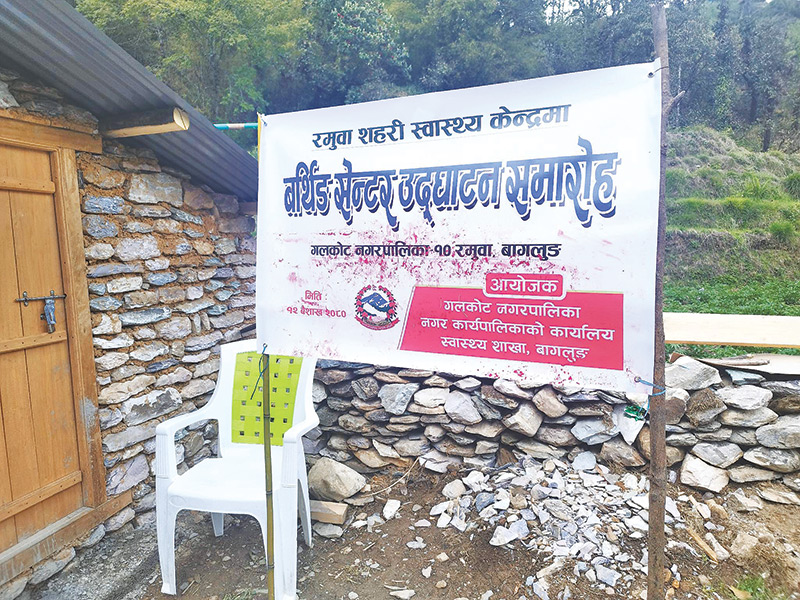
The urban health unit and birthing centre at Ramuwa of Pandavkhani in ward 10 of Galkot Municipality. POST PHOTO: PRAKASH BARAL
BAGLUNG, As an urban health centre with birthing services has come into operation in Ramuwa village, Galkot Municipality of Baglung district has achieved the final milestone in achieving a child-friendly status. Local units have to abide by the 51-point guidelines set by the federal government so as to qualify to become a child-friendly local unit. In a bid to improve the lives of children by realising their rights mentioned in the constitution, the municipality aims to meet all the standards set by the government. Bharat Sharma Gaire, the mayor of Galkot Municipality, says the municipality is committed to providing safe delivery options to pregnant women, protecting the rights of children, improving their lives, and securing their future. “Work was already underway towards building a child-friendly environment in the municipality, but we still had some work to complete in the health sector,” Gaire said. “Our work is now complete with the establishment of an urban health centre with birthing services in Ramuwa.” The health centre in Ramuwa, an outlying village in ward 10 of the municipality, came into operation on Wednesday. Pregnant women and postpartum mothers from Ramuwa have to travel to Pandavkhani to avail of general medical services and to Hatia Bazar, the administrative centre of the municipality which has health centres with birthing services to seek maternity services and safe institutional delivery options. Ramuwa villagers have to travel for almost five hours on a dirt road to reach Hatiya Bazaar. Radhika Pun, a local woman from Ramuwa, said pregnant women and their families would rent a room in Hatiya Bazaar weeks before the delivery date to avoid the risky road travel. “Pregnant women from Ramuwa face a lot of difficulties to reach the bazaar. To prevent any mishaps, families rent rooms in the bazaar area and in doing so, spend more money than they have,” said Pun. “The operation of the birthing centre in the village itself has made maternity services accessible to rural women like us. This will also mitigate the risk of maternal and infant deaths.” Pun went on, “We are also very happy that having a birthing facility in our village will allow the municipality to work towards creating a child-friendly environment wherein children will get special care and protection; good education and health services.” According to Gaire, the facility was set up with financial support from donors and labour contribution by locals. “The centre spent Rs1 million and the municipality spent an additional Rs100,000 on beautification,” said Gaire. The Rural Health Improvement Project, a social organisation, also supported the efforts of the municipality and provided beds and medical equipment required in the birthing room, according to Gaire. There are 11 wards in Galkot Municipality and now all the wards have health centres with maternal services. “The operation of the birthing centre has ensured women safe delivery options. They will no longer have to give birth at home which is risky for both the mother and child,” said Kriti Shreesh, head of the centre. “Avoiding home births is one of the first steps in creating a child-friendly environment. The establishment of this centre ensures that.” A child-friendly municipality can be defined as a place where the voices, needs, priorities, and rights of children are understood as integral parts of public policies, programmes, and decisions in the municipality. Among the 51 points, there are 13 that highlight the rights of children in the education sector and 12 in the health sector. According to Sushil Poudel, head of the health unit of the municipality, the local unit’s aim to provide safe delivery services to pregnant women is in line with its work towards creating a child-friendly space. “The municipality plans to declare itself child-friendly by the end of May,” said Poudel. “After the announcement, a new set of guidelines will be issued for the protection of child rights. The municipality has successfully established a health and birthing centre in all 11 wards. The Ramuwa centre will be staffed by two obstetricians.” The government gives Rs1,800 to women opting for institutional births and the Galkot Municipality provides them additional allowance from its own sources. If a pregnant woman gives birth at a health institution and makes four post-natal visits, the municipality gives them an additional Rs4,600. The birthing centre in Ramuwa is expected to provide maternity services to at least 20 women every year and also serve women from the neighbouring Badigad Rural Municipality.
NATIONAL
Outbreak of lumpy skin disease in cattle hits East Nawalparasi farmers
- NARAYAN SHARMA
EAST NAWALPARASI, Lumpy skin disease, a viral disease that affects cattle, has been spreading like an epidemic in East Nawalparasi. As many as 18 cows died of lumpy skin disease in the district over the past two months, according to the Veterinary Hospital and Livestock Service Expert Centre. More than 900 cattle were infected with the viral disease. Veterinarians warn that hundreds of cattle in the district are at high risk of contracting the disease. The disease has been spreading in East Nawalparasi since mid-February, according to Rishabh Guragain, chief of the Veterinary Hospital and Livestock Service Expert Centre. “The disease was reported in 42 wards of five local units in the district,” he said. “Madhyabindu and Kawasoti municipalities are hardest hit by the outbreak.” The disease was reported in cow farms of all 13 wards in Madhyabindu, eight wards in Kawasoti, 12 wards in Gaidakot, five wards in Binayi Tribeni and four wards in Hupsekot, Guragain said. Hybrid cattle, mainly Jersey cows, are prone to lumpy skin disease, which is transmitted by blood-sucking insects like flies, mosquitoes and ticks. It causes fever, nodules on the skin, swelling of limbs, among other conditions, in the cattle. Death rate caused by lumpy skin disease is 2.7 percent in the district, according to Guragain. The cattle farmers in the district have been hugely affected due to the outbreak. They complain that the government has not taken any effective measures to control the disease in East Nawalparasi. “The government does not pay much attention to the outbreak of the disease,” said Ram Prasad Tiwari, a cattle farmer in Kawasoti Ward 15. “The veterinarians suggest we maintain sanitation in the sheds to minimise the impact of the disease.” The infected cows should be kept in isolation to protect other cattle from the disease. According to the farmers, the infected cows give very little milk and it takes three to six months to fully recover from the disease. “Cattle farmers are incurring huge losses,” Tiwari said. According to the Veterinary Hospital and Livestock Service Expert Centre, production of approximately 3,100 litres of milk has decreased per day in East Nawalparasi due to the outbreak. According to veterinarian Buddhi Deuja, lumpy skin disease is highly contagious. “The cows give only a little milk after they are infected with the disease. The cattle farmers are hugely affected,” said Deuja. He said that oxen and buffaloes can also be infected with the disease but their death rate is very low. It is estimated that there are 80,000 to 100,000 cattle and buffaloes in East Nawalparasi.
NATIONAL
Court denies interim order against KMC’s eviction notice to squatters
- ANUP OJHA
KATHMANDU, The Patan High Court on Thursday refused to pass an interim order against the Kathmandu Metropolitan City’s notice to evict squatters from various settlements along riverbanks in Kathmandu. Hearing petitions filed by the squatters, a division bench of judges Rajyalaxmi Bajracharya and Narayan Prasad Paudel of the high court concluded that there was no need to issue an interim order as demanded by the petitioners. The petitioners moved the High Court after the City office on March 25 published a notice asking ‘the illegal settlers’ to leave their settlements along the riverbanks. The court, however, stated that it doesn’t become immediately clear from the petition as to in which place and from when the petitioners have been living there. “If the petitioners are landless squatters and have been staying there for a long time in the areas stated in the notice of Kathmandu Metropolitan City and can give evidence to prove that they don’t have any place to live anywhere else, the government of Nepal and the Kathmandu Metropolis will obviously make the necessary arrangements,” reads the court order issued on Wednesday. “In this context, the overall issues mentioned in the petition will certainly be addressed in the final hearings. Therefore, there is no need to issue an interim order as demanded by the petitioners.” Lawyer Raju Prasad Chapagain, who pleaded on behalf of the petitioners, said as per the court’s ruling, the KMC should ensure living arrangements for the squatters before they are evicted from their settlements. “The City can’t remove the homeless squatters until the court gives its final verdict on the issue,” Chapagain said. He added the issue can be settled once the national land commission collects the data of real squatters in coordination with the local governments. Chapagain also gave the reference of letters written by three UN special rapporteurs on January 30. The letters mentioned the imminent threat of forced evictions and home demolitions of squatters by the Kathmandu Metropolitan City without plans for adequate alternative housing for the squatters. Squatters living on the banks of Bagmati river in Thapathali faced forced eviction by the City at the end of November last year, in a move that activists say goes against the right to a life in dignity. This was the second time that the residents of Thapathali faced forced evictions after their homes were initially demolished in 2012. Meanwhile, advocate Om Prakash Aryal, who is also a legal adviser for the Kathmandu Metropolitan City, interpreted the order to mean that the high court has given the City a way out to go forward with its action. “The court in its decision has clearly said that the petitioners need to clearly prove they are genuine squatters and if they can do so, the Nepal government and KMC should take care of them, but they came to the court without any evidence,” Aryal said. He further accused the applicants of not giving exact locations of where they live, and have not presented any evidence of being actual squatters. “But if they come to the KMC with evidence of being genuine squatters, the City should consider it,” Aryal added. The Kathmandu Metropolitan City office has unsuccessfully tried to evict illegal squatters living in the settlements along the Bagmati and other riverbanks. In November last year, squatters at the Thapathali settlement thwarted the City’s plan to evict them. As the municipal police reached there to vacate the area, squatters clashed with the security personnel. Several persons sustained injuries during the ensuing scuffle.
NATIONAL
UML chief KP Oli shown black flags in Ilam
District Digest
ILAM: People protesting against the naming of Koshi Province waved black flags at CPN-UML chairman KP Sharma Oli in Ilam Bazaar on Thursday. The protesters staged demonstrations at Chowk Bazaar while the former prime minister Oli and other UML leaders were on their way to attend a party function. The protesters demanded renaming the province to reflect the region’s ethnic identity. Addressing UML supporters, Oli asserted that it was pointless to protest against the name of the province as the provincial assembly named the province in line with the law. Speaking at the House of Representatives meeting on Wednesday, UML chief whip Padam Giri drew the government’s attention to the ‘mistreatment’ against Oli. Meanwhile, a group of UML leaders including the party’s standing committee member Rajan Bhattarai met Home Minister Narayankaji Shrestha and demanded that the government take action against those who tried to disrupt UML functions and mistreat the UML chief.
NATIONAL
Ten-year-old boy dies, two injured in lightning strikes
District Digest
TAPLEJUNG: A 10-year-old boy was killed and his parents were injured after being struck by lightning in Chitre, Maiwakhola Rural Municipality-4, on Wednesday evening. According to Inspector Officer Kushram Karki, information officer of the district police, the incident took place at around 8pm when all of them were inside their house. The body of the boy has been sent to the Taplejung District Hospital for postmortem, and the injured are also receiving treatment at the same hospital. “The lightning has damaged the electrical wires in the house, and it is suspected the death and injuries were an electrical short circuit caused by lightning,” said Karki.
NATIONAL
Itahari to issue building permits electronically
District Digest
SUNSARI: Itahari Sub-Metropolitan City has introduced an electronic building permit system from Thursday onwards. According to Hemkarna Poudel, mayor of the sub-metropolitan city, service seekers can now apply for building design permits online. “We introduced this system to provide our services quickly and in a hassle-free manner,” he said. “Our municipal offices receive around 2,000 applications a year for building permits, that’s why we decided to introduce a digital system to provide the service more efficiently,” said Poudel.
NATIONAL
Development, protection of environment should go hand in hand, justices say
Judicial activism in Nepal has resulted in several court rulings related to environmental protection, according to the Supreme Court judges.
- Post Report
KATHMANDU, Most legal and constitutional measures in Nepal related to the environment are a result of judicial decisions made by the courts on different occasions, according to Supreme Court justices. Addressing a Regional Symposium on Forest and Protected Areas Legislation and Jurisprudence in the Capital on Thursday, the judges claimed that the courts, through their judicial activism, issued several rulings for environment protection when there were no legal and constitutional instruments in place. In his inaugural address, Acting Chief Justice Hari Krishna Karki said development activities shouldn’t be detrimental to the environment. “The Supreme Court on several occasions has ruled towards ensuring a balance between economic and development activities and environmental protection,” said Karki. “The government cannot be sustainable by destroying the environment.” The three-day symposium brings together the judges and legal practitioners from Nepal, Bangladesh, India, the Maldives, Pakistan and Sri Lanka to acquaint them with the intricacies of forest and protected areas laws while giving them an overview of the science behind the same. It also aims to strengthen the judicial implementation of protected forest areas legislation in the region and promote capacity building and information exchange in judicial decision making and enhancing the legal and scientific knowledge of judges on forest and protected areas legislation. In her keynote speech, Justice Sapana Pradhan Malla said there can be no true development at the cost of destruction of the environment. Highlighting the role of judiciary in environment and forest protection through their landmark verdicts, Malla said it’s a sad reality that the idea of environmental justice is taken as anti-development. “Most of the time the court is targeted for being against development. That was openly expressed in the Supreme Court’s verdict related to the site for the construction of the Nijgadh International Airport,” she added. The Supreme Court in May last year had directed the government to construct the airport ensuring a minimal loss to the environment. Scrapping the existing Environmental Impact Assessment report, the court directed to have a proper assessment report in place. At the symposium, Malla also highlighted the different challenges facing the country’s judiciary in giving apt rulings in cases related to environmental protection. She said the knowledge of the judges with regard to environmental issues was limited, while the judiciary lacked resources, and adequate evidence and legal expertise on the matter. Presenting their views at the symposium, the justices said as a party to several international conventions, Nepal has obligations towards environmental and biodiversity protection. They also said that the constitution of Nepal not just guarantees the right to live in a clean and healthy environment, it also provides a remedy for the violation of these rights. The justices, however, expressed dissatisfaction at the non-implementation of the court order. The Judgment Enforcement Directorate has failed to meet public expectations. “The contempt of court has been used as a tool to pressurise the government into reinforcing the court verdicts,” lamented Malla.
NATIONAL
Nepal seeks British investment under BII and BIP mechanisms
At a meeting that ended on Wednesday, the British side agreed to continue discussions on ex-Gurkha grievances.
- Post Report
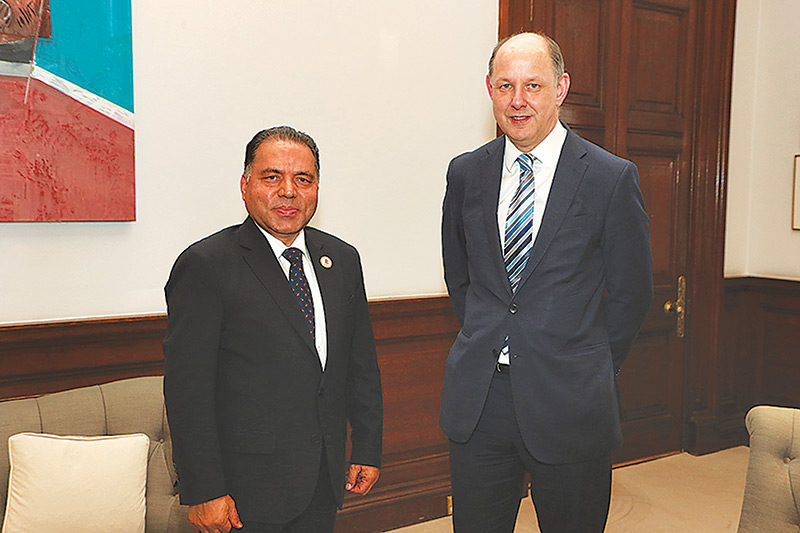
Foreign Secretary Bharat Raj Paudyal and the Permanent Under-secretary at the Foreign and Commonwealth Development Office Philip Barton led their respective delegations at the meeting. Photo: Courtesy of Nepali Embassy, Lodon
KATHMANDU, Nepal has sought British support under its two windows—British International Investment (BII) and British Investments Partnership (BIP). The request was made during the sixth meeting of Nepal-United Kingdom Bilateral Consultation Mechanism (BCM) in London that concluded on Wednesday. The two sides also discussed utilisation of the investment windows such as British International Investment (BII) on various fronts including renewable energy and information and communication sector, as well as possibility of channelising more resources from British Investments Partnership (BIP), according to a statement issued by the Nepali Embassy in London. Foreign Secretary Bharat Raj Paudyal and the Permanent Under-secretary at the Foreign and Commonwealth Development Office (FCDO) Philip Barton led their respective delegations at the meeting. They also had a productive discussion on a range of topics including marking of the centenary of the Friendship Treaty, exchange of high-level visits, and bilateral cooperation, among other matters, said the statement. The two sides agreed to work towards further consolidating and widening cooperation and engagements in productive sectors such as trade, investment, energy and tourism, said the statement. It was also agreed that “scaling up investment in Nepal’s clean energy will not only foster economic growth but also help address the agenda of climate change”. The two sides renewed their willingness to cooperate on various matters of common interest at multilateral forums, such as advancing the agendas of climate change, poverty alleviation, and sustainable development. The United Kingdom appreciated Nepal’s contribution to the UN peacekeeping as the second largest troops providing country currently. The two sides are said to have reviewed the overall state of Nepal-UK relationship and deliberated on enhancing the engagements in various areas of mutual interest. The delegations exchanged views on the over two centuries-old friendship and cooperation, and took stock of the progress made in major aspects of bilateral relations, including development cooperation and priorities, trade, investment and tourism, education and human resource development, consular matters and people-to-people linkages, the British Gurkha issues, climate change and sustainable development as well as working together on agendas of mutual interest in multilateral forums, the embassy said. The meeting reviewed the ongoing talks on ex-Gurkha issues and agreed to continue discussion towards addressing their grievances. The British side highlighted the changing UK development cooperation portfolio and shared the priority areas of future cooperation with Nepal including support in transition to a middle-income country. The Nepali side lauded the valuable cooperation provided by the United Kingdom as one of the largest development partners and emphasised the need for continuity and enhancement of such support, the statement added.
NATIONAL
Nepal to continue issuing no objection certificates for non-academic courses
Government reverses its earlier decision amid pressure from stakeholders.
- Post Report
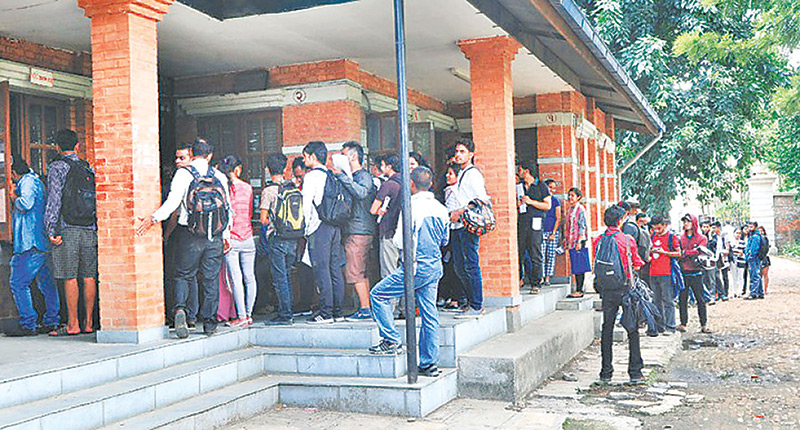
Over 60 percent of the 121,000 students who acquired NOCs in 2022 were Australia-bound. Post File Photo
KATHMANDU, The government has backtracked on its last month’s decision that denied No Objection Certificates (NOC) to Nepali students for joining diploma, advanced diploma and language courses abroad. Issuing a directive, the Ministry of Education had stopped issuing the permits starting April 2 reasoning that students will be allowed to go abroad only for pursuing university courses. Diploma, advanced diploma and language courses are non-university programmes. “NOCs will be issued to all students whether they want to enrol for university or non-university courses. However, such students must be high school graduates,” Krishna Kapri, a joint-secretary at the ministry, told the Post. Asked why the permits were stopped for around three weeks, he said, “It was because of the confusion at the NOC department.” Although government officials refuse to admit having backtracked on their decision, it is apparent that the policy reversal was the result of a sustained pressure by the association of the education consultancies and the association of the education institutions offering technical education in Australia. Various associations representing education consultancies had met Prime Minister Pushpa Kamal Dahal, Education Minister Ashok Rai, and other officials demanding that the ban be lifted. According to education consultancies, thousands of students who travel to Australia enrol in vocational and training courses. Over 60 percent of the 121,000 students who acquired NOCs in 2022 were Australia-bound. The ban in the NOC had also affected the students aiming to pursue higher study in Japan where studying language for six months or a year is mandatory before joining academic programmes in most universities. Japan is the second most preferred academic destination after Australia for Nepali students. On April 19, the officials of the Independent Tertiary Education Council Australia (ITECA) met Nepali embassy officials in Canberra saying they were concerned at the Nepal government’s decision to stop its citizens from travelling overseas to undertake skills training courses. “In a crushing move for Australia’s international education sector, the Nepalese government has stopped issuing no-objection certificates for students planning to study skills training or language courses abroad,” Troy Williams, ITECA Chief Executive, said in a statement. Officials say now onwards, NOCs will be issued only for the academic institutions that are recognised by Nepal government. “We have a list of hundreds of academic institutions from 106 countries. If we receive applications for NOCs for institutions that are not on our list, we will inquire about their status through our missions before issuing an NOC,” said Kapri. The directive also says a new list of foreign educational institutions will be prepared and NOCs will be issued only for such institutions. Education consultancy service providers, however, say the provision is restrictive which is against the students right to choose to study wherever they want. “We want this directive to be annulled,” said Prakash Pandey, president of the Education Consultancies Association Nepal. “He said the very provision of making NOC mandatory must be scrapped.”
NATIONAL
Commission requests loan victims to file applications
Briefing
KATHMANDU: An inquiry commission formed to resolve the problems of loan shark victims has requested them to register an application with the commission. Issuing a notice on Thursday, Gauri Bahadur Karki, the commission’s chair, requested the victims of predatory lending to file the application within 15 days from Sunday. Victims can register their applications online or through district administration offices with the necessary proof. The notice further states that forms can be obtained for free at ‘loan shark victims assistance cells’ established at all administration offices. The government on April 3 had formed the commission under the leadership of the former chairman of the Special Court, Gauri Bahadur Karki, to address the demands of loan shark victims.
NATIONAL
Nepal reports one Covid death, 111 new cases
Briefing
KATHMANDU: Nepal on Thursday reported one Covid-related death in the last 24 hours, taking the countrywide death toll to 12,029 since the pandemic began three years ago. According to the Ministry of Health and Population, the country reported 78 new PCR-confirmed coronavirus cases in the last 24 hours, taking the nationwide infection tally to 1,002,869. Similarly, 33 people tested positive in a total of 1,477 antigen tests, according to the ministry. As of Thursday, 6,033,879 PCR and 1,570,121 antigen tests have been carried out across the country. A total of 1,040 PCR tests were performed in the past 24 hours, according to the Health Ministry.
NATIONAL
KMC seals petrol pump being run from a residential building
Briefing
KATHMANDU: The Kathmandu Metropolitan City on Thursday sealed a petrol pump in Balaju for not meeting prescribed standards. According to City Police Chief Rajunath Pandey, the Balaju-based Koth Dhuku Petrol Pump had been sealed for operating against the set standards. The local residents had complained to the metropolis that the petrol pump posed a threat to the locality. Acting on the same, the KMC had directed the gas station operators to stop operations. However, after the operators refused to comply with the request, the metropolis sealed the gas station, Pandey said. The gas station, located on the Balaju-Thamel road section, has been operating out of the shutter of a home, distributing fuel to vehicles on the roadside, a practice that posed risk to traffic and pedestrians. As per the Petroleum Product Vendors Regulations 2018, for a gas station to operate within the metropolitan area, it must be built on an area of at least 2,500 square metres. Similarly, the gas station must also be built at least 35 metres from the road, and the building out of which the gas station operates must meet standards set by the NOC.
OPINION
We need a research funding council
It should be state funded and functionally autonomous of political and bureaucratic interference.
- PRATYOUSH ONTA
Shutterstock
For about 50 years now, Nepali social scientists have been demanding that we should have an entity that funds social science research in the country. The generation of Nepali social scientists who came of age in the early 1970s was the first to make this demand. I suspect that their call was influenced by what they had seen and heard in other countries regarding how such funding councils had enabled research in general. Some of them were also familiar with the fact that a few of their videshi contemporaries had come to do research in Nepal with financial support from such research councils. In this first part of a two-column effort, I highlight two videshi social science research council models and the research highways related to Nepal they have enabled. Thinking about these two types will help us to discuss what kind of a funding council we might be able to operate in Nepal.
American SSRC The first effort at establishing a Social Science Research Council (SSRC) was realised in the United States in 1923. This SSRC with its headquarters in New York City was established through the joint effort of academics representing seven professional organisations of political scientists, economists, statisticians, sociologists, anthropologists, historians and psychologists. This was a non-governmental initiative and much of its funding in its initial and later years has come from philanthropic foundations. Its work is overseen by a board of directors and several dozen staff run the organisation on a daily basis. This SSRC has done various types of work during its 100-year existence. It has worked closely with the American Council of Learned Societies (founded in 1919) which prioritises scholarship in the humanities. Together they have set various research priorities. Both organisations were important players in the development of “area studies” in the US during the post-World War II period. This SSRC has provided fellowships to many thousand doctoral students. Thirty years ago, I got one of those fellowships and it enabled me to do research on Gurkha history at the British Library in London. A Nepali student enrolled in a US university was awarded a similar dissertation grant in 2022. This SSRC has promoted research on many different themes over the past century including the now much denounced modernisation theory. In the more recent past, it has supported inquiries about the state of research capacity in different parts of the world and sponsored the production of reference works. For instance, in the year 2000, it commissioned anthropologist Mary Des Chene to produce a volume in Nepali about key social science concepts and themes. This eventually resulted in the 2004 book co-edited by Des Chene and myself, Nepalko Sandarbhama Samajsastriya Chintan (Social Science Thinking in the Context of Nepal). Many young readers have found it to be an accessible reference work. Similarly, in 2001, the SSRC commissioned a report on the existing research capacity in the social sciences in India, Pakistan, Bangladesh, Sri Lanka and Nepal. The section on Nepal was written by political scientist Krishna Hachhethu of Tribhuvan University and its two versions were published in the Economic and Political Weekly and Contributions to Nepalese Studies in 2002. The overall report written by Partha Chatterjee was published the same year as Social Science Research Capacity in South Asia. This report helped us to understand our capacity for social science research in comparison with our South Asian neighbours. Enabling individual students to do their doctoral research and promoting trans-regional thematic research programmes seem to be the primary focus of this SSRC these days. It is celebrating its centennial this year with various programmes including a lecture series and a campaign to raise 100 million dollars to support its future work.
UK councils In contrast to the non-governmental privately funded SSRC in the US, the SSRC in the United Kingdom was founded in 1965 as a state-funded public entity. During the 1960s and the 1970s, the most important multi-year project related to Nepal that was executed with its support was one called Social Change in Rural Nepal. It was coordinated by Christoph von Fürer-Haimendorf, professor of anthropology at the School of Oriental and African Studies. This grant partially supported the professor’s research in Nepal that resulted in his 1975 book Himalayan Traders: Life in Highland Nepal. It also supported the work by several of his colleagues and students including the research of Patricia Caplan that resulted in her 1972 book Priests and Cobblers: A Study of Social Change in a Hindu Village in Western Nepal. It also supported the dissertation research of Nicholas J Allen on the myths and oral traditions of the Thulung Rais (the edited version of this 1976 Oxford University dissertation was published in 2012 as Miyapma: Traditional Narratives of the Thulung Rai). This project helped to broaden our anthropological understanding of Nepali society. Following a review done by the Margaret Thatcher-led government, the original remit of the British SSRC was broadened and its name changed to Economic and Social Research Council in 1983. Currently, there are six other similar disciplinary councils in the UK. They are all part of the entity UK Research and Innovation (UKRI). In British parlance, these entities are known as “non departmental public bodies” which means they are “public sector organisations that have a role in the process of national government but are not part of a government department.” Each council is headed by an executive chair and consists of various members drawn from academia and other sectors of society. Together they report to the executive committee of the UKRI which itself reports to the UKRI board consisting of up to 15 members appointed by the UK’s Department for Science, Innovation and Technology. UK-based academics have done and are doing various research on themes related to Nepal in recent years with funding from these councils, some of them in collaboration with colleagues based in Nepali universities and research institutions. For instance, the project After the Earth’s Violent Sway: The Tangible and Intangible Legacies of a Natural Disaster was supported by a multi-year grant from the Arts and Humanities Research Council to the School of Oriental and African Studies. Michael Hutt was its primary coordinator, but many other veteran Nepal scholars including Mark Liechty, Stefanie Lotter, John Whelpton and Jeevan Baniya were also involved in this project. Many articles and the 2021 edited volume Epicentre to Aftermath: Rebuilding and Remembering in the Wake of Nepal’s Earthquakes have resulted from this project. The UK councils make both theme-specific and open calls for applications for research support. Some of them also support training of PhD students through doctoral training partnerships involving various consortia of universities. Given that we don’t have strong professional organisations of academics and rich philanthropic foundations, the American SSRC model is not suitable for us. What we need is a UK type state-funded council that is functionally autonomous of political and bureaucratic interference. Ideally, its work remit and procedures should be controlled by a college of academics. How might such a body be governed, what kinds of research it might support and how, will be discussed in my next column.
OPINION
Legitimising traditional healers
They often address specific health needs that official healthcare providers cannot meet.
- BAMDEV SUBEDI
Shutterstock
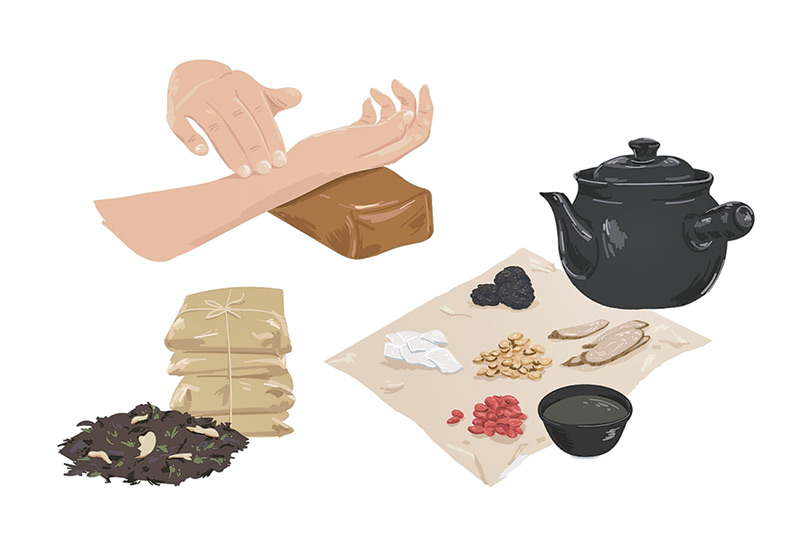
Traditional healers are the primary source of care for the socio-economically poor. Many rural people rely on traditional healers for a variety of health issues. It is not uncommon for people to seek treatment from local traditional healers before taking recourse to distant health facilities. In some cases, they may even bypass local health facilities to see distant healers. I remember a man from a rural neighbourhood who fell from a tree and broke his arm while cutting twigs for his goats. He went to see a distant healer. When I asked why he chose a vaidya over a hospital, he replied, “I barely had Rs1,200. How could I visit a hospital with so less money?” At times, traditional healers serve as the last resort. An elderly man in a village recently recovered from what he called “black jaundice”. He elaborated, “I had pain in my stomach. I was not yellowish, and I had no idea about black jaundice. I consulted doctors from three different hospitals. The first two doctors gave medicines for gastritis and the last gave medicines for kidney disease. I was sceptical because I couldn’t see how a vaidya’s jadi-buti could cure what doctors’ medicine couldn’t. I took all the prescribed medicines but my condition did not improve. I was tired, weak and bedridden. One of my neighbours insisted on seeing a vaidya. I had little hope. My goodness, the decoction and powder given by the vaidya worked for me.”
Relevance of traditional healers The healers, such as those mentioned above, practice herb-based medicine and are consulted for physical problems and specific conditions such as fracture, jaundice, joint pain, and stomach problems. Some practice spiritual healing and are consulted for spiritual, emotional, and psychosocial problems; others practice traditional midwifery and massage. The Department of Ayurveda and Alternative Medicine has classified traditional healers into three categories: (i) herbal healers, (ii) spiritual healers, and (iii) traditional midwives. Traditional healers provide some form of health care to those who live in rural areas and are underserved by the official healthcare system. They have local acceptance and serve as an immediate source of care. Even in urban areas, traditional healers offer an affordable alternative to expensive healthcare options. They are much more accessible than the private practitioners. Unlike many private practitioners who are profit-oriented, healers are service-oriented. They see healing practice as sewa and are praised for their non-profit motive. Most of them do not charge money for their service and accept whatever is given out of happiness. They are often compensated with an amount required for the preparation of medicines. Furthermore, some healers address specific health needs that people may not be able to meet through official healthcare providers.
Official legitimacy So far, 36 member states of the World Health Organisation (WHO) have regulated traditional healers. WHO recognises traditional healers, bonesetters, herbalists, and birth attendants as indigenous traditional medicine providers. Nepal’s Department of Ayurveda and Alternative Medicine (DOAA) recognises traditional healers as paramparagat upacharak. Traditional healers represent the oral tradition of health knowledge. They lack formal education or institutional training and practice outside the boundary of official legitimacy. DOAA has recently drafted a registration standard called Paramparagat Upacharakko Suchikaran Mapdanda (Namuna Masyauda) to facilitate the registration of traditional healers at the local level. The Draft Standard defines paramparagat upacharak as “those who provide treatment at their home based on knowledge, skills, technology, and experience acquired from ancestral or gurukul traditions, examining patients to determine the cause, nature, and condition of the disease, and using or processing various herbs, minerals, and animal products found naturally at the local level.” The Draft Standard recognises only those healers who treat specific diseases by using certain herbs or resources. These healers must have gained healing knowledge through at least 15 years of closeness to ancestors or gurus, who have adopted traditional healing as their main occupation. They must have a clear understanding of the cause and symptoms of the disease to be treated and in case of using herbs or materials, the healers should have a sound knowledge of the place and resource along with properties, functions, collection method and time, processing, storage, supply and usage. The healers are allowed to manufacture the medicine required for them to treat patients but are barred from using patent medicines manufactured by other companies. They are not allowed to advertise their services and products. The Draft Standard is an important step toward legitimising traditional healers. However, the standard appears to be restrictive for most traditional healers who practice healing as a part-time service rather than their main occupation. Though the standard makes it mandatory to be registered to provide healthcare services, many healers will likely continue to serve as informal providers. The standard also appears to be restrictive to those who are not associated with ancestral or gurukul traditions of herbal healing.
Supporting traditional healers Traditional healers should be recognised as paramparagat upacharak and provided with training, equipment, seeds, and saplings to set up home herbal gardens. They should be facilitated to form their associations at local, provincial, and national levels. These associations can be facilitated and supported to work as a self-regulatory body. An institution of traditional healers should be established to promote training and research activities. Some healers could be mobilised as Ayurveda health volunteers, similar to those Female Community Health Volunteers. Governments can and should plan activities to improve and ensure the safety, efficacy, and quality of services the traditional healers provide. Modern health care for the rural poor is analogous to the fruit hanging over the sky, which neither falls to the ground nor can be caught by the poor. Rural people are deprived of both modern and traditional health care services. Traditional medicine such as Ayurveda, Homeopathy, and Naturopathy has not yet reached rural areas. What is available and accessible to rural people in the form of traditional medicine is the services provided by traditional healers. However, traditional healers lack legitimacy, and people have concerns over the erosion of local health traditions. Making health care services accessible to rural poor is important, but that should not come at the cost of local health traditions. It is also crucial to revitalise local health traditions, legitimise traditional healers and link them with the public healthcare system.
Subedi holds a PhD in Social Sciences in Health from Jawaharlal Nehru University, New Delhi.
OUR VIEW
Fridays for fun
To make its ‘textbook-free Friday’ plan a success, the KMC should train teachers in extracurricular activities.
Community school students within Kathmandu Metropolitan City are now set to visit schools without textbooks once a week, on Fridays, per the City’s plan to impart holistic education. This is a welcome move that promises students much-needed relief from the drudgery of reading textbooks throughout their academic lives. It also helps them explore and hone their extracurricular skills early on. Rather than just textbook-dependent well-informed minds, the initiative has the potential to produce well-educated and well-trained students who are dexterous in sports, information technology and various other life skills necessary for well-rounded human beings. However, any plan is only as good as its execution. As schools are often a loathsome affair, with the same sets of teachers giving the same old lectures and assignments, students have little incentive to attend school each day. The implementation of a textbook-free Friday helps students unwind after five taxing days of rote learning and to forge relationships with peers and teachers beyond the classroom. Moreover, as private schools across the country unnecessarily burden students as young as five-year-olds with “computer education”, community schools are often without relatively cheaper recreative-educational tools like badminton racquets or football. As a result, students are conditioned to internalise the divide between the haves (in private schools) and have-nots (in community ones). The City seeks to undo those hierarchies and let students grow in all aspects of life, notwithstanding their backgrounds. As the nitty-gritty of the plan to reinvigorate community school education remains unclear, it is difficult to say whether it will work. However, the City would do well to remember that school curricula once had an optional subject named “Home Science”, whose aim was to impart practical life skills. However, for lack of sensitisation, it was often considered a “women’s subject” as it included lessons in cooking and sewing, among others, and had few takers among male students. Gradually, as female students became aware of the gendered notions attached to the subject, considered a guidebook for homemaking skills that the patriarchal society considered their domain, they, too, discarded it. The course is still available at the college level, but its relative obscurity exemplifies how an ill-thought-out plan fails to deliver the expected results. This time, the ambitious pilot initiative is being launched with a meagre Rs20 million fund, which may be grossly insufficient to bring any effective results. In the pilot phase, 56 of the 89 community schools in KMC are to be involved, which sounds too big a first bite. Moreover, the City seems to have only sketchy ideas about the plan’s execution, considering the large number of students and only a handful of trainers. This somehow validates the criticism about the plan being hasty. The point is to start somewhere at some point, and the City should be applauded and supported in its initiative. In a resource-constrained country like Nepal, there are bound to be hiccups at every step, and the only way to move forward is to keep moving despite the obstacles. The most effective way to ensure the plan’s longevity is to train the school teachers themselves in extracurricular activities so that they get a much-needed opportunity to rejuvenate themselves and engage with students in a multi-dimensional teaching-learning practice. Meanwhile, the City should not hesitate to involve a significant number of volunteers, from Nepali professionals from various walks of life to recent university graduates.
THEIR VIEW
An ominous sign
The drop in life expectancy of Bangladeshis shows the overall quality of people’s lives has deteriorated.
It is disheartening to know that the average life expectancy of Bangladeshis went down by six months to 72.3 years in 2021. Even though it might not be a big drop statistically, it illustrates that people’s living conditions have deteriorated in recent times. According to a former chairperson of Dhaka University’s population sciences department, the impact of Covid-19 and its post-effects, including reduced access to healthcare facilities, poverty, reduced intake of notorious food, and lifestyle, could be the reasons for the decline in life expectancy and the simultaneous rise in crude death rate, which increased from 5.1 per thousand people to 5.7. According to data, men’s life expectancy declined more than women’s. In 2021, men’s life expectancy came down to 70.6 years from 71.2 years, and women’s from 74.5 years to 74.1 years. The study also revealed an increase in the maternal mortality rate in 2021, with 168 maternal mortalities reported per lakh childbirths. Since the beginning of Covid until now, life has gotten harder for most people in the country due to numerous disruptions to essential services. Prices have continually kept on rising, with inflation hitting record highs at various times. This has forced many people to change their daily diets, including by cutting down on protein and other nutritious food. The inability of people to afford the same quality of diet they once did is surely going to have a significant effect on their long-term health. Additionally, the mental stress that they are experiencing due to the rising cost of living and from various uncertainties, as well as increased unemployment post-Covid, could also be factors affecting their life expectancy. Another reason which is likely contributing to it is the quality of air that those living in places like Dhaka are having to breathe day in and day out. A few recent studies have also confirmed this. High levels of depression, a sense of hopelessness and stress are all known reasons that lead to a decline in people’s life expectancy. According to the 2022 Global Emotions Report, Bangladesh ranked seventh among the world’s angriest, saddest and most stressed nations. In the World Happiness Report 2023, Bangladesh slipped 24 notches to rank 118th out of 137 countries, which shows Bangladeshis have become less happy in recent times. All of these are connected factors that are affecting people’s life expectancy. The increased uncertainty and a sense of overall injustice in the country, decreased security—including financial security amidst rising inflation and declining savings and sources of incomes—coupled with greater squalor and other poor environmental factors are all leading our citizens to become more miserable, stressed, unhealthy and likely to live shorter lives than a few years ago. All this shows that the country is, in large parts, heading in the wrong direction. We urge the authorities to address the underlying reasons behind it and rectify them for the sake of a happier and longer life for citizens.
— The Daily Star/ANN
MONEY
Investment Board, Dabur Nepal sign pact for reinvestment
Dabur Nepal has been allowed to make an additional investment of Rs9.68 billion under the capacity enhancement and diversification project.
- Post Report
Photo: COURTESY of IBN
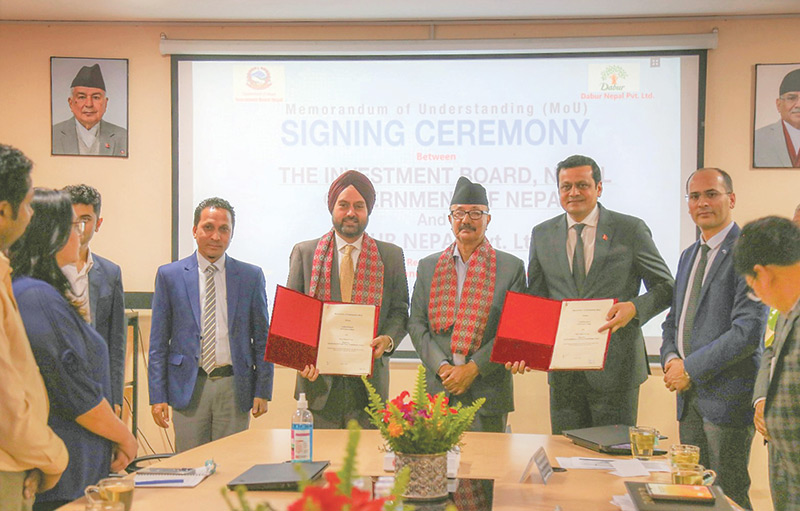
KATHMANDU, The Investment Board Nepal and Dabur Nepal on Thursday signed a Memorandum of Understanding for reinvestment on projects for construction, operation and management of projects for capacity enhancement and diversification of goods on the private investment model. Sushil Bhatta, chief executive officer at the Investment Board Nepal, and Harkirat Singh Bedi, business head at Dabur Nepal, signed the agreement in the presence of the Minister for Industry, Commerce and Supplies Ramesh Rijal, also a member of the investment board. The 49th meeting of the board on February 8 last year approved the investment for the capacity enhancement and product diversification of industries. There will be an additional investment of Rs9.68 billion according to the Capacity Enhancement and Diversification Project presented by Dabur Nepal. Rijal said that foreign investors curious to invest in Nepal can make decisions by listening to those who have been investing in the country and observing the businesses in operation.
MONEY
Wiener Zeitung, one of world’s oldest papers, to end daily print run
- AGENCE FRANCE-PRESSE
VIENNA, One of the world’s oldest newspapers still in print, Austria’s Wiener Zeitung, will primarily move online, after a decision on Thursday by the country’s parliament. The development marks the final step in a years-long dispute between the Austrian government and the newspaper about the future of the state-owned daily. Founded in 1703 under the name Wiennerisches Diarium, and later renamed Wiener Zeitung in 1780, the formerly private bi-weekly paper was nationalised by Emperor Franz Joseph I of Austria in 1857, becoming the country’s official gazette. “It is adopted with a majority,” Norbert Hofer, the third president of the parliament, said of a new law to primarily move the publication online from July 1. The paper will maintain a minimum of ten print publications per year, depending on the funds available. The Wiener Zeitung was in 2004 ranked as one of the oldest newspapers still in circulation, the World Association of News Publishers told AFP. The newspaper’s role as official gazette, it’s main source of revenue, will move to a separate state-owned online platform. “Some fear that the government just wants to keep the Wiener Zeitung brand with its 320-year-old history, while nobody knows what the future publication will look like—whether it will still be serious journalism,” its vice managing editor Mathias Ziegler told AFP. Almost half of the newspaper’s over 200 employees—40 of whom are journalists—could be laid off, according to its trade union. The Wiener Zeitung has a circulation of about 20,000 on weekdays and about twice as much on weekends.
MONEY
Twitter relaxes pot ad rules to lure in more advertisers
It is the first major social media company to allow cannabis advertisements.
- ASSOCIATED PRESS
Budtender Taylor Altshule holds Cherry Pie marijuana at a California Street Cannabis Company location in San Francisco. AP/RSS
CALIFORNIA, Twitter under its 420-friendly owner Elon Musk earlier this year became the first major social media company to allow cannabis advertisements. Now, the platform is relaxing those rules in an attempt to lure in more advertisers from US states where marijuana is legal. “Going forward, certified advertisers may feature packaged cannabis products in ad creative,” Twitter said in a post on its website. Previously, cannabis advertisers could not show any products in their ads, nor could they actually promote their sale. “They may also continue responsibly linking to their owned and operated web pages and e-commerce experiences for CBD, THC, and cannabis-related products and services,” Twitter said. The billionaire Tesla CEO has been forced to make huge cost cuts and scramble to find more sources of revenue to justify his $44 billion purchase of Twitter. The platform also removed a ban on political advertisements in January. Still, companies interested in advertising cannabis products on Twitter must comply with a long list of rules. They must be licenced and pre-authorised by Twitter, only target jurisdictions where they are licensed and refrain from targeting anyone under 21, among other policies. Facebook parent Meta, Google and other major tech companies all prohibit cannabis ads. Google does allow ads for FDA-approved CBD products and topical, hemp-derived CBD products with THC content of 0.3 percent or less in California, Colorado, and Puerto Rico, but not for marijuana even in states where it is legal. Musk became widely associated with marijuana usage in 2018 when he tweeted that he was mulling a buyout of Tesla for $420 per share—a price that was widely assumed to be tied to a specific time in the afternoon of April 20 when cannabis users annually celebrate the drug by partaking in it. Shortly after that August 2018 tweet, Musk smoked a marijuana joint on a podcast with Joe Rogan. In a trial centred on whether Musk’s buyout tweet had misled Tesla investors, Musk testified the price of his offer wasn’t meant to be a marijuana reference while acknowledging why people might think it was.
MONEY
Australia lifts minimum wage for skilled migrant workers
A new minimum wage of AU$70,000 ($46,300) will apply from July 1.
- ASSOCIATED PRESS
A file photo shows a barista preparing a coffee at a cafe in Sydney, Australia. REUTERS
CANBERRA, Australia will end a decade-old freeze on the minimum wage for skilled migrant workers as part of an overhaul of what the government described on Thursday as a broken migration system that fosters exploitation and favours attracting low-paid employees over filling critical skill shortages. “What has emerged is a system where it is increasingly easy for migrants to come to Australia in search of a low-paid job, but increasingly difficult for migrants with the skills that we desperately need,” said Home Affairs Minister Clare O’Neil. “One of the reasons there is so much exploitation in Australia is because we have allowed low-wage migration programmes to operate in the shadows.” Australia has long had one of the highest rates of immigration of any country within the Organisation for Economic Cooperation and Development. But the migrant workforce that used to settle permanently has become increasingly temporary. The Temporary Skilled Migration Income Threshold had been frozen by a previous government at 53,900 Australian dollars ($35,600) a year since 2013. A new minimum wage of AU$70,000 ($46,300) would apply from July 1, O’Neil said. A government statement released on Thursday said that “around 90 percent of all full-time jobs in Australia are now paid more than the current TSMIT, undermining Australia’s skilled migration system.” The Australian economy was “stuck in a productivity rut” that migrant workers could help resolve, O’Neil said. All temporary skilled workers in Australia, many of whom had become “permanently temporary migrants” living on various visas in the country for years, would be given clearer pathways to permanent residency by the end of the year, she said. Speaking to the National Press Club, O’Niel criticised outdated preferred occupation lists that no longer reflect the needs of the economy or emerging technology industries, among other aspects of the migration system under the previous government that ruled for nine years until May 2022. “Our migration system is suffering from a decade of genuinely breathtaking neglect,” she said. “It is broken, it is failing our businesses, it is failing migrants themselves. And, most important of all, it is failing Australians.” O’Neil commissioned a review in November of Australia’s migration programme that found 1.8 million temporary migrants were living within a national population of 26 million. The review reported: “It is not in Australia’s national interest to maintain a large proportion of temporary entrants with no pathway to citizenship as it undermines our democratic resilience and social cohesion.” In September, the government increased its permanent immigration intake to 195,000—an increase of 35,000—for the current fiscal year that ends June 30 as the nation grapples with skills and labour shortages. Australia’s unemployment rate was 3.5 percent in March, which many consider maximum employment.
MONEY
Korean skin hospital opens in Maharajgunj
Bizline
KATHMANDU: Let Me In Korean skin hospital opened its new branch in Maharajgunj, Kathmandu on Thursday. The new branch was formally inaugurated by MP Pradip Paudel, actress Barsha Raut and President of Korean Association chairperson Eom Jin Young. Guests were given a tour of the facility and shown the various services offered, including skincare treatments and beauty products, reads the press release issued by the company. (PR)
MONEY
Argentina to pay for Chinese imports in yuan rather than dollars
Bizline
BUENOS AIRES: Argentina will start to pay for Chinese imports in yuan rather than dollars, the government announced Wednesday, a measure that aims to relieve the country’s dwindling dollar reserves. In April, it aims to pay around $1 billion of Chinese imports in yuan instead of dollars and thereafter around $790 million of monthly imports will be paid in yuan, a government statement said. The decision aims to ease the outflow of dollars, Argentina’s Economy minister Sergio Massa said during an event following a meeting with the Chinese ambassador, Zou Xiaoli, as well as with companies from various sectors. The decision comes as the South American nation battles critical levels in its dollar reserves amid a sharp drop in agricultural exports caused by a historic drought, as well as political uncertainty ahead of elections this year. In November last year, Argentina expanded a currency swap with China by $5 billion, seeking to strengthen Argentina’s international reserves. (REUTERS)
MONEY
Indian banks should have adequate capital buffers, liquidity: Central bank chief
Bizline
MUMBAI: Indian banks should have adequate capital buffers and liquidity and be ready to report earnings even under macroeconomic stress, the country’s central bank chief said on Thursday. “Our approach has been to enhance the resilience as well as the robustness of the financial sector so that individual entities effectively withstand stressful situations and continue to contribute to the economic development of the country,” Reserve Bank of India Governor Shaktikanta Das said at an event in Mumbai. As the banking regulator, the RBI has gone beyond in this regard, nudging entities to build adequate capital buffers in times of plenty, Das said. The central bank is now looking at the business models of banks more closely, Das said. (REUTERS)
WORLD
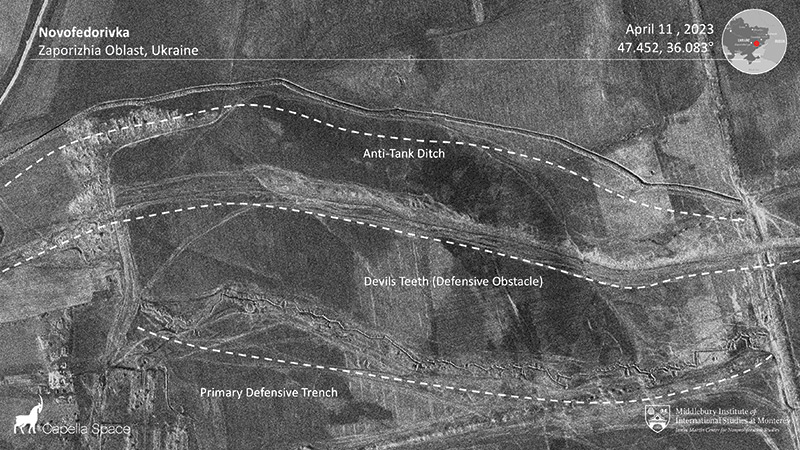
Russia digs in as Ukraine prepares to attack
Satellite images show vast Russian defences in Ukraine. Trenches and obstacles designed to repel Ukrainian counteroffensive.
- REUTERS
KYIV, The anti-tank ditches near Ukraine’s occupied southeastern town of Polohy stretch for 30 km. Behind are rows of concrete “dragon’s teeth” barricades. Further back are defensive trenches where Russia’s troops will be positioned. The defences visible in satellite imagery taken by Capella Space are part of a vast network of Russian fortifications sweeping down from western Russia through eastern Ukraine and on to Crimea built in readiness for a major Ukrainian attack. Thousands of Ukrainian troops have been training in the West to use different military assets on the battlefield in a combined way ahead of a counteroffensive Ukrainian officials say will come when its forces are ready. Reuters has reviewed satellite images of thousands of defensive positions inside both Russia and along Ukrainian front lines that show it is most heavily defended in the southern Zaporizhzhia region and the gateway to the Crimean Peninsula. Six military experts said the defences, mostly built in the wake of Ukraine’s rapid autumn advances, could make it harder for Ukraine this time and that progress would hinge on its ability to carry out complex, combined operations effectively. “It’s not the numbers for the Ukrainians. It’s can they do this kind of warfare, combined arms operations?” said Neil Melvin, an analyst at the Royal United Services Institute (RUSI). “The Russians have shown they can’t do it and they’ve gone back to their old Soviet method of attrition.” A Ukrainian counteroffensive could change the dynamics of a war that has slowed into a bloody battle of attrition and military experts say the length of the front could stretch Russia’s defences. If Kyiv can wrest back control of the south, it could regain unimpeded access to its Black Sea export routes at a time when Russia has signalled it may slam the grain corridor shut. Ukraine may not receive another large injection of armoured hardware from the West any time soon, which is putting pressure on Kyiv to retake as much land as possible in case military support begins to wane, military experts say. “We’ve cleaned out most of the stocks in the West,” said Melvin. “It’s going to take some years to rebuild. I think this is [Ukraine’s] big opportunity to press on.” Ukraine has vowed to take back all the territory occupied by Russia, an area roughly the size of Bulgaria, but officials are reluctant to disclose any information that could help Moscow. The West has sent scores of modern battle tanks and infantry fighting vehicles to serve as the vanguard of an assault, along with bridging equipment and mine clearance vehicles. That’s why Russia has been digging extensive, layered fortifications to ensure its troops will be far more entrenched than when they were chased out of Ukraine’s northeast and Kherson city, the satellite images show. The pictures analysed by Reuters show much of the Russian construction occurred after November, when its forces pulled back from Kherson city in the south and both sides looked to consolidate positions during the winter months. Stretching hundreds of kilometres, the military experts say the defences mark areas where Russia expects to be attacked, or sees strategic significance in holding onto territory. According to the satellite images, Russia’s positions are most concentrated near the front lines in the southeastern Zaporizhzhia region, in the east and across the narrow strip of land connecting the Crimean Peninsula to the rest of Ukraine. The military experts all expected the main thrust of a counteroffensive to be in the south, even though the heaviest fighting in recent months has been concentrated in the east, and in particular around the city of Bakhmut. Last week, Russian President Vladimir Putin made a rare trip to the Kherson region in what some observers saw as a signal of its strategic importance. Oleksandr Musiyenko, a military analyst in Kyiv, said the south was strategically vital for Ukraine. Besides disrupting the land corridor from Russia to occupied Crimea, making deep inroads into the south could bring the peninsula into artillery range, he said. The diamond-shaped peninsula seized from Ukraine in 2014 is home to the Black Sea Fleet which Russia uses to project power into the Middle East and Mediterranean and—over the last 14 months—rain down cruise missiles on Ukraine. The south is also home to the Zaporizhzhia nuclear power plant, Europe’s largest, which has been occupied since March last year and idle since September. It used to supply a fifth of Ukraine’s electricity needs. The town of Polohy pictured in Capella Space’s satellite images, lies in the Zaporizhzhia region, a key gateway for Ukraine to bear down on the largely flat south. The rest of the south lies beyond the Dnipro River, a huge natural barrier for Ukrainian forces to overcome. “I traced ditches and trenches running from the eastern bank of the Dnipro south of Vasylivka all the way to Fedorivka, which is to say they run across Zaporizhzhia [Region],” said John Ford, research associate at the Middlebury Institute of International Studies at Monterey. He estimated that defensive section alone stretched for 120 km. The anti-tank ditches are deep and wide enough to obstruct advancing tanks and armoured vehicles. Then come concrete “dragon’s teeth” that serve as pyramid-shaped barricades. The manned trenches lie about a kilometre behind the ditches. Besides the ditches, barricades and zig-zag trenches, Russia’s defensive lines will also include minefields, razor wire and camouflaged weapons positions. And in the case of Polohy, Russia has constructed two distinct defensive lines, one to the north and one to the south. Overheads of the Zaporizhzhia area seen by Reuters show some towns, such as Tokmak and Bilmak, have been encircled by fortifications. Trenches have been dug along roads, outside other settlements and at the city airports of Melitopol and Berdiansk. The north of Crimea has also been fortified. Brady Africk, an open-source intelligence researcher and analyst at the American Enterprise Institute, said he had mapped fortifications from western Russia to Crimea, with construction starting in earnest after Russian troops abandoned Kherson city. “That spurred a huge digging effort, especially across southern Ukraine, where the ground is quite flat,” he said. Despite the web of defences, four experts said Russia would be stretched by the length of the front, a vulnerability Kyiv would seek to exploit with feints, distractions, surprise and operational speed. Musiyenko said Ukraine could use Western-supplied vessels to launch assaults on the Kherson region from across the Dnipro that would serve as decoys—or full-fledged attacks. That could force Russia to divert troops from elsewhere. “Battlefield obstacles are only obstacles so long as they are guarded by capable troops,” said Middlebury’s Ford. Musiyenko estimated that Ukraine would have a force of between 100,000-110,000 for an attack, including eight assault brigades with a total of 40,000 troops. Russia has not said how many troops it has in Ukraine, or within its borders ready to deploy.
WORLD
Former Fox-host Tucker Carlson emerges on Twitter
- ASSOCIATED PRESS
A file photo of Tucker Carlson. AP/RSS
NEW YORK, Tucker Carlson emerged on Wednesday, two days after Fox News fired him, with a two-minute, campaign-style monologue that didn’t address why he suddenly became unemployed. He posted a video on Twitter shortly after 8 pm Eastern, the time his Fox show used to begin, that talked about a lack of honest political debate in the media. Carlson said one of the things he noticed, “when you step away from the noise for a few days,” is how nice some people are, and how hilarious some are. “The other thing you notice when you take a little time off is how unbelievably stupid most of the debates you see on television are,” he said. “They’re completely irrelevant. They mean nothing. In five years we won’t even remember we heard them. Trust me, as somebody who participated.” Fox fired its most popular personality on Monday without explanation, less than a week after settling a lawsuit concerning the spread of lies about the 2020 presidential election. Private messages sent by Carlson with “highly offensive and crude remarks” were a “catalyst” in Fox’s decision to cut him loose, according to The New York Times. Both The Wall Street Journal and The Washington Post said one redacted message included a slur against a senior Fox executive. Some of the Dominion evidence that was publicly revealed showed some offensive remarks by Carlson, including use of a vulgarity to refer to Sidney Powell, the Trump supporter who was pushing bogus election conspiracy theories on Fox and elsewhere. A Fox News representative did not comment on the reports or Carlson’s reemergence, instead referring to Monday’s statement where the company said, “we thank him for his service.”
WORLD
Renewed air strikes hit Sudan capital as clock ticks down on truce
The fighting has continued despite the US-brokered ceasefire that took effect on Tuesday.
- AGENCE FRANCE-PRESSE
KHARTOUM, The Sudanese army pounded paramilitaries in the capital Khartoum with air strikes on Thursday while deadly fighting flared in Darfur, as the clock ticked down on a fragile US-brokered ceasefire now in its final full day. Ahead of the expiry of a three-day truce at midnight (2200 GMT), the army said late Wednesday it had agreed to talks in Juba, capital of neighbouring South Sudan, on extending it “at the initiative of IGAD”, the East African regional bloc. There have been multiple truce efforts since fighting broke out on April 15 between Sudan’s regular army led by General Abdel Fattah al-Burhan and the paramilitary Rapid Support Forces (RSF) commanded by his deputy turned rival, Mohamed Hamdan Daglo. All have failed. The fighting has continued despite the US-brokered ceasefire that took effect on Tuesday, with warplanes patrolling the skies over the capital’s northern suburbs as fighters on the ground have exchanged artillery and heavy machinegun fire, witnesses said. Burhan agreed on Wednesday to the IGAD proposal for talks on extending the truce by a further 72 hours, the army added. The RSF’s response to the proposal remains unclear. At least 512 people have been killed and 4,193 wounded in the fighting, according to health ministry figures, although the real death toll is likely much higher. The doctors’ union said at least eight civilians had been killed in Khartoum alone on Wednesday despite the truce. More than two thirds of hospitals in the country were out of service, the union said Thursday, including 14 that had been struck during the fighting. Beyond the capital, fighting has flared in the provinces, particularly in the war-torn western region of Darfur. Clashes raged for a second day in the West Darfur capital Geneina, witnesses said, adding civilians were seen fleeing to the nearby border with Chad. “We are locked up at home and too afraid to go out so we can’t assess the scale of the damage,” said a resident who asked to remain anonymous for his safety. “The heavy fighting began from 24 April,” he said, confirming severe damage to hospitals and public buildings and looting across the city.
WORLD
7 killed in fire on passenger train in southern Pakistan
Briefing
- AGENCIES
KARACHI: At least seven people were killed after a car on a moving passenger train caught fire overnight in southern Pakistan, officials said Thursday. Railways official Mohsin Sial said the train caught fire in Khairpur, a district about 500 kilometres north of Karachi, the capital of Sindh province. He said six people were killed in the blaze while a woman died when she jumped from the window of the moving train. The blaze also badly damaged several other cars in the train, he said, and the cause remained unclear. TV footage showed several burned sections of the train, which was on its way from Karachi to the eastern city of Lahore, when a car caught fire. Local media reported that the flames roared through the train Wednesday night, engulfing several cars. In Pakistan, poor passengers often bring their own small gas stoves on the trains to cook their meals, despite rules barring the practice.
WORLD
Poland probes parts of aerial military object found in woods
Briefing
- AGENCIES
WARSAW: Prosecutors and security service personnel in Poland are investigating the remains of an aerial military object that was found in woods in the centre of the country, the justice minister reported on Thursday. Poland’s security services are on high alert due to Russia’s war in neighbouring Ukraine. However, the Defence Ministry said on Twitter that the object found near Zamosc, a town near the city of Bydgoszcz which is located some 265 kilometres northwest of Warsaw, did not pose a danger to residents. Justice Minister Zbigniew Ziobro said the military department of the district prosecutor’s office in the city of Gdańsk is leading the investigation, with military experts, police and military counterintelligence agents also involved.
WORLD
US military leak suspect to appear in court; had arsenal, prosecutors say
Briefing
- AGENCIES
BOSTON: A US Air National Guardsman accused of leaking military secrets and keeping an arsenal of weapons in his bedroom will appear in federal court on Thursday, where federal prosecutors are expected to argue he should remain in custody because he poses a national security risk. Jack Douglas Teixeira was arrested by the FBI on April 13 at his home in Massachusetts and charged with violating the Espionage Act. He is scheduled to appear in US District Court in Worcester, Massachusetts on Thursday afternoon for his detention hearing. Prosecutors say the 21-year-old leaked classified documents, including some relating to troop movements in the Russia-Ukraine conflict, to a group of gamers on the messaging app Discord. Teixeira, who lived with his mom and stepfather, kept a gun locker two feet from his bed, which contained handguns, bolt-action rifles and a military-style rifle with a high-capacity magazine.
WORLD
Three aid workers among five abducted in Nigeria
Briefing
- AGENCIES
ABUJA: Three humanitarian workers and two contractors have been abducted in northeast Nigeria where the military is fighting a jihadist insurgency, aid officials said on Thursday. Both Boko Haram, which kidnapped hundreds of schoolgirls in Chibok in 2014, and ISWAP, linked to the Islamic State group, operate in the region. The nationality of the aid workers wasn’t immediately clear but they were working for FHI 360, a US non-profit organisation. “FHI 360 condemns in the strongest possible terms the abduction of three staff members and two contractors in Ngala, Nigeria,” Christy Delafield, an FHI spokesperson said in a statement.
SPORTS
Nepal top group, will meet Kuwait in semi-finals
The home side defeat Qatar by 68 runs defending a 157-run total. The Kuwaitis pull off a 30-run upset over Hong Kong to finish as Group ‘B’ runners up.
- Sports Bureau
Nepal players celebrate after defeating Qatar during their ACC Men’s Premier Cup Group A match at the TU Cricket Ground on Thursday. Post Photo: Hemanta Shrestha
KATHMANDU, Hosts Nepal defended a low total to beat Qatar by 68 runs to storm into the ACC Premier Cup semi-final as Group ‘A’ toppers maintaining their unbeaten streak at the TU ground in Kirtipur on Thursday. Playing their last group match, the home team were bowled out for a paltry 157 runs in 40.3 overs, thanks to an unbeaten 42 by tailender Sandeep Lamichhane. The leg spinner also shone with the ball, claiming five wickets as Nepal bowled Qatar out for 89 runs in 25.1 overs. Nepal will now meet Kuwait in the semi-finals at the TU ground on Saturday after the Gulf side upset Hong Kong in a winner-takes-all contest in Group ‘B’, pulling off a 30-run win. Only the top two sides from each group in the 10-team tournament proceed to the last four. The winner of the tournament will be assured of a place in the Asia Cup that features heavyweights of Asian cricket, including India and Pakistan. Nepal, already assured of a semi-final spot, secured the top position in the group with seven points from four games, one point ahead of Oman. Malaysia, with four points finished third, Saudi Arabia (three points) fourth and Qatar finished at the bottom of the table. In Group ‘B’, UAE secured the top spot, finishing on six points with three wins and a defeat and will now meet the Group ‘A’ runner up, Oman. Kuwait, which also wrapped up on six points, finished second on net run rate. Hong Kong (five points), Bahrain (three points) and Singapore (zero points) secured third to fifth place finishes, respectively. Sent in to bat first, the home team were off to a shaky start and kept losing wickets at regular intervals. Opener Kushal Bhrutel departed on two runs and number three batter Bhim Shakri was out for six runs with nine runs on board. Opener Aasif Sheikh (19 runs off 27 balls) and captain Rohit Paudel were the key contributors for Nepal, Paudel scoring 27 runs off 36 balls. Paudel hit two fours. Sompal Kami (11), Aarif Sheik (11) and Dipendra Singh Airee (12) were other players to get into double-digit scores as Nepal were left struggling at 111-9 at one stage before Lamichhane’s cameo lent some respectability to the team’s final score. Lamichhane, who came to bat at number 10, scored his runs off 58 balls, studded with six hits to the fence. He also stitched up a 46-run last wicket partnership with spinner Lalit Rajbanshi, who gave solid support to Lamichhane. Rajbanshi scored one run from 17 deliveries before Amir Farooq trapped him leg before wicket. Amir Farooq claimed four wickets and conceded 42 runs in his 9.3-over spell for Qatar. Owais Ahmed returned with figures of 10-0-36-3 and Gayan Munaweera 7-0-38-2. Chasing the target, Qatar—who came into the match looking for their first win—failed miserably in the batting department. Opener Zaheer Ibrahim (15 runs off 23 balls), middle order batter Khurram Shahzad (15 runs off 28) and Amir Farooq (14 runs off 22) were the only Qatar batters to get into double-digit scores. The player-of-the-match Lamichhane was the pick of Nepal’s bowling. He conceded 14 runs in his 9.1-over spell that included three maiden overs. Medium pacer Sompal Kami also grabbed three important wickets in his seven-overs of bowling. He conceded 24 runs and bowled a maiden. Lalit Rajbanshi, who made the breakthrough removing opener Kamran Khan on eight runs, pocketed two wickets. He conceded 27 runs in his five overs. At the Mulpani Stadium, Kuwait, put into bat first, posted 272-8 and bowled Hong Kong out for 242 runs off the last ball of the innings. Shiraz Khan and wicketkeeper-batter Usman Patel scored half centuries each for Kuwait and also put up an 84-run partnership for the sixth wicket. Khan contributed 67 runs off 95 balls, the highest of the innings that included four boundaries and a six. Patel scored 50 runs off 48 balls studded with six fours and a six. Opener Adnan Idrees contributed a-run-a-ball 45 that included six boundaries and two sixes. Captain Mohammed Aslam (32 runs off 67 balls, Sayed Monib (31 runs off 14) and Bilal Tahir (not out 17 off 11) also made notable contributions. Hong Kong’s Ehsan Khan grabbed three wickets in his 10-over spell. In the run chase, Hong Kong’s opener and captain Nizakat Khan scored 60 runs off 97 balls. He hit a boundary and a six. Aizaz Khan (49 runs off 55), Yasim Khan (a-run-a-ball 43) and Zeeshan Ali (24 runs off 32) were the other significant contributors for Hong Kong. Kuwait bowler Shahrukh Quddus grabbed three wickets while Yasin Patel took two. Quddus gave away 27 runs in his eight-over spell while Patel conceded 35 runs in his 10 overs of bowling that included a maiden over.
SPORTS
Aminu rescues Friends, Police beat Khumaltar
- Sports Bureau
KATHMANDU, Rafiq Aminu scored in the second half to help Friends Club salvage a 1-1 draw with Armed Police Force Club in the Martyrs Memorial A-Division League at the ANFA Complex in Satdobato, Lalitpur on Thursday. Pradip Lama put the departmental side in the lead in the 27th minute. Nabin Lama, who had missed the target by inches moments ago, set up a through ball for Pradip to slam into the back of the net from outside of the box. But Ghanaian Aminu cancelled out Pradip’s lead in the 52nd minute when he drilled a low shot past APF goalkeeper Anjal Shrestha, who came off his line to make the clearance. The draw dented APF’s hopes of pushing for title contention as they sit in the sixth position with 18 points. Friends lie in the ninth position, level on 15 points with Manang Marshyangdi Club and Sankata Club. At the Dasharath Stadium, Ahmad Hijazi scored a brace as bottom-placed Nepal Police Club boosted their hopes of survival with a 3-1 win over Khumaltar Youth Club. Hijazi gave Police the lead in the 27th minute tapping in a rebound after Khumaltar goalkeeper Dev Limbu blocked Moses Gyabaah’s header. Messouke Oloumou equalised in the 54th minute capitalising on Police defenders’ failure to clear the ball in the penalty box. It was Oloumou’s 10th goal of the season. Gyabaah put Police back in the lead in the 84th minute, converting a pass from Sergi Dicka, and Hijazi put the game to bed in the injury time scoring from the spot kick after Khumaltar goalie Limbu tripped Hijazi inside the box.
SPORTS
Premier League title is now Man City’s to lose
- ASSOCIATED PRESS
MANCHESTER, Manchester City look like champions in waiting after after a 4-1 rout of Arsenal on Wednesday. Pep Guardiola’s team looked like champions-in-waiting with a ruthless win over the team that have led the way for much of the season. Arsenal are still out in front in the standings, but by the time Erling Haaland completed the scoring in stoppage time, the Londoners’ title challenge looked effectively over. City remain two points behind the league leaders but with two games in hand appear to be on course to be crowned champions for the third year in a row. “It is in our hands,” Guardiola said. After 17 games without defeat, it is hard to see City slipping up from here. Arsenal, meanwhile, may struggle to recover from such a chastening loss, which came on the back of three straight draws that had taken the momentum out of their title charge. Mikel Arteta’s team have exceeded all expectations by taking the challenge this far, but the pressure appears to have taken its toll in recent weeks. Two-goal leads were thrown away against Liverpool and West Ham, while it took a late comeback to salvage a point against last-place Southampton last week. That damaging sequence meant Arsenal needed to win against City to stay in control of the title race. “Those players deserve a lot of credit after nine-and-a-half months being here,” the Arsenal manager said. “And there are still five games to play.” City could go top of the standings with a win against Fulham on Sunday. The biggest test, however, has already been passed after beating Arsenal for the third time this season—including a win in the FA Cup. While neither Guardiola nor Arteta would accept this match was a title decider, it put City firmly in control and it would take a major drop off for the defending champions to hand the initiative back to Arsenal. After struggling for consistency for the first half of the season, City have become stronger as the campaign has gone on—to the point that it seems unstoppable right now. Haaland struck his 49th goal of the season on Wednesday, while Kevin de Bruyne was at his inspirational best, scoring twice. For a long time, the Premier League seemed like it might be out of reach, given the pace Arsenal set in winning nine of their first 10 games of the season. Even after losing to City in February, Arsenal recovered to win seven in a row in the league. But a combination of City’s relentless form and Arsenal’s stumble has propelled Guardiola towards a fifth title since taking over at the club in 2016. Arteta, meanwhile, has to lift his players for the final stretch, even if the wait for a first title since 2004 looks set to go on.
MEDLEY
Horoscope
ARIES (March 21-April 19) A restless energy will creep up early this morning, threatening to disrupt your sleep cycle. Luckily, you’ll have a chance to reconnect with yourself and the present. Watch out for drama and overspending and remember to keep tabs on your ego.
TAURUS (April 20-May 20) A glow will fill your space, bringing warmth and comfort to your home. These vibes are perfect for staying in, especially. Watch out for chaos and emotional upheaval, bringing bumpy vibes to the table. Luckily, you’ll feel more at peace
GEMINI (May 21-June 21) Today will threaten you to conjure strange and cerebral dreams. Luckily, you’ll have a chance to reclaim clarity as you awaken, and a helping hand will allow you to tune into the subtle energy. Intrusive thoughts could throw you off track
CANCER (June 22-July 22) Today will encourage you to explore the world with all of your senses. Good vibes will flow mid-morning, reminding you to know your worth. Watch out for tension as afternoon settles in. Luckily, the ambiance will feel much sweeter.
LEO (July 23-August 22) The moon continues its journey through your sign today, giving you permission to celebrate yourself! Good vibes will flow freely, helping you feel in tune with the universe and the joys of being alive. Watch out for unforeseen obstacles or challenges.
VIRGO (August 23-September 22) Today could usher in mixed messages through the dream realms. Luckily, you’ll have a chance to shake off any mental cobwebs, bringing a cleansing and energising vibe to the table. Keep your eyes peeled for messages of support from beyond.
LIBRA (September 23-October 22) Remember to nurture your relationships far and wide today. These vibes are all about appreciating the people who brighten each day. Watch out for power struggles, which could trigger jealousy within yourself and others. Luckily, the energy will even out.
SCORPIO (October 23-November 21) You may feel a bit stiff when you awaken this morning. Luckily, you should feel more energised, organised, and in control by mid-morning, though you may need to take extra steps to get back on top of your game.
SAGITTARIUS (November 22-December 21) Today is all about positive thinking and trusting that the universe has your back, so be sure to look on the brighter side of life. Unfortunately, you’ll want to be on guard for disorganisation and unexpected messes this afternoon.
CAPRICORN (December 22-January 19) Your psyche may pull at itself, threatening to trigger strange and unwelcome dreams. Luckily, you’ll feel more in tune with your emotions and your strength by mid-morning. Watch out for ego hits, and be sure to choose your battles wisely.
AQUARIUS (January 20-February 18) The moon continues its journey through warm-heartedness, encouraging you to embrace love in all forms. Opportunities to heal will come into play, especially when you speak kindly and with compassion. Watch out for mood swings within yourself and others.
PISCES (February 19-March 20) Your dreams may be disorienting in the very early hours. Try not to read into any astral realm encounters that cause you to toss and turn, focusing instead on what needs to happen in the present. Watch your words, and be mindful.
CULTURE & LIFESTYLE
The key to frequent travels is spontaneity
Asim Poudel has travelled across most of Nepal, but Everest Base Camp remains his most memorable trip.
- Rukusha Giri
Asim Poudel posing with Mt Everest in the backdrop. Photos: Courtesy of Asim Santos Poudel
Kathmandu Travelling gives me a sense of relief that nothing else can replicate,” says Asim Santos Poudel, a 22-year-old travel enthusiast. Though he’s a graphic designer by profession, his true calling is exploring and travelling to new places. Poudel was lucky enough to be able to travel across Nepal since childhood. For him, being a traveller doesn’t mean just sticking to popular spots but daring to go places no one has ever been. “That’s where the real stories are,” he says. His first recollection of a proper trip was visiting the Pathibhara Devi Temple in the hills of Taplejung. The temple is notorious for being a difficult hike. So it was only natural that his parents wondered if Poudel, who was only 14, could complete the hike. “They were convinced that I couldn’t walk the distance. And I wasn’t confident myself,” he says. But making sure to walk one step at a time (and to everyone’s surprise), he reached the temple. “That was quite a thrilling experience. I also realised how much I enjoy travelling,” he recalls. From then to now, Poudel has travelled to most places in Nepal. As his ancestral home is in Jhapa, he frequently visits the Tarai region with his family, mainly during festivals. While en route to Jhapa, he makes sure to visit the surrounding towns and villages to learn more about the local way of life. “As I was born in Kathmandu, any place outside the valley used to feel like an imaginative place because all I ever saw was people coming into Kathmandu and not many people going out,” he says, adding that hearing about different anecdotes, dialects, and cultures of the people he met in Kathmandu made him want to explore the country. “There is so much diversity in Nepal. I had to travel, and I had to experience them all,” he says. Instead of waiting for his family to free up time to travel together, Poudel decided to travel on his own. His first trip was to Mustang with his friends right after finishing his SLC (School Leaving Certificate, now known as SEE) exams. “The trip to Mustang was challenging because it was my first time managing everything. As a student traveller, there was also a strict budget,” he says. “But the freedom I felt was worth all the hardships,” he says. After the Mustang trip with his pals, he began to travel frequently. According to him, the key to frequent travelling is spontaneity. “I’m always ready to travel. If someone asks me to go somewhere with them, I pack my bags the very minute,” says Asim. Poudel has travelled to several spots in Nepal, from east Nepal to the west. He has been to Phidim, Jhapa, Morang, Bhedetar and Dharan.
Moreover, he’s also travelled upwards to regions like Kanyam, Fikkal, Sindhupalchowk, Hetauda, Kusma and Gamgadi (Mugu). But the mountains are where his heart and passion lie. From Solukhumbu to Humla to the serene Tilicho Lake in Manang, his thirst for the surreal mountains makes him come back time and again. Poudel’s travel highlights also include the Annapurna base camp, Ice Lake and many others, and in this way, he has travelled the whole of Nepal. “I got to see Ice Lake and Tilicho Lake as they are located in Manang. Many Nepalis know about Tilicho Lake but not the Ice Lake,” says Poudel. The Ice Lake, also known as Kicho Lake, is situated at 4620m above sea level. “There were very few people around so, trekking to Ice Lake was like stepping into a foreign, almost fantastical land,” he says, adding that for him, Ice Lake will always have a special place in his heart. Poudel finds time to travel at least every other week. “Human beings need to take a break from their stressful lives and at least temporarily forget about their problems,” he says. But for him, travelling is more than relaxation. It can even change a person’s perspective about their life. “Only by stepping out of one’s comfort zone can one see how beautiful this world is,” says Poudel. Poudel occasionally also bikes to places. “A short bike ride is a very fun experience. And it’s something I do alone,” he says. Poudel has travelled to Nagarkot, Shivapuri, Phulchowki Danda, Chandragiri, Champadevi, Pilot Baba and Chisapani on his motorbike. “These short trips are the best for a quick mood booster,” he says.
Despite having been to most places in Nepal at a relatively young age, Poudel’s biggest dream was to go to Mt Everest. From April 1 to 11, he finally realised his dream—making the arduous walk from Lukla to the Everest Base Camp. Though the season was busy, making it difficult for Nepalis to find their footing amidst all the foreigners, he was motivated by the serene scenery to continue his journey. “As Nepalis, we should take advantage of our country being home to the tallest mountain in the world,” he says.
CULTURE & LIFESTYLE
Shining light on Bhaktapur’s exquisite art
Siddhartha Art Gallery’s latest exhibition showcases over 60 traditional and modern artworks by artists from the city of devotees.
- Post Report
PHOTO: Courtesy of Siddhartha Art Gallery
Kathmandu Siddhartha Art Gallery’s newest exhibition, ‘From Bhaktapur to Kantipur’ features 50 paubha and 19 contemporary paintings, all by artists of Bhaktapur. With an aim to shed light on the unique artistic practices of Bhaktapur—both paubha and contemporary—the gallery has collaborated with Khwopa Paubha Chwomi Pucha and Devotee Artist Circle to create a show that reflects the dynamism of the city. ‘From Bhaktapur to Kantipur’ opened on April 19. The exhibition’s opening was jointly inaugurated by eminent paubha artist Mukti Singh Thapa and Amod Rajbhandari from the Mercantile Group. The opening was accompanied by a traditional performance by Neo Fusion Baja Samuha and a samay baji spread. Khwopa Paubha Chwomi Pucha is a 28-member paubha artist group that works on preserving the tradition and history of paubha art in Bhaktapur. Before this, they had six group exhibitions which all took place in Bhaktapur. As the exhibition title suggests, this is the first time the group has shown their artworks in Kantipur, the old name for Kathmandu. Like most paubha artworks, the works showcased at the gallery feature legends, myths and detailed portrayals of various Hindu and Buddhist gods. The paintings are accompanied by descriptive labels that shed light on the history and significance of the subjects. As for Devotee Artist Circle, it is a collective of contemporary artists focused on telling modern stories via their praxis. The contemporary artworks are placed in the gallery’s annexe, and the works range from depictions of lakheys (by Bal Krishna Banmala) to a painting of two puppies drawn on a skateboard (by Sudeep Balla). According to the gallery’s director, Sangeeta Thapa, this exhibition aims to encourage “future collaborations [among traditional and contemporary artists] that will serve to assert Bhaktapur as a hub for the arts.”
What: From Bhaktapur to Kantipur Where: Siddhartha Art Gallery, Babermahal Revisited, Kathmandu When: Till May 19 Time: 11 am to 5 pm (Sunday to Friday), 12 pm to 5 pm on Saturday Entry: Free
CULTURE & LIFESTYLE
Met Gala: Here’s what we know so far
This year’s theme centres on the late designer Karl Lagerfeld, who made an indelible mark on luxury fashion in his long career at Chanel, Fendi and elsewhere.
- JOCELYN NOVECK
Lagerfeld acknowledges the applause of his models at the end of the Chanel Fall-Winter 93-94 haute couture collection in Paris. AP
NEW YORK, US Last year, it took 275,000 bright pink roses to adorn the Metropolitan Museum of Art for the Met Gala, the biggest night in fashion and one of the biggest concentrations of star power anywhere. It remains to be seen how the museum’s Great Hall will be decorated come the first Monday in May, but one thing is not in question: those entering it will look spectacular. The theme centres on the late designer Karl Lagerfeld, who made an indelible mark on luxury fashion in his long career at Chanel, Fendi and elsewhere. It is a theme not without controversy—Lagerfeld was known for contentious remarks about everything from #MeToo to curvy bodies. Want to know what to expect as the big day approaches? Not to worry. We’ve dusted off our annual guide for you here with some key updates.
What is the Met Gala anyway? It started in 1948 as a society midnight supper and wasn’t even at the Met. Fast forward 70-plus years and the Met Gala is something totally different, one of the most photographed events in the world for its head-spinning red carpet—though the carpet isn’t always red. We’re talking Rihanna as a bejewelled pope. Zendaya as Cinderella with a light-up gown. Katy Perry as a chandelier morphing into a hamburger. Also: Beyoncé in her “naked dress.” Billy Porter as an Egyptian sun god, carried on a litter by six shirtless men. And Lady Gaga’s 16-minute striptease. And last year, host Blake Lively’s Versace dress—a tribute to iconic New York architecture—that changed colours in front of our eyes. Then there’s Kim Kardashian, bringing commitment to a whole other level. (It’s reasonably safe to expect her again this year because why wouldn’t she be coming?) One year, she wore a dress so tight she admitted she had to take breathing lessons beforehand. Two years ago, she wore a dark bodysuit that covered even her face. But then last year, she truly stole the carpet, showing up in Marilyn Monroe’s actual, rhinestone-studded “Happy Birthday, Mr President” dress (borrowed from Ripley’s Believe It or Not! museum), changing the minute she got inside to protect it. There was controversy later over suspicions, denied by Ripley’s, that she’d caused some damage. But still—that was an entrance. It’s important to note that the party has a purpose—last year, the evening earned $17.4 million for the Met’s Costume Institute, a self-funding department. Yes, that’s a heckuva lot for a gala. It also launches the annual spring exhibit that brings hundreds of thousands of visitors to the museum. But it’s the carpet itself that draws the world’s eyes, with the guest list—strategically withheld until the last minute—featuring a collection of notables from movies, music, fashion, sports, politics and social media that arguably makes for the highest celebrity wattage-per-square-foot of any party in the world.
Who’s hosting this year? This year’s five hosts are drawn from television (Emmy-winning writer, actor and producer Michaela Coel); the movies (Oscar-winning actor Penélope Cruz, who has worked with Chanel for more than 20 years); sports (recently retired tennis superstar Roger Federer); and music (Grammy-winning songstress Dua Lipa). Finally, there is Vogue’s Anna Wintour (do we need to tell you she’s in fashion?) running the whole thing as usual.
Is there always a theme? Yes. As mentioned above, the theme is Karl Lagerfeld, and the exhibit, ‘Karl Lagerfeld: A Line of Beauty,’ looks at “the designer’s stylistic vocabulary as expressed in aesthetic themes that appear time and again in his fashions from the 1950s to his final collection in 2019.” Once again, it has been created by the Met’s star curator, Andrew Bolton.
Does everyone follow the theme? Not really. Some eschew it and just go for big and crazy. But expect some guests to carefully research the theme and come in perfect sync. It was hard to beat the carpet, for example, when the theme was tied to ‘Heavenly Bodies: Fashion and the Catholic Imagination’, and Rihanna came as the pope, Zendaya channelled Joan of Arc, and Perry navigated the crowd with a set of enormous angel wings. For Lagerfeld, the clothes may be a bit more, er, down to earth.
How much do I have to pay for a ticket? Wrong question. You cannot just buy a ticket. The right question is: If I were famous or powerful and got invited, how much would it cost?
Ok, if I were famous or powerful and got invited, how much would it cost? Well, you might not pay yourself. Generally, companies buy tables. A fashion label would then host its desired celebrities. This year, the cost has gone up, as it does every few years due to rising expenses: It’s now $50,000 for an individual ticket, and tables start at $300,000.