You internet speed is slow. Switch to text view mode

Switch
epaper logo
ST

Last Login:
Logout
+
Page 1
HOME PAGE

Chauhan appointed editor-in-chief of Kantipur daily

- Post Report

KATHMANDU,
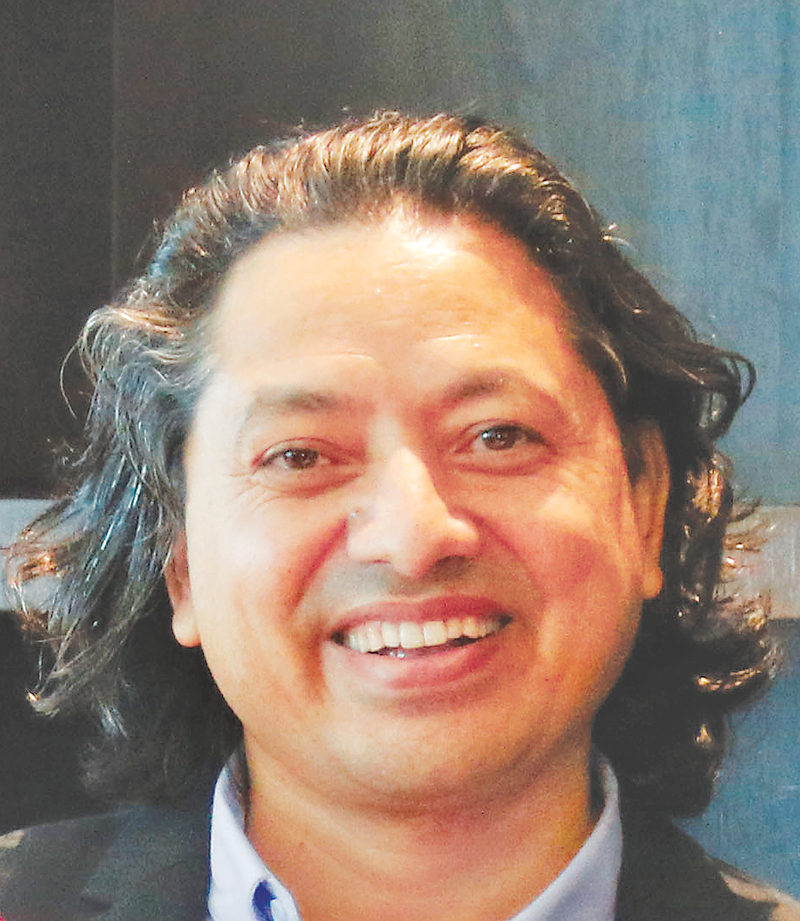
Umesh Chauhan has been appointed the editor-in-chief of Kantipur daily, the Post’s sister paper.
Kantipur Media Group Chairman and Managing Director Kailash Sirohiya announced Chauhan as the chief editor of the daily newspaper amid a function at the KMG offices at Central Business Park, Thapathali in Kathmandu on Sunday.
Sirohiya said that outgoing editor-in-chief Sudheer Sharma had played a vital role in fostering professional journalism and said he would like to see the new chief editor take Kantipur to greater highs. Sirohiya urged Sharma to continue to offer his advice to the newspaper even though his institutional affiliation had ended.
Sharma said that in his almost two decades with the daily he never faced any undue pressure from the publishers. He credited his successful tenure at the daily to the professionally competent KMG leadership and management as well as the newsroom.
Chauhan committed to leading the newsroom, armed with the skills he learned while working with Sharma and in his earlier stint. Chauhan said he continues to believe in the power of print and when it is combined with new technology, Kantipur daily can cross new frontiers.

HOME PAGE

Government’s policies and programmes disappoint the Dalit community

Prime Minister Dahal had made lofty promises but the document barely mentions Dalits.
- TIKA R PRADHAN

KATHMANDU,
Prime Minister Pushpa Kamal Dahal, while addressing a function to mark the day against racial discrimination on March 21, promised that his government would announce a plan that the Dalit community will remember forever.
But the Dalit members who were elated by the prime minister’s promise were dejected when they saw the government’s policies and programmes presented by President Ramchandra Paudel on Friday.
Leaders, experts and activists of the Dalit community have expressed disappointment at the new policies and programmes saying that they offer nothing to them. They had great hopes from a ‘revolutionary’ leader like CPN (Maoist Centre) chair Pushpa Kamal Dahal, who leads the coalition government, to come up with policies meant for their community but to no avail.
“Actually, I expected something to help implement two Articles of the charter—Article 24, which talks about ending untouchability and Article 40, which speaks about Dalit’s rights,” said Hira Bishwokarma, a Dalit activist and writer. “But the PM, once a revolutionary leader, seems to have changed after his labeda suruwal avatar.”
Dahal, who was never seen wearing daura suruwal, first wore the national dress when he was sworn in as prime minister in December last year.
Bishwokarma said the government appears uninterested in implementing the fundamental rights guaranteed by the country’s constitution.
The 35-page policies and programmes mentioned the word Dalit only in two places, embedding it with other various groups.
Point 118 of the policies states that the government will carry out economic and social development programmes to support income generation, capacity development and empowerment of the underprivileged—poor and disadvantaged, Dalits, indigenous people, single and disabled women, Badis, Kamlaris, Kamaiyas, Chepangs, Botes, victims of violence, gender and sexual minorities, and HIV-infected people, as well as deprived women and girls of all communities.
Meanwhile, point 126 pledges to increase access to quality education at the grassroots and to launch special programmes for Dalits, minorities, endangered communities, economically disadvantaged and disabled children and those from backward, remote and mountainous areas.
“An arrangement will be made for the distribution of all scholarships in the education sector through a one-door system,” the government states. “Scholarships aimed at the disadvantaged will be expanded. The mid-day meal programme will be gradually expanded.”
Dalit activists were also angry because Prime Minister Dahal, who waged a decade-long people’s war that saw a large number of Dalits killed, had promised to come up with an impressive programme to uplift the community.
Rastriya Swatantra Party Chief Whip Santosh Pariyar said the policies and programmes have let down the Dalit community that expected progressive steps from the government.
“The policies and programmes have nothing special, not only for Dalits but also women and Madhesis,” said Pariyar. “This government was not serious about giving respite to the communities that were historically oppressed.”
Pariyar said the government should have come up with specific policies to improve the conditions of the weaker sections of society including Dalits. “The authorities should have listened to experts on various issues while drafting the policies but no suggestions have been incorporated into the annual programmes.”
As the budget for the new fiscal year will be based on the policies and programmes, Dalit experts say they are not hopeful about the government allocating funds for programmes benefitting the downtrodden community.
The Maoist Centre in its election manifesto had pledged to launch a nationwide campaign against untouchability. But the governing coalition led by the party seems to have forgotten the promise.
Bishwokarma claimed that the downtrodden communities now can’t expect anything from Dahal, who was once seen as a revolutionary leader.
Even the Dalit leaders and lawmakers from the Maoist Centre were unhappy about the exclusion of the community from the policy document.
“There is no Dalit representation in the Cabinet. So what can we expect?” said Anjana Bishankhe, a Maoist leader and former lawmaker. “The policies and programmes were far from what we expected.”
She said the inclusion of policies related to the Dalit community was extremely difficult and even if something is included, its implementation is tough.
Prior to the promulgation of a new constitution in 2015, activists pressed the governments to address the issues of minorities and underprivileged communities like Dalits. But activists and leaders say the governments formed after the country adopted federalism have started to put their issues low on priority.
Durga Sob, founding president of the Feminist Dalit Organisation and a leader of the Nepal Samajbadi Party, said it was depressing that recent governments have given less priority to Dalit issues.
“The essence of development is to give priority to the communities at the bottom,” Sob told the Post. “But things are quite different now.”

HOME PAGE

Police, attorney in a rush to file charges in refugee scam

As per the law, all 32 accused must be tried in court by Wednesday, but investigators have yet to conclude probe.
- ANUP OJHA,PRITHVI MAN SHRESTHA

KATHMANDU,
With police taking time to conclude the investigation into the Bhutanese refugee scam, the District Attorney Office Kathmandu is struggling to bring criminal cases against the accused.
Nepal Police, which is investigating the high profile scam, had earlier said that it would be submitting the investigation report to the District Attorney Office by Sunday for legal verification. But it failed to do so. This will leave very little time for the District Attorney Office to study the investigation report, because as per the law, cases must be filed in the court by Wednesday.
Police are preparing to file cases against the accused under the Organised Crime Act-2013, among other relevant statutes. As per the Act, a person accused of organised crime can be placed in judicial custody for a maximum 60 days.
Based on this provision, the deadline for keeping those accused in the scam in custody expires on May 24.
“We were expecting the police to submit the investigation report by Sunday considering the limited time available to us for verifying the
legal provisions to be applied for
prosecution. But police said they are still investigating,” said Achyut Neupane, chief of the Kathmandu District Attorney’s Office.
“Legally, we just have two days left to file a charge sheet against the accused in the court. It is going to be hectic for us to read and conclude the verification process if we receive the police investigation report very late.”
The District Attorney’s Office looks into whether adequate evidence has been collected to bring charges and it can order the police to collect more evidence if needed.
Thus, it plays the role of strengthening the charge sheet.  
This office also determines whether certain charges are applicable against the accused, and more charges can be added based on the investigation report. Nepal Police plans to prosecute the 32 accused and has already arrested 16 of them including former deputy prime minister Top Bahadur Rayamajhi and former home minister Bal Krishna Khand.
They are being investigated for collecting millions of rupees from hundreds of people by promising to send them to the US as Bhutanese refugees.   
Also, other top officials including former home secretary Tek Narayan Pandey, who was working as a secretary at the Office of the Vice President until his arrest, former home minister Ram Bahadur Thapa’s security adviser Indrajit Rai, former home minister Khand’s personal secretary, former Nepali Congress lawmaker Aang Tawa Sherpa, and some middlemen, are among those arrested. Police on Thursday also apprehended Bhutanese refugee leader Tek Nath Rizal in connection with the scam.
On April 26, police had first arrested the accused, including Keshav Dulal from Morang, Sanu Bhandari from Lalitpur and Tek Gurung from Panchthar. The police can keep the accused in judicial custody for a maximum of 60 days from the day of their arrests.
Based on their statement to the police, the involvement of high profile people in the scam was exposed. Police said it was natural that it took longer than expected to conclude the investigation because of the magnitude of the scam.
“We are getting new complaints against the accused even now. So concluding the case is taking time,” said  Kathmandu Police Circle Chief  Senior Superintendent of Police Dan Bahadur Karki. “Since it is a high profile case, we continue to investigate it.”
As investigations continue, police on Sunday asked the court to extend the remand of the accused.
“As requested by the police, the District Court Kathmandu has extended their judicial custody until Tuesday,” said Deepak Dahal, information officer at the Kathmandu District Court. “This is the second time the court extended their judicial custody.”
Earlier, the deadline was extended till Friday, but the accused remained in custody because of holiday on Saturday.
Kantipur daily, the Post’s sister publication, had first unearthed the refugee racket involving high profile political figures. As per the Kantipur report, the racketeers prepared a list of 875 people by promising to send them to the US as Bhutanese refugees by forging government documents.
In 2019, then government led by KP Sharma Oli had formed a task-force under the then joint secretary Bal Krishna Panthi to recommend ways to manage the Bhutanese refugees who remain in Nepal following the cessation of the third country resettlement programme in 2016-end.
“It has been discovered that the original report prepared by the Panthi-led committee has disappeared from the ministry. This could not have happened without the support of the home minister and home secretary,” a police officer told the Post earlier. “Only a duplicate report that had been tampered with in certain sections was found at the ministry.”
When the committee was formed, UML chair Oli was the prime minister and Ram Bahadur Thapa, currently the party’s vice chair, was the home minister.
Only 429 Bhutanese refugees living in two camps in Jhapa and Mornag districts had applied as leftover refugees and asked the Panthi-led committee to include their names on the list of those to be resettled in third countries. The list was then verified by the UN refugee agency and the Refugee Coordination Unit based in Jhapa.
During the same time, the Panthi-led committee received applications from 875 people who wanted to be included in the list of leftover refugees. As they were not verified refugees, the committee refused to accept their applications.
“Then a group of racketeers led by Keshav Dulal and Sanu Bhandari who are now in police custody, stole the committee report, removed the names of 429 verified leftover refugees and replaced them with another list of 875 persons,” the police officer earlier told the Post. “Backed by the political and bureaucratic leaders, the racketeers added 18 pages to the report and circulated it as evidence. The goal was to make people believe they were going to the US as Bhutanese refugees.”
The racketeers had allegedly managed to steal the Panthi report with the help of home ministry officials including the then home minister Thapa’s security advisor Indrajit Rai.
In the meantime, there was a change in government following Oli’s ouster. Khand became the new home minister. “Then the racketeers convinced him to form a new sub-committee to verify the new long list of refugees,” the police officer said.
The sub-committee was led by assistant chief district officer of Jhapa, Chomendra Neupane. “The then home secretary Pandey kept on extending the deadline of the sub-committee as the racketeers created the new list of refugees,” the officer said.
But that sub-committee was derailed by controversy and the work was abandoned, said officials.

HOME PAGE

Running OPD 12 hours a day ‘easier said than done’

Doctors at major hospitals, however, say the plan, which will help reduce hospitals’ patient overload, is viable.
- ARJUN POUDEL
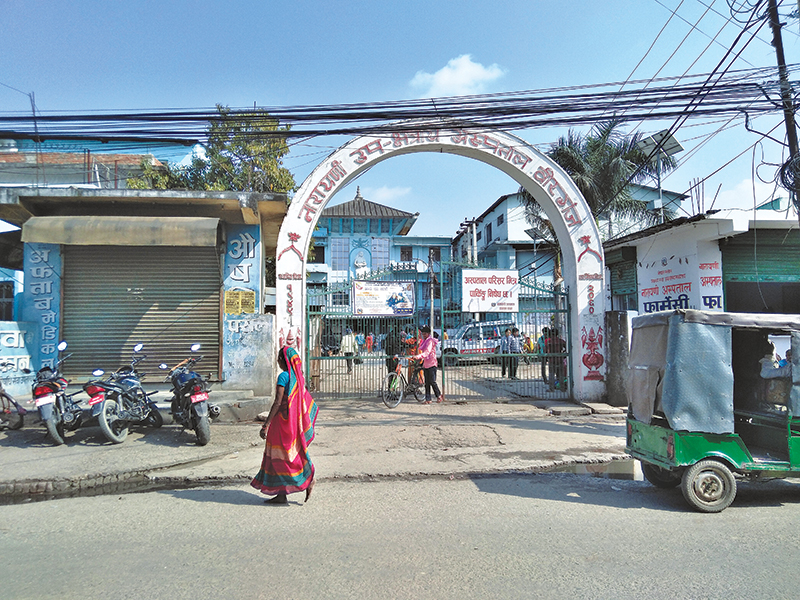
A view of the Narayani Hospital in Birgunj of Madhesh Province.
Post File Photo

KATHMANDU,
In the policies and programmes for the upcoming fiscal year 2023-2024 presented by the President in the joint meeting of Parliament on Friday, it was mentioned that the government would extend outpatient department services (OPD) at state-run health facilities from 8 am to 8 pm.
The policies and programmes of the fiscal year 2017-2018 too had stated that the government would run extended outpatient services.
So, this is not the first government to make such an announcement. Successive governments formed after the country became a republic in 2008 as well as the earlier governments and even the kings, when they enjoyed absolute power, had tried to run extended services at state-run health facilities, but none succeeded.
“Running out-patient department services for 12 hours—8 am to 8 pm—is easier said than done. Several such plans and decisions taken in the past have not been implemented,” said Dr Baburam Marasini, former director at the Epidemiology and Disease Control Division. “Even kings, when they were all powerful, tried to improve the services at Bir Hospital some 40 years ago, but they didn’t succeed.”
Most doctors the Post talked to agreed that extending OPD hours is a very good idea that will not only help lessen patient pressure at state-run health facilities, but also provide them relief from exorbitant charges at private health facilities. Many poor patients who can’t afford private healthcare are forced to wait for services at state-run health facilities and often suffer for months and sometimes years.
“The concept is very good and also doable, but successive governments failed to implement it due to lack of strong willpower and thorough planning which could have sustained it,” said Marasini.
In Nepal, Patan Hospital has been running extended services for years. The hospital provides regular services from 9 am to 4 pm. By taking a ticket paying Rs75, a patient can get examined at the hospital’s outpatient department. But those seeking extended care, after the hospital’s regular duty hours after 4 pm, have to pay Rs500.
“The doctors who examine the patients for an extended period get 70 percent of the examination fee while the support staff, including nurses, get the remaining 30 percent,” said Dr Ravi Shakya, director at the Patan Hospital.  
“In our hospital too, there are some senior doctors who prefer to serve in private hospitals and clinics after their regular duty hours and we do not force them.”
The hospital administration said that there are a sufficient number of doctors to provide the hospital’s extended service. Patients can choose doctors and avail of their services during their extended duty hours.
Doctors serving in the big hospitals said the extended services can be started from hospitals under the federal government that have a sufficient number of human resources and equipment to provide the extended services.
“When Patan Hospital and the National Trauma Centre can provide extended services, the other hospitals too could do the same,” said Dr Santosh Poudel, director at the Bir Hospital. “What is needed is that the hospital’s services be divided into two parts—regular and extended—and be made optional. There are many doctors who wish to serve during extended hours.”
According to Poudel, hospitals should be allowed to charge patients additional amounts for services provided during extended hours and the doctors, too, should be allowed to take additional amounts.
“A hospital will get what it normally gets for its regular services, and the doctors will get the additional amount charged from the patients,” said Poudel. “The government has to provide an additional amount to the support staff too—nurses, lab technicians and others.”
Most private hospitals, nursing homes and clinics around the country have been run by doctors serving at state-run hospitals. Many senior doctors serving at state-run hospitals may not agree to serve during the extended duty hours as they are already earning handsome amounts from private health institutions. Doctors serving at private health facilities too have recently increased their consultation fees.
Poudel concedes that many doctors serving at Bir Hospital also serve at private health centres and it is not easy to persuade senior doctors to serve extra hours at hospitals. He, however, said there are many doctors who wish to serve if the extended services were started.
Every day, around 3,000 patients seek outpatient services at the Bir Hospital. Thousands of patients, especially those who cannot afford expensive treatment at private healthcare facilities, visit state-run hospitals where services are provided at comparatively lower rates.
Meanwhile, the Nepal Medical Association, an umbrella organisation of medical doctors, said the government itself should be clear and make adequate preparations for extending OPD services at state-run health facilities.
“We are not against the government decision, but the services should be made optional. No one should be forced to serve during extended hours,” said Dr Badri Rijal, senior vice chairman of the association. “The issue is of not only holding doctors at their designated hospitals for extra hours. The services of extended hours should be made effective and for that, a lot of things need to be done.” He didn’t elaborate.
Doctors say hospital services—laboratory, radiology, nursing services, and operation theatres—should also run for extended hours. If the patients are not charged additionally for the extended hours, the government has to bear the cost of services of the hospital staffers for those extra hours.
“Hospitals should have sufficient vacant beds for the doctors to admit patients,” Rijal said. “Running extended services with the existing human resources is also not possible.”

Page 2
NATIONAL

Man accused of swindling dozens by promising Japan jobs arrested

Ajay Kumar Rajbanshi of Sunabarshi-6, Morang allegedly collected millions of rupees from dozens of individuals.
- BINOD BHANDARI

BIRATNAGAR,
The District Police Office, Morang on Sunday arrested the alleged mastermind of a gang that allegedly swindled over three dozen persons out of millions of rupees by promising them employment in Japan under ‘Rajbanshi quota’. Rajbanshi are an ethnic minority group in eastern Nepal.
A team from the District Police Office detained Ajay Kumar Rajbanshi, 35, from his residence at Sunbarshi Municipality-6, Morang, on Sunday. The suspect was arrested based on several complaints lodged by the victims.
Preliminary police investigation shows that he collected around Rs25.3 million from around 40 Rajbanshi youths. The suspect telephoned his relatives, neighbours and other people of his community in Morang and Jhapa districts from Japan a year ago and promised them jobs in Japan under ‘Rajbanshi quota.’ Ajay set up a racket and collected money from the victims.
“The victims filed a complaint at the district police against six people including Ajay. Detailed investigation is underway,” said Deputy Superintendent of Police Ranjan Kumar Dahal. Police had detained Ajay’s father Bisham Lal Rajbanshi, but he was released without bail. Other accused including Ranjit Kumar Rajbanshi, Pramod Kumar Rajbanshi, Bidya Kumari Rajbanshi and Anuradha Rajbanshi are on the run. Search is on to nab them for investigation, said police.
Ajay, who stayed in Japan for four years, had returned to Nepal a month ago. Soon after his arrest, the police presented him at the court. The Morang district court has remanded him to five days in judicial custody for investigation.
One of the victims, Anil Rajbanshi of Kanepokhari Rural Municipality-2, Morang, was promised by Ajay a job in Japan under the non-existent ‘Rajbanshi quota’. Anil paid Rs600,000 to Bidya Rajbanshi as instructed by Ajay. Anil stayed in Biratnagar and learned the Japanese language for four months. He also learned to drive and obtained a passport, but was crestfallen upon learning only lately that he had been scammed.
“I talked to Ajay on [Facebook] Messenger. He promised me employment in Japan. I had planned to go to Malaysia, but changed my mind after he [Ajay] convinced me. He swindled me,” said Anil.
It is learned that all the victims are from the Rajbanshi community except two youths, who are Brahmin and Newar. They told the police that Ajay made a similar promise that he would send them to Japan under a ‘special Rajbanshi quota’.

NATIONAL

Prithvi Malla gets 4 years jail in vehicular homicide case

On May 2, Patan High Court convicted him of drunk driving and killing a pedestrian in 2019.
- SAMUEL CHHETRI

KATHMANDU,
The Patan High Court on Sunday gave an additional four years’ jail to Prithvi Malla, who is convicted of drunk driving and killing a pedestrian in December 2019. Earlier on March 22, 2022, a lower court had sentenced Malla to six months in prison after finding him guilty.
Deputy Registrar Mandira Shahi, also the court’s spokesperson, informed that a division bench of judges Rajendra Kharel and Jagadish Ghimire issued the verdict to sentence Malla to prison and slapped a fine of Rs40,000.
“The full text of the verdict will be issued in a few weeks and it will be sent to the District Police Office for implementation,” said Shahi.
Shahi informed that the full text will be available in around two months as there are other pending cases at the court.
The high court on May 2 had convicted Malla in the death of 38-year-old Lila Devkota in a drunk-driving incident at Budhanilkantha, Kathmandu on December 14, 2019.
Devkota was walking along the footpath on her way back after visiting  the Pako-based Sankata Temple when the car driven by Malla hit her, lost control and rammed into an electricity pole.
Eyewitnesses said Malla was so drunk that he could barely walk. The car was full of beer bottles and reeked of alcohol.
Following the incident, Devkota was rushed to the nearby Neuro Hospital. Moments later, she was pronounced dead.
Malla, who was 21 then, was taken into police custody after the accident.
After receiving a report from the police, the District Attorney’s Office had filed vehicular homicide charges against Malla at the Kathmandu District Court on January 6, 2020, seeking a jail term of up to 10 years for the accused. Three days later, the court sent Malla to jail until a final verdict was announced.
But Malla barely spent any time in jail as he was admitted to the Basundhara-based Chirayu Hospital almost immediately after the hospital provided the prison with Malla’s medical diagnosis, which showed that he was suffering from hypertension, severe depression with adjustment disorder, along with asthma, leading to blood pressure and oxygen saturation problems.
A year later, in March, 2020, the court sentenced Malla to six months in prison and fined him Rs1,000 for the offence.
The district attorney’s office challenged the district court verdict and appealed at the Patan High Court, stating that the lower court’s verdict was lenient given the gravity of the incident.
The Patan High Court had also sent him to judicial custody until the final verdict.
Meanwhile, on July 15, 2020, a division bench of Supreme Court Justices Sapana Pradhan Malla and Manoj Kumar Sharma quashed the
earlier decision by the Kathmandu District Court and the Patan High Court and ordered his release on a Rs500,000 bail.
During the hearing, the apex court held that given his medical history, the Covid-19 pandemic situation and slim chances of him absconding or tampering with evidence, Malla could be released on bail.

NATIONAL

One dead, two missing in Bajhang avalanche

District Digest

BAJHANG: A Yarsagumba picker died while two others went missing when an avalanche struck them at Dhanseri Himal area of Surma Rural Municipality in Bajhang on Sunday. Two Yarsagumba collectors sustained injuries. Police identified the deceased as Ramkoila Bohara, aged 40, of Surma-3. Two girls, aged 18 and 14, from Jayaprithvi Municipality-11 went missing in the avalanche that struck at around 11am, police said. A rescue team of Nepal Police and Armed Police Force has been dispatched to the site. “They will reach the site tomorrow [Monday],” DSP Jageshwar Bhandari said.

NATIONAL

Fire destroys health post

District Digest

GORKHA: A fire broke out at Bungkot health post at ward 7 of Sahid Lakhan Rural Municipality in the district on Sunday morning and completely destroyed the administration, store, and resident rooms of the health facility. According to Sharan Shrestha, the ward chair, the fire started at around 4:30 am and destroyed expensive equipment, medicines, and documents, among other things. The cause of the fire is still unknown, but initial suspicion is on an electrical short circuit. “It took two hours to extinguish the fire with the help of Nepal Police, Armed Police, the Army, and locals.

Page 3
INTERVIEW

China’s interactions with South Asia hinge on Nepal

‘Observers feel Nepali parties have no discipline. This impression arises from the belief that Nepal is willing to compromise on its principles, leading to a lack of trust in the country.’


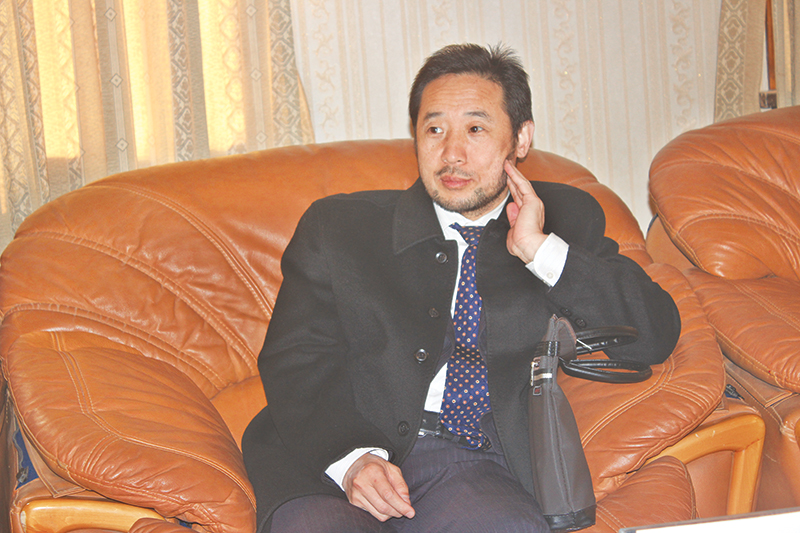
Hu Shisheng, who serves as the director of South Asian Studies at the China Institute of  Contemporary International Studies (CICIS), is a prominent Chinese scholar on Nepal and the Indian sub-continent. He also regularly advises the Chinese government on Nepal-related matters. Hu talked to Purushottam Poudel on a range of issues between Nepal and China. Excerpts:

How does China view Nepal?
When it comes to Nepal, China has various perspectives. One significance of Nepal is that it is located between China and the South Asian subcontinent. So Nepal can work as a bridge between them. The China-India border demarcation could take a long time to settle and in this scenario, Nepal is the only bridge between China and South Asia. When it comes to other South Asian countries, China has no diplomatic relations with Bhutan whereas Pakistan is more a West Asian nation in terms of its geography. China emphasises Belt and Road Initiative (BRI) in Nepal so that it can work as a bridge in the sub-continent.
The other reason China values Nepal is due to the Tibetan region. We know before 2005—when King Gyanendra entered into a comprehensive agreement with China to stop illegal emigration of Tibetans—each year, nearly 2,000 Tibetans emigrated to the outside world, and this happened for nearly 20 years. The major road for those illegal Tibetan emigrants was through Nepal. Illegal Tibetan emigrants caused great trouble for China. Therefore, for the proper development of the Tibetan region, China also wants good relations with every political party and institution in Nepal. This is why we support the infrastructure development of the country’s Armed Police Force.
Cultural ties are the third important factor in China-Nepal relations. One billion Chinese are followers of Buddhism. They are obsessed with visiting the birthplace of Gautam Buddha in Lumbini. Good relations between the two countries can also foster the pilgrimage of Hindu followers to Kailash Manasarovar, which lies in Tibet. The two countries can make a cultural corridor. For this, people-to-people understanding is very important.
The leftist parties are still very powerful in Nepal. The communist parties of the two countries have played big roles in their respective countries and in building the economies. We can foster an ideological partnership.
Nepal has enormous water resources. We could develop a sub-regional power grid. And environmental protection could be another area of cooperation. This region’s biodiversity is unique. We need to undertake a collective study on how to protect the environment.

Many believe Chinese interest in Nepal is directly related to the security of the Tibetan region. You seem to be one of them.
The Tibetan issue is important for China, for its security and development. When it comes to Tibetan issues, China is not apprehensive about Nepal per se. We are more worried about Nepal being used by third countries or anti-China groups. We know Nepal will do no harm to China, but we doubt it can withstand temptation or pressure from third parties. We value China-Nepal relations for its own sake and also for the potential of our broader relations in the sub-continent.

If we subtract the Tibetan issue from Nepal-China relations, will Nepal still carry significance for China?
Yes China has relations with the South Asian subcontinent and that goes through Nepal. As the China-India border conflict could continue in the near future, China’s interaction in the sub-continent will depend on Nepal. Apart from that, China and Nepal share cultural and economic relations too. If Nepal can be a bridge between the two giants, that can make a big difference. Therefore, Nepal’s importance to China is not only because of Tibetan issues. Suppose, in the future, we resolve the border problem with India, at that time Nepal’s significance to China might be reduced. However, before that, if China and Nepal build a solid relationship then Nepal’s significance will remain high. Even if China established diplomatic relations with Bhutan in the future, Bhutan cannot play the role of Nepal. Bhutan is too small and more India-dependent.

Earlier it used to be said that China does not meddle in the internal affairs of other countries. But of late it seems to be meddling a lot in Nepal, especially when the communists are at the helm.
China suffered for over a hundred years when foreign powers meddled in our internal politics. So not interfering in the internal matters of other countries is the guiding principle of our foreign policy. With the continued increase in Chinese influence, neighbouring countries are increasingly factoring in China. This way, China is not interfering, but has become a part of the local policy. More than interfering in the internal policies of other countries, we are looking for constructive engagement.
Chinese activities in Nepal during the rule of the Nepal Communist Party were due to the changed political environment in Nepal. The two largest communist parties of Nepal coming together was an unprecedented event in Nepal. It was a good opportunity for China to cooperate with Nepal so China might have tried to grab the opportunity. When President Xi Jinping visited Nepal in 2019, he said bilateral relations between the two countries had entered a new era. When the relations entered a new era the Chinese mission in Nepal had to engage with Nepal more than ever.
It might also be the result of Chinese diplomats changing their work approach. After Xi Jinping became President, he encouraged diplomats to be more energetic. That is why many Chinese ambassadors in different countries have become more vocal. Interactions between Chinese and Nepali leaders might increase their understanding of each other.

The leftist leaders are still in favour of uniting Nepal’s scattered communist parties. Does China still want a communist unity in Nepal?
China will encourage the communist parties of Nepal to unite. We believe unity is strength. There are so many parties in Nepal. In India, the coalition government before 2014 failed short of fostering much economic development. Though some provinces of India, for example Gujarat under Narendra Modi, did good, the central government was weak. But under the Bharatiya Janata Party government, the Indian economy is developing impressively. Nepal is a resource-abundant country. Water, culture and natural beauty are some resources which Nepal needs to use for its development. Nepal is located between two big markets.
If there is political certainty, development can be easily achieved. Compared to Bangladesh, the population of Nepal is negligible, so it is quite easy to develop Nepal, but you need to have political stability. Chinese political philosophy is that we need to deal with stable political conditions. When there is no stable political condition we only offer some humanitarian assistance, which is not a development.
China has seen dramatic development in one generation which we would like to see in other countries, especially in the neighbourhood. With Nepal’s neighbours China and India rising, America’s interest in Nepal is steadily rising. This is a golden opportunity for Nepal to develop. For this political certainty is very much needed.

Following elections last year, a few new political parties have risen in Nepal. How do you evaluate Nepal’s changed political climate?
The politics of Nepal has not settled. Policies of political parties during the election campaign and after the election are different. Policies here shift in a short period of time. Outside observers feel that Nepal [parties] have no discipline. The impression is that Nepal can compromise even on its principles. So observers will have no trust in Nepal. Personally, I have a certain kind of distrust or dislike for the political culture of Nepal.
In the last local elections, there were some independent candidates who won despite not having any political organisation. Those mayors without any political backgrounds are finding it difficult to accomplish their work. This is not the way to run a country. Political parties are still needed. Political parties can mobilise all kinds of resources for development, which is difficult for independent leaders. But, why did it happen?  The voters are disappointed with the traditional political leaders.

The former monarch of Nepal is trying to cash in on the growing public resentment towards the traditional parties. How do you see this?
Once a system goes, it’s gone. As the Nepali people are already accustomed to the multiparty system I personally do not think Nepal now needs the monarchical system. Even when there was a monarch, Nepal did not have political certainty. When we look at the political history of Nepal from 1990 to 2006, there was a three-party struggle: between the monarch, the democratic parties and the warring Maoists. The country was still divided. Instead, a multiparty system should be made more and more mature.

Foreign actors are often blamed for the political instability in Nepal. Is the blame fair?
Internal factors are decisive. If the political leaders think about people’s happiness, geo-strategic competition can be a dividend. See what happened in the cold war period in India. They got support from both the US and the USSR. In a way, the development of Singapore can also be considered a result of geo-strategic dividends. They welcomed major powers, but in national interest. Internal factors rely on mature political culture.

You said Nepal could take advantage of its location, but how can it contend with growing geopolitical competition? China’s Global Security Initiative and the US-led Indo-Pacific Strategy are two examples. Each wants Nepal to join in.
The GSI is aimed at building a more cooperative, inclusive and sustainable security phenomenon. We do not want to see the world divided along ideological or other lines. We want the world to be united. If Nepal welcomes the GSI, it would be better for its national interest as China upholds the concept of cooperative, inclusive and sustainable security. China seeks security through development and cooperation. It believes in collective security rather than individual interest.

It is said that China wants Nepal to be a part of the GSI, but what if it opts out?
I do not think China will force any country to be part of any initiative it forges. The GSI is a Chinese philosophy of security. It has no specific branches, unlike the Indo-Pacific Strategy. It is just a principle. China views the Indo-Pacific Strategy as an exclusive group. If we read the strategic reports of the Indo-Pacific Strategy, it is aimed at containing China. It is a strategy to maintain the supremacy of America. China will not see Nepal’s participation in the IPS positively.
Though America says the Millennium Challenge Corporation (MCC) is one of the tools to implement the IPS, China is not worried about the ratification of the MCC by the parliament of Nepal. Nepal needs this kind of assistance, but Nepali leaders should also assure China that such projects will not impinge on China’s security. Meanwhile, all the MCC projects should be open so that they can be coordinated with projects funded by other countries.
But regarding the State Partnership Program, China wants Nepal to stay away from it. We have the experience of the Khampas Revolution in the early 1960s.

Some reports suggest that the Chinese army wants to recruit Nepali Gurkhas. Is that true?
That’s just a rumour. I don’t think there is such a possibility. I can give three reasons why Nepali Gurkhas will not be recruited in the Chinese army. First, it will need a lot of legal preparations. China has no legal support to enrol foreigners into its army. Second, we know that Nepal and India share a porous border, and we cannot ensure people from India who want to get confidential security information on China will not try to exploit this kind of enrollment. In Nepal, India’s influence is pervasive. Last, it is against the guiding principle of China’s foreign policy not to interfere in another country’s internal affairs. If we enrol Gurkhas, we will have to get involved in Nepal’s internal affairs.

Who is China’s major competitor in Nepal: India or America?
India is obsessed with South Asia and thinks the region should be under its control. India should be relaxed while dealing with South Asian countries. But China also borders five of the eight South Asian countries. It is vital for China to maintain good relations with South Asian countries also for Tibet’s development and Xinjiang region’s stability.

You are among a handful of experts who advise the Chinese government on Nepal and South Asia. What topics do you prioritise when it comes to Nepal?
The Chinese government should pursue parallel policies on Nepal. One, it should enhance bilateral relations while reducing the engagement of third-party actors. Two, China should be persistent in developing physical connectivity with Nepal. Without this, the relations between the two countries have no future. Three, China should avoid third-party rivalry in Nepal at the cost of Nepal’s development. Our policies should be transparent and we should deal with all political parties. Stability and development of Nepal means stability and development of the Tibetan region; their destinies are intertwined.

Page 4
OPINION

Enough is enough

The general public’s level of frustration over corruption is very high.
- PABAN RAJ PANDEY
Post File Photo

Recently at an investment conference on May 12, Prime Minister Pushpa Kamal Dahal vowed to improve the investment climate in Nepal. Odds are he was just paying lip service to the crowd he was addressing. Many decision makers—both elected and non-elected—made similar promises in the past, yet foreign direct investment remains very subdued. If let us say Dahal is serious this time, one of the ways he could help create an investment-friendly environment is by helping create a society where corruption is looked down upon. Globally, Nepal ranks very high in corruption. For foreign investors, corruption and the associated bribes constitute a hidden cost—a stealth tax—which pushes up project and/or operational costs.
Corruption can be defined in lots of different ways. While it does take place within private enterprises, corruption at the most basic level can be described as the abuse of public power for the benefit of self or related individuals. Corruption one way or the other has been ingrained in human society for ages. Nations at the lower rung of economic development are more prone to this, but the developed ones are not immune either. South Korean President Park Geun-hye was impeached on corruption charges and sentenced to 25 years in prison. French President Nicolas Sarkozy was sentenced to three years in prison for corruption and influence peddling. Several United States senators have been found guilty of accepting bribes.
In 2022, no country scored a perfect 100 in Transparency International’s corruption perceptions index, but countries like Denmark (90), Finland, and New Zealand, where public apathy toward corruption is deep-rooted, scored high. In the United States, paying bribes to foreign officials is a criminal act, and bribery is one of two crimes explicitly mentioned in the constitution that could lead to the impeachment of a president. In countries like Nepal (34) where corruption is pervasive, the cost of not paying bribes is lost contracts. In contract bidding, only the most efficient ones can afford to offer the highest bribe. This is a deterrent for most foreign capital, which will then go to countries where these costs are lower.

Step in right direction
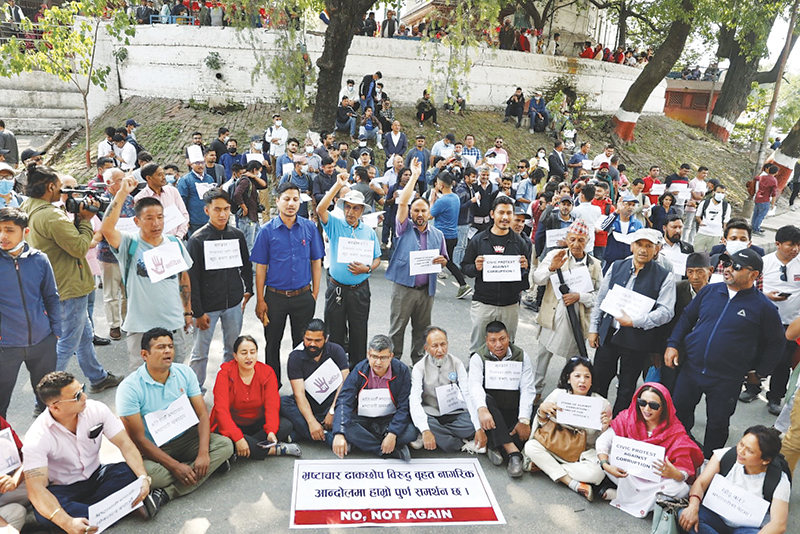
It is because of these supply-demand dynamics that what is transpiring in Nepal as relates to the fake Bhutanese refugee case should be viewed as a step in the right direction. Nepalis apparently paid millions each in bribes to be settled abroad in the guise of Bhutanese refugees. This had the blessings of prominent government officials. Corruption at the highest echelons of government is nothing new in Nepal. What is new is the speed at which investigations are progressing and the way the accused have been put behind bars. Thus far, the police have nabbed 16, including former vice-president and energy minister Top Bahadur Rayamajhi, former home minister Bal Krishna Khand and former home secretary Tek Narayan Pandey.
It is possible the Dahal administration is acting with new-found enthusiasm because it involves foreign powers. Under the UNHCR programme, nearly 113,000 Bhutanese refugees of Nepali ethnicity were resettled in eight countries including the United States. Soon after news broke that the police were on the hunt for suspects including Rayamajhi, the leaders of the three main parties—Dahal, of the Communist Party of Nepal (Maoist Centre), KP Sharma Oli, of the Communist Party of Nepal (Unified Marxist-Leninist), and Sher Bahadur Deuba, of the Nepali Congress—met. Rayamajhi until his recent suspension was secretary of the CPN-UML and a Maoist before that, while Khand is a central working committee member of the Nepali Congress.
The widespread public perception was that the three hurriedly huddled together to try to sweep the crime under the carpet. Many corrupt acts have gone unpunished in the past. In 1990 when a multi-party system was restored, one of the oft-repeated
slogans of the new parties was to get rid of corruption prevalent in the preceding one-party Panchayat system. More than three decades have gone by and it has only grown. Some major scandals surround Baluwatar and Lalita Niwas land, procurement of medical supplies, wide-body aircraft, and security printing press. The public learns about the corruption, only to discover that the authorities never
followed through. In order not to investigate, the corruption breeds more corruption.

Writing on the wall
The current anti-corruption commitment shown by the government—not to mention the police—is an exception to this. Dahal, who leads a 10-party coalition government, of which the Nepali Congress leads with 89 seats won in last year’s general election versus Dahal’s 32, has said he will get to the bottom of this, no matter who is involved. Narayan Kaji Shrestha, the current home minister, is from his party and a man with no family, which probably suggests he is free from the shackles of nepotism—a la the late Krishna Prasad Bhattarai of
the Nepali Congress. A whole lot is riding on how all this evolves. If this ends the way it began, a new chapter—a constructive one—will have been written in the annals of corruption.
It is very possible that Dahal, Deuba and Oli have seen the writing on the wall. The general public’s level of frustration over corruption is very high, and they are protesting where they most efficiently can—at the ballot. The journalist-turned-politician Rabi Lamichhane-led Rastriya Swatantra Party made waves in last year’s general election, winning 20 federal seats in the lower house. In last month’s by-elections, both Lamichhane and Swarnim Wagle, who left the Nepali Congress to join the Rastriya Swatantra Party, won—from Chitwan and Tanahun, respectively. They represent the new blood of leaders fully aware of the damage wrought by years of corrupt practices and of the need to say “enough is enough”.
If the three major parties mess this one up, this will be an open invitation to the likes of the Rastriya Swatantra Party to do very well in the next election cycle. At some point, the case likely reaches the Supreme Court, and it too will need to rise to the occasion; in the last two years, the apex court has done so at least three times—twice when Oli’s attempt to dissolve Parliament was deemed unconstitutional, and when finance minister Janardan Sharma suspended Nepal Rastra Bank governor Maha Prasad Adhikari and was rebuffed. The fight to end corruption cannot be won in just a few years. A strong foundation will have been laid once politicians start giving up a life of luxury, and laws are in place to protect/reward whistle-blowers.  


Pandey talks markets, money and macroeconomics on hedgopia.com.

OPINION

Comprehensive sexuality education in Nepal

It is a game changer in reducing child marriage, gender-based violence and teen pregnancy.
- WON YOUNG HONG
Shutterstock

Nepal is witnessing positive generational changes, with society and the economy undergoing significant transformation as the country moves to middle-income status. These changes will affect all aspects of people’s lives. They will, however, both rely on and impact younger generations more than any other part of the population of Nepal.
This generation will be vital for realising the full potential of the changes we are witnessing. An advanced economy is closely linked with education attainment and will require different skill sets from the workforce. A growing market demand for increased access to human capital able to respond to different forms of labour, including in the service and industrial sectors, will require increasingly higher levels of social capital.

Education to unlock potential
While there is a clear youth bulge that provides conditions for a demographic dividend, education is one of the keys to unlocking the potential of this generation. In this respect, the Government of Nepal has laid the groundwork for responding to many of these potential changes by investing increasingly in education and ensuring young people are attending primary and secondary school in unprecedented numbers. The net enrolment rate in basic education is now 96.1, and there are also increases in completion rates, rising to 77.1. The results of the census also show the proportion of the population attaining higher education attainment levels at upper secondary increased from 12 to 15 percent between 2011 and 2021. In this period, intermediate levels also increased from 6 to 13 percent.
Such advancements in education, however, also require guaranteeing an overall environment where adolescents are able to securely mature into productive adults in a safe environment. This means ensuring these young people not only have access to higher-quality education but, crucially, also their sexual and reproductive health and rights, which include comprehensive sexuality education.
Our UN and government programmes demonstrate time and again that having easy access to education and age-appropriate comprehensive sexuality education prevents harmful trends such as school dropouts and child marriage, as well as gender-based violence, and equips girls and boys with the knowledge and skills to negotiate barriers to their full participation in public life. In a country where, according to the Multiple Indicator Cluster Survey in 2019, one in three girls aged 20-24 marry as children and 14 percent of women aged 15-19 had begun childbearing in 2022, this is not only necessary but essential. Even more so, in reducing these trends, these forms of education are acting as one of the key drivers that can bring about social change and act as an economic driving force.

Wider social benefits
As one part of securing the sexual and reproductive health and rights of young people, comprehensive sexuality education is key to the continued health of not only women and girls but wider social and economic spheres. The active and productive participation of adolescents is crucial to continuing the advancements witnessed over the past decade. Investing in comprehensive sexuality education is therefore not only an investment in a generation of young people. It is an investment in the future.
The wider business case as to why comprehensive sexuality education is not only important in and out of schools but is also central to securing wider public welfare benefits is clear. Having healthy adolescents who are aware of their sexual and reproductive health and rights leads to positive outcomes. It is an accelerator for changes to the economy and society, and it is a game changer in terms of reducing harmful practices such as child marriage, gender-based violence, and teen pregnancy that hold societies back.

Policy integration and coordination
Although there is a positive set of policy framework outcome goals for comprehensive sexuality education in Nepal outlined in the School Education Sector Plan 2022-31 and other policy documents, it is essential to invest more in both the coordination and implementation sides of learning.
The availability of comprehensive sexuality education in schools is not standardised because it remains optional and the quality of teaching across schools that do provide lessons, varies. A successful programme of comprehensive sexuality education also requires access beyond school facilities. Integrating learning more closely with health services is essential for effective implementation across the country. More incentives are required to ensure the teaching of comprehensive sexuality education is mandatory in schools across grades, and there need to be increased efforts to support the implementation of guidelines.

Communities are crucial
A point also often overlooked is that securing the sexual and reproductive health and rights of girls and boys requires a high degree of support from peer groups, families, and communities. And one of the key catalysts for this conversation is comprehensive sexuality education, ensuring that there is not only awareness but also an understanding that important life decisions are fundamentally grounded in this issue of sexual and reproductive health and rights.
In this respect, we need to think holistically about how comprehensive sexuality education works across institutions, communities, and families to ensure strong support across these spaces for the sexual and reproductive health and rights of adolescents. We cannot only leave this form of education in the classroom but also need to ensure it extends across different communities and social spaces.
If strong investments in comprehensive sexuality education pay wider dividends and lead to positive outcomes, there needs to be an equally strong commitment to coordination, implementation, building capacity at local levels, and making available resources for the teaching of comprehensive sexuality education. These also need to ensure communities are supportive of age-appropriate sexuality education and do not feel excluded or somehow misunderstand the goals of such learning.

Towards the future
Successful comprehensive sexuality education programmes are always rooted in the communities that they engage with. While there is significant progress in Nepal on developing a conducive policy environment, there remain challenges in ensuring adolescents have full access to student-friendly and comprehensive learning tools that lead to improved sexual and reproductive health outcomes.
Developing strategies for overcoming any obstacles to these learning opportunities is perhaps one of the biggest challenges ahead. I am, however, confident that the Government of Nepal will scale up its investment in comprehensive sexuality education in order to achieve the national commitments made at the International Conference on Population and Development-ICPD+25- in Nairobi in 2019 that will enable Nepal to achieve the Sustainable Development Goals by 2030. A key step in this direction will be to ensure the 16th national development plan invests in young people, especially adolescent girls, to realise the national development vision. Universal access to sexual and reproductive health and rights, including comprehensive sexuality education, should be central to that plan.


Young Hong is the Resident Representative, UNFPA.

OUR VIEW

Primary concerns

It is doubtful whether just tweaking the system to pick election candidates will improve politics.

The Rastriya Prajatantra Party (RPP) has decided to nominate its election candidates through primaries. The party, which pitches for the preservation of conservative social values, has followed in the footsteps of the new Rastriya Swatantra Party (RSP). The old party has taken a new approach at a time traditional political forces are under tremendous pressure to reflect the broader changes in the society. In the words of the RPP’s senior vice-president Rabindra Mishra, the rank and file is in the stage of reimagining, rebranding and recasting the party. The fact that the pro-monarchy and pro-Hindu party realises the need to recreate
and rebrand itself is a positive sign. Every system and organisation needs periodic renewal, both in terms of manpower and structure. But a change made without conceptual clarity and preparation may not have the desired result. No system is good or bad in itself; what counts for more is the intent of its designers.
For example, the proportional representation system was brought with the noblest intent of ensuring greater representation of the marginalised and downtrodden communities in national politics. But then it soon morphed into a system to accommodate the near and dear ones of the top leaders and the businesspersons who could literally buy these parliamentary seats. Before that, the constitution Nepal promulgated in 1990 was hailed as the “best in the world” and yet it had to be thrown into the dustbin in just a decade and a half. Now the same is being said of the 2015 constitution. But if history is any guide, the new constitution could also meet with a big accident if those who brought it continue to weaken its very foundation of an autonomous three-tier government system.  
Primaries conducted to pick party candidates for general elections or as representatives for party conventions are effectively practised in democratic countries like the US and the UK. If done wisely, they can strengthen intra-party democracy. But just changing the system won’t do any good unless its architects also change the way they think. Those who are used to employing money and muscle to get their way could do the same in the new system of primaries as well. Major political parties including the CPN-UML nominate candidates through their local chapters, in principle. Likewise, representatives of party conventions are elected from among local members. But malpractices and anomalies in these methods are so rampant that party chiefs and other key leaders can easily use them to elect candidates they favour. And questions have already been raised about the RSP leadership “manipulating” the primary system in favour of certain election candidates.
Primaries can give party rank and file the power to choose desired candidates for general elections and vital party positions. It would also be unwise to declare them unfit for Nepal right off the bat. Yet there are reasons to doubt that just tweaking the system of picking candidates will be enough. Donald Trump has mastered the art of winning primaries by mouthing extremist views, pushing the Republican party far to the right. More polarised politics is the last thing Nepal needs right now. 

THEIR VIEW

Gloomy days

Pakistan must boost its earnings from exports, FDI and remittance inflows.

Pakistan’s balance-of-payments troubles have spiralled into a full-blown economic crisis over the last several months. Amid stagnating growth and skyrocketing inflation, the crisis, exacerbated by sustained political conflict, has reached a point where it is threatening to destabilise the country as it faces the danger of sovereign default. The reasons are obvious.
Our ruling elites have borrowed heavily from just about everywhere to sustain their luxurious lifestyle for decades, without ever thinking that the world could one day stop financing or subsidising their extravagant ways.
The more immediate reason relates to the inability of our ruling classes to change their wasteful ways, despite warnings from our lenders and friends. It is not surprising that no one wants to fund us unless we make a strong commitment to implementing reforms and fixing our structural issues.
A report of the economic affairs ministry shows that Pakistan’s external financing pipeline is drying up. Multilateral, bilateral and commercial inflows (read: loans) went down by 38pc—or amount to just $8.1bn—in the first 10 months of the current fiscal year against over $13bn during the same period last year.
The amount is just 35.5pc of the $22.8bn full-year budget target for foreign financing. No wonder official foreign currency reserves have dwindled to $4.3bn as of last weekend—just enough to cover the bill of one month of controlled imports.
Former finance minister Miftah Ismail believes that the economic situation is going to be “very difficult” in the coming months, with liquid foreign exchange reserves likely to drop below the critical level of $2bn by the end of September.
With the IMF programme in limbo, because the Fund isn’t satisfied with Pakistan’s commitment to reform or its ability to arrange the required funds to meet external financing needs, our bilateral partners are also hesitant to step up. In such a scenario, with new elections expected in October, no one really knows where we will be—and in what condition—in the next few months.
According to IMF estimates, Pakistan will be required to make debt repayments or seek rollovers of nearly $75bn over the next three years. In order to repay its debt and avoid default, Pakistan must rapidly boost its earnings from exports, FDI and remittance inflows from overseas Pakistanis.
That is not going to happen overnight or without implementing key structural reforms to stabilise the economy. So Islamabad is left with only one option: take fresh loans and seek rollovers of existing foreign debt to stay afloat and avoid a formal default. That will not happen until the IMF programme is revived.
The alternative—debt restructuring—doesn’t sound pleasant in the current environment. In either case, we will have to first deal with the elephant in the room: political instability.

— Dawn (Pakistan)/ANN

Page 5
MONEY

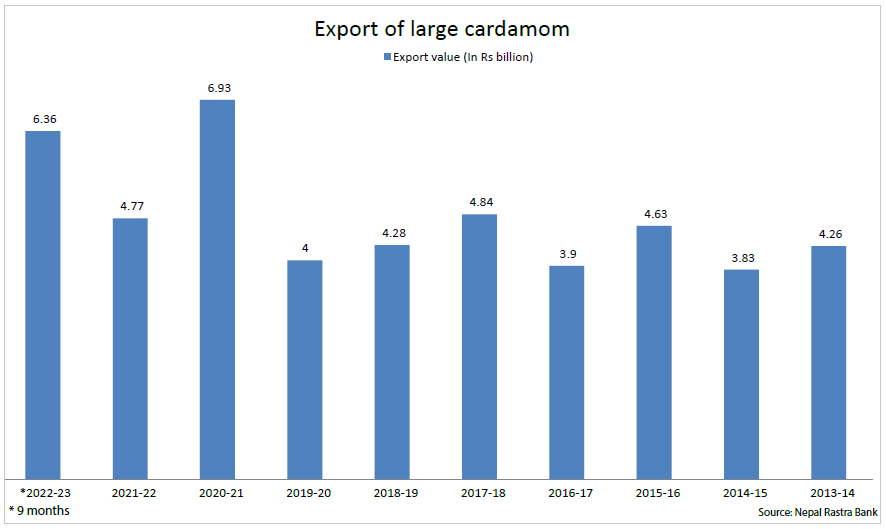
Large cardamom exports hit record Rs6.36 billion in 9 months

Nepal is the world’s largest producer of the high-value spice followed by India and Bhutan.
- KRISHANA PRASAIN

KATHMANDU,
Nepal cemented its place as the world’s largest cardamom exporter by shipping an all-time high Rs6.36 billion worth of the spice in the first nine months of the current fiscal year.
According to the Trade and Export Promotion Centre, exports jumped
by 65 percent year-on-year to 7,871 tonnes largely due to an increase in production.
Traders say the export value of large cardamon may hit an annual high by the end of the fiscal year in mid-July.
Large cardamom is cultivated predominantly in four districts of eastern Nepal--Taplejung, Panchthar, Ilam and Sankhuwasabha--which account for more than 80 percent of national production. Around 60,000 families are involved in growing it.
Besides Nepal, this high-value spice is also cultivated in India and Bhutan.
More than 90 percent of the large cardamom grown in Nepal is exported to India, traders said. The spice is also sent to Pakistan.
Large cardamom exports account for 5.4 percent of Nepal’s total exports.
“This year, production increased by 50 percent as the saplings planted four years ago started to bear fruits,” said Nirmal Bhattarai, president of the Large Cardamom Entrepreneurs Association of Nepal.
“Farmers are expanding the large cardamom acreage beyond the eastern hill districts.”
Large cardamom is being grown in Dadeldhura and Lamjung too. Favourable weather also helped to boost output, he said.
According to the association, large cardamom sells for Rs850 per kg. The farmgate price is lower.
“The price of large cardamom has been fluctuating in a range of Rs700 to Rs1,000 per kg,” said Bhattarai who also owns Everest Large Cardamom Industries in Arjundhara, Jhapa.
Large cardamom is grown on 18,000 hectares in the country. The spice is harvested between mid-July and mid-October.
“We have been processing large cardamom for export, but India prefers non-processed cardamom as it is cheaper. India then processes, packages and brands the spice and sells it at a higher price,” Bhattarai said.
“Everest Large Cardamom Industries is engaged in processing, packaging and labelling large cardamom,” he said.  
“We are trying to export large cardamom to third countries by doing the processing, packaging and branding ourselves. Domestic consumption of large cardamom is minimal, so the association is trying to increase consumption too.”
Export earnings from goods identified by the Nepal Trade Integration Strategy (NTIS) 2016 as having high export potential increased by 18 percent in the first nine months of the current fiscal year, with carpet, cardamom, tea, pashmina, medicinal herbs and ginger recording sharp increases.
Nepal earned Rs32 billion from exports of NTIS products in the first nine months of the current fiscal year, the Trade and Export Promotion Centre revealed.
Export earnings from NTIS products totalled Rs36.89 billion in the last fiscal year year 2021-22.
Cardamom, tea, ginger, yarns, carpet, pashmina, medicinal herbs, textiles, footwear and leather are included in the latest NTIS product list.
The primary market for NTIS-listed farm products is India. Europe and the United States are the largest buyers of NTIS-listed handicraft goods.
The NTIS is normally reviewed every five years. Items on the list get special privileges for export.
The government is reviewing the NTIS for the third time after it failed to boost exports amid a changing global trade landscape. Officials said the strategy failed to increase exports mainly due to lack of coordination among government bodies.
Growth in the export of listed products will happen when the Finance and Industry ministries and its agencies like the Department of Commerce, Supplies and Consumer Protection coordinate their activities, they said.
Nepal developed and adopted the NTIS 2010 as an updated version of the Nepal Trade and Competitiveness Study 2004 that focused on the development of 12 goods and seven services to contribute to the poverty reduction goal by making trade inclusive and equitable.
The government rolled out the NTIS to increase and promote exports to narrow the trade deficit.
But even after a decade, exports have been pathetic, insiders said.
Nepali large cardamom or black cardamom has a distinct flavour profile due to a specific method of postharvest drying in bhattis (ovens), which explains the roasted smell and taste.
The smoky flavour would overwhelm a sweet cake or pudding, but in a spice rub for roasted meat or in a full-flavoured stew, it imparts a smouldering depth no other spice can, according to experts.

MONEY

Australian PM backs G7 on ‘de-risking’ trade with China

- REUTERS

SYDNEY, 
Australian Prime Minister Anthony Albanese said on Sunday that he backed a Group of Seven (G7) joint statement out of Japan stressing
the need to ease reliance on trade with China.
The G7 rich nations, which increasingly see China as an economic
security threat, on Saturday issued a communique from the city of Hiroshima that referred to de-risking, not decoupling economic engagement with the world’s second largest economy.
Addressing media in Hiroshima, Albanese, who attended a Quad leaders’ meeting on the sidelines of the summit on Saturday, said according to an official transcript: “I support the G7 communiques about the international relations that we have there”.
Albanese said Australia had “for some time” expressed concern about China’s activity, pointing to the “chafing” of an Australian aircraft.
In May 2022, a Chinese fighter aircraft dangerously intercepted an Australian military plane in the South China Sea region, according to Australia’s defence department.
“We’ve expressed concern in the past, we’ll continue to do so,” Albanese said. “What we need to do is to make sure we work in a way that enhances the peace, security and stability in the region.”
China, firmly opposing the G7 statement, has complained to summit organiser Japan, the Chinese foreign ministry has said.
The leaders of the United States, Japan, India and Australia—a group known as Quad—said in Hiroshima they sought a region “where no country dominates and no country is dominated”, language that also appeared targeted at China.
Albanese’s comments come amid a recent thaw in Australia-China relations, with China set to resume imports of Australian timber, and talks under way about a visit by the prime minister to Beijing.

MONEY

Biden says Republican debt ceiling demands ‘unacceptable’

The Treasury Department says that the government could run out of money as early as June 1.
- AGENCE FRANCE-PRESSE
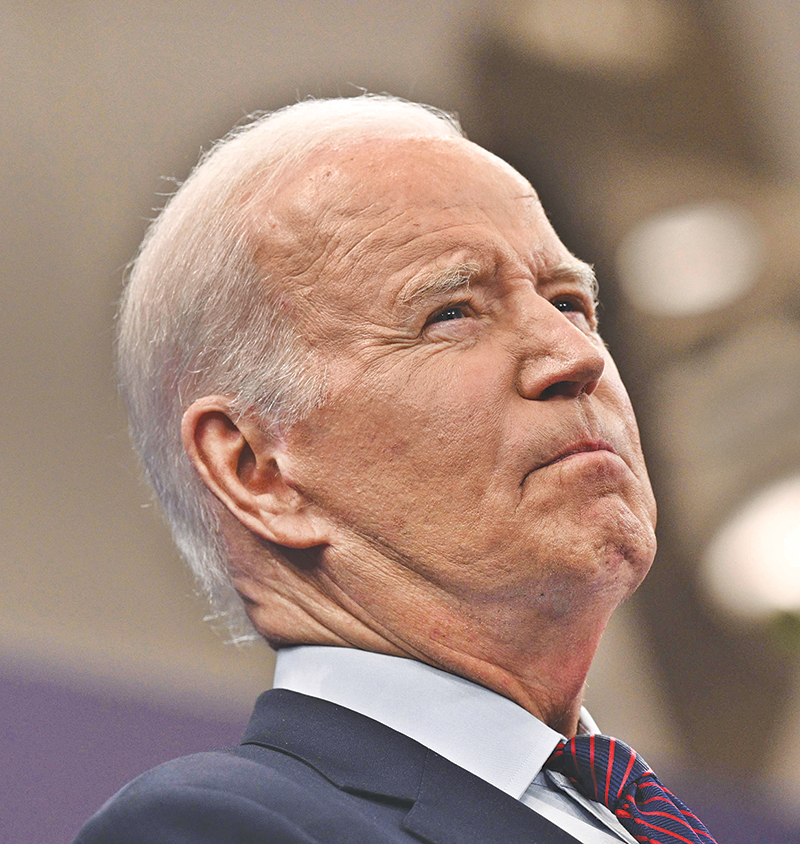
US President Joe Biden speaks during a press conference following the G7 Leaders’ Summit in Hiroshima on Sunday.   AFP/RSS

WASHINGTON,
President Joe Biden on Sunday slammed Republican demands in negotiations to resolve the US debt ceiling standoff as “unacceptable” but said a solution can still be found before a disastrous default.
Speaking at a press conference just before leaving to return to Washington from the G7 summit in Hiroshima, Japan, Biden said Republicans’ latest demands for spending cuts as a condition for raising the US government borrowing authority were “frankly unacceptable.”
“It’s time for the other side to move from their extreme positions,” he said.
Biden said he would talk directly with Republican House Speaker
Kevin McCarthy during his Air Force One flight on Sunday back to Washington and said “we can reach an agreement.”
However, he cautioned that he could not “guarantee that they wouldn’t force a default by doing something outrageous.”
Biden said that he was looking into an obscure constitutional clause in the 14th Amendment, which states that the validity of public debt “shall not be questioned”—and potentially authorising the president to circumvent Congress and raise the debt ceiling himself.
“I think we have the authority. The question is could it be done and invoked in time,” he said, noting the likelihood of legal challenges to this and the rapidly approaching debt deadline.
The Treasury Department says that the government could run out of money and default on its $31 trillion debt as early as June 1 if Congress, where Republicans control the House of Representatives, does not authorise more borrowing.
Biden had planned to travel from Japan to Papua New Guinea and Australia but cut short the Asia trip due to the debt talks.
The debt ceiling raise is usually an uncontroversial annual procedure but this year the increasingly hard-right Republican Party has turned the threat of default into a powerful lever to try and force Biden to accept spending cuts. Biden accuses his opponents of putting the US economy at risk for political point scoring.
Discussions were at an impasse over the weekend in Washington, as both sides traded accusations.
“We’re making 0 demands to avoid default. You’re the only ones with a hostage,” tweeted White House spokesperson Andrew Bates, accusing Republicans of seeking to trigger a recession in the world’s leading economy.
White House Press Secretary Karine Jean-Pierre said that McCarthy was being strong-armed by his party’s pro-Donald Trump wing, which is “threatening to put our nation into default for the first time in our history unless extreme partisan demands are met.”
McCarthy, however, tweeted Saturday to say the White House was the one “moving backward.”
“Unfortunately, the socialist wing of the Democrat Party appears to be in control—especially with President Biden out of the country,” he said.
Biden said that McCarthy was likely waiting for him to join in before the talks could be revived.
“My guess is he’s going to want to deal directly with me,” Biden said.
More borrowing is required imminently by the US government just to meet expenditures already agreed to in the current budget.
Failure to strike a deal to lift the debt ceiling would leave Washington unable to pay its bills and trigger an array of economic shockwaves worldwide—including, the White House says, a US recession.

MONEY

Lumbini cable car project set to be operational by end of the month

The project is eyeing both domestic and Indian tourists.
- GHANASHYAM GAUTAM
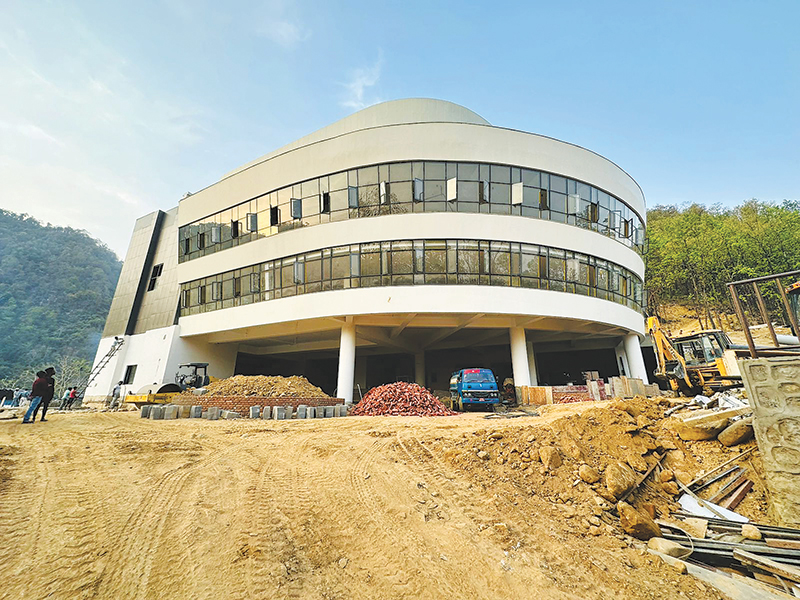
The cable car, which will operate under a single detachable gondola system, will transport 6,000 passengers daily in 24 gondolas, with a capacity of eight persons per gondola.   POST PHOTO

RUPANDEHI,
The construction of the Lumbini cable car which is being built targeting the domestic and Indian tourists and connecting the Tarai with the hills of Palpa, has reached its concluding phase and is likely to be operational by the end of May.
“Within the next two weeks, one can experience and view the plains, hills and mountains in a 10-minute cable car journey from Butwal,” said Gokul Saud, project manager of the Lumbini cable car project. He said the construction work has been completed and a trial run is being conducted.
Constructed at an investment of Rs3.5 billion, the base station of the cable car will be at Bamghat, Butwal Sub-Metropolitan and the top station will be at Basantapur, Tinau Rural Municipality-3, Palpa. For the cable car project, 75 percent of the investment is by IME Group and 25 percent is from the entrepreneurs from Butwal.
The process for the construction of the cable car project started in 2013 and the foundation stone was laid by KP Sharma Oli in February 2021.
“The construction of Kamakchya-mai temple, restaurant, zip line, swimming pool and other structures too have been built,” Saud said. “The work is being done to make a religious destination in Basantapur by restructuring the Durgamata temple. Park, picnic spot and children’s gardens have been constructed as well.”
The Lumbini cable car project has plans to build a five star hotel complex and other structures in the second phase.
A week-long puja (Saptha) will be held from May 26 to June 1 on the Basantapur Hill where a statue of God will be kept.
The cable car, which will operate under a single detachable gondola system, will transport 6,000 passengers daily in 24 gondolas, with a capacity of eight persons per gondola. There are nine cable car towers at a distance of about three kilometres. The government has granted 6.27 hectares of forest area for 25 years for the cable car operations.
Bamghat, where the Lumbini cable car base station is located, is the confluence of the Terai and the hills. Bamghat, which is at the foot of the hill, is at a distance of 29 km from the Belahiya border point. From Belahiya, the Gorakhpur town in India is 174 km away. The heat reaches its peak from April to September in India, Bhairahawa and Butwal. But one can feel cool and a chill after climbing  Basantpur hill, which is within a 3 km distance by cable car and is reachable within 10 minutes.
Chandra Prasad Dhakal, chairman of Lumbini Cable Car and president of the Federation of Nepalese Chamber of Commerce and Industry claimed that the top station of the cable car will become the best destination in Nepal to escape the heat of Bhairahawa and Butwal, including for people coming from India as well. Lumbini Cable Car is being operated under the leadership of IME Group, which is owned by Dhakal.
“We are moving forward to make the cable car and Basantapur an excellent tourist area to extend the stay of tourists coming from India to escape the heat and also for the tourists coming to Lumbini from different countries,” Dhakal said. The Lumbini cable car will also help promote tourism in Palpa and Pokhara and the proposed five-star hotel with 150 rooms and a casino will be built on the Basantapur Hill targeting both domestic and international tourists, he added.
The temperature in Basantapur Hill ranges between 12 and 14 degrees Celsius in summer.
The hill districts like Gulmi, Arghakhanchi, Pyuthan, Syangja, and Tanahu, including mountains, can be viewed from the Basantapur hill. Also, if the weather is clear, Gorakhpur also becomes visible.
There is a temple of Siddha Baba which is considered to be the centre of religious faith in the region. Dal Bahadur Gurung, chairman of the Siddha Baba Area Development Committee, said that hundreds of years ago, the Siddha Baba Temple was located in Basantapur. Later, it was moved to near Siddhartha highway due to a lack of road access on the hill.
“The development of large structures around the religious and historical places will help the economic prosperity of the Butwal area,” Gurung added.

MONEY

USAID collaborates with IFPRI and IIDS to hold workshop

Bizline

KATHMANDU: The International Food Policy Research Institute (IFPRI) and the Institute for Integrated Development Studies (IIDS), with support from the United States Agency for International Development (USAID), organised a national stakeholder consultation workshop on May 18 and 19 in Kathmandu, to review the United States Government’s (USG) Global Food Security Strategy (GFSS) Nepal Country Plan. The workshop saw participation from over 80 national representatives and key stakeholders in diverse thematic discussions encompassing risk and resilience capacity, food system innovation, markets and trade, food system outputs and outcomes, and food system governance and control, reads the press release issued by the organisation. The GFSS is an integrated whole-of-government approach that aims to end global hunger, poverty, and malnutrition through the Feed the Future initiative. (PR)

MONEY

India regulator proposes halving IPO listing time

Bizline

MUMBAI: India’s market regulator proposed halving the time needed to list shares on the nation’s stock exchanges from the closure of initial public offerings (IPOs) to three days. The proposed reduction in timelines for listing and trading of shares would benefit issuers and investors, the Securities and Exchange Board of India (SEBI) said in a consultation paper on its website late on Saturday. “Issuers will have faster access to the capital raised, thereby enhancing the ease of doing business, and the investors will have opportunity for having early credit and liquidity of their investments,” SEBI said.SEBI invited comments on the proposed change until June 3. (REUTERS)

MONEY

Volcanic ash from Popocatepetl temporarily shuts down Mexico City airports

Bizline

MEXICO CITY: Mexico City’s two main airports temporarily shut down operations on Saturday due to ash spewing from Popocatepetl volcano, located 72 kilometres southeast of the country’s capital. The city’s Benito Juarez International airport suspended operations at 4:25 am local time. It resumed operations at 10 a.m., after removing volcanic ashes, checking the runways and verifying favourable wind conditions, the airport said on Twitter. The new Felipe Angeles airport, located north of Mexico City and operated by the military, shut down operations around 6 am, and service was suspended for five hours. Volcanic ashes are especially dangerous for aviation, not only because they reduce visibility but because they can act as an abrasive, damaging an aircraft’s wings and fuselage. (AP)

Page 6
WORLD

Ukraine says troops still engaging Russian forces in Bakhmut after Moscow announces victory in city

Analysts have said Bakhmut’s fall would be a blow to Ukraine and give some tactical advantages to Russia but wouldn’t prove decisive.
- ASSOCIATED PRESS
In this handout photo taken from video and released by Prigozhin Press Service on Saturday, Yevgeny Prigozhin, the head of the Wagner Group military company, speaks holding a Russian national flag in front of hissoldiers in Bakhmut, Ukraine.   Prigozhin Press Service via AP/RSS

KYIV,
Ukrainian soldiers were still engaging Russian forces in fierce battles in and around Bakhmut on Sunday, military officials said, hours after Moscow and the private army Wagner announced that their troops had taken full control of the eastern city.
The fog of war made it impossible to confirm the situation on the ground in the invasion’s longest battle, and a series of comments from Ukrainian and Russian officials added confusion to the matter.
Ukrainian Deputy Defense Minsiter Hanna Malyar even went so far as to say that Ukrainian troops “took the city in a semi-encirclement.”
“The enemy failed to surround Bakhmut, and they lost part of the dominant heights around the city,” Malyar said. “That is, the advance of our troops in the suburbs along the flanks, which is still ongoing, greatly complicates the enemy’s presence in Bakhmut.”
Her comments came after Ukrainian President Volodymyr Zelenskyy, at the Group of Seven summit in Japan, appeared to suggest that Bakhmut had fallen.
When asked if the city was in Ukraine’s hands, Zelenskyy said: “I think no, but you have to—to understand that there is nothing, They’ve destroyed everything. There are no buildings. It’s a pity. It’s tragedy.”
Zelenskyy’s press secretary later walked back those comments.
And the spokesman for Ukraine’s Eastern Group of Forces, Serhii Cherevaty, said that the Ukrainian military is managing to hold positions in the vicinity of Bakhmut.
“The president correctly said that the city has, in fact, been razed to the ground. The enemy is being destroyed every day by massive artillery and aviation strikes, and our units report that the situation is extremely difficult.
“Our military keep fortifications and several premises in the southwestern part of the city. Heavy fighting is underway,” he said.
It was only the latest flip-flopping of the situation in Bakhmut after eight months of intense fighting.
Only hours earlier, Russian state news agencies reported that President Vladimir Putin congratulated “Wagner assault detachments, as well as all servicemen of the Russian Armed Forces units, who provided them with the necessary support and flank protection, on the completion of the operation to liberate Artyomovsk,” which is Bakhmut’s Soviet-era name.
Russia’s Defence Ministry also said that Wagner and military units “completed the liberation” of Bakhmut.
At the G-7 in Japan, Zelenskyy stood side by side with US President Joe Biden during a news conference. Biden announced $375 million more in aid for Ukraine, which included more ammunition, artillery and vehicles.
“I thanked him for the significant financial assistance to [Ukraine] from [the US],” Zelenskyy tweeted later.
The new pledge came after the US agreed to allow training on American-made F-16 fighter jets, laying the groundwork for their eventual transfer to Ukraine. Biden said Sunday that Zelenskyy had given the US a “flat assurance” that Ukraine wouldn’t use the F-16s jets to attack Russian territory.
Many analysts say that even if Russia was victorious in Bakhmut, it was unlikely to turn the tide in the war.
The Russian capture of the last remaining ground in Bakhmut is “not tactically or operationally significant,” a Washington-based think tank said late Saturday. The Institute for the Study of War said that taking control of these areas “does not grant Russian forces operationally significant terrain to continue conducting offensive operations,” nor to “to defend against possible Ukrainian counterattacks.”
In a video posted on Telegram, Wagner head Yevgeny Prigozhin said the city came under complete Russian control at about midday Saturday. He spoke surrounded by about a half-dozen fighters, with ruined buildings in the background and explosions heard in the distance.
Russian forces still seek to seize the remaining part of the Donetsk region still under Ukrainian control, including several heavily fortified areas.
It isn’t clear which side has paid a higher price in the battle for Bakhmut. Both Russia and Ukraine have endured losses believed to be in the thousands, though neither has disclosed casualty numbers.
Zelenskyy underlined the importance of defending Bakhmut in an interview with The Associated Press in March, saying its fall
could allow Russia to rally international support for a deal that might require Kyiv to make unacceptable compromises.
Analysts have said Bakhmut’s fall would be a blow to Ukraine and give some tactical advantages to Russia but wouldn’t prove decisive to the outcome of the war.
Bakhmut, located about 55 kilometres north of the Russian-held regional capital of Donetsk, had a prewar population of 80,000 and was an important industrial centre, surrounded by salt and gypsum mines.
The city, which was named Artyomovsk after a Bolshevik revolutionary when Ukraine was part of the Soviet Union, also was known for its sparkling wine production in underground caves. Its broad tree-lined avenues, lush parks and stately downtown with imposing late 19th-century mansions—all now reduced to a smouldering wasteland—made it a popular tourist destination.
When a separatist rebellion engulfed eastern Ukraine in 2014 weeks after Moscow’s illegal annexation of Ukraine’s Crimean Peninsula, the rebels quickly won control of the city, only to lose it a few months later.
After Russia switched its focus to the Donbas following a botched attempt to seize Kyiv early in the February 2022 invasion, Moscow’s troops tried to take Bakhmut in August but were pushed back.
The fighting there abated in autumn as Russia was confronted with Ukrainian counteroffensives in the east and the south, but it resumed at full pace late last year. In January, Russia captured the salt-mining town of Soledar, just north of Bakhmut, and closed in on the city’s suburbs.
Intense Russian shelling targeted the city and nearby villages as Moscow waged a three-sided assault to try to finish off the resistance in what Ukrainians called “fortress Bakhmut.”
Mercenaries from Wagner spearheaded the Russian offensive. Prigozhin tried to use the battle for the city to expand his clout amid the tensions with the top Russian military leaders whom he harshly criticised.
“We fought not only with the Ukrainian armed forces in Bakhmut. We fought the Russian bureaucracy, which threw sand in the wheels,” Prigozhin said in the video on Saturday.
The relentless Russian artillery bombardment left few buildings intact amid ferocious house-to-house battles. Wagner fighters “marched on the bodies of their own soldiers” according to Ukrainian officials.

WORLD

Kami Rita Sherpa in 28th Everest bid

- Post Report
Photo via Kami Rita Sherpa/Instagram

KATHMANDU,
Kami Rita Sherpa, who holds the record of the most ascents of Everest by any individual, is all set for double ascent in a single season.
“He left the Everest base camp on Sunday to climb the world’s highest peak twice in a single season,” Khim Lal Gautam, base camp coordinator of the government, told the Post over the phone.
“Kami Rita, 53, is unstoppable.”
On May 17, Kami Rita reached the top of Everest for the 27th time.
Kami Rita completed his first climb of Everest on May 13, 1994, aged 24 and has scaled it nearly every year since it was permitted.
His mountaineering journey; however, began in 1992 when he joined an expedition team to Everest as a porter. It was only on May 13, 1994, he summited Everest for the first time as a high-altitude worker.
He climbed Everest twice in 2009, 2010, 2013 and 2019.
Kami Rita now works as a guide for Seven Summit Treks.
Tashi Lakpa Sherpa, managing director of Seven Summit Treks, said as per the plan Kami Rita plans to reach the summit on May 23.
“He has been mobilised to support an international team.”
Kami Rita says climbing Everest is his passion.
“There’s a lot of records being broken these days. People think breaking records is the only thing that matters but for me it was never about records in the beginning, it was my necessity to earn a living and when time moved climbing became my passion, I just went with the flow,” Kami Rita wrote on his Instagram page recently.
“I didn’t realise I was making a historic record. After all this, I still feel and take climbing as my passion.”

WORLD

German police investigate possible poisoning of two Russian exiles

Briefing
- AGENCIES

BERLIN: German police said they are investigating the possible poisoning of two Russian exiles who attended a conference in Berlin at the end of April, organised by Russian Kremlin critic Mikhail Khodorkovsky. Berlin police told Reuters “a file had been opened” after German newspaper Welt am Sonntag, citing Russian investigative media group Agentstvo, said two women reported symptoms that suggested possible poisoning.
Police gave no further details.

WORLD

State TV says armed group kills 5 Iranian border guards in clash near Pakistani border

Briefing
- AGENCIES

TEHRAN: Five Iranian border guards were killed in a clash with an unknown armed group trying to enter the country near the Pakistani border, state TV reported on Sunday. The fighting happened in the
town of Saravan in the southeastern province of Sistan and Baluchistan, some 1,360 kilometres southeast of the capital Tehran. The report
said the militants fled the area with casualties, but did not elaborate. State TV originally reported that six guards were killed but later said there were five fatalities. Two border guards were also wounded in the clash. It did not blame the attack on any group and no group immediately claimed responsibility. There were no additional details.

WORLD

At least 10 people killed, nine injured in shootout in Mexico

Briefing
- AGENCIES

MEXICO CITY: At least 10 people were killed and nine injured in a shootout at a car show in northern Mexico’s Baja California on Saturday, the municipal government reported. The attack occurred during an all-terrain car racing show in the San Vicente area of the city of Ensenada. Around 2:18 pm (2118 GMT) people with long guns got out of a grey van and began shooting at participants at a gas station, according to reports of 911 calls. Municipal and state police, the Marines, the Fire Department and Mexican Red Cross, among other agencies arrived at the scene. Mayor Armando Ayala Robles said state Attorney General Ricardo Ivan Carpio Sanchez commissioned a special group to investigate the shooting.

Page 7
SPORTS

Manchester City turn Premier League into a procession

Guardiola’s men turn the world’s richest league into a one-horse race having clinched fifth title in six seasons, raising questions over the competitiveness of the English top flight.
- AGENCE FRANCE-PRESSE
Supporters of Manchester City celebrate their Premier League triumph prior to their match against Chelsea at the Etihad Stadium in Manchesteron Sunday.   AP/RSS

MANCHESTER,
Manchester City’s domestic dominance under Pep Guardiola has made a mockery of the Premier League’s claim to be more competitive than Europe’s other top leagues.
City sealed a fifth title in six seasons on Saturday with three games to spare, having ultimately seen off Arsenal’s challenge to win the league for the first time in 19 years with ease. Their dominance looks remarkably like that of Bayern Munich in Germany or Paris Saint-Germain in France, despite a clutch of hugely wealthy rivals in England.
Guardiola’s men can enhance their case to be considered one of the all-time great teams in the coming weeks by matching the achievement of Manchester United’s treble winners of 1998/99 by adding the Champions League and FA Cup. But they have turned the world’s richest league into a one-horse race. A takeover from Emirati royal Sheikh Mansour in 2008 has transformed City from also-rans in the shadow of their local rivals into the dominant force in English football.
On the back of huge investment from the Abu Dhabi owners, City have won seven titles in the past 12 seasons. But they have gone up a level since the arrival of Guardiola, one of the most successful managers in football history. Only United under Alex Ferguson had previously won five titles in six years, between 1995/96 and 2000/01.
City have done so while rewriting the record books and taking the level required to become Premier League champions to new heights, starting with an unprecedented 100 points tally in 2017/18. Should they win just two of their remaining three games, City will break the 90-point barrier for the fourth time in six seasons—a mark United only managed twice in Ferguson’s entire Old Trafford reign in a 38-game season.
Questions over the competitiveness of the English top flight would have been raised far more quickly but for the fight put up by Liverpool and Arsenal in recent seasons. Liverpool racked up 97 points in 2018/19 and 92 points last season but still missed out on the title due to City’s relentlessness. In the one season City were denied, 2019/20, Liverpool posted 99 points.

Manchester City’s Manager Pep Guardiola. AP/RSS

In another era Arsenal could have been out of sight after winning 50 points from their first 19 games this season. Instead, the defending champions stayed the course and slowly reeled the Gunners in, thanks to a winning streak that started back in February.
“We have a very experienced team and competing in the last few games of the season is not a new situation for us, and that helps us a lot,” said City midfielder Ilkay Gundogan. “It’s about staying calm and having trust in your abilities.”
The hope for the chasing pack is that Guardiola is so central to the whole structure of City’s sporting project that the empire will crumble when the Catalan finally departs. The former Barcelona and Bayern Munich boss has now won 11 league titles in 14 seasons as a coach. But Guardiola looks set to be around for another two years after extending his contract to 2025 earlier this season.
The task of dethroning the champions looks greater than ever now that Erling Haaland has been bedded in to add a sharp cutting edge. Any suggestion that the Norwegian’s presence would destabilise City’s collective brilliance has been emphatically answered by the 22-year-old’s 52 goals in his debut season.
But league chiefs will be aware that while City’s record-breaking side are grabbing the headlines, perhaps too much dominance could eventually damage the global brand.

SPORTS

Nepal start title defence against Kyrgyzstan

The two-time champions are expected to face stern challenges due to the addition of India and Kazakhstan.
- Sports Bureau
Captains of all eight participating teams of CAVA Women’s Volleyball Challenge Cup during a trophy unveiling ceremony in Tripureshwar, Kathmandu, on Sunday.   Post Photo: Hemanta Shrestha

KATHMANDU,
Two time defending champions Nepal women volleyball team will start their title defence taking on Kyrgyzstan on Monday in the third game of Central Asian Volleyball Association (CAVA) Women’s Volleyball Challenge Cup at the Dasharath Stadium covered hall.
Nepal, the champions of the last two editions of AVC Central Zone Women’s Volleyball Championship held in Bangladesh, will be aiming to retain the title, now branded as CAVA Challenge Cup. However, the tournament will be different from the first two editions with eight participating teams in comparison to five, in Bangladesh.
Kazakhstan and India will be new additions to the tournament. Nepal are in Group ‘A’ of the tournament draw comprising Kyrgyzstan, Bangladesh and India, while Group ‘B’ is studded with Uzbekistan, Sri Lanka, Maldives and Kazakhstan. The top two finishers of each group will progress to the semifinal.
Uzbekistan will take on Sri Lanka in the first match on Monday before Bangladesh play against India in the second match. Nepal will play their third match against Kyrgyzstan and Maldives will take on Kazakhstan in the late fixture of the day.
Nepal had played 11 games in the last two editions and maintained their unbeaten winning run. But the addition of India and Kazakhstan means that they are now likely to face stern tests on their home court. In the South Asian Games (SAG) held in December 2019, the hosts Nepal played two games against India and lost both of them – in straight sets at the group stage and 3-2 in the final.
Central Asian country Kazakhstan will be a totally new team for the tournament and Nepal. They are expected to be one of the title contenders.
Nepal national captain Aruna Shahi expressed satisfaction with her side’s preparation though they could not play international friendlies in recent times due to budget crunches. The Nepali team has been preparing for the tournament for the last three months under the Belgian coach Jan De Brandt.
 “The preparation under the foreign coach was sound and there are lots of positive changes in the team, compared to the past,” said Shahi.
Nepal however, will be without influential player and spiker Pratibha Mali due to her recurring knee injury. “It is really disappointing that we won’t have our main spiker Mali. But many things have changed under the new coach including team formation and organisation and the team is in good shape despite her absence,” said Shahi, adding that Kazakhstan could be the toughest opponent in the tournament.
“I am hopeful that the long training will enhance our performance in comparison to the past and we have the obvious target of retaining gold,” she said, adding that they had requested the Nepal Volleyball Association (NVA) for international friendlies similar to ones during 2019 SAG. “But the NVA could not make such arrangements, citing budget crunches. But I am still confident that we are capable of throwing tough challenges.”   
During the preparation the women’s team played with their male counterparts to improve their skills. “We played with men’s team in training who were stronger than us. We have practised blocks and spikes with them and the skills we learned at training will be very much helpful in the tournament,” she said.
Shahi said the opening match will be important for the team’s run in the tournament. “Though all games are equally important, the opening game against Kyrgyzstan will be key to boosting the confidence and setting the mood,” she said.
Nepal will play their second game against Bangladesh on Tuesday and India the following day before wrapping up the league stage.

MEDLEY

Horoscope

ARIES (March 21-April 19)
Take in simple pleasures as you move through the day, and be sure to connect with your loved ones. These vibes are also excellent for connecting with your spirituality through nature, so be sure to grab some sunshine and fresh air.

TAURUS (April 20-May 20)
You’ll walk with purpose and a sense of authority today. Lean into these vibes by accepting and working with your popularity, feeling free to rely on your connections if you need advice or assistance. Try to plan important conversations.

GEMINI (May 21-June 21)
You’ll feel grounded and ready to plant seeds for success this morning. Just make sure that the things you’re building bring fulfilment to your heart. Take note of any brilliant ideas that fall into your psyche bringing activity to your subconscious.

CANCER (June 22-July 22)
Dreams of travel may flood your mind urging you to expand your horizons. These vibes are perfect for finally making plans for your next great voyage, even if you’re not ready to board a plane or ship just yet.

LEO (July 23-August 22)
The energy at play will be composed while offering you an opportunity to release what you’d rather not hang onto. Connect with your aspirations. Be sure to use your voice within professional settings, as doing so may lead to unforeseen opportunities.

VIRGO (August 23-September 22)
Your interactions will feel sweet and authentic this morning. These vibes are also great for flirting or scrolling your favourite dating apps, so don’t be afraid to have a little fun in these realms. Good vibes will continue to flow.

LIBRA (September 23-October 22)
Your efficiency can help you gain notice around the office today. Working hard for the status you desire will yield promising results under this cosmic climate, so be sure to get a head start on your agenda.

SCORPIO (October 23-November 21)
Start your morning off with a bit of spiritual devotion. This cosmic climate will ask that you honour your higher power and acknowledge the life force that flows within and around you. A sweetness will find you this afternoon.

SAGITTARIUS (November 22-December 21)
You should feel empowered and in control of your emotions. Good vibes flow this afternoon encouraging you to tidy up your space. These vibes are also great for nurturing your physical needs, marking the perfect excuse for an afternoon stretching session.

CAPRICORN (December 22-January 19)
Your sharp wits can help you gain favour with others, so don’t be afraid to showcase that dry humour people love you for. Good vibes will flow into the afternoon bringing out your playful side while igniting your creative mind.

AQUARIUS (January 20-February 18)
You’ll operate smoothly from task to task once the order is established, so be sure to outline a solid agenda for the day. Good vibes will flow this afternoon helping you sort through your heart and mind without discomfort.

PISCES (February 19-March 20)
An empowering energy will wash over you, when you are authentic to yourself. These vibes are ideal for reclaiming a sense of control, so be sure to push for your goals. Just be sure to take a break for playful socialisation.

Page 8
CULTURE & LIFESTYLE

Stitching stories

Sofiya Maharjan, a young artist from Patan, reclaims the art of sewing to tell deeply personal stories of loss and acceptance.
- Urza Acharya
PHOTOS: Courtesy of Sofiya Maharjan

Kathmandu
Sofiya Maharjan grew up in the gullies of Patan. That was her world. Her parents and relatives were always close by, and school, leisure, and playtime were the crooked alleys and courtyards of clustered Newa houses. Perhaps that’s why, even as she grew older and ventured outside of her comfortable and enticing bubble, Patan has never really left her. Neither has she.
The magnificent city—some parts still stuck in antiquity—manifests itself in Maharjan’s art—embroidered in between creamy pieces of fabric; sometimes as a wooden door made some hundred years ago, and other times as a cup of tea that’s served to each visitor—without prejudice—morning to evening.
Was it ever too much? I ask. The overwhelming essence of the city and the proximity of everything must have been overwhelming at times. “Well, the festivals were a bit boring. And I never got to travel because everything was within walking distance,” she says. “Also, dating was a nightmare.” We both chuckle.
Around 2015, Maharjan reveals she became disenchanted with Patan. “I signed up for an art school in Bijeshwari, Dallu.” That was possibly the first time her bus rides became longer. But it was still a fond experience, as she made new friends.
Like many urban students deciding the whats, hows and whys after high school, Maharjan too was torn about what direction her life would take as she turned 16. She enrolled in science. She also quickly realised it wasn’t for her. Till then, art was never in the picture—a dream that one didn’t dare tread into. During her break, though, there was a calling. “I joined Bara Fine Art Institute in Lagankhel, Lalitpur,” she recalls. “I could barely draw. But I picked it up pretty quickly.”
Those 15 days of art classes made her realise more about herself than years and years of schooling. She joined Plus Two again—but this time in arts. That’s what brought her to those long bus rides to Dallu. Moving away from anything remotely comfortable, from distance to familiarity, Maharjan started a new chapter of her life.

An artwork under Maharjan’s ‘Letter’ series featuring her grandmother and herself.

Her fervour for art soon brought her to the doorstep of Kathmandu University’s fine art department. This was in 2017. During the Covid lockdowns, Maharjan was tasked to archive her family’s history as a part of her assignment. Be it via photographs, paintings or other mediums, the purpose of the assignment was to create art within one’s house and find meaning in mundane objects. “As my peers were busy documenting their family photos, I had nothing.”
Maharjan had a complex childhood. Her parents split when she was a child, her mother left home with Maharjan and her brother and started a new life. “When we left, we left emptyhanded,” she says. So Maharjan didn’t have anything to archive, everything was new—the photographs, the furniture, the utensils, and the memories. When she asked her father’s family to lend her some photos of her childhood, they were unresponsive. “I’d never felt so out of place,” she says.
But her mother and her side of the family comforted Maharjan. Her mamaghar became her muse. Her grandmother, her ‘maa’, had only just passed away. So Maharjan found it apt to pay homage to all the memories of her maa. This is how her series ‘Mamaghar’ was born.
The series follows a series of letters stitched in off-white fabrics—the classic combination of blue and red bordering the envelope’s rectangle. In between them are bits and pieces of memories attached—transferred photographs of Maharjan with her Maa, the family sanduk, or a bag hung at the door.
But ‘Mamaghar’ is, in a way, a cruel word. It inherently implies that a mother’s house—the very house she grew up in—was never really hers. That her childhood, her memories were temporary passengers. Because in the end, that house, that home, was and always will be her brother’s.

‘Market II’ from her series ‘A Small Walk’.

After ‘Mamaghar’ came the series ‘A Small Walk.’ More external but equally poignant, this collection features stitches of the classic valley cityscape, the compact wooden windows, and beside them, the narrow alleys where street vendors sell tea, chatpate, peanuts and the like. As the title hints, the artworks are replicas of the Patan Maharjan sees as she trods the gullies.
One particular work, ‘Market II’, features a woman selling garlands of fresh flowers in a doko—mainly marigolds. Her red silhouette, sewed in rather meticulously—shows her waiting patiently for customers to come and lighten her load for the day. Around her is the chaos of the urban life, buildings, steps, pavements and threads flow on about. Yet, there is a sense of calm in her posture.
Maharjan’s most recent exhibition was ‘Absence Unbothered’ at the Dalai-la Art Space in early May. Along with her continued introspection with everyday objects, it also featured tracings and stitches of her childhood—her mother, her brother and herself. Though their faces remained untraced, the details manifested themselves in the clothes or the jewellery.
It shows completeness within the absence. The ‘unbothered’ so aptly put after ‘absence’ hints towards the notion that sometimes it’s perfectly alright and perhaps even necessary to steer away from familiar or ‘idealised’ situations—be it family, friends, or location—if they bring you pain or chaos. It subverts the idea of an ideal family—one that’s only complete with a masculine presence—to show that there is love and strength in what others deem insufficient.

An artwork from the ‘Absence Unbothered’ series.

CULTURE & LIFESTYLE

Should affirmative action be based on caste not class?

Affirmative action can be carried out through policy formulation, economic distribution, and sociopolitical inclusion.


Point: Shalupa Khanal


According to the Nepal Multi-dimensional Poverty Index 2018, approximately 59.8% of the people living below the poverty line are from Dalit communities. Meaning, the majority of lower-class individuals in Nepal belong to a lower caste. This testifies that a caste-based affirmative action system will automatically solve the wealth gap problem to a large extent while addressing the most significant reason why it exists—caste-based historical injustice and discrimination.
Caste-based historical injustice has profoundly impacted the economic status of Dalits in modern-day society. For centuries, Dalits were excluded from mainstream society and relegated to the lowest rungs of the caste system. They were denied access to education, employment, and other opportunities that would have enabled them to build wealth and secure their economic future.
The likelihood of many leadership positions being hoarded by upper-class individuals will increase drastically if affirmative action is based on class. The ability of a Brahmin to access educational resources almost always supersedes the abilities of an equally poor Dalit person. This is because of factors other than class. Social capital, for one. Social capital is a network of relationships, and social connections that individuals have.
Affirmative action, by its very definition, refers to policies that aim to redress past injustices that are likely to have negative impacts on certain communities till the present date. Hence, affirmative action should be based on caste.
Upper-caste individuals often have access to a wider network of people who can help them with job opportunities, education, health facilities, and other advantages. Their access to a network of wealthier peers that they can rely on for support and creating a safety net is non-existent for lower-caste individuals.
In a  world where the remnants of caste discrimination were eradicated, I would fervently advocate for affirmative action based solely on economic class.

Khanal is a national-level debater with a passion for broadening her understanding of the world through research and discourses.


Counter Point: Srijan Poudel


The Nepali constitution enshrines our right to live. Yet, for those, unable to afford basic necessities like food or healthcare, this constitutional guarantee is just an empty promise. With our physical, social and psychological needs linked inextricably to access to material wealth, poverty is, in effect, a form of torture. My case today is a call for the rest of us to end this perpetual torture.
I wish to first highlight the dictatorial dominion wielded by capitalism over the underprivileged. Within this system, individuals in superior socio-economic positions command greater access to opportunities, social influence, and political power. The exercise of this power paralyses the poor who are in dire need of resources to sustain life, effect legal changes, foster self-improvement, and elevate their living conditions.
Moreover, the control of these resources is sanctioned by a blind meritocracy, laws safeguarding unjustly acquired private property, and economic policies that prioritise the economic growth of the elite over the redistribution of wealth.
Class-based affirmative action is a proactive strategy that seeks to level the playing field by creating opportunities for the disadvantaged, dismantling access barriers, and enabling social mobility for those historically marginalised. It provides the requisite resources and support for those in need, allowing them to enhance their living standards, pursue education, and fundamentally transform their life circumstances. This strategy effectively disrupts the concentration of wealth and power, advocating for economic redistribution and social fairness.
In reality, the vicious cycle of discrimination involving caste or race often results in economic disenfranchisement, thus pushing affected individuals into lower socio-economic strata. Class-based affirmative action, therefore, also serves these individuals, combatting both economic inequality and systemic discrimination. Class-based affirmative action acknowledges that fostering genuine social equity necessitates addressing not only the symptoms of poverty but also the systemic and intersecting factors that perpetuate it.

Poudel is a United Asian Debating Championship finalist and coach of Team Nepal’s World School debate team.